LCR-407 SG ti
Cycle: 2
No cylinders: 1 rotor
Compression: 9.5
Displacement: 407 cc
Cooling: liquid
Ignition: Electronic
Reduction: HTD Belt 3:1
Dimension: 481 x 430 x 462
Weight: 38 kg
Max pwr: 35 hp at 6000 rpm
Max torque: 42 Nm at 4500 rpm
Fuel consumption: 300 G/hp/hr
Price 1998: 11 300 DM
Author: Terry
Wankel Rotary GmbH
1998:
Jahstraβe 1
D-71404 Korb
Germany

Wanke 1912 biplane
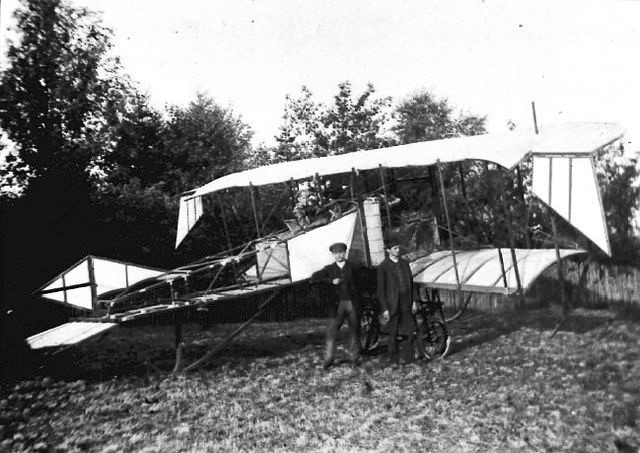
Carl Wanke of Coswig/Anhalt, Germany, started in 1912 to build aircraft. He set up a small workshop and with help of local carpenters, technicians and other enthusiasts he constructed his first aircraft. That was said to have been projected as monoplane, but it was only able to move some 30 metres on the ground. Then Wanke rebuilt the wings and apparently created the biplane shown above. It was tested with some hops, but after a somersault during the first public trial flight it was wrecked.
Wanke, Carl
Carl Wanke of Coswig/Anhalt, Germany, started in 1912 to build aircraft. He set up a small workshop and with help of local carpenters, technicians and other enthusiasts he constructed his first aircraft. That was said to have been projected as monoplane, but it was only able to move some 30 metres on the ground. Then Wanke rebuilt the wings and apparently created the biplane of 1912. It was tested with some hops, but after a somersault during the first public trial flight it was wrecked. In 1913 followed a classic Taube aircraft and the “published” single-seater sports monoplane in early 1914. At that time Wanke had moved his activities to the airfield Wittenberg-Teuchel, where he operated his monoplanes and a “three year old Harlan machine” until WWI ended his flying adventures.
Waltz sa
Mexico
Franciso J. Waltz, Mexico City, was distributor for Aero Commander. Produced in 1959 a high-altitude conversion of de Havilland Heron with 340 hp Lycoming engine for Mexican use under name Super Heron.
Walter T Varney Aeroplanes
832 Post St
San Francisco CA.
Circa 1921-23 Walter T Varney Aeroplanes built conversions of war-surplus Standard J-1 with 3-4 seat and powered by a 90hp Curtiss OX-5.
1923: San Carlos Airport.
Walter Stein Aeroplanbau Eindecker 1911
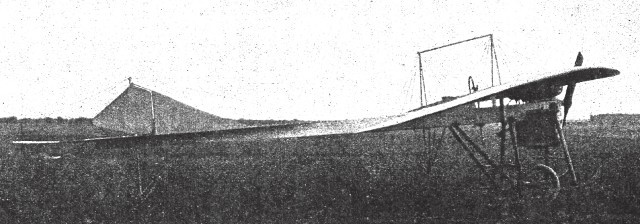
The Walter Stein Aeroplanbau in Teltow/Berlin built two or three disserent designs, depending on how you count. The first was built by Rumpler in the spring of 1910. It was followed by a distinct reconstruction by Stein himself. The machine retained the Aeolus engine but got a sturdier undercarriage and new Taube-like wings. As with his first design, Stein was struggling to get the machine in the air during Autumn 1910. In 1911 Stein built a second Eindecker, fitted at first with a Rumpler Aeolus engine and later modified with a Gregoire-Gyp-Motor. This was the challenge machine. It was later modified, probably in 1912, with a tailwheel and an additional strut to the lower king-post.
Walters Lawnchair Balloon / Lawnchair Larry

In 1982, Larry Walters decided to try his flying idea in a homemade airship made of an ordinary patio chair and 45 helium-filled weather balloons. His intention was to float over the Mojave Desert and then use a pellet gun to burst some of the balloons in order to land.
In mid-1982, Walters and his girlfriend at the time, Carol Van Deusen, purchased 45 eight-foot (2.4 m) weather balloons and obtained helium tanks from California Toy Time Balloons. They used a forged requisition from his employer, FilmFair Studios, saying the balloons were for a television commercial.

On July 2, 1982 Walters attached the balloons to his lawn chair, filled them with helium, put on a parachute, and strapped himself into the chair in the backyard of a home at 1633 West 7th Street in San Pedro. For stability, the chair was weighted with water bottles and tilted backwards about 40 degrees. He took his pellet gun, a CB radio, sandwiches, beer, and a camera. When his friends cut the cord that tied his lawn chair to his Jeep, Walters’s lawn chair rose rapidly to a height of about 16,000 feet (4,900 m) and was spotted from two commercial airliners. He slowly drifted over Long Beach and crossed the primary approach corridor of Long Beach Airport.
He was in contact with REACT, a citizens band radio monitoring organization, who recorded their conversation:
REACT: What information do you wish me to tell [the airport] at this time as to your location and your difficulty?
Larry: Ah, the difficulty is, ah, this was an unauthorized balloon launch, and, uh, I know I’m in a federal airspace, and, uh, I’m sure my ground crew has alerted the proper authority. But, uh, just call them and tell them I’m okay.
After 45 minutes in the sky, Walters shot several balloons, taking care to not unbalance the load. He then accidentally dropped his pellet gun overboard. He descended slowly, until the balloons’ dangling cables got caught in a power line at 432 45th Street in Long Beach. The power line broke, causing a 20-minute electricity blackout. He landed unharmed on the ground.

Walters was immediately arrested by waiting members of the Long Beach Police Department. Regional safety inspector Neal Savoy was reported to have said, “We know he broke some part of the Federal Aviation Act, and as soon as we decide which part it is, some type of charge will be filed. If he had a pilot’s license, we’d suspend that, but he doesn’t.” Walters initially was fined $4,000 for violations under U.S. Federal Aviation Regulations, including operating an aircraft within an airport traffic area “without establishing and maintaining two-way communications with the control tower.” Walters appealed, and the fine was reduced to $1,500. A charge of operating a “civil aircraft for which there is not currently in effect an airworthiness certificate” was dropped, as it was not applicable to his class of aircraft.
Just after landing, Walters spoke to the press, saying:
It was something I had to do. I had this dream for twenty years, and if I hadn’t done it, I think I would have ended up in the funny farm.
The aircraft was dubbed Inspiration I. Lawn Chair Larry was awarded the title of “At-Risk Survivor” in the 1993 Darwin Awards.
After his flight, Walters was briefly in demand as a motivational speaker, and quit his job as a truck driver. He was featured in a Timex print ad in the early 1990s, but never made much money from his fame.
The lawn chair used in the flight was reportedly given to an admiring boy named Jerry, though Walters regretted doing so when the Smithsonian Institution asked him to donate it to its museum. Twenty years later, Jerry sent an email to Mark Barry, a pilot who had documented Walters’ story and dedicated a website to it, and identified himself. The chair was still sitting in his garage, attached to some of the original tethers and water jugs used as ballast. The chair was on loan to the San Diego Air and Space Museum, on exhibition through 2014.
The flight attracted worldwide media attention and inspired a later movie and imitators.
Walters, Larry / Lawnchair Larry
Lawrence Richard Walters (born April 19, 1949 Los Angeles, California) had often dreamed of flying, but was unable to become a pilot in the United States Air Force because of his poor eyesight. He first thought of using weather balloons to fly at age 13, after seeing them hanging from the ceiling of a military surplus store. He had a career as an American truck driver.
A 45-minute successful flight of Larry Walters on July 2, 1982 was in a homemade airship made of an ordinary patio chair and 45 helium-filled weather balloons.
After his flight, Walters was briefly in demand as a motivational speaker, and quit his job as a truck driver. He was featured in a Timex print ad in the early 1990s, but never made much money from his fame.
Later in his life, Walters hiked the San Gabriel Mountains and did volunteer work for the United States Forest Service. He later broke up with his girlfriend of 15 years and could only find work sporadically as a security guard.
On October 6, 1993, at the age of 44, Walters committed suicide by shooting himself in the heart in Angeles National Forest. He left no suicide note. His remains are interred at the Forest Lawn Memorial Park Cemetery in the Hollywood Hills, in the Columbarium of Valor. Walters had no children.
Walter & Campbell Dale RD-9
The 1932 Dale RD-9 was a two-place cabin biplane pusher with folding wings, reportedly scaled up from model airplane plans.
One was built, registered N12526 c/n CW-1, powered by an 80hp LeRhône rotary.
Built 15 May 15/32, it reported to CAA as “not in service” on 12 November 1932, then “junked” 27 January 1934. The registration was cancelled on 18 June 1934.

