
Reyburn Watres
Scranton
Pennsylvania
In 1910 Reyburn Watres built the monoplane ‘The Grass Cutter’.
Reyburn Watres
Scranton
Pennsylvania
In 1910 Reyburn Watres built the monoplane ‘The Grass Cutter’.
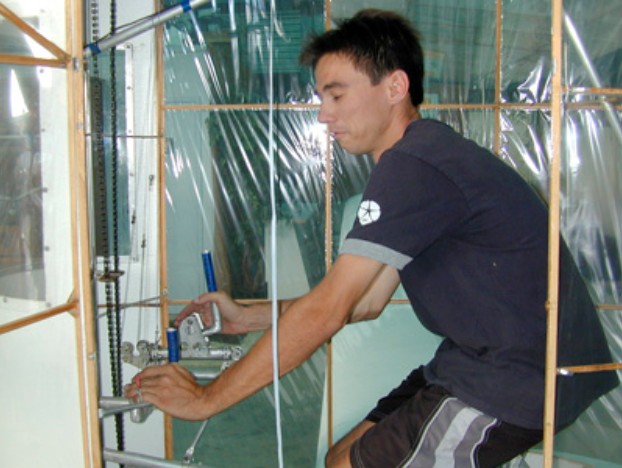
It is was the third full size aircraft Bill Watley has constructed since 1945.
The Mayfly 3 is a very large Biplane: each wing is 50 ft in span and height of 10ft. (approx).
The variable pitch propeller is made of blue foam and is 12 ft in diameter, turning at 100 RPM.
Bill Watley constructed the aircraft over a period of three years full time, working almost every day. It had taken at least 6000 hours. The structure is normal commercial pine and white polystyrene covered with Mylar. The cockpit frame for the pilot is commercial aluminium.
All parts of the aircraft were carefully drawn and the dimensions carefully adhered to.
A water level was used at all times to ensure the diagonals were all correct
The Mayfly 3 did achieve flight in Kooralbyn, Australia, after a number of structural amendments, including a redesign of the undercarriage and wheel diameter.
Wingspan: 50 ft
Length: 26 ft
Propeller: blue foam 12 ft diameter
Bill Watley constructed three full size aircraft has since 1945. The first, HM 290 (The Flying Flea) recorded 2 flights at 100 ft, each flight about 2 miles in length. The second aircraft, a Jodel D9, took four and a half years to build (2140 hours) and flew from Gatton, Queensland, Australia, for 15 years (about 1000 hours). The third was the Mayfly III.
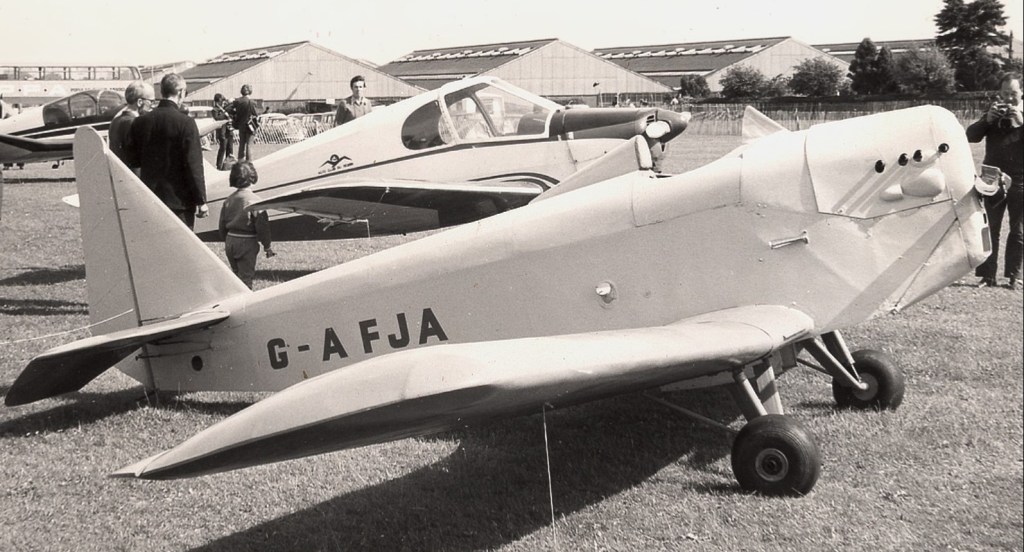
The Watkinson Dingbat was a 1930s British ultralight monoplane designed by E.T. Watkinson and C.W. Taylor.

The Dingbat, otherwise known as the Taylor Watkinson Ding-Bat, was a low-wing monoplane powered by a 30 hp (22 kW) Carden-Ford engine. It had a single-seat open cockpit and a fixed conventional landing gear. It was built at Teddington in Middlesex and registered G-AFJA snDB.100 it was first flown at Heston Aerodrome in June 1938.

It was stored during the Second World War, but rebuilt to flying condition by J.H.Pickrell and D.O.Wallis in 1959.
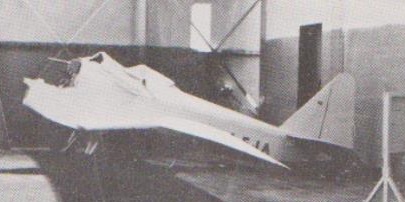
It lapsed again into disuse and was stored at Overton Strip, Hannington, until restored by A.J.Christian, First flying again in early 1974.
After a crash at Headcorn on 19 May 1975, it was rebuilt, and was still registered in 2010.

Powerplant: 1 × Carden Ford water-cooled 4-cylinder piston engine, 32 hp (24 kW)
Wingspan: 28 ft 0 in (8.53 m)
Wing area: 125 sq ft (11.6 m2)
Length: 16 ft 0 in (4.88 m)
Height: 6 ft 3 in (1.91 m)
Empty weight: 460 lb (209 kg)
Gross weight: 700 lb (318 kg)
Maximum speed: 90 mph (140 km/h, 78 kn)
Cruise speed: 80 mph (130 km/h, 70 kn)
Stall speed: 39 mph (63 km/h, 34 kn)
Range: 200 mi (320 km, 170 nmi)
Crew: 1

The CG-4 was the third manpowered ‘cyclogyroplane’ built by Mr. Herbert Watkinson of Bexhill in his effort to win the $50,000 Kremer prize for man powered flight. By March 1977 the CG-4 was nearing completion, and permission to carry out flight trials at Lydd Airport in Kent had been granted. Then in 1977, Mr. Watkinson was diagnosed as terminally ill and died at Bexhill in October 1977. After going into storage, this machine, together with all the surviving documentation and photographs of the cyclogyroplane story, were donated to the Helicopter Museum for preservation as a tribute to one man’s attempt to fly with the birds.
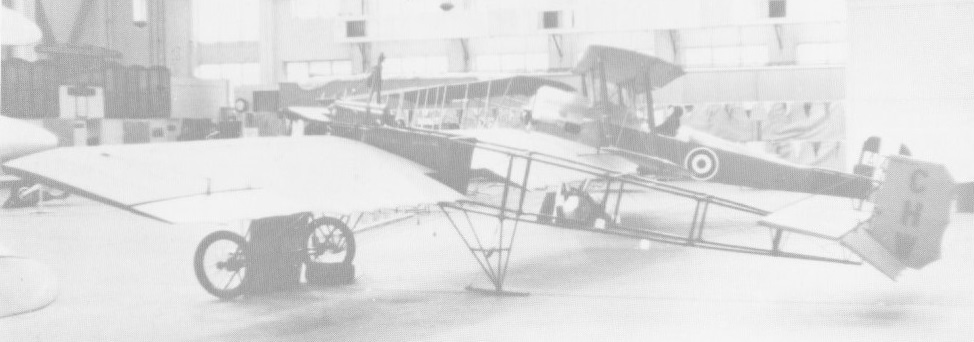
Designed by Charles Horace Watkins in 1907 the Monoplane was built at Mynachdy Farm, Maendy, Cardiff, Wales, over the following couple of years. Although it made ts first hops from the farm probably early in 1910 its first real flights came later in the year when it is reported to have flown over Whitchurch, Glam, and in the same year its first cross-country was made to a ridge on the Caerphilly Mountain and back. It was powered by a 40 hp three cylinder engine modified from an Anzani and cast in the Cardiff Railway Works. It is claimed that this aircraft, named the ‘Robin Goch’, made the first night flight over Wales in 1910.
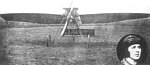
It was flown until about 1918 when it was grounded by a cracked cylinder head. It was stored at Mr Watkins garage until 1959 when it was moved to St.Athan for display where it has since remained.
Mr Watkins died in December 1976 aged 92.
In November 2025 the Watkins monoplane is displayed at the Waterside Museum Swansea.
Engine: modified Anzani, 40 hp
Wingspan: 32 ft
Length: 21 ft 6 in
All up weight: 600 lb
Max speed: 60 mph
Range: 180 miles
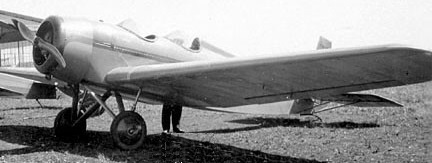
The 1929 SL-1 was designed by Wallace “Chet” Cummings featuring a laminated plywood-clad, steel-tube, monocoque fuselage. Originally tried with 55hp Velie M-5, the price was $2,950.
The one prototype, NX470E c/n 1, received ATC 2-182 and at least five production models were as built as SL-2:
NC102V c/n 102, N460W c/n 106, N461W c/n 103, NC487N c/n 101, NC11950 c/n 105, maybe c/n 104.
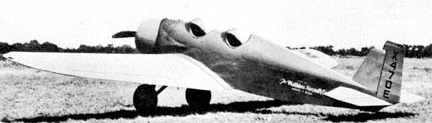
The sport design failed to make it in a slumping market.
SL-2 Skylark
Engine: 60hp LeBlond 5D
Wingspan: 37’0″
Length: 23’6″
Useful load: 517 lb
Max speed: 103 mph
Cruise speed: 80 mph
Stall: 38 mph
Sats: 2
1929:
Watkins Aircraft Co
President: Everett Watkins
Wichita KS.
USA
Ended operations in 1931.
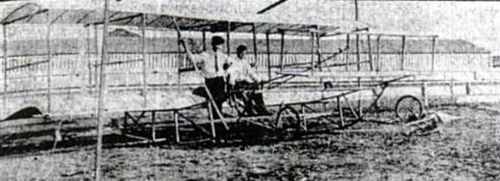
Waldo Waterman’s first powered creation (he built gliders in 1909), in 1910 in league with Kenneth Kendall, was a single place, open cockpit biplane, 2-cylinder Speedwell pusher.
It was so badly underpowered it had to be assisted by automobile tow to get off the ground, but it did and made a few flights before becoming ensnarled in the tow rope on a take-off. It crashed and Waterman earned two fractured ankles for his efforts. Although based on the Curtiss, it had an innovative concept of wheels that could be folded up via a lever-and-wires arrangement in order to land on its skids—this lever also shut off the motor at the same time.
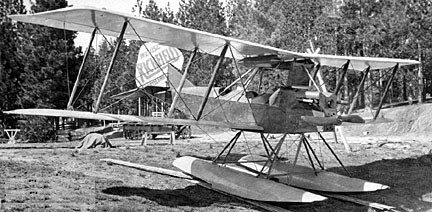
The 1924 Waterman-Boeing C were modified surplus USN floatplanes for passenger operations. Waterman was able, through craft, to buy six Model Cs for $200 each (USN cost $10,250 each, and selling nationally in lake areas for $2,000 each) for use a basis for his Big Bear (CA resort) Airlines.
The five place Waterman-Boeing C was later converted to wheels and Renault engine, expanded four place front cockpit, internal gas tanks relocated under the top wing, and enlarged tailskid.
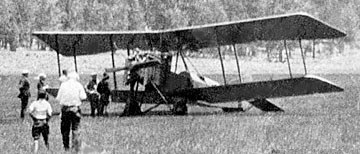
One plane is seen in the 1926 film, “Mantrap,” in which Waterman also played a bit part, and two were destroyed in filming “Dawn Patrol” as the ones that crash on take-off during a raid on the German aerodrome.

