Wilford, E Burke

Wilford’s first aircraft, built in conjunction with Vincent Burnelli and entered for the Guggenheim Safe Airplane Contest in 1927, was especially designed for low-speed landing.

In 1928 Wilford visited Europe, and while there acquired the patent rights for the United States of a rotary wing aircraft conceived by a German named Rieseler.

1929: E Burke Wilford, Paoli PA.

In 1929 Wilford began building his own gyroplanes.

1934: Pennsylvania Aircraft Syndicate, Philadelphia PA.

The idea behind this American/German partnership was a scheme for feathering the pitch of the blades rotating round the hub instead of the blade flapping system which La Cierva employed in his autogyros.

Wiley Post Model A / Straughn-Holmes A

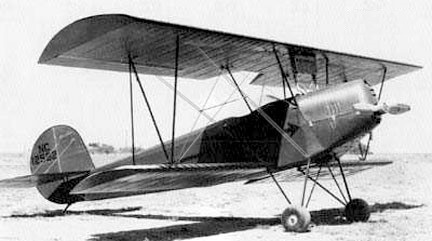
Straughan A NC12582

Wiley Post Aircraft Corp was founded in Oklahoma City in 1935 to build Model A (ATC 2-478, ATC 561), cheap two-seat aircraft. Designed by Ross Holmes and Glenn Stearman and powered by a 40hp Straughn AL-1000 converted Model A Ford engine, the first example was built by Straughan Aircraft. Reportedly was first developed as a parasol monoplane at Cessna factory. The ATC was issued in 1934.

One prototype (NX12561) and two production Model As were built in 1931-32 (N11919 and NC12582). Originally price at $1,438, it was $1,692 in 1935.

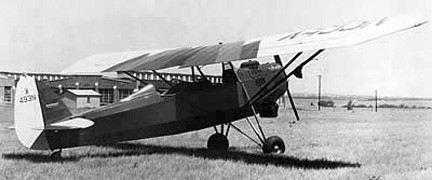
One 60hp experimental B NX493N was built.

Straughn B NX439N

Wiley Post acquired rights to Straughan assets 1935, and transferred production to Oklahoma City. Thirteen Model As built before company liquidated after Wiley Post’s death.

Engine: 40hp Straughn AL-1000 (converted Ford A)
Wingspan: 28’6″
Length: 19’9″
Useful load: 393 lb
Max speed: 82 mph
Cruise speed: 70 mph
Stall: 28 mph
Range: 110 mi
Seats: 2

Wiley Post Aircraft Corp

Founded in Oklahoma City in 1935 to build Model A, cheap two-seat aircraft. Powered by converted Model A Ford engine, the first example was built by Straughan Aircraft. Wiley Post acquired rights to Straughan assets 1935, and transferred production to Oklahoma City. Thirteen Model As built before company liquidated after Wiley Post’s death.

Wilcoxsen M-1 Monoplane / The Cloud-Boy

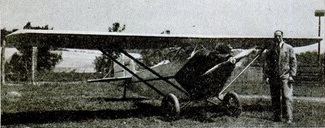
Ray Wilcoxsen of Indiana, USA, built in 1930 an aircraft for the light plane market, powered by a rebuilt Henderson motor cycle engine.

Wilcoxsen received a Commerce Department permit to fly the plane and planned to sell complete aircraft for $960 and plans for homebuilders.

Engine: Henderson motorcycle, 27 hp at 3000 rpm
Wingspan: 27 ft 3 in
Length: 14 ft 6 in
Empty weight: 280 lb
Fuel capacity: 7 USG
Max speed: 76 mph

Wilcox White Ghost

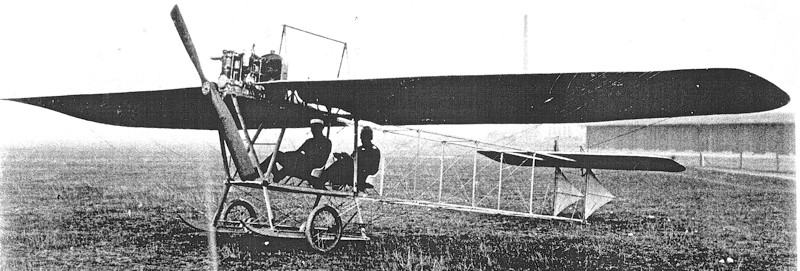
Mr. Wilcox is now engaged at the factory of Moore and Morgen automobile body manufactures, 600 W. Fifth Street, here in the City of New York, building two more aeroplanes, which will be ready to try out at Garden City, L. 1., in about two or three weeks. Louis Strang has purchased one of these machine for $4,500. An effort is being made to have the other one ready for the International Aviation Meet at Belmont Park, L. 1., to defend the Cup won by Glen Curtis at Rheims. The machine which Wilcox has called the “White Ghost” will be operated by a professional aviator who has taken part in aero races abroad.

The Wilcox Aeroplane is modelled upon the Farnam style, but has a large number of decided improvements which, according to Captain Baldwin, make it the steadiest aeroplane on the field. Wilcox has formed a stock company for the purpose of building aeroplanes and has registered his machines in the United States Aeronautic Reserve in which about one thousand aeroplanes have been recorded. Aviators making the above registration, agree to give the use of their machines to the Government as scouts, absolutely free, should there be any wars.

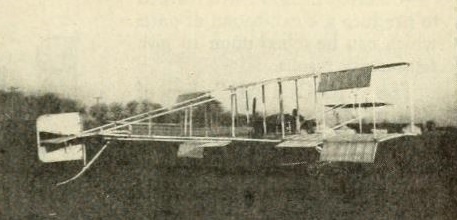
Built in 1910 by Phillip W. Wilcox, the White Ghost was a two-place open cockpit biplane powered by a 50hp Rinek engine.

Wilcox The Columbia

In 1910 Philip W. Wilcox built his first aeroplane as the required thesis in the Civil Engineering Department, in the University carpenter shop and christened it, “The Columbia.” At the end of the spring term, the machine was taken out to Garden City, L. 1., and assembled at the Triaca School of Aviation. This work required about a month for completion. After the aeroplane had been put together, an engine from the Eastern Cordage Cos., weighing 275 pounds and developing fifty horsepower, was installed. The engine was constructed of cast iron cylinders pressed in macadamite.

The finishing touches on the aeroplane were completed about the fifteenth of June and the machine was taken out for a trial. But the engine refused to work on account of water leaking into the cylinders. Two new cylinders were then obtained from the Eastern Cordage Cos., and preparations made for another trial. Louis Strang, the famous automobile driver, who has become an enthusiastic aviator, was engaged to make the flight. The performance, however, was a failure, due to lack of speed, caused by trouble with the radiator. In running around the field, one of the wheels ran into a stump and the aeroplane was damaged to the extent of $400, Strang escaped from injury, only by a miracle.

It required three or four weeks to make the necessary repairs and get the machine ready for another flight. The next attempt was made by C. K. Hamilton. Owing to a defect in the running gear the machine collapsed after running about 200 feet, causing another smash-up. Hamilton, however, escaped any serious injury. After this unsuccessful flight, the design of the running gear was changed from the Farman style to the Curtis type.

After making this change Wilcox decided to try out the machine himself. The aeroplane went up like a bird to a height of one hundred or more feet and flew about three-fourths of a mile, circled, returned to the field and made a beautiful landing near the starting point Wilcox was so overcome with this successful flight and excitement, that he had to be dragged from the machine by Captain Baldwin, Clifford B. Harmon, Mr, Fairchilds and a number of other noted aviators who had witnessed the flight.

On the morning of June 26, Wilcox made another flight, but after he had reached a height of fifty feet, the propeller was caught by a wire and broken. The machine descended without damage. The necessary repairs were made, and another attempt was made on the afternoon of the same day. Due to lack of experience in guiding the aeroplane, the machine was overturned by the wind, fell to the ground and was broken to splinters, Wilcox escaped injury only by some mysterious chance.