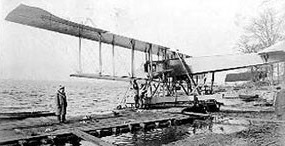
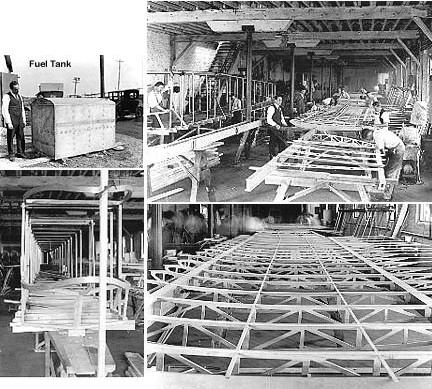
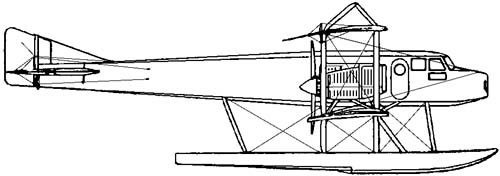
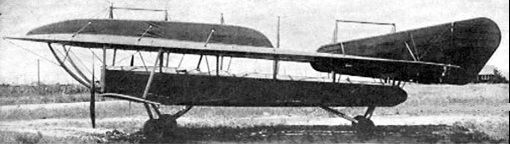
One of the largest seaplanes then in existence, the plane was built by Witteman-Lewis Aircraft Corp in 1923 for an intended transatlantic flight by the two Swedish aeronauts.
Sundstedt-designed, linen-covered balsawood floats of 32′ length, all else was of ash and spruce construction; 750-gallon fuel tanks.
It crashed in a test flight in Feb 1919 and was considered beyond economical repair.
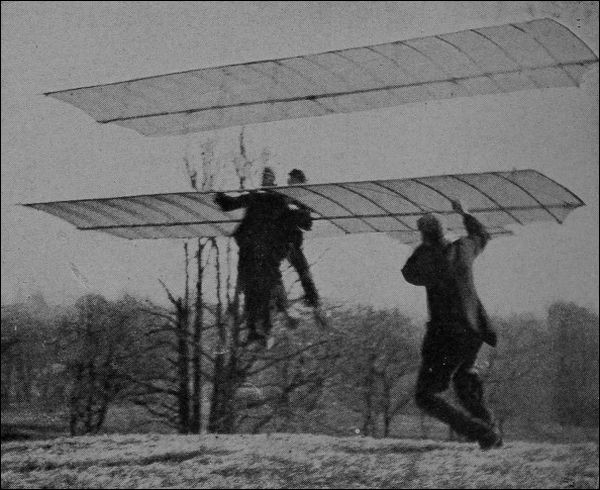
In 1905, Charles, Paul and Walter Wittemann opened the first airplane manufacturing plant in the United States on their family estate in Staten Islad. After experimenting with gliders, they designed and built their first airplane in 1906.
In 1905, Charles, Paul and Walter (1896-1980) Wittemann opened the first airplane manufacturing plant in the United States on their family estate in Staten Islad. After experimenting with gliders, they designed and built their first airplane in 1906 and continued to manufacture a number of experimental planes and models until their ever-increasing production forced their move to a more spacious building on the north edge of the Newark meadows.
(Charles and Adolph) Wittemann Aeronautical Engineers Ocean Terrace & Little Clove Rd Staten Island NY. USA
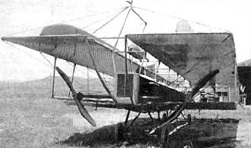
In 1907 the firm built a single-place, open cockpit biplane, powered by a 40hp Wright pusher. This featured a swivelling tailwheel, which was quite an advance in technology back then.
1907 also saw a single-place open cockpit triplane, powered by a 40hp Wright pusher.
Between 1908 and 1914 the firm built many planes, including Curtiss-type, single-place, open-cockpit biplanes, for notables of the time: Bud Mars, Ruth Law, Capt Thomas Baldwin, Lincoln Beachey, Cecil Peoli, Harold Blakesley, and others.
During 1911 the firm was involved in the construction of the Baldwin Red Devil III.
1916: Newark NJ. Aeronautical construction engineers of Newark, New Jersey. Rebuilt Airco D.H.4s to DH-4B standard for U.S. Army.
In 1917 they built a new plant at Teterboro Airport where the Wittemanns received the consent of the U.S. Army to convert unused DH-4 aircraft for the Post Office to be used for the first air mail postal service. The planes were modified to carry 400 lbs. of mail and in 1919 further improvements were made to accommodate 1000 lb. payloads. Approximately 75 of these single engine aircraft were produced at Teterboro.
c.1917: Wittemann-Lewis Aircraft Co Inc.
Had produced own-design mail carrier in 1920, when firm moved to Teterboro in 1919 (factory was eventually occupied by Fokker Corp). Contractors to US Post Office and USN for several aircraft.
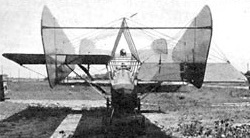
During 1922-1923 built the Barling six-engined triplane bomber to Walter Barling’s design.
Built twin-engined Sundstedt-Hannevig seaplane 1923, for transatlantic attempt by Capt. Sundstedt.
During 1923, 25 de Havilland DH-4s were modified for mail carrying, powered by a 400hp Liberty 12. The last of the company’s efforts before filing bankruptcy.
In 1923 ended production to concentrate on engineering research. Of interest is that no Wittemann aircraft ever suffered a fatal or serious accident.
After bankruptcy in 1924, the firm property was acquired by Atlantic (Fokker).
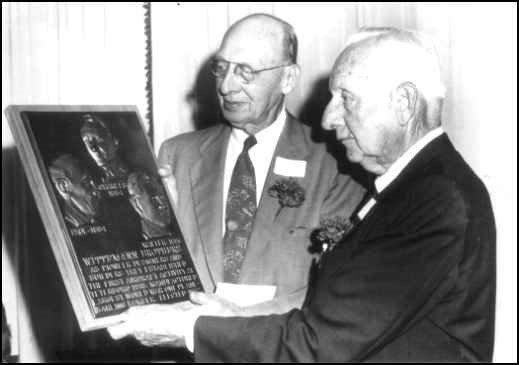
Paul & Walter Wittemann were inducted in the Aviation Hall of Fame & Museum of New Jersey.
Designed by Mike Wittaker in 1974, the MW-2B Special, nick-named Buzzabout, was a single-seat all metal low wing monoplane with a twin boom tail and tricycle undercarriage.
To be powered by a VW engine driving a pusher propeller fitted into a ducted shroud, designed by Dowty-Rotol.
Backed by Charles Robertson (Developments) Ltd, the prototype, G-BDDX. c/n 001, PFA.41-10106, was being built at Bodmin, UK, in August 1975 with a first flight expected in early 1976.
Around 1923, three Wissler Airplane Co WA-9 open cockpit biplanes featuring side-by-side seating were built, plus 4 unidentified planes built by others at Indianapolis and Sidney using various surplus Wissler components.
The 1922 Wissler Airplane Co WA-6 was a two place open cockpit biplane. With about 100 hours flying time logged, it ended up in a treetop on 2 August 1922 upon experiencing aileron problems, was extensively damaged, and was not repaired.
Engineer Bronisław Wiśniewski built at Grażewski Factory a monoplane with 20hp engine in 1912 but the construction details and information about flights are unknown.
A 1920 experimental single place, open cockpit mid-wing monoplane with wings mounted in a folded-back manner above two outboard 7′ propellers, shaft-driven by a 90hp Maximotor (later replaced by 300hp Hisso). The stability of this design was proved in low-level test flights, and offered a 1:28 glide ratio and spin-proof characterictics. Twin tails, with elevators serving also as ailerons for banking. Although the War Department reportedly expressed interest, nothing came of the novel concept.
The War Dept assumed security and forbade any publicity.