Back to Extras
















Back to Extras
Back to Terms & Definitions

Back to McDonnell-Douglas F-15 Eagle



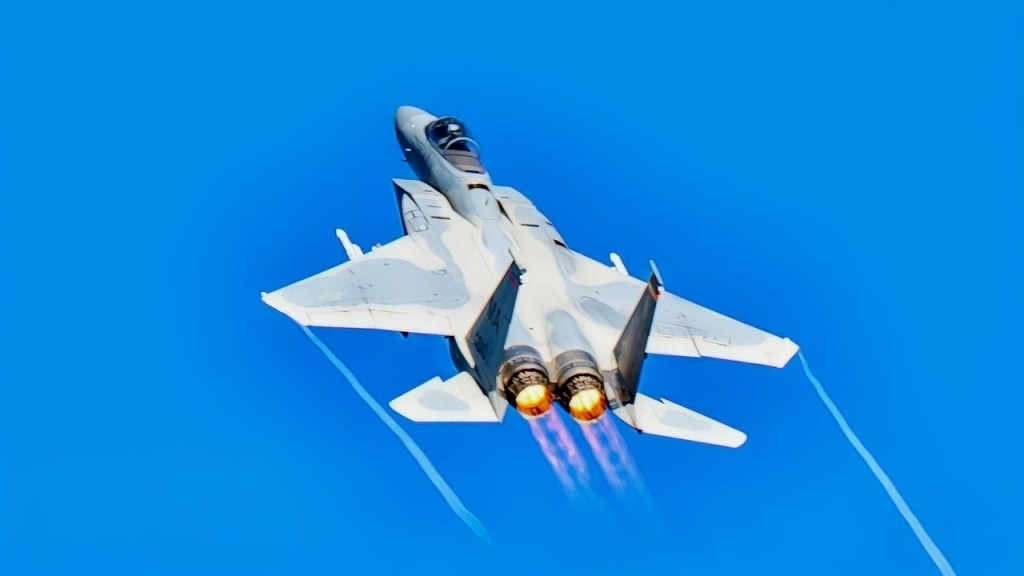
Lt. COl. Stephen ‘Steagle’ Mindek, 104th Fighter Wing pilot, takes off in an F-15C Eagle for Maj. John “Space’ Stout’s fini-flight, January 10, 2025, at Barnes Air National Guard Base, Westfield, Massachusetts.
Following the fini-flight, Maj. Stout was greeted with cheers from his fellow Airmen, friends, and family. Maj. Stout’s final ride in the F-15C Eagle resulted in over 1100 hours flown in the legendary aircraft.
Back to Lockheed SR-71
Back to General Dynamics F-16
Israel suspends combat flights with the F-16Cs
On 18 July 2024, the Israeli Air Force officially retired its last F-16C Fighting Falcon, purchased in the 1980s.
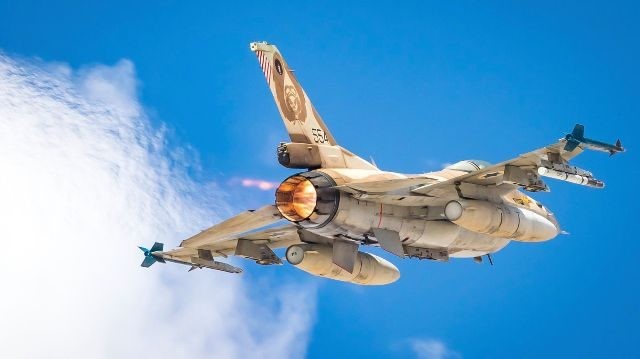
The IAF had a fleet of 81 F-16Cs at its peak. This retirement follows the phase-out of 90 earlier F-16A/B Netz fighters in December 2016.
While the F-16A/B variants were succeeded by the Alenia M-346 Lavi in the trainer role, the phase-out of the F-16C coincided with the IAF’s expansion of its Lockheed Martin F-35A Adir force. Though the F-16A/B/C models are now retired, the Israeli Air Force still operates 47 F-16D Brakeet operational trainers and 97 F-16I Sufa combat variants, ensuring continued capabilities and strength.
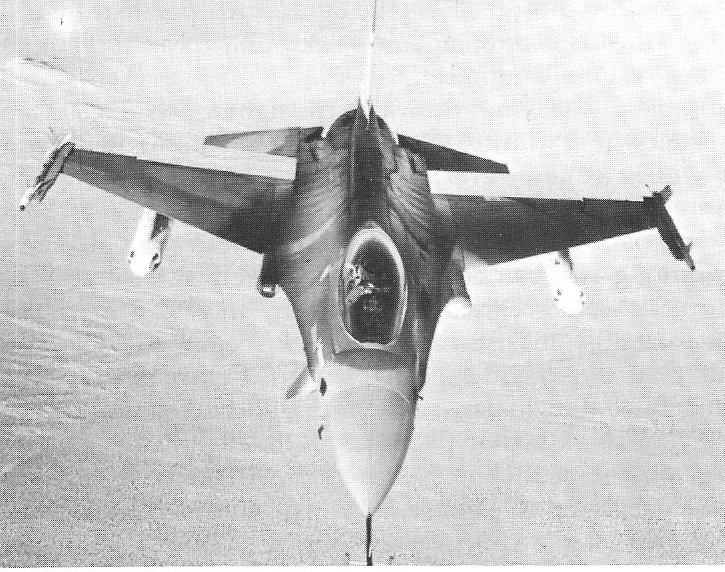
The Israeli fighter Barak-1 is a variant of the F-16 Fighting Falcon, specifically modified to meet the requirements of the Israeli Air Force [IAF]. The name ‘Barak’ translates to ‘Lightning’ in Hebrew, reflecting its agility and speed. The Barak-1 is part of a series of F-16 variants that have been tailored with advanced avionics, weaponry, and systems to enhance its combat capabilities.
In terms of dimensions, the Barak-1 shares the general specifications of the F-16 Fighting Falcon. It has a length of approximately 49.3 feet [15.03 meters], a wingspan of 32.8 feet [9.96 meters], and a height of around 16.7 feet [5.09 meters]. The aircraft’s maximum takeoff weight is about 42,300 pounds [19,187 kilograms].
The propulsion system of the Barak-1 is typically powered by a single Pratt & Whitney F100-PW-200/220 or General Electric F110-GE-100/129 afterburning turbofan engine. These engines provide the aircraft with a thrust of around 23,770 pounds-force [105.7 kN] for the Pratt & Whitney variant and up to 29,000 pounds-force [129 kN] for the General Electric variant, enabling a maximum speed of over Mach 2.
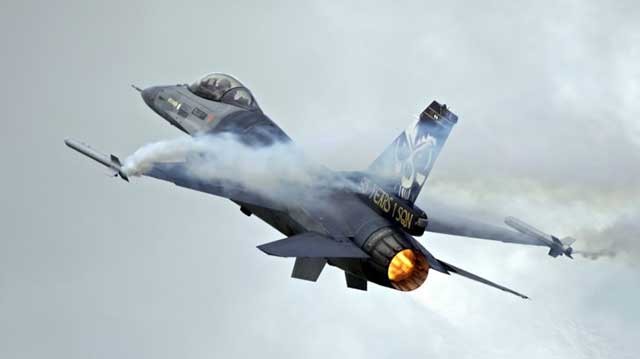
The Barak-1 is equipped with advanced technical characteristics that enhance its operational effectiveness. These include a robust airframe designed for high maneuverability, a fly-by-wire control system for precise handling, and an advanced radar system, typically the AN/APG-68, which provides superior target detection and tracking capabilities.
The avionics suite of the Barak-1 is highly sophisticated, incorporating systems such as the Elbit Systems Helmet Mounted Display [HMD], which allows pilots to aim weapons by looking at the target. Additionally, the aircraft is equipped with advanced electronic warfare [EW] systems, including radar warning receivers [RWR] and countermeasure dispensers, to enhance survivability in hostile environments.
The control systems of the Barak-1 include a digital flight control system [DFCS] that provides enhanced stability and control, especially during high-G maneuvers. The aircraft also features an advanced mission computer that integrates data from various sensors and systems, providing the pilot with comprehensive situational awareness.
The Barak-1 is armed with a wide array of weapons, making it a versatile platform for various combat missions. Its armament includes the M61 Vulcan 20mm rotary cannon for close-in engagements. The aircraft can also carry a variety of air-to-air missiles, such as the AIM-9 Sidewinder and Python 4/5, as well as air-to-ground munitions, including the AGM-65 Maverick missile, GBU-12 Paveway II laser-guided bombs, and JDAM [Joint Direct Attack Munition] kits for precision strikes.
The Barak-1 has been a crucial asset in several key military operations. One of its most notable involvements was during Operation Opera in 1981, where Israeli Air Force [IAF] F-16s, including the Barak-1, carried out a surprise airstrike on the Osirak nuclear reactor in Iraq. This mission aimed to prevent Iraq from developing nuclear weapons capabilities and was considered a significant success in terms of precision and execution.
Another significant mission involving the Barak-1 was Operation Peace for Galilee in 1982. During this operation, the IAF used F-16s to achieve air superiority and provide close air support for ground forces in Lebanon. The Barak-1 played a pivotal role in neutralizing Syrian air defenses and engaging enemy aircraft, contributing to the overall success of the mission.