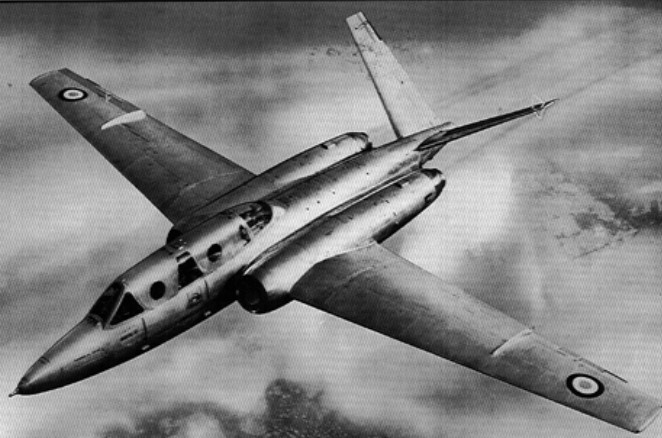
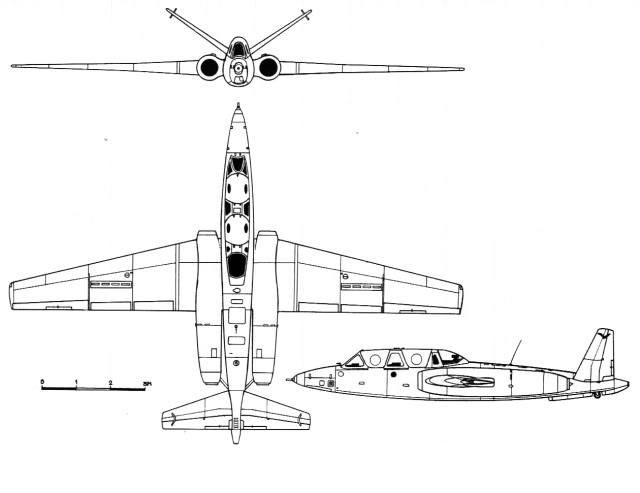
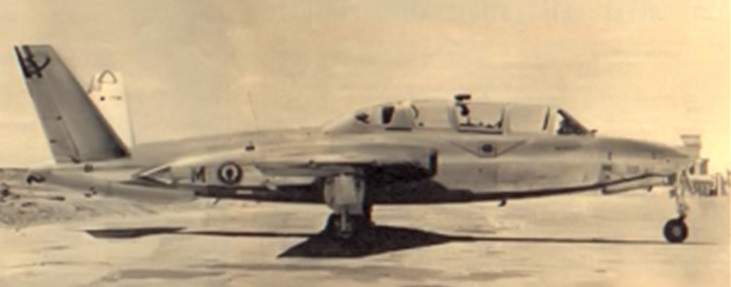
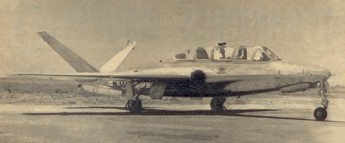
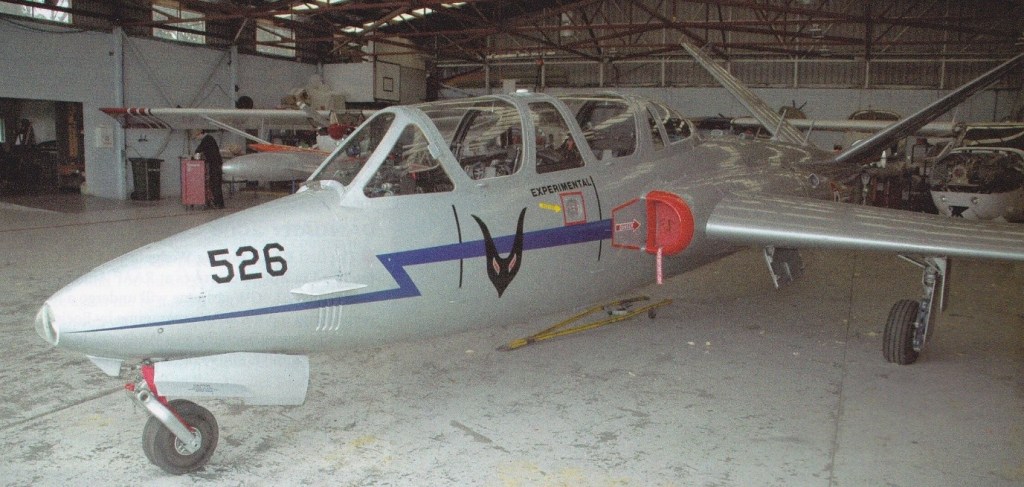
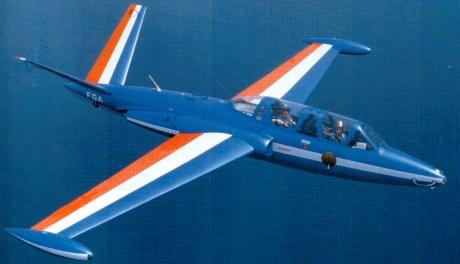
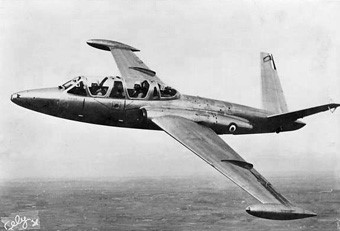
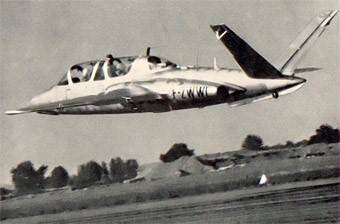
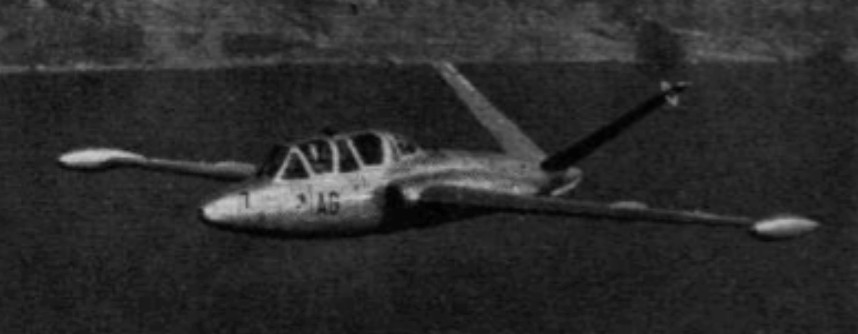
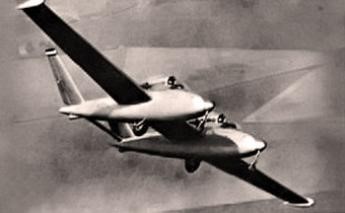
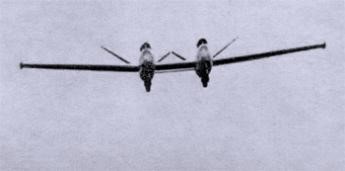
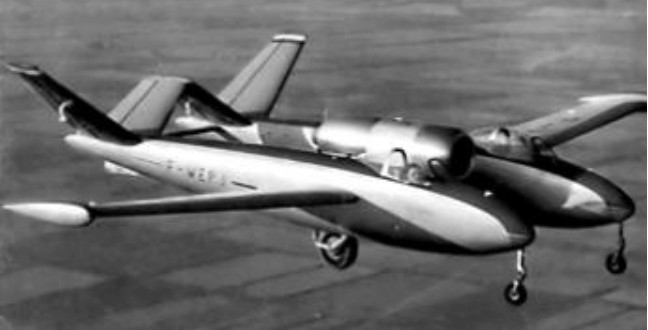
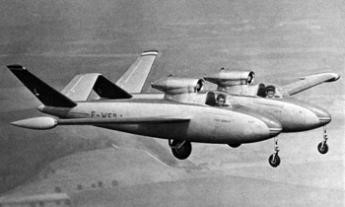
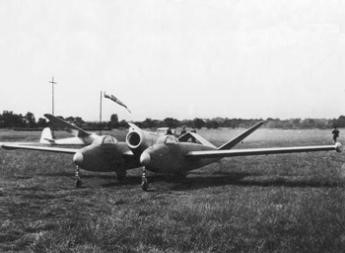
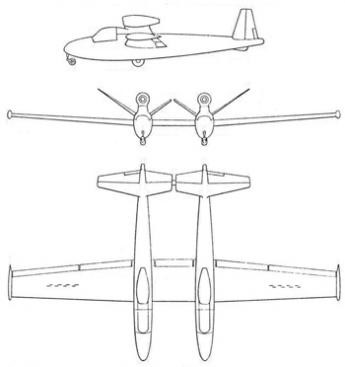
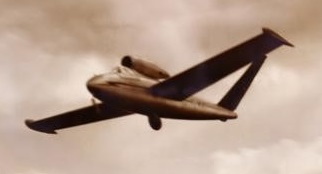
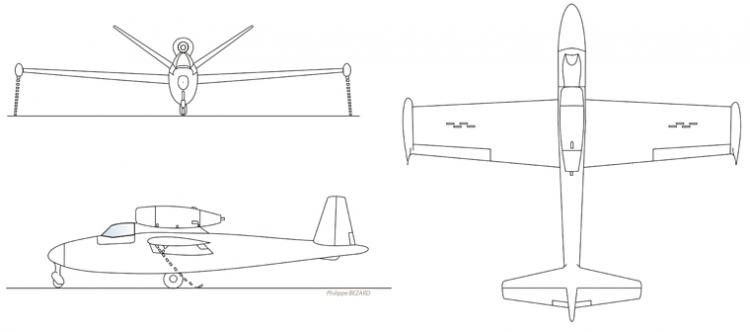
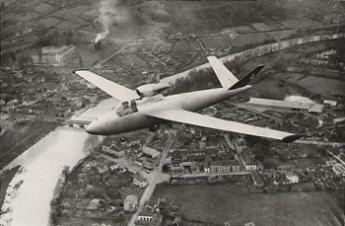
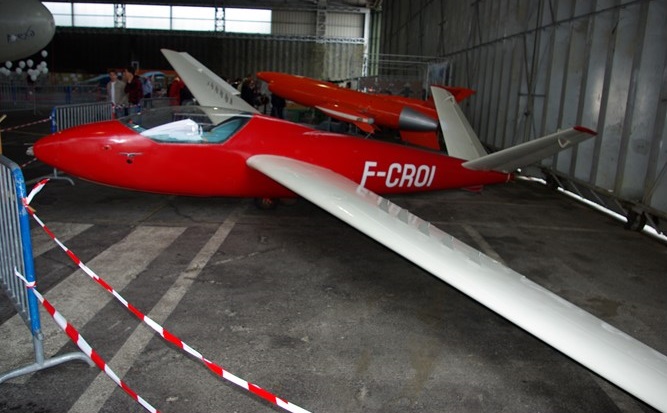
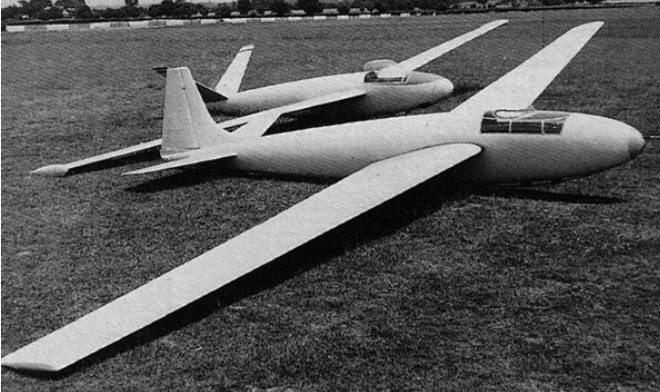
The C.M.171 was a test aircraft for a projected twin Gabizo-powered, swept-wing, butterfly-tailed trainer called the C.M.195. The Gabizo was a 1100 kg thrust turbojet, intented to power the Armée de l’air light/transonic interceptor of 1955. The C.M.170 butterfly tail for the twin engined C.M.195 was to be tested on the twin engined CM.171.
On 11 May 1956, L.Bourriau, with P.Caneil, first flew the CM.171.
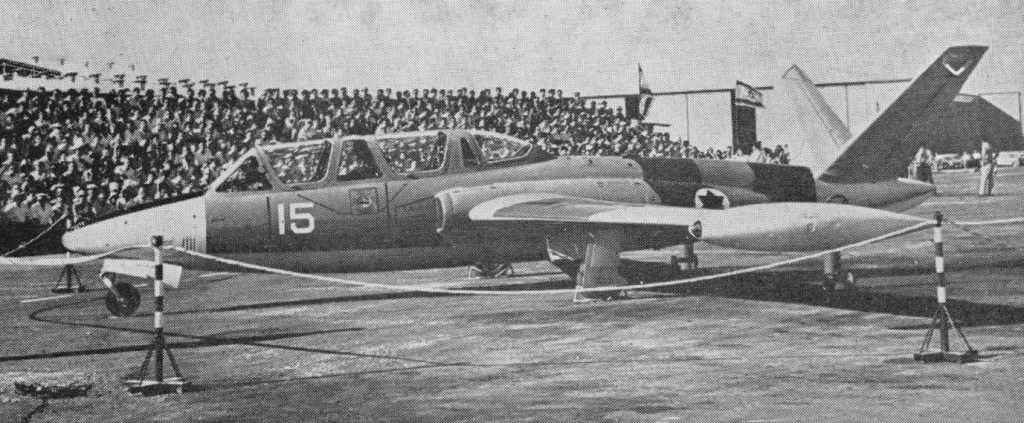
After an absence of more than three months, J.Grangette returned from the United States, where he denstrated CM170 # 15. On February 8, 1957, with J.Grangette P.Caneil, after climb at 38 m/s to 53,000 ft (1500) there was a sudden decompression. By cutting an engine and accepting painful and dangerous vibrations, the descent was made.
Flights continued and engine parameters, including speeds were transmitted by radio to the testing station flight Fuga where Yves Laborde monitored the trials.
In December 1956, after the test flights, the Makalu was given to the CGTM Marignane (General Turbo-Machine) which is a flight test center created by Hispanics Suiza and Turbomeca. The engine test flight program was flown by C.Bouton, pilot, and J.de St. Thibault, flight engineer. On 20 March 1957, the Makalu took off into the hills of l’Estaque. Soon, contact is lost with the crew. The aircraft has crashed on the first foothills that separate the land from the sea killing the crew. Causes of the accident is not known.
Engine: 2 x Turbomeca Gabizo, 1100 kg thrust Mass: 4000 kg
Designed by R. Castallo and P. Maubassin to a specification from the French Air Force for a two-seat, pure jet fighter trainer, Fouga presented a proposal for a tandem two seat trainer to the French Air Ministry, the CM.130R which was powered by two 353 lbst (160kgst) Palas engines. The design was refined and a contract for three of the resulting twin Marbore II powered CM.170R aircraft was placed with Fouga in December 1950. The Morane Saulnier company were working along similar lines at this time, and their drawing boards sired the MS.755 Fleuret. Both companies had schemed aircraft which shared essentially similar configurational layouts.
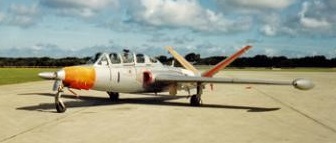
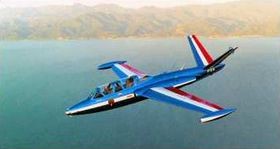
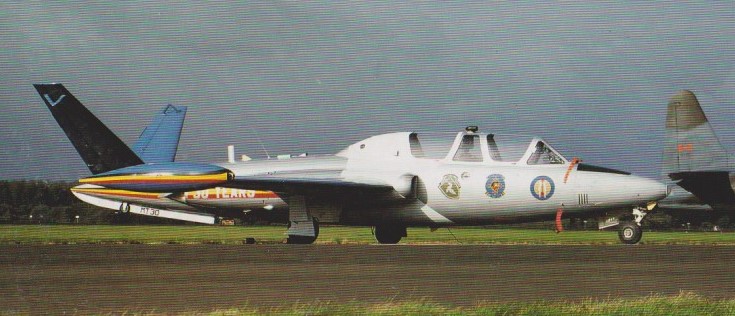
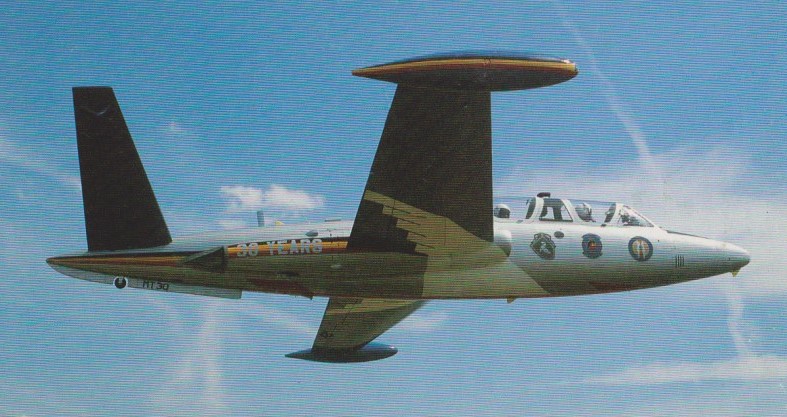
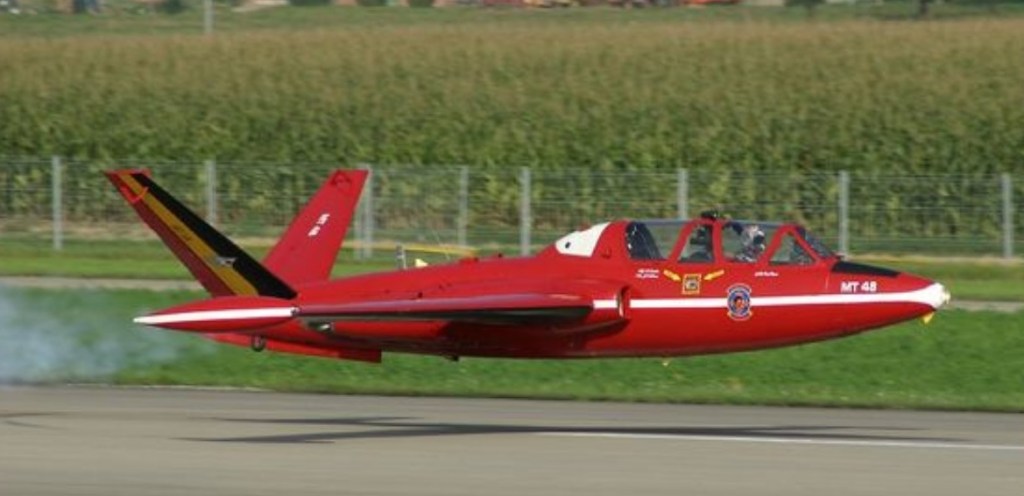
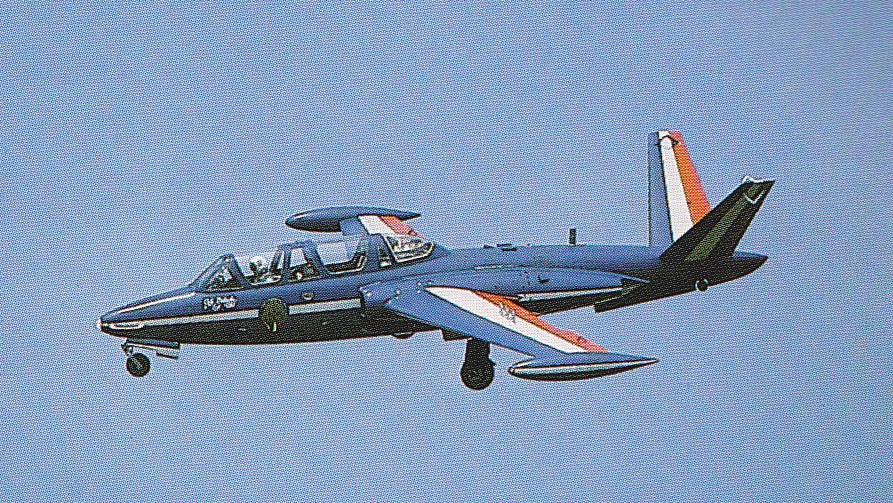
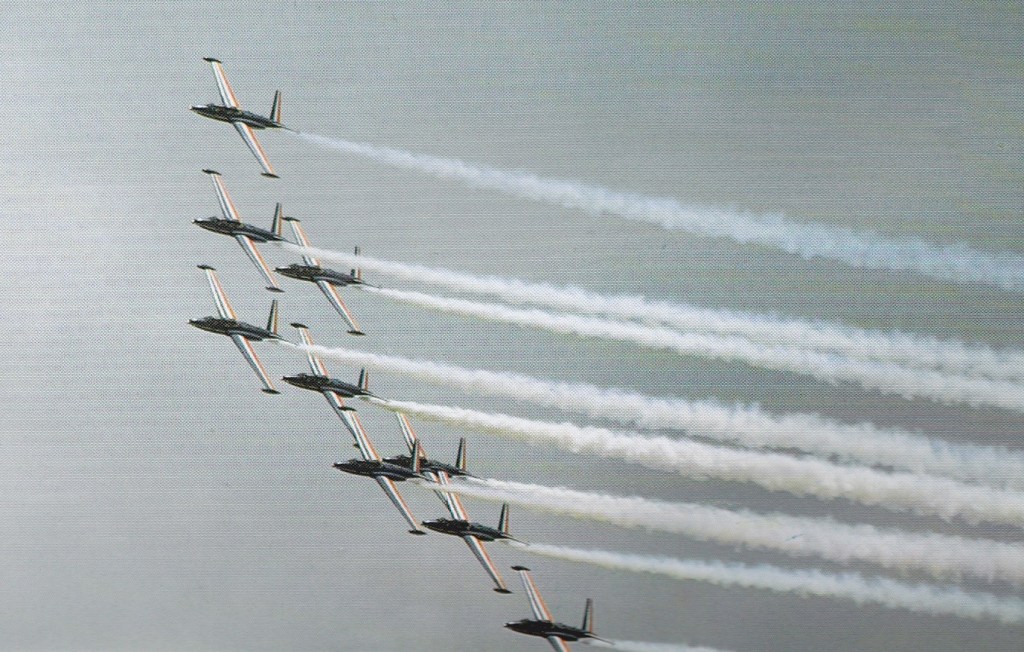
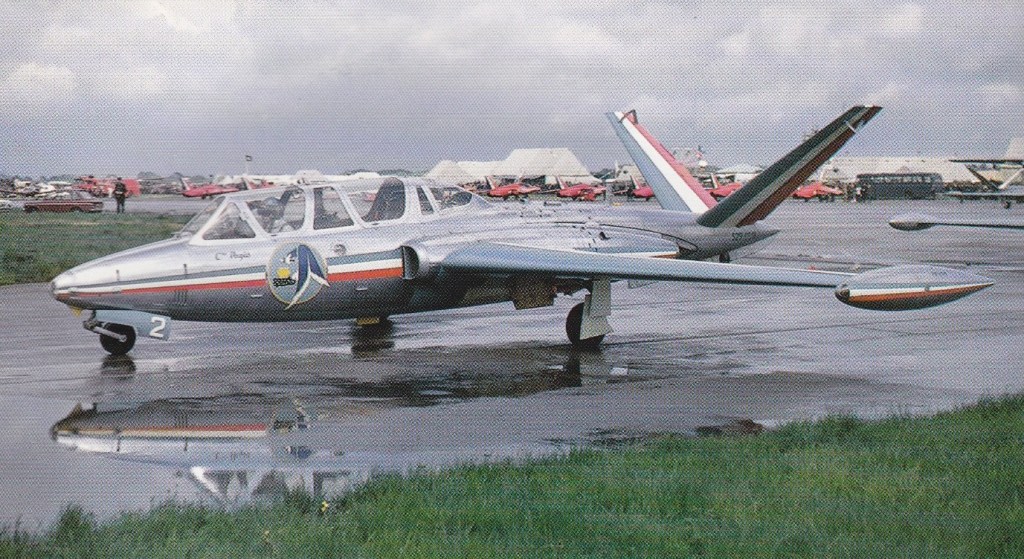
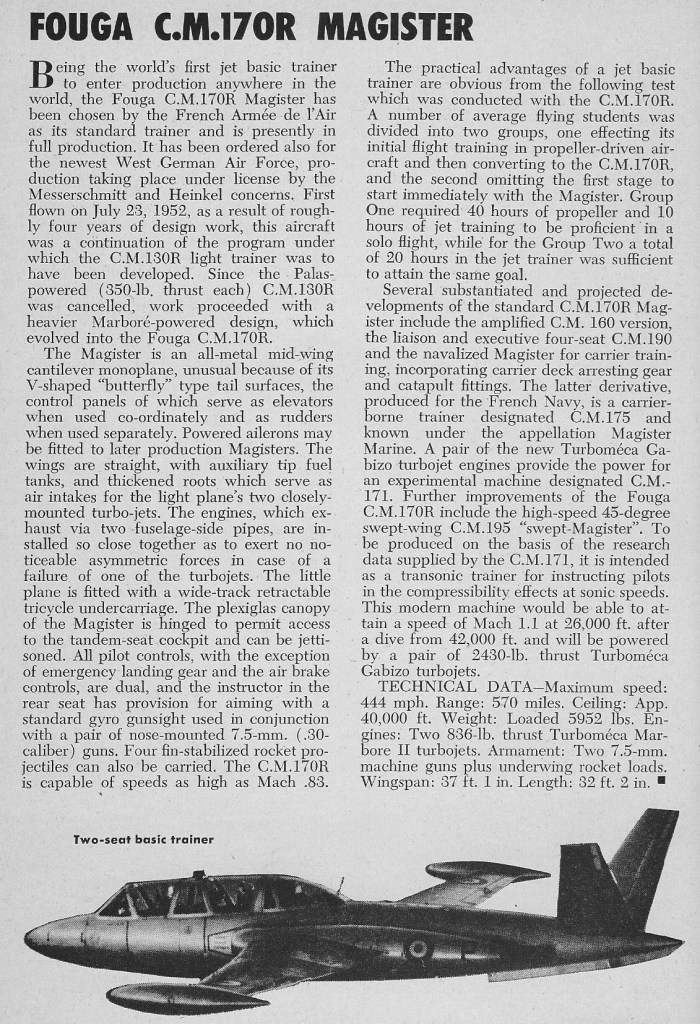
The CM.170 Magister featured tandem seating, a mid mounted wing and two Marbore II turbojets mounted either side of the fuselage in nacelles faired into the wing fuselage joint. The only unusual feature of the CM.170 was a butterfly tail, whereby fin and tailplane are replaced by two surfaces mounted at 45 degrees to the horizontal, the control surfaces of which moved the same way to act as rudders and moved in opposition to act as elevators. The Magister is all-metal. The mid-mounted wings have single-slotted flaps and airbrakes. The butterfly-type tail has surfaces separated by 110 degrees. Fuel is housed in two fuselage tanks of 255-litre and 475-litre capacity, with wingtip tanks each holding 125 litres. The tandem cockpits are pressurised and air-conditioned, with individually regulated oxygen supplies. Ejection seats are not fitted. VHF, blind flying equipment and radio compass are standard in the trainer, while UHF, Tacan and IFF may be fitted to armed Magisters. Armament combinations include two 7.5mm or 7.62mm machine-guns mounted in the nose, with 200 rounds of ammunition per gun. A gyro gunsight is fitted in both cockpits, the rear one having periscopic sighting. Underwing ordnance loads include two Matra Type 181 pods each with eighteen 37mm rockets, two launchers each mounting seven 68mm rockets, four 25kg air-to-ground rockets, eight 88mm rockets, two 50kg bombs, or two Nord AS.11 air-to-surface guided missiles.
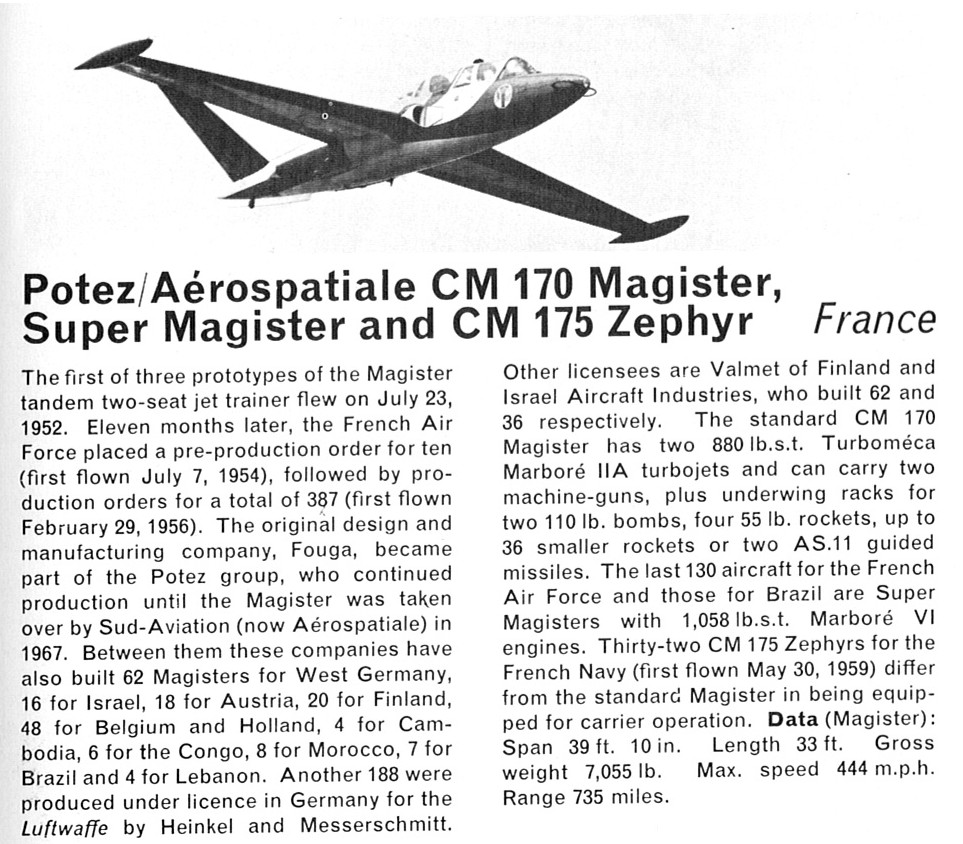
The first of three CM.170 prototypes flew on July 23, 1952, at Mont-de-Marsan (piloted by Leon Bourriau), while the MS.755 took to the air for the first time some six months later on January 24, 1953. Two CM.170 prototypes were built; the first with the butterfly tail and second with a conventional tail. Despite the crash of the prototype, the butterfly tail was used for the production series.
After evaluating the merits of both aircraft, the French Air Force expressed a preference for tandem seating, and in 1953 placed an initial order for ten pre production and 95 production CM.170R Magister aircraft. First pre production aircraft (batch of 10) flew on July 7, 1954. First production aircraft flew on February 29, 1956.
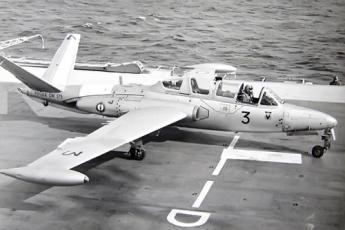
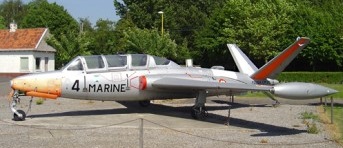
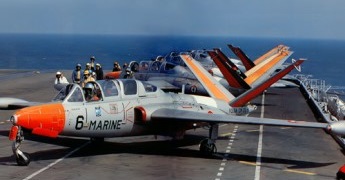
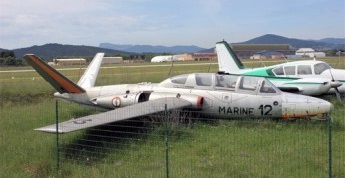
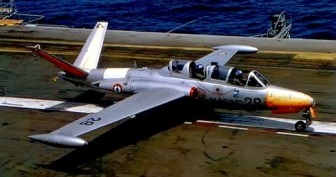
The CM.170, MS.755 and MS.760 used only fuselage fuel tanks. The navalized version of the C.M.170M has the addition of a tail hook, the two canopies jettisonable in one piece, the oleos longer and some items of equipment different.
The French Navy, also looking for a training aircraft, turned to Fouga for an aircraft for operations on aircraft carriers and the marine environment and Fouga worked on several changes to their CM170R.
CM 170 M Zephyr
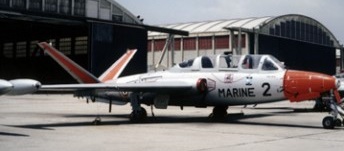
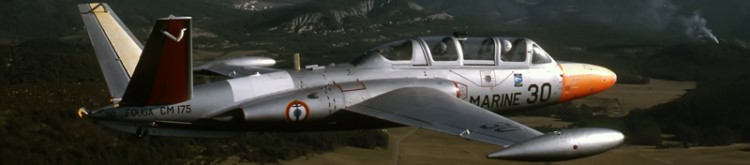
The Naval version, the CM-175 is distinguished by some changes. The canopy sliding backwards replacing the old, clamshell-type allowing flight and landings open. The new rear seat telescope is angled Z to allow the sliding of the front canopy. A tailhook is mounted under the rear fuselage. It retracts into the keel. A new long-stroke shock absorber increased the height of the landing gear 15 centimetres and absorb the shock of landing and catapult launches. Wing tip tanks are removable (but not releasable in flight). Their capacity is 122 lt instead of 230 lt equipping Air Force Magisters.
The CM 175 is equipped with a G- II Marboré 3 which differs very little from the F-3 of the first series of Magister. Ties back journals are more flexible on the G-3. Turbomeca Marbore II equipped the Fouga CM175 Zephyr throughout his career.
The prototype No. 1 CM 170 M Esquif, who would become the CM 175 Zephyr, was first flown on 31 July 1956, by Jacques Grangette. In addition to the two prototypes of the CM-170M Esquif, 28 aircraft were ordered and delivered from 1960. They were renamed Zephyr.
CM 170 M Zephyr
Total CM.170 and CM.175 production amounted to 916 Marbore II powered Magisters, including licence production carried out in Finland by Valmet OY (62), Israel by Israel Aircraft Industries (36) and West Germany by Flugzeug Union Sud (188). Israeli aircraft upgraded at Bedek to AMIT Tzukit status.
In the 1960s, the Finnish Air Force had MIG-21 rockets in stock which had a limited lifetime. To use this stock for training purposes the idea of rocket launchers for Fouga Magister jet trainers was born. A contract to design the launchers as a private venture was issued, and with Aulis Eerola 4-tube units covered with fiberglass skin were built. In test firings the launchers proved to be accurate but had an unfortunate end. On one of the test flights the pilot accidentally pressed the emergency release button and the units were lost deep in a bog and were never found.
The CM.170 2 Super Magister was an upgraded and refined CM. 170. The Magister is a sophisticated aircraft, with pressurised tandem cockpits and power controls (aileron boost), although in its standard form, it does not have ejection seats. To meet the latter requirement, particularly for Indian interest at one stage, a new version was produced designated the CM 173 Super Magister. Military Users: Algeria, Austria, Bangladesh, Belgium (50), Brazil, Cambodia, Congo, Eire, Finland, France, Lebanon, Morocco, West Germany, Israel, Rwanda, Salvador, Senegal, Togo.
The first aircraft built in Israel was a Fouga Magister completed from French Components by Bedek Aircraft in mid-1960.
First aircraft built in Israel
The Aerospatiale Fouga 90 was a modernised descendent of the CM 170 with a deeper mid-¬fuselage incorporating a raised cockpit for the instructor, and fitted with a pair of Turbomeca Astafan IIG turbofans. The prototype F-¬WZJB flew for the first time on August 20, 1978. A much updated and redesigned CM.170 with a view to re opening production, or establishing a conversion for the many existing CM.170 operators. The Fouga 90 featured the wing and empennage of the Magister, but coupled Turbomeca Astafan IIG engines with an all new fuselage incorporating a stepped tandem seating arrangement, including built in provision for ejector seats, and new avionics. Only one built, no further development was undertaken beyond the first aircraft.
An evolution of the CM170, the Super Magister was an improved model with two 480kg Marbore VI engines. The first flight was June 8, 1964. A single copy was built which was then be renamed Potez 94.
Potez (94) CM173 – Super Magister
Equipped with 2 Marboré VI, the Potez 94 was pressurized and had ejection seats.
In addition to French-manufactured Magisters offered for export, the trainer was manufactured under licence in West Germany by Flugzeug-Union-Sud for Luftwaffe training schools. With the transfer of most German flying training to the United States by the end of the 1960s, the Magister was phased out of service. Valmet OY in Finland built 62 Magisters under licence (in addition to 18 purchased from France) and Israel Aircraft Industries also acquired manufacturing rights for the type, building many for light-tactical use as well as training. Total production reached 929 including 194 in Germany, 62 in Finland and 36 in Israel.
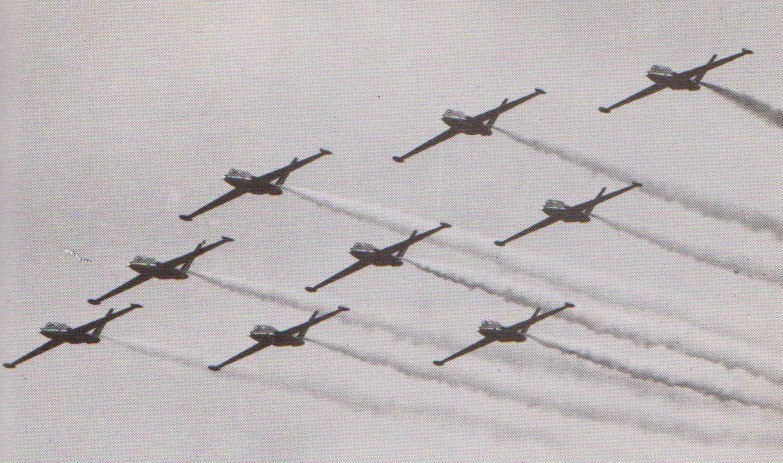
About 310 Magisters of the 437 originally procured remained in service with the Armee de I’Air until the mid-1980s. A 150-hour basic flying training course was provided for commissioned pupils at the Ecole de I’Air at Salon-de-Provence, and similar instruction was provided for other ranks at Groupement Ecole 315, Cognac. Magisters also served with Groupement Ecole 313 to provide instructor training for the Armee de I’Air and basic flying training for overseas students. The Force Aerienne Belge’s Magisters at the Ecole de Pilotage Avance, Brustem, were replaced by Dassault-Breguet/Dornier Alpha Jets in 1979. Finland’s Magisters at the Central Flying School, Kauhava, were in the early 1980s replaced in service by the first of 50 British Aerospace Hawk trainers. Israel operated the Magister as a light attack aircraft and trainers, during the Six-Day War of June 1967, flying ground attack sorties on both the Egyptian and Jordanian fronts. The Irish Army Air Corps also operated six Super Magisters in the dual light attack/training role, based at Baldonnel near Dublin.
Variants: CM.170 – 1950 Fouga Magister trainer designed with Ing Szydlowski from Turbomeca CM.170: Magister, 3 prototypes (1952), 10 pre-production a/c (1955) aka CM.170R (‘R’ for Réaction = Jet-propelled) NB: CM.170 No 2 first fitted with cruciform tail, then the ‘V’ type CM.170-1: Magister, 1955, 1st production vers., 2 x Marboré IIA, 761 built CM.170M Magister – 1956, CM-170 Marin, 2 x Aéronavale PoC a/c, led to Zéphyr CM.170M aka as CM.170 Esquif (‘Wherry’) CM.170-2 Magister – 1960, 2nd production vers., 2 x Marboré IV, 137 built
CM.171 – 1956 Makalu, CM.170 n°15 conv. to take 2 x Turbomeca Gabizo turbojets CM.171: consid. engine testbed a/c for CM.195 project
CM.173 – 1966 Super Magister, 2 x 480 kg Marobé VI (Marboré Super VI), 1 prototype CM.173: aka Potez 94, higher-power CM.170 deriv. for South African market
CM.175 Zéphyr – Aéronavale shipboard trainer deriv. from CM.170M Flight 20 June 1958 refers to Zéphyr as the “CM.175 Esquif” (sic)
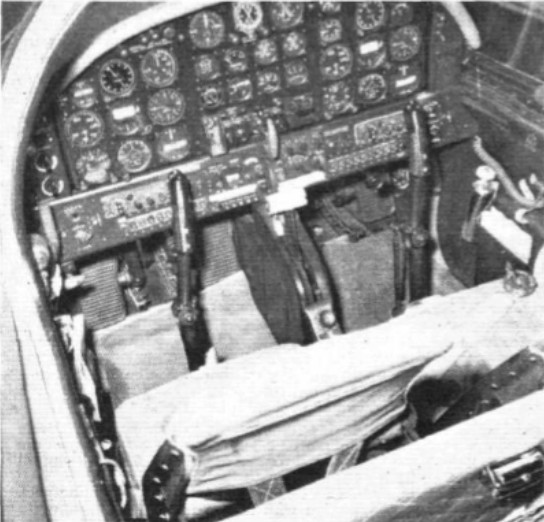
Potez-Heinkel C.M.192 cockpit
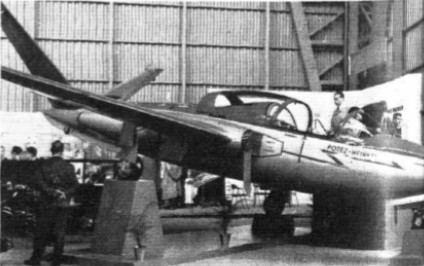
Potez-Heinkel C.M.192
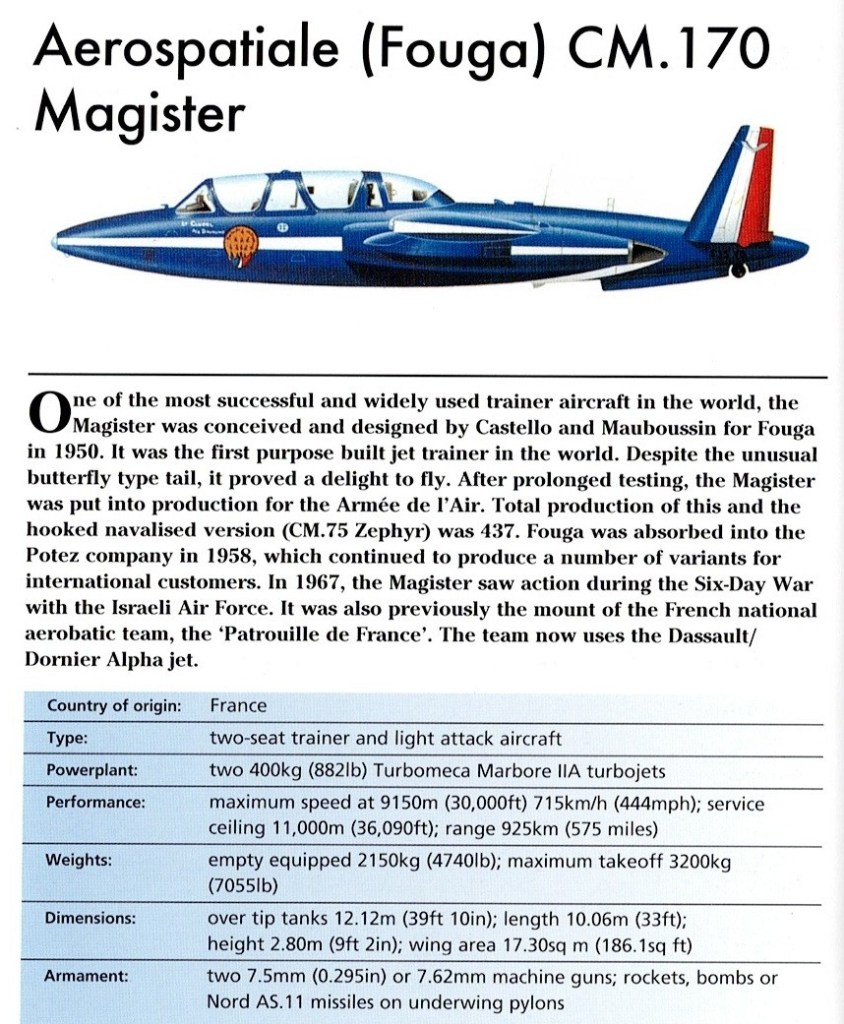
CM.170 Magister I Engines: 2 x Turbomeca Marbore IIA, 400 kg / 880 lb thrust. Wing span: 39 ft 9 in ft (12.1 m) Overall length: 33 ft (10 m) Height: 9 ft 2 in ( 2.8 m) Wing area: 186.1 sq.ft (17.3 sq.m). Wing aspect ratio: 7.42. Empty wt: 4740 lb (2151 kg). Normal T/O wt: 6280 lb (2851 kg). MTOW: 7055 lb (3202 kg). Internal fuel cap: 160 Imp.Gal. (727 lt). External fuel cap: 55 Imp.Gal. (250 lt). Wing loading: 33.7 lb/sq.ft (164 kg/sq.m). Pwr loading: 3.6 lb/lbst (3.6 kg/kgst). Max speed: 432 mph (695 kph). Initial ROC: 3350 fpm (17 m/sec). TO dist 50 ft: 2600 ft (793 m). Range: 575 sm (925 km). Operating ceiling: 33,000 ft. Service ceiling: 11000 m / 36100 ft Seats: 2
Magister II Engines: 2 x Turbomeca Marbore VI, 1150 lb thrust.
Fouga 90 Engine: 2 x Turbomeca Astafan IIG turbofan, 1,520 lb Wing span: 39ft 6 in (12.04 m) Max speed: 398 mph (640 km/h)
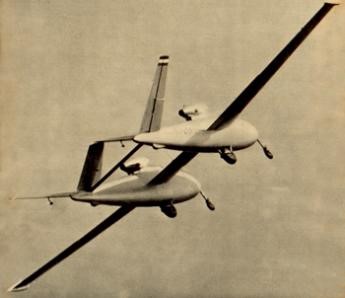
Primarily a flying test aircraft, proposed uses were numerous and made it a real aircraft laboratory. It was a two-seater with 2 Pimene 110 kgf turbojets, which could fly up to 285 km / h with a service ceiling of 7000 meters.
Gemini, as Cyclops and Sylph which it is derived, is of mixed construction, wood and metal.
The fuselage has two hulls oval section connected by the central plane. Each body is identical to the Sylphe in its design and its dimensions. Gemini is dual – control, the control station located in the fuselage on the left.
The tail is two juxtaposed butterflies, forming a W, the V 2 not connected (the fuselages interconnected by a fixed horizontal plane).
The Gemini Mark I, F- WEPJ, CM 88 R made its first flight on March 6, 1951, at the hands of Leo Bourriau. The first prototype was named “Castor and Pollux”.
The Mark V version with a Turbomeca Aspin II of 360 pounds thrust, made its first flight, piloted by Léon Bourriau, on June 21, 1952.
Fouga CM88R – Gemini Mark V
CM.88R Gémeaux I: Mar 1951, 2 x 100 kg Piméné turbojets, aka CM.88.R I CM.88R Gémeaux II: June 1951, 2 x 300 kg Marboré I, aka CM.88.R II CM.88R Gémeaux III: Aug 1951, 2 x 380 kg Marboré I, aka CM.88.R III NB: CM.88.RIII/Gémeaux III was re-engined CM.88.R II/Gémeaux II CM.88R Gémeaux III: Jan 1952, 2 x 400 kg Marboré I, aka CM.88.R III CM.88.RIII/Gémeaux III re-engined with 400 kg Marboré II, Jan 1952 CM.88R Gémeaux IV: Nov 1951, 2 x 200 kg Turbomeca Aspin I, aka CM.88.R IV NB: CM.88.RIV/Gémeaux IV was Gémeaux I re-engined with ducted turbojet CM.88R Gémeaux IV: June 1952, 2 x 360 kg Turbomeca Aspin II, aka CM.88.R V NB: CM.88.RV/Gémeaux 5 was CM.88.RIV/Gémeaux IV re-engined with Aspin II
Engines: 2 x Turbomeca Piméné Takeoff thrust: 100 Kg to 35000 rpm Max thrust. Continue: 90 kg 34300 rpm Wingspan: 10.76 m Length: 6.66 m Height: 1.93 m Empty weight: 750 kg Weight equipped: 585 kg Engine weight: 150 kg Fuel wight: 180 kg Equipment: 166 kg Total weight: 1096 kg Fuel: Kerosene Fuel capacity: 3 x 40 lt (wings), 2 x 50 lt (fuselage) Oil capacity fuselage: 2 x 2 lt Max speed SL: 285 km / h Cruise speed (3000 m): 220 km / h ROC: 3,5 m / s Ceiling: 7,000m Endurance: 1h 30 mi
The Fouga Midget racing aircraft resulted from the adaptation to a competition Fouga Cyclops II. Eight aircraft were ordered in late 1951 by the Racing Airports Company Colonel Dhome. Production started in November 1951 and only seven months later, May 30, 1952, the first flying in the hands of Leon Bourrieau at Aire sur Adour. The other seven were completed in the five or six weeks that followed.
The Midgets were to participate in air races for Colonel Dhome.
The Fouga CM -8 R.8.3 cantilever NACA wing is relatively thin. It is single spar skin, the box edge housing fuel tanks. The fins are slotted, and the wing is equipped with shutters brakes. Wing tip have two retractable legs.
It fuselage is of shell structure with an oval section. The Turbomeca Palas is attached at three points above the fuselage. The fuel used is Regular Gasoline contained in two 64 liters tanks. Oil is contained in an annular three liter tank, located in front of the engine. Ignition is provided by a six volt battery and two coils. The starting is effected by means of compressed air.
The unsercarriage is a monotrace fixed type. The main wheel, 420 x 150, is equipped with disc brakes. The nose wheel, 220 x 60, is controlled by the steering. Both wheels have hydraulic shock absorbers.
The Midget meets the conditions imposed by the ISP to take part in international competitions class light aircraft less than 500 kg and record attempts in the category. With an equipped weight of 350 kg, the loaded weight is 900 kg. The fuel counted for 74 kg yet the Palas consumes 180-200 kg per hour.
Eight examples were built.
Engine: 1 x Turboméca Palas, 160 kgp Wingspan: 7.07 m Aspect ratio: 6 Length: 6.70 m Height: 1.85 m Wing area: 11 m² Empty weight: 350 kg Weight total: 500 kg Maximum speed: 400 km / h ROC: 10 m / sec
The CM.8 was a 1942 Castel-Mauboussin project 1-seat wooden gull-wing acrobatic glider, 13.5 m span The CM.8 Acro was a scaled-down, single-seat development of CM.7 Adour, leading to CM-8/13.
Turbomeca designed and built after the end of World War Two the Pimene turbojet which was rated at 242 lbst (110kgst). This design was successfully flown on July 14, 1949 in a Fouga Cyclone powered glider. The experience so gained enabled Turbomeca to put into production a family of small gas turbine engines which included the Palas of 160kgst (353 lbst), the Marbore of 300kgst (660 lbst) and the Marbore II of 400kgst (880 lbst).
Experience with CM.8-R.9 Cyclipe and with the Gemeaux led to development of the CM.170R Magister jet trainer, first flown 23 July 1952 and subsequently built in quantity for French Air Force and overseas customers.
The C.M. 8R-13 Cyclone is a jet-powered version of C.M. 8-13 Sailplane. The C.M. 8R-13 had been intended to serve as a test-bed for the Turboméca Piméné light axial-flow turbo-jet engine which has a maximum static thrust of 100 kg. (220 lb.). On July. 14, 1949, Fouga chief test pilot Léon Bourriau flew the first flight of the Fouga CM8 R13, which was named Cyclone.
Fouga CM8 R13 – Cyclone [Sylphe I]
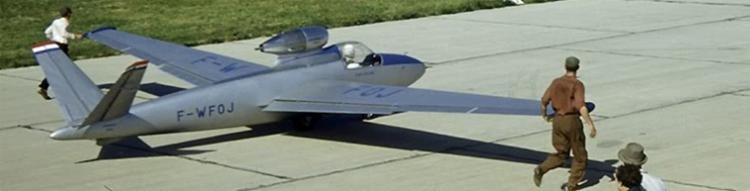
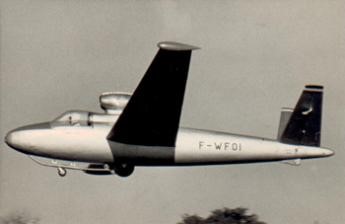
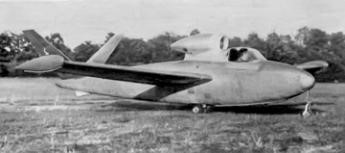
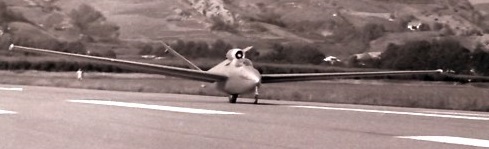
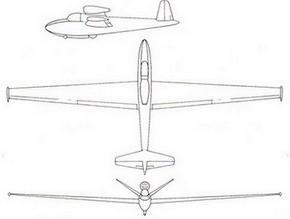
Only 2 CM8 R13 Cyclone (Sylphe I) were built. They appeared on the French civil register as : F-WFOI [later F-BFOI] and F-WFOJ [later F-BFOJ]. The Turbomeca turbojet, which weighs 64 Kg (141 lb) fully equiped, was mounted above the fuselage just after the pilot’s cockpit. Tha aircraft has the “butter-fly” tail fitted to the CM8-15 sailplane.
Fouga Cyclone N°1 (Sylphe I), F-WFOI
Fouga demonstrated the CM 8 R 13 Sylph I in France and then in Miami in January 1950, flown by Fred Nicole.
In May 1950, the piston engines manufacturer, Wright, sent a letter to Aire sur Adour requesting that the CM 8 R 13 name be changed from “Cyclone”, which was assigned to one of their world famous engines. M Mauboussin accepted and give “Sylph” in CM8 R 13.
A number of changes were implemented summers, especially the integrated front runner on No. 1 was instead attached to the front runner, and in the case of No. 2, the engine cowling was evolved.
The wings were mid-wing cantilever monoplane. NACA 230 wing section. Aspect ratio 13. Single-spare all-wood stressed-skin structure. Metal framed, fabric-covered slotted flaps and slotted ailerons. Retractable air-brakes in upper and lower wing surfaces.
An oval wood monocoque fuselage structure. The tail unit was a “butterfly type”. Fixed surfaces all-wood, movable surfaces all-metal. Area fixed surface 1,35 m² (14.52 sq. ft.), Area movable surfaces 1,09 m² (11.73 sq. ft.). Landing gear was a fixed single-track type.
The CM8 R9,8 Cyclope I is a single-seat training and aerobatic version of the Sylphe, from which it differs by having wings of reduced span and area, a single track landing gear with twin main wheel (later replaced by a single one) and retractable wing-tip skids. The turbojet engine remain a Turbomeca Pimene. Fouga CM8 R 9.8 Cyclope was flown by Leon Bourriau 31 August 1950.
Fouga CM8 R9,8 – Cyclope I
Five month later, on 3 January 1951, The Cyclope successfuly flown with a Turbomeca Palas (160 Kp version).
The CM8 R13 – Sylphe II can be considered an evolution of the Cyclone [Sylph I] prototype [F-WFOI / F-BFOI] which has been specially modified. The little dolly always present (the nose wheel not making its appearance with the Sylph III), the cockpit with a canopy with closed side, and Pimen having a much lower position make it a very different.
The Sylph III is a direct result of an evolution of cylcone [Sylph] Sylph in II. It is, like its predecessors, a single-seater glider with auxiliary engine. The first flew on January 2, 1952.
Fouga CM8 R13 – Sylphe III
The Sylph III led to the deletion of the small wheel, a single wheel nose.
The most significant change for performance was the Turbomeca Pimene, which is more powerful than previous versions installed on the Sylph or cyclone version as delivering more than 100 kgf.
The wing is NACA 23014 to the root, at the end 23012. A mid-wing cantilever monoplane, monolongeron-skin, entirely from wood. The fins are slotted alloy and stretched canvas, and flaps trailing edge slot, alloy and stretched canvas. The V-tail is fixed plan wood, coated with plywood. Moving parts are light-alloy coated sheet. The undercarriage is a monotrack fixed type, with steerable front wheel, combined with auxiliary rudder and rear skid.
Variants: CM.8 — 1949 single-seat sailplane, aka Fouga CM.8, aka CM-8/13 CM.8 Acro: [Project] 1942 CM.8/13: 13m span prototype with conventional empennage, 1 built CM.8/15: 15m span prototype with a V-tail, 1 built
CM.8R: Turbomeca Piméné-powered vers., 13m span with V-tail, aka CM.8R13 CM.8R13: 1949 Sylph I, aka Cyclone (renamed at insistance of Wright) Cyclone/Sylph I: July 1949, 2 built, F-WFOI and F-WFOJ [F-BFOJ] CM.8R13: 1950 Sylph II, changes to Piméné jet and canopy, 1 built CM.8R13: 1952 Sylph III, 100+ kg Piméné, revised canopy and u/c Sylph III, 4 built F-BFDH, F-BFDI, F-BFDJ, and F-BFDK CM-08R9.8 Cyclope I: 1951 short-span Sylph, 1 x 110 kg Piméné, 1 built CM-08R9.8 Cyclope II: 1951 short-span Sylph, 1 x 160 kg Palas, 1 built CM.8/13 Sylphe démotorisé: CM-8R/13 with motorization option removed
Fouga CM8 R13 – Cyclone [Sylphe I] Engine: One Turbomeca Pimene turbojet: 100 kg / 220 lb. St Span: 13,00 m (42 ft.7,5 in). Gross wing area: 13 m² (140 sq. ft.) Length: 6,70 m (21 ft.11 in.) Height: 1,85 m (6 ft.1 in.) Weight empty 435 Kg (958lb.) Pilot weight: 88 Kg / 194 lb Fuel and oil: 110 Kg (242 lb.) Weight loaded: 633 Kg (1394 lb.) Max speed at sea level: 240 Km/h (149 mph) Max speed at 3500 m: 250 Km/h (155 mph) Max Speed with AB: 150 Km/h / 93 mph Max. speed at sea level: 149 mph. Max. speed at 11,500 ft: 155 mph. Initial rate of climb: 790 ft./min. Climb to 1200 ft: 1 min. 45 sec. Climb to 11,500 ft: 18 min. Climb to ceiling: 1 hr. Service ceiling: 27,225 ft. Max. range at 13,000 ft: 186 miles Take-off run to 66 ft: 460 yards
Fouga CM8 R9,8 – Cyclope I Engine: One Turbomeca Pimene turbojet: 100 kg / 220 lb. St Span: 8,76 m (28 ft.9 in.) Length: 6,66 m (21 ft.10 in.) Wing area: 9,80 m² Weight empty: 394 kg (867 lb.) Fuel and oil: 77 kg (170 lb.) Weight loaded: 554 kg (1,220 lb.) Wing loading: 56,5 Kg/m² (11.58 lb./sq.ft) Max speed at sea level): 280 km/h / 174 mph Max speed at 13120 ft: 300 km/h / 186 mph Initial rate of climb: 288 m/min / 945 ft/min Climb to 1180 ft: 1 min 30 sec Service ceiling: 8 500m / 27,880 ft Take-off distance (66 ft): 460 m / 503 yards Range at 13120 ft: 280 km / 150 miles
Fouga CM8 R13 – Sylphe III Engine: Turbomeca Pimene Wingspan: 13,00 m Length: 6.70 m Height: 1.85 m Wing area: 13,00 m² Empty weight: 435 kg MAUW: 633 kg Max cruise speed: 300 km / h Cruise speed: 100-150 km / h Fuel: Kerosene Fuel capacity: 2 x 40 lt in wing, one 50 lt central fuselage tank
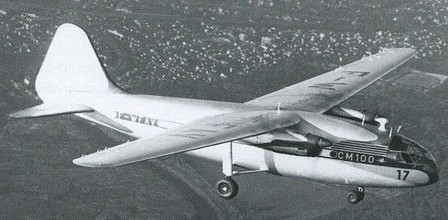
The Castel-Mauboussin CM.10 transport glider was built for French military forces, also the CM.100 powered version with two Renault engines. In the latter CM-101R Renault engines were augmented by two Turbomeca Pimene turbojets.
CM.10 — 1947 wooden assault glider, 35 troops, 26.96 m span, 2 prototypes CM.10: Fouga-built glider prototypes evaluated by Armée de terre, 1947 Prod. order for 25 (SNCAN-built) cancelled after crash of CM.10 n° 1 CM.100: 1949 powered vers., 2 x Snecma 12S (As 411), 1 built (F-WFAV) NB: study begun Nov 1944 for Armée but civil vers. envisioned by SGAC CM.101R: F-WFAV with added wingtip-mounted Turboméca Piméné turbojets CM.103R: [Project] military CM.101R variant, 2 x Turboméca Marbore turbojets