Gossamer Condor I

In 1976 Paul MacCready was thinking about trying for the £50,000 Kremer Prize for manpowered flight. The wing loading would be very light and that it would operate a lift coefficient of only .9 (compared to 1.4, or better, for previous MPAs). This meant a single-surface airfoil would have low drag.
Construction began in the Rose Parade float shed down in the Arroyo Seco not far from Pasadena. Two inch diameter .035in. thick alloy tubes in 12ft sections that were joined to make an 88ft span wing.
On 9th October 1976, though the lightly misting rain added a lot of weight, the craft acted more like a balloon than an airplane. They walked with it at 5 mph; it lifted easily and strained at the ropes attached to all corners. Nothing broke. The structural idea was reasonable.
The 96ft span craft was moved to Mojave Airport soon after the tubing was chemically milled down from 22 thousandths at the centre to 14 thousandths of an inch at the outer sections of the wing.
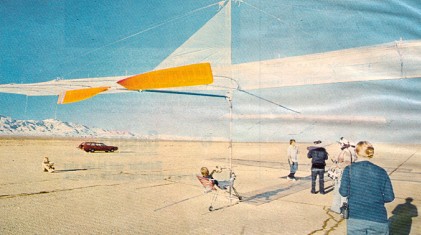
First flights with Paul’s son Tyler (a hang glider pilot) on board were promising. Tyler pedalled rather easily making 45-second flights with a push start. Greg Miller, a new rider of racing cyclist championship quality could take off on his own and, after a good deal of flying practice, made a tremendously encouraging flight of two-and-a-half minutes while covering over a thousand foot distance.

The next time, MacCready measured and marked the one-mile figure-eight course, practised taking off and flying over the 10 ft barrier, and called out the officials. After several trials, Greg’s best flight was 2 minutes and 30 seconds. It had to stay up three times longer, and the matter of control was even more critical – a full turn had yet to be made. Winds of 2 to 4 mph and the slightest gustiness would limit flights to only 30 or 40 seconds. Thin, single-surface airfbils have low drag at only one angle of attack. For the Condor, a low-drag spike occurred at about 8.2 mph. Above or below that speed, the drag rose impossibly high.
The Condor I conducted 332 flights.

With budgetary problems NASA was having trying to keep its space program alive and well, NASA/ Dryden Flight Research Center established a NASA test program is to study the unusual aerodynamic performance, stability and control characteristics of large but very lightly-loaded and slow-flying aircraft. Data acquired will be used in the design of future aircraft for extremely low-speed flight at any altitude, and particularly for low-power flight in very low densities at high altitudes up to 100,000 feet. Not that they expect Bryan to crank his way into the stratosphere – they just wonder what it would be like to f ly a homebuilt aircraft like the G.A. in the thin air of Mars.
Under Project Manager Dale Reed, in mid February 1980 the 55-pound man-powered aircraft finally got off the ground, between midwinter rains, with Bryan Atlen doing the legwork.
When the rains let up, they hooked up an electric motor and to make it an EPA (electric powered aircraft), preparatory to installing solar cells on the wings.

Aspect ratio: 8.3.
Span: 96 ft.
Chord: 115 in.
Wing area: 1056 sq.ft.
Prop dia: 12 ft.
Weight: 84 lb
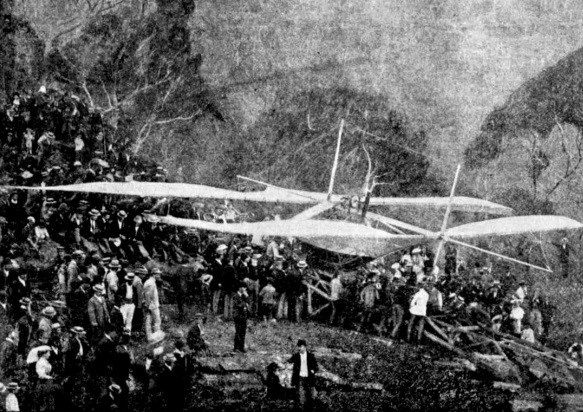
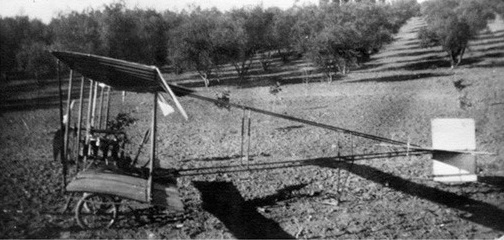
Gordon, Donald H.

Donald H. Gordon grew up in the El Cajon Valley, California, and built and flew a glider and three powered planes on the family’s 160-acre ranch at Bostonia. His made one of the first power flights west of the Mississippi, within six years of the Wright Brothers’ first flight. Earlier, while the Wrights were making their first public flights in 1903, Gordon built a glider which took off from the top of the family barn. The contraption collapsed, and plane-building was suspended for several years.]

Goodyear RS-1

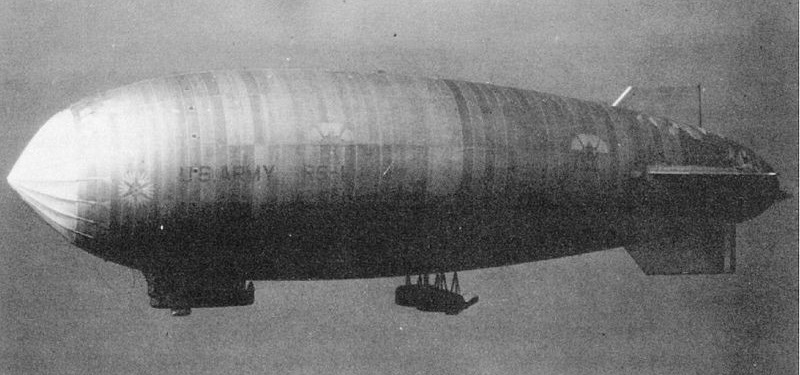
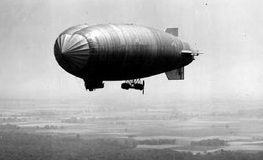
The first semi-rigid airship designed and built in the United States, the RS-1 project was initiated in 1922 and became a joint effort of the Air Service and the Goodyear Tire and Rubber Company of Akron. Ohio. It was designed by Goodyear engineer and inventor, Herman Theodore Kraft. A contract was signed with Goodyear on 13 October 1922 and actual construction was started at the Goodyear facility in Ohio in 1923.

The ship used helium as a lifting medium and power was by four 300 hp Liberty 12 engine. There were two power cars, each having a pair of engines driving a single 17 ft 6 in propeller through a transmission designed and built specifically for the RS-1. The contract to build the transmission was given to Goodyear along with one to built the airship itself. Goodyear subcontracted the transmission to the Twin Disc Clutch Co of Racine, Wisconsin. The design work was done by Thomas Farwick. Three units were built, one for testing and use for any refinements required, and two for installation in the RS-1. The first unit was delivered to McCook Field and passed is 50 hr test in the Summer of 1925. The remaining two units were delivered directly to Goodyear.

The design provided 12 to 5 reduction gearing to a single 17 ft 6 in propeller being driven by either two 300 hp Liberties or by a single one. The transmission could reverse the direction of the propeller but one engine had to be disengaged during the operation. Either or both engines could be disengaged by its own disk clutch.

The engines were mounted in staggered form. Each had its own disengaging clutch. One drove a transmission input through a short shaft and the ther through one long enough to clear its adjacent engine.

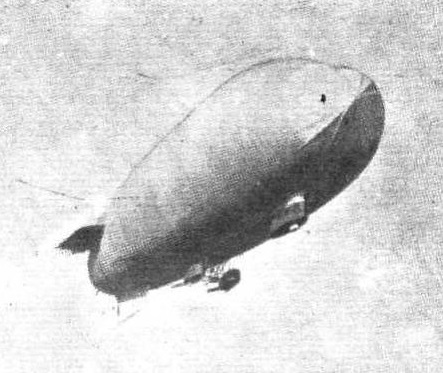
The ship was delivered to Scott Field in early 1925 where it was erected. A 35 ft (10.7 m) enclosed control car is suspended from the keel at the nose. Equipment included a bombing cockpit and the ability to carry 3,500 lb (1,588 kg) of bombs, as well as mounts for machine guns on each side at the forward end of the car.

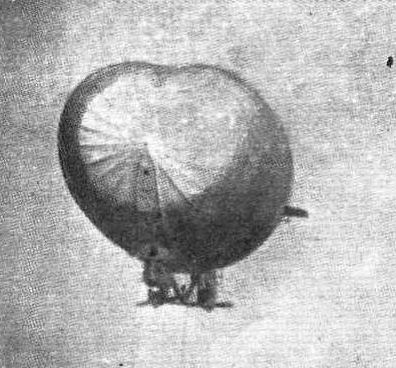
Along the belly of the envelope is an enclosed aluminium alloy keel, suspended by catenary cables, which attach to the three points of the keel at 10-ft. intervals. The load coming on the centre catenary gives the envelope a heartshape transverse cross-section, of which the greatest dimensions are 66.5 ft by 73 ft high. The envelope is divided into four compartments by transverse diaphragms. The centre diaphragm is a solid wall, while the end ones have surge holes near the bottom in the gas and air compartments.

It was inflated and subjected to numerous tests and was taken on its maiden flight. The first flight was delayed due to a mistake made by a rigger during erection and eventually took place on 8 January 1926, lasting just over an hour with a crew of eight men.

On its initial trial flight, on January 8, it made a successful trip of over an hour’s duration in a mild snowstorm, carrying a crew of eight men and with Lieut. Orval Anderson in charge. During a subsequent test flight the RS-1 encountered extremely bumpy flying conditions and winds that at times exceeded 50 mph. After a flight of 19 hours’ duration, however, the RS-1 was landed at its home base in a high ground wind without mishap, the personnel rendering a favourable report of the ship’s entire performance.

13 May 1926

In 1927 the Liberty engines were replaced by 2A-1500 Packard engines. The Packards were lighter by about 150 lbs. The normal rating of the Packards was 500 hp at 2000 rpm and 600 hp at 2500 rpm. The props were replaced with 16 ft diameter.

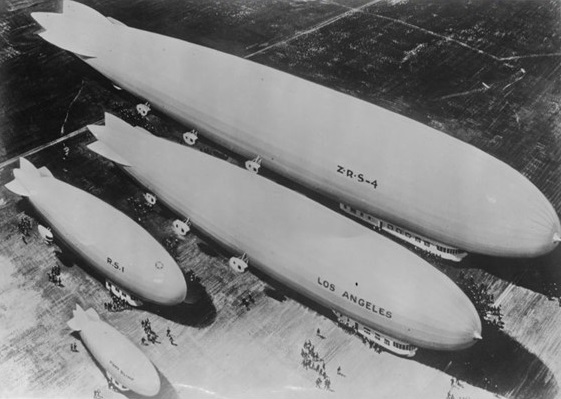
Four airships on the ground (USS Akron, USS Los Angeles, Goodyear RS-1, Pony Blimp)

The airship was taken out of service in November 1928 because of envelope porosity pending its replacement, but because of economic conditions, a new envelope was never installed and the airship was eventually scrapped.

Engines: 4 x Liberty 12, 300 hp / 220 kW
Capacity: 719,500 cu.ft / 20,000 m3
Length: 282 ft / 85.95 m
Diameter: 70 ft 6 in / 21.49 m
Width: 74 ft 6 in
Height: 66 ft
Max speed: 75 mph+ / 121 km/h / 65 kn
Cruise speed: 45 mph / 72 km/h / 39 kn
Useful load: 12,138 lb

Goodyear XAO-2 / XAO-3 Inflatobird

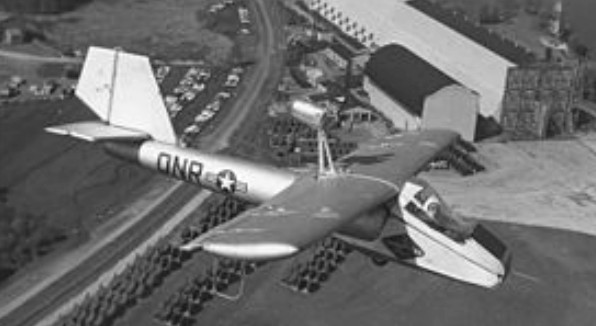
The original concept of an all-fabric inflatable aircraft was based on Taylor McDaniel inflatable rubber glider experiments in 1931. Designed and built in only 12 weeks, the Goodyear Inflatoplane was built in 1956, with the idea that it could be used by the military as a rescue plane to be dropped in a hardened container behind enemy lines. The 44 cubic ft (1.25 cubic meter) container could also be transported by truck, jeep trailer or aircraft.

The inflatable surface of this aircraft was actually a sandwich of two rubber-type materials connected by a mesh of nylon threads, forming an I-beam. When the nylon was exposed to air, it absorbed and repelled water as it stiffened, giving the aircraft its shape and rigidity. Structural integrity was retained in flight with forced air being continually circulated by the aircraft’s motor and guy wires.

There were at least two versions: The GA-468 was a single-seater. It took about five minutes to inflate to about 25 psi (170 kPa); at full size, it was 19 ft 7 in (5.97 m) long, with a 22 ft (6.7 m) wingspan. A pilot would then hand-start the two-stroke cycle, 40 horsepower (30 kW) Nelson engine, and takeoff with a maximum load of 240 pounds (110 kg). On 20 US gallons (76 L) of fuel, the aircraft could fly 390 miles (630 km), with an endurance of 6.5 hours. Maximum speed was 72 miles per hour (116 km/h), with a cruise speed of 60 mph. Later, a 42 horsepower (31 kW) engine was used in the aircraft.

Takeoff from turf was in 250 feet with 575 feet needed to clear a 50 foot obstacle. It landed in 350 feet. Rate of climb was 550 feet per minute. Its service ceiling was estimated at 10,000 ft.

The GA-466 was the two-seater version, 2 in (51 mm) shorter, but with a 6 ft (1.8 m) longer wingspan than the GA-468. A more powerful 60 horsepower (45 kW) McCulloch 4318 engine could power the 740 pounds (340 kg) of plane and passenger to 70 miles per hour (110 km/h), although the range of the plane was limited to 275 miles (443 km).

The test program at Goodyear’s facilities near Wingfoot Lake, Akron, Ohio showed that the inflation could be accomplished with as little as 8 psi (544 mbar), less than a car tire. The flight test program had a fatal crash when Army aviator Lt. “Pug” Wallace was killed. The aircraft was in a descending turn when one of the control cables under the wing came off the pulley and was wedged in the pulley bracket, locking the stick. The turn tightened until one of the wings folded up over the prop and was chopped up. With the wings flapping because of loss of air, one of the aluminum wing tip skids hit the pilot alongside the head, as was clear from marks on his helmet. Wallace was pitched out over the nose of the aircraft and fell into the shallow lake. His chute never opened. He may have been knocked unconscious and rendered unable to open it.

Only 12 Goodyear Inflatoplanes were built, but development continued until the project was cancelled in 1973. The US Army was not ready for blow up aircraft, however, and civilian certification standards prevented Goodyear from offering their Inflatobird to the public.

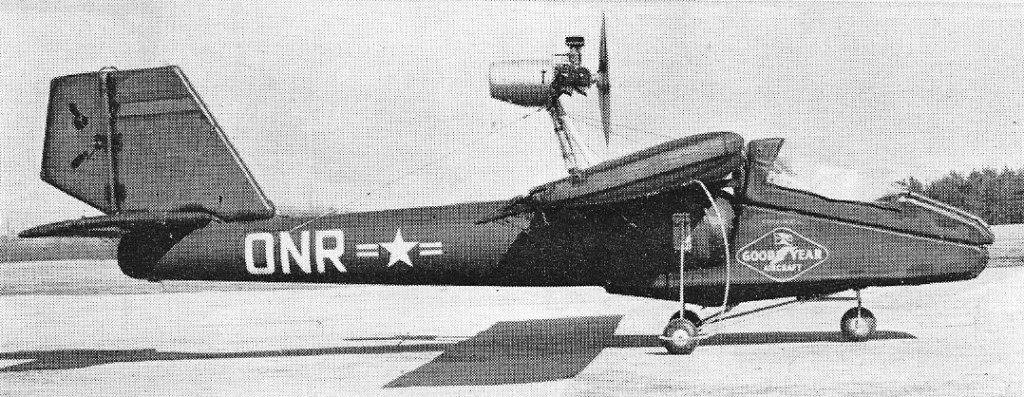
Mk.II with enclosed cockpit and smaller undercarriage

Goodyear donated two Inflatoplanes for museum display at the end of the project, one to the Franklin Institute in Philadelphia and one to the Smithsonian Institution in Washington, D.C.

Variants:

GA-33 Inflatoplane
The initial single-seat version, with open cockpit, based on the Taylor McDaniel inflatable rubber glider experiments from the early 1930’s. One built.

GA-447 Inflatoplane
An enclosed cockpit and new wing, used for undercarriage experiments (tricycle, uniwheel, and hydroskid). One built.

GA-466 Inflatoplane
Company designation for the AO-2 Inflatoplane

GA-468 Inflatoplane
Company designation for the AO-2 Inflatoplane

XAO-2-GI Inflatoplane
Military designation for the GA-466. One built.

XAO-3-GI Inflatoplane
Military designation for the GA-468. Five built.

General characteristics
Engine: 1 × McCulloch 4318 air-cooled, 60 hp (45 kW)
Length: 19 ft 2 in (m)
Wingspan: 28 ft (8.53 m)
Height: 4 ft (1.22 m)
Loaded weight: 740 lb (336 kg)
Maximum speed: 70 mph (113 km/h)
Range: 275 mi (440 km)
Service ceiling: 6,500 ft (1,981 m)
Rate of climb: 500 ft/min (152 m/min)
Crew: 1
Capacity: 1 passenger