Return to Gotha G.IV
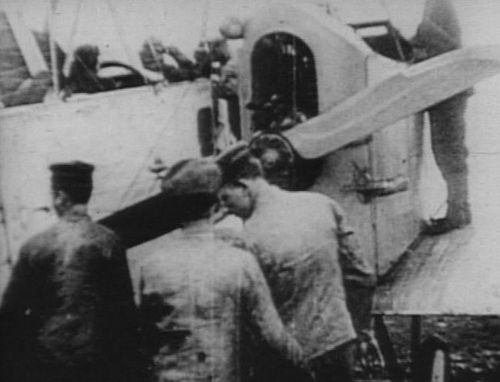
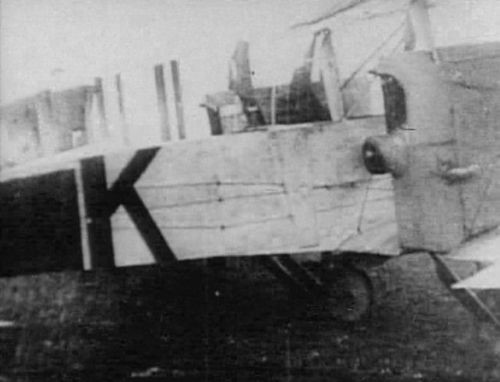
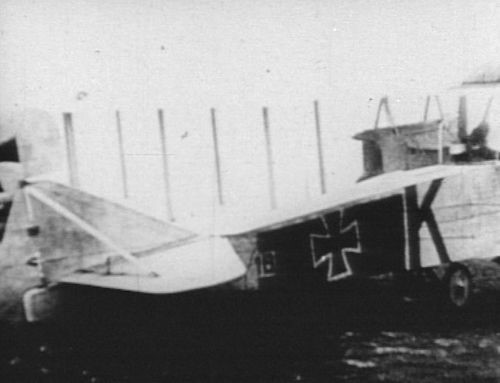
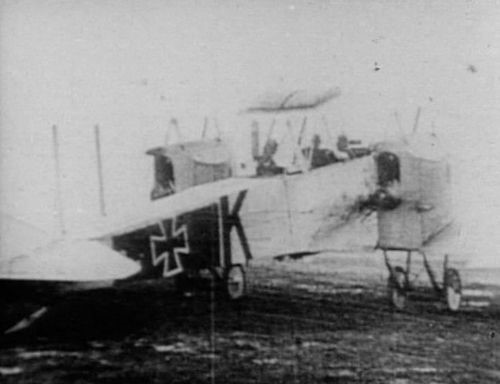
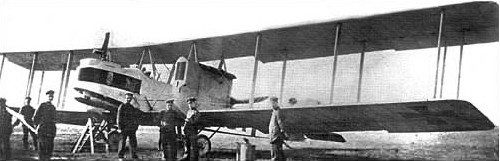
The Gotha G.IV was a development of the G.III.
The blunt nose made it possible to place the engines closer together, and together with placing the tailfins in the slipstream this gave better one-engine performance making it possible to run the engine at full power. But none of the type G twin-engined biplanes could fly level on one engine. The Gotha G was a ‘tunnel’ in the bottom of the tail that made it possible for the tail gunner to cover the lower rear of the aircraft.

Later versions had biplane tails with twin fins and eliminated the position for the nose gunner.
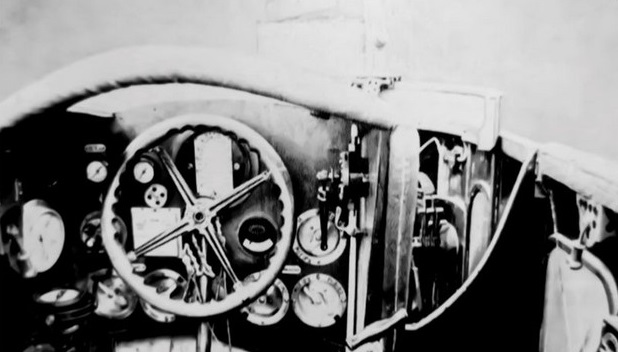
The G.IV (also produced by LVG and Siemens-Schuckert) was used in the first mass attack on England, when 21 Gothas raided Folkestone, Shorncliffe and elsewhere on 25 May 1917, killing about 95 people and injuring many others. On 13 June 14 Gothas attacked London for the first time and caused the worst casualties (of an air raid) of the war, with 162 people being killed and 432 injured. The heavy casualties suffered among the civilian population of England by these raids forced the return of aircraft from France to defend the cities, and such was their success that the last big raid on England during daylight hours was carried out on 12 August.
G.IV
Engine: 2 x 260hp Mercedes D.IVa
Take-off weight: 3975 kg / 8763 lb
Empty weight: 2740 kg / 6041 lb
Wingspan: 23.70 m / 77 ft 9 in
Length: 11.86 m / 38 ft 11 in
Height: 4.30 m / 14 ft 1 in
Wing area: 89.50 sq.m / 963.37 sq ft
Max. Speed: 140 km/h / 87 mph
Cruise speed: 124 km/h / 77 mph
Ceiling: 6500 m / 21350 ft
Range: 522 km / 324 miles
Crew: 3
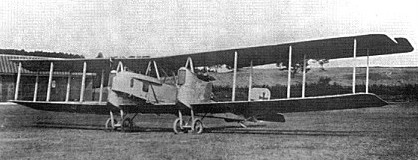
The Gotha G.II and G.III bombers made their appearance in 1916. The two bombers were remarkably similar, differing only in their engines and internal details. The G.III entered service in August of 1916 and was powered by two Mercedes D IVa direct drive engines. Engine power went directly to the propeller shaft without using a reduction gear to reduce revolution speed. Both aircraft were armed with two 7.92mm Maxim IMG Parabellum machine guns – one in the nose and another in the aft fuselage – and carried approximately 540kg of bombs. A few G.IIs and G.IIIs were equipped with a trapdoor in the undersurface of the rear fuselage, which permitted the rear gunner to take up a prone position and fire aft or downwards from a ventral position to defend the bomber’s vulnerable ‘blind spot.’
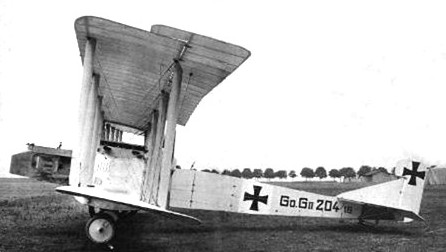
The Gotha G.II and G.III bombers made their appearance in 1916. The two bombers were remarkably similar, differing only in their engines and internal details. The G.II entered service in March of 1916 and was powered by a pair of direct drive 164kW six-cylinder liquid-cooled Mercedes DIV engines mounted in a pusher configuration. Some 15 G.IIs were used in the Balkans until they were withdrawn due to unreliable engines.
Both aircraft were armed with two 7.92mm Maxim IMG Parabellum machine guns – one in the nose and another in the aft fuselage – and carried approximately 540kg of bombs. A few G.IIs and G.IIIs were equipped with a trapdoor in the undersurface of the rear fuselage, which permitted the rear gunner to take up a prone position and fire aft or downwards from a ventral position to defend the bomber’s vulnerable ‘blind spot.’
The G.II used straight-eight DIV engines of 220hp, the G.III straight-six DIVa’s with 260hp.
Also the G.II did not have the trap-door, this was on G.IIIs only. Only 10 G.IIs were apparently built.
G II
Engine: 2 x Benz D IV, 165kW
Crew: 3
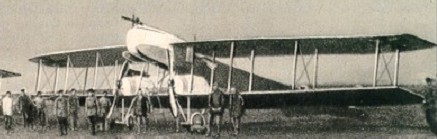
The first G.I flew in July 1915 followed by a further 17 of these three seater machines. While the prototype used two 160hp Mercedes D IIIs, the production aircraft employed two 150hp Benz Bz IIIs. mounted on the lower wing. A single Mercedes D.III-engined example of a seaplane version was also completed as the U.W.D. (Ursinus Wasser Doppeldecker, or Oscar Ursinus-designed float biplane).
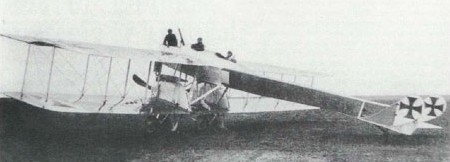
G.I
Engine: 2 x Benz Bz-III, 110kW
Take-off weight: 2810 kg / 6195 lb
Wingspan: 22.0/19.7 m / 72 ft 2 in / 64 ft 8 in
Length: 12.9 m / 42 ft 4 in
Height: 3.9 m / 12 ft 10 in
Wing area: 82.0 sq.m / 882.64 sq ft
Max. Speed: 130 km/h / 81 mph
Ceiling: 2700 m / 8850 ft
Range w/max.fuel: 540 km / 336 miles
Crew: 3
Armament: 1 machine-gun
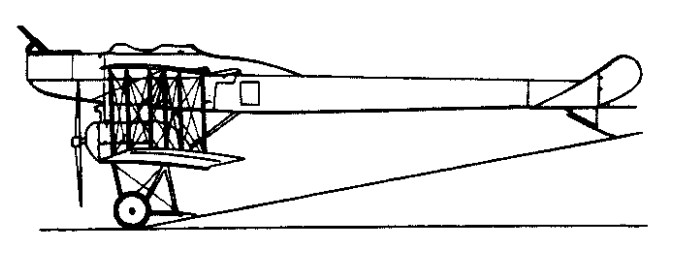
Operated aircraft works and flying school at Gotha and seaplane school at Warnemunde in First World War. Manufactured large quantities of aircraft during the war, including seaplanes and twin-engine bombers. Closed by Versailles Peace Treaty. Reopened in mid-1930s with two-seat training biplane, Go 145. In Second World War built Bf 109 fighter and Do 17Z bomber, also Go 242 glider and a powered version designated Go 244.
A high-wing monoplane
Sweden
Shipbuilding company, opened an aircraft department for license-construction of Hawker aircraft for Swedish government. Received order for Hart biplanes powered by Swedish-built Pegasus engines in 1935. Subsequently built a few light aircraft of its own design, most notably the GV.38 high-wing monoplane.
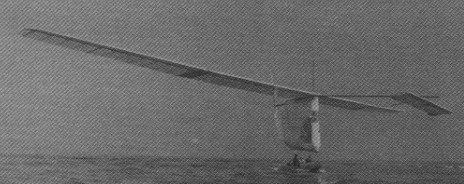
The Albatross had grown out of the Condor’s success but it is in a number of ways a very different craft — utilising carbon fibre reinforced plastic tubing for wing spars, bowsprit and gondola to produce a light, strong structure. The fuselage gondola and flying surfaces are covered by a Mylar plastic film, attached by double-sided adhesive tape with wing ribs cut from expanded polystyrene foam. Its 28.3¬m (93 ft) wing could be broken down into four sections for ease of transport, and had instruments an airspeed sensor driven by a tiny propeller mounted on the foreplane bowsprit, and an ‘altimeter’ developed from the automatic focusing device of a Polaroid camera.
Control of-the aircraft is effected by an all-moving canard and by wing-warping.
This 75 lb aircraft, flown and powered by 140 lb Bryan Allen, conquered the English Channel in 2 hours 49 minutes at a speed of some 11 knots in June 1979. Instrumentation is down to the basics of an airspeed indicator and an altimeter — neither of which proved essential when, in the latter half of the Channel-crossing, flat batteries mean a loss of readings.
Wing span: 93 ft 10 in.
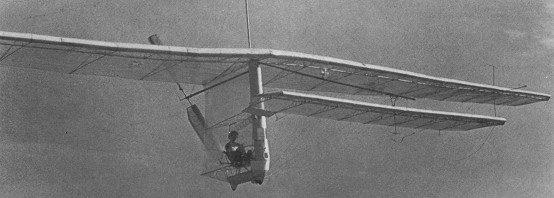
After the Condor, a new design went together at Shafter, a new base in Central Valley. It was called number two because it represented a major change in some ways. Paul MacCready kept the basic wire-braced tube-structure concept, but aspect ratio was increased from 8.3 to 12.8 and the wing loading raised from 0.22 to 0.26 lbs/sq.ft. A thick, double-surface airfoil was computer-designed and only a single tube along the centre of pressure was used for the spar. By eliminating the rear spar, enough weight was saved to permit use of more closely-spaced ribs and a cardboard leading edge. The pilot’s seat and chain-wheels were enclosed by a streamlined plastic envelope.
The result was that Greg Miller and Tyler MacCready almost immediately doubled their duration times. But making a turn and control of the new machine in bank had yet to be accomplished. Beyond a quarter turn the drag was too high creating reversal at low speeds.
Opposite-action wing warp was one of the final keys to success. The drag of the inner wing (due to its increased angle of attack) swings that wing back, but also adds just enough lift to keep it from dropping. The result – a perfect turn. The pilot just clicks a lever into the notch and the wings are held in a twist for a turn with no other action necessary until the ship is straightened. Then he lifts the lever into neutral and goes his way. The Condor can turn about in only 180 feet. The wings were slightly swept back to aid stability, and the foreplane could be banked and its angle of incidence in¬creased to start a turn, with the innermost wing warped to provide additional lift and thus balance the turn and prevent that damaging slip into the ground which had wrecked previous man powered aircraft.
By the summer of 1977 the Gossamer Condor had made more than 430 flights and had accumulated more time in the air than all previous man powered aircraft com¬bined.
On 23rd August 1977, for the 223rd flight, in ideal conditions with a windspeed of less than 2 knots, Bryan Allen made a 30ft take-off run toward the north pylon on Shafter Airport runway. After a 500ft cruise Bryan cleared the Tee bar on the start line and observer Bill Richardson clicked his stopwatch. Bryan was soon into the first, right turn after 250 more feet and he made a 425ft diameter 180 degree sweep around the marker to head for the south pylon, 2,640ft away. It was a smooth cruise of almost three minutes, then another sweeping left turn to re-trace his course back northwards. As he neared the original take-off point, eager followers yelled encouragement and with one last effort Bryan took the Condor over the Tee bar to finish at precisely 6:22.5. He had traced an almost perfect figure eight, the flightpaths 9ft 7in. apart on the start/finish line and met all the conditions of the famous contest.
On 31st December 1977, Gossamer Condor was aired for the last time before moving across the USA to be hung in the Smithsonian Institute at Washington DC. Rough weather over Christmas almost prevented this ‘last fling’ but fate decreed a dead calm end to the momentous year.
Less than a month after the Gossamer Condor’s record-setting flight, the manpowered airplane was flown by Maude Oldershaw whose husband was the Condor’s mechanic.
The Gossamer Condor, winner of the Kremer Prize for man-powered flight, in 1978 was being moved to the National Air and Space Museum, in Washington, D.C.
Aspect ratio 12.8.
Height 18 ft.
Length 30 ft.
Span: 96 ft.
Wing area: 760 sq.ft.
Canard area: 93 sq.ft.

