Back to Grumman F11F Tiger

Back to Grumman F11F Tiger
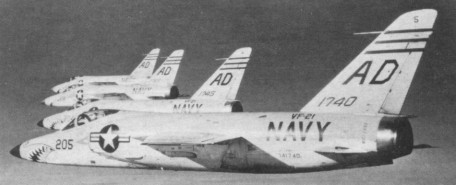
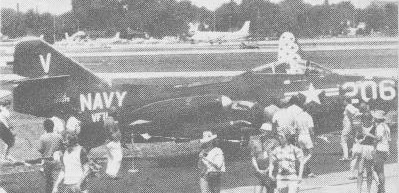
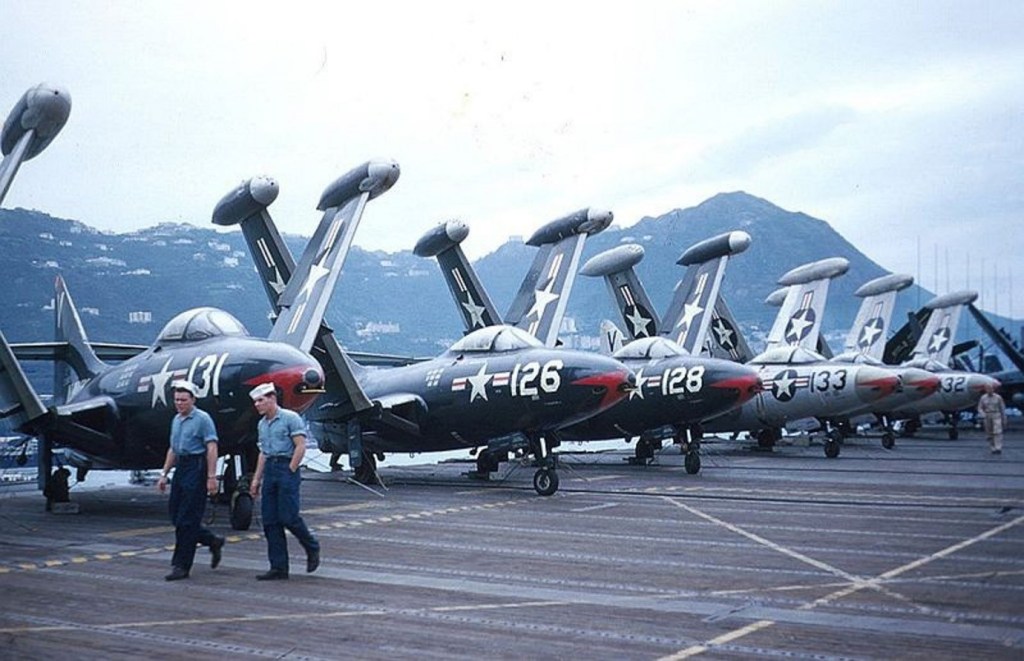
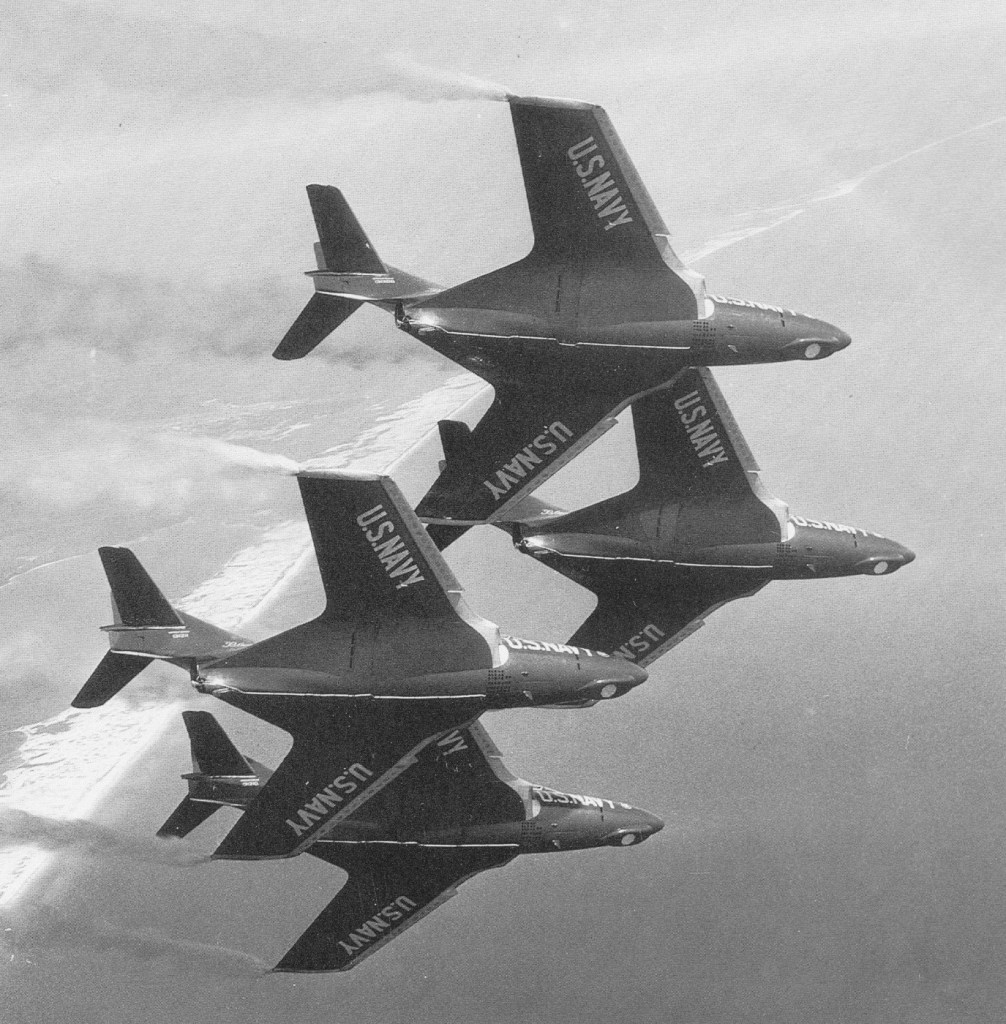
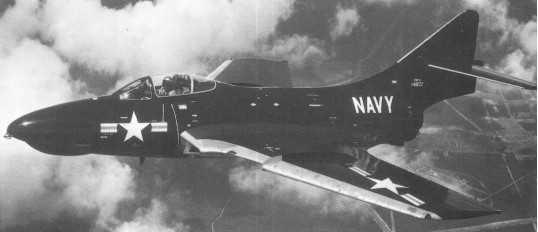
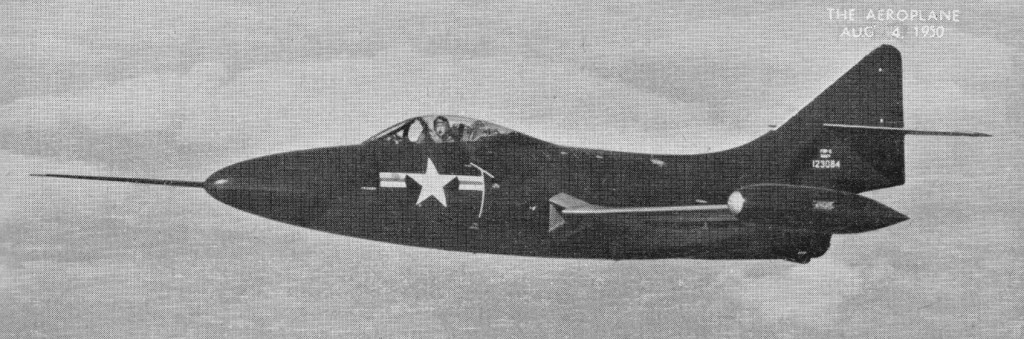
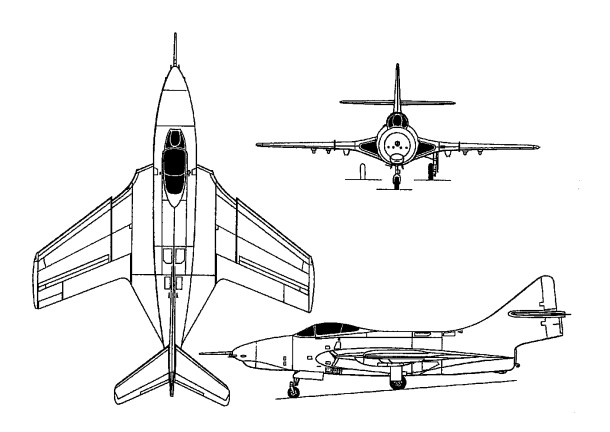
The US Navy’s first transonic shipboard warplane, development of the G-98 was ordered on 27 April 1953 as a revised and improved F9F-6. In the event, there was no commonality with the earlier fighter, but nevertheless, when the first example was flown on 30 July 1954, it was designated YF9F-9, this being changed to F11F-1 in April 1955.
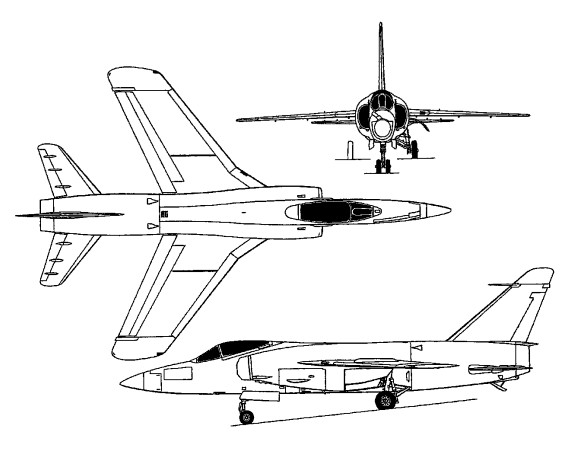
The airframe had mid-set wings sweptback at 30 degrees. There are swept-back tail surfaces, with an all-moving tailplane mid-set on the fuselage. No ailerons are fitted. Lateral control being by spoilers. Leading edge slats are fitted. Trailing-edge flaps are over the full span except for the folding tip portions. Finger type air-brakes are under the fuselage. Two underwing jettisonable fuel tanks may be fitted.
The tricycle under-carriage has a single wheel on each main unit and twin-wheel nose unit. The main wheels retract forward and into the fuselage, and the nose wheels retract rearward.
Able to fly supersonic in level flight, the F11F-9 Tiger was in production for the U.S. Navy in 1955. Six prototypes and 39 F9F-9 were ordered initially. Difficulties with the intended afterburning Wright J65-W-6 engine dictated installation of the derated J65-W-18 in the production F11F-1 with a maximum military thrust of 7,450 lb (3379 kg) and 10,500 lb (4 763 kg) with full reheat. In consequence, the F11F-1 failed to meet contractual performance guarantees.
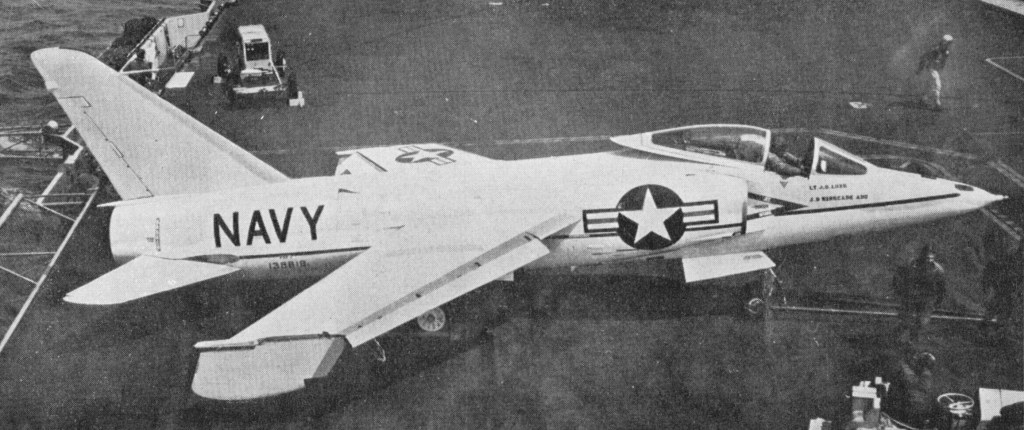
A small number of pre-production aircraft, each with a Wright J65-W-6 turbojet engine with afterburner, were followed by 39 production aircraft (ordered with J65-W-4 afterburning engines).
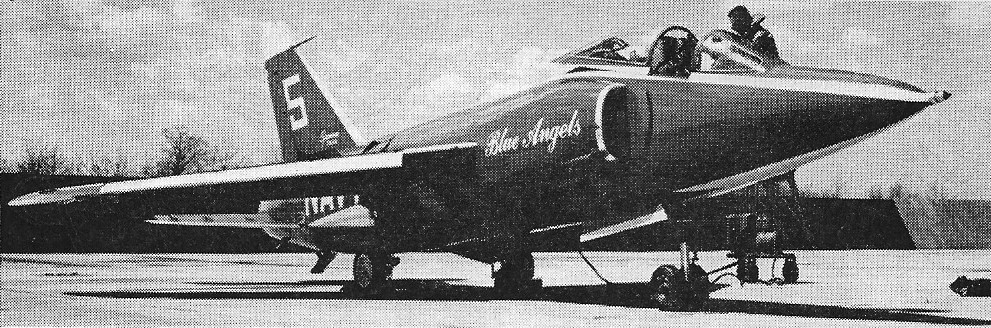
The last two Tigers of the initial production batch were fitted with the General Electric YJ79-GE-7 turbojet rated at 9,600 lb (4 355 kg) military thrust and 15,000 lb (6 804 kg) with reheat as F11F-1Fs.
One of the F11F-1Fs attained a speed of 1,963km/h and set a short-lived height record on 18 April 1958 of 23,449m.

A further contract for J65-W-18-engined Tigers placed for the US Navy brought the total number of F11F-1s built to 201, but these were gradually phased out of first-line service from 1959. Those which remained in second-line service when the tri-service designations became rationalised in 1962 were redesignated F-11A.

Production was limited to 201 aeroplanes, the last being delivered in March 1957, service phase-out commencing in 1959.
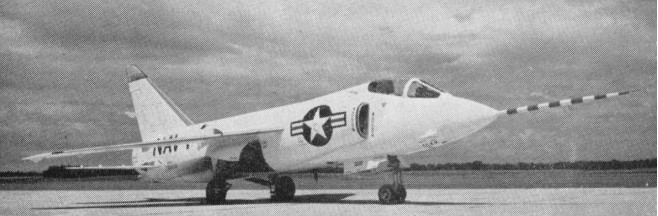
F11F-1
Engine: 1 x Wright J-65-W-6, 33.8kN
Max speed, 753 mph (1212 km/h) at sea level.
Initial climb, 16,300 ft/min (82,8 m/sec).
Range, 1,108 mls (1783 km).
Service ceiling: 16700 m / 54800 ft
Empty weight, 13,307 lb (6 036 kg).
Max loaded weight, 23,459 lb (10 641 kg).
Span, 31 ft 8 in (9,65 m).
Length, 44 ft 10.75 in (13,68 m).
Height, 13 ft 2.75 in (4,03 m).
Wing area, 250 sq ft (23,22 sq.m).
Armament: four 20-mm cannon.
Crew: 1
F11F-1
Engine: 1 x Wright J-65-W-18, 10,500 lb
Span, 31 ft 8 in (9,65 m).
Wing area, 250 sq ft (23,22 sq.m).
Length, 44 ft 10.75 in (13,68 m).
Height, 13 ft 2.75 in (4,03 m).
Empty weight, 13,307 lb (6 036 kg).
Max loaded weight, 24,078 lb
Max speed, 740 mph / M1.12 at 35,000 ft
Service ceiling: 50,500 ft
Range, 600 mls
Armament: four 20-mm cannon.
Hardpoints: 4
Crew: 1
F11F-9 Tiger
Naval fighter
Crew: 1
Engine: Wright J65-W-7 Sapphire turbojet, with afterburner, 7500 lb. thrust.
Wingspan: 31 ft. 5 in
Length: 39 ft.
Loaded weight: approx. 14,000 lb.
Back to Grumman F9F Panther / Cougar
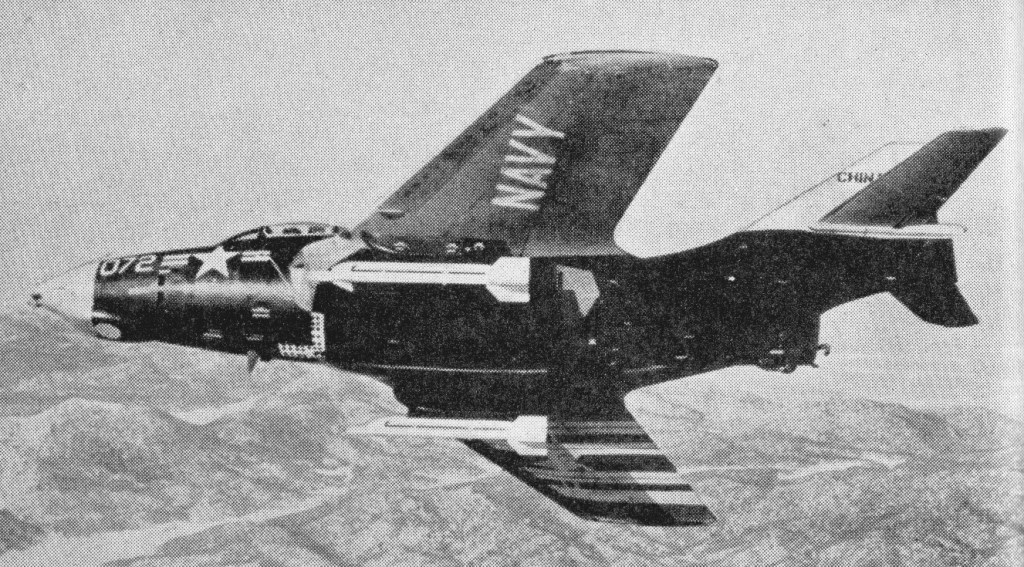
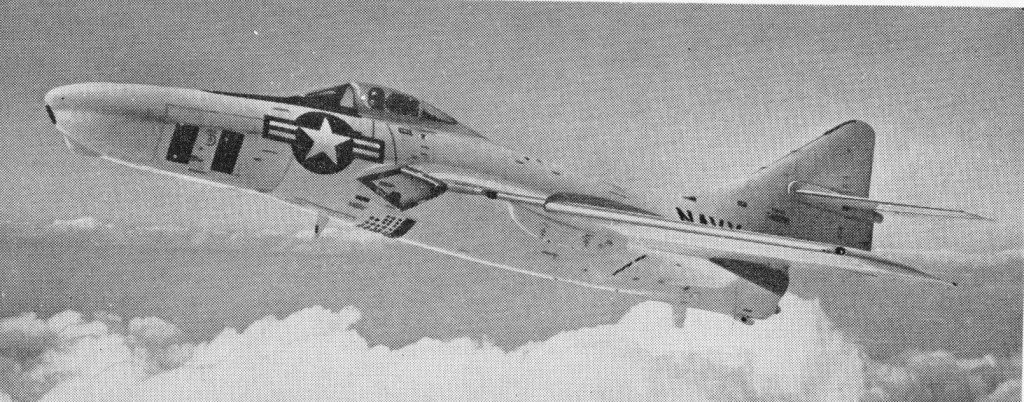
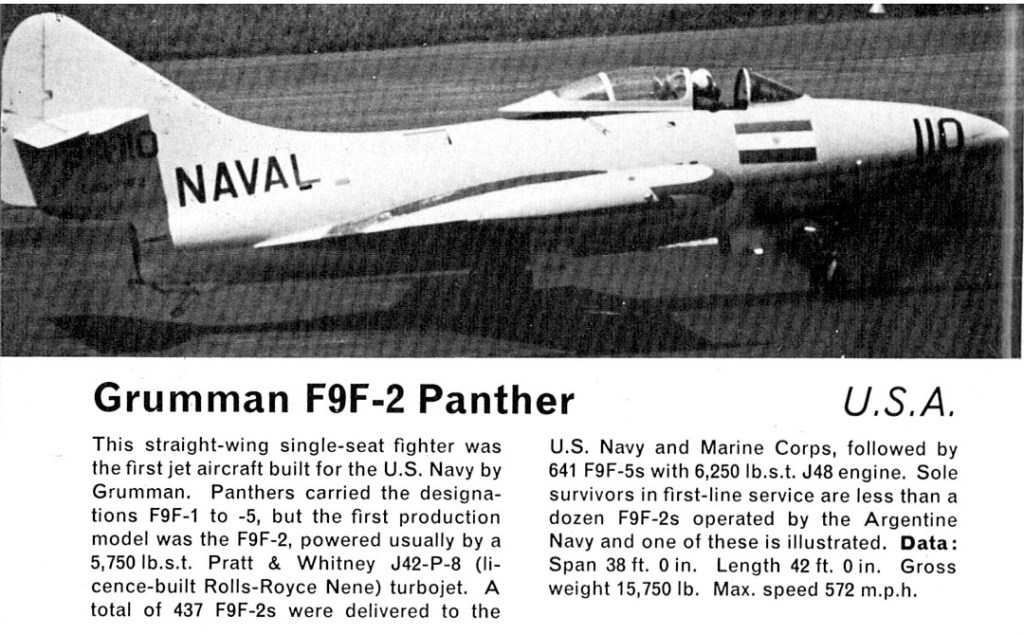
The first jet-powered ‘cat’ to be produced by Grumman and the first carrier borne jet to get into combat, the F9F Panther performed Korea where it constituted the backbone of US Navy and US Marine Corps air power, and by the time production ceased in late 1952 close to 1,400 had been built.
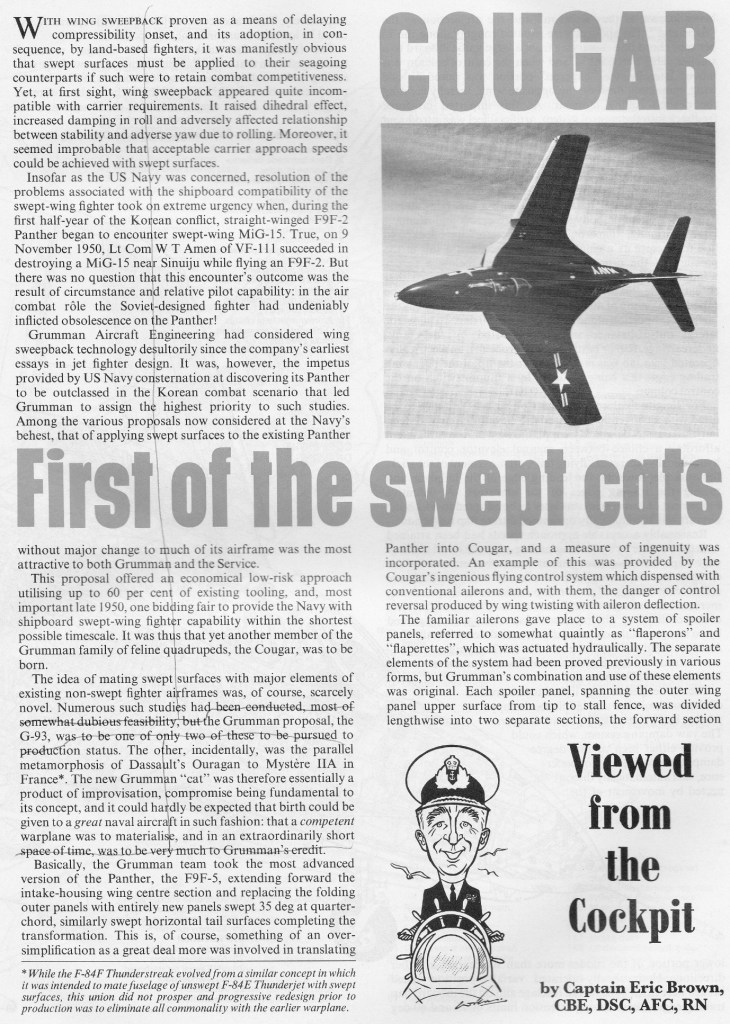
The Cougar was a swept-wing development of the earlier G-79 Panther. The fuselage was similar but the wings and tailplane were swept at 35 deg. The original layout of this single-seat carrier-based fighter provided for the installation of four wing-mounted Westinghouse 19XB-2B (Navy J30) axial-flow jets. But this arrangement was abandoned in favour of one fuselage-mounted high-powered turbojet engine before prototype construction began, a change prompted by the successful tests conducted by the Navy in December 1946 with two imported Rolls-Royce Nene engines. Grumman then turned its attentions to a single-seat single engine jet day fighter, two prototypes duly being ordered with the designation XF9F-2. Powered by an imported Rolls-Royce Nene engine, the first of these made its maiden flight on 24 November 1947 and such was the promise shown that substantial orders were soon forth¬coming for production-configured F9F-2 aircraft fitted with the licence-built Pratt & Whitney J42 copy of the Nene turbojet and British made Stanley Model 22G ejection seat.
The second prototype was similarly fitted, but the third (the XF9F-3) had an Allison J33 engine. Production aircraft were divided between Nene and Allison-powered models, the former engines licence-built by Pratt & Whitney as J42s.
The first production F9F-2, powered by a 22.24kN J42-P-6, flew for the first time on 24 November 1948. The 20.46kN J33-A-8-powered prototype flew for the first time on 15 August 1948 and a total of 418 of both versions were built. However the F9F-2 proved to be the better version and the F9F-3s were re-engined to F9F-2 standard.
Although the F9F-2 was the initial production model, the honour of being the first variant to enter service fell to the F9F-3, which used the slightly less powerful Allison J33 engine. This joined US Navy Fighter Squadron VF-51 during May 1949 but in the event only 54 F9F-3s were completed, most being modified later to F9F-2 standard. The next version to appear was the F9F-4 (73 of which were ordered originally) with the Allison J33-A-16, but none was completed and the contracts were combined with those for more than 580 27.80kN Pratt & Whitney J48-P-4/6A-engined F9F-5s (which flew for the first time on 21 December 1949). The F9F-2, -3, -4 and -5 were in service in 1955.
The most prolific variant was the F9F-5 which was powered by the Pratt & Whitney J48, a licence-built Rolls-Royce Tay, and redesigned fin and rudder. Over 600 were completed by the time production ceased at the end of 1952, this total including a small number of F9F-5P aircraft for photo reconnaissance duties. F9F-5P is long-nosed photo-reconnaissance version. Later machines can be seen with flight refuelling nose-probe.
The F9F-5 was the last version to see squadron service, being finally retired by VAH-7 in October 1958, although many Panthers continued to fly after that date with training units, and as F9F-5KD (from 1962 DF-9E) drone targets and controllers for missile trials.
The F9F-4 was powered by an Allison J33-A-16 engine. The F9F-5P was a photographic-reconnaissance version with a longer camera nose.
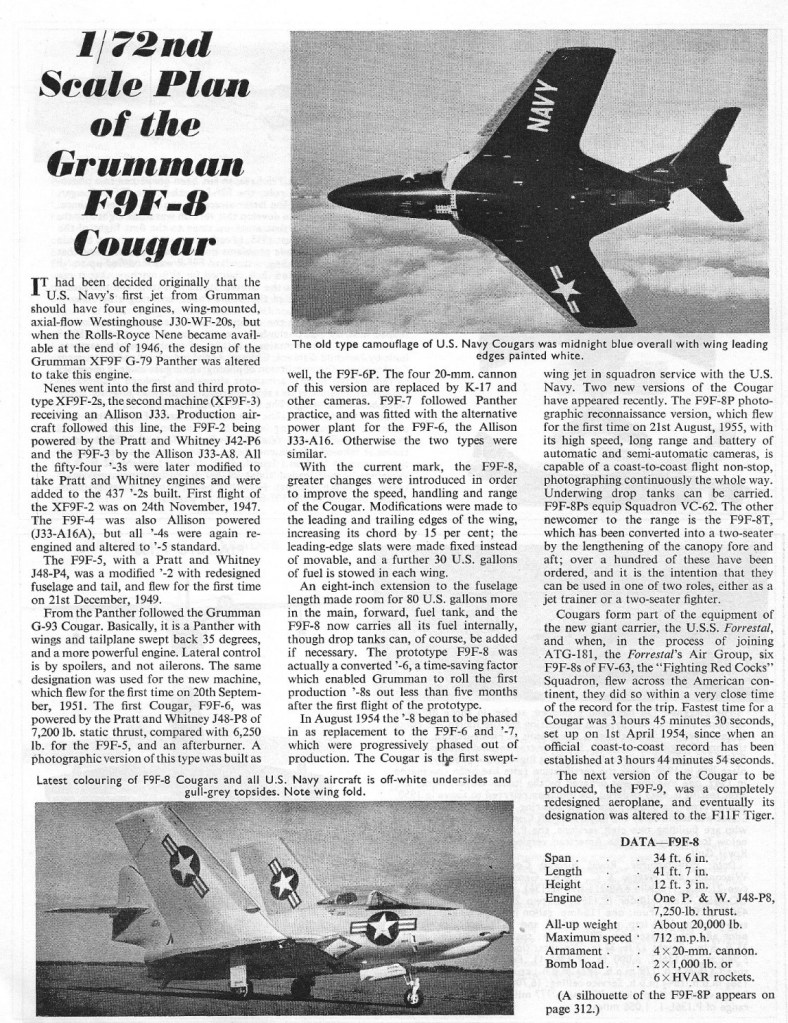
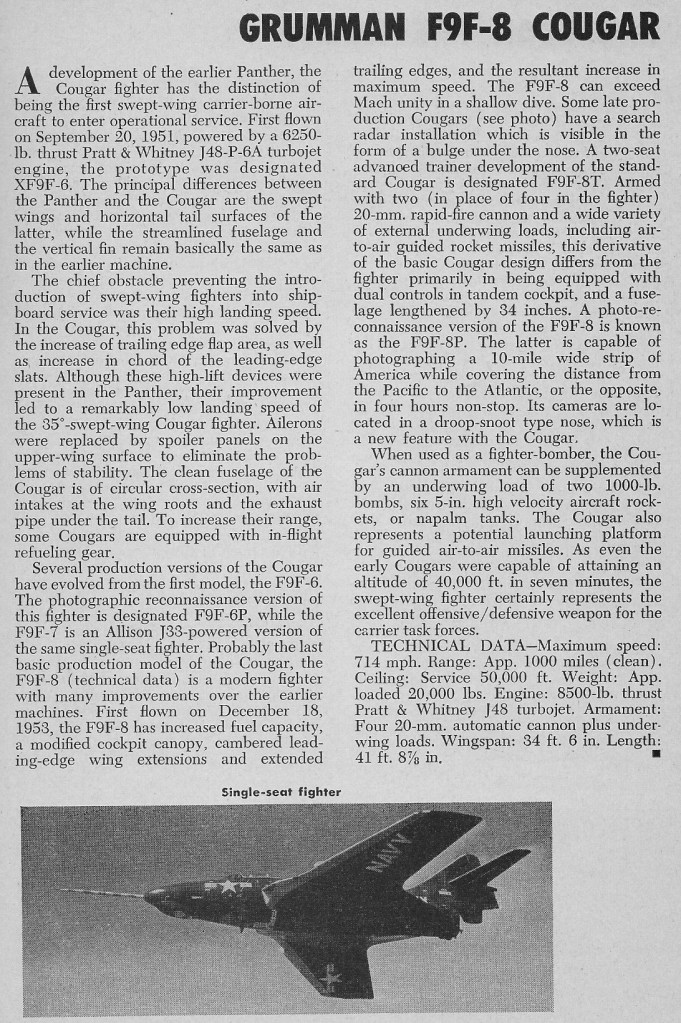
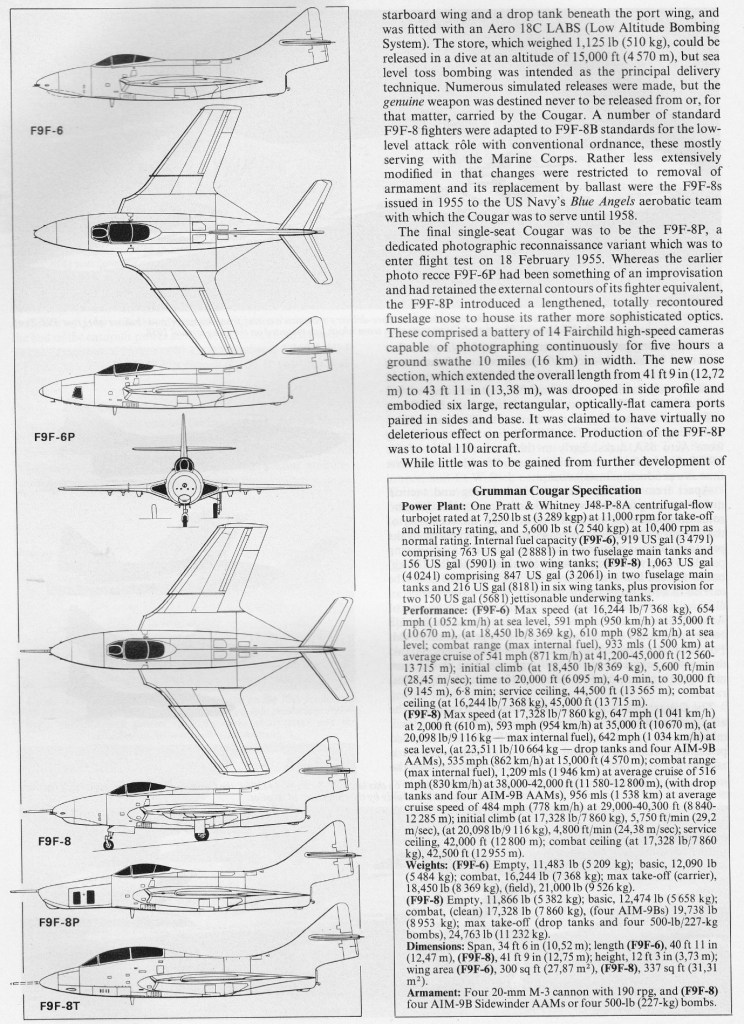
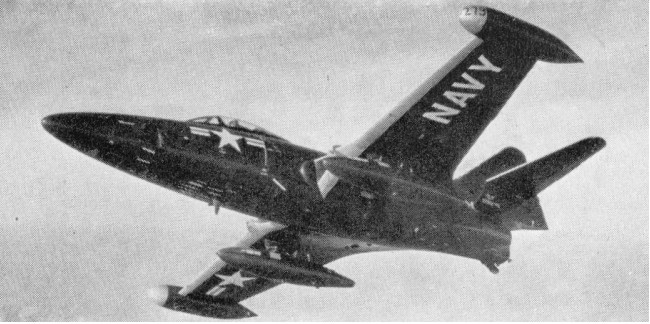
First flown in prototype form as the XF9F-6 on 20 September 1951, the Grumman F9F Cougar evolved from the earlier F9F Panther series of fighter aircraft. It differed mainly from its predecessors by virtue of posses¬sing swept wings and tailplane, thus earning the distinction of being the first swept-wing carrierborne type to enter service. Apart from this, changes were kept to a minimum to facilitate rapid production. Indeed, the new Cougar entered service just 14 months after its maiden flight took place, initial exam¬ples of the 32.25kN Pratt & Whitney J48-P-8-engined F9F-6 (later designated F-9F) joining VF-32 of the Atlantic Fleet naval air force during November 1951.

Shortly after this, deliveries to Pacific Fleet units got under way, and the type was very soon introduced to combat in Korea. Production of the F9F-6 totalled 706 aircraft, 60 of which were completed as unarmed F9F-6P machines for reconnaiss¬ance duties with a longer nose to accommodate K-17 and tri-metrogon cameras, and these were followed by the F9F-7 (F-9H) which was pow¬ered by an Allison J33-A-16A turbojet. This proved to be only a temporary change, and after completing 168 F9F-7s Grum¬man reverted to the Pratt & Whitney J48 engine for the F9F-8 (which bore the Grumman design designation G-99) (F-9J), which became the definitive Cougar, well over 1,000 being completed in three basic variants. First to appear was the F9F-8 (601 built). Movable leading-edge slats were replaced by fixed cambered leading-edge extensions outboard of the wing fences. Total internal fuel capacity was increased by 530 litres. Large numbers were later modified to F9F-8B (AF-9J) standard with provision for air-to-surface guided missiles. The first production F9F-8 flew on 18 January 1954.
Grumman F9F Cougar / Panther Article
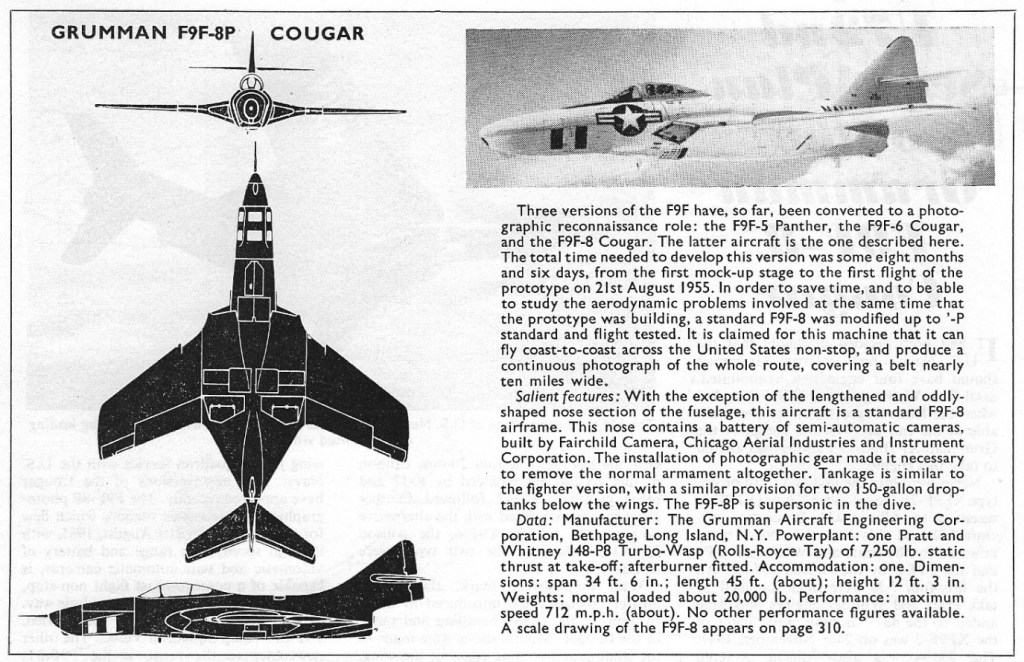
Some 110 of a photo-reconnaissance version designated F9F-8P (RF-9J) flew for the first time on 21 August 1955 and had an extended nose for the cameras.
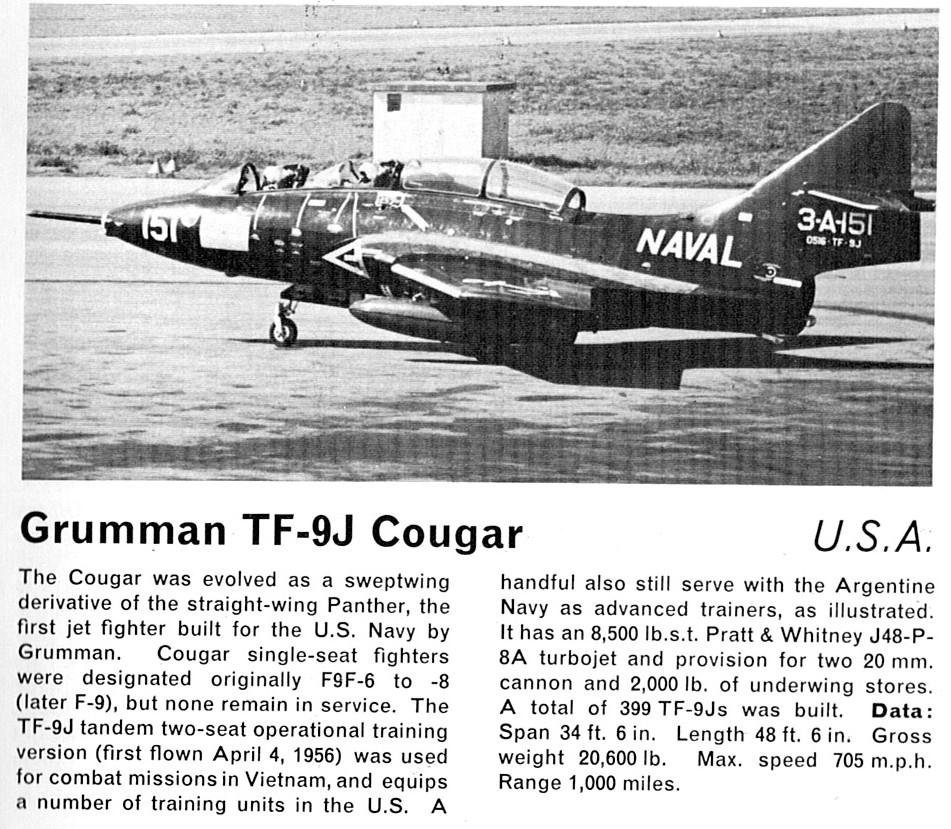
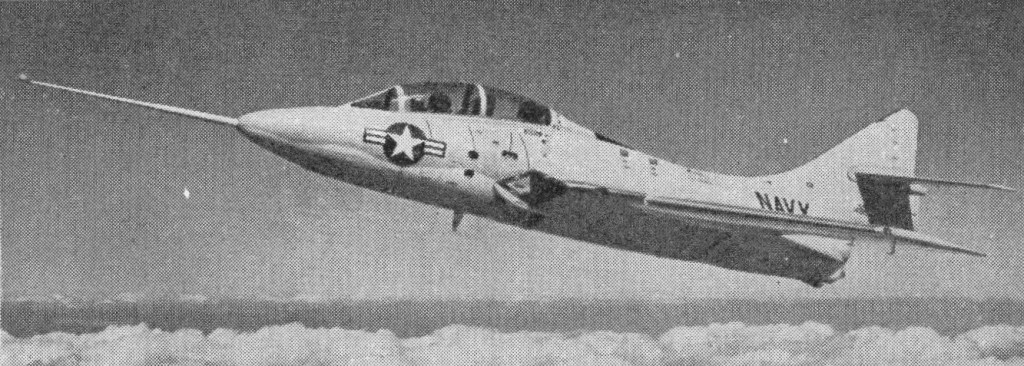
The Cougar also lent itself to the training of future naval aviators; a prototype two-seat YF9F-8T first flown on 4 April 1956 was followed by 399 F9F-8T (TF-9J) production examples, some of which remained in use with Naval Air Training Command until well into the 1970s. The F8F-8T was armed with two 20mm cannon and was 23 inch longer than the original cougar. Production of this version ended on the last day of 1959.
As far as front-line units were concerned, the Cougar disappeared from the scene early in 1960, the last operational version being the F9F-8P, but many continued to fly long after that date with the Reserve Force and with Air Training Command. Surplus aircraft became F9F-6K (QF-9F) and F9F-6K2 (QF-9G) target drones or F9F-6D (DF-9F) drone directors.
Panthers are remembered for recording a victory against an enemy jet aircraft, a MiG-15, on 9 November 1950.
Replica: Gros F9F Panther
F9F-5 Panther
Engine: one 3175-kg (7,000-lb) thrust Pratt & Whitney 148-P-6A turbojet
Maximum speed 932 km/h (579 mph) at 1525 m (5,000 ft)
Cruise speed: 774 km/h / 481 mph
Service ceiling 13380 m (43,900 ft)
Range 2092 km (1,300 miles)
Empty weight 4603 kg (10,147 lb)
Maximum take-off 8492 kg (18,721 lb)
Wingspan 11.58 m (38 ft 0 in)
Length 11.58 m(38 ft 0 in)
Height 3.73 m (12 ft 3 in)
Wing area 23.23 sq.m (250 sq ft).
Armament: four 20-mm cannon, plus up to 1361 kg (3,000 lb) of external ordnance.
Crew: 1
F9F-5 Cougar
Naval fighter
Engine: Pratt & Whitney J48-P-8 turbojet with afterburner, 7200 lb. thrust
Wingspan: 36 ft. 5 in
Length: 42 ft. 3 in
Loaded weight: approx. 20,000 lb.
Max. speed: 690 m.p.h.
Ceiling. 50,000 ft.
Range: approx. 1,000 miles.
Crew: 1
Armament: 4×20 mm. Cannon
F9F-5P
Naval photo-reconnaissance aircraft
Engine: Pratt & Whitney 148-P-6A turbojet, 6,250 lb. thrust
Wingspan: 38 ft
Max. speed: 625 m.p.h.
Loaded weight: 15,750 lb.
Ceiling: over 50,000 ft.
Max. range: 1,200 miles.
Crew: 1.
Armament: None
F9F-6
Engine: Pratt & Whitney J48-P-6A, 6,250 lb (2 835 kg).
F9F-7
Engine: Allison J33-A-16, 6,250 lb (2 835 kg).
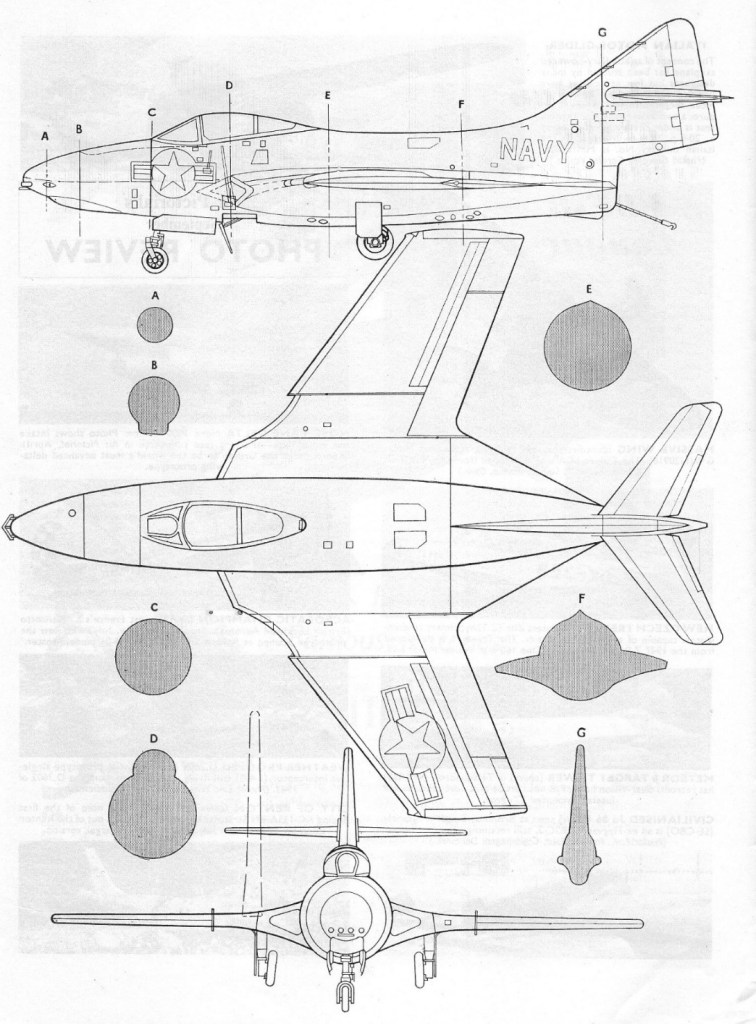
F9F-8 Cougar
Engine: one 3289-kg (7, 250-lb) thrust Pratt & Whitney J48-P-8A turbojet.
Maximum speed 1033 km/h (642 mph) at sea level
Service ceiling 12800 m (42,000 ft)
Range 1690 km(l,050 miles)
Empty weight 5382 kg (11,866 lb)
Maximum take-off 11232 kg (24,763 lb)
Wingspan 10.52 m (34 ft 6 in)
Length 12.73 m(41 ft 9 in)
Height 3.72 m (12 ft 2.5 in)
Wing area 31.31 sq.m (337 sq.ft).
Armament: four 20-mm cannon, plus up to 1814 kg (4,000 lb) external ordnance
F9F-8P
TF-9J
Engine: 1 x Pratt & Whitney J48-P-8A turbojet, 32.0kN
Max take-off weight: 9344 kg / 20600 lb
Wingspan: 10.52 m / 34 ft 6 in
Length: 13.54 m / 44 ft 5 in
Height: 3.73 m / 12 ft 3 in
Service ceiling: 15240 m / 50000 ft
Range: 966 km / 600 miles
Armament: 2 x 20mm cannon, 907kg external

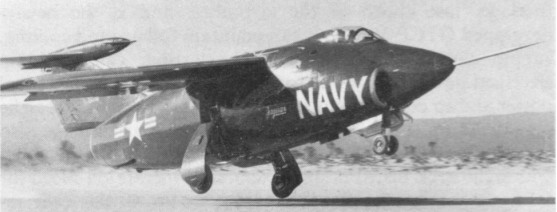
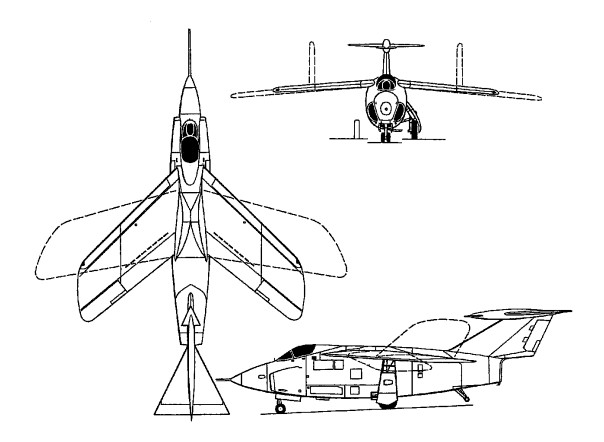
Greater success attended the development of variable-geometry wings, which allow the use of a minimum-sweep position for take-off and landing, an intermediate-sweep position for fuel-economical cruise, and a maximum-sweep position for high dash performance. The navy’s first essay in this field was the Grumman XF10F Jaguar, which was conceived in 1948 as a possible successor to the F9F Panther. The aerodynamic features of a variable-geometry type had already been explored in a number of aircraft, most notably the Westland Pterodactyl IV developed in the UK during the early 1930s, the Messerschmitt P.1011 designed in Germany during World War II, and the experimental Bell X-5 sponsored by NACA and the LTSAF with the ultimate purpose of validating a fighter-type wing with sweep variable between 20 deg and 60 deg. The X-5 had not flown when Grumman set to work on the Jaguar, but a considerable quantity of engineering data was available and this proved valuable to the Grumman engineers, who were faced with a host of problems.
Originally the XF10F had been planned as a development of the Panther with clipped delta flying surfaces. Designed as a transonic single-seat shipboard fighter with an internal armament of four 20-mm cannon and provision for an external bomb load of up to 4,000 lb (1814 kg). The sweep angle of the wings could be varied hydraulically between 13.5 and 42.5 deg, and high-lift devices consisted of full-span slats and an 80 per cent Fowler flap. The concept was then refined to the point at which a tilting variable-incidence wing was in adopted for reduction of the take-off and landing speeds. The navy then added additional responsibilities to the basic fighter-role, and these so increased the structure weight that the company came up with the notion of providing a variable-geometry wing. Further refinement was added after this when it was decided to allow the wing to be swept at any angle between the minimum- and maximum-sweep angles. The provision of such wings increased the type’s weight by 2200 lb (998 kg) but reduced landing speed from 132.5 mph (213 km/h) to 109 mph (175 km/h). The Jaguar was also provided with an advanced control system that included a delta surface forward of the fin to act as a servo for the all-moving tailplane and so improve control response at transonic speed.
The tailplane was operated by a novel arrangement where the pilot controlled a small delta-wing airfoil at the tip of the tail bullet. This in turn moved the main elevator Unfortunately, a lag in the response between stick and surface usually resulted in a Pilot Induced Oscillation (PIO) and the Jaguar was virtually uncontrollable much of the time.
The engineering of so complex an aeroplane took considerably longer than expected, and it was May 1953 before the XF10F prototype flew, three years behind schedule. The Jaguar was intended to be powered by a Westinghouse XJ40-WE-8 turbojet rated at 7,400 lb (3 357 kg) military thrust and 10,900 lb (4 944 kg) with full reheat, but when flight trials were initiated on 19 May 1952, a J40-WE-6 rated at 6,800 lb (3 084 kg) was fitted. The novel servo-control system for the tailplane proved far too slow in operation, and was replaced by a conventional powered tailplane, but it soon became clear that considerable revision of the basic design would have to be undertaken before production aircraft could be considered. Numerous problems arose during the test programme and as some of these could not be resolved, trials terminated with the 32nd flight on 25 April 1953. Orders had been placed for 112 production F10F-1s, but 100 of these were cancelled on 1 April 1953 and the remaining 12 on the following 12 June.
Empty weight, 20,426 lb (9 265kg).
Max loaded weight, 35,450 lb (16080 kg).
Span (min sweep), 50 ft 7 in (15,42 m), (max sweep), 36 ft 8 in (11, 17 m).
Length, 54 ft 5 in (16,59 m).
Height, 16 ft 3 in (4,95 m).
Wing area (min sweep), 467 sq ft (43,38sq.m), (max sweep), 450 sq ft (41,81sq.m).
Max. speed: 1143 km/h / 710 mph
Range: 2687 km / 1670 miles
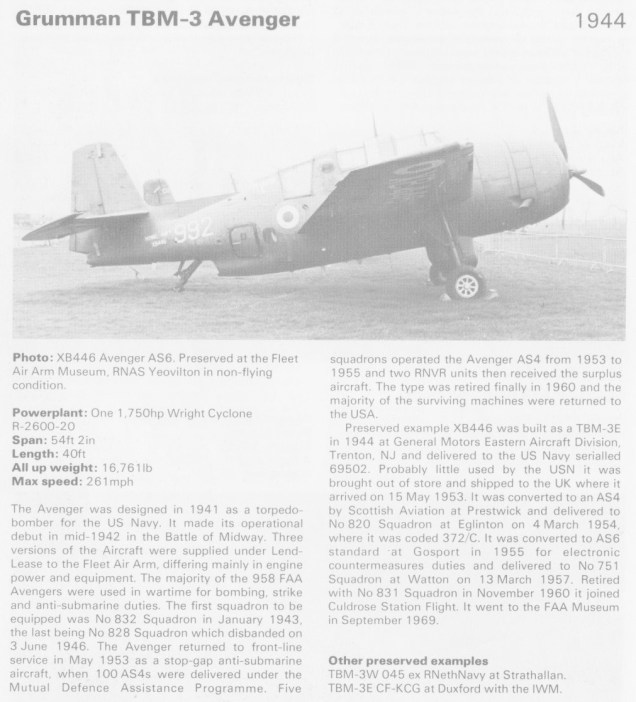
Back to Grumman TBM Avenger
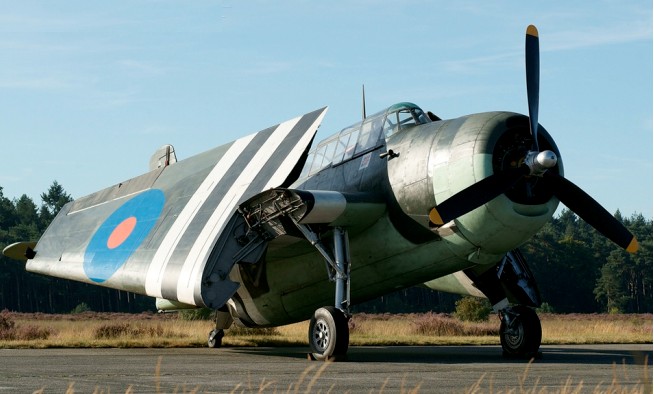
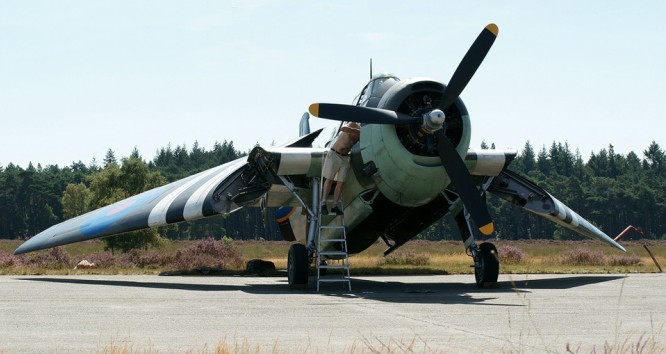
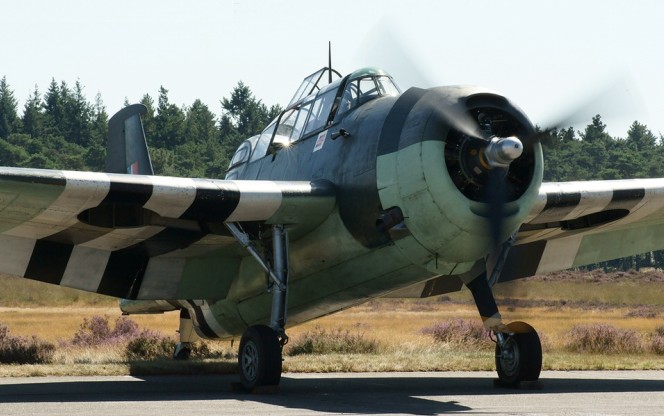
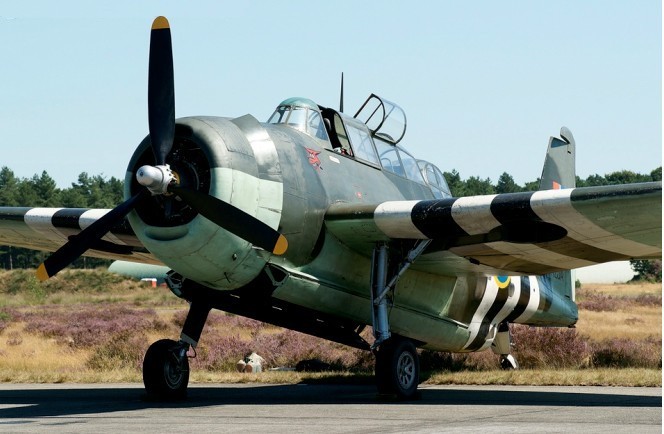
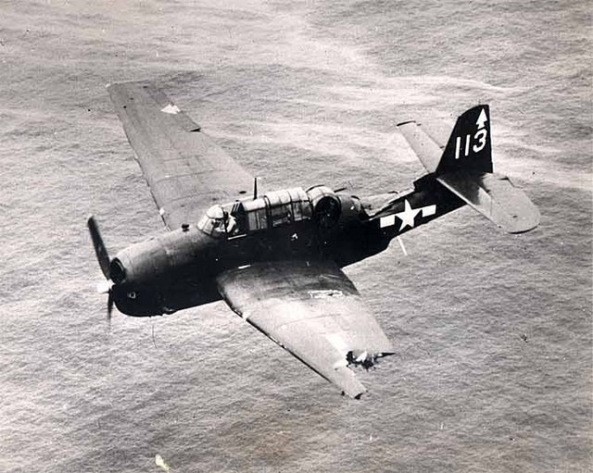
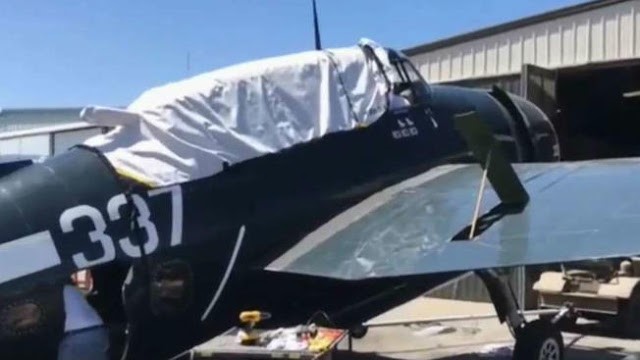

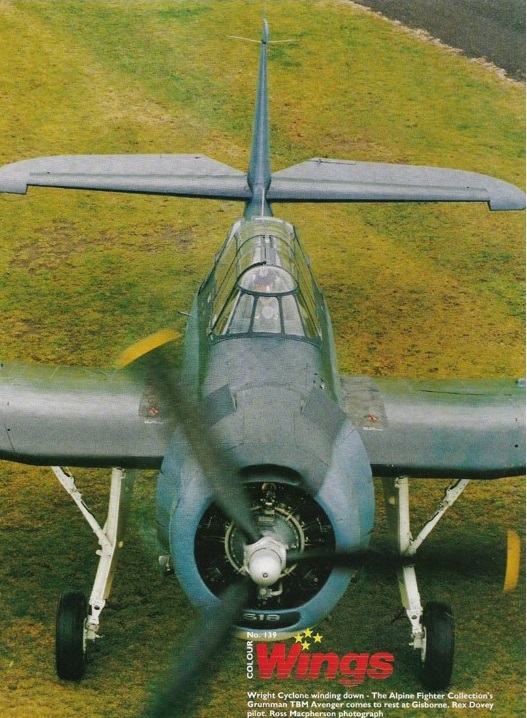
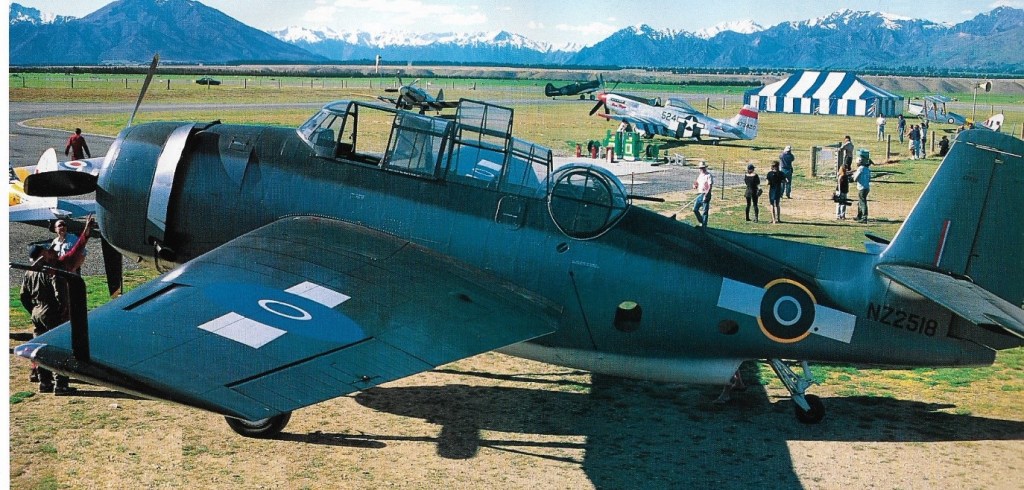
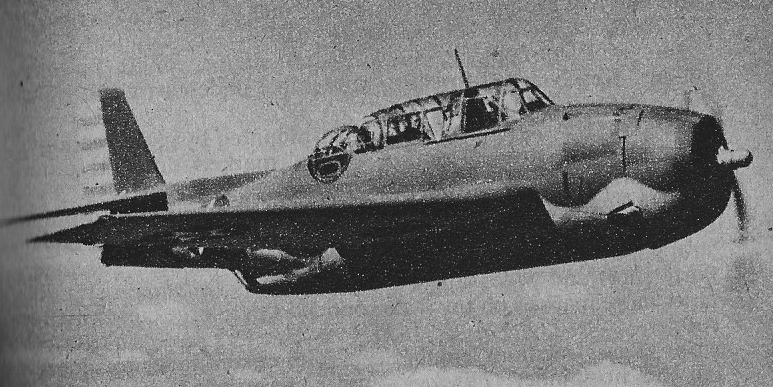
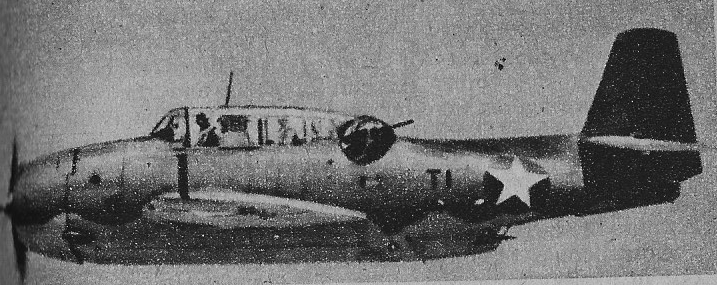

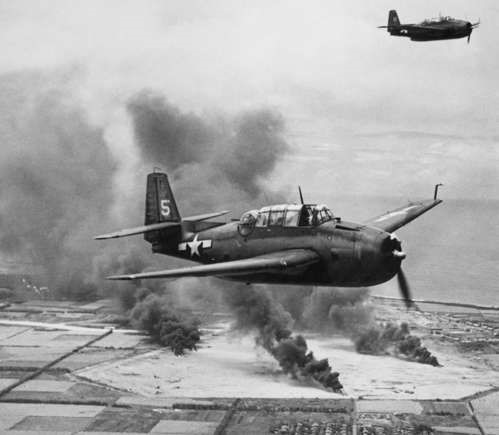
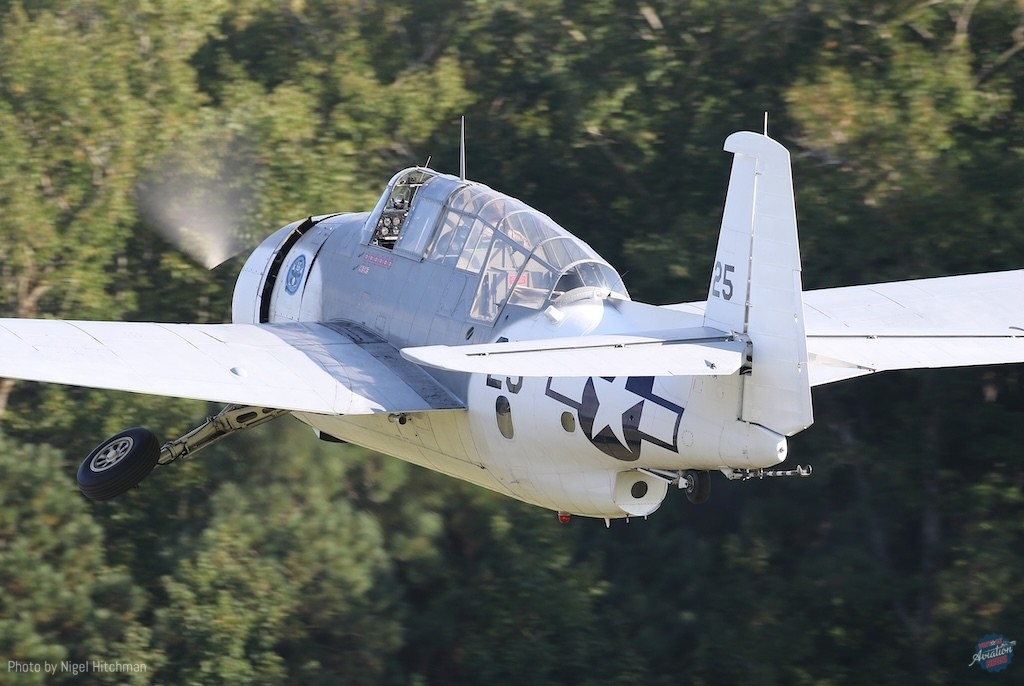
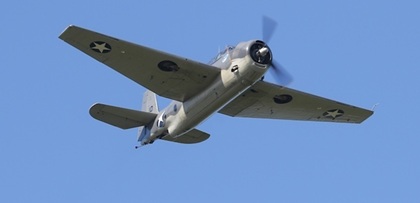
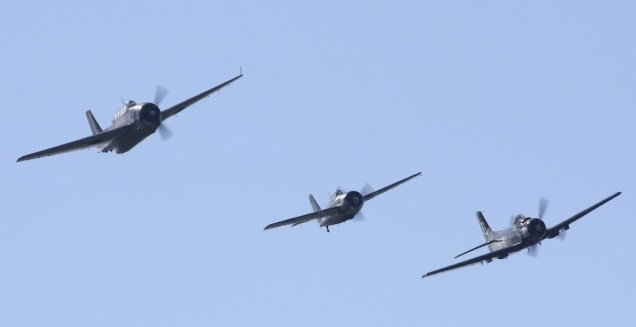
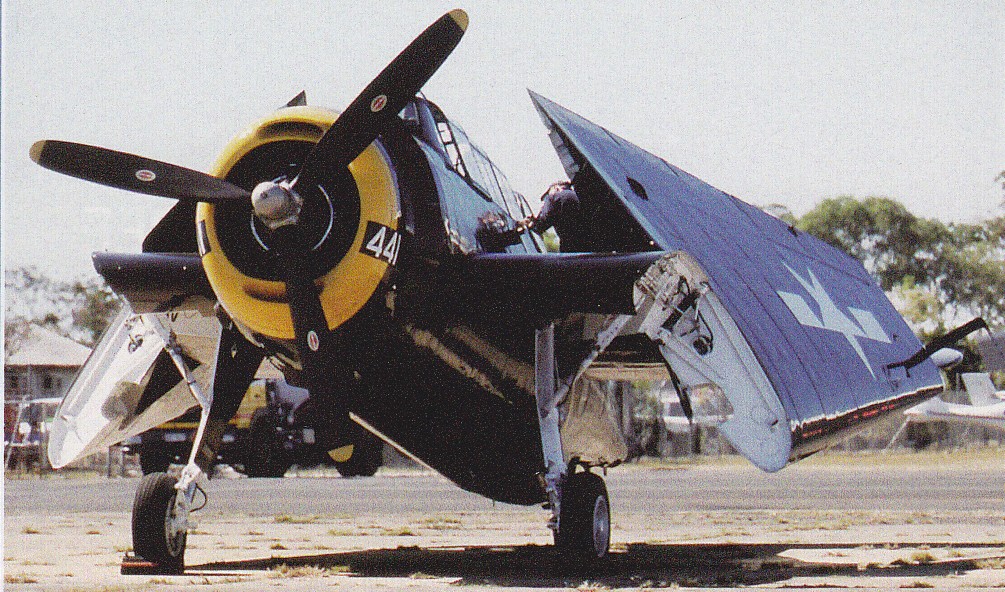

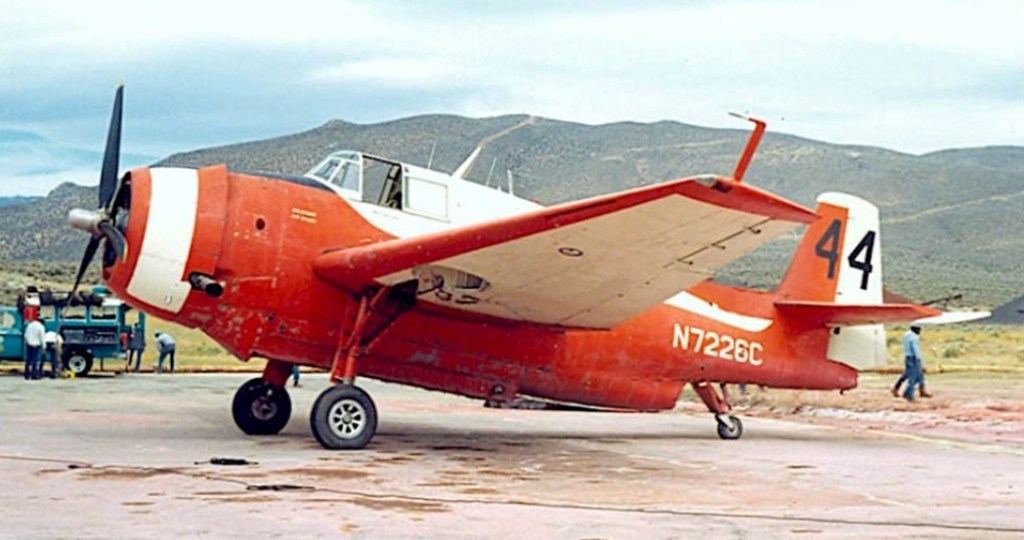
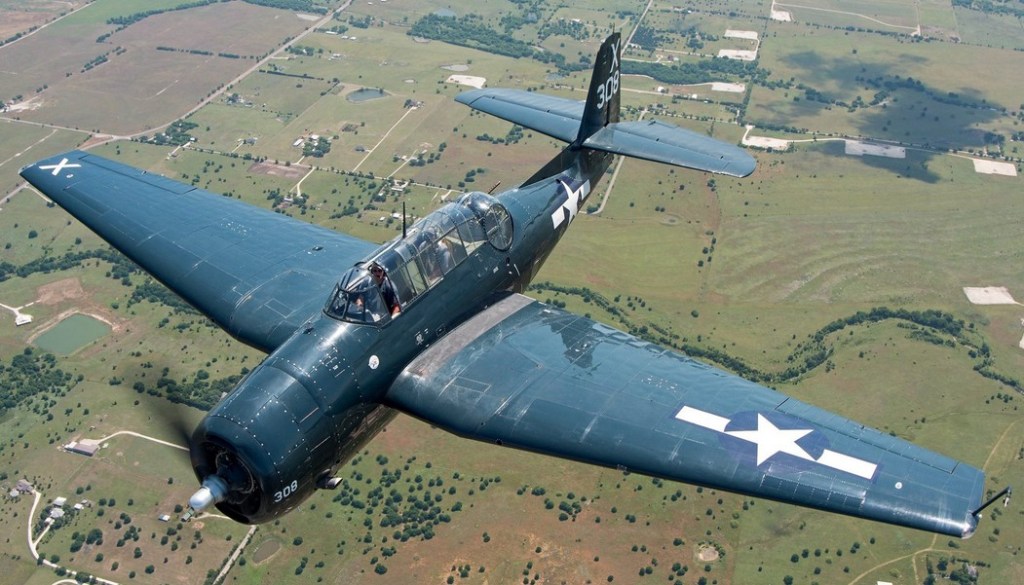
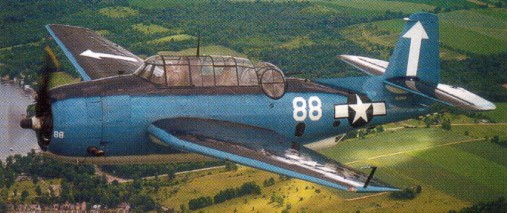
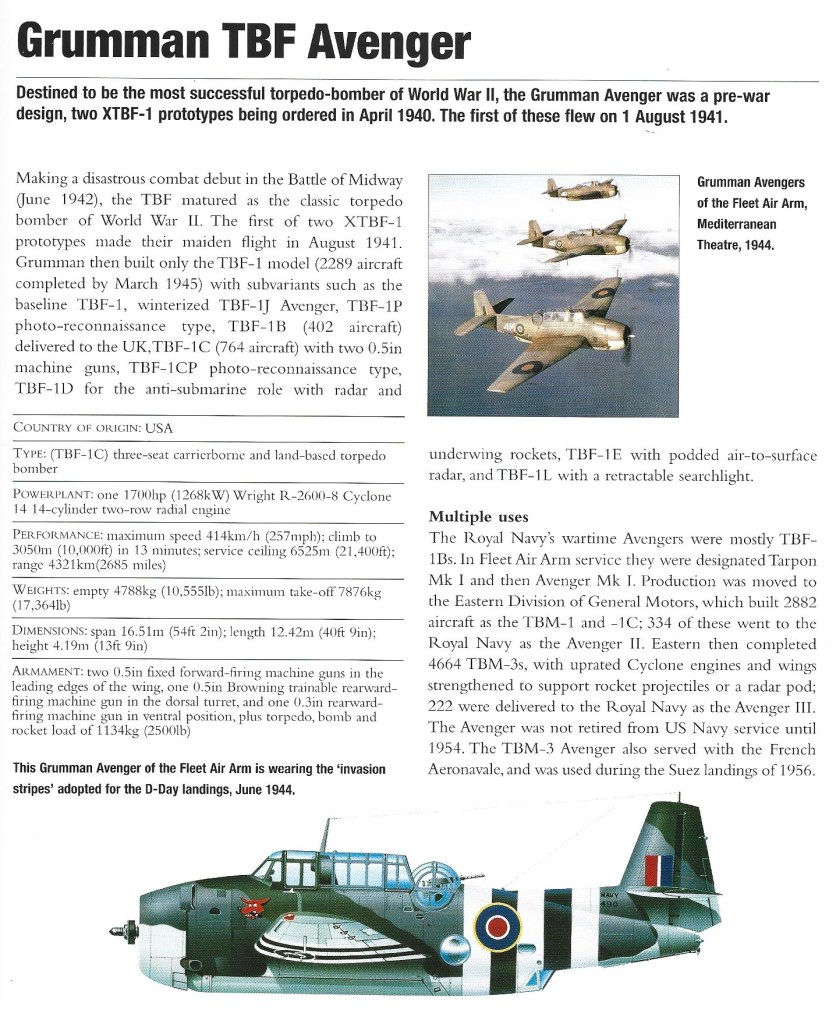
Two prototypes designated XTBF-1 were ordered on 8 April 1940, the first flying on 1 August 1941. The engine was a Wright R-2600-8 Cyclone 14-cylinder two-row radial rated at 1700 hp driving a Hamilton Hydromatic propellor. The extremely large wings folded to the rear about skewed hinges so that they lay along the sides of the fuselage, upper surfaces outwards. The main landing gear had a wide track yet retracted outwards into the wings. The fuselage accommodated a crew of three and an internal weapons bay, and the defensive and offensive armament was well planned. The pilot dropped the short 55.9 cm (22 in) torpedo, 907 kg (2000 lb) bomb or other internal load, fired the fixed guns (one 7.7 mm Browning in the upper right of the nose, and in the TBF 1C and nearly all subsequent versions two 12.7 mm in the outer wings) and rockets (eight 27.2 kg in the TBM 3). The bomb aimer sat in the lower fuselage behind the weapon bay, helped with navigation, sighted the torpedo or bombs in level bombing and manned the 7.7 mm machine gun in the rear ventral position. In the electrically operated turret with its 12.7¬mm gun sat the radio operator and turret gunner.
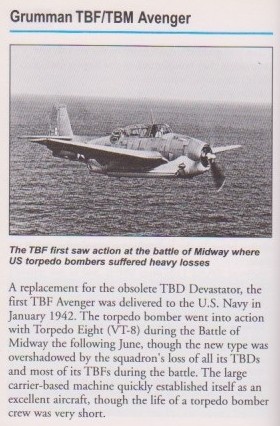
In December 1940 the US Navy placed an initial order for 286, subsequently multiplied, and deliveries began in January 1942 to VT 8. The same squadron took their TBF 1 Avengers into action for the first time during the Battle of Midway, where they did great damage for little loss, while 35 of the 41 old TBDs were shot down in a single engagement. By December 1943 Grumman had delivered 2293 Avengers, most of them being TBF 1Cs with the wing guns and provision for two underwing drop tanks. The Royal Navy received 402 of these Grumman built aircraft (for the first six months calling them Grumman Tarpons), with the US Lend/Lease designation of TBF 1B and the British name Avenger I. The first squadron, Fleet Air Arm No 832, was in action at the Battle of the Solomon Islands in June 1943, aboard the US carrier Saratoga. A further 63 TBF IBs were supplied to the RNZAF.

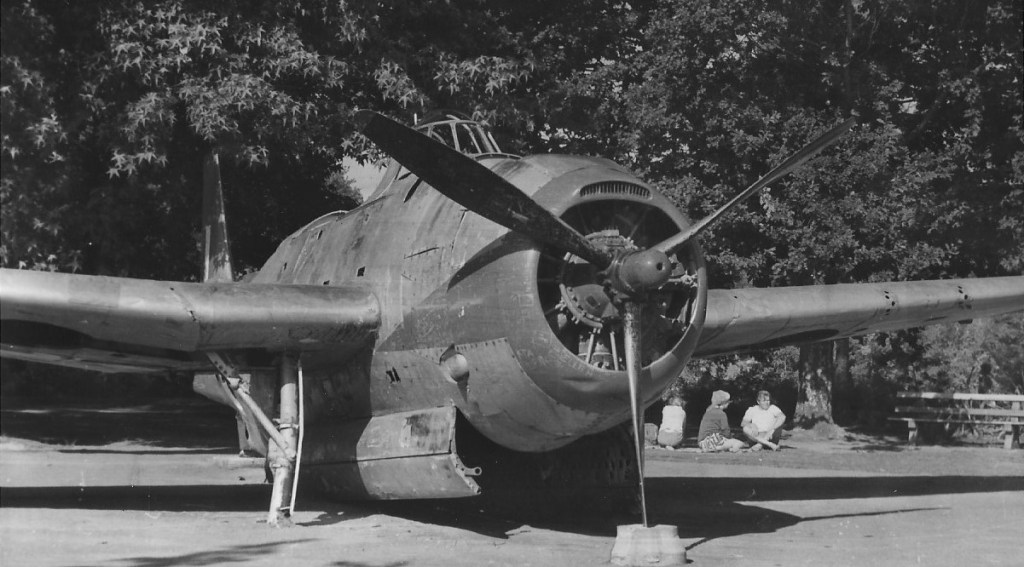
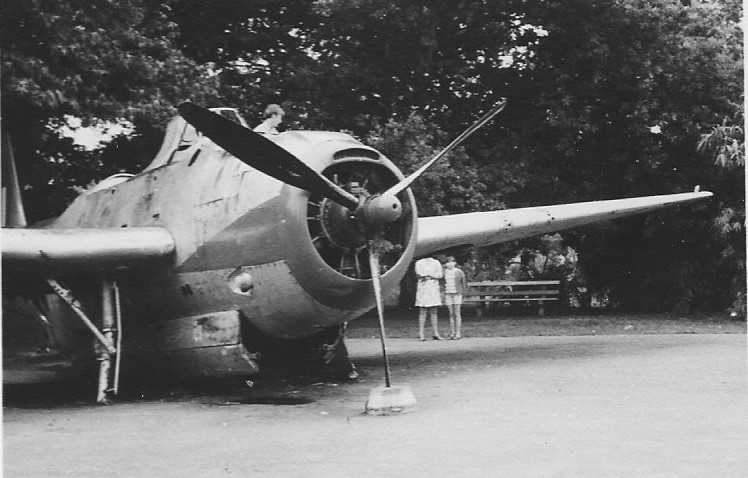
Avenger NZ2505 was the first Avenger to arrive in NZ in 1943 and flew with RNZAF 30 Sqn. It was retired in 1959.
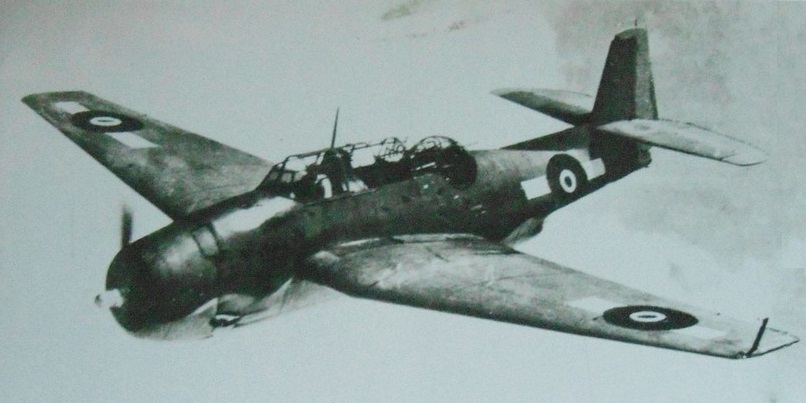
So important was the Avenger that a second source was arranged, to boost rate of output. As with the Wildcat fighter this second manufacturer was Eastern Aircraft division of General Motors. Between September 1942 and April 1944 Eastern delivered 2882 TBM 1 and 1C Avengers, almost identical to the Grumman 1 and 1C, and 334 TBM 1 were designated Avenger II when supplied to the Royal Navy.
In early 1943 Grumman built an XTBF 3 prototype with 1900 hp R 2600 20 engine. This version subsequently became the standard production Avenger, all made by East¬ern Aircraft (Grumman concentrating on the F6F Hellcat fighter). Between April 1944 and August 1945 Eastern delivered 4664 of this more powerful TBM 3 model, which also carried more fuel, had stronger wings equip¬ped to carry drop tanks, radar or rocket projectiles, and in most aircraft had the turret removed. The Royal Navy received 222 designated Avenger III.
The TBM-3E, almost the same as the earlier TBF, had a fuselage stretch of around one foot and a more powerful engine.
Flight 19 – Bermuda Triangle Article
In 1946 the Avenger was the first aircraft ever to carry early warning (AEW) radar, the Project Cadillac set that became APS 20. This became a standard interim service type, designated TBM-3W and 3W2, with no turret and rearranged interior.
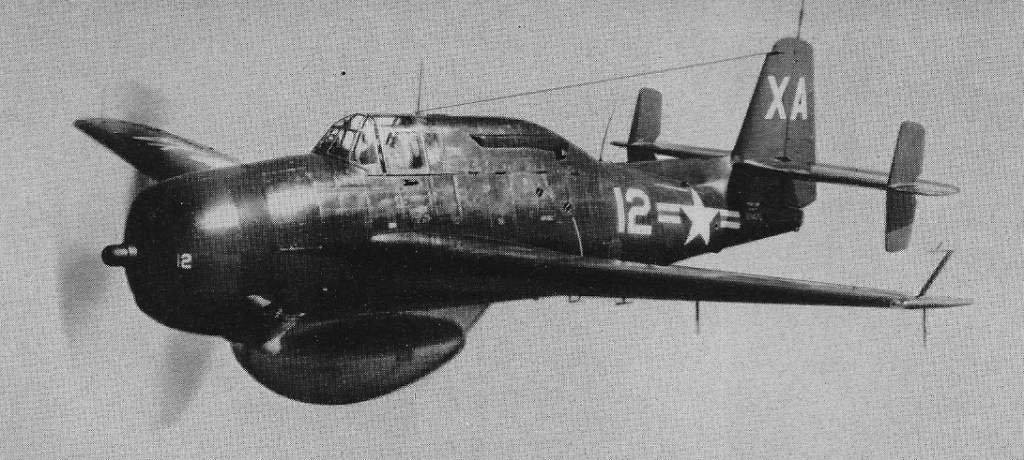
The TBM 3E was a post war rebuild which was put back into ‘remanufacture production’ during the Korean war, for the Royal Navy (100 Avenger AS.4), Royal Canadian Navy (115) and Aeronavale (96). The TBM 3S and 3S2 were antisubmarine strike versions for the Netherlands and Japan. The TBM-3U was a target towing version, and the TBM 3R was a seven seat COD (Carrier On Board Delivery) transport.
958 served with the Royal Navy.
All models were powered by Wright R-2600 Cyclone engine.
A total of 9839 aircraft were built.
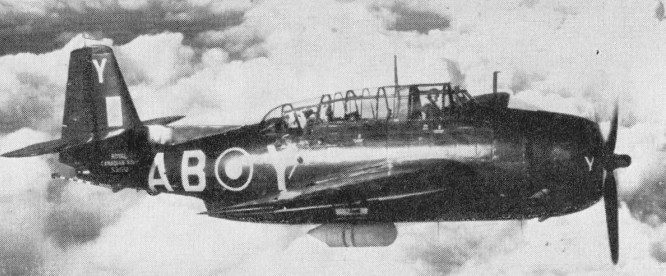
Avengers in service with the Royal Canadian Navy in 1955 were ex-U.S.N. aircraft, modified by Fairey Aviation of Canada. Some retain original ballshape gun turret at rear of glasshouse. Others are unarmed. All carry a radome cannister under starboard wing.
TBF-1
Engine: 1 x Wright R-2600-8 Cyclone 1700 hp.
Max speed: 278 mph / 445 kph.
Service ceiling: 22,600 ft / 6890 m.
Wing span: 54 ft 2 in / 16.5m
Width folded: 19 ft / 5.8 m.
Length: 40 ft / 12.2 m.
Height: 15 ft 5 in / 5 m.
Wing area: 490 sq.ft.
Empty wt: 10,600 lb.
MTOW: 7053 kg / 17,600 lb.
ROC: 1075 fpm / 376 m/min.
Range: 1450 km / 905 sm.
Crew: 3
Armament: One .30 mg in cowling, one fixed .50 mg in each outer wing, one .50 mg in power-operated turret, one .30 mg in ventral hatch, bomb bay / one torpedo, one 2000 lb bomb or four 500 lb bombs
TBF-1C Avenger
Engine: 1 × Wright R-2600-20 Twin Cyclone , 1,900 hp (1,420 kW)
Wingspan: 54 ft 2 in (16.51 m)
Length: 40 ft 11 in (12.48 m)
Maximum speed: 275mph (442 kph)
Maximum range: 1000 miles (1610 km)
Service Ceiling: 30,100 ft (9,170 m)
TBM 3 / TBF
Engine: Wright R-2600-20 Cyclone 14, 1726 hp / 1305kW
Span: 16.51 m (54 ft 2 in)
Length: 12.2 m (40 ft 0 in)
Height: 16 ft 5 in / 5.0 m
Wing area: 489.977 sq.ft / 45.52 sqm
Weight empty: 10105.5 lb / 4583.0 kg
Gross weight: 8278 kg (18 250 lb)
Max speed: 232 kts / 430 km/h (267 mph)
Cruising speed: 128 kts / 237 km/h / 147 mph
Service ceiling: 23392 ft / 7130 m
Wing loading: 37.31 lb/sq.ft / 182.00 kg/sq.m
Range: 982 nm / 1819 km
Crew: 3
Armament: 3x MG cal.50 (12,7mm), 1x MG cal.30 (7,62mm), 907kg ord.
TBM-3
Engine: 1,750 h.p. Wright R2600-20
Wingspan: 54 ft. 2 in
Length: 40 ft. 11.5 in
Loaded weight: 16,761 lb
Max. speed: 261 mph
Ceiling: 22,600 ft.
Typical range: 1,130 miles at 151 mph
Crew: 2-3.
TBM-3E
Engine: 1 x Wright R-2600-20 Cyclone