Hiller

Hiller Industries
Hiller Helicopters
Hiller Aviation
Rogerson Hiller Corporation
Hiller Aircraft Corporation

Hiller Helicopters Inc. was formed in 1942 for the development and production of rotary-wing aircraft. Early work on the Hiller Model XH-44, UH-4 Commuter and the UH-5, which introduced a newly-developed ‘Rotor-Matic’ rotor control system, led to the Hiller Model 360 prototype.
Stanley Hiller flew the first successful American co-axial helicopter, the XH-44, in July 1944, when he was only 19 years old. It also featured the world’s first successful all-metal rigid-rotor blades. Hiller had learned to fly from his father at an early age, and at 16, Hiller had started a business building small gasoline engine model cars; revenue eventually grew to $100,000. Hiller became interested in helicopters in 1937 when he saw pictures of the Focke Wulf Fw 61 and Sikorsky’s VS-300 in 1939. Hiller felt the tail rotors used on the VS-300 and the outriggers on the Fw 61 were wasteful and possibly unnecessary.
Formed 1942 as a division of Hiller Industries. Name changed to Hiller Helicopters in 1948.

In 1948 Hiller Helicopters produced the Hiller UH-12, subsequently supplying it to civilian operators and, as the H- 23B and OH-23C/D Raven, to the U.S. Army and to foreign air arms under the MDAP program . Three-seat UH-12E (first flown 1958) and four-seat UH-12E4 variants also developed. The Hiller HOE-1 Hornet ramjet ultralight helicopter and “Flying Platform” were two military experimental types devised by the company.

In 1964 Fairchild-Stratos Corp purchased Hiller Aircraft with cash, not stock transactions. Hiller capabilities fitted into one of Fairchild’s primary goals – vertical takeoff and landing aircraft. The Hiller plant was to remain in Palo Alto.

Fairchild Stratos Corporation acquired Hiller in 1964, hence the FH designations, believing they were about to secure a large military contract as the OH-5A stood out the preferred winner. Leaked production data of the OH-5A resulted in Howard Hughes successfully under bidding with the OH-6A. Fairchild meanwhile announced they would begin civilian helicopter production of a refined OH-5A, designated the FH1100.
Hiller Aviation Inc was formed in 1973 after acquiring the design rights, tooling and spares for Hiller 12E light helicopters from Fairchild Industries. The company provided support for operators of Hiller helicopters and produced three-seat UH- 12E and four-seat UH-12E-4 turbine conversions of the UH-12E, developed in conjunction with Soloy Conversions. Also introduced former Fairchild Hiller FH-1100 in 1984 (later as RH-1100). Became subsidiary of Rogerson Aircraft in 1984, reviving first the name Hiller Helicopters and later becoming Rogerson Hiller Corporation.

Hiller Aircraft Corporation was founded 1994 by Jeffrey Hiller (son of the founder of the original Hiller Aircraft company) and a consortium, to repurchase assets from Rogerson Hiller Corporation. First flight January 1995 of the UH-12E5 five-seat helicopter, and June 1995 for first newly built UH-12E3.

1995: 2140 West 18th St, Port Angeles, Washington 98362, USA.
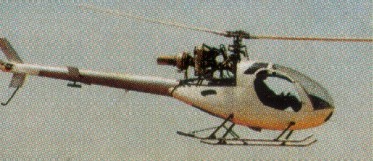
Hillberg Turbine Exec

The Turbine Exec is a turbine kit to repower the Rotorway Executive kit helicopter. First flown in April 1997, the US$20,000 kit included the engine, gearbox reduction drive and tail rotor gearbox.

Max speed: 125 mph
Cruise: 100 mph
Range: 225 sm
Rate of climb: 1500 fpm
Service ceiling: 13,500 ft
Engine: Solar T6Z-T32
hp range: 150-170
Fuel capacity: 35 USG
Empty weight: 750 lb
Gross weight: 1425 lb
Height: 8 ft
Length: 22 ft
Disk span: 25 ft
Seats: 2

Hillberg EH1-02

The first flight was scheduled for the Spring of 1998.
Kits were to include everthing except radios, with plans selling for US$350, and kit for US$68,000.

Max speed: 170 mph
Cruise: 130 mph
Range: 390 sm
Rate of climb: 1500 fpm
Service ceiling: 13,500 ft
Engine: Solar T6Z-T32
hp range: 150-400
Fuel capacity: 45 USG
Empty weight: 900 lb
Gross weight: 1800 lb
Height: 8 ft
Length: 28 ft
Disk span: 25 ft
Seats: 2

Hillberg RotorMouse EH1-01

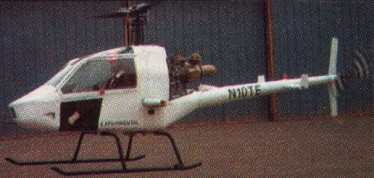
A turboshaft powered helicopter first flown in 1994. The first kit was shipped in January 1998. Plans were selling at US$350 and the kit price was US$68,000. Of aluminium construction, the Solar T62T32 or other engines with 150-225 hp are suitable.

Max speed: 160 mph
Cruise: 130 mph
Range: 300+ sm
Rate of climb: 4700 fpm
Engine: AiResearch, 145 hp
hp range: 145-250
Fuel capacity: 32.9 USG
Empty weight: 635 lb
Gross weight: 1300 lb
Height: 7.4 ft
Length: 20.1 ft
Disk span: 20 ft
Disk area: 314.2 sq.ft
Seats: 1

Hillberg Helicopter

1997: PO Box 8974, Fountain Valley, CA 92728-8974, USA.

In addition to helicopter maintenance and modification, offered the RotorMouse EH 1 -01 as a single-seat turbine experimental-category helicopter for construction from a kit (first flown August 1993), RotorMouse EH 1 -02 tandem two-seat version, and RotorMouse (Baby Huey) four-seater. Also built the T-4 Turbine as a four-seat turbine helicopter, and produced a retrofit kit for the RotorWay Exec to provide a turbine engine (first flown 1997).

Hill Voyager

Klaus Hill designed the Manta Fledglings. When Manta made the Fledgling-II, Klaus was not happy with the results, so he did it better: this was the Voyager.

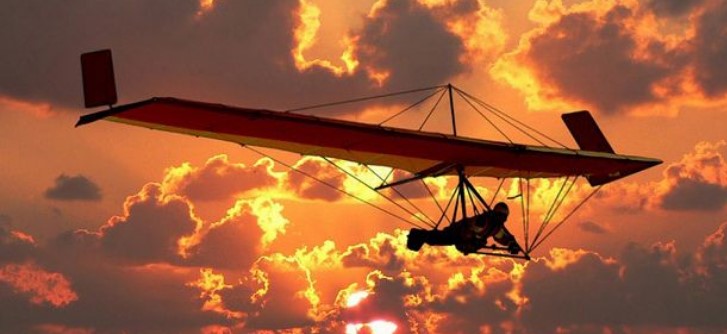
Klaus combined the Kasper wingtip gates and Fledgling rudders to make effective NASA winglets for the Fledgling hang glider.

Klaus Hill was killed on 10 October 1978 while testing the Voyager, a hang glider of his own design, which he had just motorised.

Hill Fledgling / Fledge

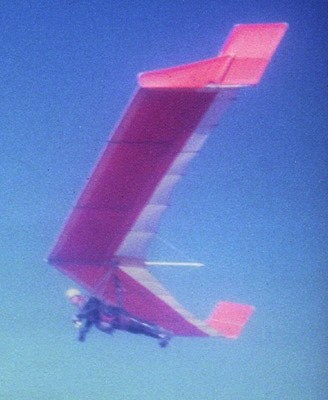
Klaus Hill had designed a rigid tip-¬rudder hang glider with hybrid control called the Fledgling, a name which rapidly became abbreviated to Fledge.

The Pterodactyls and Ascenders were powered Fledglings.

The Fledgling airframe was used for the KasperWings, both the hang glider version and the KasperWing ultralight motorglider.

When Manta made the Fledgling-II, Klaus was not happy with the results, so he did it better: this was the Voyager.

Hill Pterodactyl

A series of tailless aircraft was designed by Professor Geoffrey Hill to demonstrate the concept of aircraft that could fly safely at low speed. The first machine was a glider which he built in 1924 and flew from the South Downs, UK. From this a powered version was constructed.

Hild-Marshonet 1918 biplane

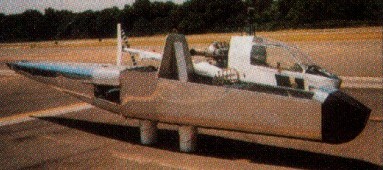
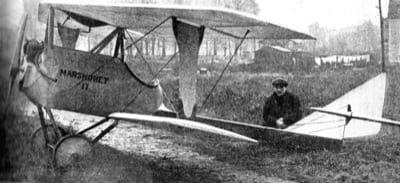
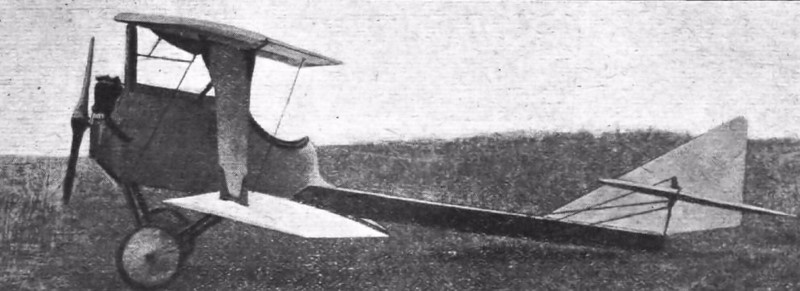
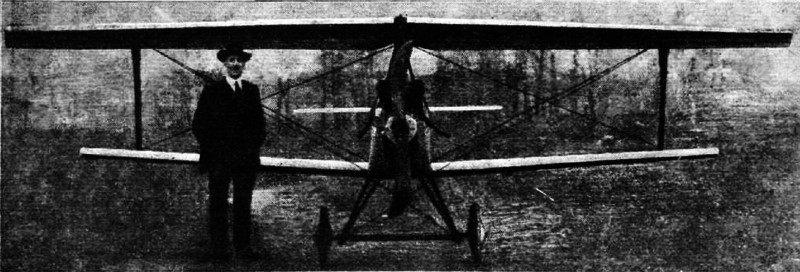
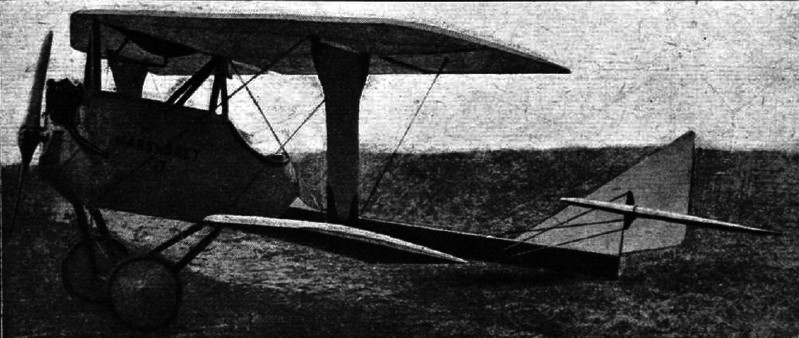
The Hild-Marshonet biplane was designed and built by Frederick Hild and Edward Marshonet of Hempstead, New York, in 1919. It had no fuselage as such, the pilot being seated in a streamlined nacelle. An outrigger of boxed cantilever construction supporting the empennage was attached directly behind the pilot’s seat. It had a single-boom tail and swept back wings.

It was powered by a 20 hp-Spainhour V-twin engine.

The plane could be taken apart in minutes.

Span: 24 ft
Length: 19 ft
Empty weight: 450 lb
Loaded weight: 700 lb
Speed: 65 mph
Price $2,000.