Highster

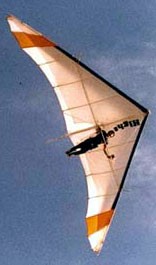
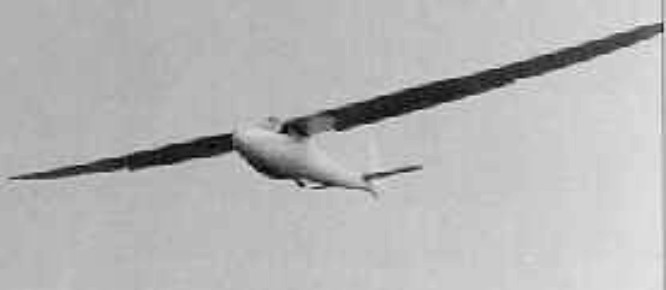
The Highster was built in Oakland Ca. by Mike Giles 1978. It was a 90% double surface glider with triple deflexers (wing truss wires). These wires where adjusted with out turnbuckles. They where adjusted by turning over the outer tangs which would tighten the winding of one cable and lossen the other. For increased strenth, the cross bar was inner sleeved with out pop rivets. Later versions had a floating cross bar. Highster used Manta hardware and was considered the flex wing side of Manta when Manta swithched over to making the Fledge. Highster was named after a fork lift because it was a “Heavy Lifter”.

The most common size was 190 square feet. During peak demand for the Highster, some where manufactured in Sacramento, Ca.

It was easy to set up, with all the Manta hardware, good static balance, but a bit stiff to fly. The floating cross bar helped the handling. Glide was poor for a 90% double surface glider due to the triple set of wires out in front of the leading edge. The glider could be easliy spun and this was an accepted thermalling practice when the pilot was tired.

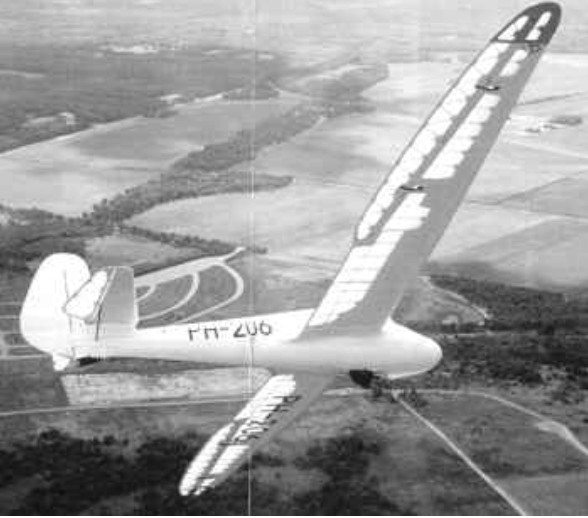
Hirth Go-4 Goevier

Go-4 Goevier III

Designed by Wolf Hirth and Wolfgang Hutter.

Go-4 Goevier III
Wing span: 14.84 m
Wing area: 19 sq.m
Empty Weight: 235 kg
Gross Weight: 410 kg
Wing Load: 21.6 kg/sq.m
Aspect ratio: 11.53
Airfoil: Joukowsky
L/DMax: 20 70kph
MinSink: 0.90 m/s 60 kph
Seats: 2
No. Built: 130

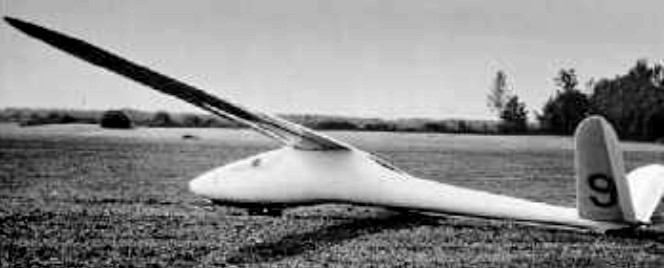
Hirth Kria

Designed by Nagele, Eppler, and Hirth.

Wing span: 11.9 m
Wing area: 9.88 sq.m
Aspect ratio: 14.33
Airfoil: Eppler 27
Empty Weight: 120 kg
Gross Weight: 220 kg
Wing Load: 22.3 kg/sq.m
L/DMax: 30 92 kph
MinSink: 0.70 m/s / 68 kph
Seats: 1
No. Built: 1

Hirth LO-150

A development of the 10m straight wing LO-100 aerobatic glider, the LO-150 features a two- piece, plywood covered, single spar wing and uses flaps for glidepath control. Designed by Alfred Vogt, the fuselage is a wooden monocoque with a cantilever tail. Early models had a skid and jettisonable dolly instead of a fixed main wheel. A.J. Smith won the 1961 Nationals in a LO-150 and Harold Jensen flew another 700 km/ 435 miles to win the 1962 Barringer Trophy.

Wing span: 15 m / 49.2 ft
Wing area: 10.9 sq.m /117 sq.ft
Aspect ratio: 20.6
Airfoil: Clark Y
Empty Weight: 100 kg / 441 lb
Payload: 110 kg / 242 lb
Gross Weight: 310 kg / 683 lb
Wing Load: 28.44 kg/sq.m /5.8 lb/sq.ft
L/DMax: 34 105 kph / 57 kt / 65 mph
MinSink: 0.68 m/s / 2.2 fps / 1.24 kt
No. Built: 15
Seats: 1

Hirth, Wolf

Wolf Hirth GmbH, a prewar manufacturer of sailplanes, made wooden subassemblies for Messerschmitt projects during the Second World War, including a high-speed glider-trainer for Me 163 Komet pilots, and components for the Me 321 and Me 323 Gigants. The re-established company, owned largely by Messerschmitt-Bölkow-Blohm, built Arnold Wagner’s Acrostar competition aerobatic aircraft in small numbers, and supported the Bolkow Bo 107, 207, 208, and 209 lightplanes.

Hirth Eindecker

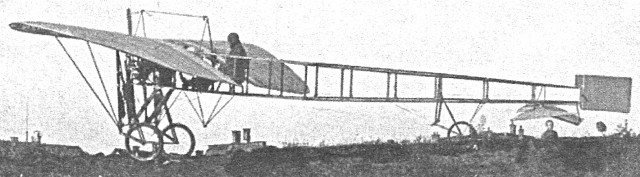
Hellmuth Hirth worked for a short time as a foreman at aviation pioneer August Euler in Darmstadt. However, since Euler had difficulties with his Voisin-type flying machine, Hirth returned to Stuttgart to build himself a Blériot machine in 1909. Because of the too weak engine, this did not go beyond small aerial jumps, causing Hirth to go to Vienna to fly the Etrich Taube together with Illner.

Hirth 3701

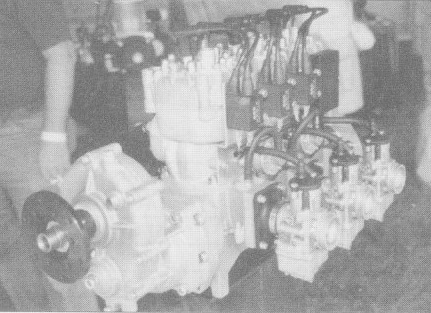
The Hirth 3701 is an in-line three cylinder, two stroke, carburetted aircraft engine, with optional fuel injection, designed for use on ultralight aircraft and small homebuilts. The 3701 was developed as a liquid-cooled and narrower installation alternative to the four cylinder Hirth F-30 air cooled engine of 85 to 110 hp (63 to 82 kW).

The 3701 features triple Bing 34mm slide carburetors or optionally fuel injection. The cylinder walls are electrochemically coated with Nikasil. Standard starting is electric start and recoil start is not available as an option. The reduction drive system available is the G-50 gearbox, with reduction ratios of 2.16:1, 2.29:1, 2.59:1, 3.16:1, or 3.65:1.

The engine runs on a 50:1 pre-mix of unleaded 93 octane auto fuel and oil, or optionally 100:1 oil injection. The base price in 2009 was US$9815.

Variants:

3701 high torque/low rpm engine
Three-cylinder in-line, two stroke, aircraft engine with three Bing 34mm slide carburetors or fuel injection. Low piston port timing produces 84 hp (63 kW) at 4950 rpm with a very flat torque curve.

3701 high performance engine
Three-cylinder in-line, two stroke, aircraft engine with three Bing 34mm slide carburetors or fuel injection. High piston port timing produces 100 hp (75 kW) at 6000 rpm with a steep torque curve.

Applications:
CGS Hawk II Arrow
Eagle Helicycle
Earthstar Thunder Gull II
Quicksilver MX II
Fusion powered parachute
Infinity powered parachute
InterPlane Skyboy
Rans S-9 Chaos
Skymaster powered parachute
Zenair CH 601 Zodiac

Specifications:

3701 high performance
Type: Three cylinder, two-stroke, in-line, aircraft engine
Bore: 76 mm (3.0 in)
Stroke: 69 mm (2.7 in)
Displacement: 939 cc (57.3 cu in)
Length: 490 mm (19.3 in)
Width: 280 mm (11.0 in)
Height: 420 mm (16.5 in)
Dry weight: 108 lb (49.0 kg), including electric starter and exhaust system. With optional gearbox total weight is 127 lb (57.6 kg), plus radiator.
Valvetrain: piston ported
Fuel system: 3 X Bing 34mm slide type carburetors or fuel injection
Fuel type: unleaded 93 octane auto fuel
Oil system: 50:1 fuel/oil premix or oil injection
Cooling system: liquid
Reduction gear: G-50 gearbox with reduction ratios of 2.16:1, 2.29:1, 2.59:1, 3.16:1, or 3.65:1
Power output: 100 hp (75 kW) at 6000 rpm
Compression ratio: 9.5:1