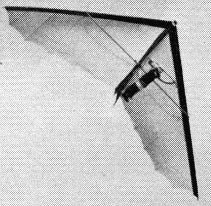
Hiway Hang Gliders Scorpion / Super Scorpion

Scorpion

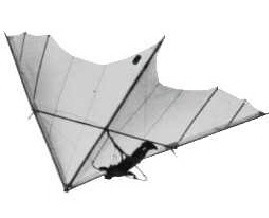
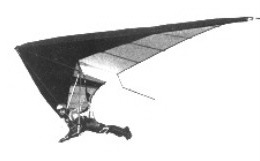
Hiway decided to return to simplicity for a new range of gliders, with no wing wires. Hiway designed the airframe to fles in a particular way under flight loads, and then sew the sail to fit the shape exactly. The first of the range were 1) Super Scorpion, a cross-country hang glider. 2) Spectrum, intermediate glider. 3) Gemini, purpose designed two-place glider. 4) Harrier, primary and training glider. The Scorpion was a 1977 hang glider from Hiway Hang Gliders.

The Scorpion is a high-aspect ratio Rogallo hybrid with tip extensions (also referred to as truncated tips), a deeply scalloped trailing edge, finite aft sail extension, and tapered leading-edge pockets. It is controlled solely by means of weight shifting.
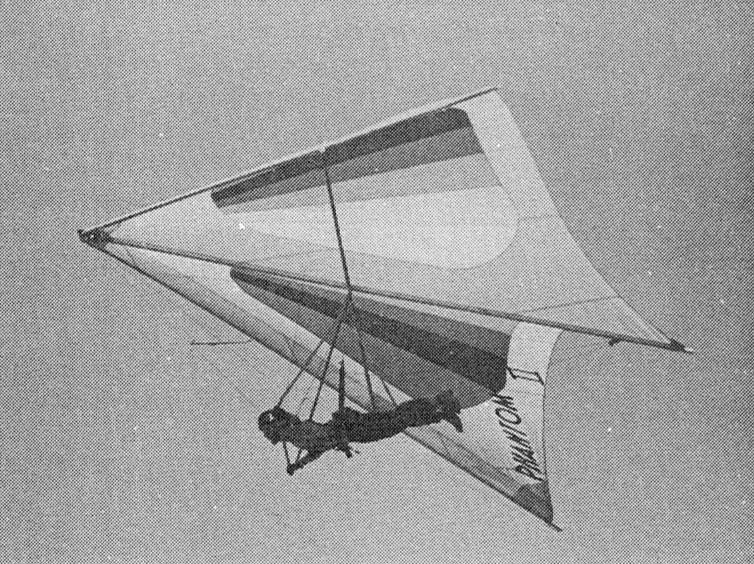
Phantom II

It is characterised by a unique aft sail extension which ought to mean improved longitudinal stability. It also has what the manufacturer calls a ‘keel sail equaliser’ that allows for the sail to adjust under the changing air pressure distribution in a turn. A typical trapeze bar / harness arrangement is used. Its wing loading is about the same as a standard Rogallo, thus, coupled with the greater efficiency of the high aspect ratio wing, it has a very low stall speed. This may limit its speed range. At the stall, one wing tip will tend to drop. Pitch and roll response are reported adequate just above stall.
Take down / set up times should be within 10 minutes, and the Scorpion may be folded and transported.
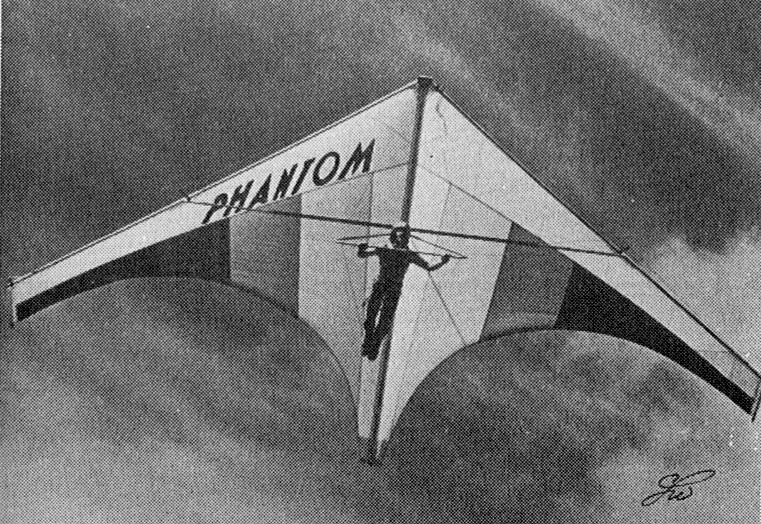
Phantom Scorpion

The 1977 Scorpion had a very low sink rate and could also be flown at very high angles of attack. This facilitates circling more easily in small thermals. Cross country thermaling flights on Scorpions were a common occurrence. The low stall speed made take-offs and landing a delight, and top landing could be made in lighter winds.
1977 Scorpion

A and B Scorpions have 1 3/4 inch cross spars, C and D have 1 7/8 inch. The Scorpion has a totally folding A frame with a removeable bottom bar. The cross spar is split to facilitate storage and carriage. The usual Hiway quick release nose catch is retained and the wing posts simple push into bushed apertures in the leading edges. Knock down versions were available where the leading edges fold. Scorpions were available as either prone or seated and in four sizes, priced at £464.00 in 1977.

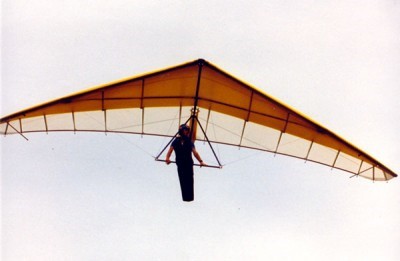
The Superscorpion (released the same day as the Spectrum), first appearing on the market in early 1978, is the first machine to have fully cambered sail and an absence of deflexers. The Mk 1 has a very simple airframe which is strong, reasonably light and easy to rig. The control frame uprights have a curve at the top and rigging is achieved by swinging out one upright which locates with a spring button. As the uprights are of 1 1/8 inch x 17 g they are quite easily damaged. The early Superscorpions are extremely easy to fly, being light in both pitch and roll, but with just the right amount of damping. One of the main virtues of the glider’s handling is the ease with which the glider will roll, even without any pitch co-ordination. This allows moderately flat turns and 360s to be achieved easily. It will fly very slowly indeed and still retain good roll control which makes it ideal for scratching on light wind days or in light thermal. The 1978 Super Scorpion glider had lightest handling ever made, but an abysmal sink rate at speed and tail heavy balance that can feel cumbersome at take off (but often useful for landing). In stronger winds however, anything over 25 mph, the machine becomes very frustrating to fly due to its lack of penetration.
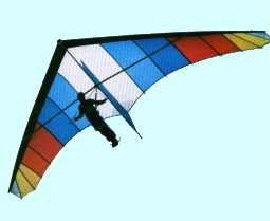
The glider was supplied in sizes ‘B’ pilot weight up to 10 st and ‘C’ for heavier pilots.
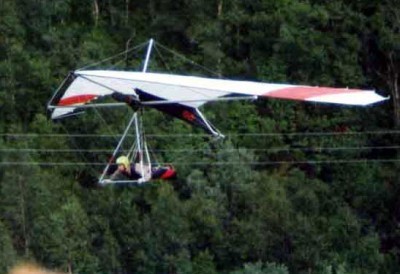
Paddy Monro was one of the many test pilots for Hiway and considered the Super Scorpion was an improvement on the Scorpion. The “C “was the best version. Best glider and best seller in its day.

The Super Scorpion C was top rated for manuverability and sink rate at its time. A very easy and safe wing, even withou lufflines. The downside was a lack of speed: over 40 km/h, it sank like a rock and a tendency to skid serious if turned with too little speed.

The Super Scorpion had a further 1980 development called the Super Scorpion II. The Mk II has a similar airframe set up to the Vulcan with a sliding centre-box system. And improved nose catch assembly makes for easier and more secure use. Visually the difference was the II had completely straight 13 g uprights. The earlier version I own has curves on each upright at the very top so that they end up parrallel to each other where connected. This glider is very sweet to fly having very pleasant handling qualities. The Mk.II is marginally faster than the Mk I, although the handling has suffered slightly due to the less flexible airframe, making roll just a little less responsive.Its only real drawback was a lack of penetration compared to some other gliders.
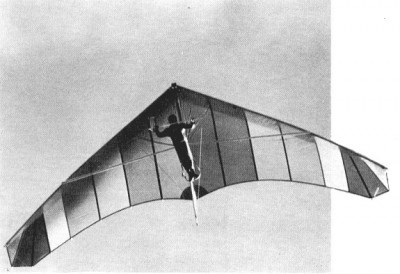
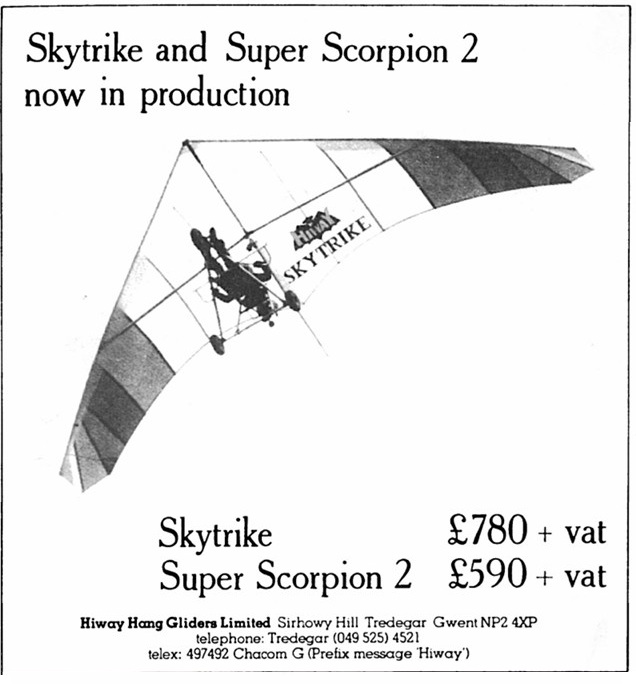
Super Scorpion 2
1977

Phantom Scorpion
Wing span: 32 ft
Wing area: 200 sq.ft
Aspect ratio: 5
Keel length: 16 ft
Leading edge: 19 ft
Nose angle: 110 degrees
Billow: 2.75 degrees
Empty weight: 47 lb
Max flying weight: 242 lb
Useful load: 195 lb
Best L/D: 7-1
Min sink: 254 fpm
Stall: 14 mph
Cruise: 24 mph

Scorpion A
Wing area: 15 m²
Wing span: 9.6 m
Aspect ratio: 6
Hang glider weight: 20 kg
Minimum pilot weight: 40 kg
Maximum pilot weight: 55 kg
Packed length: 5.86 m
Packed length short: 3.3 m
Number of battens: 10
Nose angle: 112°

Scorpion B
Wing area: 17.5 m²
Wing span: 10.2 m
Aspect ratio: 5.6
Hang glider weight: 21 kg
Minimum pilot weight: 50 kg
Maximum pilot weight: 70 kg
Packed length: 6.16 m
Packed length short: 3.6 m
Number of battens: 10
Nose angle: 112°

Scorpion C
Wing area: 20.5 m²
Wing span: 10.6 m
Aspect ratio: 6.38
Hang glider weight: 25 kg
Minimum pilot weight: 70 kg
Maximum pilot weight: 90 kg
Packed length: 6.38 m
Packed length short: 3.77 m
Number of battens: 10
Nose angle: 112°

Scorpion C
Leading edge: 20 ft 11 in
Keel: 10 ft 9 in
Sail area: 220 sq ft
Aspect ratio: 5.3
Weight: 56 lb
Pilot weight range 11-14 st

Scorpion D
Wing area: 22.5 m²
Wing span: 10.8 m
Aspect ratio: 6.6
Hang glider weight: 27 kg
Minimum pilot weight: 90 kg
Maximum pilot weight: 110 kg
Packed length: 6.6 m
Packed length short: 3.95 m
Number of battens: 10
Nose angle: 112°

Super Scorpion A
Wing area: 13.6 m²
Wing span: 8.5 m
Aspect ratio: 5.5
Hang glider weight: 18 kg
Minimum pilot weight: 50 kg
Maximum pilot weight: 70 kg
Packed length: 5.1 m
Packed length short: 3.75 m
Nose angle: 120°

Super Scorpion B
Wing area: 16 m²
Wing span: 9.35 m
Aspect ratio: 5.6
Hang glider weight: 21 kg
Minimum pilot weight: 57 kg
Maximum pilot weight: 82 kg
Packed length: 5.6 m
Packed length short: 4.05 m
Nose angle: 120°

Super Scorpion B
Leading edge: 18 ft 0 in
Keel: 12 ft 1 in
Sail area: 173 sq ft
Nose angle: 120 deg
Aspect ratio: 5.6
Weight 46 lb
Span 30 ft 7 in
Pilot weight range: 9 to 13 st.

Super Scorpion C
Wing area: 18.4 m²
Wing span: 10.2 m
Aspect ratio: 5.7
Hang glider weight: 24 kg
Minimum pilot weight: 70 kg
Maximum pilot weight: 90 kg
Packed length: 6.1 m
Packed length short: 4.35 m
Number of battens: 7
Nose angle: 120°
Hiway Hang Gliders Demon / Flight Designs Demon

The 1980 Demon was the first double surface wing produced by the Hiway company. Produced in three sizes, 150, 175 and 195 (between 80 and 83) the Demon was regarded as an excellent performer which has mellow handling. A distinguishing feature is the use of a foam insert in the leading edge as opposed to mylar sheet used by competitors.

A 165 which was a 198 prototype Demon had extremely light handling and ‘suspicious’ in pitch but production gliders were fine in this respect. All Demons had foam-backed leading edges as opposed to Mylar. Later models also had blue ‘painted’ rather than anodised tubing.

It was quite heavy at the time.

The Demon (for advanced pilots) was also made under license from Hiway by Flight Designs of Salinas, California. The American version also served as the wing for the “Jetwing” trike also produced by Flight Designs. After Flight Designs was bought out by Pioneer Parachute in 1982, some sails were made by the latter company. These were highly inferior to the original versions, and can be identified by the use of straight-stitch seams rather than zig-zag seams.

1980 Demon medium
Leading edge: 19 ft
Root chord: 8 ft 5 in
Span: 33 ft 6 in
Nose angle: 130 deg approx.
Weight: 72 lb

1980 Demon large
Weight 68 lb

Demon 160
Wing area: 14.8 m²
Wing span: 9.73 m
Aspect ratio: 6.4
Hang glider weight: 29 kg
Minimum pilot weight: 54 kg
Maximum pilot weight: 69 kg
Minimum speed: 25 km/h
Max glide ratio (L/H): 8.6
Max glide ratio speed: 29 km/h
Minimum sink rate: 0.9 m/s
Packed length: 5.57 m
Packed length short: 4.25 m
Nose angle: 125°

Demon 175
Wing area: 16.26 m²
Wing span: 10 m
Aspect ratio: 6.2
Hang glider weight: 33 kg
Minimum pilot weight: 63 kg
Maximum pilot weight: 91 kg
Max glide ratio speed: 30 km/h
Packed length: 5.67 m
Packed length short: 4.25 m
Nose angle: 125°

Demon 195
Wing area: 18.12 m²
Wing span: 10.6 m
Aspect ratio: 6.3
Hang glider weight: 32 kg
Minimum pilot weight: 82 kg
Maximum pilot weight: 100 kg
Max glide ratio speed: 32 km/h
Nose angle: 125°

Hiway Hang Gliders Cloudbase

Made in 1975, the Hiway Cloudbase was a second generation glider which incorporated battens and deflexers. At this time battens became the norm. Early models had two radial battens whilst later ones, as pictured, have chordwise battens. The Cloudbase can be slowed down without the nose or wing dropping. On light marginal days this gives the pilot time to put the kite back on the top when the wind drops momentarily, instead of having to go down. On stronger days the higher aspect ratio ensures that the glider can use parts of the sky that other machines simply cannot reach. The Cloudbase was supplied in three sizes to cover pilot weights from 7 to 18 st.

Cloudbase model 20
medium 10-15 st
Leading edge 20 ft 2 in
Keel 18 ft 2 in
Sail area 220 sq ft
Aspect ratio 4
Weight 43 lbs
Price 1975 £378.00

Hiway Hang Gliders Ltd

Hiway, founded by John Ievers and Steve Hunt, first produced a standard Rogallo, in 1973.

Hiway Hang Gliders Ltd
Sirhowy Hill
Tredegar
Gwent NP2 4XP
UK

27/35 Bernard Rd
Brighton
UK

Hiway decided to return to simplicity for a new range of gliders, with no wing wires. Hiway designed the airframe to fles in a particular way under flight loads, and then sew the sail to fit the shape exactly.
The first of the range were 1) Super Scorpion, a cross-country hang glider. 2) Spectrum, intermediate glider. 3) Gemini, purpose designed two-place glider. 4) Harrier, primary and training glider.

Hiway hang gliders was re-floated as Hiway (83) Ltd. under the directorship of Jim Bowyer, Rod Macdonald and John Ievers (one of the original founders). Glider designs which have been carried over to the new company were as follows: Excalibur, a high performance CFX with flexible tips. Price £1141.95. Vision. double surface intermediate. £897.00. Explorer .Advanced rigid wing with aerodynamic controls. These were made to fulfill a German contract.Price £1581.25. Superscorpion 2. Post P1 .Price £747.50.(Manufactured 83 to 85).Stubby. Training glider.

Historical Aircraft Corp PZL P.11

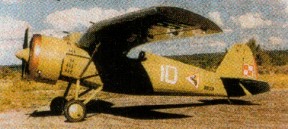
Historical Aircraft Corp offers kits to build a range of 60 percent scale single-seat fighter representations, including P-51D, Corsair, PZL P.11 c and, P-40 Tomahawk, plus an 85 percent scale representation of Ryan STA.
First flown in 1990, the kit included engine, prop and instruments, with a 1997 price of US$25,500.
Historical Aircraft Corp P.11c

Top speed: 105 mph
Cruise: 90 mph
Stall: 55 mph
Range: 300 sm
Rate of climb: 900 fpm
Takeoff dist: 900 ft
Landing dist: 900 ft
Service ceiling: 12,500 ft
Engine: 100 hp
Fuel capacity: 11 USG
Empty weight: 850 lb
Gross weight: 1100 lb
Height: 7.5 ft
Length: 18.3 ft
Wing span: 27.8 ft
Wing area: 97.3 sq.ft
Seats: 1
Landing gear: tailwheel

Hispano-Suiza 14AA

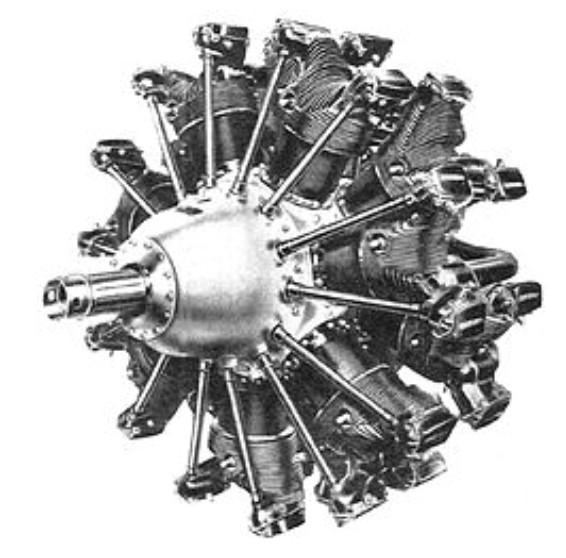
The Hispano-Suiza 14AA was a fourteen-cylinder aircraft radial engine used in France during the late 1930s. As Hispano-Suiza lacked recent experience in developing radial engines, it was derived from the licensed Wright R-2600 engine. Due to reliability problems, the engine was largely supplanted by the similar Gnome-Rhône 14N.

Not to be confused with the smaller Hispano-Suiza 14AB, which was derived from the smaller Wright Whirlwind series.

Applications:
Amiot 341
LeO 45
Farman F.223
Latécoère 530
Latécoère 570
Koolhoven F.K.58

Specifications:

14AA-04
Type: Fourteen-cylinder two-row supercharged air-cooled radial engine
Bore: 156 mm (6.13 in)
Stroke: 170 mm (6.69 in)
Displacement: 45.25 l (2,761 in³)
Length: 1,650 mm (64.96 in)
Diameter: 1,260 mm (49.61 in)
Dry weight: 640 kg (1,411 lb)
Valvetrain: Overhead valves
Supercharger: Single-speed centrifugal type supercharger, 10.0:1 reduction
Fuel system: Carburetor
Fuel type: 85-87 octane rating gasoline
Cooling system: Air-cooled
Reduction gear: 1.58:1
Power output: 793 kW (1,063 hp) at 2,125 rpm for takeoff
Specific power: 17.52 kW/l (0.39 hp/in³)
Compression ratio: 6.2:1
Specific fuel consumption: 369 g/(kW•h) (0.61 lb/(hp•h))
Oil consumption: 12 g/(kW•h) (0.32 oz/(hp•h))
Power-to-weight ratio: 1.24 kW/kg (0.75 hp/lb)

Hispano-Suiza 12Z / SNECMA Hispano 12Z

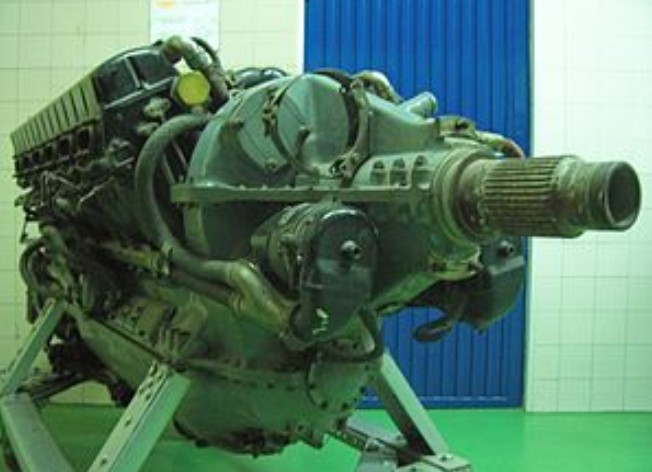
The 12Z was the final evolution of the series of Hispano-Suiza V-12 aircraft engines, which had just entered production when France fell to the Germans during World War II. A small number were produced during the war but the German occupation government would not allow full-scale production to start. After the war small numbers were built to equip new designs, but the rapid introduction of the jet engine ended further development.

The 12Z differed from the earlier 12Y primarily in the use of four valves per cylinder operated by dual overhead cams. This gave the cylinders considerably better volumetric efficiency and faster operation, raising the RPM from 2,400 to 2,700. The engine was also designed to run only on 100 octane fuel (instead of 87, which was common at that point) which allowed the compression ratio to rise from the 12Y’s 5.8:1 to the 12Z’s 6.75:1. These changes raised the power from 1,000 to 1,300 hp (750 to 970 kW) at sea level.
Unfortunately the engine continued to use a single-stage, single-speed supercharger and therefore lacked the all-altitude performance of German and British designs. But tuning the supercharger for a different critical altitude improved high-altitude performance considerably, delivering 1,500 hp (1,120 kW) at 21,000 ft (6,400 m) as opposed to 930 hp (690 kW) at 2,950 ft (900 m) for the 12Y.

Small prototype runs started in 1939, and were fitted to the French Armée de l’Air’s front-line fighter aircraft, the M.S.410 and D.520, creating the M.S.450 and D.524 respectively. Production of the main model, the 12Z-17, was just starting at the time of the armistice. Production was undertaken in Hispano-Suiza’s Spanish factories, but these engines had many problems and were never used in any numbers.

After the war a new version tuned to operate with 92 octane fuel, as opposed to the -17’s 100/130, was built in limited numbers as the 12Z-89. Compression ratio was raised slightly to 7:1, but with the lower grade fuel the power dropped slightly to 1,280 hp (950 kW) at 2,600 rpm (1,479 hp (1,100 kW) maximum take-off). These engines apparently had the same sorts of reliability issues as the earlier -17’s made in Spain, and the type never entered production.

Variants:
Hispano-Suiza 12Z-1
The initial version of the engine used for development

Hispano-Suiza 12Z-17
development peak at time of the Fall of France in May 1940

Hispano-Suiza 12Z-89
post-war development,not successful.

Applications:
Ikarus S-49C
Hispano Aviación HA-1112
Breguet 482

Specifications:
12Z-1
Type: V-12 60° liquid-cooled, geareed drive supercharged four stroke piston engine
Bore: 150mm (5.9in)
Stroke: 170mm (6.69in)
Displacement: 36.05 litres (2,199.9 cu.in)
Length: 2,384mm (93.8in)
Width: 744mm (29.3in)
Height: 1,074mm (42.3in)
Dry weight: 620kg (1,367lb)
Hollow propeller shaft to accommodate a cannon barrel
Valvetrain: Two intake and two sodium-cooled exhaust valves per cylinder actuated by dual overhead camshafts
Supercharger: Gear-driven single-stage two-speed centrifugal type supercharger with automatic boost control – ratios 6.36:1 and 9.38:1
Fuel system: Direct fuel injection @ 40kg/sq.cm (570psi) 2x Lavalette P511-AS2 6-plunger injection pumps with 1x Lavalette KFD injector per cylinder
Fuel type: 100/130-octane rating gasoline
Oil system: Dry sump, pressure feed @ 5kg/sq.cm (70psi), 20.5 centistokes (100S.U. secs) viscosity oil
Cooling system: Ethylene Glycol/water mix
Reduction gear: Spur reduction gear ratio 0.6:1
Air Equipment 1525 compressed gas starting system
Power output:
Take-off – 1,342kW (1,800hp) @ 1,150mm (45.3in)Hg boost @ 2,800rpm
Military, low – 1,193kW (1,600hp) @ 2,500m (8,200ft) @ 2,800rpm
Military, high – 984kW (1,320hp) @ 8,000m (26,200ft) @ 2,800rpm
Cruising, low – 1,193kW (900hp) @ 3,000m (9,800ft) @ 2,100rpm
Cruising, high – 1,193kW (900hp) @ 5,600m (18,400ft) @ 2,100rpm
Specific power: @ take-off power – 37.22kW/l (0.818hp/in³)
Compression ratio: 7.0:1
Specific fuel consumption: 0.29kg/kW/hr (0.48lb/hp/hr)
Oil consumption: 0.006 kg/kW/hr (0.018lb/hp/hr)
Power-to-weight ratio: @take-off power – 2.16kW/kg (1.32hp/lb)
B.M.E.P. (Brake mean effective pressure) 16.3 kg/sq.cm (232psi)