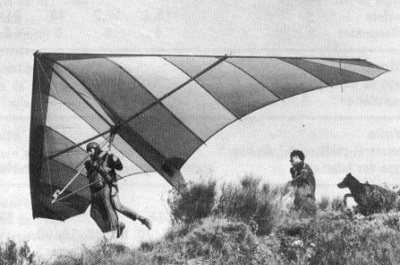
The Hiway Hang Gliders Trapu was a 1980 hang glider.
The Hiway Hang Gliders Trapu was a 1980 hang glider.
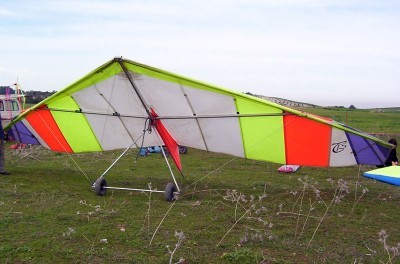
The 1983 Hiway Hang Gliders Stubby was for novice pilots.
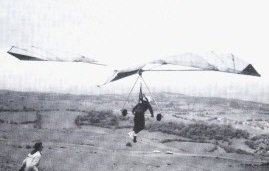
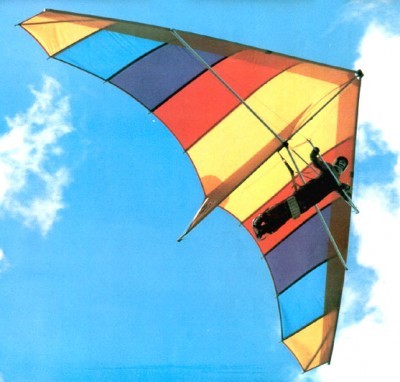
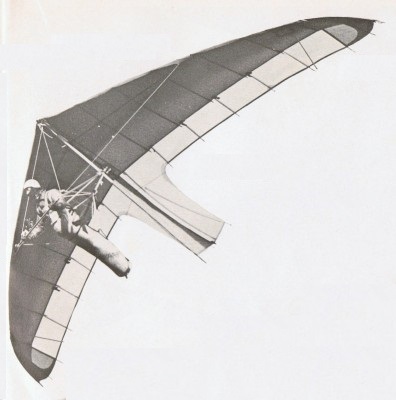
The 1978 Spectrum (released same day as Superscorpion) is a sporty machine, complying with FAI Class 1 Competition regulations. Although an intermediate with a conservative 105 deg nose angle, it generates a lot of lift. The Spectrum’s turning ability was second to none and 360’s were self balancing. Pitch is light and very high speeds are attainable. It also has a low stall speed facilitating top landings in light winds.
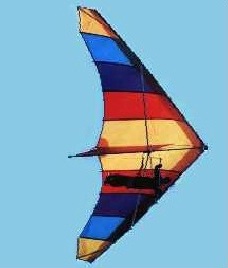
Hiway decided to return to simplicity for a new range of gliders, with no wing wires. Hiway designed the airframe to fly in a particular way under flight loads, and then sew the sail to fit the shape exactly. The first of the range were 1) Super Scorpion, a cross-country hang glider. 2) Spectrum, intermediate glider. 3) Gemini, purpose designed two-place glider. 4) Harrier, primary and training glider.
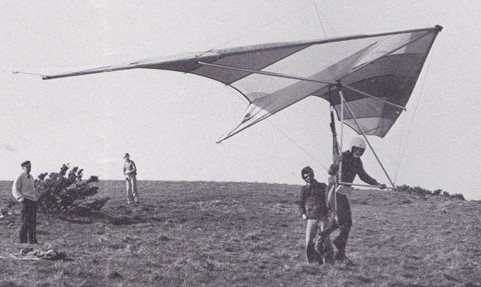
The Spectrum complies with FAI Competition regulations as an Intermediate glider. Turns are self balancing and very high speeds are attainable, and it has a low stall speed.
The Spectrum was available in two sizes and could be rigged for seated or prone. A “B” bar accessory converts from prone to seated.
The Hiway Spectrum was regarded as easy to handle although it had a reputation for tip-stalling.
The Gemini two place glider is an enlarged and strengthened version of the Spectrum.
Small
Wing span: 26 ft 10 in / 8.2 m
Wing area: 165 sq,ft / 15.3 sq.m
Aspect ratio: 4.45
Leading edge: 17 ft / 5.15 m
Keel length: 13 ft 3 in / 4 m
Nose angle: 105˚
Weight: 45 lb / 20 kg
Pilot weight: 50-76 kg
Packed length: 17 ft 3 in / 5.25 m
Knockdown length: 14 ft / 4.25 m
Large
Leading edge: 18 ft 6 in / 8.66 m
Keel length: 15 ft / 4.5 m
Wing span: 29 ft 5 in / 9 m
Wing area: 193 sq,ft / 17.9 sq.m
Aspect ratio: 4.45
Nose angle: 105˚
Weight: 51 lb / 23 kg
Pilot weight: 57-90 kg
Packed length: 18 ft 10 in / 5.75 m
Knockdown length: 14 ft 3 in / 4.35 m
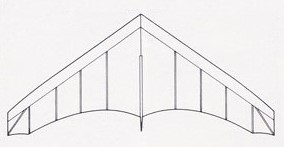
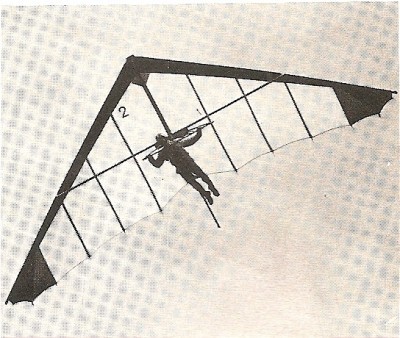
Hiway decided to return to simplicity for a new range of gliders, with no wing wires. Hiway designed the airframe to fles in a particular way under flight loads, and then sew the sail to fit the shape exactly. The first of the range were 1) Super Scorpion, a cross-country hang glider. 2) Spectrum, intermediate glider. 3) Gemini, purpose designed two-place glider. 4) Harrier, primary and training glider.
The 1979 Hiway Hang Gliders Harrier B was for novice pilots and Harrier C for intermediate pilots.
Harrier B
Wing area: 17.5 m²
Wing span: 9.04 m
Aspect ratio: 4.25
Hang glider weight: 18 kg
Minimum pilot weight: 50 kg
Maximum pilot weight: 70 kg
Packed length: 4 m
Number of battens: 12
Nose angle: 100°
Harrier C
Wing area: 20.4 m²
Wing span: 9.34 m
Aspect ratio: 4.25
Hang glider weight: 20 kg
Minimum pilot weight: 70 kg
Maximum pilot weight: 90 kg
Packed length: 4 m
Number of battens: 12
Nose angle: 100°
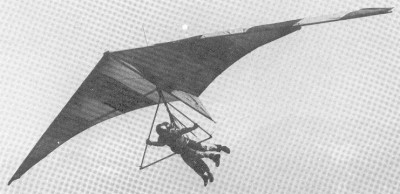
A 1978 hang glider from Hiway Hang Gliders.
Hiway decided to return to simplicity for a new range of gliders, with no wing wires. Hiway designed the airframe to fles in a particular way under flight loads, and then sew the sail to fit the shape exactly. The first of the range were 1) Super Scorpion, a cross-country hang glider. 2) Spectrum, intermediate glider. 3) Gemini, purpose designed two-place glider. 4) Harrier, primary and training glider.
The Gemini two place glider is an enlarged and strengthened version of the Spectrum.
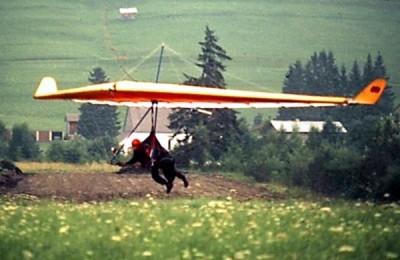
The 1984 Hiway Hang Gliders Explorer glider had wire for the leading edge. They had pitch problems when the wire flipped at low angles of attack.
Wing area: 14.5 m²
Wing span: 10.4 m
Aspect ratio: 7.45
Hang glider weight: 32 kg
Minimum pilot weight: 57 kg
Maximum pilot weight: 89 kg
Packed length short: 3.2 m
Nose angle: 136°
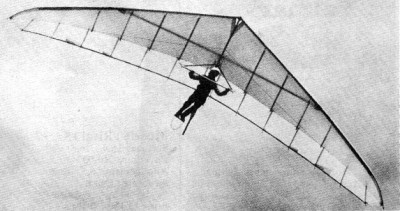
This Excalibur was Hiway’s 1984 high performance glider-distinguished on British hills by being the only model in production at the time with elliptical tips. It was developed to give the best possible compromise between minimum sink rate and best glide angle, making it a natural cross country machine.
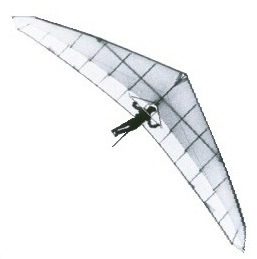
The glass fibre tips allow the sail greater movement in response to weightshift, producing nimble handling and an ability to shrug off turbulence. The Excalibur was produced in two sizes, 180 and 165 sq ft.
Wing area: 16.7 m²
Aspect ratio: 6.9
Hang glider weight: 32 kg
Minimum pilot weight: 70 kg
Maximum pilot weight: 115 kg
Minimum speed: 20 km/h
Maximum speed: 90 km/h
Max glide ratio: 10
Minimum sink rate: 0.9 m/s
Nose angle: 135°
Excalibur (medium)
Sail area: 165 sq ft
Leading edge: 16 ft 4 in+ fiber tips, 10 ft 8 in
Span: 34 ft 8 in
Nose angle: 140 deg
Designed by Bill Pain for Hiway and Joe Binns helped with test flying. The 1st prototype was a 135, then the 145 which flew and handled really well. Then the 150 which never worked. It was originally just a research vehicle but Hiway pushed to have it developed
Hiway cancelled the project. Binns brought prototypes.
Joe Binns did take the 3rd or 4th prototype to the 1982 XC Classic in Owens Valley. Owens had crashed and bent a leading edge without realising it so it did not perform well.
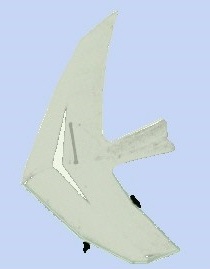
The 135 handling was a compromise between high performance and handling, both of which demanded critical handling techniques. The carbon fibre tensioners on the wingtips were designed and rigged such that washout and trailing edge flexibility were minimal. Consequently, turning her into a strong thermal would demand huge effort and concentration. Max gliding to the next lift would require very precise attitude setting or performance would be seriously degraded. It proved to be a very sturdy machine and would wingover past 90deg without any nasty frighteners.
The larger version was very docile but had very little to offer in performance. The larger machine was more awkward to rig, having had a detachable ‘A’ frame, was infinitely more manageable in all conditions though struggled to make the most of available lift. It was less competitive than the 135. It only flew it a handfull of times.
Alan Monks bought the ‘Yellow Budgie’ from Paul Farley back in ’84’ for a hundred and fifty quid and considered it the best money ever spent at the time. It was exceptionally difficult to hook into a big thermal and could be a handful in turbulence. However she’d go up well once established in lift but the sink rate would let her down in the transit. In smooth air she handled like a dream and was very controllable and inherent stability in all axes was dead positive. The budgie faded into retirement in 89/90 and was stored under-cover for a number of years before released to the hang glider museum. The 135 model was donated to the hang glider museum based in Weston-Super-Mare, Somerset, in 2000 or there abouts by Alan Monks.
Wing has floating cross tube construc¬tion with 75 % double surface enclosing cross¬tube; preformed ribs, and optional nosewheel brake.
Length overall 11.0ft, 3.35m.
Wing span 32.0ft, 9.75m.
Chord at root 8.2ft, 2.50m.
Chord at tip 3.5 ft, 1.07 m.
Dihedral 0 degs.
Nose angle 120 degs.
Total wing area 175 sq.ft, 16.3 sq.m.
Wing aspect ratio 5.9/1.
Empty weight 195 lb, 88kg.
Max take off weight 470 lb, 213 kg.
Payload 275 lb, 125 kg.
Max wing loading 2.69 lb/sq.ft, 13.1 kg/sq.m.
Max power loading 14.7 lb/hp, 6.7kg/hp.
Max level speed 40 mph, 64 kph.
Never exceed speed 45 mph, 72 kph.
Max cruising speed 35 mph, 56 kph.
Economic cruising speed 30mph, 48kph.
Stalling speed 22 mph, 35 kph.
Max climb rate at sea level 600 ft/min, 3.0 m/s.
Min sink rate 300 ft/min at 28 mph, 1.5 m/s at 45 kph.
Best glide ratio with power off 7/1 at 28 mph, 45 kph.
Take off distance 80 ft, 25 m.
Landing distance 100 ft, 30 m.
Range at average cruising speed 65 mile, 105 km.
Engine: Hiro Delta Mk.I, 22 hp at 8000 rpm.
Propeller diameter and pitch 52 x 30in, 1.32 x 0.76m.
Gear reduction with oil bath, ratio 3.64.
Max static thrust 150 lb, 68 kg.
Power per unit area 0.13hp/sq.ft, 1.3hp/sq.m.
Fuel capacity 2.4 US gal, 2.0 Imp gal, 9.1 litre.
Empty weight 175 lb, 79kg.
Max take off weight 429 lb, 195kg.
Payload 254 lb, 115 kg.
Max wing loading 2.45 lb/sq.ft, 12.0 kg/sq.m.
Max power loading 19.5 lb/hp, 8.9kg/hp.
Max level speed 40 mph, 64 kph.
Never exceed speed 45 mph, 72kph.
Max cruising speed 35mph, 56kph.
Economic cruising speed 30 mph, 48 kph.
Stalling speed 22 mph, 35 kph.
Max climb rate at sea level 450 ft/min, 2.3 m/s.
Min sink rate 350 ft/min at 28 mph, 1.8 m/s at 45 kph.
Best glide ratio with power off 8/1 at 28 mph, 45 kph.
Take off distance 80 ft, 25 m.
Landing distance 80 ft, 25 m.
Range at average cruising speed 65 mile, 105 km.
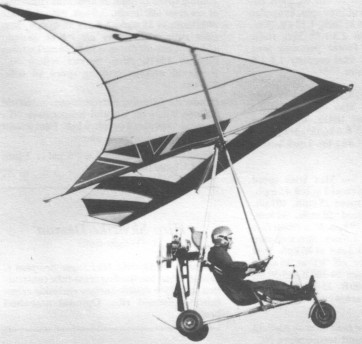
The Skytrike was the first British produced trike unit; allied to Hiway’s simple but effective Super Scorpion wing, (usually in the larger ‘C’ size). Designed by Frank Tarjanyi, the Skytrike/Super Scorpion C was introduced in 1979, the combination of a single surface wing and 10 hp did not exactly make for high performance and its pilot weight range was distinctly limited, but the basic formula was obviously right.
The power shortage was solved by the introduction of Robin engines, in which form the trike unit was dubbed Skytrike Mk II, with the Valmet engined version being known retrospectively as the Mk I. Two versions of the Mk II were offered, a single cylinder 250 cc version which usually retained the Super Scorpion wing, and a twin cylinder 330 cc version which typically is flown with the Hiway Demon wing.
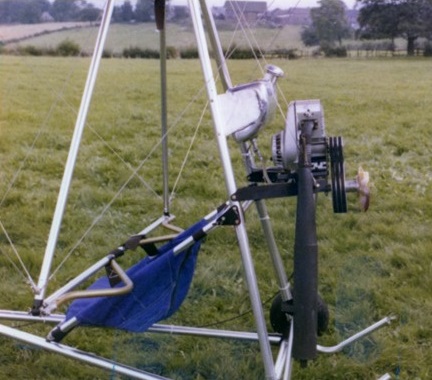
Hiway’s next move was an attempt to retain the performance of the 330 cc version but save some weight, by using the small but powerful liquid cooled Hiro Delta MkI engine to produce the Hiro Skytrike trike unit. The result was an aircraft with an impressive performance for its engine size, due partly to the elimination of drive belts in favour of integral reduction gearing. Moreover, the liquid cooling allowed the inclusion of an effective carburettor anti icing system. Other than the engine, the only significant change to the trike unit was the replacement of the front wire by a strut.
Despite these qualities, the Hiro Skytrike found few buyers in a market which was becoming enamoured with the smoothness and reliability of the 330 cc Robin. It was not helped by the Skytrike’s growing reputation for poor detail engineering. Having made the initial great leap to power, it seemed that the company’s heart had returned to soaring; the marketing and detail development of the Skytrike were neglected and the company’s resources concentrated instead on a radical new hang glider called the Explorer. When this was received less than rapturously by the hang gliding world, it spelt the end of the company. In 1983 Hiway Hang Gliders Ltd was in liquidation.
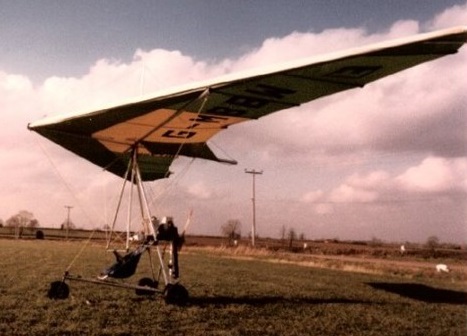
The Mk.II 330/Demon wing has floating cross tube construc¬tion with 75% double surface enclosing cross¬tube; pre formed ribs, and optional nosewheel brake.
Mk.I
Engine: Valmet, 10 hp at 5000 rpm.
Propeller diameter and pitch 54 x 30 ft, 1.37 x 0.76 m.
V belt re¬duction, ratio 2.8/1.
Max static thrust 75 lb, 34 kg.
Power per unit area 0.05 hp/sq.ft, 0.5 hp/sq.m.
Fuel capacity 2.1 US gal, 1.8 Imp gal, 7.9 litre.
Wing span 33.5 ft, 10.21 m.
Mean chord at 5.9 ft, 1.80 m.
Total wing area 198 sq.ft, 18.4 sq.m.
Wing aspect ratio 5.7/1.
Empty weight 1251b, 57kg.
Max take off weight 286 lb, 130kg.
Payload 161 lb, 73kg.
Max wing loading 1.44 lb/sq.ft, 7.1 kg/sq.m
Max power loading 28.6 lb/hp, 13.0 kg/hp.
Max level speed 26 mph, 42 kph.
Never exceed speed 40 mph, 64kph.
Max cruising speed 22mph, 35kph.
Economic cruising speed 22mph, 35kph.
Stalling speed 17 mph, 27 kph.
Max climb rate at sea level 100 ft/min, 0.5 m/s.
Min sink rate 190 ft/min at 21 mph, 1.0 m/s at 34 kph.
Best glide ratio with power off 8/1 at 22 mph, 35 kph.
Take off distance 150 ft, 45 m
Land¬ing distance 70 ft, 20 m
Range at average cruising speed 51 mile, 83 km.
Mk.II 250/Super Scorpion C
Engine: Robin EC25PS, 18 hp at 7000 rpm.
Propeller diameter and pitch 52 x 31 inch, 1.32 x 0.79 m.
V belt reduction, ratio 2.3/1. (Early aircraft used a 54×24 inch propeller with reduction ratio 2/1.)
Max static thrust 1301b, 59kg.
Power per unit area 0.09hp/sq.ft, 1.0hp/sq.m.
Fuel capacity 2.4 US gal, 2.0 Imp gal, 9.1 litre. (Early aircraft used a 1.6 US gal (1.3 Imp gal, 6.1 litre) fuel tank.)
Wing span 33.5 ft, 10.21 m.
Mean chord at 5.9 ft, 1.80 m.
Total wing area 198 sq.ft, 18.4 sq.m.
Wing aspect ratio 5.7/1.
Empty weight 1651b, 75kg.
Max take off weight 3491b, 158kg.
Payload 1841b, 83kg.
Max wing loading 1.76 lb/sq.ft, 8.6kg/sq.m.
Max pow¬er loading 19.41b/hp, 8.8kg/hp.
Max level speed 30 mph, 48 kph.
Never exceed speed 45 mph, 72kph.
Max cruising speed 25mph, 40kph.
Economic cruising speed 25 mph, 40 kph.
Stalling speed 18 mph, 29 kph.
Max climb rate at sea level 300 ft/min, 1.5 m/s.
Min sink rate 250 ft/min at 25 mph, 1.3 m/s at 40 kph.
Best glide ratio with power off 9/1 at 25 mph, 40kph.
Take off distance 90 100ft, 25 30 m.
Landing distance 90 100ft, 25 30m.
Range at average cruising speed 50 mile, 80 km.
Mk.II 330/Demon
Engine: Robin EC34PM, 32 hp at 6500 rpm.
Propeller diameter and pitch 52 x 30 inch, 1.32 x 0.76 m.
V belt reduction, ratio 2/1.
Max static thrust 180 lb, 82 kg.
Power per unit area 0.18 hp/sq.ft, 2.0 hp/sq.m.
Fuel capacity 2.4 US gal, 2.0 Imp gal, 9.1 litre. (Early aircraft used a 1.6 US gal (1.3 Imp gal, 6.1 litre) fuel tank.).
Length overall 11.0ft, 3.35m.
Wing span 32.0ft, 9.75m.
Chord at root 8.2ft, 2.50m.
Chord at tip 3.5 ft, 1.07 m.
Dihedral 0 degs
Nose angle 120 degs.
Total wing area 175 sq.ft, 16.3 sq.m.
Wing aspect ratio 5.9/1.
Empty weight 195 lb, 88kg.
Max take off weight 470 lb, 213 kg.
Payload 275 lb, 125 kg.
Max wing loading 2.69 lb/sq.ft, 13.1 kg/sq.m.
Max power loading 14.7 lb/hp, 6.7kg/hp.
Max level speed 40 mph, 64 kph.
Never exceed speed 45 mph, 72 kph.
Max cruising speed 35 mph, 56 kph.
Economic cruising speed 30mph, 48kph.
Stalling speed 22 mph, 35 kph.
Max climb rate at sea level 600 ft/min, 3.0 m/s.
Min sink rate 300 ft/min at 28 mph, 1.5 m/s at 45 kph.
Best glide ratio with power off 7/1 at 28 mph, 45 kph.
Take off distance 80 ft, 25 m.
Landing distance 100 ft, 30 m.
Range at average cruising speed 65 mile, 105 km.

