ITV Pil-Pit

ITV Pil-Pit 2 13

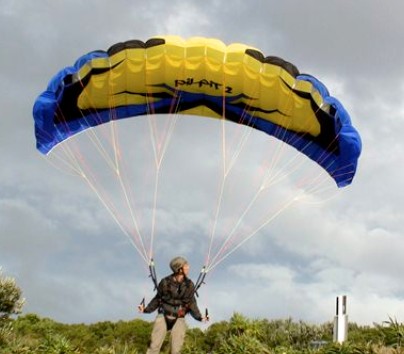
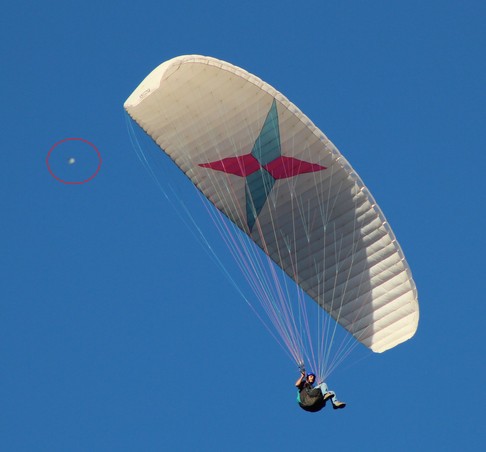
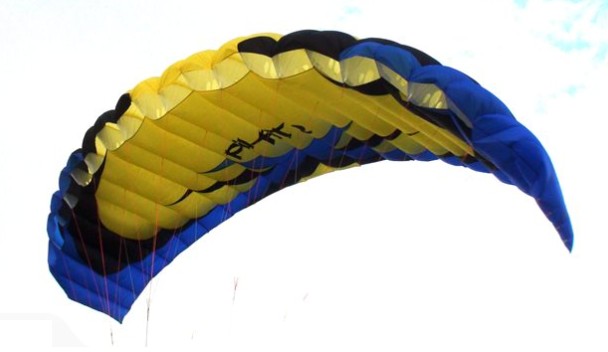
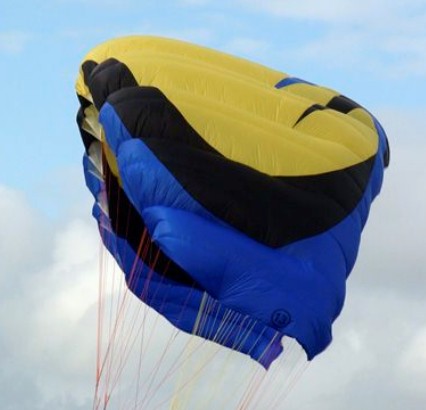
Each generation of Pil-Pit has been acclaimed as the best all-round Speed Riding wing. This Pil-Pit 2 13 combines the ease and safety of most 14’s with the speed and accuracy and dynamic turns of most other 10’s. The trimmer system gives a surprising increase in speed and dynamism. Pil-Pit innovates both in its original profile as its characteristics. With a trailing edge considerably more tense, the Pil-Pit 2 is moving towards even more speed and maneuverability. It sticks to the ground as requested by the pilot and an excellent resistance to turbulence.

ITV Pil-Pit 2 13

Sizes:
8 sq.m
9.5 sq.m
11 sq.m
13 sq.m

ITV Pil-Pit 2 13

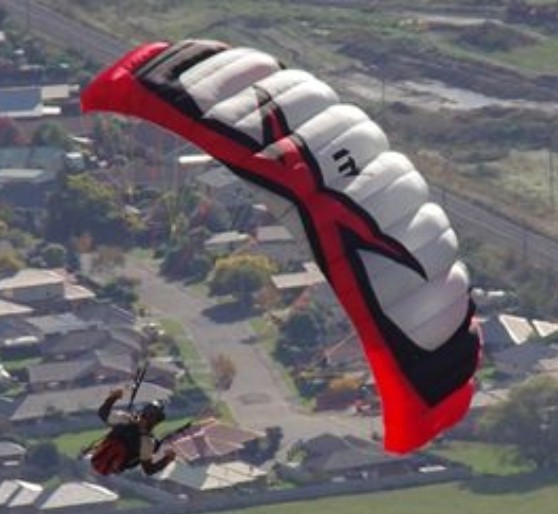
The Pil-Pit 3 with released trims will easily play the gliding game, sticking to the slopes, totally accessible with impressive speeds while still keeping an important safety margin.

Trimmed-in, the wing is stable on the main axis, and quick to react in a playful way.

The foot and ski launchable wing is very maneuverable with exceptional collapse resistance,

ITV Pil-Pit 3 13m

ITV Merak Bi

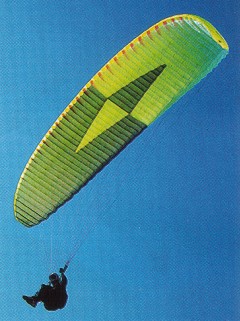
Paraglider circa 1998.

Merak Bi 38
Wing area: 38 sq.m
Certification: Afnor
Pilot weight: 110-160 kg
No. of cells: 53
Wing span: 13.9 m
Aspect ratio: 5.11
Max speed: 40 kph
Price (1998) £2299

Merak Bi 42
Wing area: 42 sq.m
Certification: Afnor
Pilot weight: 140-190 kg
No. of cells: 53
Wing span: 14.6 m
Aspect ratio: 5.11
Max speed: 40 kph
Price (1998) £2399

ITV Jade

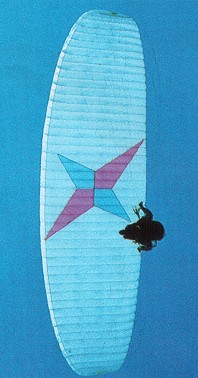
Paraglider circa 1998.

Jade 22
Wing area: 23.8 sq.m
Certification: Afnor
Pilot weight: 58-70 kg
No. of cells: 28
Wing span: 10.1 m
Aspect ratio: 4.92
Max speed: 39 kph
Price (1998) £1799

Jade 25
Wing area: 26.5 sq.m
Certification: Afnor
Pilot weight: 65-80 kg
No. of cells: 28
Wing span: 10.70 m
Aspect ratio: 4.29
Max speed: 39 kph
Price (1998) £1799

Jade 28
Wing area: 29 sq.m
Certification: Afnor
Pilot weight: 65-78 kg
No. of cells: 30
Wing span: 11.45 m
Aspect ratio: 4.5
Max speed: 35 kph
Price (1998) £1849

Jade 30
Wing area: 30.9 sq.m
Certification: Afnor
Pilot weight: 95-115 kg
No. of cells: 30
Wing span: 11.8 m
Aspect ratio: 4.5
Max speed: 39 kph
Price (1998) £1949

ITV Equinox

Paraglider new in 1998.

Equinox 24
Wing area: 24 sq.m
Certification: Afnor
Pilot weight: 60-75 kg
No. of cells: 57
Wing span: 11.46 m
Aspect ratio: 5.45
Max speed: 47 kph
Price (1998) £2099

Equinox 26
Wing area: 26 sq.m
Certification: Afnor
Pilot weight: 73-91 kg
No. of cells: 57
Wing span: 11.98 m
Aspect ratio: 5.45
Max speed: 48 kph
Price (1998) £2199

Equinox 28
Wing area: 28 sq.m
Certification: Afnor
Pilot weight: 90-110 kg
No. of cells: 57
Wing span: 12.5 m
Aspect ratio: 5.45
Max speed: 50 kph
Price (1998) £2299

ITV Azimut

Paraglider circa 1998.

Santiago, Chile (Rafael Soto)

Azimut 24
Wing area: 24 sq.m
Certification: Afnor
Pilot weight: 55-70 kg
No. of cells: 46
Wing span: 10.51 m
Aspect ratio: 4.66
Max speed: 42 kph
Price (1998) £1799

Azimut 26
Wing area: 26,4 sq.m
Certification: Afnor
Pilot weight: 55-70 kg
No. of cells: 48
Wing span: 10.98 m
Aspect ratio: 4.6
Max speed: 42 kph
Price (1998) £1899

Azimut 28
Wing area: 28.1 sq.m
Certification: Afnor
Pilot weight: 83-100 kg
No. of cells: 48
Wing span: 11.44 m
Aspect ratio: 4.66
Max speed: 44 kph
Price (1998) £1999

Azimut 30
Wing area: 30.4 sq.m
Certification: Afnor
Pilot weight: 95-115 kg
No. of cells: 48
Wing span: 12.02 m
Aspect ratio: 4.66
Max speed: 43 kph
Price (1998) £2099

Itoh Tsurubane No.2

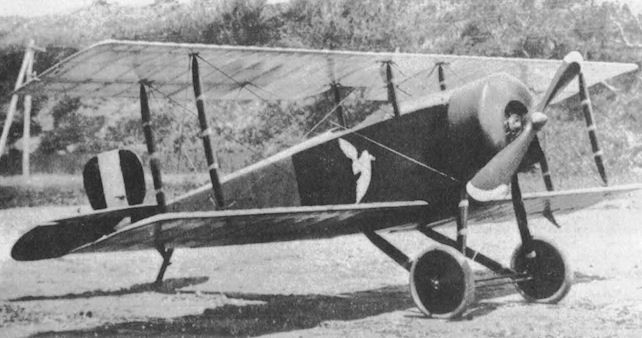
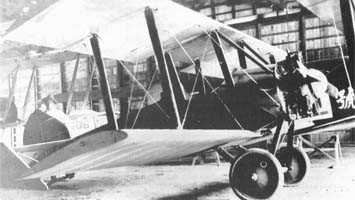
In 1918, the japanese Army purchased from France some of the most highly regarded military aeroplanes of the First World War, among them Nieuport 24 fighter. This and others were evaluated at the newly established Kagamigahara Army Airfield. At that time, 27 October, 1918, Tomotari Inagaki, a long-time friend of the company, and still studying in Tokyo Polytechnical School, became engineer of Itoh Aeroplane Research Studio. By chance, he had an opportunity to visit Kagamigahara and was able to rationalize the design and manufacture of a small aerobatic aircraft similar to the designs he had just seen. Beginning on 8 January, 1919, Inagaki started his first design as a company employee. It was to be a single-seat single bay biplane, light in weight, rugged, and easy to fly.

Logically, the design followed that of the Nieuport, but to obtain sufficient lift with the low powered 50hp Gnome engine Inagaki increased the total wing area, yet retained the same overall wing span and chord of the upper wing, by enlarging the lower wing to conform to that of an equal-span biplane rather than the sesquiplane arrangement of the Nieuport. The appearance of this aeroplane was considered radical when compared to other Japanese aircraft at that time.

The front half of the fuselage was ply-covered. To enhance the aeroplane’s appearance and resemble a fighter aircraft after which it was patterned, Itoh himself painted a white crane like a unit insignia on the sides of the fuselage similar to those often used by the French Air Force. This aeroplane was completed on 21 April, 1919, and made its first flight on 25 April.

Although Yamagata began teaching himself the skills of aerobatic flying, much had to be learned from an English-language book he had bought. His efforts included being suspended upside down while strapped in a chair to visualize control movements while in inverted flight. On 5 May, using this aeroplane, he became the first civil pilot in Japan to complete a loop.

Engine: Gnome, 50hp
Propeller: two-blade wood
Span: 7.21m (23ft 8in)
Wing area: 14.58sq m (156.942sq ft)
Length: 5.77m (18ft 11.25in)
Height: 2.38m (7ft 9.5in)
Empty weight: 204kg (450Ib)
Loaded weight: 340kg (749Ib)
Maximum speed: 74kt (85mph)
Climb to 1,000m (3,280ft): 4min 30 sec

Itoh Tsurubane No.1

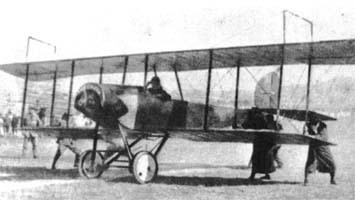
After the move caused by the destruction after the tsunami, ltoh Hikoki Kenkyusho built its first aircraft under the designation Tsurubane No.1 (“crane wing”). Its design was started by Ito’s assistant, The Tsurubane’s design was the result of the retrieval of a 50 hp (37 kW) Gnome rotary engine from the crashed Tamai No.3 by a relative of Itoh’s talented assistant, Toyotaro Yamagata, and given to him to create his own aircraft. This engine was purchased by Yamagata’s uncle to allow his nephew to finish the project. Yamagata made some initial sketches but Itoh was asked to take on the detailed design.

The aircraft that emerged was a wooden-structured, fabric covered two bay biplane. Its wings were rectangular in plan, with bays separated by pairs of upright, parallel interplane struts. The considerable overhang of the upper, greater span, wing was wire braced and a cabane of parallel struts held the central upper wing high above the fuselage. As on Itoh’s earlier aircraft there were ailerons only on the upper wings, with chords that increased outwards.

Its rotary engine was shrouded with a standard, open-bottomed cowling intended to collect oil spray. Behind it the fuselage became slender and flat-sided, as with Itoh’s earlier designs. Its pilot had an open cockpit near the wing trailing edge. The tail was like that of the Itoh Emi 2 with the horizontal tail mounted on the top of the fuselage carrying elevators that had a cut-out for rudder movement. The fin and rudder had upright, parallel edges but a sloping top.

Though its landing gear was a conventional, single axle design, Itoh was aware of the need to make it robust. It had large wheels and was taller than those of his earlier landplanes, with landing legs and rearward drag struts doubly cross-braced.

The Tsurubane was completed on 8 May 1918 and flown soon after.

The Tsurubane No.1, like several other early Japanese civil aircraft, initially paid its way with demonstration flights. Yamagata began with flights around Hiroshima. These attracted support from the Asahi Shimbun newspaper resulting in a tour of Korea, at that time part of the Japanese empire, throughout November 1918. In the following spring the Tsurubane gave many exhibition flights in Osaka. World-wide, early aircraft demonstrators included risky tricks to swell audiences: on one occasion the Tsurubane carried a passenger astride the fuselage.

When it was retired from demonstration flights, the Tsurubane was used as a trainer by Itoh’s flying school. It is not known how long it remained airworthy but it was eventually privately purchased, then donated to the Aki-Itsukushima Shrine near Hiroshima.

Tsurubane No.1
Powerplant: 1 × Gnome, 37 kW (50 hp)
Propeller: 2-bladed
Wingspan: 10 m (32 ft 10 in)
Wing area: 30 m2 (320 sq ft)
Length: 6.5 m (21 ft 4 in)
Height: 2.6 m (8 ft 6 in)
Empty weight: 380 kg (838 lb)
Gross weight: 520 kg (1,146 lb)
Maximum speed: 80 km/h (50 mph, 43 kn)
Cruise speed: 65 km/h
Crew: one

Itoh Emi 31

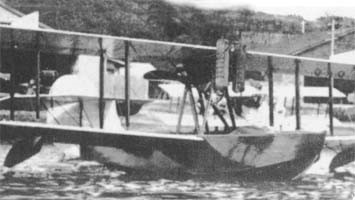
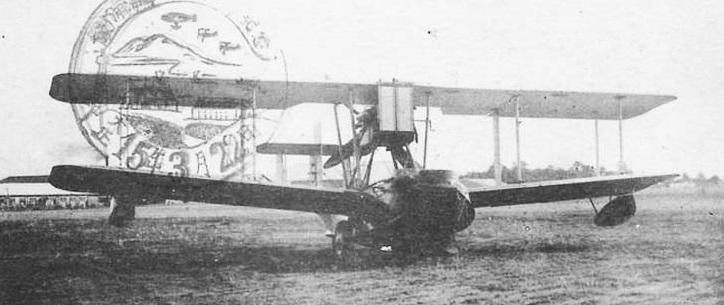
The development of the Emi 31 began in 1922 when the fledgling Japan Air Transport Research Society bought a Curtiss Seagull flying boat as their first passenger aircraft, intended for a service between Tokyo and Yokohama Bay. This was seriously damaged before it could be delivered so the airline’s founders, Sun-ichi Bando and Yukichi Goto who had earlier owned the Emi 16 racer, turned to Itoh for a replacement flying boat. In response Tomotari Inagaki designed the Itoh Emi 28, which was strongly influenced by the Seagull and powered by a 150 hp (110 kW) Hispano-Suiza engine, but this design was never built. Another passenger company, Choichi Inoue’s Japanese Air Transport Research Association (JATRA) that had provided Japan’s first regular airline service using floatplanes between Sakai to Takamatsu and Tokushima, was looking for a suitable passenger flying boat. Aware of the Emi 28 he placed an order for a more powerful development, resulting in the Emi 31.

The Emi 31 was a wooden-structured, pusher configuration biplane. Its unequal span, fabric covered, two bay wings were braced by parallel pairs of interplane struts. The shorter lower wing was mounted on top of the hull and the upper centre section, high above the water, was strengthened by the struts that supported the pusher engine. There were ailerons on the upper wings.

Its 220 hp (160 kW), pusher configuration, water-cooled V-8 Hispano-Suiza 8B engine was pylon-mounted just below the upper wing with two long, upright, rectangular radiators mounted edge-on ahead of the upper leading edge. The Emi 31’s plywood-covered hull was essentially the same as that of the single step Seagull. On the water it was stabilized by small, strongly up-pitched floats mounted below the outer interplane struts. It had two open, side-by-side seat cockpits in tandem. Initially the pilot and flight engineer occupied the forward cockpit with two passengers behind but in service the engineer was often displaced by a third passenger.

The Emi 31’s fabric-covered tail was also similar to that of the Curtiss, with a tailplane and elevator held well clear of the water on top of an abbreviated fin. Its large, comma-profile rudder moved in a deep elevator cutout and had a forward balance area overhanging the tailplane.

The Emi 31 was completed in mid-1922. The date of its first flight is not known but, after test flights at Itoh’s Tsudanuma base, it went to the JATRA base at Sakai to fly the planned route. It was also used by The Asahi Shimbun newspaper to report army manoeuvres, catching the attention of the Prince Regent. There were frequent, poorly recorded modifications; after only a few months of use it had been significantly improved twice. It remained in use with JATRA into 1924, after which it was retired to the water surface, further modified for use as a water taxi and sightseeing-boat.

Powerplant: 1 × Hispano-Suiza 8B, 160 kW (220 hp)
Propeller: 2-bladed wooden
Wingspan: 14.66 m (48 ft 1 in)
Wing area: 26 m2 (280 sq ft)
Length: 7.65 m (25 ft 1 in)
Height: 3 m (9 ft 10 in)
Empty weight: 780 kg (1,720 lb)
Gross weight: 1,350 kg (2,976 lb)
Maximum speed: 121 km/h (75 mph, 65 kn)
Endurance: 2 hr 30 min
Crew: one, with option of a flight engineer
Capacity: three, or two with engineer
Itoh Emi 30

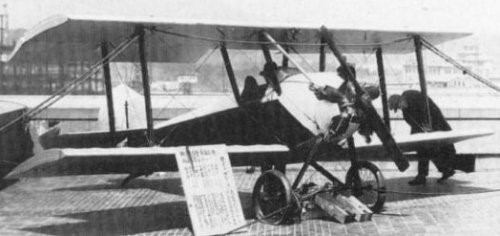
After World War I Itoh had followed design developments in both Europe and the US and had explored these trends with their own designs. The Emi 30 was the first Japanese aircraft influenced by a western interest in small sports aircraft.

The Emi 30 had a wooden structure and was fabric-covered. It was a single bay biplane with wings braced by parallel pairs of streamlined interplane struts. The lower wing, which had a slightly greater span than the upper one, was mounted on the lower fuselage longerons and the centre section of the upper wing was held over the fuselage by outward leaning, parallel cabane struts from the upper longerons. The two spar wings had thick airfoil profiles compared to most contemporary biplanes. There were inset ailerons on the upper wing.

It was powered by an Itoh built, 40–45 hp (30–34 kW) air cooled 5-cylinder radial engine. The Itoh 11 used the cylinders and pistons from a Japanese-built Renault engine, joined to a new crankshaft and crankcase. Its two-bladed propeller had a domed spinner. The Emi 30 was flown from an open cockpit under the upper wing, with a streamlined headrest which merged into a slender rear fuselage. The tail was conventional, with a tailplane mounted on top of the fuselage and braced from below, and a generous fin and balanced rudder with an overall rounded but pointed profile.

The Emi 30’s landing gear had wheels on a single axle, its ends supported by V-struts from the lower fuselage longerons.

When it was first displayed in 1922 the Emi 30, a single seat civil sports aircraft, was the smallest aircraft in Japan.

It was first seen in public at an exhibition in July 1922, where it was awarded a silver plaque for innovation. The date of the first flight is not known but it was developed in a program flown by Seizo Okhura and later used as an aerobatics trainer by the newly renamed Itoh Aeroplane Manufacturing Works. In March 1924 it was displayed on the roof of a Tokyo department store where it was on sale for 5,000 yen but its later history is not known. There is no firm evidence that more than one was built.

Powerplant: 1 × Itoh 11, 34 kW (45 hp)
Wingspan: 5.80 m (19 ft 0 in)
Wing area: 13 m2 (140 sq ft)
Length: 5.11 m (16 ft 9 in)
Height: 2.10 m (6 ft 11 in)
Empty weight: 295 kg (650 lb)
Gross weight: 605 kg (1,334 lb)
Maximum speed: 130 km/h (81 mph, 70 kn)
Endurance: 2 hr
Crew: one