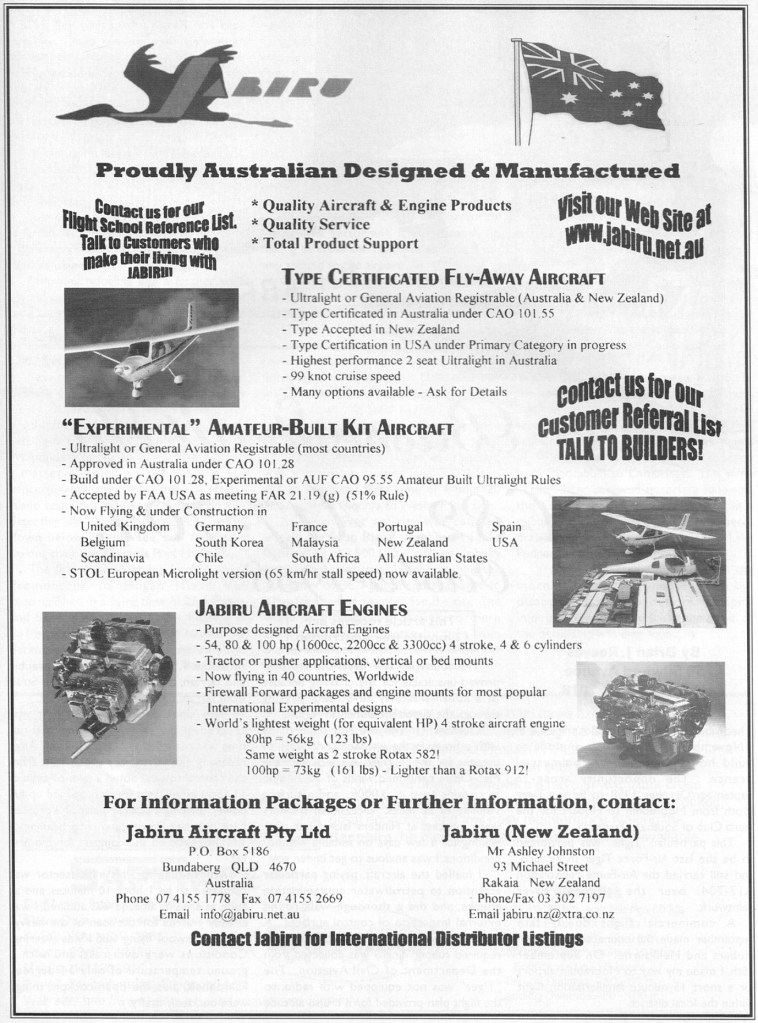
Jabiru Aircraft Pty, Ltd has been in the business of producing Light Sport aircraft in Australia since 1991. The fleet of Jabiru LSA aircraft around the world in flight schools and flight clubs had accumulated over a half million flight hours by 2010.
1998: PO Box 5186 Bundaberg West West Qld 4670 Australia
Produces a range of two-seat all-composite lightweight cabin aircraft which have been available as either factory built models or as fully comprehensive kitsets. Jabiru produce their own motive power for the aircraft. The engines are already found in a range of other kit manufacturers products.
March 1999
1995: Bundaberg West 4670, Queensland, Australia.
As at October 2013, Jabiru Aircraft were offering: J120-C J160-D J170-D J230-D
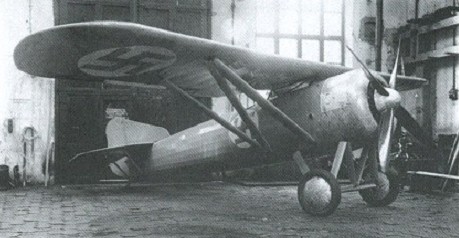
IVL C.VI.25 was a Finnish fighter aircraft designed by IVL as a further development of the IVL C.24. The aircraft made its maiden flight on June 11, 1925, but was wrecked after a forced landing, due to engine trouble, on December 17, 1925. The aircraft was under-powered, like its predecessor, and it was not considered possible to further develop the aircraft.
Engine: Siemens-Halske sh 3A 160hp Top speed: 210 km/h
IVL was founded in 1921 at Sveaborg, near Helsinki, to manufacture aircraft for the Finnish Air Force. The first production was the A-22 seaplane, a license-built version of the Hansa-Brandenburg W.33. A neat biplane reconnaissance/ bombing aircraft, the Korka, was in production in the mid-1920s. Only one nationally-designed combat aircraft saw service in Second World War, the Myrsky single-seat monoplane fighter.
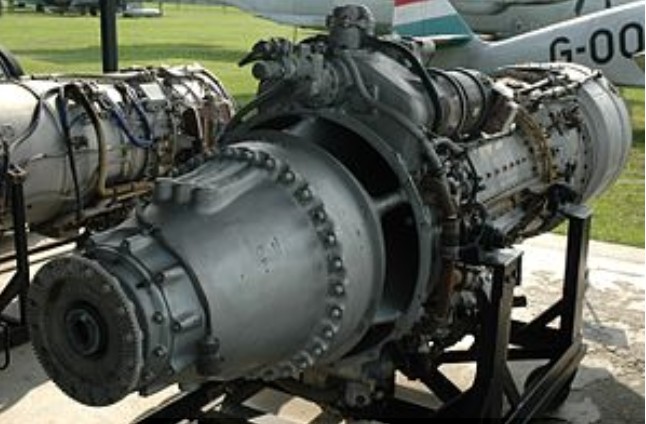
The Ivchenko AI-20 is a Soviet turboprop engine developed in the 1950s. It has been built in large numbers, serving as the powerplant for the Antonov An-12 transport and the Ilyushin Il-18 airliner.
The AI-20 was the first gas turbine engine developed by the design bureau led by Oleksandr Ivchenko based at Zaporozhye, Ukraine, which had previously concentrated on small piston engines such as the Ivchenko AI-14 and AI-26 radials. It was designed as a prospective powerplant for the new large Ilyushin Il-18 airliner and the Antonov An-10, to be powered by four turboprops, in competition with the Kuznetsov NK-4. Both engines were tried out on the pre-production batch of 20 Il-18s, but the Ivchenko engine was chosen for full production, possibly due to a crash caused by an in-flight failure of an NK-4 engine, and possibly due to the desire for the engines of the Ukrainian An-10 to also be built in Ukraine.
The AI-20 is a single shaft turboprop with a ten-stage axial compressor and a three stage power turbine, and is designed to run at a constant speed. The overhaul life of the engine was initially reported as 600–750 hours in 1964, but was later improved to 6,000–7,000 hours, with a service life of 20,000 hours.
It entered production at Zaporozhye and at Perm, USSR in 1958, also being built under licence in China as the WJ6. About 14,000 AI-20s have been built in total.
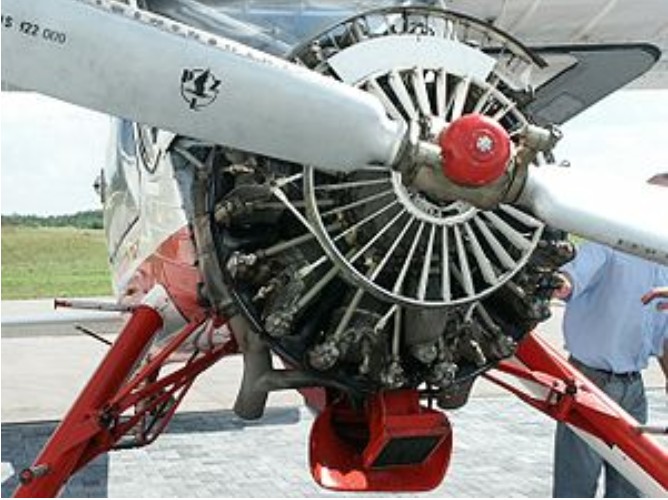
The Ivchenko AI-14 (Russian АИ-14) is a nine-cylinder, air-cooled, radial piston engine designed in the Soviet Union to power aircraft.
Its main variant is the AI-14R (АИ-14Р), which underwent state trials in December 1950 and was used in many types of light aircraft. Several thousand were built. There was also an AI-14V variant for helicopters and other applications. The AI-14R is typically used with a two-bladed propeller and is started with compressed air.
Apart from the Soviet Union, a licenced version of the AI-14R, (including the AI-14RA), has been produced by WSK-Kalisz in Poland from 1956 until 2007.
The AI-14RF was a variant uprated by Ivan Vedeneyev to 300 hp. Its further development is the Vedeneyev M14P family of engines.
Another modified version is the Czechoslovak Avia M462, which powers the Zlín Z 37 agricultural aircraft.
The Zhuzhou HS-6 was the designation for AI-14 Licence production in China.
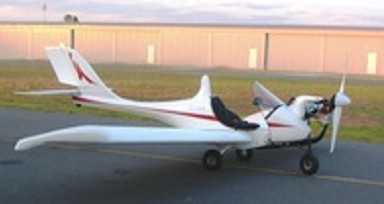
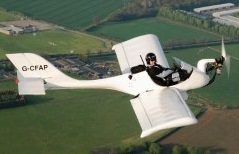
Designed, calculated and tested according to Czech UL-2 and American f2245 LSA standards, the ZJ has four versions: Mono wheel, Tri wheel, Part 103 ultralight, and Light Sport Aircraft (LSA).
A simple, one piece, all composite fuselage, engine, wings, wheels and tail surfaces, results in low maintenance and price. Wing construction consists of glass fiber leading edge and composite ribs covered with Ceconite. The horizontal tail, rudder and ailerons have an aluminum structure. The wings and horizontal tail are easily detachable for transport and storage. The ZJ came completely assembled and ready to fly. 2009 Price: 19900 EURO
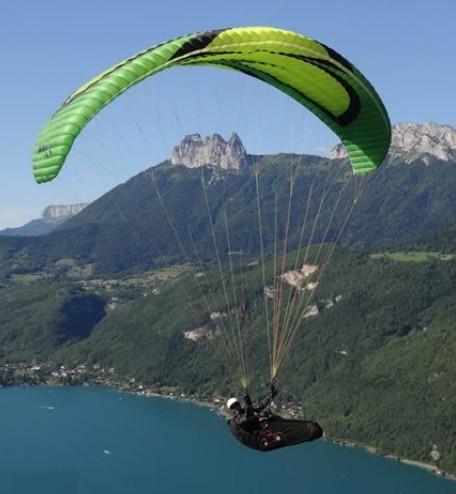
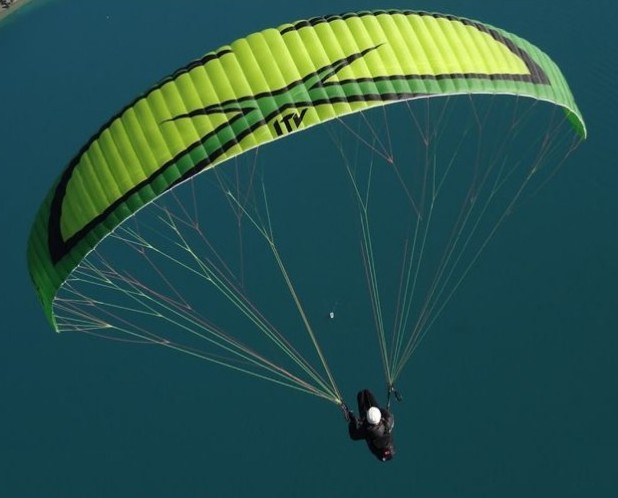
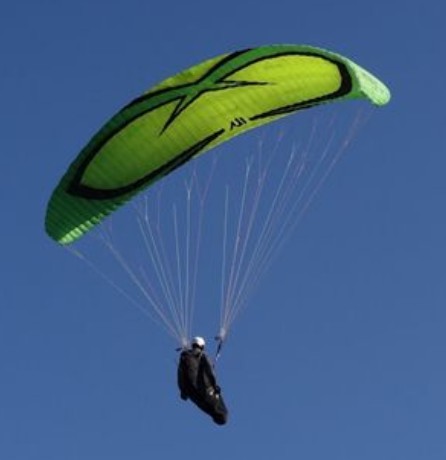
The ITV Awak high performance mini wing has 55 cells and comes with trimmers and speed bar.
The size 20 is certified EN B up to 110kgs for free flying.
ITV Awak 2
The Awak 2 has easily replacable leading edge batons which give better leading edge shaping and rigidity, especially at high speed, and are lighter weight than mylars. It has a 3 line design – a line layout that gives reduced drag and better glide ratio throughout its speed range.
It has perfect inflation and launch characteristics in both nil wind and stronger winds
Aspect ratio: 5.4 Glide ratio: 8+ Motor rated max:146 kg