The 1910 Jirotka monoplane was designed and built by Jirotka in Czechia.
Author: Terry
Kimball Gee Bee Z replica
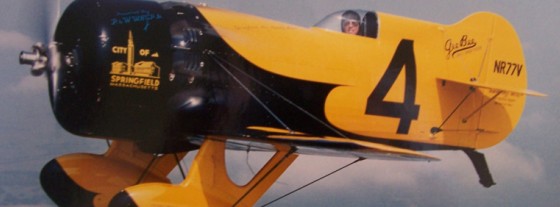
This is a full size, exact, replica of the Granville Brothers Gee Bee Model Z from 1931. The original airplane was victorious in 5 races at the 1931 National Air Races in Ohio after taking only 5 weeks and $5000.00 to construct. This replica was built over a 3.5 year period by Jeff Eicher and Kevin Kimball consuming nearly 6000 man hours of design and construction. The Aircraft in 1996 was part of the Fantasy of Flight colloection in Polk City, FL.
Kimball McCullocoupe
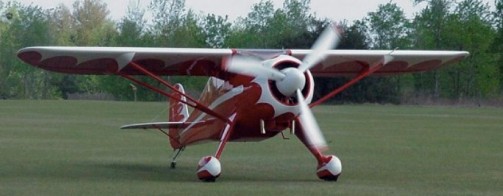
Late in 2000, a ‘doodle’ of what an M14P powered clipwing-ish airplane would or could look like was made. It does resemble the Monocoupe 110 Special and Jim Younkin’s Mullicoupes, but it is a design all its own specifically for the M14P series engine! The McCullocoupe was named by Jim Kimball.
The airplane is slightly larger than a 110 special with a cabin wide enough for 2 people rather than only 1 1/2 people. The wing is 2 piece rather than one and is fully ply sheeted and incorporates Curtis Pitts’ aerodynamically boosted aileron technology. Tail sizing is improved over the 110 special.
The M14PF engine is 400hp with MT making a special 3 bladed prop for the McCullocoupe that will be optimized for cruise while still having great acro performance. The landing gear is the same spring aluminum unit as used on the Pitts Model 12 hidden inside a large fairing. The firewall forward, including the cowling, are borrowed from the Pitts Model 12 as well.
Jim Kimball Enterprises
2009: Jim Kimball Enterprises, Inc.
5354 Cemetery Rd., Zellwood, FL 32798, USA
Built Pitts S-12 and replica aircraft.
Jihlavan UL-39 Albi
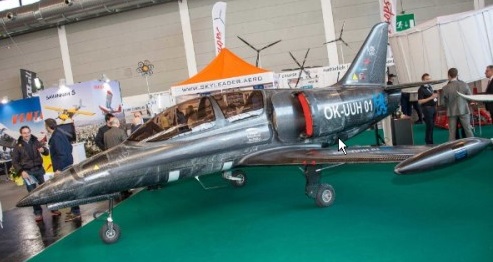
The Jihlavan UL-39 Albi two-seat microlight version of the Czech L-39 Albatross training jet is the result of 17 years of work, 200 engineers and £1.7 million of investment.
The UL-39 Albi is a collaboration between Jihlavan and Prague University’s Faculty of Mechanical Engineering. It’s not simply a student project. This is the first prototype and it’s intended to develop the aircraft further and put it into production. One market is private aviation but another is military. The production price is estimated at 5 million CRK (£146,000).
The Albi’s designers at Prague University say that because the engine is a ‘blower’ ducted fan, rather than a conventional jet, the aircraft’s heat ‘signature’ is almost zero making it hard to detect and shoot down.
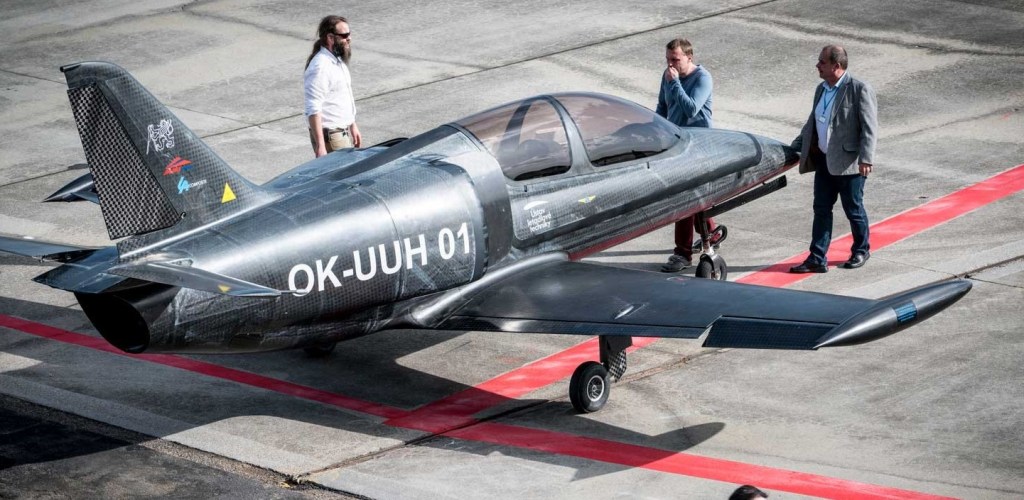
The airframe is made from carbon fibre composite, and this prototype is powered by a 1,000cc 193bhp BMW four-cylinder dohc motorcycle engine driving the blower.
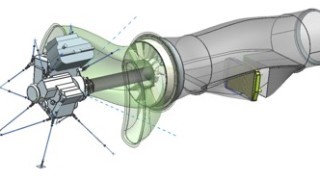
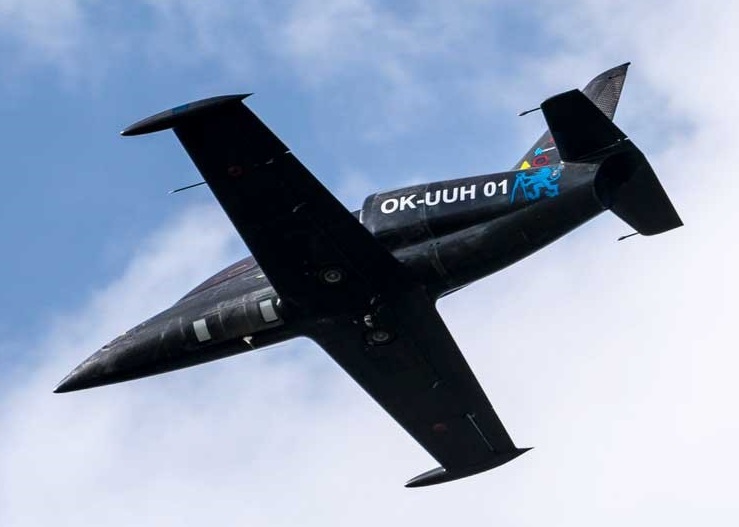
It’s said to weigh just 320kg, have a max takeoff weight of 472.5kg, be capable of 200km/h (125mph) and have endurance of two hours. The designers say they hope to increase the max speed to 300km/h.
Engine: BMW 1,000cc, 193bhp
Wingspan: 7.22 m
Length: 7.49 m
Height: 2.99 m
Jihlavan Aeroplanes Sro
After the KAPPA 77 a.s. was declared bankruptcy on 16 February 2005, the company Jihlavan airplanes, s.r.o. was founded on 2 March 2005 with the main objective – to proceed in the production of the ultralight aircraft KP 2U SOVA. On 1 April 2005, the Jihlavan airplanes, s.r.o. became the holder of the manufacture rights, intellectual properties, etc. of the KP-2U. Over 160 airplanes of the Kappa KP-2U versions were built. After Jihlavan took over the production of the aircraft it was renamed as the Rapid KP-2U.
JH Aircraft Corsair
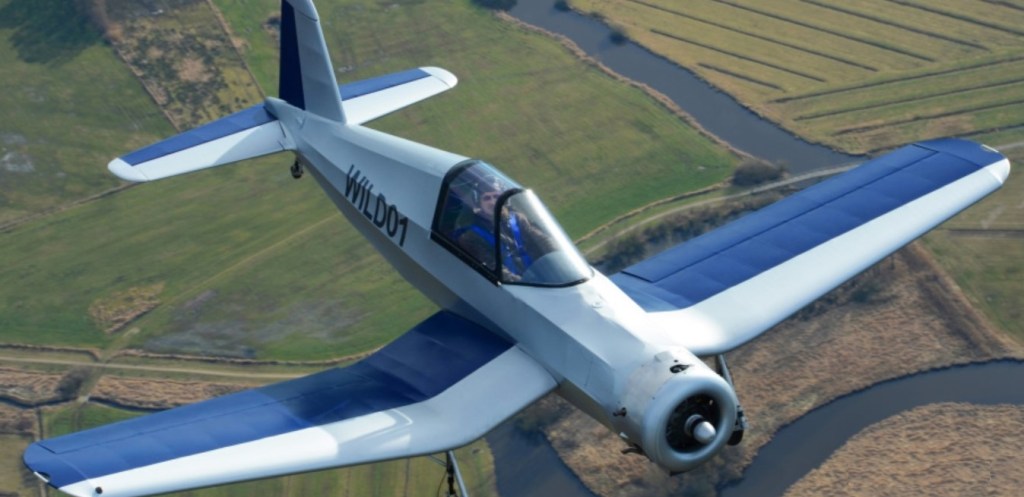
The Corsair relies on latest lightweight construction technology to combine flight performance, agility and energy efficiency. The whole primary structure is made of aerospace grade carbon fiber. Carbon fiber spaceframe technology is applied on the fuselage to achieve the greatest possible strength at the lowest possible weight.
The Carbon structure has a proven strength of +9 and -6g. Furthermore the complete cockpit area is constructed as a Kevlar reinforced safety cell.
The Corsair follows the German LTF-L regulation. As well it covers many other national regulations, e.g the British SSDR, the Italian, French, Czech, Polish and even the US American FAR part 103 regulation. For the later the empty weight, MTOW and speeds are slightly reduced.
The Verner Scarlett 3 V – a 4-stroke, 3-cylinder radial engine designed as a light aircraft engine and produces 42 bhp at 2500 rpm. The high engine torque allows the use of a rather big and efficient propeller. There are two standard options: either a ground adjustable 3-blade 1,60 m carbon prop which can produce – depending on the blade pitch – up to 100 kg of static thrust. Or the 1,75 m Helix 2- or 3-blade props which both even deliver more than 100 kg thrust.
The first version of the Corsair features a classic tailwheel configuration. The fixed main landing gears are located at the wings and due to the wing shape are rather short and quite aerodynamic. The cantilevered main wheel attachment together with hydraulic springs and dampers is great for grass strips and the occasional less than perfect landing.
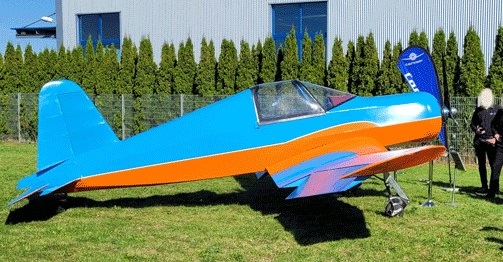
The tail gear is connected with the rudder by means of a GFRP spring and allows good ground handling. Even the tail wheel is on a cantilever and has an elastomeric spring and damper.
Provisions for a retractable landing gear have been considered in the wing design and if we see sufficient customer demand a retractable version could become available in the future. Nevertheless it has to be stated, that the retractable version does not promise to be any faster – the additional weight and the resulting drag will consume the aerodynamic benefit.
Engine: Verner Scarlett 3 VW, 31 kW (42 BHP) at 2.500 RPM
Wing span: 24,6 ft
Wing area: 108 sq ft
Length: 20,7 ft
Empty weight: 265 lbs (FAR part 3 254 lbs)
Payload: 287 lbs (FAR part 3 254 lbs)
Loading: +6g / -4g
Wings folded width: 9,0 ft
Maximum speed: 55 knots / 102 km/h (EU 55 km/h)
Cruise: 54 knots / 100 km/h (EU 160 km/h)
Stall: 24 knots / 44 km/h (EU 210 km/h)
Best climb: 1000 ft/min / 5 m/s
Jezzi No. 2 Sesquiplane
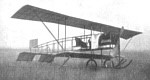
The 1911 Jezzi No. 2 Sesquiplane was designed and built by Leo Jezzi in the UK.
Span: top 28′
Length: 24’6″
Speed: 65 mph
Jezzi No. 1 tractor Biplane
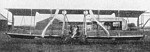
The 1910 Jezzi No. 1 tractor Biplane was designed and built by Leo Jezzi in the UK.
Jezzi No. 1 pusher biplane
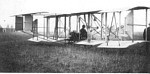
The 1910 Jezzi No. 1 pusher biplane was designed and built by Leo Jezzi in the UK.

