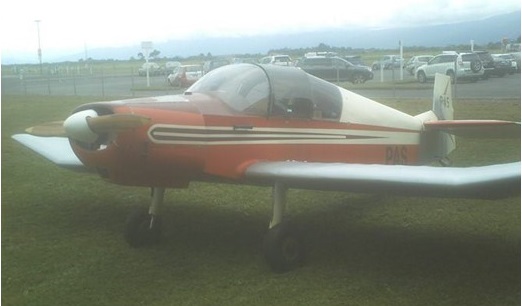
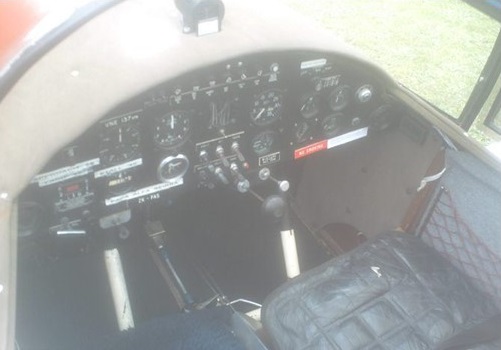
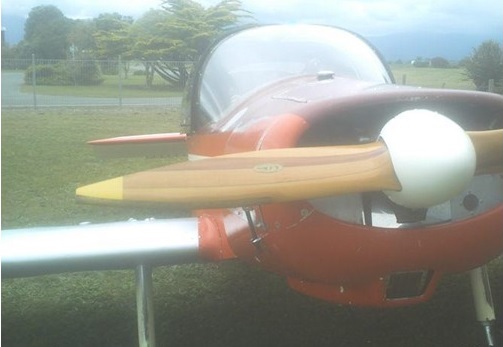
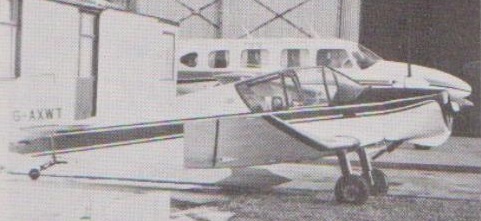
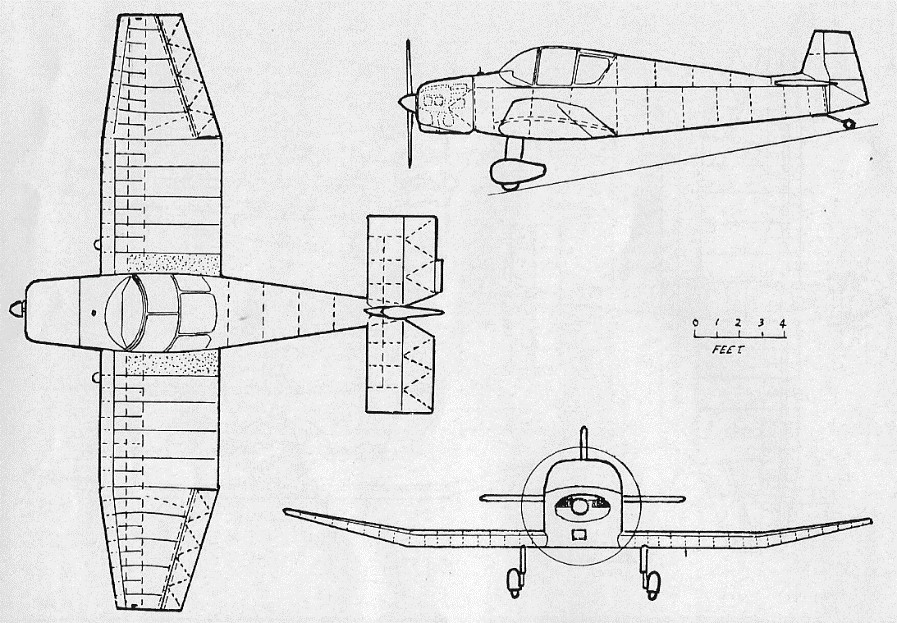
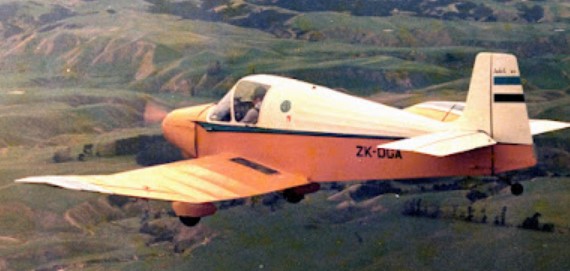
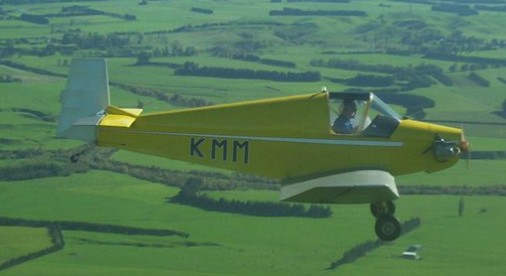
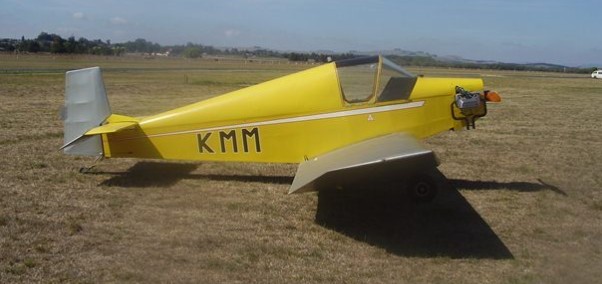
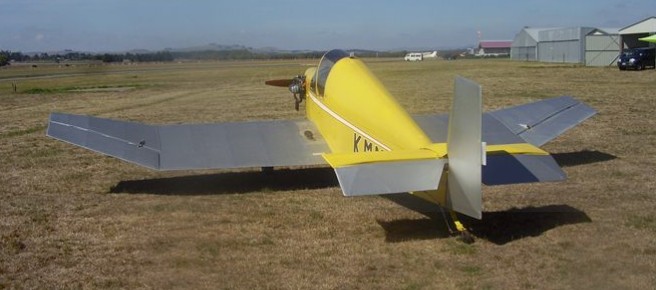
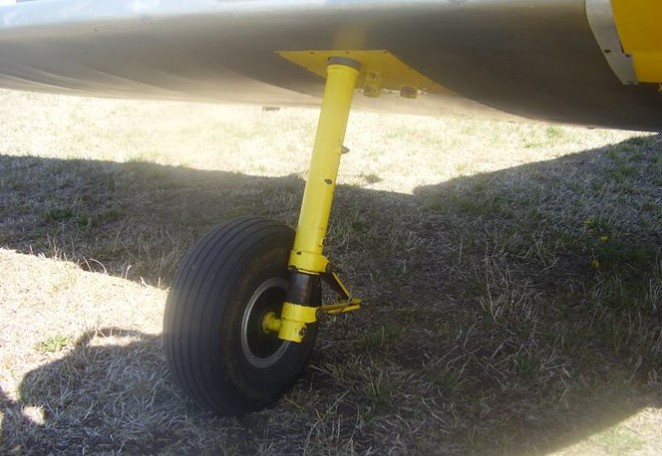
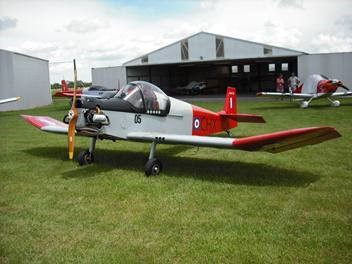
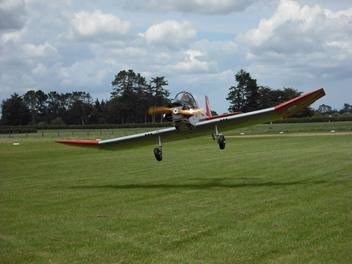
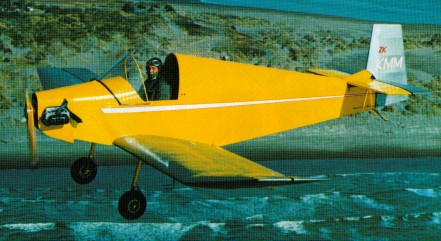
M. Alain Cauchy approached M. Delemontez after the 1973 oil crisis wanting to revive the D-11 concept, this time aiming to get the most out of a converted VW engine. The resulting two-seater was named DC1, after Delemontez and Cauchy. After roughly 5000 hours of design, engineering and building the DC1 took to the air for the first time in 1978. The plane is indeed much more related to the D9 than the D11. Major changes are that it has a more modern wing profile, and the fuselage is wide enough for two. The resulting plane has an empty weight of only 216kg its gross weight is 450. With a 1600cc converted Volkswagen engine the cruise speed is 170km/h, and fuel consumption 11 lt/hr.
Engine: VW 16 l0cc, 52 hp Wing span: 7,40m Length: 5,65 m Wing area: 9,56 sq.m Seats: 2 Empty weight: 216 kg Max weight: 450kg Cruise speed: 170km/h Climb (2p): 3,5m/s
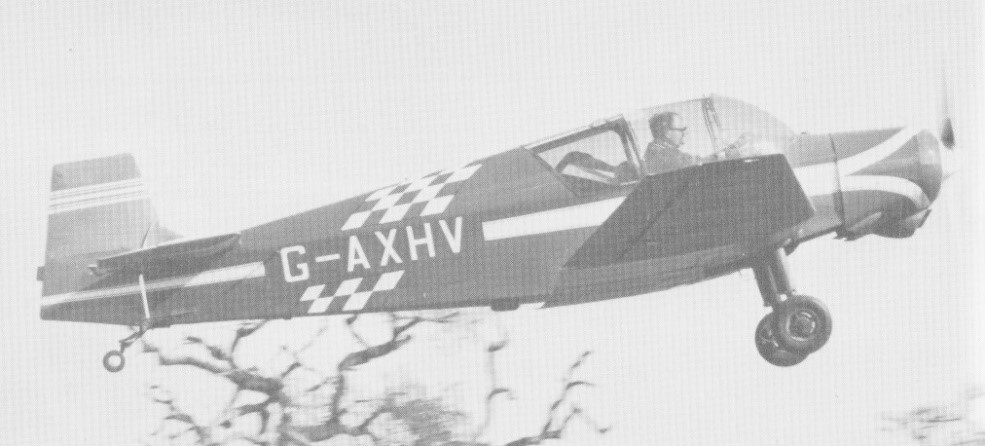
The French government, always keen to encourage local enterprise, showed an interest in the D.9 design and a sligtly larger aircraft, the D11 with two seats, followed. Joly and Delemontez fomally set up a company, combining their names. The Jodel company. The two seat D11 series was designed and constructed as a prototype batch for a French government requirement for an aero club trainer. The Jodel Club is an enclosed, side by side, two seat dual control, low wing monoplane, which is essentially designed for the amateur builder and pilot, and first flown in 1951. Its essenti¬ally simple but rugged construction, together with the excellent flying qualities, have established the D11 as the most popular French two seater, and led to its adoption by many French flying clubs. The one piece cantilever wing has upswept tapered outer panels, typical of the Jodel types, with the inboard part of the wing straight. In other respects the con¬struction is conventional and straightforward in spruce and plywood with fabric covering. The wing is built on a single box spar, which also supports the two legs of the wide track undercarriage. The undercarriage em¬ploys rubber in compression springing, and is fitted with light industrial wheels. The fuselage is a rectangular box structure with a curved spruce top decking and plywood covering. The tailpiece is also plywood covered, while the elevator and rudder are fabric covered. Longitudinal trim is obtained by an elevator trim tab. The design load factor is 6.0 at 1360 lb. The D11 may be powered hp Continental engines from 65 to 100 h.p. and seats two in side-by-side fashion.
The Jodel company did not manufacture that many aircraft itself, their idea being to licence other firms. There were two Jodel-built D.11 prototypes and 11 pre-production D.111. Jean Delemontez worked directly with two organisations in particular to develop the various Jodel models and series.
There were 562 factory built; Wassmer built D.112, SAN 10, Valladeau 50, and other companies. Others were built or sold in kit form in Switzerland, West Germany and Sweden.
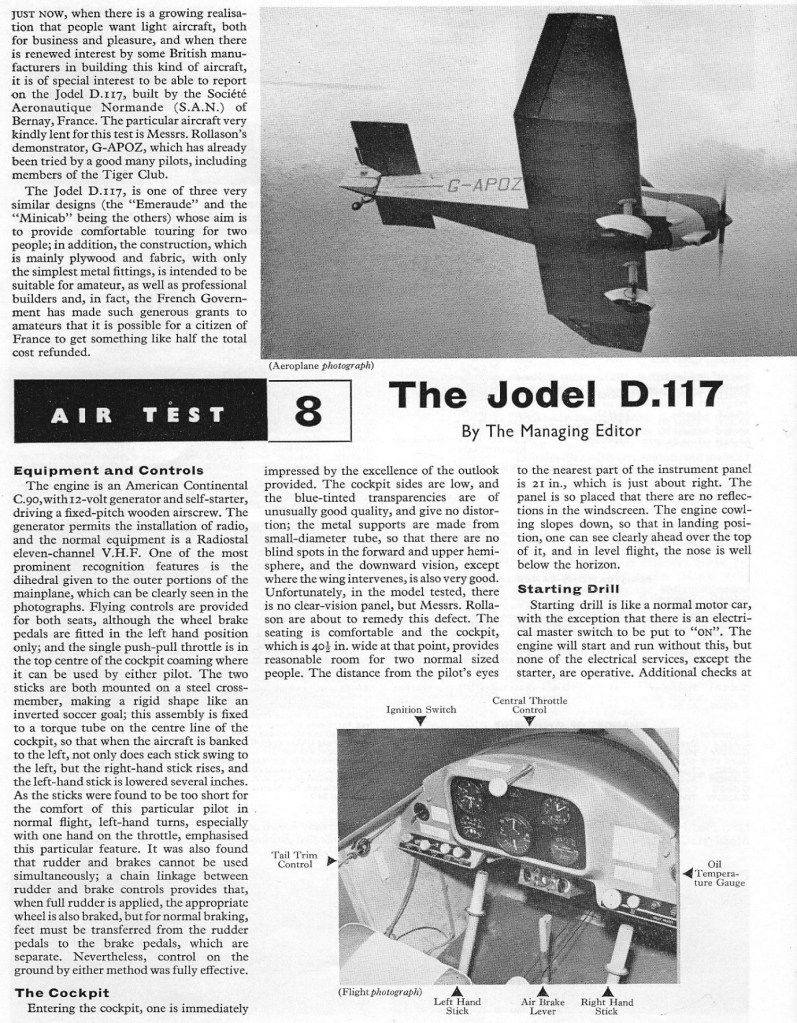
The D11 variants, principally the 65 hp D112, the 90 hp D117, 225 produced by Society Aeronautic Normande (SAN) at Bernay and the 90 hp D120 from Avions Wassmer at Issoire, were produced in large numbers for aeroclubs through the French government subsidy scheme. Wassmer started aircraft production at Issoire in 1945, building Jodel D.112 under license. There were versions that were called D119 and 1190.
D.112
Alpavia built 10 D.117A, Valladeau built 10 D.119D. Aerodifusion built the D.1190S Compostela version of the D.119, Wassmer built 350 D.120 Paris-Nice versions, and EAC built four of the D.127 version.
Founded 1958 by Mm d’Assche and Noin, Alpavia sa made the slightly modified Jodel D-117-A (two per month from January 1959). In 1962 partnership with Rene Fournier resulted in Avion-Planeur RF3 with Volkswagen engine. From the 1950s onwards various types, D11, D112, D117 and so on, were built by various companies. There was also a large pool of amateur builders whose examples were generally powered by 90 hp Continental C90s or 100 hp O-200s and usually designated D111. Roughly 1500 commercially built aircraft of this series were produced. With SAN at Bernay Delemontez developed the 180 hp four to five seat D140 Mousquetaire and later the 100 hp two seat D150 Mascaret. New samples of the breed are still being developed, the D18 and D19 being the most recent models.
D.112 Engine: Continental 65 hp Empty weight: 320 kg Gross Wt. 1290 lb. / 530 kg Fuel capacity 10 USG. Wingspan 26’11” / 8,20m Length 20’6” / 6,26m Wing area 136.75 sq.ft / 12,70sq.m Top speed 124 mph. Cruise 100 mph / 160 kph Stall 35 mph. Climb rate 800 fpm / 2 m/sec Ceiling 16,000 ft Takeoff run 500 ft. Landing roll 800 ft. Range 300 miles Seat: 2
Alpavia D.117A Engine: Continental C-90-14F, 95 hp Wingspan: 26 ft 11.5 in / 8.22 m Length: 21 ft 4 in / 6.50 m Empty weight: 760 lb / 345 kg MTOW: 1323 lb / 600 kg Max cruise: 105 kt / 121 mph / 195 kph ROC: 787 fpm / 240 m/min Service ceiling: 16,400 ft / 5000 m Range 20min res: 631 nm / 727 mi / 1170 km Seats: 2
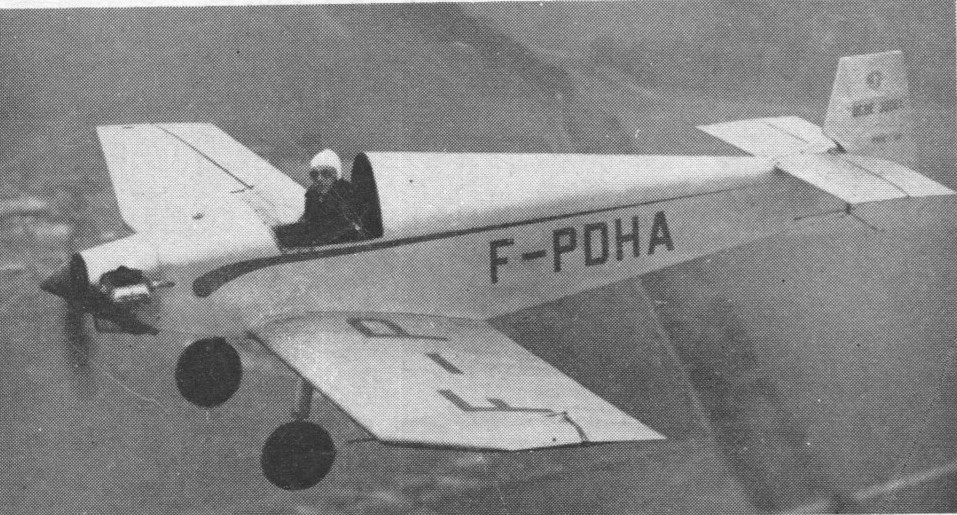
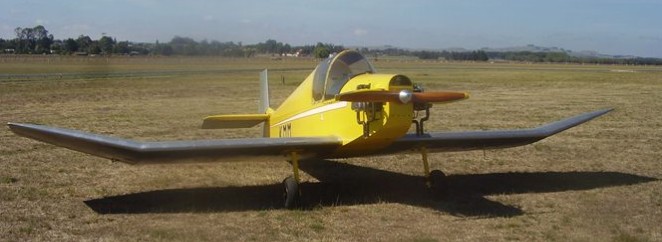
The Jodel design can be traced back to the end of the second world war when the French government, recognising the value of light aviation, purchased considerable numbers of Tiger Moths and Miles Magisters at a very low cost. These were then passed on to flying clubs. But these ex-wartime trainers were very fuel hungry and slow. This left a gap in the market for Edouard Joly, a private pilot who lived in the area of Beaune, and his son-in-law Jean Delemontez, to fill. The story goes that they fell upon some pre-war aircraft-quality plywood and an old 26 hp Poinsard engine and without formal training in aerodynamics decided to design their own single-seat light aeroplane. The wood was turned into a small, single-seat aircraft with cranked wings. It was so tiny, particularly compared to existing training aircraft, that they called it the D9 Bebe (Baby). The fact that Delemontez spent so much time working on the aircraft, rather than with his wife (Joly’s daughter), is also reported to have something to do with the naming.
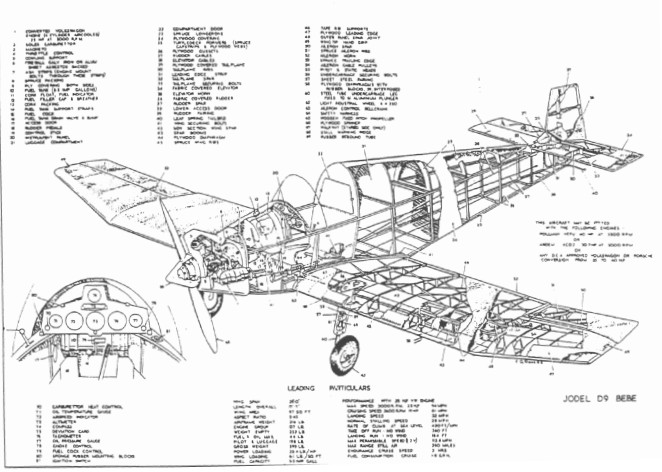
In March 1946, the French Societe des Avions Jodel was formed, and built the D.9 Bebe light monoplane, which first flew on 21 January 1948. While the original single place D 9 was built for their personal use, word of the light, responsive handling created a major market demand for plans. As word spread of the amazing performance, the design became so well liked that five French manufacturers got involved in factory production of the series at various times. The subsequent Model D.92 uses the modified VW engine for power, replacing the original 25-hp Poinsard engine. Many hundreds have been built in Great Britain, Canada, New Zealand, France, Germany and the U.S.A. The construction is simple and rugged, the materials being spruce and plywood with fabric covering. The one piece wing has a simple box spar, the outer panels being set at a large dihedral angle to give good stability. Another advantage of the polyhedral wing layout is that the loads at the spar splices are lighter than at the wing root, enabling very simple splices to be used. The fuselage is built up conventionally with four 5/8” square longerons and struts, the whole being covered with ply. The simple undercarriage comprises two legs attached to the spar, and uses rubber in compression for springing. The number of metal fittings has been kept to a minimum for ease of construction. The standard engine is the Volkswagen conversion of 30.7 h.p., but other engines of from 25 to 45 h.p. may be fitted The D9 is designed to a load factor of 9.0 at 600 lbs.
Established at Beaune in March 1946, by Jean Delemontez and Edouard Joly, the former as business and technical manager, latter as test pilot. Initial activities concerned with repair of gliders and light aircraft of Service d’Aviation Legare et Sportive on behalf of French government. In parallel, Jodel designed and built D.9 Bebe single-seat light monoplane, first flown January 1948. After official tests with D.9, French government ordered two prototypes of two-seat D.11 (Salmson engine) and D.111 (Minie engine). Followed by D.112, and D.140 Mousquetaire. All built for private use in France and other countries. License built by other French companies including Alpavia, Societe Aeronautique Normande and Wassmer. Licences for building in Germany, Italy, Spain and other continental countries also granted. Delemontez left to join Pierre Robin at Centre Est Aeronautique CEA) in 1957. Various wood/fabric Jodel models remain available through supply of plans and/or kits/components via SAB in Beaune (also D.9 Bebe via Falconar in Canada), including D.9 Bebe single-seater, D.11 two-seater, D.18 two-seater (developed from Delemontez-Cauchy DC-01 and first flown 1984), D.19 nosewheel version of D.18, D.20 Jubilee two-seater of 1997 and the first SAB aircraft offered as a complete kitplane, and D.150 Mascaret two-seater (formerly commercially built by SAN in France).
Societe des Avions Jodel, 36, Route de Seurre, 21-Beaune, France.
Paradigme 30 Wing area: 30 sq.m Pilot weight: 75-100 kg No. of cells: 79 Wing span: 13 m Aspect ratio: 5.5 Min sink: 1.05 m/s Max speed: 45 kph Price (1998) 22000 Fr
Lagon 25 Wing area: 24.5 sq.m Pilot weight: 65-80 kg No. of cells: 48 Wing span: 11.3 m Aspect ratio: 5.2 Min sink: 1.1 m/s Max speed: 43 kph Price (1998) 19000 Fr
Lagon 27 Wing area: 27 sq.m Pilot weight: 75-100 kg No. of cells: 52 Wing span: 12.2 m Aspect ratio: 5.5 Min sink: 1.1 m/s Max speed: 43 kph Price (1998) 19000 Fr
Lagon 30 Wing area: 29.5 sq.m Pilot weight: 90-110 kg No. of cells: 56 Wing span: 13.1 m Aspect ratio: 5.8 Min sink: 1.1 m/s Max speed: 43 kph Price (1998) 19000 Fr