Klüver Twin Racer

As well as the two seat Twin Racer there is also a smaller single seater.

Empty weight: 135 kg
Wing span: 10.6 m
Wing area: 16 sq.m
Fuel capacity: 50 lt
Certification: Vz
Engine: Rotax 582, 58 hp
MAUW: 400 kg
Seats: 2
Max speed: 90 kph
Cruise speed: 80 kph
Minimum speed: 45 kph
Climb rate: 2 m/s
Fuel consumption: 12 lt/hr
Price (1998): 31 088 DM

Klub Siniaya Ptica SPM

Single seat single engined flex wing aircraft with hybrid control. Rogallo wing; tail carries rudder and horizontal stabiliser. Pilot suspended below wing in trike unit, using bar to control pitch and roll by altering relative positions of trike unit and wing. Control input through pedals for yaw. Wing braced from above by kingpost and cables, from below by cables. Undercarriage has three wheels in tricycle formation. Engine mounted below wing driving pusher propeller.
Two Rogallo winged microlights are known to have been produced under the umbrella of this organisation, both of them attributed to Yevgueni Chevcheriko. As such they are hybrid control aircraft and are best described as ‘trike plus rudder on trike unit’. The trike unit is hung from the Rogallo in the normal way and the relative positions of the two can be altered to give pitch and roll control, just as in any other trike, but instead of relying on roll to initiate yaw, a separate rudder is attached to the rear of the trike unit, controlled by rudder pedals.
The Russian aircraft have a horizontal stabiliser behind the pilot. The Ptica 2, the earlier of the two Russian designs, has a large windscreen. The Ptica 2 has a 42 hp engine, 4 hp less than the SPM.
The initials SPM stand for Siniaya Ptica Modernisovanna, and it is basically an updated version of the Ptica 2.

Engine: 46 hp.
Total wing area 221 sq.ft, 20.5 sq.m.
Power per unit area 0.21 hp/sq.ft, 2.2 hp/sq.m.
Max take off weight: 401 lb, 182 kg.
Max wing loading: 1.81 1b/sq.ft, 8.9 kg/sq.m.
Max power loading 8.7 lb/hp, 4.0 kg/hp.
Take off speed 25mph, 40 kph.
Take off distance 100 130ft, 30 40m.
Landing dis¬tance 80 100 ft, 25 30 m.

Klub Siniaya Ptica Ptica-2

Single seat single engined flex wing aircraft with hybrid control. Rogallo wing; tail carries rudder and horizontal stabiliser. Pilot suspended below wing in trike unit, using bar to control pitch and roll by altering relative positions of trike unit and wing. Control input through pedals for yaw. Wing braced from above by kingpost and cables, from below by cables. Undercarriage has three wheels in tricycle formation. Engine mounted below wing driving pusher propeller.
Two Rogallo winged microlights are known to have been produced under the umbrella of this organisation, both of them attributed to Yevgueni Chevcheriko. As such they are hybrid control aircraft and are best described as ‘trike plus rudder on trike unit’. The trike unit is hung from the Rogallo in the normal way and the relative positions of the two can be altered to give pitch and roll control, just as in any other trike, but instead of relying on roll to initiate yaw, a separate rudder is attached to the rear of the trike unit, controlled by rudder pedals.
The Russian aircraft have a horizontal stabiliser behind the pilot. The Ptica 2, the earlier of the two Russian designs, has a large windscreen. The Ptica 2 has a 42 hp engine, 4 hp less than the SPM.

Engine: 42hp.
Propeller diameter: 15in, 0.38m.
Total wing area 242 sq.ft, 22.5sq.m.
Power per unit area 0. 17 hp/sq.ft, 1.9hp/sq.m.
Take off speed 40mph, 65kph.
Cruising speed 62 mph, 100 kph.

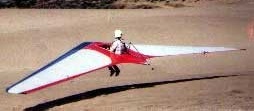
Klingberg Klingberg

Rol Klingberg built the wing without plans (never drew them) and used only a few templates for making parts. There are no plans for the full size Klingberg Wing as a “one-off” design.

The right wing had slightly less twist due to a construction error and in a stall the wing would drop the right wing. Recovery could be made by simply returning the ailerons to a neutral setting. The test pilot made the error of flying too slow twice. Once at altitude with room to recover and once low without room to recover. At Torrey, the wind was too low for soaring flight and the test pilot attempted to stay aloft by flying slow. A beginner’s type error. As Klingberg watched at the edge of the Torrey cliffs he saw the wing flying near stall speed and was not surprised to see it drop the right wing. The test pilot did not perform the correct recovery process and crashed.

Klingberg still had three feet of the left wing tip (the one that impacted the cliffs) in 2006. The engineering facts surrounding the failure of the Wing is that he modified standard airfoils for the tips. The modification made combined with the low Reynold’s number caused the design to have tip stall problems. A technical report of the problem was published in Hang Glider magazine in the late 1980’s.

The test pilot (Daryl “Monty” Bell) stole the Wing after the crash at Torrey. The Wing was too damaged to provide sufficient information for a second Wing to anyone other than the designer. If anyone knows the locations of any remains, Rol Klingberg would like to have that information.

Klingberg attempted to recover the remains of the wing from the test pilot a few months after the crash but was unable to do so. In the process, Klingberg had extensive discussions with the local law enforcement officials and they pointed out that Monty Bell had a number of “encounters” with the local police and was considered to be an on-going problem for them.

Klimov TV3-117

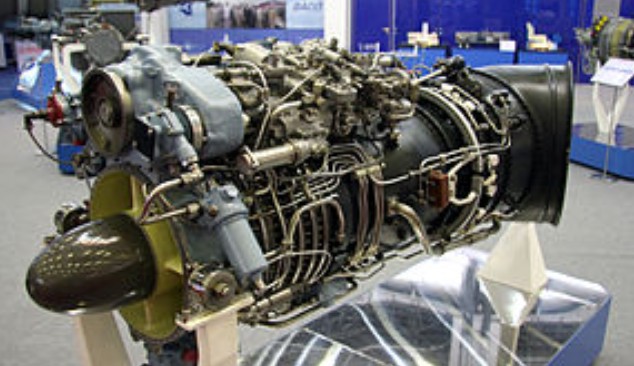
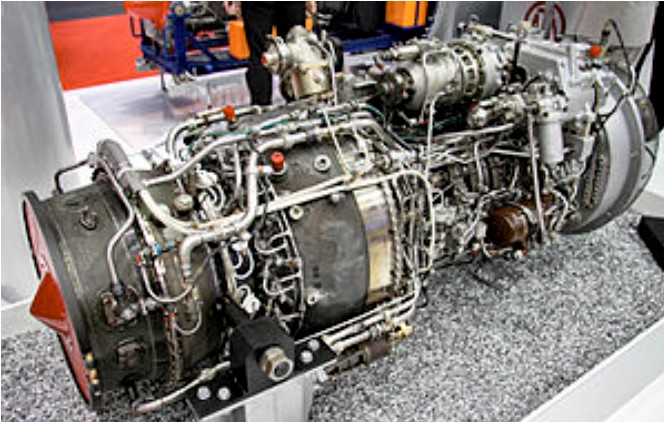
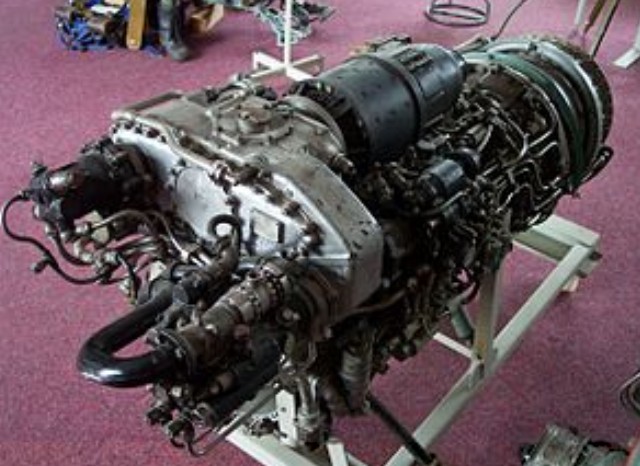
The Klimov TV3-117 is a Russian gas turbine aero engine first run in 1974. It is used in most medium lift, utility, and attack helicopters designed by the Mil and Kamov design bureaus. The TV3-117 turboshaft engine was developed in 1974 and later the TV3-117 was installed on 95% of all helicopters designed by Mil and Kamov Engineering Centre. The engine has been produced in many variants, with over 25,000 built.

Despite the similar designation, the TV7-117 engine family is new and unrelated to the TV3-117.

Variants:

TV3-117 – for Mi-24A (1972)

TV3-117M “marine”) – for Mi-14 helicopters incorporates special features to be used at sea. Mass production started in 1976

TV3-117MT “modernized, transport”) – for Mi-8MT/Mi-17 helicopters and their variants. Mass production started in 1977

TV3-117KM “Kamov, marine”) – for Ka-27 helicopters

TV3-117V (“V” stands for “high altitude”) – for Mi-24 helicopters operated in the mountains (particularly in Afghanistan). Mass production started in 1980

TV3-117VK (“high altitude, Kamov”) – a model similar to the TV3-117V engine but adapted to Ka-27, Ka-29 and Ka-32 helicopters. Mass production began in 1985. Export helicopter models were equipped with TV3-117VKR engines featuring a higher rated and cruising power (“VKR” stands for “high altitude, Kamov, power”); they were originally designed for Ka-28 machines

TV3-117VM (“VM” stands for “high altitude, modernized”) – for Mi-28 helicopters and later installed also on Mi-8MT/Mi-17 models. This engine features an automatic switch to emergency power. It was awarded type certificates by the IAC Aviation Registry, India, the Republic of China and the People’s Republic of China. Mass-produced since 1986

TV3-117VMA (“VMA” stands for “high altitude, modernized, model A”) – for Ka-50 helicopters. It is currently installed on Ka-27, Ka-29, Ka-31, Mi-24, Mi-28A/N and Ka-32 machines. This engine was awarded type certificates by the IAC Aviation Registry and by Transport Canada. Mass production started in 1986. Export models are equipped with TV3-117VMAR engines (the extra “R” stands for “power”) whose rated power and cruising power are similar to those of the TV3-117VKR engine

TV3-117VM Series 02 – a version of TV3-117VM for Mi-8MT/Mi-17 civil helicopters. Type certificates for this engine were awarded by the IAC Aviation Register, India, the Republic of China and the People’s Republic of China. Mass production started in 1993

TV3-117VMA series 02 – a version of TV3-117VMA for Ka-32 civil helicopters. Type certificates for this engine were awarded by the IAC Aviation Register, Transport Canada and Switzerland. Mass production started in 1993

TV3-117VMA-SBM1 a Turboprop version for An-140 aircraft produced by the Antonov Company

TV3-117(A) – for an unmanned reconnaissance aircraft (UAV)

VK-2500 highly modified TV3-117 also for hot and high.

Applications:
Antonov An-140
Kamov Ka-27
Kamov Ka-29
Kamov Ka-32
Kamov Ka-50
Mil Mi-8
Mil Mi-14
Mil Mi-17
Mil Mi-24
Mil Mi-28
Mil Mi-35

Specifications:

TV3-117VMA Series 2
Type: Free-turbine Turboshaft
Length: 2,055 mm (80.9 in)
Diameter: 728 mm (28.7 in) (height)
Dry weight: 294 kg (648 lb)
Maximum power output: 1,640 kW (2,200 shp) (take-off)
Overall pressure ratio: 9.4:1
Turbine inlet temperature: 920-990 C (Turbine entry temperature)
Specific fuel consumption: 0.308 kg/kW/hr (0.507 lb/shp/hr)
Klimov TV7-117

The TV7-117 is a Russian turboprop engine certified in 1997 to power the Ilyushin Il-114 regional commuter aircraft. The new engine features enhanced reliability, fuel economy and greater service life compared with its predecessors produced in the former Soviet Union. The engine has a modular design. The nine modules can be replaced in the field, which dramatically reduces costs and accelerates repair and maintenance. The engine has an electronic-hydromechanical control system.

The TV7-117 engine has been offered to power the newest Russian turboprop aircraft such as Ilyushin Il-112, MiG-110 and Tu-136. In addition, Klimov developed the TV7-117B turboshaft to power rotary-wing aircraft and marine drives for power high-speed boats and industrial electric power plants. The TV7-117 engine family are produced by Klimov JSC (St. Petersburg), Chernishov JSC (Moscow) and the Baranov JSC (Omsk).

Variants:
TV7-117SM is a variant that was introduced by Klimov in 2002 featuring a Full Authority Digital Electric Control (FADEC) system based on the BARK-12 or BARK-57 electroniс engine control unit, as well as improved reliability, manufacturability and maintainability. It features an enclosed centrifugal wheel that increases its power by 10% while maintaining all the other performance parameters. The Klimov Company holds a patent for the design and manufacturing of such wheels.

TV7-117B is a TV7-117 version that was developed into a turboshaft engine. It is used on modernized Mi-8 helicopters.

TV7-117V/VM is a model with the power shaft in front dedicated to the Mi-38 (VK-3000 family).

TV7-117VK is a version with the power shaft in the rear to upgrade Mi-28 and Ka50/Ka52 helicopters (VK-3000 family).

Applications:
Ilyushin Il-112
Ilyushin Il-114
Mil Mi-8
Mil Mi-17

Specifications:
TV7-117
Type: turboprop/turboshaft
Length: 2,136 mm (84.1 in)
Diameter: 940 mm (37 in)
Dry weight: 530 kg (1,170 lb)
Compressor: single shaft axial flow centrifugal compressor, 5 axial + 1 centrifugal stages
Combustors: annular
Turbine: 2-stage axial flow
Maximum power output: 2800 hp
Overall pressure ratio: 16 (ratio on takeoff)
Fuel consumption: 180 g/hp/hr (cruise)

Klimov TV2-117 / Isotov TV2-117

The Klimov TV2-117 (initially Isotov TV2-117) is a Soviet gas-turbine turboshaft engine intended for helicopter use. Developed in the early 1960s from the Klimov TV3-117 by the Isotov Design Bureau the engine became the first purpose built gas turbine engine for helicopter use by the Soviet Union with previous helicopter turbines being adapted aeroplane powerplants. First run in 1962, it was later produced by Klimov, production ending in 1997.

The TV2-117 is claimed to be the most popular helicopter powerplant worldwide with 23,000 built and has accumulated over 100 million hours in service.

Variants:
TV2-117
Base variant.

TV2-117A
Improved engine with more durable compressor stator blades.

TV2-117AG
Carbon sealed shaft bearings

TV2-117F
Limited production of engine certified to FAA airworthiness standards for Japan.

TV2-117TG
Multi-fuel variant, adapted to run on liquid petroleum gas and other fuels, such as gasoline and diesel fuel, and for use in cold climates.

Applications:
Antonov An-24 (intended coupled turboprop application)
Mil Mi-8
Mil Mi-14

Specifications:

TV-2 117
Type: Turboshaft
Length: 2,835 mm (9.301 ft)
Dry weight: 330 kg (728 lb) (minus accessories)
Compressor: Ten-stage axial flow
Combustors: Eight-chamber cannular
Turbine: Two-stage compressor turbine, two-stage power turbine
Maximum power output: 1,700 hp (1,268 kW)
Overall pressure ratio: 6.6:1 at 21,200 rpm
Specific fuel consumption: 0.606 lb/hr/shp