Körting / Militärluftschiff M.III

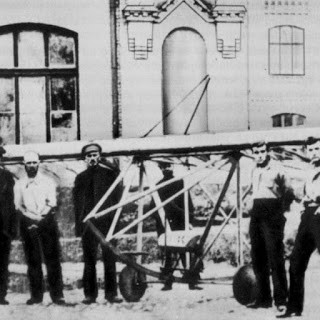
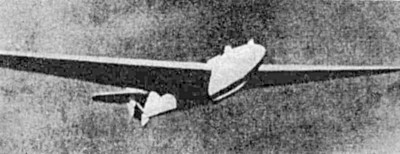
The Körting / Militärluftschiff M.III non-rigid military dirigible was constructed by the firms of Körting and Wimpassing (K-W 1) based on the Parseval-type. It first ascended on January 1, 1911. The “Körting” was Austria’s most successful airship before being lost on a routine aerophotogrammetric mission at Fischamend near Vienna. On June 20, 1914, moments after suffering a glancing mid-air collision with a Farman HF20 – a pusher biplane newly acquired by the military – the hydrogen-filled airship burst into a ball of fire and was dashed to earth. Nine men died including the pilot and observer of the Farman.

Kortenbach & Rauh Kora 1

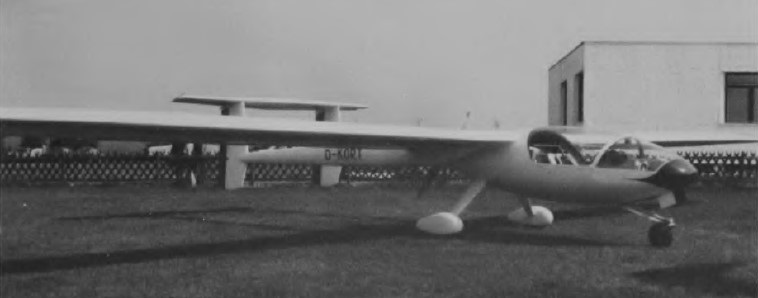
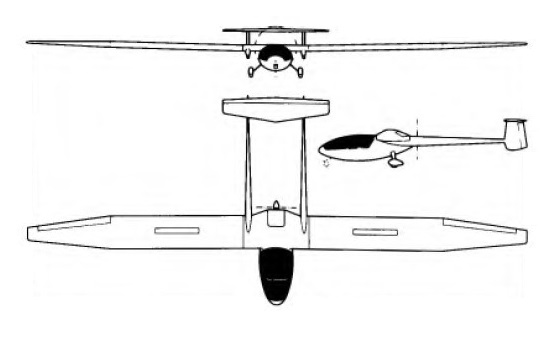
Having a twin boom pusher configuration and (on the second prototype) a conventional fixed, spatted main undercarriage, the Kora 1 is a side-by-side two seater intended primarily for training; it was designed by Messrs Schultes, Seidel and Putz, and the firm of Kortenbach & Rauh is best known for its range of furniture and other products for the garden and household.

The prototype Kora 1 made its maiden flight on 13 September 1973 and had a forwards-retracting nosewheel and the main wheels retracting backwards into the tail booms. The second prototype, which first flew on 9 April 1976, had a fixed main undercarriage to save weight and complexity, and was still undergoing flight testing at the beginning of 1978, at which time it had not yet been decided whether to start production, although orders had already been received for about a dozen Koras.

The power plant is a 65hp Limbach SL 1700EC1 air-cooled ‘flat four’ driving a Hoffman two-blade variable-pitch feathering propeller. The Kora is of all-wood construction, with cantilever high wings which have Schempp-Hirth air brakes in the upper surfaces. The pod-type fuselage nacelle has roomy side-by-side seating in a cockpit 47in wide, the canopy opening sideways to starboard. The twin tail booms end in twin fins and rudders which have the tailplane mounted on top of them. The fixed main undercarriage units on the second prototype consist of two spatted main wheels set on thin steelsprung legs cantilevered from the fuselage underside.

Second prototype
Engine: Limbach SL 1700 EC1, 48.5 kW / 65 hp
Span: 18.0 m / 59 ft 0.75 in
Length: 7.4 m / 24 ft 3.25 in
Height: 1.85.m / 6 ft 0.75 in
Wing area: 19.44 sq.m / 209.25 sq ft
Aspect ratio: 16.65
Wing section: Wortmann FX-66-S-1967161
Empty weight: 510 kg / 1,124 lb
Max weight: 750 kg / 1,653 lb
Water ballast: None
Max wing loading 38.58 kg/sq.m / 7.9 lb/sq ft
Max level speed at S/L: 110 kt / 205 km/h / 118 mph
Stalling speed: 35 kt / 65 km/h
Max rate of climb at S/L: 180 m/min / 590 ft/min
Min sinking speed: 0.85 m/sec / 2.79 ft/sec at 53 mph / 51 kt / 95 km/h
Best glide ratio: 30:1 at 59 mph / 54 kt / 100 km/h

Korolyev RP-1

The Korolyev RP-1 was a powered version of the Cheranovsky BICh-11 experimental tailless glider, designed together with Friedrich Zander (Tsander) and other Korolev’s friends from GIRD (ГИРД – Jet Propulsion Research Group).

It was planned to be a rocketplane (therefore RP index) and the Zander OR-2 rocket engine (500 N thrust) was designed especially for it. Development of the engine was very difficult, and Zander didn’t achieve success; furthermore on March 28, 1933 he died of typhus in Kislovodsk. The two RP-1 prototypes were tested in 1932-33 only as “ordinary” powered gliders, each with a 25-hp Scorpion piston engine.

The first of them was flown on June 8, 1932 – Korolyev himself was a test pilot. Totally 34 flights were made by him, but only 5 with the engine powered up.

Engine: 25-hp Scorpion
Wing span: 12.1 m
Length: 3.81 m
Wing area: 20.5 sq.m

Korolyev SK-6 / SK-7

The Korolyev SK-6 experimental two-seat, twin-boom glider of very compact design, made wide usage of Elektron magnesium alloy in the structure. Built in 1931 or early 1932, there is very little information about this glider. It never participated in any All-Union gliding contest and wasn’t among Korolev’s favorite designs. Only one photo remained which is identified as SK-6 glider.

It was designed (very similar project, anyway) in April 1931 as two-seat training aerobatic glider, but under the designation SK-7. The historian Georgy Vetrov guess it’s the same design. But why Korolev changed the designation – it is another mystery.

Calculated, for SK-7 project from April 1931
Wing span: 10.0 m
Length: 5.45 m
Wing area: 17 sq.m
Flight weight: 230 kg
Gliding ratio: 15:1
Rate of sink: 0.9 m/s

Korolyev KPIR-3

Sergei Korolyov decided to enrol in the Kiev Polytechnic Institute, where at that time it was supposed to begin training aviation engineers at the mechanical faculty.

There was a globular circle at the institute. His work was monitored and helped by many prominent scientists who taught at the KPI. Sergey Korolev became a member of it. He worked, as all are many and enthusiastic. Often at night. Korolev slept sometimes in the workshop on the shavings. He loved to work and was a master of all trades. After that, they never altered anything. Gliders built in the institute workshops, participated in international competitions, receiving the highest marks. At circles there was a rule: who built a glider, he flew it.

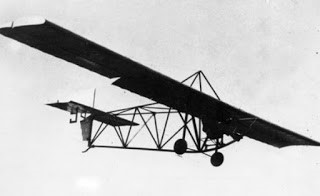
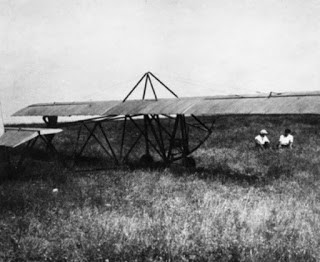
A training glider KPIR-3 was built, he contributed a share of his work and Korolev. Sergei flew on it. One of the flights almost cost him his life. On the border of the site – wasteland, where the gliders were tested, from a pile of garbage a water pipe was sticking out. Sergei did not notice and planted a glider on it. The blow was strong enough and Korolev lost consciousness for a while.

In 1926, after two years of studying at the KPI, Sergei Korolyov was transferred to Moscow for a special evening group on the aerodynamics of the Moscow Higher Technical School.

Korolyev K-5

Korolev was born to a Russian literature teacher in the town of Zhitomir in the Ukraine. He was fascinated with aircraft at an early age and became a pilot. At the age of 17 he had designed his first glider, the K-5.

Sergei Korolev’s designation system was very irregular and complicated (if there was a system at all). His very first glider project, designed in 1924 at aviation enthusiasts circle in Odessa inhering to ChAG (ЧАГ – Black Sea Aviation Group) when Korolev was 17 years old, was designated “K-5” for some reasons. This project was highly appreciated by aerotechnical department of Odessa OAVUK branch (ОАВУК– Aviation & Aeronautics Society of Ukraine) and recommended for realization. But it was necessary to approve it at OAVUK Central sport section in Kharkov, which allocated funds for construction of gliders to different Ukrainian aviation circles. Korolev sent his project (11 drawing sheets with explanatory comment) to Kharkov… and it was lost somewhere by the post service. So, the first Korolev design became a mystery. It’s known only that Korolev preferred to call it “motorless airplane”, not “glider”.

Korolyev S.K.9

The two-seat SK-9 was designed by S.P.Korolev in 1934 – 1935 and was built at Osoaviakhim’s Planernyi Zavod (“Glider factory”, Tushino, near Moscow) in the Fall of 1935. The glider was built as a two-seater and had an unusual for sailplanes airframe: SK-9 had very high wing load and was capable to withstand loads up to 7g.

Chosen parameters were based on earlier experiments with BICh-11 glider, which was never flown with rocket engine just because light wooden airframe “expired” prior to arrival of the powerplant.

The SK-9 was an all-wooden aircraft. Box-type spars, ribs and 1mm plywood skin formed rigid box with strong resistance against bending and twisting. Fuselage of the oval crossection had 1mm to 1.5mm external skin and internal 1mm plywood skin for extra rigidity. Wing carried 2-section slotted ailerons covered with fabric.
Landing gear included a ski and fixed tailskid. The wooden ski was covered with steel and linked to the fuselage by set of rubber rings protected with fabric cover.

Pilot’s and passenger cockpits – of the open type. Pilot is protected by small plastic windshield. Rear cockpit had a removable set of controls.

During the Fall of 1935 the SK-9 passed factory trials at Tushino airfield, performing number of flights both towed by the airplane and in free flight.

It was flown (towed by an R-5) from Moscow to Koktebel for participation in the XIth All-Union Glider Convention (September 6 – October 6, 1935) in Koktebel (it flew there from Moscow on tow, as part of an “aerotrain”, with Korolev onboard as a passenger). During overflight and at the Convention SK-9 proved its high performance and good handling at speeds up to 180km/h even in “rough air” conditions. During flight from Moscow to Koktebel and back the SK-9 was piloted by glider-pilot Romanov and S.P.Korolev himself (he was a licensed pilot too).

The SK-9 was designed to be converted into a Rocketoplane – aircraft propelled by a rocket engine, and was later converted into the RP-318-1 rocket-plane.

The SK-9 fuselage and leading edges of the wing were painted bright-red. Wing, tailplane, rudder and nose section of the fuselage – ivory. Landing ski – black.

SK-9
Wingspan: 17.0 m
Wing area: 22 m2
Wing aspect ratio: 13.1
Length: 7.33 m
Height: 2.64 m
Empty weight: 300 kg
Loaded weight: 4605 kg
Wing loading: 23 kg/sq.m
Takeoff speed: 71-76 kph
Tow speed: 130-140 kph
Min glide: 85 kph
Normal glide: 100 kph
Max glide: 200 kph
Glide ratio: 19:1 (23:1 by another source)
Landing speed: 70 kph
Minimal descent: 0.94 m/sec
Normal descent: 1.4 m/sec
Crew: 2
Korolyev KL-5 / SKL-5 / SK-5 / Koktebel

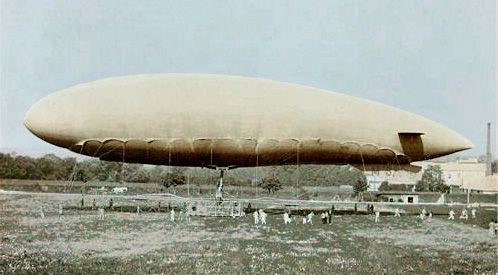
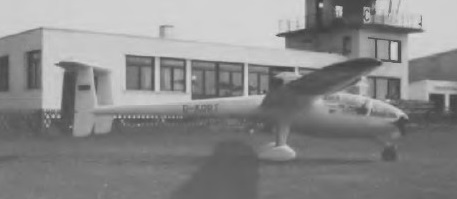
The Korolev SK-5 Koktebel single-seat, high-perform sport glider. Designed together with Sergei Lyushin; sometimes mentioned as KL-5. Built in 1929 in Moscow, took part in 6th (October 6-23, 1929) and 7th (1930) All-Union gliding contests. The glider was named after a town in Crimea where all gliding contests until 1935 were held (in 1944 this gliding center was even renamed into Planerskoye – “Glider Town”; it regained name “Koktebel” in 1991).

Among contemporary gliders, SK-5 was unusual with its long fuselage and robust design; but it had excellent aerodynamics (for that time of course) and flew as well as the better of its much lighter counterparts.

Wing span: 17.0 m
Length: 7.75 m
Wing area: 16.4 sq.m
Wing aspect ratio: 17.6
Empty weight: 230 kg
Flight weight: 300 kg
Glide ratio (L/D): 25:1