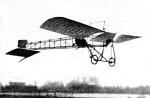
The 1911 Kudashev 4 monoplane was designed and built by A. S. Kudashev in Russia.
Span: 31’10”
Length: 28’6″
Weight loaded: 750 lb
Speed: 50 mph
The 1911 Kudashev 4 monoplane was designed and built by A. S. Kudashev in Russia.
Span: 31’10”
Length: 28’6″
Weight loaded: 750 lb
Speed: 50 mph
The 1910 Kudashev 3 monoplane was designed and built by AS.Kudashev in Russia.
Span: 30’2″
Length: 23’8″
Weight loaded: 705 lb
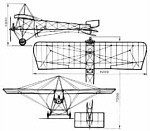
The 1910 Kudashev 2 biplane was designed and built by AS Kudashev in Russia.
Span: 32’10”
Length: 28’6″
Weight loaded: 903 lb
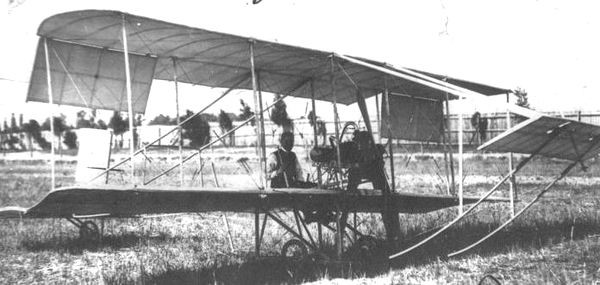
Kudashev’s biplane (Кудашев) Biplane of 1910, sometimes designated Кудашев 1, was, reportedly, the first aeroplane of Russian design flown. On May 23, 1910 it flew about half the length of a football pitch at a height of a couple of feet at Kiev. The flight was not advertised and went unnoticed by the general public. Kudashev was a civil engineer and associate professor at Kiev Polytechnics.
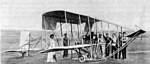
Span: 29’6″
Length: 32’10”
Weight loaded: 926 lb
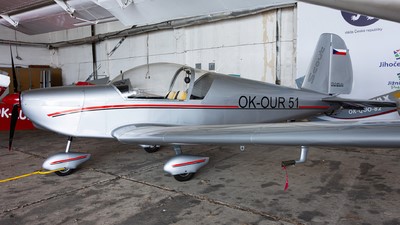
In 2005 Petr Kubiček, encouraged by aerospace engineering students at Brno University, began to design a modernised Mráz M-2 Skaut with the hope of production. The first Kubicek M-2 Scout (the name was Anglicised) of the 21st century appeared, unflown, at Aero ’09 held in Friedrichshafen in the spring of 2009 and flew for the first time on 7 May 2009. The Scout design began with the original plans reassessed with modern methods and using a metal rather than wood structure, supplemented with some composite materials for the engines cowling and flying surface tips.
Externally the old and new aircraft are similar, wings and tail having the same features and the side-by-side seating retained. The aircraft is made from riveted and bonded aluminum sheet and is completely corrosion-treated after assembly. Electrically operated flaps are fitted to the Scout and there is a central trim tab on the elevator. Its fixed tricycle undercarriage is mounted on the fuselage with cantilever composite mainlegs. The mainwheels have brakes operated with a central lever and the nosewheel has helical springing. All wheels are spatted.
The new M-2 was designed to comply with the Fédération Aéronautique Internationale microlight rules and US light-sport aircraft rules.
After its first flight in May 2009, the Scout prototype appeared at several Czech airshows and fly-ins.
Two versions are being developed, one to meet the US Light Sport requirement with a maximum take-off weight (MTOW) of 598 kg (1,320 lb) and a second for the European Ultralight MTOW limit of 450 kg (992 lb). Both these MTOWs are less than that of the original Skaut and empty weight are also less. Certification was proceeding in 2010, with the aim of first deliveries during 2011.
M-2 Scout LSA
US light-sport category
Engine: Rotax 912ULS, 73.5 kW (98.6 hp)
Propeller: 3 blade ground adjustable
Wingspan: 9.6 m (31.5 ft)
Wing area: 12.4 m2 (133 sq ft)
Length: 6.87 m (22 ft 6 in)
Height: 2.35 m (7 ft 9 in)
Empty weight: 320 kg (705 lb)
Gross weight: 600 kg (1,323 lb)
Fuel capacity: 90 L (23.5 US gal; 19.8 Imp gal).
Maximum speed: 220 km/h (140 mph, 120 kn)
Cruise speed: 180 km/h (110 mph, 97 kn)
Stall speed: 72 km/h (45 mph, 39 kn) in the landing configuration
Never exceed speed: 260 km/h (160 mph, 140 kn)
ROC: 6.0 m/s / 1.181 ft/min
Endurance: 6 hours
g limits: +4/-2
Crew: one
Capacity: one passenger
Cockpit width: 120 cm (47 in)
M-2 Scout UL
European ultralight category
Engine: Rotax 912ULS, 73.5 kW (98.6 hp)
Propeller: 3 blade ground adjustable
Wingspan: 9.6 m (31.5 ft)
Wing area: 12.4 m2 (133 sq ft)
Length: 6.87 m (22 ft 6 in)
Height: 2.35 m (7 ft 9 in)
Empty weight: 320 kg (705 lb)
Gross weight: 472.5 kg (1,042 lb)
Fuel capacity: 90 L (23.5 US gal; 19.8 Imp gal).
ROC: 5.0 m/s (984 ft/min)
Cockpit width: 120 cm (47 in)
Crew: one
Capacity: one passenger
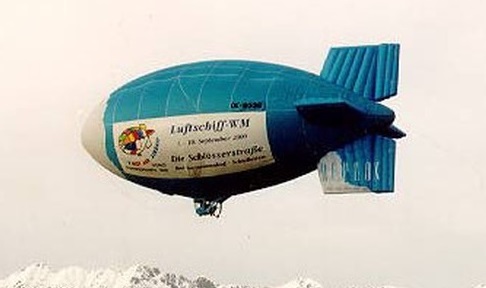
The Kubicek AV2 first flew on 26 May 1999 and attended the Kosice Balloon Meet the following month. It carried artwork for a Slovakian company, Reprox Kosice, which produces heat insulating materials.
Volume: 3,500 m3
Length: 38 m
Diameter: 14.2 m
Empty weight (envelope, gondola): 440 kg
MTOW: 870 kg
Weight of fuel cylinders: 190 kg
Number of cylinders: 3
Max weight of crew and load: 240 kg
Fuel tank: 30 lt
Max forward speed: 20 kph
Endurance: 60 – 120 min
Max envelope temperature: 120°C
Max envelope pressure: 150 Pa
Max wind speed: 3 m/s
Gondola length: 3 m
Gondola width: 1.7 m
Gondola height: 1.85 m
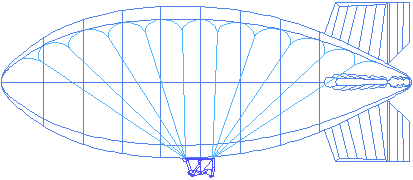
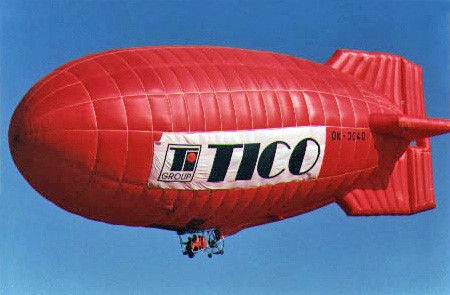
The Kubicek AV-1 is a hot-air airship designed and built in the Czech Republic by Kubicek Limited. The AV-1 was built as an advertising airship for the TICO group of Prague and first flew on the 16 October 1993.
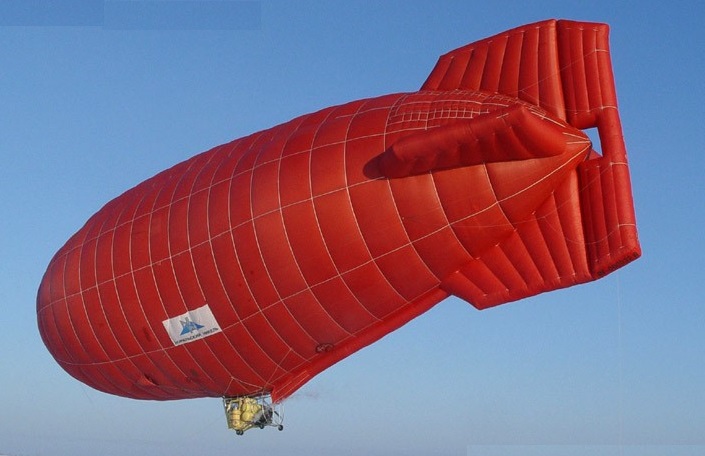
It was later in the colours of Coca-Cola Moscow.
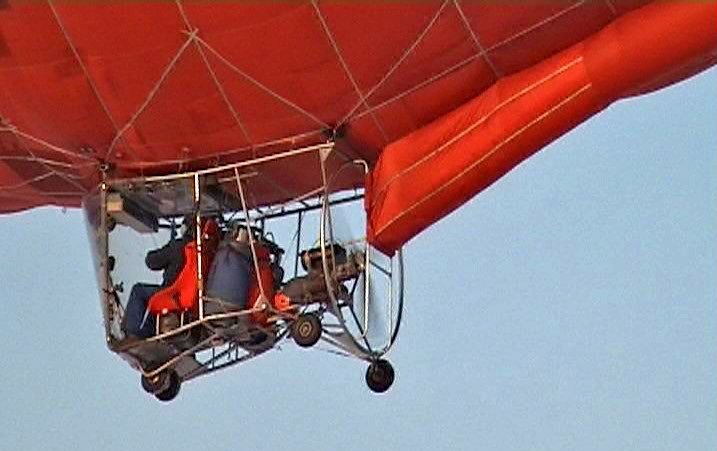
Volume: 2,800 m3 (99,000 cu ft)
Powerplant: 1 × Rotax 503, 37 kW (50 hp)
Propeller: single blade Justas-Stratos 4-blade pusher
Burner: Kubicek H3-double 2 x 2.1 MW
Length: 35.00 m (114 ft 10 in)
Height: 12.00 m (39 ft 4 in) envelope height
Weight: 195 kg
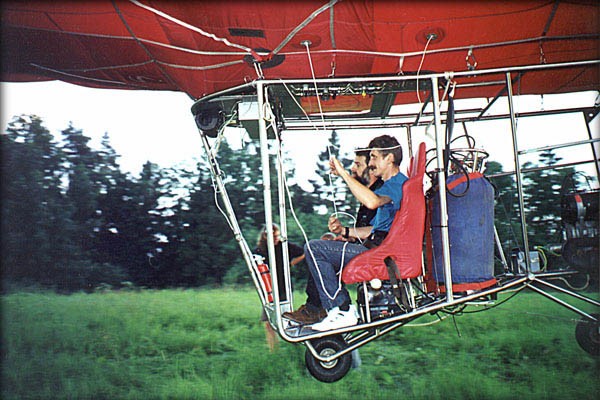
Gondola: Stainless steel, 240 kg
Maximum speed: 25 km/h (16 mph, 13 kn)
Endurance: 1.5
Crew: 1 pilot
Capacity: 1 passenger
The Kubíček BB Series were originally type certificated in the Czech Republic under CZ TC No. 93-01. (Kubíček Balloons was formed in 1989. Prior to that Mr Kubíček worked under the supervision of Aerotechnik, which was owned by the state military organization.)
The model designation reflects the size of the envelope in cu.m x 102 and the cutting style.
Note the latter was originally missing from the model designation of N-type balloons, but has been added at Change 5 of the TCDS. (Only O-type now have no suffix letter.)
The balloons are natural shaped polyester with either vertical gore or horizontal form (Z-type), and have a range of optional deflation systems. The Flight Manual Limitations Section 2 and the TCDS specifies approved envelope/burner/basket/fuel cylinder combinations. The Kubíček BB have traditional canework basket certified under EASA BA.003..
Variants:
O-Type
N-Type
Z-Type
GP-Type
XR-Type
E-Type
Balóny Kubíček spol. s r.o.
Airship builder
In 2005 Petr Kubiček, encouraged by aerospace engineering students at Brno University, began to design a modernised Mráz M-2 Skaut with the hope of production.
As with many homebuilts, a number of builders have made design changes to their HP Aircraft HP-14. In some cases these have been substantial. Andre Krutchkoff built his SHP-1 with his own design of fuselage with T-tail.

