Kurtz, Joseph

Josef Kurz was selected for the Me 163 Komet, did glider training on the Kranich and Habicht, up to the 6 meter Stummelhabicht, but then the war was over. The Stummelhabicht was very special, because the only thing to do after being released from the towplane was to get it down on the runway. Usually you were on the ground before the tow plane.

Josef Kurz doesn’t speak English, but French and Latin are the other options.
Mr Kurz (Josef, or ‘Sepp’) built 14 aircraft since 1982, including the following: Udet Flamingo, Habicht, Klemm 25, Reihe, Siebel 202 Hummel, Riesele (3) and SG 38. He built the Komet basically himself.

Kurten Sie-3

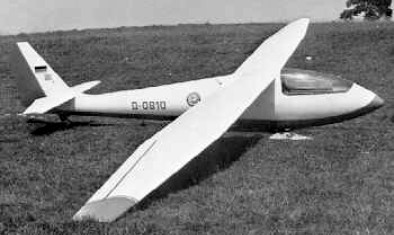
Designed by Wilhelm Kurten, 27 were built.

No. of Seats: 1
L/DMax: 34 85 kph
MinSink: 0.64 m/s 78 kph
Wing span: 15m
Wing area: 11.84sq.m
Empty Weight: 215kg
Gross Weight: 340kg
Wing Load: 28.7kg/sq.m
Aspect ratio: 19
Airfoil: FX 61-184

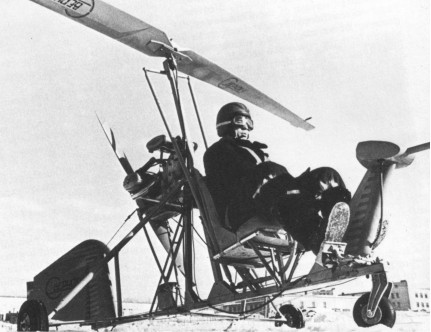
KAI Vikhr-1

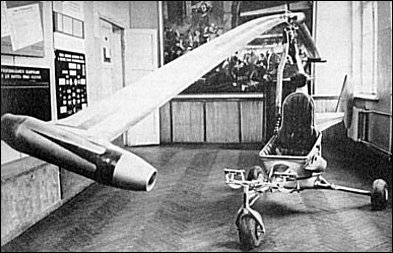
An experimental helicopter, built in 1956 by students at the Kuibushevskij Aviatsionnyj Institut. Single-seat machine was powered by pulse-jets attached to the tips of the main rotor blade. Pod and boom fuselage was very basic, pilot was seated in the ‘bare seat’ with control stick hanging from above.
The helicopter carried no tail rotor.

KAI Strekoza

The Strekoza (Three axis) was a single seat single engined high wing mono¬plane with three axis control circa 1983. Constant chord wing; conventional tail. Pitch control by elevator on tail; yaw control by fin mounted rudder; roll control by full span ailerons. Engine mounted at wing height driving tractor propeller.
The Strekoza is a com¬pletely original design from the students at the polytechnic of Kuibychev and in concept of a mini aeroplane. Using a conventional tail supported by a metal framework, the Strekoza carries slotted ailerons along the entire trailing edge of its constant chord high wing. The engine, an air cooled Wichr 25 developing 25 hp, is placed in a nacelle on the leading edge of the wing, connected to a two blade 43 inch (1.10 m) propeller.

Length overall 19.9 ft, 6.07 m.
Wing span 23.6 ft, 7.20 m.
Constant chord 3.6 ft, 1.10 m.
Total wing area 105 sq.ft, 9.80 sq.m.
Engine: Wichr 25, 25 hp.
Propeller diameter: 43 in, 1.10m.
Power per unit area 0.24hp/ sq.ft, 2.6hp/sq.m
Empty weight 331 lb, 150 kg.
Max take off weight 507 lb, 230kg.
Payload 176 lb, 804.
Max wing loading 4.831b/sq.ft, 23.5kg/sq.m
Max power loading: 20.31b/hp, 9.2kg/hp.
Max level speed: 62mph, 100kph.
Landing speed 28mph, 45 kph.
Stalling speed 31 mph, 50 kph.
Take¬off distance 660 ft, 200 m.
Landing distance 590 ft, 180 m.
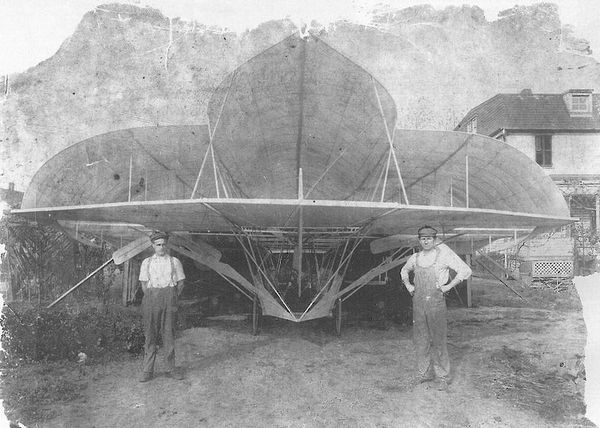
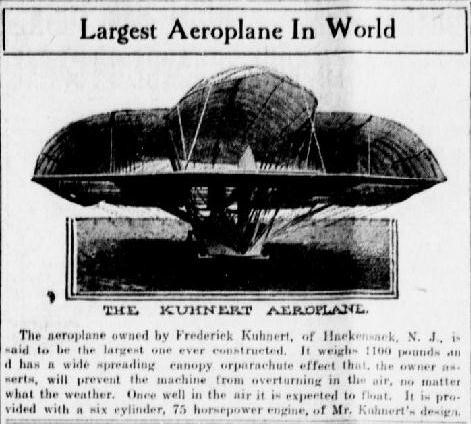
Kuhnert Ferryboat

The creation of Frederick Kuhnert of New Jersey, and at the time was said to be to the largest aeroplane in the world, though no doubt it was just one of several claimants to that title. He established the Kuhnert Aerial Construction Company in order to “manufacture flying machines”. In 1910, Kuhnert bought 20 acres of land in the Hackensack Meadowlands to use as an aerodrome where he built a passenger airplane that could hold 14 people. Called Kuhnert’s Ferryboat, it, along with his aerodrome, was destroyed by a tornado in 1912 before it could make its first flight.

Engine: 75 hp

Kuhnert Aerial Construction Company

Frederick Kuhnert of New Jersey established the Kuhnert Aerial Construction Company in order to “manufacture flying machines”. The $100,000-valued company’s directors were Frederick Kuhnert, Matthew Andronico and Lester Gilbert. In 1910, Kuhnert bought 20 acres of land in the Hackensack Meadowlands to use as an aerodrome where he built a passenger airplane that could hold 14 people. Called Kuhnert’s Ferryboat, it, along with his aerodrome, was destroyed by a tornado in 1912 before it could make its first flight. Prior to the tornado, the Kuhnert Aerodrome hosted weekly aerial demonstrations.

Kuffner WK-1

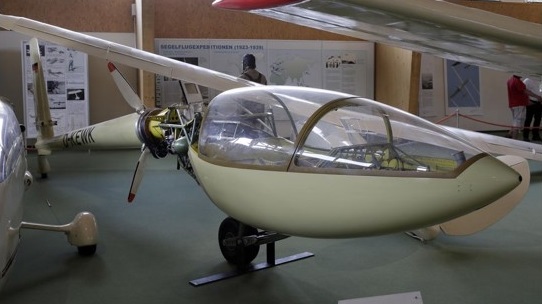
Built by Werner Kuffner (WK) as a one off in 1975, the WK-1 is a two seater motor glider with a BMW R90/S, 600cc 58 HP motor driving a foldable 3 blade prop that spins around the fuselage behind the cabin. The engine runs a toothed belt that spins a metal ring on which folding propeller blades are mounted.

It is in the Glider Museum Wasserkuppe.

Wing span: 18.80m
Empty weight: 430kg
Best glide ratio: 33.2
Seats: 2