Back to Monospar ST.25


Back to Monospar ST.25
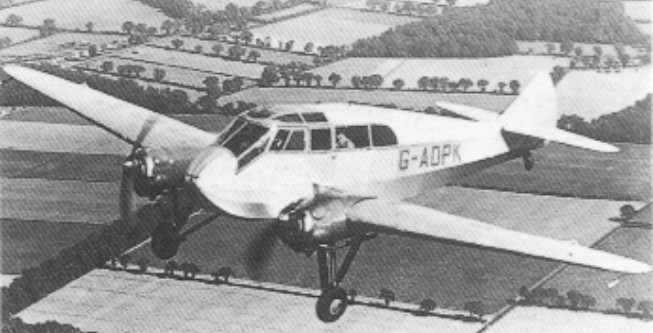
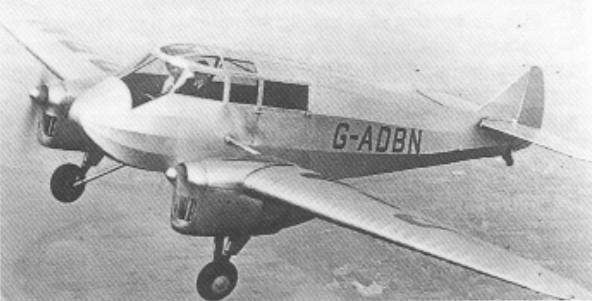
Under the guidance of F F Crocombe, the ST 10 was improved and in 1935 was relaunched as the ST 25 Jubilee. The year witnessed King George V’s Silver Jubilee and the mark numbers were ‘shunted’ on accordingly.
The two designers. Messrs J.H. Steiger and F.F. Crocombe, were responsible for the wing design that gave this aircraft its name — Monospar, or single spar. In the wing, a single transverse spar carries a number of main ribs spaced apart. The spar is braced to resist torsion, or twisting effect, by means of rigid struts on wire arranged in pyramid fashion. “Former” ribs are provided between the main ribs in order to strengthen the fabric when the wing is covered. The use of a fabric covering makes it easy and economical to maintain the wing in good condition, and provides a quick access to the framework for overhaul and repairs. As only one spar is used there is a considerable weight saving in the wing structure, which allows a greater payload. The same principle can be applied to the fuselage.

An improved Jubilee, the ST 25 de Luxe, appeared in 1936 with Niagara III engines. The 90hp Niagara III cruised at 3,000rpm with Rotax rotating armature ignition, turning wooden two blade 6.67 ft diameter fixed pitch mahogony Aircrew propellers through offset 2:1 reduction gears. Initial climb rate was 710ft/min and potential maximum ceiling some 16,000 feet. Sustained climb was nonetheless relatively slow, and it took up to an hour to reach 12,000 feet. Rudder and elevators were fitted with controllable trim tabs, and directional stability was improved with increased fin area. This could not cope with the asymmetric loads of single engine operation and a new twin tail unit was fitted to correct this problem. The resulting design was called the ST 25 Universal. Twenty nine Universals were built. Slightly heavier at 1,818 lb tare than the Jubilee, they were also slightly slower with a maximum speed of 131 mph. Overall dimensions and all up weight remained the same.
Two engine choices were offered. The 88 hp Pobjoy had a better power-to weight ratio than the low revving 90hp Cirrus alternative, giving a much shorter take off run. With an effective 88hp per motor and an all up aircraft weight of 2,750 lb, single engine performance was marginal.
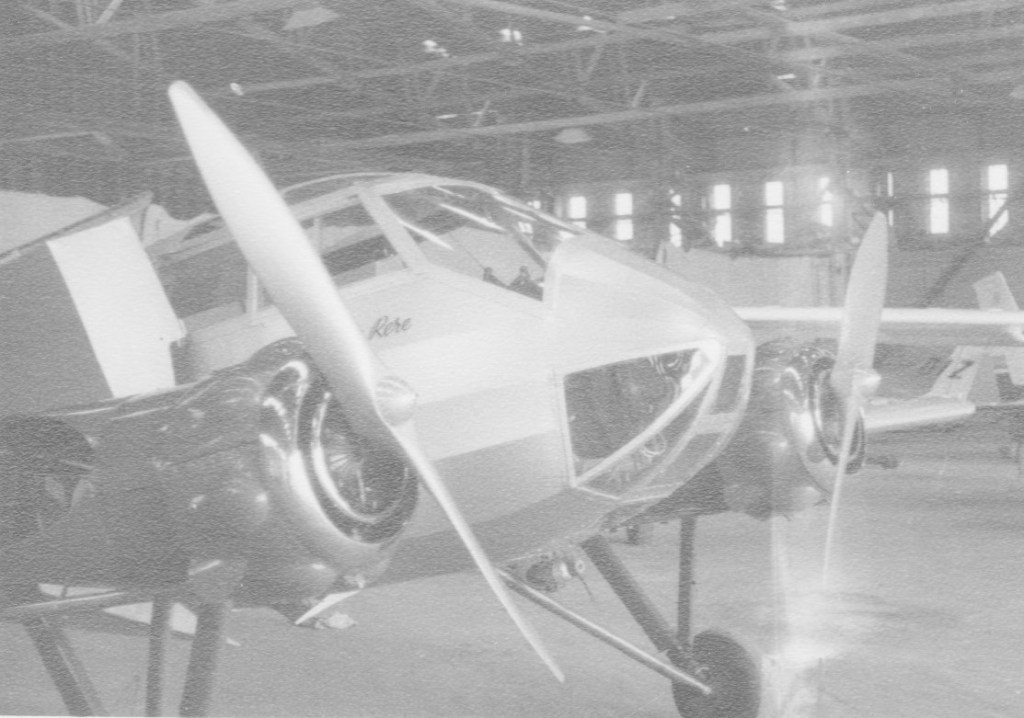
With 9 degrees of dihedral the wings are fabric-cover¬ed, and fold back flat along the fuselage. The seven cylinder radial engines have aluminium cowlings held in place by a single clip at the bottom of the cowl. A 2:1 reduction gear off-sets the propeller drive by about six inches from the centre. The twin exhaust pipes are chromium plated, which greatly enhance the general appearance of the aircraft. The fuel tank filling point is in the starboard side; the 44 gallon tank is situated below the two pilot’s seats. Provision is also made for an additional 12 gallon internal tank. The fixed undercarriage has three tubular legs extending from the nacelle to the axle. There are two rudders with the elevator extending the full width between them. The tailwheel has a large heavy duty spring to reduce landing shocks. Entry to the aircraft is by a door on the port side, and access to the two front seats is made easier by a hatch in the roof.
A total of 59 were produced circa 1936.
The STL.25 T42 was fitted with an experimental tricycle undercarriage.

Monospar ST-25 Tricycle Article
Engine: 2 x Pobjoy Niagara 88 hp
Wing span: 40 ft 2 in
Weight: 2650 lb
Max speed: 120 mph
Wing loading: 16 lbs/sq.ft
Range: 650 sm
Undercarriage: fixed
Seats: 4
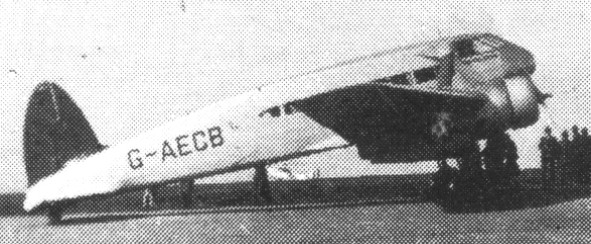
G-AECB was a General Aircraft Monospar ST-18 Croydon built at Hanworth in the UK in 1935 and flown out to Australia in July 1936. The 10 passenger seat aircraft, the only one of the type built, was abandoned on the Seringapatam Reef 175 miles north of Australia when it failed to make landfall across the Timor sea due to compass error on its return flight in October 1936.
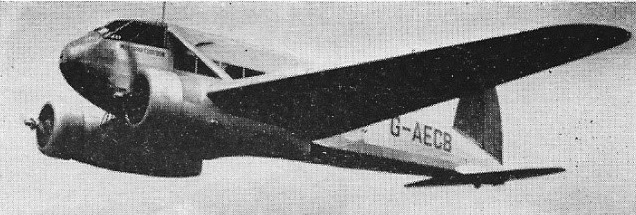
ST.18 G-AECB had c/n 201
The design of the ST-12 dates back to the mid-1920s with the development of a single-spar wing. In 1931 GAL was formed to develop the patented Monospar Co wing design. The ST-12 was a fixed undercarriage variant of the ST-10, re-engined with two 120 hp Gipsy Majors.
A production run of ten ST 12s (reverting to fixed undercarriage) was undertaken.
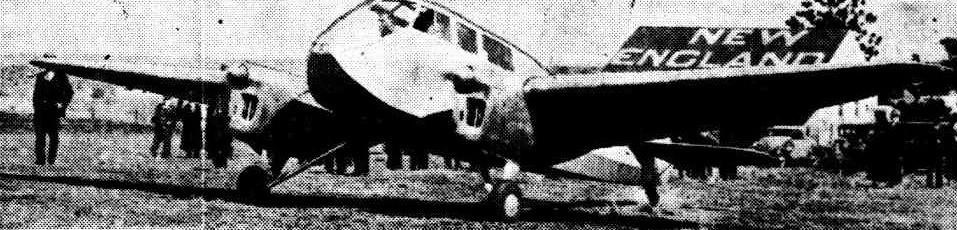
Engine: 2 x Gipsy Major, 130 hp
Wingspan: 40 ft 2 in
Length: 26 ft 4 in
AUW: 2875 lb
Max speed: 158 mph
Undercarriage: fixed
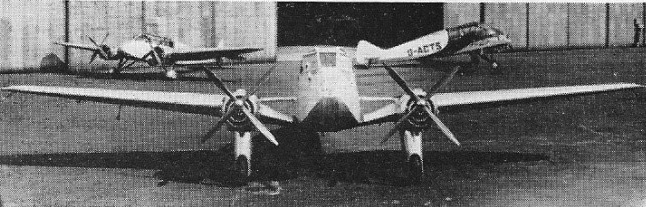
Only two ST 10 and two retractable ST 11s were built. ST 11s featured the de Havilland Gipsy Major of 130hp.
The ST.11/33 never carried British registration and was sold in Australia as VH-VAZ.
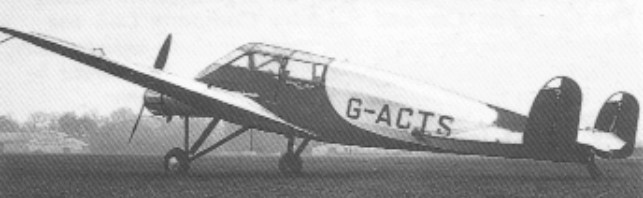
In 1934 a move to Hanworth was made and the prototype ST 10, G ACTS, was built. The 90hp Pobjoy Niagara powered ST 10 was a much refined version with redesigned forward fuselage.
With H M Schofield at the controls and the designer as passenger, G ACTS won the King’s Cup of July 1934 at 134mph.
Only one other ST 10 and two retractable ST 11s were built.
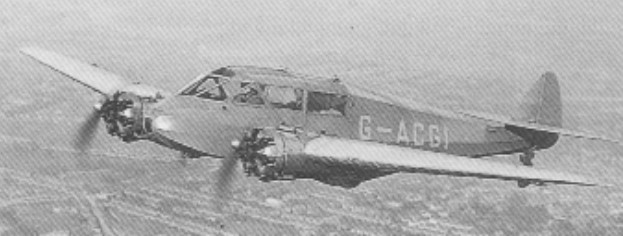
A version of the ST.4 with retractable undercarriage, the ST 6, attracted little interest, including a single conversion from an ST 4 Mk II.
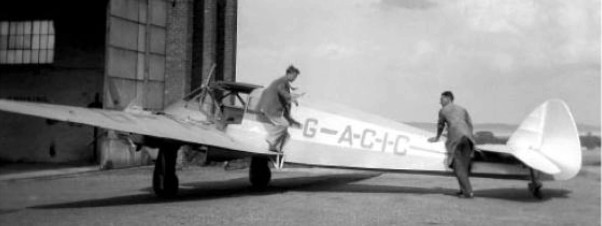
Only four were built.
Engine: 2 x Pobjoy
Undercarriage: retractable
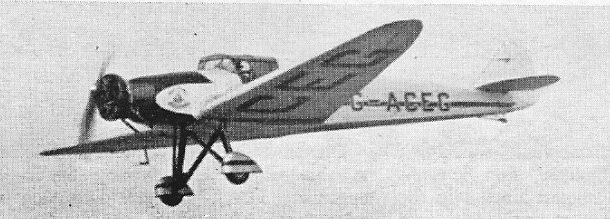
The Monospar ST.5 c/n 201 was a Spartan Clipper with a Mono-spar wing.
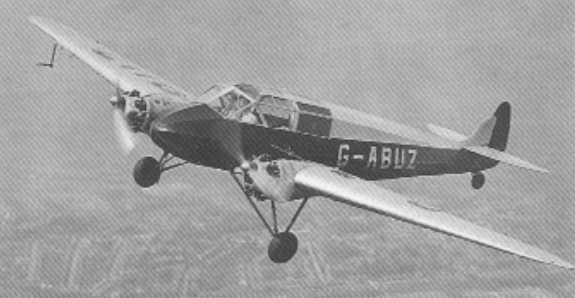
The prototype General Aircraft Monospar ST 4 was G ABUZ.
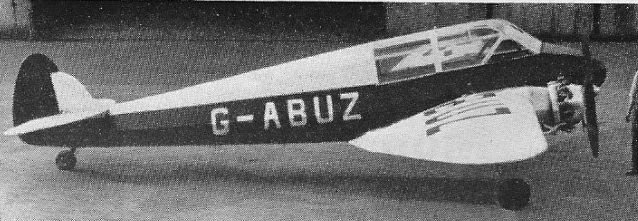
The ST 4 went into series production by the newly formed General Aircraft Ltd at Croydon. This four seat aircraft was powered by two 85hp Pobjoy radials and introduced the characteristic ‘Monospar’ look. Seven ST 4 Mk Is and 22 improved Mk IIs were built. A version with retractable undercarriage, the ST 6, attracted little interest, including a single conversion from an ST 4 Mk II.
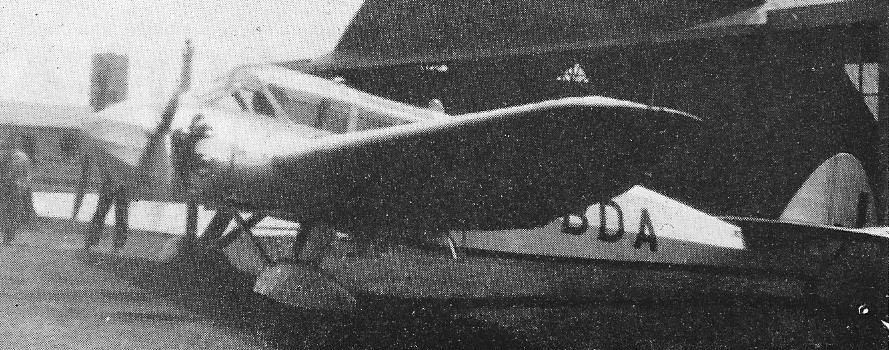
Ten S.T.4 Mk.II were sold abroad. On was sold in Japan to the Asahi Press Association in 1933, and delivered in the winter of 1933/34. Registered J-BBDA, the agent for the sale was the Aviation Department of Nosawa & Co,


