Back to Budd RB-1 Conestoga
Back to Budd RB-1 Conestoga
Back to Savary Biplane
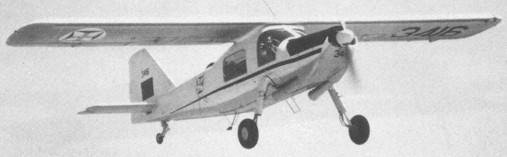
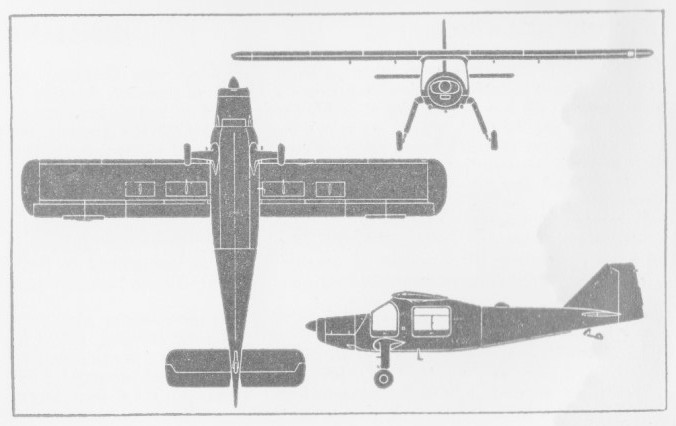
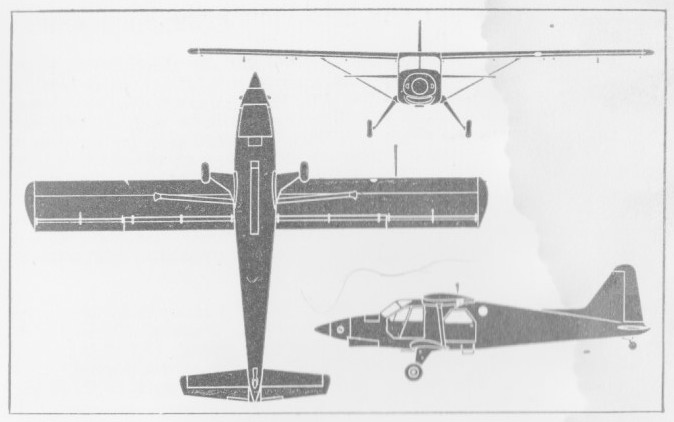
The Do 27 was West Germany’s first post-World War II production aircraft. It was designed in collaboration with CASA, who also licence-built some versions as the CASA C-127 – the type was first designed to a Spanish Military STOL requirement.
Originally built as a prototype in Spain, first flying on 8 April 1955, production was undertaken in Germany. The first production model flew on 17 October 1956.
The STOL capabilities of the tail-wheel undercarriage, along with excellent all-round vision were the Do 27’s selling points. It was often used in military applications for training, photographic, ambulance, agricultural and glider-towing purposes. Of the 620 built up until 1965, 432 were for West German military/paramilitary or civil consumption, whilst the remainder were widely exported. These were Do 27A and B (dual controls) with the GO-480-B1A6 engine.
The 1955 Do27 was powered with either the Lycoming GO-480 (275 hp) of the 340 hp supercharged variant.
Built in Spain as the C-127 and designated L9 and U9.
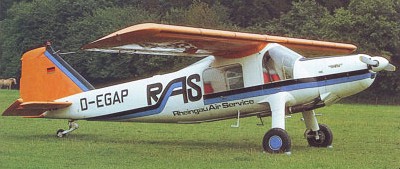
Although most Dornier aircraft are powered by Lycoming engines, the four seat Do 27 Q3 civil version of the Do 27 is Continental O 470 K (230 hp) powered. It has a loaded weight of 3,740 lb., a cruising speed of 124 m.p.h. and a range of 500 miles. The Do 27Q-5 having wider track undercarriage. The Do 27S-1 is a twin-float version of the Do 27Q-5.
The Do 27H-2 was powered by a 340 hp GSO-480-B1B6 engine.

Do 27A
Engine: 1 x Lycoming GO-480-B1A6, 270hp
Max take-off weight: 1850 kg / 4079 lb
Wingspan: 12.00 m / 39 ft 4 in
Wing area: 209 sq.ft.
Length: 9.60 m / 31 ft 6 in
Height: 2.80 m / 9 ft 2 in
Max. speed: 227 km/h / 141 mph
Ceiling: 3300 m / 10850 ft
Range: 1100 km / 684 miles
Crew: 1
Passengers: 5
Do-27Q-5
Engine: 270 hp Lycoming GO-480-B1A6
Max speed: 144 mph at SL
Cruise 75%: 131 mph at 6600 ft
Cruise 60%: 118 mph at 10,000 ft
Service ceiling: 10,800 ft
Range: 800 mi at 3,300 ft
Empty weight: 2365 lb
Loaded weight: 4080 lb
Wingspan: 39 ft 5 in
Length: 31 ft 6 in
Height: 9 ft 3 in
Wing area: 208.7 sq.ft
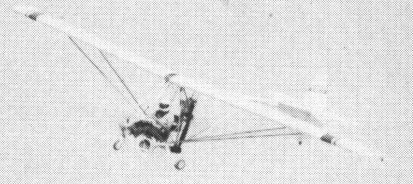
The Honcho is similar to the Nomad series except that the control surfaces are operated by pedals for the rudder, and a control wheel replaces the control stick. POWERPLANT: Unitrek 220-20 mounted in a pusher position aft and below the main wing. Otherwise similar to the Nomad. LANDING GEAR: Similar to the Nomad. Hydraulic dampened all-metal independent suspension tri-gear.
The Super Honcho is a conventional 3-axis strutted high-wing monoplane, differential ailerons, conventional aircraft construction, doped fabric.
The Honcho II is an open cockpit, 3-axis differential ailerons, strutted high-wing monoplane, all metal, double-surface dope-and-fabric wing.
All Delta Sailplane models are transportable on a trailer after removing the wings and tailplane.

In 1984 Delta Technology had completed all design modifications on all three of the company’s Nomad and Honcho ultralights.
”The Nomad 11, Honcho 11 and Super Honcho are now ready to go, and with the completion of our new production facility, we are prepared to deliver in two to four weeks,” a company spokesman said. ”Our intent is to offer a special introduction price on.a limited number of aircraft in order to stimulate interest and awareness in the newly completed models,” he added.
Delta also reduced the price on all three models by $1,000. The Honcho 11 was $3,980, the Nomad 11 $4,380 and the Super Honcho $4,980.
The Honcho 11 features all-metal construction, traditional, strutted wing design, energy-absorbing 360 degree roll-cage fuselage, conventional three-axis controls, strong wing structure with differential ailerons, hydraulically dampened independent suspension and a 10-year lifespan on double-surface wing coverings.
This offer was good until July 31, 1984; however, a limited quantity of aircraft were available. A production number and delivery date was to be issued upon receipt of payment in full or a 50 percent deposit.
DS-27A Honcho
Engine: Unitrek 220-20, 20 hp.
Engine displace¬ment, 13.3 cu.in.
Static thrust, 145 lbs.
Wingspan, 32 ft 2 in.
Wing area, 131.35 sq.ft.
Aspect ratio: 7.88:1.
Overall length, 17 ft 5 in.
Empty weight, 164 lbs.
Usable payload (include fuel), 230 lbs.
Wing loading, 3 lbs/sq.ft.
L/D power-off glide ratio, 13.6:1.
Cruise speed (85% power), 48 mph.
Stall speed, 26 mph.
Approach speed, 35 mph.
Flair speed, 28 mph.
Liftoff speed, 32 mph.
Takeoff roll distance, 150 ft.
Rate of climb, 340 fpm.
Fuel capacity, 2.5 USG.
Range at cruise, 106 sm.
DS-28 Super Honcho
Engine: Rotax 503 45 hp
Prop: 54 x 32 prop.
1984 PRICE: $5,980 kit.
Wingspan 32’2”.
Wing area 131.35 sq.ft.
Turn radius 7’.
Load factors +6.67, -3.5.
Vne 80 mph.
Nor¬mal cruise 58 mph.
Climb rate 1580 fpm.
Glide ratio 11.4:1.
Takeoff ground roll 60’.
DS-28A Super Honcho
Engine: Clydesdale, 28hp.
Propeller dia¬meter and pitch 53×26 inch, 1.35×0.67m.
Reduction ratio 2.3/1.
Power per unit area 0.21hp/sq.ft, 2.3hp/sq.m.
Wingspan, 32 ft 2 in.
Wing area, 131.35 sq.ft.
Aspect ratio: 7.88:1.
Overall length, 17 ft 5 in.
Height overall 5.83ft, 1.78 m.
Empty weight 218 lb, 99kg.
Max take off weight 407 lb, 184.6kg.
Payload 189 lb, 86kg.
Max wing loading 3.11 lb/sq.ft, 15.1kg/sq.m.
Max power loading 14.5 lb/hp, 6.6kg/hp.
Max level speed 85mph, 137kph.
Cruising speed 70mph, 113kph.
Stalling speed 26 mph, 42 kph.
Max climb rate at sea level 400ft/min, 2.0m/s.
Min sink rate 200ft/ min, 1.0 m/s.
Best glide ratio with power off 13.6/1.
Take off distance 50 ft, 15 m.
Theoretical ceiling 17,500 ft, 5330 m.
Range at average cruising speed 81 mile, 130km.
Honcho II
Engine: Rotax 277, 28 hp.
Prop 48” x 32”.
1984 PRICE: $4,980 kit.
Weight 206 lbs.
Wingspan 32’2”.
Wing area 131.35 sq.ft.
Load factors + 6.67, -2.67.
Vne: 70mph.
Max level cruise full power: 58 mph.
Normal cruise 50 mph.
Climb rate 700 fpm.
Glide ratio: 12.6:1.
Takeoff ground roll 95’.
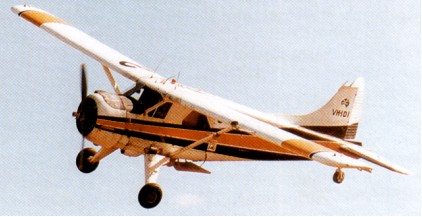
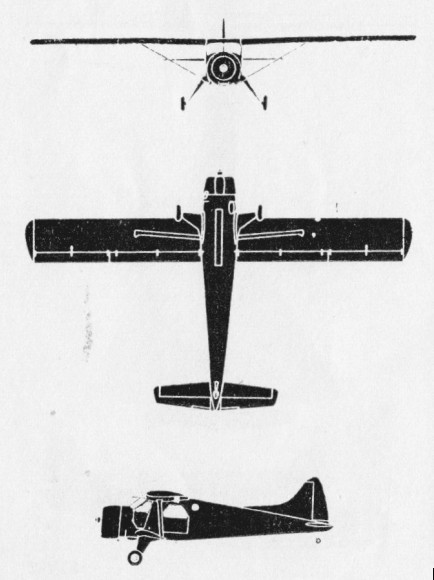
Design of the de Havilland DHC-2 Beaver light transport was started in Toronto during late 1946 as an aerial truck to operate in the Canadian bush. Powered by the Pratt & Whitney R-985 Wasp Junior supercharged 9-cylinder 450hp radial engine, instead of the 295hp Gipsy Queen 50 around which it was originally designed, it first flew on 16 August 1947, and the type was certificated in Canada during March 1948.
de Havilland Canada DHC-2 Beaver Article
The fuel consumption is around 95 litres an hour, nearly 21 Imperial gallons. It’s duration is not great, belly tanks; 35, 35, and 25 gallons two in the wingtips, 11.5 gallon each totalling 118 gallons for around 4.75 hours flying.
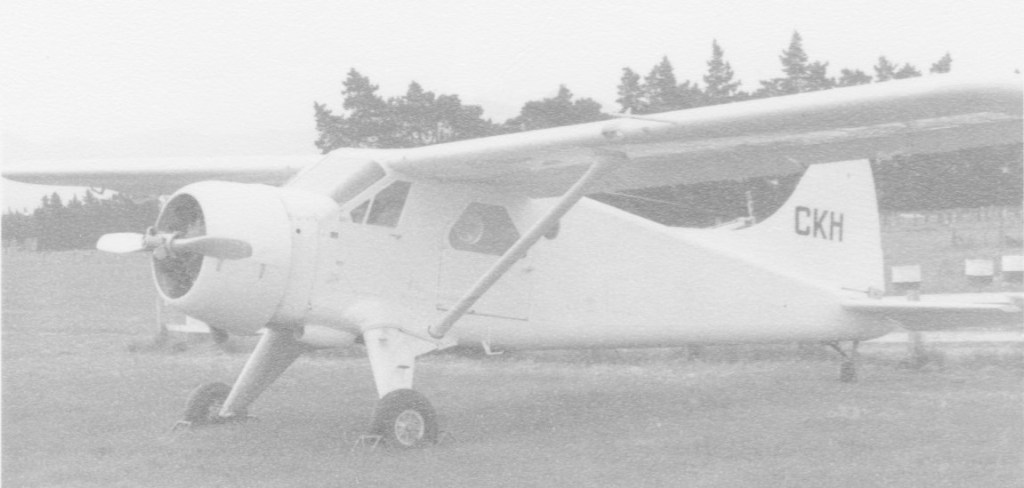
The two bladed Hamilton Standard constant speed propeller tends towards the noisy; often replaced in the US and Canada with a three bladed Hartzell propeller with a smaller diameter.
Floats – Normal climb calls for 15 degrees of flap, 2200 RPM and 35″Hg with 90 mph indicated. Maximum cruise is 145 mph and Vne is 180 mph. MAUW glide speed over the sea is given as 92 mph with flaps up and stall with flaps down is a modest 45 mph. When the flaps are fully down, the ailerons also droop 15 degrees.
Large-scale production had already begun, and the Beaver I was soon in service, powered by the Pratt & Whitney R-985 radial. Of the 1,657 Beaver Is built, 980 went to the US forces (YL-20 service test, L-20A and L-20B production aircraft, redesignated U-6 in 1962) and 46 to the British Army. Delivered to the UK during 1960 for the Army, with superb STOL performance and load carrying capability which included four bomb racks, each capable of carrying a 250 lb (113 kg) bomb but usually used in a liaison and reconnaissance role.

There followed a single Beaver II with the Alvis Leonides radial and, in 1964, a few 10-passenger Turbo-Beaver III powered by the 431kW United Aircraft of Canada Ltd (later Pratt & Whitney Aircraft of Canada) PT6A-6 or -20 turboprop. Most of the Turbo-Beavers were used by civil operators. In New Zealand one Beaver had an AiResearch TPE331 turboprop engine installed. Production ended in the mid-1960s.
DHC-2 Beaver Air Test December 1960
The Turbo-Beaver flew for the first time on 30 December 1963, the prototype employing he 1515th airframe. Compared with the earlier Beaver, the DHC-2 Mk. III has several modifications apart from replacement of its P & W piston-engine by a Canadian P & W turboprop, including a re-designed vertical tail. A 30in front fuselage extension brings the cockpit well forward of the wings and allows the installation of another pair of seats, bringing total capacity to nine, including crew.
Despite the cruise thirst of the 0.68 lb/eshp/h PT6A, fuel capacity of the Turbo-Beaver has been increased by the addition of a third fuselage tank, plus wing-tip auxiliaries. Under the centre section floor there.are now tanks containing 43, 56 and 20 Imp. gal from front to rear, plus 18 in each tip, totalling 155 Imp/gal in all.
Apart from a taller fin and a ventral strake, for better directional stability, the Turbo-Beaver is otherwise generally unchanged. It is also beefed up for its increased gross weight of 5370 lb and the longer nose enables two large doors to be provided for access to the crew compartment.
The standard Beaver throttle quadrant at top centre of the panel is retained, but the pitch vernier is moved below it. The power lever on the left has an idle gate and moves aft for reverse thrust. An unusual feature for a single-engined aircraft is a feathering facility, which is a characteristic of the PT6. After light-up, the starter is disengaged at 45-47 per cent gas generator rpm, and the Turbo-Beaver is taxied just in the Beta range, with about +6 degrees indicated on the blade angle gauge.
When the closed-circuit hydraulic hand pump is used to lower 30degrees of flap for take-off, the ailerons droop too. The Turbo-Beaver floats off the ground at about 45mph IAS, and climbed away at 65 mph, before being cleaned up for a 90 mph en route ascent.
At 1000 ft low-altitude cruise, the Turbo-Beaver speed is about 140 mph IAS, at 26 lb/sq.in and 85 per cent propeller rpm. The Beaver will maintain its 135-140 mph cruising speed just below the yellow line of Vno, with only about two gallons per hour variation in fuel flow between sea level and about 12,000 ft on 290 hp from the 578 eshp PT6A, using about 32 Imp. gal/h.
Clean, continued aft pressure on the control wheel with power off simply results in a nose-high sink at a minimum flight speed of about 68 mph with full lateral control, and an accompanying rate of descent of about 1500 ft/min. Application of power simply cushions the descent, and the same effect accompanies extension of flap. Slight tail bullet can be felt with full flap but, with the wheel hard back again, the Beaver simply mushes down at about 45 mph IAS.
About 40 Turbo-Beavers had been sold by 1966, built as new aircraft, although DHC was also offering conversions of customers’ piston-engined aircraft for around $60000. F.a.f. price of a new Turbo-Beaver was $108 575, and some used piston-engined versions are reported as much as $50 000, which is more than their original selling cost.

Basic accommodation was provided for a pilot and seven passengers, the latter replaceable by up to 680kg of freight. The Beaver was able to operate on wheel, ski, float or amphibious float landing gears.
An approved kit involves an all new and lengthened (by 4 ft 2 in) wing, including an NACA airfoil, a large slotted fowler flap and cuffs on the outboard leading edge, increases the gross weight by 270 lbs to 5370 lbs.
Airtech Canada of Peterborough, Ontario, has converted a number of Beavers to take the 447kW Polish PZL-3S seven-cylinder air-cooled radial piston engine driving a PZL four-bladed propeller.
A total of 1692 were built.
The newly independent Kenya built a small air force, assisted by British advisors. The first planes to be acquired were DHC Beavers and Caribou. Kenyan pilots were trained by the RAF in Britain.
DHC-2 Beaver I
Engine: 1 x Pratt & Whitney R-985-AN1 Wasp Junior radial, 336kW / 444 hp
Max take-off weight: 2313 kg / 5100 lb
Empty weight: 1293 kg / 2851 lb
Wingspan: 14.63 m / 48 ft 0 in
Length: 9.22 m / 30 ft 3 in
Height: 2.74 m / 9 ft 0 in
Wing area: 23.23 sq.m / 250.05 sq ft
Max. speed: 262 km/h / 163 mph
Cruise speed: 230 km/h / 143 mph
Service ceiling: 5485 m / 18000 ft
Range: 1180 km / 733 miles
Crew: 2+4
L-20
Engine: Pratt & Whitney R985-AN-1 or -AN-3 Wasp Junior, 450 hp
Wingspan: 48 ft
Length: 30 ft. 3 in.
Loaded weight: 5,100 lb.
Max. speed: 163 m.p.h.
Ceiling: 19,000 ft.
Typical range: 445 miles at 140 mph at 5,000 ft
Seats: 7.
DHC-2 Mk. III
Engine: 550 shp Pratt & Whitney PT-6A turboprop
Span, 48 ft (14.63 m)
Length, 35.25 ft (10.74 m)
Height, 11 ft (3.35 m)
Wing area, 250 sq.ft (23,23 sq.m)
Equipped operational weight. 2990 lb (1355 kg)
Max. gross, 5370 lb (2435 kg)
Max. payload, 1925 lb (872 kg)
Max speed: 177 mph
Max. cruise at 10 000 ft (3050 m), 142 kt (262 km/h)
Econ cruise: 146 mph at 5000 ft
Initial climb, 1185 ft/min (6 m/sec)
Service ceiling, 23,500 ft (7160 m)
STO distance to 50 ft (15 m), 1030 ft (314 m)
Short landing from 50 ft (15 m), 870 ft (265 m)
Range with max. payload, 120 nm (225 km)
Max. range. 560 miles (1037 km)
Airtech Canada Beaver
Engine: PZL, 600 hp.
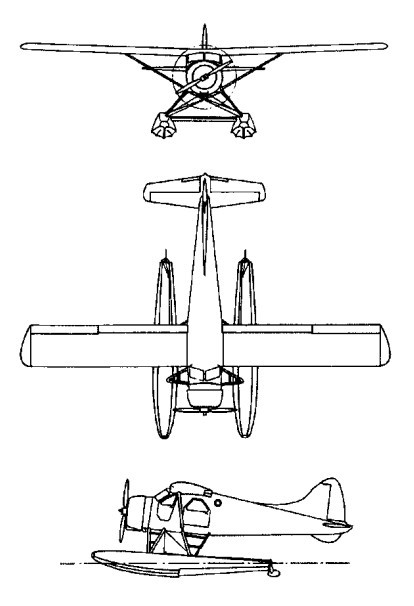
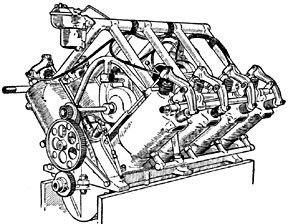
The 1911 Curtiss L aero-engine was the winner at Rheims, France, competitions in 1903.
The eight-cylinder V engine was water cooled, of 502.64ci, and produced 80hp@1500rpm with a dry weight of 285 lb.
Back to Curry Wot

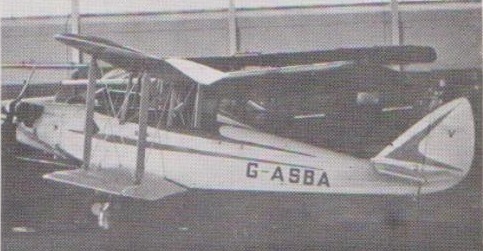
In December 1966 produced a “stretched” version of the de Havilland D. H. 104 Dove with AiResearch turboprop engines. It was called the Carstedt Jet Liner 600 and had 18 seats; a small number were built for commuter airline use. Company acquired by Texas Airplane Manufacturing Co Inc. in mid-1970s.



 All Aero