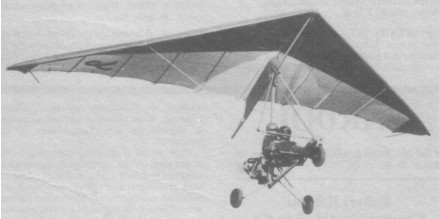
Air Concept Safari Bi

Safari Bi-FR440/Alpha 20

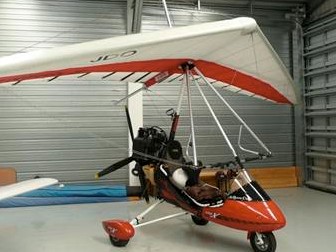
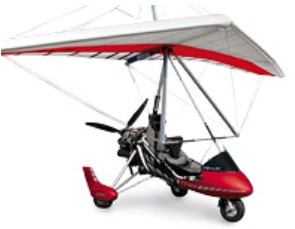
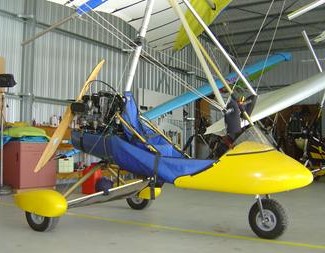
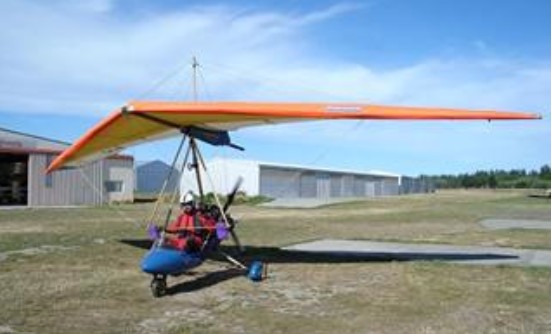
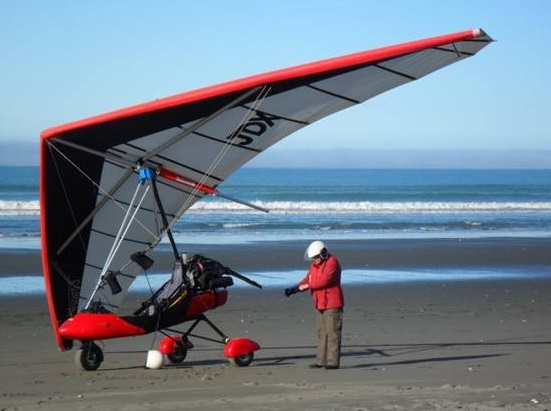
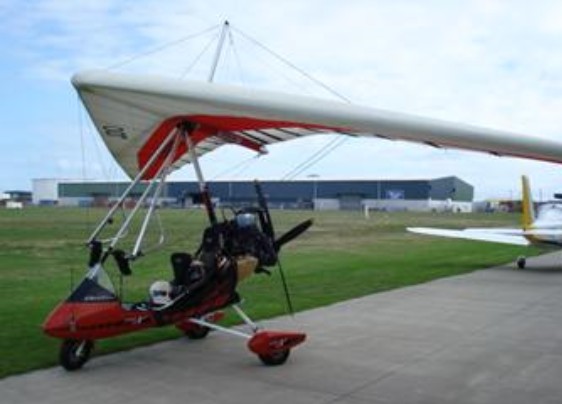
The Air Concept Safari Bi FR440/Alpha 18 is a tandem two seat single engined flex wing aircraft with weight shift control. Rogallo wing with fin. Pilot suspended below wing in trike unit, using bar to control pitch and yaw/roll by altering relative positions of trike unit and wing. Wing braced from above by kingpost and cables, from below by cables; floating cross tube construction with double surface on half chord, enclosing cross tube; pre formed ribs. Undercarriage has three wheels in tricycle formation; no suspension on any wheels. Push right go left nosewheel steering independent from yaw control. Optional brake on nosewheel. Aluminium tube trike unit, without pod. Engine mounted below wing driving pusher propeller.
The Safari Bi was designed along the same principles as the single seater trike units from Air Concept, also using rectangular section Duralumin 6061T5 spars measuring 2.4 x 1.6 inch (60 x 40mm). As with virtually all tandem weight shift machines, the control bar is as easy to handle from the front seat as from the rear, but the Safari Bi takes dual control a stage further, as the throttles are accessible to both occupants and the nosewheel steering is twinned to the rear. The Safari Bi/Alpha 18 model uses a 190sq.ft (17.6 sq.m) wing which differentiates it from the two other two seaters offered from this manufacturer. As indicated from the FR440 part of the name, it is equipped with a Fuji Robin EC44 of nominal 440 cc capacity. The choice is left to the purchaser as to which version to fit either the EC44PM of 50 hp with electric start, or the EC44 2PM of 53 hp but hand started. Folded, the trike unit measures 6.7 x 2.8 x 3.4 ft (2.00 x 0. 80 x 1.00 m) and the wing 19.9 x 1.0 x 1.0 ft (6.00 x 0.30 x 0.30 m). Options include, apart from the choice of engine type, a nosewheel brake, a supplementary fuel tank and fairings.
The Safari Bi FR440/Alpha 20 is a combination of the Safari Bi FR440 trike unit with the Alpha 20 wing variations on the same theme but a system which offers an excellent choice to the customer. The EC44 2PM engine is optional.
The Safari Bi FR330/Alpha 20 is basically similar to the Safari Bi FR440/Alpha 18 but with a lower power engine and the Alpha 20 wing with a larger surface area. The structure of this trike unit is the same. The Robin EC34PM can be had with or without electric start and, married to a 214 sq.ft (19.8 sq.m) Alpha 20 wing, gives a lower stall speed than the Safari Bi FR440/Alpha 18 at any given angle of incidence.
Available ready to fly or alternatively as a kit, the kit includes all the parts and accessories necessary to build the trike unit and requires only a drill and a few spanners to assemble it. All cutting, piercing, preparation of cables and other operations which could be hard for an amateur are done by the manufacturer. Detailed plans come with each kit.

Safari Bi FR440/Alpha 18
Engine: Robin EC44, 50hp at 6500rpm
Propeller diameter 54 inch, 1.38 m
Toothed belt reduction, ratio 2.2/1
Max static thrust 261 lb, 118 kg
Power per unit area 0.26hp/sq.ft, 2.8 hp/sq.m
Fuel capacity 2.6 US gal, 2.2 Imp gal, 10.0 litre in main tank; 6.1 US gal, 5.1 Imp gal, 23.0 litre in res
Length overall 9.8ft, 3.00m
Height overall 9.8ft, 3.00m
Wing span 32.2ft, 9.80m
Chord at root 8.2ft, 2.50 m
Chord at tip 3.4ft, 1.00m
Dihedral 4 degs
Nose angle 122 degs
Total wing area 190 sq.ft, 17.6 sq.m
Wing aspect ratio 5.5/1
Wheelbase 5.7ft, 1.70 m
Nose¬wheel diameter overall 16 inch, 40cm
Main wheels diameter overall 16 inch, 40 cm
Empty weight 254 lb, 115kg
Max take off weight 773 lb, 350kg
Payload 519 lb, 235kg
Max wing loading 4.07 lb/sq.ft, 20.0 kg/sq.m
Max power loading 15.5 lb/hp, 7.0kg/hp
Load factors; +6.0, 3.0 ultimate
Max level speed 53 mph, 85 kph
Never exceed speed 56 mph, 90kph
Max cruising speed 37mph, 60kph
Economic cruising speed 34mph, 55kph
Stalling speed 23 mph, 38 kph
Max climb rate at sea level 500 ft/min, 2.5 m/s
Min sink rate 370 ft/min at 28 mph, 1.9 m/s at 45 kph
Best glide ratio with power off 8/1 at 29 mph, 47 kph
Take off distance 115 ft, 35 m
Land¬ing distance 130 ft, 40 m
Service ceiling 10,000 ft, 3050 m
Range at average cruising speed 100 mile, 160 km

Safari Bi FR440/Alpha 20
Engine: Robin EC44, 50hp at 6500rpm
Propeller diameter 54 inch, 1.38 m
Toothed belt reduction, ratio 2.2/1
Max static thrust 261 lb, 118 kg
Power per unit area 0.23hp/sq.ft, 2.3 hp/sq.m
Fuel capacity 2.6 US gal, 2.2 Imp gal, 10.0 litre in main tank; 6.1 US gal, 5.1 Imp gal, 23.0 litre in res
Length overall 9.8ft, 3.00m
Height overall 9.8ft, 3.00m
Wing span 32.8ft, 10.0m
Chord at root 8.2ft, 2.50 m
Chord at tip 3.4ft, 1.00m
Dihedral 4 degs
Nose angle 122 degs
Total wing area 214 sq.ft, 19.8 sq.m
Wing aspect ratio 5.1/1
Wheelbase 5.7ft, 1.70 m
Nose¬wheel diameter overall 16 inch, 40cm
Main wheels diameter overall 16 inch, 40 cm
Empty weight 254 lb, 115kg
Max take off weight 773 lb, 350kg
Payload 519 lb, 235kg
Max wing loading 3.61 lb/sq.ft, 17.7 kg/sq.m
Max power loading 15.5 lb/hp, 7.0kg/hp
Load factors; +6.0, 3.0 ultimate
Max level speed 47 mph, 75 kph
Never exceed speed 56 mph, 90kph
Max cruising speed 31mph, 50kph
Economic cruising speed 28mph, 45kph
Stalling speed 21 mph, 33 kph
Max climb rate at sea level 500 ft/min, 2.5 m/s
Min sink rate 310 ft/min at 25 mph, 1.6 m/s at 40 kph
Best glide ratio with power off 8/1 at 27 mph, 44kph
Take off distance 100ft, 30 m
Land¬ing distance 100 ft, 30 m
Service ceiling 10,000 ft, 3050 m
Range at average cruising speed 93 mile, 150km

Safari Bi FR330/Alpha 20
Engine: Robin EC34Pm, 32 hp at 6500 rpm
Propeller diameter 54 inch, 1.38 m
Toothed belt reduction, ratio 2.0/1
Max static thrust 203 lb, 92 kg
Power per unit area 0.15hp/sq.ft, 1.6hp/sq.m
Fuel capacity 2.6 US gal, 2.2 Imp gal, 10.0 litre in main tank; 6.1 US gal, 5.1 Imp gal, 23.0 litre in res
Length overall 9.8ft, 3.00m
Height overall 9.8ft, 3.00m
Wing span 32.8ft, 10.0m
Chord at root 8.2ft, 2.50 m
Chord at tip 3.4ft, 1.00m
Dihedral 4 degs
Nose angle 122 degs
Total wing area 214 sq.ft, 19.8 sq.m
Wing aspect ratio 5.1/1
Wheelbase 5.7ft, 1.70 m
Nose¬wheel diameter overall 16 inch, 40cm
Main wheels diameter overall 16 inch, 40 cm
Empty weight 221 lb, 100 kg
Max take off weight 662 lb, 300kg
Payload 441 lb, 200 kg
Max wing loading 3.09 lb/sq.ft, 15.2kg/sq.m
Max power loading 20.7 lb/hp, 9.4kg/hp
Load factors; +6.0, 3.0 ultimate
Max level speed 44 mph, 70 kph
Never exceed speed 56 mph, 90 kph
Max cruising speed 31 mph, 50 kph
Economic cruising speed 28 mph, 45 kph
Stalling speed 20 mph, 32 kph
Max climb rate at sea level 300 ft/min, 1.5 m/s
Min sink rate 300 ft/min at 24 mph, 1.5 m/s at 40 kph
Best glide ratio with power off 8/1 at 28 mph, 45 kph
Take off distance 100 ft, 30 m
Land¬ing distance 100 ft, 30 m
Service ceiling 10,000ft, 3050 m
Range at average cruising speed 124 mile, 200 km

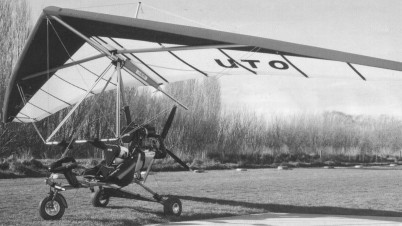
Air Concept Safari            

Safari GT-FR250/Alpha

The range offered by Air Concept in 1982 was best understood by considering three trike units. First is a tubular structure single seat trike unit, the Safari, second comes the polyester Safari GT single seater and finally the two seater Safari Bi. With each trike unit the firm also supplies an appropriate flex¬wing, such as the Alpha or Alpha Racer for the single seaters and the Alpha 18, Alpha20, or Centaure for the two seaters. Each assem¬bly takes its name from its components, for example Safari/Alpha, the basic model, which we detail below. The suffix FR250 indicates which motor has been used, a Fuji Robin EC25PS in this case.
The Safari FR250/Alpha is a single seat single engined flex wing aircraft with weight shift control. Rogallo wing with keel pocket. Pilot suspended below wing in trike unit, using bar to control pitch and yaw/roll by altering relative positions of trike unit and wing. Wing braced from above by kingpost and cables, from below by cables; floating cross tube construction with double surface on half chord, enclosing cross tube; pre formed ribs. Undercarriage has three wheels in tricycle formation; no suspension on any wheels. Push right go left nosewheel steering independent from yaw control. Optional brake on nosewheel. Aluminium tube trike unit, without pod. Engine mounted below wing driving pusher propeller. The single seater Safari FR250/Alpha is transportable on a roof rack or trailer, the wing when folded measures 19.8 x 1.0 x 1.0ft (6.00 x 0.30 x 0.30 m).
The Safari GT FR250/Alpha and Safari GTL FR250/Alpha are the same as the Safari FR250/Alpha except: no suspension on nosewheel and glass fibre suspension on main wheels. Glass fibre trike unit, partially enclosed.
The Safari GT trike unit is entirely moulded in polyester with the exception of the vertical mast carrying the wing attachment, which is made of 2.20 x 0.08 inch (54 x 2mm) round section Duralumin AU4G1T4. The pod and its windscreen protect the pilot well from the vagaries of the weather. The only drawback to a faired in trike is that it necessitates the use of a trailer for transport; this trike for instance has a volume even without its wing of 6.6 x 2.0 x 3.4 ft (2.00 x 0.50 x 1.00 m). The machine is also offered in the Safari G TL version which benefits from all the options available for the basic GT model, these being tow hook, faired main undercarriage, wheel spats and propeller spinner. The trike unit ‘fuselage’ with windscreen and the three wheel spats were available separately from Eole 2000.

Safari FR250/Alpha
Engine: Robin EC25PS, 18.5 hp at 6000 rpm
Prop¬eller diameter 54 inch, 1.37m
V belt reduction, ratio 2.0/1
Max static thrust 139 lb, 63 kg
Power per unit area 0.10 hp/sq.ft, 1.1 hp/sq.m
Fuel capacity 2 US gal, 2.2 Imp gal, 10.0 litre in main tank; 6. US gal, 5.1 Imp gal, 23.0 litre in reserve
Length overall 9.8ft, 3.00m
Height overall 9.8ft, 3.00m
Wing span 32.2ft, 9.80m
Chord at root 6.7 ft, 2.0 m
Chord at tip 2.3 ft 0.70 m
Dihedral 4 degs
Nose angle 122 degs
Total wing area 181 sq.ft, 16.8 sq.m
Wing aspect ratio 5.7/1
Wheelbase 5.7ft, 1.70m
Nosewheel diameter overall 10 inch, 26 cm
Main wheels diameter overall 12 inch, 30 cm
Empty weight 170 lb, 77kg
Max take off weight 442 lb, 200kg
Payload 272 lb, 123kg
Max wing loading 2.44 lb/sq.ft, 11.9 kg/sq.m
Max power loading 23.9 lb/hp, 11.1kg/hp
Load factors; +6.0, 3.0 ultimate
Max level speed 44mph, 70kph
Never exceed speed 56mph, 90kph
Max cruising speed 31mph, 50kph
Economic cruising speed 28mph, 45kph
Stalling speed 17 mph, 28 kph
Max climb rate at sea level 400 ft/min, 2.0 m/s
Min sink rate 280 ft/min at 24 mph, 1.4 m/s at 40 kph
Best glide ratio with power off 8/1 at 27 mph, 43 kph
Take off distance 65 ft, 20 m
Landing distance 100 ft, 30 m
Service ceiling 10,000 ft, 3050 m
Range at average cruising speed 155 mile, 250 km

Safari GT FR250/Alpha
Engine: Robin EC25PS, 18.5 hp at 6000 rpm
Prop¬eller diameter 54 inch, 1.37m
V belt reduction, ratio 2.0/1
Max static thrust 139 lb, 63 kg
Power per unit area 0.10 hp/sq.ft, 1.1 hp/sq.m
Fuel capacity 2 US gal, 2.2 Imp gal, 10.0 litre in main tank; 6. US gal, 5.1 Imp gal, 23.0 litre in reserve
Length overall 9.8ft, 3.00m
Height overall 9.8ft, 3.00m
Wing span 32.2ft, 9.80m
Chord at root 6.7 ft, 2.0 m
Chord at tip 2.3 ft 0.70 m
Dihedral 4 degs
Nose angle 122 degs
Total wing area 181 sq.ft, 16.8 sq.m
Wing aspect ratio 5.7/1
Wheelbase 5.3ft, 1.60m
Nosewheel diameter overall 12 inch, 30 cm
Main wheels diameter overall 12 inch, 30 cm
Empty weight 166 lb, 75kg
Max take off weight 441 lb, 200kg
Payload 276 lb, 125 kg
Max wing loading 2.44 lb/sq.ft, 11.9 kg/sq.m
Max power loading 23.8 lb/hp, 11.1kg/hp
Load factors; +6.0, 3.0 ultimate
Max level speed 47 mph, 75 kph
Never exceed speed 56 mph, 90kph
Max cruising speed 34mph, 55kph
Economic cruising speed 28mph, 45kph
Stalling speed 17 mph, 28 kph
Max climb rate at sea level 400 ft/min, 2.0 m/s
Min sink rate 240 ft/min at 24 mph, 1.2 m/s at 40 kph
Best glide ratio with power off 9/1 at 27 mph, 43 kph
Take off distance 65 ft, 20 m
Landing distance 100 ft, 30 m
Service ceiling 10,000 ft, 3050 m
Range at average cruising speed 155 mile, 250 km

Safari GTL FR250/Alpha
Engine: Robin EC25PS, 18.5 hp at 6000 rpm
Prop¬eller diameter 54 inch, 1.37m
V belt reduction, ratio 2.0/1
Max static thrust 139 lb, 63 kg
Power per unit area 0.10 hp/sq.ft, 1.1 hp/sq.m
Fuel capacity 2. US gal, 2.2 Imp gal, 10.0 litre in main tank; 6. US gal, 5.1 Imp gal, 23.0 litre in reserve
Length overall 9.8ft, 3.00m
Height overall 9.8ft, 3.00m
Wing span 32.2ft, 9.80m
Chord at root 6.7 ft, 2.0 m
Chord at tip 2.3 ft 0.70 m
Dihedral 4 degs
Nose angle 122 degs
Total wing area 181 sq.ft, 16.8 sq.m
Wing aspect ratio 5.7/1
Wheelbase 5.3ft, 1.60m
Nosewheel diameter overall 12 inch, 30 cm
Main wheels diameter overall 12 inch, 30 cm
Empty weight 166 lb, 75kg
Max take off weight 441 lb, 200kg
Payload 276 lb, 125 kg
Max wing loading 2.44 lb/sq.ft, 11.9 kg/sq.m
Max power loading 23.8 lb/hp, 11.1kg/hp
Load factors; +6.0, 3.0 ultimate
Max level speed 47 mph, 75 kph
Never exceed speed 56 mph, 90kph
Max cruising speed 34mph, 55kph
Economic cruising speed 28mph, 45kph
Stalling speed 17 mph, 28 kph
Max climb rate at sea level 400 ft/min, 2.0 m/s
Min sink rate 240 ft/min at 24 mph, 1.2 m/s at 40 kph
Best glide ratio with power off 9/1 at 27 mph, 43 kph
Take off distance 65 ft, 20 m
Landing distance 100 ft, 30 m
Service ceiling 10,000 ft, 3050 m
Range at average cruising speed 155 mile, 250 km

Air Concept

Air Concept is an enterprise created by Gilles Bru who, although he only started the company in December 1982, is fairly well known to hang glider pilots. For five years he has collaborated in the manufacture of hanggliders from the Eole 2000 company which, while not actually building trikes itself, contributes to the distribution of Air Concept products. Gilles Bru offers a complete range of single seat and two seat weight shift machines, with the accent being on safety and robustness. Significantly, he is one of the very first manufacturers to offer a one year warranty on engine construction faults.
1982: Air Concept, Zone Industrielle Lavilledleu, 07170 Vifieneuve de Berg, France.

Airborne Windsports X Series / Outback / Redback

Redback 503

The 65 hp Rotax 582 DCDI powered X-Series Outback was originally designed for rugged Alaskan conditions, the big tundra tire option with the Wizard 3 wing (also available with the Streak 2B) giving amazing landing options. The Outback in this configuration also makes a hang glider or banner tug. Floats are available for this model in some countries where certification allows.
The X-Series Outback is available with the slower Wizard-3 wing or the faster Streak-2B wing. The Outback S comes with the Streak 2B wing in place of the Wizard 3. All other features and options are the same.
The X-Series Redback is based on the Edge X model, but is the basic version which comes with less equipment, allowing a higher load. It utilises the Wizard II wing and a four blade Aerofibre prop. The 50 hp Rotax 503 DC powered Redback is a very capable two seater trike with the tundra undercarriage option available. A low cost package, this trike offers simplicity and light weight allowing for a higher pilot passenger weight.

Flying the Airborne Windsports Redback

The Wizard-3 wing is an all-rounder with short field landing capability and is often used for towing hang gliders. The Wizard-3 coupled with the X-Series Redback microlight makes for an excellent aerial photography platform, as it offers the pilot and passenger less restricted views than fully faired Airborne microlights.
The X-Series Redback is Australian Civil Aviation Safety Authority Approved and tested to 6g positive and 3g negative under strict government control.

Outback Wizard
Vne (IAS): 54 kts / 62 mph
Manoeuvring speed (IAS): 54 kts / 62 mph
Trim Speed (middle hole) (IAS): 30-36 kt / 35-41 mph)
Stall Speed Power Off knots (IAS)
23-28 kt / 27-33 mph
Take Off Safety Speed (IAS): 31-37 kt / 36-43 mph
Nominated approach speed (IAS): 31-37 kt / 35-43 mph
Maximum Level Speed (IAS): 50 kt / 57 mph
Max Cross wind: 11-14 kt / 12-16 mph
Climb Rate at take off safety speed: 430 fpm
Cruising Speed Fwd CG knots (IAS)
40-45 kt / 46-52 mph
Sink Rate at cruising speed: 450 fpm
Sink Rate at Vne: 904 fpm
Glide Ratio: 10:1
Take Off Distance: 240 m / 787 ft
Landing Distance: 210 m / 689 ft
Min airstrip length: 310 m / 1017 ft
Max wind operating conditions: 20 kt /23 mph
Wing weight: 45 kgs / 99 lb
Trike empty weight: 118 kg / 260 lb
Empty weight: 165 kg / 363.7 lb
Max. take off weight: 401 kg / 884 lb
Wing span: 9.96 m
Wing area: 17.6 sq m
Aspect ratio: 5.6:1
Nose angle: 121 degs
No. of seats: 2
Fuel tank capacity: 44 lt / 11.62 gallons

Redback
Engine: Rotax 503
Vne Knots (IAS): 54 kt / 62 mph
Manoeuvring speed Knots (IAS): 54 kt / 62 mph
Trim Speed (middle hole) (IAS): 30-36 kt / 35-41 mph
Stall Speed Power Off (IAS): 23-28 kt / 27-33 mph
Take Off Safety Speed knots (IAS)
31-37 kt / 36-43 mph
Nominated approach speed knots (IAS)
31-37 kt / 35-43 mph
Maximum Level Speed (IAS): 50 kt / 57 mph
Max Cross wind: 11-14 kt / 12-16 mph
Climb Rate at take off safety speed: 430 fpm
Cruising Speed Fwd CG (IAS): 40-45 kt / 46-52 mph
45 (52 mph)
Sink Rate at cruising speed: 450 fpm
Sink Rate at Vne: 904 fpm
Glide Ratio: 10:1
Take Off Distance: 240 m / 787 ft
Landing Distance: 210 m / 689 ft
Min airstrip length: 310 m / 1017 ft
Max wind operating conditions: 20 kt / 23 mph
Wing weight: 45 kg / 99 lb
Trike empty weight: 118 kg / 260 lb
Total empty weight: 165 kg / 363.7 lb
Max. take off weight: 401 kg / 884 lb
Wing span: 9.96 m
Wing area: 17.6 sq m
Aspect ratio: 5.6:1
Nose angle: 121 degs
No. of seats: 2
Fuel tank capacity: 44 lt / 11.62 gallon

Airborne Windsports X-series Classic

Classic trike / Streak 2 wing

Based on the Edge X base the X-Series Classic is a proven reliable and robust aircraft. Powered by the Rotax 582 65hp DCDI engine, the X-Series Classic offers the comfort of the fibreglass fairing, electric start and oil injection as standard features.
The Airborne X-Series Classic is quality built in accordance with Australian Civil Aviation Authority regulations.

X-Series Classic
Engine: Rotax Bombardier 912 UL 2, 80 hp
Reduction Ratio: 2.43:1
Prop: Bos3 68X58_SL ground adjustable 68 in
Pitch: 20 +/- 0.5 deg @ radius of 24″
MTOW: 450 kg / 992 lb
Ultimate load: +6g / -3g
Flight limits: +4g / -0g
Total max crew weight: 200 kg / 440 lb
Pilot weight Front: 55-100 kg / 121-220 lb
Pilot weight Rear: 0-100 kg / 0-220 lb
Empty weight: 260 kg / 573 lb
Wing Span: 9.97m / 32.7 ft
Wing Area: 13.5 sq m / 146 sq ft
Aspect Ratio: 6.6
Wing Weight: 50 kg / 110.23 lb
Overall Height: 3.65 m / 11.98 ft
Trike Width: 1.91 m / 6.27 ft
Trike Length: 2.745 m / 9.01 ft
Wheel Track: 1.7 m / 5.58 ft
Wheel Base: 1.89 m / 6.20 ft
Trike Height: 2.53 m / 8.30 ft
Cockpit Width: 0.7 m / 2.30 ft
Wing (Packed) Length: 5.6 m / 18.37 ft
Wing Length (Short Packed): 4.2 m / 13.78 ft
VNE: 85 kt / 157 kph / 98 mph
Cruise: 65 kt / 120 kph / 75 mph
Stall: 35 kt / 65 kph / 40 mph
Best Climb Rate: 825 ft/min / 4.2 m/sec
Best Climb Speed: 49 kt / 91 kph / 57 mph
Take off Distance to 50 ft: 247 m / 810 ft
Landing Distance from 50ft: 325 m / 1066 ft
Descent Rate 54 kt: 770 ft/min / 3.9 m/sec
Fuel Capacity: 70 lt / 18.5 USG
Range @ Cruise: 702 km / 436 sm
Maximum usable fuel 67 liters or 17.7 US Gal

XTC-912 / Cruze
Engine: Rotax Bombardier 912 UL 2, 80 hp
Propellor: Bos3 68X58_SL ground adjustable
Prop Diameter: 68″
Pitch: 20 +/- 0.5 deg @ radius of 24″
Reduction Ratio: 2.43:1
VNE: 73 kt / 135 km/hr / 84 mph
Cruise Speed @ MTOW: 50kts / 92km/hr / 57mph
Stall Speed @ MTOW: 33kts / 61km/hr / 38mph
Best Climb Rate(49 kt) @ MTOW: 976ft/min / 5.0m/sec
Take off Distance 50 ft: 210m / 689ft
Landing Distance @ MTOW from 50ft: 306m / 1004 ft
Descent Rate 54knots @ MTOW: 597 ft/min / 3.0 m/sec
Fuel Capacity: 70 lt / 18.5 USG
Max usable fuel: 67 lt / 17.7 US Gal
Range @ Cruise: 650 km / 403 miles
MTOW: 450 kg / 992 lb
Ultimate load: +6g / -3g
Flight limit: +4g / -0g
Max crew weight: 200 kg / 440 lb
Pilot weighs (Front seat): 55-100 kg / 121-220 lb
Pilot weights (Rear seat): 0-100 kg / 0-220 lb
Empty weight: 260 kg / 573 lb
Wing Span: 9.97 m / 32.7 ft
Wing Area: 14.4 sq m / 155 sq ft
Aspect Ratio: 6.6
Wing Weight: 51 kg / 112 lbs
Height: 3.65 m / 11.98 ft
Trike Width: 1.91 m / 6.27 ft
Trike Length: 2.745 m / 9.01 ft
Wheel Track: 1.7 m / 5.58 ft
Wheel Base: 1.89 m / 6.20 ft
Trike Height: 2.53 m / 8.30 ft
Cockpit Width: 0.7 m / 2.30 ft
Wing (Packed) Length: 5.6 m / 18.37 ft
Wing Length (Short Packed): 4.2 m / 13.78 ft

XT582 / Cruze
Engine: Rotax Bombardier 582 U L DCDI mod 99, 64.5 hp
Propeller: Bos3 68X58_SR ground adjustable 68″
Pitch: 19 +/- 0.5 deg @ radius of 24″
Reduction Ratio: 3.47:1
VNE: 73 kt / 135 km/hr / 84 mph
Cruise Speed: 50 kt / 92 km/hr / 57 mph
Stall Speed: 33 kt / 61 km/hr / 38 mph
Best Climb Rate(49 knots) @ MTOW: 721 ft/min / 3.7 m/sec
Best Climb Speed: 45 kt / 83 km/hr / 52 mph
Take off Dist 50 feet: 216 m / 216 m / 708 ft
Landing Distance 50 ft: 252 m / 252 m / 826 ft
Descent Rate 54knots @ MTOW: 597 ft/min / 3.0 m/sec / 597 ft/min
Fuel Capacity: 70 lt / 18.5 gal
Unusable fuel: 3 lt / 2kg
Range @ Cruise: 440 km / 272 miles
Max usable fuel: 67 lt / 17.7 US Gal
MTOW: 450 kg / 992 lb
Ultimate load @ MTOW: +6g / -3g
Flight limits @ MTOW: +4g / -0g
Max crew weight: 200 kg / 440 lb
Pilot weight (Front seat): 55-100 kg / 121-220 lb
Pilot weight (Rear seat): 0-100 kg / 0-220 lb
Max empty weight: 257 kg / 567 lb
Wing Span: 9.97 m / 32.7 ft
Wing Area: 14.4 sq m / 155 sq ft
Aspect Ratio: 6.9
Wing Weight: 51 kg / 112 lb
Overall Height: 3.65 m / 11.9 ft
Trike Width: 1.91 m / 6.3 ft
Trike Length: 2.85 m / 9.3 ft
Wheel Track: 1.7 m / 5.6 ft
Wheel Base: 1.89 m / 6.2 ft
Trike Height: 2.53 m / 8.3 ft
Cockpit Width: 0.7 m / 2.3 ft
Wing (Packed) Length: 5.6 m / 18.4 ft
Wing Length (Short Packed): 4.2 m / 13.8 ft

Classic Trike Base
Empty weight: 118 kg
Max. take off weight: 401 kg
Airframe: Aluminium Tube
No. of seats: 2
Fuel tank capacity Edge X: 44 lt
Minimum useable fuel Edge X Series: 37 litres
Edge X Classic
Classic / Streak 2B Wing
Wing weight: 49 kg
Aircraft total empty weight: 167 kg
Max. take off weight: 401 kg
Airframe: Aluminium Tube multi-sleeved
Wing span: 9.97 m
Wing area: 15.0 sq.m
Aspect ratio: 6.6:1
Nose angle: 130 degs
No. of seats: 2
Fuel tank capacity Edge X: 44 lt
Minimum useable fuel Edge X Series: 37 lt

Classic / Wizard 3 Wing
Wing weight: 47 kg
Aircraft total empty weight: 165 kg
Max. take off weight: 401 kg
Airframe: Aluminium Tube multi-sleeved
Wing span: 9.96 m
Wing area: 17.6 sq.m
Aspect ratio: 5.6:1
Nose angle: 121 degs
No. of seats: 2
Fuel tank capacity Edge X: 44 lt
Minimum useable fuel Edge X Series: 37 lt

Airborne Windsports XT

XT-912 Tourer

The XT-912 Tourer is a flexwing microlight which uses the Streak or Cruze wing. The Streak-3 is the faster of the two wings with a hands-off trim speed of 56-60 knots compared to the Cruze with a trim speed of 47-52 knots. With the large capacity 70 litre fuel tank there is a potential range of 702 kilometres (436 miles) and optional dual rear disc brakes deliver stopping power for tight landing fields. The Skydat GX2 glass panel digital instrument features full engine and flight management readouts.
The XT can be set up easily by one person. The mast folds independently of the motor. A gas strut is used to help lift the wing onto the trike base and requires little effort.
High quality Fournales oleopneumatic rear shock absorbers are used on the rear, and the front uses double action adjustable shock absorbers. The XT comes standard with carb heating.
The XT-582 Tourer features all the refinements of the XT-912 base with the lower cost 582 Rotax 65hp dual ignition dual carburettor (DCDI) engine. The XTC-582 comes standard with the Cruze wing. The Cruze has a fully faired control frame with a trimmer control.The enclosed battens make for a super clean traing edge.
The 582 Tourer coupled with the Cruze wing has a faired aerodynamic control frame with trimmer control. The trimmer can be set to allow the aircraft to fly at set speeds within an 8 knot range. This feature is standard on all Streak-3 and Cruze wings. The Rotax 582 engine delivers a hands off cruise speed of around 52 knots with the Cruze wing. With XT seating and 70 litre fuel tank the XT-582 Tourer makes for a great cross country microlight. The 6” wheels allow the XT-582 Tourer to handle rough airstrips and dual rear disc brakes are available as an option.
Designed for flying around Australia and Alaska, the XT-912 Tundra with a Rotax 912 80hp is a rugged microlight that can handle extra rough or sandy terrain. Equipped with a faired cockpit, there is an optional tall windscreen for the XT-912 Tundra.
The XT-912 Tundra can be matched up with a variety of wings including the Merlin, Cruze and Streak-3. The wider wheel spats help the trike base track better with the faster Streak-3 wing. Powered by the Rotax and with optional dual rear disc brakes the XT-912 Outback has more than enough power for normal and towing flight.
The standard Skydat GX2 digital instrumentation features full engine and flight management with fuel flow and accumulated fuel usage in an easy to read glass panel.
The XT can be set up easily by one person. The mast folds independently and a gas strut is used to help lift the wing onto the trike base and requires little effort.
The XT-912 Outback standard features include the Rotax 912 Four Stroke 80hp, 70 litre fuel tank, a larger and more comfortable seat, larger instrument binnacle with room for extra instrumentation plus windscreen, optional Duratuff Bolly 3 blade propeller, and Tundra undercarriage standard.
The 912 XTOutback is Australian Civil Aviation Safety Authority Approved and tested to 6g positive and 3g negative under strict government control.
With all the refinements of the XT-912 base with the lower cost 582 Rotax 65hp dual ignition dual carburettor (DCDI) engine, the XTC-582 Tundra comes standard with the Cruze wing and big 6”x 8” Tundra Tires on 6” rims. The Cruze has a fully faired control frame with a trimmer control. The enclosed battens make for a super clean traing edge. The XT-582 Tundra coupled with the Cruze wing allows a hands off cruise speed of around 52 knots. State of the art digital instrumentation is standard with the Skydat GX2. It features full engine and flight management with fuel flow and accumulated fuel usage in an easy to read glass panel.

Airborne Windsports Edge

Edge XT

The Edge trike unit was offered circa 1998 with a wing of the same name; a double surface design.

Edge / Edge

The Airborne Windsports Edge XT-912 microlight is manufactured in Australia and designed to British Civil Airworthiness Requirements Section S – Small Light Aeroplanes (BCAR-S).
The microlight type was issued with a Type Certificate, Number VA513, by the Australian Civil Aviation Safety Authority on 16 December 2004.

Edge X

Gallery

Edge 582E / Executive
Engine: Rotax 582, 54 hp
Speed max: 82 mph
Cruise: 57 mph
Range: 200 sm
Stall: 32 mph
ROC: 1500 fpm
Take-off dist: 75 ft
Landing dist: 100 ft
Service ceiling: 18,000 ft
Fuel cap: 10 USG
Weight empty: 400 lb
Wing span: 33.46 ft
Wing area: 167 sq.ft
Seats: 2
Landing gear: nose wheel

Edge X
Engine: Rotax 503, 46 hp
Speed max: 62 mph
Cruise: 45 mph
Range: 200 sm
Stall: 32 mph
ROC: 1500 fpm
Take-off dist: 75 ft
Landing dist: 75 ft
Service ceiling: 18,000 ft
Fuel cap: 12.7 USG
Weight empty: 407 lb
MTOW: 882 lb
Wing span: 33.3 ft
Wing area: 164 sq.ft
Seats: 2
Landing gear: nose wheel

Edge X 582

Edge / Edge
Empty weight: 171 kg
Wing span: 10.14 m
Wing area: 15.2 sq.m
Fuel capacity: 46 lt
Certification: Aust.
Engine: Rotax 582 DCDI, 64 hp
MAUW: 401 kg
Seats: 2
Max speed: 120 kph
Cruise speed: 93 kph
Minimum speed: 55 kph
Climb rate: 3.8 m/s
Fuel consumption: 12 lt/hr
Price (1998): Aust$19,272

Airborne Windsports Explorer II

The Explorer trike was available as a single seat ultralight or a two seat trainer. The 2-place version has also been used to air tow hang gliders via a unique towing bridle. The Explorer can be dismantled for roof top tranporting or can easily fit into the back of the family station wagon.

Engine: Fuji Robin 280 or 440
Wing: Moyes Delta glider 220
Weight: 85kg / l10kgs
Econ cruise speed: 20 kts
Stall: l0kts

Airborne Windsports Pty.

Airborne started trading as a company in 1983 and operated out of Redhead near Newcastle Australia. Airborne directly employs 30 people and exported to more than 30 countries in 2009. Founders Shane, Ricky and Russell Duncan were the sons of keen water skier and hang glider pilots Anne and Kevin Duncan. Anne and Kev taught the boys to ski and then to fly in the earlydays of tow kites. At the time the boys were as young as 12 years. Kevin was into flying competition. He flew a 1000 foot per minute sink rate tow kite. The aim was to complete as many 360 degree turns before touching down on the water.
Glider design was improving rapidly and before long true foot launch hang gliders were developed and the boys were soon launching off coastal dunes and then cliffs.
The Duncan brothers regularly competed in overseas hang gliding comps. To supplement their income they started to teach hang gliding under the name of Airborne Windsports Pty Ltd. Another partner and friend Chris Brandon was also part of the company.
Airborne imported a microlight (trike) from the UK in the early 80’s. It was to be used as a means to launch hang gliders. The Duncans with their mechanical backgrounds soon designed a purpose built two seater microlight which could be used for taking passengers and training.
1985: Airborne Windsports Pty Ltd,. 39 Grif¬fith St, Charlestown, NSW 2290. Australia.
In 1987 the government Horscotts inquiry into ultralight accidents changed the way manufacturers developed and sold ultralights. Airborne were already load testing wings and had never had problems with structural failure. This came out in the inquiry along with other evidence and subsequently the rules changed. Manufacturers were then required to certify to a standard.
Certification of the Edge model microlight proceeded. Paul Mollison engineer and keen hang glider pilot joined the company. Paul became the technical director and was responsible for writing the standard, which became CASA document called CAO 95.32.
Around the same time Rob Hibberd who was also flying hang gliders joined Airborne as a Director. The now six partners continued to re-design the Edge microlight so that it would comply with the new standard. Meanwhile all were still flying hang gliding comps and supplementing their income through sponsorships and teaching hang gliding and microlight flying. Airborne was still yet to produce a hang glider.
A 3 car garage was where Airborne’s serious manufacturing started, then became too small and the company moved to a “real” factory. Airborne then ventured into glider design and produced an intermediate glider called the Breeze.
Airborne certifies designs to Australian Civil Aviation and UK Civil Aviation standards. Airborne holds production approvals from the Australian Civil Aviation Safety Authority (CASA).
A crop spraying system has been developed to use on Airborne microlights for a low cost option for aerial spraying of crops.
1998: 12/30 Kalaroo Rd, NSW 2290 Redhead, Australia.