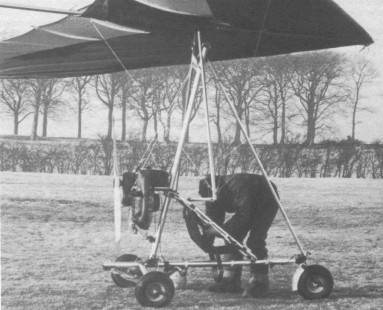
Mainair Tri-Flyer

Tri-Flyer 250

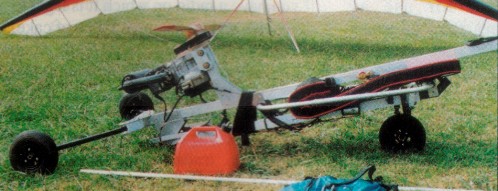
The Tri Flyer 250/ Demon is the simple single pole design from which the whole of the Mainair range has steadily developed. Low weight, low cost, simplicity and portability were the priorities in John Hudson’s mind when he produced the 250 Robin engined Tri Flyer in 1981.
The Tri Flyer 250 relies on its pneumatic tyres for suspension and has a simple tyre brake on the nosewheel. It normally has a manual start, with the pull handle situated within comfortable reach of the pilot; foot and hand throttles are provided. To minimise noise, the exhaust is directed into the propwash.
With easy release axles and folding seat frame, the trike unit folds into a very neat package, easily portable on a roof rack.
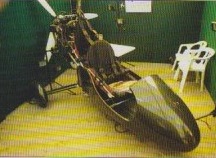
While the standard Tri Flyer 250 is a very basic machine, Mainair offers a full range of extras, including a glass fibre pod weighing only 6 lb (2.7 kg), instruments and a bigger fuel tank of 4.2 US gal (3.5 Imp gal, 15.9 litre). A reserve fuel tank is another option enabling the pilot to carry a further 1.2 US gal (1 Imp gal, 4.5 litre).
Like most Mainair trikes, the Tri Flyer 250 can be flown successfully with a variety of wings, but the Demon is probably the most popular.
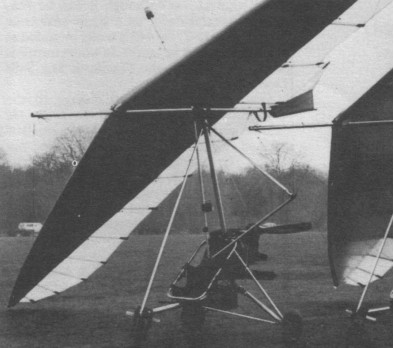
A single seat single engined flex wing aircraft with weight shift control. Rogallo wing with keel pocket. Pilot suspended below wing in trike unit, using bar to control pitch and yaw/roll by altering relative positions of trike unit and wing. Wing braced from above by kingpost and cables, from below by cables; floating cross tube construction with 75% double-surface enclosing cross-tube; pre-formed ribs. Undercarriage has three wheels in tricycle formation; no suspension on any wheels. Push right go left nosewheel steering independent from yaw control. Brake on nosewheel. Aluminium tube trike unit, with optional pod. Engine mounted below wing driving pusher propeller. All airframe tubing is bright anodised drawn seamless aluminium to British HT30TF specification. All bolts are aircraft quality AN series.
The Mainair/Solar Wings Tri Flyer 330/Typhoon S single seat single engined flex wing aircraft with weight shift control has a Rogallo wing with keel pocket. Pilot suspended below wing in trike unit, using bar to control pitch and yaw/roll by altering relative positions of trike unit and wing. Wing braced from above by kingpost and cables, from below by cables; floating cross tube construction with 80% double surface enclosing cross tube; pre¬formed ribs. Undercarriage has three wheels
in tricycle formation; no suspension on any wheels. Push right go left nosewheel steering independent from yaw control. Brake on nosewheel. Aluminium tube trike unit, with optional pod. Engine mounted below wing driving pusher propeller. All airframe tubing is bright anodised drawn seamless aluminium to British HT3OTF specification. All bolts are aircraft quality AN series.
Introduced in early 1982, the Tri Flyer 330 trike unit is a logical progression from the 250 and is identical apart from certain localised strengthening and a much more powerful twin cylinder Robin engine. This trike unit is flown with a variety of wings, but the Solar Wings Typhoon S is a popular choice. It was with just such a combination that Bob Calvert broke the world altitude record for class Cl a/o in January 1982, reaching 16,168 ft (4928 m) over Lancashire, England. For its record flight, the Tri Flyer 330/Typhoon combination was fit¬ted with a pod, instruments, in flight mixture adjustment and carburettor anti icing system, but power output and wing were both unaltered. Options are as for Tri Flyer 250/Demon.
The Mainair/ Southdown Sailwings Tri Flyer Challenger/ Lightning DS is a single seat single engined flex wing aircraft with weight shift control. Rogallo wing with fin. Pilot suspended below wing in trike unit, using bar to control pitch and yaw/roll by altering relative positions of trike unit and wing. Wing braced from above by kingpost and cables, from below by cables; floating cross tube construction with >75% double-¬surface enclosing cross tube; pre formed ribs. Undercarriage has three wheels in tricycle formation; no suspension on any wheels. Push right go left nosewheel steering indepen¬dent from yaw control. Brake on nosewheel. Aluminium tube/glass fibre trike unit, partially enclosed. Engine mounted below wing driving pusher propeller. Later versions of this machine will use a carbonfibre+Kevlar/aluminium trike unit.
The Tri Flyer Challenger is a special one off high performance machine which, in conjunction with a South¬down Sailwings Lightning DS wing, intended for record breaking. Fully instrumented and equipped with an oxygen supply, it is powered by a 440 cc Robin twin more usually seen on two seaters.
The initial version of the aircraft exceeded 16,700ft (5090m) in the hands of factory test pilot Geoff Ball, thanks partly to a special high altitude prop.
Mainair/ Flexiform Sky Sails Tri Flyer Two Seater/Dual Striker is a tandem two seat single engined flex wing aircraft with weight shift control. Rogallo wing with keel pocket. Pilot suspended below wing in trike unit, using bar to control pitch and yaw/roll by altering relative positions of trike unit and wing. Wing braced from above by kingpost and cables, from below by cables; bowsprit construction with >65% double¬-surface; pre formed ribs. Undercarriage has three wheels in tricycle formation; no suspension on any wheels. Push right go left nose¬wheel steering independent from yaw control. Brake on nosewheel. Aluminium tube trike unit, with optional pod. Engine mounted below wing driving pusher propeller. All airframe tubing is bright anodised drawn seamless aluminium to British HT30TF specification. All bolts are aircraft quality AN series.
The Tri Flyer Two Seater/ Dual Striker was one of the first two seat trikes available in Britain, having been introduced early in 1982. While it uses the same single pole construction principle as the single seat Tri Flyers, it is naturally a much stronger and heavier machine, using 2 inch (51 mm) diameter main tubes, fully sleeved and bushed, and the 440 cc version of the Robin twin.
The wing is a Flexiform Sky Sails Dual Striker, which features that company’s distinctive bowsprit construction and pronounced ‘tail’. An identification point on all Tri Flyers is the aluminium nosewheel mudguard. Electric start is standard, the manual start being retained for emergencies, and there are foot and hand throttles. A hub brake for the nosewheel is an option; other options are as for the Tri Flyer 250/Demon.
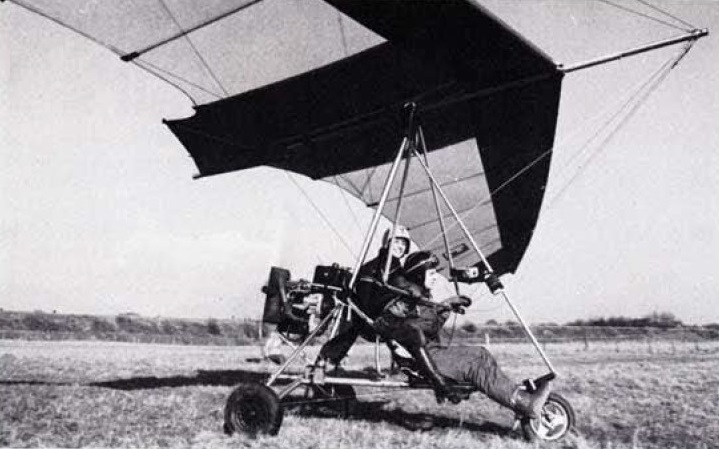
Tri-Fler

The two seat Robin 440cc powered Tri-Flyer designed for the Flexiform Striker two-seater wing or the Southdown Lightnng DS, was available as a kit for £1550 or ready to fly for £1950.

Tri-Flyer 250 / Demon
Engine: Robin EC25PS, 22 hp at 7000 rpm.
Propeller diameter and pitch 54 x 24/27 inch, 1.37 x 0.61/ 0.70m.
V belt reduction, ratio 2.3/1.
Max static thrust 125 lb, 57 kg.
Power per unit area 0.13hp/sq.ft, 1.4hp/sq.m.
Fuel capacity 2.6 US gal, 2.2 Imp gal, 10.0 litre.
Length overall 11.0 ft, 3.35 m.
Height overall 10.0 ft, 3.05m.
Wing span 32.0ft, 9.75m.
Chord at root 8.2ft, 2.50 m.
Chord at tip 3.5ft, 1.07m.
Dihedral 0 degs.
Nose angle 120 deg
Total wing area 175 sq.ft, 16.3 sq.m.
Wheel track 5.3 ft, 1.62 m.
Wheel¬base 5.9 ft, 1.80 m.
Nosewheel diameter overall 14 inch, 356 mm.
Main wheels diameter overall 14 inch, 356 mm.
Empty weight 190 lb, 86kg.
Max take off weight 370 lb, 168kg.
Payload 180 lb, 82kg.
Max wing loading 2.11 lb/sq.ft, 10.3kg/sq.m.
Max power loading 16.8 lb/hp, 7.5kg/hp.
Max level speed 40 mph, 64 kph.
Never exceed speed 50 mph, 80kph.
Max cruising speed 35mph, 56kph.
Economic cruising speed 30mph, 48kph.
Stalling speed 20 mph, 32 kph.
Max climb rate at sea level 350 ft/min, 1.8 m/s.
Take off distance 100ft, 30m.
Landing dis¬tance 150 ft, 45 m.

Tri Flyer 330 / Typhoon S
Engine: Robin EC34PM, 35 hp at 6500 rpm.
Propeller diameter and pitch 54 x 30/34 inch, 1.37 x 0.76/ 0.85m.
V belt reduction, ratio 2.5/1.
Max static thrust 180 lb, 82 kg.
Power per unit area 0.21 hp/sq.ft, 2.3 hp/sq.m.
Fuel capacity 2.6 US gal. 2.2 Imp gal, 10.0 litre.
Length overall 11.0 ft, 3.35 m.
Height overall 10.0 ft, 3.05 m.
Wing span 32.5 ft, 9.91 m.
Chord at root 8.0ft, 2.44m.
Chord at tip 3.3ft, 1.01m.
Dihedral 0 deg.
Nose angle 122 deg
Total wing area 166 sq.ft, 15.4 sq.m.
Wheel track 5.3 ft, 1.62 m.
Wheel¬base 5.8 ft, 1.77 m.
Nosewheel diameter over¬all 14 inch, 356 mm.
Main wheels diameter overall 14 inch, 356 mm.
Empty weight 210 lb, 95kg.
Max take off weight 410 lb, 186 kg.
Payload 200 lb, 91 kg.
Max wing loading 2.47 lb/sq.ft, 12.1 kg/sq.m.
Max power loading 11.7 lb/hp, 5.2kg/hp.
Max level speed 45mph, 72kph.
Never exceed speed 53mph, 85 kph.
Max cruising speed 35 mph, 56 kph.
Economic cruising speed 30mph, 48kph.
Stall speed 22 mph, 35 kph.
Max climb rate at sea level 600 ft/min, 3.0 m/s.
Take off distance 80 100 ft, 25 30 m.
Landing dist: 120 170 ft, 35 50 m.

Tri Flyer Challenger/ Lightning DS
Engine: Robin EC44.
Wing span 34.5ft, 10.52m.
Chord at root 8.0ft, 2.44 m.
Chord at tip 3.5 ft, 1.07 m.
Anhedral 1.5 degs
Nose angle 130 degs.
Total wing area 195 sq.ft, 18.1 sq.m.
Wing aspect ratio 6.3/1.

Tri Flyer Two Seater/Dual Striker
Engine: Robin EC44, 50 hp at 6800 rpm.
Propeller diameter and pitch 62 x 27 inch, 1.58 x 0.70 m.
Toothed belt reduction, ratio 2.3/1.
Max static thrust 275 lb, 125 kg.
Power per unit area 0.20 hp/sq.ft, 2.2 hp/sq.m.
Fuel capacity 2.6 US gal, 2.2 Imp gal, 10.0 litre.
Length overall 14.0 ft, 4.27 m.
Height overall 11.0ft, 3.35m.
Wing span 38.0ft, 11.58m.
Chord at root 9.0ft, 2.74 m.
Chord at tip 3.5ft, 1.07m.
Dihedral 2 degs.
Sweepback 15 degs.
Keel pocket depth 1.2ft, 0.37m.
Total wing area 250 sq.ft, 23.2sq.m.
Keel pocket area 3.5 sq.ft, 0.33 sq.m.
Wing aspect ratio 6.0/1.
Wheel track 6.0 ft, 1. 83 m.
Wheelbase 6.0 ft, 1.83 m.
Nose¬wheel diameter overall 16 inch, 406 mm.
Main wheels diameter overall 16 inch, 406 mm.
Empty weight 300 lb, 136kg.
Max take off weight 550 lb, 250kg.
Payload 250 lb, 113 kg.
Max wing loading 2.20 lb/sq.ft, 10.7 kg/sq.m.
Max power loading 11.0 lb/hp, 4.9kg/hp.
Load factors +4.5, 2.0 design.
Max level speed 58 mph, 93 kph.
Never exceed speed 65 mph, 105 kph.
Max cruising speed 55 mph, 88 kph.
Economic cruising speed 45 mph, 72 kph.
Stalling speed 25 mph, 40 kph.
Max climb rate at sea level 600 ft/min, 3.0 m/s.
Best glide ratio with power off 5/1.
Take off distance 150 160ft, 45 50 m.
Landing distance 160 200 ft, 50 60 m.
Mainair Sports Ltd

Mainair Sports are the longest established manufacturer of microlight aircraft in Great Britain, and has been producing aircraft since 1982 when microlight aircraft first began as a sport in the UK.
Since the early beginnings Mainair Sports have been at the forefront of weight-shift microlight design. They were the first company to be granted the Civil Aviation Authority (CAA) Company Approval for manufacturing of microlight aircraft and one of the first to have their aircraft approved by the CAA, against the standards of British Civil Airworthiness Requirements Section S.
Mainair Sports operated from a industrial unit located in Rochdale near Manchester, Great Britain.
1983: Mainair Sports Ltd, Shawelough Road, Roch¬dale, Lancashire OL 12 6LN Great Britain.
Markets Blade tandem two-seat flex-wing microlight in assembled form, Mercury single- or two-seat flex-wing monoplane in assembled or kit forms, and (from 1997) Rapier tandem two-seat flex-wing microlight in assembled or kit forms.

1997-8: Alma Industrial Est. Regent St, Rochdale, Lancashire, OL12 0HQ, Great Britain

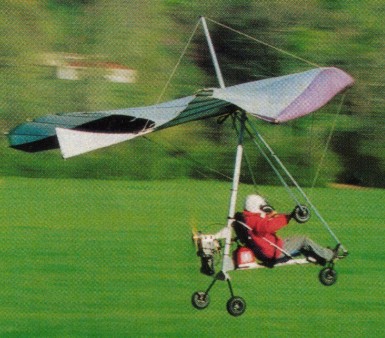
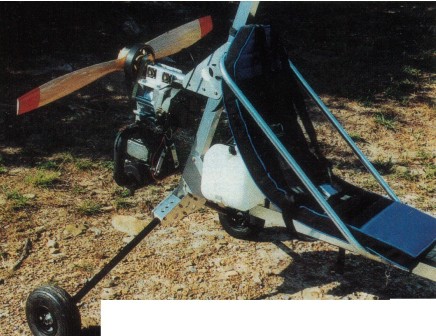
LMFP Freedom Machine / Skycycle

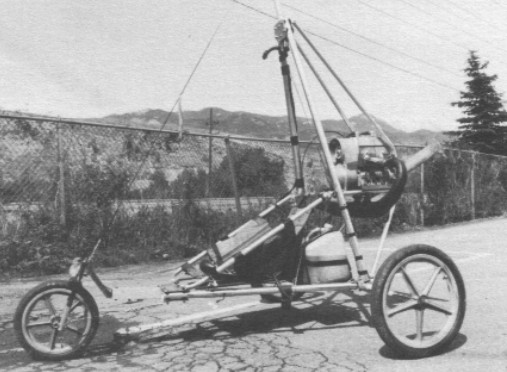
Renamed SkyCycle (formerly Freedom Machinr) in 1999, These aircraft meet the FAA’s Pt.103 ultralight regulation. Most hang gliders will fit the trike.

Minus its wing, Skycycle weighs 90-95 lb empty, depending on equipment. With fuel (2.5 USG tank) and wing, it may come to 200 lb.
Equiped with a 4-point harnesss and trailing link nosewheel suspension, the wheel trails rather than leads.
The fuel tank is easily removed, and is sufficient for operation of the Zenoah G-25B engine.

Able to be folded for travel, the SkyCycle can lift off in 75 feet and climb out at 600 fpm.
In 1999 LMFP sold the SkyCycle (without wing) for US$5500, ready to fly.

Lolo Pipistrel Spider

A trike of welded steel construction, power units options are the Rotax 503 or 912, and wings are 10, 1, or 15 sq.m.

Empty weight: 165 kg
Wing span: 11 m
Wing area: 13 sq.m
Fuel capacity: 42 lt
Certification: A
Engine: Rotax 582, 65 hp
MAUW: 400 kg
Seats: 2
Max speed: 100 kph
Cruise speed: 70 kph
Minimum speed: 42 kph
Climb rate: 8 m/s
Fuel consumption: 8 lt/hr
Price (1998): 250 000 AS

Leading Edge Air Foil / LEAF Trike

Single seat single engined flex wing aircraft with weight shift control. Rogallo wing. Pilot suspended below wing in trike unit, using bar to control pitch and yaw/roll by altering relative positions of trike unit and wing. Undercarriage has three wheels in tricycle formation; suspension on nosewheel and glass fibre suspension on main wheels. Push-¬right go left nosewheel steering independent from yaw control. No brakes. Aluminium ¬tube trike unit, without pod. Engine mounted below wing driving pusher propeller.
This single seat, single ¬engine trike unit uses a double pole structure, stiffened by the tubes forming the side supports of the seat, and is adaptable to fit most weight shift hang gliders.
The combination of glass fibre laminate suspension on the main wheels and large wheel diameters should guarantee it remark¬able all terrain performance. Previously powered by a Cuyuna 430D or 430R 30hp engine with a 2/1 reduction drive, it was later offered with the type ULII 02 35hp engine from the same company, still with a 2/1 reduction drive. The Leaf is easy to rig and when folded it measures 8.0 x 5.7 x 3.7ft (2.44 x 1.70 x 1.09m). Price was $2495 built in 1982.

Trike unit
Engine: Cuyuna ULII 02, 35hp.
Propeller diameter and pitch 54×27 inch, 1.37 x 0.69 m.
Reduction ratio 2.0/1.
Max static thrust 165 lb, 75 kg.
Fuel capacity 5.0 US gal, 4.2 Imp gal, 18.9 litre.
Length overall 7.4ft, 2.26m.
Height overall 8.3 ft, 2.51 m.
Width 5.6 ft, 1.70 m.
Wheelbase 5.1 ft, 1.55 in.
Nosewheel diameter overall 16 inch, 40 cm.
Main wheels diameter overall 20 inch, 51 cm.
Empty weight 149 lb, 67 kg.
Payload 250 lb, 113 kg.
Max level speed 45 mph, 72 kph.
Max cruising speed 32 mph, 51 kph.
Stalling speed 24 mph, 39 kph.

Lancashire Microlight Micro-Trike

Micro-Trike 440/Dual Striker

The Micro Trike 250/ Medium Striker and Micro Trike 330/ Medium Striker are single seat single engined flex wing aircraft with weight shift control. Rogallo wing with keel pocket. Pilot suspended below wing in trike unit, using bar to control pitch and yaw/roll by altering relative positions of trike unit and wing. Wing braced from above by kingpost and cables, from below by cables; bowsprit construction with >70% double-¬surface; pre formed ribs. Undercarriage has three wheels in tricycle formation; no suspen¬sion on any wheels. Push right go left nose¬wheel steering independent from yaw control. No brakes. Aluminium tube trike unit, with optional pod. Engine mounted below wing driving pusher propeller.
Aluminium tubing to British HT3OTF specification, drawn seamless, bright anodized. Plates and brackets black anodized. Wheels run on needle roller bearings.
The Micro Trike 250 is a conventional design, combining mono pole construction, a col¬lapsible seat frame for easy stowage and Robin EC25PS engine. As is usual with the 250 cc Robin, a recoil start is fitted, arranged in this case so that the pilot can restart in flight. The throttle is foot operated and there is also a hand set cruise control.
The white rubbers on the pedals are a recognition point on all Lancashire Micro¬lights machines.
Although the company can supply a wing from virtually any British manufacturer, it recommends the Flexiform Sky Sails Medium Striker for its single seat machines; the Medium Striker is a fast wing and is well liked because the absence of a cross tube makes is very quick to rig.
Options on the Micro Trike 250 include a glass fibre pod with instrument panel, and a full range of instruments. The aircraft is available in kit form or ready to fly.
The Micro Trike 330 is identical in all respects to the 250 model, except that its power plant uses a Robin EC34PM engine. Lancashire Microlight finds that most buyers now prefer the twin cylinder machine, and is concentrating future single¬seat development work on this model. By far the most important development in the pipeline is a suspension system.
To special order the 330 cc machine can be supplied as a tandem two seater (only the seat is changed), but the company. normally recommends the Micro Trike 440 for customers wanting two seats, feeling that the extra power gives a useful safety margin. Options and standard wing fitment are as for the Micro Trike 250.
The Micro Trike 250/Medium Striker differs in being a tandem two seat; wing 65% double-¬surface; nosewheel brake. Although it can be sup¬plied to special order as a single seat trike unit, the Micro Trike 440 is really intended as a two scat trainer or tourer, in which form it is normally mated to the Flexiform Sky Sails Dual Striker wing. Apart from the obvious change to the seating arrangements, the Micro Trike 440 follows closely the design of the smaller¬engined machines and offers the same op¬tions. The suspension system being de¬veloped for the 330 will also be fitted to this aircraft. Unlike the single seaters, however, a nosewheel brake is fitted.

Micro Trike 250/ Medium Striker
Engine: Robin EC25PS, 22 hp at 6500 rpm.
Propeller diameter and pitch 54 x 27 inch, 1.37 x 0.69 m.
V belt reduction, ratio 2.5/1.
Max static thrust 140 lb, 64 kg.
Power per unit area 0.11 hp/sq.ft, 1.2 hp/sq.m.
Fuel capacity 2.4 US gal, 2.0 Imp gal, 9.1 litre.
Length overall 13.8 ft, 4.19 m.
Height overall 9.8ft, 3.00m.
Wing span 33.0ft, 10.06m.
Mean chord 6.1ft, 1.85m.
Dihedral 0.5 deg.
Sweepback 15 deg
Keel pocket depth 1.2ft, 0.37 m.
Total wing area 200 sq.ft, 18.6 sq.m.
Keel pocket area 3.5 sq.ft 0.33sq.m.
Wing aspect ratio 5.4/1.
Nosewheel diameter overall 14 inch, 36 cm.
Main wheels diameter overall 14 inch, 36 cm.
Empty weight 175 lb, 79kg.
Max take off weight 359 lb, 163kg.
Payload 184 lb, 83kg.
Max wing loading 1.80 lb/sq.ft, 8.8 kg/sq.m.
Max pow¬er loading 16.3 lb/hp, 7.4 kg/hp.
Load factors +4.5, 2.0 design.
Max level speed 40 mph, 64 kph.
Never exceed speed 55 mph, 88kph.
Max cruising speed 35mph, 56kph.
Economic cruising speed 35 mph, 56 kph.
Stalling speed 22 mph, 35 kph.
Max climb rate at sea level 500 ft/min, 2.5 m/s.
Min sink rate 350 ft/min at 27 mph, 1.8 m/s at 43 kph.
Best glide ratio with power off 8/1 at 27 mph, 43 kph.
Take off distance 85 ft, 25 m.
Landing distance 120ft, 35 m.
Service ceiling 6000ft, 1830 m.
Range at average cruising speed 90 mile, 145 km.

Micro Trike 330 / Medium Striker
Engine: Robin EC34PM, 32 hp at 6500 rpm.
Propeller diameter and pitch 54 x 30 inch, 1.37 x 0.76 m.
Toothed belt reduction, ratio 2.5/1.
Max static thrust 210 lb, 95kg.
Power per unit area 0.16hp/sq.ft, 1.7 hp/sq.m.
Fuel capacity 4.8 US gal, 4.0 Imp gal, 18.2 litre.
Length overall 13.8 ft, 4.19 m.
Height overall 9.8ft, 3.00m.
Wing span 33.0ft, 10.06m.
Mean chord 6.1ft, 1.85m.
Dihedral 0.5deg.
Sweepback 15deg.
Keel pocket depth 1.2ft, 0.37 m.
Total wing area 200 sq.ft, 18.6 sq.m.
Keel pocket area 3.5 sq.ft 0.33sq.m.
Wing aspect ratio 5.4/1.
Nosewheel diameter overall 14 inch, 36 cm.
Main wheels diameter overall 14 inch, 36 cm.
Empty weight 195 lb, 88 kg.
Max take off weight 437 lb, 198kg.
Payload 242 lb, 110kg.
Max wing loading 2.19 lb/sq.ft, 10.6 kg/sq.m.
Max power loading 13.7 lb/hp, 6.2kg/hp.
Load factors +4.5, 2.0 design.
Max level speed 45 mph, 72 kph.
Never exceed speed 55 mph, 88kph.
Max cruising speed 45mph, 72kph.
Economic cruising speed 45mph, 72kph.
Stalling speed 25 mph, 40 kph.
Max climb rate at sea level 1000 ft/min, 5.1 m/s.
Min sink rate 350 ft/min at 27 mph, 1.8 m/s at 43 kph.
Best glide ratio with power off 8/1 at 27 mph, 43 kph.
Take off distance 70 ft, 20 m.
Landing distance 120 ft, 35 m.
Range at average cruising speed 54 mile, 87 km.

Micro Trike 440/Dual Striker
Engine: Robin EC44, 50 hp at 7000 rpm.
Propeller diameter and pitch 62 x 27 inch, 1.57 x 0.69 m.
Toothed belt reduction, ratio 2.5/1.
Max static thrust 300 lb, 136 kg.
Power per unit area 0.20hp/sq.ft, 2.2hp/sq.m.
Fuel capacity 4.8 US gal, 4.0 Imp gal, 18.2 litre.
Length overall 14.0 ft, 4.27 m.
Height overall 10.1ft, 3.08m.
Wing span 38.0ft, 11.58m.
Chord at root 9.0ft, 2.74m.
Chord at tip 3.5ft, 1.07m.
Dihedral 2deg.
Sweepback 15 deg.
Keel pocket depth 1.2ft, 0.37m.
Total wing area 250 sq.ft / 23.2sq.m.
Keel pocket area 3.5 sq.ft, 0.33 sq.m.
Wing aspect ratio 6.0/1.
Nosewheel diameter overall 16 inch, 40 cm.
Main wheels diameter overall 16 inch, 40cm.
Empty weight 243 lb, 110kg.
Max take off weight 639 lb, 290kg.
Payload 396 lb, 180kg.
Max wing loading 2.56 lb/sq.ft, 12.5 kg/sq.m.
Max power loading 12.8 lb/hp, 5.6kg/hp.
Load factors +4.5, 2.0 design.
Max level speed 45 mph, 72 kph.
Never exceed speed 55 mph, 88 kph.
Max cruising speed 45 mph, 72 kph.
Economic cruising speed 40mph, 64kph.
Stalling speed 25 mph, 40 kph.
Max climb rate at sea level 650 ft/min, 3.3 m/s.
Min sink rate 350 ft/min at 27 mph, 1.8 m/s at 43 kph.
Best glide ratio with power off 8/1 at 27 mph, 43 kph.
Take off distance 130 ft, 40 m.
Land¬ing distance 200 ft, 60 m (without brakes).
Range at average cruising speed 90 mile, 145 km.