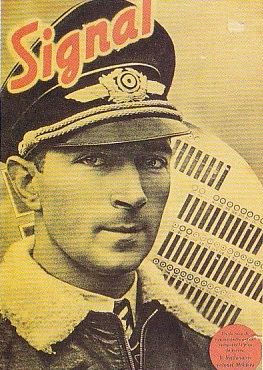
Werner Mölders (18 March 1913 – 22 November 1941) was a World War II German Luftwaffe pilot, wing commander, and the leading German fighter ace in the Spanish Civil War. He became the first pilot in aviation history to claim 100 aerial victories—that is, 100 aerial combat encounters resulting in the destruction of the enemy aircraft, and was highly decorated for his achievements. Mölders was instrumental in the development of new fighter tactics that led to the finger-four formation. He died in an air crash in which he was a passenger.
Mölders joined the Luftwaffe, the air force of Nazi Germany, in 1934. In 1938, he volunteered for service in the Condor Legion, which supported General Francisco Franco’s Nationalist side in the Spanish Civil War, and shot down 14 aircraft. With the start of World War II, he took part in the “Phoney War”, Battle of France, and the Battle of Britain.
On 5 June 1940, Werner Molders was flying to Amiens after a 5.15pm take-off. Encountering French Morane fighters, at about 2600 ft, his Messerschmitt was hit by 2nd Lt. Pomier-Layragues of 7 Squadron, 2nd Fighter Group of the French air force over Compiegne. Capt. Werner Molders. Molders, who was captured by an artillery soldier from a nearby French battery, expressed the wish to meet the man who shot him down, but was too late. While Molders was still dangling from hi parachute, Pomier-Layagues was tackling four Me 109s. He succeeded in shooting down one; then Pomier-Layragues himself was hit, and crashed with his machine near Marissel. The plane exploded at once and he did not have a chance to bail out.
With his tally standing at 68 victories, Mölders and his unit, the Jagdgeschwader 51 (JG 51), were transferred to the Eastern Front in June 1941 for the opening of Operation Barbarossa, achieving 101 victories by mid-July 1941.
On 30 June 1941 the Soviets lost 280 aircraft in all, 216 of them in aerial combats. German fighter wings led by Lt. Col. Molders and by Major Trautloff particularly distinguished themselves during the fighting by shooting down 110 and 65 planes respectively. The Molders fighter wing gave proof of superiority in the region east of Minsk and Bobruist, where large numbers of enemy formations sought to disrupt the movements of the advancing German troops. Of the approximately 100 attacking fighters and bombers, the Molders fighter wing destroyed 80. In the battle Lt.Col. Molders won his 82nd aerial victory.
Prevented from flying further combat missions for propaganda reasons, at the age of 28 Mölders was appointed Inspector of Fighters. He was inspecting the Luftwaffe units in the Crimea when he was ordered to Berlin to attend the state funeral of Ernst Udet, a Luftwaffe general and World War I flying ace. On the flight to Berlin, the He.111 in which he was traveling as a passenger attempted an emergency landing due to an engine failure. It crashed into a factory chimney in the outskirts of Breslau, killing Mölders and two others.
The Wehrmacht and the West German Bundeswehr both honoured him by naming two fighter wings, a destroyer and barracks after him. In 1998, the German Parliament decided that members of the Condor Legion such as Mölders, should “no longer be honoured”. In 2005, the German Ministry of Defence decided to remove the name “Mölders” from the fighter wing still bearing his name.
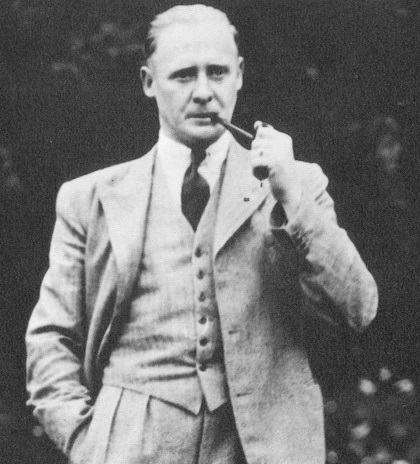
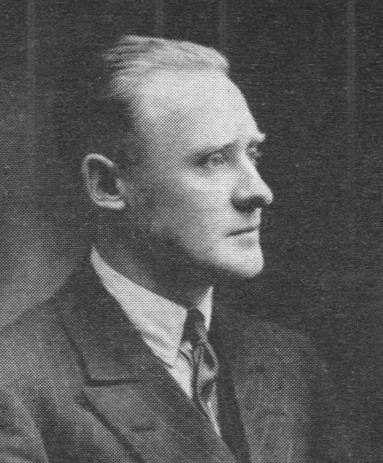
As chief designer for Supermarine, Reginald Mitchell gained valuable experience in the design of high-speed seaplanes before embarking on the design of the Spitfire.
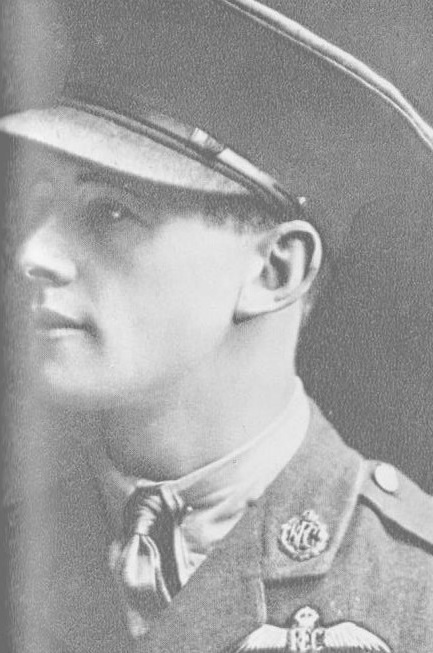
One of the very small number of peacetime rankers who rose to commissioned service and command in the RFC. McCudden transferred to the flying corps in 1913 and served as an NCO until 1916, during which period he made a number of illicit flights as an observer, but winning the Croix de Guerre in the process. He then underwent pilot training, but it was not until August 1916 that he first flew scouts, in the form of DH.2s with No. 29 Squadron.
Receiving his commission on 1 January 1917 he became a flight commander on No.56 Squadron, flying SE.5s, and by November his score had reached 20.
As a fighter he was instinctively a loner, preferring to stalk his prey so as to attack unseen from close range. He took no leave to return home until April 1918 when, at an investiture, he received his VC, two DSOs and an MC (the highest single collection of awards at a single investiture).
He was killed, when his score stood at 57, turning back to his field after an engine failure.
Major Edward Mannock, VC, DSO and two Bars, MC and Bar Son of a soldier, Mannock only transferred to the RFC from the Royal Engineers in August 1916 despite an eyesight deficiency. He joined No.40 Squadron in April 1917, then flying Nieuports, and was soon shooting down enemy aircraft. Possessed of a ruthless hatred of the Germans, he showed none of the mercy so often ascribed to airmen of World War 1, yet made unending efforts to ensure that his own pilots received the best possible combat training, it being said that no patrol by his pilots was ever taken by surprise. From flight commander with No.74 Squadron he was posted to command No.85 Squadron, but on 26 July 1918 his aircraft was hit by rifle fire from the ground and he was killed when his score stood at 73, the highest of any British pilot. His grave was never found and, despite the posthumous award of the Victoria Cross, his career attracted no attention until long after his death.
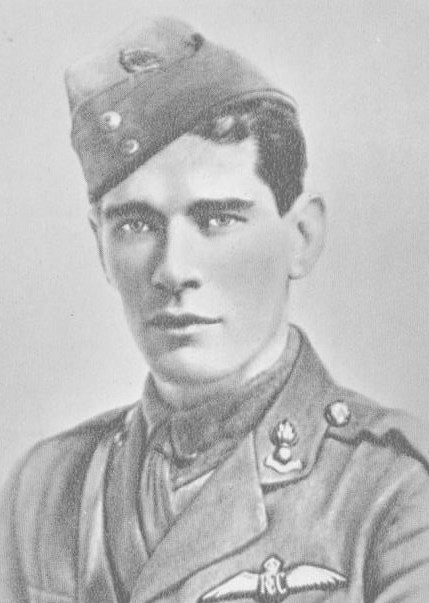
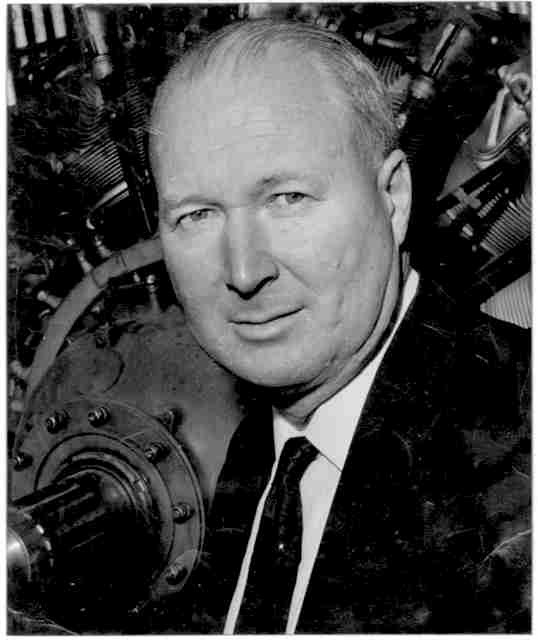
John “Jack” Malloch born on the 8th October 1920. His early days were spent in Natal, but as a result of his father losing his job, the family moved to Southern Rhodesia, where his father gained work, as a driver, for Rhodesian Railways based in Umtali. Jack grabbed every opportunity to travel with his dad and was involved in fixing trucks and helping his dad do running repairs. This interest was to serve him well in later days.
Jack was bought up as Seventh Day Adventist and his parents were very religious. This influenced their decision to send him to The Seventh Day Helderberg College, in Somerset West. His parents were not very wealthy and had to spend a lot of money-saving for his education. Jack was, however, never happy at school. He was not academically minded and decided to leave the school and find his way back to Umtali! Hitch-hiking rides in trucks and on railway coaches, his parents were not impressed when he arrived home. He was sent back to the school but did not enjoy it. He was, in fact, happier fixing the schools tractors and ground equipment than being in a classroom. His father was soon transferred to Fort Victoria and Jack left the school and started work as a motor mechanic at a garage near to his parents’ home.
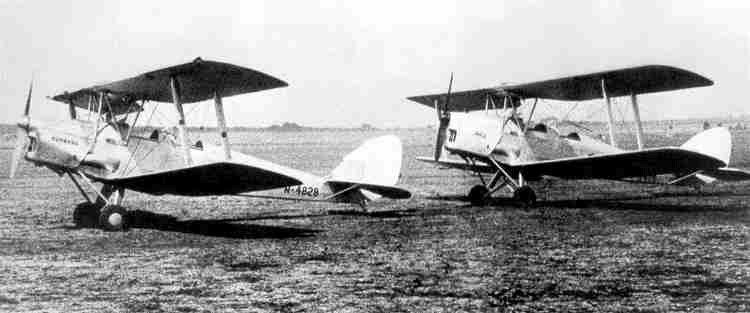
At the beginning of 1939, Mr Trycos, a good family friend, and wealthy Greek local businessman offered to sponsor two young people with the chance to obtain a pilots license. Jack was an obvious choice and on the 6th July 1939 – a Thursday – Jack took to the air, for the first time in a Tiger Moth. It was to be the start of his aviation career. He soon built up enough hours to go solo, flying around Fort Victoria and went solo on the 26th of July.
As a result of the war breaking out, Jack’s instructor left to join the RAF and Jack’s flying came to an end. After a number of determined efforts to join the Rhodesian Air Force – he was repeatedly rejected because of his poor academic record – his persistence paid off and he attested into the RhAF in 1943. He gained his wings and was soon sent off on operational duty to Italy, at a 237 Squadron, flying Spitfires. It was here that he grew to love them and was determined to own one himself. Despite being shot down and a dramatic escape, he returned to fly in Italy, but at the end of the war, and after a brief relationship with the lady that helped rescue him, he was demobilised in 1946.
He was unemployed and after a brief period as a diamond prospector, which proved disastrous, he returned to Fort Victoria, where his father was a partner in a garage and was Jack was employed as a mechanic.
In 1948, he attested into the Reserve Force of the RhAF and was shortly thereafter to renew his love affair with the Spitfire, when he was chosen to fetch the first batch of Spitfires, the RhAF had bought from England. The return flight was one of epic proportions and he made up his mind, then, that he wanted to have his own Spitfire.
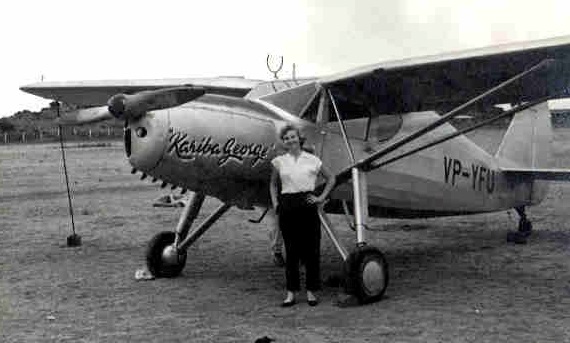
Jack was determined to own his own aviation company and with the help of his wife, Zoe, and family friends Jamie and Dorothy Marshall, Jack registered his first company on the 1st August 1951. Aptly named FishAir, the idea was to use a two-seater Ercoupe to fly fresh fish from Beira to Marandellas. Despite a good start, they soon ran into financial problems and the Company was almost liquidated early in 1952. Jack was not deterred and soon found a bigger aircraft – a Fairchild Argus. He now moved into the charter market and returned to the fish market as well.
Fairchild Argus
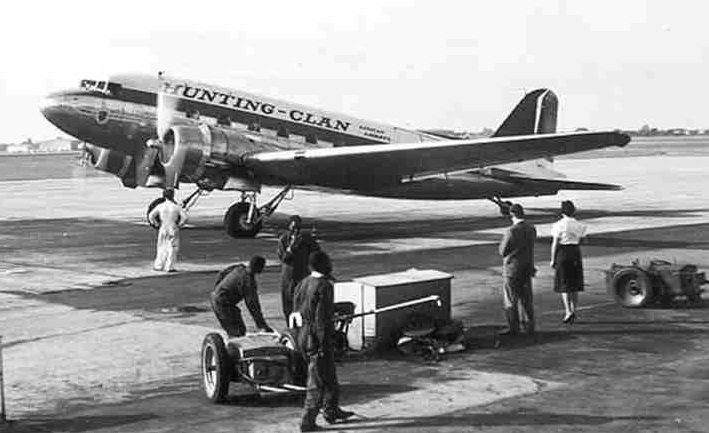
Jack’s financial problems would not go away and he soon ran into cash flow problems again, It was about this time that an English firm, Hunting Clan Aviation was wanted to expand its business into Africa. They bought out Jack, to get his licenses, kept him on as a Dak pilot and in 1955, Fish Air and its assets were fully bought out by Hunting Clan.
Hunting Clan DC3 Dakota
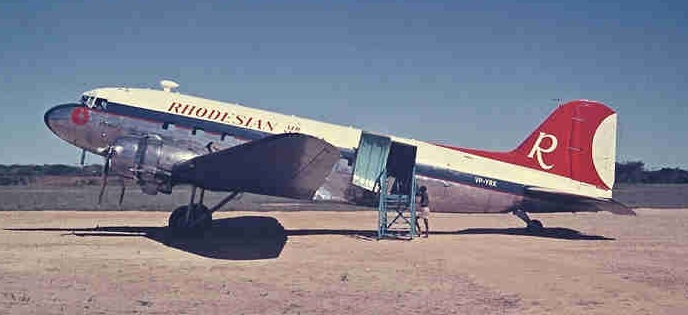
It was soon after this that the political problems caused Hunting to shut its African operations. Jack was now unemployed, but was, with the experience he gained at Hunting, determined to start his own airline. After taking a Hunting Dak back to England, Jack caught up with old friends there and with their help, he set about looking for a Dak to buy. As luck would have it, Hunting had a spare, very old Dak and after much bartering and negotiating, primarily to find finance, the deal was done. When asked what airline he represented, he said “Rhodesian Air Services”. And so his first airline was born.
He raced home to Salisbury and went about registering his airline. He persuaded the Department of Civil Aviation to give him back his old Vilanculos licence back. He gathered all his savings and soon finance was approved on the 26th March 1960, RAS took to the air with their first flight – a charter to Joberg and back.
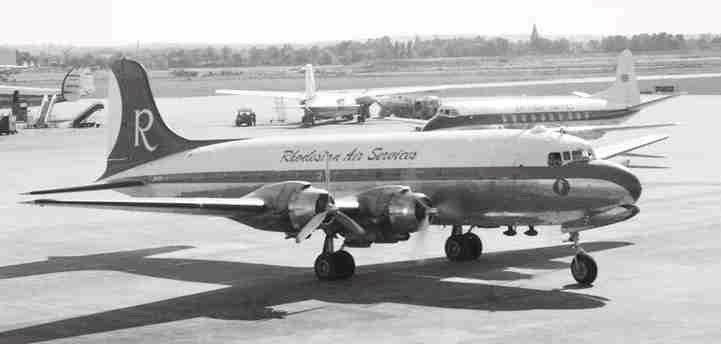
On the 30th of June, that year, Belgian Congo gained its independence and was renamed, the Congo. The Province of Katanga was determined to gain its own independence as well and needed support, in its battle against the Congo. Jack undertook a repatriation flight to Katanga. Unwillingly, though, but he needed money as RAS was having cash flow problems – not unusual for Jack! He did another charter to Durban a few weeks later and was introduced to another legendary mercenary, Jack Hoare. He undertook a few flights for Hoare, and on one of these flights to Katanga, he was introduced to the new leader, Tshombe. He was the owner of a VIP DC4 – and it was soon loaned to Jack to fly and operate. This was to be the first of Jack’s many 4 engined aircraft. Tshombe fearing the future of Katanga, allowed Jack to transfer it to the Rhodesian registration. Jack promptly stripped it and turned it into a freighter. It was around this time that a tragic accident resulted in the loss of one of his DC3s and all on board. Jack set out to find another DC3 to replace this one – and he found one in the UK.
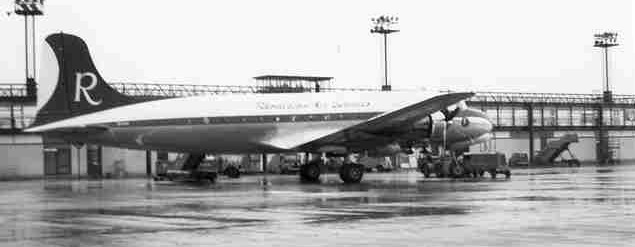
It was at this time that he registered Trans African Air Services, a handling service to look after his freight flights to Europe. This was at the same time, that after delicate negotiations between the Rhodesian and British Governments, that Jack was allowed to operate scheduled flights into Gatwick, under the guise of Rhodesian Air Services. The first flight was on the 9th of October 1962. However his DC4 was getting old and parts were a problem, as was keeping the aircraft serviceable.
It was around about this time that he met another mercenary, Bob Denard, who persuaded Jack to look into gun-running flights into Yemen. The first flight was on 7th August 1964 and was routed from Frankfurt via Prague, carrying Czech weapons and ammunition. Engine problems necessitated an unplanned stop in Djibouti.
They managed to keep local officials from inspecting the aircraft and after repairs were carried out at night, got airborne for the unmarked desert strip in Yemeni. The first flight was completed successfully. The British Special Air Services got to hear of this flight and asked him to resupply them too! He was soon doing another “military Mission” for the British.
Shortly after this, the British Overseas Mercenary Organisation approached Jack to undertake gun-running flights into Sudan. The trusty DC4 was now really working flat out and keeping her serviceable was a major problem. After the loss of an engine, at Addis Abba, on one of these flights, he was forced to turn to his father to finance the costs of a new engine. Jack really was on the bones of his money and things were not good. It was in 1965 that Jack was able to get his stuck DC3 out of Monongo and this proved to be a valuable help. Thanks to his involvement with the CIA, who was now very much involved in the Congo, Jack managed to acquire a second DC4.
With the changing political situation in African and the threat of UDI in Rhodesia, Jack was worried about the future of his airline. The future of Rhodesia was sealed on 11 November 1965, when Ian Smith announced the UDI. Rhodesia was soon subject to sanctions which made Jack’s operations impossible to sustain. He lost his landing rights in the UK and the UK imposed hard sanctions, including fuel sanctions in Rhodesia. With the loss of so many routes, he was forced to liquidate his business, again, in January 1966.
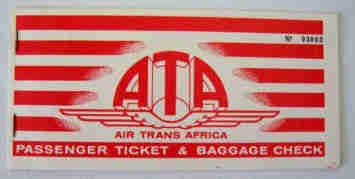
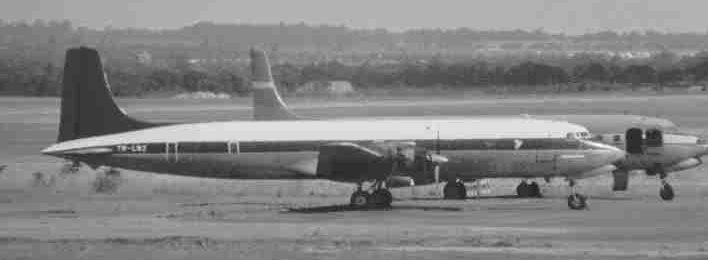
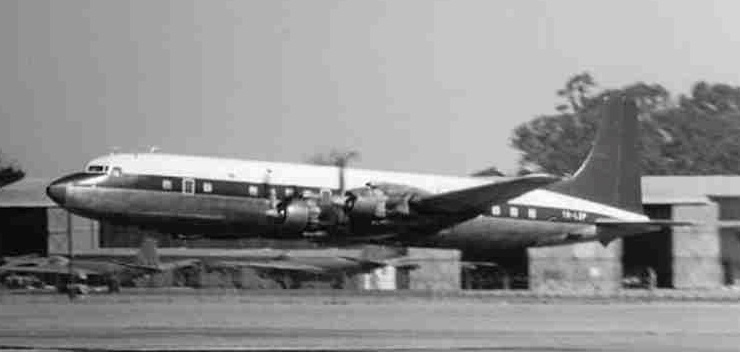
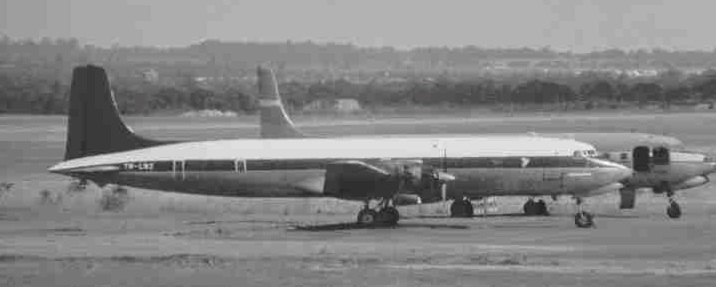
Jack’s financial problems were to haunt him and with the help of Olympic swimmer, turned opposition politician, David Butler, Jack started a new Company out of shuffling the Trans African Air Services company around to Air Trans Africa. He set his sights on getting hold of a DC7 and after finding one in Italy, the sale of which was cancelled by red tape and politics, he found an ex PanAm one in Florida. After many delays, red tape, bureaucratic bundles and secrecy it was flown out of America, via Recife. It eventually left there and arrived in Luanda where it was flown across to Salisbury. Two days later it started its first flight to Gatwick, with the flight plan saying it originated in Luanda.
The British Government and secret service were none the wiser. To make things easier he registered his DC3 and DC4 in Bechuanaland, although essentially operating ATA routes. Jack felt he was not out of clandestine military flying, and was now using the DC7 and occasionally the Bechuanaland DC4 to undertake sanctions-busting flights into Europe, with flights to Holland, Spain and Germany.
Despite determined British efforts to bring Rhodesia to its knees, and another unsuccessful attempt at buying another DC7, Jack managed to keep going and despite the Rhodesia Herald running a report of a Salisbury based airways company ferrying arms to Biafra, which was obviously pointed to ATA, Jack denied these and managed to carry on with these clandestine flights in early 1967.
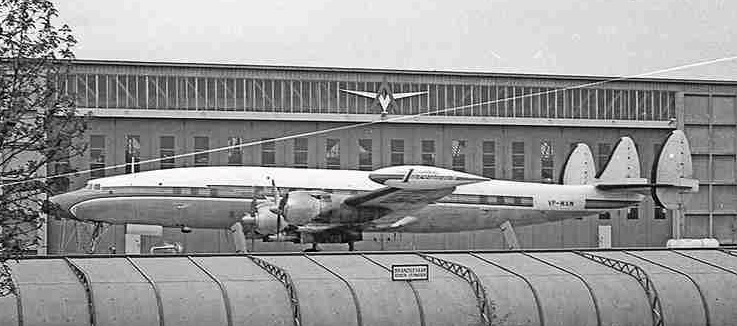
With Butler losing interest in the airline, Jack turned to the Prime Minister for financial help, as he was now active in sanctions-busting. With help from Smith and a sympathetic banker, Jack was able to acquire an ex VARIG Super Constellation. It was delivered in April of that year and was soon used to catch up with the backlog of freight flights.
Shortages of fuel in Zambia meant the British Government paid Botswana National Airways to fly fuel for them into Zambia. Jack registered a DC4 in Botswana and was soon carrying fuel for the British Government under contract. However irregular payments from Botswana National Airways resulted in cash flow problems. His faithful DC4 was proving problematic and after suffering a loss of the no 4 engine on a flight into Francistown. An engine change meant a three-engined ferry flight to Salisbury. The first of many of these flights.
Jack was to continue his various gun-running flights into countries around Africa, having many lucky escapes. Some of the flights included flying currency around and using it to trade for weapons. It was on one of these flights, that his luck was to run out and he and his crew were taken captive and held in prison in Lome. The crew were convinced they were going to spend many years in jail, until a local lawyer, Dr Santos came to their aid in early January 1968. With no one to run Air Trans Africa, it was in deep trouble. The men appeared in court in June of that year and Jack was given a three-month sentence and fine but was released in lieu of time already served. He headed back to Salisbury to sort out ATA.
In January of 1969, Jack was back in Salisbury negotiating to buy a DC7 from sources in Europe and he was able to buy another one – this time ex KLM. It was put on his European routes. In April that year, he was to acquire another 2 DC7s from European sources. He was now fully committed to gun running in Biafra and it was a vital source of cash – much needed to keep his airline operations going. He also needed a secure base in Africa, from where he could tranship the cargo he carried and he chose Libreville. It was to be a good choice.
Jack soon got involved indirectly buying arms and in May of that year he undertook the first of many flights around Africa to Israel to buy arms, These were shuttled via Libreville, where he had a permanent presence and the arms were offloaded, stored and delivered to Biafra from there. It was in June that on one of the flights, they carried on to Salisbury and delivered new arms directly from Israel. This was to be the first of his sanctions-busting flights. The arms were to be shared by the Rhodesians and the South Africans.
Jack also got involved in flying tobacco out of Rhodesia, to Europe – it was disguised as having come from Gabon. In order to keep people away from querying his aircraft and their loads, he had to pay careful attention to the registration of the aircraft! Several aircraft had several registrations and careful management of this was very much necessary. With the help of the French Secret Service, the South Africans and a few other organisations, the gun-running into Biafra became a very well organised and profitable operation.
It was in October that Jack, through his friends and connections, realised there was a need to export the quality beef that was available in Rhodesia and after preparations, his first meat running flight was in October, for the Gabonese High Command. He started a company, Soduca, in Libreville ostensibly to handle meat exports.
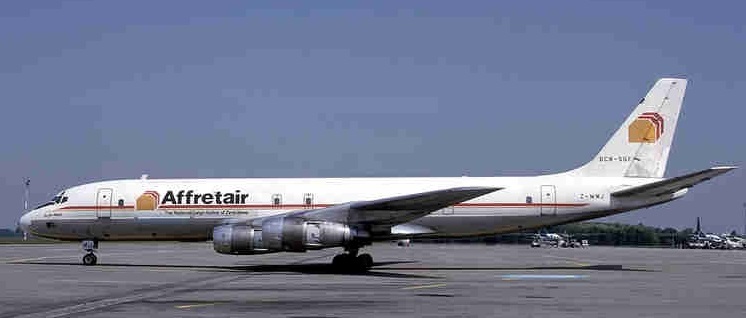
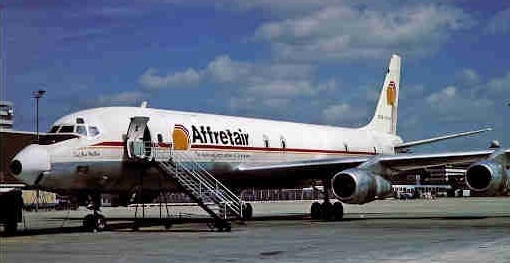
With the end of the Biafra gun-running episode, Jack’s cash flow problems returned. Jack’s aircraft were paid off and he had plenty of assets, but no routes and income. Jack had a permanent presence in Libreville and had established a healthy relationship with the President Bongo of Gabon. Jack wanted to legalise his operations and needed an airline. He realised he was not the ideal person to run an airline, gun-running yes, but not something according to IATA standards. He turned to his old friend, John Aldridge and appointed him as Chief Pilot. Jack was a stickler for rules and regulations. With his presence in Gabon, Affretair was registered and began operations taking over the various aircraft from ATA, except for the Dove. ATA was to handle to keep the sanctions-busting flights on their books and Affretair was to handle all the other flights, albeit using the same aircraft. Soon flights were going via Libreville and to a lesser extent Abidjan, carrying beef, clothes, tobacco and other fresh produce. Some of these flights would carry on up to Europe.
But his aircraft were getting old and harder to keep in the air. Parts were a problem and engines were also a serious problem to get hold of. A nasty accident in December 1971, resulted in the loss of a DC7, whilst landing at Libreville, carrying a full load of beef, for Gabon and onwards to Europe. Cattle carrying flights into Angola also proved to be very profitable, but with ageing aircraft, they were difficult to complete. His relationship with John Aldridge proved a difficult one and this was soon ended, after firing him about flight operations into Angola, leaving Jack to run the business himself.
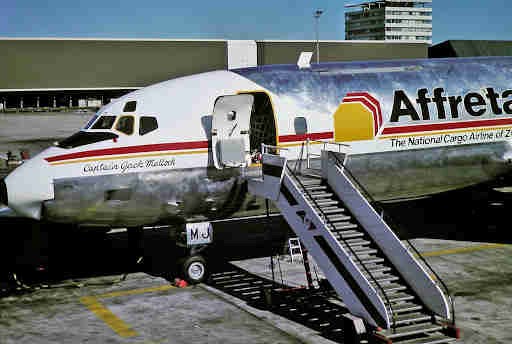
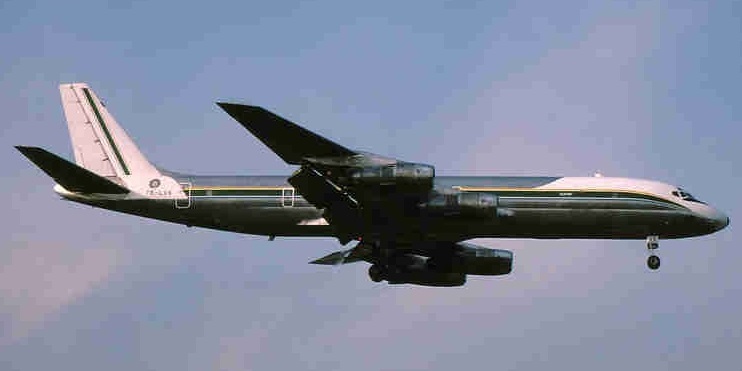
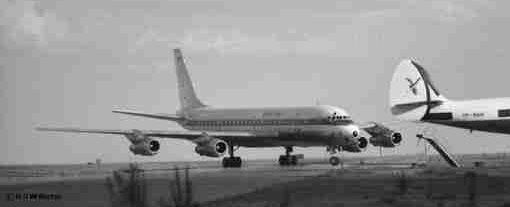
In August of 1972, Jack’s ageing fleet of DC7s were proving all the more difficult to service and maintain and were often flown in an other than airworthy state. It was at this time that Jack discussed, with the various shareholders about getting a jet – a DC8 for Affretair. The need for bigger, more modern and longer-range aircraft took on a sense of urgency need. Jack and a team of people, from Affretair, left for the States and in October, and were able to acquire an ex Flying Tiger freighter jet. The Americans were suspicious of the purpose of the jet and after refusing finance for it, were surprised with the Gabonese Government financing the jet.
The jet was immediately flown out of the States, to France, and the UTA hangars, at Paris. Once back in Rhodesia, it was re-registered and immediately put to use flying beef from Rhodesia, but with fake veterinary certificates obtained in South Africa, to Greece, via Lisbon. It was made to look as if the beef was from South Africa. It was at this time, that the ageing DC7s were mainly used to fly cattle to Angola and it was a growing and very profitable market for Jack. His constellation that had broken down in Luanda, was now repaired and flying scheduled services, under the guise of Afro Continental Airways to Windhoek.
But it was only time before these beef carrying flights attracted attention. After the appearance of an article in May 1973, a British journalist joined the dots and worked out that Affretair was in fact a successful sanctions-busting operation. His article was published in the Sunday Times. The Americans were embarrassed and put pressure on the Gabonese. French, Dutch and Greek Governments demanded to know what they were doing to stop these sanction busting flights. The Greek Government were quick to respond, saying they did not approve any meat flights from Rhodesia and the article was thus false and incorrect. After a frenzy of activity, the media hype around the flights subsided and flights carrying beef into Greece became less and less. However, Jack found another destination for the beef – Amsterdam and flights soon increased there.
Jack was very happy with the success of the DC8 and set about to acquire another one. A suitable one was found at Seaworld Freight Airlines. However, the American Government was not interested in giving permission for it to be sold to Jack.
In April 1974, President Bongo converted to Islam and was getting agitated at the Americans not approving his “new jet”. The Americans were not willing to support it but felt they could not alienate themselves from Gabon and Africa. They turned to the OAU for help and advice, saying they would approve the deal if the OAU were happy with it. President Bongo provided the OAU with paperwork saying he needed the jet and UTA would provide technical support and servicing for it. Jack’s connections in Gabon and France, were proving very influential and working in his favour for the second acquisition. So when Gabon asked for a decision at the Mogadishu OAU conference in June, and this was still not approved, the Gabonese Foreign Minister welcomed the opportunity to reveal to the conference how many other countries were actually trading with Rhodesia. The Zairian delegation requested the motion be removed, as there were now daily flights between Libreville and Zaire carrying Rhodesian produce. Something they did not want the world to know about. The OAU approved the deal. President Bongo now turned his attention to the Americans, threatening to expose all their illegal deals in Africa. The Dutch were now quick to deny that there were any illegal flights into Holland and all flights were legal and in compliance with legislation.
Ongoing fights between the OAU and the American Governments caused Jack to look around for another DC8 and he soon found one in Belgium. Jack put in an offer for one of their jets and despite threats from the Americans, who tried their best to stop the jet from flying, they were not successful. Jack filed many flight plans, and between him and Captain Colin Millar, it was quietly flown out of Europe and into Salisbury, where it was supposedly kept in a hangar for a few days to see if the Press had found out about it.
It was at this time that Angola and Mozambique imploded and the Portuguese fled from there, so no one was interested in a jet parked in a hangar in Salisbury. On the 16th of September, one of Jack’s DC7s made a night flight into Luanda to get the Rhodesian diplomatic staff out. Jack thought by now the world did not know about his new acquisition but the Americans did and it went all the way to Kissinger, who on the 17th September sent a note to all American Embassies saying the Rhodesians now had 2 DC8s. This was the first indication the jet had slipped through the sanctions net. No evidence could be found who financed it, but it was believed to be the Rhodesian Government, through Affretair. It was even rumoured the SA Government had stood security for the deposit.
After a few weeks, the US Embassy in Libreville said they had not seen another DC8 and all diplomatic chatter dried up and Kissinger was left wondering if his information was correct. The world was curious as to where the second jet was and what was it doing. It was only in May 1975 that the jet was registered on the Gabon register. 8 months after Kissinger had heard Jack had acquired the jet from Pomair, which had now been liquidated and stopped operations.
But the drama around getting the second DC8 was bittersweet. The Angolan and Greece meat operations had stopped, the Constellation was too old to fly and its routes had stopped and Affretair’s Gabon had been horribly exposed. Jack needed another Affretair and another Gabon.
Jack discussed the problem with his directors and one of them, Brigadier Andrew Dunlop, knew an ex British Military officer, Tim Landon, who had risen to head intelligence officer in Dhofar, Oman, and as luck had it, had a brother who farmed in Rhodesia, Chris. It was through Chris that Jack was introduced to two influential Omani businessmen, who were sympathetic to the Rhodesian cause. They shipped fuel to Japan, ostensibly, which shipping documents were changed and it was landed in South Africa. So they had experience in managing cargo for sanctions-busting. They also used a freight plane to fly freight to Rhodesia and South Africa. Was this what Jack’s second DC8 was doing for 8 months? No one knows for sure but it could have been.
Affretair was still exporting pre-ordered and pre-packed meat via Libreville and Kinshasa and some of these orders found their way to destinations like Holland and Switzerland. This business proved very profitable, and orders kept coming. The problem was with weights and orders. The aircraft regularly took off overweight and Jack soon got the nickname as the “Overweight Champion”. Flights were always a few tons overweight. To do this, Jack developed a high-speed take-off technique for high altitude airports, involving accelerating to take-off speeds, with one flap and then lowering the flaps even more. Illegal and a non-approved procedure, but it was eventually acknowledged and approved by Mc Donnell Douglas.
Jack’s DC8’s were soon the highest utilised in the world. But the problem was returning from Europe and loads were poor. Jack and President Bongo devised a plan, where the aircraft were wet-leased to SAA and a weekly flight from Europe to Joberg and Salisbury, via Libreville was undertaken. The first freight flight into Joberg was on the 17th of July 1975.
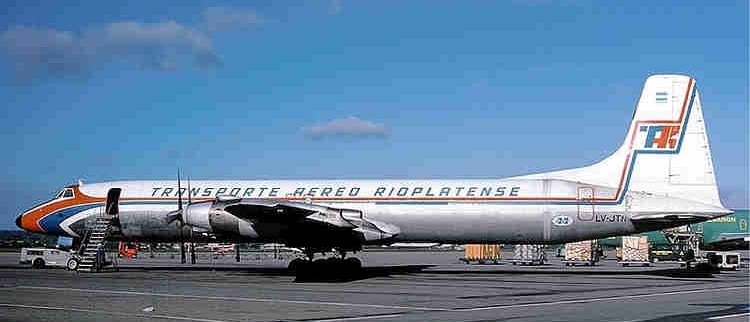
Jack’s DC7s were coming to the end of their lives and Jack soon found out that Cargolux, through his Luxembourg contacts were getting rid of a Canadair CL-44. Jack acquired this and it soon settled into the route structure flying to and from Europe with the two DC8s.
Jack was still determined to get to the Far East and with the help of President Bongo, he established and registered Air Gabon cargo in Libreville. All Affretair’s planes were moved across to there and flown under Air Gabon livery. The Gabonese Government let it be known to intelligent services that Affretair had fallen out of political flavour and was being shut down. This was the perfect cover for Air Gabon to expand and open offices around the world. The reason for shutting down Affretair, by the Government, was the need to expand Air Gabon and open a cargo network, or so the intelligent networks were told. The move proved successful and loads improved on all sectors and new destinations soon opened up, including Muscat.
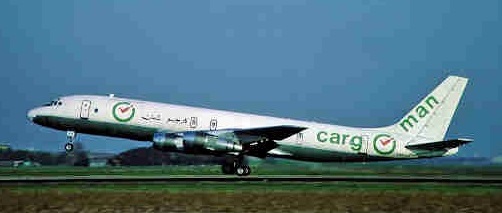
The second DC8 made it to Oman and was registered there and operated from there. Jack held a big party to reveal it to the world. The British Intelligence community were caught off guard with its appearance and were unable to find out exactly who owned it. It appeared the jet was owned by a Swiss Aviation Company, operated by Air Gabon and leased to CargOman when needed. No one was really able to prove exactly who owned it and how it was operated. Jack, had through his various contacts created so many front Companies, it was impossible to trace the actual owner and operator of the jet.
Things were now going very well for Jack. His two DC8s were kept busy, carrying both freight, legally, and gun-running or sanctions-busting as well. But things were not going well on the war front in Rhodesia. Arms and spares were in short supply and the Defence Department deemed it necessary to get Jack involved with them and assist in getting arms and spares. He was called up to the Reserve and seconded to 3 Squadron. He realised that the RhAF needed bigger aircraft than their DC3s and he arranged to lease one of his old DC7s to them, on a permanent basis. Amazingly it was also allocated a SADF registration number when it was used on flights by them! One of its regular flights was taking Rhodesians to Bloemfontein for parachute training. He realised there was a need to deploy large numbers of parachute troops and he soon developed a procedure for flying the DC7 with its main door removed – something the manufacture recommended should not happen.
Jack was now busy on two fronts – developing and expanding his commercial efforts via CargOman and his war efforts, via the Dept. of Defence. It was keeping him very busy.
The war effort was taking a terrible toll on all Rhodesians and with vastly increased numbers of terrorists outside of Rhodesia, intelligence reports reporting vast numbers of them at Chimoio and Tembue. An operation was eventually approved to attack the terrorist camps there – Ops Dingo. Jack was very much involved in the logistical planning and it proved to be one of the most successful raids undertaken. In October earnest plans were being made for the raid.
The DC8 was used to get the bombs and rockets from South Africa to New Sarum, where they were stored. And the DC7 was used to transport them and troops further along the line. Final planning was soon taking place for the operation, which was to involve every aircraft on the RhAF. To keep the terrorists, who gathered every morning for a parade, off guard, Jack had been routing his flights from Oman deliberately over the base, so the terrorists would get used to the sounds of high flying jets and be caught off their guard when the raid actually happened. It was a brilliant move by Jack and when the raid actually happened on the 23rd November 1977, the DC8 had overflown the base just 5 minutes earlier! All the aircraft were on their way and it was shortly after the DC8 had flown by, that the various bombers and other jets attacked the base, followed by the helicopters. Even the DC7 was involved, dropping paratroops.
Jack and ATA were now becoming a very slick operation at sanctions-busting. CargOman was building up a vast network of legal freight charters – often going in and out of the UK! It was also used to export beef to the Middle East. Oman proved to be a very safe transit place for Jack and his aircraft. However, to ensure that the various intelligence services kept clear of them, intricate plans were made to keep their flights “legal” and out of suspicion. The flight often left Salisbury for Oman, but whilst they transited the Indian Ocean, contact was made with one of the islands, who would, at a fee, of course, file a flight plan from there to Oman. Southbound flights were always to Johannesburg and all cargo had a manifest with Joberg as the destination, But the aircraft seldom arrived there. They used to divert to Salisbury “for technical reasons”! The DC8 was now intricately involved in sanctions-busting – one of the main cargoes they carried out of Oman was spares for the Hunters, which they acquired from the Oman bases, where the RAF were operating them.
Through his contacts in Oman, Jack was able to build up a good relationship with the Iranian Government. He even bought a trade delegation to Rhodesia to investigate trade opportunities, one opportunity resulted in chickens being exported to Oman. Jack was kept fully busy developing his commercial interests with Oman and a few other friendly countries, one of which was Morocco, and also busy with his military commitments.
His DC7s were kept busy both on military flights and civilian charter flights and technicians were kept busy painting them in various schemes, depending on the mission they were needed for.
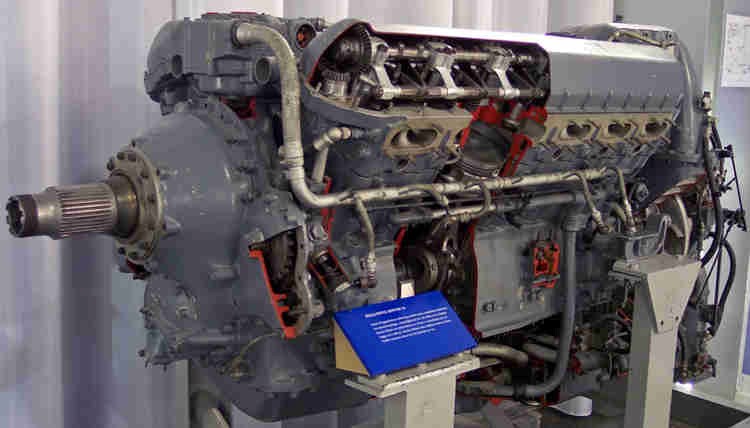
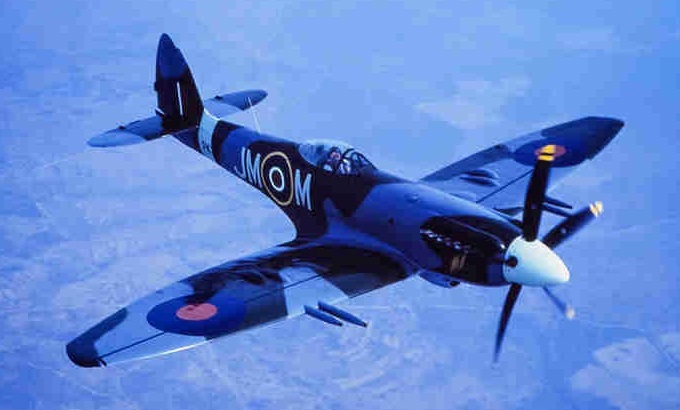
However, Jack was still sold on the restoration of a Spitfire – ever since he grew to love them in WW2. At the end of January 1977, a Spitfire was mysteriously removed, from a plinth at a military base and moved to a hangar. Who did it exactly, was not known, but it was thought Jack was behind it? Jack eventually mentioned this at a formal Air Force function and in May 1977 a formal agreement was signed, whereupon Jack would restore it for his own costs, the Air Force would retain ownership of it, but when completed, Jack could fly it when he wanted to. The main problem revolved around the Griffin engine and its restoration to use. The SAAF was using Shackeltons for military patrols and Jack was able to use his contacts there to gain valuable knowledge on the engine and how to service it. The SAAF were only too happy to offer him advice and information, as thanks for the flights he undertook for them.
Jack was getting worried about the reliability of Libreville as a transit stop and after much searching, they found another staging post for the airline – the island of Seychelles. However, a military coup in March 1977 took care of that option. Jack needed another option for his Oman operation, and the idea was Comoros. After a coup on the island of Comoros, which resulted in an anti-Rhodesian stance by the then Government, that idea came to an end. However, Bob Denard, now a good friend of Jack’s, became involved in a plan to overthrow them and put in place a pro-Rhodesian Government. This was planned to take place in March 1978 under the codename Operation Atlantide. Jack was involved and his participation involved flying Rhodesian troops there in a DC7, However, they were not needed, as Denard’s seaborne troops were able to overrun the island.
Through Denard, Jack was soon involved in helping the French, routing rebels in Chad and restoring the Government there. He used his DC8 to carry fuel from Libreville to the French airbase. The Affretair crews used these flights to barter for arms and ammunition, which was taken back to Rhodesia.
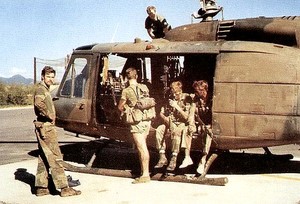
It was at this time that the Rhodesians had managed to secure eleven Augusta Bell 205 Huey helicopters, from Isreal. They were flown out to Oman. In July 1978 on one of the flights to Muscat, the Oman DC8 carried Rhodesian Air Force pilots, who were to begin their conversion training. Timothy Landon was fully involved in the deal and he managed to persuade the Omanis the pilots were there from oil rigs, The pilots spent a great deal of time with British soldiers, who were on secondment to Oman and it was here they learnt a great deal about the use of helicopters in warfare. The helicopters were broken down and flown out on the CargOman jet to Salisbury. It was in early 1979 they were to make their first appearances in operations, having all been successfully flown out of Oman, thanks to Jack and CargOman.
As African countries built up their pressure on the Smith regime to hand over power, Jack soon learnt that many countries needed food and beef from Rhodesia. Through his contacts in Blantyre, Malawi, he set up a joint venture with Air Malawi, to route supplies via Blantyre to Libreville, to circumvent the sanctions problems. This proved very successful and Blantyre soon became a vital transit place, moving even racehorses, from South Africa, via there to the Middle East.
Through the connections in Comoros, Jack was able to get many vital fighter parts and spares out of the Middle East and into Rhodesia, without arising suspicions.
Despite being fully involved in the war effort and growing his commercial operations, Jack was still able to find time to work on his beloved Spitfire project. Vital parts proved hard to find, including the 20mm cannons and the specialized 5 bladed props, but through his various connections, Jack was able to find a Company in Germany that could provide them. He even went to Germany to fetch them in a DC8.
Jacks health took a turn for the worse in 1979. Primarily his heart but also a back issue and he struggled to pass his yearly medicals, It was around this time, after the tragic shooting down of an Air Rhodesia Viscount, that Jack was struggling to find enough farmers to get beef to export to Gabon, due to many of their farms being targets in a war zone. He was forced to turn to Argentina to meet his beef contracts. He was to make useful contacts with Generals in the Argentinian Defence Force.
In the elections of 1979, which Nkomo and Mugabe boycotted, Bishop Muzorewa was to become the next Prime Minister. This met the approval of the SA Government, who rapidly upgraded their support to the military and kept Jack busy with many flights carrying weapons and support materials.
In October of that year, the British Government started to put pressure on the Omani Government to comply with sanctions against Rhodesia. The Omanis were not interested, as the political leadership in Oman was intricately involved in CargOman operations. The British backed off when the Omani leader reminded them of possible action against Shell and BP in Oman – something the British were desperate to avoid.
On the home political front, things were not going well for the new Rhodesian Government. At Lancaster House, negations were going badly for the inexperienced Muzorewa. They realised Britain was not to be trusted, but it was too late and the talks drew to a close, which resulted in the country reverting back to Southern Rhodesia and a British colony again. The agreement was signed on the 21st December 1979. A ceasefire came into effect and a Commonwealth Monitoring Force was deployed to Salisbury. It was at the height of the pre-election campaigns, that Jack had to undergo another flying medical and he was not to make it. His eyes were failing him now and his medical was withdrawn, Jack was not to give up and he fought to get it back, which he did, as he had set his mind of being able to finish the Spitfire project and fly it.
On the political front, at Combined Headquarters, they were looking at the various options available after the elections. They devised an Operation, called Ops Hectic, to assassinate Mugabe and his many generals, should he come to power. It was an ambitious plan, needing much logistical support and weapons and even involved the South African Government and SAAF support. To keep it away from the prying eyes of the Monitoring Force, it was decided that Air Trans Africa was the ideal facility to move the support around. The military even established an operations room at his Affretair headquarters to run the operation. To further avoid suspicion, Cold Storage Commission trucks were used to move the arms and ammunitions, the trucks even being driven by CIO operatives.
The election happened on the 27-29th February 1980 and the various services of the Rhodesian Defence Force took up their positions, the result being an inevitable one – victory for Mugabe. They were waiting for the code word “Quartz” to be broadcast over the radio, But it never came. General Wells aborted the mission at the last minute. The country and cause were lost forever and Jack was devastated. He could not understand why the operation to decisively win the war had been withheld. He sought solace with an old Spitfire colleague, ex-Prime Minister Ian Smith.
Jack now focused his efforts on the Spitfire and its planned first flight on the 29th of March. In an interview with the Daily Express, he was quoted as saying it would “be his last great adventure”.
Decisions were being made about how to paint it and what registrations to use. It was eventually decided to paint it camouflage, as all military aircraft were in camouflage colours and the initials JMM were painted on it, as a tribute to Jack and his efforts to get it flying again.
After a few nervous days running up to the 29th, rushing to get all the various issues sorted out and engine run-up, Jack arrived at New Sarum in his old wartime leather helmet, climbed into the aircraft, and with the help of his old friend Bob Dodds, did the necessary checks. Bob warned him not to do anything too spectacular, climbed off the wing and Jack taxied out and shortly after that got airborne. His dream was realised. A few technical issues curtailed the flight, but on the second flight, he did a barrel roll and even buzzed an Aeroflot passenger aircraft that had just landed at Salisbury! How ironic that was.
Affretair was still very much in his life and with the political issues and no more sanctions, lots of opportunities opened up for Jack and his airline. One of the first contracts he got was for the United Nations. He decided to rebrand Affretair as well. Jack was careful not to disregard his old customers and he supported them whenever he could.
As Jack had a South African passport, the SADF proposed Jack move his operation out of Zimbabwe, to South Africa and promised him lots of work. He even had job offers from British Midland to establish a cargo operation there, for them. He had both his DC8s painted in Affretair colours and the Oman operation wound down considerably, although he kept his office there.
Jack had, through the Spitfire, found his love for flying again and he was worried he might lose the opportunity to fly it – it did belong to the Defence Force after all. Keeping his commercial medical was now a serious problem for Jack, and he elected to get a PPL, the medical requirements of which were much easier for Jack to get and keep to.
It was at this time that the Iranian Revolution was in full swing and it was only time before his old contacts called upon Jack to assist and fly weapons into Iran, as they were suffering badly against the Iraqi Government. He became involved in flying Israeli arms to Iran. But it was hard to keep this secret from prying eyes. To keep it secret he hired a CL44, from Argentina, and used Argentinians to fly the aircraft. Various disguises, false registrations and call signs were used. But nothing new to Jack and he was well versed on how to hide his flights away from the various Intelligent Operations. How many flights were undertaken was not known, but they ended in disaster, when the aircraft strayed from its flight planned route, near the Turkish Azerbaijan border and it drifted into Russian airspace. It was thought the Russians used a false VOR to cause it to deviate off route and it was subsequently shot down. Despite world interest in the shooting down, it proved virtually impossible to trace who owned the aircraft, who the crew were and who chartered them and what they were carrying. A tribute to Jack, and his brilliant management tactics.
Whilst most of Affretair’s operations were now legal, there was still a need for Jack and his specialist skills and soon the CIA contacted him to help in Operation Cyclone – the clandestine arming of the Afghan mujahedeen forces, who were resisting the Russian back invasion of Afghanistan. Jack used his contacts in Oman to fly weapons from various Eastern European countries to Oman where they were moved by ship to Pakistan. It was not known how many of these flights were undertaken, but it is rumoured a great deal.
At the same time, the new Zimbabwean Government were starting to take an interest in Affretair and interfere in the running of it. Something Jack did not want and his relationships with the new Government turned sour quickly. In July of 1981, Jack failed his commercial medical again and his last flight, commercially, was to be in July of that year. His days of flying for Affretair were now over. Jack was realising that there was no place for his airline in Zimbabwe. The Government were now in talks to forcibly overtake the airline. Jack turned to his contacts in South Africa, to see if they were interested in his airline. They were very much interested and Jack now turned his efforts to move his operation and staff to South Africa. But it was hard work to keep this secret, as he feared the Government might seize all his assets if they found out.
Much to Jack’s surprise, he was, on the 20th November of that year, awarded the Pat Judson trophy, by the Zimbabwe branch of the Royal Aeronautical Society for “meritorious service to aviation” and the Rolls Royce trophy was awarded to his engineers for their work in restoring the Spitfire.
But Jack was under relentless pressure from the Zimbabwean Government to hand over Affretair to them. He also was under pressure to help the Argentinian Government fly “ Exocet air conditioner spares” from Cape Town to Buenos Aires, as the dispute between Argentine and the English over the possession of the Falklands was escalating to new highs. A flight he did want to undertake, due to his pending move to South Africa. Plans were very much advanced for the move and it was anticipated to happen on the 28th March. The planned move took up much of his time and efforts and put a great strain on his health.
He sought refuge from his work problems in his flying the Spitfire, and he took to the air as often as he could. A documentary “Pursuit of a dream” was being made about his restoration of the Spitfire. After two flights were flown for the documentary, it was found out the camera was at fault and there was no film. After weeks of cloudless skies on 26th March 1982, the Spitfire was wheeled out. A briefing was held with Bill Sykes and Neville Weir, who was to fly the Vampire and Jack took to the air.
It was a lovely afternoon and perfect for filming. Jack was at his happiest. According to Neville, after half an hour, he needed to return to base, as the film reel was finished and he was also low on fuel. He asked ATC for assistance. He remembers seeing Jack having so much fun in the Spitfire. After the turn to head home, they both entered a large cumulus cloud. What a fatal turn it was to be. The cloud was a vicious one – hail and turbulence of the worst order. He emerged from the cloud heading straight for the ground. He flew into a mielie field. It was a horrendous crash and not much was left of the aircraft. Jack was instantly killed.
As rumours spread of the crash and Jack’s death, the Department of Defence released a statement confirming the crash. Zimbabwe was in a state of shock, as were many other people around the world.
The accident investigators were shocked at how little was left of the aircraft. They managed to find the engine and were able to prove it was at full power when it hit the ground. The hardest part for them was to try and gather Jack’s remains.
His funeral was held on the 2nd of April, at the Garden of Rest Chapel, in Harare’s Warren Hills cemetery. Friends, employees, business acquaintances and military friends were in attendance. In his address, the Reverend Mussell said of Jack “ the tragic loss death of Captain Jack Malloch has brought into bold relief the kind of man he was and the remarkable things he did”. People had been urging Jack, to write his memoirs, but he smiled and always answered “I have done nothing of note!”
To this day there are many unanswered questions about his death. The official report and conclusion of the Board of Inquiry have never been released, so there is no official reason as to what caused the crash. It was known at the time of his last flight, Jack had heart problems and was under immense pressure, with the pending move and flee from Harare of Affretair, as well as Government pressure on Jack to hand over ownership of Affretair to them, they must have played a role in the accident. There are rumours about how he died. Was it sabotage, was it “structural failure” of the aircraft, was the weather the cause of the accident, or was it even suicide? No one knows. The last option has been ruled out by many people, as he was on the verge of exciting new times. It seems a genuine mistake flying into the cloud was the ultimate cause of his untimely death.
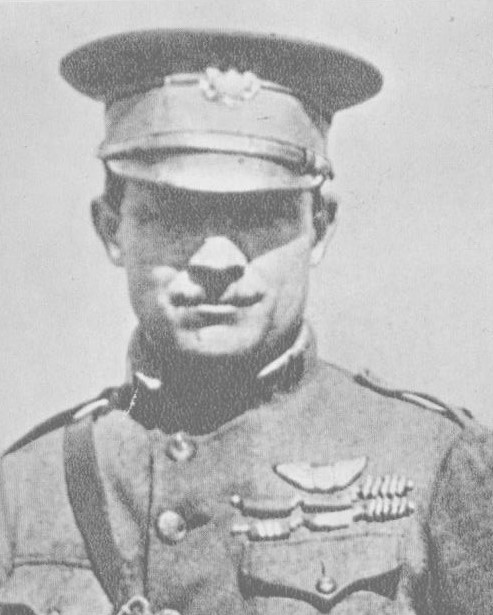
A native of Phoenix, Arizona, where he was born in 1897, he arrived in France with a tough self-confidence and an evident contempt for discipline that did not endear him to his fellow pilots on the 27th Aero Squadron.
Frank Luke achieved his score of 21 victories in the six weeks between 16 August and his death on 28 September 1918. He was something of a loner, and it was this that attracted him to the German observation balloons, particularly hazardous targets on account of their heavy ground defences. On his last mission he destroyed three balloons before being forced to crash land behind the German lines, preferring to resist capture by fighting enemy troops with a pistol, resulting inevitably in his death. Despite his constant flouting of regulations (an order for arrest was awaiting execution at the time of his death), Luke was awarded a posthumous Medal of Honor.
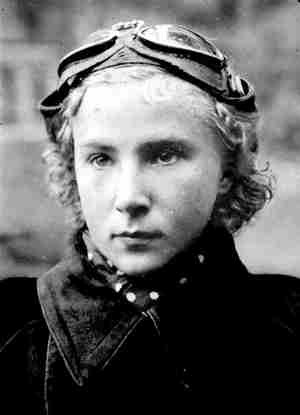
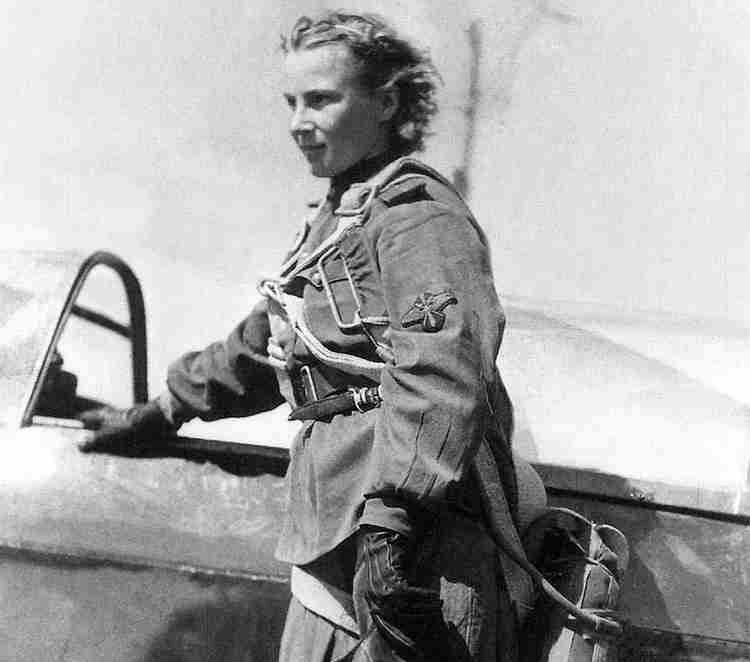
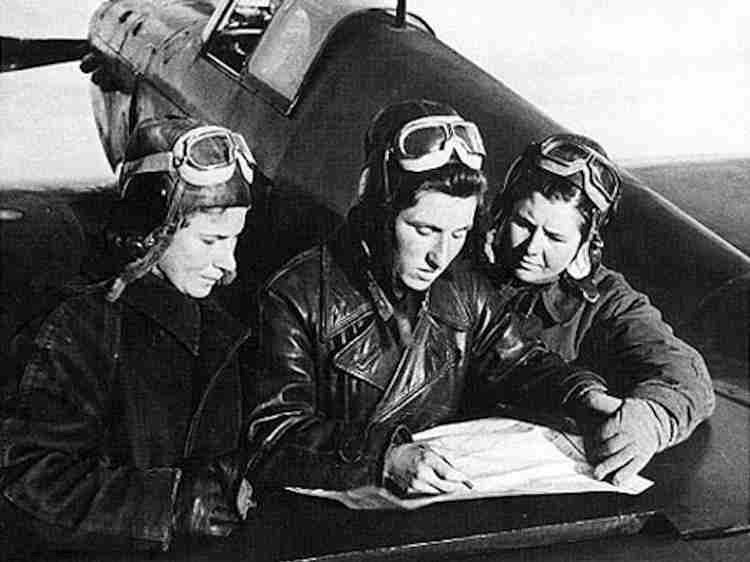
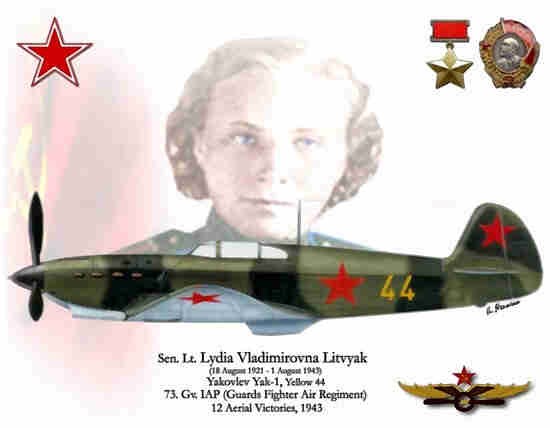
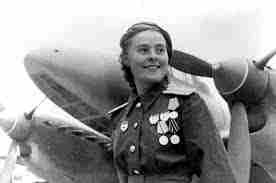
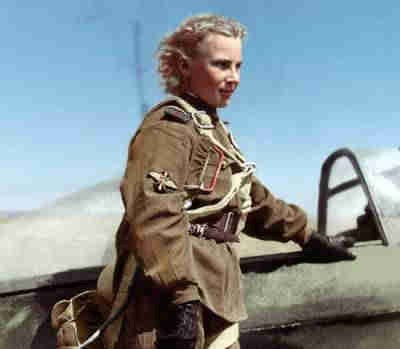
Lydia Vladimirovna Litvyak, affectionately known as Lilya, was a fighter pilot in the Soviet Air Force during World War II. Historians estimates for her total victories range from five to twelve solo victories and two to four shared kills in her 66 combat sorties. In about two years of operations, she was the first female fighter pilot to shoot down an enemy aircraft, the first of two female fighter pilots who have earned the title of fighter ace and the holder of the record for the greatest number of kills by a female fighter pilot. She was shot down near Orel during the Battle of Kursk as she attacked a formation of German aircraft.
Lydia Litvyak was born in Moscow into a middle class Russian family. Her mother Anna Vasilievna Litvyak was a shop assistant, her father Vladimir Leontievich Litvyak worked at railway as a railwayman, train driver and clerk; during the Great Purge he was arrested as an “enemy of the people” and disappeared. Lydia became interested in aviation at an early ageand at fourteen she enrolled in a local flying club. She performed her first solo flight at only fifteen, and later graduated at Kherson military flying school. She became a flight instructor at Kalinin Airclub, and by the time the German-Soviet war broke out, had already trained 45 pilots.
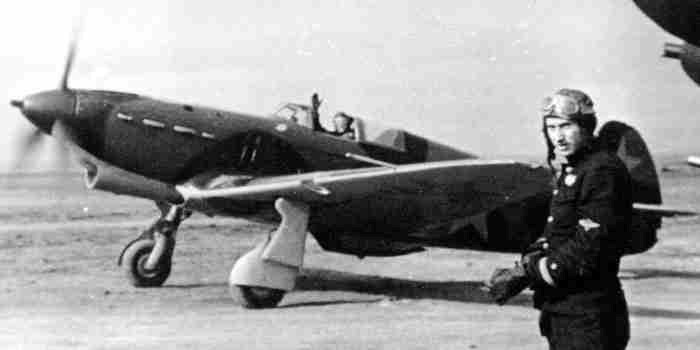
After the German attack on the Soviet Union in June 1941, Litvyak tried to join a military aviation unit, but was turned down for lack of experience. After deliberately exaggerating her pre-war flight time by 100 hours, she joined the all-female 586th Fighter Aviation Regiment of the Air Defence Force, which was formed by Marina Raskova. She was trained on the Yakovlev Yak-1 aircraft and Litvyak flew her first combat flights in the summer of 1942 over Saratov.
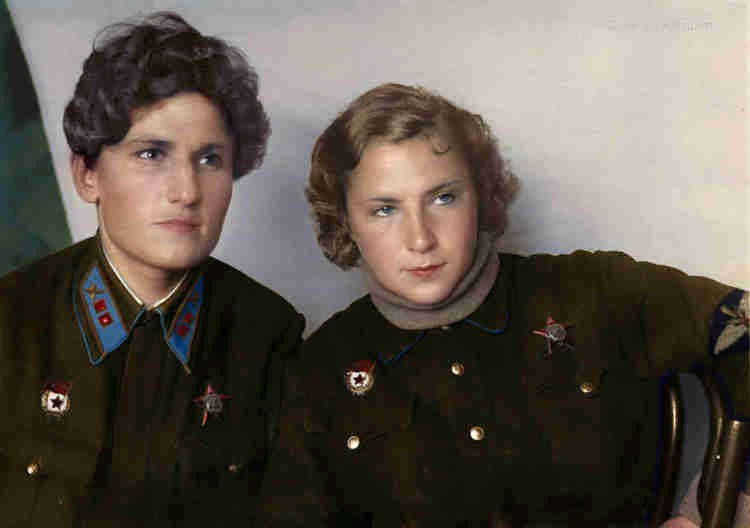
On 10 September 1942 she moved along with Yekaterina Budanova, Mariya Kuznetsova and Raisa Beliaeva, the commander of the group, and accompanying female ground crew, to the regiment airfield, at Verkhnaia Akhtuba, on the east bank of the Volga river.
But when they arrived the base was empty and under attack, so they soon moved to Srednaia Akhtuba. Here, flying a Yak-1 carrying the number “32” on the fuselage, she would achieve considerable success. Boris Yeremin, later lieutenant general of aviation, a regimental commander in the division to which she and Budanova were assigned, saw her as “a very aggressive person” and “a born fighter pilot”.
In the 437th Fighter Regiment, Litvyak scored her first two kills on 13 September, three days after her arrival and on her third mission to cover Stalingrad, becoming the first woman fighter pilot to shoot down an enemy aircraft. That day, four Yak-1s—with Major S. Danilov in the lead—attacked a formation of Junkers Ju 88s escorted by Messerschmitt Bf 109s. Her first kill was a Ju 88 which fell in flames from the sky after several bursts. Then she shot down a Bf 109 G-2 “Gustav” on the tail of her squadron commander, Raisa Beliaeva. The Bf 109 was piloted by a decorated pilot from the 4th Air Fleet, the 11-victory ace Staff Sergeant Erwin Maier of the 2nd Staffel of Jagdgeschwader 53.
Maier parachuted from his aircraft, was captured by Soviet troops, and asked to see the Russian ace who had shot him down. When he was taken to Litvyak, he thought he was being made the butt of a Soviet joke. It was not until Litvyak described each move of the fight to him in perfect detail that he knew he had been shot down by a woman pilot.
On 14 September Litvyak shot down another Bf 109. Her victim was probably Knight’s Cross holder and 71-kill expert Lt. Hans Fuss, injured in aerial combat with a Yak-1 on 14 September 1942 in Stalingrad area, when his G-2 fuel tank was hit, his plane somersaulted during the landing when he ran out of fuel flying back to base. He was critically injured, lost one leg and died of his wounds 10 November 1942. On 27 September, Litvyak scored an air victory against a Ju 88, the gunner having shot up the regiment commander, Major M.S. Khovostnikov. Possibly Ju 88A-4 “5K + LH” of Iron Cross holder Oblt. Johann Wiesniewski, which was reported MIA with all crew members.
Litvyak, Beliaeva, Budanova and Kuznetsova stayed in the 437th Regiment for a short time only, mainly because it was equipped with LaGG 3s rather than Yak-1s, that the women flew, and was lacking the facilities to service the latter. So, the four women were moved to the 9th Guards Fighter Regiment. From October 1942 till January 1943, Litvyak and Budanova served, still in the Stalingrad area, with this famous unit, commanded by Lev Shestakov.
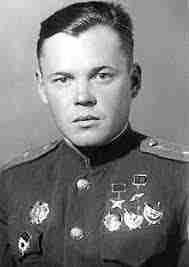
In January 1943, the 9th was re-equipped with the Bell P-39 Airacobras and Litvyak and Budanova were moved to the 296th Fighter Regiment commanded by Nikolai Baranov, of the 8th Air Army, so that they could still fly Yaks. On February 23, she was awarded the Order of the Red Star, made a junior lieutenant and selected to take part in the elite air tactic called okhotniki, or “free hunter”, where pairs of experienced pilots searched for targets on their own initiative. Twice, she was forced to land due to battle damage.
On 22 March she was wounded for the first time. That day she was flying as part of a group of six Yak fighters when they attacked a dozen Ju 88s. Litvyak shot down one of the bombers but was in turn attacked and wounded by the escorting Bf 109s. She managed to shoot down a Messerschmitt and to return to her airfield and land her plane but was in severe pain and losing blood. While in 73rd Regiment, she often flew as wingman of Captain Aleksey Solomatin, a flying ace. He had claimed a total of 39 victories, when he flew into the ground in Pavlonka, and was killed in front of the entire regiment on 21 May, while training a new flyer. Litvyak was devastated by the crash and wrote a letter to her mother describing how she realised only after Solomatin’s death that she had loved him.
Senior Sergeant Inna Pasportnikova, Litvyak’s mechanic during the time she flew with the men’s regiment, reported in 1990 that after Solomatin’s death, Litvyak wanted nothing but to fly combat missions, and she fought desperately.
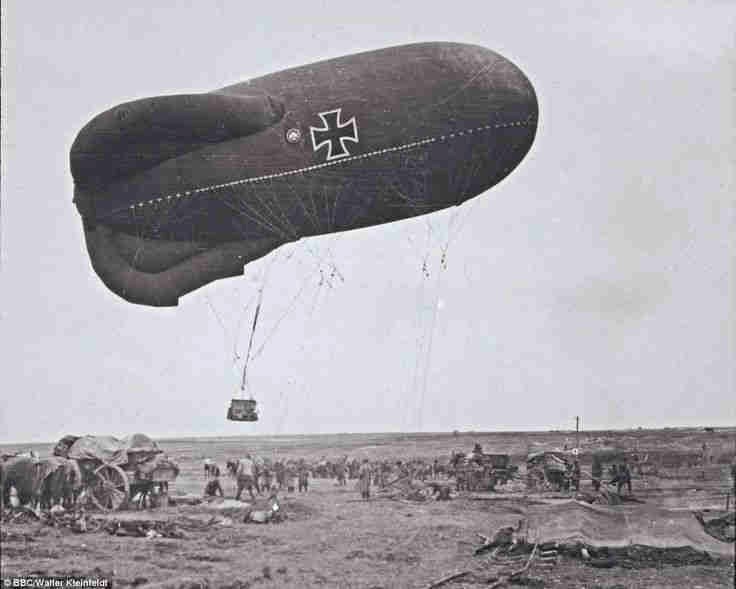
Litvyak scored against a difficult target on 31 May 1943: an artillery observation balloon manned by a German officer. German artillery was aided in targeting by reports from the observation post on the balloon. The elimination of the balloon had been attempted by other Soviet airmen but all had been driven away by a dense protective belt of anti-aircraft fire defending the balloon. Litvyak volunteered to take out the balloon but was turned down. She insisted and described her plan to her commander: she would attack it from the rear after flying in a wide circle around the perimeter of the battleground and over German-held territory. The tactic worked—the hydrogen-filled balloon caught fire under her stream of tracer bullets and was destroyed.
On 13 June 1943, Litvyak was appointed flight commander of the 3rd Aviation Squadron within 73rd Guards Fighter Aviation Regiment. Litvyak made an additional kill on 16 July 1943 that day, six Yaks encountered 30 German Ju 88 bombers with six escorts. The female ace downed a bomber and shared a victory with a comrade, but her fighter was hit and she had to make a belly landing. She was wounded again but refused to take medical leave. She shot down one Bf 109 on 19 July 1943, probably 6-kill ace Uffz Helmuth Schirra, another Bf 109 kill followed two days later on 21 July 1943, possibly Bf 109G-6 of Iron Cross holder and 28-kill expert Lt. Hermann Schuster (KIA, near Pervomaysk, Luhansk area).
On August 1, 1943, Litvyak did not come back to her base at Krasnyy Luch. It was her fourth sortie of the day, escorting a flight of Ilyushin Il-2 ground-attack aircraft. As the Soviets were returning to base near Orel, a pair of Bf 109 fighters dove on Litvyak while she was attacking a large group of German bombers. Soviet pilot Ivan Borisenko recalled: “Lily just didn’t see the Messerschmitt 109s flying cover for the German bombers. A pair of them dived on her and when she did see them, she turned to meet them. Then they all disappeared behind a cloud.” Borisenko, involved in the dogfight, saw her the last time, through a gap in the clouds, her Yak-1 pouring smoke and pursued by as many as eight Bf 109s.
Borisenko descended to see if he could find her. No parachute was seen, and no explosion, yet she never returned from the mission. Litvyak was 21 years old. Soviet authorities suspected that she might have been captured, a possibility that prevented them from awarding her the title of Hero of the Soviet Union.
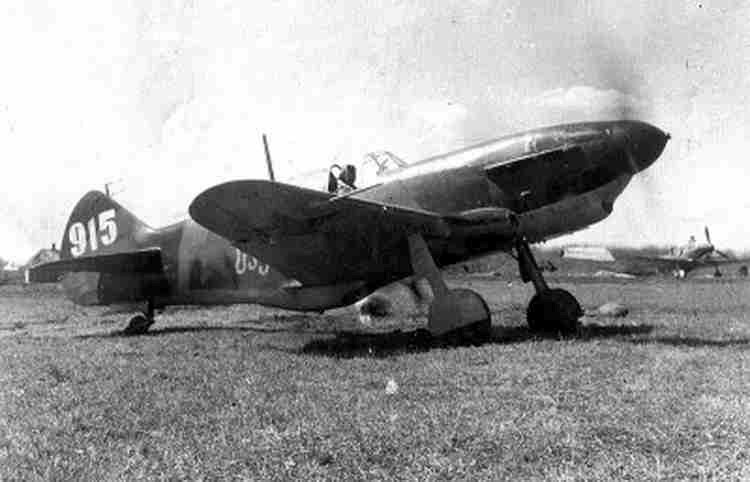
Two German pilots are believed to have shot down Litvyak: Iron Cross holder and 30-kill expert Hans-Jörg Merkle, Knight’s Cross holder and future 99-kill expert Lt Hans Schleef. Merkle is the only pilot that claimed a Yak-1 near Dmitryevka on 1 August 1943, his 30th victory. (Dmitrijewka is where she was last seen.) This occurred before being rammed and killed by his own victim (Luftwaffe combat report of collision: 3 km east of Dmitrievka). While Schleef claimed a LaGG-3 (often confused in combat with Yak-1s by German pilots) kill on the same day, in the South-Ukraine area where Litvyak’s aircraft was at last found.
LaGG-3
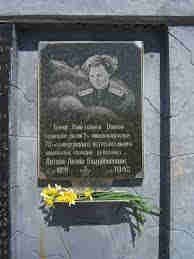
In an attempt to prove that Litvyak had not been taken captive, Pasportnikova embarked on a 36-year search for the Yakovlev Yak-1 crash site assisted by the public and the media. For three years she was joined by relatives who together combed the most likely areas with a metal detector. In 1979, after uncovering more than 90 other crash sites, 30 aircraft and many lost pilots killed in action, “the searchers discovered that an unidentified woman pilot had been buried in the village of Dmitrievka… in Shakhterski district.” It was then assumed that it was Litvyak and that she had been killed in action after sustaining a mortal head wound. Pasportnikova said that a special commission was formed to inspect the exhumed body and it concluded the remains were those of Litvyak.
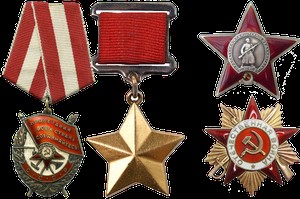
Litvyak was awarded the Order of the Red Banner, Order of the Red Star, and was twice honoured with the Order of the Patriotic War.
On 6 May 1990, USSR President Mikhail Gorbachev posthumously awarded her the title Hero of the Soviet Union. Her final rank was senior lieutenant, as documented in all Moscow newspapers of that date.
Arguments have been published that dispute the official version of Litvyak’s death. Although Yekaterina Valentina Vaschenko, the curator of the Litvyak museum in Krasnyi Luch has stated that the body was disinterred and examined by forensic specialists, who determined that it was indeed Litvyak, Kazimiera Janina Cottam claims, on the basis of evidence provided by Yekaterina Polunina, chief mechanic and archivist of the 586th Fighter Regiment in which Litvyak initially served, that the body was never exhumed and that verification was limited to comparison of a number of reports. Cottam, an author and researcher focusing on Soviet women in the military, concludes that Litvyak made a belly-landing in her stricken aircraft, was captured and taken to a prisoner of war camp. In her book published in 2004, Polunina lists evidence that led her to conclude that Litvyak was pulled from the downed aircraft by German troops and held prisoner for some time.
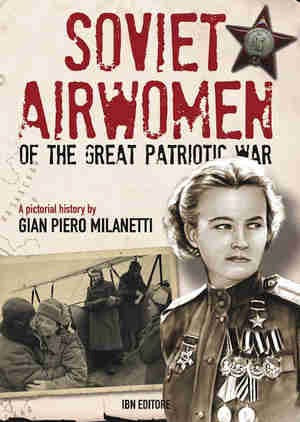
Gian Piero Milanetti, author of a recent book about Soviet aviatrixes, wrote that an airwoman parachuted in the approximate location of the alleged crash landing of Litvyak’s aircraft. No other Soviet airwomen operated in that area, so Milanetti believes the pilot was Litvyak, probably captured by the enemy.
A television broadcast from Switzerland was seen in 2000 by Raspopova, a veteran of the women’s night bomber regiment. It featured a former Soviet woman fighter pilot who Raspopova thought may have been Litvyak. This veteran was wounded twice. Married outside of the Soviet Union, she had three children. Raspopova promptly told Polunina what she inferred from the Swiss broadcast.
There is no consensus among historians about the number of aerial victories scored by Litvyak. Russian historians Andrey Simonov and Svetlana Chudinova were able to confirm five solo and three team shootdowns of enemy aircraft plus the destruction of the air balloon with archival documents. Various other tallies are attributed to her, including eleven solo and three shared plus the balloon, as well as eight individual and four team. Anne Noggle credits her with twelve individual and two team shootdowns. Pasportnikova stated in 1990 that the tally was eleven solo kills plus the balloon, and an addition three shared. Polunina has written that the kills of famous Soviet pilots, including those of Litvyak and Budanova, were often inflated; and that Litvyak should be credited with five solo aircraft kills and two group kills, including the observation balloon.
Litvyak displayed a rebellious and romantic character. Returning from a successful mission, she would “buzz” the aerodrome and then indulge in unauthorised aerobatics, knowing that it enraged her commander.
Despite the predominantly male environment in which she found herself, she never renounced her femininity, and would carry on dyeing her hair blonde, sending her friend Inna Pasportnikova to the hospital to fetch hydrogen peroxide for her. She would fashion scarves from parachute material, dyeing the small pieces in different colours and stitching them together and would not hide her love of flowers, which she picked at every available occasion, favouring red roses. She would make bouquets and keep them in the cockpit, which were promptly discarded by the male pilots who shared her aircraft.
 All Aero