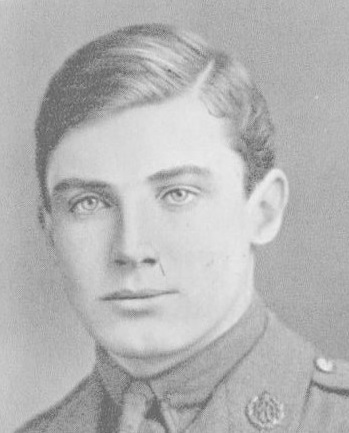
Lieutenant Rhys-Davids brought down Werner Voss.
Lieutenant Rhys-Davids brought down Werner Voss.
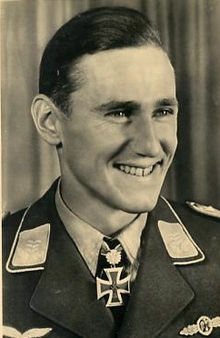
Lieutenant-General Günther Rall (10 March 1918 – 4 October 2009) was the third most successful fighter ace in history. He achieved a total of 275 victories during World War II: 272 on the Eastern Front, of which 241 were against Soviet fighters. He flew a total of 621 combat missions, was shot down 8 times and was wounded 3 times. He fought in the invasion of France, the Battle of Britain, in the Balkan Campaign and over Crete. He began the conflict as a young Second Lieutenant, and was a Major and Kommodore of JG 300 at the surrender. He claimed all of his victories in the Messerschmitt Bf 109.
He was born in Gaggenau, a small town in the Schwarzwald (Blackforest) region in Germany, as a son of a businessman. He joined the Army and became a Fähnrich (officer candidate) in 1936. He entered the War College in Dresden, where he was influenced by one of his best friends to join the Luftwaffe. He qualified as a pilot in 1938 and was posted to Jagdgeschwader 52 (JG 52—52nd Fighter Wing), with the rank of Leutnant (second lieutenant).
Rall first saw combat during the Battle of France, and on 12 May 1940, he scored his first victory. Three French P-36 Hawk fighters were attacking a German reconnaissance aircraft at a height of 26,000 feet. Rall “bounced” them and shot down one. He later said:
I was lucky in my first dogfight, but it did give me a hell of a lot of self-confidence ... and a scaring, because I was also hit by many bullets.
On 18 May he shot down another P-36 piloted by Czech pilot Otto Hanzlicek of GC II/5, who survived the engagement.
Later JG 52 was moved to Calais where it took part in the Battle of Britain. Due to heavy losses in the unit, he was given command as a Staffelkapitän of 8./JG 52 on 25 July 1940 and was promoted to Oberleutnant a week later, on 1 August 1940. He fought with JG 52 over Britain until the unit was withdrawn to replace losses.
Rall then took part in the Balkans Campaign in the spring of 1941. He also partook in Operation Merkur, the airborne invasion and subsequent Battle of Crete in June 1941. After the successful conclusion of Merkur, JG 52 was transferred back to Romania to help defend the oil fields there from Soviet bombers.
During Operation Barbarossa, Rall found repeated opportunity for combat, scoring his third, fourth and fifth victories in three days of June 1941. During a five day period, Rall and his Staffel destroyed some 50 Soviet aircraft. He had 12 victories in October. JG 52 was then attached to the operations of Heeresgruppe Süd and continued operating on the southern flank of the Eastern Front.
On 28 November 1941 Rall shot down his 37th victim, but was himself shot down. He tried to fly to the German lines with a badly damaged engine, but he crash landed and was knocked out. A German tank crew rescued him from the wreck. X-rays revealed he had broken his back in three places. Doctors told Rall he was finished as a pilot and transferred him to a hospital in Vienna in December 1941. Despite the diagnosis, which said he would not be able to walk again, Rall defied the odds and returned to combat almost a year later. During his treatment he met a Dr. Hertha Schön, whom he later married in 1943.
He came back to its 8./JG.52 on 28 August 1942. From August to November Rall claimed another 38 victories, bringing his total to 101. On 3 September 1942, Rall was awarded the Knight’s Cross of the Iron Cross (Ritterkreuz des Eisernen Kreuzes). On 26 November 1942 he was given the Eichenlaub to his Ritterkreuz des Eisernen Kreuzes by Adolf Hitler personally. In April 1943, he was promoted to Hauptmann and on the 20th of that month scored the Geschwader’s 5000th kill.
He was appointed Gruppenkommandeur of III./JG 52 on 6 July 1943. On 7 August 1943 he logged his 150th victory, with his 200th coming near the end of September, for which he was awarded the Schwerter to his Ritterkreuz. In October 1943, Rall had his best month, downing 40 aircraft. A month later, he became only the second pilot (after Walter Nowotny) to achieve 250 kills. During 1943, Rall was credited with 151 enemy aircraft destroyed, a figure exceeded only by Nowotny (196) and Hermann Graf (160). On 1 November 1943, Rall was promoted to major, a rank he retained until the end of the war.
On 19 April 1944, Rall was transferred to Jagdgeschwader 11 (JG 11), where he took up position as Gruppenkommandeur of II./JG 11. JG 11 was tasked with Reichsverteidigung (Defence of the Reich) and Rall led his unit against the bomber fleets of Eighth Air Force. On 12 May 1944, Rall was leading a Staffel of Bf 109s and bounced a flight of three P-47 Thunderbolts led by Col. Hubert Zemke, shooting down two. His own squadron was then attacked by other P-47s arriving at the engagement, and he was shot down by pilots of the 56th Fighter Group. Rall had a thumb shot off and was hospitalized for many months because of the onset of infections.
Rall became an instructor, and studied several American planes that had fallen into the possession of the Luftwaffe to find their strengths and weaknesses to find better strategies to teach his students. He flew the P-51 and was amazed at the luxury and quality of the American planes. He found they were spacious, heated, had armoured plate protection, and used materials and equipment that had been long unavailable to Germany. He explained that being unable to fly in combat probably saved his life at a time when Germany was totally outnumbered and the chances of staying alive were drastically dropping. However, he returned to active duty in November.
His last posting was with Jagdgeschwader 300 (JG 300), operating from a variety of airfields in southern Germany during the last months of the war. Lack of supplies prevented most planes from going on missions, and the fast progress of the Allies forced his squadron to move several times and it is unlikely that he saw much combat action during this period. Towards the very last days of the war he asked the men in his command to try to stay alive rather than carry out senseless actions. He felt it was his responsibility as a leader to try to save the few lives that he could as the war was virtually over and its outcome could not be reversed. He was taken prisoner by American forces after the fighting in Germany ended.
Rall said of the campaign of 1943-1945:
In my experience, the Royal Air Force pilot was the most aggressive and capable fighter pilot during the Second World War. This is nothing against the Americans, because they came in late and in such large numbers that we don't have an accurate comparison. We were totally outnumbered when the Americans engaged, whereas at the time of the Battle of Britain the fight was more even and you could compare. The British were extremely good.
Whilst in a prisoner of war camp near Heidelberg, Rall was approached by the Americans who were gathering Luftwaffe pilots who had experience with the Messerschmitt Me 262 fighter. Rall was transferred to Bovingdon near Hemel Hempstead. Rall was then based at RAF Tangmere, where he met the RAF ace Robert Stanford Tuck, with whom he reportedly became close friends.
Returning to post-war Germany, he was unable to find work. Rall started a small wood cutting business in the forest. He eventually joined Siemens as a representative, leaving in 1953. Rall rejoined the military in 1956, after meeting a wartime friend and Luftwaffe pilot who insisted on him flying again. He rejoined and continued his career in the new Luftwaffe der Bundeswehr after the re-militarization of West Germany in 1955. One of his tasks was to oversee the engineering development made to the F-104 fighter to comply with the requirement of the Bundeswehr before their acquisition, and this led to the F-104G version. He insisted on the replacement of the ejection seat for safety concerns.
From 1 January 1971 to 31 March 1973, he held the position of Inspekteur der Luftwaffe der Bundeswehr and from 1 April 1974 to 13 October 1975, he was a military attaché with NATO.
His enforced retirement in 1975 was as a result of a controversial three-week visit to South Africa, where he hosted meetings with South African politicians about which his Air Force superiors claimed to be unaware of. The “private” nature of this visit was later publicised by German weekly magazine Stern. South Africa, despite its apartheid regime, was seen as strategically important to NATO and although the visit was thought to be officially sanctioned, the political embarrassment following the concerted press campaign meant Defence Minister Georg Leber was forced to retire Rall in October 1975.
By the end of his career he attained the rank of Generalleutnant. In 2004 he wrote his memoir, Mein Flugbuch (“My Flightbook”). Rall was interviewd in documentaries such as Thames The World at War, and was a contributor to the Wings series produced by Discovery Channel.
Rall died at his home in Germany on 4 October 2009, aged 91, after suffering a heart attack two days earlier.
The final World War II rank-
Maj. Erich Hartmann (352)
Maj. Gerhard Barkhom (301)
Maj. Guenther Rall (275)
Maj. Wilhelm Batz (237)
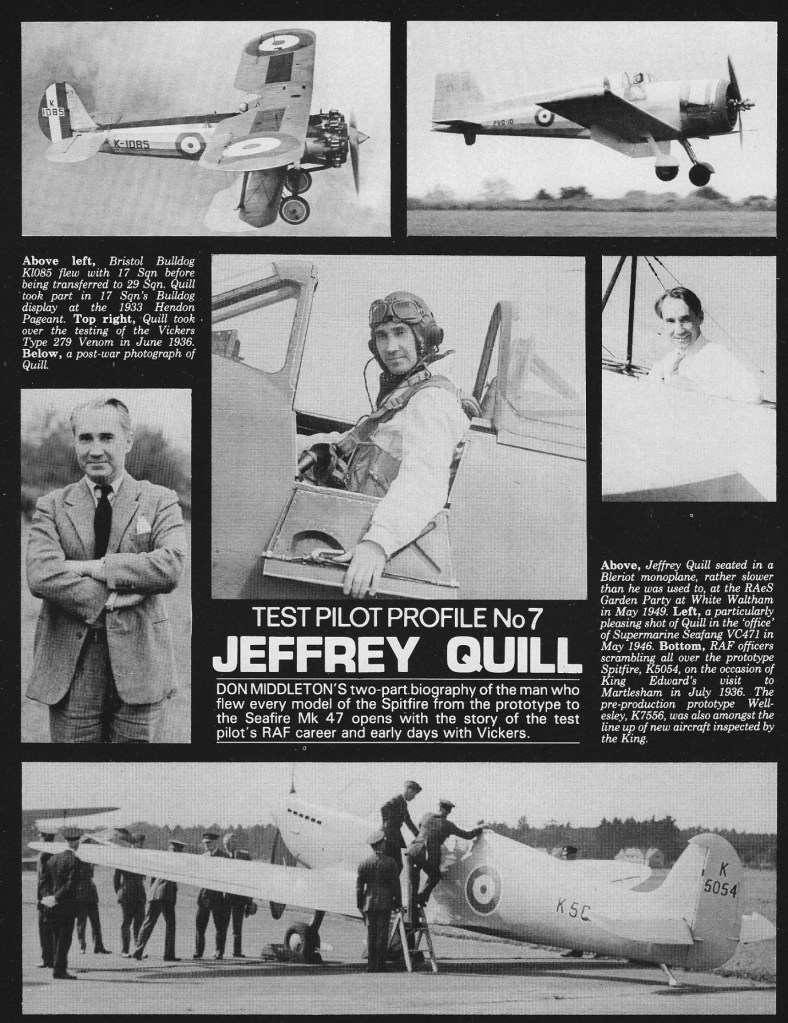
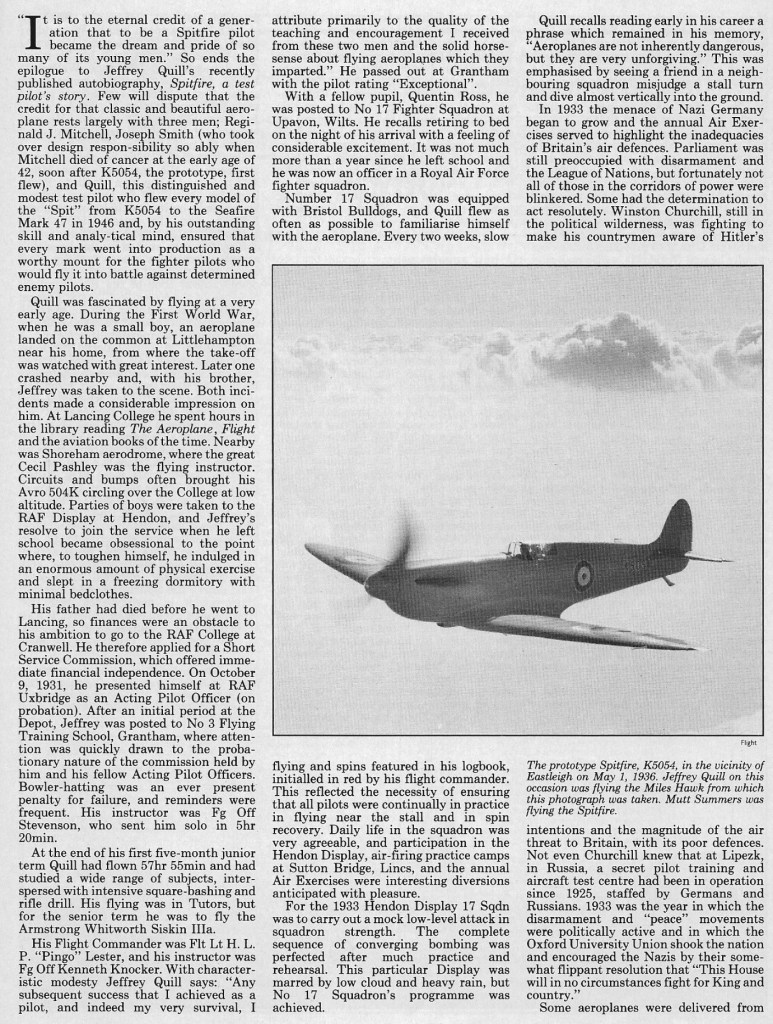
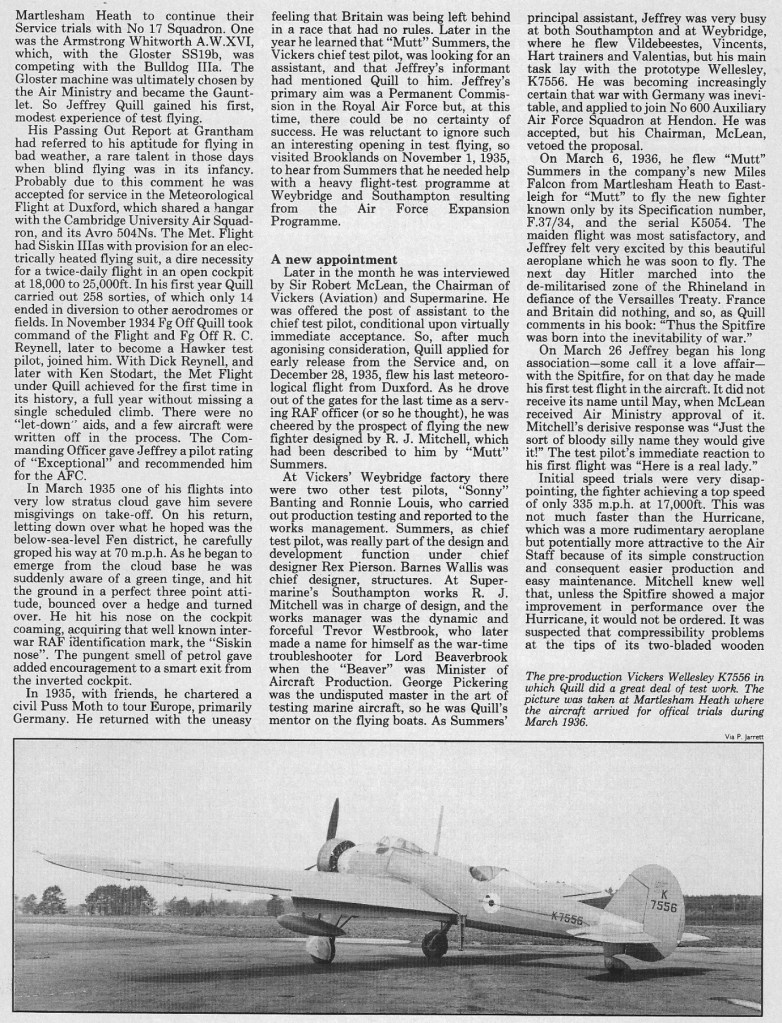
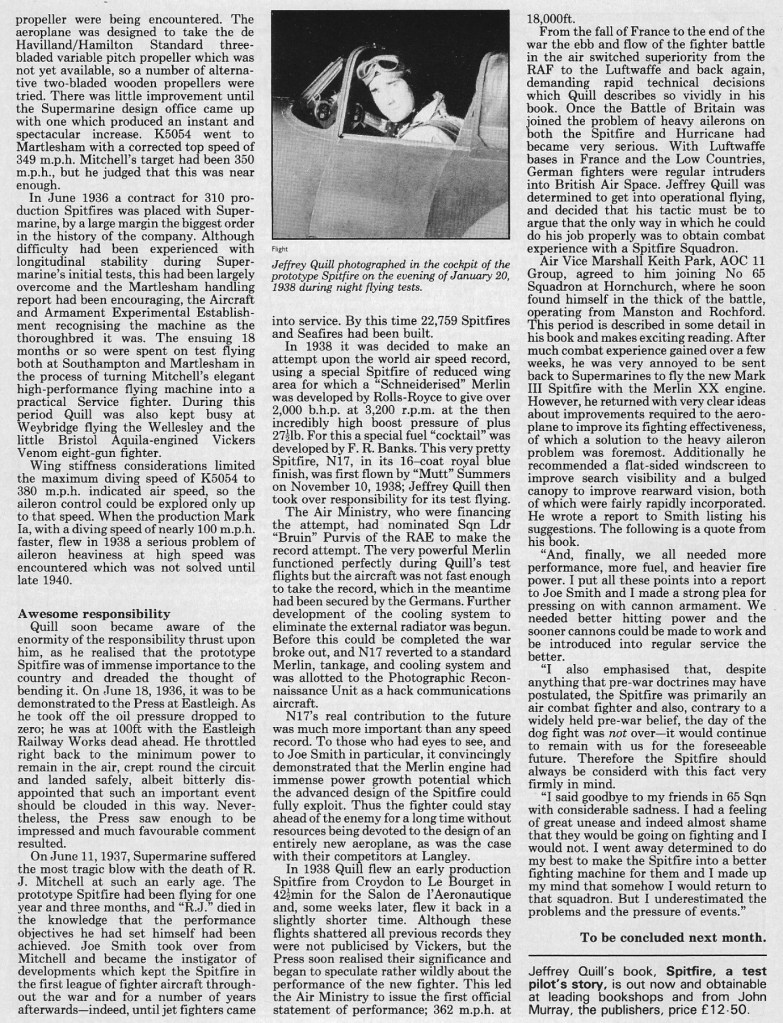
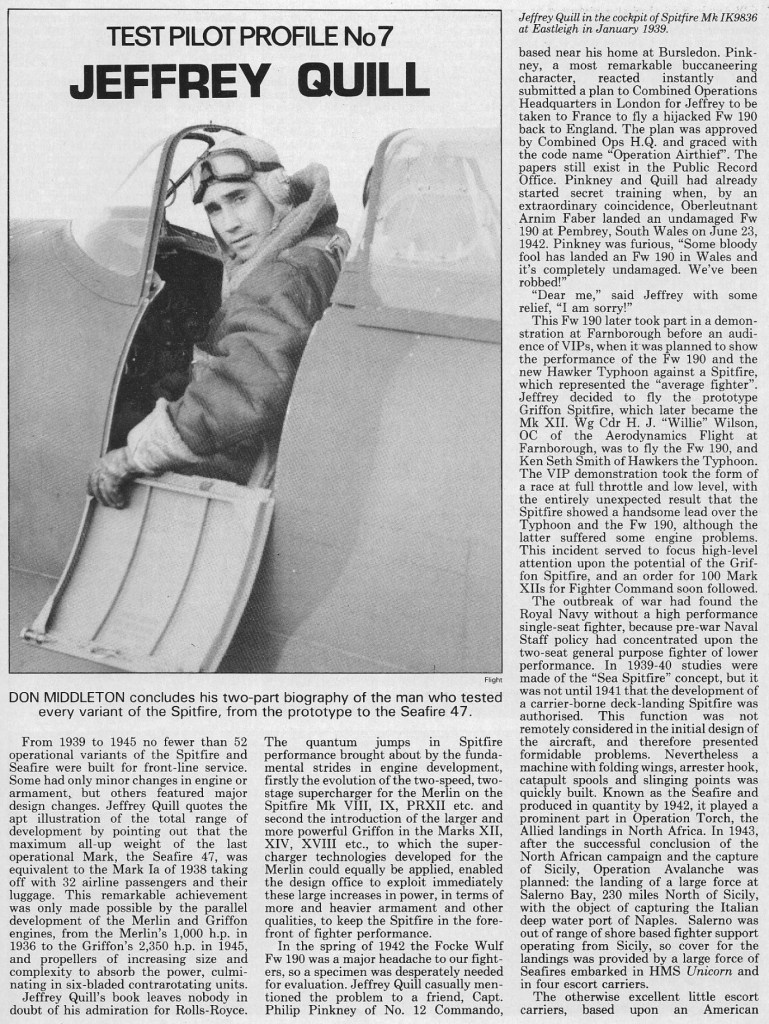
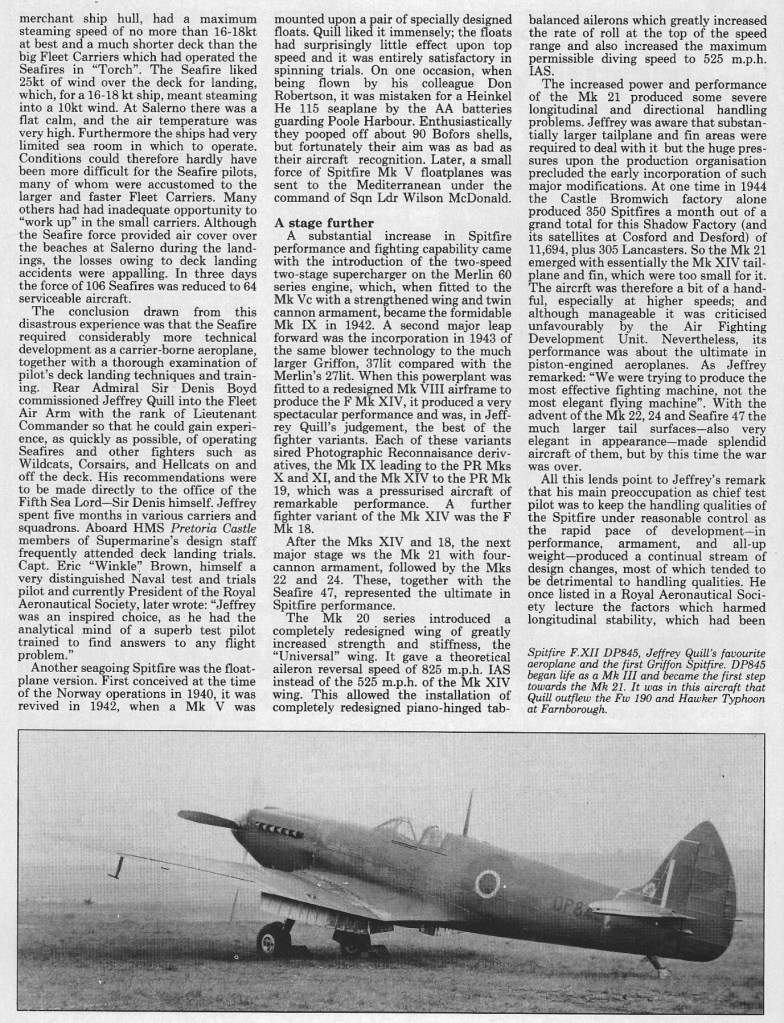
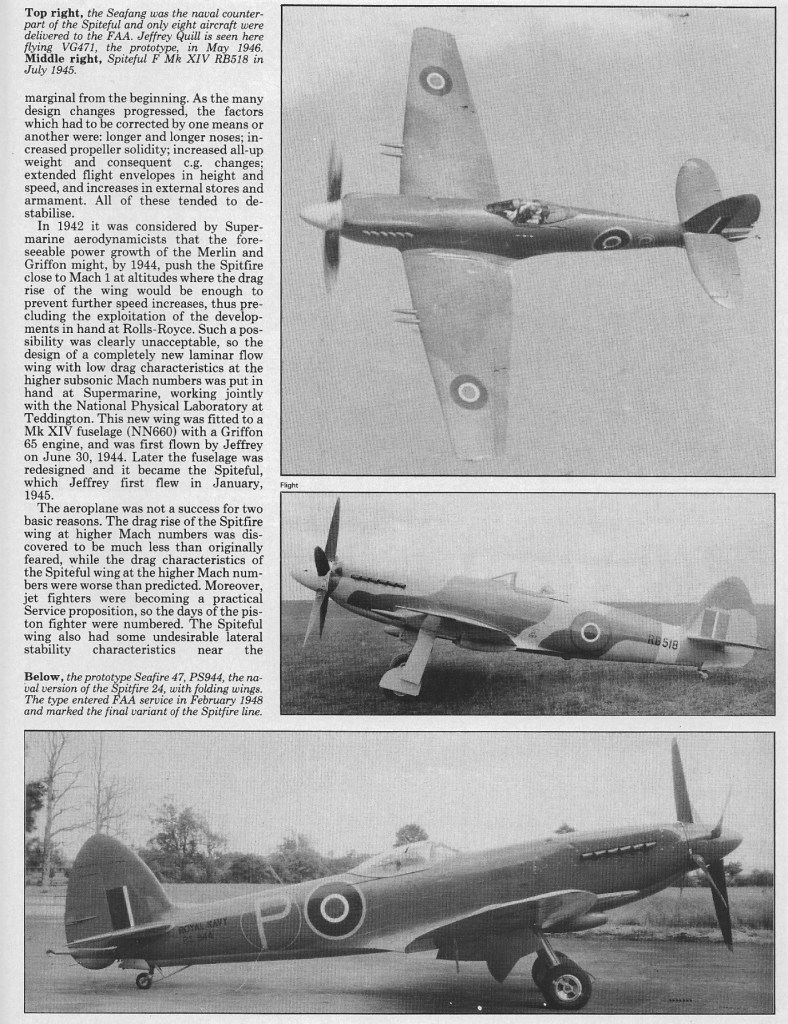
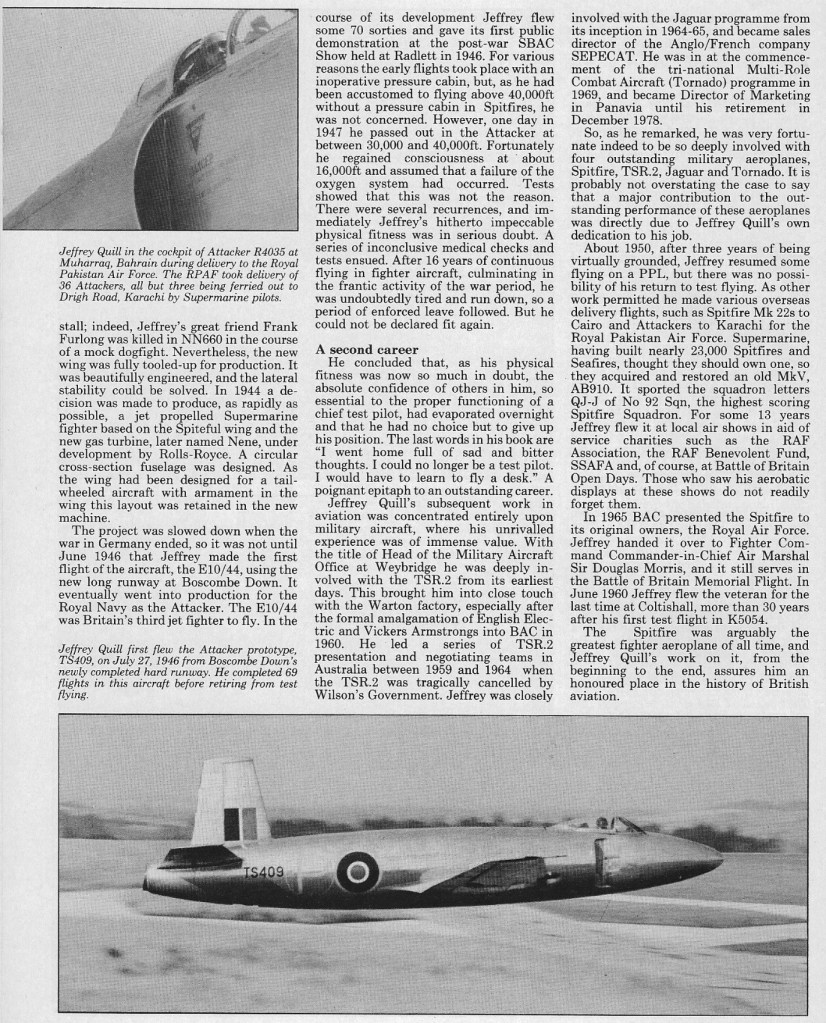
On 20 February 1996, Jeffery Quill, the second pilot to fly the Spitfire prototype, died in his sleep.
The third highest scoring ace from Italy during World War 1, with 24 victories.
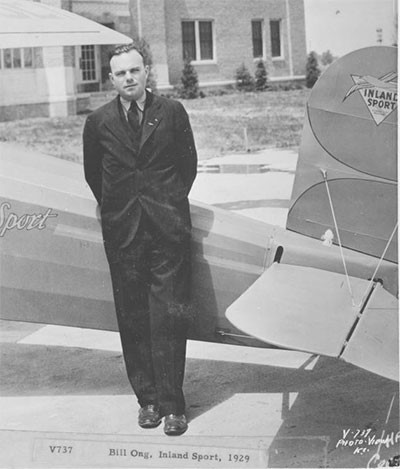
William A. Ong was born December 28, 1902 at Lacon, IL. In 1910, according to the U.S. Census, Ong was seven years old and living with his parents and sister Mercedes (4) in Lakewood City, OH. In 1920, the family was living in Kansas City, MO, but his sister was not listed on the Census form. His father was employed as an “Agent” in the “Brokerage” industry.
He learned to fly at Kansas City, MO in 1927 and carried Commercial pilot certificate No. 1904. He was a captain in the U.S. Army Air Corps Reserve.
Ong had his hands in many endeavors from air racing to flight training to air transport, aircraft sales and real estate development. From 1927-28 he was vice president of Beacon Airways of America. He was sales manager for Inland Aviation Co. from 1928-29, for Rearwin Airplane Co. 1929-34 and Waco Aircraft Co. 1934-35.
From the 1930 U.S. Census, William A. Ong (age 27) was living with his wife Esther (27) and sons Donald (4) and Richard (2) at 618 West 67th St., Kansas City, MO. He owned his house, which had an estimated value of $27,500. The three-story brick home still exists. Besides a relatively expensive home, the Ongs had a live-in maid named on the form as Delphine Regan (30).
Ong won the W.G. Skelley Trophy in 1932, the Glenn H. Curtiss Trophy in 1936, the E.L. Phillips Trophy and the E.H.R. Green Trophy in 1936 at the Miami All-American air manoeuvres. He won 19 events in the All-Kansas Air Tour of 1929.
An article, authored by Ong, appeared in Popular Aviation magazine, March, 1934. It was entitled “Death Stalks the Air Races”. In September, 1933, the International Air Races (not to be confused with the annual National Air Races) were held at Curtiss-Reynolds Airport in Chicago, IL. His article exposes the vagaries of professional air racing during the Golden Age, including the seemingly senseless accidents, injuries and deaths. This article describes the demise of Florence Klingensmith, a female pilot of great skill (not a Register pilot), during a pylon event at the 1933 races.
The International Air Races spanned four days in conjunction with Chicago’s Century of Progress exhibition.
He was general sales manager for Beech Aircraft Corp. from 1935-37. In 1937 he founded Ong Aircraft Corporation and Ong Flying Schools.
The 1940 Census placed Ong and his family at 6410 Wyandotte Street, Kansas City, MO. He reduced his housing obligations, since this two-story frame building was estimated to be worth $7,000 and he no longer had hired help to help care for it. This could be the result of ten years of the Great Depression. His family was together, though. He recorded his occupation as “Owner & Manager” in the “Aviation” business. He earned $2,500 per year. From another source, his flight time in 1940 was 3,600 hours logged.
Just before the outbreak of WWII, the Civilian Pilot Training Program (CPTP) was initiated by Register pilot Hap Arnold. Ong was involved with the CPTP program at Emporia, KS. He ran a glider training school as Grand Central Flying School for U.S. Army pilots at Renner Field, Goodland, KS near the border of Colorado. The field is now Goodland Municipal Airport (GLD).
Ong was a co-founder (with Register pilot Les Bowman, December 28, 1940) and the first president of NATA.
In 1964 he won the McDonald Distinguished Statesman of Aviation Award offered by the National Aeronautic Association. In 1975, he was inducted into the OX5 Aviation Pioneers Hall of Fame.
His company, Ong Aircraft Company, got into real estate development (date uncertain) and developed Fairwood Homes in Jackson County, MO. His son, Donald, was among those appointed by Ong to form an Interim Committee to govern and administer the Fairwood Homes Association.
Ong was a member of the Quiet Birdmen, Veteran Pilots Association, Professional Racing Pilots Association, the National Aeronautic Association and the Air Reserve Officers Association.
He died in November, 1979 at 66208 Shawnee Mission, Johnson, KS. This location appears to be a University of Kansas-affiliated hospital.
The National Air Transportation Association (NATA) established the William A. Ong Memorial Award. Presented annually since 1984, it is given for “extraordinary achievement and extended meritorious service to the general aviation industry.” It is considered one of the industry’s most prestigious award. Ong and Bowman’s work with the NATA and CPTP was celebrated by House Resolution 1669 on December 1, 2010.
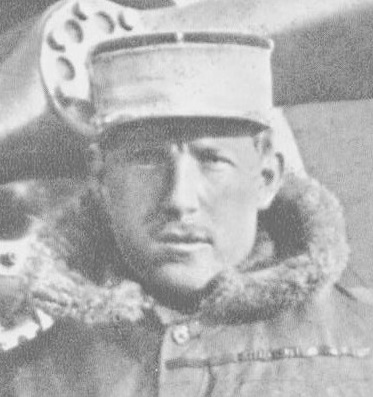
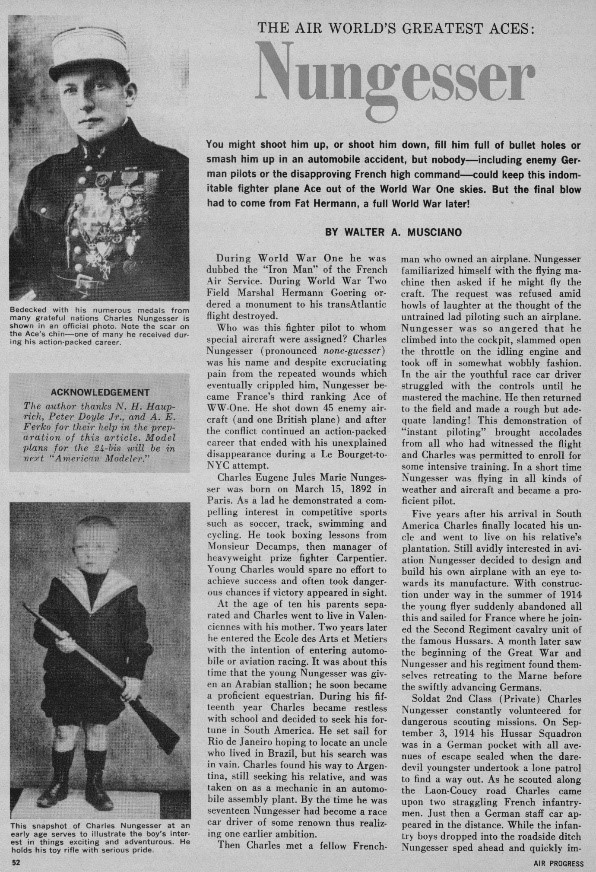
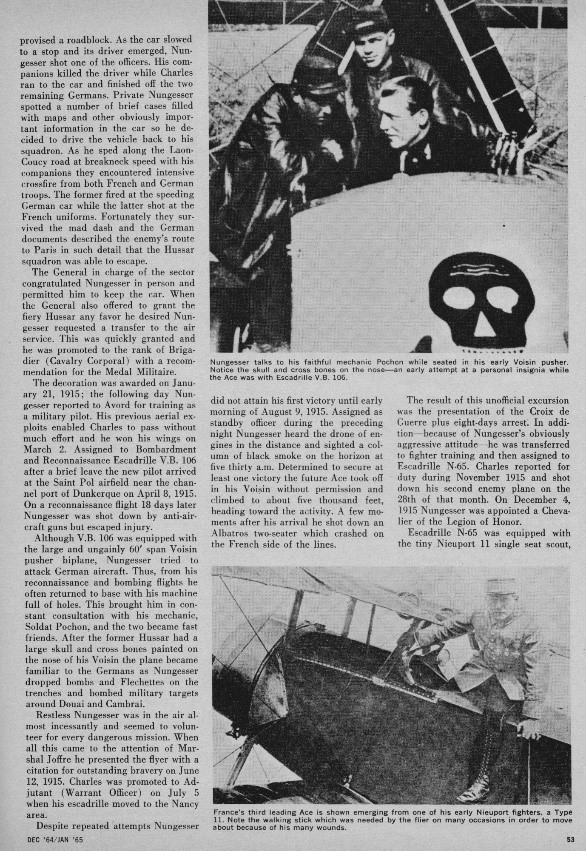
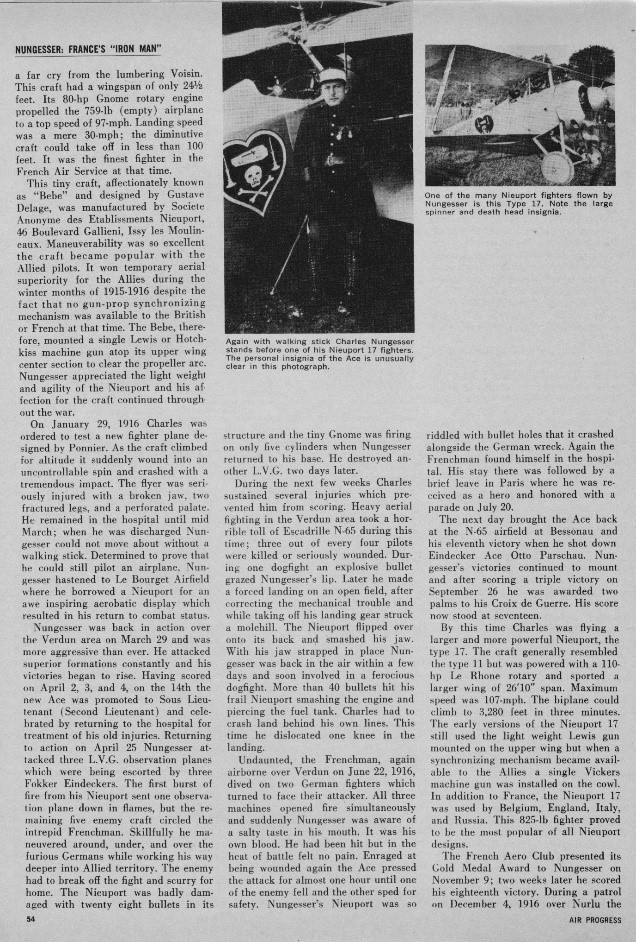
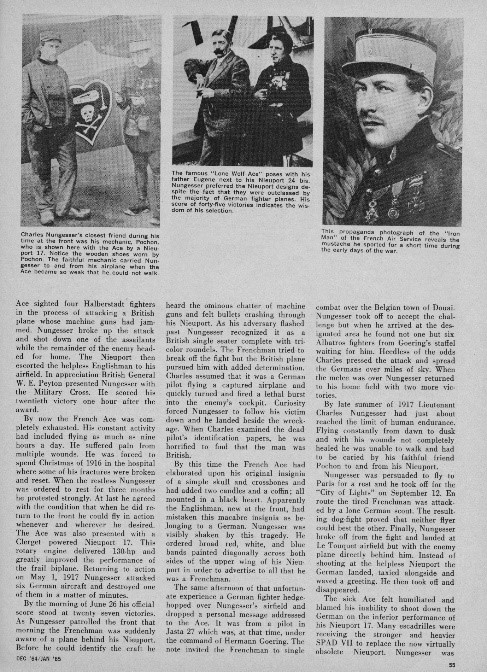
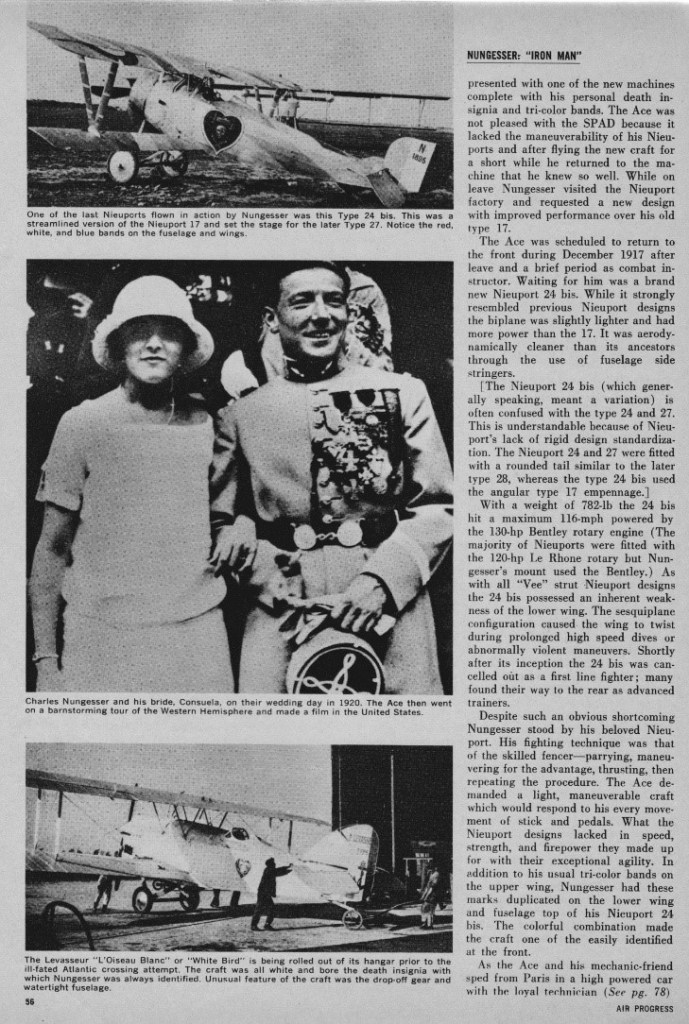
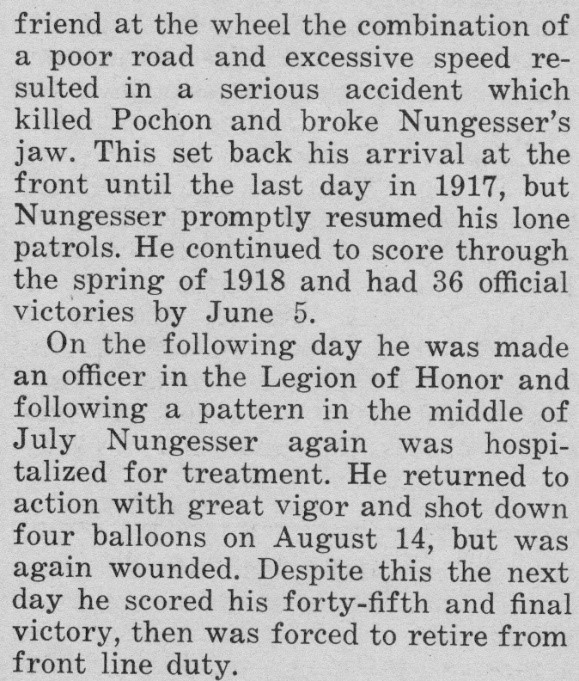
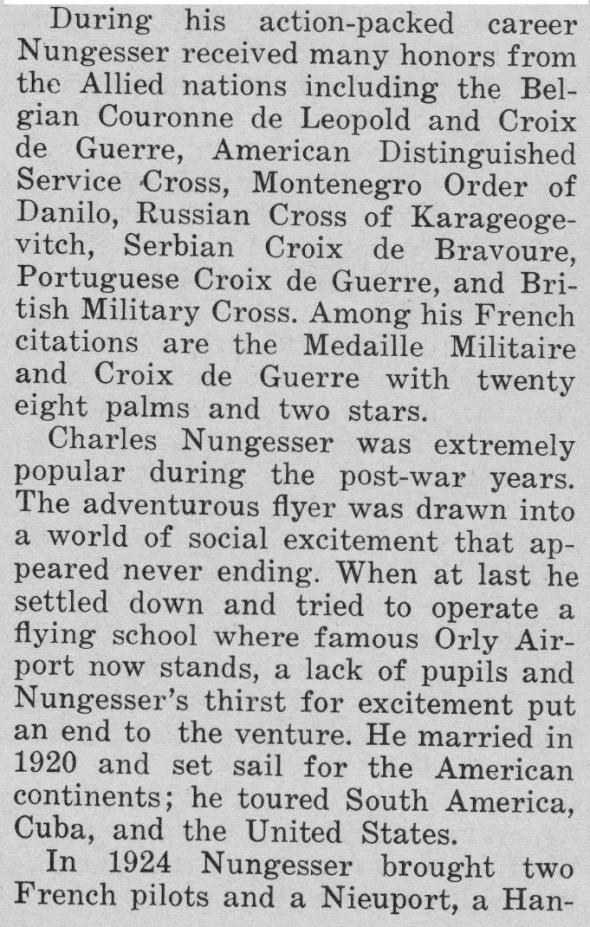
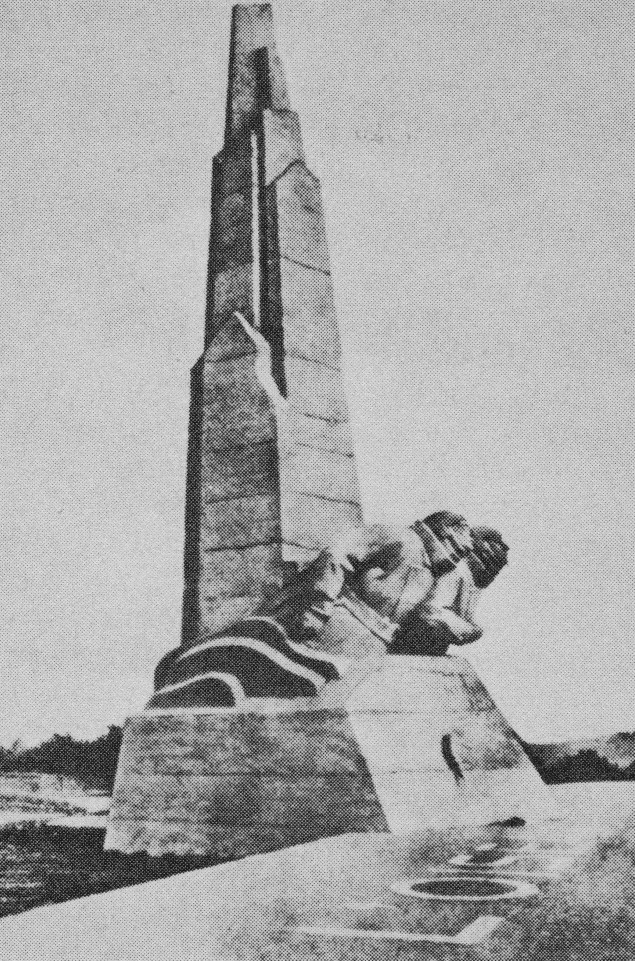
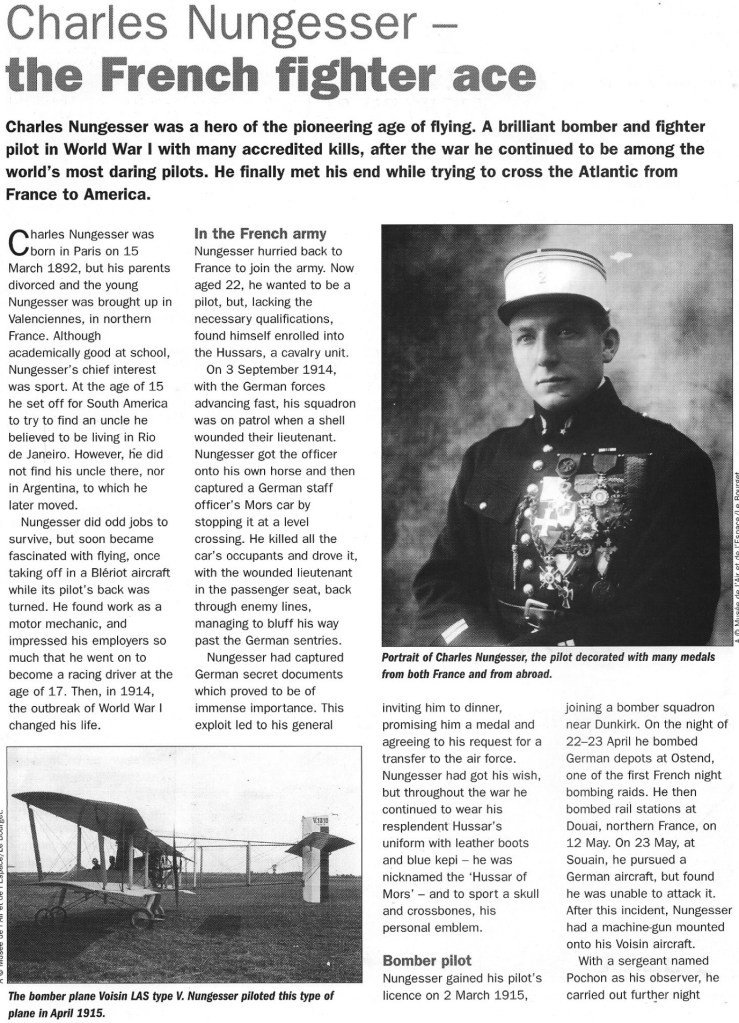
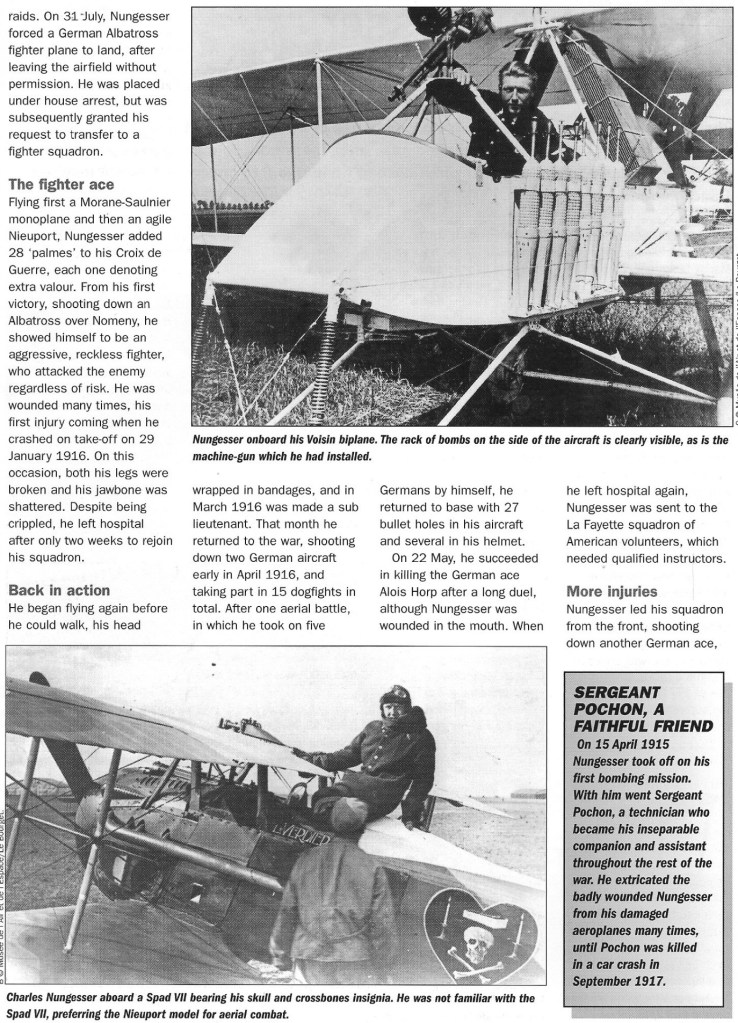
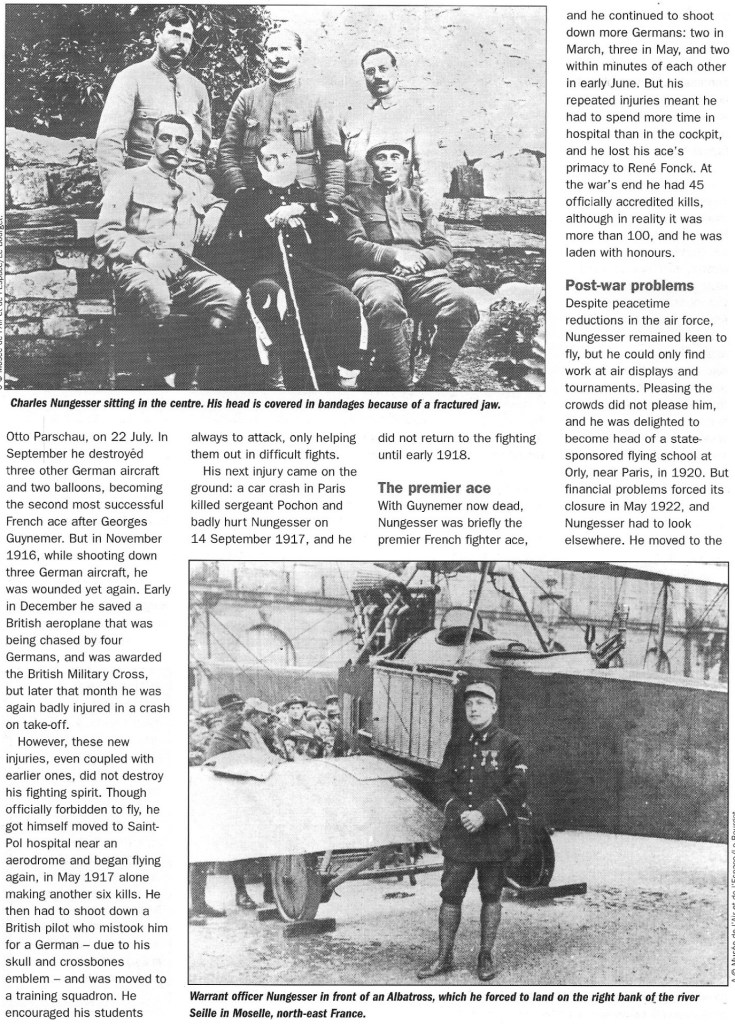
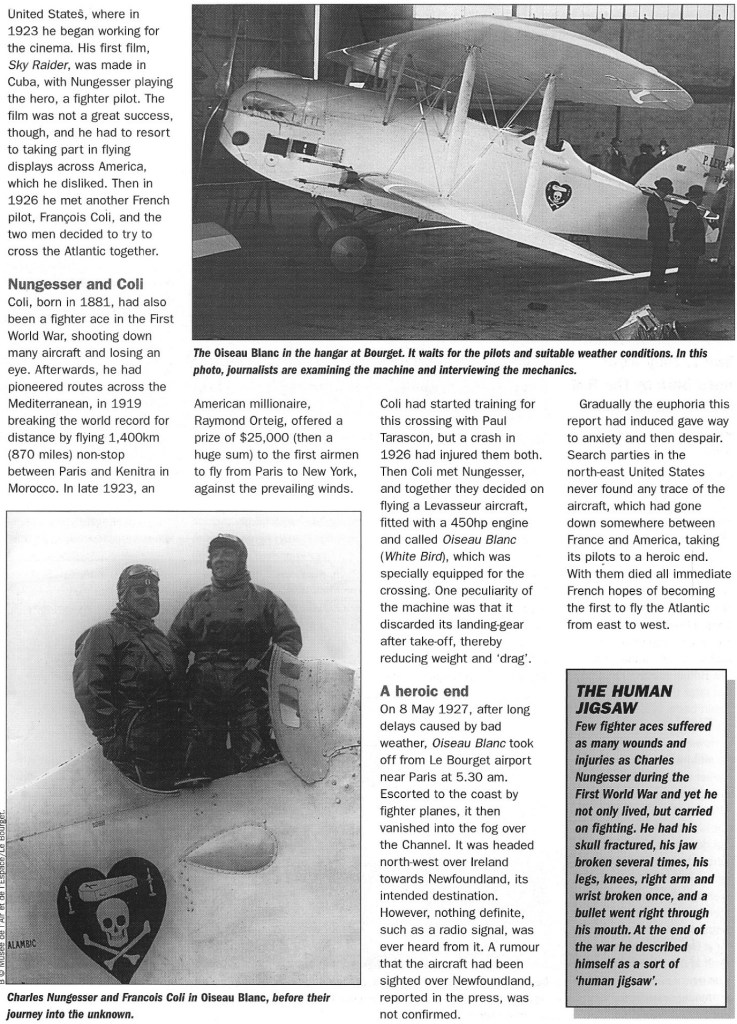
Something of a pre-war playboy with a name as a racing driver in South America and a self-taught pilot, he first fought as a hussar in France during 1914 before transferring to the air service. He suffered frequent wounds (17 times) in combat, necessitating repeated returns to hospital to have fractured bones rebroken and reset yet, flying Nieuports with Escadrille N65 from November 1915 onwards, he amassed a victory total of 45, often being unable to walk and having to be carried to his aircraft. Nungesser survived the war as a darling of Parisian society, only to disappear during an attempt to fly the Atlantic in May 1927. His aircraft insignia in war and peace comprised a black heart charged with a skull and crossbones, two candles and a coffin.
At the Olympic Games 1936, held in Berlin, the program included aviators, Czechoslovakia entered three pilots – Lt. František Novak, Ambrus and Wide. They all received brand new Ba-122. Novak took third place.
For competition in Saint-Germain, France in 1938, Novak assembled an improved B-122, later called the B-422. Novak came second.
After his return to Czechoslovakia, Novak organized an aerobatic team of nine airmen for various events.
Lt. František Novak declined to serve with Luftwaffe after the Germans had occupied the Czech and Moravian lands on March 15, 1939. He fled to France via Poland and died there in Apríl 1940. His remains were airlifted to Czech Republic in August 2002 and laid in their final resting place at his native village of Sokolec nr. Nymburk, Central Bohemia.
 All Aero