Rumania’s highest scoring WW2 pilot – 60 victories
People
Koshedub, Col. I.N. – WW2 ace
Soviet Union’s highest scoring WW2 pilot – 62 victories
Pattle, Sqn Ldr M.T. – WW2 ace
South Africa’s highest scoring WW2 pilot – 51 victories
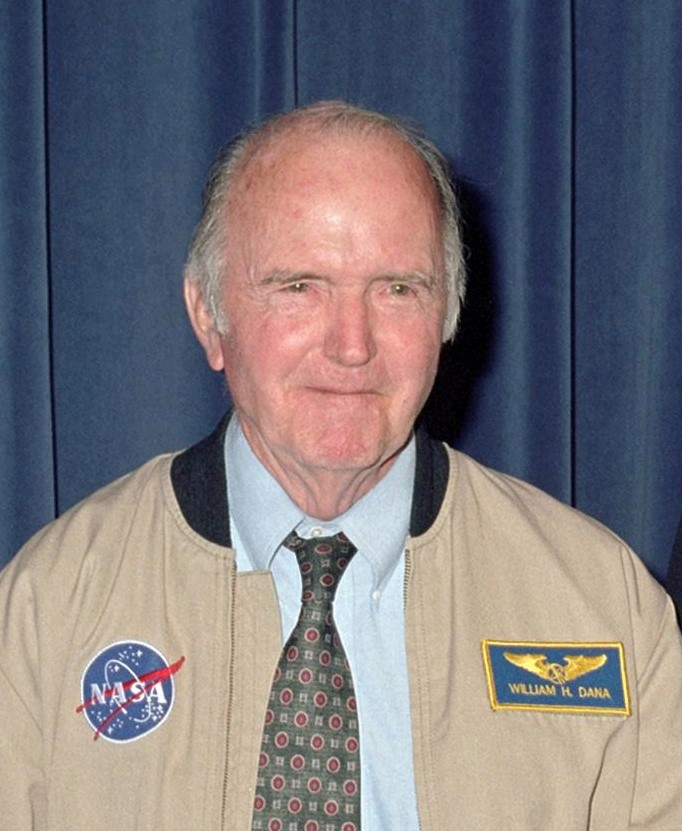
Dana, William (Bill) Harvey – NASA Test Pilot
NASA Test Pilot
William Harvey Dana (3 November 1930 – 6 May 2014)

William Harvey Dana was born 3 November 1930 at Pasadena, California, the first of two children of Harvey Drexler Dana, a geologist, and Rose Frances Jourdan Dana. Dana grew up in Bakersfield, California. He graduated from Bakersfield High School in 1948.

Bill Dana received an appointment as a cadet at the United States Military Academy, West Point, New York. He graduated 1952 and was commissioned as a second lieutenant in the United States Air Force. Lieutenant Dana served until 1956.
In 1958, Dana earned a Master of Science degree in Aeronautical Engineering from the University of California, Los Angeles, California.
On 1 October 1958, Dana began his 40-year career at the NASA High-Speed Flight Station, Edwards Air Force Base, California, as an Aeronautical Research Engineer. (This was the day that the National Aeronautics and Space Administration was established, making Dana the first new employee to be hired by NASA.) He was assigned to work on an X-15 performance simulator, and also to the North American XF-107 stability research program.
In September 1959, Bill Dana transferred to the Flight Operations Branch. One of his early projects was the North American Aviation JF-100C variable stability research aircraft.

In 1962 Bill Dana married Miss Judi Miller. They would have four children, Sidney, Matt, Janet, and Leslie.
Dana made his first flight in the North American Aviation X-15 hypersonic research rocket-plane on 4 November 1965. He reached a maximum speed of Mach 4.22, and a peak altitude of 80,200 feet (24,445 meters). He made a total of sixteen flights in the X-15s. Dana’s highest speed was Mach 5.34, 4 August 1966, and his highest altitude, 306,900 feet, (93,543 meters), on 1 November 1966. On 24 October 1968, Dana flew the final X-15 flight of the NASA X-15 Hypersonic Research Program.

Bill Dana also flew NASA’s experimental “lifting body” aircraft. On 27 February 1970, he flew the Northrop HL-10 lifting body to 90,030 feet (27,441 meters), the highest altitude reached during its flight test program.


He made the first flight of the Northrop M2-F3, 2 June 1970.
On 23 September 1975, Bill Dana made the final powered flight of the Martin Marietta X-24B lifting body aircraft.

Bill Dana was assigned as the Chief Pilot of the NASA Dryden Flight Research Center, and in 1986, became the Assistant Chief Flight Operations Division at Dryden.

Dana stopped test flying after 1993, when he was appointed Chief Engineer, NASA Dryden Flight Research Center. In 1997, he was awarded the NASA Distinguished Service Medal. He retired from NASA in 1998.
Bill Dana flew more than 8,000 hours in over 60 different aircraft types.

In 2000, NASA awarded Dana its Milton O. Thompson Lifetime Achievement Award, and on 23 August 2005, he was presented NASA’s Civilian Astronaut wings for his two X-15 flights above 50 miles.
William Harvey Dana died at Phoenix, Arizona, 6 May 2014, at the age of 83 years. He was buried at the Joshua Memorial Park in Lancaster, California.
Hinkler, Burt – Pioneer pilot
Pioneer pilot

An Australian aviator, Burt Hinkler (1892-1933) made the first solo flight from Britain to Australia in 1928. He made the flight in a single-engined Avro Avian in fifteen and a half days. After the flight, which broke 5 aviation records, the Australian government gave him a grant of £2000 and made him an honourary squadron leader.
Hinkler was born at Bundaberg, Queensland, Australia, and was named Herbert John Louis Hinkler. He was educated at Bundaberg. In 1911, he went to Britain where he worked as an aircraft engineer. He joined the Royal Naval Air Service in 1914.
In 1920 he made the first non-stop flight from London to Turin, in Italy, taking 9 hr 30 min. later he flew an Avro Avian 1930 km on a non-stop flight from Britain to Russia, breaking the world distance record for light aircraft. In 1931 he made a round-trip flight from London to the West Indies, on to Brazil and Africa, and back to London. In 1933 he tried to break the flying speed record from Britain to Australia. He crashed in Italy and died.
Hargrave, Lawrence – Aviation pioneer
Aviation pioneer
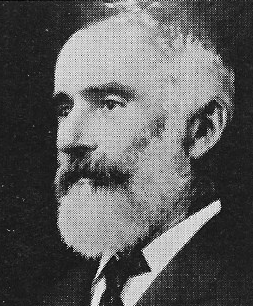
Lawrence Hargrave (1850-1915), was a pioneer in aviation and conducted many experiments into the principles of flight. His work in Australia laid the foundation for the development of modern aircraft. When he began his research in the 1880s, most people believed that it was impossible for machines to fly through the sir.
In 1893, Hargrave became interested in the way birds are sometimes lifted off the ground by the motion of the air above their wings. He experimented with kites, and discovered that a kite with a curved, convex upper surface pulled twice as hard as one with a flat surface. He went on to construct box kites, and at Stanwell Park, in New South Wales, Australia, in 1894, four box kites lifted him 5.3m above the ground.

He built many models, usually of a small size and of simple construction. At first he concentrated on designing and testing model aeroplanes that were propelled by flapping wings. In 1890, he constructed a flapping wing model driven by compressed air that flew 112m. That model is now in the Museum of Applied Arts and Sciences in Sydney, Australia.
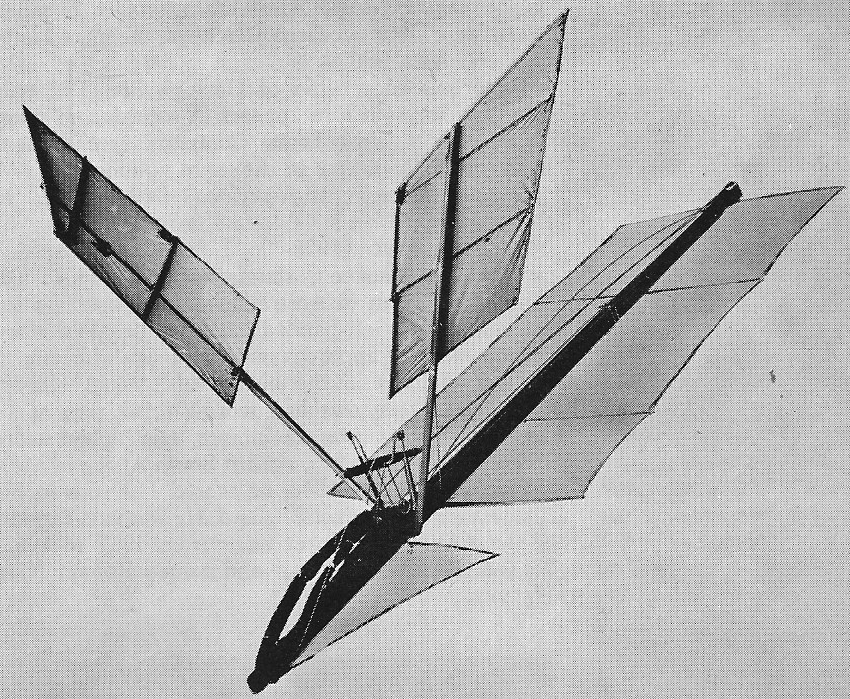
Hargrave also experimented with various methods of propelling aircraft. He built models powered by elastic bands, clockwork, compressed air, steam, and internal combustion engines. He invented a rotary engine driven by compressed air and later by steam. Similar engines driven by petrol powered many early aeroplanes.
Hargrave was born at Greenwich, near London, and was educated at Queen Elizabeth’s Grammer School at Kirkby Lonsdale, in Westmorland. In 1866, he emigrated to Australia, and worked as an engineer with a shipping company. In the 1870s, he joined a series of expeditions to New Guinea. In 1877, he was elected a member of the Royal Society of New South Wales. In 1879, he became an assistant astronomical observer at the Sydney observatory. Five years later he resigned from this post to devote himself into the principles of aeronautics.
Hargraves also experimented with such things as water skis and hydroplanes.
Edwards, Hughie Inwal – Airman, VC winner
Airman, VC winner
Edwards was born in Fremantle, Western Australia, in 1914. He landed in Britain in 1936 and by May 1941, was commanding No.105 Squadron of the RAF.
During a daylight raid on the German port of Bremen on 4 July 1941, he led his formation overland at extremely low altitude, carrying away telegraph wires, passing under high tension cables, and flying through a balloon barrage. Near the target, every aircraft was hit and four were destroyed. Edwards pressed home the attack and withdrew the surviving aircraft without further loss.
After the war he held several appointments with the RAF until his retirement in 1963.
He became governor of Western Australia in 1974.
Brickhill, Paul Chester Jerome – Pilot / author
Pilot / author
Paul Brickhill was born in 1916 in Melbourne, Australia. He served as a fighter pilot in World War II and was shot down.
As an author, Brickhill wrote ‘The Dam Busters’ (1951’0, which was later filmed. It was based on the RAF raids on the Mohne and Eder dams in May 1943. The book accounts the preparation of the special bombd usrd in the raid, the training for the attack, and the aircrews.
Other works include ‘Reach for the Sky’ (1954), a biography of sir-ace Douglas Bader, who flew despite he handicap of having artificial legs.
Bird, Nancy – Pioneer pilot
Pioneer pilot
Born in 1915, Nancy Bird became the youngest woman in the British Empire to obtain a commercial pilot’s licence. She received the licence in 1934 at the age of 19.
Born in Kew, New South Wales, Australia, she had her first flying lesson from Charles Kingsford Smith in 1932 at age 17. She obtained her A Class flying licence the same year.
While operating a charter service, she assisted the Far West Scheme by flying nurses and patients. During World War II, she commanded the Woman’s Air Training Corps.
Bennet, Donald Clifford Tyndall – RAF Commander
RAF Commander
Born in 1910, at Toowoomba, Queensland, Australia, Bennett became an air vice marshal in the Royal Air Force in 1943. At that time, he was the youngest RSF officer to hold this rank.
He was educated at Brisbane Grammer School.
In 1938, he made a record crossing of the Atlantic Ocean. He also made the first non-stop flight from Britain to South Africa and from Britain to Canada. During World War II, he became area officer commanding the Pathfinder Force of the Royal Air Force Bomber Command.
 All Aero