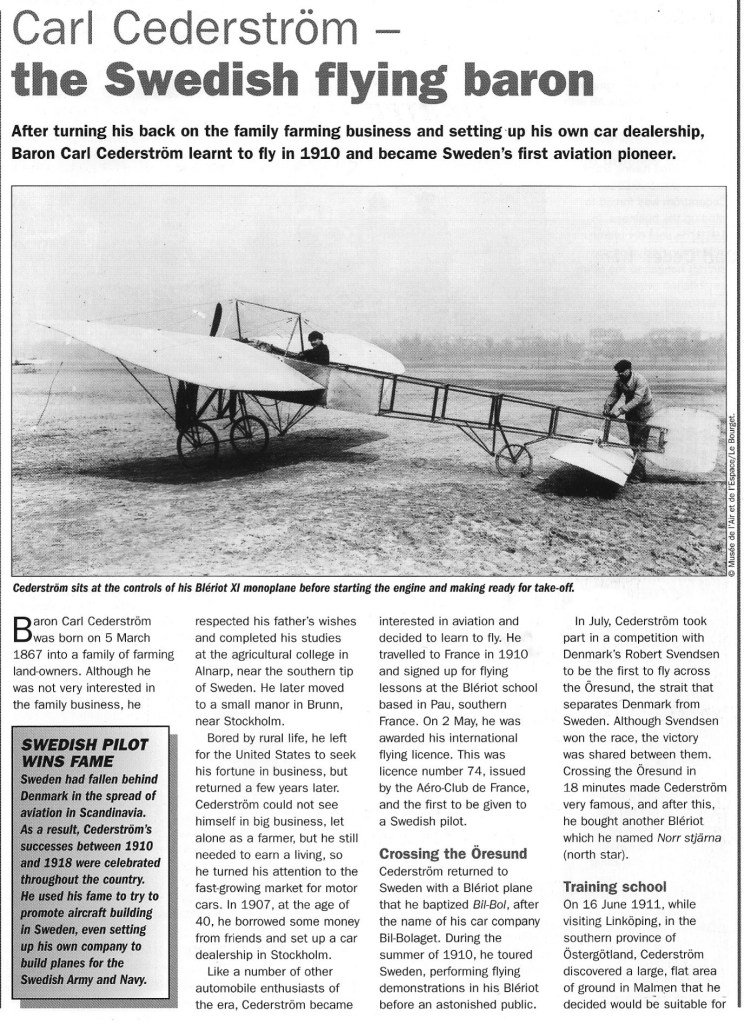

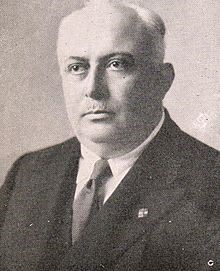
Mario Castoldi (February 26, 1888 – May 31, 1968) was an Italian aircraft engineer and designer.
Born in Zibido San Giacomo (province of Milan), Castoldi worked for the experimental center of Italian Military Aviation at Montecelio, not far from Rome.
In 1922 he moved to Macchi Aeronautica, where he became famous for designing a series of seaplanes that set world speed records. His first winning plane was the Macchi M.39 seaplane. It was designed in 1925-26 to compete in the Schneider Trophy race of 1926. Powered (like all the Macchi planes from this time) by a Fiat engine it managed a top speed of 396 km/h (246 mph) and won the contest for that year.
For the next four years, Castoldi designed several more racing seaplanes (the M.52, M.52R, and the M.67) which entered the Schneider Trophy races but they lost to the British racers (the Supermarine S.5, and the Supermarine S.6). Castoldi’s most famous plane was the Macchi M.C.72 (designed over three years from 1931 to 1933). At first, Castoldi hoped this plane would enter (and win) the Schneider Trophy race of 1931 but the plane could not be ready in time for that contest (the winner was the British Supermarine S.6B). As a result of three consecutive victories for the British, the Schneider races were over.
But development on the M.C.72 continued. Jane’s asserts that the Italian dictator Benito Mussolini personally supported the M.C.72 program (most likely as a part of his efforts to gain international prestige for Italy). Despite many setbacks, including the deaths of two test pilots who were flying the plane, the project continued and the plane got faster. In April, 1933 pilot Francesco Agello succeeded in setting a speed record for a seaplane with a speed of 684 km/h. Still, work on improving the plane’s speed continued as the design team hoped they could exceed a speed of 700 km/h. After a year and a half, this feat was accomplished as Agello, flying three passes in the M.C.72, attained an average speed of 709 km/h (440 mph) on October 23, 1934. This world speed record lasted for five years – but as a record for a piston-engine seaplane it has never been broken (likely because development of racing seaplanes essentially came to an end with the end of the Schneider Trophy contest).
After the M.C.72, Castoldi worked on designs for Italian fighters. However, he was limited by the inability of Fiat to provide more powerful engines. Later designs had to rely on German supplied engines. Castoldi was in charge of the design of a series of military fighter that formed the mainstay of Italian fighter force in World War II, specifically the C.200, C.202 and Macchi C.205.
In 1945 Castoldi retreated to private life. He died at Trezzano sul Naviglio in 1968.
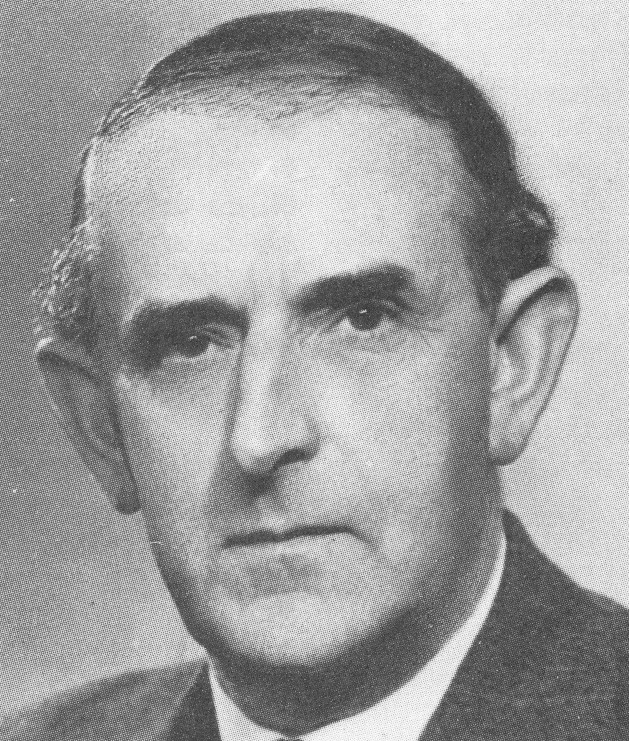
Sydney Camm was born on 5th August 1893 at 10 Alma Road, Windsor, Berkshire, the eldest of 12 children to Frederick Camm, a carpenter, and Mary Smith. His brother Frederick James Camm became a technical author, and created the Practical Wireless magazine.
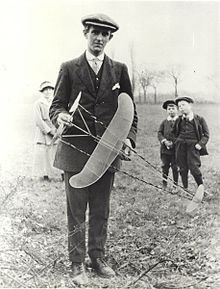
In 1901 Camm began attending the Royal Free School on Bachelors Acre in Windsor. In 1906 he was granted a Foundation Scholarship and in 1908 he left to become an apprentice carpenter. He developed an interest in aeronautics, and with his brothers began building model aircraft which were supplied to Herberts’ shop on Eton High Street. After finding that they could obtain a higher price they began selling direct to boys at Eton College, delivering the models in secret to avoid the attention of Herbert’s and the school authorities. These activities led Camm to become a founding member of the Windsor Model Aeroplane Club in early 1912. In the same year, he and others at the club succeeded in building a man-carrying glider.
Shortly before the start of World War I Camm obtained a position as a shop-floor carpenter at the Martinsyde aircraft company which was located at the Brooklands racing circuit in Weybridge, Surrey. He was soon promoted to the drawing office, where he remained throughout the war.
After the company went into liquidation in 1921, Camm was employed by George Handasyde, who had created his own aircraft manufacturing company, which was responsible for the creation of the Handasyde Monoplane.
Having married in 1915, Sydney and wife Hilda had a daughter in 1922.
In November 1923 Camm joined the Hawker Aircraft Company (later Hawker Siddeley) based at Canbury Park Road in Kingston upon Thames as a senior draughtsman. His first design was the Cygnet, the success of which led to his being appointed chief designer in 1925. His first design was the Cygnet, and he was appointed Chief Designer in 1925. At that time, in association with Hawker MD Fred Sigrist, he developed a system of construction using jointed metal tubes, more complex than the alternative, welded structure.
During his employment at Hawker he was responsible for the creation of 52 different types of aircraft, of which a total of 26,000 were manufactured. Among his early designs were the Tomtit, Hornbill, Nimrod, Hart and Fury. At one time in the 1930s 84 per cent of the aircraft in the RAF were designed by Camm.
He then moved on to designing aeroplanes that would become mainstays of the RAF in the Second World War including the Hawker Hurricane, Hawker Typhoon and Hawker Tempest.
Camm was evidently a hard taskmaster, who did not suffer fools gladly. As Hawker’s wartime Chief Project Engineer, Sir Robert Lickey later recalled:
“Camm had a one-tracked mind – his aircraft were right, and everybody had to work on them to get them right. If they did not, then there was hell. He was a very difficult man to work for, but you could not have a better aeronautical engineer to work under. […] With regard to his own staff, he did not suffer fools gladly, and at times many of us appeared to be fools. One rarely got into trouble for doing something either in the ideas line, or in the manufacturing line, but woe betide those who did nothing, or who put forward an indeterminate solution.”
Among the engineers who worked with Camm at Hawker were Sir Frederick Page (later to design the English Electric Lightning), Leslie Appleton (later to design the advanced Fairey Delta 2 and Britain’s first air-to-air missile, the Fairey Fireflash), Stuart Davies (joined Avro in 1936 and later to be chief designer of the Avro Vulcan), Roy Chaplin (became chief designer at Hawker in 1957) and Sir Robert Lickley (chief project engineer during the war, and later to be chief engineer at Fairey).
A full – size Hawker Hurricane replica has been placed near the River Thames, Windsor, to honour Sir Sydney Camm’s aircraft
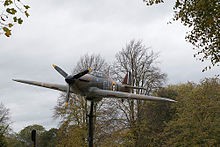
Notable among Camm’s post-war work is his contribution to the design of the Hawker Siddeley P.1127 / Kestrel FGA.1, the progenitor of the Hawker Siddeley Harrier. The Harrier is a well-known vertical takeoff and landing (VTOL) aircraft designed at Hawker Siddeley, which would later merge into British Aerospace, now known as BAE Systems. The Harrier was one of the radical aircraft which took shape in postwar Britain, which required the bringing together of many important technologies, such as vectored thrust engines like the Bristol Siddeley (later Rolls-Royce) Pegasus and technologies like the Reaction Control System. Camm played a major role in determining these and other vital Harrier systems. In 1953, Camm was knighted for these and other achievements and his contribution to British Aviation. The P.1127 first flew on 21 October 1960. Working with Camm on this aircraft and the Hunter was Professor John Fozard, who became head of the Hawker design office in 1961 and would write a biography of Camm in 1991.
He also served as President of the Royal Aeronautical Society from 1954 to 1955. Since 1971 the RAeS has held the biennial Sir Sydney Camm Lecture in June, given by the current commander-in-chief of RAF Air Command.
Camm worked for Hawker until his retirement in 1965, succeeded by John Fozard,even then planning an aircraft capable of Mach 4, and remained on the board of Hawker’s successor company, Hawker Siddeley (later merged with British Aerospace, now BAE Systems) until his death.
A resident of Thames Ditton since the 1930s, he was playing golf at the nearby Richmond Golf Course when he died on 12th March 1966, aged 72. He was buried in Long Ditton Cemetery, Long Ditton, in the County of Surrey.
In 1966, Camm was awarded the Guggenheim Gold Medal, which had to be presented posthumously.
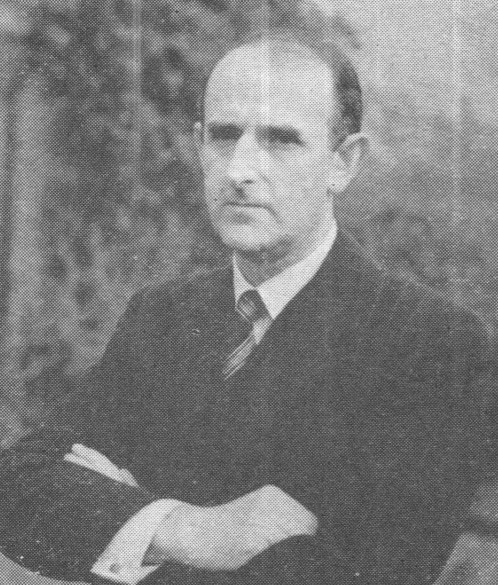
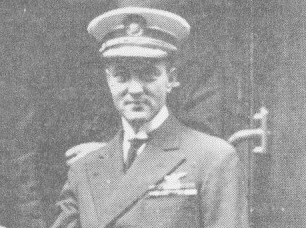
The first flight over the South Pole was made on November 28, 1929, by American Commander Richard Byrd and Bernt Balchen, in a thre engined Ford monoplane named “Floyd Bennett”, after Byrd’s former pilot.
Byrd and Balchen took off from a camp at the Bay of Whaes, 400 miles from the pole.
Bryd’s flight marked the end of the era of pioneer flying. All the continents had been spanned by air, all the oceans crossed.
The highest scoring ace from Austria-Hungary during World War 1, with around 40 victories.
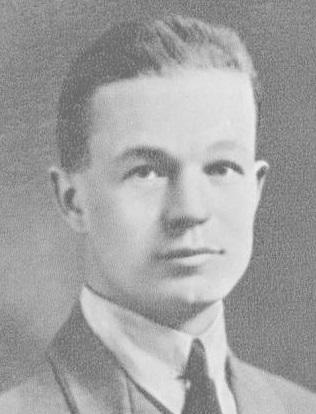
Capt. A. Roy Brown is the Canadian flier credited with shooting down the Red Baron.
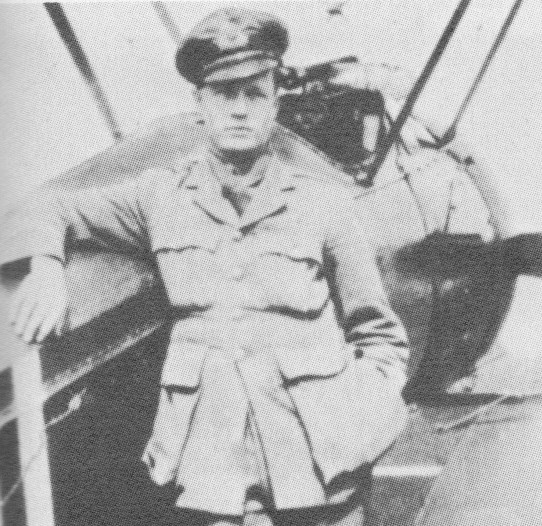

Born in1891 he gained his pilot’s certificate in August 1914 and served as a reconnaissance pilot (with his brother Wilhelm as observer) during the early months of the war.
While serving on Hauptmann Kastner’s Feldfliegerabteilung 62 he was fortunate to be selected to fly the new Fokker E.I monoplane fighting scout and, after initial instruction by Kastner, set about training promising young pilots in the skills of air combat, invariably by personal trial error and example, displaying natural gifts of patience and thoroughness. His hand-picked band of pilots, flying the new Albatros D.I and D.II scouts, became the scourge of the Western Front in 1916-7, and Boelcke himself despatched 40 allied aircraft.
He was killed in combat following a collision with a colleague on 28 October 1916 when his aircraft broke up before he could land.
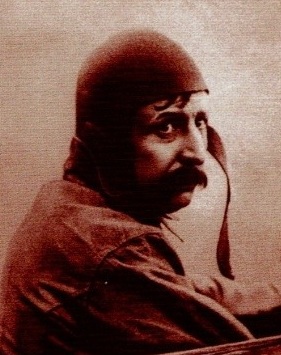
The French aviation pioneer Louis Bleriot achieved a unique place in aviation history by making the first crossing of the English Channel in a powered aircraft (his Type XI monoplane) on July 25, 1909. This success resulted in the formation of the a company to produce the Type XI monoplane, and many significant flights were made with these aircraft.
Bleriot flew about twenty-four miles from Clais to Dover in 37 miniutes, being at no time more than 100 ft above the water. When he reached Dover, he was unable to rise over the cliff and had to search for a gap in them. In the end he landed in a field near the castle. The flight won the Frenchman a prize of £1,000, and made him a popular hero. More important, everyone could now see the possibilities of the aeroplane.
The prize was given by the Daily Mail. It had been offered in October 1906, together with a prize of £10,000 for the first flight from London to Manchester, a distance of 183 miles.

In post-war years Bleriot took over SPAD. The SPAD (Societe pour l’Aviation et ses Derives) concern, although headed by Louis Bleriot, operated as a separate organisation from the Societe Bleriot-Aeronautique until 1921, when SPAD was absorbed and the subsequent progeny of its design team became officially known by the title of Bleriot SPAD.
In a 1934 visit to Newark Airport in the United States, Louis Bleriot predicted commercial overseas flights by 1938. Unfortunately, he would not see this come to fruition as his death from a heart attack took his life on August 2nd, 1936 in Paris, France – bring an end to this French hero’s legacy. The Louis Bleriot Medal, established in 1936, was aptly named in his honor and would be awarded to individuals involved in record-setting flights thereafter. The award is still handed out to this day.

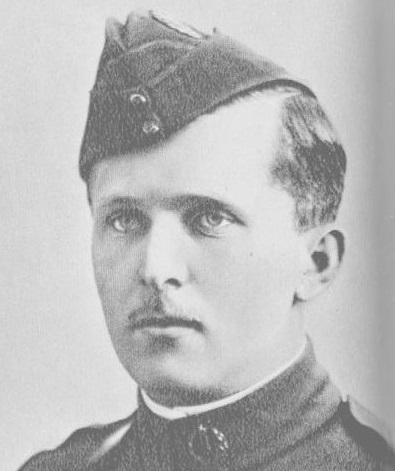
Originally a subaltern in the Canadian Mounted Rifles, Bishop transferred to the RFC in July 1915, first flying as an observer with No. 21 Squadron. He then trained as a pilot and joined No. 60 Squadron in March 1917,then flying Nieuport 17s. Within two months his score had reached 20 and he already held the DSO and MC. His VC was won for a solo dawn attack on an enemy airfield on 2 June when he destroyed three enemy scouts in the air and shot up others on the ground. He was promoted major, and after a spell off operations took Command of No. 85 Squadron in 1918. In a period of 12 days he shot down 25 enemy aircraft, for which he was awarded a DSO and the DFC. His ultimate 72 victories placed him second only to Mannock in the British list of high scoring pilots, and he remained in the Royal Canadian Air Force for many years after the war, eventually dying in Florida in September 1956.
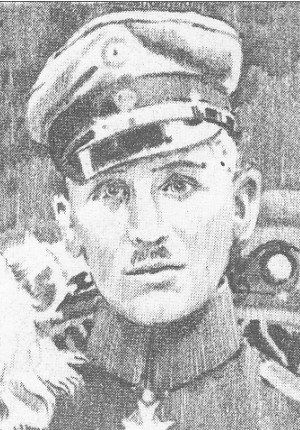
One of the greatest exponents of the Fokker DVII was Rudolf Berthold who, with 44 confirmed victories, was sixth on the roll of German aces. Appointed to command Jagdgeschwader N r 2 in the last year of the war, Berthold suffered continuous pain from a wound that rendered his right arm useless and Prompted him to have his controls altered to allow him to fly at all. At least 16 of his victories were gained during a period when his wound was daily rejecting splinters of suppurating bone. Active in the post-war right-wing Freikorps, Bertholdwas murdered by a band of communist thugs strangled with the ribbon of his own Ordre Pour le Mérite.
 All Aero