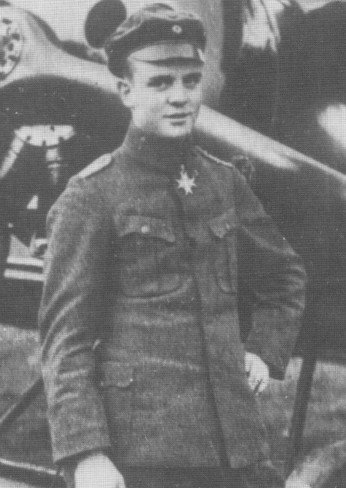
Josef Carl Peter Jacobs was born in Kreuzkapelle, Rhineland, on 15 May 1894. Learning to fly in 1912, he served in the Luftstreitskräfte from the outbreak of the war and scored his first two victories in the spring of 1916 while flying in Fokker Staffel West. In November Jacobs transferred to Jagdstaffel 22, commanded by his friend Oblt Erich Honemanns, and also instructed at Jastaschule 1 through the winter of 1916-17.
On 2 August 1917 Ltn Jacobs, with five victories, was given command of Jasta 7.
In early 1918 Jacobs received his first Dr.1, and he kept at least two on hand, even after acquiring one of the faster D.VIIs, until at least October 1918. He stated he overcame the triplane’s engine problems by replacing inoperative engines from a pool of British rotaries recovered from downed Camels, often provided by frontline troops in exchange for a case of champagne for each repairable example. This was Jacobs’ standing offer.
Jacobs’ tally has been described as 44 or 48, and more than 30 of those victories, including 11 Camels, were scored in Dr.1s.
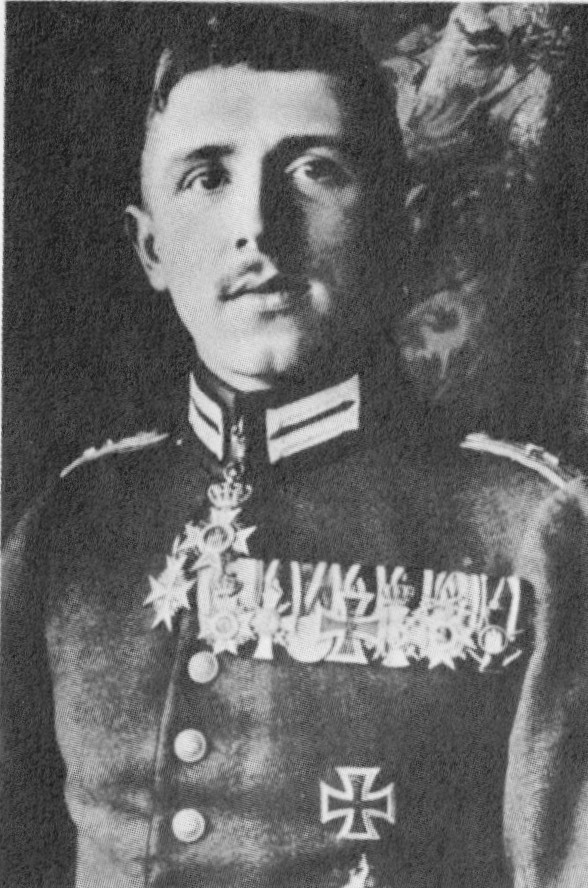
Jacobs preserved a lively log of his missions which included surviving two mid-air collisions. He was awarded the Orden Pour le Mérite on 18 July 1918.
After the war Jacobs fought communists in the Baltic Sea region, was a flight instructor for the Turkish army, was a director of the Adler Werke and owned an aircraft manufacturing plant in Erfurt. After Adolf Hitler came to power in 1933, Jacobs made no secret of his anti-Nazi sentiments, and although commissioned as a Major der Reserve, he declined service in the new Luftwaffe. Moving to the Netherlands and spending some of World War II in hiding, Jacobs returned to Bravaria after the conflict and died in Munich on 29 July 1978.
 All Aero