The Competition glider UP Targa, is a replacement for the Gambit C.
Paraglider
UP Kantega
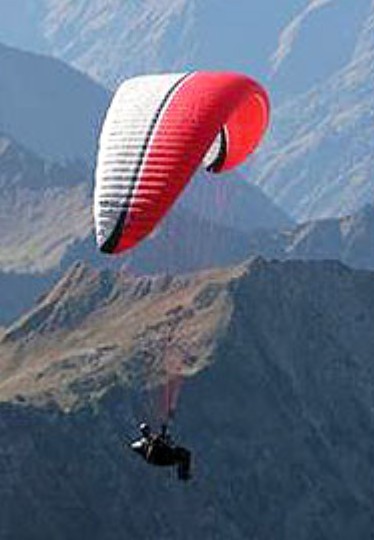
The UP Kantega, “a performing intermediate in the DHV 1-2 range”, in between the Makalu and the Summit 2, is in UP’s ‘Fun&Easy’ Category and designed for “stress-free flying”. Keeping the spirit of the first Kantega, this glider has benefited from technical features introduced in UP’s high performance gliders, such as the brake line attachment system along the trailing edge. The variable trailing edge tension provided by the system translates into “precise, crisp handling, improved glide performance and increased safety” according to the manufacturer. This way, the Kantega 2 offers the safety of the DHV 1-2 class but with a “pro” feel, and the performance of higher-rated gliders. UP paid special attention to the look of their new intermediate model: “Elongated, smoothly curved dihedral shape, swept-back tips and the new UP look where the graphic design underlines the sporty outline”. Trim speed is announced at 36-37 km/h, top speed at +50km/h “with high collapse resistance”. Other features include a new load bearing tape along the A-line attachment points; new riser system for improved glide at speed; and new, thinner Dyneema lines from Cousin for longevity, reduced drag and higher performance. The Kantega 2 ws available in 5 sizes, and you can customize the glider colors to your own preferences.
UP Summit
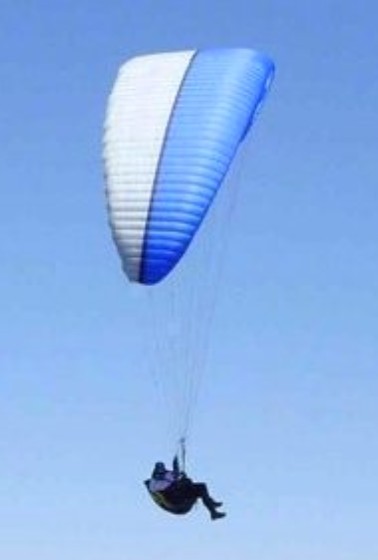
The DHV 2 category replacement for the Blues is the Summit 2 featuring the “Honeycomb-V-Tape System“ introduced by the company with last year’s perfo model, Trango. The system uses additional tapes that runs parallel to the top and bottom surface in combination with the V-tape system, “forming a stable construction similar to the honeycomb buildings of bees”, and was modified especially for the UP Summit 2 to be used in connection with a new line geometry.
UP specifies: It has line attachment points on every third cell to lower drag (only 152 lines); 63 cells taper off in size towards the tip and create a homogeneous geometry with an aspect ratio of 5.3; the risers are taken directly from the proven UP competition risers and provide a high speed range.
The UP Summit 2 is aimed at experienced pilots “who above all want to appreciate a perfect handling”, says the company.
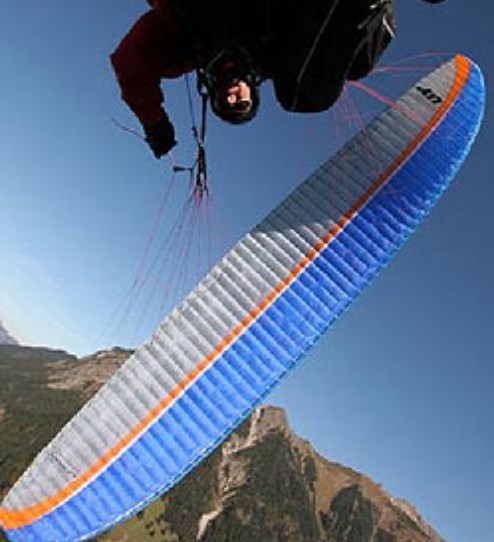
Swept-back wingtips and thin 12mm risers are the distinctive characteristics of the Summit 3. Designed for “going far, going fast” according to UP, the goal was “to retain or even improve the easy, forgiving flight characteristics of the predecessor whilst using all the new knowledge gleaned from the UP Targa 2 and the UP Trango 2 development process”. The Summit 3 incorporates the Variable Tension System on the trailing edge used in UP’s comp gliders, and the leading edge has been refined even further to reduce wrinkles, increase spanwise tension and “allow safe flying at lower angles of incidence”. It has ultra thin Dyneema lines from Cousin for more longevity, lower drag and more performance. The manufacturer’s data quote trim speed at 37 k/h, top speed at 52 k/h with “amazing stability across the entire range”, and low stall speed for “improved climbing abilities”. It also has higher directional stability, longer brake travel and a more “inherently stable” canopy. At UP say that the Summit 3 offers the “sweetest handling” ever achieved in any of their gliders. The Summit 3 was available in 4 sizes, including a new SM size.
Summit 2 M
DHV 2
Summit 3
DHV2
UP Targa

The Targa 3 is aimed at competition and high level pilots. UP incorporated a number of innovations and technical features in it to obtain a race machine that’s “more docile to fly than its already impressive predecessor, which translates into easy, stress-free flying regardless of the conditions”, according to them. A replacement for the Gambit C, it is claimed to reach more than 60 k/h, with a leading edge closed an additional 30%.
One new feature is the “Brake Tension System” (BTS), which gives variable trailing edge tension and it helps refine the handling, improves the feedback through the brakes and makes the wing respond better to brake line input. Another Targa 3 feature is the new trimmer system with two trim options; one to adjust pitch and one to improve glide at very high speeds. The pilot adjusts these two systems for the type of flying he prefers: Slow and flat intermediate style or fast and dynamic with lots of roll. The risers are a new development focused on improving glide at very high speeds. When the speed bar is applied, a system of pulleys and lines change the angle of incidence without disrupting the profile. In flight, these features translate into a trim speed from 37 to 43km/h (variable through the new riser system); “useable” top speed well above 60km/h; very easy inflation / launching; variable A-line tension for either extra speed or extra stability; BTS variable trailing edge tension system for “the best handling and safety ever” in a comp wing; Predictable and easy collapse characteristics with no tendency to cravatte, and a very clearly defined stall point; extremely stable canopy through the use of the latest CAD software; super light speedbar travel for easy high-speed gliding and unbelievable glide ratio; and precise, easy handling. The Targa 3 was available in 9 sizes and a wide choice of colors.
UP Vision Classic
Vision Classic L
Paraglider circa 1998.
Wing area: 32.4 sq.m
Certification: DHV 1-2/Afnor
Pilot weight: 100-130 kg
No. of cells: 41
Wing span: 12.6 m
Aspect ratio: 4.9
Price (1998) £ 1999
Vision Classic M
Paraglider circa 1998.
Wing area: 29.4 sq.m
Certification: DHV 1-2/Afnor
Pilot weight: 85-110 kg
No. of cells: 41
Wing span: 11.9 m
Aspect ratio: 4.9
Price (1998) £ 1949
UP Pick Up
Pick Up L
Paraglider circa 1998.
Wing area: 43 sq.m
Certification: DHV Afnor
Pilot weight: 150-190 kg
No. of cells: 47
Wing span: 14 m
Aspect ratio: 1.2
Min sink: 1.2 m/s
Max speed: 45 kph
Price (1998) 209000 Fr
UP Escape

Escape L
Paraglider circa 1998.
Wing area: 30.1 sq.m
Certification: DHV 3
Pilot weight: 100-130 kg
No. of cells: 102
Wing span: 13.6 m
Aspect ratio: 6.1
Min sink: 1 m/s
Price (1998) £ 2899
Escape M
Paraglider circa 1998.
Wing area: 27.7 sq.m
Certification: DHV 3
Pilot weight: 89-110 kg
No. of cells: 102
Wing span: 13 m
Aspect ratio: 6.1
Min sink: 1 m/s
Price (1998) £ 2799
Escape S
Paraglider circa 1998.
Wing area: 24.8 sq.m
Certification: DHV 3
Pilot weight: 70-90 kg
No. of cells: 102
Wing span: 12.3 m
Aspect ratio: 6.1
Min sink: 1 m/s
Price (1998) £ 2699
UP Boogie
Boogie L
Paraglider circa 1998.
Wing area: 32.6 sq.m
Certification: DHV 1-2/Afnor
Pilot weight: 95-120 kg
No. of cells: 37
Wing span: 12 m
Aspect ratio: 4.5
Min sink: 1.3 m/s
Max speed: 40 kph
Price (1998) £ 1699
Boogie M
Paraglider circa 1998.
Wing area: 30 sq.m
Certification: DHV 1-2/Afnor
Pilot weight: 75-110 kg
No. of cells: 35
Wing span: 11.3 m
Aspect ratio: 4.2
Min sink: 1.3 m/s
Max speed: 40 kph
Price (1998) £ 1599
UP Blues
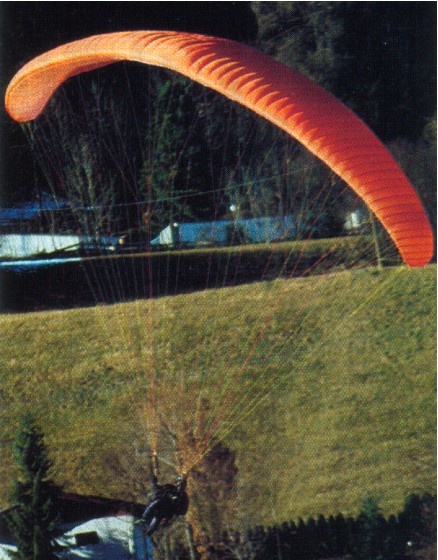
Blues L
Paraglider new in 1998.
Wing area: 30.5 sq.m
Certification: Afnor
Pilot weight: 95-120 kg
No. of cells: 63
Wing span: 12.7 m
Aspect ratio: 5.29
Price (1998) 5790 DM
Blues M
Paraglider new in 1998.
Wing area: 28.1 sq.m
Certification: Afnor
Pilot weight: 80-105 kg
No. of cells: 63
Wing span: 12.2 m
Aspect ratio: 5.29
Price (1998) 5590 DM
Blues S
Paraglider new in 1998.
Wing area: 25.5 sq.m
Certification: Afnor
Pilot weight: 65-85 kg
No. of cells: 63
Wing span: 11.63 m
Aspect ratio: 5.29
Price (1998) 5390 DM
UP Soul
Paraglider
Soul L
Paraglider circa 1998.
Wing area: 31.8 sq.m
Certification: DHV 2/Afnor
Pilot weight: 100-130 kg
No. of cells: 58
Wing span: 12.8 m
Aspect ratio: 5.2
Min sink: 1.1 m/s
Max speed: 45 kph
Price (1998) £ 2499
Soul M
Paraglider circa 1998.
Wing area: 30 sq.m
Certification: DHV 2/Afnor
Pilot weight: 85-110 kg
No. of cells: 56
Wing span: 12.4 m
Aspect ratio: 5.2
Min sink: 1.1 m/s
Max speed: 45 kph
Price (1998) £ 2399
 All Aero