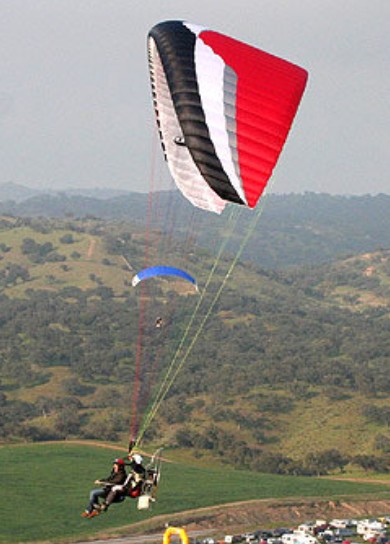
A completely new tandem wing designed for professional tandem pilots, the Magnum replaces the McDaddy in the Ozone range. Easy and smooth inflation even in high winds is one of its advantages, but the manufacturer also underlines its stability in pitch and roll for comfortable flights, and the “trademark Ozone handling for precise and dynamic piloting”.
It has a size of 41 sq.m, an aspect ratio of 5.11 and 46 cells, for a clean sail design and efficient performance, with benign launch characteristics and a lightweight sail design.
The Magnum’s profile is a new design, and both the planform and sail tension have been created specially for comfortable brake pressure, easy launches, and performance, according to Ozone. The canopy is made of Porcher Marine cloth, with the new Porcher Skytex 45 Evolution on the topsail, a new material “extremely durable” and stretch resistant, for a more precise feeling in flight and a more durable glider. Weight range for the Magnum is 130-220kg.
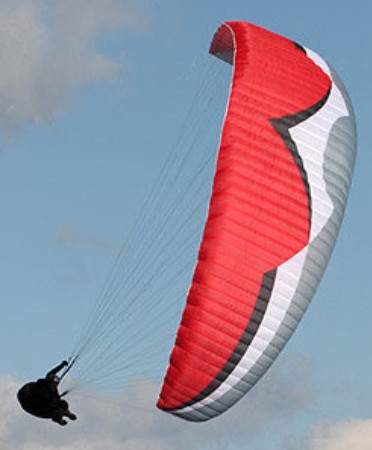
The replacement of the Vulcan for the intermediate-advanced category is based on Ozone’s high performance model, the DHV2 Mantra, offering “ excellent passive safety ”. With an aspect ratio of 5.6 and 59 cells (like the Mantra), at Ozone announce that this is a ” kilometer eating XC machine “. The Addict has an increased surface area in the wingtips for ” lifty and efficient turn ” that can also be very tight for the weakest and smallest thermals. In the Addict the sail tension has received special attention to obtain a smooth in-flight behavior in rough air and great stability at speed, according to Ozone.
The sail of the Addict is Porcher Marine, with Porcher Marine 45 Evolution Skytex for the outer surface, and the glider weights only 5.6 kg for the M size. The Addict is also available in a thin lines version, the ‘Addict R’, for those looking for a bit extra performance, and 5 sizes.
Ozone have certified their tandem glider for lightweight pilots, the Mc Daddy “Jr”, or 41. They decided to make a smaller size for their tandem model in order to offer the pilots a wing “that will best suit their normal pay load, the conditions they normally fly in and the type of flying they do, whether it be purely pleasure or commercial flying”. This idea makes perfect sense with Ozone’s philosophy: “Size matters!”.
The weight range for the Mc Daddy 41 goes from 130 to 200kg, and the Mc Daddy 44, from 140 to 230kg. According to Ozone, the glider is very easy to fly and launch, with no tendency to overshoot or pull the pilot off his feet as the wing rises. “The handling is pretty bloody good for a tandem. It’s dynamic, you can really through it around and the brake pressure is relatively light so it’s good fun to fly. Performance wise it has enough. Faster than the Cosmic with a better glide should be sufficient for anybody”, says Ozone’s designer Rob Whittal. The Mc Daddy 44 was yet to be certified.
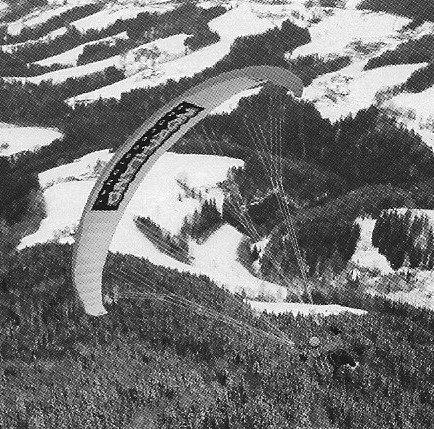
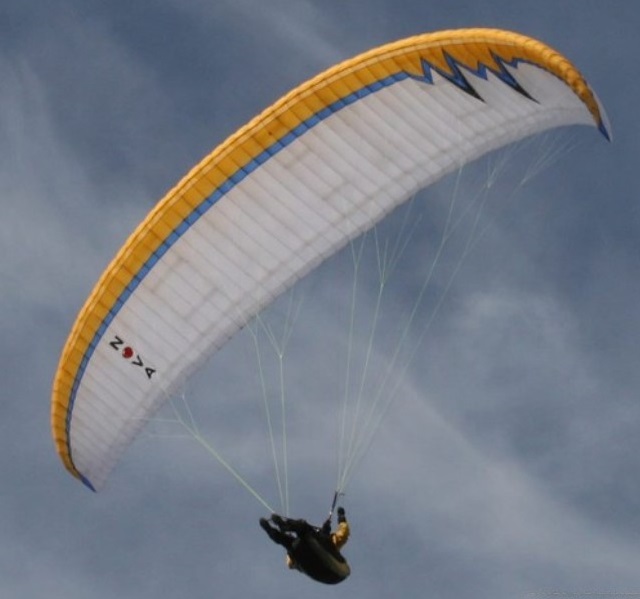
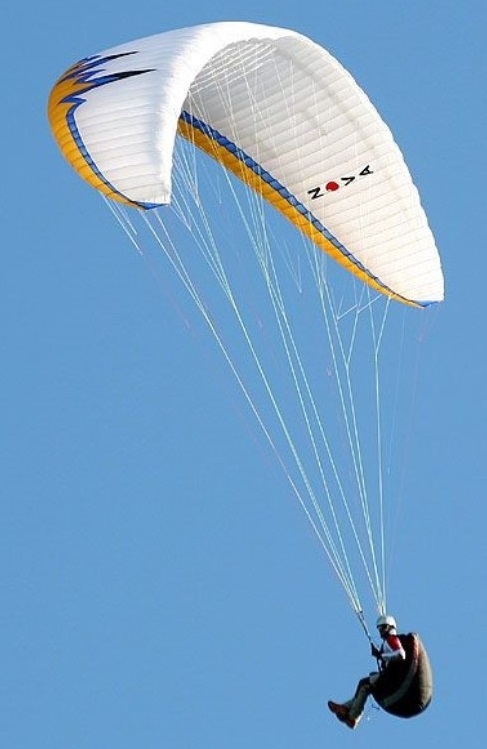
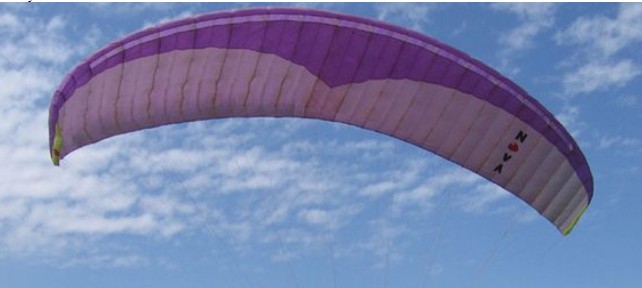
Nova’s Ibex 3 is a superlight wing designed by alpine pilots for alpine flying. Previous models of the Ibex (1 & 2) had been designed for the lightweight category, but this time around the Ibex 3, although following the same theme, have varied the weight ranges to incorporate an XXS for the more experienced pilot. For the XS and S sizes, the wing will position itself comfortably within the EN-A category and have excellent glide and thermal performance for its category.
The NOVA Ibex 3 was designed for use in difficult and rough terrain; the lines are more rigid and the leading edge and upper surface made from an anti-abrasive, resistant material. Launching and in-flight handling are very simple. Both offer the pilot a high degree of passive safety when flown within the recommended weight range.
Ibex 15
The IBEX 4 is light with a small packing volume and offers the safety of an EN/LTF A-wing as well as very good glide performance for its classification. In comparison to its predecessor, the IBEX 4 is a completely new design. It has been built using Diagonal Tape Ribs. Sewing these force vector optimised diagonal ribs requires more effort and high manufacturing precision, but they ensure a cleaner profile. This means the IBEX 4 performs better and feels very compact and balanced in the air. It is solid in flight and is really fun to fly.
Ibex 15
Ibex 15
Ibex 1 15 Year: 2007 Pilot weight: 28-73 kg Flight weight: 45-90 kg Wing weight: 3.00 kg Area: 17.70 m2 Span: 9.52 m Ratio: 5.12 Flattening: 15% Area (proj.): 15.07 m2 Span (proj.): 7.37 m Ratio (proj.): 3.61 Speed Acc: 48 km/h Speed Base: 37 km/h Speed Min.: 22 km/h Glide ratio avg.: 8.15 Best sink rate: 1.10 m/s Optimal speed: 37.00 km/h Optimal sink rate: 1.30 m/s Class/cert.: DHV 2-3/GH
Ibex 1 17 Year: 2007 Pilot weight: 32-82 kg Flight weight: 50-100 kg Wing weight: 3.40 kg Area: 20.08 m2 Span: 10.14 m Ratio: 5.12 Flattening: 15% Area (proj.): 17.09 m2 Span (proj.): 7.85 m Ratio (proj.): 3.61 Speed Acc: 48 km/h Speed Base: 37 km/h Speed Min.: 22 km/h Glide ratio avg.: 8.15 Best sink rate: 1.10 m/s Optimal speed: 37.00 km/h Optimal sink rate: 1.30 m/s Class/cert.: DHV 2-3/GH
Ibex 1 19 Year: 2007 Pilot weight: 36-91 kg Flight weight: 55-110 kg Wing weight: 3.80 kg Area: 22.60 m2 Span: 10.76 m Ratio: 5.12 Flattening: 15% Area (proj.): 19.23 m2 Span (proj.): 8.30 m Ratio (proj.): 3.61 Speed Acc: 48 km/h Speed Base: 37 km/h Speed Min.: 22 km/h Glide ratio avg.: 8.15 Best sink rate: 1.10 m/s Optimal speed: 37.00 km/h Optimal sink rate: 1.30 m/s Class/cert.: DHV 2/GH
Ibex 4 XXS Number of cells: 36 Projected span: 7.76 m Projected area: 19 sq.m Projected aspect ratio: 3.17 Flat span: 10.31 m Flat area: 22.97 sq.m Flat aspect ratio: 4.63 Line diameter: 0.76 / 0.9 / 0.95 / 1.2 / 1.3 / 1.9 mm Line length: 6.11 m Total line length: 193 m Max chord: 2.77 m Min chord: 0.91 m Weight: 3 kg Certified weight range: 55-90 kg Certification: ENL/LTF A
Ibex 4 XS Number of cells: 36 Projected span: 8.16 m Projected area: 21 sq.m Projected aspect ratio: 3.17 Flat span: 10.84 m Flat area: 25.38 sq.m Flat aspect ratio: 4.63 Line diameter: 0.76 / 0.9 / 0.95 / 1.2 / 1.3 / 1.9 mm Line length: 6.42 m Total line length: 205.1 m Max chord: 2.90 m Min chord: 0.95 m Weight: 3.25 kg Certified weight range: 70-100 kg Certification: ENL/LTF A
Ibex 4 S Number of cells: 36 Projected span: 8.54 m Projected area: 23 sq.m Projected aspect ratio: 3.17 Flat span: 11.34 m Flat area: 27.9 sq.m Flat aspect ratio: 4.63 Line diameter: 0.76 / 0.9 / 0.95 / 1.2 / 1.3 / 1.9 mm Line length: 6.72 m Total line length: 214.5 m Max chord: 3.04 m Min chord: 1.00 m Weight: 3.5 kg Certified weight range: 75-110 kg Certification: ENL/LTF A
Ibex 4 M Number of cells: 36 Projected span: 8.9 m Projected area: 25 sq.m Projected aspect ratio: 3.17 Flat span: 11.82 m Flat area: 30.22 sq.m Flat aspect ratio: 4.63 Line diameter: 0.76 / 0.9 / 0.95 / 1.2 / 1.3 / 1.9 mm Line length: 7.01 m Total line length: 223.7 m Max chord: 3.17 m Min chord: 1.04 m Weight: 3.75 kg Certified weight range: 90-120 kg Certification: ENL/LTF A
The Nova Ra paraglider has diagonal ribs and stretch resistant flares increase tension to greatly reduce lines for low drag. Mylar strip at the trailing edge to guarantee shape conformity. 1.85mm Sheathed Technora lower lines, 1.2mm Sheathed Technora mid lines and 0.6mm unsheathed Dyneema upper lines.
The Nova Ra S has a Certified weight range of 80-100 kg and Safety Rating LTF2. Recommended for a pilot of min PG2 + 50hrs.
Nova Ra S Weight range: 80-100 kg Flat area: 24.83 sq.m Weight: 5.5kg Safety Rating: LTF2
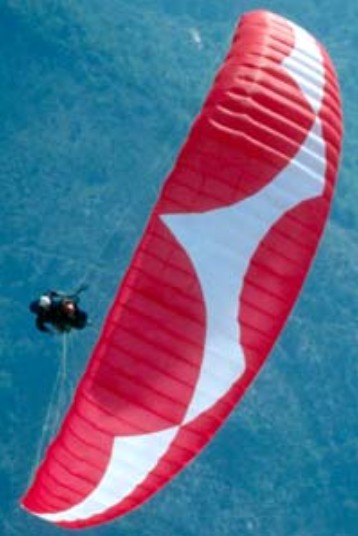
This new high performance model is already flying in comps and XC around the world. With a flat aspect ratio of 6,41, the highest ever for a Nova wing; 71 cells with small, form-optimized intakes for more pressure in the cells; and a new airfoil that provides greater performance through a wide range of angles of attack, the manufacturer believe that the Tycoon is setting a new benchmark in the DHV2-3 class.
Compared to its predecessor, the Radon, the Tycoon has a smaller surface, which makes it fast and agile; and longer lines and more wing curve “for a better, more efficient technique to gain wing tension”. The sail is hybrid: for the outer sail is used 45g in front part and 40g/sqm in the rear part, and light cloth for the ribs, which offers better inflation and less surge. It also has new, thinner main lines “still strong enough” (PPSL 160 instead of 200). Nova used a new sewing method in the leading edge that results in a cleaner shape and fewer wrinkles, they say. “Now, with the Tycoon, performance is back and it’s back by a big margin” claim at Nova. The Tycoon was available in 3 sizes and 4 choices of colors.
The replacement of the Syntax is a low-level 1-2 paraglider aimed at beginners as well as experienced pilots “in search of maximum safety and minimum stress”. The Rookie keeps some features from its predecessor like the airfoil, planform, cell number and line length, but introduces a new wing curve, more sail tension and new brake geometry for a more agile handling without any negative effects on the damping behavior, according to Nova.
The number of lines has been reduced for less drag and improved performance, especially in thermalling. The upper sail is made from 40g/sqm cloth which helps reduce the weight of the glider and improve takeoffs and safety. At Nova say that the Rookie offers agile handling combined with a very long brake travel, performance above the Syntax and a huge security potential. “The collapses are soft and all maneuvers are very safe”, which makes it a perfect glider for beginners. The Rookie was available in 5 sizes and 4 colors.


 All Aero