Yang 28 Paraglider circa 1998. Wing area: 28.6 sq.m Pilot weight: 65-85 kg No. of cells: 32 Wing span: 9.8 m Aspect ratio: 3.4 Min sink: 1.3 m/s Max speed: 38 kph
Yang 31 Paraglider circa 1998. Wing area: 31 sq.m Pilot weight: 85-105 kg No. of cells: 34 Wing span: 10.6 m Aspect ratio: 3.6 Min sink: 1.3 m/s Max speed: 38 kph
Quix 26 Paraglider circa 1998. Wing area: 26.43 sq.m Pilot weight: 60-80 kg No. of cells: 45 Wing span: 11.11 m Aspect ratio: 4.67 Min sink: 1.1 m/s Max speed: 45 kph
Quix 28 Paraglider circa 1998. Wing area: 28 sq.m Pilot weight: 80-95 kg No. of cells: 45 Wing span: 11.83 m Aspect ratio: 4.9 Min sink: 1.1 m/s Max speed: 45 kph
Quix 31 Paraglider circa 1998. Wing area: 31 sq.m Pilot weight: 95-110 kg No. of cells: 51 Wing span: 12.34 m Aspect ratio: 4.9 Min sink: 1.1 m/s Max speed: 45 kph
Maxi BI Paraglider circa 1998. Wing area: 42.3 sq.m Pilot weight: 130-210 kg No. of cells: 49 Wing span: 14 m Aspect ratio: 4.6 Min sink: 1.3 m/s Max speed: 50 kph
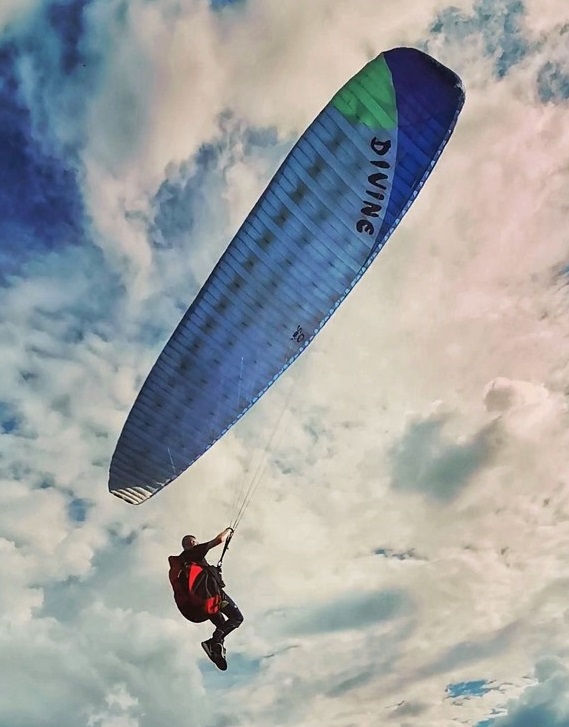
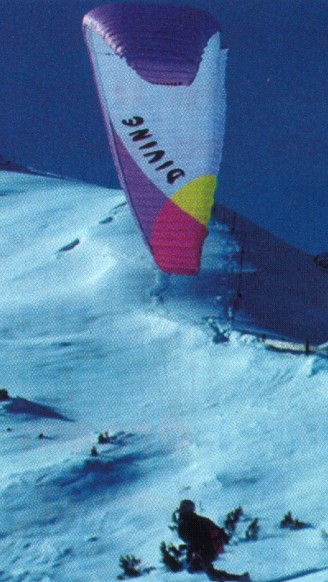
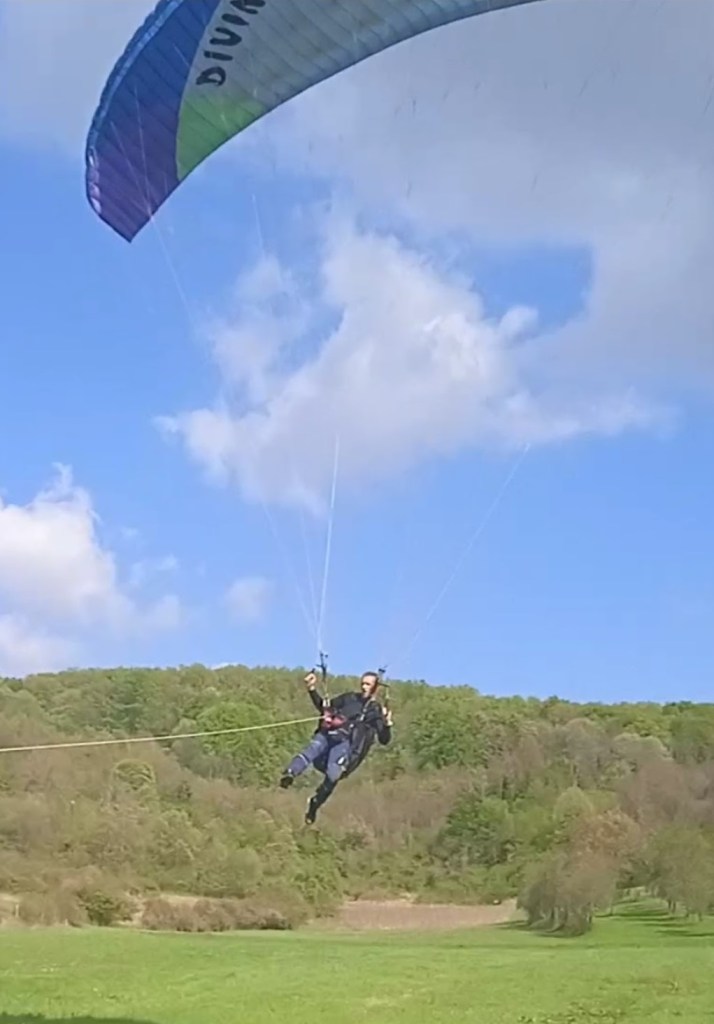
Divine 26R Paraglider circa 1998. Wing area: 26.47 sq.m Pilot weight: 75-95 kg No. of cells: 75 Wing span: 12.74 m Aspect ratio: 6.13 Min sink: 0.9 m/s Max speed: 63 kph
Divine 27 Paraglider circa 1998. Wing area: 27.47 sq.m Pilot weight: 75-90 kg No. of cells: 63 Wing span: 12.13 m Aspect ratio: 5.3 Min sink: 1 m/s Max speed: 50 kph
Divine 29 Paraglider circa 1998. Wing area: 29.2 sq.m Pilot weight: 90-105 kg No. of cells: 66 Wing span: 12.73 m Aspect ratio: 5.55 Min sink: 1 m/s Max speed: 50 kph
Divine 31 Paraglider circa 1998. Wing area: 30.93 sq.m Pilot weight: 105-120 kg No. of cells: 69 Wing span: 13.33 m Aspect ratio: 5.74 Min sink: 1 m/s Max speed: 50 kph
Fancy 28 Paraglider circa 1998. Wing area: 28 sq.m Pilot weight: 65-85 kg No. of cells: 44 Wing span: 11.15 m Aspect ratio: 4.45 Min sink: 1.2 m/s Max speed: 40 kph
Fancy 30 Paraglider circa 1998. Wing area: 29.6 sq.m Pilot weight: 80-100 kg No. of cells: 40 Wing span: 11.68 m Aspect ratio: 4.61 Min sink: 1.2 m/s Max speed: 40 kph
The first generation of the DHV 1-2 Atis glider was voted as the glider of a year by VOL LIBRE. The Atis 2 has new certification EN-B based on CEN 926-1 and 926-2, new profile, new layout and new experience.
(EN B equals the DHV 1-2 classification of the glider, the certification is different, and CEN 926-2 is different from DHV certification!)
The main changes compared to the first generation of the glider: New profile with lighter ribs concept and higher speed range New layout scheme New design of stabilizers Higher speed range with lower sink and higher glide efficiency New, easy to use and highly efficient speed system New geometry New technology of the leading edge design Trailing edge with velcro opening for easy cleaning of the canopy
Atis 2 (DHV 1-2) Price 2009: US$3,500.00
The Sky Paragliders Atis Acro model intended for Acro pilots is based in Sky’s intermediate glider, the Atis, released in 2002 in 3 sizes and about to have certification for the 4th, an XS (DHV 1-2). The Atis Acro had a good debut in the hands of pilot Tomas Lednik, who took the 3rd place at the past Oludeniz Air Games in Turkey with it. It is a small glider (XS size) and favoured with more speed and dynamic response than the serial model, thanks to a different plan layout.
ATIS 2SMLXL Layout surface: 23,11 sq.m Layout span: 10,86 m Layout aspect ratio: 5,10 Projected surface: 20,69 sq.m Projected span: 9,10 m Projected aspect ratio: 4,00 Number of cells: 53 Weight of the glider: 5,0 kg Take-off load: 60-80 kg Trim speed: 37 km/h Minimum speed: 23 km/h Maximum speed: 48 km/h Max. gliding ratio: 8,5 Min. sink rate: 1,15 m/s Test: EN B
ATIS 2SMLXL Layout surface: 25,00 sq.m Layout span: 11,29 m Layout aspect ratio: 5,10 Projected surface: 22,38 sq.m Projected span: 9,47 m Projected aspect ratio: 4,00 Number of cells: 53 Weight of the glider: 5,2 kg Take-off load: 75-95 kg Trim speed: 37 km/h Minimum speed: 23 km/h Maximum speed: 48 km/h Max. gliding ratio: 8,5 Min. sink rate: 1,15 m/s Test: EN B
ATIS 2SMLXL Layout surface: 26,65 sq.m Layout span: 11,66 m Layout aspect ratio: 5,10 Projected surface: 23,86 sq.m Projected span: 9,77 m Projected aspect ratio: 4,00 Number of cells: 53 Weight of the glider: 5,4 kg Take-off load: 87-110 kg Trim speed: 37 km/h Minimum speed: 23 km/h Maximum speed: 48 km/h Max. gliding ratio: 8,5 Min. sink rate: 1,15 m/s Test: EN B
ATIS 2SMLXL Layout surface: 28,83 sq.m Layout span: 12,12 m Layout aspect ratio: 5,10 Projected surface: 25,80 sq.m Projected span: 10,16 m Projected aspect ratio: 4,00 Number of cells: 53 Weight of the glider: 5,7 kg Take-off load: 105-130 kg Trim speed: 37 km/h Minimum speed: 23 km/h Maximum speed: 48 km/h Max. gliding ratio: 8,5 Min. sink rate: 1,15 m/s Test: EN B
Fides 2 is a school glider certified in the DHV 1 category. The Fides 2 is excellent for first XC flights and was the lightest glider – in the category – produced with the standard materials in the market. Price 2009: US$3,000.00
Fides 2XS Layout surface: 22,36 sq.m Projected surface: 19,65 sq.m Layout span: 10,25 m Projected span: 8,24 m Layout aspect ratio: 4,70 Projected aspect ratio: 3,46 Take-off weight: 56-74 kg Weight of the glider: 4,2 kg Min. speed: 22 km/h Trim speed: 36 km/h Max. speed: 45 km/h Sinkrate: <1,2 m/s Gliding ratio: >7,5 Certification: AFNOR Standard
Fides 2 S Layout surface: 24,19 sq.m Projected surface: 21,26 sq.m Layout span: 10,66 m Projected span: 8,57 m Layout aspect ratio: 4,70 Projected aspect ratio: 3,46 Take-off weight: 69-90 kg Weight of the glider: 4,5 kg Min. speed: 22 km/h Trim speed: 36 km/h Max. speed: 45 km/h Sinkrate: <1,2 m/s Gliding ratio: >7,5 Certification: DHV 1
Fides 2XSSML Layout surface: 22,36 sq.m Projected surface: 19,65 sq.m Layout span: 10,25 m Projected span: 8,24 m Layout aspect ratio: 4,70 Projected aspect ratio: 3,46 Take-off weight: 56-74 kg Weight of the glider: 4,2 kg Min. speed: 22 km/h Trim speed: 36 km/h Max. speed: 45 km/h Sinkrate: <1,2 Gliding ratio: >7,5 Certification: AFNOR Standard
Fides 2XSSML Layout surface: 24,19 sq.m Projected surface: 21,26 sq.m Layout span: 10,66 m Projected span: 8,57 m Layout aspect ratio: 4,70 Projected aspect ratio: 3,46 Take-off weight: 69-90 kg Weight of the glider: 4,5 kg Min. speed: 22 km/h Trim speed: 36 km/h Max. speed: 45 km/h Sinkrate: <1,2 Gliding ratio: >7,5 Certification: DHV 1
Fides 2XSSML Layout surface: 26,17 sq.m Projected surface: 23,00 sq.m Layout span: 11,09 m Projected span: 8,92 m Layout aspect ratio: 4,70 Projected aspect ratio: 3,46 Take-off weight: 82-105 kg Weight of the glider: 4,8 kg Min. speed: 22 km/h Trim speed: 36 km/h Max. speed: 45 km/h Sinkrate: <1,2 Gliding ratio: >7,5 Certification: DHV 1
Fides 2XSSML Layout surface: 28,30 sq.m Projected surface: 24,87 sq.m Layout span: 11,54 m Projected span: 9,28 m Layout aspect ratio: 4,70 Projected aspect ratio: 3,46 Take-off weight: 100-130 kg Weight of the glider: 5,1 kg Min. speed: 22 km/h Trim speed: 36 km/h Max. speed: 45 km/h Sinkrate: <1,2 Gliding ratio: >7,5 Certification: DHV 1
Fides 2M Layout surface: 26,17 sq.m Projected surface: 23,00 sq.m Layout span: 11,09 m Projected span: 8,92 m Layout aspect ratio: 4,70 Projected aspect ratio: 3,46 Take-off weight: 82-105 kg Weight of the glider: 4,8 kg Min. speed: 22 km/h Trim speed: 36 km/h Max. speed: 45 km/h Sinkrate: <1,2 m/s Gliding ratio: >7,5 Certification: DHV 1
Fides 2L Layout surface: 28,30 sq.m Projected surface: 24,87 sq.m Layout span: 11,54 m Projected span: 9,28 m Layout aspect ratio: 4,70 Projected aspect ratio: 3,46 Take-off weight: 100-130 kg Weight of the glider: 5,1 kg Min. speed: 22 km/h Trim speed: 36 km/h Max. speed: 45 km/h Sinkrate: <1,2 m/s Gliding ratio: >7,5 Certification: DHV 1
After the excellent Divine, a good compromise between performance and safety, the tide then turned for the company with the death of the designer at the PWC in Spain.
Originally designed in Slovenia, the make was the exported to the Czech Republic for the better production facilities there.
Markus Gründhammer and Toma Coconea both contributed significantly to the design and realisation of the CrossAlps, a lightweight design with D10 fabric.
CrossAlps has special line loops that reduce the air drag and special flares to evenly distribute load on the canopy. Precise stability tapes evenly distribute tension, thus grant high gliding performance and stability. CrossAlps can optionally be equipped with very light, aerodynamic Dyneema risers.
High performance and powerful extras for XC paragliding.
Ceramic rings are in the speed system and brake deflection. Mini-ribs are fitted for enhanced shape constancy and thermal handling.

 All Aero