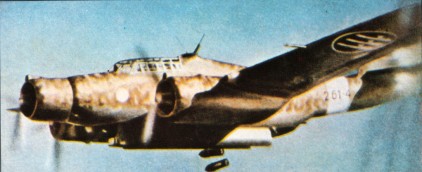
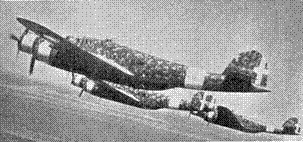
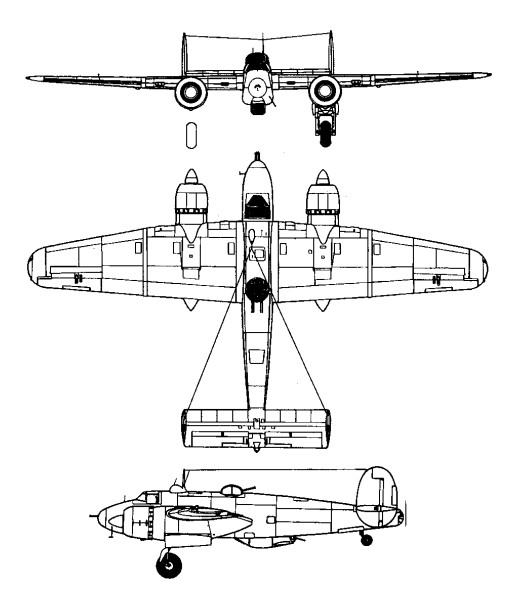
The Alcione (Kingfisher) was an Italian bomber of the Second World War, designed by the CRDA Cant, it was the company’s first landplane, and stemmed directly from the Z.506 Airone. The pro¬totype, flown in late 1937, had three Asso liquid cooled engines in annular cowls, but all production machines had radials, usually the 1000 hp Piaggio P.XIbis RC40.
Of all wooden construction, the Alcione had a long bomb bay under the wing able to carry up to 2000 (4410 lb). There were manual gun positions at front and rear of this bay (often the front position was used solely for bomb aiming) and most Alciones had a dorsal turret and two beam guns. The guns were at first all 7.7 mm, but by 1940 the dorsal and ventral guns were 12.7 mm. When Italy entered the war in 1940 there were 87 in service, and the type was being built by Cant, Piaggio and IMAM Meridionali. In 1941 the Z.1007bis appeared, with the fuselage 244 cm (96 in) longer, span 83 cm (33 in) greater and stronger landing gear. Many of these had twin fins.
Z.1007bis
The Alcione operated from Tunisia to the Soviet Union, often carrying two 450 mm (1000 lb) torpedoes or in the strategic recon¬naissance role. A few Z.1007ter, with 1175 hp Piaggio P.XIX engines, entered service in 1942. Cant tried to improve performance by fitting the 1500 hp Piaggio P.XIX engine, and at the very end of Italian participation in the war produced the Z.1018 Leone (Lion).
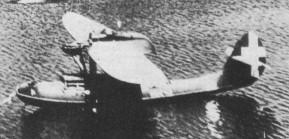
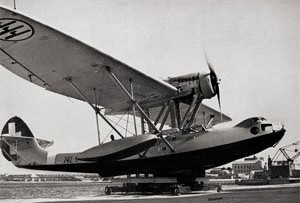
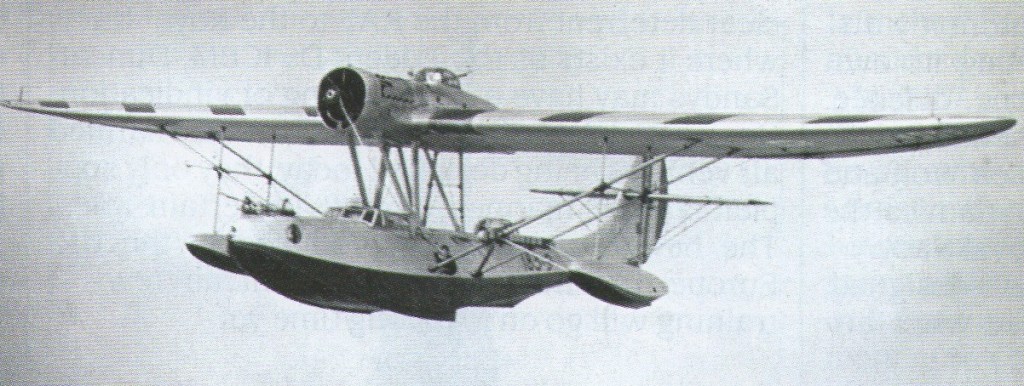
In 1931 the Cantiere Navale Triestino company acquired the services of Filippo Zappata, and also changed its name to Cantieri Riuniti dell’Adriatico, under which a number of civil and military seaplanes and land based aircraft were subsequently produced. The first Zappata designed prototype aircraft from the CRDA was a single engined flying boat, designed as a maritime reconnaissance bomber. Designated Z.501 and named Gabbiano (seagull), it flew for the first time at Monfalcone, Trieste, in 1934. With the civil registration I-AGIL, it set up an international distance record for seaplanes in October 1934, flying non stop for 4120 km (2560 miles) from Monfalcone to Massawa in Eritrea. A short time later a French aircraft took the record, but the Gabbiano reclaimed it in July 1935 with a 4957 km (3080 mile) flight from Monfalcone to Berbera in Somaliland. It was in its designed role that the Z.501 entered service with the Squadriglie da Ricognizione Marittima (marine reconnaissance squadron) of the Regia Aeronautica (Italian air force) in 1936, after an order for production aircraft had been placed; an eventual total of 445 were built. In full military condition, the Gabbiano’s maximum range was 2400 km (1490 miles). The flying boat was of wooden construction, with fabric covered wings and tail, and was powered by a 900 hp Isotta Fraschini Asso XI R2 C15 12 cylinder V type engine mounted above the centre section of the parasol wing mounted on struts up high and away from the fuselage. It carried a normal crew complement of four or five men. Initial armament was three 7.7 mm (0.303 in) Breda SAFAT machine guns, one in an open position above the nose and the other two in semi enclosed positions in the middle of the fuselage and in the rear of the over wing engine nacelle. Racks attached to the inner¬ wing bracing struts could carry a variety of small bombs up to a maximum load of 640 kg (1410 lb), typical combinations including two 250 kg (551 1b), four 160 kg (353 1b) or four 100 kg (220 1b) bombs. Romania purchased a few Z.501s in 1937 38, and some saw service on the rebel Nationalist side in the Spanish civil war of 1936 39.
When Italy entered the Second World War in June 1940, the Regia Aeronautica had 202 Z.501s in front line service with maritime reconnaissance squadrons, air/sea rescue and other units. During the following year the nose gun was removed, to allow for an enclosed observer’s cockpit in that position. At the Italian armistice in September 1943 the Gabbiano was still in use; about 20 continued serving with the co belligerent Italian forces and others with the pro German Aviazione della RSI (the airforce of Mussolini’s short¬lived Italian Social Republic set up after the armistice), until the end of the war, and a few survived with the Italians until 1950. The Z.501 finished the war without a single air-to-air kill.
CANT Z.501 Gabbiano (Gull) Engine: 1 x Isotta Fraschini Asso XI R2C.15 12-cylinder, 900hp. Length: 46.92ft (14.3m) Wing span: 73.82ft (22.50m) Wing area: 667.368 sq.ft / 62.0 sq.m Cruising speed: 130 kts / 240 km/h Cruising altitude: 6562 ft / 2000 m Wing load: 23.17 lb/sq.ft / 113.0 kg/sq.m Height: 14.44 ft (4.40m) Maximum Speed: 171mph (275kmh; 148kts) Maximum Range: 1,491miles (2,400km) Range (max. weight): 540 nm / 1000 km Rate-of-Climb: 820ft/min (250m/min) Service Ceiling: 22,966ft (7,000m; 4.3miles) Armament: 3 x 7.7mm machine gun Up to 1,411lbs (640 kg) of bombs. Structure: Accommodation: 4 to 5 Hardpoints: 2 Empty Weight: 8,488lbs (3,850kg) Maximum Take-Off Weight: 15,543lbs (7,050kg)
The Harrier family line consists of four major versions composed of the Hawker Siddeley Harrier, the British Aerospace (BAe) Sea Harrier, the Boeing/BAe AV-8B Harrier II and the BAe Systems/Boeing Harrier II. The initial production model and beginning of the Harrier lineage was the Hawker Siddeley Harrier. The Sea Harrier became the dedicated navalized version of the base Harrier and utilized for air-defense as a primary role and ground strike as secondary. The Sea Harrier also made use of the powerful Blue Fox radar and was a direct development of the land-based RAF Harrier GR.3. The Boeing/BAe AV-8B Harrier II became a “second generation” Harrier and is a highly-modified version of the original Harrier for use by the USMC while the BAe Harrier II is a British-modified strike version of the USMC Harrier II.
Evolved from the Hawker P.1127 vertical take-off technology demonstrator, whose intended supersonic development (the P.1154), was cancelled, the BAe Harrier is powered by a vectored-thrust engine. The first of six prototypes was flown in August 1966, and Harriers began to enter RAF service in 1969. The RAF’s first squadron was formed with Harrier GR.Mk.1 aircraft, the designation subsequently changing to Harrier GR.Mk.1A and then Harrier GR.Mk.3 as the Pegasus progressed from the 8709-kg (19,200-1b) Mk 101 through Mk 102 to the Mk 103. The two-seat trainer, with longer fuselage and taller fin, was similarly designated Harrier T.Mk 2, Harrier T.Mk.2A and Harrier T.Mk.4. Fourteen two-seat T Mk 10s, based on the USMC’s TAV-8B, are on order for the RAF. Powerplant is one 21,750 lb st (9675 kN) R-R Pegasus 11 turbofan. Despite power increases, the Harrier is unable to take off vertically with a full weapon load, but can take off from a short length of road or semi-prepared strip in the STOVL, (short take-off. vertical landing) mode for tactical concealment. Equipped from the outset with a Ferranti FE541 inertial navigation system with head-up display, the RAF aircraft were fitted from 1976 with a Marconi LRMTS (laser ranger and marked-target seeker) resulting in a much extended profile to the nose. A Marconi ARI 18223 E-J band radar warning receiver was added to the fin and extreme rear fuselage at the same time. The Harrier carries a single oblique camera in the port side of the nose, but may be equipped with a sensor pod beneath the fuselage for more extensive reconnaissance, Following the production of six pre-production aircraft, the RAF received 114 single-seat Harriers and has ordered four more for replacement of Falklands losses. US Marine Corps contracts covered 102 AV-8A aircraft (now converted to AV8C standard), and the Spanish navy acquired 11 VA.1 Matador aircraft. Two-seat trainer orders cover 23 for the RAF, T.Mk.4 (those not fitted with LRMTS being Harrier T.Mk.4A aircraft), fitted with laser nose and tall fin, eight TAV-8A aircraft with pointed nose, as TAV-8S by Spain, two VAE.1 Matador aircraft, a Harrier T. Mk.4 and three navalized Harrier T.Mk.4M aircraft for the Royal Navy, plus 4 company demonstrator. Developed as the GR.5 for the RAF and the AV-8B Harrier II for the USMC, the GR.5 features six underwing pylons, larger canopy, and outrigger wheels further inboard than the GR.3. A total of 300 (plus 28 two seat TAV-8B trainers) for the USM and 60 GR.5s for the RAF. Spain ordered 12 EAV-8Bs from 1987. The improved GR Mk 7 is for RAF night attack use, with Smiths HUD and GEC FLIR.
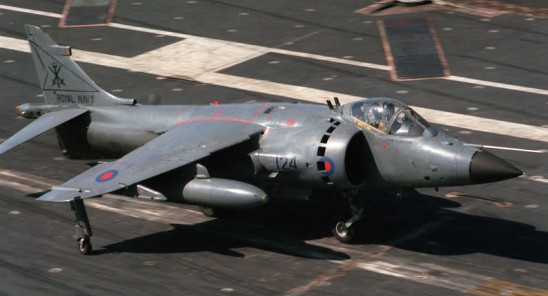
After the first successful landing of a P.1127 XP831 trial Harrier on the deck of the HMS Ark Royal on February 8, 1967, the legacy of the Sea Harrier began. The suitability of Harriers for operation from ships at sea led to a decision, in 1975, to develop a special version of this aircraft to equip the Royal Navy’s new ‘Invincible’ class of anti submarine cruisers and the anti submarine carrier HMS Hermes.
Taking the GR.Mk 3 as the starting point, a new redesigned forward fuselage (with folding nose cone) was built to house a Ferranti Blue Fox radar. The cockpit was revised as more ergonomically friendly while the pilot’s seating position was raised ten inches to afford for better visibility out of the cockpit under a new “bubble” type canopy. The Martin-Baker Mk 9 series ejection seat was replaced by the newer and faster-reacting Mk 10 model. The HUD (Heads-Up Display) was now be powered by a more powerful computer than that as found on the land-based Harrier. A Doppler pulse radar was fitted in place of the inertial-based unit of the GR.Mk 3 to compensate for air travel over the ocean. The Sea Harrier saw its radio system updated as well as the implementation of a simplistic autopilot. Vertical hovering controls were improved while the original landing gear undercarriage arrangement was retained. Though the Pegasus Mk 104 series turbofan engine received its new designation, it was nothing more than a “navalized” version of the land-based 21,500lb thrust Mk 103 series. All of the five underwing and centerline hardpoint pylons were revised for better efficiency and reaction while the outboard stations were now wired for compatibility with the AIM-9 Sidewinder short-range air-to-air missile. Much of the magnesium of the original Harrier construction was replayed by aluminum alloys to help retard corrosion of the metal at sea. Likewise, the folding nose cone helped keep the Sea Harrier’s footprint aboard the carriers as small as possible. The trainer T.Mk 4N did not feature the space-saving hinged folding nose cone and therefore could not be stored under the flight deck. Despite all of these internal changes, the Sea Harrier weight only 100lbs heavier than her land counterpart. The first Sea Harrier (Hawker Siddeley designation of P.1184) achieved flight on August 20th, 1978 at Dunsford and later this same aircraft became the first Sea Harrier to land on the HMS Hermes on November 13th. No. 700A Flight squadron was formed to handle the intensive deck trials for the new aircraft and clear it for operational use. To expedite development even further, a pair of specially-modified Hawker Hunter T.Mk 8 trainer airframes were fitted with Sea Harrier equipment for critical in-flight testing of systems in action.
The first of 34 Sea Harriers for the Royal Navy entered service in June 1979. Three pre-production aircraft were on order followed by an order for 31 production units and a single two-seat T.Mk 4A trainer.
By the end of the first round, some 57 single-seat production Sea Harriers were ordered thanks to follow-up contracts and high expectations. The second production Sea Harrier (XZ451) completed her first flight on May 25th, 1979 and then came to the Royal Navy Intensive Flying Trials Unit (IFTU) at Yeovilton on June 18th of that same year. The squadron was then disbanded on March 31st, 1980 and reformed as No. 899 Squadron. The initial carrier-deployed Sea Harrier unit became No. 800 aboard HMS Invincible. Overall the Sea Harrier looked every bit the part of her land-based sisters complete with her swept-back high-mounted monoplane wings, conventional single-finned tail unit and unique two-legged undercarriage complimented by two wingtip wheeled struts. The engine series remained the Rolls-Royce brand Pegasus type of which itself was a special navalized version of the Mk 103 – now marked as the Mk 104 – with an impressive rating of 21,500lb standard thrust output (Sea Harriers, like the base Harrier, were subsonic aircraft incapable of breaking Mach 1 or utilizing afterburner). The powerplant powered the four all-important thrust vectoring nozzles affixed as pairs to the either side of the fuselage body. Since the Sea Harrier was branched off of the land-based Harrier GR.3 production models (and was only acquired in limited quantity), it maintains only a handful of variants to its name. The initial production version became the FRS1 and entered service in April of 1969. The FRS1 had a maximum speed of 1,185km per hour and a cruising speed equal to 850km per hour at 36,000 feet. High altitude combat radius was limited to 750km. Maximum take-off weight was 26,200lbs. The Sea Harrier made use of a pair of optional 30mm ADEN cannons mounted to the sides of the fuselage centerline with approximately 100 rounds per cannon. This could easily be complimented with an array of air-to-air and air-to-surface weaponry to fit the mission role up to 5,000lbs to include anti-ship missiles. Munitions were fielded on four underwing hardpoints at pylons in two inboard and two outboard positions. Outboard pylons were wired to fire the AIM-9 Sidewinder short-range air-to-air missile and eventually were made to field a double-launch rail for the missile. The Sea Harrier also made use of various size conventional drop bombs and were cleared for use with the WE.177 nuclear bomb. Sea Harriers were built with a basic F.95 oblique bomb camera installed along the starboard side of the aircraft nose assembly and featured an adjustable shutter speed of up to 1/3,000 seconds. The system was “basic” in that it was restricted to daytime use and was primarily utilized to help target enemy surface ships. During the Falklands conflict, this camera proved all but useless in assessing the damage post-strike of bombs dropped on Port Stanley.
The FRS51 was the export version of the FRS1 production model and delivered to the Indian Navy. These Sea Harriers featured compatibility with the French Matra R550 Magic air-to-air missiles. India bought 16 FRS.51 Sea Harriers and three Harrier T.60 trainers to 1987. India since maintained 30 Sea Harriers (designated as FRS51 and based on the FRS1) beginning in December 1983 with these beginning service the INS Vikrant and ultimately switching to the INS Viraat. Indian Sea Harriers make up the 300 Naval Squadron and represent the only foreign use of the Sea Harrier model.
The FA2 (formally using the FRS.2 and F/A.2 designations) appeared as a mid-life upgrade to the FRS1 and improved upon the airframe, avionics, armament capabilities, cockpit and radar and compatibility for the American-made AIM-120 medium-range air-to-air missile. Initial flight of the FRS.2 prototype was on September 19th, 1988 with the production contract coming on December 7th, 1988. Thirty-two FRS.1 models were tabbed for conversion to this new standard while others appeared as “new-build” systems. The designation of F/A.2 was used as a replacement for the initial designation of FRS.2. Wing leading edges were now kinked and a new navalized Pegasus Mk 106 engine of 21,500lbf (based on the USMC AV-8B powerplant) was fitted. Carrier testing was accomplished over a 9-day period in November of 1990 with AMRAAM clearance tests finished in 1991.Deliveries of this new Sea Harrier (conversions followed by new-builds) began in April of 1993 and lasted until 1998. In the FA2, the Blue Fox AI radar of old was modernized to the more powerful Blue Vixen system fitting an all-new radome. Like the Blue Fox before it, the Blue Vixen was a multi-mode pulse Doppler radar unit but now applicable to operations in all-weather with tracking and targeting of multiple land- and air-based enemies through an improved suite. Additionally, the system allowed for a track-while-scan mode and “lookdown-shootdown” capability. HOTAS (Hands-On Throttle and Stick) and multifunction displays all greeted the new Sea Harrier model as did a slightly lengthened airframe.
The first flight of BAe’s up-graded Sea Harrier FRS.2, armed with AIM-120s took place on 30 March 1989.
AMRAAM capability was brought online with this FA2 and these aircraft were fielded in anger over Bosnia by No. 889 Squadron off of the deck of the HMS Invincible. Performance for the FA2 included a maximum speed of 735 miles per hour with a service ceiling of approximately 51,000 feet and a rate-of-climb equal to 50,000 feet per minute. The ferry range was listed at 2,000 miles with a combat radius of 620 miles. Maximum take-off weight was listed at 26,200lbs. The final FA2 was delivered in January of 1999.
The Sea Harrier added a collection of two-seat trainers to its production. The T.4N was a navalized form of the land-based T.Mk 2 used by the Royal Air Force. These were delivered sans radar and minimal Sea Harrier instrumentation and were used to train would-be Sea Harrier pilots on the ins-and-outs encountered with the FRS1 production model. Four T.Mk 4Ns were delivered to the Royal Navy. The T.Mk 8 was a similar two-seat trainer based on the FA2 production model and, again, delivered without the radar system. Seven such T.Mk 8’s were delivered to the Royal Navy and ultimately retired from service as of March of 2006. The T.Mk 60 was the export version of the Royal Navy T.Mk 4N and delivered to the Indian Navy. Four of these twin-seat Sea Harriers were sold to India and utilized as land-based trainers.
The Argentine dictatorship moved in to occupy the Falkland Islands group in 1982 and the British moved into action to protect their interest. Both the Harrier GR.Mk 3 and Blue Fox/Sidewinder-equipped FRS1 were the two Harrier types involved. The Falklands War was the first time that Harriers of any type were to see action. The first Sea Harrier attack sortie occurred on May 1st, 1982. Two separate strikes involved low-level swipes using cannons and cluster bombs against Argentine targets at the Port Stanley airfield and the Goose Green airfield. Further actions involved the Sea Harrier in the amphibious landing operation at San Carlos Bay. Sea Harriers covered some 2,000 sorties in the conflict from the available 28 airframes. Just six Sea Harriers were lost in the conflict with two of these related to Argentine ground fire and the other four to accident. The Sea Harrier has already been retired by the Royal Navy as of March 2006, replaced by the Harrier GR.Mk 9 series. The Italian Navy operated radar-equipped Harrier II Plus.
Harrier GR.Mk.3 Armament: two 30-mm. Aden cannon (with 130 rpg) Hardpoints: 4 up to 2268 kg (5,000 lb) four wing pylons carrying of ordnance (or 455-litre/ 100-Imp gal tanks, inboard only Powerplant: one 9752-kg (2 1, 500-1b) thrust Rolls-Royce Pegasus 103 vectored-thrust turbofan. Maximum speed, clean 1159 km/h (720 mph) at 305 m (1,000 ft) or Mach 0.95 Tactical radius on a hi-lo-hi mission 418 km (260 miles). Weight empty 5425 kg (11,960 lb) Maximum weight vertical take-off 8165 kg (18,000 lb) Maximum short-take-off 11340+ kg(25,000+ lb) Span 7.09 m (23 ft 3 in) Length 14.27 m (46 ft 10 in) Height 3,45 m (11 ft 4 in) Wing area 18,67 sq.m (201.0 sq ft)
Harrier GR.5 Wing span: 9.5 m (30 ft 6 in)
Harrier GR.7
T.10
Sea Harrier FRS.1 Engine: R-R Pegasus. Installed thrust: 95.6 kN. Wingspan: 25 ft 3.25 in (7.7 m) Length: 14.5 m. Wing area: 18.7 sq.m. Empty wt: 5670 kg. MTOW: 11,880 kg. Warload: 2270+ kg. Max speed: 1190+ kph. Ceiling: 15,000+ m. T/O / Ldg run: VSTOL. Combat radius: 750 km. Fuel internal: 2870 lt. Air refuel: Yes. Armament: 2 x 30 mm, 4 x AAM Hard points: 5.
BAe Sea Harrier FA2 Engine: 1 x Rolls-Royce Pegasus Mk 104 turbofan engine generating 21,500lbs of thrust. Length: 46.59ft (14.2m) Width: 24.93ft (7.60m) Height: 12.17ft (3.71m) Maximum Speed: 734mph (1,182kmh; 638kts) Maximum Range: 2,237miles (3,600km) Rate-of-Climb: 50,000ft/min (15,240m/min) Service Ceiling: 52,493ft (16,000m; 9.9miles) Armament: STANDARD: 2 x 30mm ADEN cannons in under-fuselage pod fairings. OPTIONAL: WE.177 Nuclear Bomb 2 x Fuel Drop Tanks Up to 5,000lbs of external ordnance on four underwing pylons (two to a wing). Accommodation: 1 Hardpoints: 4 Empty Weight:14,052lbs (6,374kg) Maximum Take-Off Weight: 26,235lbs (11,900kg)
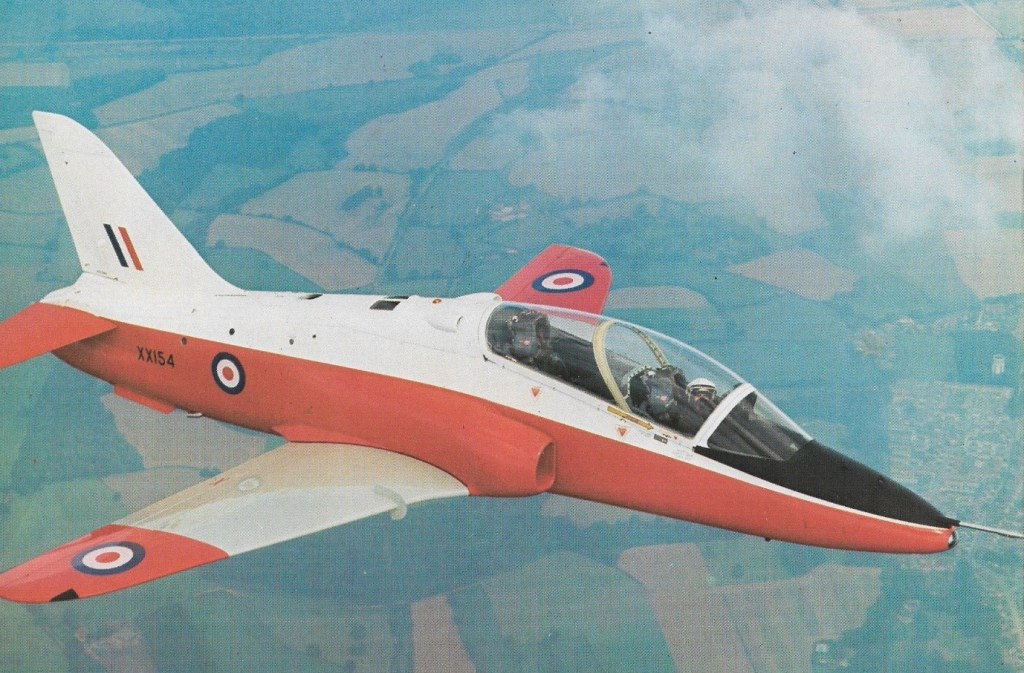
The Hawker Siddeley P.1182 design was adopted by the RAF for its then new advanced trainer in 1970 and this type first flew in 1971. The single pre-production Hawker Siddeley Hawk (XX154) made the type’s maiden flight at Dunsfold, Surrey on 21 August 1974. A two-seat basic and advanced jet trainer with close support capability, in addition to service with the RAF it has been ordered by the air forces of Abu Dhabi, Dubai, Finland, Kenya, Kuwait, Indonesia and Zimbabwe, and in modified form as the US Navy’s T-45.
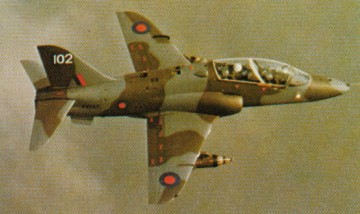
175 Adour 151 powered T.ls for the RAF were delivered for advanced and tactical training, beginning on 4 November 1976 with two aircraft for No. 4 FTS at RAF Valley, Anglesey. Subsequently 88 have been modified as Hawk T.lAs for secondary airfield defence duties, by the installation of AIM-9L Sidewinder missiles. The initial export version was the Hawk 50 Series, sold to Finland (Mk.51, final assembly of 47 by Valmet), Kenya (Mk.52), and Indonesia (Mk.53), powered by the Adour 851 and an increased MTOW. Hawk 60 Series aircraft are equipped with uprated 25.35kN Adour 861 engines and other performance improving modifications. The Hawk 60 Series has been sold to five countries, Zimbabwe (Mk.60), Dubai (Mk.61), Kuwait (Mk.64), and Saudi Arabia (Mk.65). Primarily for combat missions the two-seat the Hawk Mk.100 is a development of the earlier Hawk Mk.60 advanced jet trainer. A much improved version, with the Rolls-Royce Adour 871 engine of 5,845 lbs of thrust, a revised wing with fixed leading edge droop, full width flaps, optional wingtip missile rails for Sidewinder missiles, an extended nose to house the FLIR camera and a laser range finder, revised avionics and a HUD in the forward cockpit. Equipment includes Singer Kearfott SKN 2416 INS, an advanced Smiths Industries headup display/ aiming computer, optional laser or improved weapons management system, controls, and colour CRT displays in cockpits, all linked by a MIL 1553B digital databus. External load is increased to 3,265kg, and provision is made for carrying an ECM I pod. By 1988, customers in¬clude Finland, Indonesia, Kenya, Abu Dhabi, Dubai, Kuwait, Saudi Arabia, Switzerland and Zimbabwe; a total of 352 Hawks. Canada operated 17 Hawk Mk.115s as CT-155s. The RAAF Mk. 127s are a further development the Hawk. Its three head-down colour CRT multifunction displays in both cockpits and the aircraft display and mission computers provide trainee aircrews and their instructors with a F/A- 18 Hornet style cockpit. Weapons delivery and navigation information is in colour on the displays and the cockpits are functionally considerably “common” to the Hornet, allowing for easy transition to the front-line aircraft later. The Hawk Mk. 127 also has an on board video camera that captures the head-up and head-down visuals, along with sound for subsequent debriefings. The test flight of the first Australian-assembled Hawk (s/n DT-10) took place on 12 May 2000. The avionics system is integrated via a 1553 multiplex database. The principle components are two display and mission computers (DMCs), which coordinate, process and command the display of information from the communications, navigation and attack sub-systems. Each cockpit has hands-on-throttle-and-stick (HOTAS) controls. The head-up display (HUD) in the front cockpit and three colour multi-function displays (MFD) in each cockpit present a range of flight information, ranging from aircraft performance and attitude through to equipment status reports. Mission-specific data can be pre-programmed by the pilot and downloaded into the system. Equipment performance, aircraft fatigue and engine life data is monitored and recorded by a health and usage monitoring system (HUMS). The Hawk 127 armament system provides for the carriage, aiming and release or firing of practice and Mk 82 bombs, AIM-9M Sidewinder missiles and a 30mm cannon. The stores are carried on two wingtip missile stations or pylon-mounted on four underwing and one centreline hardpoints. A 30mm Aden cannon carried in a gunpod can be installed on the centreline station in place of the pylon. Stores are controlled by the integrated stores management system (SMS). The Hawk through-life support programs have been designed for 25 years service. Its design allows for system upgrades to be incorporated, to reflect evolving training requirements. The single-seat Hawk 200 series is a multi-role combat version has some 80 per cent airframe commonality with the trainer and uses the same uprated Adour 871 powerplant as the Hawk 100. In the lower fuselage can be fitted one or two 25mm Aden guns, leaving the centreline pylon free for weapons to complement the four underwing pylons. The Hawk 200 has been designed to incorporate a change of nose that can include FLIR, laser rangefinder or APG-66H radar for all-weather operation. The first pre-production Hawk 200 flew on April 24, 1987, seven days ahead of the schedule set following the loss of the prototype in July 1986. The pre-production Hawk flew on August 21, 1974, and the aircraft has been produced in several versions. The Hawk 2 multirole combat aircraft, which first flew May 19, 1986, is powered by a 26kN Adour 871, and has an internal armament of two 25mm Aden I guns in a new front fuselage. The redesigned nose can also house sensors such as a rangefinder, forward looking infrared, or a multimode radar.
Hawk 60 Engine: 1 x R-R/Turbomeca Adour 861. Installed thrust: 25.4 kN. Span: 9.4 m. Length: 11.9 m. Wing area: 16.7 sq.m. Empty wt: 3635 kg. MTOW: 8570 kg. Warload: 3100 kg. Max speed: 1065 kph. Initial ROC: 2835 m / min. Ceiling: 15,000+ m. T/O run: 550 m. Ldg run: 488 m. Fuel internal: 1750 lt. Range/Endurance: 2400 km / 4+ hr. Combat radius: 500-1100 km. Armament: 1 x 30 mm, 2 x AAM. Hardpoints: 4/5.
Hawk T.Mk 1 Engine: one 5,340 lb thrust Rolls Royce/Turbomeca RT.172 06 11 Adour Mk 151 turbofan. Wing span: 30 ft 9.75 in (9.39 m). Length: 11.8 m / 38 ft 9 in Height: 4.1 m / 13 ft 5 in Wing area: 16.7 sq.m / 179.76 sq ft Take-off weight: 5443 kg / 12000 lb Empty weight: 3379 kg / 7449 lb Max speed: 621 mph (1,000 km/h). Ceiling: 12000 m / 39350 ft Range w/max.fuel: 2780 km / 1727 miles Payload: 5,660 lb (2,567 kg). Armament: 1 x 30mm cannon Crew: 2
Undertaken by Bristol in response to Royal Navy and Canadian naval specifications were the models 191 and 193.
The Bristol 191 was a ship-based development of Type 173 with modified fuselage, u/c etc.
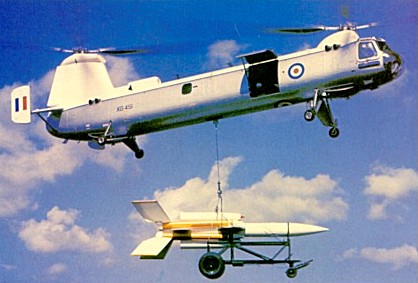
The Bristol 192 was the production version of Model 191 for RAF use with two cabin windows only, starboard cargo hatch, cargo hoist beneath fuselage, large anhedralled tailplane and powered by two 1465shp Napier Gazelle 2 turboshafts, derated to 920shp. In the initial configuration, the 192 had a purely manual system of control and wooden rotor blades but power controls and metal blades were standardized on the fifth prototype built in 1960. The prototype Type 192 (XG447) first flying on 5 July 1958 at Westonsuper-Mare, was demonstrated at the Farnborough air show in September 1952. That year, three pre-production aircraft were assigned to the RAF for a series of trials for which they were based at Odiham.
As the Westland Belvedere this entered service with the Royal Air Force, though this was only after the 191 and 193 had been cancelled by the RAF and Royal Canadian Air Force respectively.
Twenty-six of these helicopters were ordered and used for some years for military transport, not only in the United Kingdom, but also in the Middle and Far East. The Belvedere was withdrawn from service in March 1969.
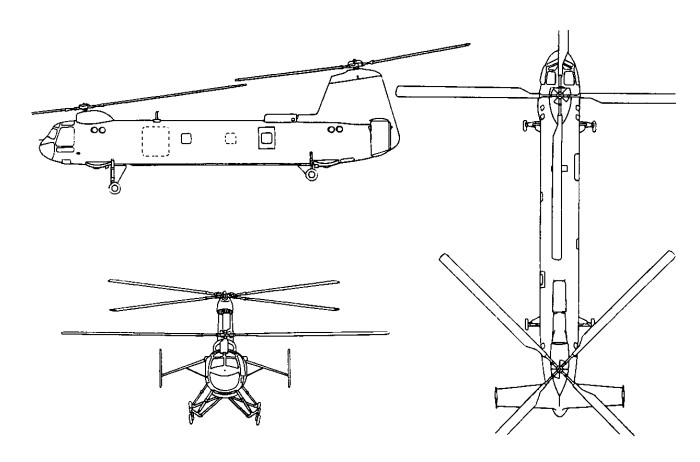
The production Bristol 192s had an all-metal, skinned fuselage and an anhedral tailplane, compared with the dihedral one of the Type 173. The two rotors had four metal blades and the front wheels of the fixed quadricycle landing gear were self-castoring. The helicopter’s maximum capacity was 30 seats or 2700kg internal payload. The instrumentation also permitted night flying.
As the 192C it was tested by BEA and offered its 24 passengers a unique high-speed service between London and Paris. British European Airways leased a Belvedere briefly but never used it in commercial service.
On May 30, 1961, C T D Hosegood flew from London to Paris in 1 hour 41 min 28 sec and on June 2, 1961, from Paris to London in 1 hour 40 mm 55 sec. This is the equivalent of 202.32km/h outwards and 203.51 km/h on the return flight.
Bristol B 192 Belvedere HC Mk I Engines: 2 x Napier Gazelle 2, 1627 shp, 1092kW Fuselage length: 54.134 ft / 16.5 m Length with rotors turning: 27.36m Height: 17.388 ft / 5.3 m Rotor diameter: 48.885 ft / 14.91 m Max take off weight: 18522.0 lbs / 8400.0 kg Empty weight: 5277kg Max. speed: 119 kts / 220 km/h Service ceiling: 13123 ft / 4000 m Range: 378 nm / 700 km Crew: 2 + 25 PAX / 2700kg
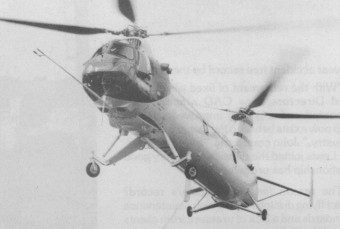
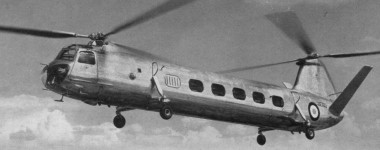
The Bristol 173 was the first helicopter specifically designed for commercial operation and passenger transport in particular. Two Mk.1 prototypes were begun in 1948 to Ministry of Supply Specification E.4/47.
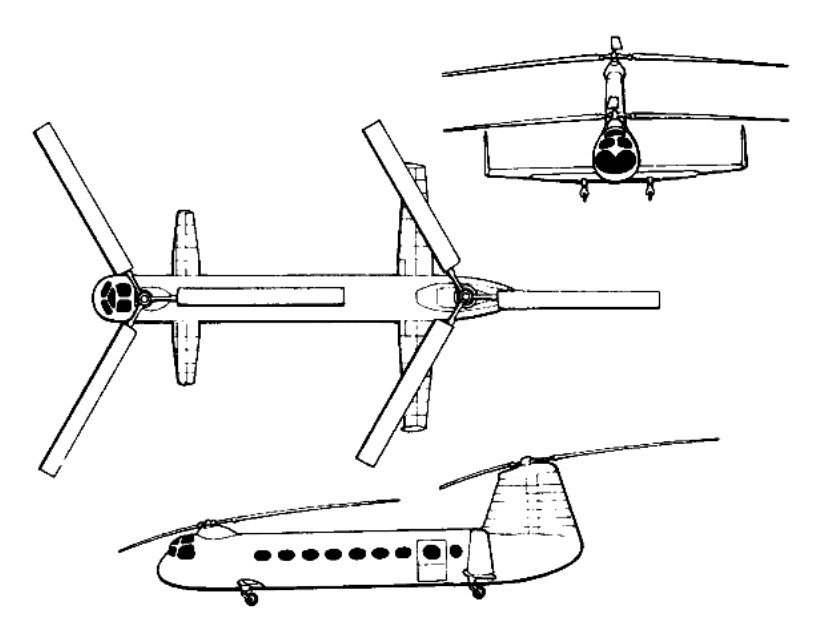
Ground tests started in 1951. It had two three-blade counter-rotating rotors, but it could fly on one Alvis Leonides 73 engine and the centre of gravity could be displaced. The two rotors were synchronized by a shaft in conjunction with a gearbox. In the event of a breakdown the shaft could transmit power from the working engine. The rear rotor was carried on a pylon which was part of the vertical fin structure. Two tailplanes were set at a sharp angle to improve longitudinal and lateral stability.
The 173 had virtually the 171 Sycamore Mk. 3’s transmission system, rotor assemblies and engine installation, except that one engine rotates in the opposite direction to the other.
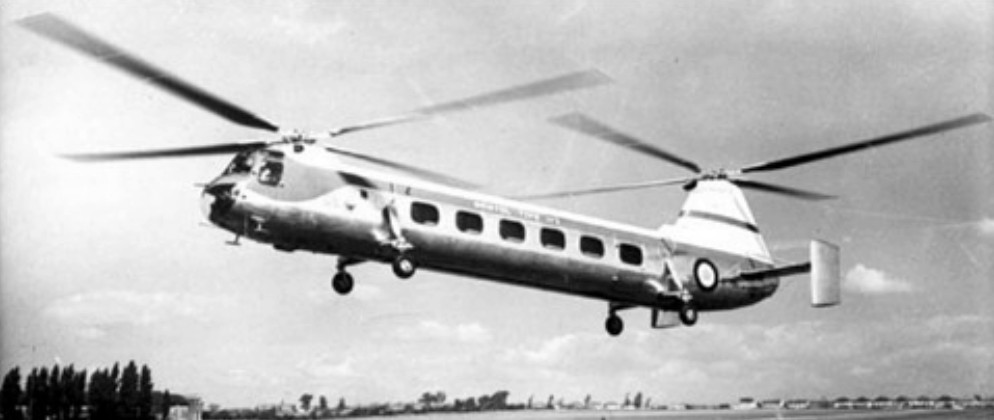
Ground resonance originally caused some trouble. The problem was overcome by linking the right- and left-hand oleo-struts of the undercarriage by small-bore hydraulic piping. The latter formed the two arcs of a circle seen above the upper part of the legs.
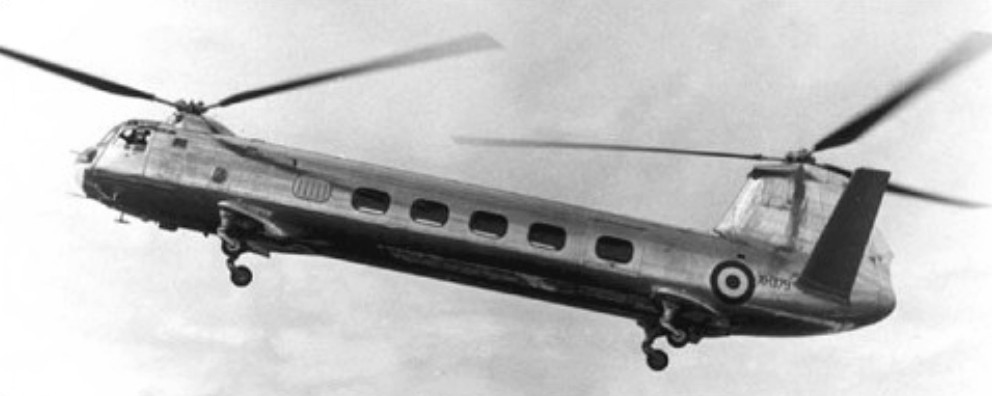
The first, G-ALBN, made its maiden flight on 3 January 1952, after some eight months of ground trials and tethered flights. It was Britain’s first tandem-rotor helicopter design, and in this early form was powered by two 575hp Alvis Leonides 73 piston engines and could carry ten passengers. In 1953 this machine was handed over to the Admiralty for Naval trials. Trials were carried out with this aircraft in 1953, from the aircraft carrier HMS Eagle.
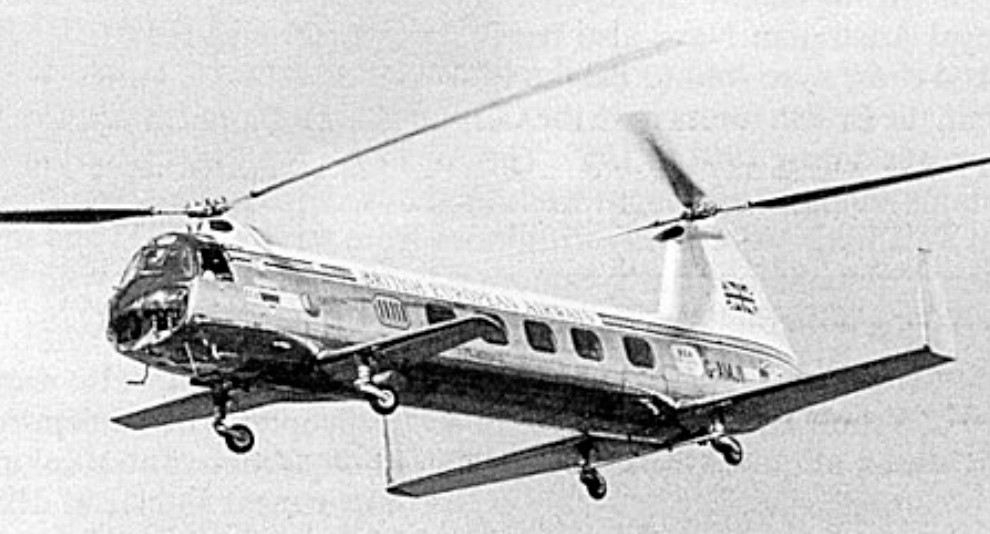
On 31 August 1953 a prototype 173 Mk.2 (G-AMJI) was flown, differing from the first machine in having two pairs of stub wings to off-load the rotors, the rear pair carrying upright fins at their extremities. These features were later removed, G-AMJI reverting to the Vee-tailed configuration of the Mk.1 and joining its stablemate for Naval trials as XH379. On 20 July 1956 it was delivered to BEA and returned to the civil register for handing trials in BEA colours.
BEA Bristol 173
It was based at Gatwick for the period of the trials before being written off in a landing accident in 1956.
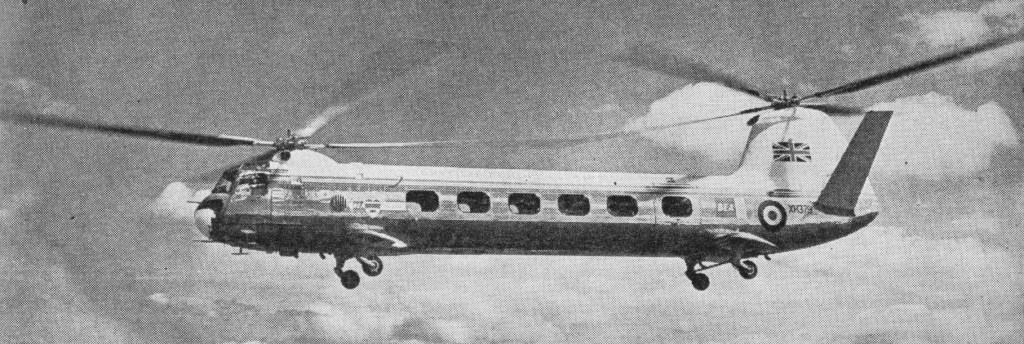
The Mk.3, with more powerful engines, (two Alvis Leonides Majors rated at 850shp each) as well as metal instead of wooden four-bladed rotors, marked a greater advance. Seating was up from 14 in the Mk.1 and 2 to 16 in the Mk.3. three were ordered but the Mk.3 suffered from cooling problems and its service trials in 1956 were not entirely successful.
In the event, only one (XE286) was flown, the other two being utilised for ground testing. In 1956 the Royal Navy decided to adopt the Bristol machine for the antisubmarine role, placing an order for sixty-eight aircraft. The production version, to be known as the Bristol 191, was to have folding rotor blades and a shorter fuselage, to enable it to use existing carrier deck-lifts, and the rear legs of the quadricycle undercarriage shortened to facilitate loading of an external torpedo.
The Bristol 173 Mk.3 was offered to BEA.
In July 1958 the Bristol 192 made its maiden flight and this marked the successful climax to the development of the 173.
A helicopter department was set up in 1945 as part of the aircraft division at Filton, and Austrian-born Raoul Hafner, who had devoted himself to rotary wing research in the thirties, moved to England before the Second World War and took charge in 1944. Design studies, under Raoul Hafner, were started in June 1944 and, since no suitable British engine was available at that time, the two Mk.1 prototypes (VL958 and VL963) were built with 450hp Pratt & Whitney 11-985 Wasp Junior radial engines. These were 2-seaters, conforming to Ministry of Supply specification E.20/45. The design featured a light alloy cabin section and a stressed-skin tailboom attached to a central engine and gearbox mounting, the rotor head being fitted with three wooden monocoque blades. The crankshaft lay horizontally, with power transmitted to the vertical driveshaft through a gearbox. The three rotor blades were made of wood with leading edges in hardwood. After component testing, ground running of the completed airframe began on 9 May 1947, the first flight (VL958) was made by H. A. Marsh on 27 July 1947.
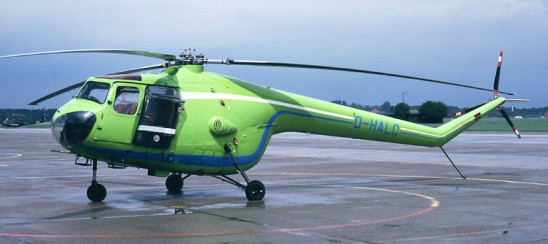
The second aircraft (VL963) joined the test programme in February 1948 and on 25 April 1949, to facilitate its flight to the Paris Salon, it became the first British helicopter to be granted a civil certificate of airworthiness. The third airframe appeared in the static park at the 1948 SBAC exhibition at Famborough. This was followed by the first flight on 3 September 1949 of the one and only Mk.2, built as a 4-seater to specification E.34/46 and powered by a 550hp Alvis Leonides 71 LE 21 HM piston engine in a horizontal position with the crankshaft running vertically. This eliminated the lower gearbox which not only saved weight but made the engine more accessible for checking and repairs, and increased the seating from two to five. It was of metal construction with a three-blade main rotor and was designed as an air taxi (four-five seats) and for military tasks such as air observation and casualty evacuation. This aircraft formed the basis for the first production series, although numerous detail modifications were made to individual machines in these batches, some becoming standard on later production aircraft. Seating was increased to six. A second take-off attempt ended abruptly when the rotor disintegrated. With a strengthened rotor, development flying was resumed while work continued on the assembly of 15 production Mk 3s with a smaller Alvis Leonides 73 engine. Airframe changes included a shortened nose and an 0.20m increase in cabin width to accommodate three passengers on the rear seat; in order to maintain essential systems in the event of engine failure, and the accessory drive was transferred from the engine to rotor gearbox. The Sycamore had a simple auto-throttle which the pilot could override.
The Type 171 was manufactured at Filton and Weston-super-Mare.
Two Mk 3A were bought by British European Airways. They had a slightly superior performance to the Mk3 and greater baggage capacity, with a freight hold behind the engine bay. BEA began an experimental service with these helicopters between Eastleigh and Heathrow airport in 1954, which lasted for about two years.
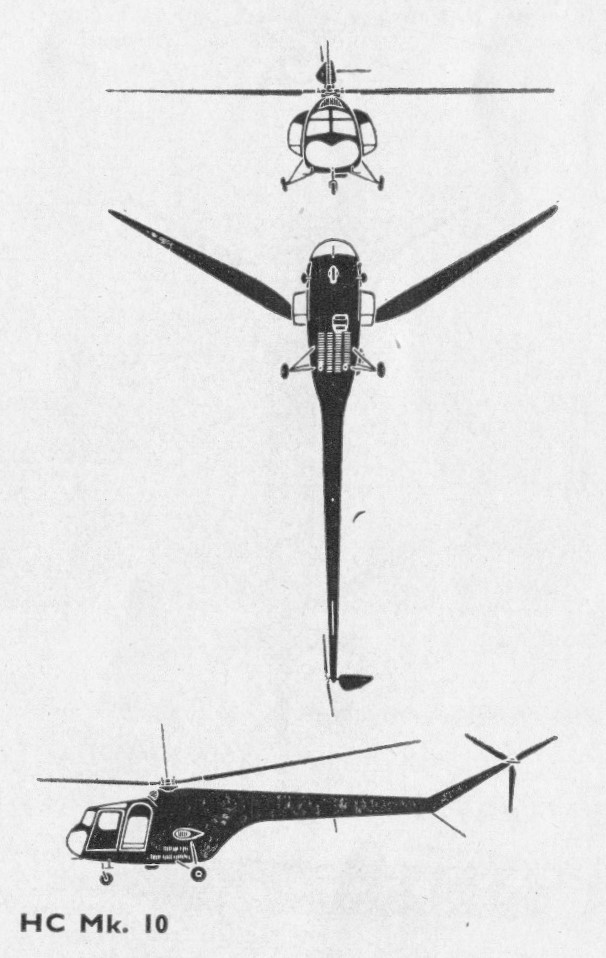
The first two production batches, totalling twenty-five aircraft, included one HC Mk.10 ambulance for evaluation by the Army Air Corps; four HC Mk.11’s for Army communications work; four HR Mk.12’s for RAF search and rescue duties, evaluated by Coastal Command; and two winch-equipped HR Mk.13’s for similar trials with Fighter Command. These were collectively to Mk.3 production standard, with 520hp Leonides 73 engines. Two Mk.3A’s with improved performance, a shorter nose and extra baggage space behind the engine bay, were completed for British European Airways. Of the remaining dozen machines, five were to Mk.4 standard, also with Leonides 173 engines and having four cabin doors; these were built for the Royal Australian Navy (three HR Mk.50), Royal Australian Air Force (one) and RAF (one HR Mk.14). All of these were completed to Mk.3 standard with a Leonides 173 engine. The remaining seven aircraft were a mixture of Mk.3 and Mk.4 reserved for military trials or civil demonstration.
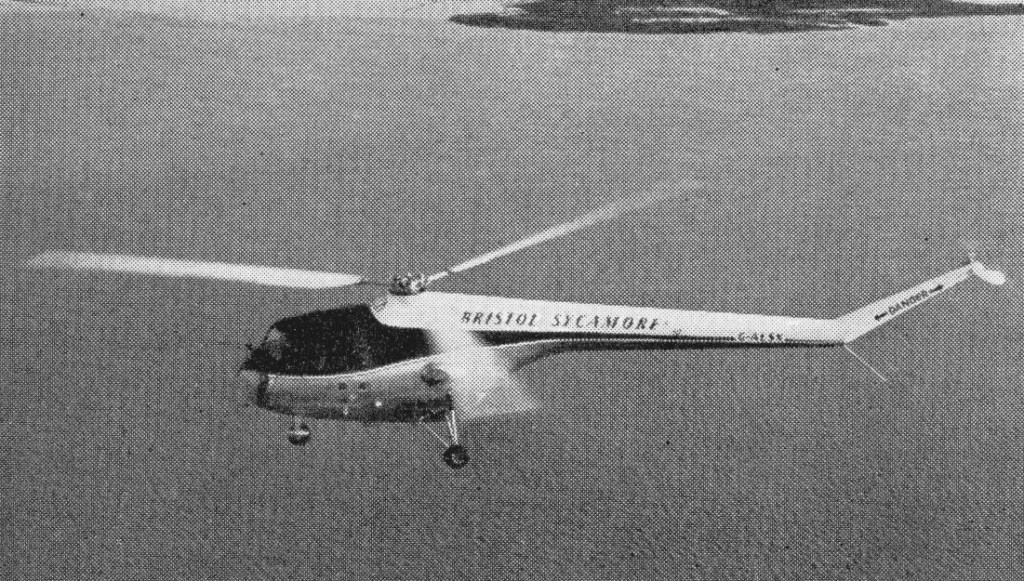
The 1950 Mk.4 with four access doors, a longer-stroke landing gear, a bigger baggage compartment and an hydraulic winch and the pilot’s position moved from port to starboard. This was primarily intended for search and rescue and air ambulance duties, and was supplied to the RAF (two HR.13s and 80+ HR.14), Belgian Air Force (three Mk.14B), Royal Australian Navy (three HR.50 & seven HC.51, equipped with winches for air-sea rescue duties, initially with No. 275 Squadron) and West German Government (50 Mk.52). No. 275 Squadron, RAF. received its first helicopter on 13 April 1953. Sycamores also operated in the light assault and reconnaissance roles in Malaya, Cyprus and Borneo, joining No.194 Squadron in Malaya in 1954 and No.284 in Cyprus late in 1956. In August 1955 a 171 took part in the first British air-to-ground television transmission involving the use of a helicopter. The Bristol Type 171 Sycamore Mk.4 was the final production version of this machine. 178 examples of which had been completed when the last was delivered in 1959. Of these 50 were built in 1957-1959 for the Federal Germany as the Sycamore Mk.52, most serving with the Luftwaffe but 4 being delivered to the Navy, joined later by a further four from the Luftwaffe stocks. The German Sycamore Mk.52 helicopters were withdrawn from service in 1972-1973. In the mid 1950s Bristol Aircraft Ltd began work on a turbine-powered helicopter using a Mk 3 with an increased fin area. Under the name Bristol 203 it was to be an 11-seat machine and parts from the incomplete 179th and 180th Sycamore airframes were used in the prototype machine. This project was abandoned when the company was taken over by Westland, although some of its finer points were later incorporated in the Lynx.
Mk.2 Engine: 550hp Alvis Leonides 71 LE 21 HM Main rotor: three-blade seats: 4-5.
Mk.3 Engine: 520hp Leonides 73 Length: 46.161 ft / 14.07 m Rotor diameter: 48 ft 6.75 in / 14.81 m Max take off weight: 5600.7 lb / 2540.0 kg Max. speed: 93 kt / 173 km/h Range: 232 nm / 430 km Crew: 2+3
Mk.3A Engine: 520hp Leonides 73
Mk.4 Engine: Leonides 73, 520 hp Cabin doors: 4 Fuselage length: 46 ft. 2in. Loaded weight: 5,400 lb. Max. speed: 141 m.p.h. Ceiling: 15,500 ft. Typical range: 268 miles at 92 m.p.h. Seats: 4-5
HR.13 Engine: 1 x Alvis Leonides 73 radial, 410kW Rotors: 3-blade main; 3-blade tail. Rotor diameter: 48 ft. 6.75 in. Fuselage length: 46 ft. 2in. Loaded weight: 5,400 lb. Max. speed: 141 m.p.h. Ceiling: 15,500 ft. Typical range: 268 miles at 92 m.p.h. Seats: 4-5
HR.14 Engine: 1 x Alvis Leonides 73 radial, 410kW Main rotor diameter: 14.81m Rotors: 3-blade main; 3-blade tail. Length with rotor blades folded: 14.07m Height: 3.71m Max take-off weight: 2540kg Empty weight: 1728kg Loaded weight: 5,400 lb. Max speed: 204km/h Cruising speed: 169km/h Ceiling: 15,500 ft. Endurance: 3h Typical range: 268 miles at 92 m.p.h. Seats: 4-5
Bristol Sycamore HR 50/51 (RAAF) Ordered: 1952 Number purchased: 13 First delivered: 1953 Last delivered: 1961 Engine: One 520 hp Alvis Leonides Mk72 7 cylinder radial Rotor diameter: 48 ft 6.75 in Rotors: 3-blade main; 3-blade tail. Loaded Weight 5,600 lb Fuselage length: 46 ft. 2in. Height: 12 ft 2 in Initial Rate of Climb: 1,300 ft/min Ceiling: 4,000 ft Speed: 127 mph (max sea level), 91 mph (cruising) Range: 238 miles Armament: Nil Seats: 4-5 Crew: 2
Experience: Hal Jowers Back in 1968, I was hired by Associated Helicopters in Bankstown, NSW to ferry their one flyable, of 5-hulls & a hanger-full of spare parts they had bought surplus at the time, up to Port Keats Mission (about 200nm S.W. of Darwin) and work a mineral exploration contract.
The ole Sycamore was a more-than-interesting bird – to say the least! With that short-arm collective (+/- 15-inches fulcrum to end) / rt. angle throttle and direct NO hydrolic-assist linkage to the swash-plate: it was like physically lifting the bird WITH ONE ARM!!! … Add to that; a fully-castering nose gear and a 40-gal. liquid ballast system that had to be transferred during lift-off, so extra collective friction was necessary to hold it while reaching for the transfer-pump handle – otherwise; you were instantly back on the ground with a much bigger, LIFE-FULL OF GROUND RESONANCE problem to handle!!! … Albeit; once you had her in the air, all you had to be concerned with was the sporadic – no plausible answer why – 0.5 – 1.5 second engine STOPS that gave your heart its EXTRA exercise for the day.
Having acquired some 85-hours flt.time in the course of that experience; upon return to Sydney I was fortunate to be in conversation with some old RAN Sycamore drivers who expressed no small amount of chagrin that I had been so successful, as to still be alive to enjoy that moment with them. I allowed as how My Holy Spirit keeper obviously had other things for Me to do, before He punches My “ticket”. … All of that was at +/- 2,200, of the final 13,420 flt.hrs. He has blessed Me with. … God Speed!!!
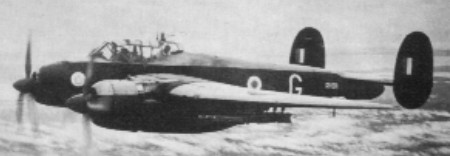
Derived from the Model 163 Buckingham as an advanced trainer, the Bristol Type 166 Buckmaster had considerable commonality with its predecessor, and the last 110 Buckinghams were converted to Buckmasters by installation of dual controls and other modifications.
The first of two prototype Buckmaster flew from Filton on 27 October 1944, both aircraft being conversions from partly completed Buckinghams.
One hundred and fifty sets of Buckingham components had been manufactured when the contract was cut back and these were used for the Buckmasters, the first of 100 production aircraft being completed in 1945 and the last the following year.
Several Buckmasters served with No. 8 Squadron at Aden on communications duties, but most were delivered to Operational Conversion Units to train Brigand pilots. Blind-flying instruction and instrument training could be undertaken and the normal crew complement was pilot, instructor and air signaller.
Buckmaster T.1
The last Training Command Buckmasters served with No. 238. OCU at Colerne into the mid-1950s, while one or two were used on experimental work at Filton. One of these, probably the last survivor, was relegated to RAF Halton where it served as an instructional airframe until scrapped in 1958.
Bristol B.166 Buckmaster Engines: 2 x 2520hp Bristol Centaurus VII radial piston Max Take-off weight: 15286 kg / 33700 lb Empty weight: 10433 kg / 23001 lb Wingspan: 21.89 m / 71 ft 10 in Wing load : 47.56 lb/sq.ft / 232.00 kg/sq.m Length: 14.15 m / 46 ft 5 in Height: 5.33 m / 17 ft 6 in Wing area: 65.77 sq.m / 707.94 sq ft Max. speed: 566 km/h / 352 mph Service Ceiling: 9145 m / 30000 ft Range: 3219 km / 2000 miles
166 Buckmaster T.1 Engines: 2 x Bristol Centaurus 11, 2520 hp Wingspan: 71 ft 10 in Length: 46 ft 10 in Height: 17 ft 6 in Loaded weight: 33,700 lb Max speed: 352 mph at 12,000 ft Max cruise: 325 mph ROC: 2245 fpm Seats: 3
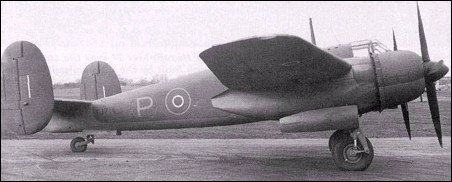
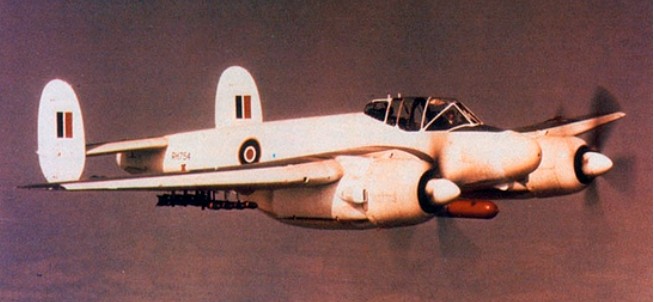
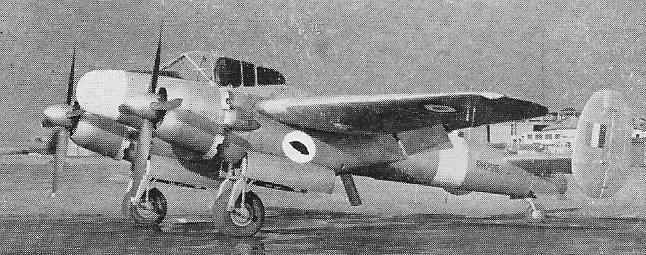
The Brigand was designed as a twin-engined three-seat long-range attack aircraft capable of fulfilling the duties of a torpedo-bomber, dive-bomber and fighter to replace the Beaufighter. It used wings, landing gear, engine nacelles and tail unit of a similar type to those of the Buckingham.
The prototype first flew on 4 December 1944. Although the first 11 aircraft were delivered as TF.1 torpedo-bombers to Coastal Command, in 1947 the Mk 1 was remodelled as a three-seat general-purpose bomber and most of the remaining 132 production Brigands were delivered as B.1. However a few saw service as Brigand Mk 2 training aircraft for radar navigators and Met Mk 3 meteorological reconnaissance aircraft.
The Brigand T.4 was an unarmed advanced trainer version based on the Brigand B.1 and employed primarily as a night fighter radar trainer. The T.4 normally carried a crew of three in tandem seats under a continuous canopy. For night fighter radar training the rear cockpit was blacked out.
Brigand T.4
The Brigand served with the RAF from 1949 until 1958, seeing action in Malaya during 1950 54, when it was operated with considerable success by Nos 45 and 84 Squadrons of the RAF, and had the distiction of being the RAF’s last piston-engined bomber.
Bristol Brigand B.1 Engines: 2 x Centaurus 57, 1842kW, 2470 hp (2,810hp with methanol/water injection) Prop: 14 ft 0 in (4.27 m) dia 4 blade. Max Take-off weight: 17690 kg / 39000 lb Empty weight: 11610 kg / 25596 lb Wingspan: 22.05 m / 72 ft 4 in Length: 14.15 m / 46 ft 5 in Height: 5.33 m / 17 ft 6 in Wing area: 66.7 sq.m / 717.95 sq ft Max speed: 358 mph (576 kph) at 16,000 ft (4,880m) Cruise speed: 500 km/h / 311 mph Service ceiling: 7900 m / 25900 ft Max range: 4500 km / 2796 miles Crew: 3 Armament: 4 x 20mm cannon, 900kg of weapons
Brigand T.4 Engines: 2 x Bristol Centaurus 57, 2470 hp Wingspan: 72 ft 4 in Length: 46 ft 5 in Height: 17 ft 6 in Max speed: 358 mph at 16,000 ft Cruise: 311 mph at 23,000 ft ROC: 1500 fpm Max range: 2800 mi Crew: 3
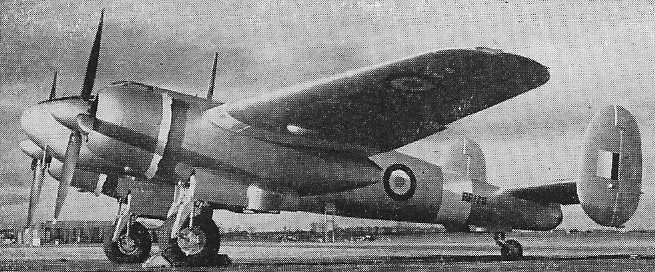
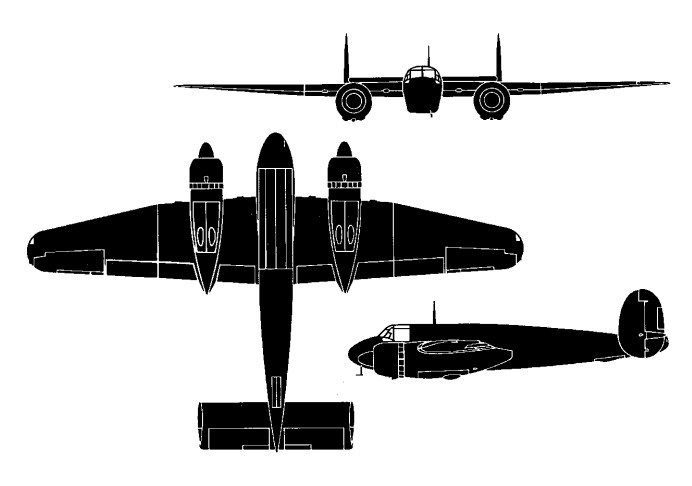
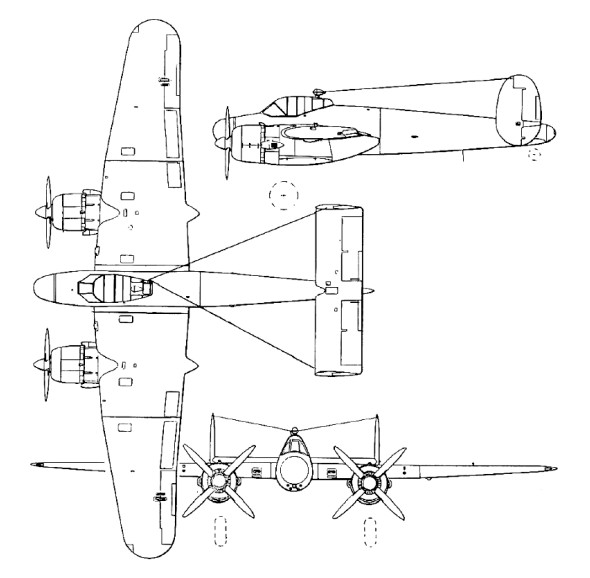
Bristol’s earlier project to Specification B.2/41, the Type 162, itself replacing a previous Bristol Beaufighter bomber scheme, the Type 161 Beaumont, was revised as a result of official delays in finalising requirements. It was further delayed by teething troubles with the new Bristol Centaurus engines, and it was not until 4 February 1943 that the prototype Buckingham flew, without armament. The second, armed, prototype followed shortly afterwards and was followed by two more, all with Centaurus IV engines with high-altitude rating, although production aircraft were to have medium-altitude Centaurus VIIs or XIs. Minor control modifications were made before the first production Buckingham flew on 12 February 1944, but changes were made to the tail surfaces after 10 had been completed to improve stability, particularly in single-engine performance. Although outclassed by the Mosquito in European operations, it was felt that the Buckingham’s superior range would prove a great asset against the Japanese. But by the time production aircraft were being delivered the end of the Far East war was in sight and the original order was cut from 400 to 119, plus the four prototypes. With the end of their potential usefulness as bombers, it was decided to convert the Buckinghams to fast courier transports; the last batch of 65 on the line were completed as Buckingham C. Mk 1 transports and it was intended that the earlier Buckingham B. Mk 1 bombers would be retrospectively modified to the same standard. In this configuration (with extra tankage, seats for four passengers and a crew of three) the Buckingham had a range of 4828km and was used on services to Malta and Egypt, although they were uneconomical with such a small passenger capacity. Two were adapted to accommodate seven passengers, but the modification proved too expensive and was not taken further. Although the 54 bomber versions were returned to Filton for conversion, most were stored and eventually scrapped with very low hours, the last surviving Buckingham being used as a ground testing rig until 1950.
Buckingham B Mk.I Engines: 2 x Bristol Centaurus VII / XI, 2485 hp, 1879kW Take-off weight: 17259 kg / 38050 lb Empty weight: 10905 kg / 24042 lb Wingspan: 21.89 m / 71 ft 10 in Length: 14.27 m / 46 ft 10 in Height: 5.33 m / 17 ft 6 in Wing area: 65.77 sq.m / 707.94 sq ft Max. speed: 531 km/h / 330 mph Cruise speed: 459 km/h / 285 mph Ceiling: 7620 m / 25000 ft Range: 5118 km / 3180 miles Crew: 4Armament: 10 x 7.7mm machine-guns, 1800kg of bombs



 All Aero