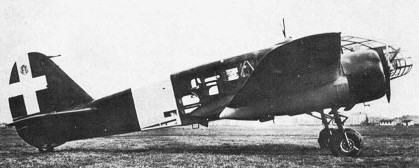
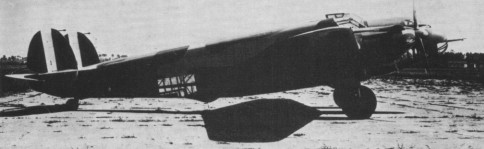
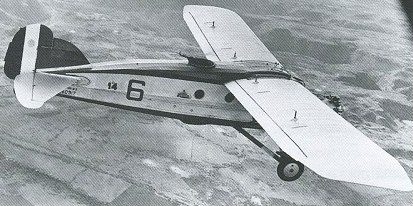
Developed in parallel with the Ca.309 Ghibli, the Ca.310 Libeccio (south west wind) reconnaissance / transport aircraft was structurally similar, but had retractable landing gear and was powered by two 460hp/350kW Piaggio P.VII C.35 radial engines. Export deliveries went to Norway, Peru and Yugoslavia. Yugoslavia also acquired 12 more under the designation Ca.310bis; this variant differed primarily by having an unstepped extensively glazed nose. The Caproni C.310 World War 2 to be retired by the Italians in 1948. The prototype of the Ca.310bis served as a development aircraft for the following Ca.311.
(SABCA) made a marketing agreement with the Italian company Caproni, with SABCA selling some of Caproni’s military aircraft in certain markets, including the Caproni Ca.135, Ca.310 and the Ca.312, which were to be designated SABCA S.45bis, S.46 and S.48 respectively.
Caproni Ca.310 (Libeccio) Engines: 2 x Piaggio P.VIII C.35, 470 hp Length: 40.03ft (12.2m) Width: 53.15ft (16.20m) Height: 11.55ft (3.52m) Maximum Speed: 227mph (365kmh; 197kts) Maximum Range: 1,050miles (1,690km) Service Ceiling: 22,966ft (7,000m; 4.3miles) Armament: 1 x 7.7mm Breda SAFAT machine gun in dorsal turret. 2 x 7.7mm Breda SAFAT machine guns in fixed-firing forward wingroot locations. Up to 992lbs of internal ordnance. Accommodation: 3 Hardpoints: 0 Empty Weight: 6,724lbs (3,050kg) Maximum Take-Off Weight: 10,251lbs (4,650kg)
Designed in mid¬ 1934 by Ing Cesare Pallavicino, the Ca 135 was a mid wing, twin tailed monoplane. The prototype, powered by two 836 hp Isotta-Fraschini Asso XI RC 40 engines, was built by Caproni Bergamaschi and flew for the first time on April 1, 1936. Carrying a four man crew, the Ca 135 was armed with a single 12.7 mm (0.5 in) Breda-SAFAT machine gun in the nose, another in a ventral position, and one or two similiar guns in a Breda dorsal turret. The Isotta-Fraschini Asso XI RC 40 was retained for the initial production version, and 32 were delivered to the Regia Aeronautica’s 330 and 340 Gruppi Bombardied from June 1938, and a further six (known as Tipo Peru) to the Peruvian air force in 1938 39. The Regia Aeronautica Ca 135s were employed chiefly as bombing trainers, but those of the Hungarian air force (delivered in 1940 41) were used for bombing attacks in the Balkan campaign during the latter part of 1941, and on the southern part of the Eastern Front during the following year. The maximum bombload, carried internally, amounted to 1862 kg (4105 lb) on the Ca 135 Asso, reducing to 1600 kg (3527 lb) on the Fiat and Piaggio engined versions. Two torpedoes could be carried instead of bombs. Eight examples were completed of the Ca 135 S (Tipo Spagna), which differed in having 1000 hp Fiat A.80 RC 41 engines. These were intended for the Italian Legion fighting in the Spanish Civil War, but the first three were lost during delivery and the remaining five were delivered to the Regia Aeronautica. The principal production version was the Ca 135 bis, of which 68 were ordered with 1000 hp Piaggio P.Xl RC 40 radial engines: 32 for the Regia Aeronautica and 36 (designated Ca 135 bis U) for the Hungarian air force. All 68 went to Hungary, the Regia Aeronautica making good the defi¬ciency by having 32 Asso engined Ca 135s refitted with the Piaggio engines. Total pro¬duction amounted to 115, includ¬ing the prototype.
(SABCA) made a marketing agreement with the Italian company Caproni, with SABCA selling some of Caproni’s military aircraft in certain markets, including the Caproni Ca.135, Ca.310 and the Ca.312, which were to be designated SABCA S.45bis, S.46 and S.48 respectively.
Ca.135 bis Span: 18.80 m (61 ft 8.25 in) Length: 13.70 m (44 ft 11.5 in) Gross weight: 9500 kg (20944 lb) Maximum speed: 428 km/h (266 mph)
The Ca 111 was a derivative of the Ca 101, and its prototype was converted from a Ca 101, the main difference being the substitution of a single 750 hp Isotta Fraschid Asso 750 RC engine in the nose, in place of the tri motor arrangement of the earlier aircraft. Carrying a crew of two to four, it was armed with up to four machine guns in dorsal, ventral and two beam positions, and could also carry a light bombload internally and/or externally. A total of 152 was built for the Regia Aeronautica, in three main versions: the Ca 111 bis (750 hp Fiat A.80 engine), Ca 111 bis RC (Asso 750 RC engine), and a twin float torpedo bomber version of the latter designated Ca 111 bis Idro. The landplane models gave widespread support to the Italian ground forces during the Ethiopian campaign of 1935 36, and some remained in service after Italy’s entry into the Second World War in 1940, when they were used as transports or for anti-partisan nuisance raids in the Balkan theatre of opera¬tions. One Ca 111 still survived at the time of the Italian surrender in September 1943.
Ca 111 bis Engine: 750 hp Fiat A.80 engine
Ca 111 bis RC Engine: Asso 750 RC, 970 hp. Prop: 4 blade. Wing span: 64 ft 7.5 in (19.68 m). Length: 50 ft 2.25 in (15.30 m). Wing area: 664.13 sq ft (61.70 sq.m) Gross weight: 11,795 lb (5,350 kg) Max speed: 186 mph (300 kph). Range: 1,245 miles (2,000 km). Accommodation: Crew of 3-4.
Ca 111 bis Idro torpedo bomber version Undercarriage: twin float
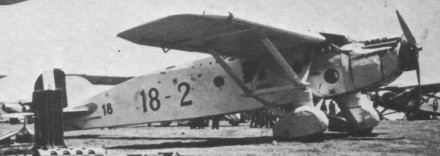
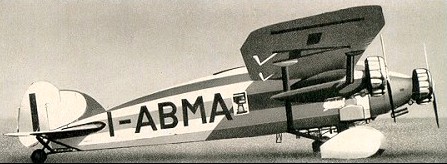
The Ca 101 appeared with various power plants as a civil transport aircraft. Characterized by a steel tube, square section fuselage, the Ca 101 was a high-wing strut-braced cabin monoplane, underpowered, and its payload (defensive armament plus 500 kg (1102 lb) of bombs, or eight passengers in a transport role, in addition to the crew of three) was modest. It was developed originally for use by the Regia Aeronautica’s colonial and night bomber squadrons, and entered service with the Stormi da Bombardamento before Italy’s invasion of Ethiopia, employed on both attack and supply missions. After that campaign, it was phased out of the combat units and transferred to transport and ancillary duties. Most of those produced for military use, were powered by three 240 hp Alfa Romeo D.2 9 cylinder radial engines, driving two blade metal propellers.
Armament consisted of a free mounted dorsal 7.7 mm (0.303 in) machine gun, with one or two similar guns mounted ventrally and, on occasion, two others firing through the side windows to protect it from beam attacks. The Ca.101 D2 was powered by three 179kW Alfa Romeo D2 uncowled radial engines. Fitted with Handley Page leading-edge slats, the Ca.101s armament comprised four 7.7mm machine-guns firing from a retractable dorsal turret, a ventral bulge and lateral window ports. The bomb load was carried externally under the fuselage. Overall production included 24 built by the Cantieri Aeronautici Bergamaschi, and some Ca 101s were still in service after Italy’s entry into the Second World War. These included about 20 supplied to the Hungarian air force, with which they served as transports on the Eastern Front until 1943, in spite of the relatively low payload which could be carried. Also built in small numbers was a twin-engined derivative, the Ca 102, powered by a pair of 500 hp Bristol Jupiter radials. The Ca 102 quater was a variant of this with four engines mounted in tandem pairs. Although an experimental prototype only, it did serve operationally for a time with the 620 Sperimentali Bombardieri Pesanti (Experimental Heavy Bomber Squadron). A few civil Ca.101s were flown on colonial passenger routes for several years (with various Walter, Piaggio and Alfa Romeo engines of 149-313kW).
Ca.101 D2 Engines: 3 x Piaggio “Stella VII”, 275kW Max Take-off weight: 5135 kg / 11321 lb Empty weight: 3435 kg / 7573 lb Wingspan: 19.7 m / 64 ft 8 in Length: 14.4 m / 47 ft 3 in Height: 3.9 m / 12 ft 10 in Wing area: 61.7 sq.m / 664.13 sq ft Max. speed: 250 km/h / 155 mph Cruise speed: 205 km/h / 127 mph Ceiling: 6000 m / 19700 ft Range w/max.fuel: 1000 km / 621 miles Crew: 3-4 Armament: 2-4 machine-guns, 500kg of bombs
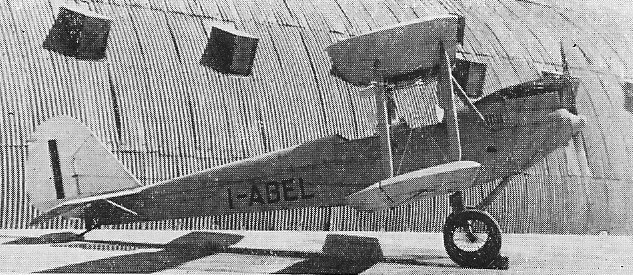
The Ca 100 has a lower wing of noticeably greater span than the upper wing, and about 700 aircraft were built from 1929. The type was bought by civil as well as military operators, and was flown with an assortment of engines including the original Gipsy, 63-kW (85-hp) Fiat A.50, 67-kW (90-hp) Blackburn Cirrus Minor, 86-kW (115-hp) Isotta Fraschini Asso 808, and 108-kW (145-hp) Colombo S.63.
90 hp Cirrus
The Ca 100bis is a touring model powered by a 130 hp de Havilland Gipsy. Built by Macchi, the Ca 100 Idro was a twin-float seaplane trainer, and there was also a bomber trainer with a 97-kW (130-hp) radial engine and provision for a quartet of light bombs. The type was built under licence in Bulgaria as the KN-1, and also in Peru.
Ca 100 two-seat primary trainer. Engine: l x de Havilland Gipsy, 63kW (85hp). Span: 10m (32ft l0in). Length: 7.30m (23ft 1.25in). Max T/O weight: 680 kg (1,499 lb). Max speed: 102mph at sea level. Operational range: 435 miles.
Ca 100 Engine: Cirrus, 90 hp Wingspan: 32 ft 10 in Length: 23 ft 10 in Height: 8 ft 11 in Empty weight: 882 lb Loaded weight: 1587 lb Max speed: 102 mph Cruise: 87 mph Ceiling: 14,763 ft Range: 435 mi
The Ca.52 was a minor variant of the Ca.51. Both had the same engines. The British Government requested the Italian authorities a few copies of the bomber triplane Caproni Ca 42 in order to evaluate it. Caproni built six aircraft designated Ca.52 which differed from the Italian model by mounting a pair of Lewis guns in the front seat of the fuselage and a bombay for British bomb sizes. The aircraft received RNAS serials from N526 to N531 and were used briefly by No. 6 Squadron in Otranto (Italy) and then returned to Italy.
A three-engine biplane bomber of wood and fabric construction, the Ca.36 featured a sectioned wing assembly that could be taken apart into five pieces for easier storage. Armament was 2 x Fiat-Revelli machine guns of 6.5mm or 7.7mm caliber. As a heavy bomber, the Ca.36 could carry up to 1,764 pounds of ordnance. The Ca.36S represented an air ambulance conversion model while the Ca.36M (or “mod”) was a model designed to simplify wartime production. Operators included Italy, the United Kingdom, France and the United States of America.
Caproni Ca.36 Engines: 3 x Isotta-Fraschini V.4B, 150 horsepower Length: 36.25ft (11.05m) Width: 74.61ft (22.74m) Height: 12.14ft (3.70m) Maximum Speed: 85mph (137kmh; 74kts) Maximum Range: 372miles (599km) Rate-of-Climb: 413ft/min (126m/min) Service Ceiling: 15,892ft (4,844m; 3.0miles) Armament: 2 x 6.5mm or 7.7mm Fiat-Revelli machine guns, up to 1,764lbs of bombs Accommodation: 4 Hardpoints: 8 Empty Weight: 5,071lbs (2,300kg) Maximum Take-Off Weight: 8,378lbs (3,800kg)
The Ca 5 series of First World War bombers were a progressive development of the earlier Ca 3 series and, like them, were biplanes. They were slightly larger overall, heavier, and somewhat faster, though their bomb load of 540 kg (1190 lb) remained modest. The initial version (Ca 44) was powered by three 200 hp Fiat engines, driving (as in the Ca 3) one pusher and two tractor propellers. Defensive armament was a single machine gun in the nose and a second to the rear. Entering service with the Corpo Aeronautica Militare in early 1918, the initial model was followed by generally similar versions (Ca 45 and Ca 46) having Fiat, Isotta Fraschini or Liberty engines. The Ca 5 continued to serve until the end of the First World War, though in dimin¬ishing numbers and for the most part on night operations, with many of the Gruppi that had operated the earlier Ca 3. A specialized night bomber variant was later given the post-war designation Ca 50.
Italian production of the Ca 5 series reached 255, to which can be added a small number built in France by Esnault Pelterie.
Two (Ca 46) bombers were delivered to the United States, where it was planned to build the type in quantity for the US Army Air Service, but only three had been completed (two by Standard Aircraft Corporation, AS40070 and 40071, and one by Fisher Body Works, AS42119) before the Armistice.
Ca.46
The American Liberty engine, however, found its way into one other variant: a torpedo and bomber seaplane (Ca 47), with twin Zari floats, of which Piaggio in Italy delivered 10 after the Armistice.
Ca 5 Engines: 300 hp Fiat A.12. Span: 23.40 m (76 ft 9.25 in) Length: 12.62 m (41 ft 4.75 in) Gross weight: 5300 kg (11685 lb) Maximum speed: 152 km/h (94.5 mph)
Ca.5 Engines: 3 x 250hp Fiat A.12 Wingspan: 22.76 m / 75 ft 8 in Length: 10.80 m / 35 ft 5 in Height: 3.80 m / 12 ft 6 in Max Take-off weight: 3870 kg / 8532 lb Empty weight: 2450 kg / 5401 lb Max. speed: 146 km/h / 91 mph Cruise speed: 121 km/h / 75 mph Ceiling: 4000 m / 13100 ft Rate of climb: 114 m/min / 350 ft/min Range: 650 km / 404 miles Armament: 4 x 6.5mm mg Bomb load: 800kg Crew: 4
Ca 46 Engines: 300 hp Fiat A.12. Span: 23.40 m (76 ft 9.25 in) Length: 12.62 m (41 ft 4.75 in) Gross weight: 5300 kg (11685 lb) Maximum speed: 152 km/h (94.5 mph)
Standard-Caproni Ca.46 Engines: three 350hp Liberty 12 Wingspan: 76’9″ Length: 41’2″ Useful load: 4650 lb Max speed: 103 mph Cruise: 94 mph Range: c.400 mi Ceiling: 14,760′ Seats: 3
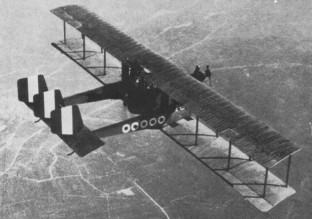
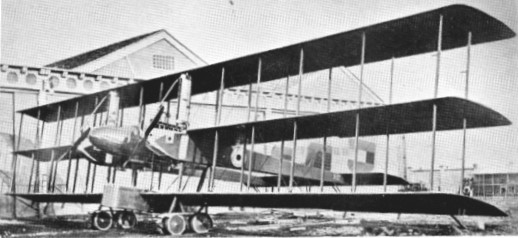
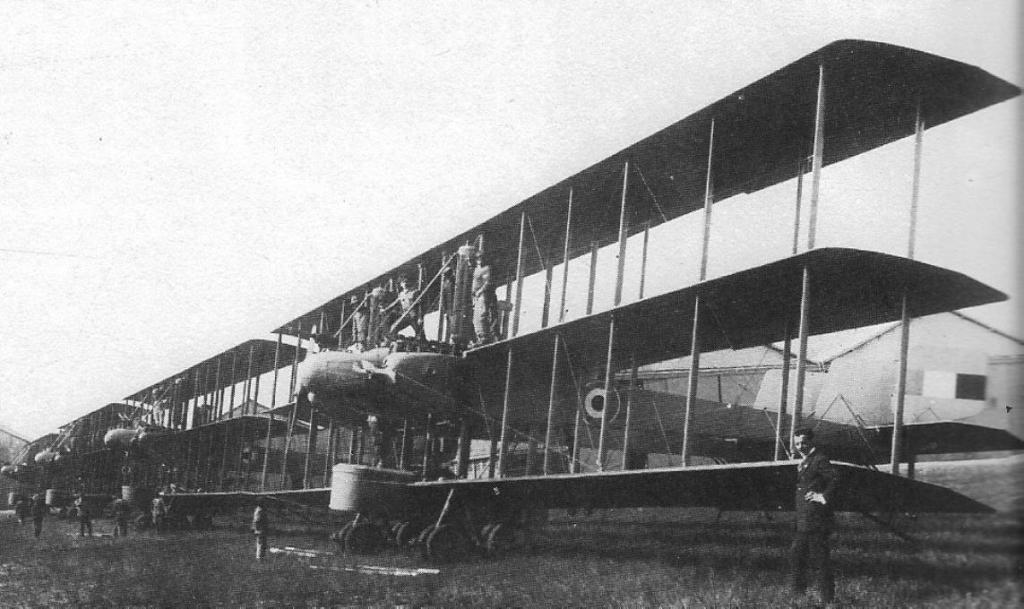
In parallel with the Ca 3 biplane bomber, Caproni also evolved a comparatively small series of bomber triplanes, collectively designated Ca 4. Larger than the Ca 3, the first three Ca 4s (Ca 40) appeared in late 1917 and were powered by three 200 hp Isotta Fraschinis engines. One engine was mounted to drive a pusher propeller at the rear of the central crew nacelle, and the other two were tractor-mounted in front of the middle wing leading edge in the noses of the twin booms. The crew was increased to five, by virtue of having two separate rear gunner positions (one in each fuselage boom) instead of the single, central cage position on the Ca 3. The prototype and the first three production Ca.4s had angular crew nacelles, but all later examples of the Ca.1000HP (its initial designation arising from the total horsepower provided by the prototype’s engines) had carefully contoured rounded nacelles. A third gunner’s cockpit was located at the front of the nacelle forward of the side-by-side cockpits for the pilot and co-pilot. The first Ca 4s were underpowered, and the 12 which followed (Ca 41) were uprated to three 270 hp IF engines, having also an oval section central nacelle with tandem seating for the two pilots.
Ca.41
The principal (Ca 42) versions reverted to side by side pilot seating and were also fitted with uprated 223.6kW Fiat A.12s, 223.6kW Isotta Fraschini V.5s or 298kW Liberty engines. Even with the extra power, they were regarded as too slow for daylight operations, and were employed chiefly as night bombers, carrying up to 1450 kg (3197 lb) in a coffin shaped container between the main units of the landing gear. The Ca. 42 could carry a 1450-kg (3200-lb) bomb load over a long range, but the type was difficult to fly, and being slow, was vulnerable to fighter attack despite an arsenal of defensive weapons, including machine-guns and a cannon on some examples. Twenty-three were built, mostly for the Italian Navy, who used them on night bombing raids and in daylight against the Austrians during the final assault at Vittorio Veneto. Six Liberty-powered Ca.42s were supplied to the British Royal Naval Air Service, though they apparently never left Italy.
Variants of the triplane Ca 4 series included a twin engined, twin float torpedo bomber prototype (Ca 43), and two (Ca 51 and Ca 52) which featured a biplane tail unit, incorporating a rearward firing gun position.
The British Government requested the Italian authorities a few copies of the Ca 42 in order to evaluate it. Caproni built 6 airplane designated Ca.52, differing from the Italian model by Lewis guns paired in the front seat of the fuselage and space for British bomb sizes. They received the RNAS serials N526 to N531 and were used briefly by No. 6 Squadron in Otranto (Italy) and then returned to Italy.
Total production of all versions of the Ca.4 was 42. One Ca.4 was converted to a seaplane by the substitution of huge twin floats for the land undercarriage. Post-war, the Ca.48 23-passenger conversion made a notable flight from Milan to London in 1919. Another civil conversion for 30 passengers was tested the following year under the designation Ca.58.
Ca.4 Engines: 3 x Isotta-Fraschini, 190kW Max. speed: 126 km/h / 78 mph Ceiling: 3000 m / 9850 ft Crew: 4 Armament: 4 x 6.5mm machine-guns, 1450kg of bombs
Ca.40 Engines: 3 x Fiat or Isotta-Fraschini, 200 hp. Gross weight: 6440-kg (14,200-lb). Maximum speed: 125 kph (78 mph).
Ca.41 Wing span: 130 ft.
Ca.42 Engines: 3 x Liberty, Fiat, or Isotta-Fraschini, 270-hp Span: 29.90 m (98 ft 1.25 in) Length: 15.10 m (49 ft 6.5 in) Gross weight: 7500 kg (16535 1b) Maxi¬mum speed: 140 km/h (87 mph) Ceiling: 9840 ft Range: 7 he Crew: 5 Armament: 4 x mg Bombload: 3910 lb
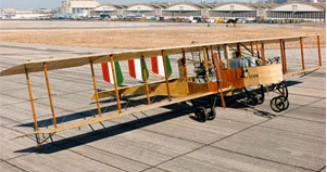
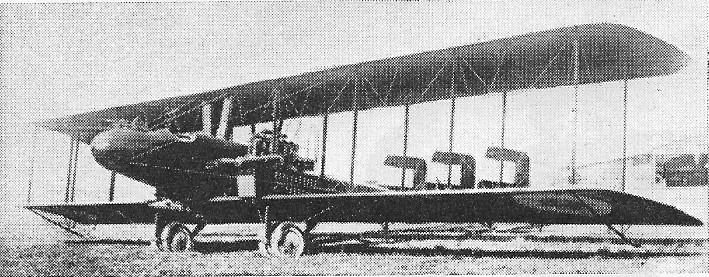
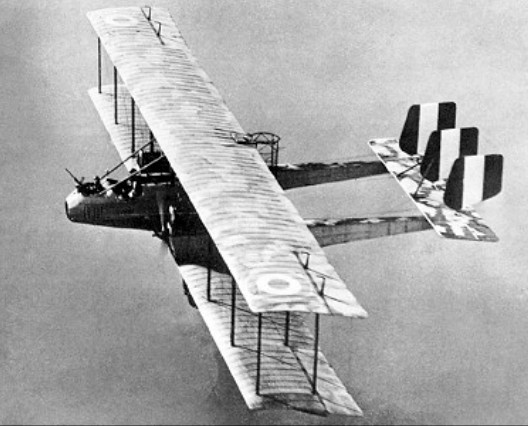
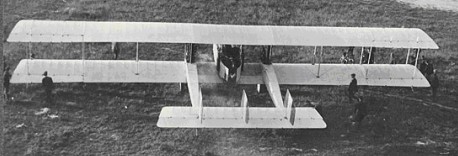
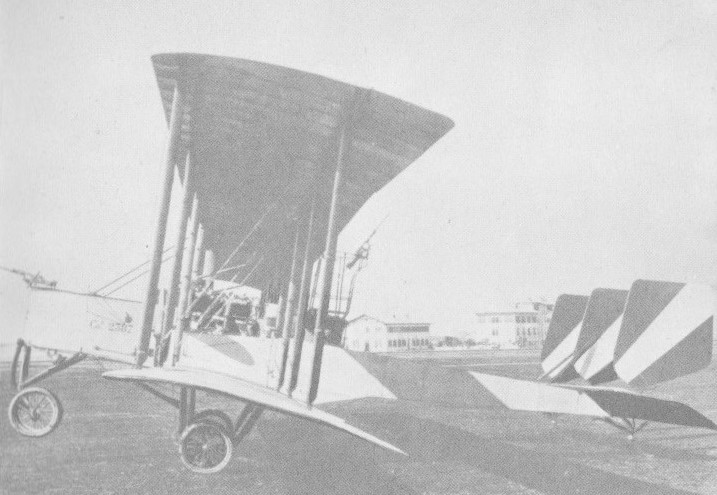
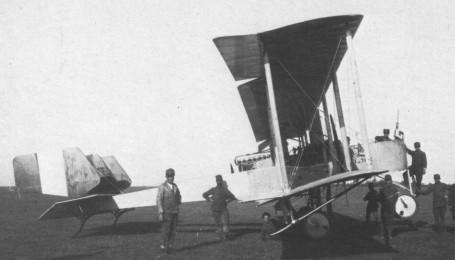
Ca.3 (or Ca.33) of 1917 was the alternative designation of the Ca.450HP, 299 of which were built between 1917 and 1919. Powered by three 112kW Isotta Fraschini V.4B engines, the normal bomb load was 200kg and defensive 7.7mm machine-guns were mounted over the nose cockpit and in a tubular metal structure just behind and slightly higher than the trailing edge of the upper wing centre section.
Three main versions were built, consisting 166 Ca.31’s with 80-100 hp Gnome engines, eight Ca.32’s with 100 hp Fiat engines, and the Ca.33.
A three-bay biplane of conventional wooden construction, wooden fuselage, the entire airframe was fabric covered. The tail has a fixed central tail-fin and twin outboard rudders. Ailerons are on all four wings. Each main undercarriage unit has two pairs of wheels. In addition, a pair of nose-wheels are fitted.
The Ca 3 (Ca 33) became the major production version, 270 being built. It was characterized by three bay equal span wings, and three rudders mounted above the tailplane.
In Italian service the Ca 3 was operated by the IV, IX, Xl, XIV and XVIII Gruppi Bombardamenti, and one Italian navy squadron in Albania.
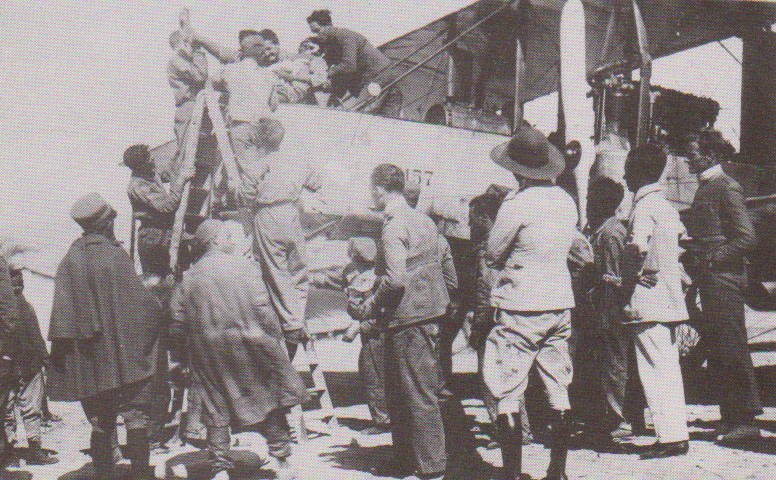
The wounded gunner is lifted from the nacelle of his aircraft.
Licence production of a further 86 was undertaken in France by the Esnault Pelterie and SAIB factories, these serving with the escadrilles of the French Aviation Militaire. In addition, wartime and postwar Italian production figures reached 153 examples of the Ca 3 Mod (Ca 36), of which the CAM received 144. These had detachable outer wing panels, and some were converted as ambulance transports (Ca 36 S), carrying four stretchers and up four sitting casualties.
In 1925 eight machines were sent to Libya in support of the reconquest of that territory. By the end of 1926, however, the last examples had been withdrawn from first-line service.
Ca.33
The mainstream Ca 3 bombers carried a crew of four (two pilots, an observer/front gunner and a rear gunner), with a ring-mounted Revelli machine gun in the front and rear positions. The rear gunner was installed in an exposed, cage like structure below and aft of the upper wing trailing edge, directly ahead of the rear propeller. Most Ca 3s were used for conventional bombing attacks, but some were also employed briefly as torpedo bombers. Experimental variants included models with modified landing gear (Ca 34), tandem pilot seats (Ca 35), shorter span wings (Ca 37) and a proposed single float seaplane version (Ca 39). A number of Ca 3 Mods were adapted as mail or six passenger civil transports (Ca 56a) after the war.
Ca.3 Engines: 3 x Isotta-Fraschini V.4B, 112kW Max Take-off weight: 3312 kg / 7302 lb Empty weight: 2300 kg / 5071 lb Wingspan: 22.2 m / 72 ft 10 in Length: 10.9 m / 35 ft 9 in Height: 3.7 m / 12 ft 2 in Max. speed: 140 km/h / 87 mph Ceiling: 4100 m / 13450 ft Range: 450 km / 280 miles Crew: 4 Armament: 2-4 x 7.7mm machine-guns, 450kg of bombs
Ca,33 Engine: 3 x Isotta-Fraschini V4B, 150 hp Propellor: 2 x 2-blade tractor, 1 x 2-blade pusher Wingspan: 72 ft 10 in Length: 35 ft 9 in Height: 12 ft 2 in Empty weight: 5080 lb MTOW: 8400 lb Max speed: 85 mph at SL Service ceiling: 13,400 ft Endurance: 3 gr 30 min Armament: 2-4 machine gun Bombload: 1000 lb


 All Aero