The B-32 was initially intended as insurance against failure of the B-29 program. Consolidated were awarded a contract for the XB 32 at the same time as Boeing were given the XB 29, but the first prototype, (Model 33) did not fly for two years, the first XB 32 taking the air on September 7, 1942. In configuration a much bigger development of the Model 32 Liberator, the Model 33 had four 2200 hp Wright R 3350 23 Duplex Cyclone engines, each with two GE turbo-superchargers, driving four blade Curtiss Electric propellers. The fuselage was of more circular section than that of the Liberator, and all crew compartments were pressurized. The nose was like that of the B 29, and the tail had twin fins similar in shape to the Liberator. Unlike the Liberator, the main gears had twin wheels and retracted forward into the inner nacelles (the four nacelles were large and extended aft of the trailing edge). Armament comprised two 20 mm (0.79 in) cannon and 14 03 in (12.7 mm) guns in remote control barbettes. However, the success of B-29 development and operational deployment made cancellation of the Dominator a very real possibility at several points in its development. Because the B-32 test program was so far behind schedule, not a single B-32 was ever sent to the Mediterranean or European Theaters of Operation. Technical difficulties were severe. The second XB, flown on July 2, 1943, had a conventional nose with stepped pilot windscreens. The third, flown on November 9, 1943, followed the late model Liberators in switching to an extremely large single fin and rudder. Large scale production was planned, and orders were placed for 1700 production B 32 Dominators. However, technical difficulties continued, and to get the programme moving the pressurization and complex remote control armament were abandoned at a late stage. The B 32 was produced as a strategic bomber cast in the mould of the B 24 Liberator with a typical over target height of not above 8534 m (28 000 ft). In December 1944, the B-32 program was almost canceled again. This time it was saved pending completion of a service test program. As put into production in the spring of 1944, the B 32 had five turrets, each housing a gunner and mounting twin .03 in (12.7 mm). Internal bomb bays under the wing spans carried 9072 kg (20 000 lb) of bombs. Up to ten 12.7mm (.50 caliber) M2 heavy machine guns were provided for self-defense and mounted in pairs in turrets. A Sperry electric-hydraulic ball turret was mounted in the nose along with two Martin electrically-operated dorsal fuselage turret positions and a Sperry retractable turret in a ventral position. A Sperry tail ball turret protected the rear.
Deliveries began in November 1944, 40 TB¬-32 crew trainers were used to train crews. While the service test proceeded, combat crew training was started in preparation for deployment to the Pacific (pending a successful service test.) The service test revealed several minor and a few major problems and the program was near cancellation once again in the spring of 1945. In March 1945, General George Kenney, Commander of the Far Eastern Air Forces (5th AF), traveled to Washington D.C. to ask for B-32s. He wanted B-29s but was turned down because of higher priority needs elsewhere in the PTO. After demonstrations in Washington, General Kenney convinced the Army General Staff to allow him to conduct a combat evaluation of the Dominator. A combat test plan of eleven missions was planned and if successful, the B-32 was scheduled to replace all the B-24 groups in the Pacific Theater. Three B-32s were assigned to the 386th Bomb Squadron, 312th Bomb Group, 5th Air Force. The first combat test mission was flown against a supply depot at Antatet, Luzon, Philippines on 29 May 1945. The last mission of the generally successful combat test was flown on 25 June 1945 against bridges near Kiirun on the island of Formosa (Taiwan).
The 386th Bomb Squadron completed B-32 transition in July 1945 and flew six operational combat missions before the end of the war. The most used Consolidated B-32 Dominator aircraft operationally were three B-32-20-CF’s (Serial Nos 42-108528, 42-108529 ‘The Lady is Fresh’ and 42-108532 ‘Hobo Queen II’). These machines were assigned to the 386th Bombardment Squadron, 312th Bombardment Group (Light) and operated from Clark Field and Floridablanca in the Philippines from May 29th to July 6th, 1945. During this period they undertook twelve bombing missions and dropped 134 tons of bombs on enemy positions. On the 11th August 42-108528 and 42-108532 moved to Yontan Air Base on Okinawa and in so doing joined another five B-32s that were already stationed there.
Following the 9 August 1945 bombing of Nagasaki, the 386th conducted photo reconnaissance missions and during a photo-reconnaissance sortie near Tokyo on the 17th August ‘Hobo Queen II’ and three other B-32s were attacked by ten Japanese fighters. The quartette defended themselves well and one Japanese fighter was shot down with another two claimed as probables. Furthermore, on the 18th August the ‘Hobo Queen II’ and 42-108578 shot down two Japanese aircraft over Tokyo and claimed two more as probables. Although no Dominator was lost in combat, at least two were damaged. Sergeant Marchione, a photographer aboard one of the B-32s on the photo reconnaissance mission of 18 August 1945, was killed when his bomber was attacked by fighters.
The last B-32 combat mission (also photo recon) was completed on 28 August 1945. The 386th BS was ordered to cease combat operations two days later. Cancellation of the B-32 program came on 8 September 1945 and production of Dominators was halted on 12 October.
By VJ Day 115 B 32s had been delivered, 1588 being cancelled and the type withdrawn from service.
Flyable aircraft at Consolidated factories were flown directly to the scrap yard and all partially built B-32s were scrapped at the factory. The last remaining B-32 was scrapped in the summer of 1949.
Number Built: 75 Serial numbers: 42-108471 to 42-10884; 42-108525 to 42-108584; 44-90486 74 B-32s built at the Consolidated Fort Worth, Texas plant. 1 B-32 built at the Consolidated San Diego, California plant. 3 XB-32s and 40 TB-32s were built A total of 118 B-32 built of all types
Consolidated B-32 Dominator Engines: 4 x Wright R-3350-23 Duplex Cyclone 18-cylinder air-cooled turbocharged radial, 2,200hp, 1641kW Propellers: Curtiss Electric reversible-pitch four-blade Length: 83 ft 1 in (25.3m) Wingspan: 135.17ft (41.20m) Wing area: 132.1 sq.m / 1421.91 sq ft Wing load : 78.52 lb/sq.ft / 383.0 kg/sq.m Height: 33.14ft (10.10m) Empty Weight: 59,525lbs (27,000kg) Maximum Take-Off Weight: 50576 kg / 111502 lb Maximum Speed: 357mph (575kmh; 310kts) at 30,000 ft Cruising speed: 290 mph Maximum Range: 2,992miles (4,815km) Range: 3,000 miles w/ 10,000 lb bomb load Range w/max.payload: 1287 km / 800 miles Rate-of-Climb: 658ft/min (201m/min) Service Ceiling: 36,089ft (11,000m; 6.8miles) Armament: 2 x 12.7mm M2 machine guns in nose turret 2 x 12.7mm M2 machine guns in forward dorsal turret 2 x 12.7mm M2 machine guns in rearward dorsal turret 2 x 12.7mm M2 machine guns in tail position 2 x 12.7mm M2 machine guns in ventral turret position Up to 20,000lbs of internal ordnance Accommodation: 10
The United States Army Air Corps (USAAC) issued a new specification in 1935. This specification required the development of a new multi-engined, long-range heavy bomber capable of exceeding a top speed of 300 miles per hour, besting a range of 3,000 miles, maintaining a service ceiling of at least 35,000 feet and taking on an internal bombload minimum of 8,000lbs. Production of the Boeing B-17 Flying Fortress was well underway and, in 1938, Consolidated was requested to help in its production. As part of the production initiative, Consolidated executives were brought to Boeing’s plant in Seattle, Washington to visit the factory. It was this meeting that prompted Consolidated to submit their own heavy bomber design with a more modern flair. The USAAC granted Consolidated a design study in January of 1939 under C-212 with the intent that this new aircraft exceed the performance specifications (speed, range and ceiling) of the B-17 and be ready in time for production before the end of the war.
Consolidated wasted no time in developing their design – the Model 32 – and brought about a few revolutionary changes in the approach of American bomber designs. Model 32 sported a tricycle undercarriage – the first American bomber to do so. The monoplane wings were also held in a high shoulder-mounted position, themselves made wide and holding two engines to each wing leading edge in underslung nacelles. The high wings were of less surface area but promoted a higher fuel efficiency standard than the low-mounted assemblies on a B-17. Of note here was Consolidated’s Model 31 (XP4Y Corregidor) foray which utilized the same “Davis” high aspect wing (or “Davis Wing”). This aircraft was of a twin-engine sort and designed as a flying boat. Ultimately, the design fell by the wayside when an order for 200 examples was cancelled by the United States Navy due to program delays and a lack of available Wright engines.
The Davis Wing emerged from the mind of David R. Davis, an aeronautical engineer working on a new wing planform, a planform utilizing a short chord and high aspect ratio along with thickness suitable to fit engines and fuel while maintaining efficiency. His meeting in the summer of 1937 with Consolidated President Reuben H. Fleet allowed the wing design to flourish as one of the most utilized wing planforms of World War 2. The new wing was intended for use on the company’s new flying boat design – the Model 31. Despite the Model 31’s cancellation (only one example emerged from development), the wing was seen as a good step forward in the design of the upcoming B-24 Liberator and became a major Consolidated design mainstay thereafter.
Other features of the Model 32 included the selection of 14-cylinder Pratt & Whitney R-1830 radial piston engines, deep bomb bay fuselage and a twin vertical fin tail assembly. Every Liberator had four Pratt & Whitney R-1830 Twin Wasp 14-cylinder.radial engines. The development process culminated in an offered contract on March 30th, 1939, for a flyable prototype under the designation of XB-24.
The natural finish prototype, Serial 39-680 which had red-white-blue rudder stripes, flew on December 29, 1939, from Lindberg Field in California with 4 x Pratt & Whitney R-1830-33 radial piston engines of 1,000 horsepower each. The prototype was subsequently modified to become the XB-24B, with self-sealing fuel tanks, armour and turbo-superchargers. The latter were placed beneath the nacelles.
Later B-24s had the R-1830-41, -43 or (from 1942) -65, all rated at 1,200 hp and with power at high altitudes maintained by a turbosuper¬charger under the nacelle. Almost all aircraft had 11-ft 7-in Hamilton Standard three-¬blade propellers, without spinners. A basic feature of the air¬craft was large fuel capacity, giving it exceptional range. From the first there were 12 flexible cells between the ribs of the wing centre section, and from 1942 three auxiliary tanks were added in each outer wing. The aircraft failed to reach the projected top speed of the original design intentions but, overall, the first flight was a success. To help iron out the prototype design, a further six YB-24/LB-30A evaluation/pre-production models were ordered, built and delivered. These were followed by the B-24, seven examples of which only one was used for service testing. The B-24 featured de-icing boots and deleted the leading edge slots of previous forms.
Liberators were crewed (depending on the model) by 7 to 10 personnel. The pilot and co-pilot were situated in the high-mounted stepped flight deck with views forward, to the sides and above. The nose gunner, bomber and navigator were housed under a glazed nose well forward in the design. The nose gunner had access to the powered nose turret if the model of Liberator called for one, fitting 2 x 12.7mm machine guns.. Bombardiers and pilots shared a common role for the bombardier would be called on to take flight control of the bomber when engaging in the bombing run via auto-pilot. The navigator could utilise the forward-mounted Plexiglas dome to get his bearings as well as relying on physical landmarks below. If “cheek” machine guns were fitted on a Liberator model, the navigator could man one. The dorsal turret gunner also doubled as the flight engineer and probably maintained the best defensive vantage point, offering an exceptional firing arc when compared to all other available gunner positions. The turret mounted 2 x 12.7mm machine guns. The radioman was situated within the upper portion of the Liberator’s fuselage, positioned just behind the cockpit. Radiomen were required to keep logs of all pertinent actions and could be called upon to man one of the waist guns if needed. The forward flight crew was removed from the rear flight crew, with access between the two sections of the bomber made via a thin scaffold running the length of the two bomb compartments. Entry and exit to the aircraft was through a door positioned towards the rear which made for harrowing emergency exits. Forward crewmen were expected to exit the aircraft by walking across the bomb bay scaffold and make their way to the rear all the while fitted with their parachutes and bulky warming flight suits. The smallest bomber personnel were generally enlisted for operation of the ball turret fitting 2 x 12.7mm heavy machine guns. These fellows wore no parachutes (the small size of the ball turret necessitated this) and made their way inside their turrets after the aircraft was in flight. The ball turret – unlike that on the B-17 – could be retracted into the Liberator’s fuselage during take-off and landing. The ball turret was perhaps the coldest position on a given B-24 with many a crewmember reporting frostbite through those frigid high-altitude sorties.
Waist gunners had single 12.7mm machine guns. These two positions – left and right – were later staggered to compensate for each gunners firing arc. Unlike other turreted positions in the B-24, spent shell casings at these waist positions were not jettisoned from the aircraft automatically, forcing crewmembers to clear their areas themselves. Since firing from these side-perspective positions required a great deal of hand-to-eye coordination via tracer rounds while taking into account target speed and the Liberator’s airspeed itself, waist gunners relied on simple targeting sights in the early years. Only later did they receive assistance in the form of compensating sights to help improve accuracy. The tail gunner was given a powered 2 x 12.7mm machine gun turret.
The B-24 utilized a great deal of hydraulics with such systems spanning nearly every internal inch of the aircraft. Fuel on the B-24 was situated in the wings, just inboard of the inboard set of engines as well as in the upper portion of the bomb bay. As such, any direct hit could easily set the entire aircraft on fire in seconds.
The Army Air Corps ordered seven YB-24s for trials and a further three dozen B-24As for service evaluation. The French ordered 120 B-24As, and even more were purchased by Britain, whose orders embraced a score of Liberators similar to the YB-24.
Production began at Consolidated’s San Diego plant of which the first six were earmarked for the French Air Force as LB-30A models. With the fall of France in 1940, these aircraft made it to British Royal Air Force hands via Lend-Lease. The French Armée de l’Air had ordered 175 Consolidated 32B7. The RAF found their early production forms to be unsuitable for the rigors of combat for they were not even fitted with self-sealing fuel tanks and relegated them to ferry type duties. The USAAC called for 36 of the aircraft while the British ordered 164 for the RAF. Upon reception of the aircraft, the British bestowed the name of “Liberator”, the United States military accepted the British name of Liberator as part of the official designation from then on.
The first of a batch of six Model 32 LB-30s (this latter being the special designation applied to the first British aircraft) first flew on January 17, 1941. These aircraft, AM258-263, were used on the Return Ferry Service between Scotland and Canada from March 1941, and were also operated by BOAC. Since they had been envisaged as bombers they wore the brown-greenblack finish of British machines and had grey serials on their fuselages.
Twenty-six Liberator Is, AM910-929, began to arrive in Britain in the middle of 1941. Five Liberator Is going to BOAC. Some of these were subsequently fitted with a ventral cannon tray in addition to two tail guns and one in each beam position. In such state, and with a full array of ASV aerials on the fuselage top, wings and nose, these aircraft were delivered to No 120 Squadron at Nutt’s Corner to supplement, and later to replace, its Wellingtons. The white Liberators, with their grey and green upper surface camouflage wearing what appeared as a faded or washed-out tone, had grey codes and serials. They were very long-range aircraft able to patrol far out into the Atlantic, and began operations in September 1941. On October 22, AM926: OH-F (OH being aft of the roundel on the starboard side, forward on the port) flown by F1t Lt T. Bulloch, DFC, attacked a U-boat; a year later, AM929: OH-H, flown by Bulloch, sank U-653. By this time many other Liberators were in service.
A Liberator II of 159 Squadron in Fayid, Egypt. The LB.30’s Boulton Paul Type A is visible here.
June 1941 saw the initial Liberator deliveries to the USAAC who received nine LB-30s similar to the RAF’s Mk Is, and these were used mainly as transports which undertook some very long flights. Some of these B-24As wore the same colouring as the LB-30s, and one was lost in the Japanese attack on Pearl Harbour in December 1941.
Britain also ordered 165 LB-30s on its own account, and these were built to RAF requirements as Liberator IIs, though only 139 reached Britain (AL503-641), 25 going to the US Army. The Mk II had Boulton Paul four-gun dorsal and tail turrets (These were in addition to a .303 in gun in the nose and two others in the beam positions), a lengthened nose of 2 feet 7 inches, Curtiss propellers, armour, self-sealing tanks and many other changes. Deliveries began to reach the RAF from March 1942. The second aircraft, AL504, was later rebuilt as Winston Churchill’s personal VIP transport, with many features of the later C. IX, including a longer fuselage and tall single fin. To a generally similar standard 38 B-24As were ordered, but only nine were delivered and most were used without armament on the Atlantic ferry service.
Liberator II
In the main these Liberators, which had the green-black-brown finish, were used by Nos 159, 160, 178 and 511 Squadrons. No 160 formed at Thurleigh near Bedford on January 16, 1942. Operational employment for part of the squadron was first found as a unit of Coastal Command from May 8, 1942, at Nutt’s Corner.
On 4 December 1942 B-24 Liberators of the USAF carried out the first American attack on Italy. Bombs hit ships and port and rail installations in Naples. No enemy fighter planes took to the air. All the bombers returned to base.
Meanwhile the main part of the squadron moved East, and eventually settled at Aqir. Following bomber operations, the unit reformed at Ceylon where it was destined to receive Mk IIIAs and later, the Mk V. No 159 Sqn also formed in England and followed a similar career. It participated in mine-laying, overseas patrols, supply drops and even reconnaissance sorties.
No 178 Sqn spent much time in the Middle East where it formed up at St Jean in Palestine, and later took part in operations in the Western Desert, over. Italy and deep into Eastern Europe. Some of the Mk IIs were used by 511 Sqn as transports, whose forerunner, 1425 F1t, had operated Mk Is. Other IIs entered service with Coastal Command.
Meanwhile American developments of the B-24 were materialising. On the XB-24B the engine cowlings appeared oval in shape, since the oil coolers were now placed on the cowling sides. With R-1830-41 engines of 1,200 horsepower, to absorb the greater power at high altitudes paddle-blade Hamilton Standard propellers were fitted. The XB-24 prototype served as the conversion model, which now gained a top speed increase equal to 37 miles per hour. The XB-24B went on to become the first definitive operational Liberator forms in service with Britain and the United States.
This was a feature of the B-24C, which had a dorsal turret immediately aft of the cockpit, and a Consolidated rear turret to increase the defensive power of the beam guns. Nine of this version were built. It was its successor, the B-24D, which was first to join the American bomber groups. Twenty of the B-24As originally ordered were completed as B-24Ds, but when the total production was completed 2,425 B-24D-CO, 303 B-2413-CF and ten more by Douglas Aircraft had been built. On this, the second most numerous B-24 variant, a very large number of modifications were incorporated, including armament changes and modifications to armour, gun positions and fuel loads.
Nine B-24A models became B-24C models with this engine. B-24C models were essentially A-models but fitted with R-1830-41 series turbo-supercharged engines for increased performance. These engines also featured revised cowlings to differentiate the type further from her origins. Additionally, improvements of the this aircraft fell into the category of defense for a Martin powered turret (2 x 12.7mm machine guns) was installed to the forward portion of the fuselage and an Emerson A-6 powered turret completed the armament in the rear tail gun position.
The B-24D became the first quantitative production run of the Liberator series. These were somewhat similar in nature to the B-24C models before them but fitted improved R-1830-43 supercharged radial piston engines. Improvements to defense were made yet again, with the ventral machine gun position replaced by a remote Bendix-brand belly turret during production. This was still further improved upon with the addition of the Sperry ball turret with 2 x 12.7mm heavy machine guns and a wider firing arc. Late production D-models were given 12.7mm heavy machine guns in their “cheek” positions to protect the forward left and right side angles of the aircraft. 2,381 B-24Ds were made at San Diego, 305 built at Fort Worth and 10 from Douglas at Tulsa. The D had extra tanks in the outer wings and gross weight reached 27,216 kg (60,000 lb).
It was some of the early B-24Ds that the Americans sent to Britain in 1942, when between August and October No 93 Bomb Group settled at Alconbury and on October 9, despatched 24 Liberators (14 of which aborted) with the B-17s that bombed the Fives-Lille factory in Northern France.
During December 1942 the 93rd BG sent a large detachment to North Africa for operations there until March 1943, leaving the 44th BG which had moved to Shipdham, Norfolk, between August and October and commenced operations in November, to continue attacks on the Continent.
The B-24Ds of these units were nearly all despatched to the-Middle East late in July 1943 to participate in more attacks in the Mediterranean area, during the invasion of Sicily and in the disastrous Ploesti low-level raid. The survivors returned to Britain late in August, but small detachments continued to operate in the Middle East. For this reason the Liberator element of the VIIIth Air Force remained small until the winter of 1943-44. By this time later versions of the B-24 were in service.
In the course of production the ventral tunnel gun was replaced by a twin 0.5-in Sperry ball turret, standard on most subsequent bomber versions. The RAF equipped 37 squadrons with the Liberator III (British purchase B-24D) and IIIA (Lend-Lease), these retaining the four 0.303 tail turret, while 977 B-24Ds went to the US Navy as PB4Y-1 long-range ASW aircraft.
The British version of the B-24D was the Liberator III, which was also used by the RAF in two other forms, the Mk IIIA with US equipment and armament, and the Mk V with extensive AW radar fitted in a chin radome and another which replaced the ball turret of the bomber. The standard III had 4 x .303 in guns in her tail turret, a two-gun dorsal turret, one gun in the nose and provision for two beam guns.
Three camouflage schemes were worn by these aircraft. The Coastal Command Liberator III/IIIA/V aircraft had white sides and under-surfaces, with grey and green upper surfaces as applied to the Mk Is. Usually the code letters were grey, but some aircraft had black or red coding. Overseas the maritime reconnaissance Liberators also wore these colours. Such Mk IIIs as were used overseas as bombers retained the olive drab/dark grey finish common to Lend-Lease bombers, and when repainting was undertaken the similar British colourings were applied. A few Liberator IIIs had a green-brown-black finish, and were to be seen in use as transports operating from Britain on the India run after the war.
Some of the IIIs had a Leigh Light fitted.
Apart from their chin radomes, the Mk Vs were similar to the IIIs, which usually had their ball turrets replaced, too, by a radome.
For much of the war Coastal Command relied upon the Mk V, and only during the final year of hostilities did the nose-turreted versions enter service. The Mk III was first used by 120 Sqn during the Summer of 1942, when this was still the only home-based Liberator squadron utilising to the full the long range of the Liberator. By the end of 1943 three Coastal squadrons had IIIs, Nos 120, 86 at Thorney Island and 224 at Beaulieu. During the first half of the year the VLR Mk Vs came into service with Nos 59 and 86 Sqns at Aldergrove, with 53 at Thorney Island, 224 at St Eval, and at Beaulieu where 311 was based. The turn of the year found 120 Sqn mainly using Vs, yet holding on to a handful of the old Mk Is. By mid 1944, when the early Liberator strength was at its peak, Nos 59, 53, 120, 224, 200, 311, 354 and 547 had Mk Vs while Nos 86 and 160 were among those still using IIIs.
In the Autumn of 1943 the US VIIIth Air Force rapidly built up its 2nd Air Division, which was entirely equipped with Liberators and based in East Anglia.
Standard US insignia was now to be seen on the B-24s, the period when the Americans had been flying Liberators with grey stars (except for flight leaders) seemingly over. By the turn of the year, such B-24Ds as were still in use had, in a few instances, shed their camouflage; but those which lived longer in many cases were awarded the most bizarre markings ever carried by operational military aircraft. The intention for the strange colourful was to serve as rallying points for the bombers, as they formed up over Eastern England into their battle formations.
Ford Motor Company produced the B-24E model series, these being fitted with R-1830-65 series radial piston engines. Despite the removal of the ventral machine gun in the improved D-models, these E-models retained them over the Bendix/Sperry ball turrets. Due to the limitations in armament, these Liberators primarily served the United States Army Air Force as pilot, bombardier, gunnery and crew trainers.
The B-24E had Curtiss pro¬pellers, most having the new R-1830-65 engine. This was the first version made at the Ford plant at Willow Run (490), 144 being added by Fort Worth and 167 by Douglas Tulsa.
The XB-24F was a single prototype modified from a B-24D model and used for de-icing testing.
B-24G models were North American Aviation-produced Liberator B-24D version of which 25 examples were built. These Liberators featured the Sperry ball turret and up to 3 x 12.7mm heavy machine guns in the powered nose turret and armour against head-on attacks. The B-24G-1 was a modified G-model form sporting a new Emerson A-6 tail turret. 405 examples of this model were ultimately produced.
Thousands of B-24Ds were likewise com¬pleted with a nose turret, of the same flat-fronted Emerson type as on the G, with a bombardier station in the chin position. These were called B-24H, Fort Worth making 738, Tulsa 582 and Willow Run 1,780. Most of the Tulsa and Willow Run machines had the sloping-front Consolidated hydraulic nose tur¬ret, and either this or the Motor Products A-6B was fitted to the B-24J, which also brought in the C-1 autopilot and M-9 bomb¬sight.
As such, the fuselage was revised with a new bombardier’s compartment to make room for the placement of an Emerson A-6 nose turret. This turret was nothing more than a modified version of the tail turret utilized in previous production examples. A revised tail turret greeted the tail gunner and offered up better views through larger windows. The waist gunners were now positioned in a staggered arrangement to offset their firing arcs and prevent onboard collisions of the two gunners in the heat of combat. The top turret was slightly revised with a higher canopy providing for better visibility for the gunner.
The B-24J was produced in 6,678 examples and were based on the B-24H models sans the defensive armament revisions. Nevertheless, these J-models were given a much-improved autopilot and bombsight system.
The XB-24K was a proposed Liberator derivative by Ford. The idea revolved around fitting the empennage of a Douglas B-23 Dragon twin-engine bomber to the existing airframe of the Liberator. A single prototype was produced as such by converting a B-24D. Though the new aircraft flew with promise – providing for improved handling – such a project during the thick of wartime was deemed much too expensive to undertake and thusly was dropped from serious production consideration. Ford would have handled production of this new B-24N but the order was cancelled on May 31st, 1945. The XB-24K did, however, set the stage for the PB4Y-1 navalized production version of the United States Navy’s Liberator fleet and ultimately led up to the definitive fully-navalized PB4Y-2 “Privateer” model.
The B-24L appeared as a result of the USAAF wanting the weight of the B-24J models reduced. Revisions to this model included the removal of the ventral ball turret and the replacement of the A-6B tail turret with a lightweight M-6A turret or no tail armament at all. The ventral gun turret was replaced by a ring-mounted system sporting 2 x 12.7mm heavy machine guns. 1,667 examples of this model were produced.
The B-24M was another attempt to lighten the B-24.This included the use of a lighter A-6B tail turret and uncovered waist gunner positions. The 2,593 M-models represented the last Liberator production models to see the light of day, with a good number never even being delivered to frontline units and instead scrapped.
The Liberator was evolved into a variety of developmental forms. These included the XB-24N with its single vertical tail fin (would have been produced as the B-24N) and the seven pre-production forms of the N-model in the YB-24N. The XB-24P was a single converted B-24D model used by the Sperry Gyroscope Company to evaluate various in-flight armaments and related systems. The XB-24Q was another single prototype examples, this time produced by General Electric, to showcase radar-controlled turrets. The XC-109/C-109 became a fuel ferry transport in support of Boeing B-24 Superfortress missions over Japan. These Liberators were fitted with special modifications to assist in prevention of onboard explosions of fuel during transport.
The XB-41 was a concept to provide flights of B-24 bombers with similar Liberators armed to the teeth as floating gunship escorts. Though promising on paper, in actual practice the system proved unusable with substantial drops in performance. A single prototype was completed for evaluation and sported no less than 14 x 12.7mm Browning M2 machine guns. Instead of a bombload, the bomb bay was fitted with up to 11,000 rounds of 12.7mm ammunition. Power was derived from 4 x Pratt & Whitney R-1830-43 Twin Wasp radial piston engines of 1,250 horsepower. When evaluated in-flight as escorts alongside the base Liberator bomber, this particular Liberator was unable to keep pace while the aircraft also propagated stability issues and, as such, the proposition for such a machine was ultimately axed in 1943.
The Liberator airframe was utilized for training of various flight crew. These were known by the designations of AT-22 (TB-24), RB-24L, TB-24L and C-87. The RB-24L deserves note here for they were utilized to train Boeing B-29 gunnery crews on remote gun systems as found on the B-24L. The TB-24L was similar to the RB-24L with an increase to radar equipment carried aboard. Base C-87s were used for the training of future Liberator engineers.
The German 200th Bomber Wing, KG200, carried out special transport missions using captured US B-24 Liberator and B-17 Flying Fortress which the Germans called by the code name Dornier Do 200.
The C-87 “Liberator Express” was a 20-passenger transport and appeared in A- (16-passenger VIP transports with R-1830-45 radial engines and sleeping berths), B- (proposed armed passenger transport), and C-models (RY-3 of the USAAF).
C-87
Converted from B-24D, 284 of the C-87 transport version were supplied to the USAF during WW2. Produced in two versions, the C-87 with a crew of five and accommodation for 20 passengers, and the C-87A executive sleeper with 10 berths. The C-87 is powered by four 1200 hp Pratt & Whitney R-1830-43 engines.
Photographic reconnaissance versions of the Liberator were in no short supply. The XF-7 represented the prototype based on the B-24D model. The F-7 was the initial reconnaissance platform developed from the B-24H. The B-24J was the basis of the F-7A while the F-7B was of a similar mold, though sporting up to six cameras in the bomb bay as opposed to the previous type’s three.
The BQ-8 were converted B-24D and B-24J models at the end of their useful operational lives, outfitted to serve as radio-controlled flying bombs.
PB4Y-2 Privateer
The PB4Y-2 “Privateer” was a truer “navalized” and dedicated form of the Liberator and based on Ford’s B-24K idea which fitted the tail section of a Douglas B-32 Dragon and its single vertical tail fin for improved stability. The USN made good on 739 examples of this type of which served on even into the Korean War, ultimately retired in 1954.
The US Navy operated the PB4Y-1, which was basically a stock USAAF B 24D with appropriate naval gear added. PB4Y-1 also served to cover all future G-, J-, L- and M-models of the Liberator in USN service. The PB4Y-P became a photographic reconnaissance variant based on the PB4Y-1. However, the USN wanted their own low altitude heavy patrol bomber and contracted with Consolidated in San Diego to produce such a craft. Initially known as the Sea Liberator, the new aircraft was a considerable departure from the B 24. While incorporating the same out¬er wing and landing gear as the B 24, the PB4Y 2 (Consolidated Model 100) featured a fuselage that was lengthened by seven feet and a large single vertical tail. The engines were Pratt & Whitney R 1830 94s without turbosuperchargers and were fitted in new nacelles. XTO bottles could be added to the fuselage and an imposing armament of twelve .50 caliber Browning air cooled machine guns was distributed in an Erco nose turret, two Martin dorsal turrets, two huge Erco side blisters, and a Motor Products tail turret. The first three PR4Y 2s were converted from existing PB4Y-1 airframes and initially retained their distinctive twin vertical tails. The first example flew on 20 September 1943. After initial flight testing, an or¬der was given on 15 October for the delivery of 660 aircraft which had by now been designated as Privateers. This order was followed by another for 770 airframes about one year later. Consolidated began delivering aircraft in March 1944 and production extended to October 1945 but was limited to a total of 740 Privateers by the successful conclusion of the war.
The P5Y was a proposed twin-engine version of the PB4Y-1 but never produced. The C-87 transport version became the RY-1 (C-87A), the RY-2 (C-87 base) and the RY-3 (a dedicated transport alternative of the PB4Y-2 “Privateer”).
The first operational squadrons to receive the type comprised VPB 118 and 119 who took their Privateers overseas beginning in January 1945. The planes began operating out of Tinian, searching for enemy subs, shipping, aircraft, and land targets. By the end of the Pacific War, the Navy was operating 13 Privateer squadrons while five other squadrons flew a mixture of Privateers and PB4Y-1s.
After WW2, the Privateer stayed in front line use and three squadrons (VP 772, VP 871, and VP 28) saw action in the Korean War where, carrying 250 parachute flares apiece, they flew in support of Marine night operations against the enemy. After Korea, Privateers were used for a variety of secondary missions including con¬version to drones and drone directors. The US Coast Guard also used a small number of Privateers modified for search and rescue duties.
P4Y-2G
A few Privateers were also used by foreign nations, the most notable being France, which initially received ten PB4Y 2 aircraft in late 1950 for use against communist insurgents in French Indochina. The aircraft were used as bombers and several were lost in action, but more Privateers were supplied from US stocks and the French eventually received 24 planes. After the French defeat in Indochina, the aircraft saw action in the Algerian war of independence before the last five examples were withdrawn and scrapped in 1961.
During the late 1950s, surplus Privateers were made available to civilian buyers during sales at Litchfield Park, Arizona. Quite a few aircraft were sold, but the majority were rapidly scrapped or abandoned since they were being purchased for their 94 engines only. At this time, the engines (which were being used for “super” DC 3 civilian transport conversions) were more valuable than the airframes. However, a Restricted Certificate (AR 29) was obtained by Transaire Spraying Co. of Canyon, Texas, to register civilian Privateers as large acreage sprayers and fire bombers.
Whereas many early B-24s and LB-30s were completed or modified as trans¬ports, the desperate need for capable long-range transports in the evacuation of Malaya the Dutch East Indies and related areas forced the urgent development of a properly designed model. This went into production at Fort Worth in April 1942 as the Liberator Express. The main version, with 278 built, was the C-87. This was unarmed (some retained a 0.5-in gun in the tail), but had a large loading door, strong cargo floor and 20 to 25 removable passenger seats. Normal payload with maximum fuel was 4536 kg (10,000 lb), and 24 were sup¬plied to the RAF as the C.VII. The RY-1 and RY-2 were navy conversions, while the C-87A was a VIP version, usually with 16 seats or 10 berths. Five were completed as AT-22 crew trainers, mainly for training flight engineers. A total of 236 B-24Ds was supplied to the RAF, where they were completed as GR.V ASW aircraft for Coastal Command with radar, Leigh light and ASW equipment. Of these, 23 were then converted as C.V transports. In 1943-44 this was the standard model, San Diego building 2,792, Fort Worth 1,558, Tulsa 205, Dallas 536 and Willow Run 1,587. Many were completed as navy PB4Y-ls, with a spherical Erco nose turret and ASW radar instead of the ball turret. The C-109 (208 converted) was a tanker to carry fuel ‘over the hump’ from Burma to China, while 213 (of various models, mainly Js) were converted as F-7 armed reconnaissance aircraft. The RAF received over 1,000 of the H and J models as the B.VI, GR.VJ and C.VI. By April 1944 all new aircraft were unpainted, and fitted with the high-power B-22 turbosupercharger. Shortly afterwards production switched to the B-24L with the tail turret replaced by a much lighter barbette with a wider arc of fire. San Diego built 417 and Willow Run 1,250, some being converted into RB-24L trainers for B-29 gunners with remote sighting stations for B-29-type turrets. The final production bomber was the B-24M, with a lightweight Motor Products tail turret; San Diego built 916 and Willow Run 1,677. There were also numerous experimental models, such as the XB-24P with a radar-equipped gunfire control system, and the XB-24Q used as a testbed for the radar-directed tail turret of the B-47. The XB-24F had the pneumatic deicer boots – which had to be carefully inspected after every mission to make sure there was not even the smallest cut caused by a flak splinter – replaced by a more efficient thermal system, but it remained a one-off. Other one-offs included the XB-41, an early B-24D modified as an escort fighter with seven pairs of 0.5-in guns; a B-24H (built originally as an E) modified with a twin 0.5-in barbette on each side, controlled from a waist sighting station; and a unique B-24 onto which was grafted the complete nose of a B-17G Fortress! As early as 1942 it had been recognised that the B-24 could be redesigned with a single vertical tail which would enhance the poor flight stability and also offer other advantages. On 6 March 1943 a B-24D flew with the tail of a Douglas B-23, and after some refinement this back-end was built on the 42-40234, which began life as a B-24D but had an A-6A front turret. It be¬came the XB-24K, the conversion being done at Willow Run by Ford, who also fitted 1,350-hp R-1830-75 engines. The result was a far better aircraft, perhaps the first Liberator with good flight performance and handling. Convair added longer nacelles housing bigger oil tanks, a new nose and tail with lightweight ball turrets, better cockpit visibility and other changes, and got down to building this as the B-24N. Seven only were completed when B-24 production was stopped on 31 May 1945, 5,168 being cancelled. Independently, in 1943 the US Navy began working with Convair on an optimised ocean patrol and ASW version. This first flew as the prototype XPB4Y-2 Privateer on 20 September 1943, itself a modified B-24 Liberator. This incorporated the extremely tall single fin already developed for the Navy RY-3 transport, all 40 of which were supplied to the RAF as Liberator C.IX transports (as noted, the much earlier VIP aircraft AL504 Commando, was modified close to C. IX standard). Apart from the new tail the PB4Y-2 intro¬duced a completely revised fuselage, further stretched to 22.73m (74 ft 7 in), 1,350-hp R-1830-94 engines without turbos, resulting in the cowlings being elliptical vertically instead of horizontally, and defensive armament of six pairs of 0.5-in guns (nose, forward dorsal, aft dorsal, left and right waist and tail). Fuel capacity was enhanced and the normal crew was increased to 11, with extensive radar, ASW and electronic-warfare equipment. There was provision for 3628 kg (8,000 lb) of bombs, torpedoes, mines, depth charges or other stores, and underwing pylons could be fitted for the ASM-N-2 Bat anti-ship cruise missile which saw much action in 1945. Three prototype PB4Y-2’s were ordered and flown, all based on the preceding PB4Y-1 Navy models, designed specifically for anti-submarine warfare.
PB4Y-2 Privateer
The Privateer operated well into the years encompassing the Korean War, serving in some capacity as Elint (electronic intelligence) models. A single Privateer was also the first casualty of the Cold War, being engaged and shot down by Soviet forces. Some Privateers were utilized in the maritime patrol mission as well. In all, it was an economical stop-gap design that served well for a number of years – too late for much use in World War 2, but serving an effective role in the post-war years nonetheless. The total production count was well over 1,300 examples by the end of its production run. A total of 18,430 Liberators having been built. Unlike the B-24 the Privateer remained in service after the war, being redesignated P4Y-2 in 1952. There were several post-war versions, including the P4Y-2G for the Coast Guard, with no armament and considerable modification, and the special ‘ferret’ electronic-warfare versions which, together with similarly equipped Martin P4M Mercators, carried out the Navy’s Elint (electronic intelligence) missions during the post-war years. One PB4Y, operating from Wiesbaden over the Baltic on 8 April 1950, was shot down by a MiG-15, all 10 crew being killed. The Privateer also got to drop bombs in anger. Serving with Flottilles 8F/28F of the Aéronavale, the type was used in the bomber role throughout the French Colonial War in Indo-China.
740 P4Y-2’s were built for the U.S. Navy and several remained in service in 1955 for overseas reconnaissance P4Y-2S), as motherplanes for Bat guided missiles (PB4Y-2B), and as target drones (PBY-2K). All had four 1350 hp Pratt & Whitney R-1830-94 engines.
British Liberators
Early British Liberators were the LB-30A and LB-30B models of which very few were constructed and delivered, these via Lend-Lease. LB-30A’s were originally intended for French use and fell into British hands in six examples with the fall of France. The Liberator B.Mk I’s (LB-30B) were B-24A’s of which 20 were delivered to the Royal Air Force. These were eventual initial disappointments for the RAF which saw fit to give them new life as Liberator GR.1s used in anti-submarine sorties.
The Liberator B.Mk II was next and were closest in nature to B-24C models. These Liberators had their fuselages extended by three feet with a revised deeper fuselage and expanded tail plane unit. 165 examples of these Liberators were produced and became the first “combat-worthy” British Liberators. British Prime Minister Winston Churchill used a refurbished Liberator II as his personal transport.
The Liberator B.Mk III were based on B-24D models fitting appropriate British-requested internal systems. Defense was handled by a single machine gun in the nose (.303 caliber), a twin-gun dorsal turret, two waist gun positions and a 4 x machine gun battery located in an Avro Lancaster-type tail turret. At least 156 of the type were delivered. The Liberator B.Mk IIIAs were nothing more than B-24D models retaining their American-based equipment and armament.
The Liberator B.Mk V were D-models revised to carry more fuel with less armor while retaining the defensive armament capabilities of the Liberator B.Mk III models. The Liberator B.Mk VI were B-24H models with the defensive armament of H-models but Boulton Paul tail turrets. B-24J models were represented as Liberator B.Mk VIIIs.
RAF Coastal Command modified several B-24D models for the anti-submarine role complete with the Leigh Light 22-million candela search light (carried underwing), search radar and air-to-surface rockets. Coastal Command also made use of the Liberator GR.Mk VI (B-24G/H/J models) as long-range reconnaissance forms and B-24J models under the Liberator GR.Mk VIII designation for the anti-submarine role.
The Liberator C.Mk IV were B.Mk VIII models modified to serve as transports while Liberator C.Mk VII was the designation used to cover C-87s. Liberator C.Mk VIII models were nothing more than G.Mk VIII modified to be used as transports.
The Royal Air Force designated their RY-3/C-87Cs as Liberator C.Mk IX. The B-24 was officially retired as soon as the war ended – this occurring in 1945. A single Liberator unit cost American taxpayers between $297,627 and $336,000 US at the time of her production. Production years ranged from 1940 until 1945. Although often overshadowed by the B17 Flying Fortress, the B24 Liberator was built in greater numbers than any other US military aircraft 18500 aircraft being built by Consolidated, Douglas, North American and Ford between 1940 and 1945. 1900 B24s were supplied to the Royal Air Force. Liberators were used by RAF bomber squadrons in the Middle East, and from January 1944 became the principle RAF strategic bomber in the Far East. Liberators were also deployed by RAF Coastal Command, playing a key role in the war against Germany’s submarine fleet. Liberators also saw service as transports; AL504 Commando became the personal aircraft of Prime Minister Winston Churchill for a short time. Liberators continued in use until December 1968 when the Indian Air Force retired its former RAF machines. Six from the first batch for the UK were directed to British Overseas Airways Corporation (BOAC) for use in the North Atlantic Return Ferry Service. During WWII, Captain D.C.T. Bennett known as Pathfinder Bennett, flew the first crossing on 14 May 1941 taking 14½ hours. The thousandth crossing of the Atlantic took place in September 1944.
The C-87 Liberator Express was a transport version of the B-24D bomber. The first Liberator transport was created by converting B-24D serial number 42-40355 which had been damaged in a crash landing in the Arizona desert in early 1942. All of the bombing equipment and defensive armament were deleted, and the nose glazing where the bombardier sat was replaced by a sheet metal nose which hinged to the right. A floor was installed through the bomb bay and into the waist compartment. Rectangular windows were cut into the sides of the fuselage, and 25 seats were added. There was a large 6×6 door incorporated into the port side of the fuselage. The navigator’s compartment was relocated to a position just aft of the pilot’s cockpit, and an astrodome was installed where the top turret had been located. The tail turret was removed and replaced by a metal fairing. The crew was normally four–pilot, copilot, navigator, and radio operator. The prototype was flown to Bolling Field in Washington, DC for evaluation. The Army was sufficiently impressed that they ordered the aircraft into production as the C-87 Liberator Express. All of the C-87s were built at Consolidated/Fort Worth and were delivered between September 2, 1942 and August 10, 1944. The first 73 C-87s were conversions from existing B-24Ds, with the remainder being built from scratch on the Fort Worth production line as transports. A total of 287 C-87s were built by Consolidated/Fort Worth. The C-87s were not assigned production block numbers, but there were six different versions of the C-87 that were built which incorporated a number of specific changes. Most C-87s were assigned to Air Transport Command. When Burma fell to the Japanese in April of 1942, China’s only route to the Allied supply line, the Burma Road, was cut. The only route to China from India was now by air, involving a treacherous flight over the Himalayas, the highest mountain range in the world. This route came to be known as the Hump. On September 12, 1943, the Air Transport Command established a new route to China via the Hump. This route began at Patterson Field, Ohio and ended in China. This round trip route covered 28,000 miles and took twelve days to complete. ATC C-87s became an important part of this operation. So dangerous was this route that the USAAF ended up losing three crewmen for each thousand tons of cargo that reached China. The Hump operation ended up costing the lives of over a thousand USAAF crewmen. During the war, so great was the need for an air transportation system that the Army was forced to turn to the commercial airlines to help operate the system. In addition to ATC, four commercial airlines operated the Liberators under contract. These were Consairways, American Airlines, United Air Lines, and T&WA. Consairways was organized as a separate subsidiary of Consolidated Aircraft. The original purpose of Consairways was to return the crews ferrying aircraft to the Pacific back to the USA, but it later ended up flying cargo of just about every imaginable type back and forth between the USA and the Pacific theatre. It also flew USO shows to entertain the troops in the Pacific. Consairways operated a mixture of LB-30s, C-87s, and B-24s. Two C-87s known to have been operated by Consairways were 41-24029 and 41-11706. In January of 1943, American Airlines was awarded a contract by ATC to operate C-87s over North Atlantic and South Atlantic routes. These planes flew in military insignia and markings and carried USAAF serials, but were operated by civilian crews. Later, American Airlines personnel also flew numerous dangerous Hump missions. C-87s flown by American Airlines: 41-11608, 41-11639, 41-11657, 41-11674, 41-11675, 41-11729, 41-11731, 41-11744, 41-11745, 41-11746, 41-11788, 41-23695, 41-23859, 41-23792, 41-23959, 41-24141, 41-24163, 42-107274, 43-30565. One of the more notable exploits of AA-piloted C-87s was the 31,000-mile trip made by FDR’s “One World Ambassador”, Wendell Wilkie, aboard C-87 41-11608 Gulliver. This involved a 51-day mission to Cairo, Palestine, Baghdad, Teheran, Moscow, and China, and then a return to the United States via a route across the Pacific. AA later traded in their C-87s for more advanced C-54 Skymasters. United Airlines was awarded a contract by ATC to fly trans-Pacific routes and to fly intra-theater leave shuttles ferrying armed forces personnel back and forth between the front and leave ports in Australia and New Zealand. C-87s operated by United Airlines included 41-24005, 41-24027, 41-24028, 41-24160, 41-24252, 41-24253, 41-11608, 41-11640, 41-11642, 41-11642, 41-11655, 41-11656, 41-11789, and 41-11861. During the war, Transcontinental & Western Airlines (T&WA) – later to become Trans World Airlines or TWA – operated Liberators for training and in support of USAAF Ferry Command operations. In late 1942, T&WA’s new Intercontinental Division was assigned three C-87s to fly the South Atlantic route between the USA and the Middle East. The C-87A was a VIP transport version of the basic C-87. The C-87 had been essentially a “no-frills” transport, with little attention being paid to passenger comfort. The C-87A was designed for more passenger comfort, and had only 16 seats. It could be fitted with Pullman-type upholstered seats that could be converted into five berths. Because of the different seating accommodation, the window arrangement was different. The first three C-87As were named Gulliver I, Gulliver II, and Gulliver III. A total of six were built, three for the USAAF and three for the US Navy. C-87A 41-24159 later became the first “Air Force One” for President Franklin Roosevelt, and was renamed Guess Where II.
Three C-87A VIP transports were turned over to the Navy under the designation RY-1. Navy BuNos were 67797/67799. Five C-87s were transferred to the US Navy under the designation RY-2. BuNos were 39013/39017.
Five C-87s were converted into AT-22 trainers, which were employed for training flight engineers. Their serial numbers were 42-107266, 43-30549, 43-30561, 42-30574, and 43-30584. Six stations were provided in the fuselage for the instruction of flight engineers in the operation of powerplants. They were intended to train engineers that were going to be flying aboard B-24 and B-32 bombers In 1944, these five planes were redesignated TB-24D.
24 USAAF C-87s were transferred to the RAF under Lend-Lease for use by Transport Command as Liberator C.VII. Their RAF serials were EW611/EW634. Known USAAF serial numbers are 44-39219 and 44-39248/39261, which accounts for only 15 of the 24 C.VIIs. They were used by Nos. 232, 246, and 511 Squadrons starting with mid to late 1944 up until the end of the war. EW611, ex-USAAAF 44-39219, became G-AKAG. The RAF did not keep its Liberator C.VIIs very long, disposing of the last examples in 1946.
The C-87s were not very popular with their crews, who complained about all sorts of hazards, particularly with the fuel system, with the engines, and with the cockpit accessories. The C-87 was notorious for problems with leaking fuel tanks, and midair fires were an ever-present danger. The C-87 also had some dangerous icing properties, which made it a very risky plane to fly over the Hump. There were few tears shed when the Army’s C-87s were withdrawn from service and replaced by more reliable Douglas C-54 Skymasters.
The PB4Y was first used in the fire-bomber role in 1959. It could carry 2000 USG, and dump it on a fire all at once.
XB-24 Engines: 4 x Pratt & Whitney R-1830-33 Twin Wasp, 1100 hp. Prop: 11 ft 7 in Hamilton Standard 3 blade. Aspect ratio: 11.5-1. Bomb cap: 8000 lb. Armament: six 0.3-in mg.
XB-24B Engines: 4 x Pratt & Whitney R-1830-41.
B-24C Engines: 4 x Pratt & Whitney R-1830-41.
B-24D / Liberator III Engines: 4 x Pratt & Whitney R-1830-43. Gross wt: 27,216 kg (60,000 lb). Armament: 2 x 12.7mm machine guns in nose turret 2 x 12.7mm machine guns in tail turret 2 x 12.7mm machine guns in dorsal turret 2 x 12.7mm machine guns in ventral ball turret 1 x 12.7mm machine gun in left-waist fuselage position. 1 x 12.7mm machine gun in right-waist fuselage position. Up to 8,800lbs of internal ordnance.
B-24E Engines: 4 x Pratt & Whitney R-1830-65 Prop: Curtiss.
B 24G Liberator Nose turret
B 24H Liberator Engine: 4 x Pratt & Whitney R 1830-65 Twin Wasp, 1200 hp/895 kW Length: 67.159 ft / 20.47 m Height: 18.012 ft / 5.49 m Wingspan: 110.007 ft / 33.53 m Wing area: 1047.983 sq.ft / 97.36 sq.m Max take off weight: 71200 lb / 32296.0 kg Weight empty: 36,500 lb / 16556.0 kg Max. speed: 252 kts / 467 km/h / 290 mph at 25,000ft/7620m Cruising speed: 187 kts / 346 km/h Service ceiling: 28000 ft / 8535 m Climb to 20,000 ft / 6095m: 25 min 0 sec Wing loading: 68.06 lb/sq.ft / 332.0 kg/sq.m Range: 1825 nm / 3380 km Crew: 12 Armament: 10x cal.50 MG (12,7mm), 2268kg-5806kg Bomb.
Liberator VI/VII B-24H with improved bombsight & autopilot
B-24J Liberator Engines: 4 x Pratt & Whitney R-1830-43, 1,200 hp Takeoff power: 1200 BHP @ 49″ Hg/2700 RPM Emergency power: 1350 BHP @ 53″ Hg/2700 RPM Max climb power: 1100 BHP @ 46″ Hg/2550 RPM Normal climb power: 990 BHP/39″ Hg/2550 RPM Max cruise power: 820 BHP/35″ Hg/2325 RPM (Auto Rich) Normal cruise power: 610 HP/30″ Hg/2000 RPM (Auto Lean) Length: 67.16ft (20.47m) Width: 110.01ft (33.53m) Height: 18.01ft (5.49m) Empty Weight: 36,500lbs (16,556kg) Maximum Take-Off Weight: 65,001lbs (29,484kg) Ramp Weight (equipped with oil and crew): 39,175 lb Fuel capacity: 3,576 USG with bomb bay tanks Vmax: 275 mph IAS Top Speed @ Alt: 295 mph TAS @ 25,000 ft, 50,000 lbs. aircraft weight Cruise @5,000ft: 158 mph IAS/169 mph TAS @ 31″ Hg/1650 rpm (60,000 lb) Cruise @25,000ft: 150 mph IAS/222 mph TAS @ 31″ Hg/2100 rpm (60,000 lb) Maximum Range: 2,001miles (3,220km) Rate-of-Climb: 800ft/min (244m/min) Climb: 25.5 minutes to 20,000 ft (60,000 lbs.) Climb: 43 minutes to 30,000 ft (60,000 lbs.) Fuel to climb (25,000 feet): 240 gallons Distance to climb (25,000 feet): 140 miles Service Ceiling: 28,002ft (8,535m; 5.3miles) Takeoff distance to 50 ft: 4,250 ft (60,000 lb) 1 g stall speed, clean: 123 mph IAS (56,000 lb) 1 g stall speed, landing: 101 mph IAS (56,000 lb) Accommodation: 7 to 10
XB-24K Engines: 4 x R-1830-75, 1,350-hp.
GR.Mk.VI Engines: 4 x Pratt & Whitney R-1830-43 or -65, 1200 hp. Bomb load: 12,800 lb. Range: 900-2290 mile.
B-24L B-24J with manually operated tail gun
B-24M Revised B-24J
Consolidated PB4Y-2 Privateer Engines: 4 x Pratt & Whitney R-1830-94 Twin Wasp 14-cylinder radial, 1350 hp Length: 74 ft 7 in (22.73m) Wingspan: 110 ft 0 in (33.53m) Wing area: 97.36 sq.m / 1047.97 sq ft Wing load: 62.12 lb/sq.ft / 303.0 kg/sq.m Height: 30 ft 1 in (9.17m) Empty weight: 17018 kg / 37518 lb Maximum Take-Off Weight: 65,003lbs (29,485kg) Maximum Speed: 287mph (462kmh; 249kts) Cruise speed: 225 km/h / 140 mph Maximum Range: 2,796miles (4,500km) Service Ceiling: 20,669ft (6,300m) Armament: 2 x 12.7mm machine guns in forward dorsal turret 2 x 12.7mm machine guns in rearward dorsal turret 2 x 12.7mm machine guns in nose turret 2 x 12.7mm machine guns in tail turret 2 x 12.7mm machine guns in left waist blister position 2 x 12.7mm machine guns in right waist blister position Up to 12,800lbs of internal stores. Accommodation: 11
P4Y-2G Privateer Engines: 4 x Pratt & Whitney R-1830-94, 1350 hp Wingspan: 110 ft Length: 74 ft 7 in Empty weight: 37,485 lb Loaded weight: 65,000 lb Max speed: 237 mph at 13,750 ft Econ cruise: 140 mph ROC: 1090 fpm Range: 2800 mi
Consolidated C-87 Liberator Express: Engines: 4 x Pratt & Whitney R-1830-43 radial, 1200 hp at 2700 rpm for takeoff. Maximum speed 300 mph at 25,000 feet. Climb to 20,000 ft: 60 minutes. Service ceiling 28,000 feet at 56,000 pound takeoff weight. Normal range at 60% power: 1400 miles at 215 mph at 10,000 feet. Maximum range: 3300 miles at 188 mph at 10,000 feet. Empty weight: 30,645 lb Normal loaded weight: 56,000 lb Wingspan 110 feet 0 inches Length 66 feet 4 inches Height 17 feet 11 inches Wing area 1048 square feet. Fuel: 2910 US gallons. Accommodation: Crew four (pilot, copilot, navigator, radio operator). Passengers capacity: Up to 25 Range 10,000 lb load: 1000 miles Trans-oceanic cargo capacity: 6000 lb
C-87 Engines: four 1200 hp Pratt & Whitney R-1830-43 Wingspan: 110 ft Length: 66 ft 4 in Empty weight: 30,645 lb Loaded weight: 56,000 lb Max speed: 306 mph Normal range: 1400 mi Max range: 3300 mi Crew: 5 Accommodation: 20 passengers
C-87A Engines: four 1200 hp Pratt & Whitney R-1830-43 Wingspan: 110 ft Length: 66 ft 4 in Empty weight: 30,645 lb Loaded weight: 56,000 lb Max speed: 306 mph Normal range: 1400 mi Max range: 3300 mi Accommodation: 10 berths
The Consolidated PB2Y Coronado series was a planned replacement for the 1930’s era Consolidated PBY Catalina design already in place.
The PB2Y Coronado first appeared in the XPB2Y-1 prototype form, was first flown in December 1937, and delivered to the US Navy in August 1938. After service trials it served for some time as Flagship of Aircraft, Scouting Force, US Navy. It suffered almost immediately with poor water-based handling and equally dangerous in-air instability issues related largely to the single fin tail design. The tail section was redesigned to incorporate twin-rounded vertical fins which helped iron out the handling issues. The US Navy took this redesigned model as the PB2Y-2 and continued testing as needed. Results necessitated the addition of better armor protection and self sealing fuel tanks which further produced the PB2Y-3. This model would go on to become the definitive production model and also join service in limited numbers with the British RAF.
The first PB2Y-2 (the production development) went into service in January 1941. The PB2Y-3 was ordered in quantity in 1941 and remained in production until 1944 as a long-range patrol-bomber flying-boat.
The large ASV radome was visible just aft of the cockpit. Wings were high mounted and forward on the tall fuselage and featured retractable wing-tip floats which helped in building better aerodynamic tendencies (this function was similar to the PBY Catalina). The twin fin tail section was also mounted high on the design at rear.
Armament of the Coronado was twin 12.7mm (.50 caliber) M2 machine guns housed in a bow turret, a dorsal turret amidships and a rear turret just aft and between the twin tail fins. An additional 12.7mm machine gun was positioned to fire from hatches in the beam position on either side. The Coronado could fulfill an offensive role by being fitted with up to 1,000 pounds of bombs (held internally in the wing roots) or two Mark 13 type torpedoes held externally.
Despite being of sound design, the Coronado did not dislodge the PBY Catalinas in long distance reconnoitering sorties. Additionally, the Coronado was not implemented greatly as a bomber or anti-ship element, being superseded in this role by the equally capable Consolidated PB4Y-1 series, and aircraft similar in scope but dedicated to land bases and thus not needing any specialist training for water operations.
Many Coronado flying-boats were converted into transports under the designation PB2Y-3R, with military equipment removed, nose and tail turret positions faired over and the four 894kW Pratt & Whitney R-1830-88 Twin Wasp engines replaced by R-1830-92. Accommodation in this version was for a crew of five (instead of ten) and 44 passengers; 7,257kg of cargo; or 24 passengers and 3,900kg of cargo. A naval ambulance version of the Coronado was also produced as the PB2Y-5H, accommodating 25 stretchers.
In British service, the PB4Y Coronado was known as the Coronado Mk I, of which some 10 PB2Y-3 models were acquired by RAF Transport Command for transatlantic freight carrying. Several subvariants appeared as the PB2Y-3R – a dedicated transport seating some 45 passengers or cargo – and the PB2Y-5R – a converted model for air ambulance duties with room for 25 litters.
PB2Y-3R at San Diego Bay 1944
In all, 210 Coronados were produced with most models serving in the Pacific Theater (sans the RAF models in the Atlantic).
Consolidated PB2Y Coronado Long range flying boat bomber, USA, 1937 Engine : 4 x Pratt&Whitney R 1830-88 Twin Wasp, 1184 hp Sizes and weights Length : 79.265 ft / 24.16 m Height : 27.493 ft / 8.38 m Wingspan : 114.993 ft / 35.05 m Wing area : 1779.935 sqft / 165.360 sq.m Max take off weight : 68011.0 lb / 30844.0 kg Weight empty : 40942.4 lb / 18568.0 kg Max. speed : 194 kts / 359 km/h Cruising speed : 123 kts / 227 km/h Service ceiling : 20505 ft / 6250 m Cruising altitude : 1509 ft / 460 m Wing load : 38.34 lb/sq.ft / 187.00 kg/sq.m Maximum range : 2059 nm / 3814 km Range : 1191 nm / 2205 km Armament : 8x cal.50 MG (12,7mm), 5443kg Bomb.
Consolidated PB2Y-3 Coronado Engines: 4 x Pratt & Whitney R-1830-88 Twin Wasp 14-cylinder air-cooled radial, 1,200hp, 895kW Length: 79 ft 3 in (24.2m) Wingspan: 114.99ft (35.05m) Wing area: 165.36 sq.m / 1779.92 sq ft Height: 27 ft 6 in (8.38m) Empty Weight: 40,935lbs (18,568kg) Maximum Take-Off Weight: 68,002lbs (30,845kg) Maximum Speed: 223mph (359kmh; 194kts) Cruise speed: 227 km/h / 141 mph Maximum Range: 2,371miles (3,815km) Rate-of-Climb: 570ft/min (174m/min) Service Ceiling: 20,505ft (6,250m; 3.9miles) Armament: 2 x 12.7mm machine guns in bow turret 2 x 12.7mm machine guns in dorsal turret 2 x 12.7mm machine guns in tail turret 1 x 12.7mm machine gun in left beam position 1 x 12.7mm machine gun in right beam position 8 x 1,000lb (454kg) bombs held internally in wings OR 2 x Mark 13 torpedoes (externally held) Accommodation: 10 + 45 Hardpoints: 2
The Consolidated Model 28, designed by Isaac Laddon, originated from a US Navy requirement of late 1933.
The prototype XP3Y-1, developed from the PY-1/P2Y and flown for the first time on 28 March 1935, introduced the parasol wing constructed on the basis of a cantilever wing requiring no supporting structures, although two small-section struts were mounted between wing and hull on each side. Another new feature was the introduction of stabilising floats which retracted in flight to form the wingtips. Power was from two 825 hp R-1830-54 engines.
Initial trials of the prototype left little doubt that the Navy was about to acquire a significant aircraft. Sixty PBY-1 ordered in 1933 and powered by 850 hp engines were ordered and began to enter squadron service in 1937. By mid-1938 14 squadrons were operational.
The first 22 aircraft built were PBYs and were built in the USA. Also built by Boeing Aircraft of Canada at their Vancouver plant, as the PB2B-1. Fifty-five Boeing Canada-built PBY-5 were eligible for conversion to 28-5ACF status which allows further conversion to air transport category.
Production as a pure flying-boat ended with the PBY-4, for the last of these was converted to an amphibian with retractable tricycle-type landing gear, under the designation XPBY-5A. Subsequent aircraft had this as standard. Production of the PBY series would be undertaken by Consolidated in the United States, Canadian Vickers and Boeing of Canada in Canada, the Naval Aircraft Factory in Britain and state factories in the Soviet Union under the Lend-Lease Act. Between 27 and forty Model 28 Catalinas were built in the Soviet Union as the MP-7.
On 7 May 1945, RAF Coastal Command flew its last raid against a German submarine when a Catalina of 210 Sqn, piloted by Lt. K. Murray, located a U-boat that had stopped dead between Shetland Islands and Norway, and recorded engine noises showing that the U-boat must be in distress. The Catalina dropped a series of depth charges. The boat was U-230 under 1st Lt. Emmerich, and it radioed later that it was badly damaged. On Wednesday 9 May 1945, the U-230 went down with all her crew off Bergen, Norway.
Initial export aircraft went to Russia, where the type was built subsequently in large numbers under the designation GST. The RAF acquired a single example for evaluation in 1939 and almost immediately ordered a batch of 50, the first of many to serve with Coastal Command. The name Catalina (adopted first by the RAF) was used later by the USN for the various versions which entered service. The type was also to serve with the RAAF, RCAF, RNZAF and the air arm of the Dutch East Indies.
The RNZAF operated 56 Catalinas, both PBY 5 and PB2B 1 models. They were used for maritime reconnaissance and air sea rescue between 1943 and 1956. The PBYs were withdrawn from service post war and sold for scrap in 1952; the PB2Bs soldiered on until replaced by Short Sunderlands in 1953 54.
The RCAF chose the PBY-5A as its replacement for the Supermarine Stranraer. During World War II, Boeing Aircraft of Canada, Canadian Vickers and Canadair Ltd. made almost 800 PBY’s. The RCAF called its version the ‘Canso A’ – A for amphibious. The PBY-5A first flew for the Royal Canadian Air Force on 20 March 1944.
Canadian Vickers built 130 for the RCAF, 9806-9844, and 11001-11100, and 230 to the USAF as OA-10A, 44-33868 to 44-34097.
139 were exports to the RAF, 36 as Catalina IIA, 12 PBY-5A as Catalina III, 11 PBY-5A as Catalina IV, and 70 PBY-5B as Catalina IVA.
A number were operated by the USAAF as OA-10As. Seventy-five went to the USAAF as OA-10B in 1945.
Israeli Air Force PBY-5A Catalina
The Amtorg KM-2 was an improved PBY Catalina, built under Consolidated license.
The GST (Russian State Aircraft Factory) was responsible for the production for a licence-built version. Russian-built engines were substituted and armament consisted of three 12.7mm or 7.62mm machine guns.
Russian State Aircraft Factory PBY
Altogether 2398 were built by Convair, 676 in Canada, and others in Russia.
Steward-Davis built about 13 Super Catalina civil conversion of PBY-5A/-6A wth two 1900hp Wright R-2600, larger squared tail, prop spinners, and faired-over nose turret. Many served in USFS fire duty, notably N6453C and N9505C.
In 1964 the province of Quebec, Canada, was using seven modified PBY to reduce forest fires. Field Aviation of Toronto modified the PBY to carry 800 USG of water that could be dumped in 0.8 sec and refilled in 14 sec during a touch and go on lakes or rivers.
By May 1932 the service had decided to explore the basic Y1P design further. The Y1P-27 and Y1P-28 variants, to be powered by Pratt & Whitney Wasp engines of different marks, were seriously contemplated but never built. Four 503kW supercharged Curtiss V-1710-57 Conqueror-powered service-test machines were completed as P-30s and later machines were redesignated PB-2 (for pursuit, biplace). The basic design, after being allocated several designations, became the principal USAAC two-seat fighter between world wars.
By 1934, flight tests of the P-30 were under way, the aeroplane carrying an officer/pilot and enlisted man/gunner. Gunners found their semi-open perch aboard the P-30 uncomfortable and, at high altitude, very cold. Heavy clothing, required to keep the gunner from freezing, seriously impaired his effectiveness. For this and other reasons, the P-30 was never effective at high altitude, the very regime where USAAC doctrine called for it to fly and fight. Development of the parallel A-11 attack aircraft was suspended after delivery of four airframes and some airmen argued that the P-30, too, had reached the limit of its usefulness. But on 6 December 1934, the Army placed a firm contract for a production batch of 50 P-30As and made plans for the 1st Pursuit Group at Selfridge Field, Michigan, to operate the type. The operational machines received the 522kW Curtiss V-1570-61 powerplant. They became a familiar sight in war games at USAAC aerodromes during the 1930s. A single P-30A was built as a single-seater and competed without success in the 1936 fighter competition which produced the Curtiss P-36 Mohawk. Shortly after the P-30A entered service, the ‘pursuit bi-place’ category was closed, surviving P-30 airframes becoming PB-2s and the single-seat P-30A becoming the PB-2A. This heavy and heavily-armed fighter was to take in one further designation in an unbuilt variant, XP-33, before passing into history. A few PB-2As (former P-30As) are thought to have remained in service as late as the eve of Pearl Harbour.
P-30A Engine: 522kW Curtiss V-1570-61 Take-off weight: 2560 kg / 5644 lb Empty weight: 1953 kg / 4306 lb Wingspan: 13.39 m / 43 ft 11 in Length: 9.14 m / 29 ft 12 in Height: 2.51 m / 8 ft 3 in Wing area: 27.59 sq.m / 296.98 sq ft Max. speed: 442 km/h / 275 mph Cruise speed: 346 km/h / 215 mph Ceiling: 8530 m / 28000 ft Range: 820 km / 510 miles Armament: 2 x 7.62mm fixed machine-guns + 1 x 7.62mm machine-gun in the rear
Improvements to the Dayton-Wright Company TW-3 design continued and included the removal of the engine cowling (for improved forward cockpit visibility) and a redesigned fuselage in a slimmer form with tandem instructor/student seating (this model being known as the “Camel” for the visible bump appearing between the two seating areas). The Camel was evaluated under the (unofficial) designation TW-8 and accepted into service as the PT-1 with 221 being delivered beginning 1924 and replacing the TW-3’s in service. The PT-1 represented the first aircraft purchase of the Army Air Service since the closing shots of World War One.
The PT-1 was a biplane aircraft with a simple two-wheel undercarriage, an engine mounted at the front of the design, a traditional tail section and twin side-by-side seating for instructor and student. The aircraft featured a choice of a Clerget or Le Rhone engines. The PT 1 basic trainer included innovations like a fuselage framework from welded chrome molybdenum steel. Because of it was so sturdy and dependable, it was nicknamed “Trusty”.
The PT-1 would eventually be replaced itself by the Consolidated PT-3 from 1928 onwards.
Hollywood’s Paul Mantz owned PT-1E A.C.26-233 two-seater which appeared in the film ‘One Man Mutiny’.
PT-1E A.C.26-233
Consolidated PT-1 Trusty Engine: 1 x Wright-Hispano E 8-cylinder water-cooled Vee, 180hp. Length: 27.76ft (8.46m) Width: 34.45ft (10.50m) Height: 9.84ft (3.00m) Empty Weight: 1,806lbs (819kg) Maximum Take-Off Weight: 2,577lbs (1,169kg) Maximum Speed: 92mph (148kmh; 80kts) Cruising speed: 68 kt / 126 km/h Maximum Range: 350miles (563km) Rate-of-Climb: 690ft/min (210m/min) Service Ceiling: 13,448ft (4,099m; 2.5miles) Accommodation: 2
L’Intrépide or Hércule flown at the siege of Mainz (1795)
L’Intrépide was the larger of two observation balloons, the other being Hercule (“Hercules”), issued to the Aerostatic Corps in June 1795, twelve years after the pioneering hydrogen balloon flights of Professor Jacques Charles and the Robert brothers in Paris. These balloons were used by the Corps’s first company attached to General Jourdan’s Army of Sambre-et-Meuse in 1796. When that army was defeated by Austrian forces at the Battle of Würzburg on 3 September 1796, the balloon was captured and taken to Vienna, where it is now on display at the Heeresgeschichtliches Museum.
The actual preserved envelope is the sole survivor of the world’s first military air fleet – and possibly the world’s oldest surviving aircraft.
The balloon’s silk envelope is roughly spherical and has a diameter of 9.8 metres (32 ft). Its wooden gondola is very small, measuring 1.14 metres (45 in) by 0.75 metres (30 in) and its railing has a height of 1.05 metres (41 in). The hull displayed in the museum is a replica, with the original displayed in a glass box nearby.
As early as 1949 the RAAF began planning a replacement jet fighter for the locally-built CAC Mustang and DHA Vampire. Gloster Meteors were obtained in 1951 for service with No 77 Squadron in the Korean War. In May of 1951, plans were finalised for CAC to build a locally-redesigned version of the North American F-86F Sabre swept-wing fighter. Due in part to the technical investigations initiated by CAC Manager, L. J. Wackett, the RAAF decided to install the 7,500 lb thrust Rolls-Royce Avon RA.7 turbojet in place of the 6,100 lb thrust General Electric J-47 engine. Major modifications included a larger nose-intake, positioning the Avon further aft than the J-47, and moving the engine servicing break-point. Other improvements called for increased fuel capacity, a revised cockpit layout, and replacement of the six 0.50″ machine guns with two 30mm Aden cannons. Consequently, CAC had to redesign 60 per cent of the airframe. The resultant aircraft was sometimes called the Avon-Sabre. The prototype CAC CA-26 Sabre Mk 30 first flew on 3 August 1953, with an imported Avon engine, piloted by Flight Lieutenant W. Scott. As A94-101 it went to Aircraft Research and Development Unit (ARDU) in 1955 and in latter years resided at Wagga as an instructional airframe; in 1960 it was used for ejection seat trials following three fatal Sabre accidents. The first production CA-27 Sabre, A94-901, flew on 13 July 1954 and was followed by 21 Mk 30s, A94-902/922, with imported Avons, and leading-edge slats. From 1955, the next 20 Sabre Mk 31s, A94-923/942, were powered with the CAC Avon Mk 20, had an extended leading-edge, additional fuel cells, and fitments for drop-tanks, bombs, and rockets. The earlier Mk 30s were then modified to Mk 31 standard. The final version of the CAC Sabre was the Mk 32 of which 69 were built, A94-943/990 and A94-351/371. They carried additional drop-tanks and rockets and, as from 1960, Sidewinder air-to-air missiles. All earlier Sabres were similarly modified, and retrospectively fitted with the CAC Avon Mk 26 engine which was first installed in A94-973. The last CAC Sabre, A94-371, completed acceptance trials on 19 December 1961. The first production Sabre, A94-901, went to ARDU on 19 August 1954. A Sabre Trials Flight was established at No 2 (Fighter) Operational Training Unit, RAAF Williamtown, on 1 November 1954 and No 75 Squadron became the first Sabre squadron after it reformed on 4 April 1955. No 3 Squadron received its first Sabres on 1 March 1956 and No 77 Squadron on 19 November 1956. In October 1958, No 3 Squadron deployed to RAAF Butterworth and was followed by No 77 Squadron in February 1959. As No 78 (Fighter) Wing, both squadrons used their Sabres against the Communist guerillas until 31 July 1960. No 76 Squadron reformed in January 1960 and joined No 2 (Fighter) Operational Conversion Unit and No 75 Squadron as the Sabre equipped No 81 Wing, RAAF Williamtown. On 1 June 1962, eight Sabres deployed from Butterworth to Ubon, Thailand, to counter communist activity. This detachment became No 79 Squadron until it withdrew and disbanded in August 1968. From 1964-5, the Mirage III began to replace the Sabre and, on 31 July 1971, the RAAF officially retired the Sabre from service.
CAC Sabre CA-27 Mk 32 Engine: One CAC RA.7 Avon Mk.26 turbojet, 3402 kg (7500 lb) Wingspan: 11.30 m (37 ft 1 in) Wing Area: 302.3sq.ft. / 28.1 sq.m Length 11.43 m (37 ft 6 in) Height 4.37 m (14 ft 4 in). Empty weight: 5443 kg (12 000 lb) Loaded weight: 8038 kg (17 720 lb) Maximum Takeoff weight: 21,210 lbs 9,621 kg Max speed 1126 km/h (608 kt, 700 mph) SL Cruise speed 885 km/h (478 kt, 550 mph) Range 1850 km (1000 nm) Service ceiling 52,000 ft (15,850 m) Rate of climb: 12,000 fpm at SL Armament: 2 x 30 mm Aden cannon 162 rounds per gun External load can include two AIM-9B Sidewinder missiles, up to 24 ground rockets, two 500 or 1,000lb bombs or eight practice bombs. Total internal fuel: 412 imp gal (1,873 litres) in two fuselage tanks, two outer wing panel tanks and tanks in the leading edges.
In 1948, the RAAF issued a specification for a new training aircraft to replace both the Tiger Moth and Wirraway. The new trainer was to seat three, and was to be of simple but robust construction. Economy of operation and ease of maintenance were other requirements. And, above all, it was to have safe handling characteristics. The CAC answer to meet this specification was the CA-22, for which the Aboriginal word for “young eagle” was selected, Winjeel. CAC designed a simple, fixed undercarriage, tailwheel machine with aluminium clad tubular steel fuselage, stressed skin wings and fabric covered flying controls.
Two CA-22 prototypes were built, A85-618 and A85-364, each with a 450 hp (335kW) Pratt and Whitney, R-985-AN-2 Wasp Junior engine. It was planned to develop the CAC-designed 450 hp Cicada engine for production aircraft but, in the event, all Winjeels were powered by Wasp Juniors. The first prototype, A85-618, was test flown on 3 February 1951 by CAC test pilot John Miles. It was soon joined by A85-364 and the two aircraft were used for a prolonged series of trials. These tests showed that CAC had met the requirements for a safe aircraft, because it was found that the Winjeel had a reluctance to spin – an excellent feature for most aircraft, but not for a trainer. Consequently, the rear-positioned fin was fitted with a dorsal fairing and a larger rudder. A later modification resulted in a taller fin without the dorsal fairing, and with the rudder moved forward. A revised engine cowling was also designed and these later features were incorporated in the production Winjeels.
The CA-25 first production version, A85-401, first flew on February 23, 1955. On 16 September 1955, the CAC Managing Director, Sir Lawrence Wackett, officially handed over the log-books of this aircraft to Air Marshal Sir John McCauley. During this ceremony, Flight Lieutenant L. Evans of the RAAF’s Aircraft Research and Development Unit (ARDU) gave a spirited demonstration of the Winjeel’s capabilities.
CA-25 Winjeel
62 Winjeels were ordered, production taking place between February 1955 and August 1957. The last Winjeel, A85-462, was delivered to the RAAF early in 1958. The trainers operated with No 1 Basic Flying Training School (later renamed No 1 Flying Training School) at RAAF Uranquinty until the unit was transferred to RAAF Point Cook in December 1958. The Winjeel was eventually replaced at No 1 Flying Training School in 1975 by the CT-4 Airtrainer. A few remaining Winjeels were used as hacks, a half dozen examples became instructional airframes at Wagga, NSW for apprentice engineer training and four FAC machines remained at Williamtown with No 4 Flight, later as part of No 76 Squadron, until these aircraft were replaced by the PC-9/A in 1994. A number of off surplus machines found their way into the hands of nostalgic civilian owners to be used for recreational flying and air display work.
1955 CAC CA-25 Winjeel A85-404
Initially the Australian CAA would not permit the operation of the type on the civil register however, with a relaxation of the rules, eleven were registered in the warbird category. Operated by the RAAF as a three seater, a number have been modified to four seat by civil owners. The radial engined taildragger features a 165 mph cruise with a five hour 30 minute endurance.
Gallery
Engine: 1 x Pratt & Whitney R-985-AN-2 Wasp junior 9-cyliner radial, 450 hp. Wingspan: 11.77 m / 39 ft 7 in Wing area: 249 sq.ft (23.13 sq.m) Length: 8.55 m / 28 ft 1 in Height: 2.77 m / 9 ft 1 in Take-off weight: 1970 kg / 4343 lb Empty Weight: 3,400lbs (1,542kg) Maximum Take-Off Weight: 4,341lbs (1,969kg) Max. speed: 299 km/h / 186 mph Cruise speed: 265 km/h / 165 mph at 8,500 ft (2 590 m) Ceiling: 5490 m / 18000 ft Rate-of-Climb: 1,500ft/min (457m/min) Service Ceiling: 15,000ft (4,572m) Maximum Range: 551miles (886km) Endurance: 5.5 hr Armament: None Accommodation: 2-3
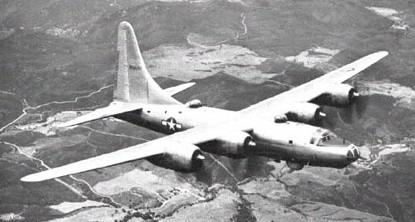
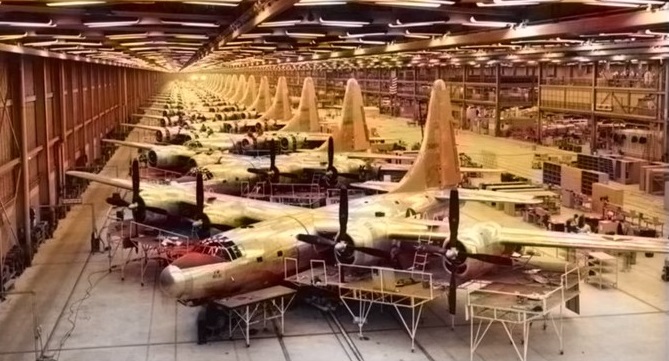
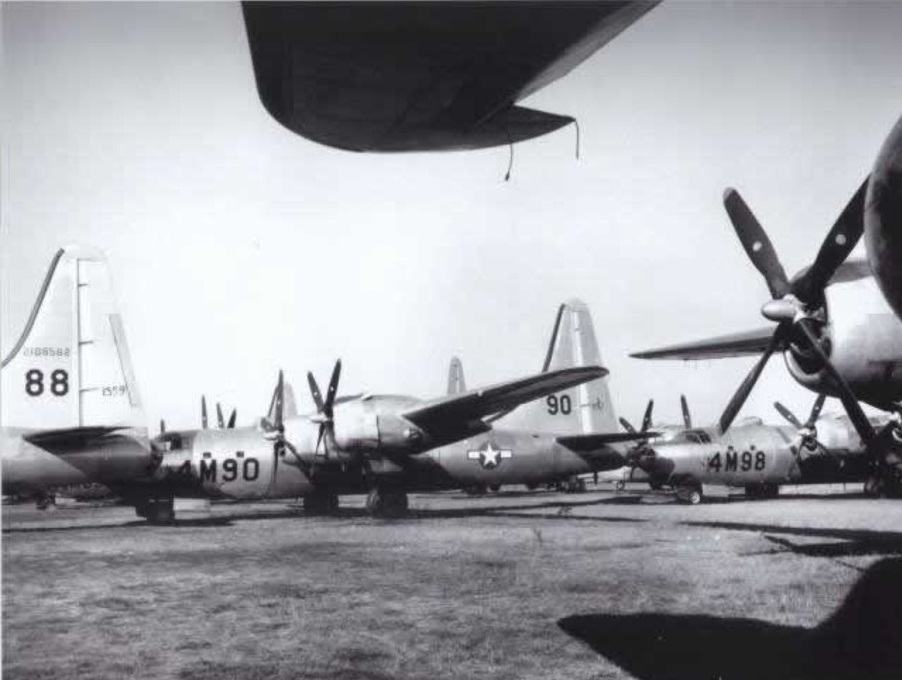
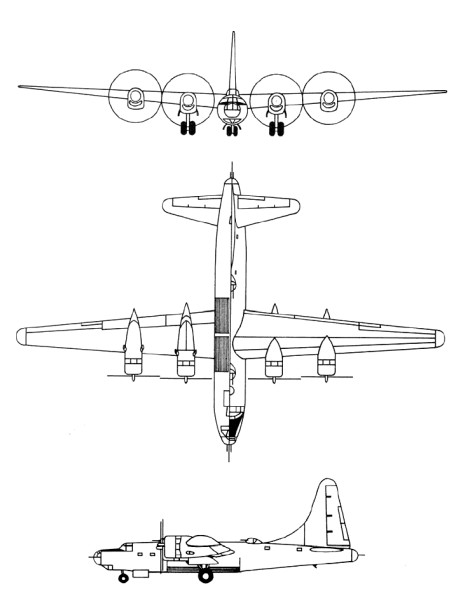
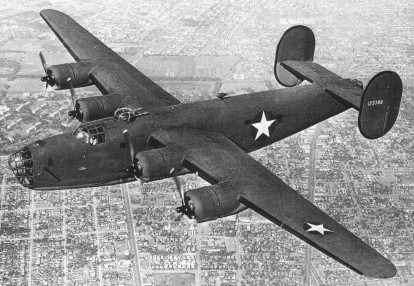
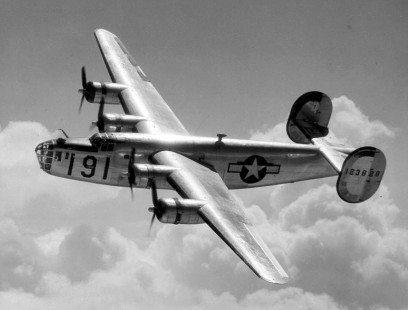
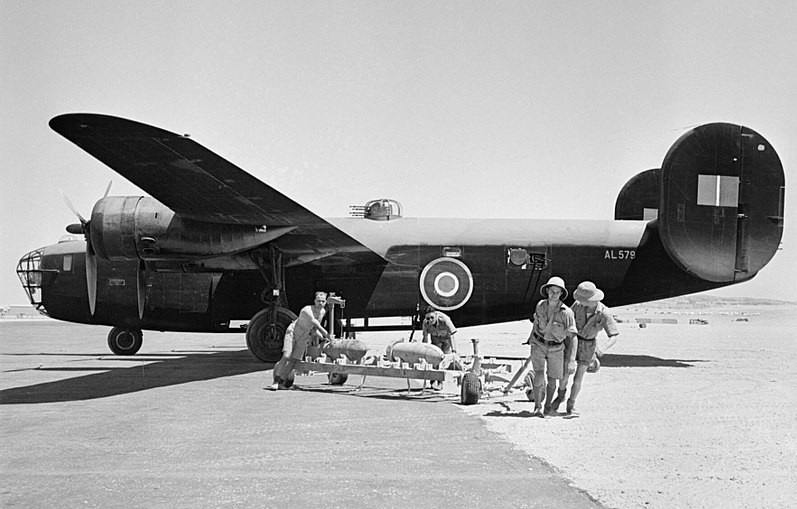
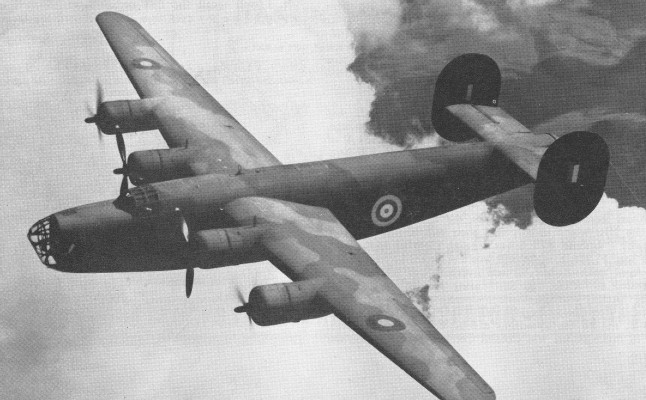
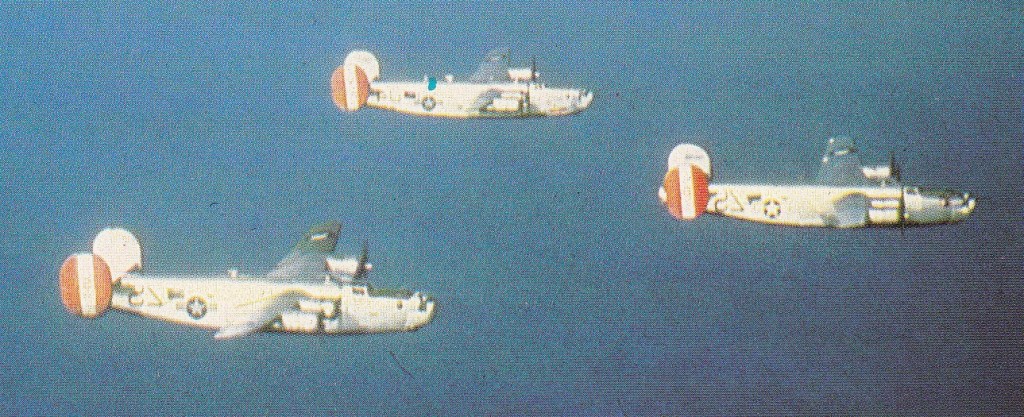
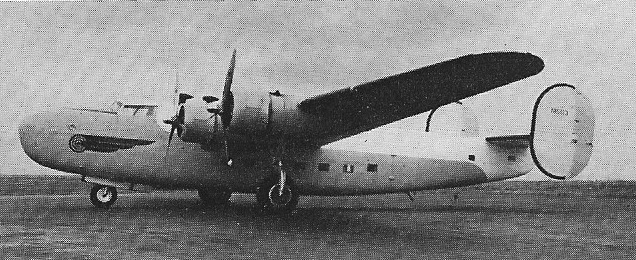
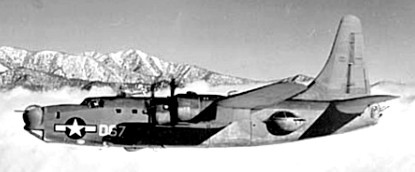
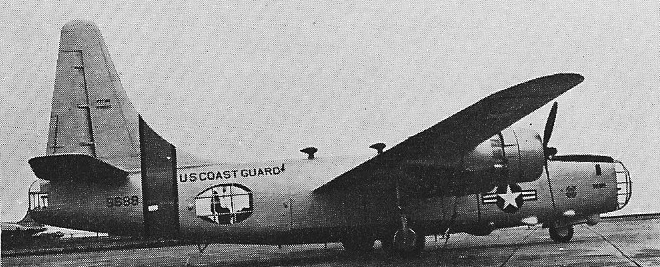
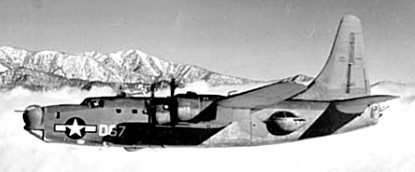
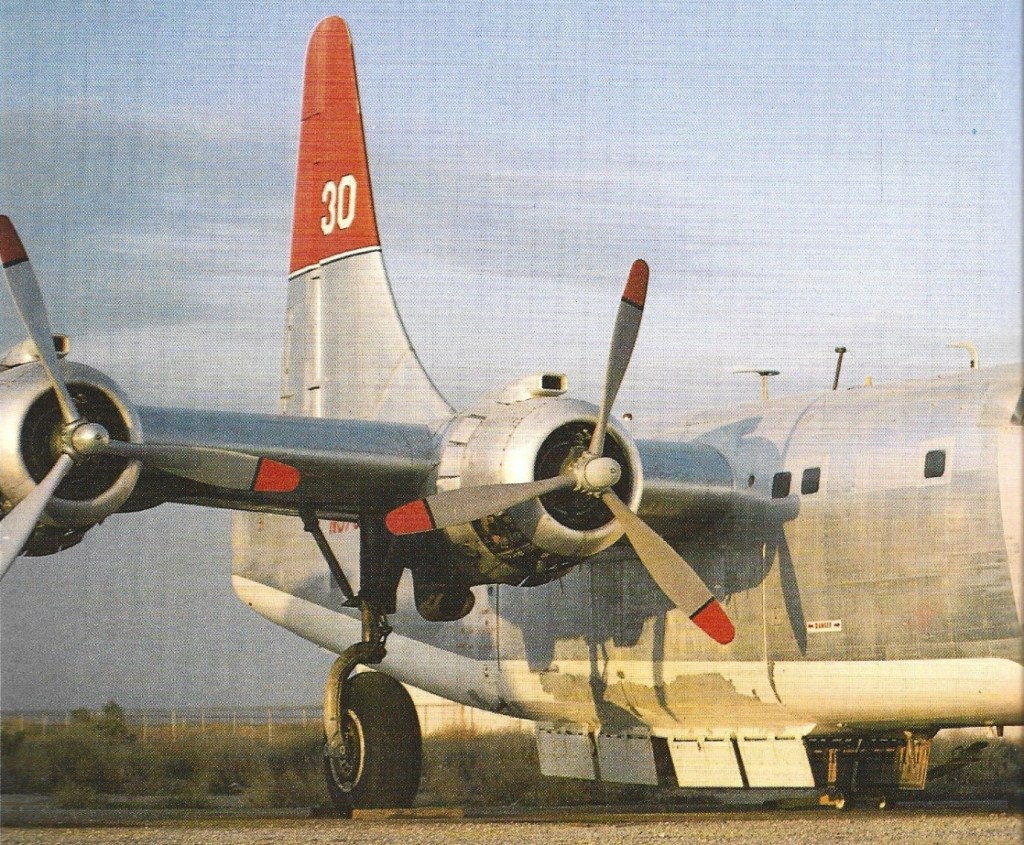
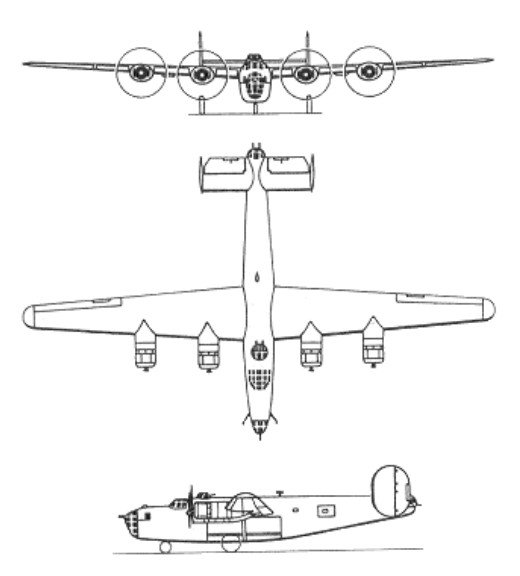
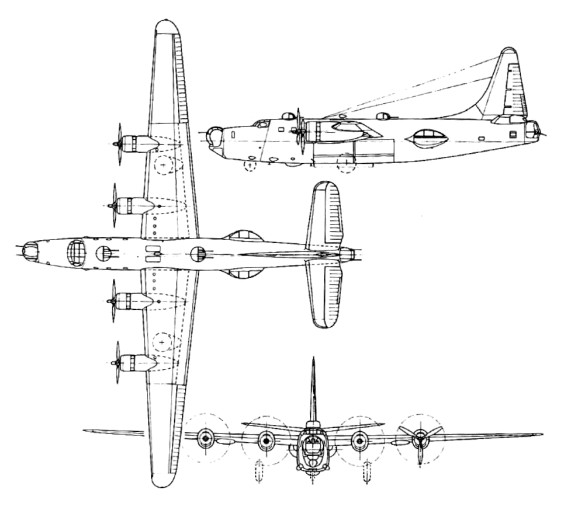
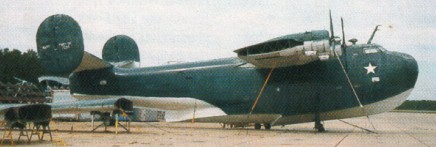
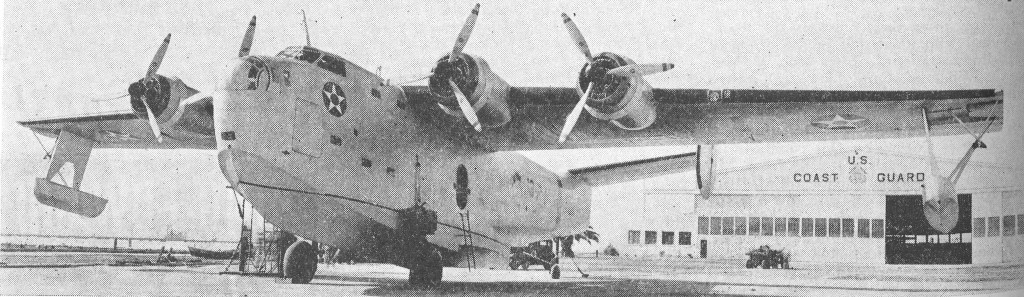


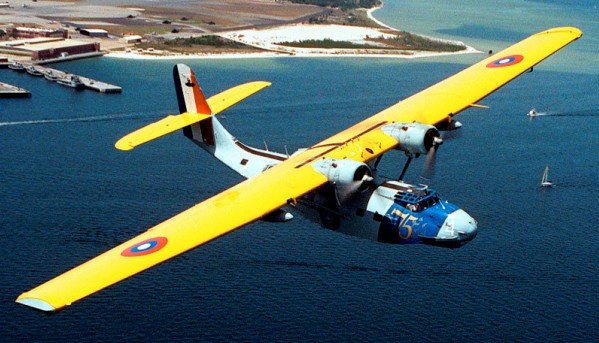
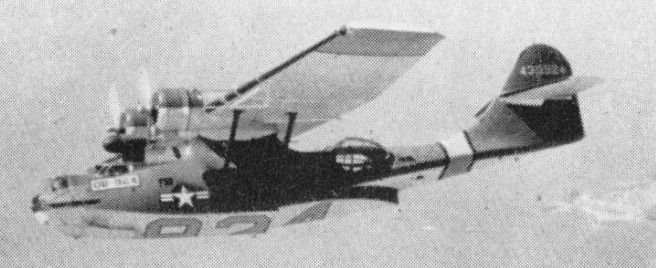
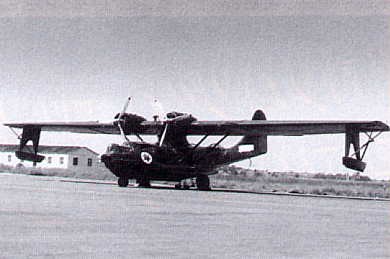
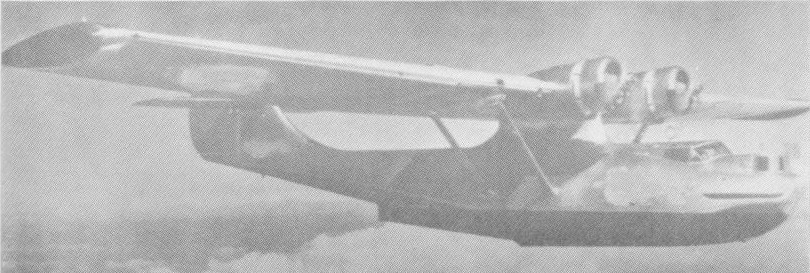
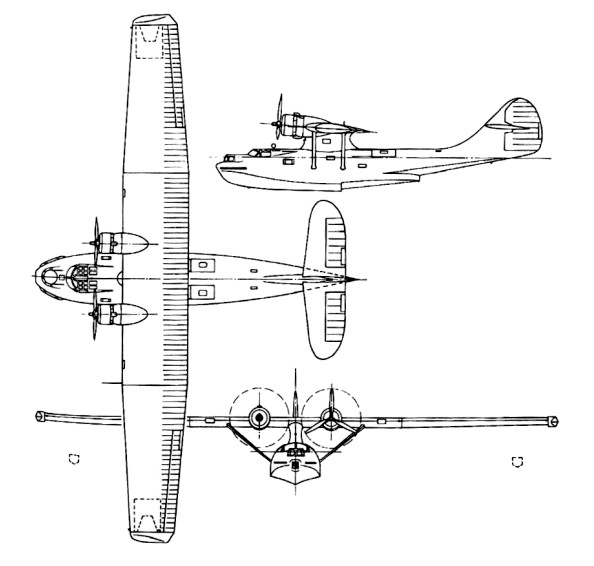
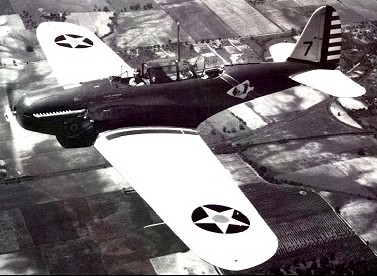
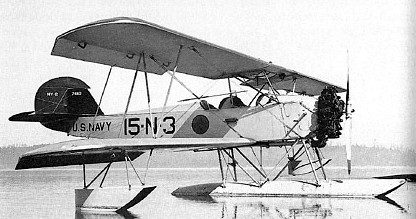
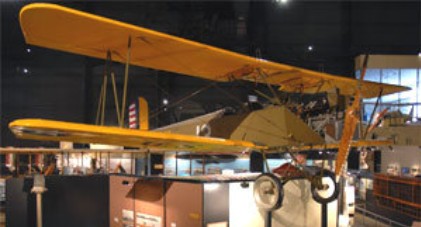
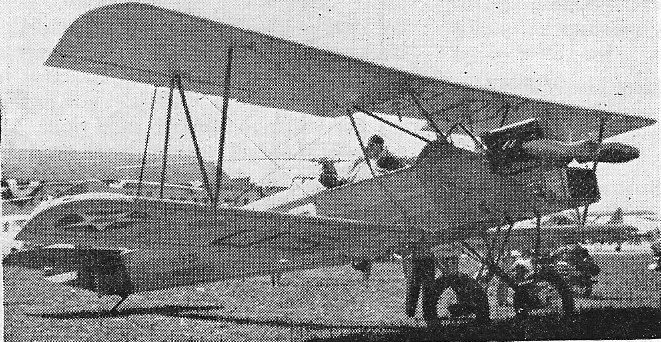
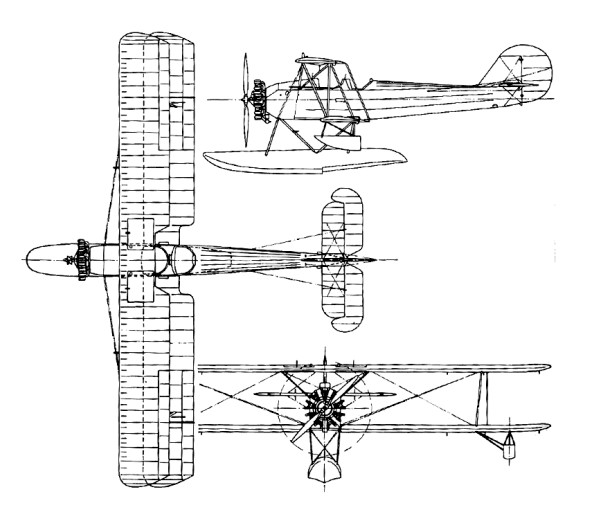
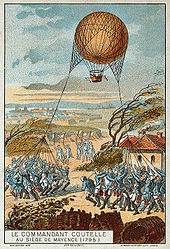
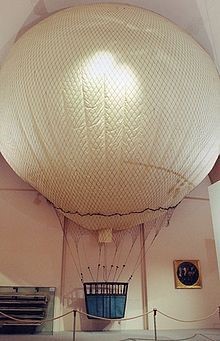
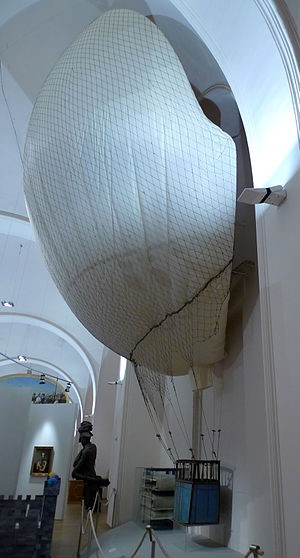

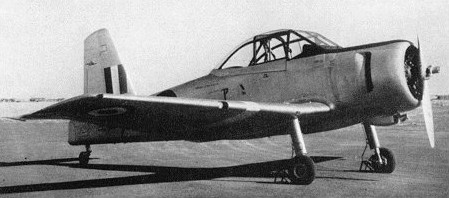


 All Aero