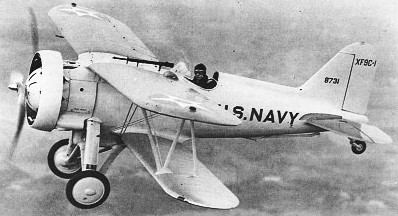
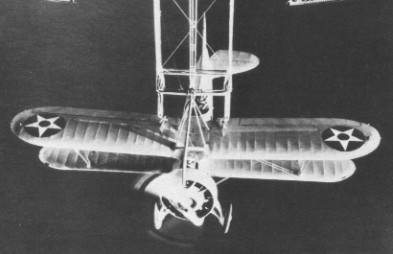
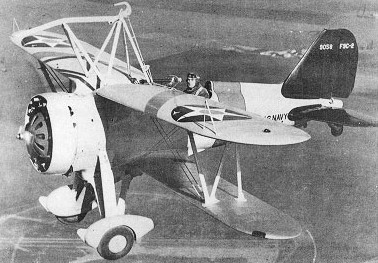
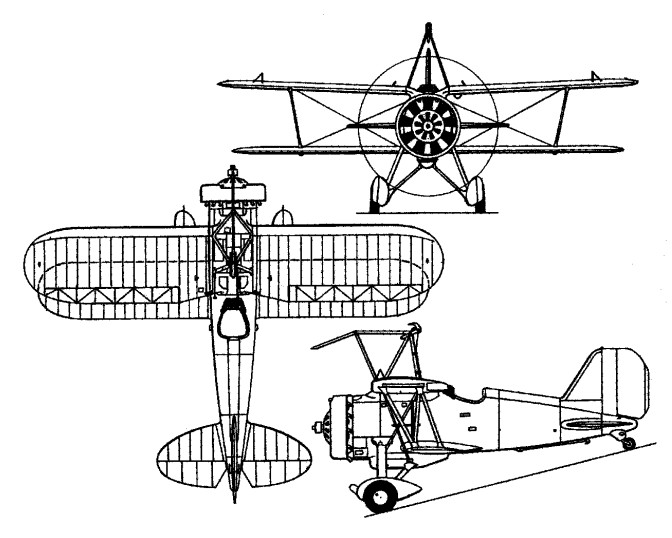
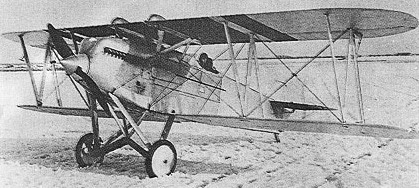
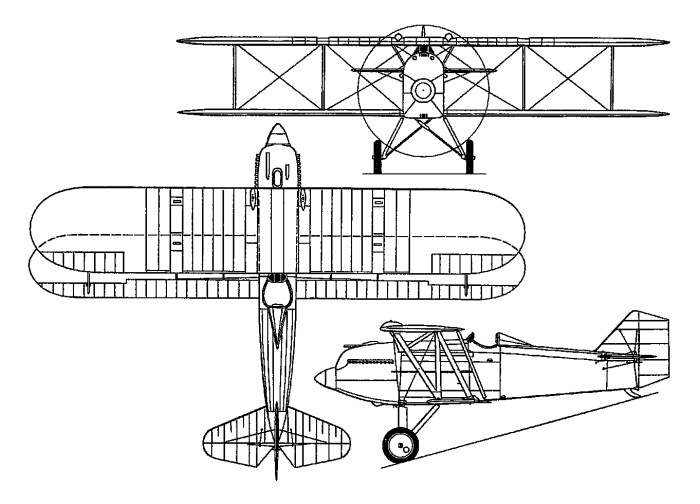
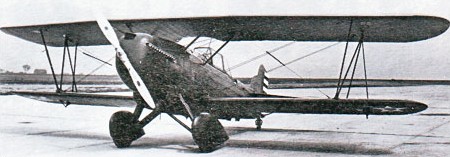
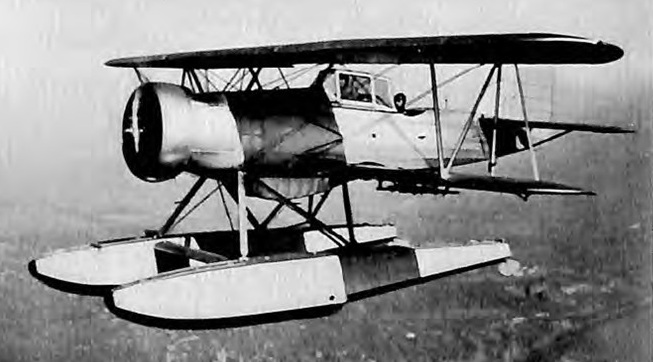
Designed to meet a lightweight shipboard fighter requirement – other contenders being the Berliner Joyce XFJ-1 and General Aviation XFA-1 – the XF9C-1 was flown on 12 February 1931. It failed to gain acceptance as a carrier-based aircraft, but its small dimensions commended it for use from the dirigibles Akron and Macon which had been designed with internal hangar bays. The XF9C-1 was subsequently fitted with the so-called “skyhook” which engaged the retractable trapeze featured by the dirigibles, some directional instability resulting from the hook dictating the enlarging of the vertical tail surfaces. A second prototype, the XF9C-2 with single-strut main undercarriage members, was built at Curtiss expense prior to the placing of a US Navy contract for six F9C-2s, which featured a similar tripod undercarriage strut arrangement to the XF9C-1. he XF9C-2 was purchased by the US Navy and modified to F9C-2 standard. The F9C-2 was powered by a 438 hp Wright R-975-E3 radial engine and carried an armament of two 03-in (7,62-mm) Browning machine guns.
XF9C-1
Originally intended to provide fighter protection for the dirigibles, the F9C-2s were used primarily to extend the reconnaissance capabilities of the parent craft. The Akron received her complement of aircraft in June 1932, ten months after she was commissioned and tests soon realized her potential as an aircraft carrier whose fighters could patrol beyond the horizon, controlled by radio from an airborne command post aboard the airship. Akron went down in the Atlantic on 3 April 1933 during a violent storm, but the parasite experiments continued with Macon until 12 February 1935, when her top fin disintegrated inflight, half her helium escaped and Macon went into the sea together with four of the F9C-2s. The US Navy’s affair with airships and trapeze aircraft was finished.
F9C-2 Engine: 438 hp Wright R-975-E3 radial Span, 25 ft 5 in (7,75 m) Length, (6,27 m) Height: 10 ft 1 11.5 in (3,34 m). Wing area, 173 sq ft (16,07 sq.m). Empty weight, 2,089 lb (947 kg) Loaded weight, 2,770 lb (1 256 kg) Max speed, 176 mph (284 km/h) at 4,000 ft (1220 m) Initial climb, 1,700 ft/min (8,63 m/sec) Range, 350 mls (563 km) Armament: two 0.30-in (7,62-mm) Browning machine guns.
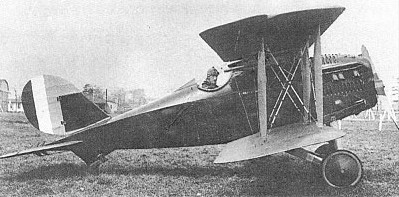
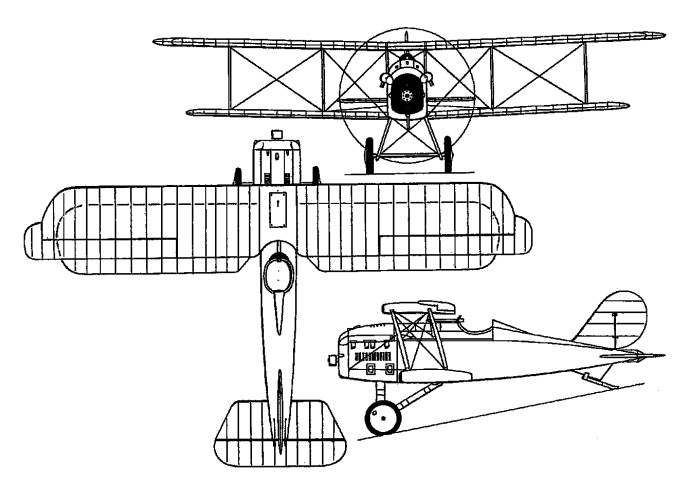
The PW-8 (the “PW” prefix indicating “Pursuit Water-cooled”) was a single-seat two-bay fighter biplane of mixed construction – plywood-covered wooden wings and fabric-skinned welded steel tube fuselage – powered by a 440hp Curtiss D-12 water-cooled 12- cylinder Vee engine. Three prototypes were ordered on 27 April 1923, and the first of these, flown in the previous January, was retroactively designated XPW-8 on 14 May 1924. The second prototype, flown in March 1924, embodied some aerodynamic refinement and provided the basis for the production PW-8, 25 examples being ordered on 25 September 1923 and delivered between June and August 1924. The PW-8 featured wing surface radiators and armament normally comprised two 7.62mm machine guns. A turbo-supercharger was experimentally fitted to the second production aircraft, and the third prototype (XPW-8A), delivered in February 1924, featured 9.14m span single-bay wings and a revised radiator arrangement. It was subsequently fitted with a tunnel-type radiator (as the XPW-8A) and, in December 1924, with 9.60m span wings of tapered planform and Clark Y aerofoil section as the XPW-8B. It thus became, in effect, the prototype P-1 Hawk.
Take-off weight: 1429 kg / 3150 lb Empty weight: 994 kg / 2191 lb Wingspan: 9.75 m / 31 ft 12 in Length: 6.86 m / 22 ft 6 in Height: 2.69 m / 8 ft 10 in Wing area: 26.66 sq.m / 286.97 sq ft Max. speed: 270 km/h / 168 mph Range: 708 km / 440 miles
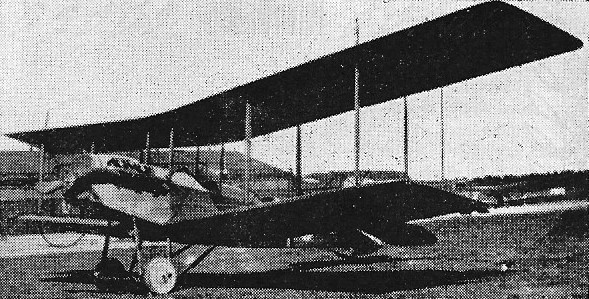
The first single-seat fighter of indigenous US design to achieve production status, the Model D was conceived around the 300hp Hispano-Suiza H eight-cylinder water-cooled engine. The first of four prototypes built by the Ordnance Engineering Corporation (Orenco) was completed in January 1919. Curtiss was assigned a production contract for 50 aircraft and undertook some redesign. This included the introduction of dihedral and overhanging, balanced ailerons, and revision of the engine installation. Of wooden construction with plycovered fuselage and fabric-covered wings, the Curtiss-built Model D utilised a 330hp Wright-built derivative of the Hispano-Suiza and carried an armament of two 7.62mm machine guns. Deliveries commencing in August 1921. One Model D was experimentally fitted with French Lamblin radiators attached to the fuselage sides, and another was fitted with a turbo-supercharger for high altitude trials.
Take-off weight: 1279 kg / 2820 lb Empty weight: 865 kg / 1907 lb Wingspan: 10.05 m / 32 ft 12 in Length: 6.54 m / 21 ft 5 in Height: 2.54 m / 8 ft 4 in Wing area: 25.36 sq.m / 272.97 sq ft Max. speed: 224 km/h / 139 mph
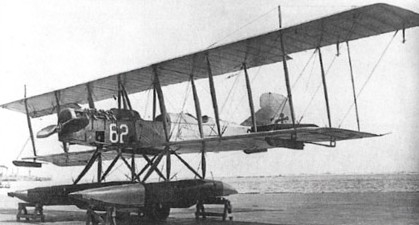
At the beginning of 1915 there appeared the prototype Curtiss Model R, which was in 1935 given the retrospective designation Model 2, an enlarged version of the Model N with equal-span staggered wings. The prototype with highly-staggered, equal-span wings and with single long cockpit for pilot and observer. Powered by 160 hp (119 kW) Curtiss V-X engine. It was flown both as a land-plane and float seaplane. Pilot and observer of this military reconnaissance biplane were housed in one long open cockpit and the Model R could be distinguished from the Model N by its inter-plane ailerons and lack of a fixed fin.
The initial production military utility series version were designated as R-2 introduced unequal-span wings with ailerons attached to the upper wing, a vertical tailplane which incorporated a fixed fin and horn-balanced rudder and there were separate and widely spaced cockpits for the two crew members. The Curtiss V-X engine of the prototype was retained. The R-2 went into production at the end of 1915 and was built in some numbers, 12 going to the US Army (AS64-75), making only limited use of the type. The US Army R-2s were flown in support of the expedition against the Mexican insurgent leader Pancho Villa, but although their serviceability was poor they flew a number of reconnaissance and liaison missions. One hundred were built for the Royal Navy Air Service.
The one-off R-2A was an equal-span variant and established an American domestic altitude record of 2740m, carrying pilot and three passengers, in August 1915. Two R-3 seaplanes, resembling the R-2 but with increased wing span, were brought by the US Navy in 1916.
The R-3 of 1917 was a USN reconnaissance twin-float development of the Model R with three-bay wings. Two were built as R-3, A66 and A67, and 11 or transfers to the Army, also as landplane, but somehow came off the assembly line as R-9s (AS33748, AS39033-39042).
The R-4 (Model 2) of 1917 were an Army ambulance version of the R-2. Fifty-five were converted (AS177-192, AS281-316, AS469, AS2157, and AS37923), plus 12 new-build with a 400hp Liberty 12 as R-4L (AS39362-39367, AS39954-39959). They were refitted with 360hp Liberty 12 engines (de-rated ex-USN motor) as R-4LM.
One R-6 Mailplane is recorded as transferred from military surplus for evaluation in air mail service, powered with a Curtiss V-2-3, 200hp.
The Model R-4LM were conversion of R-4L into mailplane for the US Army, with the front cockpit converted to a mail compartment with capacity for 400 lb (181 kg) of mail. Many were used after WW1 in air mail service.
The Model 2 / R-6 were two-seat floatplane with long-span wings of R-3 but powered with Curtiss V-2-3 engine. Seventy-six (A162-197) were delivered to the US Navy plus twenty (A302-341, AS504-521, AS68563-68564) floatplanes and landplanes for US Army. They were used for torpedo-bomber trials post war.
Forty R-6 (A302-341) were converted to the Model 2 / R-6L with a 360 hp (269 kW) Liberty L-12 engine, plus 122 (A873-994) were built new in 1918.
The Model 2A / R-9 of 1917 was a two-seat bomber version of the R-6 for the US Navy, similar to the R-6, but with crew positions reversed so pilot sat in front cockpit and observer in rear. 112 built for the US Navy, ten of which (A883-887, A901-905) transferred to US Army in 1918 (as AS39033-39042).
In 1916 the Royal Naval Air Services took first delivery of one hundred US-built Curtiss R-2 powered by 160 hp Curtiss VX engines.
Royal Naval Air Service R-2
Curtiss R-2 Engine: 1 x 160 hp / 119kW Curtiss V-X inline piston Wingspan: 14.00 m / 45 ft 11 in Length: 11.70 m / 38 ft 5 in Wing area: 46.90 sq.m / 504.83 sq ft Height: 14 ft 4⅜ in (7.43 m) Take-off weight: 1403 kg / 3093 lb Empty weight: 826 kg / 1821 lb Max. speed: 138 km/h / 86 mph Range: 558 miles (900 km) Endurance: 6 hours 42 min Seats: 2
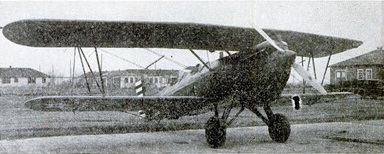
The US Army Air Service staged two competitions, in late 1924 and early 1925, to find successors to the DH 4 series of observation and light bomber aircraft. The first Curtiss biplane to bear the name Falcon was the Liberty-powered Curtiss L-113 (Model 37). It was unsuccessful when evaluated in 1924 as the XO-1 in competition with the Douglas XO-2 but was accepted for production the following year when re-engined with a 380kW Packard 1A-1500. It was a conventional unequal-span biplane with a wing of wooden construction that incorporated sweep-back on the outer panels of the upper wing. The fuselage was built up from aluminium tubing with steel tie-rod bracing, and the tail unit included a balanced rudder; the fixed divided landing gear was of tailskid type. The Packard engine proved a failure, and the 102 production O 1s were fitted instead with various models of the 435 hp Curtiss D 12 (V¬1150) engine. The new biplane went into production as the O-1 (Model 37A) for observation duties with the US Army. The initial order was for 10 aircraft re-engined with a Curtiss D-12. One of these was completed later as the O-1A with a Liberty engine, and the first O-1 was converted to O-1 Special configuration as a VIP transport. Forty-five examples of the O-1B (Model 37B) were ordered in 1927, this first major production version incorporating such refinements as wheel brakes and an underbelly auxiliary fuel tank which could be jettisoned in flight. They were followed by four O-1C aircraft, part of the O-1B order, converted to serve as VIP transports by enlargement of the rear cockpit and the addition of a baggage compartment. (The designation O-1D was not used).
In 1929 the US Army ordered 41 of the O-1E (Model 37I) with V-1150E engines developed from the original Curtiss D-12. A number of other improvements included the introduction of oleo-pneumatic shock-absorbers, Freise ailerons, and horn balanced elevators. One O-1E was modified subsequently as a VIP transport becoming redesignated O-1F (Model 37J). The XO-1G (Model 38) replacing the twin Lewis guns on a Scarff mounting that equipped the earlier models by a single gun on a post mounting. Other modifications introduced redesigned horizontal tail surfaces and a steerable tailwheel.
The XO-1G was originally an O-1E which had been modified previously to contend as a new US Army basic trainer under the designation XBT-4 (Model 46).
XBT-4
The XBT-4 of 1930 was produced at the Curtiss-Wright experimental facility in Garden City in 14 days. For its training role, the rear cockpit is higher than previous models, and the squared cowling is sloped to give good visibility. A full thickness sponge rubber pad is mounted over the instrument panel with cutouts for the dials. The seats may be raised or lowered 7.5 in, and are tilted back at 13˚ from level. All cockpit mechanism is hidden behind wooden veneer walls.
Successful tests led to construction of 30 series examples of the O-1G with improved strearnlining, slightly smaller wings, and redesigned rear cockpits, were 16 km/h (10 mph) faster than the O 1B, bringing total O-1 production for the US Army to 127.
Two O 1 conversions (to O 1A and XO 11) to a 420 hp Liberty engine, 66 Liberty engined models were produced for the US Army.
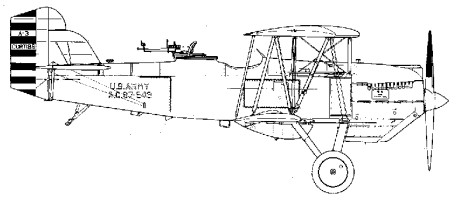
The O-1 Falcon and its variants saw a decade of service with the observation squadrons of the US Army Air Corps and ended their days with reserve National Guard units. The basic design was adapted also as the A-3 attack biplane which saw considerable use. The A 3, based on the O 1B was an attack version of the Falcon. It had two additional 0.30 in (7.62 mm) machine guns in the lower wings and could carry up to 91 kg (200 lb) of underwing bombs. The standard armament for most Falcons was four 0.30 in (7.62 mm) guns, two in the wings and a twin mount on a Scarff ring in the rear cockpit. There were also export versions and a number of commercial Falcons.
A-3
Several experimental Falcons flew with 600 hp Curtiss V 1570 Conqueror engines. They included the XO 13 and XO 13A (two converted O 1s) for the 1927 national air races; one O 13B; three YO 13Cs, otherwise similar to the O 1E; one YO 13D (super¬charged Conqueror); one XO 16, a Con¬queror engined O 11 with Prestone (ethylene glycol) cooling; and one Y10 26, similar to the O 1E but with a GIV 1570A geared Con¬queror and modified cooling system. How¬ever, the only Conqueror powered production version, was the O 39, with Prestone cooling and a smaller rudder, but otherwise similar to the O 1G. Ten of these were built in 1932. Other one off engine testbeds included the XQ 12 (Pratt & Whitney Wasp), con¬verted from an O 11, and XO 18 (Curtiss Chieftain). Other conversions, not involving an engine change, were four O 1Bs to O 1C unarmed VIP transports; one O 1E to an unarmed O 1F; another O 1E to XBT 4 basic trainer configuration, this later becoming the prototype for the O 1G; and one O 11 to O-¬11A (incorpora~ the improvements of the O 1E). Except for the O 1C and O 1F, standard armament on the observation Falcons was four 0.30 in (7.62 mm) machine guns: two fixed, forward firing guns in the nose and two on a Scarff ring in the rear cockpit. Between 1927 30, Curtiss also produced 154 attack versions (76 A 3s, based on the O 1B, and 78 A 3Bs, based on the O 1E). These had two additional 0.30 in (7.62 mm) guns in the lower wings and could carry up to 91 kg (200 lb) of underwing bombs. There was also, in 1928, one XA 4, equivalent to the A 3, but with a 421 hp R 1340 1 Wasp engine.
Wright Cyclone powered Falcon
Variants
U.S. Army Air Corps
A-3 Model 44, attack aircraft version of O-1B, armed with two 0.30 in (7.62 mm) machine guns and 200 lb (91 kg) of bombs; 66 built for the USAAC. A-3A Six A-3s converted into trainers. A-3B Model 37H, attack version of O-1E, with six machine guns, including two mounted in wings; 78 built.
Curtiss XA-4 Falcon
XA-4 One A-3 with a Pratt & Whitney R-1340-1 Wasp radial piston engine. Scrapped in March 1932, but the design was the basis for the naval variants. A-5 Proposed A-3 variant with Curtiss V-1570 Conqueror engine A-6 Proposed A-3 variant with Curtiss H-1640 Chieftain engine
XBT-4
XBT-4 Model 46, one O-1E converted into a basic trainer for the USAAC. XO-1 Liberty 12A powered Prototype, later modified to use a Packard 1A-1500, one built. O-1 Model 37A, two-seat observation aircraft, the first production model, ten built. One converted into the O-1 Special VIP transport. O-1A Two-seat observation aircraft, powered by the Liberty piston engine, one built. O-1B Model 37B, first major production version, powered by Curtiss D-12D (V-1150-3) engine; 45 ordered, 25 built and 20 diverted on the production line to the A-3. O-1C Four O-1Bs converted into VIP transports. O-1E Model 37I, variant powered by 435 hp (324 kW) Curtiss D-12E (V-1150-5) piston engine; 41 built. O-1F Model 37J, one O-1E converted into VIP transport. O-1G Model 38, final O-1 variant, powered by a 712 hp (531 kW) Wright R-1820F-2 Cyclone engine; 30 built for USAAC. XO-11 Two O-1 modified as O-11 prototypes. O-11 O-1 airframe powered by the Liberty V-1650 piston engine; 67 built concurrently with the O-1s. XO-12 One XO-11 prototype redesignated XO-12. XO-13 O-1 fitted with 720 hp (540 kW) Conqueror engine for the 1927 National Air Races. XO-13A Second XO-13, fitted with wing skin radiators. O-13B One O-1C fitted with a Conqueror engine, tested as an observation aircraft, and provided to Secretary of War. YO-13C Three O-1Es re-engined with 600 hp (450 kW) direct-drive Conqueror engines. YO-13D One O-11 fitted with supercharged Conqueror engine. XO-16 One O-11 with Prestone cooling system. XO-18 One O-1B testbed for Curtiss H-1640 Chieftain engine. Y1O-26 One O-1E fitted with a geared Conqueror engine. O-39 O-1G refitted with a Conqueror engine and cockpit canopy; ten built.
U.S. Navy and Marine Corps Marine Corps Curtiss OC-2 Falcon, c. 1929 The XF8C-2 prototype The XF8C-4 prototype
A-3 Helldiver Registry name of XF8C-8, not adopted by USN. A-4 Helldiver Civil version of XF8C-8 for use by Assistant Secretary of Navy David Ingalls. Later redesignated XF8C-7. XF8C-1 Model 37C variant developed from XO-12; two built for the U.S. Navy. F8C-1 Falcon Model 37C powered by the 420 hp (310 kW) Pratt & Whitney R-1340 Wasp radial piston engine; four built in 1928 for the U.S. Marine Corps as light bombers, fighters and observation aircraft, later redesignated OC-1. XF8C-2 Model 49, one prototype for F8C Helldiver. Original crashed on first factory flight and was replaced by Curtiss with a second bearing identical sn. F8C-3 Falcon Second production batch of Navy Falcons; 21 built for USN/USMC in 1928, later redesignated OC-2. XF8C-4 Second Helldiver prototype, modified tail skid assembly. F8C-4 Helldiver Model 49B, production dive-bomber variant for the USN/USMC; 25 built, later designated O2C. F8C-5 Helldiver Model 49B with ring cowling; 63 built in 1930–31, later designated O2C-1. XF8C-6 Two F8C-5s modified with superchargers, slats, and wing flaps; one later modified as O2C-2. XF8C-7 Redesignation of A-4 Helldiver, later redesignated XO2C-2. XF8C-8 Two prototypes built with canopy-enclosed front cockpit, later redesignated O2C-2. O2C-1 Helldiver Redesignation of 63 F8C-5; 30 production O2C-1s in 1931. O2C-2 Helldiver Redesignation of XF8C-8s and one XF8C-6. XOC-3 One XF8C-1 prototype fitted with a Chieftain engine. XF10C-1 O2C-2 re-engined with a R-1510 engine, also temporary designated XS3C-1.
Civil and export
Civil Falcon 20 civil versions: Conqueror Mail plane; D-12 Mailplane; Lindbergh Special, sold to Charles Lindbergh; Liberty Mailplane, 14 single-seat mailplanes, powered by a Liberty piston engines, sold to National Air Transport. Export Falcon also South American D-12 Falcon. One seaplane version of the O-1B was sold to Colombia, followed by an order for 15 more. Another 10 Model 35Fs were sold to Peru. Colombia Cyclone Falcon Model 37F fitted with the 712 hp (531 kW) Wright Cyclone radial piston engine. 100 built for Colombia. Chilean Falcon O-1E design built under license in Chile, 10 later sold to Brazil. One example ended up in Paraguay as passage fee for the remaining aircraft. It operated mostly as a VIP transport, but made at last one reconnaissance flight over the Chaco war fields armed with two 7.7 mm (0.303 in) machine-guns from a Potez. Bolivia Cyclone Falcon Similar to Colombian Falcon, it was fitted with the 712 hp (531 kW) Wright SR-1820F-2 Cyclone radial piston engine. A total of nine were built for Bolivia in some odd variants from the Colombian ones. Bolivian Cyclone Falcons mounted one frontal .30 MG and most also one rear .30 MG instead of the two wing-mounted ones. Two had semi-cockpit canopies over pilots cockpit; two had windscreens instead of canopy in both cockpits, these two had no ring mount for rear machine gun.
Specifications
Curtiss O 1B Span: 11.58 m (38 ft) Length: 8.64 m (28 ft 4 in) Gross weight: 1989 kg (4385 lb) Maximum speed: 218 km/h (135.4 mph)
Curtiss O-1E Engine: 1 x 324kW Curtiss V-1150E inline piston engine Take-off weight: 1972 kg / 4348 lb Loaded weight: 1325 kg / 2921 lb Wingspan: 11.58 m / 37 ft 12 in Length: 8.28 m / 27 ft 2 in Height: 3.20 m / 10 ft 6 in Wing area: 32.79 sq.m / 352.95 sq ft Max. Speed: 227 km/h / 141 mph Ceiling: 4665 m / 15300 ft Range: 1014 km / 630 miles Armament: 1 x 7.62mm machine-gun
Curtiss A 3B Span: 11.58 m (38 ft) Length: 8.28 m (27 ft 2 in) Gross weight: 2030 kg (4475 lb) Maximum speed: 224 km/h (139 mph)
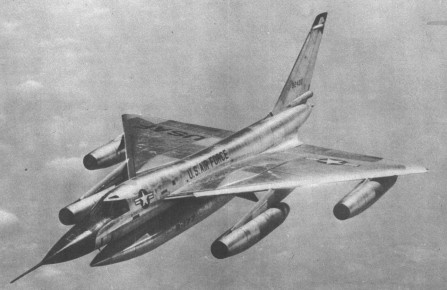
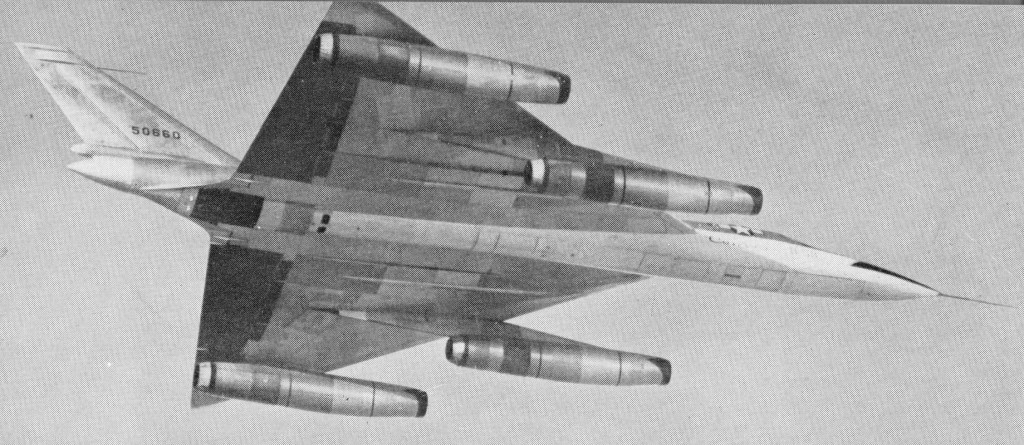
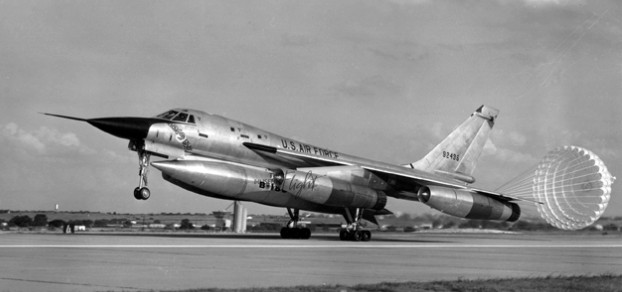
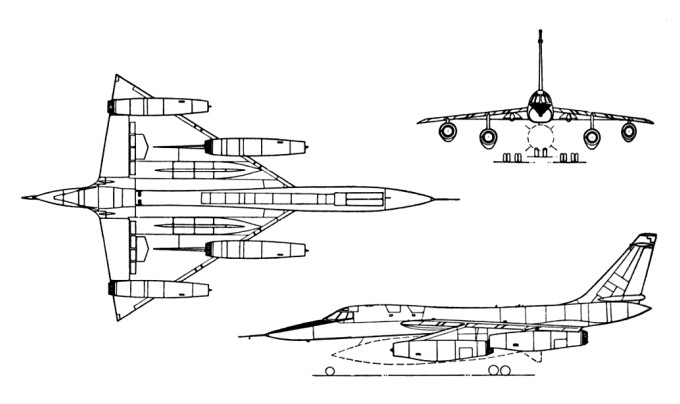
In March 1949 the US Air Force’s Air Research and Development Command (ARDC) invited proposals for a supersonic bomber, and after submissions had been reduced to two, from Boeing and Consolidated-Vultee’s Fort Worth Division, the latter was selected in August 1952 to develop its Convair Model 4 designed to the hardware stage under contract MX-1964. On 10 December 1952 the designation B-58 was allocated and late in that year Convair received a contract for 18 aircraft, to be powered by a new J79 engine for which General Electric received a development contract at the same time. The performance requirement for the new aircraft demanded considerable advances in aerodynamics, structures and materials. The resulting design, one of the first to incorporate the NACA/ Whitcomb-developed area-rule concept, was a delta-winged aircraft with four engines in underslung pods, a slim fuselage and, an under-fuselage pod. The thin fuselage provided some engineering issues early on as it prevented internal carriage of bombs and the required amount of fuel to power the four turbojet engines and allow for any reasonable operating radius to be achieved. As a result, a large external droppable two-component 18.90m long pod was affixed to the underside of the fuselage. This pod contained extra fuel and a nuclear weapon along with other mission-specific specialized gear. The three-man crew, in individual tandem cockpits, were provided with jettisonable escape capsules.
Distinctive features of the B-58 included sophisticated inertial guidance navigation and bombing systems. Extensive use of heat-resistant honeycomb sandwich skin panels were integrated into the construction of the wings and fuselage for high altitude-high velocity flight.
XB-58
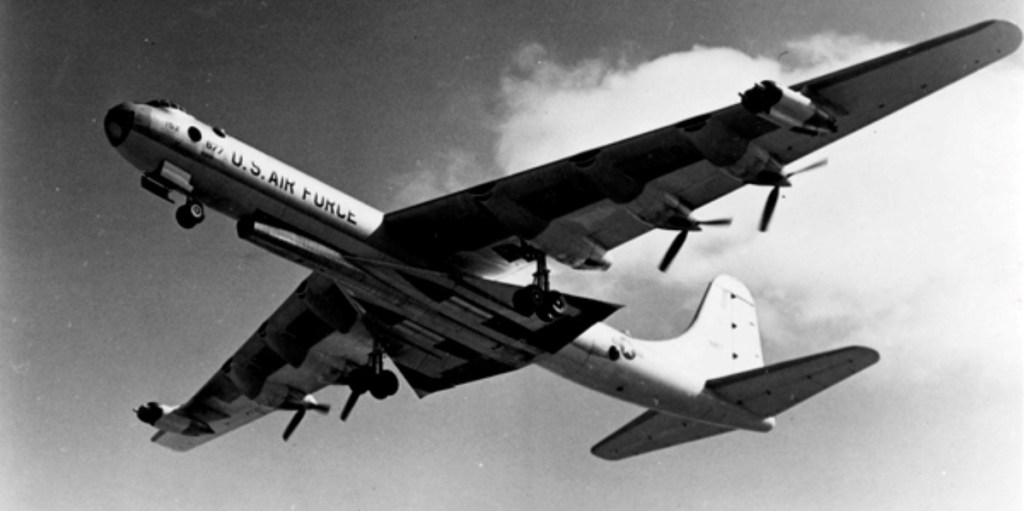
B-36 transporting the XB-58 airframe using eight of ten engines (note both of the inboard propellers have been removed for this flight)
Convair easily transported the XB-58 prototype by air from Ft. Worth TX to Wright-Patterson Air Force Base (AFB) in Ohio for testing with the use of a modified Peacemaker bomber.
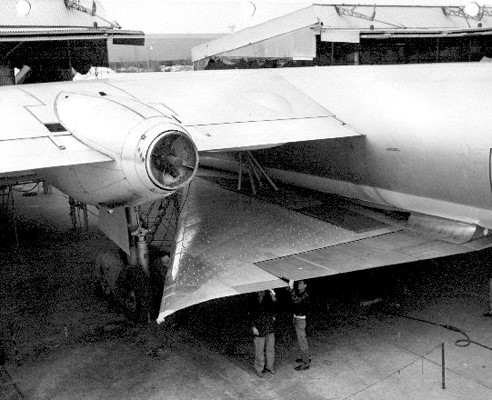
B-36 and XB-58 airframe mating, note the propeller has been removed from the wing’s inboard engine as well as the strut assembly joining the two wings together.
The left and right inboard engines had their propellers removed, along with the bomb bay doors since they did not clear the wings of the XB-58 which was mounted underneath the bomber.
Since the airframe was the subject of testing the XB-58 did not have the engines attached and the vertical fin assembly was left off, as well.
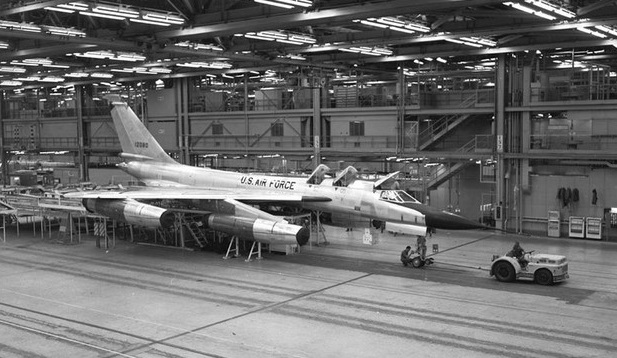
In June 1954 the 18-aircraft order was reduced to two XB-58 prototypes and 11 YB-58A pre-production examples, together with 31 pods. The first of these was rolled out at Fort Worth on 31 August 1956, making its first flight on 11 November 1956 piloted by B. A. Erikson. On 30 December, still without a pod, the XB-58 became the first bomber to exceed Mach 1.
A further 17 YB-58As were ordered on 14 February 1958, together with 35 MB-1 bomb pods, to bring to 30 the number of aircraft available for the manufacturer’s test programme and ARDC service trials with the 6592nd Test Squadron and the 3958th Operational Test and Evaluation Squadron at Carswell AFB.
The United States Air Force ordered between September 1958 and 1960 86 total Hustlers, which were operational in the Strategic Air Command (SAC) between 1960 and 1970.
The 86 production B-58A Hustlers were supplemented by 10 YB-58As which were brought up to production standard to equip the 43rd Bomb Wing, initially at Carswell but later assigned to Little Rock AFB, Arkansas, and the 305th Bomb Wing at Bunker Hill AFB, Indiana. The first was handed over to the 65th Combat Crew Training Squadron at Carswell on 1 December 1959 and the 43rd Bomb Wing, activated as the first B-58 unit on 15 March 1960, became operational on 1 August 1960. The 116th and last B-58A was delivered on 26 October 1962, the 116 having cost $3.2 billion.
By 1964 80 were reported as still operational. The type was withdrawn from Strategic Air Command service on 31 January 1970.
B-58s as a whole set 19 world speed and altitude records and won five different aviation trophies during their operational run – a vast engineering achievement realized. Despite these performance successes, the B-58 still suffered from limitations in operating range, payload capacity and overall series growth potential.
With such outstanding performance it was clear that the B-58A had record-breaking potential. On 12 January 1961 Major Henry Deutschendorf and his crew secured the 2000km closed-circuit record at 1708.8km/h and on 14 January Major Harold E. Confer’s aircraft raised the 1000km record to 2067.57km/h. On 10 May Major Elmer Murphy won the trophy presented by Louis Bleriot in 1930 for the first pilot to exceed 2000km/h for a continuous period of 30 minutes. Sixteen days later Major William Payne and his crew flew from Carswell to Paris setting, en route, record times of 3 hours 39 minutes 49 seconds from Washington and 3 hours 19 minutes 51 seconds from New York. The Hustler crashed at the Paris Air Show on 3 June with the loss of the crew. Other flights included a supersonic endurance record of 8 hours 35 minutes from Haneda, Tokyo to London, on 16 October 1963.
Convair built 86 standard B 58A bombers as well as 11 development aircraft later brought up to production standard and 17 YB 58A pre-production aircraft which were modified as RB 58A reconnaissance machines, Eight aircraft were converted into TB 58A trainers with a tandem pair of pilot stations. The regular bomber seated pilot, nav/bomb aimer and defensive systems operator in tandem cockpits containing special escape capsules which, in emergency, could close around the occupant, seat and controls and be ejected as a sealed package.
In 1970 the 43rd and its partner, the 305th Wing at Grissom AFB, were disbanded because of high operating cost. The last B-58 would be officially retired in January 1970.
Convair B-58A Hustler Engines: 4 x General Electric J79-GE 5A, -5B or 5C turbojet, 69.3kN / 15,600lbs thrust with reheat capability Length: 96 ft. 10 in (29.49m) Wingspan: 56 ft 10 in (17.32m) Wing area: 143.25 sq.m / 1541.93 sq ft Height: 31 ft 5 in (9.60m) Empty Weight: 55,561lbs (25,202kg) Maximum Take-Off Weight: 163,000 lb (73,936kg) Fuel capavity, wing & pod: 12,500+ gal Weight after inflight refuelling: 80237 kg (176,890 lb) Maximum Speed: 1,321mph (2,126kmh / 1,148kts / Mach 2.1) Cruising speed: 610 mph. Maximum Range: 4,400 miles without aerial refueling Service Ceiling: 62,999ft (19,202m; 11.9miles) Armament: 1 x 20mm Vulcan cannon in tail 1 x Under-fuselage pod carrying up to 19,450lb ordnance Crew: 3 Hardpoints: 1 Cost: US$12,442,000
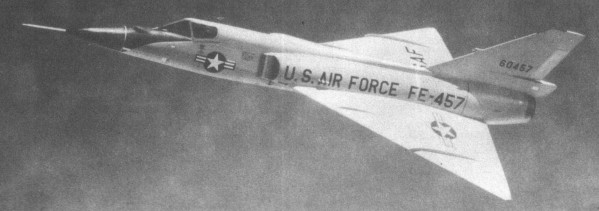
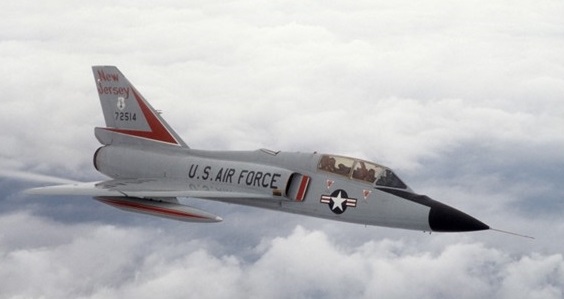
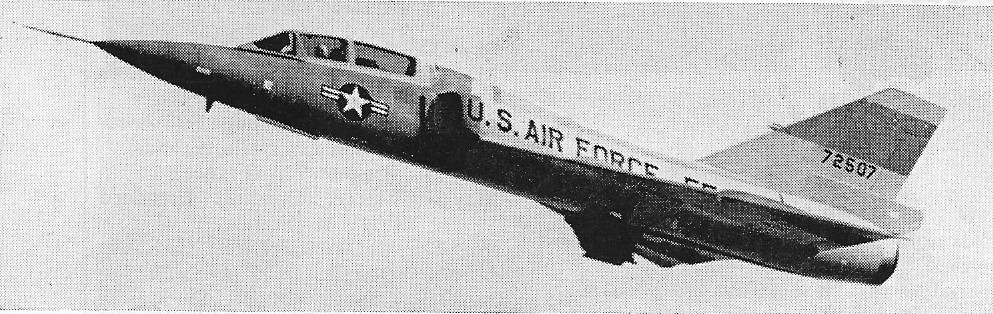
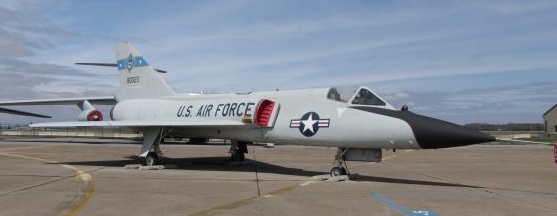
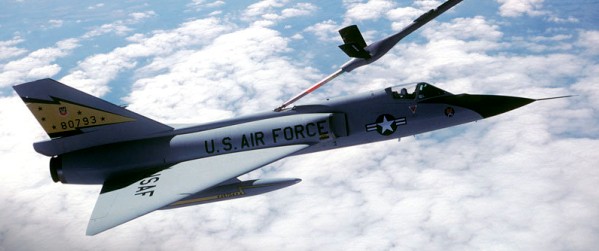
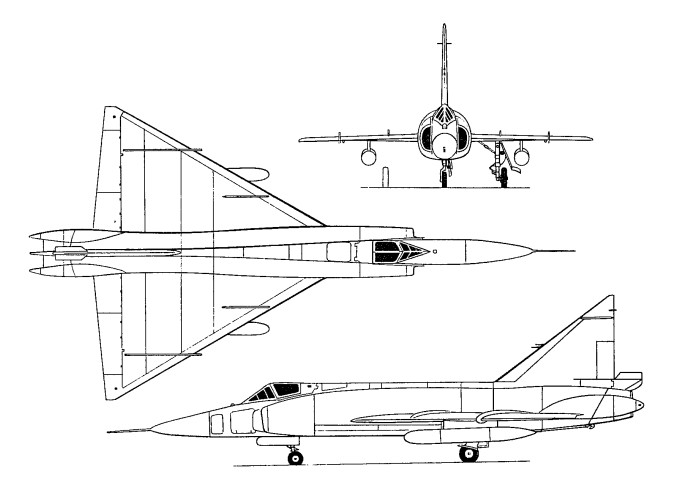
The Convair F-106 Delta Dart began its production life as a direct successor to the interim F-102 Delta Dagger, as the F-102B, built around the advanced Hughes-produced MA-1 fire control system. The F-106 retained many design elements of the F-102 including a small internal bomb bay. Nuclear capability with twin Genie nuclear-tipped missiles was a standard design initiative. An internal 20mm cannon would not be fitted to the system until 1973, when it was found throughout engagements in the Vietnam conflict that close-range fighting was still involved.
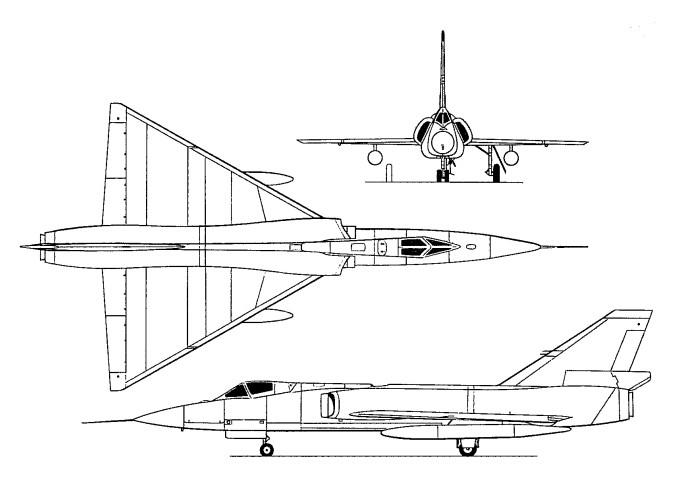
The F-106 has mid-set delta wings, with 60 degrees sweepback, no tailplane, and square-top fin and rudder. Engine air intakes are on each side of the fuselage just forward of the wing leading edges.
The tricycle undercarriage has a single wheel on each main unit and twin nose-wheels. The nosewheels retract forward.
While development of the earlier fighter was delayed by various teething troubles in 1955-6, progress with the later machine became possible with the development of the Hughes MA-1 integrated fire-control system. In November 1955, the USAF placed an order for 17 F-102Bs and in December, a mock-up of the proposed cockpit with radically new equipment and pilot displays was completed. On 17 June 1956, the F-102B was redesignated F-106.
The first of two YF-106A service-test aircraft (56-451/452) flew on 26 December 1956 at Edwards AFB, California. Like most new fighter types in the ‘century series’, the F-106 was initially a disappointment. Maximum speed, rate of climb and overall acceleration were significantly below Air Defense Command expectations with the Pratt & Whitney J57-P-9 turbojet employed in the initial machines and the Wright J67, licence-built Olympus, being contemplated. When the latter powerplant failed to materialise, the USAF reduced its requirement from 1,000 to 360 of the new interceptors.
The first flight of the F-106B two-seat trainer was made in April 1958.
F-106B
An F-106A held the world speed record of 1525.05 mph from 15 December 1959 until the autumn of 1961.
Performance was improved with the installation of the 7800kg thrust Pratt & Whitney J75-P-17 turbojet which could provide 11100kg thrust with afterburning.
F-106A
The F-106A attained its initial operating capability with the 498th Fighter-Interceptor Squadron at Geiger AFB, Washington, in October 1959 and subsequently served with 15 ADC and eight Air National Guard squadrons. Except for brief deployments to Europe and to Korea in 1968, the type served exclusively in North America. Totals of 277 F-106A single-seat interceptors served in company with 63 F-106B two-seat combat trainers, 340 machines actually being completed, and the types remained on active duty until 1982.
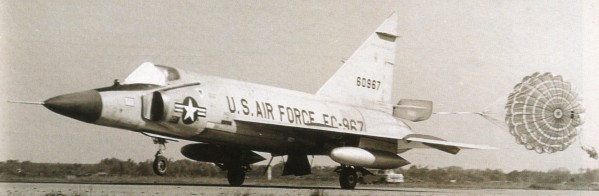
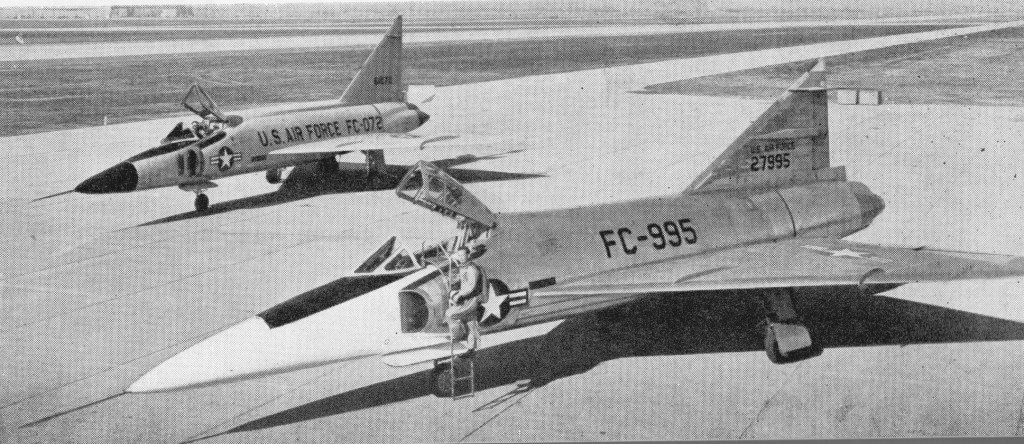
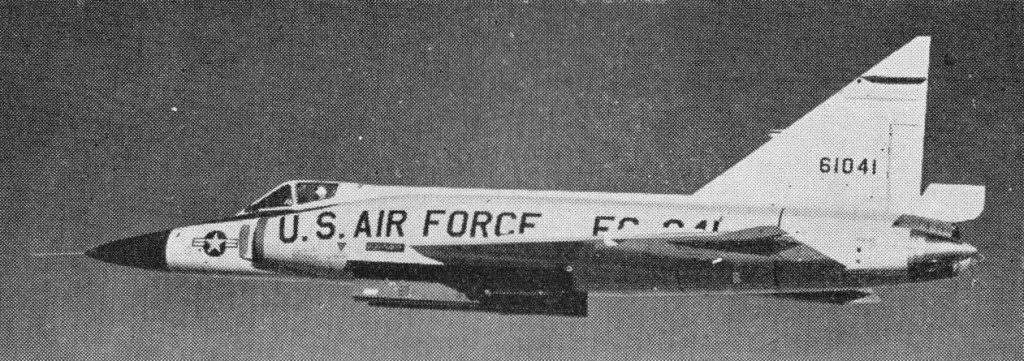
The Convair F-102 Delta Dagger resulted from a 1950 USAF design competition for an integral all-weather interceptor weapon system. Combining the Hughes Falcon air-to-air missile, the 60 degree sweep delta wing platform first flown on the XF-92A, and the 4944kg thrust Pratt & Whitney J57-P-11 turbojet, the first of 10 YF-102s (52-7994/7995 and 53-1779/1786) flew at Edwards AFB, California, on 24 October 1953, piloted by Dick Johnson. The prototype was lost in a mishap nine days later.
YF-102 (nearest), F-102 (rear)
The YF-102 was not a success, proving unable to maintan supersonic speeds in level flight. The fuselage was completely redesigned into a ‘coke bottle’ shape using the area rule concept, and a more powerful engine installed. The indented fuselage or ‘area rule’ configuration was developed by NACA’s Richard Whitcomb was introduced in the much-altered YF-102A, which was assembled in 117 days.
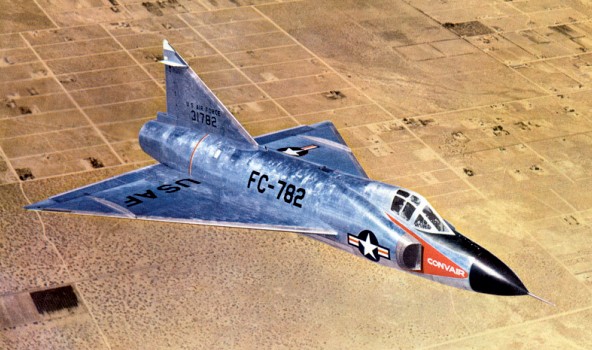
The first of four YF-102As (53-1787/1790) flew at Edwards AFB on 20 December 1954, again piloted by Dick Johnson, not merely with ‘area rule’ but with cambered wing, new canopy (except on 53-1788) and 5443kg thrust Pratt & Whitney J57-P-23. The new design was supersonic and met USAF expectations.
Development included the introduction pf a larger fin from the 23rd production aircraft.
The primary weapon was the Hughes AIM-4 Falcon air-to-air missile, coupled with the Hughes MG-10 fire control system. Introduced later was the AIM-26, some nuclear tipped.
YF-102
The production F-102A began to reach Air Defense Command squadrons in June 1955. The first two-seat TF-102A combat proficiency trainer (54-1351) flew at Edwards AFB 8 November 1955 and operated alongside F-102As in ADC service.
Service entry began with the first examples delivered in April 1956 to the 327th Fighter Interceptor Squadron (FIS) at George, California. The F-102B designation was briefly assigned to a new aircraft completed as the F-106. The little-known YF-102C (53-1806), a converted F-102A model, tested change in the internal fire control system, but these were not adopted.
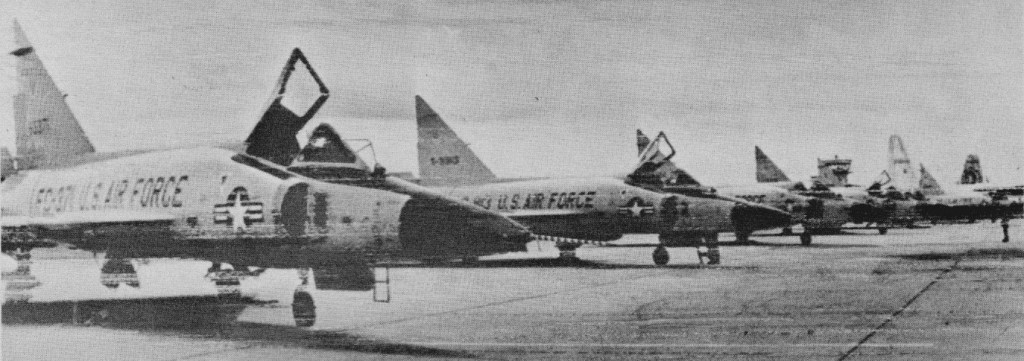
The F-102A eventually served with 32 ADC and 21 States ANG squadrons. Air Defense Command machines went through several modernisation programmes before being relegated to the ANG, the internal provision for rockets being eventually omitted. A few F-102As went to Greece (20 F-102A and 4 TF-102A) and Turkey (40 F-102A and 9 TF-102A).
1964 on arrival at Saigon, Vietnam
A few camouflaged F-102As were deployed to South East Asia in 1964-6, and to Korea in 1968 but, while they flew a few missions over North Vietnam, they are not thought to have actually been in combat. No air-to-air kills were achieved but one F-102A was shot down by a MiG-21 on 5 February 1968.
F-102A
Most F-102A squadrons had converted to other types by the end of 1971. The last US operational user was the Hawaii Air National Guard’s 199th FIS which received its first F-4C Phantom replacement in October 1975. Greece retired their F-102As in 1979, with Turkey withdrawing its last 13 fighters and five trainers on 5 June 1979. In March 1973, the USAF awarded Sperry a contract to convert an initial 6 F-102As as a fully manoeuvrable manned or unmanned target drones under the Pave Deuce programme as PQM-102As. Over 200 were eventually converted, operating until 1986. Numerous F-102A airframes have been saved, the 199th Fighter Interceptor Squadron of the Hawaii Air National Guard having retained no fewer than four non-flyable F-102As for display purposes after transitioning to the F-4C Phantom.
Total Delta Dagger production was exactly 1000 airplanes built at San Diego’s Lindbergh Field, comprising 10 YF-102, 4 YF-102A, 875 F-102A and 111 TF-102A trainers.
Convair F-102A Delta Dagger Engines: 1 x Pratt & Whitney J57-P-23 turbojet, 17,200 lb (5307/7802kp) thrust. Length: 68 ft 4.5 in (20.84m) Wingspan: 38 ft 1.5 in (11.62m) Wing area: 695.031 sqft / 64.57 sq.m Wing loading: 45.31 lb/sq.ft / 221.0 kg/sq.m Height: 21 ft 2.5 in (6.46m) Empty Weight: 19,026lbs (8,630kg) Maximum Take-Off Weight: 31,500lbs (14,288kg) Maximum Speed: 825mph (1,328kmh; 717kts) at 36,000 ft Cruising speed: 469 kts / 869 km/h Cruising altitude: 34449 ft / 10500 m Maximum Range: 1,350miles (2,173km) Rate-of-Climb: 17,400ft/min (5,304m/min) Service Ceiling: 54,003ft (16,460m) Armament: 6 x AIM-4A / AIM-4C Falcon Air-to-Air Missiles 2 x 2.75″ Rocket Pods (24-shot, unguided rockets) Nuclear Capable munitions as needed. Accommodation: 1 Hardpoints: 6
Convair F-102A Delta Dagger Engine: 1 x Pratt & Whitney J57-P-35 turbojet, 10,900 dry, 17,000 lb afterburner Wingspan: 38 ft 1.5 in (11.62m) Wing area: 661.5 sq.ft Length: 68 ft 4.5 in (20.84m) Height: 21 ft 2.5 in (6.46m) Wheel track: 14 ft 2.25 in Wheelbase: 22 ft 4.5 in Maximum Take-Off Weight: 27,000 lbs Maximum Speed: 825 mph (1,328kmh; 717kts, M1.25) at 36,000 ft Service Ceiling: 54,000 ft (16,460m) Armament: 6 x AIM-4A / AIM-4C Falcon Air-to-Air Missiles 2 x 2.75″ Rocket Pods (24-shot, unguided rockets) Nuclear Capable munitions as needed. Accommodation: 1 Hardpoints: 6
Shortly after Reuben Fleet sold his interest in Consolidated Aircraft Corporation in March 1943 and the company was reorganised as Consolidated Vultee (Convair), the US Navy expressed interest in a new long-range multi-role flying-boat.
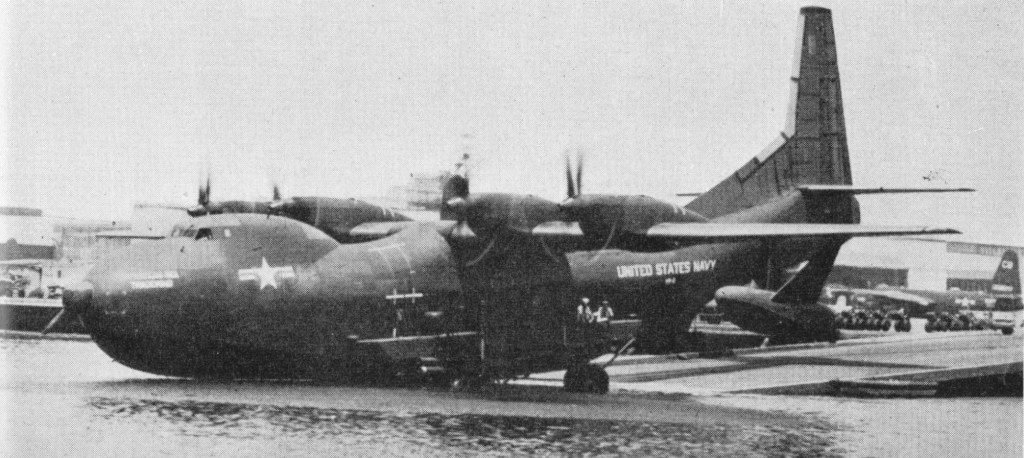
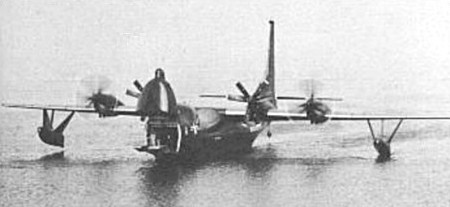
Convair’s proposal was for an aircraft powered by four turboprop engines, was the subject of a contract for two prototypes, awarded on 27 May 1946. Designated XP5Y-1, the new aircraft featured a slim fuselage for an aircraft of this class with a length-to-beam ratio of 10 to 1. it was powered by four Allison T40-A4 turboprops, each driving two contra-rotating, reversable propellers through a common gearbox. The type’s main role was anti-submarine warfare, and it was to have been fitted with advanced radar, ECM and MAD equipment in addition to carrying a heavy load of bombs, mines, rockets and torpedoes. The first aircraft was flown from San Diego on 18 April 1950, and in August the type set a turboprop endurance record of 8 hours 6 minutes. August was an eventful month for the XP5Y-1 as the US Navy decided to discontinue its development for maritime patrol, but to persevere with the basic design for use as a passenger and cargo aircraft.
Convair R3Y-1 Tradewind
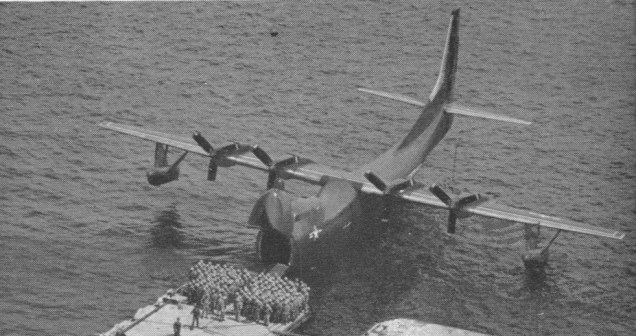
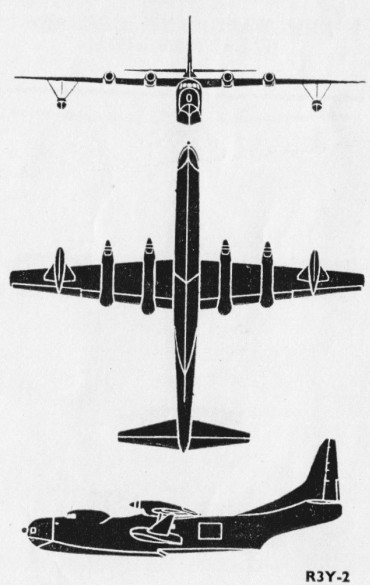
Work continued, despite the loss of an XP5Y-1 in a non-fatal crash off San Diego in 15 July 1953 and the first R3Y-1 Tradewind flew on 25 February 1954. Major changes included the deletion of all armament and of tailplane dihedral, the addition of a 3.05m wide port-side cargo hatch aft of the wing and the provision of redesigned engine nacelles to accept the improved T40-A-10 engines. Cabin sound-proofing and air-conditioning were installed and pressurised accommodation provided for up to 103 passengers or, in medevac configuration, for 72 stretcher cases and 12 attendants; cargo payload was 24.4 tonnes (24 tons). The R3Y-1 was a straight transport version, the R3Y-2 was the assault transport version with the hinged nose. It could also refuel jets in flight using two or four wing pods. The R3Y-2 had a nose loading door and integral hydraulic ramps. The opening door blocked the pilots’ forward view during beach operations. The R3Y-1 ‘s performance was demonstrated on 24 February 1955 when one of the five aircraft built flew coast-to-coast at an average speed of 649km/h on delivery to the Navy Test Center at Patuxent River, Maryland. Similarly, on 18 October a 6 hour 45 minute record flight at an average 579km/h was accomplished between Honolulu and NAS Alameda, California. US Navy transport squadron VR-2 received the first of its mixed fleet of R3Y-1 and R3Y-2 flying-boats on 31 March 1956, but financial considerations and continuing problems with the engine/propeller combination, culminating in two in-flight separations of propellers and gearbox from an engine (on 10 May 1957 and on 2 January 1958), led to a curtailment of Tradewind operations. Squadron strength was first cut to two R3Y-1s and two R3Y-2s and the unit was finally disbanded on 16 April 1958.
R3Y-2
R3Y Engines: 4 x Allison T40-A-10 turboprops, 4362kW, 5500 shp Max take-off weight: 74843-79379 kg / 165001 – 175002 lb Payload: 21750kg / 47951 lb Wingspan: 44.42 m / 145 ft 9 in Length: 42.57 m / 139 ft 8 in Height: 13.67 m / 44 ft 10 in Max. speed: 580 km/h / 360 mph Cruise speed: 480 km/h / 298 mph Range w/max.fuel: 6437 km / 4000 miles Crew: 5 Passenger Capacity: 80 or 24 ton.
R3Y-1 Engines: 4x 5,500 h.p. Allison T40-A-4 coupled turboprops. Wingspan: 145 ft Length: 142 ft. 6 in Loaded weight: 160,000 lb Max. speed: 392 mph Range: 4,500 miles at 300 mph Accommodation: 103 troops, 92 stretchers and 12 attendants or 24 tons of cargo.
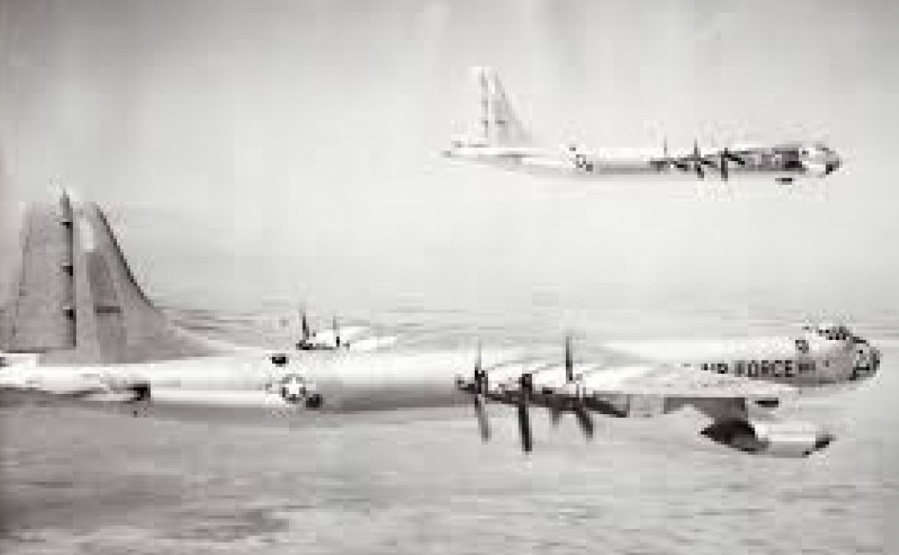
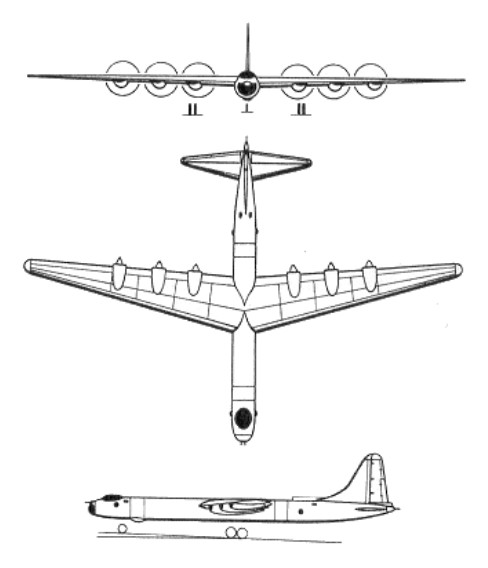
The first intercontinental bomber, the Convair B-36 originated from a US Army Air Force specification issued on 11 April 1941 which called for an aircraft with ability to carry a maximum bombload of 72,000 lb / 32659kg and to deliver 10,000-lb / 4536kg of bombs on European targets from bases in the United States. A radius of 5000 miles / 8047 km. An unrefuelled range of 16093km was a prime requirement, with a maximum speed of 386-483km/h and ceiling of 35000 ft / 10670m.
A number of designs were submitted and the winner was selected in November 1941 the month before the USAs entry into World War II. It was the Consolidated Model 37, which was ordered in prototype term as the XB-36, becoming the developmental YB-36 trials model, finally built by Convair, as Consolidated became known after its merger with Vultee.
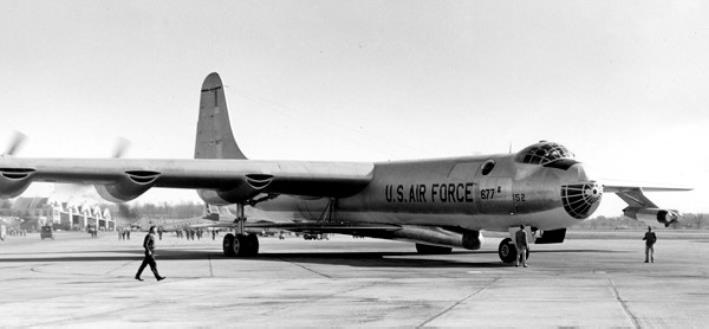
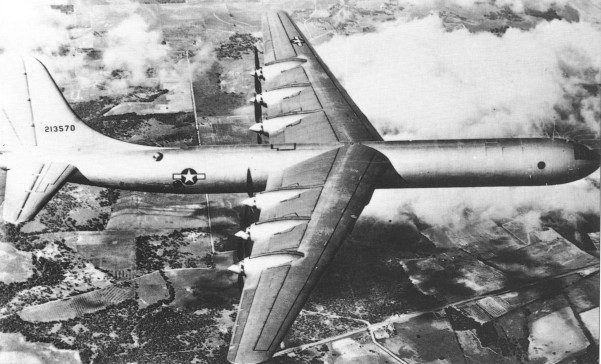
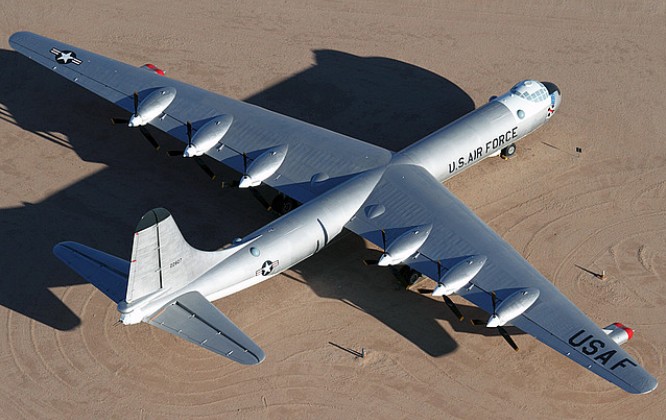
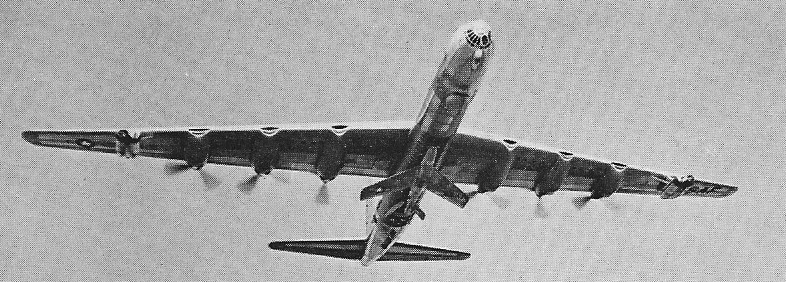
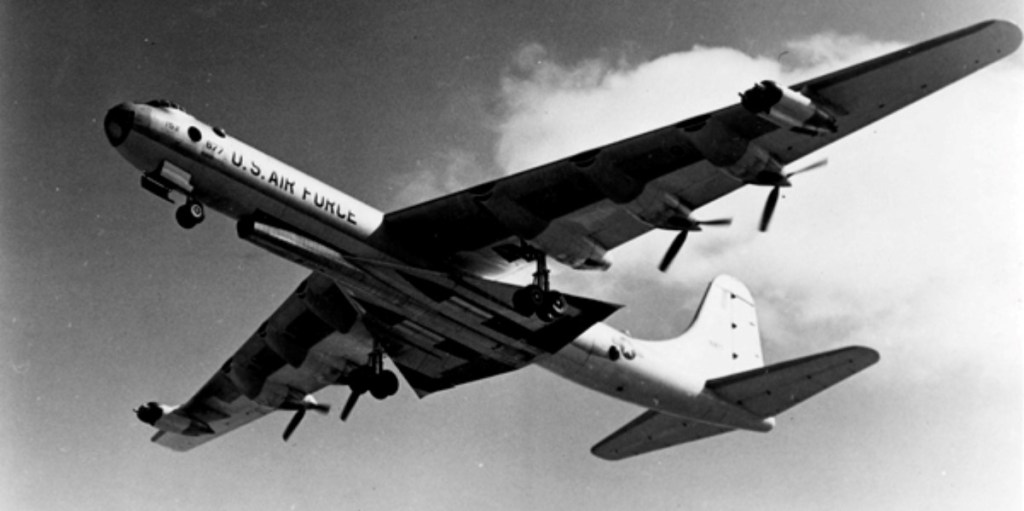
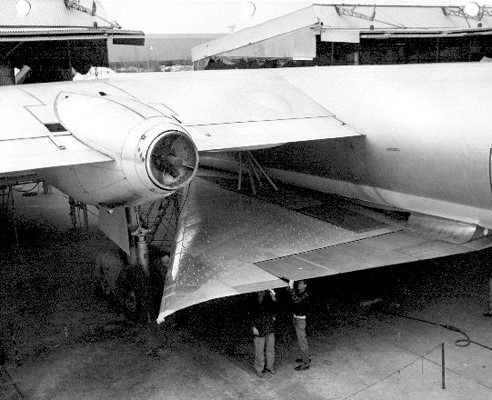
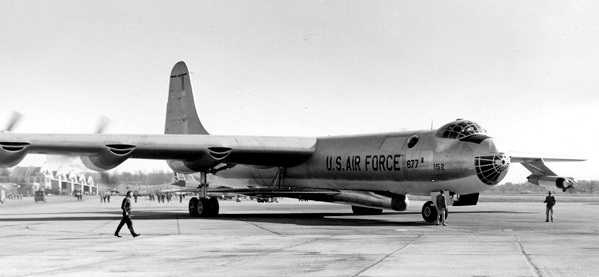
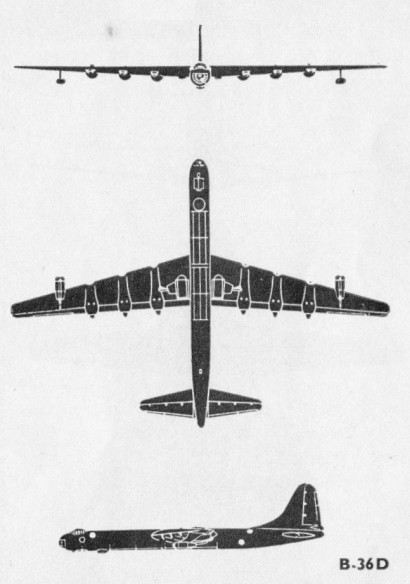
The design was basically conventional by the standards of the time, but with a span of 230 ft (74.10 m) the aeroplane was exceptionally large weighing 102 tonnes (100 tons). The tyres on the prototypes main landing gear were 2.74 m (9 ft) in diameter (they also concentrated too much weight on the run¬ways of the day, and were replaced on production aircraft by four wheel bogie units). The type did introduce some novel features, however, including a slightly swept wing, a fuselage whose two main pressurized compartments were connected by an 80-ft (24.4m) tunnel containing a wheeled cart, and propulsion by six pusher propellers driven by radial engines buried in the thick wings. The wings had a root thickness of 1.83m to permit in-flight access to the six pusher engines. The B 36 used the “wet fuel tankage” pioneered by Consolidated with their B~24 liberator no fuel tanks as such, just big areas of the wing structure sealed and filled with fuel.There were leakage problems. The aircraft was designed originally with twin fins and rudders, but by the time the XB-36 prototype was ready to be rolled out at Fort Worth, on 8 September 1945, single vertical tail surfaces had been substituted. The aircraft’s tailfin was so tall that the nosewheel had to be jacked up to lower the rear and clear the top of the doors.
B-36 Peacemaker required a crew of 11 personnel to maintain all systems and weaponry on the aircraft with 4 ‘relief’ personnel flying along as well. There were high maintenance costs. Every flight up to 40 hours aloft cost thousands of man hours on the ground. For instance, every flight began with a new set of spark-plugs in the engines: 336 of them in 168 cylinder heads on six engines.
Defensive armament consisted of sixteen 20mm cannon emplacements in the nose, tail and throughout the fuselage in barbettes – though this defensive armament was not added till the B-36B models.
The prototype programme was initially slowed by World War II’s demands for current aircraft, but then placed at the highest priority in 1943 when the USA realized that strategic blows against Japan could only be struck by long-range strategic bombers.
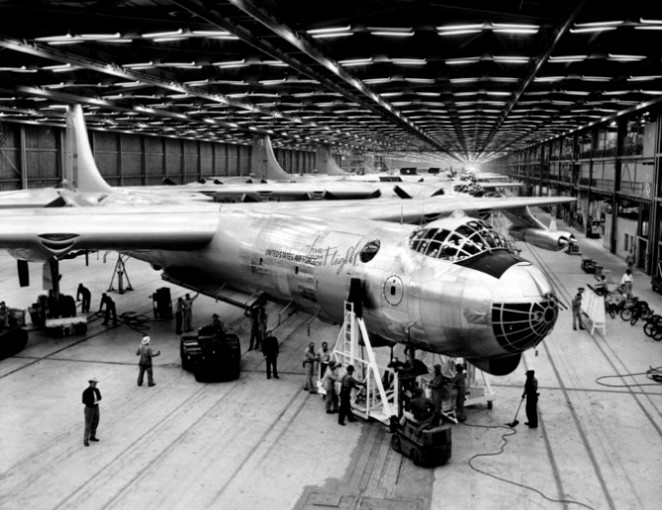
First flown on 8 August 1946, the XB-36 had single 2.79m diameter main wheels, also a feature of the YB-36 second prototype on which they were replaced later by the four-wheeled bogies adopted for production aircraft. The original single wheel main undercarriages smashed up run way surfaces. In this form the aircraft was designated YB-36A and also differed from the first aircraft by introducing a raised cockpit roof. On 23 July 1943 100 aircraft were ordered but it was more than four years before the first of the 22 unarmed crew-trainer B-36A models took off on its maiden flight, on 28 August 1947. The Convair B-36 Peacemaker entered service with the United States Air Force’s 7th Bombardment Wing (Heavy) on 2 June 1948.
In 1949 cargo carriers were developed by Convair for carriage in the B-36 bomb-bay. One B-36 could carry six containers, each of about 100 cu.ft and maximum load of 14,000 lb. As a tanker, the B-36 could carry four 3000 USG tanks.
From 1950 the over target height and speed were boosted by adding four 2360 kg (5200 lb) thrust J47 jet engines in under slung pods to boost performance; with the six piston engines also uprated to 3800 hp each. Missions could last up to 50 hours without using the inflight refuelling capability. Complete wings were based in the UK, Morocco, Guam and other areas, as well as in the USA until February 1959. No missions were flown ‘in anger’.
In its final production version the B 36 had a combat overload weight of 208 tonnes (205 tons), more than double that of the prototype, and a maximum flight duration of 42 hours. An arsenal of 16 guns was carried, and crews numbered between 13 and 22 men, depending on the model and type of mission, some of which involved high altitude over-flights of the Soviet Union.
The B 36 was used as an extreme range spy plane (the version carried a photographic work shop instead of the usual bombload). A small number of ‘featherweight’ B-36s – aircraft without their usual armament and other non-essential equipment – with a small crew could fly at extreme altitudes, so keeping out of range of the MiG-15 interceptors. The regular B-36s, equipped with 14 cameras and electronic eavesdropping equipment, could reach 50,000 ft / 15,000 m while the ‘featherweight’ could cruise above the Soviet Union and China at more than 58,000 ft.
The last B-36J was delivered in September 1953 and the ultimate operational B-36 was retired in August 1959.
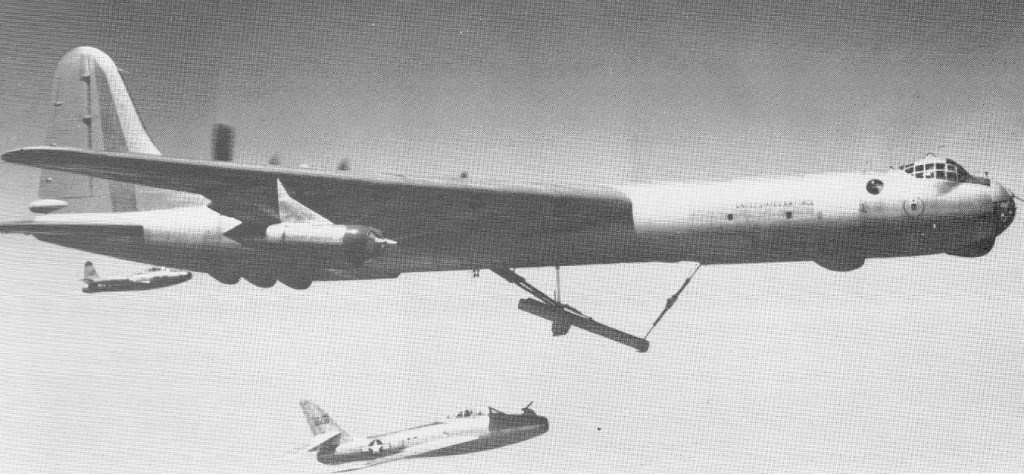
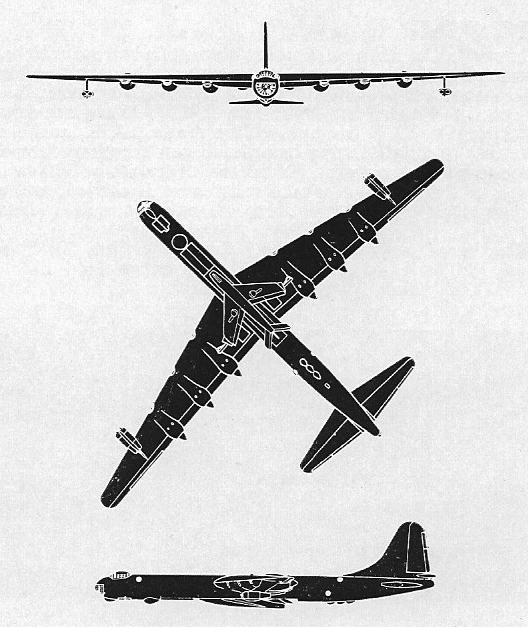
The GRB-36 operated as an airborne aircraft carrier. When the Convair B 36 Peacemaker bomber went into service with the United States Air Force’s Strategic Air Command, plans were laid for two hook on projects. The first of these was a fighter called the McDonnell XF 85 Goblin, which was 4.57 m (15 ft) long. The Goblin was to have been carried in the B 36’s bomb bay ready for launching in the event of fighter attack. Having won the ensuing dogfight it would then rejoin the mother ship for it did not give it any landing gear of its own.
Convair B-36J Peacemaker
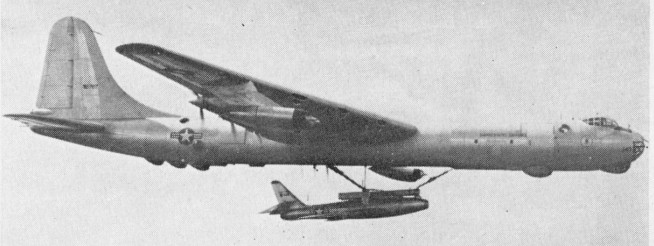
The second attempt to use the B 36 as an aircraft carrier took place in 1955 and 1956. Seeking a reconnaissance aircraft with suffi¬cient range to reach the Soviet Union, the USAF came up with FICON, which stood for Fighter In CONvair.
By hitching a Repub¬lic RF 84 Thunderflash to a B 36, the photo-¬reconnaissance jet’s range could be extended from 3220 km (2000 miles) to 19,310 km (12,000 miles).
The parasite’s pilot could transfer to the bomber’s interior, fly in the pressurised cabin until the area to be photographed was approached (because the B-36 had a range of at least 9300 miles / 15,000 km and this could take many hours), then go down to his own cockpit to be released above enemy territory.
SAC had a number of Peacemakers modified to GRB-36 mother aircraft and ordered 25 Republic RF-84K Thunderflash to hitch a ride. During 1955-56 several operational missions were flown from Fairchild and Larson airbases in Washington State.
Some thought was also given to a nuclear bomb equipped Thunderstreak substituting for the Thunderflash, but the arrival of the U-2 and RB-57D ended the project.
GRB-36J
Twenty five RF 84Fs were modified for parasite duty. On a typical mission the mother ship B 36 would depart from Fairchild Air Force Base, Spokane, Washington to be joined in the air by an RF 84K (as the parasite Thunderflashes were designated) from Moses Lake Air Force Base. The fighter would be hoisted into the B 36’s bomb bay.
GRB-36J
In April 1945 the USAF’s predecessor, the USAAF, had issued its specification for a B-35/B-36 replacement with turbine propulsion, and the USAF pushed this programme with considerable vigour. The failing submission to the 1945 requirement was the Convair YB-36G, which was redesignated YB-60 before two prototypes were ordered in March 1951,
Two Convair X-6s were ordered to evaluate the operational practicality of airborne nuclear propulsion systems prior to committing to building a prototype of a dedicated military design. The specific areas to be tested included crew shielding, propulsion, radiobiology, and the effects of radiation on various aircraft systems. In addition to the X-6s, a single NB-36H was ordered to serve as an early flyable testbed. In the NB-36H, the nuclear reactor was functioning but provided no power to the aircraft itself. The X-6s would have been powered by a prototype airborne nuclear propulsion system installed in the aft bomb bays.
In the end, the X-6 program was cancelled before either of the two aircraft were built. The NB-36H was completed, however, making its first flight in September 1955. After conducting tests for approximately two years, the nuclear reactor was removed and the NB-36H was scrapped at Carswell AFB, Texas.
Production of the B-36 continued for almost seven years, the last of 385 examples being delivered to Strategic Air Command on 14 August 1954, and the type was retired finally on 12 February 1959.
B-36 transporting the XB-58 airframe using eight of ten engines (note both of the inboard propellers have been removed for this flight)
Convair easily transported the XB-58 prototype by air from Ft. Worth TX to Wright-Patterson Air Force Base (AFB) in Ohio for testing with the use of a modified Peacemaker bomber.
B-36 and XB-58 airframe mating, note the strut assembly joining the two wings together has been removed from the wing’s inboard engine as well as the prop.
The left and right inboard engines had their propellers removed, along with the bomb bay doors since they did not clear the wings of the XB-58 which was mounted underneath the bomber.
Since the airframe was the subject of testing the XB-58 did not have the engines attached and the vertical fin assembly was left off, as well.
Engines: 6 x P+W R-4360, 2575kW Wingspan: 70.1 m / 229 ft 12 in Length: 49.4 m / 162 ft 1 in Height: 14.3 m / 46 ft 11 in Wing area: 443.3 sq.m / 4771.64 sq ft Max take-off weight: 162162 kg / 357508 lb Empty weight: 72051 kg / 158846 lb Max. speed: 696 km/h / 432 mph Cruise speed: 362 km/h / 225 mph Ceiling: 13700 m / 44950 ft Range w/max.fuel: 16000 km / 9942 miles Armament: 12-16 20mm machine-guns, 32600kg of bombs Crew: 16
Convair B-36D Peacemaker Engines: 6 x 3,500 hp Pratt & Whitney R-4360-41 radials + 4 GE J47-GE-19 turbojet, 5,200 lb. thrust Length: 162.07ft (49.4m) Width: 229.66ft (70.00m) Height: 46.75ft (14.25m) Maximum Speed: 439mph (706kmh; 381kts) Maximum Range: 7,500miles (12,070km) Service Ceiling: 45,197ft (13,776m; 8.6miles) Armament: 12 x 20mm cannons in nose, tail and fuselage barbettes Up to 86,000 lbs of bombs internally. Accommodation: 15 Empty Weight: 171,035lbs (77,580kg) Maximum Take-Off Weight: 418,878lbs (190,000kg)
B 36J Peacemaker Engines: 6 x Pratt & Whitney R 4360 53 Wasp Major 28 cylinder radial, 3,800 hp (2834 kW) and 4 x General Electric J47 GE 19 turbojets, 2359 kg (5.200 lb). Max speed: 661 km/h (411 mph) at 11095 m (36,400 ft). Over target height: up to 12160 m (39,900 ft). Range with 4990 kg (11,000 lb) bombload: 10944 km (6,800 miles). Empty weight: 77581 kg (171,035 lb) Maximum take off weight: 185976 kg (410,000 lb). Wing span 70,10 m (230 ft 0 in). Length 49.40 m (162 ft 1 in). Height 14.23 m (46 ft 8 in). Wing area 443.3 sq.m (4,772.0 sq ft). Armament: 16 x 20 mm cannon in 8 turrets Bombload: up to 39010 kg (86, 000 lb).
GRB-36J Engines: 6 x Pratt & Whitney R-4360-53, 3800 hp & 4 x General Electric J47-GE-19, 5200 lb Wingspan: 230 ft Length: 162 ft 1 in Height: 46 ft 9 in Wing area: 4772 sq.ft Empty weight: 145,000 lb Loaded weight: 408,000 lb Max speed: 436 mph Cruise: P&W eng. Only: 290 mph at 40,000 ft Max range: 10,000 mi

 All Aero