Curtiss 35 / P-6 Hawk / P-11 / P-23

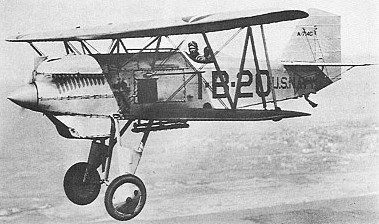
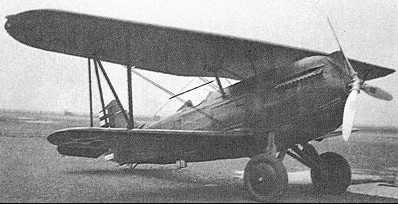
Installation of the new 600hp Curtiss V-1570-1 Conqueror engine in a P-2 airframe for participation in the September 1927 National Air Race at Spokane led to the application of the designation XP-6 (Curtiss Model 35). The prototype placed second averaging 189 mph. A similarly-powered aircraft utilising a P-1A fuselage, untapered XPW-8A wings and surface radiators in both the top and bottom mainplanes became the XP-6A. A third Conqueror-powered conversion of a P-1C airframe for a New York-Alaska flight, in July 1929, was assigned the designation XP-6B. Although these aircraft were intended purely to prove the Conqueror engine, the success of this power plant prompted a USAAC order for 18 P-6s (as YP 6s) on 3 October 1928, these being powered by the 600hp water-cooled V-1570-17Conqueror.

Although generally similar to the P-1 in construction, they embodied extensively revised fuselage contours, a deeper fuselage, and were aerodynamically cleaner. Deliveries commenced in October 1929, but with the 11th aircraft Prestone (ethylene glycol) cooling was introduced, the designation changing to P-6A. The V-1570-23 engine in the P-6A had a similar rating to that of the -17 that it supplanted; armament remained unchanged at two 7.62mm guns. In service, eight of the Army Air Corps P-6s were brought up to P-6A standards. Eight additional P-6s were delivered to the Netherlands East Indies and one to Japan under the export designation Hawk I.
Subsequent to being converted as a P-6A, the first production P-6 was fitted with a side-mounted turbo-supercharger on its V-1570-23 engine as the XP-6D, and, in 1932, 10 P-6As were fitted with F-2F superchargers as P-6Ds. In addition, two aircraft originally ordered as P-11s (P-6 airframes with the unsatisfactory 600hp Curtiss H-1640 Chieftain engine) were completed as P-6Ds. The P-6D was 122kg heavier than the P-6A and featured a three-bladed propeller, and its performance included max speeds of 306km/h at 3050m and 317km/h at 3960m, service ceiling being 9755m.

Of three P 11s ordered, two were completed as P 6s as the intended engine (Curtiss Chieftain) was found unsuitable; the third became the YP 20 with a 575 hp Wright R 1820 9 Cyclone radial engine. Modifica-tions to all three included a new control system, a tailwheel instead of a skid, spats on the main wheels, and more fin and less rudder area. The XP 22 was a P 6A, retaining the Conqueror engine but having a modified nose and radiator, single strut main undercarriage legs and revised tail unit. Forty six of these, ordered as YIP 22s, were completed as P-6Es; 45 were delivered in late 1931/early 1932, the remaining aircraft becoming the XP 23.
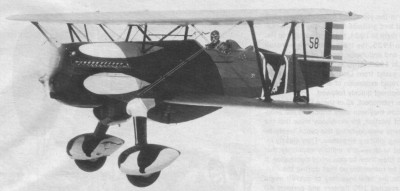
P-6E Hawk

The Army Hawks engendered a bewilder¬ing assortment of experimental conversions, reconversions and redesignations, but the mainstream production models were the P 1, P 2, P 3, P 5 and P 6 fighter series.
When the V-1570-23 engine of the XP-22, complete with three-blade propeller and the cowling, plus the cantilever main undercarriage members of the XP-22 were grafted on the YP¬20 airframe in the autumn of 1931, the result was designated XP-6E. The 45 Y1P-22s ordered during the previous July and which were briefly to be referred to as P-6Cs, being designated as P-6Es by the time deliveries began on 2 December 1931. Powered by the same 600 hp Curtiss V-1570-23 Conqueror engine, the P-6E carried an armament of two 03-in (7,62-mm) Browning machine guns and 17 surviving examples were eventually assigned to ground schools during the summer of 1939. In the spring of 1932, the XP-6E was returned to Curtiss for a turbo-supercharged V¬1570-55 engine of 675 hp, a fully-enclosed cockpit with aft¬sliding canopy being fitted at the same time and the designation being changed to XP-6F. This attained 225 mph (362 km h) at 18,000 ft (5485 m) during tests. One P-6E was temporarily assigned the designation XP-6G while being used as a test-bed for the V-1570-51 (F-series) engine, while the first production P-6E was also fitted with this engine and experimental wing armament as the XP-6H. The wing armament comprised two 0.3-in (7,62-mm) guns in both the upper and lower wings, these firing outside the propeller disc and augmenting the twin synchronised fuselage guns.
Armament on all biplane Hawks was the same: two 0.30 in (7.62 mm) Browning machine guns in the decking above the engine. (The only exception was the XP 6H, to which were added two 0.30 in (7.62 mm) guns in the upper wing and two in the lower wings.) Provision existed for the carriage of bombs beneath the fuselage
Total Hawk production for the USAAC was 243 aircraft; in addition, eight P 6s were sold to the Dutch East Indies and one P 6, for evaluation, to Mitsubishi in Japan. Also exported were several ‘Cuban Hawks’, powered by 450 hp Pratt & Whitney R 1340 radial engines.

Curtiss P-6 replica:
Sauser Aircraft Ltd P-6E replica

XP-6
Engine: 600hp Curtiss V-1570-1 Conqueror

XP-6A
Engine: 600hp Curtiss V-1570-1 Conqueror

XP-6B
Engine: 600hp Curtiss V-1570-1 Conqueror

P-6
Engine: 600hp Curtiss V-1570-17 Conqueror
Armament: two 7.62mm guns

P-6A
Engine: Curtiss V-1570-23 Conqueror
Wingspan: 9.60 m / 31 ft 6 in
Length: 7.19 m / 23 ft 7 in
Height: 2.62 m / 8 ft 7 in
Wing area: 23.41 sq.m / 251.98 sq ft
Take-off weight: 1439 kg / 3172 lb
Empty weight: 1083 kg / 2388 lb
Max. speed: 286 km/h / 178 mph
Armament: two 7.62mm guns.

P-6 / Hawk I
Export version

XP-6D
Engine: Curtiss turbo-supercharged V-1570-23 Conqueror

P-6D
Engine: Curtiss V-1570-23 Conqueror F-2F supercharged
Propeller: three-blade
Wingspan: 9.60 m / 31 ft 6 in
Length: 7.19 m / 23 ft 7 in
Height: 2.62 m / 8 ft 7 in
Wing area: 23.41 sq.m / 251.98 sq ft
Max speed: 306km/h at 3050m
Max speed: 317km/h at 3960m
Service ceiling: 9755m
Armament: two 7.62mm guns.

P-6E
Engine: one 600 hp (447 kW) Curtiss V-1570-23 Conqueror
Span: 31 ft 6 in (9,60 m).
Length: 23 ft 2 in (7,06 m).
Height: 8 ft 10 in (2,69 m).
Wing area: 252 sq ft (23,41 sq.m)
Empty weight: 2,699 lb (1 224 kg).
Loaded weight: 3,436 lb (1 558 kg).
Max speed: 193 mph (311 km/h) at sea level
Max speed: 180 mph (290 km h) at 15,000 ft (4570 m)
Cruising speed: 145 kts / 269 kph
Service ceiling: 26263 ft / 8005 m
Initial climb: 2,460 ft/min (12,49 m sec)
Normal range: 285 mls (458 km).
Armament: 2x MG .30 cal. (7,5mm)
Crew: 1

P 11
Engine: Curtiss Chieftain
Tailwheel
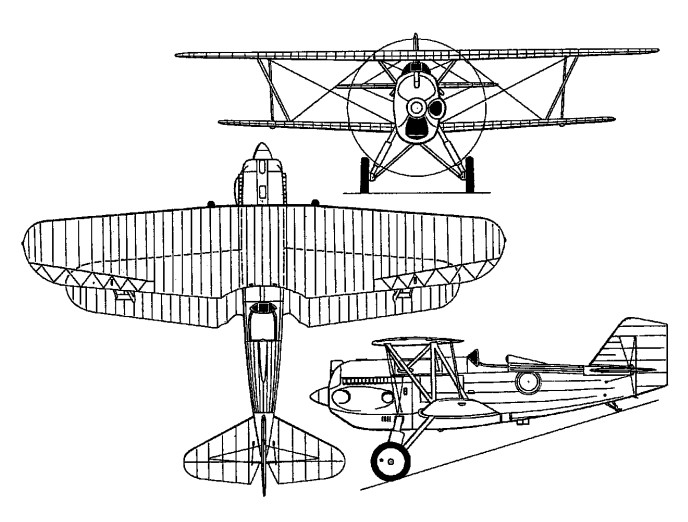
Curtiss P-6 Hawk

Curtiss BF2C-1 / F11C-3 / Hawk III / Hawk IV

The fourth production F11C-2 Goshawk was completed with manually-operated retractable main undercarriage members accommodated by a deepened forward fuselage. It was powered by an R-1820-80 Cyclone rated at 700hp at 2440m, and was delivered to the US Navy on 27 May 1933 as the XF11C-3. Twenty-seven production models were ordered as F11C-3s with raised aft turtle decks, partial canopies and the metal wings that had proved satisfactory on the XF11C-1. Prior to the commencement of deliveries on 7 October 1934, the designation was changed to BF2C-1. The BF2C-1 carried an armament of two 7.62mm Brownings and made provision for a single 215kg bomb or up to four 53kg bombs. An R-1820-04 Cyclone rated at 770hp for takeoff was fitted. At cruising rpm the Cyclone set up a sympathetic vibration with the metal wing structure, the aircraft shaking dramatically in this regime, and, the problem never being satisfactorily resolved, the BF2C-1s were withdrawn within a few months.

Hawk III

The export version of the BF2C-1, the Hawk III, differed from the US Navy fighter-bomber in reverting to the wooden wing structure of the F11C-2 (spruce beams with plywood webs and spruce ribs) and in having a Wright SR-1820F-53 Cyclone offering 785hp for take-off and 745hp at 2925m. Gun armament comprised two synchronised 7.62mm weapons. The first export of the Hawk III was a single example to Turkey delivered in April 1935, supply of 24 to Thailand following from August 1935.
In early 1935 an order was placed by Thailand for 24 Hawk III and a manufacturing licence was also purchased. The first 12 were shipped in August and the remaining 12 in late 1935. They were locally designated ‘fighter Type 10’.
In March 1936, the first of a total of 102 Hawk IIIs was delivered to China, 90 of these being assembled by the Central Aircraft Manufacturing Company (CAMCO) at Hangchow. One other purchaser of the Hawk III was Argentina, which took delivery of 10 from May 1936. Argentina also purchased the sole example of the Hawk IV in July 1936, this using a Hawk III airframe with a full sliding cockpit canopy, carburettor heating and an exhaust collector ring for the SR-1820F-56 Cyclone, which delivered its maximum 745hp at 3810m. The Hawk IV attained 399km/h at 3810m and 390km/h at 5000m.

Hawk IV

BF2C-1 / F11C-3
Engine: Wright R-1820-80 Cyclone, 700hp at 2440m
Take-off weight: 2066 kg
Empty weight: 1529 kg / 3371 lb
Wingspan: 9.60 m / 31 ft 6 in
Length: 7.01 m / 22 ft 12 in
Height: 3.30 m / 10 ft 10 in
Wing area: 24.34 sq.m / 261.99 sq ft
Max. speed: 362 km/h / 225 mph
Range: 917 km / 570 miles

Hawk III
Engine: Wright SR-1820F-56 Cyclone, 745hp at 3810m
Take-off weight: 1958 kg
Empty weight: 1457 kg / 3212 lb
Wingspan: 9.60 m / 31 ft 6 in
Length: 7.14 m / 23 ft 5 in
Height: 2.98 m / 9 ft 9 in
Wing area: 24.34 sq.m / 261.99 sq ft
Max. speed: 325 km/h / 202 mph
Range: 925 km / 575 miles

Hawk IV
Engine: Wright SR-1820F-56 Cyclone, 745hp at 3810m
Wingspan: 9.60 m / 31 ft 6 in
Length: 7.14 m / 23 ft 5 in
Height: 2.98 m / 9 ft 9 in
Wing area: 24.34 sq.m / 261.99 sq ft
Max speed 3810m: 399km/h
Max speed 5000m: 390km/h

Curtiss F11C Goshawk / Hawk II / BFC-2   

F11C Goshawk

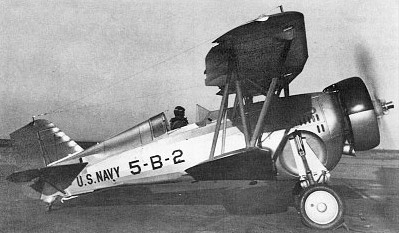
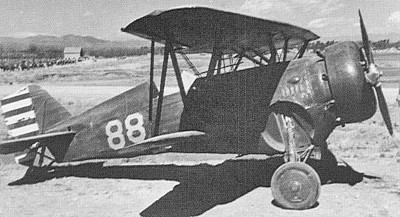
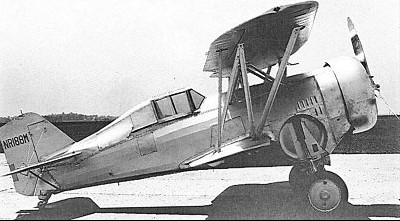
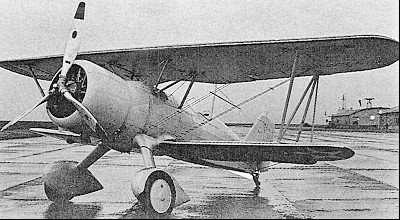
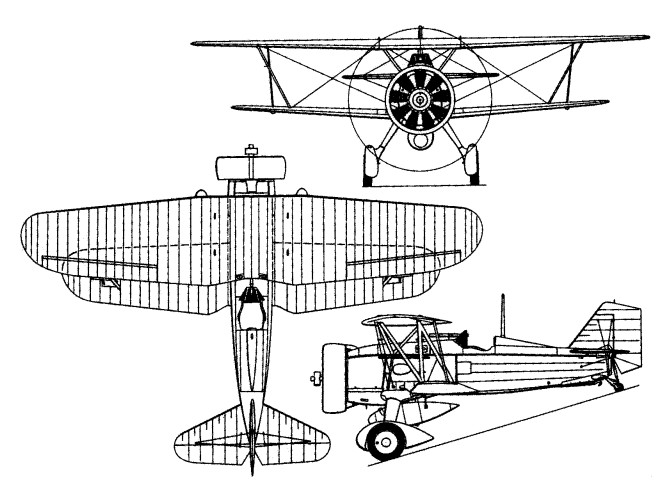
On 16 April 1932, the US Navy ordered two prototypes of a shipboard fighter designated XF11C-1 and XF11C-2. The XF11C-1 was powered with a 600hp Wright R-1510-98 two-row radial and the XF11C-2 with a 700hp Wright R-1820-78 single-row radial.

The XF11C-2 was a company demonstrator, which had been flying for some time, and was of mixed construction (fabric covered wooden wings and fabric-covered metal fuselage and tail surfaces), whereas the XF11C-1, which utilised the wings of the YP-23, was of fabric-covered all-metal construction and was delivered in September 1932. The R-1820-78 Cyclone and mixed structure of the XF11C-2 found favour with the US Navy, and, on 18 October 1932, a production order was placed for 28 F11C-2s, deliveries of which began in February 1933 and were completed in the following May. The fourth aircraft on the contract was completed with a manually-retractable undercarriage as the XF11C-3, subsequently being redesignated XBF2C-1 with adoption of the “bomber-fighter” category in March 1934. Simultaneously, the F11C-2s were redesignated as BFC-2s. Armament comprised two 7.62mm Browning machine guns and a single bomb of up to 227kg or four 51kg bombs could be carried. The BFC-2 remained in US Navy service until 1938.

Hawk II

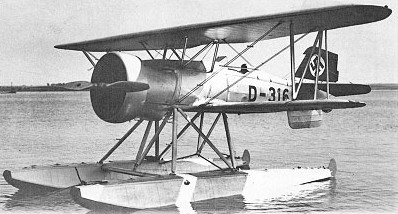
The Hawk II was essentially an export version of the XF11C-2 with a Wright R-1820F-3 Cyclone rated at 710hp at 1676m and 356 litres of fuel, the Hawk I differing in having only 189 litres of internal fuel. Only the Hawk II was exported in quantity, this having a mixed construction similar to that of the F11C-2 and normally carrying an armament of twin 7.62mm machine guns. The first customer for the Hawk II was Turkey, which began to take delivery of 19 on 30 August 1932, Colombia following suit from the end of October 1932 with an initial batch of four twin-float-equipped Hawk IIs. A total of 26 float fighters of this type was delivered to Colombia by the end of July 1934. Nine were supplied to Bolivia, of which three had interchangeable wheel/float undercarriages; four were delivered to Chile, 52 to China, four to Cuba, two to Germany, one to Norway and 12 to Thailand.

Hawk II

XF11C-2 Hawk II
Engine: Wright R-1820F-3 Cyclone, 710hp
Take-off weight: 1758 kg
Empty weight: 1317 kg / 2904 lb
Wingspan: 9.60 m / 31 ft 6 in
Length: 8.08 m / 26 ft 6 in
Height: 2.97 m / 9 ft 9 in
Wing area: 24.34 sq.m / 261.99 sq ft
Max. speed: 301 km/h / 187 mph
Range: 666 km / 414 miles
Fuel capacity: 356 lt

F11C-2 / BFC-2
Engine: 1 x Wright R-1820-78, 515kW
Take-off weight: 2104-2300 kg / 4639 – 5071 lb
Empty weight: 1515 kg / 3340 lb
Wingspan: 9.6 m / 31 ft 6 in
Length: 7.6 m / 24 ft 11 in
Height: 3.2 m / 10 ft 6 in
Wing area: 23.5 sq.m / 252.95 sq ft
Max. Speed: 320 km/h / 199 mph
Cruise speed: 250 km/h / 155 mph
Ceiling: 7400 m / 24300 ft
Range w/max.fuel: 920 km / 572 miles
Range w/max.payload: 460 km / 286 miles
Armament: 2 x 7.62mm Browning machine-guns, 227kg or four 51kg bombs
Crew: 1

Curtiss F11C Goshawk

Curtiss F8C / OC / O2 / XF10C-1

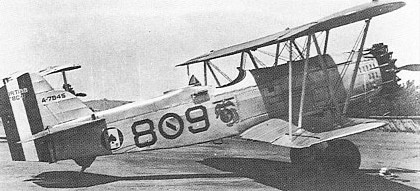
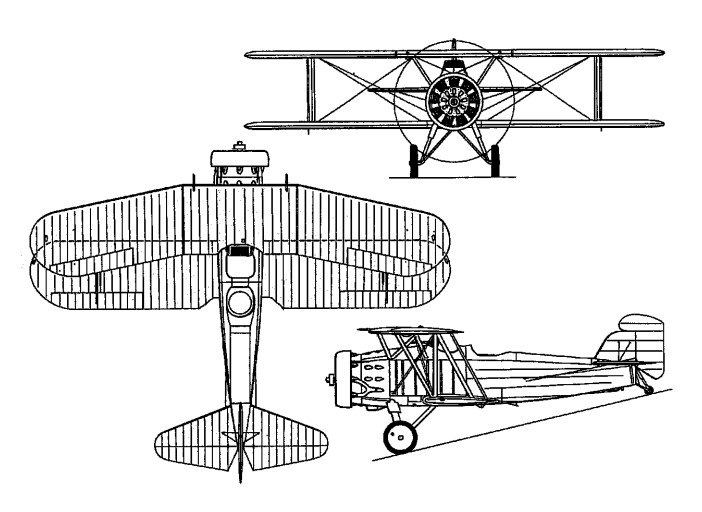
Developed for the US Marine Corps from the Army Air Corps Curtiss O 1 and A¬3 Falcon biplane series, two XF8C-1 proto¬types were ordered on June 30, 1927, and delivered in January 1928 as two-seat fighters with bombing and observation capability. The XF8C 2 and XF8C-1 dive bomber prototypes had two 56.2 kg (116 lb) bombs underwing or one 226.7 kg (500 lb) bomb under the fuselage, the two forward firing 0.30 in (7.62 mm) guns being relocated in the upper wings. Power was provided by a 432hp R-1340B Wasp.
Powered by 432 hp Pratt & Whitney R 1340 88 Wasp radials, four F8C 1s and 21 similar F8C 3s went to the Marine Corps later in 1928, later receiving OC 1 and OC 2 (Obser¬vation, Curtiss) designations respectively. (The second XF8C-1, refitted with a 600 hp Curtiss H 1640 Chieftain engine, became the XOC 3.)
Although designated in the F8C series, the XF8C-2 and XF8C-4 differed extensively from the F8C-1 and -3, and were dual-role aircraft intended for use both as two-seat fighters and as dive bombers, dive bombing techniques at that time being under development by the US Marine Corps. Possessing smaller overall dimensions than previous F8C series aircraft, featuring some structural revision and powered by a 450hp R-1340-80 Wasp, the XF8C-2 prototype appeared early in 1929 and was equipped to carry either two 53kg bombs or one 227kg bomb. A second prototype, the XF8C-4, was flown in August 1929, by which time orders had been placed for 27 F8C-4s and nine F8C-5s.
The XF8C-4 differed from the XF8C-2 primarily in having an R-1340-88 Wasp enclosed by a Townend ring. The latter was not initially applied to the production F8C-4s which were delivered from May 1930, a further 43 being ordered for 1931 delivery, these being redesignated O2C-1s. Two F8C-5s temporarily fitted with wing flaps and leading-edge slots were designated XF8C-6s, one VIP transport version with a 575hp Wright R-1820-64 Cyclone was designated XF8C-7 (XO2C-2) and two similarly powered examples were XF8C-8s. The designation XF10C-1 was assigned to one aircraft initially powered by a Curtiss R-1510 and subsequently re-engined with a Cyclone.
Transferred to reserve squadrons in 1931 after only a short Navy/Marine service, they were the first Curtiss aircraft to receive the name Hell¬diver, a name retained for all future Curtiss dive bombers. Sixty three F8C 5 Helldivers (redesignated O2CA) with 450 hp R 1340 4 engines were delivered to marine squadrons from 1931, most passing to the reserve in 1934. Two F8C 5s temporarily became XF8C 6s with wing flaps and leading edge slots; a single XF8C 7 (XO2C 2) was built as a staff transport in November 1930, this and the two XF8C 8s (O2C 2s) having a 575 hp Wright R 1820 64 Cyclone; and one other O2C 2 had a 625 hp Wright R 1510 Whirlwind engine.

F8C
Take-off weight: 1901 kg / 4191 lb
Empty weight: 1141 kg / 2515 lb
Wingspan: 11.58 m / 37 ft 12 in
Length: 8.51 m / 27 ft 11 in
Height: 3.55 m / 11 ft 8 in
Wing area: 32.52 sq.m / 350.04 sq ft
Max. speed: 232 km/h / 144 mph
Range: 1046 km / 650 miles

XF8C-1 proto¬type
Engine: 432hp R-1340B 88 Wasp
Wingspan: 11.58 m / 37 ft 12 in
Length: 8.51 m / 27 ft 11 in
Height: 3.55 m / 11 ft 8 in
Wing area: 32.52 sq.m / 350.04 sq ft
Crew: 2
Armament: two 0.30 in (7.62 mm) guns, two 56.2 kg (116 lb) or one 226.7 kg (500 lb) bomb

XF8C 1 / OC 1
Engine: 432hp R-1340B 88 Wasp
Wingspan: 11.58 m / 37 ft 12 in
Length: 8.51 m / 27 ft 11 in
Height: 3.55 m / 11 ft 8 in
Wing area: 32.52 sq.m / 350.04 sq ft
Armament: two 0.30 in (7.62 mm) guns, two 56.2 kg (116 lb) one 226.7 kg (500 lb) bomb

XF8C-2
Engine: 450hp R-1340-80 Wasp
Wingspan: 11.58 m / 37 ft 12 in
Length: 8.51 m / 27 ft 11 in
Height: 3.55 m / 11 ft 8 in
Wing area: 32.52 sq.m / 350.04 sq ft
Armament: two 53kg or one 227kg bomb.

F8C 3 / OC 2
Engine: 432 hp Pratt & Whitney R 1340 88 Wasp radial
Wingspan: 11.58 m / 37 ft 12 in
Length: 8.51 m / 27 ft 11 in
Height: 3.55 m / 11 ft 8 in
Wing area: 32.52 sq.m / 350.04 sq ft
Armament: one 0.30 in (7.62 mm) guns, ten 17 lb (7.7 kg) underwing bombs.

XOC 3
Engine: 600 hp Curtiss H 1640 Chieftain
Wingspan: 11.58 m / 37 ft 12 in
Length: 8.51 m / 27 ft 11 in
Height: 3.55 m / 11 ft 8 in
Wing area: 32.52 sq.m / 350.04 sq ft

XF8C-4
Engine: Pratt & Whitney R-1340-88 Wasp 450hp
Wingspan: 11.58 m / 37 ft 12 in
Length: 8.51 m / 27 ft 11 in
Height: 3.55 m / 11 ft 8 in
Wing area: 32.52 sq.m / 350.04 sq ft

F8C-4 / O2C-1
Empty weight: 1140 kg / 2513 lb
Gross weight: 1981 kg / 4367 lb
Wingspan: 9.78 m / 32 ft 1 in
Length: 7.82 m / 25 ft 8 in
Height: 3.12 m / 10 ft 3 in
Wing area: 28.61 sq.m / 307.96 sq ft
Max. speed: 237 km/h / 147 mph
Range: 732 km / 455 miles

F8C 5 Helldiver / O2CA
Engine: 450 hp R 1340 4
Wingspan: 11.58 m / 37 ft 12 in
Length: 8.51 m / 27 ft 11 in
Height: 3.55 m / 11 ft 8 in
Wing area: 32.52 sq.m / 350.04 sq ft

XF8C-6
Engine: 450 hp R 1340 4
Wingspan: 11.58 m / 37 ft 12 in
Length: 8.51 m / 27 ft 11 in
Height: 3.55 m / 11 ft 8 in
Wing area: 32.52 sq.m / 350.04 sq ft

XF8C-7 / XO2C-2
Engine: 575hp Wright R-1820-64 Cyclone
Wingspan: 11.58 m / 37 ft 12 in
Length: 8.51 m / 27 ft 11 in
Height: 3.55 m / 11 ft 8 in
Wing area: 32.52 sq.m / 350.04 sq ft

XF8C-8 / O2C 2
Engine: 575hp Wright R-1820-64 Cyclone
Wingspan: 11.58 m / 37 ft 12 in
Length: 8.51 m / 27 ft 11 in
Height: 3.55 m / 11 ft 8 in
Wing area: 32.52 sq.m / 350.04 sq ft

O2C 2
Engine: 625 hp Wright R 1510 Whirlwind
Wingspan: 11.58 m / 37 ft 12 in
Length: 8.51 m / 27 ft 11 in
Height: 3.55 m / 11 ft 8 in
Wing area: 32.52 sq.m / 350.04 sq ft

XF10C-1
Engine: Curtiss R-1510
Wingspan: 11.58 m / 37 ft 12 in
Length: 8.51 m / 27 ft 11 in
Height: 3.55 m / 11 ft 8 in
Wing area: 32.52 sq.m / 350.04 sq ft

Curtiss F8C-4, -5 / O2C-1 Helldiver

Curtiss F7C Seahawk

The first Curtiss fighter designed from the outset for shipboard use, the XF7C-1 single seat biplane had sweptback upper and non swept lower wings the proto¬type (X177CA) first flew on February 28, 1927. Powered by a 450hp Pratt & Whitney R-1340-B Wasp radial, the XF7C-1 was flown both with and without a propeller spinner, and was also tested with a single central float and outrigger stabilising floats. A Navy contract of June 30 1927 covered this aircraft and 17 production F7C 1s, all with 450 hp Pratt & Whitney R 1340B Wasp radial engines and 303 416 litres (67 91 Im¬perial gallons) of fuel.
These differed from the prototype primarily in having tripod main undercarriage members in place of the cross axle. The propeller spinner was discarded and armament comprised two 7.62mm synchronised machine guns. Each had a single open cockpit, aft of which a life raft was stowed.
Deliveries began in December 1928 to Squadron VF 5M at Quan¬tico, and its last recorded service was with VF 9M in March 1933. On May 25, 1929, the XF7C-1, flown by Lt W G Tomlinson, won the Curtiss Marine Trophy race at Anacostia at a speed of 261.55 km/h (162.5 mph).

F7C 1s
Engine: 450 hp Pratt & Whitney R 1340B Wasp radial
Wing span: 9.96 m (32 ft 8 in)
Length: 6.76 m (22 ft 2 in)
Height: 3.15 m / 10 ft 4 in
Wing area: 25.64 sq.m / 275.99 sq ft
Gross weight: 1262 kg (2782 lb)
Empty weight: 924 kg / 2037 lb
Fuel capacity: 303 416 litres (67 91 Im¬perial gallons)
Maximum service speed: 243 km/h (151 mph)
Range: 531 km / 330 miles

Curtiss P-3 Hawk

XP-3A

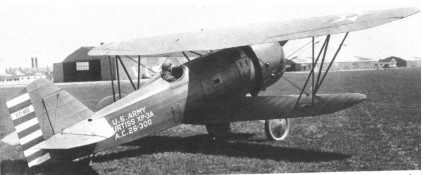
The first radial-engined Hawk resulted from the mating of a P-1A airframe with a 390hp Curtiss R-1454 engine as the XP-3 in October 1926. The failure of the Curtiss engine led to its substitution by a 410hp Pratt & Whitney R-1340-9, with which it was tested in April 1928 as the XP-3A. Five production examples had been ordered in December 1927 as P-3As, deliveries commencing in September 1928.

The P-3A was powered by the R-1340-3 version of the Wasp, also rated at 410hp, and the first production example was flown with various experimental cowlings as the second XP-3A. Both this and the original XP-3A were eventually to become XP-21s, the second XP-3A undergoing further conversion (after testing as an XP-21) to P-1F standards. Armament of the P-3A comprised two 7.62mm machine guns and this type was fitted with a Townend ring after service entry. Provision existed for the carriage of bombs beneath the fuselage.

P-3A
Engine: Pratt & Whitney R-1340-3 Wasp, 410hp
Take-off weight: 1265 kg / 2789 lb
Empty weight: 887 kg / 1956 lb
Wingspan: 9.63 m / 31 ft 7 in
Length: 6.83 m / 22 ft 5 in
Height: 2.67 m / 8 ft 9 in
Wing area: 23.41 sq.m / 251.98 sq ft
Max. speed: 246 km/h / 153 mph
Armament: two 7.62mm machine guns

Curtiss XPW-8B / F6C / P-1 Hawk / P-2 Hawk / AT-4 / AT-5

Curtiss P1

With its origins in the Model L-18-1 (which stemmed the PW-8 US Army production fighters), the Curtiss model 34 / XPW-8A became the P-1 prototype. A biplane single-engine, single-seat fighter with fixed landing gears, tapered-wings, wheel brakes and more powerful engines, produced a large number of variants for the Curtiss company.

Armed with an array of .303 caliber machine guns, the aircraft had a flight ceiling of over 20,000 feet and speeds in excess of 150 miles per hour.

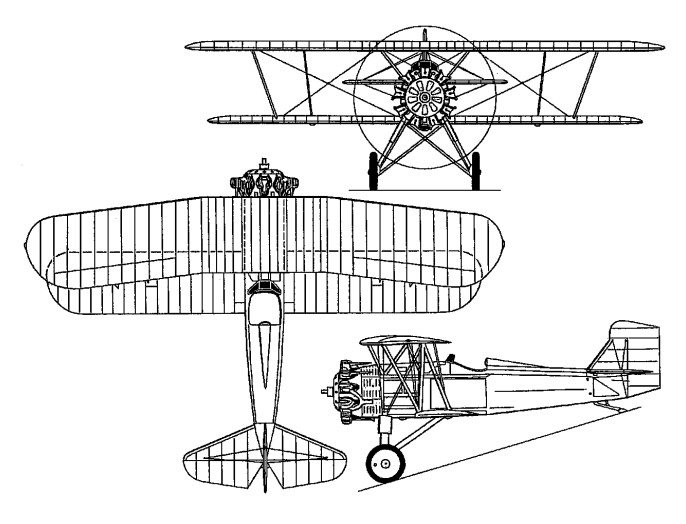
On 7 March 1925, Curtiss was awarded a contract for 15 production examples of the model 34A XPW-8B as the P-1, this being the first fighter to which the company assigned the name Hawk. Externally similar to the XPW-8B, the P-1 was of mixed construction with wooden wings and steel-tube fuselage with fabric skinning, and was powered by a 435hp Curtiss V-1150-1 12-cylinder water-cooled engine. The first aircraft became the XP-17, and the final five aircraft were completed as model 34B P-2s, three of these later being converted to P-1A standards.

P-1A 1931

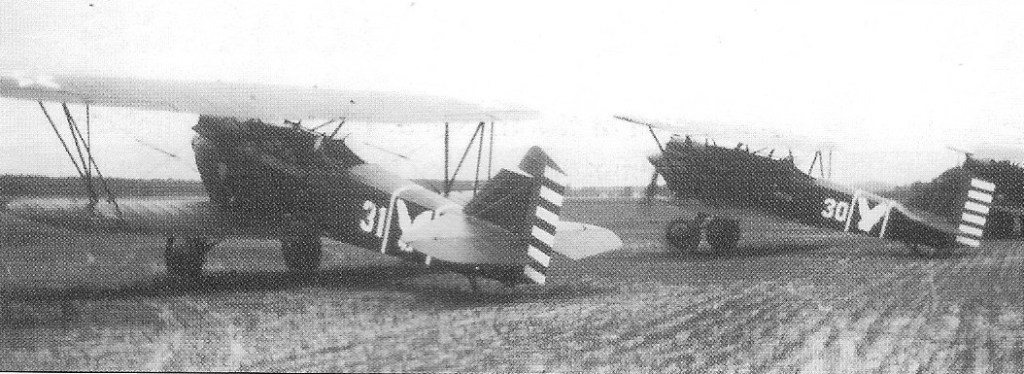
They were delivered to the 27th and 94th Pursuit Squadrons from August 1925, with 435 hp Curtiss V 1150 1 12 cylinder liquid cooled V type engines.

Curtiss P-1A 1926

Follow-on contracts were placed on 9 September 1925 for Model 34G 25 P-1As (which had a 7.62cm longer fuselage), revised engine cowling and slightly heavier all up weight. They were delivered from April 1926, they served with the 17th, 27th and 94th Pursuit Squadrons. One each was used for XP-6A, XAT-4A, XP-3A, AND XP-22.

Next production version was the P 1B (again an order for 25, in August 1926), powered by a 435 hp V 1150 3 engine, which had larger main wheels and a modified radiator.

The 33 P-1Cs, ordered in October 1928 and delivered by April 1929, also utilized the V 1150-3 engine and were fitted with wheel brakes.

All these sub-types carried an armament of two 7.62mm guns.

In the meantime, the USAAC had ordered advanced trainers utilising the same airframe. These comprising 35 AT-4s (180hp Wright V-720), five AT-5s and 31 AT-5As (220hp Wright R-790), and, in 1929, these were re-engined with the V-1150-3, all 35 AT-4s becoming P-1Ds and four AT-5s and 24 AT-5As becoming P-1Es and P-1Fs respectively. One other P 1F resulted from reconverting the XP 21, which had previously been a P 3A.
These conversions were essentially similar to the P-1B apart from having only one gun. Four P-1s were supplied to Bolivia, one P-1A went to Japan, and eight P-1As and eight P-1Bs were supplied to Chile.

The P-2s (model 34B) were the last five machines from the original P-1 contract, but powered by 505 hp V 1400 engines; three of these P 2s were converted later to P-1A standard. One became the XP-6.

F6C

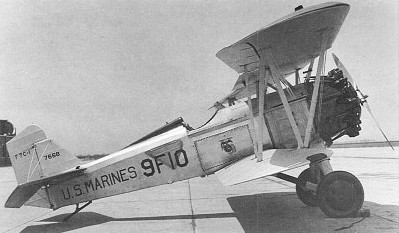
The Curtiss F6C Hawk series of aircraft was the US Navy/Marine model of the US Army’s P-1 Hawk series. The US Navy began fielding the P-1 it as a carrier-based aircraft while the US Marines operated it as a land-based fighter.

F6C

In March 1925, the US Navy ordered nine P-1s with provision for float operation as (Curtiss Model 34) F6Cs (the F5C designation was not assigned, to avoid confusion with the F-5 flying boat). Five of these were delivered as Model 34C F6C-1s with provision for float undercarriage, but no arrester gear, and four (with arrester hooks) as Model 34D F6C-2s. These had 400 hp Curtiss V¬1150 similar power plant to the USAAC’s P-1 and the standard two 0.30 in (7.62 mm) gun armament. Two of the F6C-1s were later converted to -2 standard. The last four became F6C-2s. In 1927, 35 additional aircraft were ordered, these using the P-1A airframe and being designated F6C-3. Two F6C-1s were converted to -3 standard and one F6C-3 was fitted with a Pratt & Whitney R-1340 radial as the XF6C-3.

A batch of 35 incorporating these improvements was ordered in 1927; these, plus two others converted from F6C 1s, entered with the USN and USMC in 1928 as the Model 34E F6C 3. One became the F6C-6 racer and later became the XF6C-6 monoplane. A twin float F6C 3 won the Curtiss Marine Trophy race in 1930 at a speed of 264.1 km/h (164.1 mph).

Two F6C 2s (the balance of the F6C 1 contract), fitted with arrester hooks and strengthened landing gear, were used for deck trials.

The US Navy had decided, by 1927, to standardise on air-cooled radial engines, which were more easily maintained at sea than liquid-cooled inline engines. After trials with a Pratt & Whitney R-1340- engined F6C-3, a production contract was placed for 31 fighters powered by this 410hp radial as F6C-4s (model 34H). The first of these aircraft, which was retained for test purposes was assigned the temporary designation XF6C-7, and deliveries commenced in February 1927. Possessing the same twin-gun armament as its predecessors, the F6C-4 proved more manoeuvrable than the V-1150- powered models, but was becoming obsolescent by the time that it was delivered. The F6C-4 were issued to one squadron only (in the USS Langley) for operational use until 1930; others were put into service as advanced trainers.

A total of 75 of the F6C series Hawks were produced for the US Navy.
Experimental F6C models were:
XF6C-5 (first F6C-1 fitted with a 525hp Pratt & Whitney R-1690 Hornet)
XF6C-6 (an F6C-3 converted to parasol monoplane configuration for the 1930 Thompson Trophy race)
F6C-6 (an F6C-3 modified for 1929 air races and returned to -3 standard)
XF6C-7 (an F6C-4 with an inverted air-cooled Ranger SGV-770 engine).

Curtiss P-1
Engine: 435hp Curtiss V-1150-1 12-cylinder water-cooled

Curtiss P-1B
Take-off weight: 1 330 kg
Empty weight: 955 kg / 2105 lb
Wingspan: 9.63 m / 31 ft 7 in
Length: 6.91 m / 22 ft 8 in
Height: 2.72 m / 8 ft 11 in
Wing area: 23.23 sq.m / 250.05 sq ft
Range: 966 km / 600 miles
Maximum speed: 253 km/h (157 mph).

Curtiss P-2
Engine: 505 hp V 1400 engines

Curtiss F6C-3 Hawk
Engine: 1 x Curtiss D.12 Conquerer water-cooled inline, 400hp.
Length: 22.83ft (6.96m)
Wingspan: 31.59ft (9.63m)
Wing area: 23.41 sq.m /251.98 sq ft
Height: 3.25 m / 10 ft 8 in
Maximum Speed: 154mph (248kmh; 134kts)
Maximum Range: 351miles (565km)
Service Ceiling: 20,299ft (6,187m; 3.8miles)
Armament: 2 x .303 inch machine guns
Accommodation: 1
Empty Weight: 2,161lbs (980kg)
Maximum Take-Off Weight: 3,349lbs (1,519kg)

Curtiss F6C-4
Span: 9.60 m (31 ft 6 in)
Length: 6.86 m (22 ft 6 in)
Gross weight: 1263 kg (2784 lb)
Maximum speed: 249 km/h (155 mph).

Curtiss F6C-4
Curtiss P-1 Hawk

Curtiss 60 / A-12

Curtiss won a contract for five service test YA-8 (Model 59A) aircraft on 29 September 1931, and one YA-8 was reworked as the experimental YA-10 (Model 59B) with a 466kW radial engine.
The liquid-cooled Curtiss “Conqueror” engine was removed and replaced with a Pratt & Whitney air-cooled radial engine. The conversion was completed by September 1932 with comparable performance statistics to the original A-8 platform, and the aircraft was re-designated YA-10 because of the engine change.

All remaining A-8B’s on order (some 46 total) with their Conqueror liquid-cooled engines were now changed to include the replacement Pratt & Whitney radial powerplant. The new production designation of A-12 (Model 60) was then assigned to mark these models. Though often designated with the “Shrike” name, the aircraft was formally known simply as the “A-12” in USAAC nomenclature. Shrike was an official Curtiss company name assigned to its A-12 product.

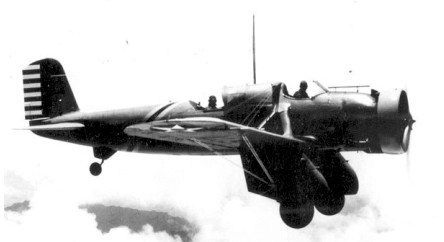
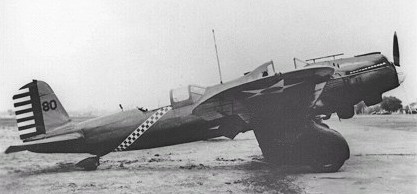
First appearing in 1933, these aircraft retained the open pilot’s cockpit with faired headrest which had been introduced on the A-8 production batch, and carried the same machine-gun armament and bombload. In an attempt to improve co-operation between pilot and observer a major modification had been introduced, the rear cockpit being moved forward with its glazed covering forming a continuation of the fuselage decking immediately behind the pilot’s cockpit.

An antenna structure rose high atop the fuselage, above and between the two cockpit positions. The pilot sat behind angled windscreens, complete a forward instrument panel and open sides revealing wiring, cables and piping. The fuselage itself was of tubular design and was made up of all-metal construction. With a fixed undercarriage with faired-over main landing gears – one positioned under each wing – and a conventional tail wheel, the wings were low-mounted monoplane assemblies with noticeable cable bracing and struts with slight dihedral. Wings were also of all-metal construction though the ailerons were covered over in fabric. The Wright R-1820-21 Cyclone radial piston engine of 690 horsepower powered a three-bladed propeller. Tail surfaces were also of all-metal construction but the rudder and elevator components were covered over in fabric.

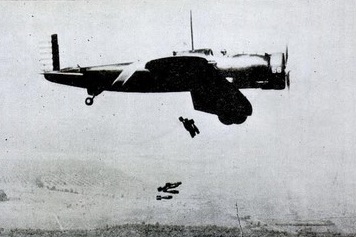
Standard armament for the A-12 Shrike included a battery of 4 x .30 caliber machine guns in a fixed forward-firing set up with two guns fitted into each landing gear spat (600 rounds of .30 caliber ammunition allotted to each gun). A C-4 gunsight was afforded the pilot. The rear gunner had access to a .30 caliber machine gun on a flexible mounting to protect the aircraft’s “six”. Aside from the machine gun armament, the A-12 was cleared for light bombing duty and could field up to four 122lb conventional drop bombs under the wings. In place of these munitions, the Shrike could also utilize up to 10 x 30lb fragmentation bombs or flares for marking targets at night. A 52-gallon external fuel tank could be used in place of the bombs and could be jettisoned when empty. Interestingly enough, the main fuel tank aboard the A-12’s fuselage could also be jettisoned via a hand crank.

The A-12 was delivered to the USAAC in 1933. Initial examples became a single production model and two service test aircraft. A-12’s eventually made up the mount of choice for the 3rd Attack Group and 37th Attack Squadron of the 8th Pursuit Group. The aircraft was eventually shipped off the mainland and ended up in Hawaii via Wheeler Field and then later at Hickam Field. Incidentally, Hickam Field itself was named after Lieutenant Horace Meek Hickam whom died while attempting to land his A-12 Shrike at Fort Crockett in Texas.

Operationally, the A-12 was never used in anger by American forces. Though nine A-12s still remained in service at the attack on Pearl Harbor, the aircraft never went airborne in defense of the island and the type was dropped from service soon afterwards. A-12’s maintained a limited capacity as reconnaissance platforms as well and could be modified for the role through the use of onboard cameras.

The Chinese nationalist government bought at least 20 of an export version of the A-12 in 1936. These A-12’s sported a more powerful version of the air-cooled engine in the Wright SR-1820F-52 of 775 horsepower supplying a better maximum speed of 182 miles-per-hour. These saw some action against the Japanese in 1937-8.

Some A-12’s underwent further periods of notable development. One such conversion involved the addition of ski-like implements in place of the landing gear fairings to make the A-12 more “bad-weather friendly”. Not only did this allow the Shrike to operate from icy or snowbound airstrips, it provided for viable landings and take-off operations from dirt, grass and paved-over runways as well. Another such development involved adding inflatable air bladders to the sides of the fuselage. Should the crew and aircraft be forced into an emergency landing over water, the air bladders could be filled to allow the A-12 to stay above water until help arrived. These implements were never put into production A-12s.

Curtiss A-12 (Shrike)
Engines: 1 x Wright R-1820-21 Cyclone radial, 690 hp (515-kW)
Length: 32 ft 3 in (9.83m)
Wing span: 44 ft 0 in (13.41m)
Wing area 284.0 sq ft (26.38 sq.m)
Height: 9 ft 4 in (2.84m)
Maximum Speed: 177mph (285kmh; 154kts) at sea level
Maximum Range: 521miles (838km)
Service Ceiling: 15,157ft (4,620m)
Iinitial climb rate: 1170 ft (357 m) per minute
Armament:
4 x .30 caliber machine guns in fixed-forward positions.
1 x .30 caliber machine gun in rear flexible mounting.
Optional:
4 x 122lb bombs
10 x 30lb fragmentation bombs
1 x 52 gallon external fuel droptank
Accommodation: 2
Hardpoints: 4
Empty Weight: 3,898lbs (1,768kg)
Maximum Take-Off Weight: 5,756lbs (2,611kg)

Curtiss 59B / YA-10

Curtiss won a contract for five service test YA-8 (Model 59A) aircraft on 29 September 1931, and one YA-8 was reworked as the experimental YA-10 (Model 59B) with a 466kW radial engine.
The liquid-cooled Curtiss “Conqueror” engine was removed and replaced with a Pratt & Whitney air-cooled radial engine. The conversion was completed by September 1932 and the aircraft was re-designated YA-10 because of the engine change.
The performance of the YA-10 was about the same as the A-8, but the air cooled radial engine was favoured over a liquid cooled engine. After testing was complete, the Army changed the order for 46 A-8Bs (with geared “Conqueror” engines) to A-12s. The Curtiss A-12 was equipped with a Pratt & Whitney radial engine and was essentially a production version of the YA-10.
The YA-10 remained in service through the late 1930s. After service testing, the aircraft was assigned to the 3rd Attack Group for operational service. In the summer of 1934, the YA-10 was assigned to the Command and General Staff School. It was scrapped in early 1939.

Engine: 1 x 470kW Pratt & Whitney R-1690-9 (R-1690D) Hornet radial
Take-off weight: 2783 kg / 6135 lb
Wingspan: 13.5 m / 44 ft 3 in
Length: 9.9 m / 32 ft 6 in
Height: 2.75 m / 9 ft 0 in
Max. speed: 280 km/h / 174 mph
Cruise speed: 238 km/h / 148 mph
Ceiling: 4570 m / 15000 ft
Range: 800 km / 497 miles

Curtiss 59A / A-8

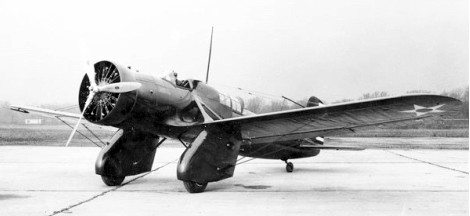
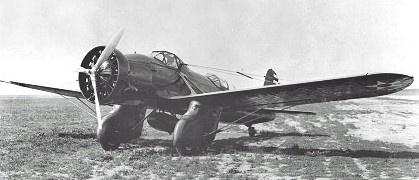
To find a successor to its attack biplanes, the US Army Air Corps issued a 1929 requirement for a high-speed monoplane, and Curtiss responded with its Model 59 design that first flew in proto¬type form during June 1931 with the 600-hp (447-kW) Curtiss V-1570-C inline engine with a radiator beneath the nose, slightly forward of the wing leading edge.
The first Curtiss all-metal low-wing monoplane, with such advanced features as automatic leading-edge slots and trailing-edge flaps. The wing was strut-and wire-braced, and the main landing gear comprised two fully-enclosed trousered units, these fairings housing also two 7.62mm machine-guns. Pilot and observer-gunner were accommodated in widely separated cockpits, the former under a fully enclosed canopy and the latter protected by an extended windscreen. Power was provided by a 447kW Curtiss V-1570C inline engine.

These entered service with the 3rd Attack Group in April 1932 as the US Army’s first monoplanes. Another 46 Shrikes were ordered with the designa¬tion A-8B, but because of maintenance difficulties with the A-8s’ inline engines, the aircraft were recast as radial-engined A-12s.
Curtiss won a contract for five service test YA-8 (Model 59A) aircraft on 29 September 1931, and these were followed by eight Y1A-8 machines in 1932. Both YA-8s and Y1A-8s had open pilot’s cockpits. All were later redesignated A-8 except for one YA-8 which was reworked as the experimental YA-10 (Model 59B) with a 466kW radial engine and one Y1A-8 which became the Y1A-8A with a 503kW V-1570-57 geared engine and a redesigned wing.
The A-8s, powered by Prestone-cooled V-1570-31 engines each of 447kW, went into service with the 3rd Attack Group at Fort Crockett, Texas in April 1932. That eight months before the Boeing P-26A Peashooter.
The US Army had ordered a further 46 Shrikes under the designation A-8B, but maintenance problems with the liquid-cooled engines of the A-8s led to the new aircraft being powered by Wright R-1820-21 radial air-cooled engines of 500kW, resulting in the new designation A-12 (Model 60).
After long service with the US Army’s attack groups the Shrikes were relegated to second-line units in 1939, but nine A-12s still remained in service in Hawaii when Pearl Harbor was attacked in December 1941.