The original S.24/37 Barracuda was designed around the Rolls-Royce Exe 24-cylinder X-type engine but early in the construction stage the power plant was changed to the Rolls-Royce Merlin 30. This Merlin-engined prototype first flew on 7 December 1940. The first prototype Barracuda had an unbraced tailplane in line with the top of the fuselage but during the early trials it was found that when the flaps were in the diving position the disturbed air caused serious tail flutter. To overcome this the tailplane of the second prototype was raised 1.22m to clear the wake from the flaps and also to clear the folding wings. The first trials with the repositioned tail unit were made in July 1941 and eliminated the problem. The Barracuda was first used operationally in September 1941 in raids from HMS Victorious on Kirkenes in northern Norway and on Petsamo in Finland. The first monoplane torpedo bomber to go into service with the FAA. In 1942 Barracudas took part in sweeps over French ports and in the invasion of Madagascar. The first major action in which Barracuda squadrons took part was the successful bombing attack on the German battleship Tirpitz in Alten Fiord, north Norway on 3 April 1944. It was in action against the Japanese for the first time in an attack on enemy installations at Sabang, on the island of Sumatra on 19 April 1944. Production of the Barracuda ended in 1946, by which time 2582 had been built: as the Barracuda I with a Merlin 30 engine; Barracuda II with a 1,222kW Merlin 32 engine; Barracuda III, similar to the Mk II but with ASV 10 radar equipment in a bulge under the fuselage; and Barracuda V (first flown in June 1945) with a Rolls-Royce Griffon VII engine driving a Rotol four-bladed propeller, increased wing span, larger rudder and fin, generally strengthened structure, no rear armament but one 12.7mm forward-firing machine-gun.
Fairey Barracuda Mk II Length: 39 ft 9 in / 12.12 m Height: 15 ft 1 in / 4.6 m Wingspan : 49 ft 2 in / 14.99 m Wing area : 413.983 sqft / 38.46 sq.m Max take off weight : 14253.1 lb / 6464.0 kg Weight empty : 10819.9 lb / 4907.0 kg Max. speed : 208 kts / 386 km/h Cruising speed : 178 kts / 330 km/h Service ceiling : 16601 ft / 5060 m Wing load : 34.44 lbs/sq.ft / 168.0 kg/sq.m Maximum range : 999 nm / 1851 km Engine : Rolls Royce Merlin 32, 1618 hp / 1223kW Crew : 3 Armament : 2x cal.303 MG (7,7mm), Torpedo 735kg / 726kg Bomb
In September 1934 Fairey produced a brochure which described and illustrated the Fairey P27/32 as a universal design, being able to take on a number of different shapes each suited to a particular operational role.
Their first venture into the all-metal monoplane field, in which light-alloy stressed-skin construction was employed, the oval-section monocoque portion was of light-alloy hoop frames, pressed out in single pieces, each being notched to receive four special section longerons and the pre-formed skin plating. The skin plating was cut to form strips of clinker construction with the upper edge rolled to form an integral U-section stringer. After the first strip of fuselage skin had been attached to the frames, the next strip was applied with a small overlap on the previous skin, along which a closing rivet line was centred. This “stringerless” method of construction thus saved the weight of numerous long rivet lines which would have attached the separate stringers had they been employed.
The four TT-sectioned longerons, arranged as upper and lower pairs, ran three-quarters the length of the fuselage, with the inner flanges of each longeron connecting to each frame by of small brackets. A butted flat skin joint was arranged above each longeron, closure being made by a double rivet line through each skin and the outer flange on each side of the longeron.
The fuselage forward of the pilot’s bulkhead comprised the steel tube structure supporting the pilot’s cockpit flooring and the fireproof bulkhead. Light alloy subframes and sections formed the fuselage profile and sections to which fixed and detachable light-alloy panels were fitted. The power plant picked up with fittings on the firewall together with a light tubular structure which carried the detachable cowling panels.
The small centre section to the wing comprised two short lengths of spar, built up from light-alloy box sections into a girder structure, joining four heavy wing ribs. The spaces formed by the two pairs of ribs at the outboard ends each housed a large fuel tank, whilst the larger space between the inner ribs formed the bomb aimer’s compartment which was entered from the cockpit interior by means of a large aperture in the top skinning of the centre section.
Battle production in Fairey’s Stockport factory
The outer wing panels were of two-spar construction, the inner ends of girder form, changing in section to flanged beams on the outboard sections. Wing ribs containing large circular flanged lightening holes and further strengthened by deep edge flanges were pressed from light-alloy and were attached to the spars by means of angle brackets. Notched in a similar way to the fuselage frames, the wing ribs supported continuous Z section spanwise stringers, this time separate from the wing skinning. The lightalloy wing skin was applied in long flat strips, overlapped as on the fuselage skins, with single rows of rivets through the overlap and the Z stringer flange below. The underside skinning was fitted with screwed panels running spanwise, adjacent to the flying control runs and bomb release gear.
All of the movable control surfaces were of metal framing with fabric covering. The split trailing edge flaps were of metal throughout and were interconnected at their inner ends via universal joints. A simple hydraulic system was provided which powered the flaps, main undercarriage legs, and the bomb mounting crutches. The latter permitted the bombs to be lowered clear of the wings during dive bombing. The undercarriage jack bodies were fixed attachments, whilst the ram was free to run within guides to which the leg radius rod was attached. From the fully retracted position, the first half-inch of movement of the ram unlocked the holding-up latch allowing the leg to drop down. When fully extended, self-locking was provided by the angular position of the radius rod. The separate cockpit hoodings as on the mock-up were dispensed with on the prototype P27/32, and a single long glazed hooding was fitted which joined the two positions. Although this subsequently was found to have spoiled the pilot’s rearward view, it did much to improve the air flow and lessen wind noise around the cockpit area as discovered on wind tunnel model tests. However before the prototype machine had reached the flying stage, a contract was received for an updated airframe with the specific requirement that a third crew member must be carried so that the rear gun could be manned at all times. This was regarded with complete horror at Hayes, and brought forth further demands from C. R. Fairey that the single-engined design be replaced with the twin-engined design. In subsequent meetings it soon became clear that a production contract was being offered provided a minimum performance could be guaranteed by the company. When Mr Fairey asked what that would be in terms of speed, the answer was not less than 195mph at 15,000 feet with full load and a crew of three. Because Mr Fairey was expecting nothing less than 270mph at that altitude with a crew of two, the guarantee was given and the production contract to Specification P23/35 was issued for no less than 155 machines. However further slippage in the delivery date of the first Merlin ‘C’ engine to Hayes, coupled with less satisfactory power output figures, did much to cause frustration in the experimental flight shed at Heathrow and greater concern at the Hayes Design Office end that the performance of the P27/32 would not reach the expected 270mph figure. In the meantime everything possible was being done to make the prototype as aerodynamically clean as possible and a further weight saving campaign was initiated. The prototype made its first flight from the Great West Aerodrome, in the hands of Flt Lt Chris Staniland, on March 10, 1936. Then fitted with a fixed-pitch three-bladed Fairey metal propeller it soon brought praise from an enthusiastic Staniland, although he was later to report that during high speed flight with the hood open the entire canopy was in danger of being ripped off. This matter was put to right when the final mock-up of the rear gun installation was approved, which enabled the final form of the hooding to be settled. The single Vickers ‘K’ gun was mounted on the familiar Fairey high-speed gun mounting, only this time with the difference that the mounting could be collapsed into a rotating cone which enabled the retracted gun to be rotated beneath the fuselage skin leaving a completely unbroken and smooth line to the rear fuselage. When finally flying in this form, and with the de Havilland two-position, three-bladed propeller, and the new letter-box exhaust manifolds as fitted to the RollsRoyce F25 engine, the Battle probably reached the peak of its perfection. Shallow dive bombing with the pilot aiming and releasing the bomb load was thought to be the P27/32’s most suited role, and was one it was thought possible to operate with a two-man crew; but at this stage the fate of the machine was more or less sealed as an underpowered, three-seat, light, day reconnaissance/bomber. On paper at any rate the Martlesham Heath trials showed that even under these limitations the Battle could almost make 260mph and could nearly cover 1,100 miles when flying at 200mph, and during the late summer of 1937 the Hayes Design Office concentrated on a weight saving version under the official classification of, the Battle Mk II in an effort to make the best of what had been conditioned by the Air Ministry. The first production Battle Mk I had flown from Ringway at some time during April 1937 and first arrived at the Great West Aerodrome on May 10, 1937, and subsequently went to Martlesham Heath on July 6 for its acceptance trials. Here some grim revelations were recorded, for at the new increased all-up weight the Battle Mk I K7558 could only reach 238mph at 15,000 feet. On this basis comparative figures for the light, long-range Mk II project appeared more promising indicating a restoration of the maximum speed to 255mph at 15,000 feet, with a range in excess of 1,400 miles. But in August 1937 all such hopes of performance improvement came to a halt.
No.88 Sqn RAF
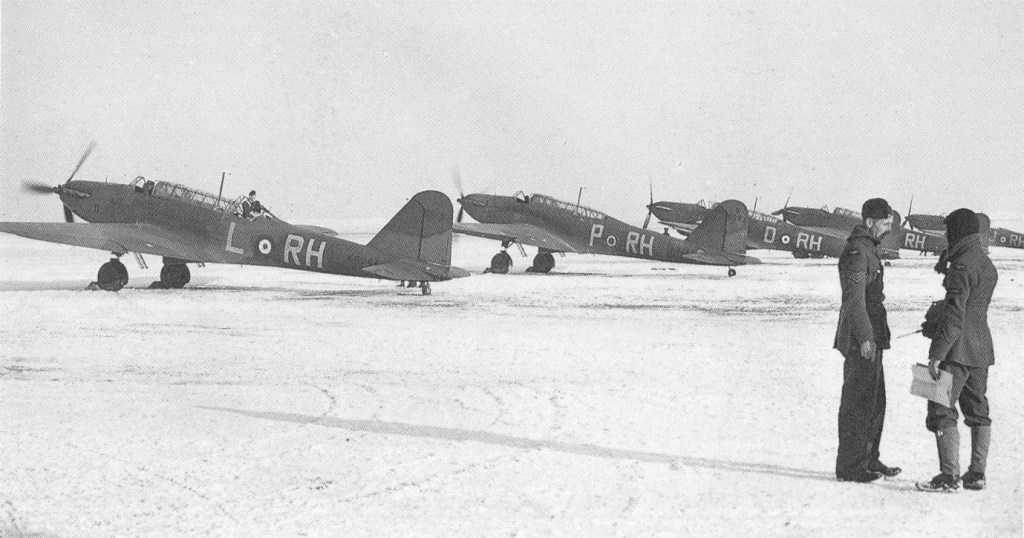
Already hundreds of Battles were beginning to take shape under the Shadow Factory Scheme and interest from Dominion and several other governments was strong. Starting in late 1935 with the company’s desire to fit a super power unit in place of the thwarted P16, designs soon evolved using first the Vulture and then the P24. When the virtual failure of the Vulture led to its replacement by the Exe and the Sabre, it was soon established that the Battle was capable of easily being converted to any suitable power unit, and the idea of a flying engine test bed was soon established. In response to demands for dual-control trainers and bombing and gunnery training conversions, detailed project drawings soon established that the changes could easily be effected at minimum cost in time, money, materials and manhours. When these facts were realised and that ex operational airframes could be retrospectively converted, the Battle appeared to have the chance of an extremely long and active life, thus in a short time hundreds more Battle orders were rushed through. Fairey production and technical resources were stretched to the limit with these undertakings in spite of having the separate Stockport factories to undertake most of the development work. The 10 squadrons of Battle bombers of the Advanced Air Striking Force found themselves in France on September 1, 1939. With no visible signs of war taking place and prevented from aggressive action by the British Government ruling that bombing could not be directed against land targets, the Battles were employed on high altitude – photo-reconnaissance work across the German frontier, and later still to leaflet dropping sorties. These missions were undertaken in daylight without fighter protection and losses were severe, but these actions were nothing in comparison with the odds faced some six hours after the German attack had been launched on May 10, 1940, when the remains of the Battle squadrons were released to carry out their first bombing attacks on the enemy. The rear gunner of a Battle of No 88 Squadron Advanced Air Striking Force shot down a Messerschmitt Bf 109E over France on 20 September 1939: the first RAF aircraft to shoot down a German aircraft during World War II. All told, the Air Ministry ordered some 2,419 Battles for the RAF, Dominion and foreign air forces. Of this total only 2,185 were built (1 by Hayes; 1,155 by Stockport and 1,029 by Austin). Sixteen were ordered by Belgium, which were built separately by Stockport, thus the total number of Battles constructed was 2,201.
Battle T66
The type also served with the air forces of Australia, South Africa and Turkey.
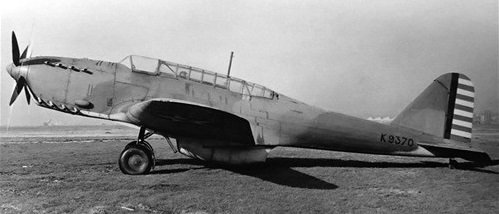
One Battle, serial K9370, was fitted with the Fairey P.24 engine and Fairey electrically operated contra-rotating constant-speed propellers – the first propellers of this type to be flight tested in the UK. First flying on 30 June 1939, to 5 December 1941 the aircraft accumulated about 86 flying hours at the hands of Flt Lieut Christopher Staniland, Mr F. H. Dixon (the company’s subsequent chief test pilot) and a number of RAF pilots.
Fairey Battle with Fairy P24 Monarch engine and coaxial propellers
It was then shipped to the USA.
Fairey Battle with Fairy P24 Monarch engine and coaxial propellers
Prototype Battle Mk I Engine: Rolls-Royce Merlin F, 12-cylinder 60 deg Vee, liquid cooled, 890bhp for take-off, 1,035bhp at 12,000ft. Wing span 54ft. Length 42ft 7in (tail up). Height 15ft (tail up). Root chord 11ft 4 in. Tip chord 5ft. Propeller dia: 11 ft 6in (or 12ft). Wing area: 422 sq ft. Track 9ft 8in. Empty wt: 6,647 lb. Loaded wt: 10,792 lb. Wing loading: 25.6 lb/sq ft. Power loading: 10.4 lb/hp (take-off), Power loading: 10.9 lb/hp (supercharged). Max speed, level: at SL: 210mph Max speed, level: at 5,000ft: 226mph Max speed, level: at 10,000ft: 240mph Max speed, level: at 15,000ft: 257mph Max speed, level: at 20,000ft: 245mph Max speed, level: at 25,000ft: 215mph. Cruise at 16,000ft: 200mph. Landing speed: SL 60mph. Climb to 5,000ft: 4 min 6 sec Climb to to 10,000ft: 8min 24sec Climb to to 15,000ft: 13min 36sec Range at 16,000ft at 200mph: 1,100 mile Range at 16,000ft at 257mph: 650 mile.
Fairey Battle Mk.I Engine : Rolls Royce Merlin Mk.I, 1016 hp Length: 52.067 ft / 15.87 m Height: 15.486 ft / 4.72 m Wingspan : 54.003 ft / 16.46 m Max take off weight : 10793.5 lb / 4895.0 kg Max. speed : 210 kts / 388 km/h Service ceiling : 23491 ft / 7160 m Range : 913 nm / 1690 km Crew : 3 Armament : 2 MG 455 kg Bomb
Mk.III Engine: Rolls-Royce Merlin III, 1440 hp / 755kW Wingspan: 16.5 m / 54 ft 2 in Length: 15.9 m / 52 ft 2 in Height: 4.7 m / 15 ft 5 in Wing area: 39.2 sq.m / 421.94 sq ft Max take-off weight: 4900 kg / 10803 lb Empty weight: 3000 kg / 6614 lb Max speed: 257 mph @ 15,000 ft Cruise speed: 338 km/h / 210 mph Ceiling: 7000 m / 22950 ft Range w/max.fuel: 1600 km / 994 miles Armament: 2 x .303 machine-guns, 500kg of bombs Crew: 3
In 1933 the Fairey Aviation Company privately financed and built the TSR.1, a biplane torpedo spotter reconnaissance aircraft, from which the Swordfish evolved. Although the first TSR.I crashed, it had undergone sufficient tests to prove the feasibility of the design, and Fairey built the TSR.II, a slightly larger aircraft. It was designed by Marcelle Lobelle to meet the Naval Spec S.15/33.
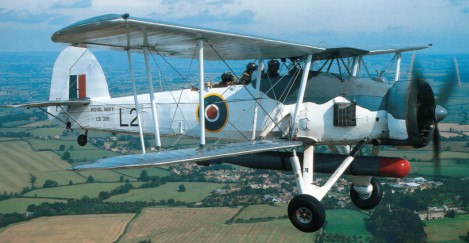
First flying from Harmondsworth on 17 April 1934, and after numerous modifications a specification (S.38/34) was written around the aircraft. Official testing proved it to be a stable and reliable aircraft. The fuselage, 36ft 4in long, was rectangular in section and featured a bolted steel tube frame. The aft portion was fabric covered, but detachable metal panels, for easy access, were fitted from the cockpit forward. The crew consisted of a pilot, navigator and bomb-aimer. The equal span biplane wings were of fabric covered metal construction, and the upper wing centre section was attached to the fuselage by a pyramid structure and carried the hoisting sling. The lower wings were braced to the fuselage by an inverted V strut. The wing cellules could be manually folded for compact storage. The leading edge of the upper wing was fitted with Handley Page slots, and ailerons were fitted to both upper and lower wings. The undercarriage used medium pressure tyres and pneumatic brakes. Each of the main units consisted of an oleo shock absorber leg connected to the lower centre section front spar, and two inner struts hinged to the fuselage. The design was strengthened to withstand catapult launches and arrester hook landings. Early production Swordfish, built to Air Ministry Specification S.33/34, were powered by an air cooled 690 hp Bristol Pegasus IIIM3 radial engine. Blessed with superb handling characteristics, the Swordfish performed extremely well on carrier borne operations, being able to operate from pitching decks in stormy conditions. It had a range of 546 miles and a maximum speed of 138 mph at 5,000ft.
The propeller was a three-blade Fairey-Reed metal.
The Swordfish carried 155 Imp.Gal / 705 lt of fuel in its min tank and 12.5 Imp.Gal / 57 lt in a gravity tank, both behind the Pegasus IIIM3 or Mk.30 engine.
The first batch of production Fairey Swordfish rolled off the assembly line during December 1935, and were operating with the Royal Navy’s Fleet Air Arm (FAA) within two months. By 1939, on the eve of the Second World War, there were 13 operational squadrons of the type. A total of 689 aircraft had been delivered or were on order. The Swordfish Mk I’s defensive armament comprised a fixed forward firing synchronised Vickers machine gun and a movable Vickers K gun on a Fairey high speed mounting in the rear cockpit. The offensive load could be a single 18in 1,610 lb torpedo, or one 1,500 lb mine, or 1,500 lb of bombs. The Mk II, which appeared in 1943, had a strengthened lower wing capable of carrying eight 601b rocket projectiles. The final production version, the Mk III, had an ASV Mk X radar scanner in a radome under the fuselage. In Canada, canopy equipped Mk.IIs and IIIs were designated Mk IVs. The No 1 Naval Air Gunners School at Yarmouth, Nova Scotia, operated 105 Swordfish. Considered obsolete at the beginning of the war, the Swordfish outlived its successors and survived the war with an impressive battle record; the type is credited with sinking a greater tonnage of Axis shipping than any other torpedo bomber.
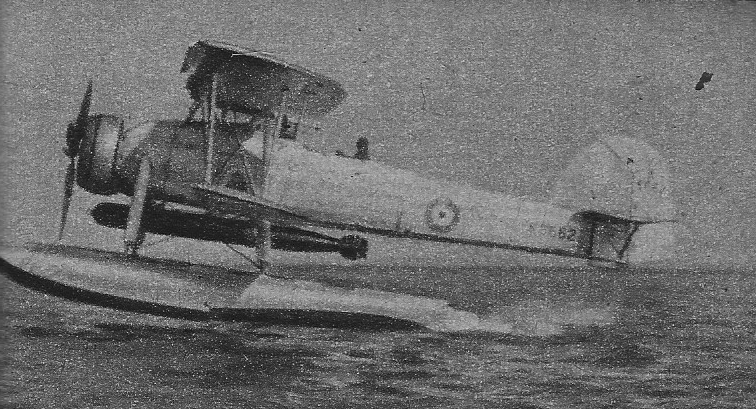
The Swordfish first made big news in the seaplane form, when a Swordfish catapulted from HMS Warspite not only spotted for the British naval force during the battle in Ofot Fiord, Norway, on April 13, 1940, but itself bombed and sank a submarine and fin¬ished off an enemy destroyer that had been dam¬aged by the ships. Seven months later, Swordfish from the carrier Illustrious achieved one of the most spectacular successes in naval air warfare. In two waves or twelve and nine aircraft, they dived into Taranto Harbour under cover of darkness and launched their bombs and torpedoes to such effect that three Italian battleships, a cruiser and two destroyers were seriously damaged, two naval auxiliaries sunk and shore installations heavily damaged all for a loss of two Swordfish. Another major success was achieved on May 26, 1941, when Swordfish of 818 Squadron so crippled the battleship Bismarck that the Navy was able to intercept and sink it. The well remembered attack on the Scharnhorst and Gneisenau in the Channel cost the lives of 13 of the 18 men who took part. Outliving its intended replacements, the Fairey Albacore and Barracuda, the Swordfish served until the war’s end. Production ended on 18 August 1944, by which time a total of 2,396 Swordfish were built.
Engine: Bristol Pegasus, 690 hp Wingspan: 45 ft 6 in Length: 36 ft 4 in Takeoff weight: 9250 lb Max speed: 139 mph Seats: 2-3
Swordfish Mk II Engine: 1 x Bristol Pegasus XXX, 559kW / 740 hp Max take-off weight: 3406 kg / 7509 lb Empty weight: 2132 kg / 4700 lb Wing loading: 12.3 lb/sq.ft / 60.0 kg/sq.m Wingspan: 13.87 m / 45 ft 6 in Length: 10.87 m / 35 ft 8 in Height: 3.76 m / 12 ft 4 in Wing area: 56.39 sq.m / 606.98 sq ft Max. speed: 120 kt / 222 km/h / 138 mph Cruise speed: 104 kt / 193 km/h / 120 mph Service ceiling: 3260 m / 10700 ft Range: 1658 km / 1030 miles Armament: 2 x 7.7mm machine-guns, 1 x 730kg torpedo or 680kg of bombs Crew: 2-3
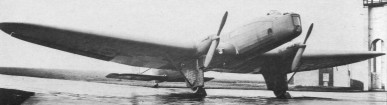
A twin 447kW Rolls-Royce Kestrel Vl-engined cantilever low-wing monoplane heavy night bomber, 14 of which were operated by the RAF from 1937 until just before the outbreak of World War II.
Engines: 2 x Rolls-Royce Kestrel IV, 440kW Max take-off weight; 9072 kg / 20000 lb Empty weight; 5774 kg/ 12730 lb Wingspan; 31.0 m / 101 ft 8 in Length; 18.5 m / 60 ft 8 in Height; 5.6 m / 18 ft 4 in Wing area; 110.0 sq.m / 1184.03 sq ft Max. speed; 249 km/h / 155 mph Cruise speed; 215 km/h / 134 mph Ceiling; 6500 m / 21350 ft Range w/max.fuel; 2200 km / 1367 miles Range w/max.payload; 1900 km / 1181 miles Armament; 3 machine-guns, 1100kg of bombs Crew; 5
Fairey Hendon Mk. II Engines: 2 x Rolls Royce Kestrel VI, 600 hp Length: 60.761 ft / 18.52 m Wing span: 101.739 ft / 31.01 m Max take off weight: 20003.8 lb / 9072.0 kg Max. speed: 135 kts / 250 kph Range: 1180 nm / 2185 km Armament: 3x 7,7mm MG, 753kg Bomb. int.
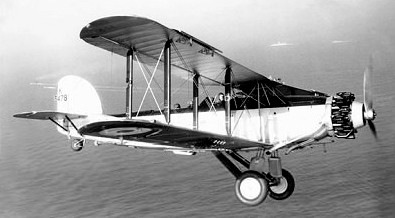
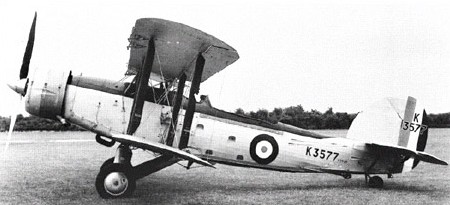
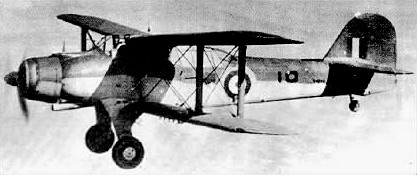
A further development of the IIIF Mk VI went under the designation Seal. The Seal was the Fleet Air Arm version of the Gordon and was operated as a three-seat spotter-reconnaissance biplane. Equipment unique to the Seal were a tailwheel, wheel brakes, catapult points, flotation gear, slinging gear and an arrester hook, enabling it to be used from aircraft carriers and as a seaplane from warships. 90 were delivered to the FAA between 1933 and 1935 (the 91st Seal ordered but thought not to have been delivered.
Seals were also sold to Peru, Latvia, Argentina and Chile. Late in their career a number of Seals passed into RAF service, remaining operational in Ceylon during the early years of World War II.
Engine; 1 x 525hp Armstrong Siddeley Panther IIA Max take-off weight; 2724 kg / 6005 lb Wingspan; 13.94 m / 45 ft 9 in Length; 10.26 m / 33 ft 8 in Height; 3.89 m / 12 ft 9 in Wing area; 41.20 sq.m / 443.47 sq ft Max. speed; 222 km/h / 138 mph Ceiling; 5182 m / 17000 ft Range; 773 km / 480 miles Armament; 2 x 7.7mm machine-guns, 2 x 110kg bombs Crew; 3
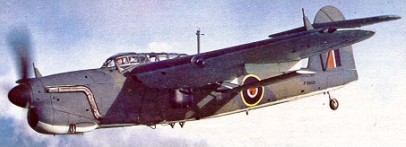
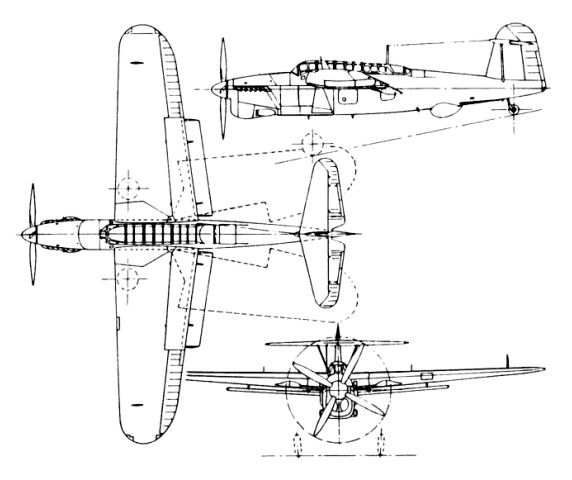
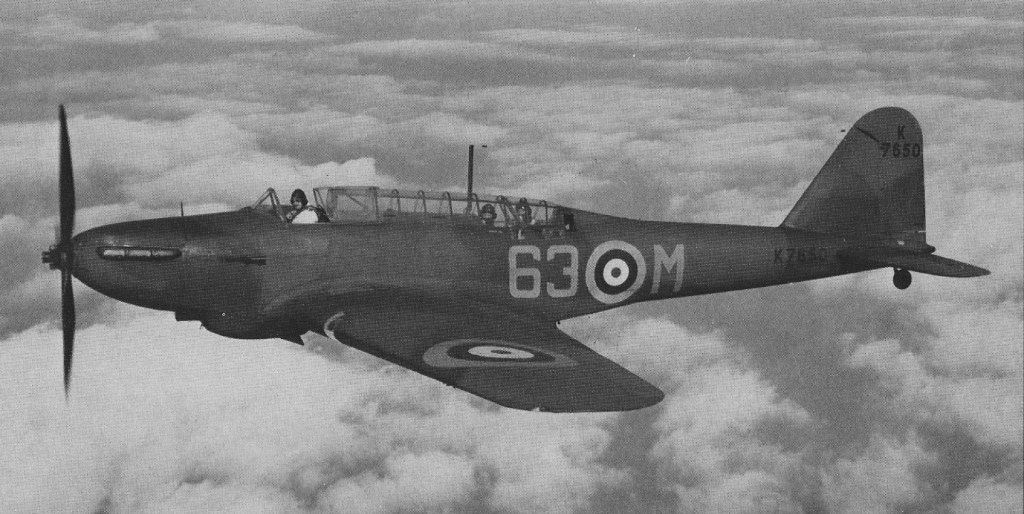
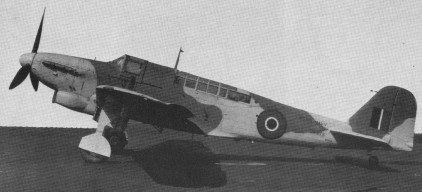
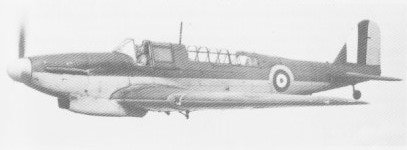
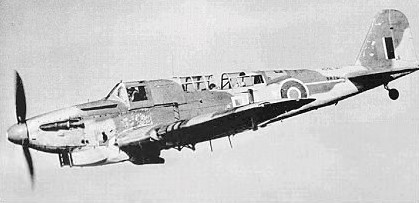
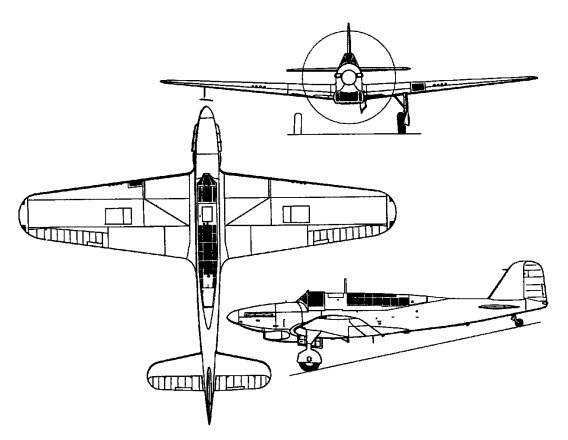
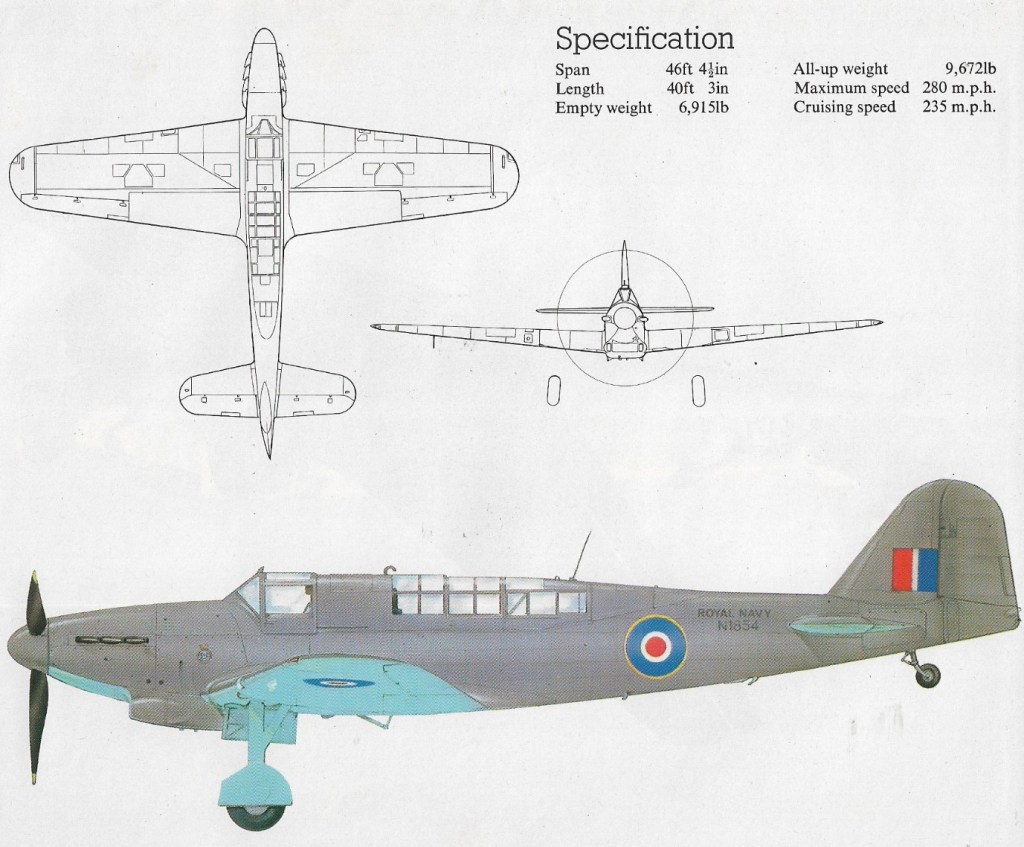
First flown on 4 January 1940, there was no prototype as such for the Fulmar, which was evolved in 1939 from the P.4/34 lightweight development of the Fairey Battle day bomber. The urgent need by the Fleet Air Arm (FAA) for a new fighter led to a rapid trials programme, beginning on January 4, 1940, with the maiden flight of N1854, the first production Fulmar, of which 250 were ordered. The Fulmar I was an all metal cantilever monoplane, with folding wings for carrier stowage; the semimonocoque fuselage housed the deck arrester gear and catapult points, and space was provided for an inflatable dinghy.
The pilot’s cockpit was separated from that of the observer/navigator, and both were enclosed by perspex canopies following the contours of the fuselage. The wide track undercarriage retracted inwards towards the wing roots. The powerplant for all except two early Fulmar 1 aircraft was the 1080 hp Rolls¬Royce Merlin VIII engine. Due to the additional weight of a second crew member, and the special equipment required for carrier operation, the Fulmar did not achieve the same rate of climb or airspeed as its land-based counterparts although this was not necessarily required by the Royal Navy. Armament was very similar to the best in the RAF, consisting of eight 0.303 in (7.7 mm) Browning machine guns four in each wing with twice the ammunition capacity of the Spitfire and Hurricane. The lack of a rear defensive gun was one of the Fulmar’s principal deficiencies, and some crews unofficially fitted an additional gun of their own choice in the rear cockpit.
N1858 – the 5th Fulmar I
Deliveries of the Fulmar I began in June 1940, to 806 Squadron, and it became operational aboard the aircraft carrier Illustrious about two months later. A total of 250 853kW Rolls-Royce Merlin VIII-powered Mk Is were built. At this time, Fairey had plans for the development of the Fulmar II, to be powered by the 1300 hp / 969kW Merlin 30, and with weight reductions brought about by the use of lighter constructional materials. This enabled the Fulmar II to carry the originally intended bombload in the form of a single 113.4 kg (250 1b) or 227 kg (500 1b) bomb beneath the fuselage (the Mk I being limited to eight 9 kg [20 1b] or 11.3 kg [25 1b] bombs under the wings). The Fulmar Mk II with nearly 300 more horsepower, was only 16km/h faster than the Mk I.
Orders for 350 Fulmar IIs were placed during the autumn of 1940, bringing the total number on order to 600. With conversions to Fulmar II beginning on the Mk I production line, the eventual result was that well over 400 were completed as Mk IIs. Ammunition capacity of the Fulmar II was eventually increased from 750 to 1000 rounds per gun but, despite this, the aircraft’s fighting ability was still disappointing. Although short on speed and manoeuvrabil¬ity, it served with 14 FAA squadrons, accounting for more than 100 enemy aircraft until the appearance of more advanced types such as the Seafire and Firefly. During the summer of 1941, four 0.3 in (12.7 mm) machine guns were fitted to one Fulmar. Firing trials proved satisfactory, and the last 100 aircraft were adapted for such an armament, but not all were equipped due to an insufficient supply of the heavier guns. Fulmars were used quite successfully as convoy escorts during the mid war years, and about 100 were converted into makeshift night fighters. In 1943 they were gradually withdrawn from front line service and reassigned to training duties.
Fairey Fulmar Mk.I Engine: 1 x Rolls-Royce Merlin VIII, 805kW / 1065 hp Max take-off weight: 4853 kg / 10699 lb Empty weight: 3955 kg / 8719 lb Wing loading: 31.37 lb/sq.ft / 153.0 kg/sq.m Wingspan: 14.14 m / 46 ft 5 in Length: 12.24 m / 40 ft 2 in Height: 4.27 m / 14 ft 0 in Wing area: 31.77 sq.m / 341.97 sq ft Max. speed: 215 kts / 398 km/h / 247 mph Service ceiling: 6555 m / 21500 ft Endurance: 4 h Armament: 8 x .303in / 7.7mm machine-guns Bombload: eight 9 kg [20 1b] or 11.3 kg [25 1b] bombs Crew: 2
Fairey Fulmar Mk.II Engine: 1 x Rolls-Royce Merlin 30, 1300 hp / 969kW Span: 14.13 m (46 ft 4.5 in) Length: 12.24 m (40ft 2 in) Gross weight: 4695 kg (10350 lb) Maximum speed: 417 km/h (259 mph) Bombload: 113.4 kg (250 1b) or 227 kg (500 1b) bomb
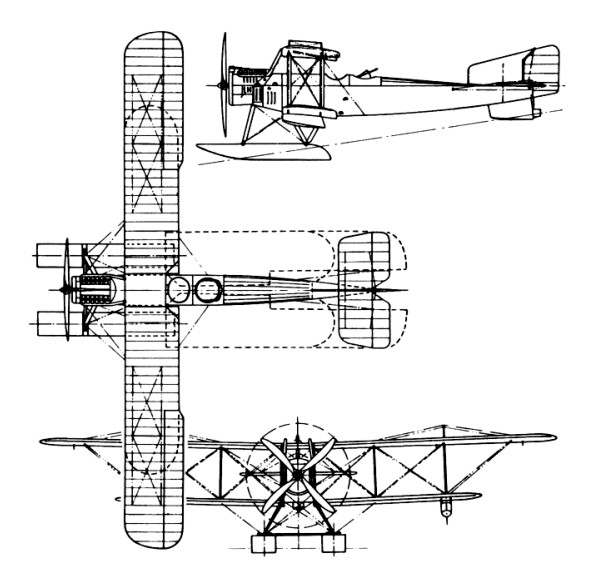
The Fairey Campania two-seat seaplane got its name from the ex-Cunard ocean liner Campania which the Admiralty had converted into a seaplane carrier during the winter of 1914-15. Production aircraft, powered by a 186.3kW Sunbeam Maori II or 186.3-257kW Rolls-Royce Eagle engine, entered service in 1917 and eventually operated as armed-reconnaissance aircraft from the carriers Campania, Nairana and Pegasus and from coastal bases until the Armistice, thereafter also seeing action in Russia. A total of about 60 Campanias were built from the contracts placed with Fairey (for 50 aircraft in two batches), Barclay Curie and Company (for 50) and Frederick Sage and Company/Sunbeam Motor Car Company (for 70).
Engine; 1 x Sunbeam “Maori II”, 190kW Max take-off weight; 2420 kg / 5335 lb Empty weight; 1660 kg / 3660 lb Wingspan; 18.8 m / 61 ft 8 in Length; 13.1 m / 42 ft 12 in Height; 4.6 m / 15 ft 1 in Wing area; 58.3 sq.m / 627.54 sq ft Max. speed; 137 km/h / 85 mph Ceiling; 1520 m / 5000 ft Range w/max.fuel; 450 km / 280 miles Armament; 1 machine-guns, 2 x 30kg bombs Crew; 2
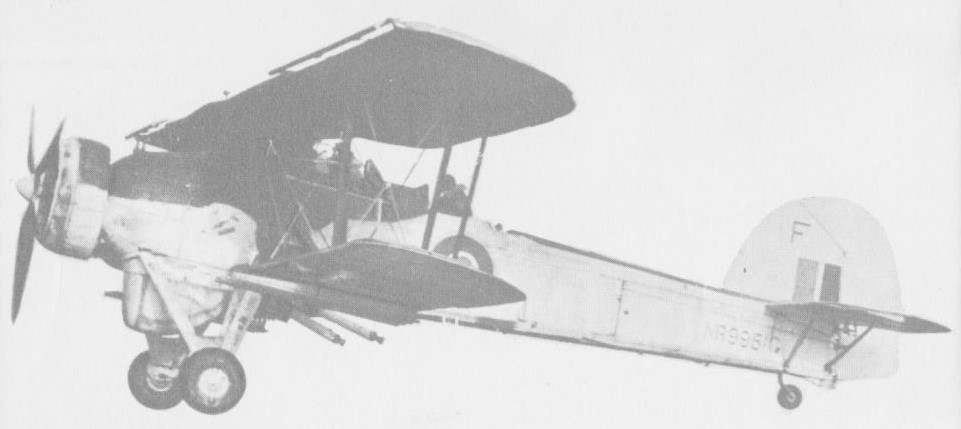
The Albacore torpedo-bombing biplane was first flown in prototype form on 12 December 1938. During the spring of 1940 the first production aircraft entered FAA service and for the remainder of that year were flown mainly on coastal patrol, spotter-reconnaissance, minelaying and night-bombing duties. In 1941 the Albacores went to sea in HMS Formidable and other carriers and from then were active on convoy protection duties in the Baltic and in anti-submarine and other roles in the Mediterranean and elsewhere. The Albacore was removed from FAA service in late 1943, having never performed its intended role as a Swordfish replacement. It had a more powerful 794kW Bristol Taurus or 842kW Taurus XII 14-cylinder sleeve-valve air-cooled radial engine in the NACA cowling with leading-edge exhaust collector and trailing-edge controllable gills, enclosed cockpits for the crew of two or three, one forward-firing 7.7mm Browning and two rear-mounted 7.7mm Vickers guns on a Fairey high-speed mounting, and hydraulically operated flaps. The last Albacores in operational service were those ex-FAA aircraft taken over by the RCAF and used during the Allied advance into Europe from mid-1944. Production totalled 803 aircraft.
Engine; 1 x Bristol Taurus XII, 843kW / 1115 hp Max take-off weight; 4745 kg / 10461 lb Empty weight; 3289 kg / 7251 lb Wingspan; 15.24 m / 50 ft 0 in Length; 12.14 m / 39 ft 10 in Height; 4.32 m / 14 ft 2 in Wing area; 57.88 sq.m / 623.01 sq ft Wing loading: 16.81 lb/sq.ft / 82.00 kg/sq.m Max. speed; 259 km/h / 161 mph Cruise speed; 101 kts / 187 km/h / 116 mph Ceiling; 6310 m / 20700 ft Range; 808 nm / 1497 km / 930 miles Armament; 3 x 7.7mm machine-guns, 1 x 730kg torpedo, 6 x 113kg or 4 x 227kg bombs Crew; 3
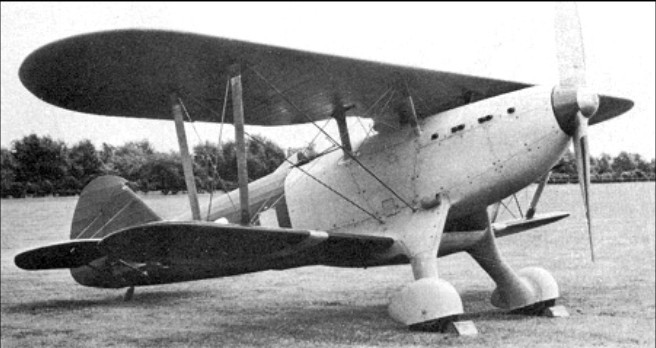
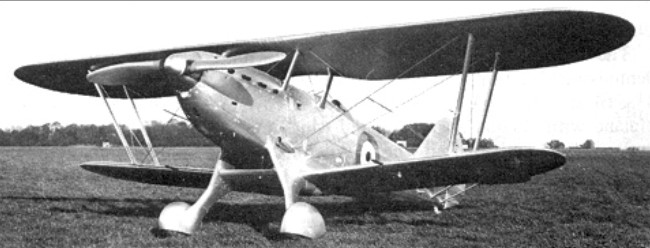
The fighter-biplane Fantome of 1935 was a private-venture. The name Feroce was conferred later. An entrant for the Belgian fighter competition to find a successor for the Fairey “Firefly II” It had provision for a French Hispano-Suiza 12crs moteur canon with an Oerlikon 20mm gun firing through the airscrew hub and 4 rifle-bore Browning guns as made in Belguim by the Fabrique National. One aircraft only was supplied to the Royal Air Force for evaluation. The prototype in Belgium crashed on trials close to their monarch King Leopold. It did not go into production.
Wingspan : 34.514 ft / 10.52 m Max take off weight : 4542.3 lb / 2060.0 kg Max. speed : 235 kts / 435 km/h Landing speed : 52 kts / 96 km/h Cruising speed : 189 kts / 350 km/h Service ceiling : 36089 ft / 11000 m Endurance : 2 h Crew : 1 Armament : 1x MG 20mm Oerlikon, 4x MG Browning, 4x 10kg-Bomb.
Richard Fairey realised that the Curtiss D-12 engine, in combination with a Curtiss-Reed propeller, was a most significant factor in this American success in the 1923 Schneider Trophy Contest.
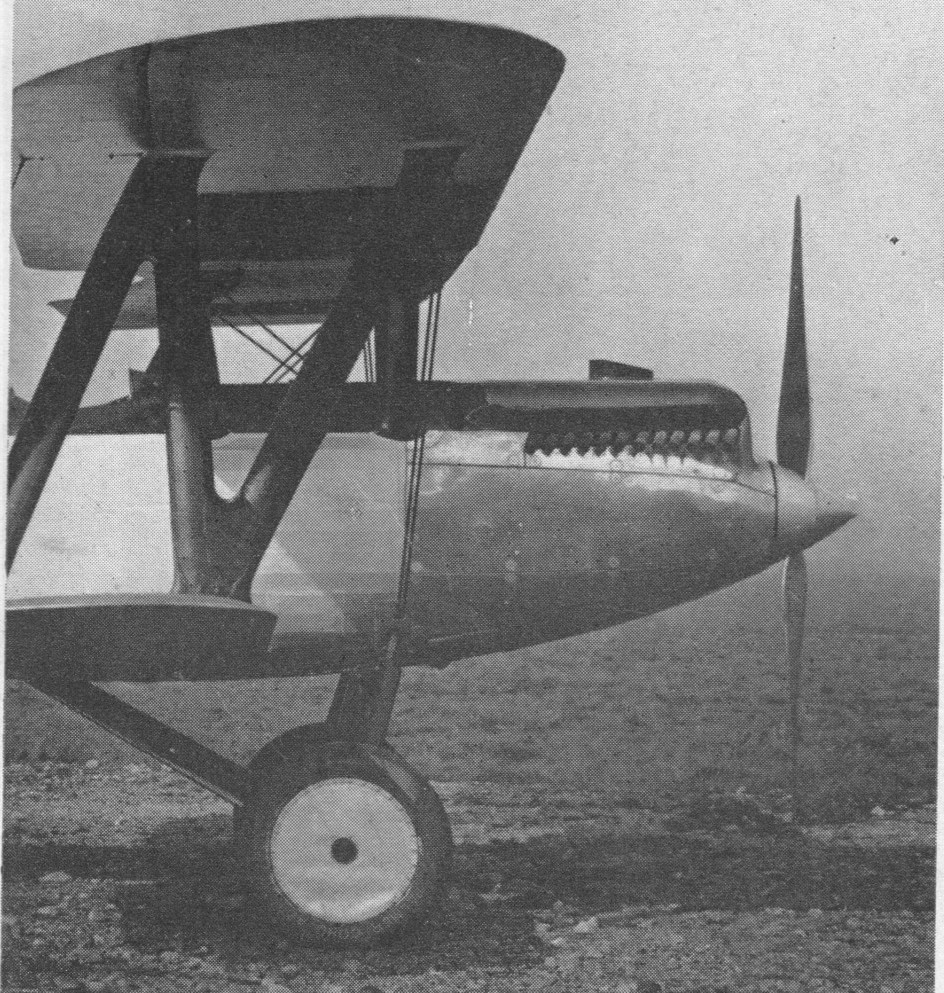
The engine was the world’s first wet-sleeve monobloc aero-engine, and it was of small frontal area. The propeller was of comparatively small diameter with forged duralumin blades of thin aerofoil section. It could be rotated at high speed – the blade tips approaching the speed of sound – without any serious loss of efficiency. So fast was the rotational speed that there was no need for a reduction gear between engine and propeller. No reduction gear, small-diameter lightweight propeller blades and a shorter landing gear, all produced weight savings that were vitally important to a high-performance aircraft.
Fairey Fox Reed propellor
Fairey began negotiating for the licence rights to import and/or build this power plant in Britain, and acquired an engine and propeller for the development of a fast day bomber for the RAF.
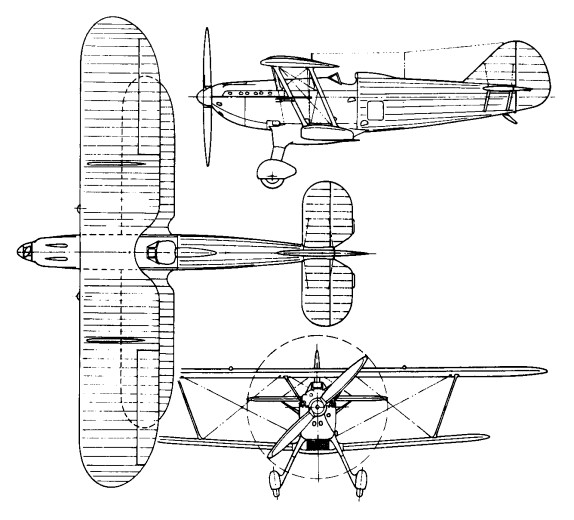
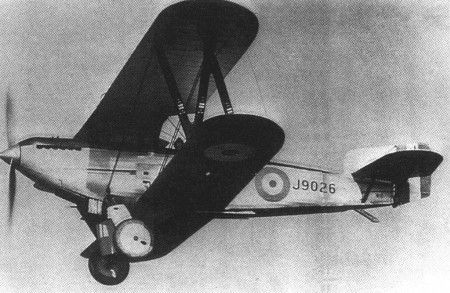
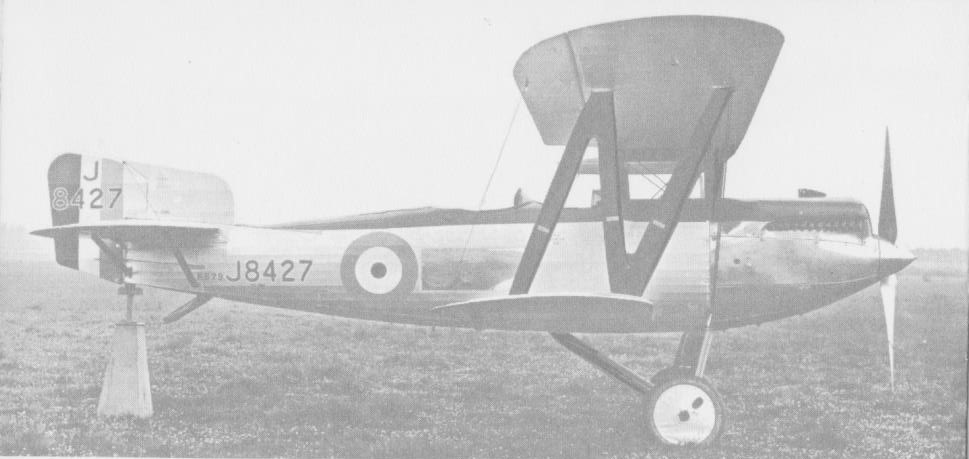
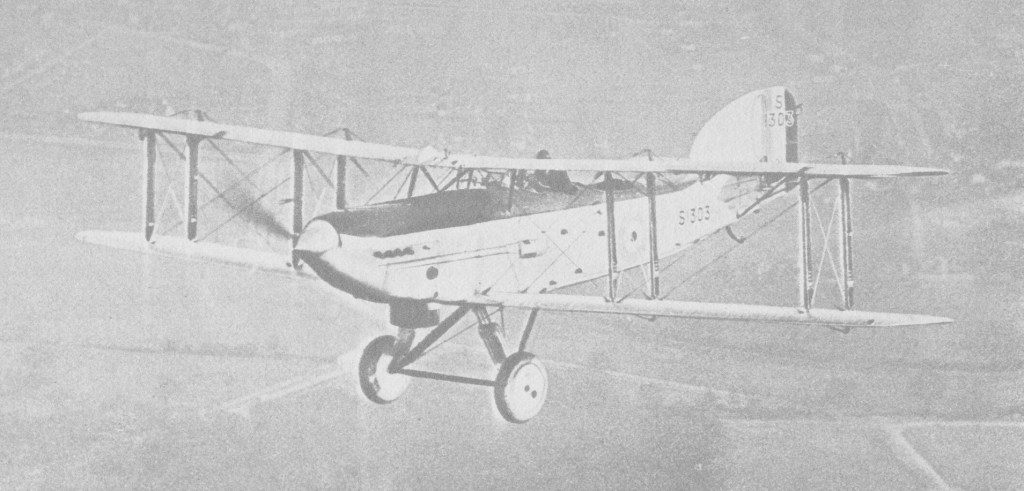
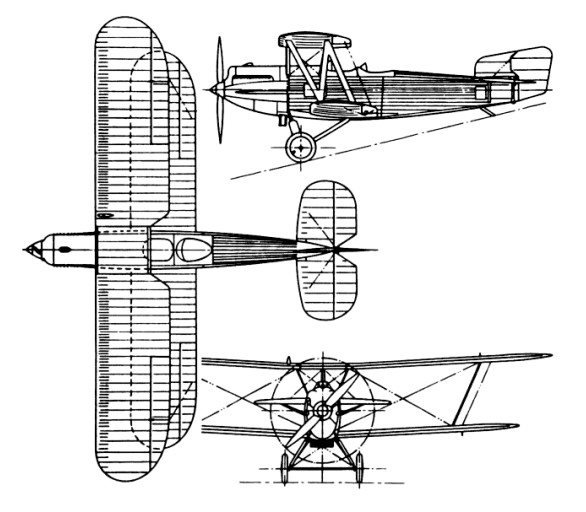
A prototype single-bay biplane with unequal-span staggered wings was built as a private venture. Landing gear, tail unit and fuselage were typical Fairey design but the fuselagewas much slimmer than usual. Notable were the considerable efforts made to produce a structure as free from drag as then possible. Even the mounting for the gunner’s defensive Lewis gun was of Fairey design, to eliminate the drag induced by the normal Scarff ring.
The prototype was first flown on 3 January 1925 named Fox. Demonstrated in October of that year to Air Chief Marshal Sir Hugh Trenchard, its performance was so impressive that a complete squadron of aircraft was ordered into production. Strict budgets of that time (which became tighter as the 1930s approached) limited procurement to 28 aircraft. When issued to No 12 Squadron (in August 1926) they proved to be some 80km/h faster than the Fairey Fawns which they superseded. At a later period some of these aircraft were re-engined with the Rolls-Royce Kestrel and redesignated Fox IAS, remaining operational until 1931.
The British Fox was built under the Fairey Aviation Company sister name in Belgium, Avions Fairey. Avions Fairey was set up in Belgium as an offshoot of the Fairey Aviation Company of Britain. The production facility was initially created for the local production of the Fairey Firefly, to which the facilities were later used for production of the Fairey Fox aircraft.
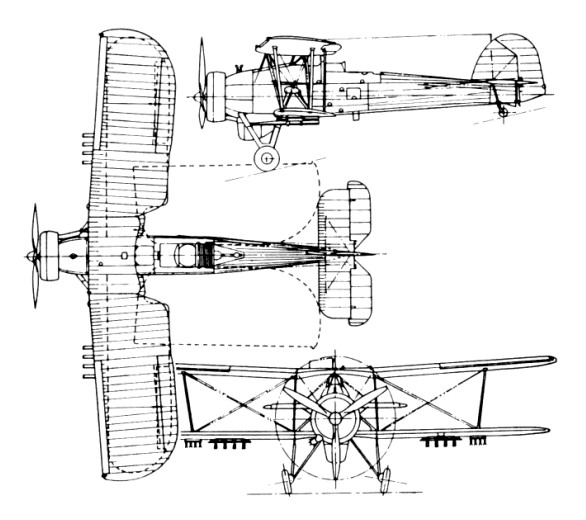
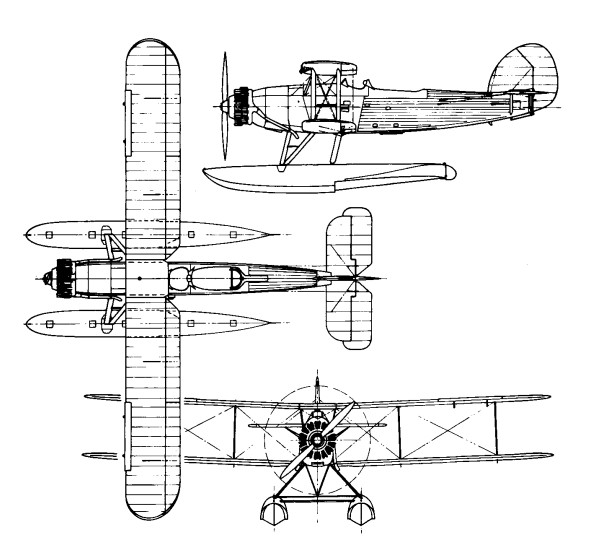
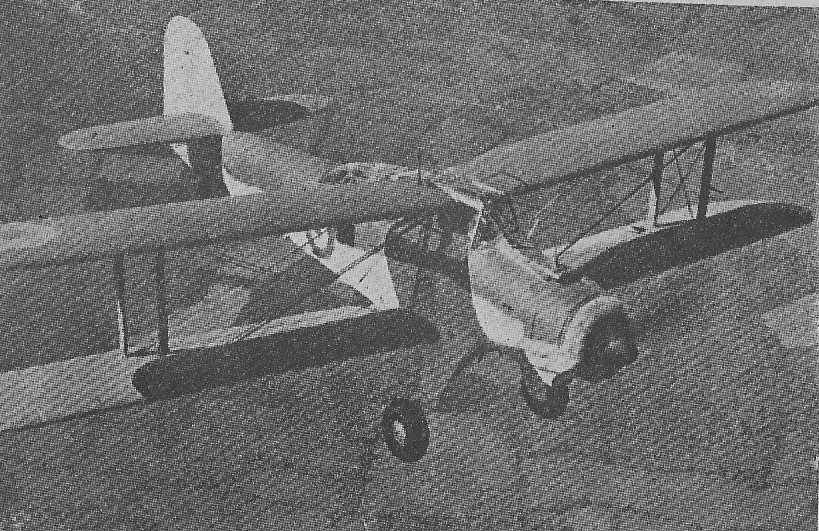
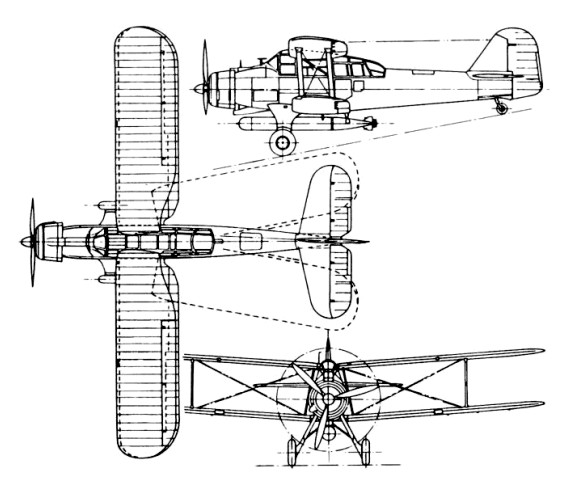
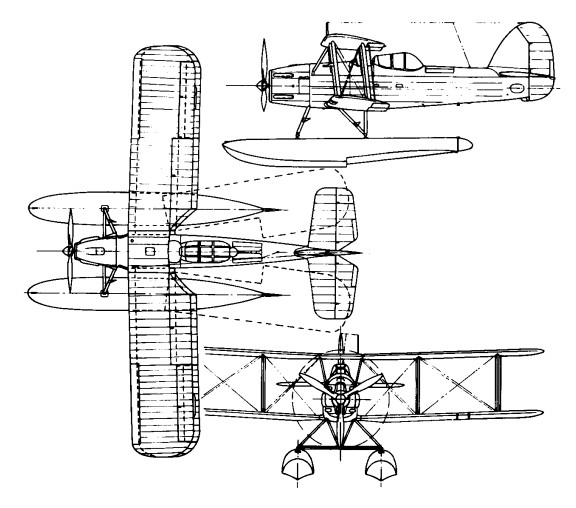
The Seafox was a light two-seat (the rear cockpit enclosed) reconnaissance catapult seaplane, remembered for the action against the Admiral Graf Spee during the Battle of the River Plate in December 1939, having flown from the Royal Navy cruiser HMS Ajax. A total of 64 Seafox biplanes were built for the FAA, each powered by a 294kW Napier-Halford Rapier VI 16-cylinder air-cooled engine.
Later models were adapted for service by the Belgium air force with total production amounted to 176 examples.
Fox Engine; 1 x Rolls-Royce “Kestrel IIS”, 405kW Max take-off weight; 2140-2300 kg / 4718 – 5071 lb Empty weight; 1450 kg / 3197 lb Wingspan; 11.6 m / 38 ft 1 in Length; 9.9 m / 32 ft 6 in Height; 3.3 m / 10 ft 10 in Wing area; 34.0 sq.m / 365.97 sq ft Max. speed; 304 km/h / 189 mph Ceiling; 9500 m / 31150 ft Armament; 3 machine-guns, 250 kg of bombs Crew; 2
Fairey Fox Mk. VI Engine : Hispano Suiza HS 73-12 Yrds, 848 hp Length : 32.152 ft / 9.8 m Height: 10.499 ft / 3.2 m Wingspan : 38.484 ft / 11.73 m Wing area : 370.282 sq.ft / 34.4 sq.m Max take off weight : 5402.3 lb / 2450.0 kg Weight empty : 3947.0 lb / 1790.0 kg Max. weight carried : 1455.3 lb / 660.0 kg Max. speed : 164 kts / 304 km/h Initial climb rate : 2165.35 ft/min / 11.0 m/s Service ceiling : 22966 ft / 7000 m Wing load : 14.56 lb/sq.ft / 71.0 kg/sq.m Range : 324 nm / 600 km Endurance : 3 h Crew : 2 Armament: 2 x 7.62mm FN-Browning machine gun 1 x 7.62mm FN-Browning machine gun in rear cockpit position
Fairey Sea Fox Length : 35 ft 10 in / 10.81 m Height : 12 ft 2 in / 3.68 m Wingspan : 40 ft / 12.19 m Wing area : 434.004 sq.ft / 40.32 sq.m Max take off weight : 5419.9 lb / 2458.0 kg Weight empty : 3805.8 lb / 1726.0 kg Max. speed : 108 kt / 200 km/h Cruising speed : 92 kt / 171 km/h Service ceiling : 2957 m / 9700 ft Wing load : 12.51 lb/sq.ft / 61.0 kg/sq.m Range : 382 nm / 708 km / 440 miles Engine : Napier Rapier VI, 390 hp Crew : 2 Armament : 1x cal.303 MG (7,7mm), 160kg of bombs









 All Aero