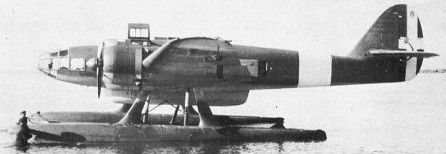
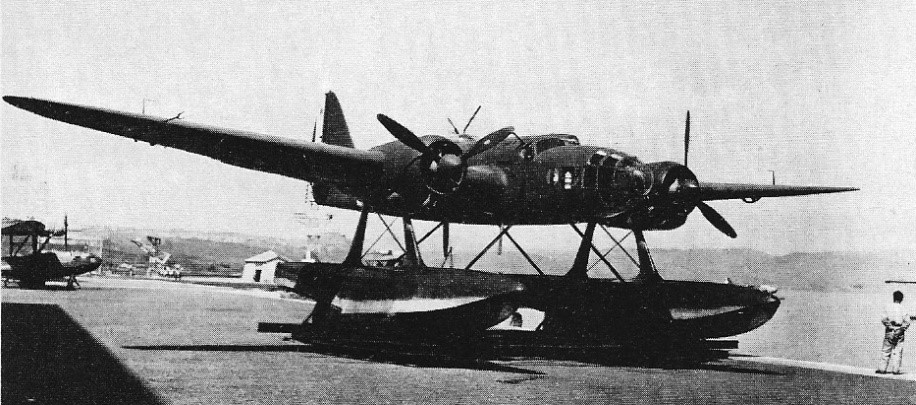
On receiving a joint requirement from the air force and the navy, CMASA, a FIAT subsidiary, developed the RS.14 a floatplane for maritime reconnaissance. 152 examples were produced (including the prototypes), and were used with great success. The aircraft could also be converted for attack missions by fitting a canoe-shaped belly pod able to carry to 400 kg of bombs.
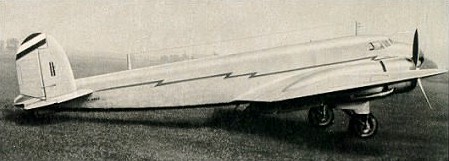
In the summer of 1943 a land-based version with retractable landing gear and 6 12,7 mm machine-guns and a 37 mm cannon was produced and designated A.S. 14. 184 plus 2 prototypes were built.
Fiat R.S. 14 Engines: 2 Fiat A.74 RC.38, 649 kW(882 hp) Empty weight: 5470 kg Takeoff weight: 8470 kg Wingspan: 19,54 m Lenght: 14,10 m Height: 5,63 m Wing Area: 50,00 square metres Max speed: 390 km/h Ceiling: 6300 m Range: 2500 km Climb to 5000 m: 15 minutes Armament: 1×12,7 mm machine-gun in the dorsal turret; one 7,7 machine-gun on each side; 400kg of bombs in a ventral canoe-shaped pod . Crew: 5
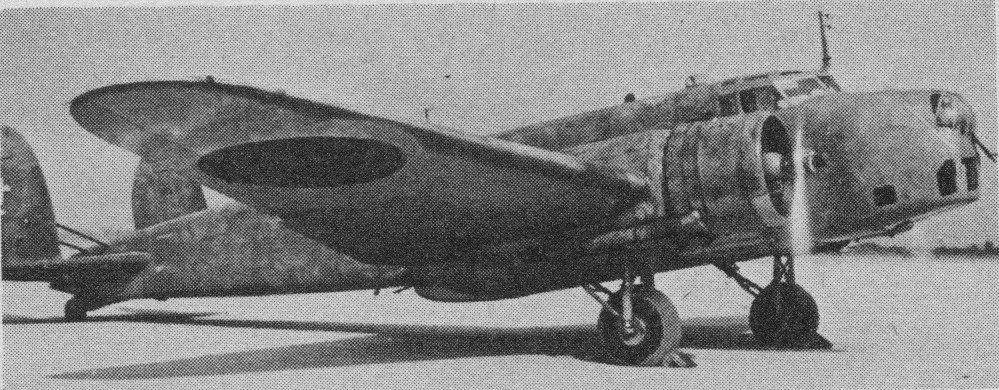
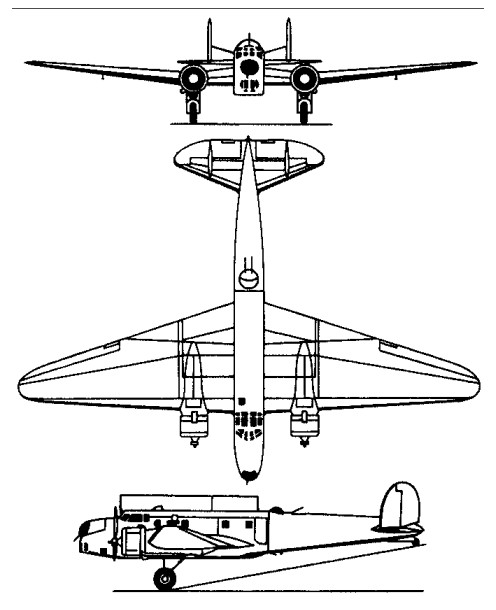
A medium bomber, the Fiat BR.20 Cicogna (stork) series was nearing obsolescence by the outbreak of World War II. Designed by Ingeniere Celestino Rosatelli, and owing much of its design to the Fiat APR.2 commercial transport, the Fiat B.R.20 prototype flew first on 10 February 1936.
Powered by two 745kW Fiat A.80 RC.41 radial engines, the B.R.20 possessed a maximum speed of 430km/h at 4000m, and was armed with two 7.7mm and one 12.7mm machine-guns. The first unit of the Regia Aeronautica to receive B.R.20s was the 13º Stormo BT stationed at Lonate Pozzolo: the 7º Stormo BT, also at Lonate, received Fiat B.R.20s in February 1937. Elements of the 7º and 13º Stormi BT were despatched to Spain in May 1937 for combat experience, while other B.R.20s were exported to Japan, and saw service with indifferent results in China and Manchuria as the JAAF’s Army Type 1 Model 100 Heavy bomber. Modified nose contours, increased armour protection and revised armament featured in the B.R.20M, of which 264 were produced.
When Italy declared war on 10 June 1940 the Regia Aeronautica had 162 Fiat B.R.20s and B.R.20Ms in commission with the 7º, 13º, 18º and 43º Stormi BT. The first bombing mission was made on 13 June when 19 B.R.20Ms of the 13º Stormo BT attacked installations at Hyeres and Fayence in southern France. A detachment of 80 B.R.20MS of the 13º and 43º Stormi BT were sent to the Belgian airfields of Chieveres and Melsbroeck in late September 1940 to assist the Luftwaffe in its bombing campaign against England. As part of the Corpo Aereo Italiano the B.R.20Ms suffered losses as a result of crew failings and fighter attacks. The campaign in Greece saw the 116º Gruppo (37º Stormo) in action from bases in Albania, followed by action over Crete, and on a day and night attacks against Malta. In the USSR B.R.20MS of the 38º and 116º Squadriglie operated from August 1942 in the southern sector.
Fifteen of the improved B.R.20bis model were produced. These were powered by two 932kW Fiat A.82 RC.42S engines, had additional 7.7mm machine-guns and a power-operated dorsal turret. Early in 1943 the B.R.20M bomber had been withdrawn from active service with the Regia Aeronautica, units being re-equipped either with CANT Z.1007s or with Savoia-Marchetti S.M.79S. Production totalled 602 of all marks.
In 1938 the JAAF purchased 80 BR.20 bombers for use in China, designated Type-I Italian Type. Western sources originally called it ‘Mikado’. It appeared in code lists as ‘Ruth’.
JAAF BR.20
FIAT BR. 20 Cicogna Engine: 2 x FIAT A. 80 RC.41, 986 hp / 745kW Length: 53 ft 2 in / 16.2 m Height: 14.108 ft / 4.3 m Wingspan: 70 ft 10 in / 21.56 m Wing area: 796.536 sqft / 74.0 sq.m Max take off weight: 21829.5 lb / 9900.0 kg Weight empty: 14112.0 lb / 6400.0 kg Max. speed: 267 mph / 233 kts / 432 km/h at 4000m Cruise speed: 340 km/h / 211 mph Service ceiling: 29528 ft / 9000 m Wing loading: 27.47 lb/sq.ft / 134.0 kg/sq.m Range w/max.fuel: 1620 nm / 3000 km Armament: 1x MG 12,7mm, 2x MG 7,7mm, 1600kg Bomb. Crew: 4-5
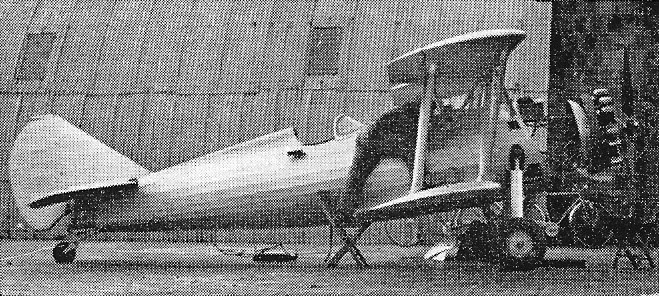
The Fiat G.8 was a military utility aircraft produced in Italy in the mid-1930s. Its design and production were undertaken at the CMASA works in Pisa which became part of Fiat in 1930, hence the type is sometimes referred to as the CMASA G.8 or Fiat-CMASA G.8.
Designed by Giuseppe Gabrielli, it was a conventional biplane design with staggered wings of unequal span braced by struts arranged in a Warren truss. The pilot and a single passenger (or instructor) sat in tandem open cockpits, and the aircraft was fitted with fixed tailskid undercarriage with divided main units.
The prototype first flew on 24 February 1934, sixty more of these aircraft were purchased by the Regia Aeronautica and used for liaison and training duties. They were retired in 1950.
Powerplant: 1 × Fiat A.54, 99 kW (135 hp) Wingspan: 8.76 m (28 ft 9 in) Wing area: 18.9 m2 (203 sq ft) Length: 7.00 m (23 ft 0 in) Height: 2.50 m (8 ft 2 in) Empty weight: 560 kg (1,230 lb) Gross weight: 840 kg (1,850 lb) Maximum speed: 212 km/h (132 mph, 115 kn) Range: 925 km (575 mi, 500 nmi) Service ceiling: 5,200 m (17,100 ft) Crew: one, pilot Capacity: one passenger
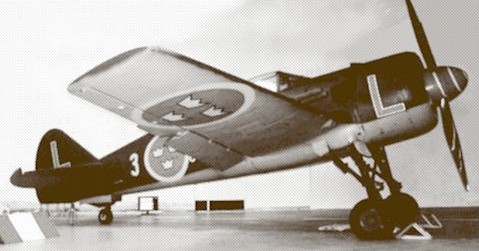
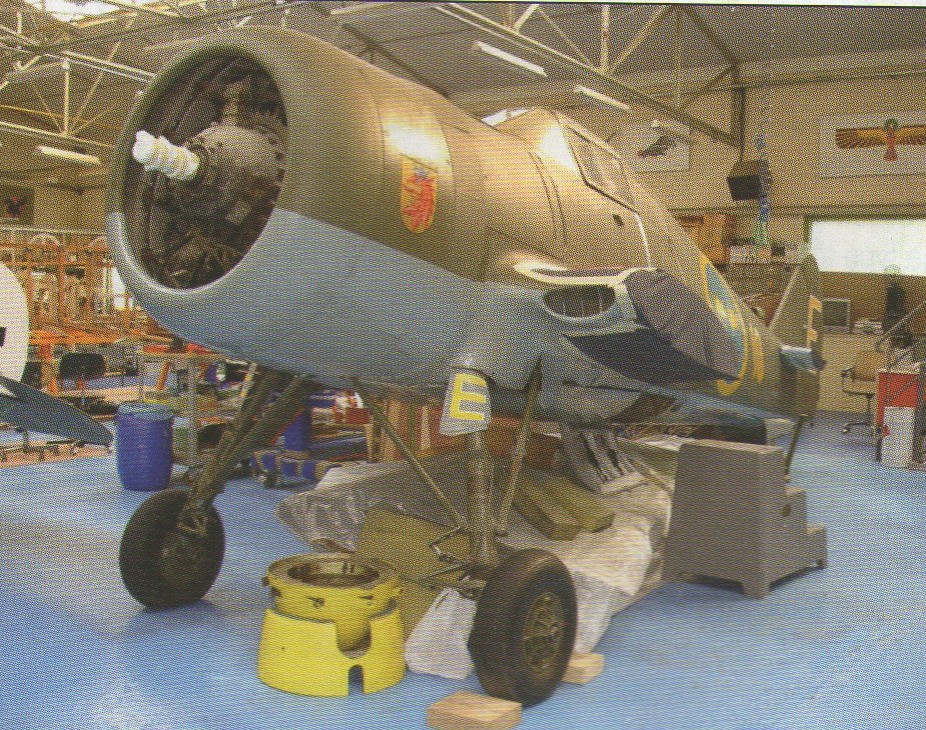
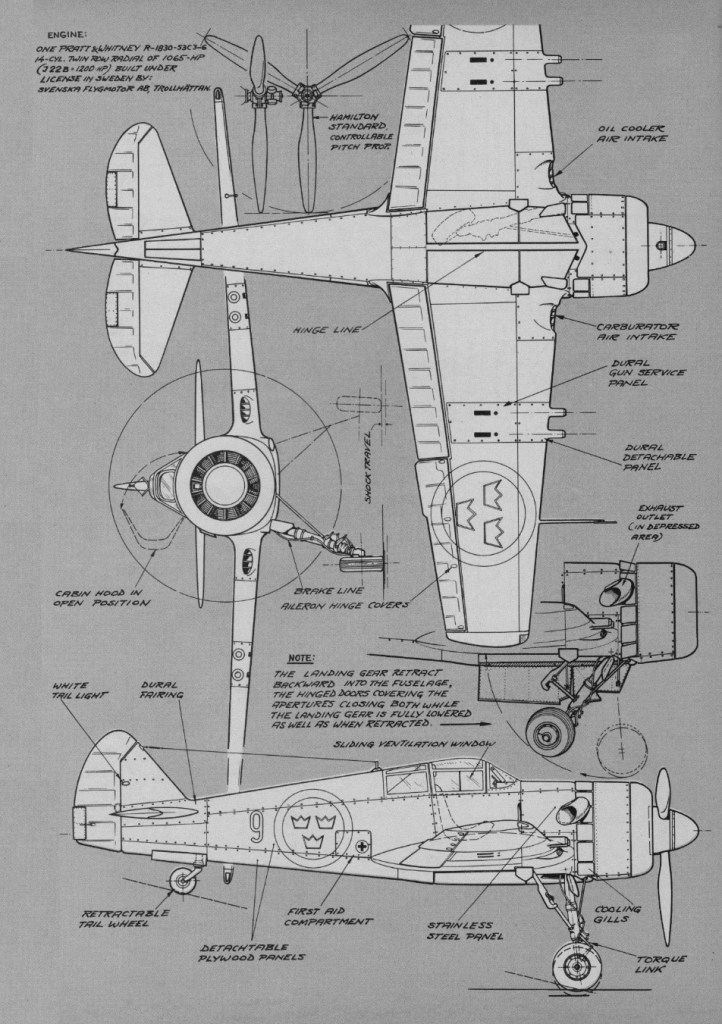
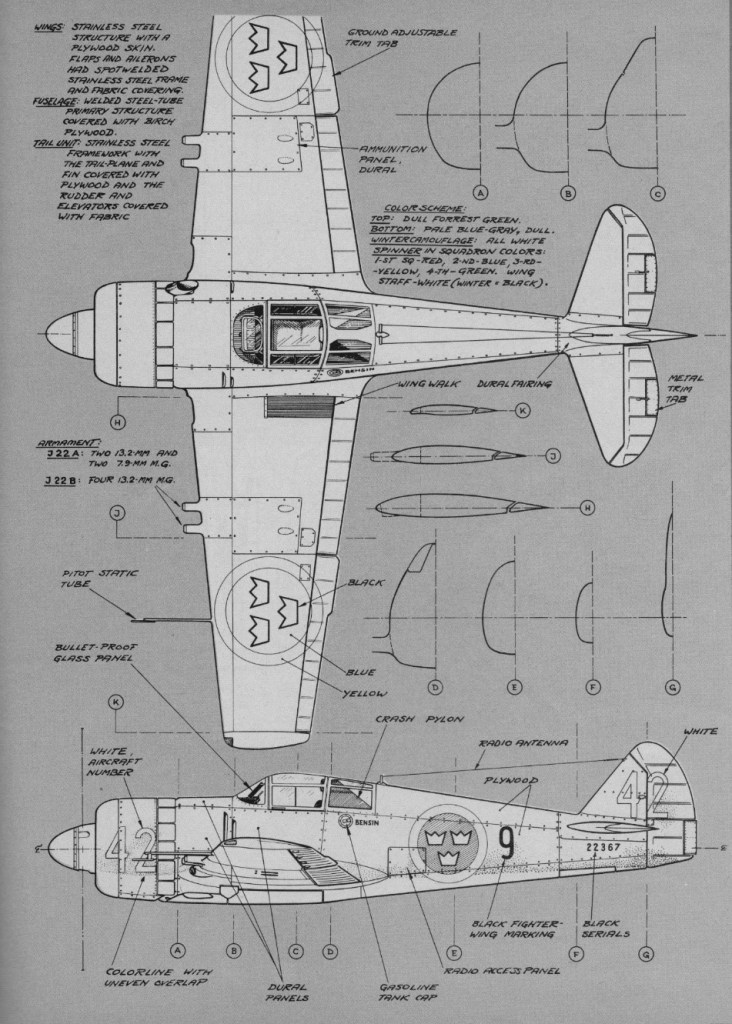
In 1939-1940, the Swedish air force had only a single fighter wing, equipped with 50-60 Gloster Gladiators with the Swedish designation J 8 (J = Jakt, interceptor or fighter). The government decided to equip two new wings and a total of 264 fighters of the types Seversky Republic EP-1 and Vultee Vanguard 48C 1 were ordered in the USA. 60 of the 120 EP-1s were delivered via Petsamo and were given the Swedish designation J 9. In July 1940 all export of fighters from the USA was stopped by a US Government embargo. An indigenous fighter design was required, but with SAAB busy producing its B17 bomber, Flygforvaitninggens Verkstad (FFVS) was formed and designer Bo Lundberg was appointed to design a machine using non-strategic materials. The air force chief instructed the aircraft designer Bo Lundberg to start planning for a Swedish made fighter. Lundberg had been in charge of the Swedish Air Commission in USA and before that chief designer of Götaverken’s aircraft division during the time they designed the GP 8 bomber which competed with SAAB 18 and the cancelled GP 9 fighter. When Lundberg returned to Sweden at the end of 1940, he had already started planning for the new fighter. Requirements was that it should use the same engine as EP-1, STWC-3, a Swedish made Pratt and Whitney Twin Wasp, should be small and light, be made of components that could be made by a large number of subcontractors. The project was designated P 22 and a temporary air force branch was instituted to run the project, Flygförvaltningens Verkstad i Stockholm (FFVS). The aircraft was from the outset designed for the Pratt&Whitney Twin Wasp, an American engine not available to Sweden. Even worse, the Severskies using the same engine had been delivered without spare engines so the shortage was really acute! However, Flygmotor at Trollhättan started an ambitious programme to copy an original Pratt&Whitney Twin Wasp engine – without any drawings or material data at all. Working hard, they almost managed to meet the schedule. In 1942, to compensate for the lag in the engine project, Sweden managed to purchase a batch of 100 engines from the French Vichy regime via Germany. The Swedish-made engines, designated STWC-3, proved very good. One of them was still flying in the late 1980s, now mounted in one of the Swedish Airforce’s last flying C-47s. Since the GV GP 9 was designed to use aluminum, it couldn’t be used as a basis for the new fighter, but its landing gear where the wheels were rotated as the were retracted back into the fuselage was used. The landing gear was made to accept skis, but as the air force’s ability to clear snow off runways had improved, they never were fitted on J 22. Since a wooden wing couldn’t be made strong enough if it was made thin enough for a fast fighter, so the aircraft was made of steel tubing covered with moulded birch plywood. The windshield was made either of 6 mm laminated Gemax or acrylic. The center part was 60 mm thick for ballistic protection. The first prototype of the aircraft which was to be designated J 22 was built in the workshop of Flygtekniska Försöksanstalten (FFA) near Bromma airport, and first flew on September 20,1942, and deliveries began to F9 at Gothenburg in September 1943. Both protypes crashed, one probably due to oxygen starvation of the pilot, the other due to engine failure during landing. Of the 17000 component parts, 12000 were made at 500 subcontractors all over Sweden, with final assembly in a hangar at Bromma, except for the final 18 which were assembled at the air force central workshop at Arboga (CVA), which was set up in 1944 to be the central maintenance facility.
198 aircraft were built and delivered 1943-46. Of these the first 143 were of the version J 22A and the rest J 22B. The only difference between them was that J 22A was armed with two 13.2 mm and two 8 mm guns in the wings, and J 22B with four 13.2 mm guns. The sight was a fixed reflex sight. The J 22 was a light and very manoeuvrable aircraft with good acceleration but when it entered service it was no match for the fighters then current. Tests were made against the P-51 after the war and even if the J 22 could hold its own for a while, especially with a skilled pilot, there is no doubt that the Mustang was the better fighter by a safe margin. In 1945 J 22A was redesignated J 22-1, J 22B into J 22-2 and S 22 became S 22-3. The last ones were retired in 1952. Nine J 22A were converted into reconnaissance aircraft in 1946 and redesignated S 22 (S = Spaning, reconnaissance) and converted back into fighters in 1947.
Engine: STWC-3, 1065 hp Span: 10 m Length: 7.8 m Height: 3.6 m Wing area: 16 sq.m Empty weight: 2020 kg Combat weight: 2835 kg Fuel load:525 litres Max speed: 575 km/h Cruise speed: 440 km/h Landing speed: 140 km/h Range: 1270 km Endurance: 2.9 h Max altitude: 9300 m Armament: 2 x 13.2 mm + 2 x 8 mm guns or 4 x 13.2 mm
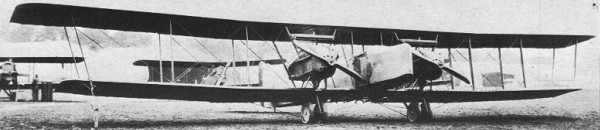
The F.50 bomber was a large tractor machine able to carry a significant load of heavier bombs. It was normally powered by two 250/265 hp Lorraine Dietrich engines, and in appearance strongly resembled the enemy Gothas. The front gunner/ bomb aimer was in the nose and the pilot just ahead of the wings; there was no rear cockpit for a gunner to provide defence astern. There were two twin wheel landing gears, between which were racks for eight 75 kg (165 lb) bombs. Two escadrilles of the Aviation Militaire used this type, and two were supplied to the AEF. The F.50BN 2 operating as a night bomber in 1918. Several survived for some years with the French navy (as torpedo bombers), in Japan and as civil transports.
Span: 22.9 m (75 ft 1.5 in) Length: 12.03 m (39 ft 5.75 in) Gross weight: 3116 kg (6870 lb) Maximum speed: 150 km/h (93 mph)
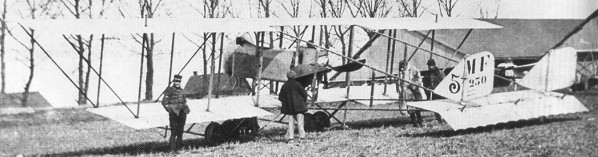
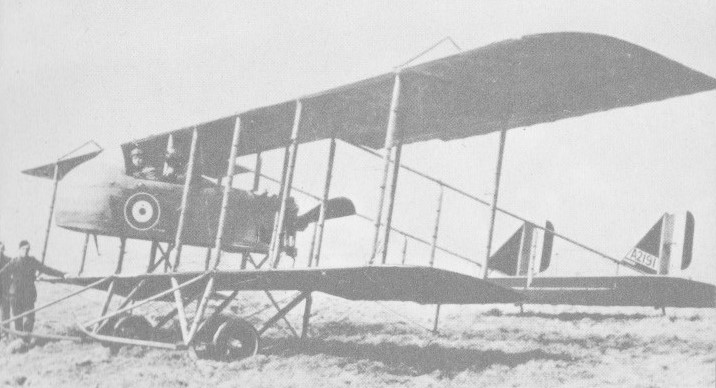
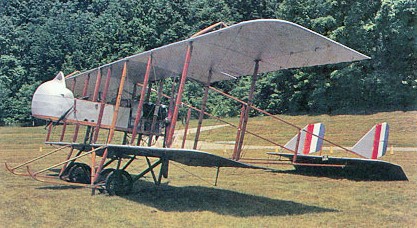
The M.F.11 retained the same basic configuration as Maurice Farman’s preceeding M.F.7, but introduced a number of refinements and one radical change: the forward elevator that had led the British to give the nickname “Longhorn” to the M.F.7 was abandoned, and the British dubbed the M.F.11 the “Shorthorn”. The tail unit was re-designed to have a single tailplane, elevator, and twin rudders. Another visually notable change was an alteration in the position of the nacelle, which was raised from the upper surface of the lower wing to a point between the upper and lower wings. It was the first Farman design to be armed, being employed on bombing and reconnaissance duties.
The M.F. 11 first flew in 1914 and entered service in 1915 with an assortment of engine types delivering anything between 70 and 130 hp (52 and 97 kW), though the most common units were De Dion or Renault engines; aircraft licence-built in Italy by S.I.A. had Renault or Fiat A.l0 engines.
The Shorthorn was also built in England by the Aircraft Manufacturing Company, the forerunner of the de Havilland aircraft company, used by both the RFC and RNAS. One of the RNAS machines dropped eighteen 16-lb bombs on enemy positions near Ostend on 21 December 1913 as the first-ever military night operation.
In the basic M.F. 11 the pilot was seated in front of the observer, but in the MF.11bis developed by Maurice’s brother, Henry Farman, the observer was given a better field of fire for his gun by being seated in front of the pilot.
The Farman MF 11 served in considerable numbers, equipping 37 French escadrilles, six squadrons of the RFC on the Western Front and other RFC/RNAS units in Mesopotamia, the Dardanelles and the Aegean. The R.F.C. received its first Shorthorns for No. 4 Squadron, each fitted with one machine gun. Unfortunately, they had such poor performance that they could often make no head¬way against the prevailing wind when returning from flights over the enemy line, and were easy prey for flak.
The type was used mainly for observation, but was occasionally and successfully pressed into service as a bomber. A Farman MF. 11 of the Royal Naval Air Service made the first night bombing raid of World War I, attacking German gun emplacements near Ostend on 21 December 1914.
The MF.11, shown here on at Hendon airfield, was fitted with an 80 hp De Dion-Bouton engine. This machine was the private aeroplane of the Frenchman Marquis Larienty-Tholozan.
1913 Maurice Farman MF.11 of Marquis Larienty-Tholozan
In 1916 the Australian Government ordered five Shorthorns from England for the Central Flying School at Point Cook, Victoria. They were serialled CFS-15, CFS-16, CFS-17, CFS19, and CFS-20. A sixth aircraft, CFS-18 was built at Point Cook. After the war, on 19 March 1919, four Shorthorns were offered for sale at a public auction but failed to sell. They were subsequently purchased by a syndicate of Graham Carey and Arthur Fenton.
Following their frontline service, the MF. 11 and its predecessor, the MF.7, were widely used for training. Principal versions – M.F. 11 (basic model) and M.F. 11bis (revised version with reversed seating). Principal users – France, Great Britain, Italy, and Russia.
Farman MF.11 “Shorthorn” Engine: Renault R-80, 70-hp (52-kW) Wing span 53 ft 0 in (16.15 m) Length 31 ft 2 in (9.50 m) Height 12 ft 9.5 in (3.90 m) Wing area 613.56 sq ft (57.00 sq.m). Empty weight: 1,213 lb (550 kg) Maximum take¬off weight: 1,874 lb (840 kg) Max. weight carried: 672.5 lb / 305.0 kg Wing loading: 3.69 lb/sq.ft / 18. 0 kg/sq.m Maximum speed: 46 kt / 85 km/h / 62mph (100 km/h) at sea level Service ceiling 12,470 ft (3,800 m) Initial climb rate: 295.28 ft/min / 1.5 m/s Endurance 3 hours 45 minutes. Range: 162 nm / 300 km Armament: one 8-mm (0.315-in) machine-gun and (bomber version) 288 lb (131 kg) of bombs. Crew: 2
Engine: 1 x 100hp Renault 8-cylinder air-cooled V Max take-off weight: 928 kg 2046 lb Wingspan: 16.16 m 53 ft 0 in Length: 9.45 m 31 ft 0 in Height: 3.18 m 10 ft 5 in Max. speed: 106 km/h 66 mph Ceiling: 3800 m 12450 ft Crew: 2 Armament: one machine gun, 130kg of bombs
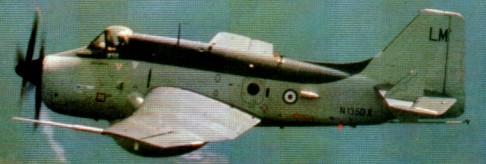
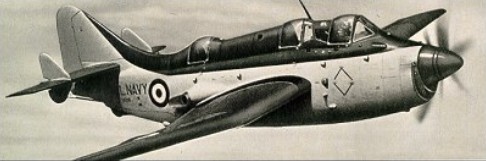
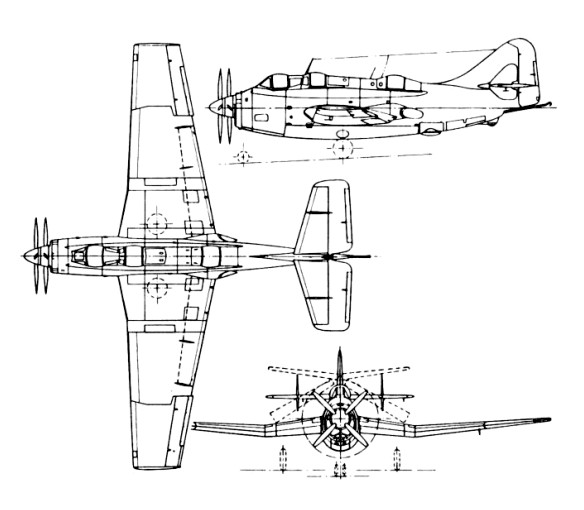
Built as a carrier-based anti-submarine warfare (ASW) aircraft, Fairey’s prototype was known initially as the Type Q. First flown on 19 September 1949, the first and second prototype were of two-seat configuration. The third prototype (which first flew on 10 May 1951) was more representative of production aircraft with three cockpits to accommodate the pilot (forward), observer/navigator (centre), and radio-radar operator (aft).
Of all-metal stressed-skin construction, this large mid-wing monoplane had mechanically folding wings to facilitate carrier stowage, and its deep fuselage was able to carry all its major strike weapons internally. Up to 16 air-to-surface rockets could be carried beneath the wings. The Armstrong Siddeley Double Mamba turboprop engine, comprised two turbine engines with individual co-axial contra-rotating propellers. Either engine could be shut down independently and its propeller feathered so that the aircraft could cruise economically. It was the first aircraft in FAA service to combine the ‘hunter/killer’ role for ASW.
The first operational squadron was formed on 17 January 1955. AS.1 and AS.4 aircraft, as well as T.2 and T.5 trainers, served with the FAA until gradually superseded by Whirlwind helicopters from 1958.
The Gannet AEW.3 was first flown from Northolt on 20 August 1958, designed for airborne early-warning duties with the Royal Navy. One of the newcomers at the 1958 Farnborough display was the prototype Gannet AEW.3.
Gannet AEW.3
On 1 February 1960 the Gannet AEW.3 early-warning variant began to enter service, having a more powerful Double Mamba engine and a large radome mounted beneath the fuselage. Its pilot was accommodated in a forward cockpit and the two radar operators were seated within the fuselage. A total of 44 of these were built, the later examples by Westland Aircraft which took over the Fairey factories in 1960. The AEW.3 which went to sea aboard HMS Ark Royal in the summer of 1970 were the last Fairey-designed first-line aircraft to serve with the FAA.
The RAAF operated 36 Gannet, ordered in 1953. Four Gannet T.2/T.5 were also ordered in 1953. The first delivered to the RAAF during October 1955 and the last in September 1958.
The AS.4 was also used by the German Navy (15) and Indonesian Navy (16).
Fairey Gannet AS1/4 Engines: One 1,950 eshp Armstrong Siddeley Double Mamba 100 turboprop / One 3,035 eshp Armstrong Siddeley Double Mamba 101 turboprop Wing Span: 54 ft 4 in Length: 43 ft Height: 13 ft 8.5 in Empty weight: 15,069 lb Loaded weight: 19,600 lb Initial Rate of Climb: 2000 ft/min Ceiling: 25,000 ft Speed: 299 mph Range: 662 miles Crew Three Armament: 2 x torpedoes in bomb bay / 16 x 60 lb rocket projectiles under wings
AS.4 Engine: One 3,035 eshp Armstrong Siddeley Double Mamba 101 turboprop Wingspan: 54 ft 4 in Length: 44 ft 6 in Wingarea: 482.8 sq.ft Empty weight 15,069 lb MTOW: 21,600 lb Max speed: 310 mph Service ciling: 25,000 ft Max range: 943 mi at 196 mph
Fairey Gannet T.2 Engines: 1,950 eshp Armstrong Siddeley Double Mamba 100 turboprop – T2 Empty weight: 15,069 lb Loaded weight: 19,600 lb Wing Span: 54 ft 4 in Length: 43 ft Height: 13 ft 8.5 in Crew: 4 Initial Rate of Climb: 2000 ft/min Ceiling: 25,000 ft Speed: 299 mph Range: 662 miles Armament: Guns: None / Bombs: 2 x torpedoes in bomb bay / 16 x 60 lb rocket projectiles under wings
Fairey Gannet T.5 Engines: 3,035 eshp Armstrong Siddeley Double Mamba 101 turboprop – T5 Empty weight: 15,069 lb Loaded weight: 19,600 lb Wing Span: 54 ft 4 in Length: 43 ft Height: 13 ft 8.5 in Crew: 4 Initial Rate of Climb: 2000 ft/min Ceiling: 25,000 ft Speed: 299 mph Range: 662 miles Armament: Guns: None / Bombs: 2 x torpedoes in bomb bay / 16 x 60 lb rocket projectiles under wings
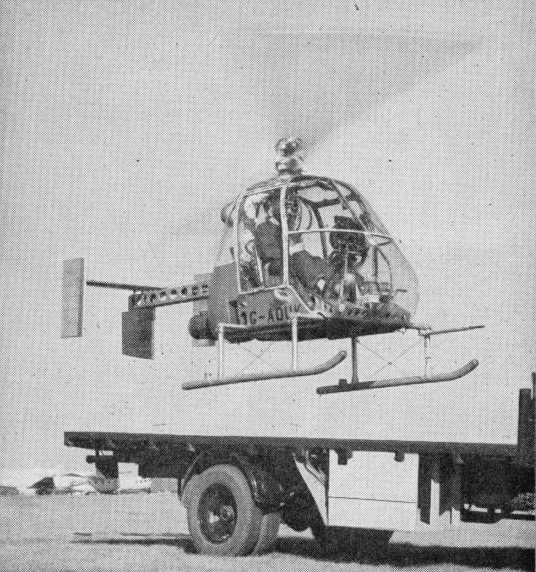
During 1953 the War Office collaborated with the Air Ministry and the Ministry of Supply in the formulation of a specification for a simple and relatively inexpensive small helicopter for use by the Army for reconnaissance and other secondary duties such as casualty evacuation and training. The requirements were severe in terms of vertical climb performance, in tropical as well as temperate conditions, though endurance and speed were less stressed. The helicopter had also to be capable of being dismantled and assembled easily and quickly and of being transported on a standard Army three-ton truck.
The specification was sent to helicopter manufacturers in the British aircraft industry, with requests for tenders, and some half-dozen designs were submitted. Fairey eventually won the contract in July 1954 and a preliminary order for four prototypes, to specification H.144T, was placed. Two more were planned as a private-venture investment.
Fairey believed that a rotor-tip drive would be ideal for the Ultra-light Helicopter (as it was named), and preliminary studies showed that a tip-jet-driven version could be designed to do better than meet the requirements. A suitable small turbojet power source was already available in Britain — the French Turbomeca Palouste BnPe.2, which had been re-engineered with the turbine in Nimonic 90 alloy and was built under licence by Blackburn and General Aircraft.
To provide tip-jet air pressure in addition to residual thrust an oversize centrifugal compressor was fitted, and the excess delivery was bled off from the casing surrounding the annular combustion chamber. Untainted air was thus obtained at an initial maximum pressure of about 2.8kg/sq.cm. With this available pressure it would have been possible to design the rotor for operation using simple air jets, but, with their background of experience of fuel-burning pressure-jets, these were employed.
The compressed air was delivered, via a lagged duct, to the rotor head and, with metered fuel from the same tank as that supplying the gas turbine, and carried by centrifugal force to the tip-jets. There was a manually-operated blow-off valve for use when the engine was being ground-run, and, later in the test development, when rotor-power needed to be cut so that rapid autorotative descents could be made.
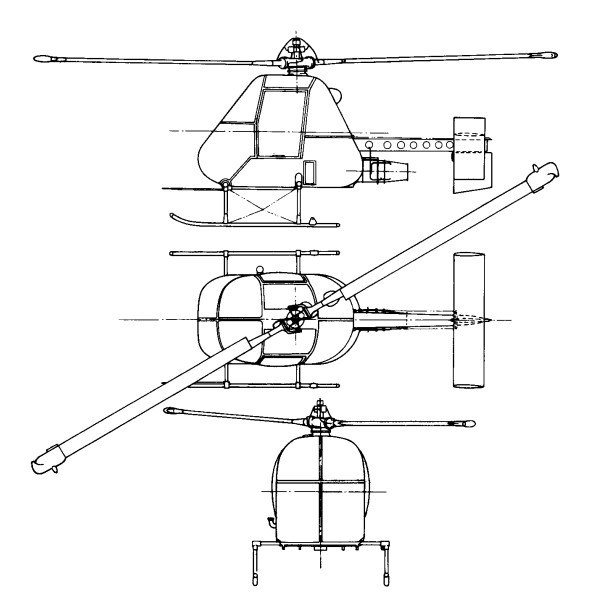
With the ample power available the rotor was designed to operate at high revolutions and to have a small diameter (8.53m), thus meeting the need for compactness. Two of the later variants were fitted with a slightly bigger diameter rotor (9.75m) so as to improve the performance. The small diameter of the rotor permitted the mechanical design and control system to be simplified. No drag hinges were employed and the two blades formed a see-saw combination without individual flapping hinges.
A direct tilting-head type of control was employed in the first prototype, but an irreversible hydraulically-powered system for the cyclic-pitch control was designed (together with a flexible pylon) and fitted to this and to later aircraft. The pilot’s controls were those normal for helicopters — with a collective-pitch lever which carried a twist-grip throttle for increasing engine revolutions and consequent air pressure for the tip-jets, and a stick for control in roll and pitch, but the rudder-pedal directional control was through a steel-skinned rudder on which the jet efflux impinged.
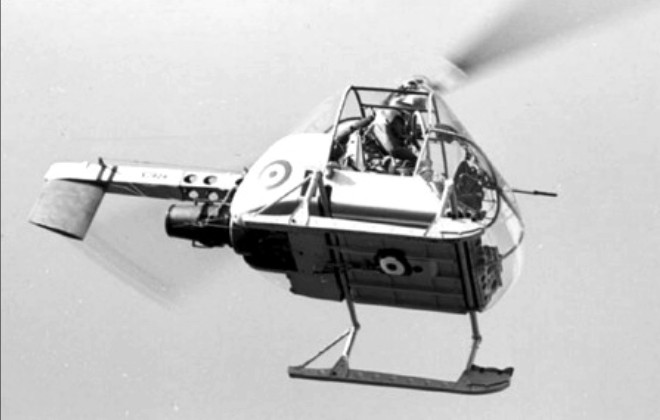
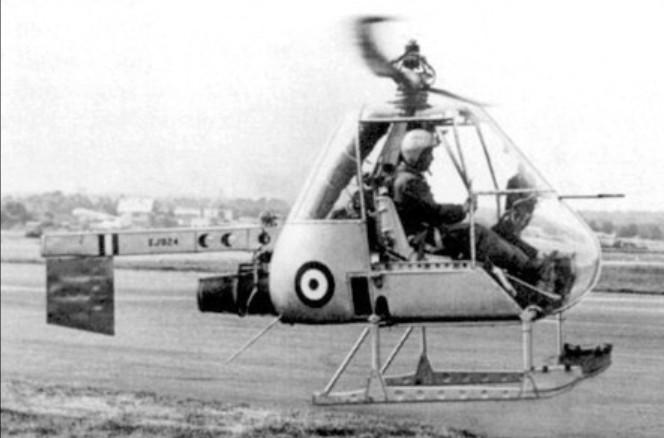
The Ultra-light was very simple in construction, the basis of which was a large light-alloy box containing the bag-type fuel tank. From the centre of this box rose the rotor pylon on which the remainder of the aircraft was, so to speak, hung. To the rear was attached a box-girder boom, under which the engine was slung, carrying the rudder — or rudders and an adjustable tailplane in later versions. This boom had a transport joint aft of the engine mounting. The crew’s seats (the observer facing aft in the proposed Army version) were on the basic box structure. The undercarriage consisted of a pair of skids attached to tubes running across the underside of the box.
The initial flight of the first prototype, XJ924 (F.9423), was made at White Waltham by W. R. Gellatly, on 14 August, 1955 – only about 13 months from the start of design work — and it was shown and flown at the SBAC exhibition and display at Farnborough early in the following month.
Progress on the original basis was, however, to be overtaken by events. Before mid-1956 the Ministry of Supply had, for reasons of economy, ceased to support the Army project, and development of the Ultra-light was continued by Fairey on a private-venture basis, with considerable and expensive efforts to develop the original design and to sell it to prospective Service and civil operators.
There have been some considerable differences, among semi-official and other records, of the actual identities of the various Ultra-lights, of the total number completed and of the sequence in which they were produced. The principal difficulty in straightening the records has been caused by the fact that the original order ‘bookings’ were changed. Four (F.9423—9426) were planned to meet the original Ministry of Supply contract and two more (F.9427—8) were built by Fairey on a private-venture basis. After a certain amount of work had been done there were interchanges of components and then, following the Ministry cancellation, Fairey increased their private-venture programme.
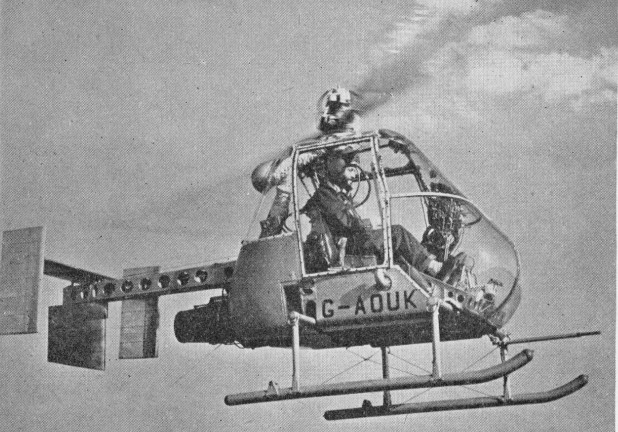
Some uncertain confirmation of the sequence of the completion of the Ultra-lights can be found in the press reports of the SBAC displays of the period. One such report for 1956 said that four had by then been built, the fourth being G-AOUK; another, after the 1957 display, said that five had been built, including G-AOUJ, which was at the show with G-AOUK, and that a sixth, G-APJJ, was under construction.
The serials XJ924, 928, 930 and 936 were allotted to the first four and three of the six were civil-registered following the withdrawal of official support. In order of c/ns, but not necessarily of completion or of initial flights, the six appear to have consisted of the following individual aircraft. The first prototype, XJ924 (F.9423), was the first to fly and was later modified with the hydraulic cyclic-pitch control and flexible pylon already mentioned. The second prototype, XJ928 (F.9424), became a Fairey de velopment aircraft for which a modified cabin was designed so that different loads, such as a stretcher case, could be accommodated; this was registered G-AOUJ and fitted with the hydraulic controls, flying for the first time in the revised form on 1 September, 1957. The third prototype, XJ930 (F.9425), was delivered to the Ministry of Supply. The fourth, XJ936 (F.9426), flown on 24 August, 1956, was the first to be fitted with the hydraulic controls and the flexible pylon; it appeared at die SBAC Display in September 1956 registered G-AOUK, and was the company’s principal demonstration and trials aircraft. Operating from the back of a standard truck, it demonstrated a rate of climb of 6.75m/s and a rate of descent in autorotation of 20m/s. The first of the two original private-venture aircraft, F.9427, was apparently used only for resonance tests and for ground-transport trials.
In the autumn of 1957 G-AOUJ underwent trials aboard the frigate HMS Grenville to determine the practicability or otherwise of operating small reconnaissance helicopters from platforms at sea. More than 70 landings and take-offs were made in winds of up to 62 knots, with the deck sometimes pitching through 3.05-3.66m and rolling up to 14 degrees each way. During 1958 both G-AOUJ and G-APJJ were being evaluated by the Royal Navy. The second, F.9428, was registered G-APJJ and flown initially in 1958; this had a cabin similar to that of G-AOUJ and was used for trials by the Royal Navy, operating from the deck of a destroyer, HMS Undaunted, before going to the Royal Aircraft Establishment, Bedford, and later to the College of Aeronautics at Cranfield.
In 1957 the Piasecki Aircraft Corporation of Philadelphia, USA, had obtained an option to build and the US Army was evaluating it for uses similar to those originally envisaged by the British authorities. Nothing, however, was to follow from these developments.
Typical of the continuous effort being put into Ultra-light demonstrations was the use, early in October 1958, of the stretcher-carrying G-AOUJ, flown by Peter Twiss, in a nuclear-war casualty exercise by the RAMC near Aldershot; the Rotodyne also took part in this exercise. Interest in the Ultra-light had been shown in Canada, and G-AOUJ, with its bulged nose to take a stretcher, and with special navigation and heating/ventilating equipment, was shipped out there later in 1958 for cold-weather trials and demonstrations by Lt-Cdr J. G. P. Morton. In the spring of that year a new draft specification was being drawn up for a version suitable for operation from small ships on anti-submarine duties both in attack (with a homing weapon) and communication roles. This proposal was based on a draft naval staff requirement and was a variation of the aircraft described in a brochure of April 1957 in which a naval strike version had been offered. The three civil-registered Ultra-lights were necessarily designed to meet airworthiness requirements and G-AOUJ and G-APJJ were duly certificated in the autumn of 1958. Work on the project was finally abandoned in 1959.
G-AOUJ has returned to the Helicopter Museum and restoration continued at Weston super Mare, but various parts, and drawings, are missing. A particular problem now is the swash-plate mechanism, of which there are no details.
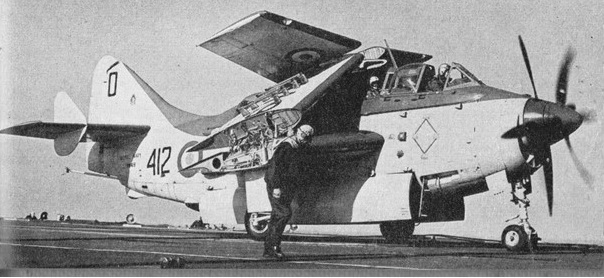
A natural development of the Fulmar two seat fighter, the Firefly was designed by a team led by H E Chaplin to meet specification N.5/40, an amalgamation of the earlier requirements of N.8/39 and N.9/39 which had called for a carrier based fighter with a turret. However, the turret was dropped, and when chief test pilot Chris Staniland flew the first Firefly I on December 22, 1941, it was a clean tandem-seater with manually folding wings containing four 20 mm (0.79 in) cannon and retractable Youngman area increasing flaps. At first there was no requirement for the type to be able to carry bombs or rockets.
It was a stressed skin monoplane with folding elliptical wings housing four cannon and with the trailing edge with Youngman flaps which could be recessed into the wing.
Full production started in August 1942 with the first production F.I flying on 26 August 1942.
Development was satisfactory, and the F.1, with 1730 hp / 1,483kW Rolls Royce Griffon IIB driving a Rotol three-bladed propeller, entered service with 1770 Squadron of the Fleet Air Arm in October 1943 as a two-seat day fighter, subsequently seeing extensive action in all theatres, especially in air to surface attacks against the Japanese. Manoeuvrability and long range made up for poor speed, and the good pilot view and comfortable rear observer cockpit were most welcome. Fairey, at Hayes and Stockport, and General Aircraft built 429 F.Is followed by 376 FR.Is (fighter reconnaissance) with ASH ship and submarine ¬detection radar in a radome under the nose of the fuselage. Each was armed with two 20mm cannon in each wing. Then followed 37 NF.II night fighters, with the large AI.X radar packaged into pods on the leading edge of both wings and with the forward fuselage lengthened to preserve centre of gravity posi¬tion, which was disturbed by the heavy displays in the rear cockpit. Conversions included the NF.I, with American 3 cm AI radar (usually APS 6) in a ventral pod, with other changes including shrouded exhausts, and the FR.IA which was a Mk.I rebuilt almost to FR.1 standard. From the 471st aircraft the engine was the 1990 hp Griffon XII.
The Firefly T.1 was basically an F.1 converted for use as a deck-landing conversion and instrument-flying trainer. The raised rear cockpit was occupied by the instructor. They were usually unarmed, although a few carried two 20mm cannon.
RCN Firefly T.1
The Firefly T.2 was an armaments trainer, similar to the T.1 with two 20mm cannon and provision for carrying bombs, rockets and long-range drop tanks. The Griffon 12-powered Firefly T.3 was a version of the FR.1 intended specifically to train observers, the rear cockpit being equipped with the fullest possible range of radio and radar equipment.
Not¬able highlights included the attack on the German battleship Tirpitz and a series of strikes on mainland Japan shortly before VJ-Day brought hostilities to a conclusion. In the post-war era, the Firefly demonstrated a considerable degree of versatility, turning its hand to other duties such as target towing and anti-submarine warfare as well as continuing in its primary function of fighter-bomber. By the time production ceased 1,702 had been built, some remaining active with the Fleet Air Arm until as late as 1957 whilst others served with Australia, Canada, Denmark, Ethiopia, India, the Netherlands, Sweden and Thailand.
Indian Air Force Firefly Mk.1 target tug
The Royal Canadian Navy employed 65 Fireflies of the Mk AS5 variety on board its own aircraft carriers between 1946 and 1954. The letters ‘AS’ stand for anti-submarine, which was the intended primary role of the RCN’s Fireflies.
Firefly AS.5
A total of 29 Firefly FR.1s were operated by the RCN after the war. Availability of the two stage Griffon led to the F.III, reaching 562 km/h (349 mph) with the 2035 hp Griffon 61, but handling was poor. An extensive redesign resulted in the greatly improved F.IV (postwar FR.4) with 2250 hp Griffon 74 driving a four blade Rotol propeller, which flew for the first time on 25 May 1945. New square tipped wings had reduced span and neat leading edge pods housing fuel (left) and radar (right). Radiators were moved to the inboard leading edge, the area of the tailfin was increased, and the aerodynamics improved. New underwing racks could carry up to 907 kg (2000 lb) of bombs, 16 rockets or drop tanks. Production, all by Fairey, amounted to 160 were completed by early 1948, of which 40 went to the Royal Netherlands Navy. Nearly all those in front line service with Royal Navy carriers saw action in Korea in 1950 53. Some later being modified to Firefly TT.Mk 4 standard for target-towing duty. The next basic model to appear was the Mk 5. Similar to the 4, but with the wing folding and locking powered hydraulically, and with additional role equipment. Variants including the Firefly NF.Mk 5 night-fighter, the Firefly FR.5 day reconnaissance fighter and the Firefly AS.Mk 5 antisubmarine patrol aircraft; the last eventually became the most numerous post-war version. All had better communications, navigation and IFF, and the NF and AS having night and search/attack radar. Production totalled 352 between 1947 and 1950, including batches for the Royal Australian and Canadian Navies which served throughout the Korean campaign. The FR.5 carried the same radar in the starboard wing nacelle as the 4 and was equipped with beam approach, IFF and communications radio. The NF.5 had the same basic radio plus a radio altimeter and other night-flying equipment. The AS.5 was an anti-submarine version and carried special submarine-detection equipment under the wings and fuselage. In 1951, the Firefly AS.6 entered service as an interim ASW aircraft pending delivery of the Fairey Gannet. It abandoned all fighter pretensions and carried only radar, sonobuoys and antisubmarine weapons. Fairey built 133. The Firefly 7 of 1953 was produced in two forms, as the AS and T, although it was used mainly as an anti-submarine training aircraft. Powered by a Griffon engine with a ‘chin’ radiator, the three-seat anti-submarine aircraft carried the latest detection devices and sonobuoys for tracking a target at sea. A new blister-enclosed rear cockpit accommodated two radar operators and the aircraft had elliptical long span wings without wing radiators, swept forward wing roots, and a new tail unit.
Firefly U.9
The remaining 160 Mk 7s were all Firefly T.Mk 7 trainers. Firefly production eventually terminated in March 1956 with the delivery of the last of 24 new-build Firefly U.Mk 8 target drones, but 54 Mk 5s were also converted to this mission, these being known as Firefly U.Mk 9 aircraft. The U.8, U.9 and U.10 were all radio controlled drones or targets. The Fairey Firefly 8 (Rolls Royce Griffon 59) had four cameras in each wing tip fairing to photograph missiles which are directed to its vicinity. For test purposes and other duties it may be flown by a crew of two pilot and observer. Unlike the Firefly 7, from which it was developed, has an arrester hook fitted in the aperture under the fuselage. This is for arrested landings on aerodromes while under radio control. It has an 86 gallon fuel tank between the cockpits. The U.9 was the standard target for development and training with the Seaslug ship to air missile, while the U.10 was a similar rebuild of the AS.7.
Firefly 9
All targets had large multi angle high speed camera pods on the wingtips.
In the 1950s more than 450 Fireflys were rebuilt for new roles. The first was the TT.1 target tug, with Mk 2B windmill winch and 2150 m (7053 ft) of cable for a drogue target; some of these had a long career in Sweden. The T.1 operational trainer, 30 of which were supplied to the Royal Navy and a few to other countries, had two separate stepped cockpit canopies, dual control and changed equipment. Most were unarmed, but some had two cannon. Operationally, British Fireflies of various marks saw considerable post-war action, taking part in the Malayan confrontation between 1949 and 1954 as well as the Korean War, whilst the Dutch Firefly FR.Mk 1 aircraft undertook combat duty against rebel forces in the Dutch East Indies. In total, 1623 Fireflies left the assembly lines.
Firefly F.I c/n 1-470 Engine: Rolls-Royce Griffon IIB, 1730 hp Wingspan: 44 ft 6 in / 13.56 m Wing area: 327.979 sq.ft / 30.47 sq.m Length: 37 ft 7 in / 11.4 m Height: 13 ft 7 in / 4.15 m Empty weight: 9750 lb / 4422 kg Loaded weight: 14,020 lb / 6359 kg Wing loading: 42.85 lb/sq.ft / 209.0 kg/sq.m Max speed: 316 mph / 509 kph / 275 kts ROC: 1700 fpm / 518 m/min Service ceiling: 28,000 ft / 8534 m Range internal fuel: 580 mi / 933 km Range w/max.fuel: 1720 km / 1069 miles Armament: 4 x 20mm Hispano cannon Bombload: 2000 lb / 906 kg Crew: 2
Firefly I c/n 471- Engine: Rolls-Royce Griffon XII, 1990 hp Wingspan: 44 ft 6 in / 13.56 m Length: 37 ft 7 in / 11.4 m Height: 13 ft 7 in / 4.15 m Empty weight: 9750 lb / 4422 kg Loaded weight: 14,020 lb / 6359 kg Max speed: 316 mph / 509 kph ROC: 1700 fpm / 518 m/min Service ceiling: 28,000 ft / 8534 m Range internal fuel: 580 mi / 933 km Armament: 4 x 20mm Hispano cannon Bombload: 2000 lb / 906 kg
Firefly II Wingspan: 44 ft 6 in / 13.56 m Length: 37 ft 7 in / 11.4 m Height: 13 ft 7 in / 4.15 m
Firefly III Wingspan: 44 ft 6 in / 13.56 m Length: 37 ft 7 in / 11.4 m Height: 13 ft 7 in / 4.15 m
Firefly FR.Mk 4 Engine: one 2,245-hp (1674-kW) Rolls-Royce Griffon 74 Wingspan 12.55 m (41 ft 2 in) Wing area 30.66sq.m (330 sq ft) Length 11.58 m (38 ft 0 in) Height 4.24 m (l3ft 11 in) Empty weight: 4388 kg (9,674 lb) Loaded weight clean: 13,927 lb / 6317 kg Maximum take-off: 7083 kg (15,615 lb) Maximum speed: 591 km/h (367 mph) at 4265 m (14,000 ft) ROC: 2050 fpm / 625 m/min Service ceiling 9725 m (31,900 ft) Range internal fuel: 760 mi / 1223 km Range max: 2148 km (1,335 miles) Armament: four 20-mm Hispano cannon Bombload: 16 27-kg (60-lb) rockets or two 454-kg (l,000-lb) bombs.
AS.5 Engine One 2,259hp Rolls Royce Griffon 74 Wing span: 12.55 m (41 ft 2 in) Length: 11.56 m (37 ft 11 in) Height: 14 ft 4 in Empty weight 9,674 lb Gross weight: 7300 kg (16100 lb) Maximum speed: 618 km/h (384 mph) Initial Rate of Climb: 6 mins 50 secs to 10,000 ft Ceiling: 28,400 ft Endurance: 6.5 hours Armament: 4 x 20 mm cannon Hispano Bombload: 2 x 1,000 lb bombs or 16 x 60 lb rockets Crew 2
Firefly Mk. 6 ASR Engine: Rolls-Royce Griffon 74, 2245 hp Wing Span: 41ft (12.50m) Length: 37ft (11.28m) Height: 15ft 6in(4.7m) Range: 1,070 miles(1,772 km) w/ 2 @ 90Imp.Gal drop tanks Speed: 345 mph (555 km/h) Armament: two or four 20mm canon two drop tanks or ASR equipment Bombload: 3000 lb / 1359 kg
Firefly 7 Engine: Rolls-Royce Griffon 74, 1145 hp Wingspan: 44 ft 6 in / 13.56 m Length: 38 ft 3 in / 11.65 m Height: 14 ft 4 in / 4.37 m Empty weight: 11,016 lb / 4997 kg Loaded weight: 13,970 lb / 6337 kg Bombload: 3000 lb / 1359 kg
Firefly 8 Engine: Rolls-Royce Griffon Span: 43 ft 6 in Length: 38 ft 3 in
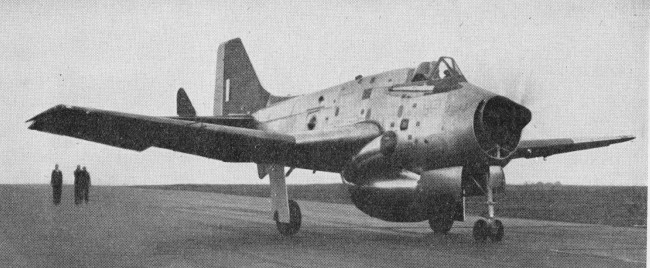
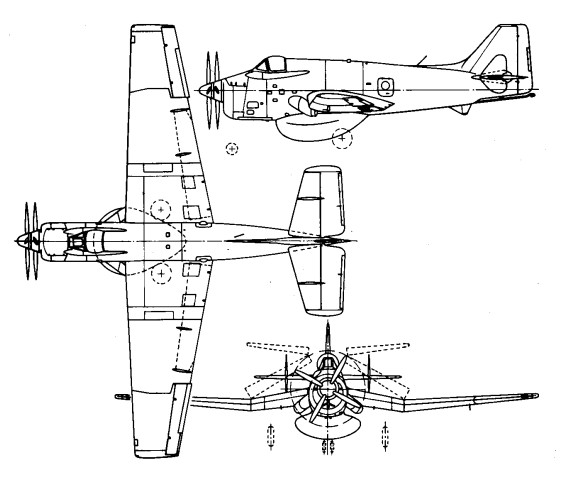
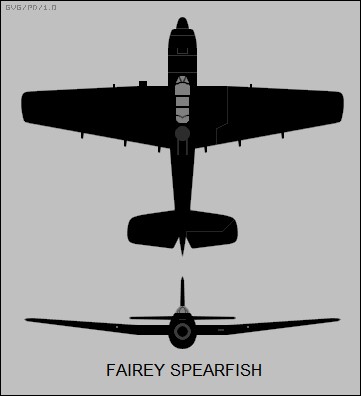
The Spearfish was designed by Fairey Aviation to Admiralty Specification O.5/43 as a replacement for the Fairey Barracuda in the carrier-based torpedo/dive bomber role. In comparison to the Barracuda, the Spearfish had a much more powerful engine, an internal weapons bay and a retractable ASV Mk.XV surface-search radar mounted behind the bomb bay. The Spearfish was half as large again as the Barracuda, as it was designed to be operated from the 45,000-long-ton (46,000 t) Malta-class aircraft carriers then under development.
The Spearfish was a cantilever, mid-wing monoplane, with an all-metal, monocoque fuselage. The centre wing section was built integral with the fuselage and the outer wing panels could be hydraulically folded for carrier operations. A distinguishing feature of the wing was the large Fairey-Youngman flaps that spanned 73.5% of the wing’s trailing edge. The Spearfish had an outward-retracting conventional landing gear with a tailwheel. The wings housed a pair of 183-imperial-gallon (830 l; 220 US gal) fuel tanks, plus a 43-imperial-gallon (200 l; 52 US gal) tank in the leading edge of the starboard wing for a total of 409 imperial gallons (1,860 l; 491 US gal) of fuel. The two-man tandem cockpit had a hydraulically operated canopy.
The large internal weapons bay could alternatively carry up to four 500-pound (230 kg) bombs, four depth charges, a torpedo, or a 180-imperial-gallon (820 l; 220 US gal) auxiliary fuel tank. The Spearfish was intended to carry four 0.5-inch (12.7 mm) M2 Browning machine guns, two in a remote-controlled Fraser-Nash FN 95 barbette behind the cockpit and two in the wings. The only external offensive armament was 16 RP-3 rockets that could be carried underneath the outer wing panels.
In August 1943, the company received an order for three prototypes to be built against Specification O.5/43 and the first prototype, serial number RA356, was constructed at Fairey’s Hayes factory and first flew on 5 July 1945 from Heston Aerodrome; the other two did not fly until 1947. In November 1943 the company was ordered to build a dual-control dive-bombing trainer variant against Specification T.21/43 and this was built at the Heaton Chapel factory and assembled and flown at Ringway on 20 June 1946. Three further development aircraft were ordered in May 1944 to be built at Heaton Chapel, with the last two to be fitted with a Rolls-Royce Pennine engine; only the first Centarus-engined aircraft was built but never flew.
Production orders for 150 aircraft were placed to be built at Heaton Chapel; the first ten aircraft were intended to use 2,600-horsepower (1,900 kW) Bristol Centaurus radial engine, Centaurus 59 engines on the next 22, and Centaurus 60s of the remainder. In addition, the flaps were to be enlarged and lateral control was to be provided by spoilers with small “feeler” ailerons. With the cancellation of the Malta-class carriers, the Fleet Air Arm no longer had a requirement for new torpedo bombers and the programme was cancelled. Work continued on the two other prototypes built at Hayes after the cancellation of the contract, albeit very slowly.
Test pilot Eric Brown evaluated the first prototype and found “the controls in cruising flight were very heavy and, in fact, lateral control was so solid that I could barely move the ailerons with one hand at 130 knots (240 km/h; 150 mph).” In bad weather a pilot circling a carrier while waiting to land would have been forced to fly such a wide circuit that he could not always keep the carrier in sight. The later prototypes had ailerons boosted by hydraulic power and artificial feel to the stick from a spring, as an interim measure but Brown found “the second prototype was much less the pleasant aircraft to fly as the stick continually hunted either side of neutral and there was no build-up of stick force with increase in speed.” The Spearfish lacked any sort of stall warning, which would have been a problem in operational use as the stall and approach speeds were fairly close. For the landing, the aircraft proved quite docile.
The first prototype was later used by Napier & Son at Luton for trials of the firm’s inflight de-icing systems. It was then briefly used for ground-training purposes beginning on 30 April 1952, until it was scrapped shortly afterwards. The second prototype was used by the Royal Navy Carrier Trials Unit at RNAS Ford, Sussex, until it was sold for scrap on 15 September. The third prototype conducted ASV Mk.XV radar trials, but was damaged in a heavy landing on 1 September 1949 and sold for scrap on 22 August 1950 as uneconomical to repair. The fourth prototype never flew and was used as a source of spares. The sole Heaton Chapel-built aircraft was the closest to the planned production configuration and it was used for engine-cooling and power-assisted flying-control trials, until it was struck off charge on 24 July 1951.
In a follow-up, to meet Specification O.21/44 for a two-seat strike fighter, the Spearfish was redesigned to accommodate a twin-coupled Rolls-Royce Merlin engine and contra-rotating propellers. A variety of other engines were considered and although a production order was placed for three examples in 1944, the programme was eventually shelved, remaining as an unfulfilled paper project.
Engine: 1 x Bristol Centaurus 57, 2,825 hp (2,107 kW) Propeller: 5-bladed Rotol VH 65, 14 ft (4.3 m) diameter Wingspan: 18.36 m / 60 ft 3 in Wing area: 49.24 sq.m / 530.01 sq ft Length: 13.59 m / 44 ft 7 in Height: 4.11 m / 13 ft 6 in Max take-off weight: 10026 kg / 22104 lb Empty weight: 6901 kg / 15214 lb Fuel capacity: 409 imperial gallons (1,860 l; 491 US gal) Max. speed: 470 km/h / 292 mph / 254 kn Cruise speed: 196 mph (315 km/h, 170 kn) Service ceiling: 7620 m / 25000 ft Time to 10,000 ft / 3,048 m: 7.75 min Range: 1,036 mi / 1,667 km / 900 nmi Combat range: 349 mi (562 km, 303 nmi) Armament: 4 x 12.7mm M2 Browning machine guns Bombload: 1 × torpedo or 2,000 lb (907 kg) Crew: 2








 All Aero