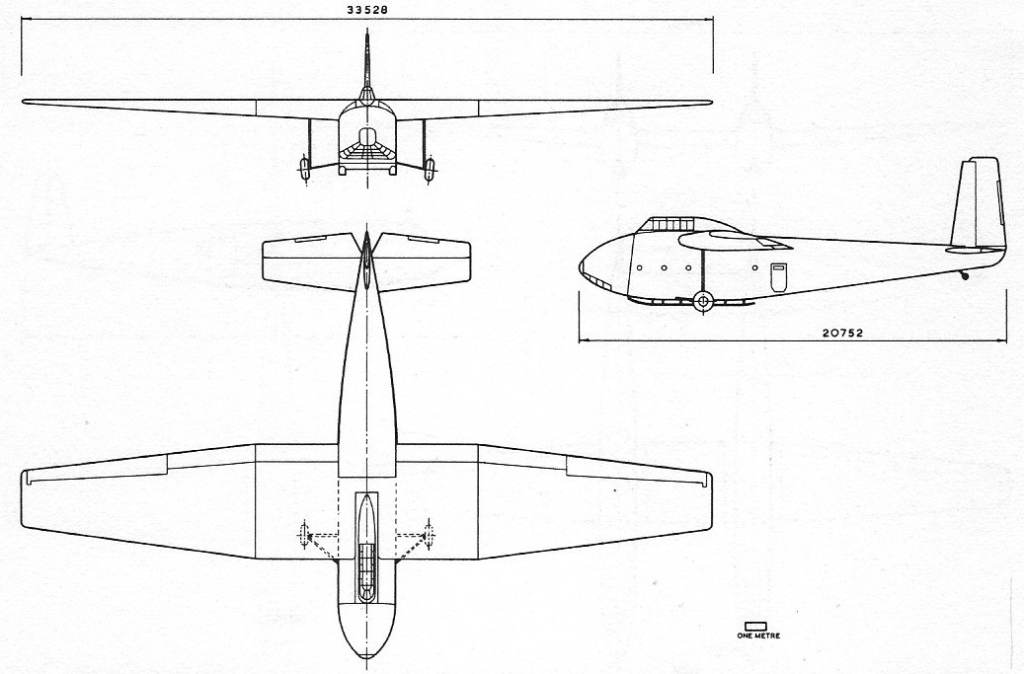
The General Aircraft GAL 49 Hamilcar 1 was a large transport glider of wooden construction, designed to A.M. Spec. X.27/40 to carry a crew of two and either 60 troops or a flight 7-ton tank.
A hinged nose section was fitted for loading. The undercarriage was jettisonable mainwheels and two steel sprung main skids. Trailing edge flaps were fitted.
They were built by General Aircraft Ltd and various sub-contractors. The first flight of the prototype was on 27 Mach 1942.
Variation General Aircraft GAL.58 Hamilcar
Wing span: 110.007 ft / 33.53 m Wing area: 1657.441 sq.ft / 153.980 sq.m Length: 68.012 ft / 20.73 m Height: 20.243 ft / 6.17 m Max take off weight: 36005.4 lb / 16329.0 kg Weight empty: 18402.9 lb / 8346.0 kg Aspect ratio: 7.3 Wing section: RAF 34 modified Max. speed: 130 kts / 241 kph Max tow speed: 241 kph / 150 mph Stall: 104 kph / 65 mph Landing speed: 57 kts / 105 kph Wing load: 21.73 lb/sq.ft / 106.0 kg/sq.m Crew: 1
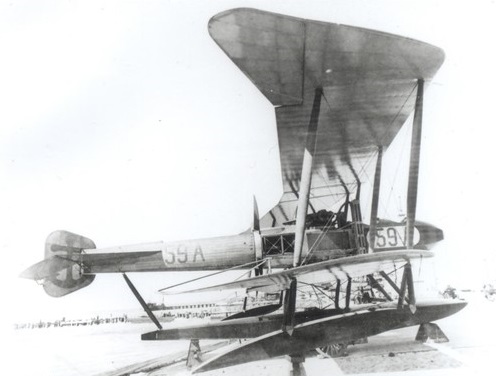
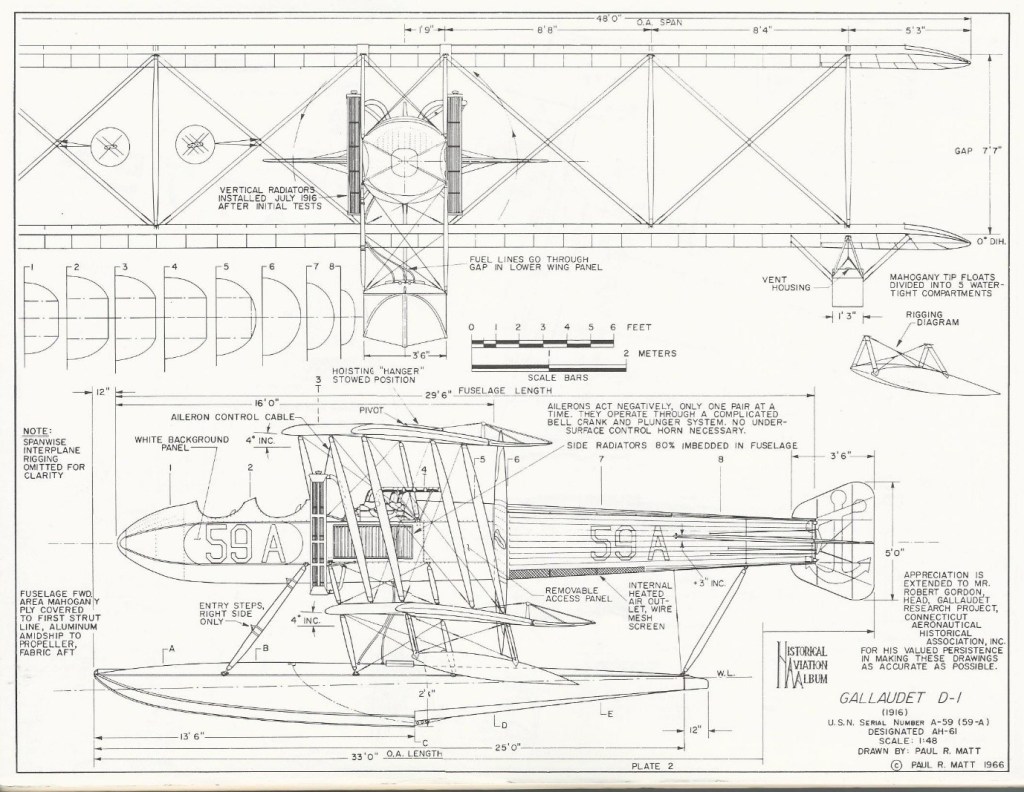
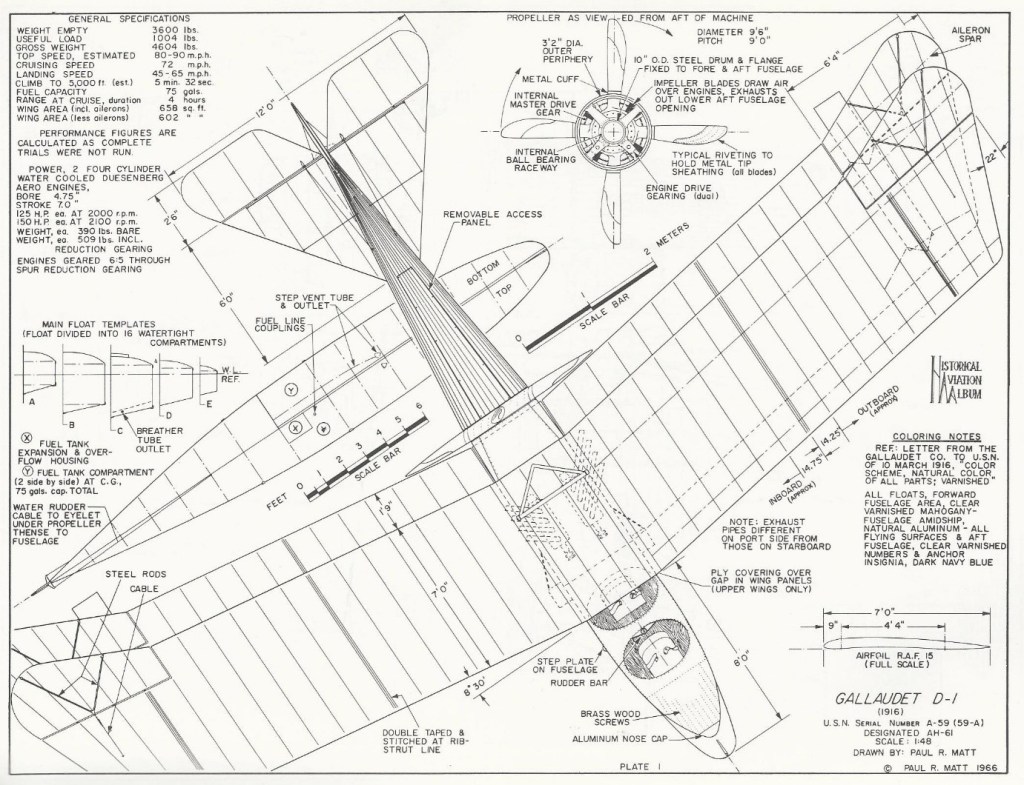
In response to a requirement by the U.S. Navy for light floatplanes capable of being launched off catapults by ships underway, the Gallaudet Aircraft company began development of the “D-4”, based on the earlier Gallaudet D-1. The D-1 (A59) was powered by two 150 hp Duesenberg engines mounted side by side, and first flown on 17 July 1916. Following delivery of the D-1 in January 1917, the firm reorganized as Gallaudet Aircraft Corporation, and moved to Greenwich, Rhode Island.
Despite numerous mechanical difficulties the Army bought four of the improved D-2 version.
In an effort to produce an aircraft with the best possible forward visibility for the observer, Gallaudet developed the D-2 into the D-4.
D-1 Wingspan: 48 ft Length: 33 ft Gross weight: 4,604 lb Max speed: 90 mph
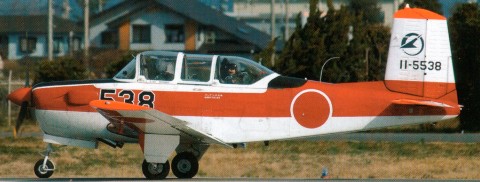
The original LM/KM series aircraft were four-seat developments of the Beech T-34A Mentor, the first flying in 1955, and large numbers were delivered to the JMSDF and JGSDF for liaison and training. A tandem two-seat derivative of the Beech T-34 with a Lycoming IGSO-480-AIA6 piston engine entered production in the mid¬1970s as the KM-2B for the JMSDF, and later as the T-3 for the JASDF. Fuji in Japan flew the prototype (JA3725) of the KM-2B two-seat primary trainer on 26 September 1974; this development of the earlier KM-2 combined the airframe and powerplant of that aircraft with the tandem-seat cockpit arrangement of the Beech T-34A Mentor.
Ten KM-2 were ordered for the JMSDF, for delivery by February 1963. Further contracts were to follow, to replace the 45 North American SNJs (Harvards) then in naval service. The prototype KM-2 received its certificate of airworthiness February 1961.
T-5
Fuji has tested a company owned four-seat KM-2 utility aircraft with an Allison 250-B17 turboprop, under the designation KM-2D.
The first KM-2D, flown on 28 June 1984, was a straight conversion of a company-owned piston KM-2 retaining the original four-seat cabin structure.
The JMSDF considered re-engining its fleet of tandem-seat KM-2B trainers, but has now elected to purchase new-build KM¬2Kais, with the first funded in 1986/87. These will be turboprop powered, and will retain the tandem seating of the KM-2B. Deliveries are scheduled for 1988, to begin replacement of the oldest KM-2Bs.
The Japanese Maritime Self-Defence Force took delivery of the definitive turbo-prop powered KM-2D prototype (first flown on 27 April 1988) in August 1988 which was to be tested by the service until March 1989. This prototype, a conversion of a MSDF KM-2B, embodied extensive cabin redesign.
KM 2 Engine: Lycoming IGSO-480 A1A6, 340 hp. Max speed: 227 mph (365 kph) at 16,400ft (5000 m) Cruise, 183 mph (295 kph) Initial climb, 1,560 fpm (7.92 m/sec) Service ceiling, 29,200ft (8900 m) Range, 765 mls (1235 km). Empty weight, 2387 lb (1083 kg) Loaded weight, 3,296 lb (1495 kg). Span, 32 ft 9.75 in (10 m) Length, 26 ft 0.75 in (7.95 m) Wing area, 177.6 sq.ft (16.49 sq.m).
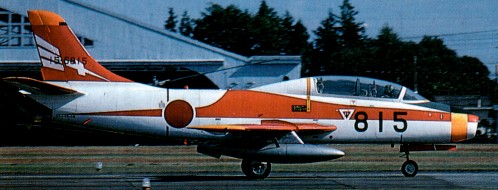
First post-war jet aircraft of Japanese design, the prototype T1F2 flew for the first time on January 19, 1958, powered by a 4,000 lb thrust Bristol Siddeley Orpheus 805 turbo-jet. Two production batches of 20 of this version were built as standard two-seat intermediate jet trainers for the Japanese Air Self-Defence Force, under the designation T1A.
They were followed by the all-Japanese T1F1 (JASDF designation TIB) with a 2,645 lb thrust J3 IHI 3 turbojet produced by Ishikawajima-Harima. The prototype of this version flew on May 17, 1960, and 20 production models were ordered by the JASDF for delivery between August 1962 and March 1963.
Fuji T1F2 (T1A)
T1A / T1F2 Engine: 1 x 4,000 lbs.t. (1814 kgp) Bristol Siddeley Orpheus 80506. Span: 34 ft 5.5 in (10.5 m) Length: 39 ft 9.25 in (12.12 m) Wing area: 239 sq.ft (22.22 sq.m) Height: 13ft 3in Empty weight: 5,335 lb (2 420 kg) Loaded weight: 9,150 lb (4 238 kg) Gross weight: 10,6701b Max speed: 576 mph (921 kph) at 20,000ft (6100 m) Cruise: 397 mph (640 kph) Initial climb: 3,460 fpm (17.3 m/sec) Ceiling: 52,490 ft (16000 m) Range: 806 mls (1297 km). Max rate of climb at SL: 6,100 ft/min
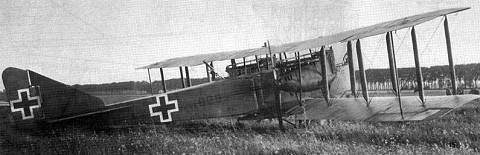
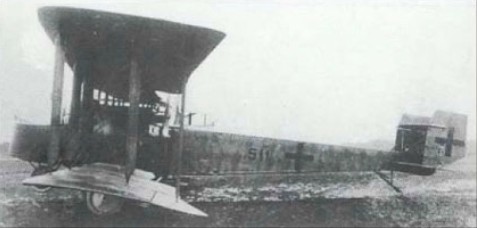
The G.III bomber was a twin 194kW Mercedes D.IVa engined scaled up version of the G.II which saw much operational service from early 1917. Its wings of increased span incorporated three bays outboard of the motors. The undercarriage comprised two pairs of wheels, with a fifth wheel immediately under the nose gunner’s cockpit the latter assisting any heavily loaded takeoff, but mainly preventing a nose over landing on the crude runways of the period. Construction of the G.III was a typical contemporary mixture of wood, plywood and steel tubing, and the three man crew consisted of a pilot and a ‘bombing officer’ in a side by side cockpit, with two cockpits mounting guns in the nose and mid fuselage connected by an internal passageway for the third crew member. Capable of lifting a 1500 kg (3310 lb) bombload, the main weight of bombs was carried externally below the main nacelle, but internal racks, each for five 10 kg (22 1b) bombs, were located either side of the communicating passage aft of the pilot’s cockpit.
G.IIIa
For the final 18 months of the First World War, Friedrichshafen G.IIIs, in company with the better known Gotha G.V bombers, formed the real strength of German heavy bomber units, particularly on the Western Front in France. Used mainly in long¬distance night raids, G.IIIs are known to have attacked such principal targets as Paris, and are believed to have participated in some of the well publicized attacks against Eng-land. During 1917 Friedrichshafen concentrated on the production of the G.III and G.IIIa with many others being built under contract by Daimler and Hansa. An improved variant was the G.IIIa, built under licence by the Daimler works. This differed from the G.III only in minor structural changes to the tail unit and wing tip configuration. It is not known how many G.IIIs and G.IIIas were built in total, but more than 330 were produced by the subcontractors.
Span: 23.7 m (77 ft 9 in). Length: 12.8 m (42 ft). Endurance: 5 hrs. Powerplants: 2 x 260 hp Mercedes D IVa Armament: Bombload up to 1496 kg (3300 lb); 1 Parabellum machine gun in nose; 1 Parabellum machine gun in rear Maximum speed: 135 km/h (84 mph)
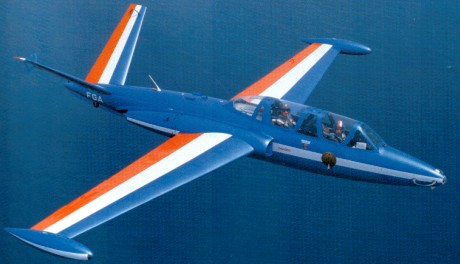
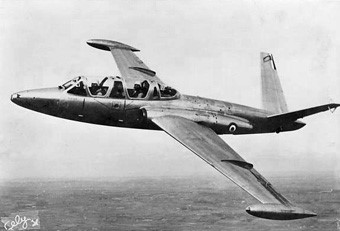
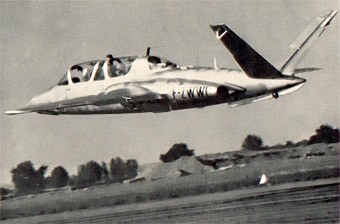
Designed by R. Castallo and P. Maubassin to a specification from the French Air Force for a two-seat, pure jet fighter trainer, Fouga presented a proposal for a tandem two seat trainer to the French Air Ministry, the CM.130R which was powered by two 353 lbst (160kgst) Palas engines. The design was refined and a contract for three of the resulting twin Marbore II powered CM.170R aircraft was placed with Fouga in December 1950. The Morane Saulnier company were working along similar lines at this time, and their drawing boards sired the MS.755 Fleuret. Both companies had schemed aircraft which shared essentially similar configurational layouts.
The CM.170 Magister featured tandem seating, a mid mounted wing and two Marbore II turbojets mounted either side of the fuselage in nacelles faired into the wing fuselage joint. The only unusual feature of the CM.170 was a butterfly tail, whereby fin and tailplane are replaced by two surfaces mounted at 45 degrees to the horizontal, the control surfaces of which moved the same way to act as rudders and moved in opposition to act as elevators. The Magister is all-metal. The mid-mounted wings have single-slotted flaps and airbrakes. The butterfly-type tail has surfaces separated by 110 degrees. Fuel is housed in two fuselage tanks of 255-litre and 475-litre capacity, with wingtip tanks each holding 125 litres. The tandem cockpits are pressurised and air-conditioned, with individually regulated oxygen supplies. Ejection seats are not fitted. VHF, blind flying equipment and radio compass are standard in the trainer, while UHF, Tacan and IFF may be fitted to armed Magisters. Armament combinations include two 7.5mm or 7.62mm machine-guns mounted in the nose, with 200 rounds of ammunition per gun. A gyro gunsight is fitted in both cockpits, the rear one having periscopic sighting. Underwing ordnance loads include two Matra Type 181 pods each with eighteen 37mm rockets, two launchers each mounting seven 68mm rockets, four 25kg air-to-ground rockets, eight 88mm rockets, two 50kg bombs, or two Nord AS.11 air-to-surface guided missiles.
The first of three CM.170 prototypes flew on July 23, 1952, at Mont-de-Marsan (piloted by Leon Bourriau), while the MS.755 took to the air for the first time some six months later on January 24, 1953. Two CM.170 prototypes were built; the first with the butterfly tail and second with a conventional tail. Despite the crash of the prototype, the butterfly tail was used for the production series.
After evaluating the merits of both aircraft, the French Air Force expressed a preference for tandem seating, and in 1953 placed an initial order for ten pre production and 95 production CM.170R Magister aircraft. First pre production aircraft (batch of 10) flew on July 7, 1954. First production aircraft flew on February 29, 1956.
The CM.170, MS.755 and MS.760 used only fuselage fuel tanks. The navalized version of the C.M.170M has the addition of a tail hook, the two canopies jettisonable in one piece, the oleos longer and some items of equipment different.
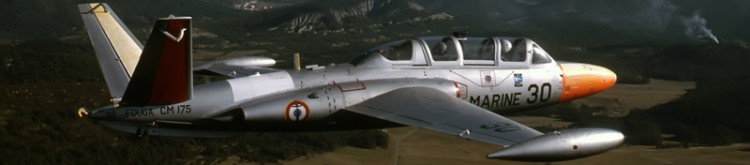
The French Navy, also looking for a training aircraft, turned to Fouga for an aircraft for operations on aircraft carriers and the marine environment and Fouga worked on several changes to their CM170R.
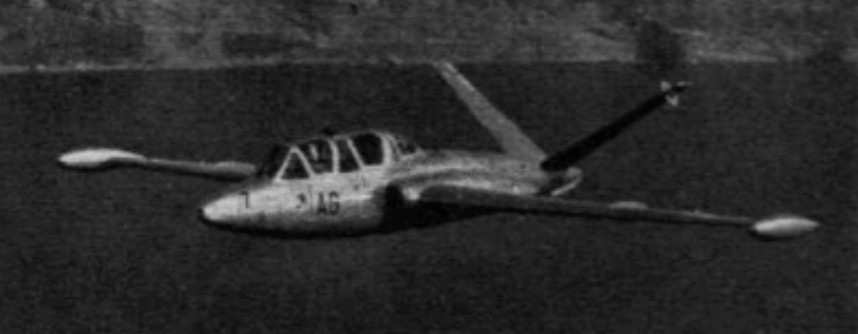
CM 170 M Zephyr
The Naval version, the CM-175 is distinguished by some changes. The canopy sliding backwards replacing the old, clamshell-type allowing flight and landings open. The new rear seat telescope is angled Z to allow the sliding of the front canopy. A tailhook is mounted under the rear fuselage. It retracts into the keel. A new long-stroke shock absorber increased the height of the landing gear 15 centimetres and absorb the shock of landing and catapult launches. Wing tip tanks are removable (but not releasable in flight). Their capacity is 122 lt instead of 230 lt equipping Air Force Magisters.
The CM 175 is equipped with a G- II Marboré 3 which differs very little from the F-3 of the first series of Magister. Ties back journals are more flexible on the G-3. Turbomeca Marbore II equipped the Fouga CM175 Zephyr throughout his career.
The prototype No. 1 CM 170 M Esquif, who would become the CM 175 Zephyr, was first flown on 31 July 1956, by Jacques Grangette. In addition to the two prototypes of the CM-170M Esquif, 28 aircraft were ordered and delivered from 1960. They were renamed Zephyr.
CM 170 M Zephyr
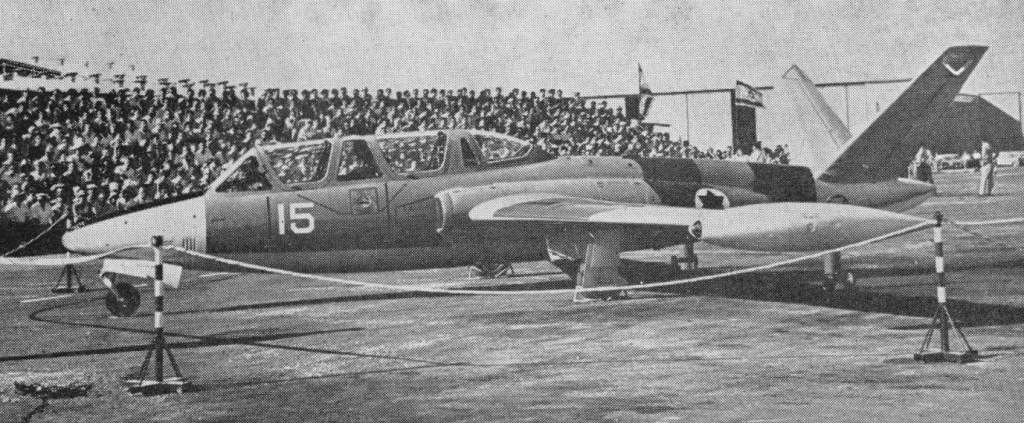
Total CM.170 and CM.175 production amounted to 916 Marbore II powered Magisters, including licence production carried out in Finland by Valmet OY (62), Israel by Israel Aircraft Industries (36) and West Germany by Flugzeug Union Sud (188). Israeli aircraft upgraded at Bedek to AMIT Tzukit status.
In the 1960s, the Finnish Air Force had MIG-21 rockets in stock which had a limited lifetime. To use this stock for training purposes the idea of rocket launchers for Fouga Magister jet trainers was born. A contract to design the launchers as a private venture was issued, and with Aulis Eerola 4-tube units covered with fiberglass skin were built. In test firings the launchers proved to be accurate but had an unfortunate end. On one of the test flights the pilot accidentally pressed the emergency release button and the units were lost deep in a bog and were never found.
The CM.170 2 Super Magister was an upgraded and refined CM. 170. The Magister is a sophisticated aircraft, with pressurised tandem cockpits and power controls (aileron boost), although in its standard form, it does not have ejection seats. To meet the latter requirement, particularly for Indian interest at one stage, a new version was produced designated the CM 173 Super Magister. Military Users: Algeria, Austria, Bangladesh, Belgium (50), Brazil, Cambodia, Congo, Eire, Finland, France, Lebanon, Morocco, West Germany, Israel, Rwanda, Salvador, Senegal, Togo.
The first aircraft built in Israel was a Fouga Magister completed from French Components by Bedek Aircraft in mid-1960.
First aircraft built in Israel
The Aerospatiale Fouga 90 was a modernised descendent of the CM 170 with a deeper mid-¬fuselage incorporating a raised cockpit for the instructor, and fitted with a pair of Turbomeca Astafan IIG turbofans. The prototype F-¬WZJB flew for the first time on August 20, 1978. A much updated and redesigned CM.170 with a view to re opening production, or establishing a conversion for the many existing CM.170 operators. The Fouga 90 featured the wing and empennage of the Magister, but coupled Turbomeca Astafan IIG engines with an all new fuselage incorporating a stepped tandem seating arrangement, including built in provision for ejector seats, and new avionics. Only one built, no further development was undertaken beyond the first aircraft.
An evolution of the CM170, the Super Magister was an improved model with two 480kg Marbore VI engines. The first flight was June 8, 1964. A single copy was built which was then be renamed Potez 94.
Potez (94) CM173 – Super Magister
Equipped with 2 Marboré VI, the Potez 94 was pressurized and had ejection seats.
In addition to French-manufactured Magisters offered for export, the trainer was manufactured under licence in West Germany by Flugzeug-Union-Sud for Luftwaffe training schools. With the transfer of most German flying training to the United States by the end of the 1960s, the Magister was phased out of service. Valmet OY in Finland built 62 Magisters under licence (in addition to 18 purchased from France) and Israel Aircraft Industries also acquired manufacturing rights for the type, building many for light-tactical use as well as training. Total production reached 929 including 194 in Germany, 62 in Finland and 36 in Israel.
About 310 Magisters of the 437 originally procured remained in service with the Armee de I’Air until the mid-1980s. A 150-hour basic flying training course was provided for commissioned pupils at the Ecole de I’Air at Salon-de-Provence, and similar instruction was provided for other ranks at Groupement Ecole 315, Cognac. Magisters also served with Groupement Ecole 313 to provide instructor training for the Armee de I’Air and basic flying training for overseas students. The Force Aerienne Belge’s Magisters at the Ecole de Pilotage Avance, Brustem, were replaced by Dassault-Breguet/Dornier Alpha Jets in 1979. Finland’s Magisters at the Central Flying School, Kauhava, were in the early 1980s replaced in service by the first of 50 British Aerospace Hawk trainers. Israel operated the Magister as a light attack aircraft and trainers, during the Six-Day War of June 1967, flying ground attack sorties on both the Egyptian and Jordanian fronts. The Irish Army Air Corps also operated six Super Magisters in the dual light attack/training role, based at Baldonnel near Dublin.
Variants: CM.170 – 1950 Fouga Magister trainer designed with Ing Szydlowski from Turbomeca CM.170: Magister, 3 prototypes (1952), 10 pre-production a/c (1955) aka CM.170R (‘R’ for Réaction = Jet-propelled) NB: CM.170 No 2 first fitted with cruciform tail, then the ‘V’ type CM.170-1: Magister, 1955, 1st production vers., 2 x Marboré IIA, 761 built CM.170M Magister – 1956, CM-170 Marin, 2 x Aéronavale PoC a/c, led to Zéphyr CM.170M aka as CM.170 Esquif (‘Wherry’) CM.170-2 Magister – 1960, 2nd production vers., 2 x Marboré IV, 137 built
CM.171 – 1956 Makalu, CM.170 n°15 conv. to take 2 x Turbomeca Gabizo turbojets CM.171: consid. engine testbed a/c for CM.195 project
CM.173 – 1966 Super Magister, 2 x 480 kg Marobé VI (Marboré Super VI), 1 prototype CM.173: aka Potez 94, higher-power CM.170 deriv. for South African market
CM.175 Zéphyr – Aéronavale shipboard trainer deriv. from CM.170M Flight 20 June 1958 refers to Zéphyr as the “CM.175 Esquif” (sic)
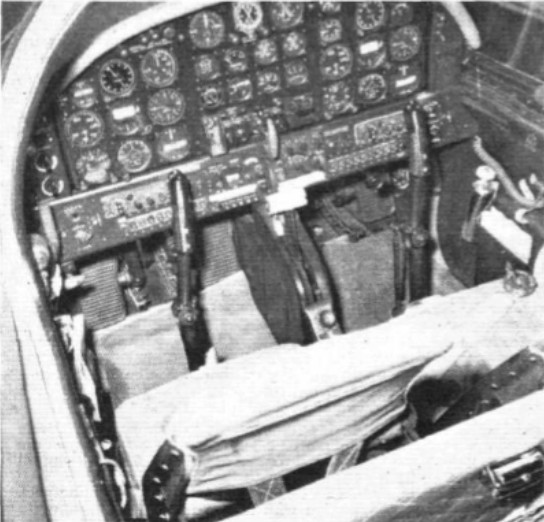
Potez-Heinkel C.M.192 cockpit
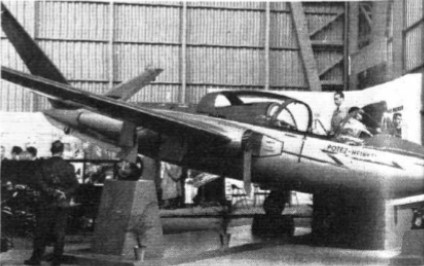
Potez-Heinkel C.M.192
CM.170 Magister I Engines: 2 x Turbomeca Marbore IIA, 400 kg / 880 lb thrust. Wing span: 39 ft 9 in ft (12.1 m) Overall length: 33 ft (10 m) Height: 9 ft 2 in ( 2.8 m) Wing area: 186.1 sq.ft (17.3 sq.m). Wing aspect ratio: 7.42. Empty wt: 4740 lb (2151 kg). Normal T/O wt: 6280 lb (2851 kg). MTOW: 7055 lb (3202 kg). Internal fuel cap: 160 Imp.Gal. (727 lt). External fuel cap: 55 Imp.Gal. (250 lt). Wing loading: 33.7 lb/sq.ft (164 kg/sq.m). Pwr loading: 3.6 lb/lbst (3.6 kg/kgst). Max speed: 432 mph (695 kph). Initial ROC: 3350 fpm (17 m/sec). TO dist 50 ft: 2600 ft (793 m). Range: 575 sm (925 km). Operating ceiling: 33,000 ft. Service ceiling: 11000 m / 36100 ft Seats: 2
Magister II Engines: 2 x Turbomeca Marbore VI, 1150 lb thrust.
Fouga 90 Engine: 2 x Turbomeca Astafan IIG turbofan, 1,520 lb Wing span: 39ft 6 in (12.04 m) Max speed: 398 mph (640 km/h)
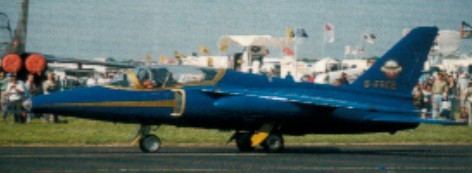
Although the RAF had not selected the Fo 141 Gnat for service in a front-line role, it did have a requirement for an unarmed, two-seat advanced trainer to replace the de Havilland Vampire T.Mk 11. Folland had already considered a training version of the Gnat as a private venture, and this was shown to be able to meet Air Ministry requirements including a 100 knot (185 kph) landing speed.
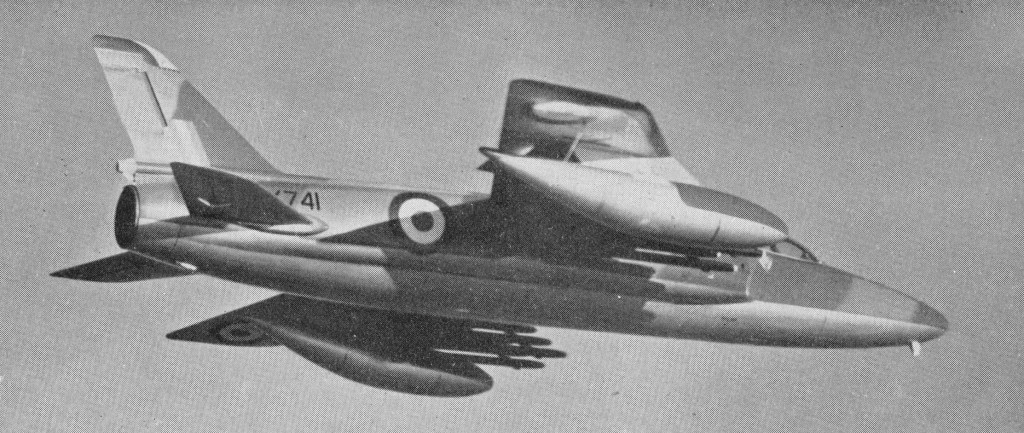
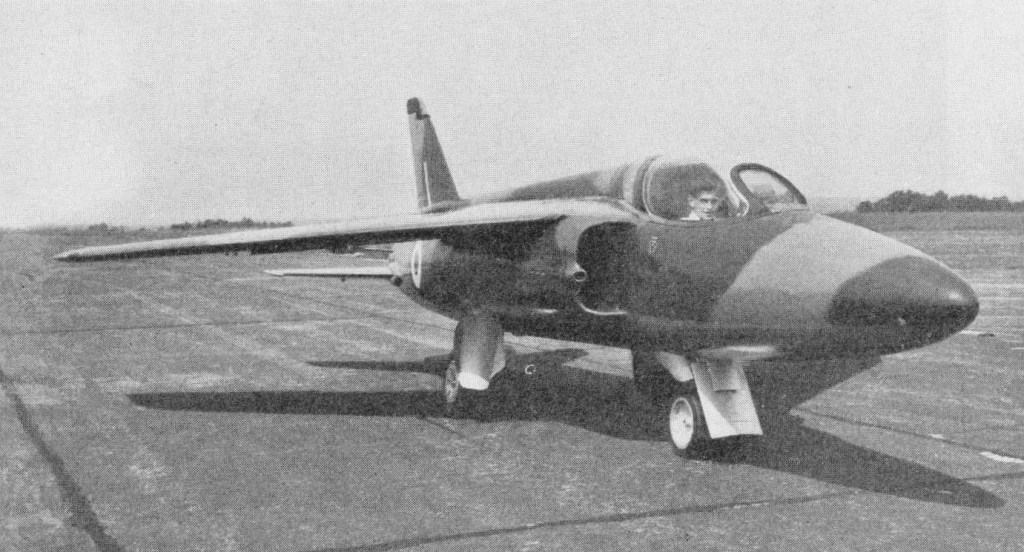
To make the Gnat a two-seater, it was necessary to remove the standard fixed gun armament of two 30 mm ADEN cannon located in the cheek intake fairings, and relocate the fuel tanks, but no major structural alterations were required. The most significant change was a new wing, increased in area by 3.72sq.m and with additional fuel capacity, which reduced the fuel storage requirement in the fuselage, making room for additional equipment. The forward fuselage was increased slightly in length, the tail surfaces enlarged, and outboard ailerons and conventional inboard flaps replaced the inboard ailerons of the fighter version. Power was to be supplied by a 1919kg thrust Orpheus 100.
Follands had already designed and built a new wing for a proposed development of the Gnat fighter for naval use, with improved low speed performance. By adopting the simpler and more efficient construction of this wing, which was reduced in thickness from the eight per cent t/c ratio of the original Gnat, to a mean value of seven per cent, while retaining the symmetrical R.A.E. 102 (mod.) section, Follands were able to offer a larger area for the trainer to give the necessary reduction in landing speed without a major weight penalty. It had the additional facility of increased fuel capacity.
A Ministry of Supply design study contract was awarded to Specification T.185D in the autumn of 1956 and a prototype contract was negotiated during 1957.
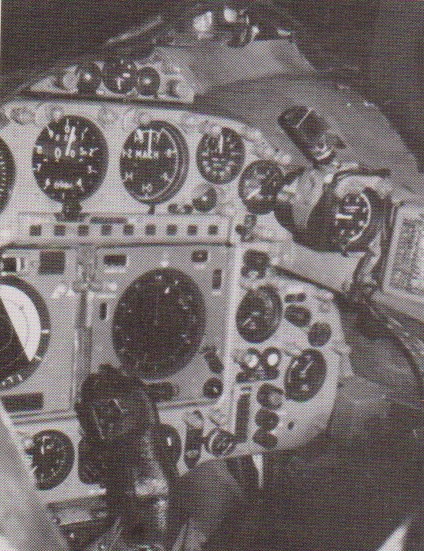
Apart from performance, one of the main requirements was for the inclusion of an advanced level of equipment, comparable to that in operational aircraft under development although not then in service. This included new flight and navigational instrument presentation to OR.946, provision of engine anti icing, centralised failure warning system, installation of liquid oxygen facilities and many other very advanced items.
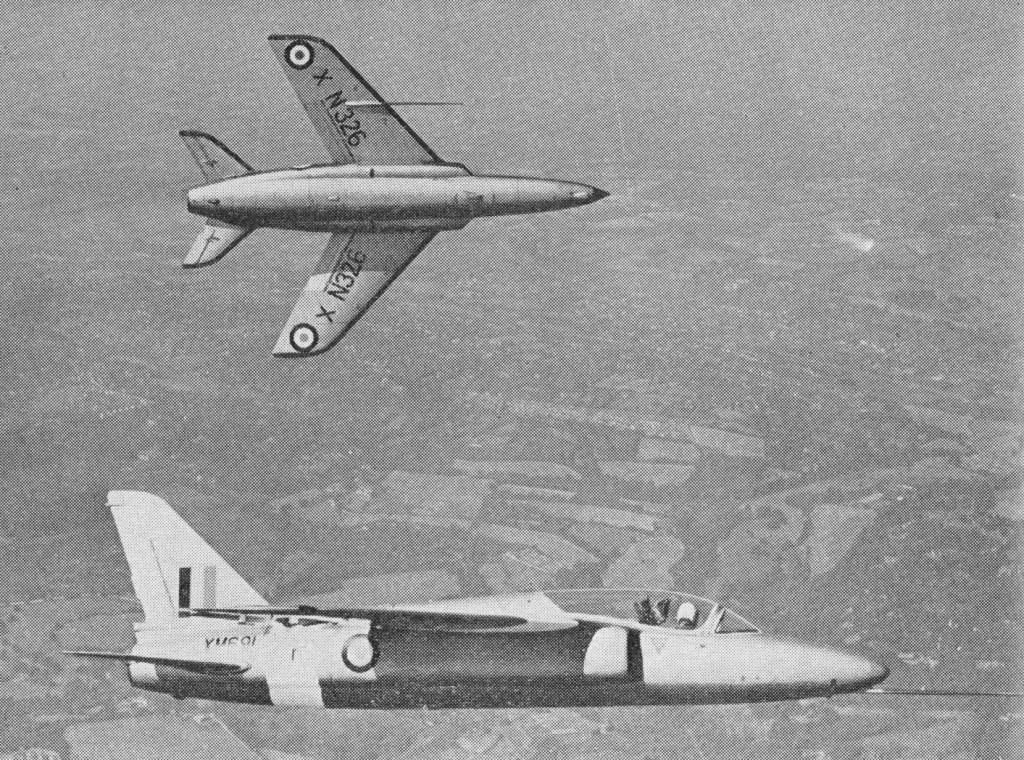
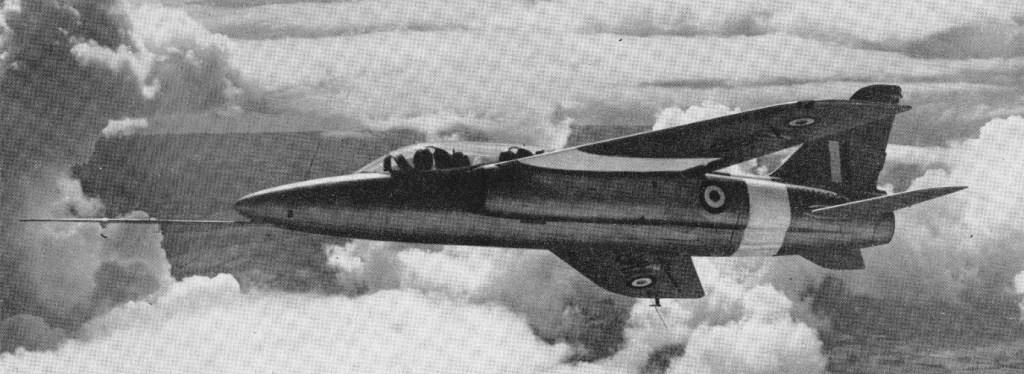
Gnat Trainer (nearest), Farnborough, 1959
The OR.946 flight instrumentation occupied space on the instrument panel than in the earlier Gnat by the deletion of the gun sight and bullet proof windscreen framing. OR.946 concentrates all essential flight information on two display units occupying the entire centre of the panel. On the left is the roller blind F.4 attitude indicator, which takes the place of the normal artificial horizon, and provides a non toppling reference in all flight conditions, while on the right is the Mk.1 display unit for TACAN and other navigational equipment.
Additional space for the “black boxes” making up the Gnat T.l’s sophisticated equipment, including TACAN, ILS and the Air Data Computer, was found by enlarging the spine fairing of the original fighter behind the cockpit canopy. The canopy itself, as well as the windscreen, was completely new, the former being of the aft hinged clamshell type, blown from a single piece of Perspex. To protect the rear occupant in case of canopy jettison, the Gnat trainer has an additional internal windscreen over the duplicated instrument panel.
An ejection escape system was developed specially for the trainer by Folland, using two of the company’s own lightweight seats. Work on these was started by Folland in 1953, using a SAAB type seat layout as the original basis, but development had since continued entirely independently. The Mk. 4GT1 (front) and 4GT2 (rear) ejection seats in the Gnat have 80 ft/sec (24.4 m/sec) telescopic guns for adequate fin clearance at all airspeeds, and are cleared for use down to runway level at speeds of 90 650 knots (106 1204 km/h). They are used in conjunction with GQ Mk 35 back type parachutes, plus Type X personal survival packs in the seat pans, and have 6 ft (1.82 m) diameter drogues for man stabilisation if ejection takes place above 10,000 ft (3050 m). An extractor ‘chute on the seat helps immediate separation, with a drogue sock pulled off by a static line as the seat leaves the aircraft. After initiation by face blind or seat pan handle, operation of the seats is fully automatic. Engine installation was not changed from the original Gnat except that a slightly de rated Bristol Siddeley Orpheus was adopted in the interests of improved fuel economy and longer overhaul times. Secondary modifications provided intake anti¬-icing from hot air tapped from the engine compressor through to the entry guide vanes and bullet, and drive for a larger electric generator. In its standard RAF form, the Gnat trainer was powered by an Orpheus 101 developing 4230 lb (1920 kg) thrust for take off, but it is offered in addition with the higher powered (4,720 lb (2135 kg) Orpheus 501 if extra altitude performance is required. A Gnat trainer (XM698) has also flown with the fighter engine, which is the Orpheus 701, with a similar thrust to the 500 series.
Following the finalisation of the design, a contract for fourteen development aircraft to spec T.185P was placed 7 January 1958, and the first prototype Fo.144 Gnat trainer made its initial flight in the hands of Sqdn. Ldr. E. A. Termant on August 31, 1959 from Chilbolton airfield. The first eight of these aircraft were mainly employed for per¬formance testing and development of the various systems, including improved longitudinal control. The Ministry did not at first place a production order as they were concerned about the size and ability of the company to take on a large order. Following the take-over of Folland by Hawker Siddeley Aviation (becoming the Hamble division), after successful evaluation by the various official bodies concerned, a production order was placed in July 1960 for thirty aircraft for use as advanced trainers, and an additional twenty were ordered a year later. A further order for forty one followed in March, 1962. These were being turned out at the requested rate of four per month. The last Gnat T.1 for the RAF was delivered in May 1965.The Gnat trainer was then being offered on the overseas sales market.
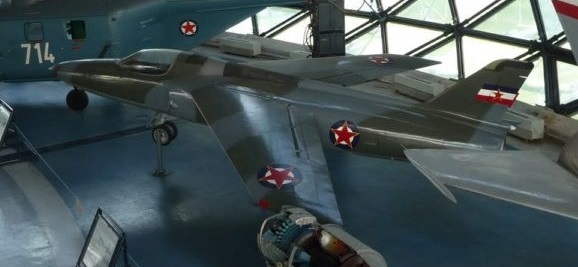
Yugoslavia ordered two Gnat F.1s for evaluation; the first aircraft flew on 7 June 1958 and both were delivered to Yugoslavia by rail. The aircraft were flown by the flight test centre but no further aircraft were ordered. One aircraft was destroyed in a crash in October 1958 while the other is preserved and on display in Serbia.
Hydraulic power is used as the primary means of operating ailerons and the all flying tailplane, with manual reversion in case of failure of the hydraulic system. Compared with the original Gnat, which had combined inboard ailerons and flaps, the trainer has a conventional flap and outboard aileron arrangement. The ailerons have automatic control stops which just about halve their range of movement to eight per cent at speeds above 150 knots IAS (278 km/h) to limit the rate of roll and prevent inertia coupling. Effective longitudinal control results from the hydraulic¬ally powered flying tailplane, which like the ailerons has spring¬feel. A “Q” gearing mechanism reduces the amount of tailplane movement for a given stick displacement as speed increases, which improves handling at high indicated airspeeds, but the stick force per g is still very light above 400 knots (741 km/h). Tailplane trimming is via an electric actuator and thumb switch on the control column. In the event of hydraulic failure, the rear portion of the tailplane may be unlocked to act as elevators, with tailplane trimming still available from a stand by electric motor in the Hobson unit. Stick forces in manual are apparently not heavy, but because of the small size of the elevators, their effectiveness is only about one fifth of that of the tailplane. Speed is then restricted to 400 knots (741 kph) or M0.85. The Orpheus 101 was up rated to 4,400 lb (1995 kg.) thrust to improve the high altitude performance. With its simple and rugged structure designed for a minimum fatigue life of 5,000 hours and characterised by the absence of complicated castings and forgings, the Gnat is not difficult to build or maintain. It became clear, however, that no production order would be placed while Folland remained outside the major manufacturing groupings which the government favoured; thus the company was taken over by Hawker Siddeley Aviation, becoming its Hamble Division.
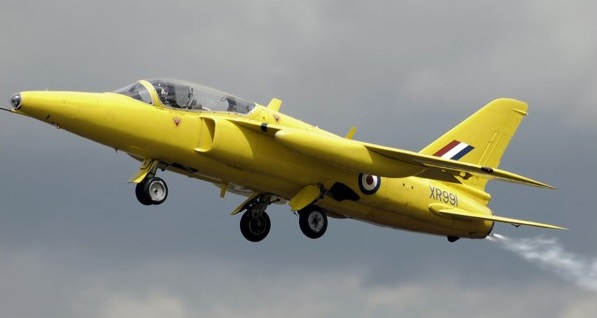
Contracts for 30, 20 and 41 aircraft were awarded in February 1960, July 1961 and March 1962 respectively. The last production Gnat T.Mk 1 flew on 9 April 1965 and was delivered to the RAF on 14 May, in the all-red scheme of the Red Arrows team. The Central Flying School, then at Little Rissington, first introduced the type in February 1962 but the major operator was No. 4 Flying Training School at Valley, which took its first aircraft on strength in November 1962 and which, in 1964, introduced the Gnat to the formation aerobatic scene, operating five all-yellow Gnats known as the Yellowjacks.
The team reformed as the Red Arrows in 1965, under the control of the Central Flying School, and its Gnats were withdrawn finally at the end of the 1979 display season, to be replaced in 1980 by the British Aerospace Hawk T.Mk 1. No. 4 FTS retired its Gnats on 24 November 1978.
Once pilots graduated from basic training on the BAC Jet Provost and gained their wings they were selected for one of three streams: fast jet, multi-engined, or helicopter. Those selected for fast jets were posted to RAF Valley for advanced training on the Gnat T.1, typically 70 hours of flying. Students would then move on to operational training using the Hawker Hunter, followed by a posting to an operational conversion unit for the type of aircraft to be flown.
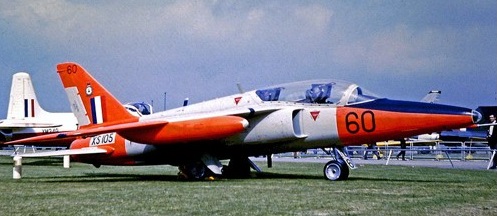
Gnat T.1 XS105 60 4 FTS
Following the introduction of the Hawker Siddeley Hawk into the training role as a replacement the Gnats were withdrawn from service. The largest operator 4 FTS retired its last Gnat in November 1978. Most of the retired Gnats were delivered to No. 1 School of Technical Training at RAF Halton and other training establishments to be used as ground training airframes. When the RAF had no need for the Gnats as training airframes they were sold off. Many were bought by private operators and are still flying in 2014.
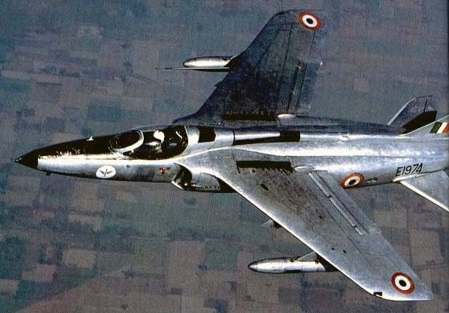
Including licence built models, India received 238 plus 79 similar Ajeets. The first 13 aircraft for the Indian Air Force (IAF) were assembled at Hamble-le-Rice, they were followed by partly completed aircraft and then sub-assemblies as Hindustan Aircraft slowly took over first assembly, and then production of the aircraft. The first flight of an Indian Air Force Gnat was in the United Kingdom on 11 January 1958, it was delivered to India in the hold of a C-119, and accepted by the Air Force on 30 January 1958. The first Gnat squadron was the No. 23 (Cheetah), which converted from Vampire FB.52 on 18 March 1960 using six Folland-built Gnats. The first aircraft built from Indian-built parts first flew in May 1962. The last Indian-built Gnat F.1 was delivered on 31 January 1974.
IAF Folland Gnat “Sabre Slayers”
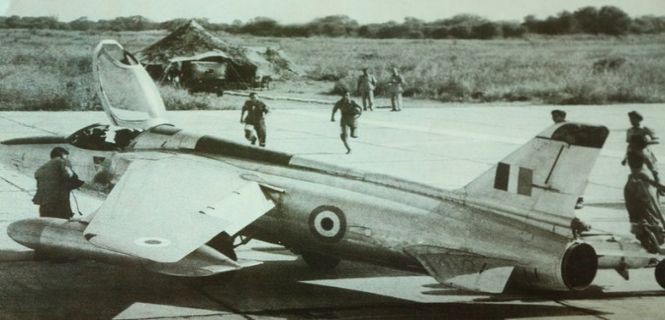
The Gnat is credited by many independent and Indian sources as having shot down seven Pakistani Canadair Sabres in the 1965 war, while two Gnats were downed by PAF fighters. During the initial phase of the 1965 war, an IAF Gnat, piloted by Squadron Leader Brij Pal Singh Sikand, mistakenly landed at an abandoned Pakistani airstrip at Pasrur and was captured by the PAF. Two Lockheed F-104 Starfighters claimed to have forced the Gnat down. This Gnat is displayed as a war trophy in the Pakistan Air Force Museum, Karachi. After the ceasefire, one Pakistani Cessna O-1 was shot down on 16 December 1965 by a Gnat.
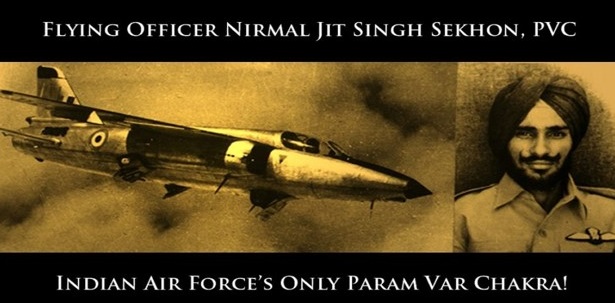
Flying Officer Nirmal Jit Singh Sekhon and his Gnat
The Gnats were used again by India in the Indo-Pakistani War of 1971 against Pakistan. The most notable action was the Battle of Boyra where the first dogfights over East Pakistan (Bangladesh) took place. The Indian Air Force (IAF) Gnats downed two PAF Canadair Sabres in minutes and badly damaged one. The Pakistan Air Force claims that one Gnat was shot down, which was proved incorrect. Another notable dogfight involving a Gnat was over Srinagar airfield where a lone Indian pilot held out against six Sabres, scoring hits on two of the Sabres in the process, before being shot down. Gnat pilot Nirmal Jit Singh Sekhon was posthumously honoured with the Param Vir Chakra (India’s highest gallantry award), becoming the only member of the IAF to be given the award.
By the end of 1971, the Gnat proved to be a frustrating opponent for the larger, heavier and older Sabre. The Gnat was referred to as a “Sabre Slayer” by the IAF since most of its combat “kills” during the two wars were against Sabres. The Canadair Sabre Mk 6 was widely regarded as the best dogfighter of its era. Tactics called for Gnats taking on the Sabres in the vertical arena, where the Sabres were at a disadvantage. As the Gnat was lightweight and compact in shape, it was hard to see, especially at the low levels where most dogfights took place. Apart from air defence operations, they performed multiple roles in the Bangladesh Liberation War, including anti-shipping operations, ground attack, bomber/transport escort and close air support.
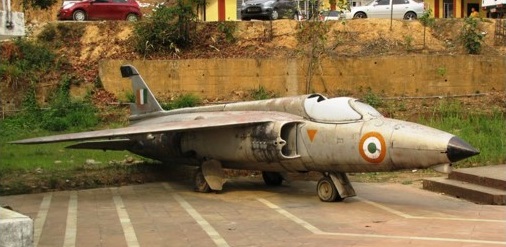
Folland Gnat – Jawaharlal Nehru Museum
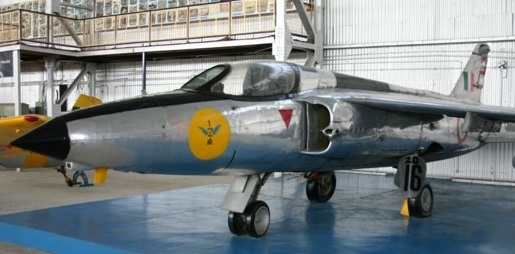
The IAF was impressed by the Gnat’s performance in the two wars, but the aircraft had problems including hydraulics and unreliable control systems. To address these issues, the IAF issued a requirement for an improved “Gnat II” in 1972, at first specifying that the new version was to be optimized as an interceptor, but then expanding the specification to include the ground-attack role. Over 175 of the Hindustan Aeronautics Limited-built licensed version, the Ajeet (“Unconquerable”), were produced in Bangalore. Several Gnats remain in use in private hands. Some IAF Gnats, one of which had participated in the 1971 war in East Pakistan (present day Bangladesh), were presented to the Bangladesh Air Force.
Folland Gnat Mk. 1 Engine: 1 x 4,230 lbs.t. (1919 kgp) Bristol Siddeley Orpheus 101 Wingspan, 24 ft. (7.33 m) Length, 31 ft. 9 in. (9.7 m) Height, 10 ft. (3.06 m) Wing area, 175 sq. ft. (16.26 sq m) Empty weight, 5,639 lb. (2 559 kg) Crew weight, 360 lb. (163 kg) Internal fuel, 265 Imp.ga1 (1200 litres) AVTAG, 2,040 lb. (926 kg) Gross weight, clean, 8,039 lb. (3 648 kg) External fuel tanks, 118 gal. (536 litres), 908 lb. (412 kg) Overload gross weight, 9,107 lb. (4 133 kg) Max level speed: 610 kts EAS (1130 km/h) at sea level (Mach 0.93). Max speed, 36,000 ft. (11 000 m), M= 0.95 Max speed, 636 mph (1024 kph) at 31,000ft (9 500 m) Max dive speed, M 1.15 Cruise, 470 mph (756 kph) Initial climb, 7,620 fpm (38.7 m/sec) Climb to 26,000 ft. (8 000 m), 4 min. 40 sec. Climb to 40,000 ft (12,000 m), 7 min 30 sec. Service ceiling, 48,000 ft (14 600m) Stalling speed, 115 mph (185 kph) Take off distance to 50 ft (15 m), 2,550 ft (775 m) Landing distance from 50 ft (15 m), brake parachute, dry surface, 2,210 ft (705 m) Max range, internal fuel, 600 nm (1100 km) Range with external fuel, 1,000 nm (1 850 km). Armament: 2 x 30mm Aden cannon. Crew: 1-2
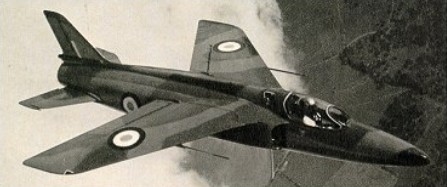
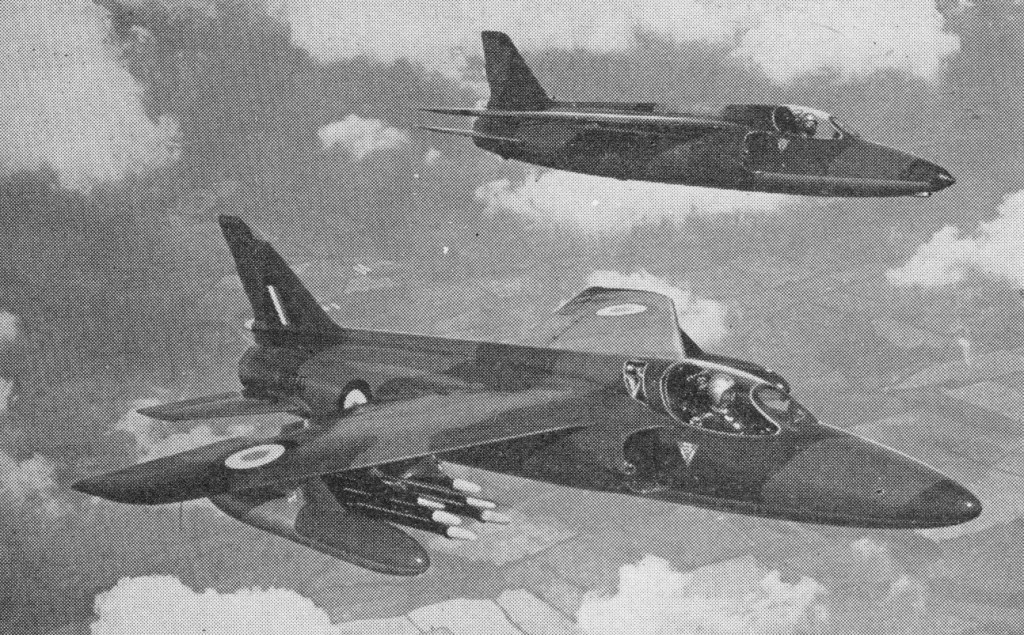
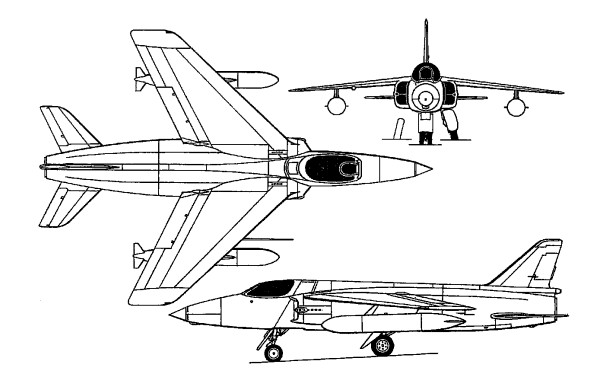
Developed from the Fo 139 Midge, the Fo 141 Gnat was designed as a light fighter. The shoulder wing is swept back at 40 degrees. All tail surfaces are swept with a one-piece tailplane low-set on the fuselage. Ailerons are on the inner wings and can be drooped to act as flaps. The wheel fairing doors act as air-brakes when the undercarriage is partially lowered in flight. The tricycle undercarriage has single main wheels and twin nose wheels, all retracting rearwards into the fuselage.
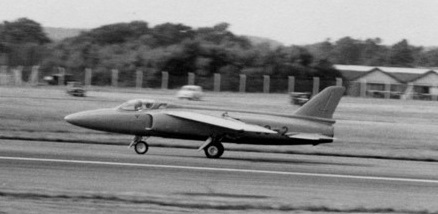
The private-venture prototype Gnat G-39-2, piloted by Folland’s chief test pilot, Squadron Leader E. A. Tennant, first flew at the Airplane & Armament Experimental Establishment at Boscombe Down on 18 July 1955. The aircraft was powered by a newly developed 1490kg thrust Bristol Orpheus turbojet.
Folland Gnat Prototype G-39-2 on take off run in 1955
The Gnat, being developed in parallel with the Midge, was an improved version of the original fighter design, differentiated by larger air intakes for the Bristol Orpheus engine (the Midge had an Armstrong Siddeley Viper engine), a slightly larger wing, and provision for a 30 mm ADEN cannon in each intake lip.
A more powerful version, rated at 1814kg thrust, was installed on 30 August for the Gnat’s debut at that year’s SBAC flying display and exhibition at Farnborough.
Six development aircraft were ordered by the Ministry of Supply in August 1955, the first flying on 26 May 1956, and these were used for a variety of trials at Boscombe Down, including firing of the 30mm ADEN cannon, one of which was fitted in the lip of each intake. Evaluation in the ground-attack role was undertaken in Aden, in competition with a modified Hawker Hunter.
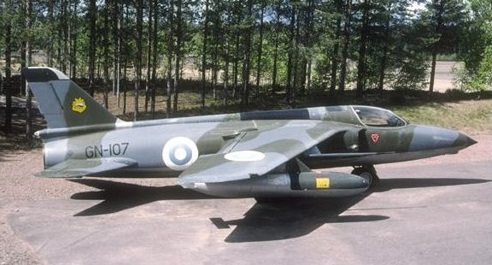
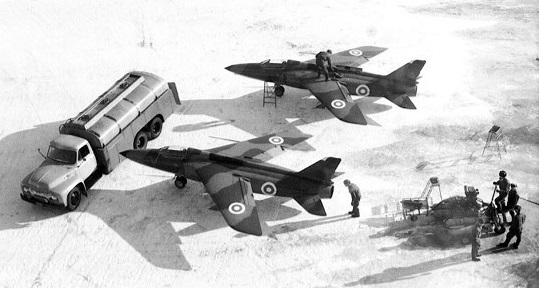
Although the Royal Air Force had lost interest in the Gnat as a fighter, the Finnish air force took delivery of 13 aircraft in 1958-59. The Finnish Air Force received the first of its 13 Gnats (11 fighters and 2 photo-reconnaissance planes) on 30 July 1958. It was soon found to be a problematic aircraft in service and required a lot of ground maintenance. In early 1957 a licence agreement was reached to allow Valmet to build the Gnat at Tampere in Finland, although in the end none was built.
On 31 July 1958, the Finnish Air Force Major Lauri Pekuri, a World War II fighter ace, broke the sound barrier for the first time in Finland at Lake Luonetjärvi with a Folland Gnat.
Folland Gnat Finnish Air Force
Gnat F.1 proved initially problematic in the Finnish harsh conditions. Finland was the first operational user of Gnat F.1, and the plane had still many issues yet unresolved. All Gnats were grounded for half a year on 26 August 1958 after the destruction of GN-102 due to a technical design error on hydraulic system, and the aircraft soon became the subject of severe criticism. Three other aircraft were also destroyed in other accidents, with two pilots ejecting and one being killed. Once the initial problems were ironed out, the plane proved to be extremely manouevreable and have good performance in the air, but also to be very maintenance intensive. The availability of spare parts was always an issue, and its maintenance a challenge to the conscript mechanics. The Gnats were removed from active service in 1972 when the Häme Wing moved to Rovaniemi, and when the new Saab 35 Drakens were brought into use.
Two Finnish Gnats on the ground
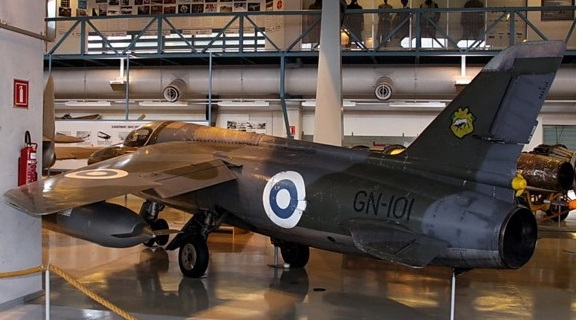
The Finnish Air Force serial codes for Folland Gnat were GN-100 to GN-113 and its usual nickname Nutikka (“Stubby”). Several Finnish Gnat F.1s still survive either as museum pieces or memorials. One airframe, GN-113, is in private ownership.
Folland Gnat Mk.1 (GN-101) K-SIM 04
The Yugoslav government also bought two but the major export order was from India: 40 airframes in various stages of completion were supplied from the UK, and licence-production was undertaken by Hindustan Aeronautics Ltd at Bangalore, local production accounting for 175 aircraft. The Gnat entered Indian Air Force service in the spring of 1958, when the Gnat Handling Flight was first formed, and ultimately eight squadrons were equipped.
The Indian Air Force (IAF) operated the Folland Gnat jet fighter from 1958, with over 200 aircraft being license built by Hindustan Aeronautics Limited (HAL). The aircraft proved successful in combat in both the 1965 and the 1971 War with Pakistan, both in the low-level air superiority role and for short range ground attack missions, while being inexpensive to build and operate, came to be called the Gnat Mk 2. In the words of Late Air Cmde Jasjit Singh, “The Gnat was a very unforgiving aircraft and had the poorest safety track record in the IAF, despite having only Average plus pilots posted to it.” In his book, Indian Air Force: The Case for Indigenisation, Air Cmde Singh said, “It is not surprising the RAF never used it.”
The Gnat aircraft had a peculiar design with the ailerons also doubling as flaps, drooping 15 degrees from a normal aileron position with undercarriage in down position. The raising and lowering of the undercarriage made the ailerons (flaps) go up and down from their normal position. This involved excessive change in attitude and required proper handling by the pilot. All the pilots were briefed repeatedly on this aspect to control the excessive pitch-up after raising of the undercarriage after take-off. Not surprisingly, there were a few incidents because of this peculiar nature of the aircraft.
Although the RAF had not selected the Gnat for service in a front-line role, it did have a requirement for an unarmed, two-seat advanced trainer to replace the de Havilland Vampire T.Mk 11 and to follow the Hunting Jet Provost sections of the all-through jet training programme. Folland undertook a private-venture investigation of the changes necessary to install a second seat and to bring the landing speed down to less than 185km/h. The most significant of these changes was a new wing, increased in area by 3.72sq.m and with additional fuel capacity, which reduced the fuel storage requirement in the fuselage, making room for additional equipment. This became the Folland Fo 144 Gnat
Fo 141 Engine: Bristol Siddeley Orpheus 701, 4520 lb Wing span: 22 ft 2 in Wing area: 135.5 sq.ft Length: 29 ft 9 in Height: 8 ft 10 in MTOW: 8885 lb Fuel capacity: 300 gal External fuel: 2 x 66 gal drop tanks Wheel track: 4 ft 1 in Wheelbase: 7 ft 9 in Max speed: 695 mph / M0.98 at 20,000 ft Max ROC: 20,000 fpm Service ceiling: 50,000 ft + Max endurance: 2 hr 30 min Armament: 2 x 30mm Aden cannon Bombload: 2 x 500 lb bomb or 12 air-ground rockets
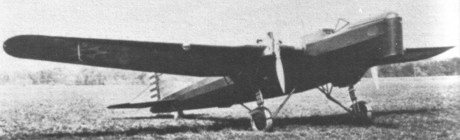
The XO 27 was an American designed reconnaissance aircraft with a crew of three. Two were built, one of which was converted to a bomber, the XB 8, in 1931. In 1931/32 the American Army ordered twelve O 27 bombers with larger wings, their engines being almost completely housed in the wing to reduce drag.
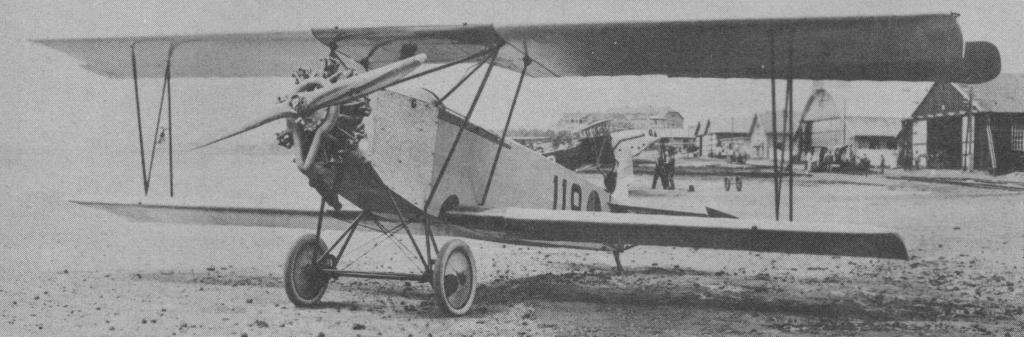
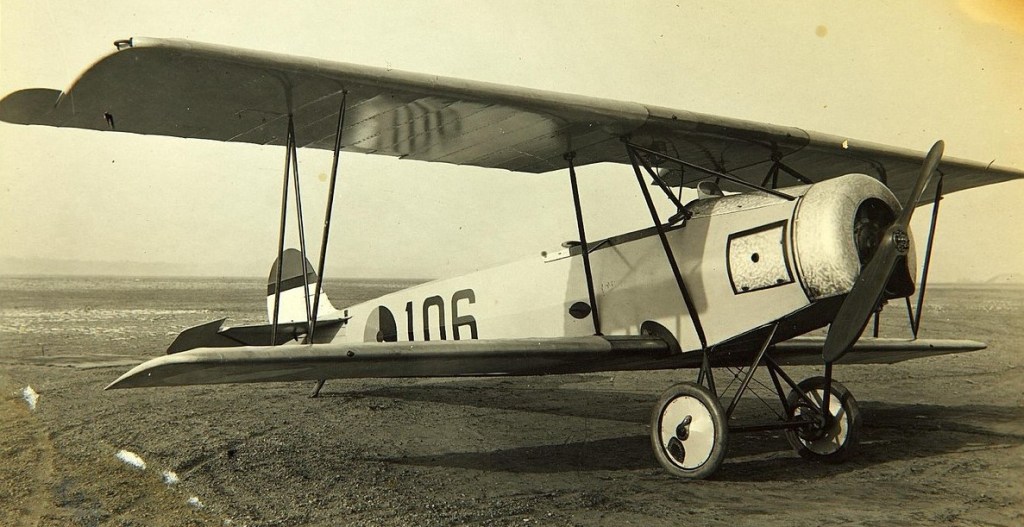
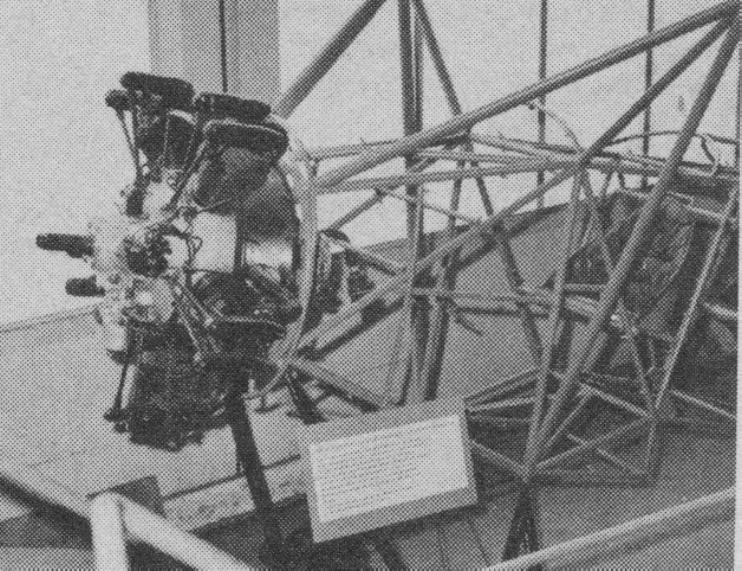
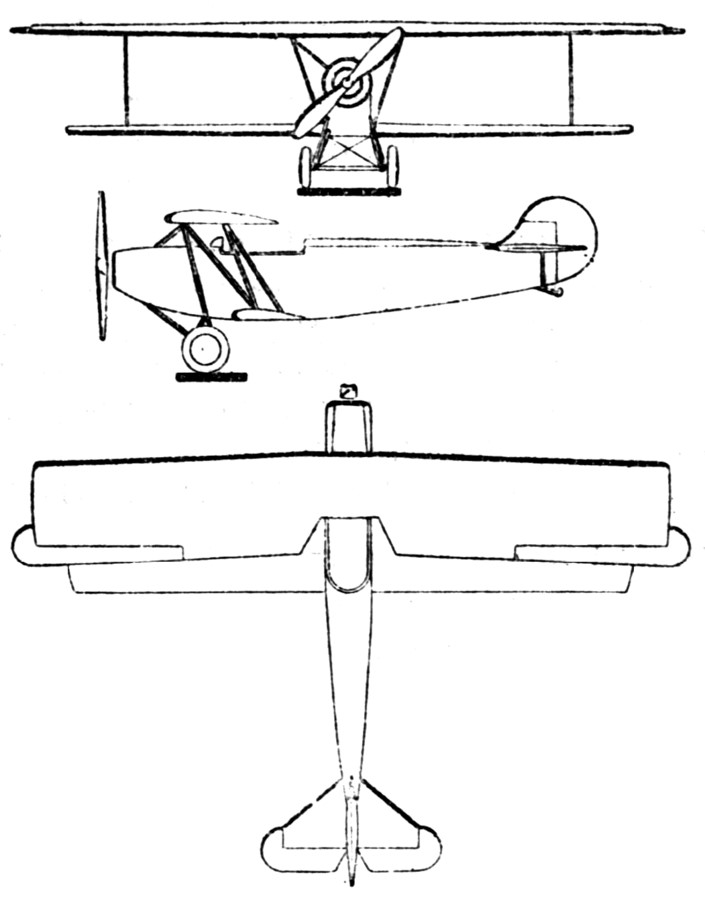
The Fokker S.IV was a military trainer aircraft produced in the Netherlands in the mid-1920s. It was a conventional, single-bay biplane with staggered wings of unequal span braced with N-struts, essentially a radial-engined development of the S.III. The pilot and instructor sat in tandem, open cockpits and the undercarriage was of fixed, tailskid type with a cross-axle between the main units.
The Royal Netherlands Army Aviation Group purchased 30 examples and used them right up to the German invasion of the Netherlands in 1940. On 14 May that year, a few surviving S.IVs escaped to France alongside some S.IX trainers, but never flew again.
The S.IV could be powered by a variety of engines in the 75–97 kW (100–130 hp) range, including 110 hp (82 kW) Siemens-Halske Sh 11, 110 hp (82 kW) Le Rhône 9J, 130 hp (97 kW) Bristol Lucifer, 130 hp (97 kW) Armstrong-Siddeley Mongoose, 110 hp (82 kW) Oberursel UR.II or the 130 hp (97 kW) Clerget 9B.
Fokker S.IV Powerplant: 1 × Le Rhône 9J, 82 kW (110 hp) Propeller: 2-bladed fixed pitch Wingspan: 11.17 m (36 ft 8 in) Wing area: 27.55 m2 (296.5 sq ft) Length: 8.55 m (28 ft 1 in) Height: 3.15 m (10 ft 4 in) Empty weight: 650 kg (1,433 lb) Gross weight: 1,000 kg (2,205 lb) Maximum speed: 160 km/h (99 mph, 86 kn) Stall speed: 65 km/h (40 mph, 35 kn) Service ceiling: 4,000 m (13,000 ft) Time to altitude: 1,000 m (3,300 ft) in 6 minutes Wing loading: 36.29 kg/m2 (7.43 lb/sq ft) Power/mass: 0.0830 kW/kg (0.0505 hp/lb) Crew: 2




 All Aero