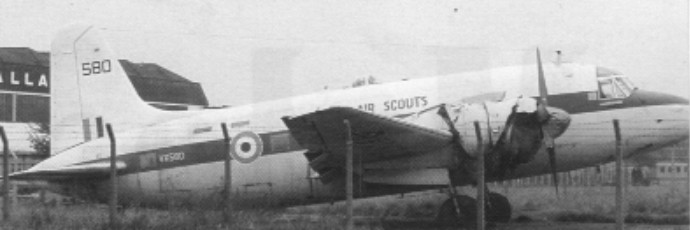
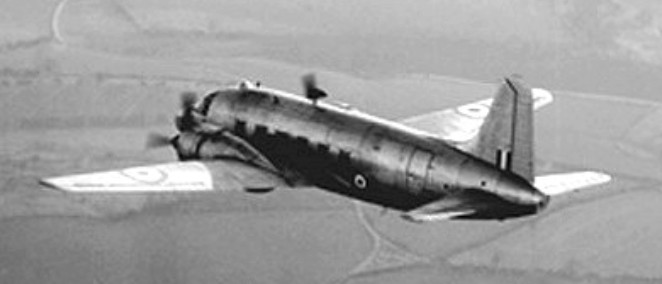
The Valetta was a military transport aircraft, the prototype of which flew for the first time on 30 June 1947. The C.I was the standard RAF version for use by Airborne Forces; could be used in various roles, such as troop-carrying, freighting, paratroop-carrying, supply-dropping and as an ambulance. The C.2 was a special VIP version for 9 to 15 passengers. The T.3 was designed specifically for use as a navigational flying classroom. A number of T.3s were later converted into T.4s with radar fitted in an extended nose. Production totalled 260 aircraft. Power was provided by two 1,472kW Bristol Hercules 230 radial engines.
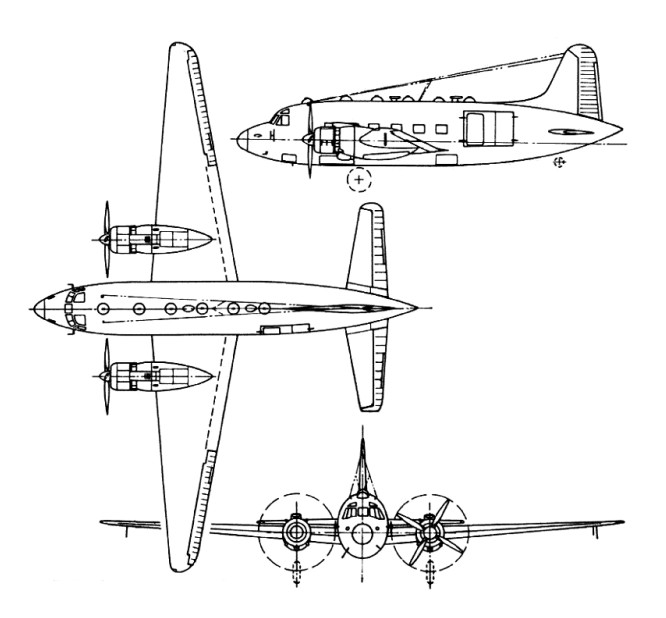
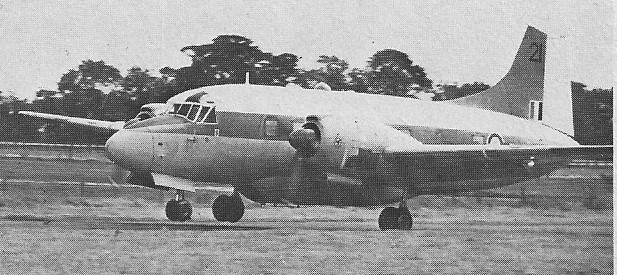
The Varsity general-purpose aircrew trainer retained the general characteristics of the Valetta C.I, but had a tricycle landing gear and a slightly longer fuselage. For bomb-aiming training, a bomb bay and bomb-aiming station were provided in the form of a pannier fitting against the fuselage underbelly.
The prototype type 648 first flew in July 1949 and type 668 Varsity T.ls went into service with the RAF in 1951. A total of 163 were built.
Varsity T.1
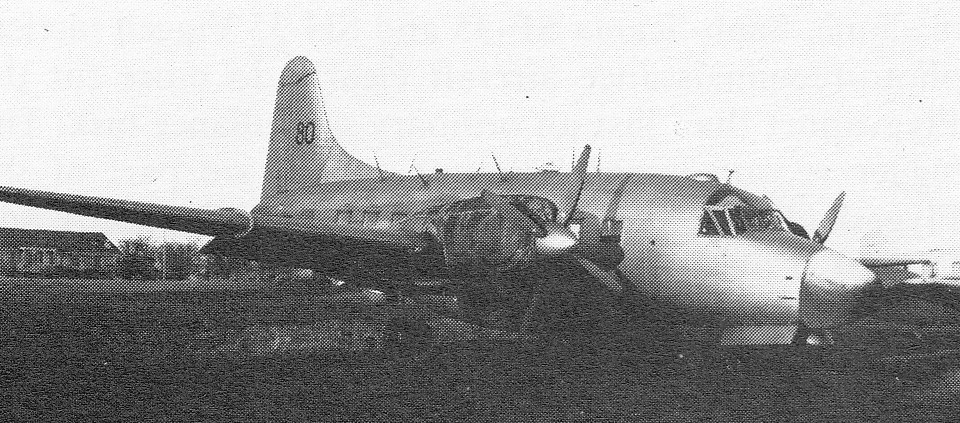
When the Swedish Air Force purchased a Vicker Varsity in the 1950s it was said it would be employed on high-altitude radio trials. It flew COMINT missions until 1973, festooned with antennas. It is now in a Swedish Air Force museum near Linköping.
Swedish COMINT Varsity
A Vickers Varsity was experimentally fitted by Napier with two Eland turboprops.
Vickers 648 Varsity Engine : 2 x Bristol Hercules 264, 1923 hp Length : 67.487 ft / 20.57 m Height : 23.917 ft / 7.29 m Wingspan : 95.571 ft / 29.13 m Wing area : 974.142 sq.ft / 90.5 sq.m Max take off weight : 37507.1 lb / 17010.0 kg Weight empty : 27044.3 lb / 12265.0 kg Max. speed : 250 kts / 463 km/h Cruising speed : 208 kts / 385 km/h Service ceiling : 28707 ft / 8750 m Wing load : 38.54 lb/sq.ft / 188.0 kg/sq.m Maximum range : 2300 nm / 4260 km Range : 2300 nm / 4260 km Crew : 2
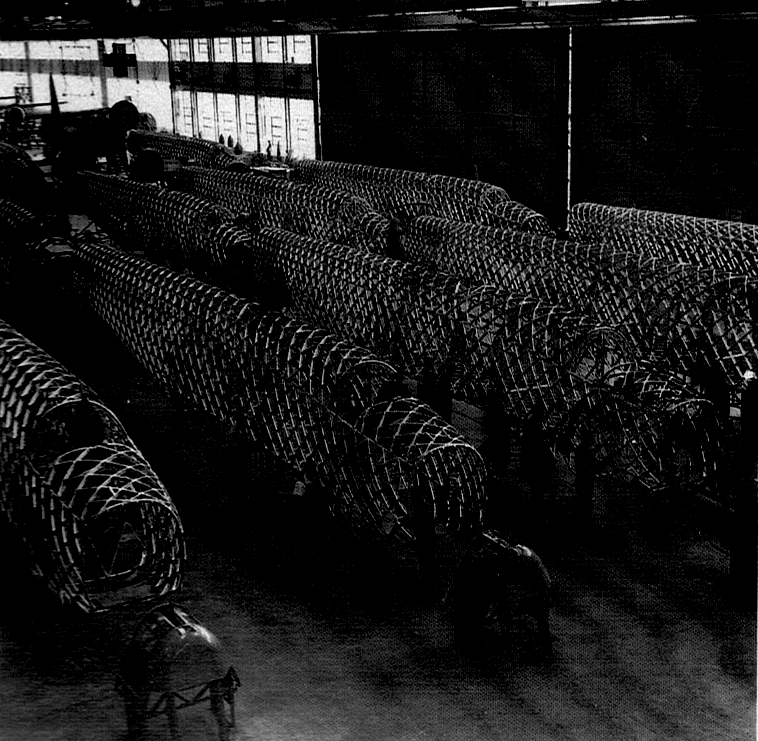
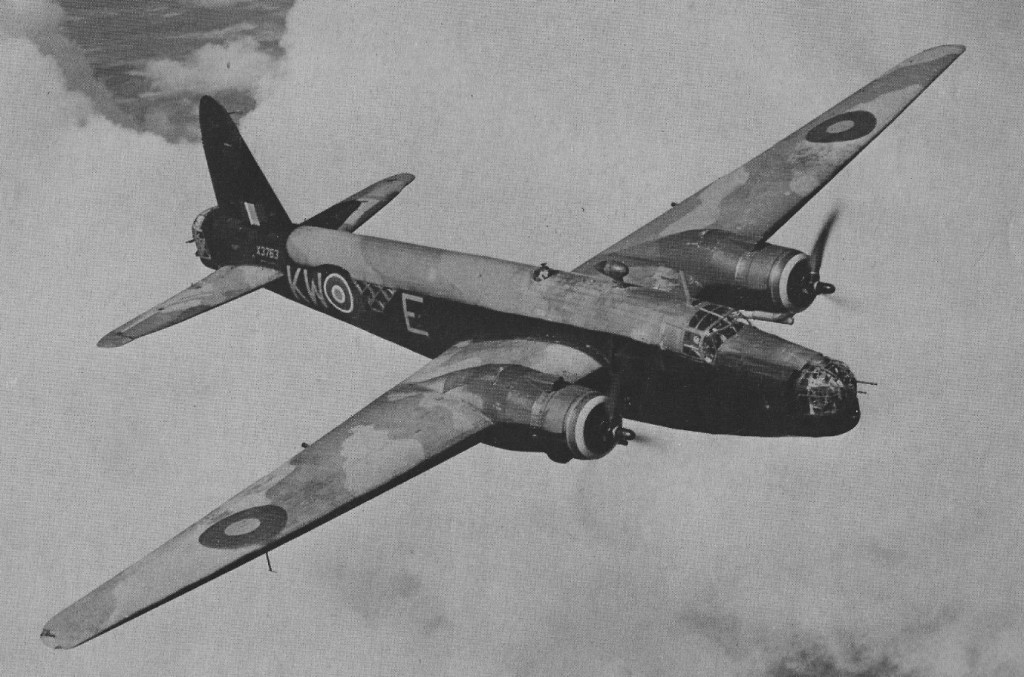
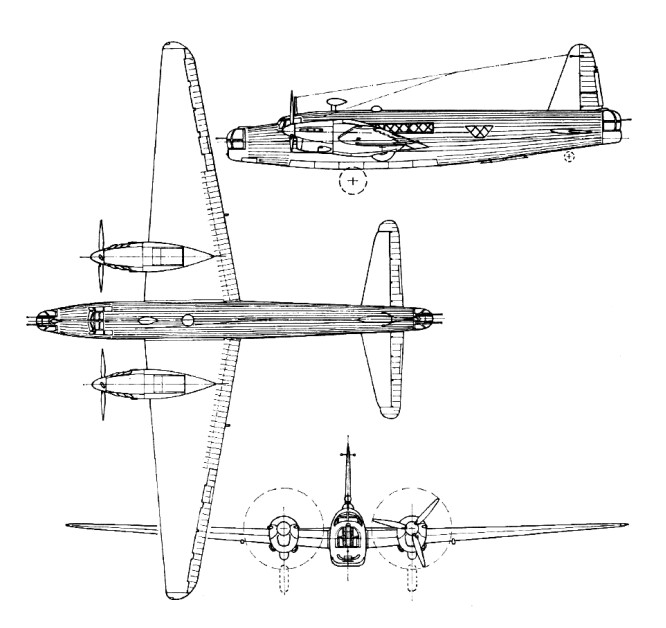
The Wellington was designed to meet an Air Ministry requirement for a long-range medium bomber under Specification B.9/32 and evolved as a mid-wing monoplane with a fuselage of oval cross-section. Both of these major structures were of the geodetic construction which Barnes Wallis had introduced in the Wellesley. But experience with the latter and development of the geodetic concept made it possible for the individual components (which were built up into the ‘basket-weave’ structure) to be smaller and lighter in weight without any loss of structural integrity by comparison with the Wellesley. Wings, fuselage and tail unit were fabric-covered; power plant comprised two wing-mounted engines; and the tailwheel-type landing-gear units were hydraulically retractable.
‘Heavy’ defensive armament – comprising five machine-guns in nose and tail turrets and a ventral dustbin – would, it was believed, enable a flight of these aircraft to put up such a curtain of fire that fighter escort would be superfluous. Those who held such beliefs (as for the Boeing B-17 Fortress developed in America) were to discover their error very quickly.
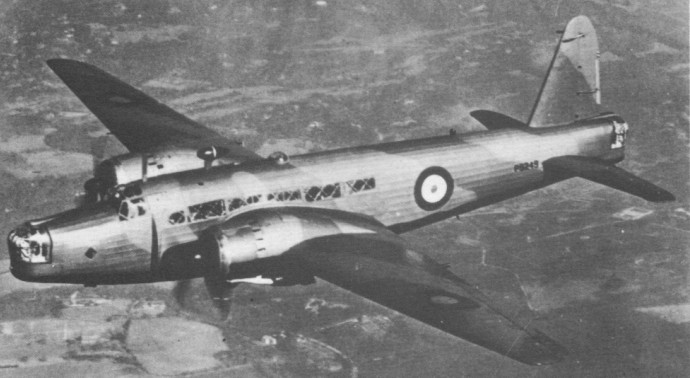
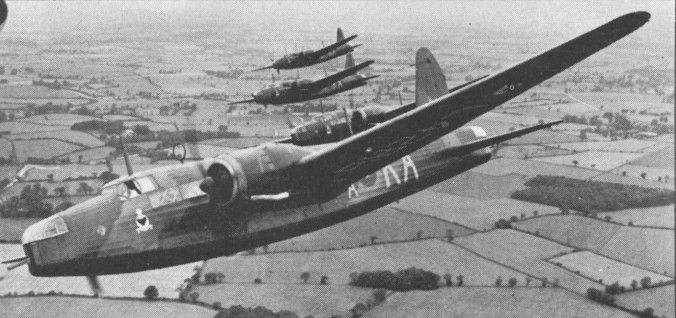
Though it had been planned to fit Rolls-Royce Goshawk inlines or Bristol Mercury radials the engine selected was the Pegasus. The prototype Wellington made its first flight on 15 June 1936, but it was not until October 1938 that production aircraft began to enter RAF service. The variant that entered service with No. 99 Squadron in October 1938 was the Wellington Mk I, of which 181 were built with Pegasus XX radials. By the outbreak of war Bomber Command had six operational Wellington squadrons.
Less than one year later (on 4 September 1939) Wellingtons were in action against targets in Germany. Wellingtons and Blenheims shared the honour of being the first Royal Air Force aircraft to attack Germany when they bombed ships at Brunsbüttel on 4 September 1939. Early deployment on daylight raids showed that these and other British bomber aircraft were extremely vulnerable to fighter attack. Following the loss of ten Wellingtons from a force of 24 despatched on an armed reconnaissance of Wilhelmshaven on 18 December 1939, the type was withdrawn from daylight operations. As a night bomber, however, the Wellington proved an invaluable weapon during the early years of Bomber Command’s offensive against Germany.
Wellington production was to total 11,461 aircraft and embraced many versions. These included Mk I bombers (782kW Bristol Pegasus XVIIIs) and the DWI with degaussing ring to trigger magnetic mines. Other variants developed before the war were the Mk IA with a Nash and Thompson turret, the Mk IC with the ventral turret replaced by beam guns.
Differing engines distinguished the 853kW Rolls-Royce Merlin X-powered Mk II; 1,021kW Bristol Hercules XI Mk III; and Pratt & Whitney Twin Wasp Mk IV.
Wellington Mk.II
The Merlin engined Mk.II entered service in 1941.
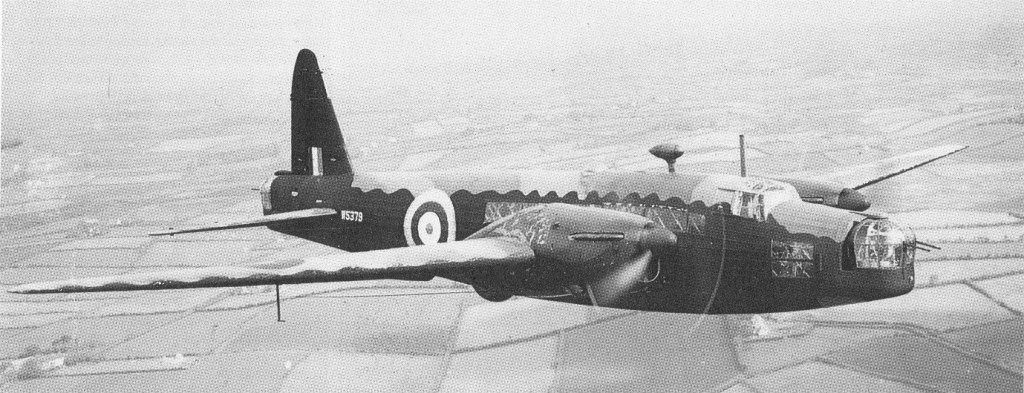
Vickers Wellington III
The Wellington Mk V was a high-altitude aircraft with pressurised cabin, no nose turret and increased wing span, followed by the high-altitude Mk VI with 1,192kW Rolls-Royce Merlin 60 or 62 R6SM engines. Mk VII was designated an experimental model and Mk VIII was the first of many reconnaissance versions. Mk IX aircraft were Mk Is modified as troop carriers. The Mk X with Hercules VI or XVI engines was the last bomber. Wellingtons Mk XI, XII and XIII were ASV radar-equipped aircraft for Coastal Command. The Mk XIV with Hercules XVII engines was the final reconnaissance version. In addition to these specific versions there were many variants, and Wellingtons were also used for training and transport.
The last Wellingtons produced, Mk X RP590 being delivered from Squires Gate on October 13, 1945.
The Vickers Wellington bomber provided the mainstay of Bomber Command’s night attacks on Germany in the early stages of the Second World War. To the extent that at one period it equipped no fewer than 21 squadrons, and when the first 1,000 bomber raid was mounted against Cologne, in May 1942, more than half of the aircraft involved were Wellingtons.
Wellingtons dropped 42,440 tons of bombs on sorties from Britain, including the first 4,000 lb (900 kg) block busters.
Designed as a bomber, it became an effective torpedo carrier and submarine killer in Coastal Command before going on to Transport and Training Commands.
On 3 December 1942, Dr. R.V. Jones, chief of the scientific branch of the secret service in the British Air Ministry, obtained Churchill’s permission to send a Wellington bomber full of measuring instruments to Frankfort am Main. The plane, DV819, was to be used as a decoy in the hope that the crew could find out at least the megahertz frequency of new German target-locator system radar. The plane was shot down a short distance from the coast of Britain, but the crew were saved at the last minute and reported: ‘It was 490 megahertz’.
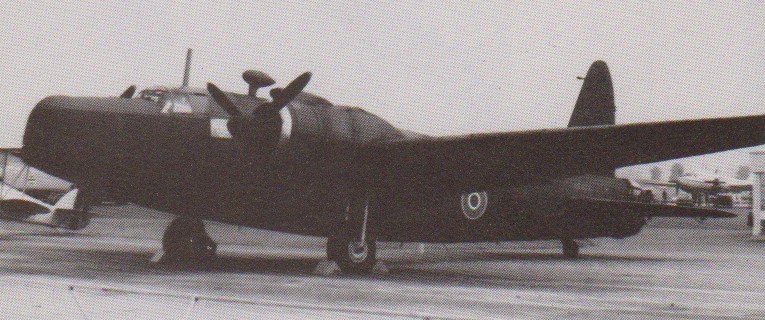
The Wellington Mk.XVI transport were conversions of the early IC model.
Mk.1A Engines: 2 x Bristol Pegasus, 1050 hp Wingspan: 86 ft Length: 61 ft 3 in Height: 17 ft 6 in MAUW: 31,500 lb
Mk IC Type: five/six-seat long-range medium night bomber Engines: 2 x Bristol Pegasus XVIII, 746kW (1,000 hp) Span: 26.26m (86ft 2in) Length: 19.68m (64ft 7in) Armament: 6 x 7.7-mm 0.303-in) machine-guns Bombload: 2041 kg (4,500 lb) internally MTOW: 12928 kg (28,500 lb) Max speed: 235 mph at 15,500ft Operational range: 2,550 miles
406 Mk II Engines: 2 x Rolls-Royce Merlin X, 853-kW (1,145-hp)
Mk III Engines: 2 x Bristol Hercules III, 1025-kW (1,375-hp) Length: 64.6 ft. (19.7 m) Wing span: 86.1 ft. (26.2 m.) Weight empty: 15,887 lb. (7,233 kg.) Crew: 6 Armament: 8 mg Max. bomb load: 4,500 lb. (2,000 kg.) Max. Speed: 255 m.p.h. (410 km.p.h.) Ceiling: 22,000 ft. (6,700 m.) fully loaded Range: 1,470 miles (2,365 km.)
B Mk.III Engines: 2 x Bristol Hercules XI, 1535 hp
Wellington Mk X Engines: 2 x Bristol Hercules XI, 1119kW Max take-off weight: 13381 kg / 29500 lb Empty weight: 8417 kg / 18556 lb Wingspan: 26.26 m / 86 ft 2 in Length: 18.54 m / 61 ft 10 in Height: 5.31 m / 17 ft 5 in Wing area: 70.0 sq.m / 753.47 sq ft Max. speed: 410 km/h / 255 mph Ceiling: 5790 m / 19000 ft Range w/max.payload: 2478 km / 1540 miles Crew: 4 Armament: 8 x 7.7mm machine-guns Bombload: 2041kg
The Warwick was a slightly enlarged version of the Wellington and employed the same geodetic form of construction. It was designed originally to Specification B. 1/35 to replace the Wellington. But because the generation of four-engined bombers was also being produced at the same time, it was subsequently adapted for reconnaissance duties with Coastal Command and first went into service in 1943. Other models were built for transport and air-sea rescue duties. The final version, the GR.V, entered service in 1945 and carried bombs, mines or depth-charges. About 840 production Warwicks were built.
Warwick GR Mk.II Engines: 2 x Bristol “Centaur VI”, 1864kW / 2466 hp Max take-off weight: 23247 kg / 51251 lb Empty weight: 14118 kg / 31125 lb Wing load: 51.05 lb/sq.ft / 249.0 kg/sq.m Wingspan: 29.48 m / 96 ft 9 in Wing area: 1006.003 sq.ft / 93.46 sq.m Length: 20.88 m / 68 ft 6 in Height: 5.64 m / 18 ft 6 in Max. speed: 228 kts / 422 km/h / 262 mph Service ceiling: 5790 m / 19000 ft Range: 3460 km / 2150 miles Bombload: 6900kg Crew: 6
Air Ministry Specification G.4/31 called for a General Purpose aircraft, capable of level bombing, army co-operation, dive bombing, reconnaissance, casualty evacuation and torpedo bombing. The Vickers Type 253 won against the Fairey G.4/31, Westland PV-7, Handley Page HP.47, Armstrong Whitworth AW.19, Blackburn B-7, Hawker PV-4 and the Parnell G.4/31.
Designed by Rex Pierson, the Type 253 was the first aircraft built which partly used the Barnes Wallis geodetic design in the fuselage. Despite an order for 150, Vickers offered their private venture monoplane design the Type 246. This used the same geodetic design principles for both the fuselage and the wings, and first flew on 19 June 1935. It had superior performance to the 246 but did not attempt to meet the multi-role requirement, being a day and night bomber only. First flown with PV 0-9 markings, the 253 showed a lower tare weight, better performance and larger payload, partly as a result of the 8.85 – 1 high aspect ratio wing.
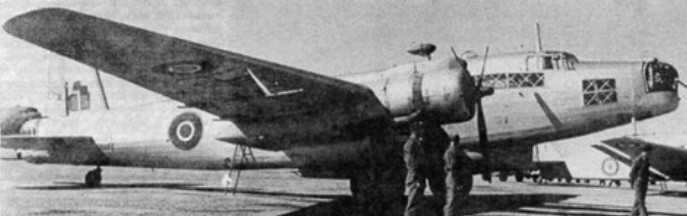
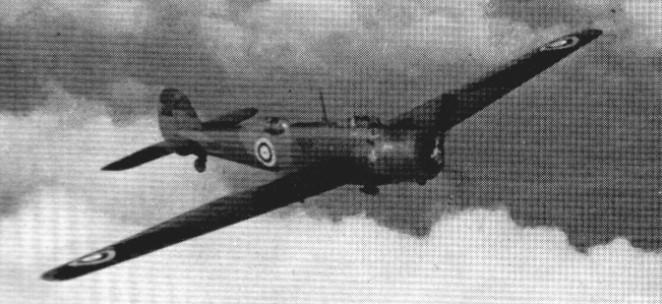
The Wellesley evolved from Vickers’ design for a general-purpose day and night bomber and coastal-defence torpedo-carrier biplane to satisfy Air Ministry Specification G.4/31, the company having decided to develop and build a monoplane aircraft to meet the same specification. When evaluated there was little doubt that the monoplane was superior, with the result that the Air Ministrv contract for the biplane was cancelled, being replaced on 10 September 1935 by one for 96 examples of the monoplane under a rewritten G.22/35 specification. The RAF ultimately ordered 176, named Wellesely, to a newly written specification 22/35, with a 14 month production run starting in March 1937.
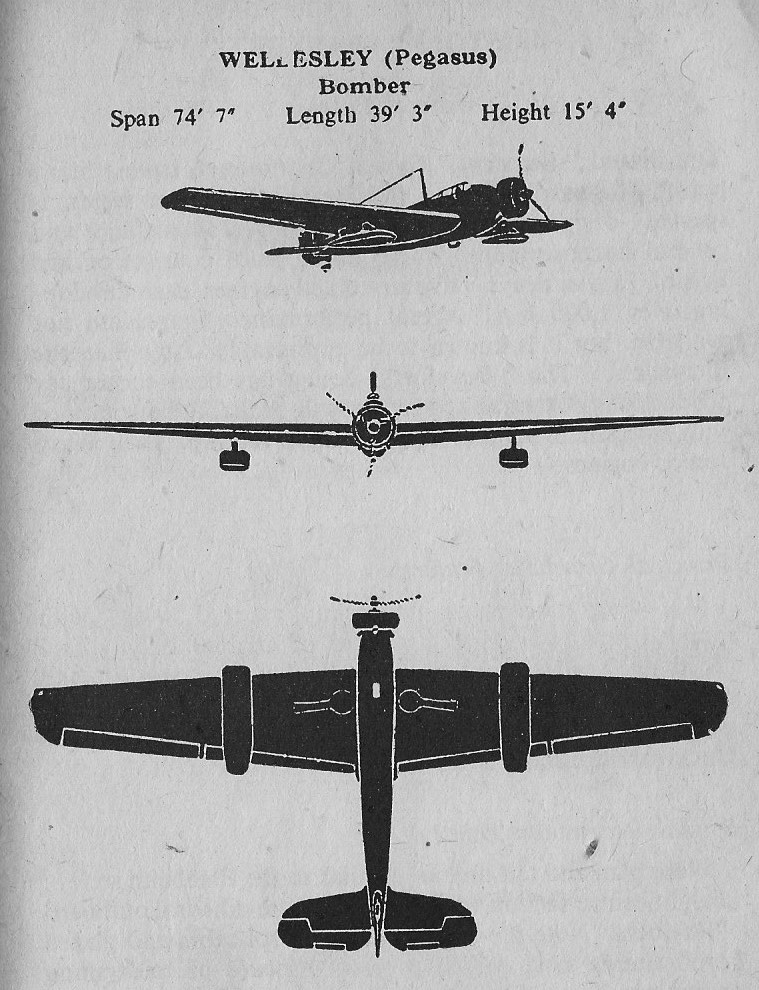
Named the Wellesley, it was the first RAF aircraft to utilise the geodetic form of construction devised by Barnes (later Sir Barnes) Wallis; offering a lightweight structure of great strength, it was adopted later for the Wellington. The other highly unusual feature was the provision of a pannier beneath each wing to serve as a bomb container. The low-set monoplane wing was also of geodetic construction, the main landing gear was hydraulically retractable, and power plant comprised a single Bristol Pegasus radial piston engine.
To avoid disrupting the geodetic structure, the bombload was carried in two streamlined panniers under the wings. The Wellesly Mk.1 had two separate cockpits, but this was changed in the Mk.II to a single piece cockpit canopy covering the pilot and navigator positions.
Wellesley Mk Is entered RAF service in April 1937 but by the outbreak of World War II most of them had been transferred to the Middle East, where they remained operational into 1941. The RAF received the first Welleselys in April 1937, for 76 Sqn at Finningley, and eventually equipped six RAF Bomber Command squadrons in the UK, Nos 35, 76, 77 and 148 Sqdns. Later a number were sent out to No.223 Sqdn, and as the home based machines were replaced, they too were sent out to the Middle East.
The primary use of the Wellesely during the econd World War was maily in the Middle East with only four examples remaining in Britain at the start of the war. Among its significant wartime operations was the bombing of Addis Ababa in August 1940, and Wellesleys of 223 Sqn were among aircraft that wiped out an Italian destroyer flotilla attack on Port Sudan in April 1941. Losses to Italian CR.42 fighters did occur when intecepted, as the Wellesley’s defensice armament of one fixed gun flexibly mounted firing aft was poor. They remained in the region until 1941 performing maritime reconnaissance duties.
No.14 Squadron based on Port Sudan, East Africa
The type is remembered especially in service with the RAF’s Long Range Development Flight, which was established at RAF Upper Heyford, Oxon, in January 1938. Equipment comprised six Wellesley Mk.Is modified by the installation of 28.7 lt 1010 hp / 753 kW Pegasus Mk XXII engines installed in NACA long-chord cowlings, and driving 3 blade Rotol ‘Incredible Hub’ constant-speed propellers; plus other changes which included strengthened landing gear, increased fuel capacity and the introduction of an autopilot. Adding a third crew member and a rest bunk and a folding pilot’s seat to allow mid-air pilot exchange. Between 5 and 7 November 1938, two of a flight of three of these aircraft (led by Sqn Ldr R. Kellett) succeeded in establishing a new world long-distance record, covering non-stop the 11,526km between Ismailia, Egypt, and Darwin, Australia, in just over 48 hours.
Wellesley Mk.I Engine: 1 x Bristol Pegasus XX, 690kW / 937 hp Max take-off weight: 5035 kg / 11100 lb Empty weight: 2889 kg / 6369 lb Wingspan: 22.73 m / 74 ft 7 in Length: 11.96 m / 39 ft 3 in Height: 3.76 m / 12 ft 4 in Wing area: 58.53 sq.m / 630.01 sq ft Max. speed: 198 kts / 367 km/h / 228 mph Service ceiling: 10600 m / 34,700 ft Range: 964 nm / 1786 km / 1110 miles Crew: 2 Armament: 2 x 7.7mm machine-guns Bombload: 900kg
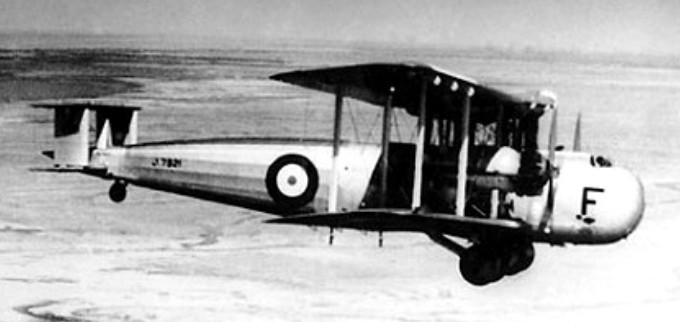
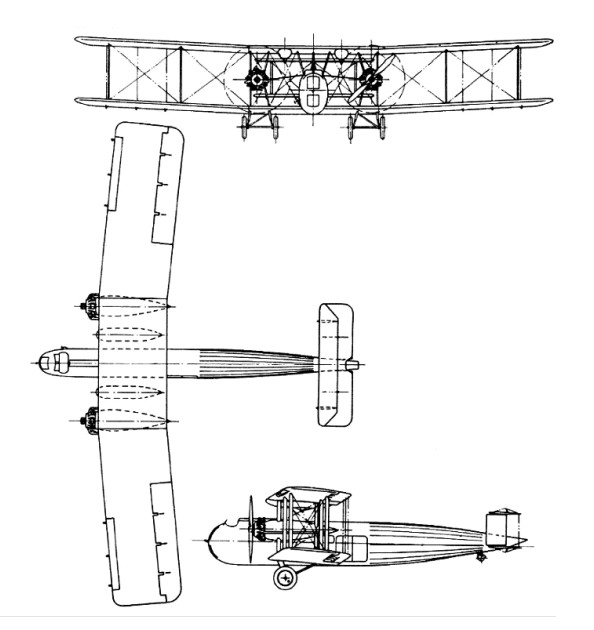
The Valentia was a development of the earlier Victoria troop-carrier, differing by having two 484kW Bristol Pegasus II.L3 or II.M3 engines (the latter for use in India) and an improved landing gear. Accommodation was for a crew of two and 22 troops; lockers were used for equipment and rifle-racks and stretcher supports were provided. Bomb racks could also be fitted if required. Twenty-eight were built as new and 54 Victorias were brought up to this standard.
Engines: 2 x Bristol II M3 Pegasus radials, 464kW / 626 hp Wingspan: 26.62 m / 87 ft 4 in Length: 18.14 m / 50 ft 6 in Height: 5.41 m / 17 ft 9 in Wing area: 2178 sq.ft / 202.34 sq.m Max take-off weight: 8845 kg / 19500 lb Empty weight: 4964 kg / 10944 lb Wing load: 9.02 lb/sq.ft / 44.0 kg/sq.m Max. speed: 104 kts / 193 km/h / 120 mph Service ceiling: 4955 m / 16250 ft Range: 695 nm / 1287 km / 800 miles Crew: 2 Bombload: 1000kg
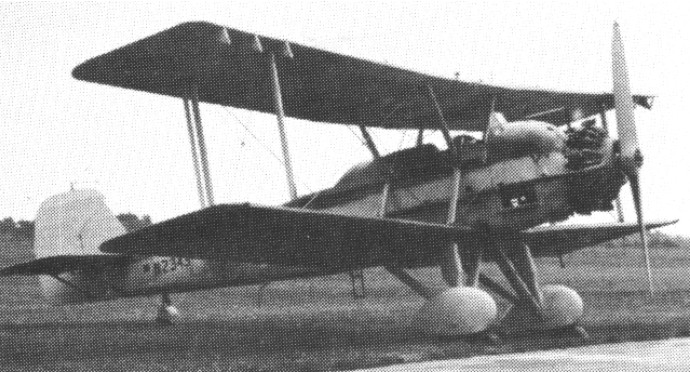
The Vincent was a three-seat general-purpose version of the Vildebeest, designed essentially for tropical service in the Middle East and therefore carrying comprehensive equipment. Fitted with a 484kW Bristol Pegasus IIM3 engine, it (like the Vildebeest) had sufficient fuel as standard for a 1000km flight while cruising at 195km/h; this range could be increased to 2000km by the use of an auxiliary fuel tank attached in the position normally occupied by the torpedo. A number of Vildebeests were converted into Vincents and, with new production aircraft, the RAF operated just under 200 from 1934. The last were withdrawn in 1941.
Engine: 1 x 635hp Bristol Pegasus IIM.3 Wingspan: 14.94 m / 49 ft 0 in Length: 11.18 m / 36 ft 8 in Height: 5.41 m / 17 ft 9 in Wing area: 67.63 sq.m / 727.96 sq ft Max take-off weight: 3677 kg / 8106 lb Empty weight: 1920 kg / 4233 lb Wing loading: 11.07 lb/sq.ft / 54.0 kg/sq.m Max. speed: 124 kts / 229 km/h / 142 mph Ceiling: 5791 m / 19000 ft Maximum range: 1086 nm / 2012 km Range: 543 nm / 1006 km / 625 miles Crew: 3 Armament: 2 x 7.7mm machine-guns, 8 x 50kg + 8 x 9kg bombs
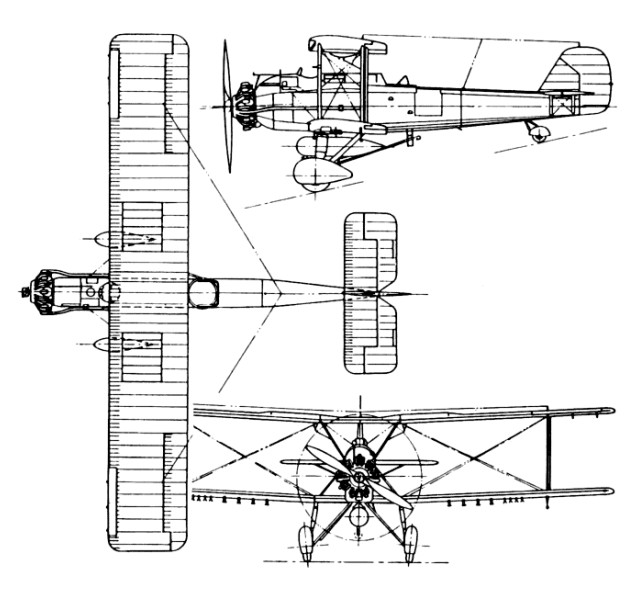
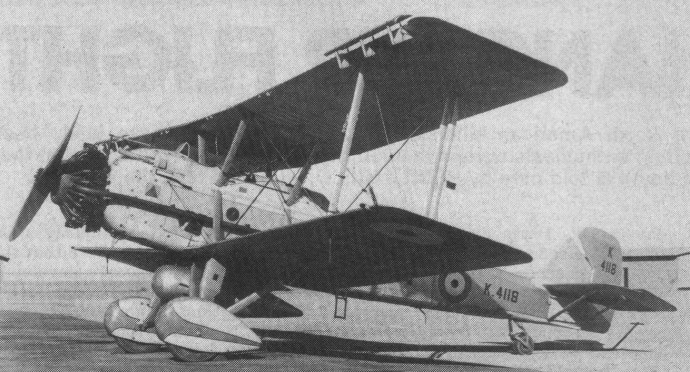
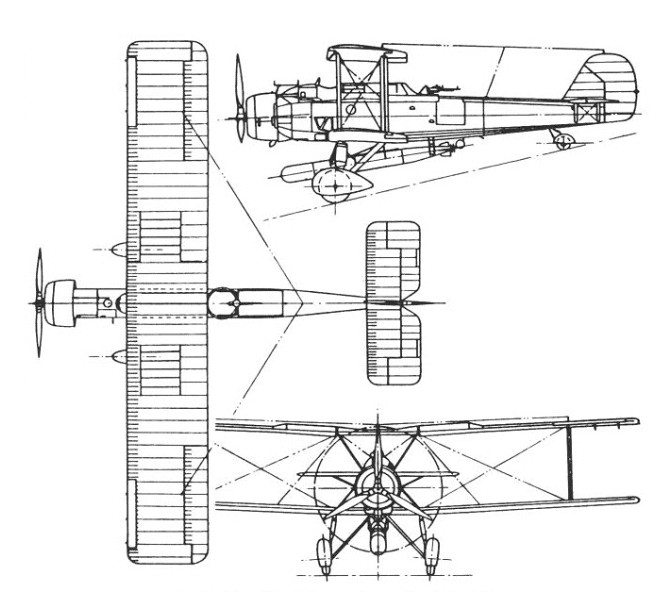
The Vickers Vildebeeste first flew in 1928 as a torpedo bomber and entered RAF squadron service in Mk.I form in 1933. The aircraft type was christened Vildebeeste in 1928 but amended to Vildebeest in 1934. Powered by a 462kW Bristol Pegasus IM3 engine, the pilot occupying an open cockpit below the leading edge of the upper wing and the observer aft of the wings in a shallower and lower section of the fuselage. A prone bombing position was provided below the pilot’s seat. Armament comprised one fixed Vickers gun firing through the propeller and one Lewis gun on a Scarff ring over the back cockpit. The crutch for the 450mm torpedo or bomb rack was under the fuselage between the two legs of the landing gear.
The Mk.I was followed into service by the Mks.II to IV, powered by 484kW Pegasus IIM3 and 603kW Bristol Perseus VIII engines. The final variant – the Mk. IV – was built between December 1936 and November 1937. The Mk.IV featured an electric starter, replacing the previous model’s inertia starter. Eighteen went into service with the RAFs No. 42 Squadron in 1937 until replaced by Bristol Beauforts in mid-1940. The distinguishing feature of the Mk. IV was its Perseus sleeve-valve engine, clad in a long chord low drag cowling and driving a three blade variable pitch Rotol propellor. The Mk. IV, the ultimate example of the Vildebeeste, was obsolescent even by 1936 standards.
Total production for the RAF was just over 200, about half of which were still operational at the outbreak of World War II. Two RAF squadrons of Mk.III Vildebeest were based in Singapore in 1941 and went into action against the Japanese with total loss of aircraft. In addition the Vildebeest was adopted by the Spanish Ministry of Marine as a standard torpedo-carrying seaplane and a batch of about 27 were ordered from the Spanish CASA firm, which had acquired a manufacturing licence. These were powered by 443kW Hispano-Suiza 12Nbr engines.
The RNZAF, having order eight Mk. Is in 1933, stayed with the original spelling. With four more ordered the following year the Vildebeeste was to re-equip the soon to be formed (April 1937) RNZAF with two bomber-reconnaisance flights.
Twenty seven more Vildebeestes were taken on charge by the RNZAF in 1940-1 and of these twelve were Mk. Vs. Eight arrived by ship at Hobsonville in October 1940 and four in April 1941. In December 1940 the first two Mk. Vs were delivered to No.1 General Reconnaisance (GR) Squadron at Whenuapai to join the Pegasus-powered Mk. IIIs already on strength. All eight of the first shipment appear to have served with this unit, being joined by three of the final four — after delayed assembly — in October 1941.
Vildebeeste II Engine: Bristol Pegasus IIM-3, 660 hp Prop: 2 blade
Vildebeeste III Engine: Bristol Pegasus IIM-3, 660 hp Prop: 2 blade Max speed: 143 mph ROC: 630 fpm
Vickers 286 Vildebeest Mk. IV Engine : Bristol Perseus VIII, 814 hp Length : 37.664 ft / 11.48 m Height : 14.665 ft / 4.47 m Wingspan : 49.016 ft / 14.94 m Wing area : 727.969 sq.ft / 67.63 sq.m Max take off weight : 8502.5 lb / 3856.0 kg Weight empty : 4725.3 lb / 2143.0 kg Max. speed : 136 kts / 251 km/h Service ceiling : 18996 ft / 5790 m Wing load : 11.69 lb/sq.ft / 57.0 kg/sq.m Range : 1412 nm / 2615 km Crew : 2-3 Armament : 2x cal.303 MG (7,7mm), 1x Torp. 18in / 1000kg Bomb
Vildebeeste IV Engine: Bristol Pegasus VIII, 825 hp Prop: 3 blade Wingspan: 14.94 m / 49 ft 0 in Length: 11.48 m / 38 ft 8 in Height: 4.47 m / 15 ft 8 in Wing area: 67.63 sq.m / 727.96 sq ft Empty weight: 2143 kg / 4725 lb Max take-off weight: 3856 kg / 8501 lb Max speed: 156 mph / 251 km/h ROC: 840 fpm. Ceiling: 5180 m / 17000 ft Range: 1014 km / 630 miles Armament: 2 x 7.7mm machine-guns, 1 x 457mm torpedo or 450kg of bombs
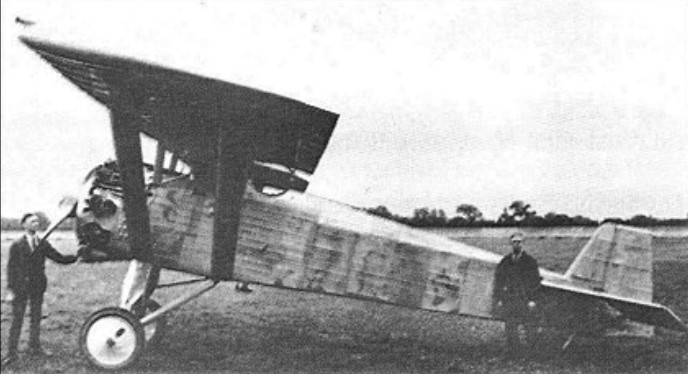
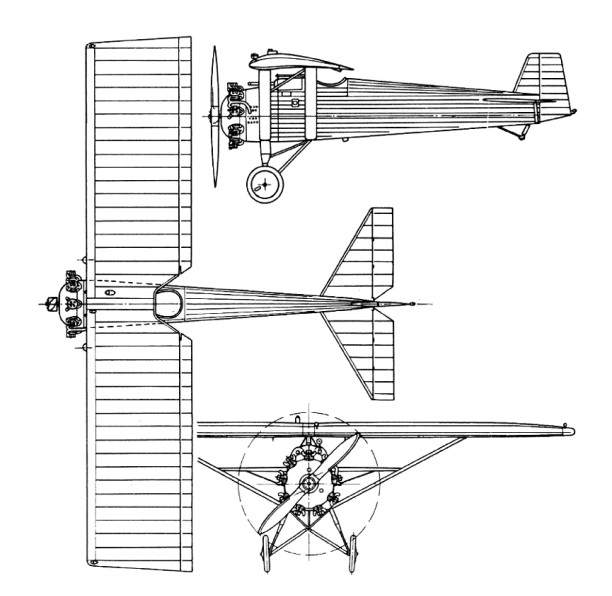
In 1924 Wibault flew the prototype of a monoplane fighter, the Wibault 7, produced from 1925 and built under license by PZL and Vickers.
Following the establishment in the UK on 8 June 1925 of Wibault Patents Limited as a subsidiary of Vickers and controlling Michel Wibault’s light alloy aircraft manufacturing patents, Vickers began, in November 1925, to manufacture a series of WIB fighters against a contract obtained from Chile. The Vickers-built WIB 7 all-metal single-seat fighter, assigned the designation Type 121 and referred to as the Wibault Scout, differed from the standard French model in a number of respects. As a prototype of the Type 121, Wibault re-engined a standard aircraft with a 455hp Bristol Jupiter VI nine-cylinder radial and fitted a Vickers oleo-pneumatic undercarriage, this aircraft being ferried to the UK in February 1926. Further modifications were introduced by Vickers, including the provision of stronger wing bracing struts, and the first Vickers-built Wibault Scout was flown at the end of June 1926, this being provided with an armament of two synchronised 7.7mm Vickers machine guns. This, the first fighter to be built against a Chilean contract for 26 aircraft, was lost when its pilot was unable to extricate it from a spin, a replacement subsequently being produced. Deliveries to the air component of the Chilean Army began in November 1926, Wibault Scouts equipping escuadrillas within the Grupo Mixto de Aviacion 1 at El Bosque. The fighters were freighted to Valparaiso in small batches as and when Chilean payments were forthcoming, the last of the batch being dispatched in October 1927. The Wibault Scouts proved somewhat unsatisfactory in Chilean service, several being lost in accidents – one, at least, as a result of shedding a wing in the air – but the type remained at least nominally in service with the Fuerza Aerea de Chile from that service’s establishment in March 1930 until late-1934. The original Jupiter-engined WIB 7 was returned to its manufacturer in France for use as a demonstrator and no further examples were built by Vickers.
Max take-off weight: 1347 kg / 2970 lb Empty weight: 871 kg / 1920 lb Wingspan: 11.00 m / 36 ft 1 in Length: 7.21 m / 24 ft 8 in Height: 3.50 m / 12 ft 6 in Wing area: 22.00 sq.m / 236.81 sq ft Max. speed: 232 km/h / 144 mph Ceiling: 7010 m / 23000 ft Range: 483 km / 300 miles
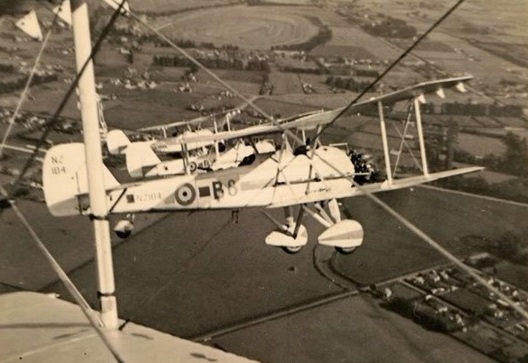
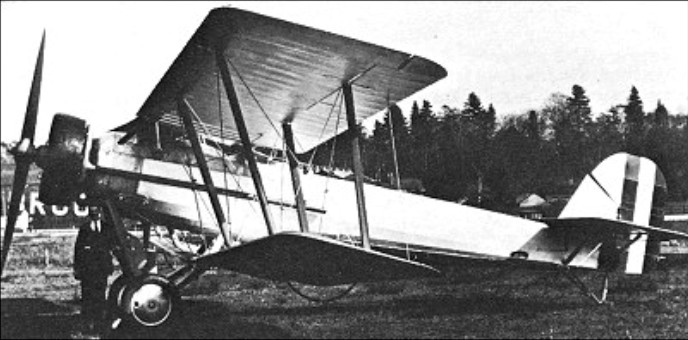
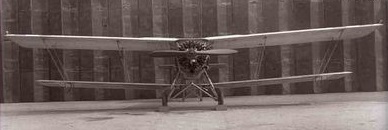
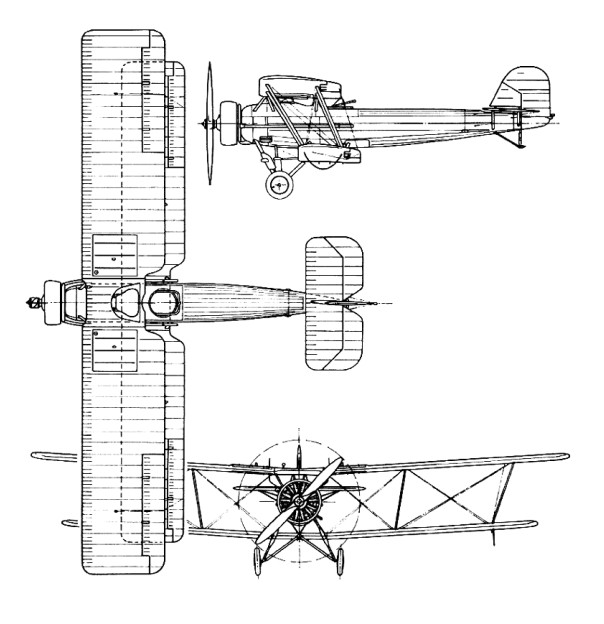
The Vickers Type 113 Vespa Mk I first flown in September 1925 was built as a private venture to the requirements of Air Ministry Specification 30/24 for an army cooperation aircraft. An unequal-span well-staggered biplane with tandem open cockpits, it was powered as first flown by a Bristol Jupiter IV radial; the Vespa was underpowered with this engine, which was then replaced by a 339kW Jupiter VI. After being damaged in an accident during June 1926 it was rebuilt with wings of metal basic structure and redesignated Type 119 Vespa Mk II but, although tested successfully, it was not ordered for the RAF. However, six Type 149 Vespa Mk III aircraft with a number of airframe refinements were supplied to Bolivia during 1929, in which year four aircraft with 365kW Armstrong Siddeley Jaguar VIC engines were ordered for the Irish Army Air Corps and designated Type 193 Vespa Mk IV, four more aircraft with some improvements subsequently being built for Ireland as the Type 208 Vespa Mk V.
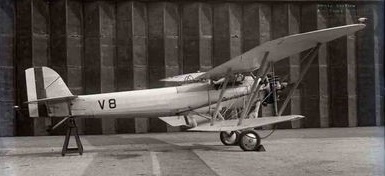
Vickers Type 208 Vespa V, serial V8, delivered to Baldonnel 5 April 1931 and written-off 12 June 1940.
During 1930 the Vespa Mk II was modified to a standard similar to the Irish Vespa Mk IVs and, powered by a 395kW Bristol Jupiter VIIF engine, became designated Type 210 Vespa Mk VI. It was used for demonstrations in China, but on return to the UK was modified yet again, and with a Bristol Pegasus ‘S’ supercharged engine installed was redesignated Type 250 Vespa Mk VII, being used on 16 September 1932 to establish a new world altitude record of 13404m. Following that it was acquired by the Air Ministry and used by the RAE for high-altitude research.
Vickers Type 208 Vespa V, serial V8, delivered to Baldonnel 5 April 1931 and written-off 12 June 1940.
Engine: 1 x 400hp Bristol Jupiter IV Empty weight: 1120 kg / 2469 lb Wingspan: 15.24 m /50 ft 0 in Length: 9.53 m / 31 ft 3 in Height: 3.12 m / 10 ft 3 in Wing area: 52.12 sq.m / 561.01 sq ft Max. speed: 203 km/h / 126 mph Ceiling: 6187 m / 20300 ft Crew: 2 Armament: 2 x 7.7mm machine-guns






 All Aero