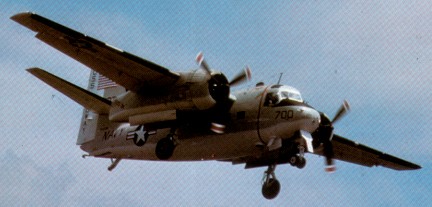
Requiring a transport able to support aircraft carriers at sea with high-priority freight and personnel, the US Navy contracted with Grumman for a derivative of its S2F (later S-2) Tracker carrierborne anti-submarine plane for the COD (Carrier Onboard Delivery) role in succession to considerably more limited types such as the 12-passenger version of the Douglas AD-5 Skyraider. The G-96 design was based closely on the S2F with its fuselage remodelled for the transport role, and as such was fully compatible with 52F support equipment on board American carriers. The type appeared in 1955 as the TF-l Trader, and 87 aircraft were produced. In 1962 these were redesignated C-lA, and the machines were eventually supplemented and finally supplanted by the same company’s C-2A Greyhound.
Principal versions -TF-l (COD plane later redesignated C-1A) and TF-1Q (four aircraft modified for electronic countermeasures training, later redesignated EC-1A). Generally one C-lA Trader was permanently attached to each American carrier, and others were allocated at strategically placed naval air stations to support carriers operating round the USA, Europe, and the Far East. The C 1A is run with a three man crew. All seats in the cabin face the rear, and the accommodations are far from plush. Double strap shoulder harnesses are standard. The C 1A is a relatively slow airplane indicating 150 knot cruise. The C 1A can make a deck run takeoff, but the catapult is preferable, because after a deck run the airplane goes off the end below its engine out minimum control speed. The C-1A leaves the cat at 112 knots, the best single engine rate of climb speed with one third flaps.
C-lA Trader Two/three-crew carrier onboard delivery plane. Engines: 2 x 1,525-hp (1,137-kW) Wright R-l820-82 Cyclone radial. Maximum speed 290 mph (467 km/h) at 4,500 ft (1,370 m) Initial climb rate about 1,800 ft (549 m) per minute Service ceiling 22,000 ft (6,705 m) Range about 800 miles (1,288 km) MTOW: 27,000 lb (12,247 kg). Wing span 72 ft 7 in (22.12 m) Length 43 ft 6 in (13.26 m) Height 16 ft 7 in (5.05 m) Wing area 499.0 sq ft (46.36 sq.m). Payload: nine passengers or freight.
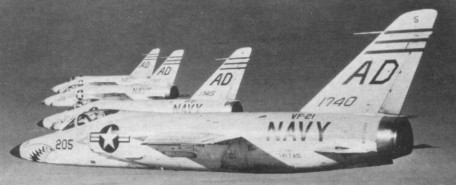
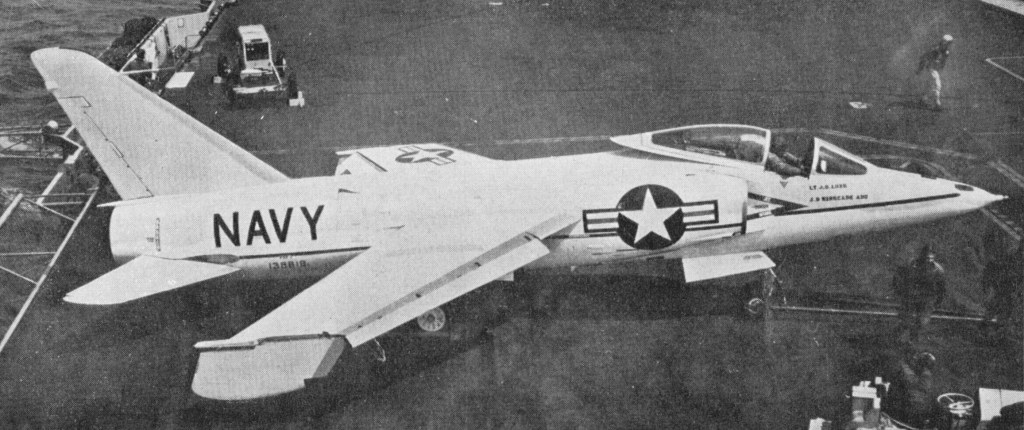
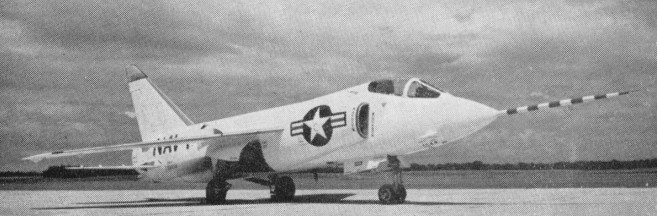
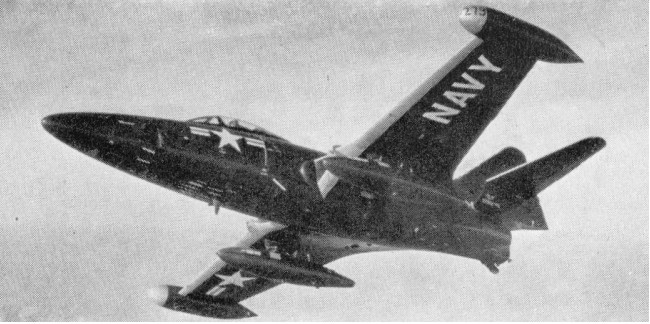
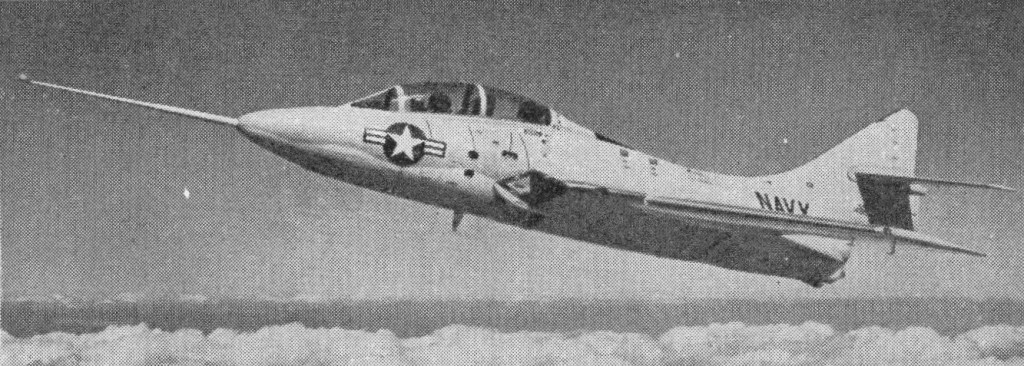
The US Navy’s first transonic shipboard warplane, development of the G-98 was ordered on 27 April 1953 as a revised and improved F9F-6. In the event, there was no commonality with the earlier fighter, but nevertheless, when the first example was flown on 30 July 1954, it was designated YF9F-9, this being changed to F11F-1 in April 1955.
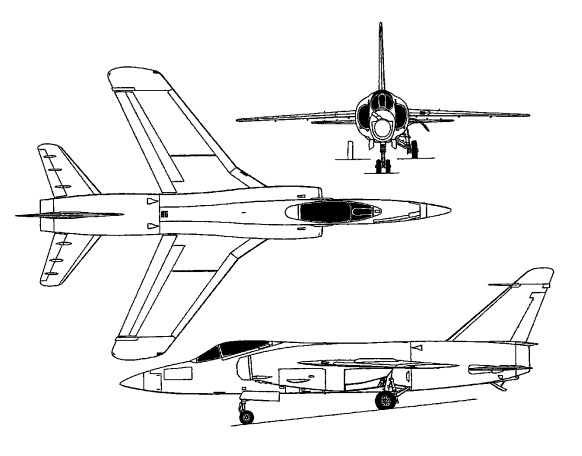
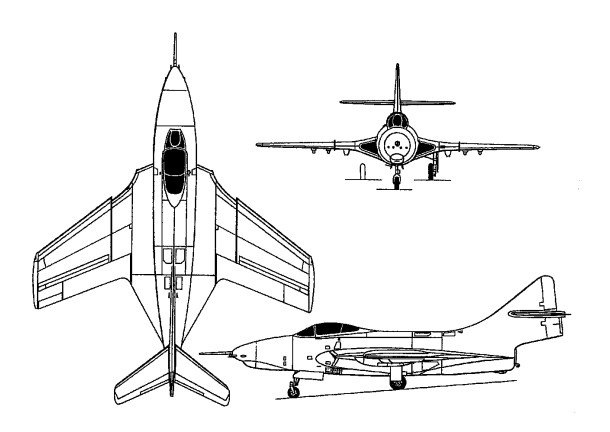
The airframe had mid-set wings sweptback at 30 degrees. There are swept-back tail surfaces, with an all-moving tailplane mid-set on the fuselage. No ailerons are fitted. Lateral control being by spoilers. Leading edge slats are fitted. Trailing-edge flaps are over the full span except for the folding tip portions. Finger type air-brakes are under the fuselage. Two underwing jettisonable fuel tanks may be fitted.
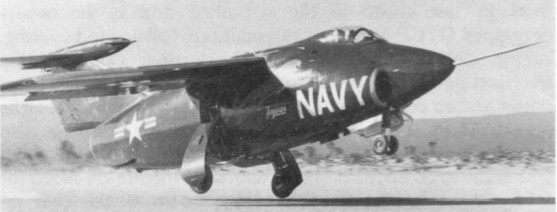
The tricycle under-carriage has a single wheel on each main unit and twin-wheel nose unit. The main wheels retract forward and into the fuselage, and the nose wheels retract rearward.
Able to fly supersonic in level flight, the F11F-9 Tiger was in production for the U.S. Navy in 1955. Six prototypes and 39 F9F-9 were ordered initially. Difficulties with the intended afterburning Wright J65-W-6 engine dictated installation of the derated J65-W-18 in the production F11F-1 with a maximum military thrust of 7,450 lb (3379 kg) and 10,500 lb (4 763 kg) with full reheat. In consequence, the F11F-1 failed to meet contractual performance guarantees.
F11F-1 Tiger
A small number of pre-production aircraft, each with a Wright J65-W-6 turbojet engine with afterburner, were followed by 39 production aircraft (ordered with J65-W-4 afterburning engines).
Grumman F11F-1
The last two Tigers of the initial production batch were fitted with the General Electric YJ79-GE-7 turbojet rated at 9,600 lb (4 355 kg) military thrust and 15,000 lb (6 804 kg) with reheat as F11F-1Fs. One of the F11F-1Fs attained a speed of 1,963km/h and set a short-lived height record on 18 April 1958 of 23,449m.
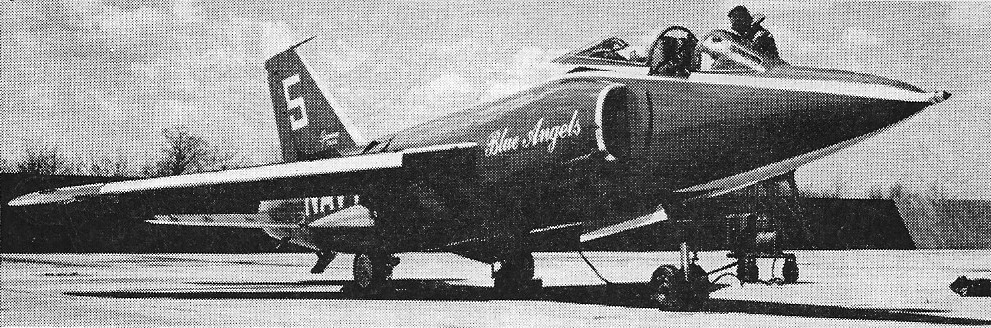
A further contract for J65-W-18-engined Tigers placed for the US Navy brought the total number of F11F-1s built to 201, but these were gradually phased out of first-line service from 1959. Those which remained in second-line service when the tri-service designations became rationalised in 1962 were redesignated F-11A.
F-11A Tigers of Blue Angels 1965
Production was limited to 201 aeroplanes, the last being delivered in March 1957, service phase-out commencing in 1959.
F11F-1 Engine: 1 x Wright J-65-W-6, 33.8kN Max speed, 753 mph (1212 km/h) at sea level. Initial climb, 16,300 ft/min (82,8 m/sec). Range, 1,108 mls (1783 km). Service ceiling: 16700 m / 54800 ft Empty weight, 13,307 lb (6 036 kg). Max loaded weight, 23,459 lb (10 641 kg). Span, 31 ft 8 in (9,65 m). Length, 44 ft 10.75 in (13,68 m). Height, 13 ft 2.75 in (4,03 m). Wing area, 250 sq ft (23,22 sq.m). Armament: four 20-mm cannon. Crew: 1
F11F-1 Engine: 1 x Wright J-65-W-18, 10,500 lb Span, 31 ft 8 in (9,65 m). Wing area, 250 sq ft (23,22 sq.m). Length, 44 ft 10.75 in (13,68 m). Height, 13 ft 2.75 in (4,03 m). Empty weight, 13,307 lb (6 036 kg). Max loaded weight, 24,078 lb Max speed, 740 mph / M1.12 at 35,000 ft Service ceiling: 50,500 ft Range, 600 mls Armament: four 20-mm cannon. Hardpoints: 4 Crew: 1
F11F-9 Tiger Naval fighter Crew: 1 Engine: Wright J65-W-7 Sapphire turbojet, with afterburner, 7500 lb. thrust. Wingspan: 31 ft. 5 in Length: 39 ft. Loaded weight: approx. 14,000 lb.
The first jet-powered ‘cat’ to be produced by Grumman and the first carrier borne jet to get into combat, the F9F Panther performed Korea where it constituted the backbone of US Navy and US Marine Corps air power, and by the time production ceased in late 1952 close to 1,400 had been built.
The Cougar was a swept-wing development of the earlier G-79 Panther. The fuselage was similar but the wings and tailplane were swept at 35 deg. The original layout of this single-seat carrier-based fighter provided for the installation of four wing-mounted Westinghouse 19XB-2B (Navy J30) axial-flow jets. But this arrangement was abandoned in favour of one fuselage-mounted high-powered turbojet engine before prototype construction began, a change prompted by the successful tests conducted by the Navy in December 1946 with two imported Rolls-Royce Nene engines. Grumman then turned its attentions to a single-seat single engine jet day fighter, two prototypes duly being ordered with the designation XF9F-2. Powered by an imported Rolls-Royce Nene engine, the first of these made its maiden flight on 24 November 1947 and such was the promise shown that substantial orders were soon forth¬coming for production-configured F9F-2 aircraft fitted with the licence-built Pratt & Whitney J42 copy of the Nene turbojet and British made Stanley Model 22G ejection seat.
The second prototype was similarly fitted, but the third (the XF9F-3) had an Allison J33 engine. Production aircraft were divided between Nene and Allison-powered models, the former engines licence-built by Pratt & Whitney as J42s.
The first production F9F-2, powered by a 22.24kN J42-P-6, flew for the first time on 24 November 1948. The 20.46kN J33-A-8-powered prototype flew for the first time on 15 August 1948 and a total of 418 of both versions were built. However the F9F-2 proved to be the better version and the F9F-3s were re-engined to F9F-2 standard.
Although the F9F-2 was the initial production model, the honour of being the first variant to enter service fell to the F9F-3, which used the slightly less powerful Allison J33 engine. This joined US Navy Fighter Squadron VF-51 during May 1949 but in the event only 54 F9F-3s were completed, most being modified later to F9F-2 standard. The next version to appear was the F9F-4 (73 of which were ordered originally) with the Allison J33-A-16, but none was completed and the contracts were combined with those for more than 580 27.80kN Pratt & Whitney J48-P-4/6A-engined F9F-5s (which flew for the first time on 21 December 1949). The F9F-2, -3, -4 and -5 were in service in 1955.
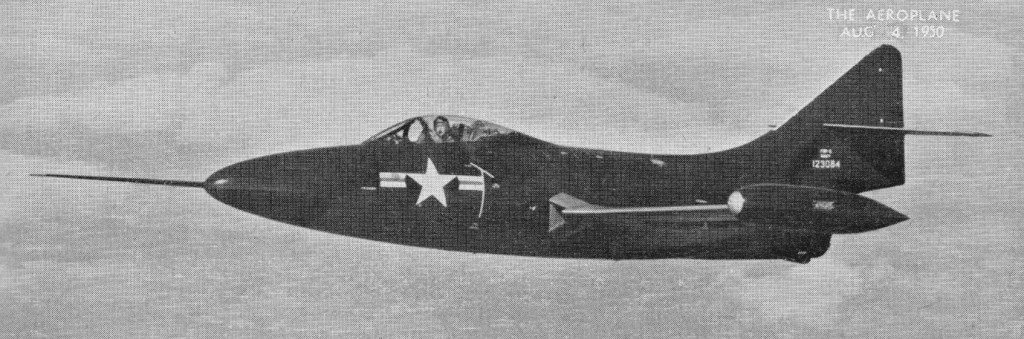
The most prolific variant was the F9F-5 which was powered by the Pratt & Whitney J48, a licence-built Rolls-Royce Tay, and redesigned fin and rudder. Over 600 were completed by the time production ceased at the end of 1952, this total including a small number of F9F-5P aircraft for photo reconnaissance duties. F9F-5P is long-nosed photo-reconnaissance version. Later machines can be seen with flight refuelling nose-probe.
F9F-5 Panther
The F9F-5 was the last version to see squadron service, being finally retired by VAH-7 in October 1958, although many Panthers continued to fly after that date with training units, and as F9F-5KD (from 1962 DF-9E) drone targets and controllers for missile trials. The F9F-4 was powered by an Allison J33-A-16 engine. The F9F-5P was a photographic-reconnaissance version with a longer camera nose.
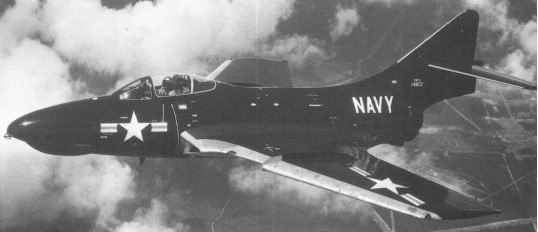
First flown in prototype form as the XF9F-6 on 20 September 1951, the Grumman F9F Cougar evolved from the earlier F9F Panther series of fighter aircraft. It differed mainly from its predecessors by virtue of posses¬sing swept wings and tailplane, thus earning the distinction of being the first swept-wing carrierborne type to enter service. Apart from this, changes were kept to a minimum to facilitate rapid production. Indeed, the new Cougar entered service just 14 months after its maiden flight took place, initial exam¬ples of the 32.25kN Pratt & Whitney J48-P-8-engined F9F-6 (later designated F-9F) joining VF-32 of the Atlantic Fleet naval air force during November 1951.
F9F-5 Cougar
Shortly after this, deliveries to Pacific Fleet units got under way, and the type was very soon introduced to combat in Korea. Production of the F9F-6 totalled 706 aircraft, 60 of which were completed as unarmed F9F-6P machines for reconnaiss¬ance duties with a longer nose to accommodate K-17 and tri-metrogon cameras, and these were followed by the F9F-7 (F-9H) which was pow¬ered by an Allison J33-A-16A turbojet. This proved to be only a temporary change, and after completing 168 F9F-7s Grum¬man reverted to the Pratt & Whitney J48 engine for the F9F-8 (which bore the Grumman design designation G-99) (F-9J), which became the definitive Cougar, well over 1,000 being completed in three basic variants. First to appear was the F9F-8 (601 built). Movable leading-edge slats were replaced by fixed cambered leading-edge extensions outboard of the wing fences. Total internal fuel capacity was increased by 530 litres. Large numbers were later modified to F9F-8B (AF-9J) standard with provision for air-to-surface guided missiles. The first production F9F-8 flew on 18 January 1954.
Some 110 of a photo-reconnaissance version designated F9F-8P (RF-9J) flew for the first time on 21 August 1955 and had an extended nose for the cameras.
F9F-5P
The Cougar also lent itself to the training of future naval aviators; a prototype two-seat YF9F-8T first flown on 4 April 1956 was followed by 399 F9F-8T (TF-9J) production examples, some of which remained in use with Naval Air Training Command until well into the 1970s. The F8F-8T was armed with two 20mm cannon and was 23 inch longer than the original cougar. Production of this version ended on the last day of 1959.
As far as front-line units were concerned, the Cougar disappeared from the scene early in 1960, the last operational version being the F9F-8P, but many continued to fly long after that date with the Reserve Force and with Air Training Command. Surplus aircraft became F9F-6K (QF-9F) and F9F-6K2 (QF-9G) target drones or F9F-6D (DF-9F) drone directors.
F9F-8T Cougar
Panthers are remembered for recording a victory against an enemy jet aircraft, a MiG-15, on 9 November 1950.
F9F-5 Panther Engine: one 3175-kg (7,000-lb) thrust Pratt & Whitney 148-P-6A turbojet Maximum speed 932 km/h (579 mph) at 1525 m (5,000 ft) Cruise speed: 774 km/h / 481 mph Service ceiling 13380 m (43,900 ft) Range 2092 km (1,300 miles) Empty weight 4603 kg (10,147 lb) Maximum take-off 8492 kg (18,721 lb) Wingspan 11.58 m (38 ft 0 in) Length 11.58 m(38 ft 0 in) Height 3.73 m (12 ft 3 in) Wing area 23.23 sq.m (250 sq ft). Armament: four 20-mm cannon, plus up to 1361 kg (3,000 lb) of external ordnance. Crew: 1
F9F-5 Cougar Naval fighter Engine: Pratt & Whitney J48-P-8 turbojet with afterburner, 7200 lb. thrust Wingspan: 36 ft. 5 in Length: 42 ft. 3 in Loaded weight: approx. 20,000 lb. Max. speed: 690 m.p.h. Ceiling. 50,000 ft. Range: approx. 1,000 miles. Crew: 1 Armament: 4×20 mm. Cannon
F9F-8 Cougar Engine: one 3289-kg (7, 250-lb) thrust Pratt & Whitney J48-P-8A turbojet. Maximum speed 1033 km/h (642 mph) at sea level Service ceiling 12800 m (42,000 ft) Range 1690 km(l,050 miles) Empty weight 5382 kg (11,866 lb) Maximum take-off 11232 kg (24,763 lb) Wingspan 10.52 m (34 ft 6 in) Length 12.73 m(41 ft 9 in) Height 3.72 m (12 ft 2.5 in) Wing area 31.31 sq.m (337 sq.ft). Armament: four 20-mm cannon, plus up to 1814 kg (4,000 lb) external ordnance
F9F-8P
TF-9J Engine: 1 x Pratt & Whitney J48-P-8A turbojet, 32.0kN Max take-off weight: 9344 kg / 20600 lb Wingspan: 10.52 m / 34 ft 6 in Length: 13.54 m / 44 ft 5 in Height: 3.73 m / 12 ft 3 in Service ceiling: 15240 m / 50000 ft Range: 966 km / 600 miles Armament: 2 x 20mm cannon, 907kg external
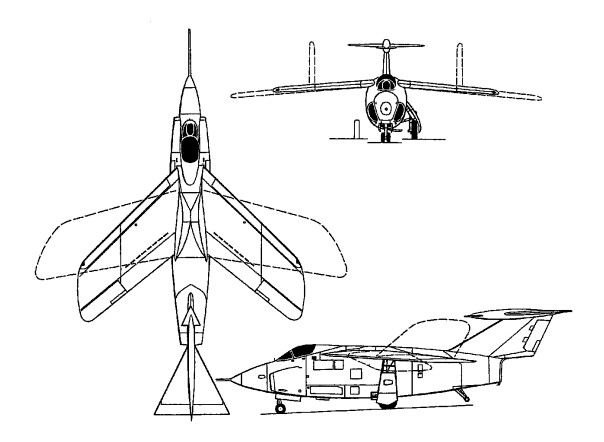
Greater success attended the development of variable-geometry wings, which allow the use of a minimum-sweep position for take-off and landing, an intermediate-sweep position for fuel-economical cruise, and a maximum-sweep position for high dash performance. The navy’s first essay in this field was the Grumman XF10F Jaguar, which was conceived in 1948 as a possible successor to the F9F Panther. The aerodynamic features of a variable-geometry type had already been explored in a number of aircraft, most notably the Westland Pterodactyl IV developed in the UK during the early 1930s, the Messerschmitt P.1011 designed in Germany during World War II, and the experimental Bell X-5 sponsored by NACA and the LTSAF with the ultimate purpose of validating a fighter-type wing with sweep variable between 20 deg and 60 deg. The X-5 had not flown when Grumman set to work on the Jaguar, but a considerable quantity of engineering data was available and this proved valuable to the Grumman engineers, who were faced with a host of problems. Originally the XF10F had been planned as a development of the Panther with clipped delta flying surfaces. Designed as a transonic single-seat shipboard fighter with an internal armament of four 20-mm cannon and provision for an external bomb load of up to 4,000 lb (1814 kg). The sweep angle of the wings could be varied hydraulically between 13.5 and 42.5 deg, and high-lift devices consisted of full-span slats and an 80 per cent Fowler flap. The concept was then refined to the point at which a tilting variable-incidence wing was in adopted for reduction of the take-off and landing speeds. The navy then added additional responsibilities to the basic fighter-role, and these so increased the structure weight that the company came up with the notion of providing a variable-geometry wing. Further refinement was added after this when it was decided to allow the wing to be swept at any angle between the minimum- and maximum-sweep angles. The provision of such wings increased the type’s weight by 2200 lb (998 kg) but reduced landing speed from 132.5 mph (213 km/h) to 109 mph (175 km/h). The Jaguar was also provided with an advanced control system that included a delta surface forward of the fin to act as a servo for the all-moving tailplane and so improve control response at transonic speed. The tailplane was operated by a novel arrangement where the pilot controlled a small delta-wing airfoil at the tip of the tail bullet. This in turn moved the main elevator Unfortunately, a lag in the response between stick and surface usually resulted in a Pilot Induced Oscillation (PIO) and the Jaguar was virtually uncontrollable much of the time.
The engineering of so complex an aeroplane took considerably longer than expected, and it was May 1953 before the XF10F prototype flew, three years behind schedule. The Jaguar was intended to be powered by a Westinghouse XJ40-WE-8 turbojet rated at 7,400 lb (3 357 kg) military thrust and 10,900 lb (4 944 kg) with full reheat, but when flight trials were initiated on 19 May 1952, a J40-WE-6 rated at 6,800 lb (3 084 kg) was fitted. The novel servo-control system for the tailplane proved far too slow in operation, and was replaced by a conventional powered tailplane, but it soon became clear that considerable revision of the basic design would have to be undertaken before production aircraft could be considered. Numerous problems arose during the test programme and as some of these could not be resolved, trials terminated with the 32nd flight on 25 April 1953. Orders had been placed for 112 production F10F-1s, but 100 of these were cancelled on 1 April 1953 and the remaining 12 on the following 12 June.
Empty weight, 20,426 lb (9 265kg). Max loaded weight, 35,450 lb (16080 kg). Span (min sweep), 50 ft 7 in (15,42 m), (max sweep), 36 ft 8 in (11, 17 m). Length, 54 ft 5 in (16,59 m). Height, 16 ft 3 in (4,95 m). Wing area (min sweep), 467 sq ft (43,38sq.m), (max sweep), 450 sq ft (41,81sq.m). Max. speed: 1143 km/h / 710 mph Range: 2687 km / 1670 miles
Two prototypes designated XTBF-1 were ordered on 8 April 1940, the first flying on 1 August 1941. The engine was a Wright R-2600-8 Cyclone 14-cylinder two-row radial rated at 1700 hp driving a Hamilton Hydromatic propellor. The extremely large wings folded to the rear about skewed hinges so that they lay along the sides of the fuselage, upper surfaces outwards. The main landing gear had a wide track yet retracted outwards into the wings. The fuselage accommodated a crew of three and an internal weapons bay, and the defensive and offensive armament was well planned. The pilot dropped the short 55.9 cm (22 in) torpedo, 907 kg (2000 lb) bomb or other internal load, fired the fixed guns (one 7.7 mm Browning in the upper right of the nose, and in the TBF 1C and nearly all subsequent versions two 12.7 mm in the outer wings) and rockets (eight 27.2 kg in the TBM 3). The bomb aimer sat in the lower fuselage behind the weapon bay, helped with navigation, sighted the torpedo or bombs in level bombing and manned the 7.7 mm machine gun in the rear ventral position. In the electrically operated turret with its 12.7¬mm gun sat the radio operator and turret gunner.
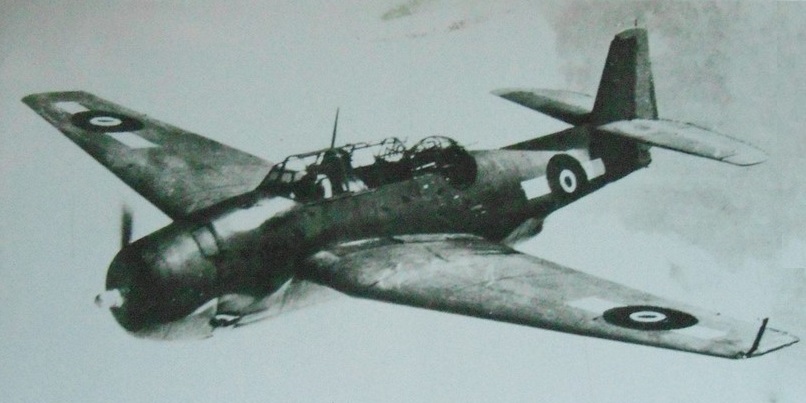
In December 1940 the US Navy placed an initial order for 286, subsequently multiplied, and deliveries began in January 1942 to VT 8. The same squadron took their TBF 1 Avengers into action for the first time during the Battle of Midway, where they did great damage for little loss, while 35 of the 41 old TBDs were shot down in a single engagement. By December 1943 Grumman had delivered 2293 Avengers, most of them being TBF 1Cs with the wing guns and provision for two underwing drop tanks. The Royal Navy received 402 of these Grumman built aircraft (for the first six months calling them Grumman Tarpons), with the US Lend/Lease designation of TBF 1B and the British name Avenger I. The first squadron, Fleet Air Arm No 832, was in action at the Battle of the Solomon Islands in June 1943, aboard the US carrier Saratoga. A further 63 TBF IBs were supplied to the RNZAF.
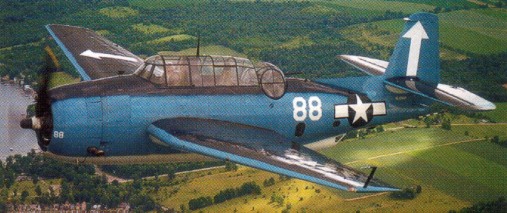
Grumman TBF-1C Avenger
Avenger NZ2505 was the first Avenger to arrive in NZ in 1943 and flew with RNZAF 30 Sqn. It was retired in 1959.
So important was the Avenger that a second source was arranged, to boost rate of output. As with the Wildcat fighter this second manufacturer was Eastern Aircraft division of General Motors. Between September 1942 and April 1944 Eastern delivered 2882 TBM 1 and 1C Avengers, almost identical to the Grumman 1 and 1C, and 334 TBM 1 were designated Avenger II when supplied to the Royal Navy.
In early 1943 Grumman built an XTBF 3 prototype with 1900 hp R 2600 20 engine. This version subsequently became the standard production Avenger, all made by East¬ern Aircraft (Grumman concentrating on the F6F Hellcat fighter). Between April 1944 and August 1945 Eastern delivered 4664 of this more powerful TBM 3 model, which also carried more fuel, had stronger wings equip¬ped to carry drop tanks, radar or rocket projectiles, and in most aircraft had the turret removed. The Royal Navy received 222 designated Avenger III. The TBM-3E, almost the same as the earlier TBF, had a fuselage stretch of around one foot and a more powerful engine.
In 1946 the Avenger was the first aircraft ever to carry early warning (AEW) radar, the Project Cadillac set that became APS 20. This became a standard interim service type, designated TBM-3W and 3W2, with no turret and rearranged interior.
TBF-3W
The TBM 3E was a post war rebuild which was put back into ‘remanufacture production’ during the Korean war, for the Royal Navy (100 Avenger AS.4), Royal Canadian Navy (115) and Aeronavale (96). The TBM 3S and 3S2 were antisubmarine strike versions for the Netherlands and Japan. The TBM-3U was a target towing version, and the TBM 3R was a seven seat COD (Carrier On Board Delivery) transport. 958 served with the Royal Navy. All models were powered by Wright R-2600 Cyclone engine. A total of 9839 aircraft were built.
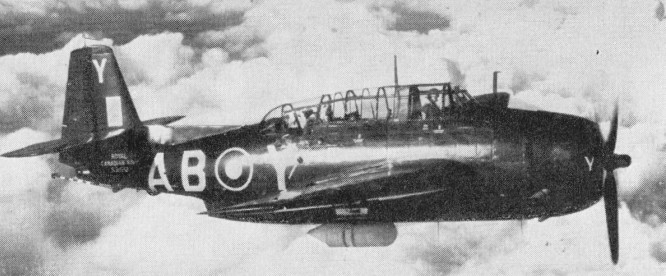
Avengers in service with the Royal Canadian Navy in 1955 were ex-U.S.N. aircraft, modified by Fairey Aviation of Canada. Some retain original ballshape gun turret at rear of glasshouse. Others are unarmed. All carry a radome cannister under starboard wing.
TBF-1 Engine: 1 x Wright R-2600-8 Cyclone 1700 hp. Max speed: 278 mph / 445 kph. Service ceiling: 22,600 ft / 6890 m. Wing span: 54 ft 2 in / 16.5m Width folded: 19 ft / 5.8 m. Length: 40 ft / 12.2 m. Height: 15 ft 5 in / 5 m. Wing area: 490 sq.ft. Empty wt: 10,600 lb. MTOW: 7053 kg / 17,600 lb. ROC: 1075 fpm / 376 m/min. Range: 1450 km / 905 sm. Crew: 3 Armament: One .30 mg in cowling, one fixed .50 mg in each outer wing, one .50 mg in power-operated turret, one .30 mg in ventral hatch, bomb bay / one torpedo, one 2000 lb bomb or four 500 lb bombs
TBF-1C Avenger Engine: 1 × Wright R-2600-20 Twin Cyclone , 1,900 hp (1,420 kW) Wingspan: 54 ft 2 in (16.51 m) Length: 40 ft 11 in (12.48 m) Maximum speed: 275mph (442 kph) Maximum range: 1000 miles (1610 km) Service Ceiling: 30,100 ft (9,170 m)
TBM 3 / TBF Engine: Wright R-2600-20 Cyclone 14, 1726 hp / 1305kW Span: 16.51 m (54 ft 2 in) Length: 12.2 m (40 ft 0 in) Height: 16 ft 5 in / 5.0 m Wing area: 489.977 sq.ft / 45.52 sqm Weight empty: 10105.5 lb / 4583.0 kg Gross weight: 8278 kg (18 250 lb) Max speed: 232 kts / 430 km/h (267 mph) Cruising speed: 128 kts / 237 km/h / 147 mph Service ceiling: 23392 ft / 7130 m Wing loading: 37.31 lb/sq.ft / 182.00 kg/sq.m Range: 982 nm / 1819 km Crew: 3 Armament: 3x MG cal.50 (12,7mm), 1x MG cal.30 (7,62mm), 907kg ord.
TBM-3 Engine: 1,750 h.p. Wright R2600-20 Wingspan: 54 ft. 2 in Length: 40 ft. 11.5 in Loaded weight: 16,761 lb Max. speed: 261 mph Ceiling: 22,600 ft. Typical range: 1,130 miles at 151 mph Crew: 2-3.
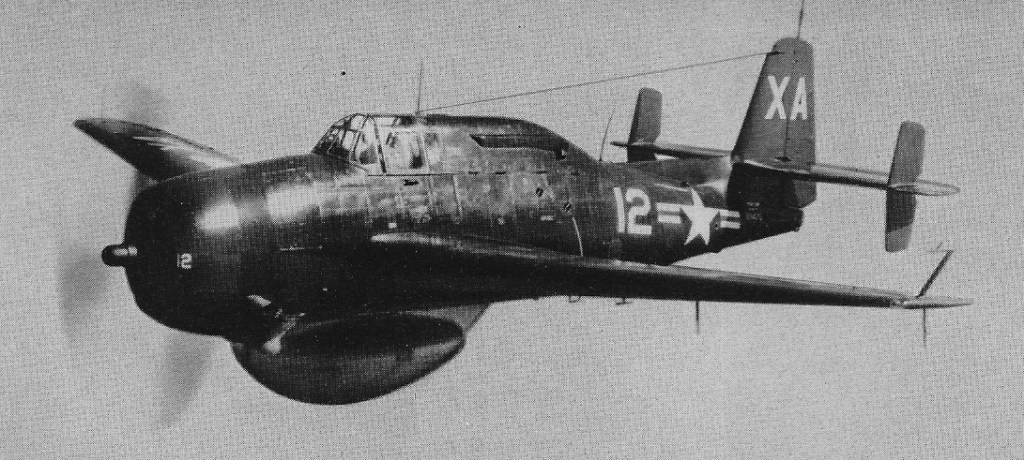
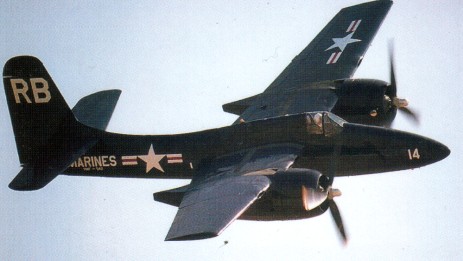
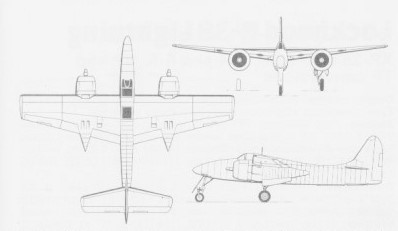
Still infatuated with developing a more advanced twin engined fighter to fly off the coming newer and larger carriers the Navy, in early 1941, again called on Grumman to design and build two twin engine prototypes. The Navy’s directive, projected into the future, required that the fighter be powered by powerful 2,100hp (1,566kW) Pratt & Whitney Double Wasps and have a combination of armament consisting of four 20mm cannon and four 0.50 calibre machine guns. Additionally, the aircraft would carry a torpedo underneath the fuselage or two 1,000 lb (453kg) bombs hung under the wings. Following the familiar ‘Cat’ line of aircraft produced for the Navy, Grumman called it the Model G 51 F7F Tigercat. Already proposed by the Navy was the future Midway class carriers that the F7F would fly off. In June 1941, Navy officials authorised Grumman to start the G-51 programme and to build two prototypes. Though the originally planned XF7F-1, naval counterpart of the XP-65, never got off the drawing board, a modified version of it was ordered, to the tune of two prototypes, on 30 June 1941. The new XF7F-1 was much more powerful; indeed it promised to be the most powerful fighter in the world with two 2,000-hp Pratt & Whitney R-2800 Double Wasps (the same engine as used in the F6F). The concept of so powerful a fighter was made practical by the 45,000-ton Midway class carriers, which were being built in 1941. Called the G-51 by Grumman, and allotted the name Tigercat, the XF7F owed much to the earlier twins, the XF5F and XP-50. Design and construction took nearly 2½ years, up to December 2, 1943. On that day test pilot Bob Hall took off in the prototype XF7F (BuNo 03549) on its maiden flight. Unfortunately, the test programme was delayed somewhat by a non fatal accident that damaged ‘549 beyond repair. Luckily by this time the second prototype (03550) was about ready to fly and the test programme continued without let up. The Tigercat’s flight data and resultant sterling performance convinced the Navy to immediately order 500 aircraft. Sitting high off the ground on tricycle landing gear, it had a stubby squared-off wing carrying two huge nacelles for the 2,100-hp R-2800-22W engines. Just ahead of the leading edge, the pilot was surrounded by four 20-mm cannon in the wing roots and four 0.5-in guns in the nose! Under the slim fuselage could be hung a 21.7-in torpedo, and provision was made for two 1,000-lb bombs under the inner wings. This time the wing folds could be simple, a straight up and over with the tips at the same height as the fin. Range, rate of climb and speed (425 mph) all promised to set new levels of performance for carrier-based aircraft. When the production F7F 1s began coming off assembly lines in quantity in April 1944, Naval strategists decided to operate the Tigercat primarily from land bases due to the length of time to carry out carrier qualification trials at sea. Thus the Tigercat was given to the land based Marine squadrons who used them as fighter bombers in tactical ground attack operations. The plan turned into an exchange programme whereby 12 USMC squadrons were to be equipped with ‘Tigers’ while the Marines would give up an equal number of F4U Corsair squadrons and return them to the Navy. The Corsairs then be transferred to Naval squadrons aboard fleet carriers in the Pacific who needed them in the final assault on the Japanese home islands. By December 1944, Tigercat production suddenly came to a screeching halt owing to the rapidly changing conditions on the battlefront. By the end of 1944 only 35 examples were completed which was blamed on technical problems that unexpectedly cropped up. As the war progressed toward completion in the Pacific, by February 1945, Navy and Marine air squadrons began bombing and strafing targets of opportunity over the home islands; and it called for a change in aerial strategy. This changed the F7F 1 combat role as previously envisioned by Naval tacticians. This led to the development of a modified night fighter version of the Tigercat. The third production XF7F 1 served as the prototype for the XF7F 2N. The major and most noticeable modification included a second seat for a radar operator located over the mid point of the wing (a fuel tank being removed to provide room) and a more prominently revised nose to accommodate the radar. This change required the removal of the four machine-guns located under and behind the nose cone but the F7F-2N was still heavily armed, possessing four 20-mm cannon buried in the wing leading edges. Other modifications included rocket launching stubs under the wings and a king size Tiny Tim 11.75in rocket shackled under the fuselage. For safety reasons, the rocket had to be dropped from the Tigercat before ignition to eliminate the blast that could damage the metal skin. This was accomplished by unwinding a short umbilical cable simultaneously with the rocket which was electronically fired severing the cable. Since the war’s beginning, Pratt & Whitney had been busy developing a more powerful engine to keep pace with the newer, advanced aircraft coming off the assembly lines. The recently completed night fighter version of the Tigercat became the recipient of the new R 2800 34 giving it a top speed of 445mph (716km/h). Next phase of the project involved sea trials aboard an aircraft carrier. In April 1945 a select group of Tigercat pilots was temporarily assigned to the USS Antietam and in the ensuing days practised more than 30 night landings. Despite the Tigercats’ flawless performances, the Navy strangely let the project die without explanation. The Navy dropped the idea of using twin engine night fighters on carriers and continued using modified Corsair and Hellcat night fighters that had long proven themselves on fleet carriers. VMF(N) 533 had the distinction of becoming the first squadron to be equipped with the new Tigercat, arriving in the war zone on August 14, 1945 ironically the final day of hostilities in the Pacific. The Tigercats were sent up on patrols but they never saw or engaged any enemy aircraft. Shortly after the war ended, the squadron was sent to China where it served for several years with various models of Tigercats. The final conversion of the 3N into the F7F 4 incorporated strengthening of the landing gear and airframe, advanced radar, and arresting gear required for carrier landings. Aware of the fast changing air environment in the postwar era with the new jet designs coming on line, the Navy built only 12 4Ns before closing down the Tigercat line. In 1950 when the Korean War exploded on the world scene, two Tiger equipped Marine squadrons, VMF 513 and 542, left the US for the battle zone. Soon after arriving, an F7F 3N fighter piloted by Major E A Crundy shot down an obsolete Polikarpov PO 2 Mule biplane of the Korean Air Force. During the course of the war, only one other PO 2 was downed by a Tigercat. Despite the Tigercat’s superlative performance, it was usually sent on such missions rather than tangle with the newly introduced Russian MiG-15 fighter. Unfortunately, the Tigercat had been designed to fight in a different kind of war. It became the victim of the sudden arrival of the jet era that ended the reign of piston powered aircraft. Unusual for many World War Two fighters, no Tigercats were sold to foreign countries except two 2Ns that were delivered to the UK for evaluation. Production of the Tigercat continued throughout 1945 and into November 1946 when it was ended for good. During this time a day fighter version emerged as the F7F 3 powered by Pratt & Whitney R 2800 34Ws. This variant attained the distinction of being the most prolific 250 were built, all of them between March and June 1946 when production ceased. The Navy’s interest in turning the Tigercat into a night fighter persisted, hence it called on Lockheed Air Service whose long experience was well known for modifying other company’s aircraft to convert 60 F7F 3s into the F7F-3N night version. The single most identifying feature of the 3 was its redesigned fin that blended smoothly into the fuselage required because of the more powerful engine. Most of the fighter variants retained the second cockpit and the enlarged nose containing the SCR 720 radar as on the original 2N. Other conversions appeared in the field such as the two-seat F7F 2D drone controller and the F7F P photo reconnaissance modification with several camera locations.
F7F-2D
The Navy broke new ground with the Tigercat because it was the first operational tricycle landing gear aircraft in their inventory. All other Navy and Marine aircraft during World War Two were traditional ‘tail draggers’. The unique landing gear configuration made ground handling a breeze and greatly expanded the pilot’s forward vision over the nose. Pilots, particularly those above average stature, found the cockpit roomy and comfortable; that coupled with an autopilot and twin engine safety, greatly eased fatigue on long over water missions. The cockpit layout and instrumentation was similar to the F6F Hellcat and the F4U Corsair, except for the engine controls and the twin set of instruments. Although too late for World War II, the Tigercat did see action in Korea, VMF(N)-542’s F7F-3Ns entering com¬bat in October 1950 and performing both day and night in the inter¬diction task. The XF7F 1 Tigercat was Gordon Israel’s happiest achievement. Even during the beginning of the jet age, the big twin was one of the Navy’s best performing airplanes. With 5,600 horsepower on hand with water injection, the Tigercat was a climbing fool. The airplane also had a remarkable range that made a 2,600 mile cross country hop literally across the country routine for the Navy units equipped with the Tigercat. The airplane never fired a shot in World War II, but it served in an attack role in Korea. One F7F made it into legend when it came home dragging two 500 pound chunks of concrete attached to cable the North Koreans had rigged as a kind of homemade antiaircraft measure. If the F7F had one drawback, it was the Vmc of 160 knots. Proper takeoff technique called for the pilot to wait for 160 before pulling the gear. Grumman built but 363 F7Fs of all types. In the postwar period, it served with the Marines and Naval Reserve until the late 1950s. In civil life, the Tigercat’s versatility showed up well as an air tanker to fight forest fires or as an agricultural sprayer. A total of 45 F7F-2Ns was built. Grumman built only 34 F7F-1 single-seat day fighter/attack aircraft, followed by 66 two-seat F7F-2N night-fighters with radar replacing the nose guns, 190 F7F-3 single-seaters with uprated engines, a taller fin and more fuel, 60 F7F-3Ns with two seats and a very long radar nose, and finally 12 F7F-4Ns with full carrier equipment and a revised radar nose and second cockpit. The next version to appear was the F7F-3. The last delivery was made in December 1946.
Some 189 were built, a few being fitted converted with cameras by Lockheed Air Service for reconnaissance as the F7F-3P, whilst 60 two-seat F6F-3N night-fighters were also completed before production came to a close in November 1946 with 13 F7F-4N aircraft featuring an enlarged vertical tail, im¬proved radar and other refinements. The F7F-3N version was still used in small numbers by the U.S. Marine Corps in 1955.
F7F-1 Tigercat Engine: Pratt & Whitney R-2800-22W Double Wasp, 2000 hp. Height: 15 ft 2 in / 4.6 m Empty weight: 13,100 lb / 5943 kg Loaded weight: 22,560 lb / 10,235 kg Max speed: 427 mph / 689 kph ROC: 4530 fpm / 1380 m/min Service ceiling: 36,200 ft Range int. fuel: 1170 mi / 1885 km
F7F-1D Tigercat Wingspan: 51 ft Length: 45 ft Speed: 427 mph Range: 1170 miles Armament: 4 x 20mm cannon Bombload: 2 x 1000lb bomb or 1 x torpedo Crew: 1
F7F-2 Tigercat Engine: Pratt & Whitney R-2800-22W Double Wasp, 2000 hp. Height: 15 ft 2 in / 4.6 m
F7F-2N Loaded weight: 26,194 lb / 11,880 kg Max speed: 421 mph Service ceiling: 39,800 ft / 12/131 ft Range int. fuel: 960 mi / 1885 km
F7F-3 Tigercat Engines: two 2,100-hp (1566-kW) Pratt & Whitney R-2800-34W radial piston engines. Maximum speed: 700 km/h (435 mph) at 6705 m (22,000 ft) Service ceiling 12405 m (40,700 ft) Range 1931 km (1,200 miles) Empty weight 7380 kg (16,270 lb) Maximum take-off 11667 kg (25,720 lb) Wing span 15.70 m (51 ft 6 in) Length 13.83 m(45 ft 4.5 in) Height 5.05 m(16 ft7 in) Wing area 42.27 sq.m (455 sq ft). Armament: four 12.7-mm (0.5-in) machine-guns and four 20-mm cannon. Vmc: 130 to 140 kts (149 to 161 mph or 239 to 259km/h). TO speed: 75 kt, 53in, 2,800rpm. ROC: 3500 fpm @ 150 mph. Stall: 60-70mph. Ldg Gear extension speed: 100 mph. Max X-wind: 30 mph. Crew: 1
F7F-3N Tigercat two seat night fighter Engines: two 2,100 hp Pratt & Whitney R2800-22 Span: 51 ft. 6 in Empty weight: 16,270 lb / 7379 kg Range: over 1,500 miles Max Speed: 425 mph
F7F-3P
-4 Engine: 2 x Pratt & Whitney R-2800, 2400 hp Length: 16 ft 7 in / 5.06 m Height: 16 ft 7 in / 5.06 m
F7F-4N Empty weight: 16,270 lb / 7379 kg Loaded weight: 26,167 lb Max speed: 430 mph Service ceiling: 40,450 ft Range int. fuel: 810 mi
In early 1941 Grumman designers had been studying the next generation, using one of the much more powerful engines that were available, such as the 1,600-hp Wright R-2600 Cyclone 14 or the 2,000-hp Pratt & Whitney R-2800 Double Wasp.
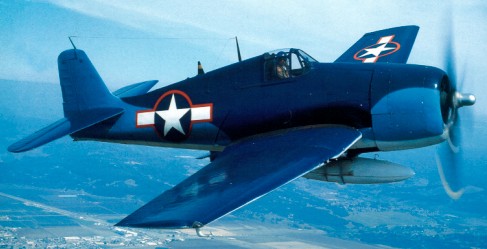
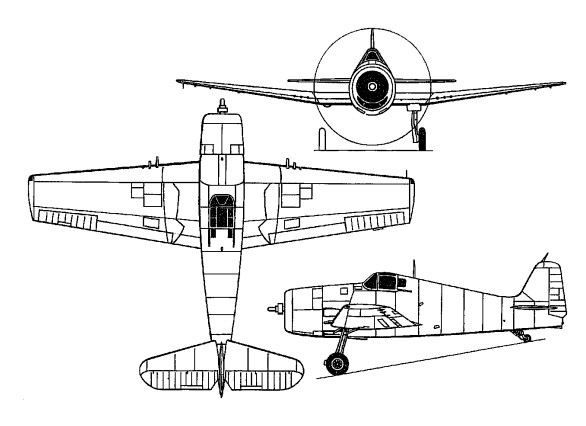
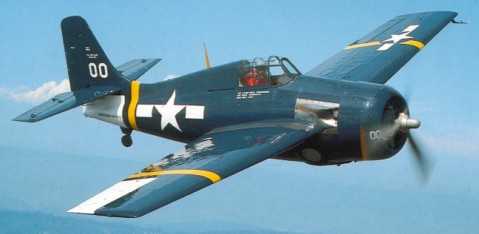
The fuselage was made much bigger, with a cross-section no longer circular but resembling a pear-shape. The huge squarish wing was lowered, partly to keep the landing gear reasonably short and still provide ground clearance for the larger propeller. The main landing gears were moved out to the wings, retracting rearwards with the wheels turning to lie flat just in front of the slotted flaps. The outer wings, with six 0.5-in guns, folded about skewed hinges as before. The overall impression was one of bluff pugnacious strength, accentuated by the blunt nose, with ducts for the oil cooler and supercharger intercooler under the engine. Contracts for the prototypes were placed on June 30, 1941, which meant that reports of aerial combat in Europe played a part in the design, and the first prototype, designated XF6F 1 and powered by a 1700 hp Wright R 2600 10 Cyclone, flew for the first time on June 26, 1942 from the Bethpage, Long Island factory, piloted by Selden A Converse. In the same month, a Zero had been forced down in the Aleutians and captured, so that further lessons could be incorporated, and the revised prototype, now designated XF6F 3 (another prototype, XF6F 2, later XF6F-4, was also built), made its first flight on 26 June 1942, powered by the R-2800. The bigger engine was the obvious choice, and — even though Grumman was building a completely new Plant 3 in order to make the new fighter — mass production got under way with amazing rapidity. Even as the factory was being built, assembly lines of F6F-3s took shape inside it, the first coming off the line and into the sky on 4 October 1942. Orders for production F6F 3s had been placed in May 1942, and by the end of the year the first examples were being delivered to US Navy Squadron VF 9 on the newly commissioned USS Essex. Designed to outperform the Zero in everything but manoeuvrability achieved in the A6M only at the expense of heavy armament and armour protection for the pilot and fuel tanks the F6F 3 was powered by a Pratt & Whitney R 2800 10W Double Wasp 18 cylinder air cooled two row radial engine with water injection. Construction was simple and robust for case of both production and maintenance, an all metal semi-monocoque with stressed skin incorporating armour protection for the pilot and a turnover structure. The wings used the characteristic Grumman folding system, pivoting about the front spar and folding back parallel with the fuselage, leading edge down. The operation was carried out manually, the locking pins being operated hydraulically from the cockpit and made safe by hand. The six 0.50 in (12.7¬mm) machine guns, mounted just outboard of the break line, were thus accessible with the wings folded. The main undercarriage legs also rotated through 90O to retract backwards into wing wells, covered by plates attached to the legs. Compared with the Wildcat, the F6F 3 had 800 hp more power, was 97 km/h (60 mph) faster and had two more guns with almost double the ammunition (400 rounds per gun). Although considerably heavier, the Hellcat could climb to 4572 m (15000 ft) in under eight minutes and had a service ceiling of over 8230 m (37000 ft). Compared with the Zero it was faster, better armed and far more resistant to battle damage. In order to concentrate on the Hellcat, Grumman sub contracted production of the Wildcat and the TBF Avenger to General Motors, and deliveries to both the US Navy and Marine Corps and the Fleet Air Arm, which named the type Hellcat I, mounted rapidly. Named Hellcat, the F6F-3 was almost right from the start, the only major modifications being to tilt the engine slightly downwards, simplify the main landing-gear fairings and fit a Hamilton propeller with no spinner. Then production really rolled, starting with 4,403 F6F-3s, including 16 converted as F6F-3E night-fighters with an APS-4 radar pod on the starboard wing and 205 F6F-3N night-fighters with an APS-6 radar in a pod on the starboard wing. Late Dash-3s had the R-2800-10W rated at 2,200hp with water injection, and a flat bulletproof windshield. During 1944 the F6F 3 (an eventual total of 4646) was replaced on the production lines by the F6F 5, using the same engine but with modified cowling and windshield and improvements to the control surfaces with spring-tab ailerons, strengthened tail surfaces, additional armour behind the pilot and a waxed high-gloss skin finish. Armament was increased, with fittings for a 454 kg (1000 lb) bomb under each wing centre section, racks for six rockets under the outer wings and, on later models, the inboard machine guns replaced by 20 mm cannon. The F6F-5 carried a search radar as the F6F-5E. This was the final produc¬tion version of the Hellcat, a total of 7860 being produced by November 1945, including 1189 F6F 5N night fighters with wing podded APS 6, photographic-reconnaissance (F6F-5P) versions, and 930 FAA Hellcat IIs. The F6F-5K was a long-range radio-controlled pilotless drone conversion of the Hellcat. The modification was undertaken by the Naval Aircraft Modification Unit at Johnsville. Several were used in the Bikini operations. The remaining variant was the F6F 6, powered by a 2100 hp R 2800 18W, which first flew in mid1944, but only two were built. At the same time as the Hellcat began to enter service, the US Navy’s new Essex Class fleet carriers and Independence Class light carriers were coming into commission, and new aircraft and new carriers saw their first operational use in the summer of 1942 in a strike against the Japanese held Marcus Island. Alongside the Avenger torpedo bomber and Dauntless dive bomber and in partnership with the later F4U Corsair fighter, Hellcats fought their way across the Pacific as the island by island drive towards Japan continued. Some late F6F-5s had two 20-mm cannon and four 0.5-in guns. The overall figure of 7,870 included 1,529 F6F-5N night fighters and about 200 conversions as F6F-5P photo aircraft. The totals for the F6F, like, those for the F4F, correct many that have been accepted since 1945. In combat with the F6F, the Zero was at an enormous disadvantage. The unarmoured fuel tanks of the Japanese fighter were easily ignited by a short burst from the Hellcat’s six Brownings, and the Zero’s superior manoeuvrability was outweighed by the American fighter’s greater power and strength. Their most dramatic combat came in the Battle of the Philippine Sea, a carrier battle fought at extreme range on June 19/20, 1944. In the course of this epic encounter, 402 Japanese aircraft were destroyed, while six Hellcats were lost in the vicinity of the Japanese fleet and a further 17 splashed down with empty fuel tanks on the return journey. This decisive victory was known as the ‘Marianas Turkey Shoot’ by the US Navy and Marine pilots. As well as flying from carriers, F6Fs were operated by shore based US Marine squadrons. The type also distinguished itself in Fleet Air Arm service, flying anti shipping strikes off the Norwegian coast, providing fighter cover during night attacks on the German battlecruiser Tirpitz, and becoming the standard FAA fighter in the Pacific. The Royal Navy received over 900 Hellcats including approximately 70 night fighters. These were designated F Mk II and NF Mk II. US Navy carrier borne Hellcats claimed a total of 4947 enemy aircraft shot down over 75% of all US Navy combat victories of the Second World War, and with a kill to loss ratio of over 19: 1. A total of 6477 Japanese aircraft were shot down by American carrier pilots. 4947 were destroyed by Grumman F6F Hellcats. The virtual annihilation of Japanese naval aviation represented the suc¬cessful completion of the Hellcat’s mission.
The Fleet Air Arm received 252 Hellcat Is (F6F-3), 930 Hellcat IIs (F6F-5) and 80 Hellcat NF.IIs (F6F-5N). Some were modified as FR.IIs (fighter-reconnaissance) or as unarmed PR.IIs. The combat record of the Hellcat speaks for itself. Though it did not get into action until 31 August 1943 this fighter destroyed 5,155 (not 4,947) of the US Navy total carrier-based score of 6,477 against the Japanese. Though perhaps not entirely typical, it gives a flavour of the F6F’s long-awaited ascendancy to note that in its first big battle, in the Kwajalein/Roi area on 4 December 1943, 91 F6F-3s met approximately 50 A6M Zeros and destroyed 28 for the loss of two aircraft. After the war Hellcats continued in service, some as camera equipped F6F 5Ps, others as F6F 5K target drones and 5D drone directors. One of their last and least-known missions came during the Korean war, by which time they were obsolete as fighters. Remote controlled F6F 5Ks, filled with explosives, were launched from USS Boxer by Guided Missile Unit 90 in six attacks against North Korean targets, the first attack being carried out on August 28, 1952. The 5Ks were guided during the attacks by Douglas AD 2D Skyraider drone director aircraft.
The F6F-5 was the last operational version of the Hellcat, which was finally withdrawn from production in November 1945. The 10,000th Hellcat was delivered to the US Navy in March 1945 and final production amounted to 12,275.
F6F 3 Span:13.06 m (42ft 10 in) Length:10.24 m (33 ft 7 in) Gross weight: 5643 kg (12441 lb) Maximum speed: 604 km/h (375 mph).
F6F-5 Engine: 1 x Pratt & Whitney R-2800-10W Double Wasp, 1491kW / 1973 hp Max take-off weight: 6991 kg / 15413 lb Empty weight: 4152 kg / 9154 lb Wing loading: 46.13 lb/sq.ft / 225.0 kg/sq.m Wingspan: 13.06 m / 42 ft 10 in Length: 10.24 m / 33 ft 7 in Height: 4.11 m / 13 ft 6 in Wing area: 31.03 sq.m / 334.00 sq ft Max. speed: 330 kts / 612 km/h / 380 mph Cruise speed: 146 kts / 270 km/h / 168 mph Service Ceiling: 11370 m / 37300 ft Range w/max.fuel: 1329 nm / 2462 km / 1530 miles Armament: 6 x .50in / 12.7mm machine-guns, 2 x 454kg bombs or 6 x 127mm missiles Crew: 1
Designed in 1937 by Robert L. Hall, the company’s first carrier-based fighter of monoplane configuration was designed to meet a US Navy requirement which originated in 1935, but it was not until July 1936 that the Navy ordered this aircraft, under the designation XF4F-2 (G-18).
The model G-18 was powered by the Pratt & Whitney R-1830-66 Twin Wasp engine, a two-row, fourteen-cylinder radial. A Hamilton Standard two-position propeller was fitted. The armament installation was basically the same as that of the XF4F-1, with two 0.50 guns with 200 rounds each in the top of the engine cowling, and provision for two 100lb bombs under the wings. The gross weight of the aircraft was 5635lb, a substantial increase over the XF4F-1 biplane. The G-18 was ordered on 28 July 1936. Despite the substantial differences to the G-16, the designation XF4F-2 was applied. The prototype, BuNo 0383, was first flown on 2 September 1937. During trials it demonstrated a maximum level speed of 290mph, which was faster than the XF2A-1, but still below the USN requirement of 300mph.
The XF4F-2 was delivered to NAS Anacostia on 23 December 1937 for evaluation. During trials the prototype suffered from a series of snags and accidents. None of these was particularly serious, but their undermined the confidence of the USN. The XF4F-2 suffered repeated engine crankshaft failures. The arrestor hook proved too weak. On 24 February 1938 there was an on board fire when ballast bags in the aft fuselage began to burn. And on 11 April 1938 the XF4F-2 suffered a crash when the engine failed during a simulated deck landing. As a result, the US Navy selected the more reliable Brewster F2A-1 Buffalo for production, after NACA tests had suggested that minor aerodynamic improvements could boost the speed of the XF2A-1 by 30mph. The USN ordered 54 F2A-1s on 11 June 1938. Despite this setback, the USN continued to show interest in the F4F. This was probably partly due to its unwillingness to rely fully on the production of Brewster: The order for the F2A-1 was the first production contract for Brewster, and the manufacturer did not even possess a factory which was adequate for the production of aircraft. Grumman had already built the FF, F2F and F3F for the Navy, and the F4F showed some promise. A development contract was awarded in October 1938. To overcome the shortcomings of the XF4F-2, a new prototype was built with a more powerful two-stage supercharged engine, and airframe revisions which increased wing span and brought changes to wingtips and tail surfaces. In this form the XF4F-3 flew for the first time on 12 February 1939. In July 1936 the navy ordered the prototype XF4F-2, with one of the new 900-hp Pratt & Whitney R-1830 Twin Wasps at the front of a rather tubby fuselage which carried the monoplane wing an inch or two below the mid position. The R-1830S C5 G went into production in 1940 to power the Grumman F4F 3 Wildcat fighter. This was the first production aircraft with two stage supercharging. The hand¬cranked landing gear was re¬tained, and the pilot could look down through two windows in the floor of the comfortable cockpit. Bob Hall, designer of the faintly similar Gee Bee racers, took the XF4F-2 on its first flight on 2 Sep¬tember 1937. Armed with two 0.5-in guns and two 100-lb bombs, this showed promise but suffered from prolonged engine problems. First flown on 12 February 1939, the XF4F-3 had a com¬pletely revised airframe, with broad square-tipped wings and a much-improved tail. It also had a far better Twin Wasp, with a two-stage two-speed supercharger. Armament was increased to two 0.3-in in the fuselage and two 0.5-in in the outer wings. Though by far the heaviest Grumman fighter yet, the Dash-3 proved a fine aircraft, with excellent manoeuvrability, a speed of 333 mph and service ceiling of 33,500 ft. In August 1939 the navy ordered the first batch of 54 F4F-3s, with a longer fuselage, four 0.5-in guns in the wings and, later, armour and self-sealing fuel tanks. This order was soon in¬creased. Grumman offered an export version of the F4F 3 ordered by the US Navy as the G 36A, a contract for 81 aircraft being placed on behalf of France’s Marine Nationale, and France added 81 of a version called the G.36A with Cyclone engines. Seven were in various stages of assembly when France fell and the entire batch was transferred to Britain which also placed a contract for 100 G 36As on its own account. Britain’s Fleet Air Arm put in British non-metric instruments and a throttle lever that worked in the normal sense (the French pulled the lever back for take-off). The six 7.5-mm French guns in the wings were retained.
They proved far better than any other fighter in the Fleet Air Arm, and opened their score on Christmas Day 1940 when two from 804 Squadron shot down a Ju 88 in the north of Scotland.
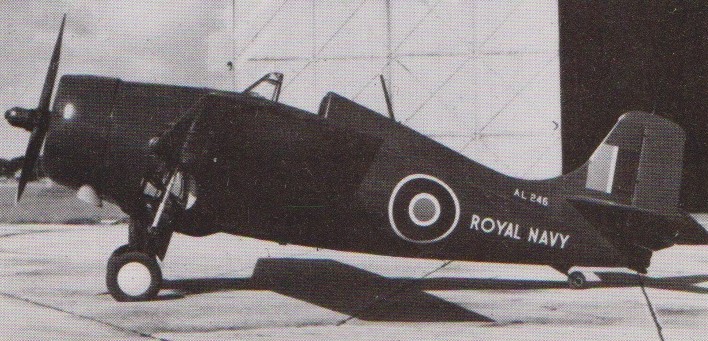
G-36A Martlet I
Whereas the French contract aircraft were powered by the 1,200 hp Wright R 1820 G205A Cyclone, Britain selected the Pratt & Whitney S3C4 G Twin Wasp of similar power. The first (French contract) G 36A flew on 11 May 1940 and entered British service as the Martlet I, a contractual change resulting in the British order being switched to the G 36B with folding wings, this entering service as the Martlet II (although the first 10 were accepted with fixed wings). The 30 F4F 3As that had been assigned to Greece were also taken into the Royal Navy inventory as Martlet IIIs, and with the passage of the Lend-Lease Act, 220 aircraft essentially similar to the F4F-4 but with the single stage R 1820 40B engine were assigned to the Royal Navy as Martlet IVs (F4F 4Bs), these becoming Wildcat IVs when British and US names were standardised in March 1944.
Churchill regarded the production of Fulmars vital and the greater need for land Spitfires, the diversion of resources to a new navalised variant would reduce Spitfire’s production numbers. To cover the gap until the Fulmar’s replacement (the Fairey Firefly) was able to enter service, Grumman Wildcats were ordered for the FAA. These entered service towards the end of 1940 as the Martlet, but these were unavailable in sufficient numbers, while Sea Hurricanes, without folding wings, were also not advanced enough as a solution.
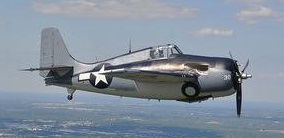
The appearance of the A6M2 N float fighter in the Aleutians prompted US Navy interest in a float equipped version of the F4F 3 shipboard fighter. One example was therefore fitted with Edo designed and manufactured single step metal floats, and with auxiliary rudders mounted near the tips of the tailplane flew on 28 February 1943. The need for additional keel area aft was revealed by initial trials and a large ventral fin was added to improve yaw stability. The floats and their bracing struts raised the fighter’s weight by only some 500 lb (227 kg), and from calm water at normal loaded weight the F4F 3S could take off within 34 seconds. However, the dramatic effect of float drag on speed performance led to an earlier contract to complete 100 F4F 3 Wildcats as float fighters being cancelled. Altogether Grumman built 369 F4F-3s for the US Navy, followed by 95 Dash-3As with the R-1830-90 engine. Some were converted to F4F-3P photo air¬craft and BuNo 4038 was fitted with twin floats. The navy allotted the name Wildcat, thereby estab¬lishing the famous series of Grum¬man ‘cat’ fighters, and the British changed to the same name in January 1944. The chief drawback of the otherwise outstanding F4F-3 was its size, which did not fit too well with the constricted decks of the new escort carriers. Leroy Grum-man took two paperclips and, after bending them in various direc¬tions, stuck them into a pencil eraser. He thus proceeded to demonstrate the principle of what at first was called the ‘sto-wing’. By attaching the outer wings by oblique skewed hinges they were made to fold back on each side of the fuselage, upper surface out¬wards. The company made abso¬lutely sure it worked before com¬mitting it to production at the 163rd aircraft, subsequent delive¬ries being designated F4F-4s, or Martlet IIs. These had the 1,200-hp R-1830-86 engine and the heavy armament of six 0.5-in guns in the outer wings. They were by far the most important Allied fighters in the Pacific from Pearl Harbor until the summer of 1943. Grumman completed the last of 1,971 F4F-4s on the last day of 1942, subsequently needing every inch of floor for the TBF and F6F. Small numbers were built of the experimental Dash-5 to -8. In January 1942 General Motors formed its Eastern Aircraft Divi¬sion to build aircraft in under-used car factories. In 1942 the manufacture of the Wildcat was transferred to the Eastern Aircraft Division of the General Motors Corporation. The first FM-1 Wildcat, assembled from parts supplied by Grumman, flew on 1 September 1942. The FM-1, fitted with a Pratt & Whitney R-1830-86 engine, was virtually the same as the F4F-4 (Wildcat IV). By 11 April 1944 the Eastern Aircraft Division had produced its 2,500th Wildcat. Manufacture of the F4F-4 continued in slightly modified form as the FM 1 Wildcat, the R 1830 86 Twin Wasp engine being retained but wing armament being reduced from six to four 0.5 in (12,7¬ mm) guns and ammunition capacity being raised (from 1,440 to 1,720 rounds). The first FM 1 was flown on 31 August 1942, at Linden, New Jer¬sey, a total of 1,151 subsequently being built of which 312 were assigned to Britain as Martlet (later Wildcat) Vs.
The version of the Wildcat built in largest numbers by General Motors, however, was the FM 2, the first version of the fighter produced for the US Navy to standardise on the 1,350-hp R-1820-56 Cyclone engine. The FM 2 was the production version of the XF4F 8, two prototypes of which were built by Grumman with the first flying on 8 November 1942. Distinguished by its short cowling and redesigned, taller tail. FM-2 Wild¬cats had the oil coolers removed from the under surface of the centre-section to the cowling, which was revised in shape. The removal of the oil coolers permitted the installation of universal racks under the inner wings for bombs or auxiliary fuel tanks, six 0.5-in guns, and (from No. 3,301) six 5-in rockets. This version was called the Wildcat V by the Fleet Air Arm.
FM-2 Wildcat
A total of 4,777 FM 2 Wildcats was built, the last delivery in August 1945, of which 370 were assigned to Britain as Wildcat VIs. Excluding prototypes a total of 7,898 F4Fs and FMs were built.
These were used operationally by the US Navy on a wide scale in the Pacific (FM-2 in particular serving as light escort carrier fighters), participating in the battles of the Coral Sea and Midway, and were used extensively in the attack on Guadalcanal. The type remained in first-line service until the end of the war. British Martlets initially replaced Sea Gladiators and, like their US Navy counterparts, remained operational until the end of the war.
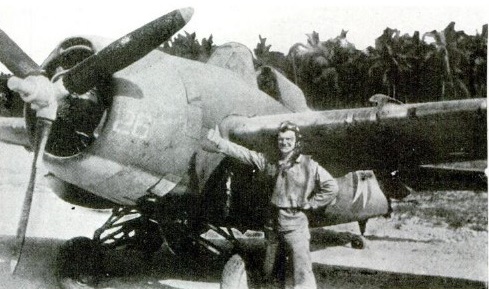
Lieut. Millard Thrash USNR 1944 at Guadalcanal after WASP sinking
XF4F-2 Engine: Pratt & Whitney R-1830-66 Twin Wasp, 900-hp. Wing span: 34 ft. Armament: two 0.5-in guns & two 100-lb bombs.
XF4F-2 Engine: Pratt & Whitney R-1830-66 Twin Wasp, 1050 hp Wingspan: 38 ft 0 in / 11.6 m Length: 28 ft 9 in Height: 11 ft 11 in / 3.6 m
XF4F-3 Engine: Pratt & Whitney R-1830 Twin Wasp. Armament: 4 x 0.5-in mg. Max speed: 333 mph. Service ceiling: 33,500 ft.
G.36A Martlet I / Wildcat Engine: Wright R-1820G 205A Cyclone, 1200 hp Wingspan: 38 ft 0 in / 11.6 m Length: 28 ft 9 in Height: 11 ft 11 in / 3.6 m Armament: six 7.5-mm mg.
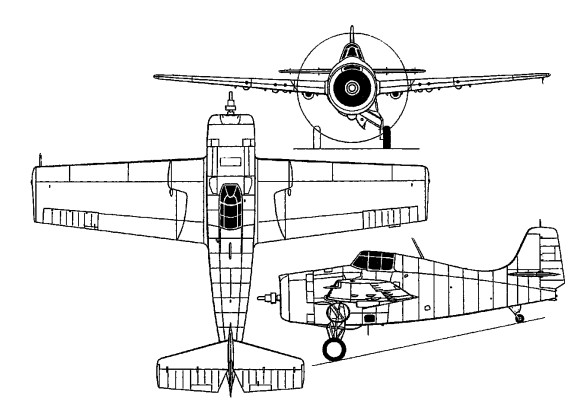
F4F-3 Engine: Pratt & Whitney R-1830-76 Twin Wasp, 1200 hp Wingspan: 38 ft 0 in / 11.6 m Length: 28 ft 9 in Height: 11 ft 11 in / 3.6 m Empty weight: 4425 lb Loaded weight: 5876 lb Max speed: 325 mph / 523 kph
F4F-3A Engine: R-1830-90.
F4F-3P Photo air¬craft.
G-36 / F4F 3S Max speed, 266 mph (428 kph) at 20,300 ft (6 185 m). Initial climb, 2,460 ft/min (12,5 m/sec). Max range, 600 mls (965 km). Empty weight, 5,804 lb (2 633kg). Loaded weight, 7,506 lb (3405 kg). Span, 38 ft 0 in (11,59 m). Length, 39 ft 1 in (11,91 m). Height, 18 ft 13 in (5,53 m). Wing area, 260 sq ft (24,15 sq.m).
F4F-4 / Martlet II / Wildcat Engine: Pratt & Whitney R-1830-36/40 Twin Wasp, 1,200-hp / 895kW Wing span: 38 ft / 11.58 m Length: 8.76 m / 28 ft 9 in Height: 2.81 m / 9 ft 3 in Wing area: 24.15 sq.m / 259.95 sq ft Max speed, 293mph (471 km/h) at 13,000 ft (3 965 m). Cruise speed: 249 km/h / 155 mph Initial climb, 3,050 ft/min (15,49 m/sec). Ceiling: 12010 m / 39400 ft Max range (clean), 890 mls (1432 km). Empty weight, 5,425 lb (2461 kg). Normal loaded weight, 7,580 lb (3 438 kg). Armament: six 0.5-in mg, 2 x 45kg bombs. Crew: 1
F4F-5
F4F-6
F4F-7
F4F-8
FM-1 Wildcat Engine: Pratt & Whitney R-1830-86 Twin Wasp, 1200 hp Wingspan: 38 ft 0 in / 11.6 m Length: 28 ft 9 in Height: 11 ft 11 in / 3.6 m Max speed: 318 mph / 509 kph Armament: 4 x 0.5-in mg.
FM-2 Wildcat V Engine: Wright R-1820-56 Cyclone, 1,350-hp. Armament: six 0.5-in guns, and (from No. 3,301) six 5-in rockets. Max speed, 289 mph (465 km/h) at sea level, 319 mph (513 km/h) at 19,600 ft (5 980 m). Time to 10,000 ft (3 050 m), 4.5 min. Max range (clean), 780 mls (1255 km). Empty weight, 5,542 lb (2 516 kg). Max loaded weight, 8,221 lb (3 732 kg). Span, 38 ft 0 in (11,59 m). Length, 28 ft 9 in (8,77 m). Height, 11 ft 5 in (3,48 m). Wing area, 260 sq ft (24,15 sq.m).
Wildcat VI Engine: Pratt & Whitney R-1830-56 Twin Wasp, 1350 hp Wingspan: 38 ft 0 in / 11.6 m Length: 28 ft 9 in Height: 11 ft 11 in / 3.6 m
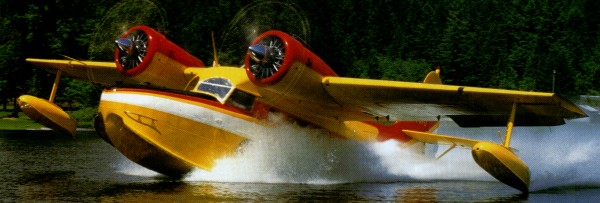
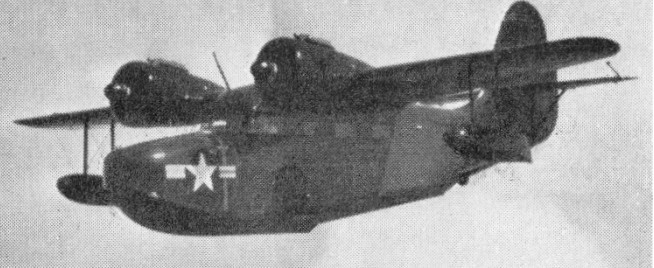
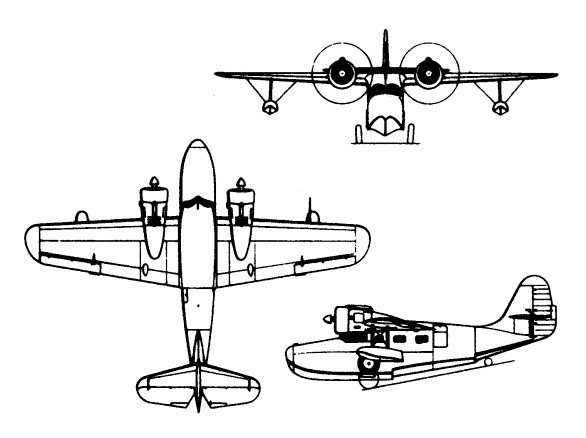
The G-21A eight-seat commercial amphibian first flew on 29 May 1937 and was Grumman’s first aircraft produced for the private and commercial market. Proving successful, 20 were delivered prior to 1 October 1938. The G-21 was adopted by the US Navy, under the designation JRF, first entering service in 1939, and by the US Navy as the JRF-5. However most of the 300 or so aircraft built went into military service, The US Navy initially received JRF-1s and the US Coast Guard JRF-2s in 1939-40. The series included JRF-1A aircraft, fitted for target towing and photography and JRF-3 fitted with anti-icing equipment and autopilot for use in northern waters by the US Coast Guard. The JRF-4 was a development of the JRF-1, and JRF-5 (OA-9) for the USAAF and fitted for photography. The JRF-6B was a navigational trainer. The JRF-5s also served with the RCAF and the JRF-5 and -6 with the RAF as the Goose.
JRF-5 Goose
Production of the JRF ceased in September 1945, but the type continued to serve as a general/utility amphibian with the US Navy and Coast Guard. More than 300 of the G-21A Goose series with 450 hp Pratt & Whitney engines were built just before and during World War II. Large numbers of’ these amphibians were still used by the U S Navy and Coast Guard for an-sea rescue and transport duties in 1955. After the war McKinnon Enterprises began a conversion programme, replacing the original 335kW Pratt & Whitney R-985-AN-6 engines with four 253kW Lycoming GSO-480s and incorporating other refinements to produce executive transports. This programme was superseded by the turboprop-powered G-21C, D and G Turbo-Goose conversions, initiated in 1966. The turboprop version is powered by two 680 shp / 507kW Pratt & Whitney Aircraft of Canada PT6A turboprop engines. Other improvements include retractable wing floats and increased fuel capacity.
Grumman G 21 A / JRF Goose Engine: 2 x Pratt&Whitney R-985-AN6 Wasp Junior, 450 hp Length: 38 ft 4 in / 11.68 m Height: 15 ft / 4.57 m Wingspan: 49.016 ft / 14.94 m Wing area: 375.018 sq.ft / 34.84 sq.m Max take off weight: 7955.6 lb / 3608.0 kg Weight empty: 5426.5 lb / 2461.0 kg Max. speed: 174 kts / 323 km/h / 201 mph Cruising speed: 166 kts / 307 km/h Service ceiling: 21,000 ft / 6400 m Cruising altitude: 5003 ft / 1525 m Wing load: 21.32 lb/sq.ft / 104.0 kg/sq.m Range: 556 nm / 1030 km Fuel capacity 220. Crew: 2 Seats: 4-6
JRF-5 Goose Engines: two 450 h.p. Pratt and Whitney R-985-N-6 Span: 49 ft Weight: 8,500 lb Max Speed: 180 mph Maximum range: 800 miles approx Crew: 2-6
McKinnon Turbo Widgeon G-21E Engines: 2 x P&WAC PT6-27, 715 hp. Wing loading: 33.1 lb/sq.ft. Pwr loading: 7.3 lb/hp. Max TO wt: 10,500 lb. Empty wt: 6635 lb. Equipped useful load: 3507 lb. Payload max fuel: 0 lb. Range max fuel/ cruise: 1131 nm/5.8 hr. Service ceiling: 20,000 ft. Max cruise: 174 kt. Stall: 73 kt. 1.3 Vso: 95 kt. ROC: 2000 fpm. SE ceiling: 12,000 ft. Min field length – land: 1500 ft. Fuel cap: 3956 lb. Seats: 10.
McKinnon G-21G Turbo Goose Engines: 2 x Pratt -Whitney Canada PT6A-27, 507kW / 680 shp Wingspan: 15.49 m / 50 ft 10 in Length: 12.06 m / 39 ft 7 in Wing area: 35.08 sq.m / 377.60 sq ft Max take-off weight: 5670 kg / 12500 lb Empty wt: 6635 lb Equipped useful load: 5507 lb. Payload max fuel: 1551 lb. Fuel cap: 3956 lb Wing loading: 33.1 lb/sq.ft. Pwr loading: 9.19 lb/hp. Max. speed: 391 km/h / 243 mph Max cruise: 174 kt. Stall: 73 kt. 1.3 Vso: 95 kt. ROC: 2000 fpm. Service Ceiling: 6095 m / 20000 ft SE ceiling: 12,000 ft. Min field length – land: 1500 ft. Range max fuel/ cruise: 1131 nm/5.8 hr. Seats: 13
In 1931 the XFF-1 prototype two-seat carrier-based biplane fighter flew for the first time. It was of advanced design with enclosed cockpits (the canopy made up of telescoping sections) and a landing gear that retracted into well-type recesses in the forward fuselage sides.
On 6 March 1931 Grumman signed a contract to supply, for $73,975, one XFF-1 (experimental fighter, Grumman, model 1). Not a cent was to be paid until the XFF-1 had been accepted by the customer. Grumman hired Bill McAvoy from the NACA to make the first flight on 29 December 1931, powered by a 575 hp Wright R¬1820E Cyclone. It soon clocked 195 mph in level flight. Later, with a 750 hp R 1820F Cyclone, it achieved 323 km/h (201 mph).
In August 1932 Grum¬man flew the XSF-1 scout, with one of the fixed guns replaced by 45 gal of extra fuel, and this reached 207 mph. 33 SF 1s were ordered with revised internal equipment and R 1820 84 engines. These also served in the Lexington, with Scout Squadron VS 3B.
But the break¬through came just before Christ¬mas 1932, when everyone was about to be laid off because there were insufficient funds to pay the wages: the navy ordered 27 FF-ls. Deliveries of 27 FF 1s, with 559kW R 1820 78 engines, began to VF 5B (Lexing¬ton) in June 1933. Armament comprised two 0.30 in (7.62 mm) Browning machine guns in the upper front fuselage, with another in the rear cockpit, and there was provision for one 45.36 kg (100 lb) bomb beneath each lower wing.
FF-1
In 1934 similar but R-1820-84-powered SF-1 scouts were delivered. FF-1s and SF-1s totalled 60 aircraft and in 1933 these equipped fighter Squadron VF-5B aboard USS Lexington, and from then on the company never looked back. In 1935-36 the 25 surviv¬ing Fifis (the FF had to be called that) were modified with the cock¬pits arranged for dual-control pilot training. All FF 1 s and SF 1 s were withdrawn from front¬line service by the end of 1936, but served with reserve units (the former as FF 2 train¬ers) until late 1940.
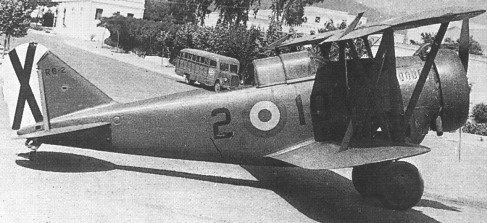
Can Car’s entry into the aviation industry was in 1936 when the company obtained a licence to assemble the Grumman FF 2 (redesignated G 23 in Canada), a two seat, carrier based, naval biplane fighter, which had first flown in 1931. It combined a duralumin stressed skin fuselage and tail with wings consisting of metal ribs and spars covered with fabric. It was also the first of its kind to have retractable undercarriage. The G 23 was already close to being obsolete by the time assembly started and there could have been no obvious market among the major aviation powers, who already possessed higher performance biplanes or were developing faster low wing monoplane fighters. By mid 1938, 42 G 23s had been assembled at the company’s plant in Fort William, Ontario, one each for Nicaragua (The prototype Grumman G 23 was sold in Nicaragua and returned to the USA in the 1960s) and Japan and the remaining forty for Turkey. Thirty -four of the latter had been shipped when complaints were received from representatives of the Spanish Nationalists that Spain, not Turkey, was the final destination of these aircraft. The GE-23s were assembled in Barcelona and pushed into service as ground-attack and reconnaissance aircraft. Despite its retractable landing gear, the GE-23 was only marginally faster but considerably less agile than the CR.32 flown by the Italians and Nationalists, and only nine survived destruction in the air or on the ground to fall into Nationalist hands at the end of the war.
GE-23
An additional ten G 23s were built and, with the exception of one sent to Mexico, these were offered to the Royal Canadian Air Force (RCAF) along with the remaining six from the ‘Turkish’ order. The RCAF was at first reluctant to accept the aircraft and the offer had to be made three times before the desperation produced by war forced them to take the G 23 into service as the Goblin in mid 1940. For a time, these fifteen obsolete aircraft formed the country’s main fighter force on the east coast, but by April 1942 all of the Goblins had been scrapped.
Other G 23s survived a bit longer than that. Several of the Spanish machines were taken over by the Nationalist forces at the end of the Civil War and the last was only scrapped in 1955.
FF-2
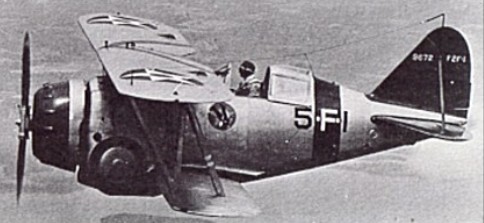
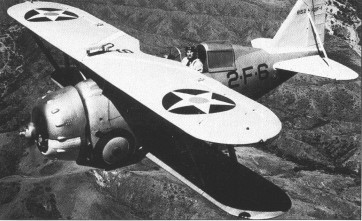
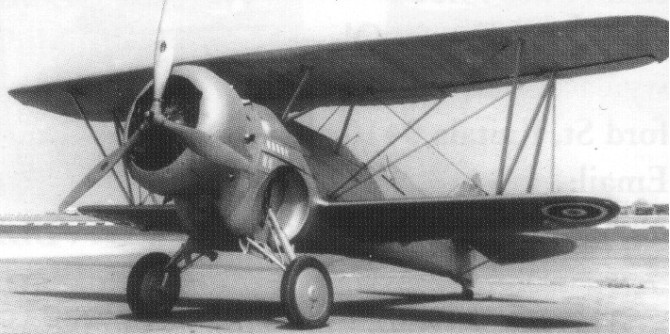
A single seat derivative of the FF-1, the XF2F-1 was flown by Paul Hovgard on 18 October 1933. Though a very tricky aircraft, needing (for example) care not to stall/spin off too tight a turn in the circuit, the single-seater had the outstanding speed range of 65 mph up to 230. The engine was the 14-cylinder Pratt & Whitney R-1535-72 Twin Wasp Junior, rated at 700 hp. The navy placed its biggest order since 1918: 55 F2Fs. These were delivered in 1935, and not only out-performed everything in the Army Air Corps but probably any other fighter in service anywhere. Even so, it was still tricky, and after designer Bill Schwendler had suggested improvements the navy ordered that these should be incorporated in the last of the 55, to be called the XF3F-1.
F2F-1
Corsair V93S in Royal Thailand Air Force
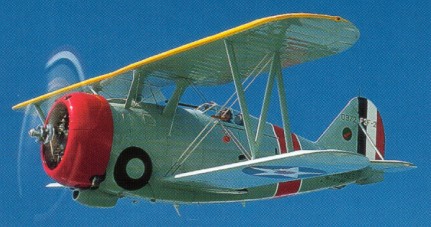
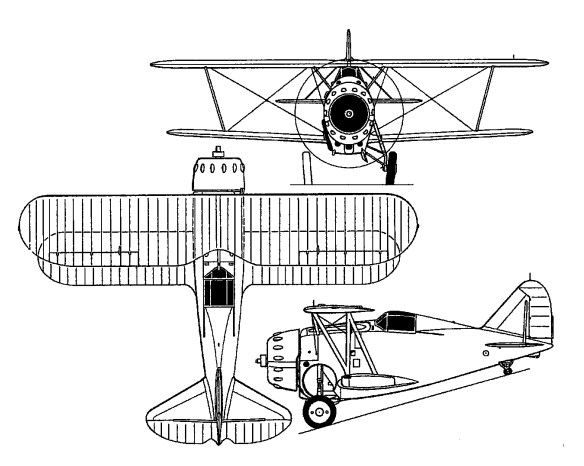
After de¬signer Bill Schwendler had suggested improvements to the F2F the navy ordered that these should be incorporated in the last of the 55, to be called the XF3F-1. This had a greater span, longer fuselage, bigger cockpit and other changes. During tests the pilot made a long vertical dive and then pulled out violently. He was aiming for 9 g. but calculations afterwards showed he actually pulled 14 g leading to fatal break-up. But after a small ventral fin had been added under the tail of a second prototype the navy placed another record order, for 54 F3F-ls, priced at over $lm. The F3F-1, powered by the 484kW R-1535-72, was good, and it carried one 0.5-in gun, one 0.3-in and two 116-lb bombs, but it could do with a bigger engine. The upshot was that on 23 March 1937 the navy placed another record order: 81 F3F-2s, priced at $1,674,310. These were powered by the 850-hp Wright Cyclone, turning a Hamilton propeller with three controllable-pitch blades. Grumman had to farm out the wings and tails to rival Brewster, but when fitted with the Cyclone R-1820-22 rated at 950 hp and the result was an order for 27 F3F-3s. They were so good the last did not come off the line until May 1939.
FF-1 Engine: Wright R-1820-78, 750 hp. Seats: 2. Wingspan: 36 ft 6in. Length: 7.47 m (24 ft 6 in) Gross Weight: 2110 kg (4655 lb) Maximum speed: 333 km/h (207 mph). Armament: 3 x 0.3 in mg, 200 lb underwing bomb load.
FF-2 Engine: 1 x Wright R-1820-78, 552kW Max take-off weight: 2190 kg / 4828 lb Empty weight: 1474 kg / 3250 lb Wingspan: 10.52 m / 34 ft 6 in Length: 7.47 m / 24 ft 6 in Height: 3.38 m / 11 ft 1 in Wing area; 28.80 sq.m / 310.00 sq ft Max. speed: 333 km/h / 207 mph Ceiling: 6400 m / 21000 ft Range: 1428 km / 887 miles Armament: 3 x 7.62mm machine-guns Crew: 2
F2F-1 Engine: 1 x Pratt-Whitney R-1535-72 Twin Wasp, 485kW / 700 hp Max take-off weight: 1745 kg / 3847 lb Empty weight: 1221 kg / 2692 lb Wingspan: 8.69 m / 28 ft 6 in Length: 6.53 m / 21 ft 5 in Height: 2.77 m / 9 ft 1 in Wing area: 21.37 sq.m / 230.02 sq ft Max. Speed: 383 km/h / 238 mph Cruise speed: 225 km/h / 140 mph Range: 1585 km / 985 miles Armament: 2 x 7.62mm (0.3 in) machine-guns, 200 lb underwing bomb load. Crew: 1
GE-23 Engine: 1 x Wright R-1820-F52, 596.5kW (800hp). Span: 10.515m (34ft 6in). Length: 7.467m (24ft 6in). Max T/O weight: 2190 kg (4,828 lb). Max speed: 216 mph at 7,000 ft. Operational range: 921 miles. Armament: 3 x 7.62-mm (0.3-in) mg.
F3F-1 Engine: Pratt & Whitney R-1535-72, 700 hp. Armament: 1 x 0.5 in & 2 x 0.3 in mg, 232 lb underwing bomb load. Seats: 1.
F3F-2 Engine: Wright Cyclone R-1820-22, 850 hp. Wing span: 32 ft. Armament: 2 x 0.3 in mg, 200 lb underwing bomb load. Seats: 1.
F3F-3 Engine: Wright Cyclone R-1820-22, 950 hp / 708kW Wingspan: 9.75 m / 31 ft 12 in Length: 7.06 m / 23 ft 2 in Height: 2.84 m / 9 ft 4 in Wing area: 24.15 sq.m / 259.95 sq ft Max take-off weight: 2175 kg / 4795 lb Empty weight: 1490 kg / 3285 lb Max. speed: 425 km/h / 264 mph Cruise speed: 241 km/h / 150 mph Ceiling: 10120 m / 33200 ft Range: 1577 km / 980 miles Crew: 1 Armament: 2 x 7.62mm machine-guns









 All Aero