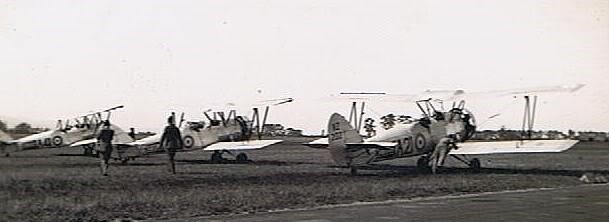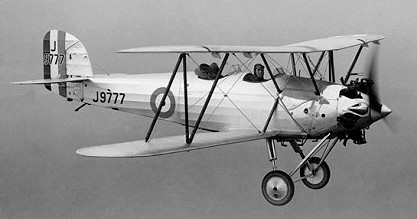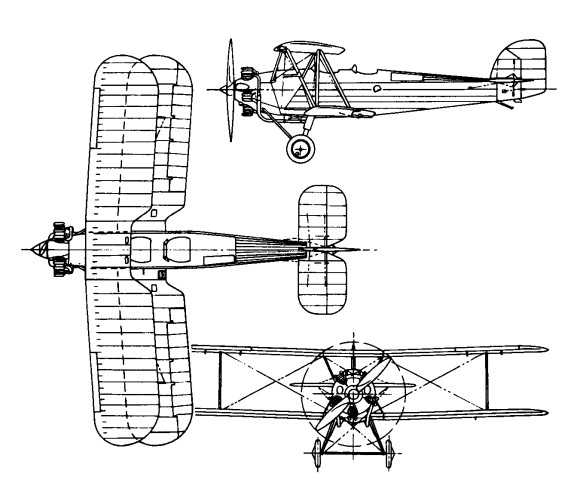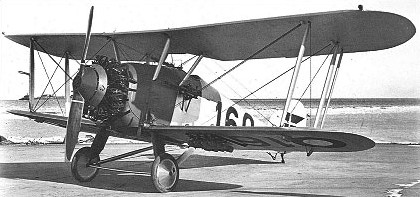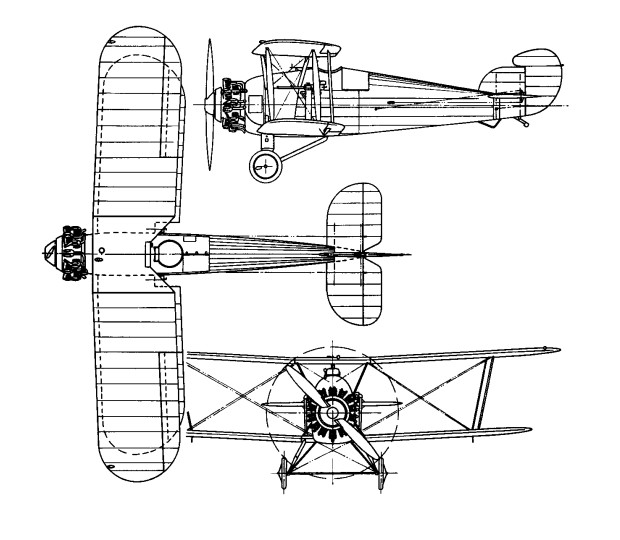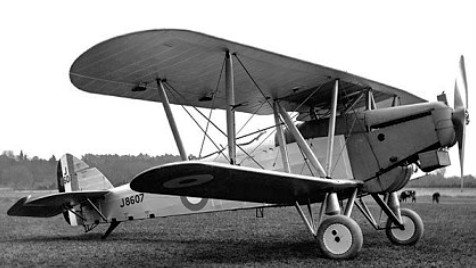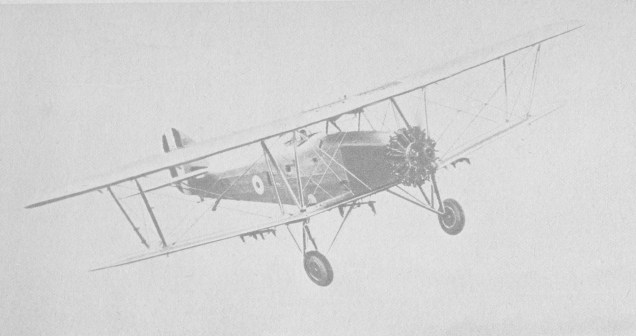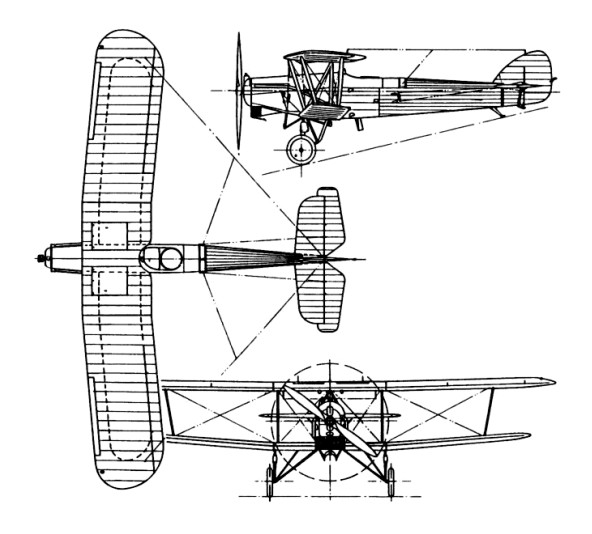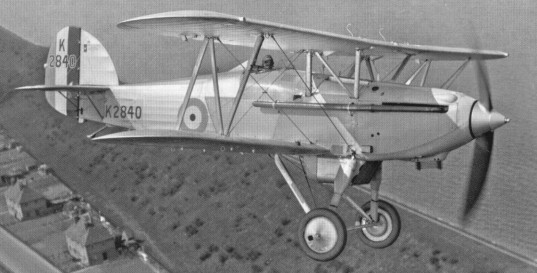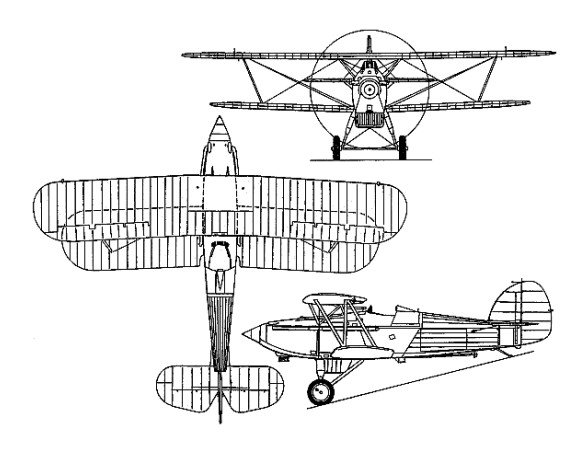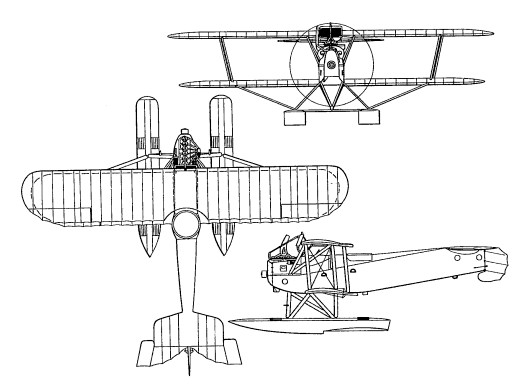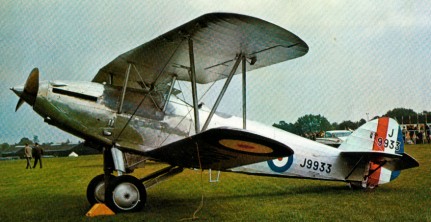
Hawker Hart

As a result the Air Ministry Specification 12/26 for a new light bomber required an improvement upon the performance of the Fox.
Hawker’s submission for this requirement, which eventually became known as the Hart, was evolved in conjunction with Rolls-Royce, and when submitted in late 1926 proved sufficiently attractive for construction of a prototype to be authorised. Sidney Camm’s design utilised what became known in later years as ‘Hawker’s patent metal construction system’, a lightweight and robust structure with fabric covering. From Rolls-Royce came a new engine – known then as the F.XI, a development of the Falcon engine -which had weight-saving six-cylinder monoblocs instead of individual cylinders.
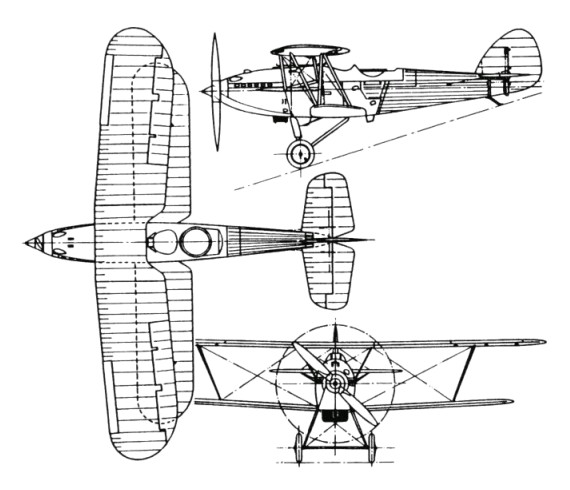
The airframe design was that of an uncluttered single-bay biplane, streamlined fuselage, a conventional Hawker tail unit, and fixed landing gear with tailskid. The biplane wings were of unequal span, the lower wing of constant chord and with a straight leading edge. The upper wing was slightly swept back and incorporated the ailerons and Handley Page leading-edge slots.

The prototype (J9052) was flown for the first time in late June 1928 by Flt Lt Bulman and was subsequently flown in competitive evaluation against the Avro Antelope and Fairey Fox II. With superior performance of the Hart confirmed, 15 pre-production aircraft were ordered initially for development and familiarisation, and the first 12 of these entered service with the RAF’s No 33 (Bomber) Squadron in late 1929 or January 1930 and one was sent for trials in India.

In RAF service the Hart was to have a number of variants. These included the 1932 Hart Trainer (483 built, not including conversions of other models); Hart C communications aircraft; and tropicalised versions known as the Hart India and Hart Special. A version was built for the Royal Navy, serving both with wheeled and float landing gear, and this was designated Hawker Osprey. In addition Harts were built for overseas customers which included Estonia, Sweden (also licence-built 42 Pegasus-engined Harts) and Yugoslavia, while ex-RAF aircraft eventually went to South Africa, Egypt and Southern Rhodesia.
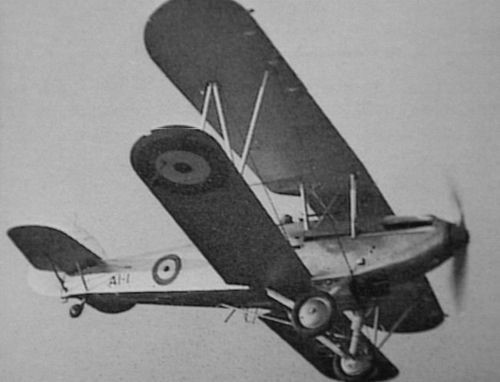
Hawker Hart I of the RAF

Harts remained in service with the RAF on the North-West Frontier in India until displaced by Bristol Blenheims in 1939. Some Royal Navy Ospreys were used for target towing and training until 1940, but so far as is known the last in operational service was a Hart used by the South African Air Force well into World War II. Most extensively built between-wars British military aircraft, a total of 952 had been constructed when production ended in 1937, with Armstrong Whitworth, Gloster and Vickers acting as sub-contractors.
Hawker records also refer to a civil-registered Hart, first flown on 15 September 1932 and known as the Hart II. This was powered in succession by a Kestrel IIS, Kestrel VI and Kestrel XVI, with the latter having an all-up weight of 2,109kg. It was used for demonstrations at air displays and for taking air-to-air photographs of Hawker aircraft, accumulating 627 flying hours in these roles from August 1933.
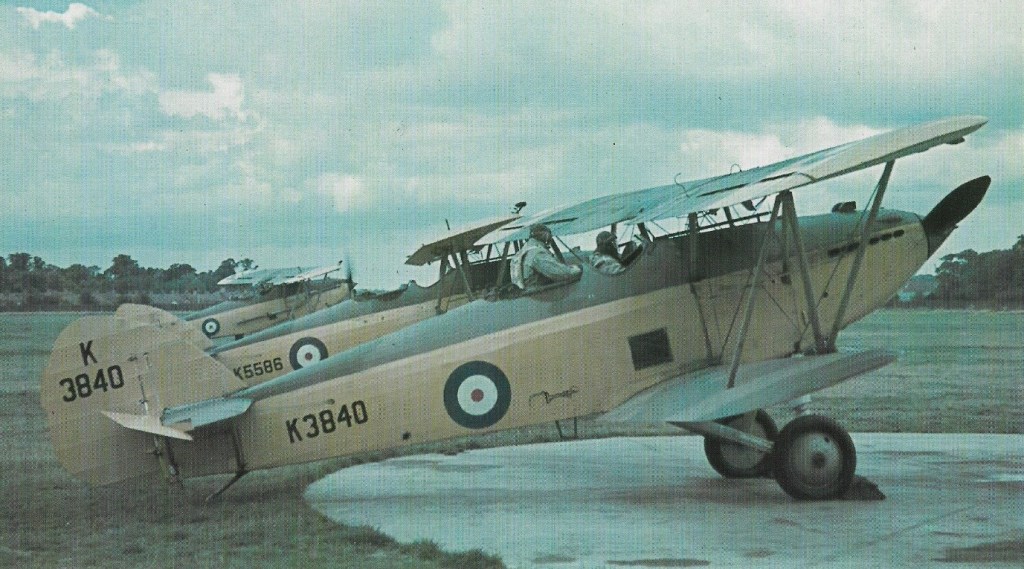
Powered by a single 525 hp Rolls Royce Kestrel IB, the Hart had a maximum speed of 172 mph (276 km/h) at 10,000 ft (3,050 m.

Hawker Hart Article

The Hart was eventually displaced by a developed version known as the Hind.

Gallery

Engine: 1 x Rolls-Royce Kestrel XDR, 380kW / 525 hp
Max take-off weight: 2066 kg / 4555 lb
Empty weight: 1148 kg / 2531 lb
Wing loading: 13.12 lb/sq.ft / 64.0 kg/sq.m
Wingspan: 11.35 m / 37 ft 3 in
Length: 8.94 m / 29 ft 4 in
Height: 3.17 m / 10 ft 5 in
Wing area: 32.33 sq.m / 348.00 sq ft
Max. speed: 160 kts / 296 km/h / 184 mph
Service Ceiling: 6510 m / 21350 ft
Range: 408 nm / 756 km / 470 miles
Armament: 2 x 7.7mm / .303 in machine-guns, 230kg of bombs
Seats: 2.
Hawker Tomtit

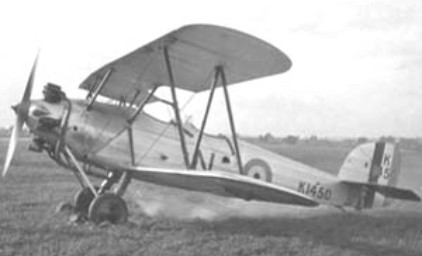
The type was designed in 1928, a two-¬seater trainer biplane with a 130 hp Armstrong Siddeley Mongoose III engine with five cylinders, a top speed estimated at 120 miles an hour and a cruising speed of between 85 and 90 miles an hour. As a replacement for the Avro 504N for RAF pilot training, 25 were supplied to the RAF between 1929 and 1931. The last, K1786, was delivered in January 1931. They entered service with No.3 FTS at Grantham and the CFS at Wittering but the type were relegated to communications tasks from 1935. Six Tomtits were used for communications duties during the war and two, as G-ABII and G-AFTA survived post-war. G-ABII was written off in 1948.

A total of 36 were built for the RAF, for civil registration and for export to Canada and New Zealand. The last Tomtits left the RAF in 1938. Civil and ex-RAF Tomtits were fitted with a variety of engines, including the ADC Cirrus Hermes and Wolseley Aquarius and were used by several aero clubs up to the out-break of the war.

Gallery

Engine: 1 x Armtrong Siddeley Mongoose IIIC, 112kW / 150 hp
Max take-off weight: 794 kg / 1750 lb
Empty weight: 499 kg / 1100 lb
Wingspan: 8.71 m / 28 ft 7 in
Length: 7.21 m / 23 ft 8 in
Height: 2.54 m / 8 ft 4 in
Wing area: 22.09 sq.m / 237.77 sq ft
Max. speed: 200 km/h / 124 mph
Ceiling: 5945 m / 19500 ft
Crew: 2

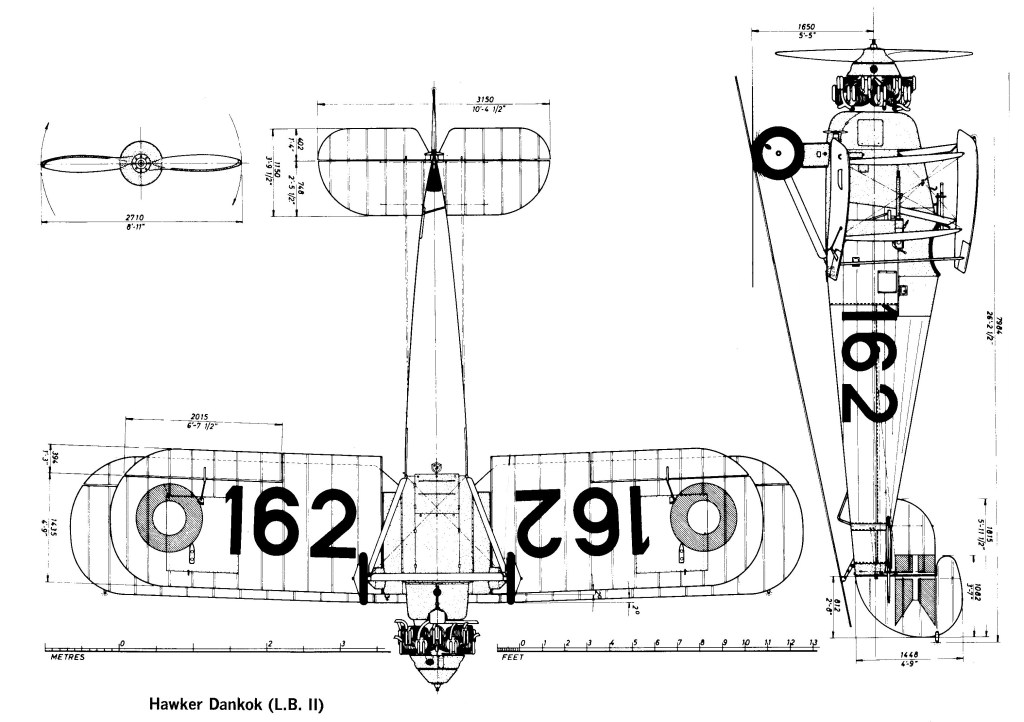
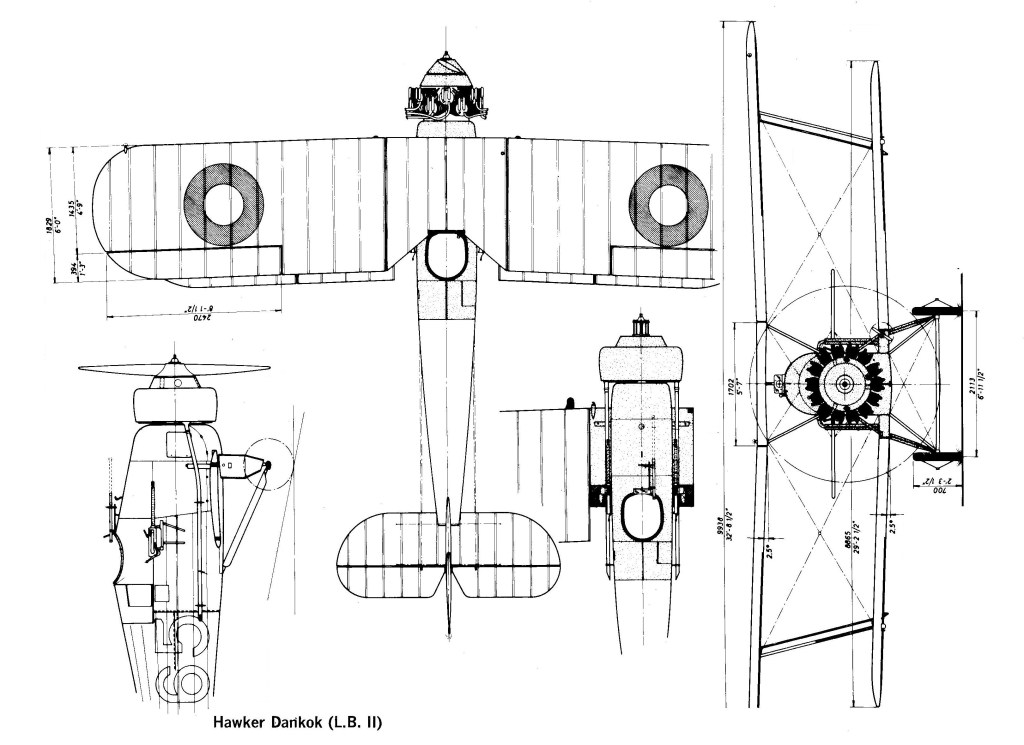
Hawker Danecock / Dankok / Orlogsvaerftet / Royal Danish Naval Dockyard Danecock

Based on the Woodcock II and designed by Sydney Camm, the Danecock was developed to meet a requirement of the Danish Naval Air Service, or Marine Flyvevaesenets. By comparison with the Woodcock II, the Danecock (Dankok) had unequal span wings, a slightly lengthened fuselage, a 385hp Armstrong Siddeley Jaguar IV engine and an armament of two 7.7mm Madsen machine guns. The first of three Danecocks ordered from the parent company was flown on 15 December 1925, and the licence manufacture of a further 12 was undertaken by the naval dockyard (Orlogsvaerftet) during 1927-28. They were fitted with 2 blade Danish Orlogsvaerftet wooden propellors.

With serials 155-165, they served from January 1926 until the German occupation in April 1940 as the Hawker Dankok (LB.II for Land Biplane Type 2). A single Dankok (165) was experimentally fitted with a streamlined ownsend Ring which raised the top speed from 235 kph/148mph to 245 kph/152mph.

Max take-off weight: 1381 kg / 3045 lb
Empty weight: 965 kg / 2127 lb
Wingspan: 9.92 m / 32 ft 7 in
Length: 7.96 m / 26 ft 1 in
Wing area: 31.59 sq.m / 340.03 sq ft
Max. speed: 233 km/h / 145 mph
Cruise speed: 169 km/h / 105 mph

Hawker Horsley

The Horsley was produced for the RAF as a bomber and torpedo bomber, entering service in these roles in 1927 and 1928 respectively after severe competitive tests against the Westland Yeovil, Bristol Berkeley and Handley Page Handcross. The Greek Naval Air Service also received six in 1928, and it was licence-built in Denmark as the Dantorp (military designation H.M.III). In total 121 Horsleys were built, most powered by 499kW Rolls-Royce Condor IIIA geared engines and with all-metal airframes, although early production aircraft were of wooden and then mixed construction. Apart from its speed and climb, it possessed the manoeuvrability of a scout and the aerodynamic design was such that the machine could be flown ‘hands off’ for periods. Day or night operations were possible.

In 1926 a proposal was made that the RAF should attempt a non-stop flight to India. This would not only be operationally significant, but enormously prestigious to the service if successful. It would at the same time establish a new world long-distance record. The chosen vehicle for this attempt was the Hawker Horsley, then entering RAF service as a day and torpedo-bomber.
A production example was modified with strengthened landing gear to carry the additional weight of an extra 3,955 litres of fuel accommodated in new wing and fuselage tanks, an overload of nearly 200% of the structure weight. On 20 May 1927 Flt Lieut C. R. Carr and Flt Lieut L. E. M. Gillman took off for India, only to be forced down in the Persian Gulf after completing 5,504km: a new long-distance record that was beaten in less than 24 hours when Charles Lindbergh landed at Paris after his 5,778km solo flight across the North Atlantic.

The Horsley made three long-distance flights. The first was carried out by Flt Lt Carr as pilot and Flt Lt Gillman as navigator, who had expected to cover more than 6,440km from Cranwell to India. However during 20-21 May 1927 they covered a distance of 5,502km, landing short near Bandar Abbas on the Persian Gulf because of problems with the oil system. A second effort by Carr and Flt Lt Mackworth ended after one hour’s flying; while a third attempt by Carr and Fl Officer Dearth ended in Austria, alighting in the River Danube.

Hawker Horsley – Leopard engine

Engine: 1 x Rolls-Royce Condor IIIA, 496kW / 666 hp
Max take-off weight: 3538 kg / 7800 lb
Empty weight: 2159 kg / 4760 lb
Wingspan: 17.21 m / 56 ft 6 in
Length: 11.84 m / 38 ft 10 in
Height: 4.17 m / 13 ft 8 in
Wing area: 64.38 sq.m / 692.98 sq ft
Max. speed: 201 km/h / 125 mph
Ceiling: 4265 m / 14000 ft
Armament: 2 x 7.7mm machine-guns, 680kg of bombs
Crew: 2

Hawker Nimrod

Nimrod Mk.II

The Nimrod was basically the FAA version of the Fury single-seat interceptor fighter. In general arrangement and construction it was almost identical to the Fury and was fitted with a 440kW Rolls-Royce Kestrel IIS supercharged engine (later replaced by the Kestrel V on Mk IIs). It was, of course, strengthened for catapulting and carried more comprehensive equipment and extra fuel.
The Nimrod embodied the Hawker-patented system of metal construction, all but the first three stainless steel Mk IIs being built of ordinary steel and duralumin. Apart from simplicity of construction, this system allowed maintenance and repairs, if necessary, to be undertaken by unskilled labour and with the simplest of materials.
Armament comprised two forward-firing Vickers machine-guns, plus optional light bombs; equipment included a wireless, oxygen apparatus, hoisting gear and electrical equipment.
A total of 54 Mk Is and 27 Mk IIs were produced for the FAA, plus some for export to Japan, Denmark and Portugal.

Nimrod Mk II
Engine: 1 x Rolls-Royce Kestrel VFP, 453kW
Max take-off weight: 1841 kg / 4059 lb
Empty weight: 1413 kg / 3115 lb
Wingspan: 10.23 m / 33 ft 7 in
Length: 8.09 m / 26 ft 7 in
Height: 3.00 m / 9 ft 10 in
Wing area: 27.96 sq.m / 300.96 sq ft
Wing loading: 13.53 lb/sq.ft / 66.00 kg/sq.m
Max. Speed: 168 kts / 311 km/h / 193 mph
Cruise speed: 100 kts / 185 km/h / 115 mph
Service Ceiling: 8535 m / 28000 ft
Endurance: 2 h
Armament: 2 x 7.7mm machine-guns, 4 x 9kg bombs
Crew: 1

Harbin SH-5/PS-5

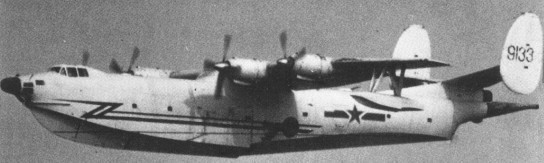
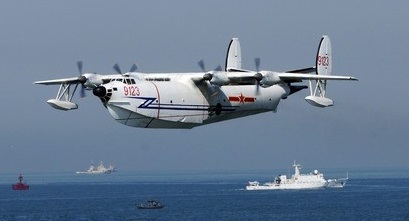
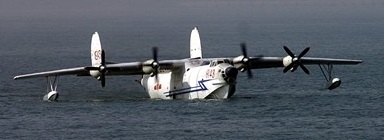
The SH-5 is an indigenous seaplane designed to replace the domestically produced Beriev Be-6s then in PLANAF service. Design work began in 1970, with the new aircraft aimed at performing maritime patrol and search and rescue duties. An entirely new in design, static testing didn’t begin until 1974. The Harbin Shuishang Hongzhaji 5 / PS-5 first flew April 1976, with series production commencing 1984 and 8-9 built to 1987 at Harbin.

The four-turboprop amphibian PS-5 appears to have the wing and powerplant of the Y-8 (An-12) transport and the tailplane and twin fins of the Beriev Be-6, combined with a new fuselage.

Powered by four 3,150 hp WJ¬-5A-1 (AI-24A) turboprops, PS-5S has 22,045-lb (10-tonne) max payload, includ¬ing four torpedoes or AShMs on underwing racks, or up to 13,227 lb (six tonnes) of depth bombs.

The SH-5 saw active use, and several of the aircraft were upgraded with EW systems. One example was converted for use as an aerial firefighter. In 2009, production of a new variant was announced with deliveries planned for 2014.

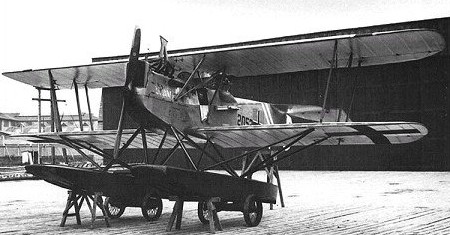
Hansa-Brandenburg W.33 / Kjeller FF.8 Make

W.33

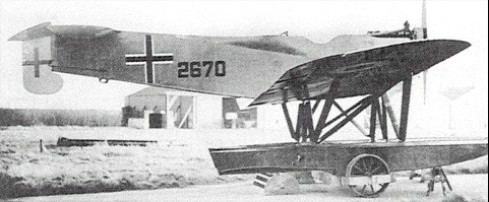
Ordered in April 1918, the W.33 was basically a larger and more powerful development of the W.29 and, augmenting the smaller fighter seaplane, saw service from North Sea air stations during the closing months of World War I.

The W.33 was powered by a 260hp Mb IVa six-cylinder inline water-cooled engine and armament normally comprised two forward-firing 7.62mm LMG 08/15 machine guns and one Parabellum in the rear cockpit. One aircraft was experimentally fitted with a 20mm Becker cannon in the rear cockpit, and several aircraft were fitted with radio and had one of the LMGs removed.

At least six of an initial order of 26 W.33s had been taken into the German Navy’s inventory when hostilities terminated, but the Norwegian Naval Flying Boat Factory built 30 under licence and the Norwegian Army Aircraft Factory built a further 11.

Kjeller Aircraft Factory license built Hansa-Brandenburg W.33 as the F.F.8 Måke (Seagull).

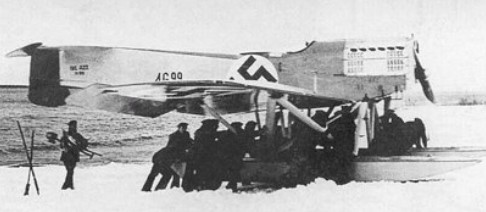
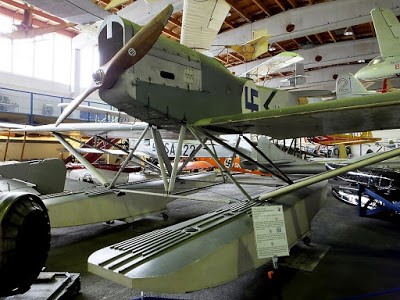
I.V.L. A22

The Finnish Aviation Force’s Aircraft Factory assembled two W.33s as pattern aircraft in 1922, and licence-manufactured a further 120 during 1923-26. Two were sold to Latvia. Finnish manufactured planes were powered by 300 hp Fiat A-12bis motors.

I.V.L. A.22 Hansa

Gallery

W.33
Engine: 1 x 183kW Maybach Mb.IV
Wingspan: 15.85 m (52 ft)
Length: 11.10 m (36 ft 5 in)
Height: 3.37 m / 11 ft 1 in
Wing area: 44.0 sq.m / 473.61 sq ft
Max take off weight: 2050 kg (4510 lb)
Empty weight: 1420 kg / 3131 lb
Maxi¬mum speed: 173 km/h (107 mph)
Ceiling: 5000 m / 16400 ft
Armament: 2-3 x 7.92mm machine guns
Crew: 2

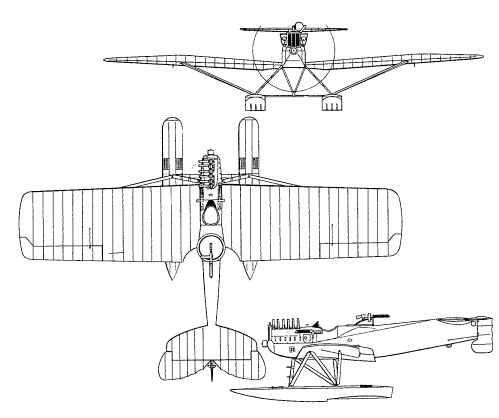
Hansa-Brandenburg W.29

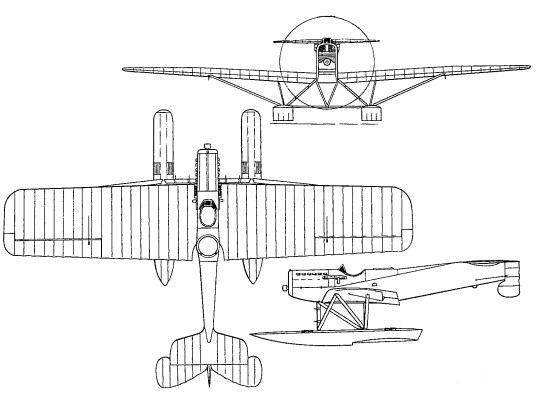
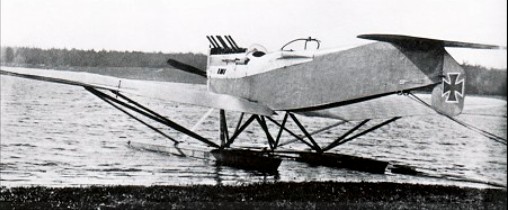
Evolved from the W.12 two-seat patrol fighter biplane in parallel with the W.27, the W.29 was essentially a monoplane derivative powered, in prototype form, by the 195hp Benz Bz IIIbo eight-cylinder Vee engine. The span and chord of the monoplane wing approximated in area to the biplane wings of the W.12, and the wing itself was a two-spar wooden structure with fabric skinning. The 150hp Benz Bz III six-cylinder inline water-cooled engine was standardised for the production model of the W.29, which began operations with the German Navy in April 1918. Over 150 W.29s are known to have been delivered to that service in two basic versions, one equipped with radio and fitted with a single synchronised 7.92mm LMG 08/15 machine gun plus a Parabellum on a flexible mount in the rear cockpit, and the other having two forward-firing LMGs and lacking radio equipment. The W.29, operating from Zeebrugge, Borkum and Norderney, achieved considerable operational success during the closing stages of World War I. In 1921, licence production of the W.29 was initiated by the Danish naval dockyard, 15 being built and these continuing in Danish Navy service until 1931.

W.29
Engine: 1 x 112kW Benz Bz III
Span: 13.50 m (44 ft 3.5 in)
Length: 9.35 m (30 ft 8.5 in)
Wing area: 32.2 sq.m / 346.60 sq ft
Max take-off weight: 1494 kg / 3294 lb
Empty weight: 1000 kg / 2205 lb
Maximum speed: 176 km/h (109 mph)
Crew: 2
Armament: 2-3 x 7.92mm machine guns

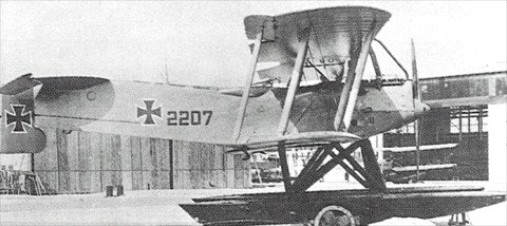
Hansa-Brandenburg W.19

An enlarged W.12 developed to meet a demand for a two-seat fighter seaplane with greater endurance, the W.19 was first committed to operations in January 1918. Appreciably larger than the W.12, the W.19 was of similar construction with fabric-covered wings and plywood- covered fuselage and floats, and was powered by a 260hp Maybach Mb IVa six-cylinder water-cooled engine. The substantial increase in span necessitated the adoption of a two-bay arrangement, and, apart from the three prototypes, all W.19s carried an armament of two 7.92mm LMG 08/15 synchronised machine guns and a single Parabellum of similar calibre on a flexible mount in the rear cockpit. One W.19 was experimentally fitted with a 20mm Becker cannon for trials. A total of 53 production W.19s was completed (one being retained for static tests).

W.19
Crew: 2
Engine: 1 x 260hp Maybach Mb.IV
Max take-off weight: 2005 kg / 4420 lb
Empty weight: 1435 kg / 3164 lb
Wingspan: 13.80 m / 45 ft 3 in
Length: 10.65 m / 35 ft 11 in
Height: 4.10 m / 13 ft 5 in
Wing area: 57.80 sq.m / 622.15 sq ft
Max. speed: 151 km/h / 94 mph
Cruise speed: 143 km/h / 89 mph
Ceiling: 5000 m / 16400 ft
Rate of climb: 156 m/min / 500 ft/min
Armament: 2 x 7.92

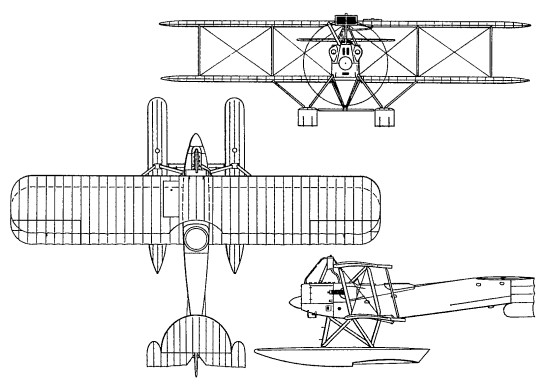
Hansa-Brandenburg W.12

Designed and built in late 1916, the Branden¬burg W.12, first of several highly successful floatplane fighters evolved by Ernst Heinkel, had its prototype completed and flown for the first time in January 1917 with a 160hp Mercedes D III six-cylinder water-cooled engine.

Hansa-Brandenburg W.12 Article

A single-bay twin-float two-seat fighter biplane, of wooden construction with plywood fuselage skinning, the W12 was produced for the German Navy with both the 160hp Mercedes D IIIa engine and the 150hp Benz Bz III. Its first operations were conducted from the seaplane station at Zeebrugge.

Standard armament comprised one forward-firing synchronised 7.92mm LMG 08/15 machine gun and a Parabellum of similar calibre on a flexible mount in the rear cockpit, but of the 146 W.12s that had been built when production terminated in June 1918. One batch of 30 Benz-engined fighters had been delivered with a forward-firing armament of two LMGs.

The W.12 remained in first line service until the Armistice.

W.12
Engine: 1 x 160hp Mercedes D.III or 150 hp Benz Bz.III
Max take-off weight: 1454 kg / 3206 lb
Empty weight: 997 kg / 2198 lb
Wingspan: 11.20 m
Length: 9.60 m
Height: 3.30 m / 11 ft 10 in
Wing area: 36.20 sq.m / 389.65 sq ft
Max. speed: 161 km/h / 100 mph
Cruise speed: 146 km/h / 91 mph
Ceiling: 5000 m / 16400 ft
Armament: 3 x 7.92mm
Crew: 2