Hawker Hornet / Hawker Fury I

Fury

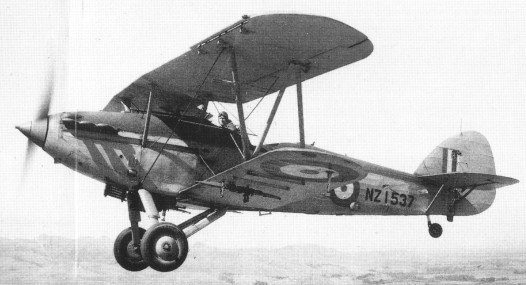
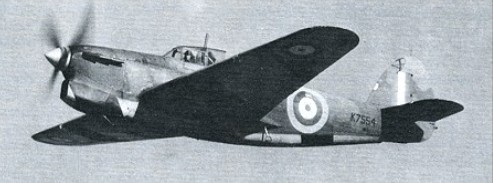
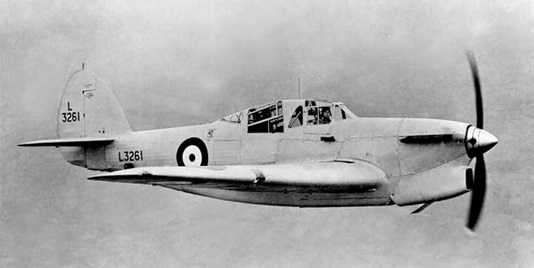
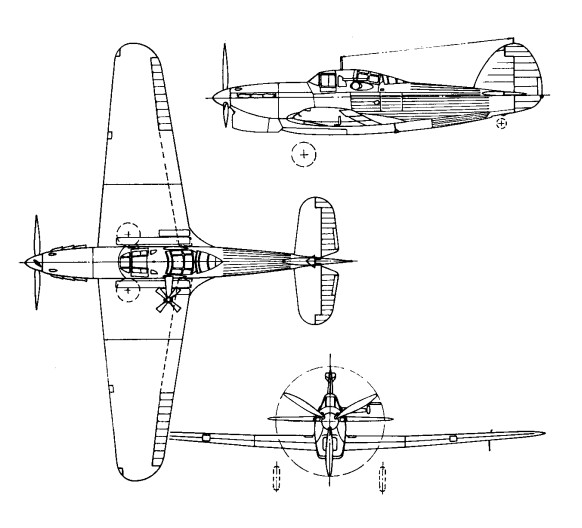
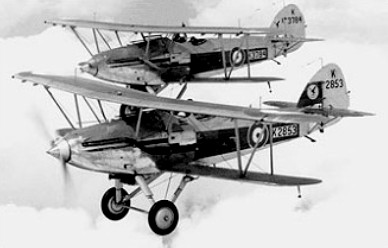
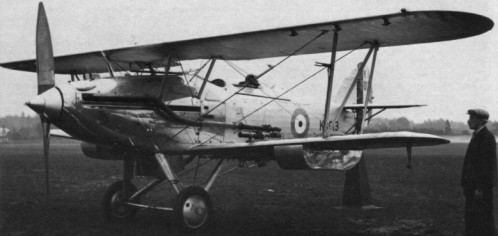
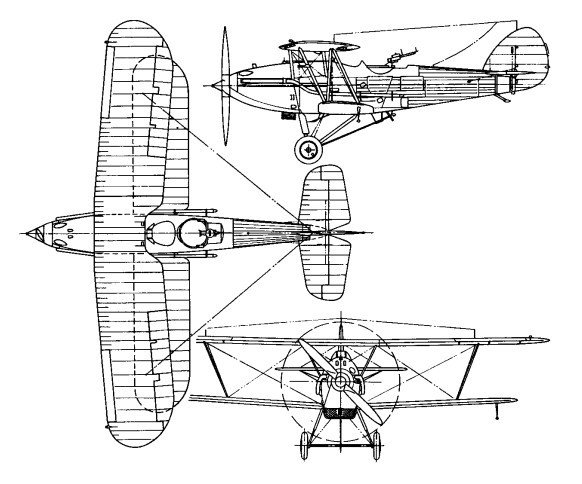
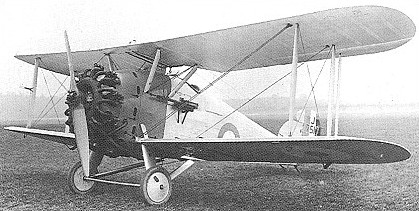
To meet the requirements of Air Ministry Specification F.20/27, Sydney Camm of Hawker designed a single seat fighter biplane, which flew for the first time in August 1928 powered by a 450 hp Bristol Jupiter VII radial engine. It was also tested with a 520 hp Bristol Mercury VI powerplant, also a radial, and the satisfactory results inspired the design of the Hornet prototype. It was clear to Sydney Camm at Hawkers that the F.20/27 specification would soon have to be revised, and so in 1929 Hawkers began work on the Hornet. which utilized the 420 hp (313 kW) Rolls Royce F.XIA V type engine enclosed by a smooth, streamlined cowling.

The new fighter prototype was a single engined biplane, with single bay wings, known as the Hawker Hornet, first flew at Brooklands, Surrey, in March 1929. It used Hawker’s tubular steel construction method and all metal structure.

The Hornet made its public debut at the 1929 Olympia Aero Show. The engine was changed for a 480 hp (358 kW) F.XIS when it was sent for service trials. Registered J9682, the Hornet was purchased by the Air Ministry in September 1929 and renamed Fury I, and delivered to Martlesham Heath for service trials. It was evaluated against the similarly powered Fairey Firefly II, being preferred because of its better handling compared with the mainly wooden construction of the Firefly.

Hawker Hornet

The private venture prototype (G ABSE) made its first flight on April 13, 1932, and was developed as the Intermediate Fury. From this was evolved the High Speed Fury, also a private venture, flown for the first time on May 3, 1933, and subsequently fitted with various Rolls Royce Kestrel or Goshawk engines. British Aerospace records suggest that this biplane was re-engined in 1934 with a Goshawk III and flown on 17 October of that year, with which it attained a speed of 394km/h, subsequently receiving a later 518kW Goshawk engine. After evaluation, Specification 6/35 was issued to cover the production of 23 similar aircraft ordered initially in August 1930, with 640 hp Kestrel VI engines, as Fury IIs for the RAF.

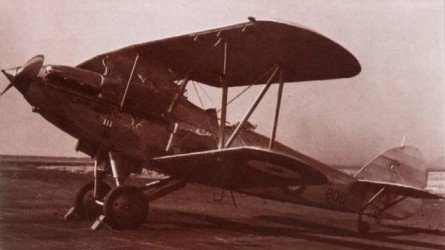
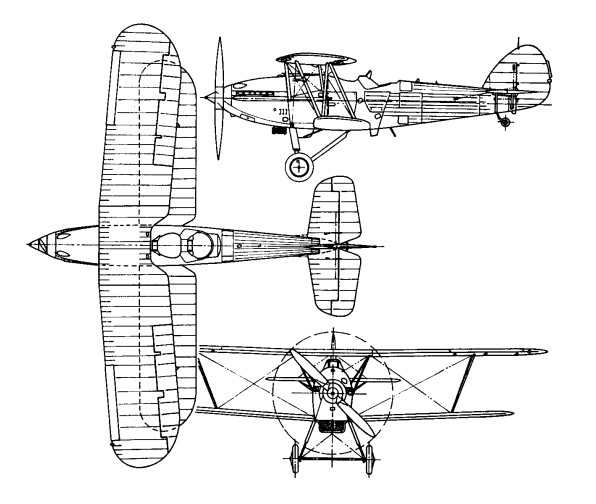
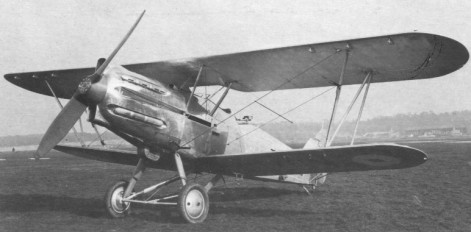
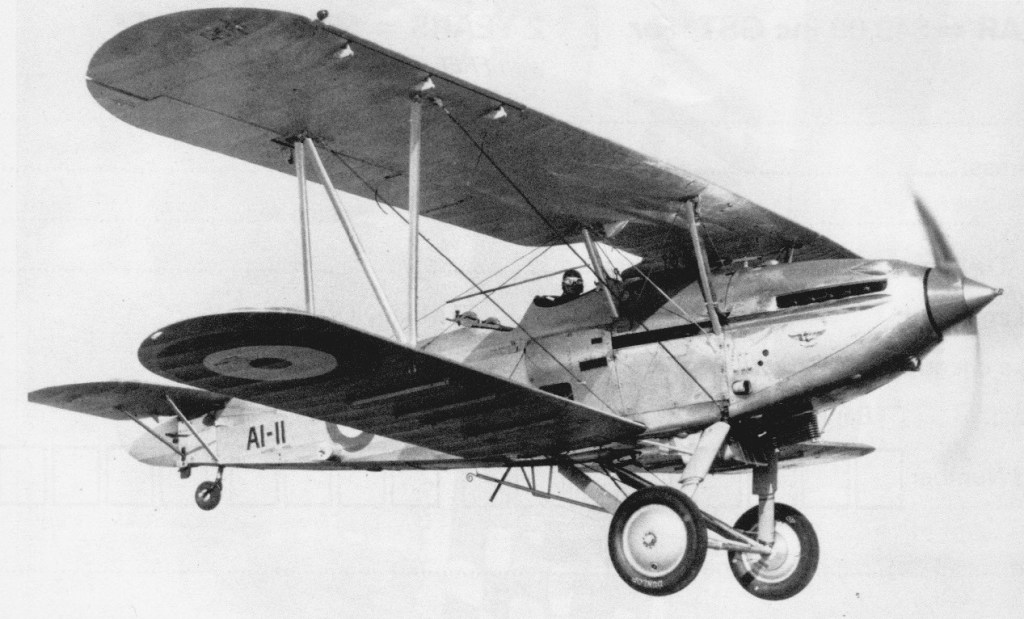
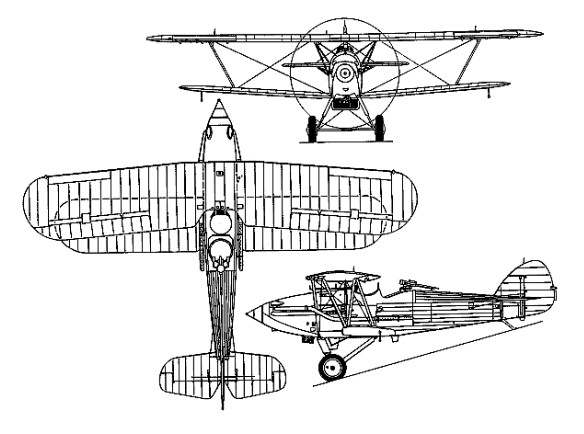
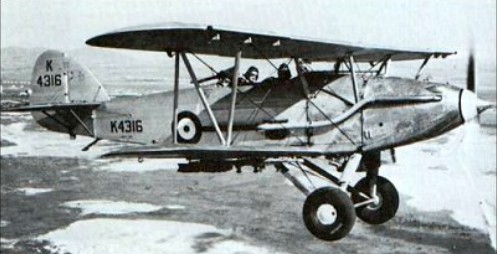
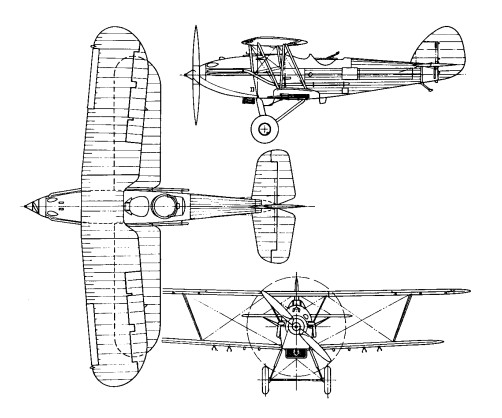
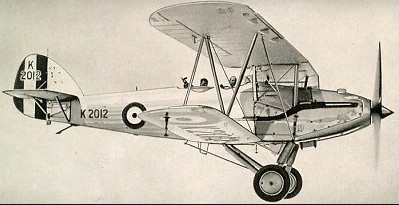
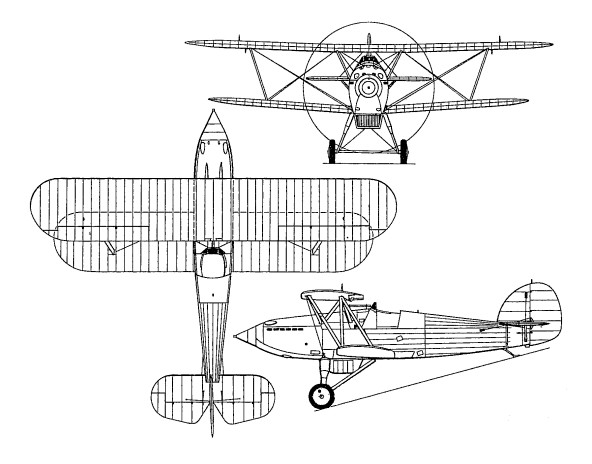
Officially, the Fury was constructed under Specification 13/30, though it would be more accurate to say that the specification was written round the Fury. The fighter had a standard tubular metal airframe of rectangular section, fairing into an oval; the forward fuselage was metal skinned and the rear portion fabric covered. The staggered, unequal span wings had ailerons on the upper mainplane only, and the wooden two blade prop¬eller was driven by a supercharged 525 hp Rolls Royce Kestrel IIS engine, the developed version of the F.Xl. Standard armament comprised two synchronized Vickers 0.303 in (7.7 mm) machine guns in the nose and racks for light bombs could be fitted beneath the lower wings.

The first production Fury I flew on March 25, 1931. No 43 Squadron received 16 aircraft in May 1931, and Nos 1 and 25 Squadrons were equipped from orders placed during that year. The Fury had an exceptionally rapid rate of climb, 3048 m (10 000 ft) in 41 minutes, was highly manoeuvrable, and was the first intercepter with the RAF capable of achiev¬ing a level speed of more than 322 kph (200 mph).

General Aircraft was given an order for 75 of this version, but this was not completely fulfilled though it included a few Fury IIs for South Africa.

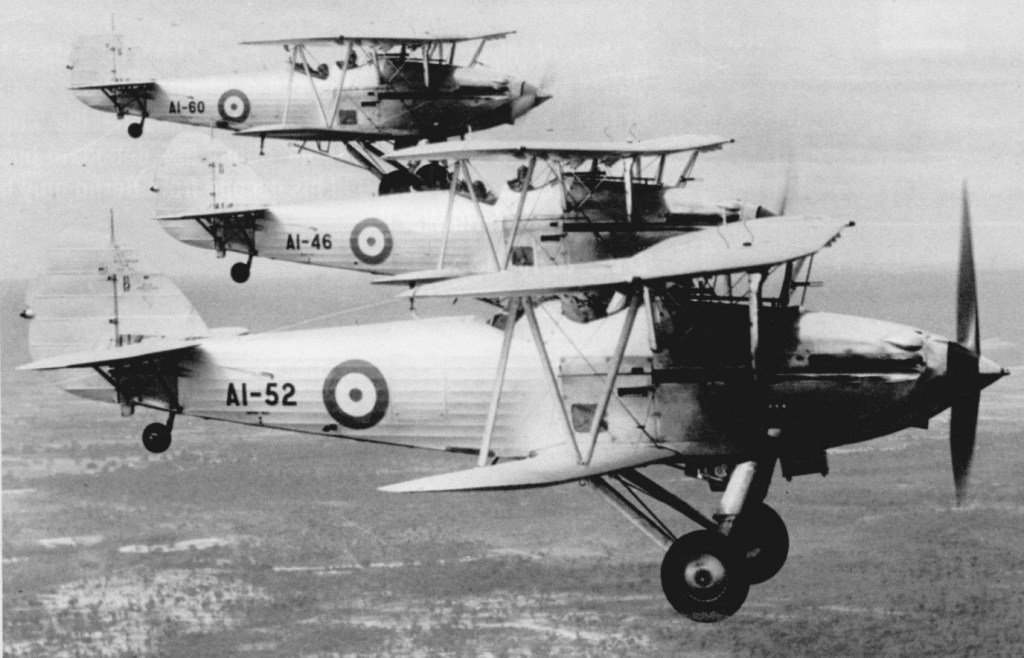
In 1934 it was decided that a Fury I should be fitted with a Kestrel VI with composite cooling, modified fuel and oil systems and streamlined wheel spats as the Fury II. This was first flown on 20 August 1935. Twenty-three production Fury IIs were built by Hawker with increased fuel capacity, followed by 89 from General Aircraft, six of which were delivered to the South African Air Force.

Fury IIs entered RAF service (with No 25 Squadron) in early 1937, but the five squadrons equipped with the Mk II had begun phasing them out by January 1939. However, 16 Fury Is and.48 Fury IIs were still serving, with RAF training units, at the beginning of the Second World War.

Altogether 118 were completed for the RAF with 391kW Kestrel IIS engines.

Hawker Fury number 401 was exported to Norway for evaluation. It was powered by the Armstrong Siddeley Panther IIIA radial engine, and made its first flight on September 9 of the same year. The aircraft was tested briefly at Brooklands and Martiesham and then flown to Oslo by P. W. S. Bulman. It was later tested with a ski undercarriage, but plans to produce the type in Norway did not materialise due to c.g. problems.

Six Pratt & Whitney Hornet-powered Furies went to Persia, three Furies to Portugal, and six Hispano-Suiza 12-engined aircraft to Yugoslavia.

Spanish Fury I Article

These foreign models were armed with various calibre machine guns of Colt, Mauser or Spandau manufacture, and those supplied to Yugoslavia could carry two additional machine guns beneath the lower wings.

Gallery

Hawker Hornet
Engine: Rolls-Royce F.XIS. 480hp
Wing span: 30ft 0in
Length: 26ft 3in
Height: 9ft 4in
Empty Weight: 2,409lb
Loaded Weight: 3,232lb
Max Speed: 205mph at 13,000ft
Climb: 5min 9sec to 10,000ft
Service Ceiling: 25,500ft
Armament: Provision for two Vickers Mk III guns
Crew: 1

Fury I
Engine: One 525 hp Rolls Royce Kestrel IIS.
Span: 9.14 m (30 ft)
Length: 8.13 m (26 ft 8 in)
Weight empty 2,623 lb. (1,190 kg.)
Gross weight: 1583 kg (3490 lb)
Maximum speed: 333 km/h (207 mph).
Ceiling 28,000 ft. (8,500 m.) fully loaded.
Range 305 miles (490 km.)
Crew: 1.
Armament: Two synchronised machine¬ guns.

Fury Mk II
Engine: 1 x Rolls-Royce Kestrel VI, 477kW / 631 hp
Max take-off weight: 1637 kg / 3609 lb
Empty weight: 1240 kg / 2734 lb
Wingspan: 9.14 m / 29 ft 12 in
Length: 8.15 m / 26 ft 9 in
Height: 3.10 m / 10 ft 2 in
Wing area: 23.41 sq.m / 251.98 sq ft
Wing loading: 14.35 lb/sq.ft / 70.0 kg/sq.m
Max. speed: 194 kts / 359 km/h / 223 mph
Service ceiling: 8990 m / 29500 ft
Range: 235 nm / 435 km / 270 miles
Armament: 2x cal.303 MG (7,7mm)
Crew: 1

Hawker Hornet
Hawker Fury

Hawker Hind

The Hind light bomber was one of the types produced for quick delivery to the RAF, based on the Hart and therefore needing little new development, although a number of improvements were introduced as the result of long experience with the Hart.

The first prototype was a modified Hart and first flew on 12 September 1934 at Brooklands.

Hawker Hind Article

By the end of 1935 the Hind had started to replace the Hawker Hart as a front line fighter with the RAF.
The production total was 528 aircraft, although with the delivery of modern monoplane bombers a number of the final Hinds on the production lines for the RAF were completed as dual-control trainers. Records show that from even the first batch of 20 Hinds, General Aircraft was later to convert nine into trainers.

Nine foreign users of the Hind (new and ex-RAF aircraft) included Latvia, New Zealand, Persia and South Africa.

Engine: 1 x Rolls-Royce Kestrel V, 477kW / 631 hp
Max take-off weight: 2403 kg / 5298 lb
Empty weight: 1475 kg / 3252 lb
Wingspan: 11.35 m / 37 ft 3 in
Length: 9.02 m / 29 ft 7 in
Height: 3.23 m / 10 ft 7 in
Wing area: 32.33 sq.m / 348.00 sq ft
Max. speed: 161 kts / 299 km/h / 186 mph @ 16,000 ft
Service ceiling: 8045 m / 26400 ft
Initial climb rate: 1870.08 ft/min / 9.50 m/s
Range: 374 nm / 692 km / 430 miles
Armament: 2 x 7.7mm machine-guns, 220kg of bombs
Crew: 2
Endurance: 4 h

Hawker Osprey / Nohab

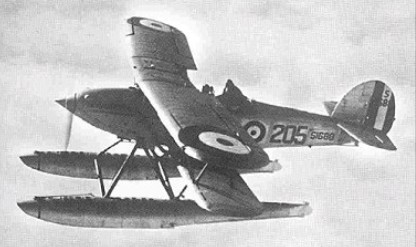
The Osprey was a two-seat naval fighter-reconnaissance biplane, developed from the Hart but with additional strengthening for catapult launching, folding wings for storage on board ship and naval equipment.

The first prototype flew in 1930 and was eventually followed by 37 Osprey Mk I, 14 Mk II, 52 Mk III and 26 Mk IV production aircraft; the Mk IIs later being modified into Mk IIIs with Fairey Reid propellers and other refinements.
A small number of the genuine Mk IIIs were constructed of stainless steel, one of which, according to Hawker records, was exhibited in skeleton form at the 1932 Paris Show.
Standard power plant for the Mk Is, IIs and IIIs was the 423kW Rolls-Royce Kestrel IIMS, giving a maximum speed of 257km/h as a landplane.
Seaplane Ospreys had twin floats, although an experiment was carried out with one aircraft fitted with a central main float and wingtip stabilising floats.
The Mk IV was powered by a 477kW Kestrel V engine.

Ospreys entered service with the FAA in 1932 and eventually flew from aircraft carriers, cruisers and other warships. In 1934 one RAF squadron took delivery of four Ospreys for communications work, and in the same year HMS Sussex went to Melbourne as part of the Centenary celebrations carrying an Osprey. By mid-1935 several ships of the Second Cruiser Squadron of the Home Fleet had been issued with Ospreys and the new cruiser Ajax had received two for service with the Mediterranean Command. These remained in service until 1939.
The Swedish vessel Gotland had received Mercury-powered Ospreys, known as Nohabs. These remained operational as naval co-operation aircraft alongside Heinkel He 5s until 1940.
Three Ospreys were also delivered to Portugal and Spain, although it is uncertain whether the Spanish aircraft was among the 57 machines sent by Britain to the Republican Air Force during the Civil War.

Osprey Mk III
Engine: 423kW Rolls-Royce Kestrel IIMS
Max take-off weight: 2245 kg / 4949 lb
Empty weight: 1545 kg / 3406 lb
Wingspan: 11.28 m / 37 ft 0 in
Length: 8.94 m / 29 ft 4 in
Height: 3.17 m / 10 ft 5 in
Wing area: 31.5 sq.m / 339.06 sq ft
Max. speed: 270 km/h / 168 mph
Ceiling: 7165 m / 23500 ft

Osprey Mk IV
Engine: Rolls Royce Kestrel V, 631 hp
Length: 29.331 ft / 8.94 m
Height: 10.4 ft / 3.17 m
Wingspan: 37.008 ft / 11.28 m
Wing area: 338.958 sq.ft / 31.49 sq.m
Max take off weight: 4950.2 lb / 2245.0 kg
Weight empty: 3404.5 lb / 1544.0 kg
Max. speed: 153 kts / 283 km/h
Cruising speed: 94 kts / 175 km/h
Service ceiling: 25000 ft / 7620 m
Wing loading: 14.56 lb/sq.ft / 71.0 kg/sq.m
Endurance: 2 h
Crew: 2
Armament: 2x cal.303 MG (7,7mm)

Hawker Hartebeeste / Hartbee / Hartbees

The Hawker Hartebeeste (also known as Hartbee or Hartebees) was a version of the Hawker Audax air co-operation aircraft modified for use in South Africa. The first was flown on 1 June 1928, and four (s/n 801 to 804) were produced by Hawker in 1934-35, with another sixty five (s/n 805 to 869) built by Roberts Heights in Pretoria, South Africa from 1937. The main difference between the Hartebeeste and the Audax was a change of engine to the Rolls Royce Kestrel VFP, producing 608hp. The more powerful engine compensated for the addition of some armour around the cockpits.

The Hartebeeste had a short front line career with the South African Air Force. Introduced on 1 January, 1930, two squadrons were equipped with the Hartebeeste when the Italians entered the war on 10 June 1940. The next day the Hartebeeste’s undertook their biggest operation of the war, a large scale attack on Italian positions. Soon after that the Hartebeeste was withdrawn from the front line, and transferred to training and communications units, remaining in service for the rest of the war.

Hawker Hartebeeste
Engine: Rolls Royce Kestrel V FP, 600 hp / 453kW
Total Length: 29ft 7in / 9.020 m
Greatest height: 10 ft 5 in / 3.170 m
Wingspan: 37ft 3in / 11.350 m
Wing area: 348.000 sqft / 32.330 sq.m
Max take off weight: 4787.1 lbs / 2171.0 kg
Weight empty: 3150 lbs / 1429.0 kg
Max. speed: 153 kts / 283 km/h / 176 mph
Service ceiling: 22,000 ft / 6705 m
Wing load: 13.74 lbs/sq.ft / 67.00 kg/qm
Endurance: 3 h
Crew: 2
Armament: 2 x .303 MG (7,7mm), one forward firing and one in aft cockpit plus light bombs or supply canisters under the wings.

Hawker Henley

The Henley was designed to an Air Ministry requirement for a two-seat-high-performance light bomber with good enough performance to be used as a dive bomber for close air support.

The prototype first flew in March 1937.

Despite its promise, its role was changed to that of target towing. Four hundred were ordered, but only 100 Merlin II and 100 Merlin III-engined Henleys were built at the Gloster works. The type proved ill-suited to the task, with many engine failures due to a cooling system which performed best at high airspeeds not suitable for target towing. They ended their short careers towing the larger drogues for training anti-aircraft gun crews. They were withdrawn from service in 1942.

According to Hawker records two Henleys were used as engine test beds for Vulture and Griffon engines and one was tropicalised.

Engine: 1 x Rolls-Royce Merlin II, 1016 hp / 768kW
Wingspan: 14.59 m / 47 ft 10 in
Length: 11.1 m / 36 ft 5 in
Height: 4.46 m / 14 ft 8 in
Wing area: 31.77 sq.m / 341.97 sq ft
Max take off weight: 3845 kg / 8477 lb
Empty weight: 2725 kg / 6008 lb
Wing loading: 24.81 lb/sq.ft / 121.00 kg/sq.m
Service Ceiling: 8230 m /27000 ft
Max. speed: 204 kts / 438 km/h /272 mph
Cruising speed: 378 kph
Range: 826 nm / 1529 km / 950 miles
Crew: 2

Hawker Hector

Prototype

British Army co-operation biplane. The Hawker Hector was an 600kW / 805 hp Napier Dagger air-cooled and supercharged powered derivative of the Hawker Hart produced to meet a 1935 specification for a replacement for the Hawker Audax, itself a development of the Hart.

The H type Dagger IIIMS 24-cylinder gave the Hector a distinctive nose profile, while other modifications included an upper wing with straight leading edge, a tail wheel in place of the original skid and a canted ring for the Lewis machine gun in the rear cockpit. A 0.303 in (7.7 mm) Vickers was fitted in the port side of the nose, and two 51 kg (112 lb) bombs could be carried below the lower wings.

The prototype Hector, a converted Hart which first flew on February 14, 1936, was followed by 178 Westland built production machines, the first of which entered service in February 1937.

At the time of a Finnish evaluation, the Hector equipped seven RAF army co-operation squadrons, although the Finns were also advised that it was intended to start replacing the Hectors in RAF service in 1938. The Ilmavoimat / Maavoimat / VL Team expressed considerable disbelief among themselves that in early 1938 the RAF was still flying an aircraft reminiscent of the first World War, particularly in light of the German aircraft designs they were also looking at. Their initial conclusion was that the aircraft was unreliable, obsolete and would be ineffective in its intended role. The Hector was eliminated from the evaluation with no further consideration.

Only a handful of Hectors were ever flown in anger, raiding German positions in occupied France in May 1940. After the Lysanders started entering service, the Hectors were transferred to RAF Auxiliary Air Force squadrons; 613 Squadron used theirs to attack German troops advancing through northern France in May 1940. Two aircraft were lost in combat over Calais, before the squadron was evacuated. Hectors were used by the RAF from 1940 as target-towers, and for towing the General Aircraft Hotspur training gliders. The type was deeply unpopular with ground crews due to the complicated nature of the engine, which had 24 cylinders, with 24 spark plugs and 48 valves, all of which required frequent maintenance.

Britain sold the Irish Free State 13 of the Hectors after the Dunkirk Evacuation. In general they were in poor condition. They were sold by the British War Office to the Irish Free State upon requests for aircraft. The Irish military were wholly unprepared for major warfare, but still relied almost totally on military supplies from Britain. The defence of Ireland was also in the British interest, but with the Battle of Britain raging in the skies, could afford to sell the Irish Government nothing better than the Hector.

Engine: 1 x Napier Dagger III MS “H”, 600kW / 805 hp
Max take-off weight: 2227 kg / 4910 lb
Empty weight: 1537 kg / 3389 lb
Wingspan: 11.26 m / 36 ft 11 in
Length: 9.09 m / 29 ft 10 in
Height: 3.17 m / 10 ft 5 in
Wing area: 32.14 sq.m / 345.95 sq ft
Wing loading: 14.15 lb/sq.ft / 69.0 kg/sq.m
Max. speed: 163 kts / 301 km/h / 187 mph
Ramge: 300 miles
Service Ceiling: 7315 m / 24000 ft
Armament: 1 x 7.7mm / 0.303in Vickers Mk.V machine-guns (forward firing), one rear-firing 303 in (7.7 mm) Lewis gun mounted in the rear cockpit
Bombload: 2 x 51kg bombs
Crew: 2

Hawker Demon

A two-seat fighter version of the Hart would provide additional fire-power from the rear cockpit was proposed and two prototypes were prepared for evaluation by modification of Hart bombers. These were each powered by a 417kW fully supercharged Rolls-Royce Kestrel engine. Each was equipped with two synchronised forward-firing Vickers machine-guns and had the coaming of the rear cockpit modified to provide a maximum field of fire for the Lewis gun operated by the observer/air gunner. Known as Hart Fighters, these were evaluated and a small batch of six was ordered.

In 1932 the fighter received the name Demon. A total of 305 Demons were built, made up of the prototypes/pre-production aircraft, 77 with Kestrel IIS engines (seven as instructional airframes and one fitted with a 477kW Kestrel VI engine under the Hawker report number 475), 155 with 436kW Kestrel VI engines and those for Australia.
From late 1936 aircraft coming from the Boulton Paul production line were equipped with a hydraulically operated shield in the aft cockpit and were known as Turret Demons. The segmented metal shield was provided to give the gunner some protection from the slipstream. Many earlier aircraft were modified retrospectively to this standard. In addition to aircraft supplied to the RAF, a total of 64 were produced for the Royal Australian Air Force which procured them as army co-operation fighters each fitted with bomb racks, a message-retrieving hook and other equipment.

RAAF Demon

An initial 16 Demons were ordered in January 1934 to replace Westland Wapitis with Nos 1 and 3 Sqds. Deliveries began in 1935 and 36 more were ordered at the same time for Army co-operation and then another 10 for target towing and training. They eventually served with 7 RAAF squadron, a few remaining until 1942.

RAAF Demon

As a fighter with the RAF the Demon was finally superseded from late 1938 by the Blenheim IF, but a few were used as target tugs until replaced by the Hawker Henley.

Hawker Demon
Fighter interceptor, United Kingdom, 1933
Length : 29.593 ft / 9.02 m
Height: 10.4 ft / 3.17 m
Wingspan : 37.238 ft / 11.35 m
Wing area : 348.0 sqft / 32.33 sq.m
Max take off weight : 4465.1 lb / 2025.0 kg
Weight empty : 3067.2 lb / 1391.0 kg
Max. speed : 158 kts / 293 km/h
Service ceiling : 27493 ft / 8380 m
Wing load : 12.92 lb/sq.ft / 63.0 kg/sq.m
Endurance : 3 h
Crew : 2
Armament : 3x cal.303 MG (7,7mm)

Hawker Hardy

Originally designated Hart General Purpose, the pro¬totype Hardy, a converted Hart, first flew on September 7, 1934. Fitted with a message pick up hook and wing racks for supply containers or light bombs, it was slightly longer and its empty weight was substantially higher than that of the Hart.

The first 37 were powered by 530 hp / 391kW Rolls-Royce Kestrel IB engines, the remaining ten by 585 hp Kestrel Xs. The long exhaust pipes resembling those of the Audax, and the Hart’s armament of a Vickers machine gun on the port side of the fuselage and a Scarff mounted Lewis in the rear cockpit were retained.
A total of 47 Hardys were built by Gloster during 1935, the first examples going to 30 Squadron, RAF, in Iraq in April. The type was used in the Middle East for army co operation, dive bombing and reconnaissance and to provide valuable close support to ground troops under pressure. These served with the RAF, latterly as a communications type, until 1941.

Engine: 1 x Rolls-Royce Kestrel IB, 395kW / 523 hp
Max take-off weight: 2270 kg / 5005 lb
Empty weight: 1450 kg / 3197 lb
Wingspan: 11.35 m / 37 ft 3 in
Wing loading: 14.35 lb/sq.ft / 70.00 kg/sq.m
Length: 9.02 m / 29 ft 7 in
Height: 3.23 m / 10 ft 7 in
Wing area: 32.33 sq.m / 348.00 sq ft
Max. speed: 140 kts / 259 km/h / 161 mph
Service Ceiling: 5180 m / 17000 ft
Armament: 2 x .303in / 7.7mm machine-guns
Crew: 2

Hawker Audax

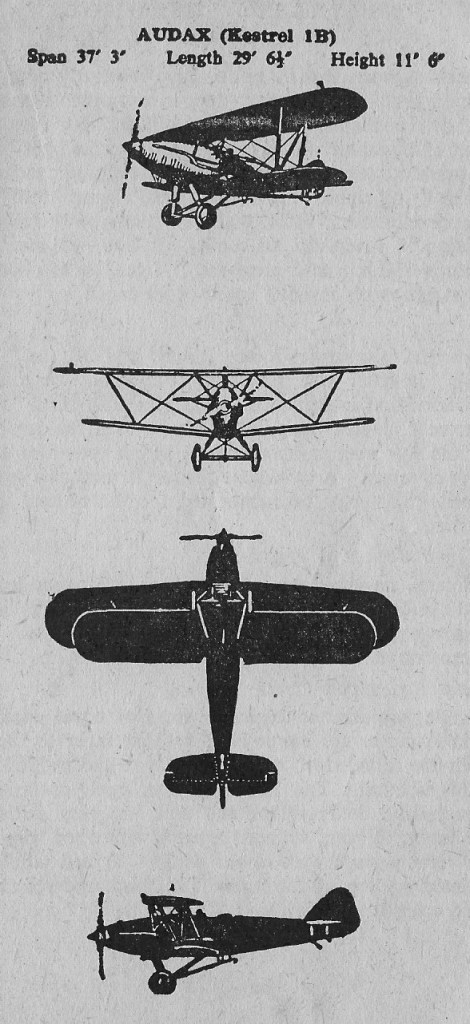
One of the first adaptations of the Hart day bomber involved fairly minor changes to satisfy an Army cooperation requirement, with the RAF needing a replacement for Armstrong Whitworth Atlas and Westland Wapiti aircraft. For this role the Hart was provided with a message pick-up hook and other equipment changes.
About 652 Audax biplanes were ordered for the RAF, including those purchased by South Africa and those transferred to Malaya for the Straits Settlement Volunteer Air Force. Others were constructed for Persia (with Bristol Pegasus and Pratt & Whitney Hornet engines), Iraq, Canada, Singapore and Egypt. The Egyptian aircraft with Armstrong Whitworth Panther X engines and supplied to allow Egypt to share with Britain the defence of Egypt, the Sudan and the Canal zone under the terms of the Anglo-Egyptian Treaty.
RAF Audaxes entered service in 1932 and some based overseas were still flying in 1941-42. An Audax squadron was used as fighter cover at the Digboi air station in north east Assam, India in 1942. Most of the remaining Audaxes were operated during the early war years as Hotspur glider tugs and trainers, 18 having previously been converted into Hart Specials.

Engine: 1 x Rolls-Royce “Kestrel IIS”, 385kW
Max take-off weight: 1987 kg / 4381 lb
Empty weight: 1336 kg / 2945 lb
Wingspan: 11.4 m / 37 ft 5 in
Length: 9.0 m / 29 ft 6 in
Height: 3.2 m / 10 ft 6 in
Wing area: 32.4 sq.m / 348.75 sq ft
Max. Speed: 274 km/h / 170 mph
Cruise speed: 240 km/h / 149 mph
Ceiling: 6400 m / 21000 ft
Range w/max.fuel: 600 km / 373 miles
Armament: 2-4 .303 MG (7,7mm) machine-guns, 250kg of bombs
Crew: 2

Hawker Audax
Engine: Rolls Royce Kestrel II B, 523 hp
Length: 29.593 ft / 9.02 m
Height: 10.4 ft / 3.17 m
Wingspan: 37.238 ft / 11.35 m
Wing area: 348.000 sqft / 32.33 sqm
Max take off weight: 4385.7 lb / 1989.0 kg
Weight empty: 2939.3 lb / 1333.0 kg
Max. speed: 148 kts / 274 km/h
Service ceiling: 21506 ft / 6555 m
Wing load: 12.71 lb/sq.ft / 62.00 kg/sq.m
Endurance: 4 h
Crew: 2
Armament: 2x .303 MG (7,7mm) machine-guns, 4x 9kg Bomb / 2x 51kg Cont.

Hawker Woodcock II

The task of redesigning the Woodcock was undertaken by W G Carter, who retained little of the original design apart from the fundamental fuselage structure. A new single-bay wing cellule was adopted, with marginally increased incidence and chord, and reduced sweepback. The fuselage decking was recontoured, tail surfaces were redesigned and the armament was repositioned. Powered by a 380hp Bristol Jupiter IV nine-cylinder radial like that eventually installed in the original Woodcock, but featuring individual cylinder heads, a new prototype designated Woodcock II was flown early in 1924. The redesigned fighter overcame most of the shortcomings of its progenitor, and a contract was placed on behalf of the RAF before the end of 1924.
Similarly armed to the original fighter prototype, the Woodcock II was awarded successive contracts, a total of 62 being built, with deliveries being completed in 1927. The type served with two RAF squadrons until 1928, some late production examples being fitted with the Jupiter IV uprated to 416hp.

Max take-off weight: 1351 kg / 2978 lb
Empty weight: 913 kg / 2013 lb
Wingspan: 9.91 m / 32 ft 6 in
Length: 7.97 m / 26 ft 2 in
Height: 3.02 m / 9 ft 11 in
Wing area: 32.14 sq.m / 345.95 sq ft
Max. speed: 227 km/h / 141 mph
Cruise speed: 166 km/h / 103 mph