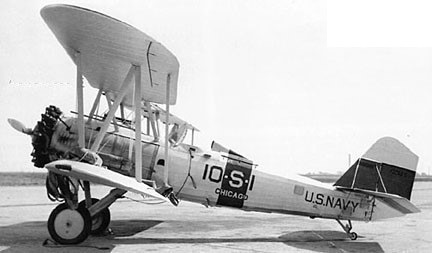
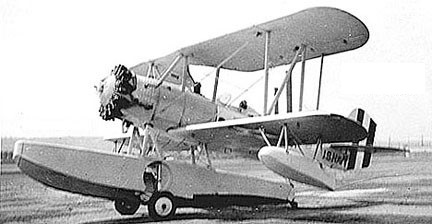
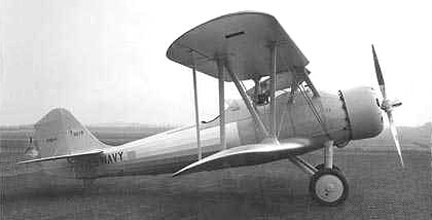
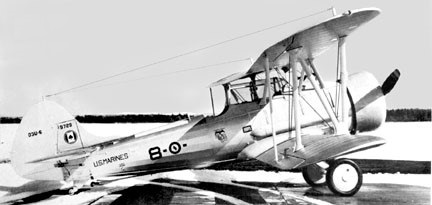
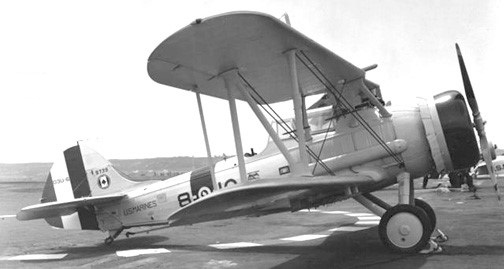
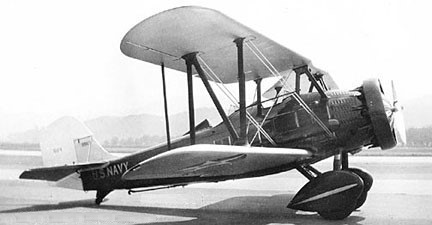
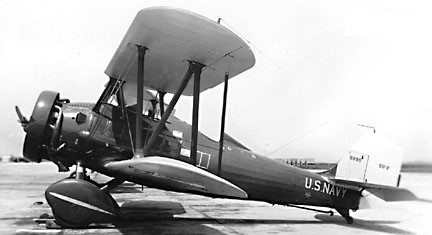
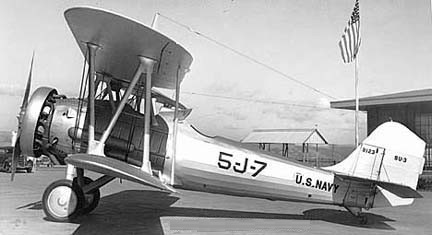
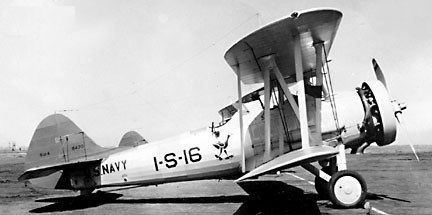
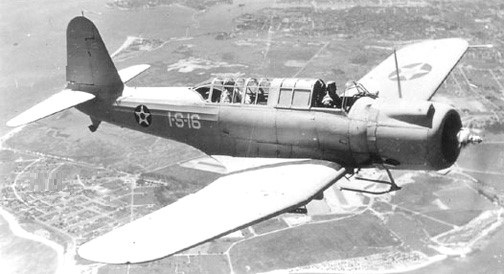
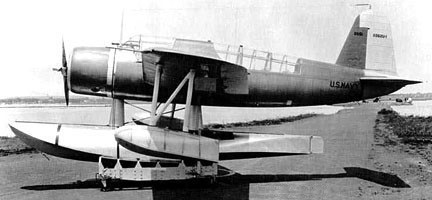
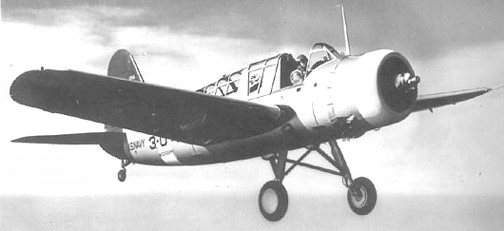
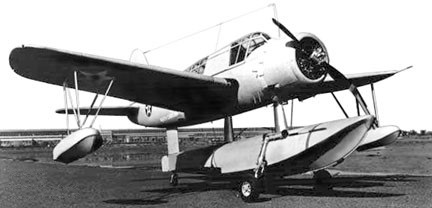
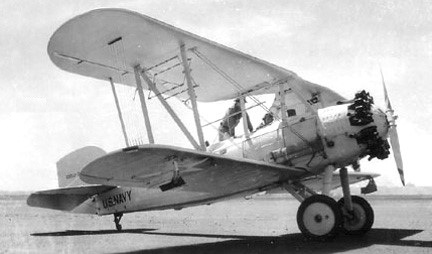
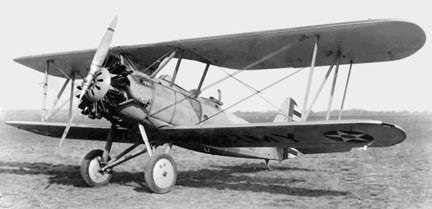
The Vought O3U was a two-place scout for the US Navy and US Marine Corp. The O3U operated on wheels and amphibious floats, and later became the SBU series.
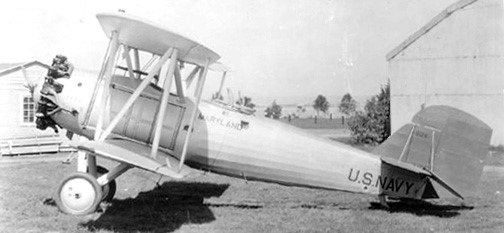
Ninety-seven of the 1930 O3U-1 were built (A8547-8582, A8810-8839, and A8851-8871). They were priced at $10,607-12,653.
Vought O3U-1
Fifteen of the 1930 O3U-2 were built, priced at $14,500.
Vought O3U-2
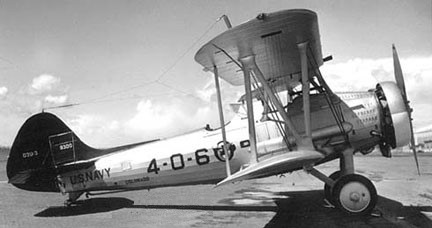
Seventy-five of the 1933 O3U-3 were built (A9142-9169, and 9283-93300), the last one modified as the XO3U-6.
Vought O3U-3 9300
Sixty-five of the 1932 O3U-4 (A9077-9141) priced at $13,500-14,000. They became the SU model.
Vought O3U-4
One O3U-4, A9078, was modified as XO3U-5 in 1934.
In 1934 O3U-3 9729 was modified to become the O3U-6 prototype.
Vought XO3U-6 9729
Thirty-one of the 1935 O3U-6 were built (9729-9744 and 0001-0016), the last one, 0016, temporarily as XOSU-1 scout version for testing. It later reverted to O3U-6.
Vought O3U-6 9739
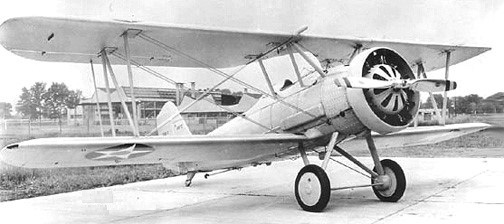
The SU re-designated from O3U was two seat and powered by a 600hp P&W R-1690C.
Vought SU-1 A-9065
Twenty-eight SU-1 were built in 1933: A8872-8875, A8928-8937, and A9062-9076.
Fifty-three SU-2 were built in 1933; A9077, A9079-9108, and A9110-9121.
Vought SU-2 A-9095
Twenty SU-3 were built in 1933; A9122-9141.
Vought SU-3 A-9123
The one example of the XSU-4, A9109, was built in 1934.
Vought SU-4 9430
Forty SU-4 were built in 1934; 9379-9398, 9414-9433.
The 1933 V-65 and V-66 Corsair were export version of the SU-2.
V-65: 35 to Brazil, 46 to China, 12 to Argentina; V-66: 8 to Brazil, 1 to Argentina, 1 to Britain.
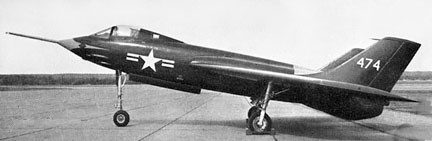
The Vought F7U Cutlass swept flying wing design had a large central nacelle and two substantial vertical tail surfaces. The first U.S. fighter designed from the start to use afterburners. Three prototype XF7U-1 (122472-122474) were built. The first flying on 29 September 1948.
1950 production was 20 F7U-1 (124415-124434) as trainers.
Vought F7U-1 122474
S/ns 125322-125409 were assigned for F7U-2s, but production was cancelled.
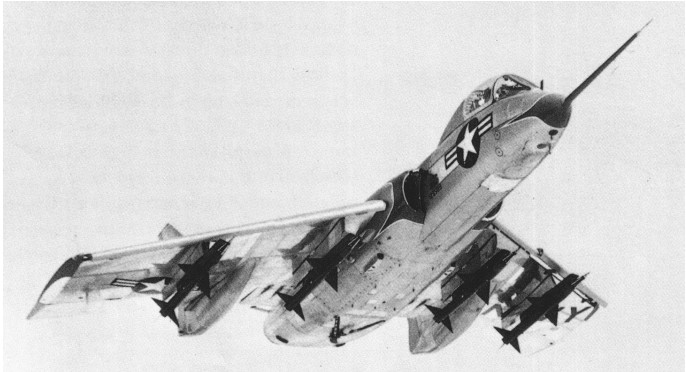
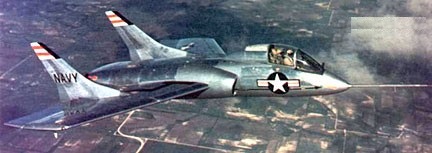
After 14 F7U-1’s, the Cutlass was in production for the U.S. Navy in 1951 as the F7U-3 interceptor and F7U-3P photo-reconnaissance aircraft with lengthened nose containing cameras. 288 F7U-3 (128451-128478 and 139868-139917 et al) were built, with a redesign, radar gunsight, four 20mm cannon; and two 4600 lb J46-WE-8A engines.
Vought F7U-3
Built in 1954 were the F7U-3M missile platform and F7U-3P photo-recon version.
F7U-1 Cutlass Engines: 2 x Westinghouse J34-WE-32, 3000 lb Wingspan: 38’8″ Length: 39’7″ Speed: 672 mph Range: 1170 mi Ceiling: 41,400 ft Armament: 6×20 mm. cannon Seats: 1
F7U-3 Engines: 2 x J46-WE-8A, 4600 lb / 6100 lb afterburn Wingspan: 38 ft 8 in Length: 40 ft 10.5 in Height: 11 ft 6.5 in Empty weight: 13,100 lb Normal loaded weight: 20,000 lb Max weight: 23,000 lb Max speed: 670 mph / 705 mph afterburn at SL Max ROC: 13,000 fpm Range: 660 mi Ceiling: 40,000 ft Armament: four 20m cannon Bombload: 5400 lb
F7U-3P Naval photo- reconnaissance aircraft Engines: 2 x Westinghouse J46-WE-8A turbojets, 4,800 lb. thrust Wingspan: 38 ft. 8 in. Loaded weight: 20,000 lb Max speed: 670 m.p.h. Ceiling: Over 45,000 ft. Crew: 1 Armament: None
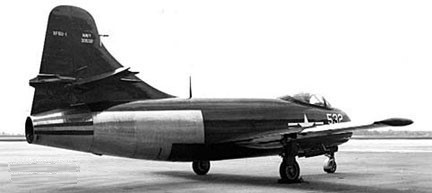
The Vought XF6U Pirate first flew on 2 October 1946. The Pirate was conceptually a less advanced aeroplane, although it did provide its pilot with excellent fields of vision from a bubble canopy very close to the nose. This cockpit position was made possible by the use of wing-root inlets for the 3000-lb (1361-kg) thrust Westinghouse J34-WE-2 2 turbojet. Three XF6U-1 were built (33532 to 33534) of which one was fitted with afterburner in Apr 1948, the first USN aircraft so equipped.
Vought XF6U-1 33532
Additional power was provided later by the 4200-lb (1905-kg) thrust J34-WE-30A engine, and this improved performance to the level at which 30 production aircraft were ordered.
The thirty F6U-1 were 122478 to 122507, of which 122483 was modified as an F6U-1P.
It took 18 months for these to reach the navy, and in this time the pace of development had been such that more modern types such as the Grumman F9F Panther and McDonnell F2H Banshee were offering much improved performance.
Vought F6U-1
Engine: 1 x Westinghouse J34-WE-22 Wingspan: 32’10” Length: 35’8″ Speed: 600 mph Range: 730 mi Ceiling: 49,000 ft
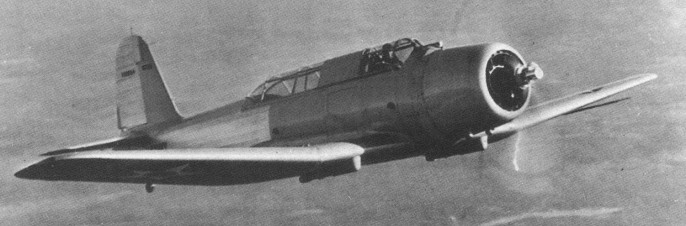
The Vought V-156 / SB2U was designed to meet a US Navy requirement for a carrier aircraft based scout‑bomber and first flew in 1936. At the time it represented a major leap forward, being the first low wing monoplane to have both foldable wings and retractable undercarriage in US Navy service. Such were Navy concerns at the time, that Vought was asked to develop a competing biplane scout‑bomber ‑ the XSB3U‑1 ‑ as ‘insurance’.
Vought V-156
Powered by a 825hp (615kW) Pratt & Whitney R 1535 Twin Wasp Junior, the SB2U was ordered into production as the Vindicator, with 169 being built in three versions.
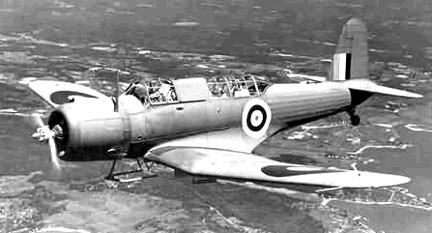
The V-156 SB2U was the USN’s first monoplane scout-dive bomber. Exports to the British Navy were as V-156 Chesapeake.
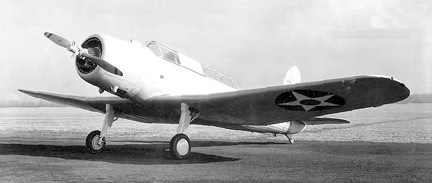
The 1936 XSB2U-1 prototype 9725 first flew on 4 January 1936 but crashed during testing on 20 August 1936.
Vought XSB2U-1 9725
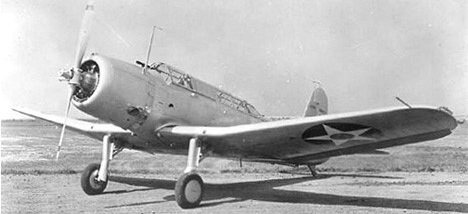
The SB2U-1 was the first production model and the first flew on 21 May 1937. Fifty-four were built, 0726-0779, the last of which became XSB2U-3.
Vought SB2U-1
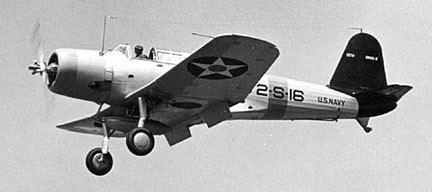
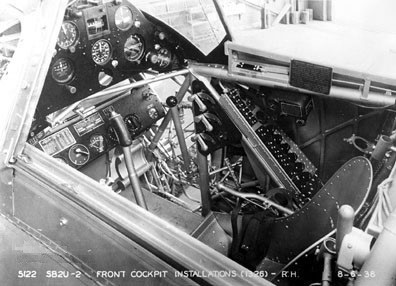
The first flying on 11 August 1938, fifty-eight SB2U-2 were built, 1326-1383.
Vought SB2U-2 1372
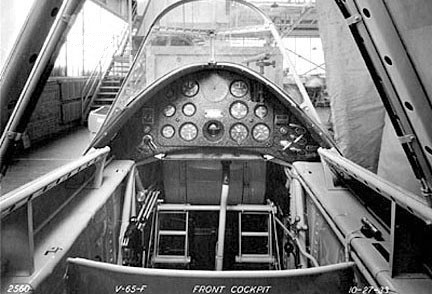
Vought SB2U-2 Instrument panel
One SB2U-1, 0779, was converted to the XSB2U-3 in 1939, powered by a 825hp R-1535-102, and fitted with extra fuel tanks.
Vought XSB2U-3 0779
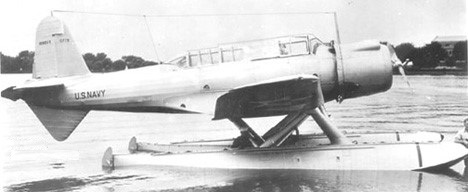
XSB2U-3 0779 was experimentally fitted with twin EDO pontoons. Results were not impressive and the ship was returned to wheels.
Vought XSB2U-3 0779
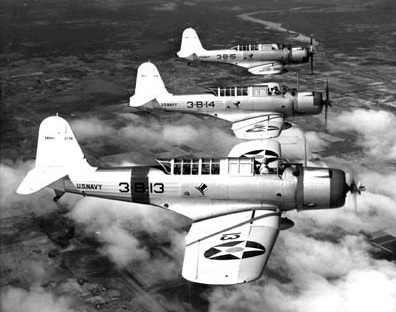
The SB2U-3 Vindicator first flew on 10 January 1941. Fifty-seven were built, 2044 to 2100.
Vought SB2U-3
Vindicators saw action during the Battle of Midway in 1942, but after this were retired to second line duties. Orders for a version for the French Air Force the V 156B were partially met before the fall of France. Fifty V 156B 1s were ordered by the British Fleet Air Arm and entered service as the Chesapeake I advanced trainers.
Some SB2U types made it into civilian dress, including SB2U-1 NC30447, which was WW2 surplus.
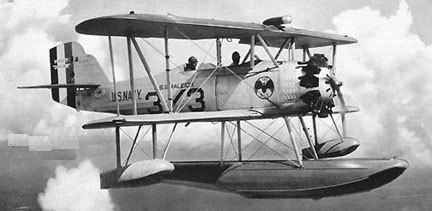
Built in 1938, the first of two Vought XOS2U-1 (0951 and 1440), the first converted from an O3U-6, were prototypes of the two-place OS2 Kingfisher scouting aircraft. The first to fly was on 1 March 1938, powered by a 450hp P&W R-985-4 engine.
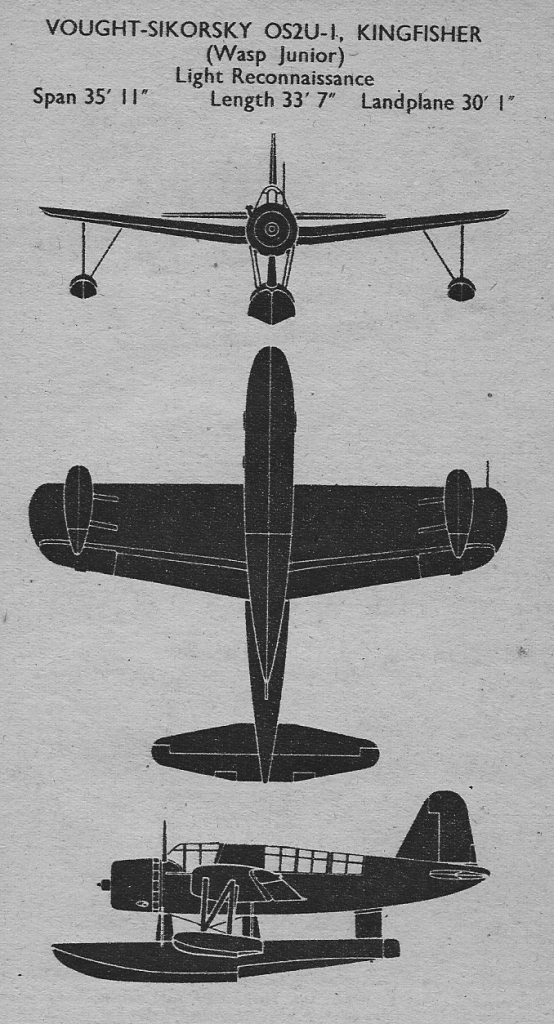
Fifty-four OS2U-1 were built in 1940; 1681-1734, powered by a 450hp P&W R-985-48 engine.
Vought OS2U-1
The OS2U-2 of 1941 had armour and self-sealing fuel tanks One hundred and fifty-eight were built, 2189-2288 and 3073-3130, of which 45 were floatplanes. They were powered by P&W R-985-50 engines.
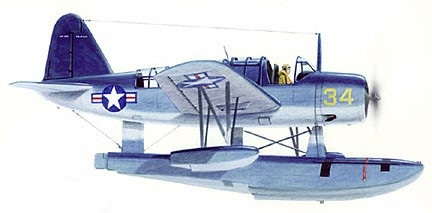
Vought OS2U-2
In 1941 1006 OS2U-3 were built for the USN and USCG, 5284-5989 and 09393/09692, with 300 additional production by Naval Aircraft Factory as OS2N.
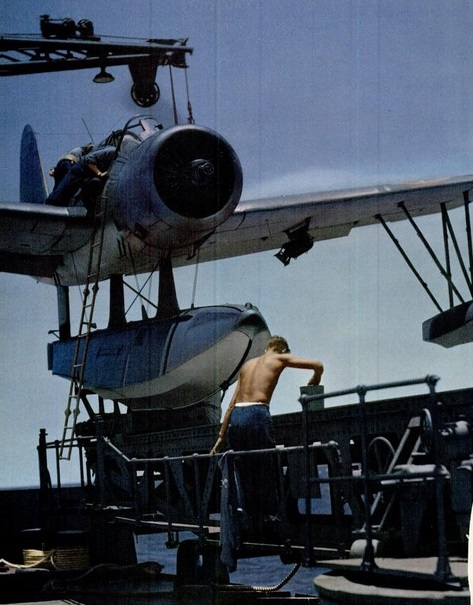
Vought OS2U-3
Despite its role in scouting and rescue missions, OS2U did have its moments. Two of them dive-bombed Japanese troops in the Aleutians and helped sink an enemy submarine there on 15 July 1942, and one was credited with shooting down an attacking Zero over Iwo Jima.
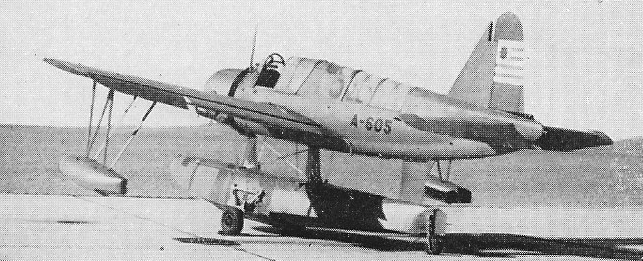
Uruguayan Naval Air Service OS2U-3
One OS2U-2, 3074, was converted to an XOS2U-4 with wings of narrow chord and high aspect ratio.
The Vought designation for export models was VS-310.
OS2U-3 Engine: P&W R-985-AN-2 Wingspan: 35 ft 10.75 in Length: 33 ft 7.5 in Height: 14 ft 8 in Wing area: 261.9 sq.ft Empty weight: 3335 lb Loaded weight: 4980 lb Useful load: 1890 lb Max speed: 171 mph at 5000 ft Cruise: 152 mph Service ceiling: 18,200 ft Range: 908 mi
On 30 March 1933, twelve observation-attack Vought V-93S Corsairs were purchased and shipped to Siam (later Thailand, hence the ‘S’ in the designation) in 1934 where they were designated ‘Attacker Type 1’. Later the RTAF Directorate of Aeronautical Engineering was able to produce 150 Corsairs in 1936, 39 and 40. They were to become the first air combat fleet to serve in the Indochina conflict during October 1940-May 1941.
V-93S Engine: Pratt & Whitney S5E-SD, 725 hp Seats: 2
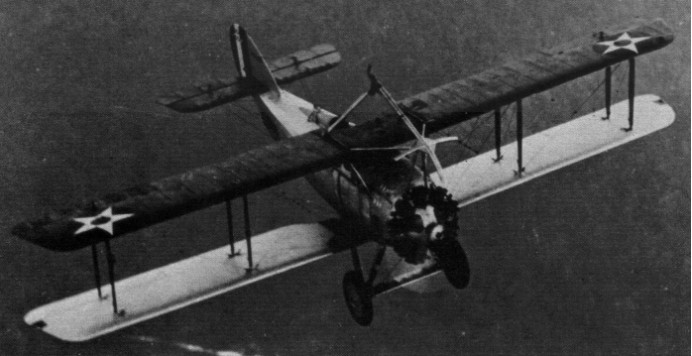
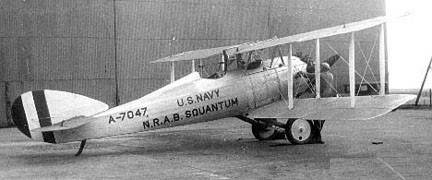
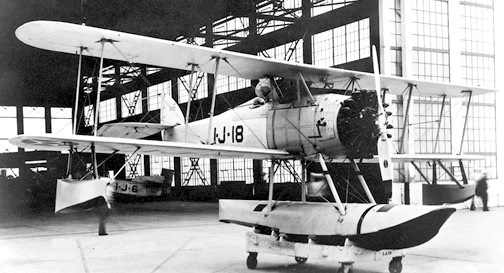
In 1922 the USN received eighteen UF-1 two-place scout-observation aircraft, A6482-6499, all re-designated to UO-1. One hundred and forty Vought UO-1 Aztec two seat biplane, were built from 1922, powered by 200hp Lawrance J-1 engines, as landplanes and seaplanes: A6482-6499 (converted from UF-1), A6546-6551, A6603-6615, A6706-6729, A6858-6877, A6984-7023, A7031-7050, of which one was converted by NAF to racer UO-2, and 13 to UO-5.
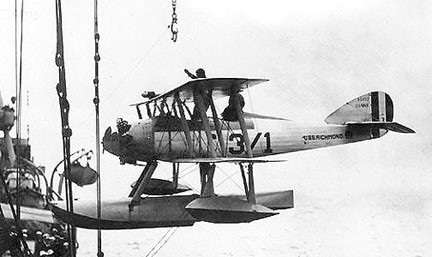
Vought UO-1 A-6493 hoisting aboard USS Richmond
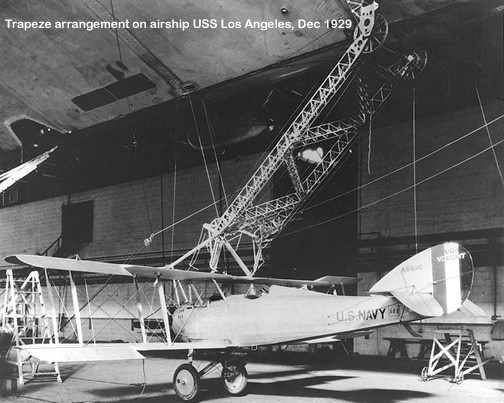
The UO-1 model was used in trials as hook-on scout/fighters with airships.
Vought UO-1 ‘Skyhook’ A-6615
The two 1928 UO-1C (A7007 and one other) were a wheeled trainer version for USN Reserve. Possibly other conversions as the designation was also used for planes modified for catapult launching, regardless of floats or wheels.
Vought UO-1 A-7047
Vought UO-1 Cockpit
In 1922 NAF modified, wheeled UO-1 A6546 for 1922 Curtiss Marine Trophy competition. It was damaged in ground handling and did not race.
The UO-3 was re-designated as FU-1.
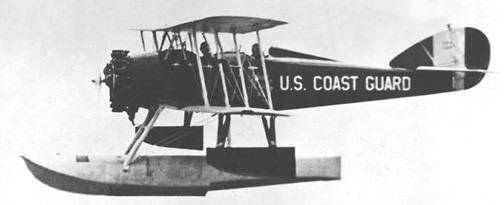
Two UO-4 were built in 1935 for the USCG with a single float; 404=V104, 405=V105.
Vought UO-4
The UO-5 were modification of UO-1 with 220hp Wright R-790 engines. Thirteen were built; A6729, A6860, A6866, A6988, A6997, A6999, A7005, A7010-7012, A7016, A7035, and A7038.
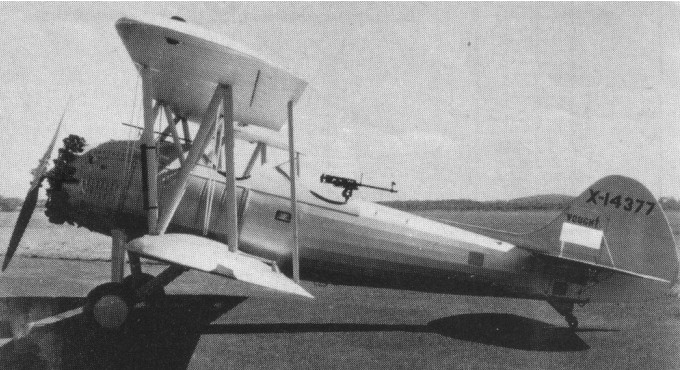
One-hundred and thirty-two of the 1927 O2U-1 were built (A7221-7222, A7567-7586, A7796-7831, and A7900-7940).
The 1927 O2U-2 was priced at $12,890 and thirty-seven were built (A8091-8127) of which six went to the USMC.
Vought O2U-2
Eighty of the 1929 O2U-3 were built (A8193-8272), including one to the Army as XO-28.
Vought O2U-3
Forty-two of the 1930 O2U-4 were built (A8315-8356) priced at $17,203-18,065.
Vought O2U-4 A-8338
Corsarios Azcarate were Mexican licence built Vought O2U¬-2M.
One USN O2U was used for evaluation by the Army in 1929, 29-323, as the O-28 Corsair.
Vought XO-28 29-232
The O24-2 was a civil version of the O2U-1 Corsair. In 1928 one was civil licensed for F B Rentschler, pres of Pratt & Whitney Corp, NX7014. Some other ex-military noted were N61E, N111N, N367H, and N833H.
In January 1927 the Chance Vought company produced a single seat fighter version of its mass produced VO 1 shipboard observation aircraft. A two bay biplane, the VO 1 was not entirely suitable as the basis for a competitive fighter, and with only the same engine as before, the 200 hp Wright R 1790 Whirlwind, performance was inadequate. Nevertheless, 20 FU 1 fighters were converted from UO-3 for the US Navy, most of them being central float seaplanes (at least two were fitted with wheels for airfield use).
Despite being pleasant to fly, the FU was really only suitable for training. In their first year, ending in the winter 1928 29, the FU 1s equipped fighter squadron VF 2B aboard the carrier Langley. Thereafter the 18 that survived were converted into FU 2 trainers, still with a fixed Marlin machine gun. They remained in use as trainers and general-purpose aircraft into the 1930s.
Equipped for catapult launch, they were the last fighter so equipped.
FU Engine: 220hp Wright J-5 (supercharged R-1790) Span: 10.46 m (34 ft 4 in) Length: 7.44 m (24 ft 5 in) Gross weight: 1093 kg (2400 lb) Useful load: 694 lb Maximum speed: 236 km/h (147 mph) Stall: 53 mph Range: 430 mi Seats: 1-2
To meet the need for long range high altitude heavy bomber aircraft, capable of carrying nuclear weapons, the Avro Vulcan, along with the Handley Page Victor and Vickers Valiant, was developed in accordance with an Air Ministry specification that originated in 1947.
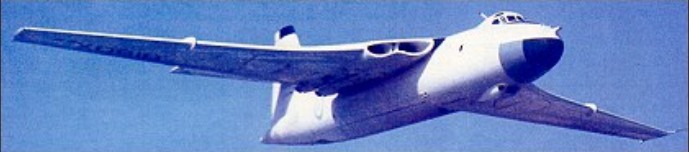
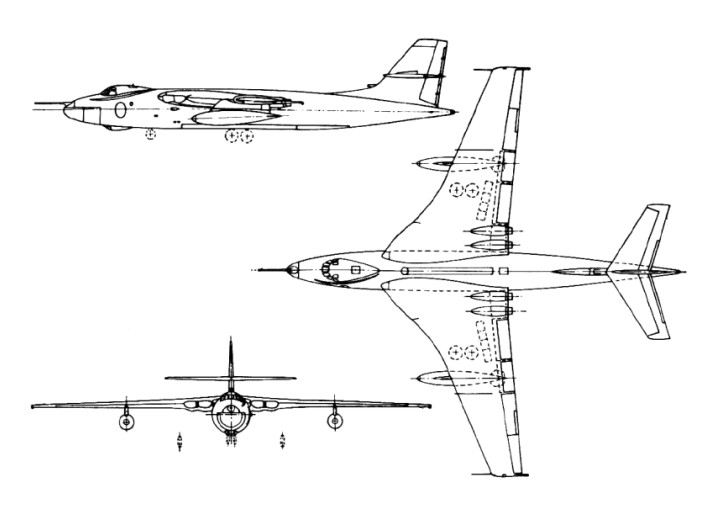
The Vickers Valiant was designed to Air Ministry specification B.9/48. It was a cantilever shoulder-wing monoplane of all-metal stressed-skin construction. The wing had compound sweepback on the leading edge, somewhat similar to that of the Handley Page Victor, air-brakes, double-slotted flaps and powered ailerons. The fuselage was a circular-section semi-monocoque structure, incorporating a pressurised cell to contain the crew of five, and a large bomb bay which later proved capable of accommodating a Blue Steel stand-off weapon. The tail unit was conventional, but the tailplane was mounted almost half-way up the fin to keep it clear of the efflux from the four turbojet engines, buried in the inner wing adjacent to the fuselage. Landing gear was of tricycle type electrically retracting tan¬dem main gears folding outwards. The Valiant was largely conventional in construction, with a giant radar in its underside, an inflight refuelling probe (added after delivery) above and a ventral blister for a visual bombing station. The main weapon bay could house all the UK’s nuclear bombs (or the Blue BoarTV guided bombs) or up to 21 HE bombs of 454 kg (1,000 lb) each. One unusual feature was the extensive use of electrical power for the actuation of practically all movable units, even powered controls. The only exception was a minor hydraulic system for brakes and powered steering, but even this had its pumps driven by electric motors.
Two prototypes were ordered initially, one to be powered by four Rolls-Royce RA.3 Avon 204 turbojets and the other by four Armstrong Siddeley Sapphires. The first prototype made its maiden flight on 18 May 1951, but was lost in an accident on 12 January 1952. The second prototype flew first on 11 April 1952, but was powered by RA.7 turbojets instead of the Sapphires as planned originally.
Vickers Valiant 2nd prototype
In spite of the fact that two types of so-called V bomber were already on order it was put into production as well, allegedly as an insurance against ‘failure’ of the others.
Named Valiant, B.1 began to enter service in January 1955, the first of the V-bombers to serve with the RAF. They were followed by B(PR).1 long-range strategic reconnaissance; B(PR)K.1 multi-purpose bomber, photo-reconnaissance, tanker; and BK.1 bomber/tanker aircraft. Production totalled 111 examples, including one B.2 pathfinder prototype. Used extensively in service, Valiants dropped the first British hydrogen and atomic bombs and during operations in the Suez campaign operated with high-explosive bombs.
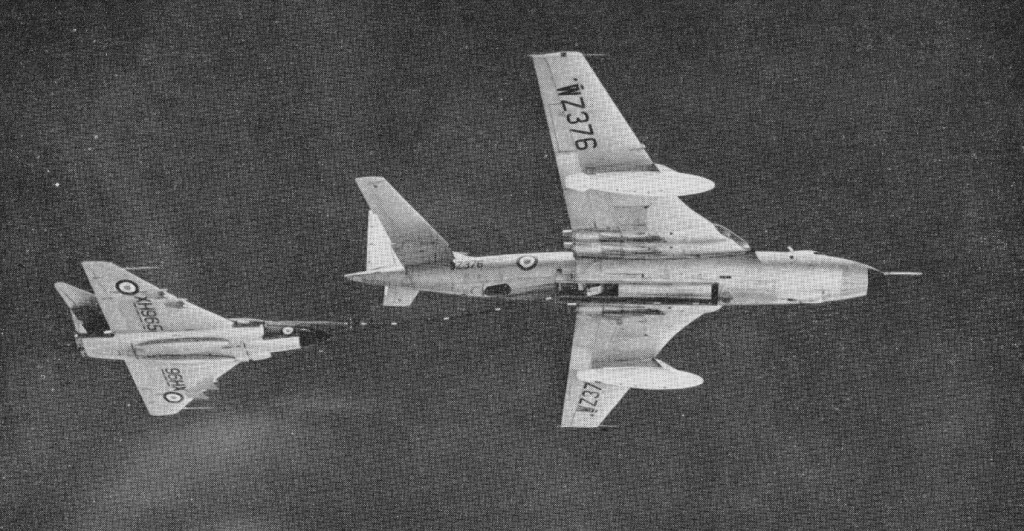
Javelin FAW.8 refuelling from a Vickers Valiant
Vickers built 108 including prototypes, and from January 1955 these served with 10 RAF squadrons. At first painted all in anti flash white, with very pale roundels and serials, they set a high standard in navigation and bombing, though most crews wished to forget their one taste of actual warfare when in late 1956 four squadrons bombed Egyptian targets during the ill starred Suez campaign. Valiants carried out all of the UK’s live air tests of nuclear weapons. There were reconnaissance, tanker and multi role versions, and from 1963 Valiants were given regular grey and green camouflage and assigned to low level missions using conventional bombs in support of SACEUR (Supreme Allied Commander, Europe) as a NATO force, though still based in the UK. By this time they were the RAF’s only inflight refuelling tanker force.
In the Autumn of 1957 these four Valiants, with two Vulcans, flew to the US to compete with USAF teams in anannual bombinng compteition. One Valiant came 11th of the 100 aircraft competing.
Intended for fast high-altitude strategic bombing, the Valiant – in company with other V-bombers – was switched to low-level operations. There seems little doubt that the stresses imposed by such a role accelerated the wingspan metal fatigue first reported in late 1964, and which led to the scrapping of all Valiants in January 1965.
The RAF did not buy the Valiant Mk 2, first flown in 1953, which was specially designed for low level operations. With just over 100 built at Brooklands aerodrome, production ended in the autumn of 1957.
Vickers Valiant B.Mk.1 Engines: 4 x Rolls-Royce RA.28 Avon 204/205, 10,050 lb / 44.7kN Wingspan: 34.85 m / 114 ft 4 in Length: 32.99 m / 108 ft 3 in Height: 9.8 m / 32 ft 2 in Wing area: 219.43 sq.m / 2361.92 sq ft Max take-off weight: 63503 kg / 140001 lb Empty weight: 34419 kg / 75881 lb Max fuel w/underwing tanks: 9972 gal Max speed: 492 kts / 912 km/h / 567 mph at 30,000 ft Max cruise: 553 mph at 30,000 ft Service Ceiling: 16460 m / 54000 ft Range w/max.fuel: 7242 km / 4500 miles Bombload: 9525kg / 21,000 lb or 2 x 1615 flight refuelling tanks Crew: 5
Valiant B(K)Mk.1 Type: five seat bomber and inflight refuelling tanker Engines: 4 x 4763 kg (10,500 lb) thrust Rolls Royce Avon 201 turbojets Max speed 912 km/h (567 mph) at 9145 m (30,000 ft) Service ceiling: 16460 m (54,000 ft) Range with reduced bombload 7242 km (4,500 miles) Wing span: 34.85 m (114 ft 4 in) Length (normal long ECM tailcone): 33.00m(108ft 3in) Height: 9.81 m (32 ft 2 in) Wing area: 219.44 sq.m (2,362.0 sq ft) Bombload: 9526 kg (21,000 lb)










 All Aero