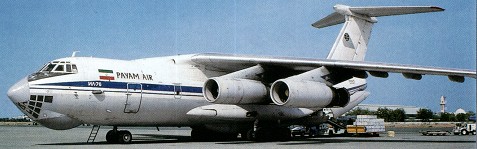
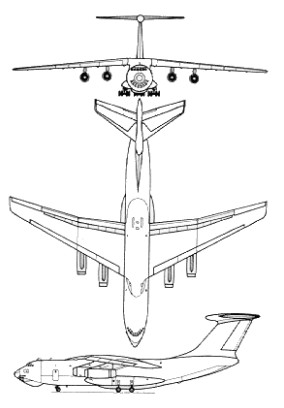
The llyushin Il‑76 was designed as a heavy transport for operations onto short unprepared strips in the Russian “outback” and entered Aeroflot service as the production IL‑76T in 1978.
Originally designed to carry 40 tonnes of freight in excess of 3500 nm using relatively short, unprepared runways, the Il-76 first flew on 25 March 1971, NATO code name ‘Candid’. Test flying continued until 1975 when the type was put into production at the Tashkent factory. During the same year the II-76 established 25 international records for speed and altitude with payload.
The design was prepared to meet a basic need in the Soviet Union for a really capable freighter which, while carrying large indivisible loads, with a high cruising speed and intercontinental range, could operate from relatively poor airstrips. The result is a very useful aircraft which, though initially being used by Aeroflot in 1975 and 1976-80 plans for opening up Siberia the far north and far east of the Soviet Union is a strategic and tactical transport for military use.
The production II-76T ‘Candid A’, with greater cargo capacity and higher gross weights, went into service with Aeroflot on domestic routes early in 1978, and the Moscow-Japan international route in April the same year. It has fitted reversers, a high lift wing for good STOL performance and a high-flotation landing gear with 20 wheels. The big fuselage is fully pressurised and incorporates a powerful auxiliary power unit and freight handling systems.
The four-turbofan Il-76M/MD Candid long-range transport continues to replace Soviet Military Transport Aviation (VTA) An-12 Cubs at a rate of about 30 a year, and now accounts for around half the VTA fleet, with some 310 in service according to US estimates. Deliveries to India, which has ordered 20 to replace An-12s, began in February 1985. In Indian service the Il-76 is named Gajaraj. About 100 have been exported to civil users including Libyan Arab Airlines, Syrianair and, more recently, Cubana, while military customers include the Czech, Polish, Algerian, and Iraqi. The Il-76TD Candid A entered service in late 1982.
The exact time of the start of work on the Il-76PP is not known, but general information points to the mid-1980s. The Il-76PP was only produced in a single example in Russia and remained in the experimental development phase without moving to serial production.
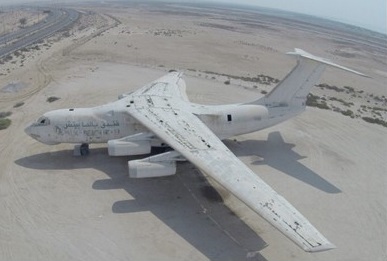
Il-76PP jamming aircraft.
It is known that the Il-76PP was converted from a serial Il-76MD transport aircraft, with work carried out at the Beriev Design Bureau in Taganrog. This factory specializes in radar surveillance aircraft, such as the A-50. The Il-76PP was reportedly intended primarily to jam Western air defense systems, including Patriot systems.
The most notable feature of the Il-76PP was the Landysh electronic warfare (EW) system, also used on Su-24MP aircraft. Defence Express suggests that the Landysh could have been the reason why this project was not realized.
To solve this problem, the aircraft designers installed two additional generators based on the AI-24VT aircraft engine. Each of them was to power four alternators on board the IL-76PP. However, this was not enough to reliably power the electronic warfare equipment.
Another problem was that during the work and tests, the designers of the IL-76PP failed to achieve electromagnetic compatibility between the aircraft’s onboard equipment and the Landysh complex, whose containers were installed on the wingtips.
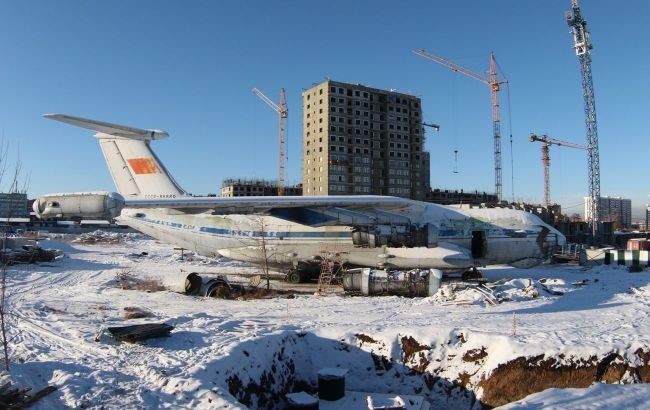
In other words, the IL-76PP turned out to be a monstrous and non-functional development that was unable to fulfill its main task. Because of this, in 1993 the aircraft was put into storage at the aforementioned training airfield in Irkutsk and remained there until 2024, when space was needed for new construction.
The military transport version, intended for the deployment of paratroops and troops, together with strategic heavy freighting, differs primarily by having military, rather than civil, avionics and equipment. The Soviet air force, with about 450 ‘Candids’ in service, also use the aircraft for firefighting (the II-76DMP), able to carry over 40 tons of water or retardant; as an engine testbed (the II-76LL); airborne early warning (as the A-50 ‘Mainstay’ in the USSR, and the ‘Adnan’ in Iraq) and for Antarctic support flights and cosmonaut training providing simulated weightlessness. Il-76TD (the civil variant is designated ‘T’, whilst the extended range model is assigned the suffix ‘M was one of two aircraft transferred to Aeroflot’s CUMVS, or International Air Services, after serving in Polar regions.
By early 1991 total production had reached about 680 aircraft. Over 700 had been built by early 1992 at the Chakalov Aircraft Production Plant near Tashkent. Over 100 have been exported and about 150 were in Aeroflot service by 1992.
From the moment it was put into service Il-76 has been the main heavy military and transport aircraft of the Russian air forces. More than 950 civilian, military and special modifications variants have been built. In a single-deck modification (with central seats) it can transport 145 military men and 126 paratroopers. In a double-deck version – up to 225 men.
According to the terms of the State contract 39 military and transport aircrafts Il-76MD-90A were to be built for the needs of the Ministry of Defense of the Russian Federation. Maximum load has been increased to 52 tons (compared to 48 tons of Il-76MD). Maximum takeoff weight has risen to 210 tons (190).
Il-78 Midas
A three-point hose-and-drogue tanker variant of the Il-76, the Il-78 Nato code name Midas, has been under development for some years, and is thought to have been deployed operationally early in 1987. The first Mainstay airborne early warning and control system (Awacs) derivative of the Candid is now operational, according to US claims. Four Mainstays were built for test and evaluation, and production is expected to reach five a year to replace the Tu-126 Moss.
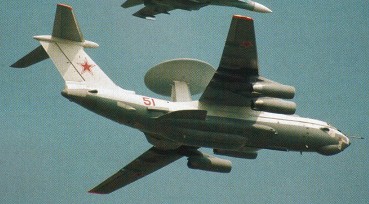
A-50
Succeeding the Tu-126 Moss with Voska PVO, Mainstay, derived from Il-76 Candid and referred to as A-50 ‘Mainstay’, is an AWAC aircraft possessing true overland lookdown capability. Powered by four 26,455 1 (12 000 kgp) Soloviev D¬3OKPs, it features a new IFF system and, apparently, a comprehensive ECM complement. About a half-dozen have attained Voyska PVO service mid-1987. A triple vertical tail arrangement of the prototype was not standardised for series production versions. In 1978 the first flight took place of the Beriev A-50 Mainstay airborne early warning and control aircraft, in Russian operational service since 1984. The A-50 is the ‘Adnan’ in Iraqi service.
A laser-gun test-bed aircraft based on the llyushin II-76 was produced by Beriev and has been flown since 1980s as the A-60.
Il-76 Engines: 4 x 26,455 lb (12,000 kg / 117.7kN) thrust Soloviev D-30KP two-shaft turbofans. Wingspan 165 ft 8 in (50.5 m) Length 152 ft 10½ in (46.59 m) Height 48 ft 5 in (14.76 m). Empty weight, about 159,000 lb (72.000 kg) Maximum loaded weight 346,125 lb (157,000 kg). Maximum speed, about 560 mph (900 kph) Maximum cruising speed 528 mph (850 km/h) Normal long-range cruising height 42,650 ft (13,000 m) Range with maximum payload: 88,185 lb (40.000 kg) 3,100 miles (5000 km). Range w/max.fuel: 5000 km / 3107 miles Armament: normally none / 2 x 23mm machine-guns Crew: 4
Il-76M Candid B Engine: 4 x Soloviev D-30KP turbofan. Installed thrust: 470.8 kN. Span: 50.5 m. Length: 46.6 m. Wing area: 300 sq.m. Empty wt: 61,000 kg. MTOW: 170,000 kg. Payload: 40,000 kg. Cruise speed: 100 kph. Ceiling: 15,500 m. T/O run: 850 m. Ldg run: 460 m. Fuel internal: 82,000 lt. Range: 5000 km. Capacity: 90 pax. Air refuel: No.
Il-76MD Maximum takeoff weight: 190 ton Maximum load: 48 ton
Il-76MD-90A Maximum takeoff weight: 210 ton Fuel capacity: 109500 litres The total of tanks of the aircraft is. Service life: 30 years / 10000 landings / 30 000 Flight hours
Il-76TD Engines: 4 x 26,455 lb (12,000 kg) thrust Soloviev D-30KP two-shaft turbofans. MTOW: 190,000 kg. Wing area: 300 sq.m. Sweepback: 25 deg Max payload: 50,000 kg (110,230 lb). Range: (50t payload) 4500 km Range: (20t payload), 8000 km. Cruise alt: 9000-12000m. Cruise speed: 750-800 kph. Hold cap: 3.4×3.4×24.5m.
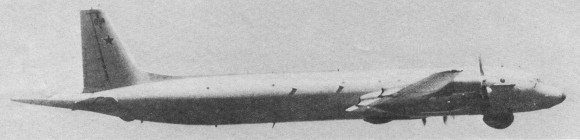
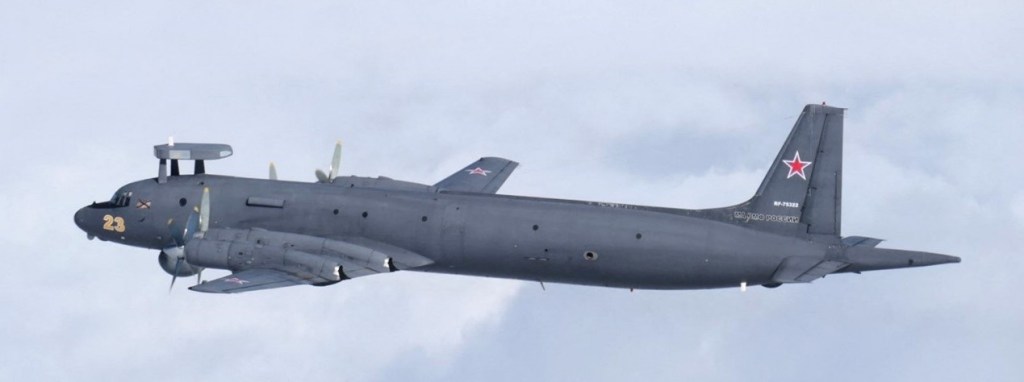
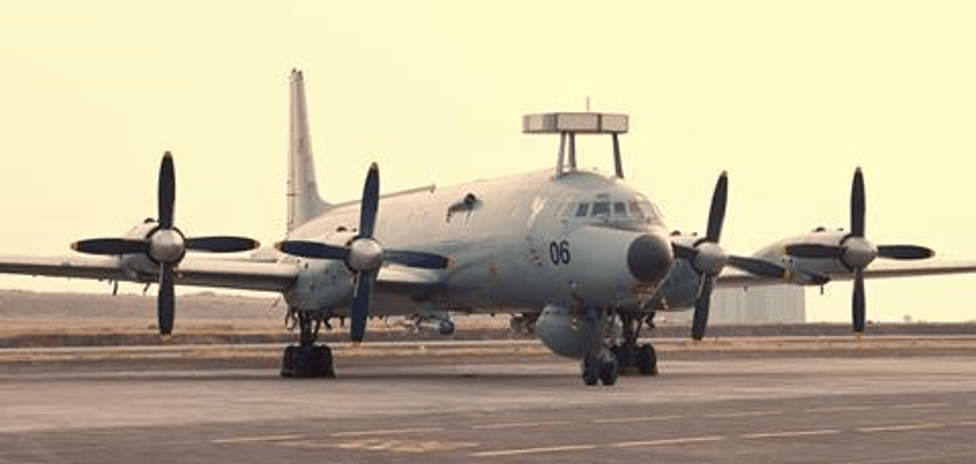
First disclosured in 1974, the Soviet Naval Air Arm (AV-MF) used the Il-18 trans¬port as the basis for the considerably changed Il-38, known to NATO by the code-name of “May’. Com¬pared with the transport it has a wing moved forward and a considerably longer rear fuselage, showing the gross shift in centre of gravity resulting from the changed role. The rear fuselage of the Il-38 contains only sensors, sonobuoy launchers of several kinds and a galley, with the main tactical compartment just behind and above the wing, with a probable tactical crew of eight. Most of the heavy stores and consoles are ahead of the wing, together with the search radar stinger, not a heavy it in the tail.
Il-38
Il-38 has been a standard SovNavAir open-ocean maritime surveillance aircraft since entering service in 1970, with some 60 in inventory mid-1987. NATO code name ‘May’. One of two current service military derivatives of commercial Il-18 (other being Il-20 Coot-A ELINT aircraft ), Il-38 has bays fore and aft of wing for sonobuoys and various attack weapons. Power is provided by four 4,250 ehp AI-20M turboprops. About 60 were believed to be in use by the Soviet naval air force. Three ex-SovNavAir operated by Indian Navy.
Some external modifications included an additional radome under the fuselage were reported by NATO as the May-B.
II-38 Type: maritime patrol and anti-submarine. Engines: 4 x Ivchenko Al-20 single-shaft turbo-props, 5,000 shp approx. Wing span 122 ft 8½ in (37.4 m) Length 129 ft 10 in (39.6 m) Height about 35 ft (10.7 m) Empty weight approx 90,000 lb (40,820 kg) Maximum loaded weight, approx 180,000 lb (81.650 kg) Maximum speed, about 450 mph (724 km/h) Maximum cruising speed, about 400 mph (644 km/h) Range with typical mission load, about 4,500 miles (7240 km) Endurance, about 15 hr. Armament: internal weapon bay.
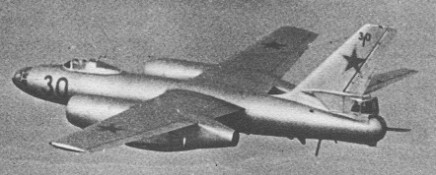
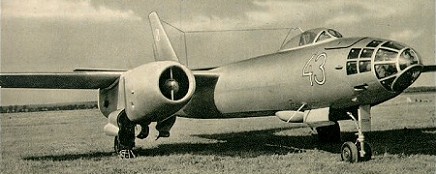
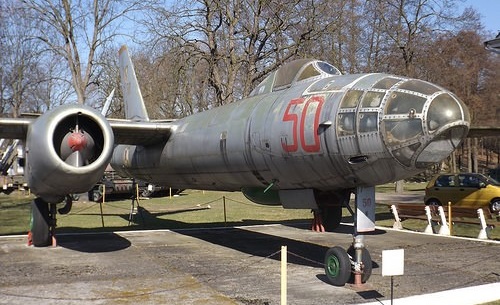
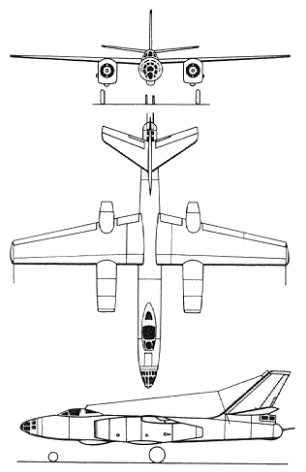
To a small extent, the Il-28 could trace its ancestry back to the first jet bomber, the German Arado Ar 234. Ilyushins first jet bomber, the Il-22, had closely resembled an enlarged Ar 234C, and several features of the German aircraft (the slim fuselage, shoulder-mounted unswept wing with underslung engines, and the large slotted flaps) were carried over into the Il-28. In December 1947, Ilyushin started development of a small, more compact bomber, trading range for speed and manoeuvrability. The pilot was seated to the bomb-aimer’s rear, above the nosewheel bay. A fighter-type canopy (the first on a Soviet bomber) provided adequate height for the pilot’s cockpit. The fuel was housed in five flexible tanks in the fuselage, forward and aft of the wing. The centre fuselage housed the bomb bay, large enough to house 12 551-lb (250-kg) FAB-250 bombs; the lower front fuselage accommodated a mapping radar and two NR-23 23-mm cannon.
The pressurized Il-K6 turret, mounting two 23-mm NR-23 cannon, was housed in the tail of the fuselage. The rear gunner was the only member of the crew without an ejection seat. The gunner doubled as the radio operator, the VHF and HF communications equipment being installed ahead of the turret.
The engines were ahead of the main wing structure, the jetpipes passed beneath the wing, and the single-wheel main landing gear units were located beneath the jetpipes.
The wings were built in upper and lower halves, which were joined together after hydraulics and other plumbing had been installed, and were built in sections to minimize the need for large production tools. The high wing eliminated the need for any complex carry-through structures around the fuselage and nacelles. Also, most of the fuselage and nacelle skins were single-curvature surfaces (much of the fuselage was an almost perfect cylinder.
A medium bomber, first flown on 8 August 1948, the Il-28 prototype flew on two RD-10 (Jumo 004 development) 2270kg thrust Klimov RD-45F turbojets, but the British Nene were substituted and, in VK-1 form, remained standard in the 10,000 or more subsequent examples.
In October 1948, the Il-28 was evaluated against the larger but similarly powered Tupolev Tu-78 in the light bomber role; the Ilyushin aircraft proved faster and more agile, and was selected as the replacement for the obsolescent Tu-2.
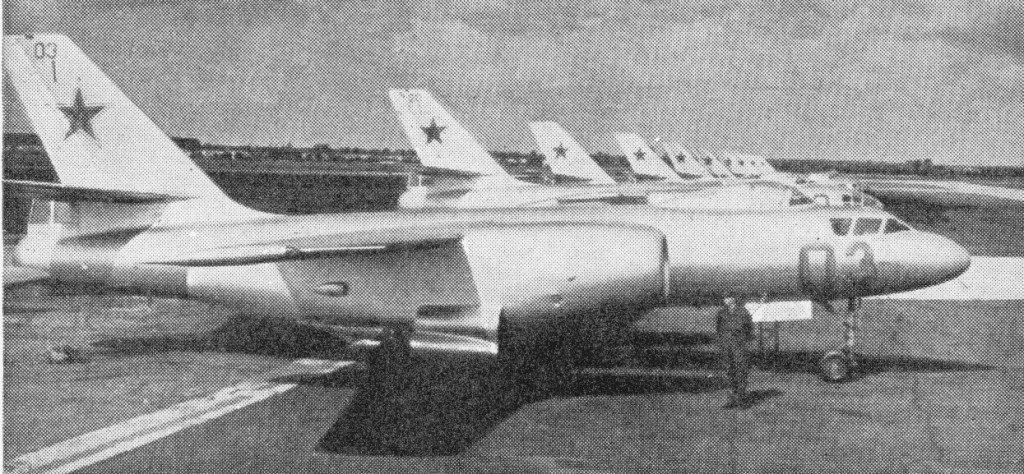
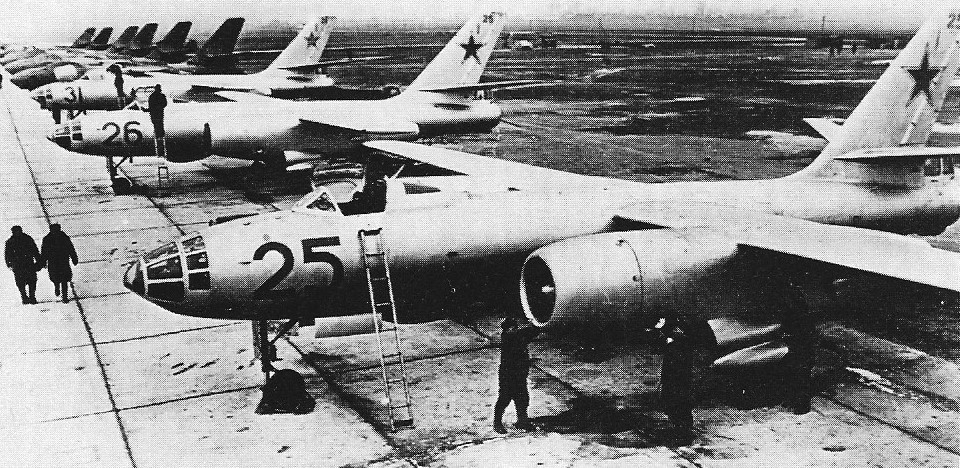
A formation of 25 pre-production Il-28s took part in the 1950 May Day Moscow fly-past, by which time large-scale production had been initiated at several factories. Series aircraft, which entered service with a large number of V-VS bomber regiments, incorporated aerodynamic refinements, Klimov VK-1 provision for detachable wingtip fuel tanks.
Preparations for large¬scale production were undertaken with great urgency, and the type entered service in September 1950. The only major change during development was the switch from the RD-45, used only in the prototype and pre-production aircraft, to the similarly sized but usefully more powerful VK-1.
The basic Il-28 remained virtually unchanged throughout its production life. The only visible alteration was the introduction of a small tail-warning radar, although the guns still had to be aimed manually. At least 3,000 were delivered from Soviet plants in 1950-60. (In the late 1950s, a few aircraft were produced by Czechoslovakia as B-228s.)
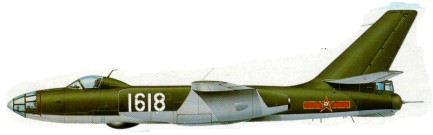
Known to NATO as Beagle, it equipped all the Warsaw Pact light bomber units in 1955-70 and was also adopted by the AV-MF as the II-28T torpedo bomber. Armed with two internally carried torpedoes, the Il-28Ts were replaced by Su-17s in the mid-1970s. The Il-28U dual trainer, NATO code name ‘Mascot’, has distinctive stepped cockpits, and the Il-28R reconnaissance versions (many probably converted bombers) carry a wide range of electronics and sensors’ and wing tip-tanks. No longer a front-line type in the Soviet Union, the Il-28 remained in service with some 15 air forces outside Europe, the most important being that of China where some hundreds were built under a licence granted before 1960.
Another version was unarmed and demilitarized, used by Aeroflot for high-speed package deliveries — for example, the matrices used to print Pravda throughout the USSR — and to gain jet experience in the civil environment before the introduction of the Tu-104. Later, some Il-28s were converted with radio control systems and used as target drones.
With its internal weapons bay, it could carry large conventional stores such as a 6,614-lb (3000-kg) bomb, or a tactical nuclear weapon.
The Il-28 rapidly became obsolete as a tactical combat aircraft, and it was replaced by the transonic Yak-28L from 1963—4 onwards.
50 Ilyushin IL-28 B5 56538
The Il-28 was a standard type with Warsaw Pact forces, and was widely exported. The type saw some action in the Middle East and the Nigerian civil war in the late 1960s.
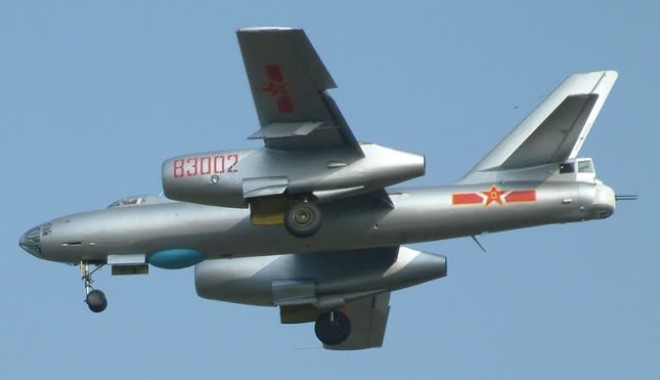
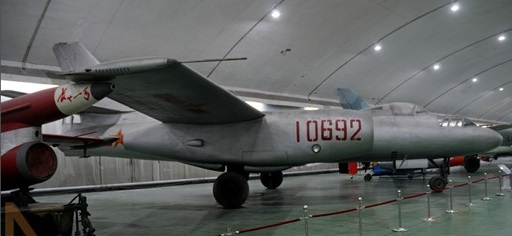
The biggest operator of the Il-28 outside the Soviet Union was China, which is believed to have received a substantial number of the type in the late 1950s. Shortly after the Sino-Soviet rift of 1959, engineers at China’s Harbin aircraft plant analysed and copied the Il-28 airframe and systems (the VK-1 engine was already in production for the MiG-17) and began to produce the aircraft at a low rate under the designation H-5 (sometimes rendered as B-B in the West) from 1966 to the 1980s. Like other Chinese-built Soviet types, the H-5 is a clone of the original: a copy so exact that it is almost indistinguishable from the Il-28. In 1980, it was reported that the H-5 was still in production at Harbin, and that more than 400 aircraft were in service, some carrying nuclear weapons.
H-5
In the bomber field, light duties were assigned to the Harbin twin-jet Hongjhaji 5 – alias Ilyushin Il-28 ‘Beagle’ – production having finally tailed off only in the early 1980s. Despite having flown as a prototype almost 40 years ago, on 8 August 1948, and having long since been withdrawn from first-line service by WarPac, the Il-28 tactical light bomber, in its H-5 version as built by Harbin provided the tactical bombing backbone of People’s Republic of China Air Force in 1987. Between 600 and 700 were built in China 1966-1982, some 500 serving with PRCAF and about 130 with PRC NavAir in 1987 Powered by two 5,952 lb St (2 700 kgp) turbojets based on Klimov VK- 1.
Harbin H-5
The Il-28U was known as HJ-5 in Chinese operational service.
HJ-5
In Europe the Romanian air force operated this type until December 2000.
Il-28 three-seat bomber and ground attack. Engines: 2 x 5952 lb (2700 kg) thrust Klimov VK-1 single-shaft centrifugal turbojets. Wing span excluding tip tanks: 21,45 m (70 ft 4.5 in). Length (typical): 17.65 m (57 ft 10.75 in). Height: 6,70 m (22 ft 0 in). Wing area: 60.80 sq.m (654.5 sq.ft). Max speed: 900 km/h (559 mph) at 4500 m (14.765 ft). Cruise speed: 800 km/h / 497 mph ROC: 2,953 ft (900 m)/min. Service ceiling: 12300 m (40,355 ft). Range at high altitude with maximum fuel 2180 km (1,355 miles). Range with bomb load: 684 miles (1100 km). Empty wt: 12890 kg (28,417 lb). MTOW in original bomber role: 21000 kg (46,296 lb). Armament: 4 x 23 mm NR-23 cannon, internal 3000 kg (6,614 lb) or two AV 45 36 torpedoes. Crew: 3
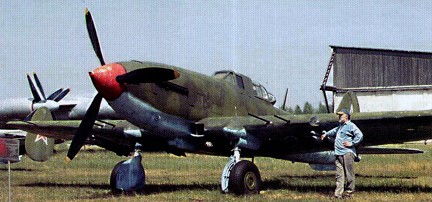
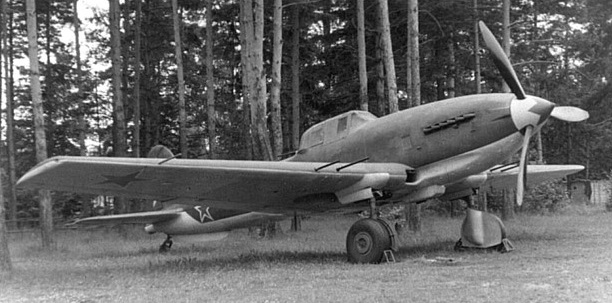
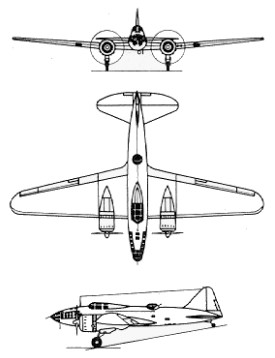
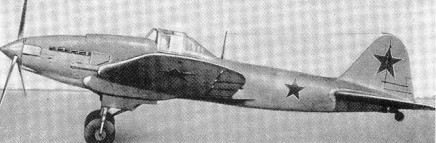
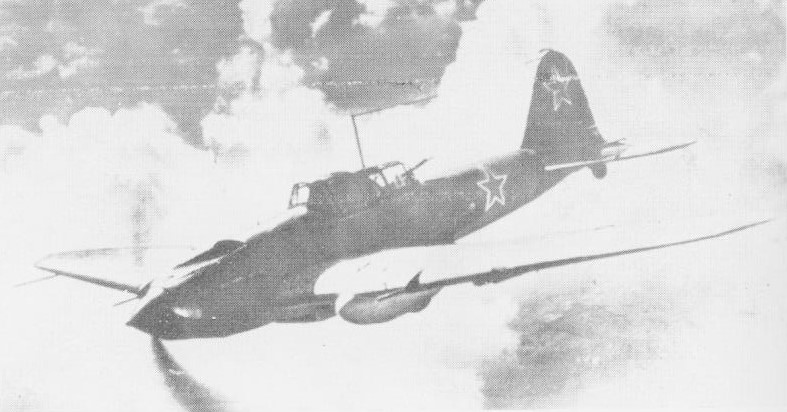
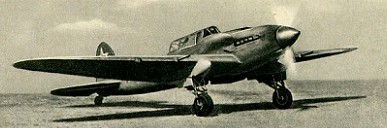
To provide a replacement for the II-2 Shturmovik (ground-attack aircraft), the llyushin design bureau developed two different prototypes in 1943. The Il-8 and Il-10. The Il-10M attack aircraft was created after a proposal by the Soviet Air Force Marshal Pavel Zhigarev.
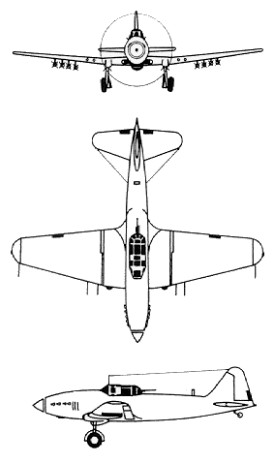
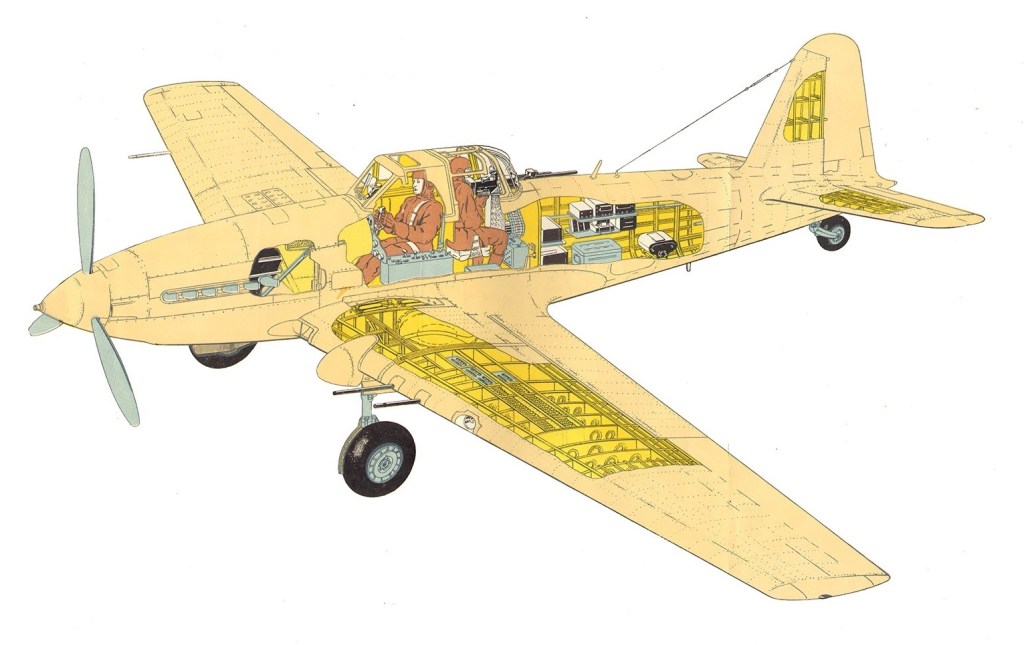
The II-8 was rejected by the Council of Ministers in favour of the contemporary llyushin Il-10 M, which first flew on 2 July 1951, piloted by Ilyushin’s chief test pilot V. Kokkinaki. The Il-10 was a completely new design of all-metal construction and improved aerodynamic form. It provided better crew accommodation, the gunner seated with his back to the pilot in an enlarged cockpit, and both crew members were located within the protective armoured shell. Revised main landing gear units retracted within the wing, eliminating the large landing gear fairings of the II-2 and requiring only small fairings over the pivoting mechanism.
Early favourable reports of the prototype test programme led to a batch of pre-series machines, quantity production being initiated in August 1944, with evaluation in operational regiments starting two months later. The type was used first in operations in February 1945 and by that spring output reached a peak. Many regiments re-equipped with the Il-10 before the German surrender, and a considerable number took part in the brief but large-scale operations against the Japanese in Manchuria and Korea during August 1945.
Production of the Il-10 continued post-war with Soviet factories building 4,966 machines, the last leaving the production lines in 1955. Additionally, ll-10s were also built at the Czech Avia factory, under the designations B-33 and CB-33, the CB-33 being the equivalent of the II-10U trainer variant. Czech production finished in 1954 when over 1,200 examples had been completed.
From 1951 onwards Soviet production had concentrated on the II-10M which featured an entirely new wing of revised planform and deeper aerofoil section, a slightly lengthened fuselage, modified landing gear with increased track, increased fuel capacity, and significantly improved armament. However a lot of equipment that the designers had planned to install on the new machine needed numerous improvements, and so production of the Il-10M started only in 1953. There were 146 aircraft built.
The Shturmovik was armed with four wing-mounted 23-mm NR-23 cannons, plus one 20-mm B-20-EN cannon installed in the VU-9M rear turret. The normal ammunition load was 600 shells for the NR-23’s and 150 shells for the rear gun.
Aside the cannon armament the aircraft could carry 400 kg of bombs and up to 600 kg in an overloaded configuration. The bombs were loaded into two bomb bays and on external BD-2 mounts fitted under the fuselage in front of the bomb bays. Additionally the Il-10M could be equipped with BD-3 bomb mounts on the wing hardpoints.
Alternatively, the new machine was able to mount four launch tubes on wing pylons that were capable of shooting unguided rockets.
The aircraft was quite heavily armored for its time. The plating varied from 4 to 16 mm near the rear armored wall. The armor protected all of the main parts of the aircraft’s power plant, control elements and crew cabin.
The Il-10M was powered by the AM-42 engine which was capable of producing 1750hp and fitted with a 3.6m diameter, three-bladed AV-5L-24 propeller.
The pilots who flew these machines noted a significant increase in controllability and stability in flight over the Il-10. Nevertheless the Il-10M didn’t get a chance to see combat. It was not ready for the conflict in Korea, while later conflicts were dominated by jet-powered aviation.
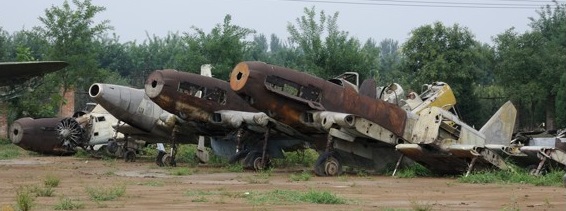
The Il-10 formed the sole equipment of Soviet assault units for a number of years and was also used widely by Warsaw Pact countries. Other Communist countries to employ the type included North Korea in the opening stages of the Korean War in 1950. Losses were heavy and the type was obsolete but, Il-10s remained in service with the Soviet V-VS until 1956 and with various satellite air arms for several years longer. For some time after that they were flown as gunnery trainers but they were decommissioned in April 1956 and all the crews were reassigned for further training on jet aircraft. most had been scrapped by the mid-1960s.
The Il-10 had been tested with a ZhRD-1 auxiliary rocket engine in the rear fuselage to provide short-term performance boost, but this modification was not adopted. The llyushin bureau strove to develop later shturmovik designs, including the II-20 single-seater and the Il-40 with twin turbojets, but official encouragement was minimal.
The Il-10M became the last mass-produced piston-powered attack aircraft designed by the Ilyushin design bureau.
Engine: 1 x AM-42, 1470kW / 1973 hp Max take-off weight: 6335 kg / 13966 lb Empty weight: 4680 kg / 10318 lb Wingspan: 13.4 m / 43 ft 12 in Length: 11.1 m / 36 ft 5 in Height: 4.3 m / 14 ft 1 in Wing area: 30.0 sq.m / 322.92 sq ft Max. speed: 302 kt / 560 km/h / 348 mph Cruise speed: 370 km/h / 230 mph Service ceiling: 7000 m / 22950 ft Range w/max.fuel: 830 km / 516 miles Range w/max.payload: 420 km / 261 miles Crew: 2 Armament: 5 machine-guns, 6 missiles, 600kg of bombs
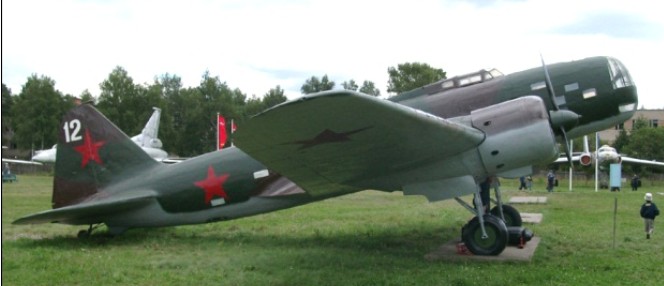
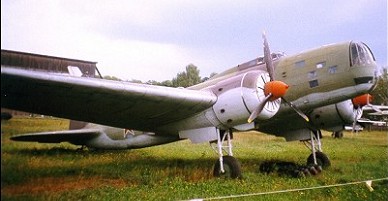
The TsKB-26 long-range bomber prototype first flew in 1935, a twin-engined metal low-wing monoplane powered by 597kW Gnome-Rhone K14 radials. Demonstrated by test pilot Vladimir Kokkinaki on May Day 1936, the prototype went on to establish two world altitude records during July 1936.
A second prototype, the TsKB-30 had an enclosed instead of open position for the pilot, Soviet M-85 engines and a metal rear fuselage. The TsKB-30 also broke records and then attracted world interest by flying from Moscow to Canada, where pilot Kokkinaki had to make a wheels up landing on 28 April 1939 after covering a distance of 8000km.
DB-3
The TsKB-30 entered production in 1937 as the DB-3B (DB being a Soviet contraction denoting long range bomber). Early examples were powered by 571kW M-85 engines, but these were replaced by 716kW M-86s in 1938. It served widely with the ADD (Long-Range Aviation) and the V-MF (Naval Aviation), remaining operational well into the war with Germany, DB-3s being credited with some of the earliest attacks on Berlin. The aircraft suffered from a poor defensive armament of single nose, dorsal and ventral 7.62mm guns, and lost heavily during the Winter War against Finland in 1939-40.
The DB-3 served also with the Finnish air arm between 1940 and 1945, five captured aircraft being augmented by six purchased from German war booty supplies. DB-3 production terminated in 1940 with the 1,528th machine.
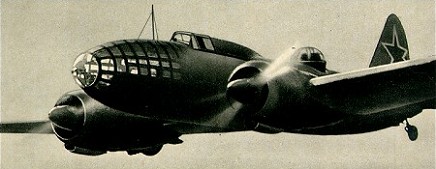
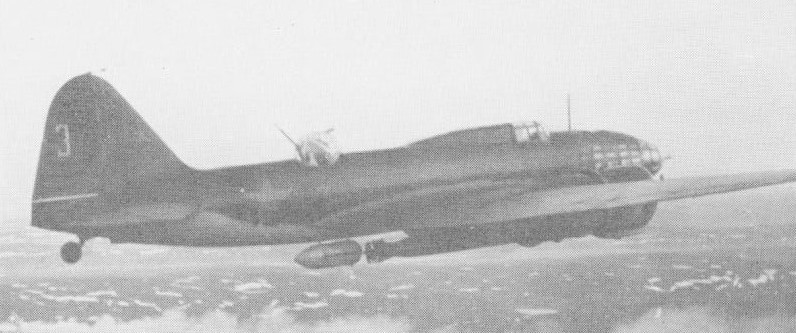
In 1939 a modified version with lengthened nose and more armour (the DB-3F) appeared, and in 1940, in conformity with changed Russian practice, the designation became IL-4 (denoting the designer, Sergei Ilyushin).
Il-4
Soon after the German attack on the USSR opened in 1941 it was decided to withdraw IL-4 production to newly opening plants in Siberia, at the same time replacing a large proportion of the metal structure by less strategically critical wood. IL-4s also entered service with Soviet Naval Aviation, and it was a naval manned force of these bombers that first raided Berlin from the east on 8 August 1941. Thereafter the IL-4 paid frequent visits to the German capital and other targets in Eastern Europe. In 1944 production ended, although the IL-4 served until the end of the war and afterwards. Apart from increasing the calibre of its guns and giving it a torpedo carrying ability, the IL-4 remained virtually unchanged between 1941 and 1944.
Well over 5,000 IL-4s were produced between 1937 and 1944, the vast majority in the last three years.
DB-3M Engine: 2 x M-87B, 708kW Max take-off weight: 7660 kg / 16887 lb Loaded weight: 5270 kg / 11618 lb Wingspan: 21.44 m / 70 ft 4 in Length: 14.22 m / 46 ft 8 in Height: 4.19 m / 13 ft 9 in Wing area: 65.6 sq.m / 706.11 sq ft Max. speed: 445 km/h / 277 mph Ceiling: 9700 m / 31800 ft Range: 3800 km / 2361 miles Armament: 3 x 7.62mm machine-guns, 2500kg bombs
Il-4 Engine: 2 x M88B, 810kW Max take-off weight: 10055 kg / 22168 lb Empty weight: 5400 kg / 11905 lb Wingspan: 21.4 m / 70 ft 3 in Length: 14.8 m / 48 ft 7 in Height: 4.1 m / 13 ft 5 in Wing area: 66.7 sq.m / 717.95 sq ft Max. Speed: 429 km/h / 267 mph Cruise speed: 340 km/h / 211 mph Ceiling: 9700 m / 31800 ft Range w/max.fuel: 3800 km / 2361 miles Range w/max.payload: 1200 km / 746 miles Crew: 3-4 Armament: 3-8 machine-guns, 2500kg bombs
DB-3F Engine: 2 x M-88, 1100 hp Wingspan: 70 ft 2 in Length: 47 ft 6 in Max speed: 265 mph at 20,000 ft Sevice ceiling: 30,700 ft Max range: 2500 mi Armament: 3 x 7.62 mm mg Bombload: 4400 lb or 1 x 18in torpedo Crew: 3-4
Il-4 / DB-3F Payload: 5,500 lb Cruise speed: 200 kt Ceiling: 31,800 ft Range: 2,400 miles Crew: 3
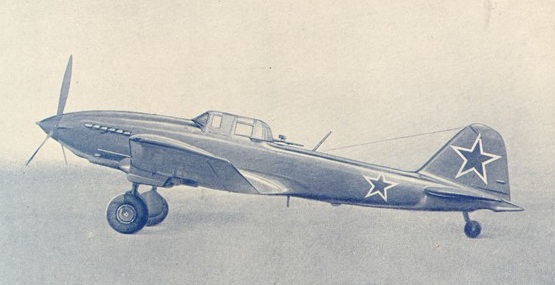
The Ilyushin Il-2 origin dates back to the mid-thirties, within the Soviet military criteria of having air support for the operations of the ground forces.
In 1935 a requirement was launched to obtain a ground attack aircraft that was protected, or more specifically a BSh (Bronirovanyi Shturmovik, armored attack aircraft). Finally Sergei Ilyushin’s team was the one that around 1938 developed the Il-2 that was going to be able to perform the functions required.
Two prototypes were developed a few months apart, the two-seater TsKB-55, also designated BSh-2 (from Bronirovanni Shturmovik, armoured attacker) by the air force that first flew on October 2, 1939, and the single-seater TsKB-57, which replaced the radio operator with an additional fuel tank. They were equipped with AM-35 and AM-38 engines respectively, with 1,350 and 1,600hp. of power, heavily armed with 20mm ShVAK cannons, machine guns, bombs and rockets and protected with more than 700 kg of armour.
On 12 October 1940 the TsKB-57 took to the air with the more powerful 967kW M-38 engine. This improved machine led to the IL-2 which was just getting into service when the Germans invaded in June 1941.
Serial production was prepared in factories in Moscow, Fili and Voronezh, but when only the first 250 examples had been delivered, the German invasion occurred on June 22, 1941.
The factories in Fili and Voronezh were moved to Kuybishyev, which became the center of production under pressing pressure from the Kremlin to make the model available in mass quantities.
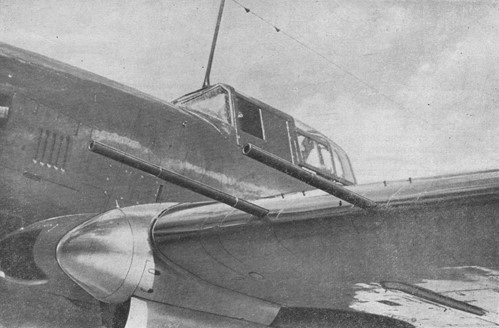
Armament of the original IL-2 was two 20mm ShVAK and two 7.62mm ShKAS guns firing ahead, plus eight 82mm rockets and four 100kg bombs. The need for rear protection resulted in a second crew member being added to man a rear gun, usually a 12.7mm BS, and the forward guns were changed to the hard-hitting 20 or 37mm VYa, and sometimes two of each, in 1942. Bomb load went up to 600kg, including PTAB armour-piercing bombs. The Shturmovik’s weapons could pierce all German armoured vehicles, even the Tiger tank being vulnerable when attacked from the rear.
Il-2I
The aircraft was redesignated Il-2M with the new 1,750hp AM-38F engine, also increasing the armour up to 950 kgs. A new modification was also introduced, which consisted of converting the radio operator into a tail gunner, handling a 12.7mm UBT heavy machine gun, entering into action as of October 1942 under the designation Il-2M3, which was to be finally the main production version.
The Il-2m3 two seat version had a uniform armoured shell entire forward fuselage, with rear fuselage and wings of plywood and other light materials. They carry two 37mm cannon.
In 1943, the Poles were the first foreign operators of the Il-2, followed by the Czechs, Bulgarians, and Yugoslavs.
By the time the Ilyushin Il-10, an improved variant, went into production in August 1944, 36,163 Il-2 Shturmoviks had been delivered. In the postwar period, significant quantities were delivered to China, North Korea, and both Poland and Czechoslovakia produced improvements on the models, adapting them to their requirements. He received the nickname or code name “Bark” by NATO.
The IL-2 remained in operational service in the Soviet Union and with the Air Forces of Czechoslovakia and Poland into the 1950s.
Output averaged 1,200 per month during most of World War II, to give a total of approximately 36,000. When the IL-10 developed version is added the total is reported to amount to 42,330.
Variants:
TsKB-55: two-seater prototype.
BSh-2: designation of the TsKB-55 in the V-VS.
TsKB-57: single-seat prototype.
Il-2: production model of the TsKB-57 (1941).
Il-2M: single-seat production model with improved armament and engine.
Il-2M3: variant similar to the Il-2M but with a tail machine gunner.
Il-2T: torpedo version for the Soviet Navy with the capacity to carry a 533mm torpedo.
Il-2U or U-Il-2: trainer version with double control.
Engine: 1 x Mikulin AM-38F V-12, 1300kW / 1770 hp Wingspan: 14.6 m / 47 ft 11 in Length: 11.6 m / 38 ft 1 in Wing area: 38.5 sq.m / 414.41 sq ft Max take-off weight: 5360 kg / 11817 lb Empty weight: 4200 kg / 9259 lb Max. speed: 430 km/h / 267 mph at 6560 ft Cruise speed: 320 km/h / 199 mph Ceiling: 6000 m / 19700 ft Range w/max.fuel: 800 km / 497 miles Range w/max.payload: 600 km / 373 miles Armament: 2 x 23mm machine-guns, 3 machine-guns, 400-600kg external Crew: 1-2
l-2M3 Power plant: Mikulin AM-38F, 1,720hp Wingspan: 14.60 m Wing area: 38.50 sq.m Length: 11.65 m Height: 4.17m Empty weight: 4,520 kg Maximum takeoff weight: 6,360 kg Maximum operating speed: 410 km/h (255 mph; 221 kt) Service ceiling: 4,530 m (14,862 ft) Service ceiling: 4,530 m Range: 770 km Wing loading: 160 kg/sq.m Power/weight: 0.21 kW/kg Crew: 2 Armament: 2 x VYa-23 23mm mg, 150 rounds per gun, 1 x Berezin UBT 12.7mm machine gun, 150 rounds, 2 x 7.62mm ShKAS machine guns, 750 rounds per gun Bombload: 50 kg, 100 kg or 200 kg internal Hard points: 4 / 600 kg total for 2 x Cannon or 2x RS-82 and RS-132 Rockets
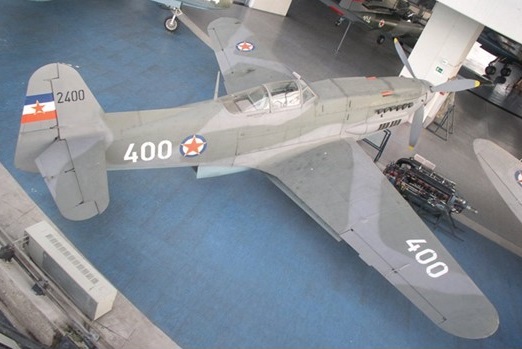
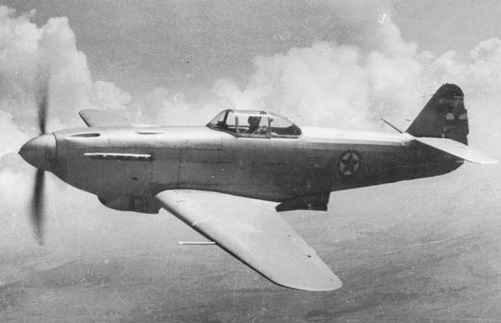
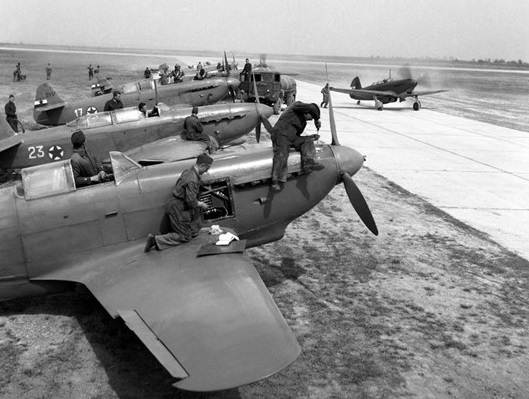
The Ikarus S-49 was a Yugoslav single-seat, single-engine fighter aircraft built for the Yugoslav Air Force (Serbo-Croatian: Ratno vazduhoplovstvo i protivvazdušna obrana – RV i PVO) shortly after World War II. Following the Tito–Stalin Split in 1948, the RV i PVO was left with an aircraft inventory consisting of mostly Soviet aircraft. Unable to acquire new aircraft or spare parts for its existing fleet, the RV i PVO turned to its domestic aviation industry in order to create an indigenous design to fulfill the need for additional aircraft.
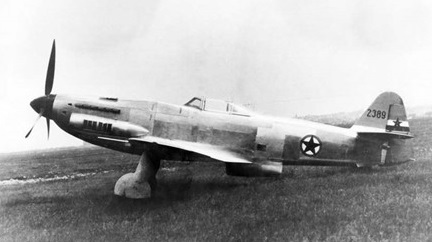
The same constructors that built the Rogozarski IK-3 before the war, engineers Kosta Sivcev, Slobodan Zrnic and Svetozar Popovic, used existing technical documentation of the IK-3 to construct a new fighter aircraft, the Ikarus S-49.
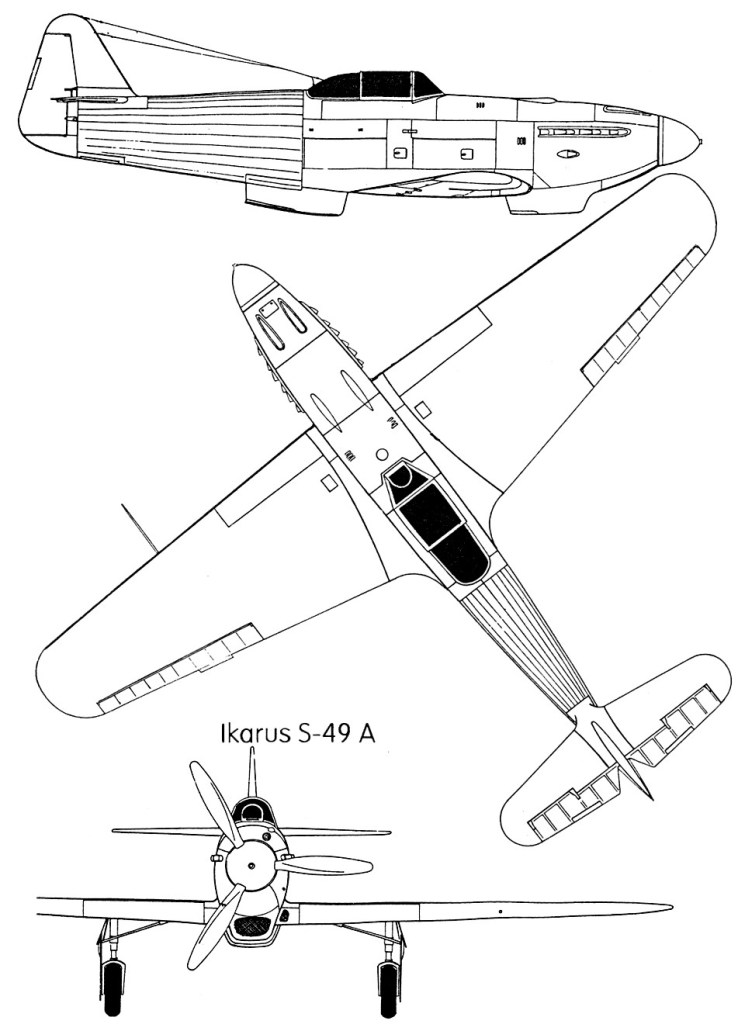
S-49A
The S-49A was of mixed construction, with Soviet built VK-105 engines which were no longer available after 1948. Therefore, it was decided to produce a new version of the aircraft powered by the similar French Hispano-Suiza 12Z-17 engine. Because of the bigger and heavier engine, the new aircraft had to be of all-metal construction with a much longer nose. While the aircraft was mainly built by Ikarus, the wings and tail were built by the SOKO factory in Mostar. The armament consisted of one 20 mm Mauser MG-151/20 autocannon produced by Germany during World War II and two 12.7 mm Colt Browning machine guns. In addition, under wing racks for two 50 kg bombs or four 127 mm HVAR missiles were provided.
The first prototype of the S-49A flew in June 1949. The first operational aircraft were delivered to combat units at the beginning of 1950.
An S-49B Ikarus had been proposed with the German DB-605 engine, but for mass production the Ikarus S-49C was chosen.
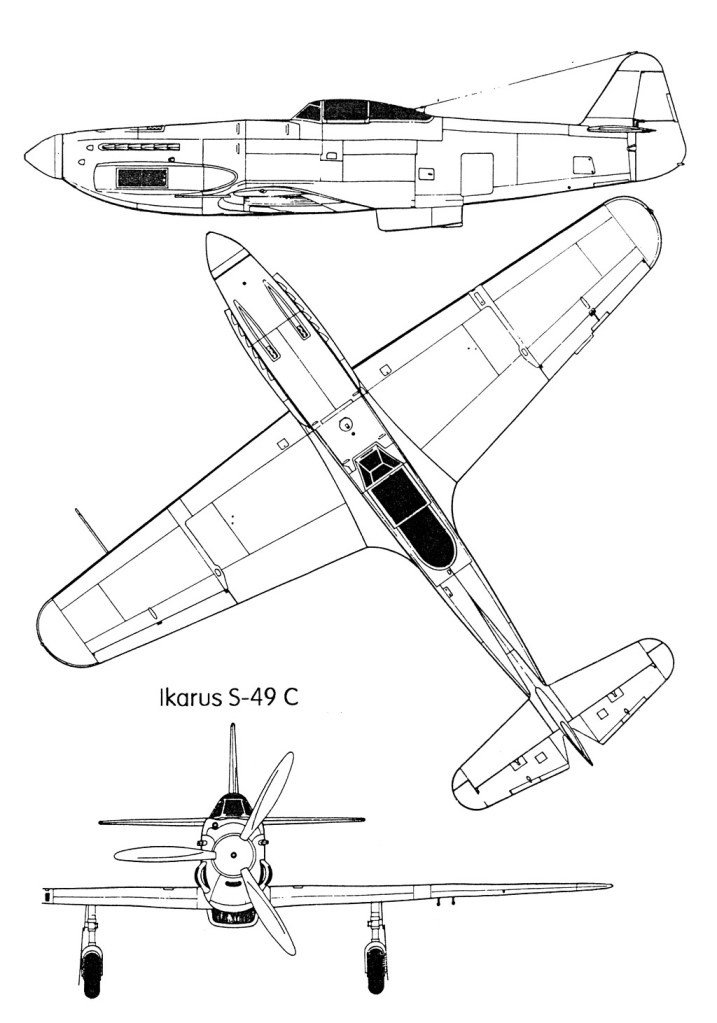
The S-49A was surpassed by the improved S-49C, featuring an all-metal construction and a more powerful engine. At the beginning of 1952, the Ikarus S-49C was introduced into the units of the Yugoslav Air Force.
S-49C
Aircraft Order “Soko” started in 1952 with the assembly of the wing and empennage for the S-49C fighter. An all-metal version of the S-49A powered by a Hispano Suiza HS 12Z-17. Under wing mounts were fitted for rockets, MG-151 or Colt Browning M2 12.7- mm machine guns, or two 50-kg bombs.
A total of 45 S-49A and 113 S-49C were produced by the Ikarus Aircraft Factory in Zemun. The last aircraft were retired from RV i PVO service in 1960/61, having been replaced by more modern jet-powered aircraft.
Variants: S-49A – mixed construction and Klimov M-105 engine (45 built) S-49B – planned version powered by a Daimler-Benz engine; unbuilt. S-49C – all-metal construction and Hispano-Suiza 12Z engine (113 built)
S-49A Engine: Klimov VK-105PF, 1180 hp Wingspan: 10.30 m Length: 8.43 m Height: 3.20 m Wing area: 16.60 sq.m Empty weight: 2320 kg Normal take-off weight: 2950 kg Maximum speed: 554 kph Range: 690 km Rate of climb: 1026 m / min Ceiling: 10,000 m Crew: 1 Armament: 1 x 20-mm motorpushka ShVAK with 120 rounds 2 x 12.7 mm UBS machine gun with 200 rounds
S-49C Engine: 1 × Hispano-Suiza 12Z-17, 1,104 kW (1,500 hp) Length: 9.06 m (29 ft 83in) Wingspan: 10.30 m (33 ft 91 in) Height: 2.90 m (9 ft 6 in) Wing area: 16.65 m2 (179 ft2) Empty weight: 2,818 kg (6,200 lb) Max. takeoff weight: 3,568 kg (7,850 lb) Maximum speed: 628 km/h (339 knots, 390 mph) at 1,525 m (5,000 ft) Range: 690 km (373 nm, 429 mi) Service ceiling: 10,000 m (33,000 ft) Climb to 6,000 m (19,700 ft): 6 min 54 sec Armament 1 × 20 mm MG-151/20 cannon 2 × .50 Colt Browning M2 machine guns with 650 rounds per gun 2 × 50 kg (110 lb) bombs or 4 × 5 in HVAR missiles Crew: one pilot
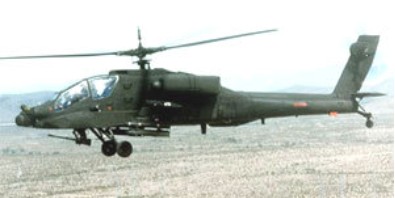
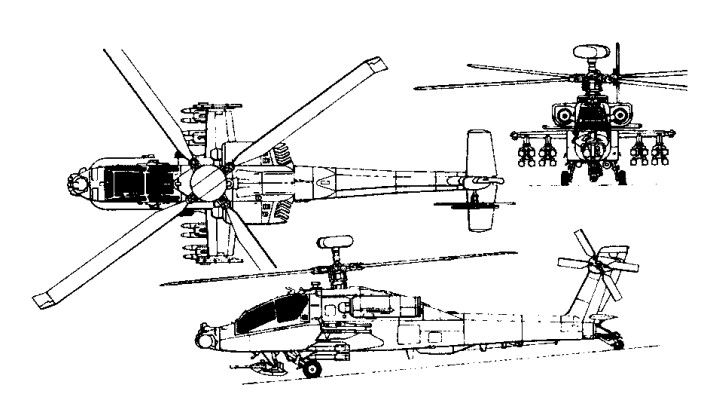
Originally a Hughes-based design, the YAH-64 faced off against a Bell YAH-63 system in the United States Army’s search for an advanced attack helicopter. The system was to field the latest in technology, maneuverability and battlefield survivability that was consistent with low-level, low-speed warfare. The end result saw the YAH-64 coming out ahead, and plans were underway to further develop the system as the principle attack helicopter of the US Army. Initial units of the now-designated AH-64A “Apache” became operational as frontline systems in 1986.
The base AH-64 was designed with crew survivability in mind featuring anti-missile systems, specialized cockpit crew protection in the form of Kevlar armor and bulletproof glass and a specially designed superstructure. The short wingtip mounts offered up four original hardpoints to which the Apache system could field the powerful and accurate Hughes AGM-114 anti-tank missile. A total of sixteen of these could be carried on the underwing hardpoints. To take on softer targets, the conventional Hydra 70 general purpose rocket pod in various munition amounts and warhead types could be fielded alongside the Hellfire. The later addition of wingtip mounts allowed the system to field AIM-9 Sidewinder or AIM-92 Stinger air-to-air missiles. The system could also support the Sidearm anti-radiation anti-radar missile air-to-surface missile. The primary standard armament of the Apache consisted of the advanced chin-mounted Hughes M230 30mm chain gun with 1,200 rounds of ammunition setup that responded to the movements of the gunners head-mounted helmet system through the IHADSS helmet sight system. Traversing is limited to 11 degrees up, 60 degrees down and 100 degrees to either side. The Apache is crewed by two personnel seated in tandem with the gunner in front and the pilot seated in back.
Design of the Apache was conventional with the cockpit in a stepped arrangement forward, the engines mounted high and to either side of the center of the fuselage and wing stubs just underneath the powerplants. The cockpit is designed flat glazed windows, crash supportive armored seating and reinforced landing gear struts. Engines (AH-64D) were by General Electric and featured the T700-GE-701C series turboshafts developing 1,890 shaft horsepower while driving a four blade main rotor and a four blade tail rotor. The tail rotor in and “x” type arrangement sat on the port side of the vertical tail fin. Landing gear were static with two main systems and a tail wheel. Wire cutters to improve survivability at low level were added to the top rear of the canopy, to each landing gear strut and one just forward of the chin turret base underfuselage. A chaff/flare dispenser kit was added to the aft portside of the tail assembly.
Hughes Helicopters flew the pro¬totype YAH 64 (73 22248) anti tank helicopter on 30 September 1975. The first of two for evalua¬tion against the Bell YAH 63 (the first, 73 22246, was flown on the fol¬lowing day); these were selected as finalists from design submissions for the US Army’s AAH (advanced attack helicopter) requirement. Hughes Helicopters No 5 prototype of the AH¬64 was fitted with 1,693 shp T700 GF-701 engines, in place of the 1,560 shp T700 GE 700s fitted previously in the prototypes. Hughes is proposing use of the 701 engine for pro¬duction AH 64s to improve performance in high temperatures and give better recovery in In December 1976 Hughes won a US Army competition for an Advanced Attack Helicopter. The AH 64, as it is designated, under development with Army testing was powered by two 1,536 shp General Electric T700 GE 700 turboshaft engines.
The two cockpits were separated by a two inch thick glass blast fragmentation shield and had their own air-conditioning system.
The Hughes Model 77, allocated the Army designation YAH 64A, was to prove the winner of the competition when flown and evaluated against the YAH 63 submission from Bell Helicopters. This two-seat attack helicopter is powered by 1,696 shp (1 265 kW) T700GE-701 turboshafts. Armament includes a 30-mm Chain Gun and up to 16 Hellfire ASMs. Stinger AAMs will give it an air-to-air capability. More than 550 McDonnell Douglas (originally Hughes) AH-64A Apaches had been delivered to the US Army by 1990.
After spending some time deployed at home, the AH-64A set off for West Germany in the first overseas deployment of the type. First combat deployment was a short time later in 1989’s Operation Just Cause concerning Panama and was made by the 82nd Airborne. 1991 saw the AH-64A model series deliver the opening salvos of action in Operation Desert Storm and later taking part in the much publicized “100-hour” ground war following in which some 500 enemy tanks were reportedly destroyed. Soon to follow were limited deployments in the Bosnia / Kosovo affair and finally in Operation Iraqi Freedom.
Based on lessons learned in the Gulf War of 1991, the AH-64A model was followed by the proposed upgraded AH-64B series. This model sported a Global Positioning System (GPS), improved communications and navigation and an all new main rotor blade. Most of the A models were upgraded to this standard despite funding being lost on the proposal in 1992. The AH-64C appeared (sometimes referred to as AH-64B+) and featured much of the upgrades in common with the succeeding “Longbow” version to follow, sans the mast-mounted radar system and more powerful engines. An AH-64D model also appeared but was very similar to the AH-64C series with the exception of having a removable radar.
AH-64D LongBow
The definitive Apache became the AH-64D “Apache Longbow” model. This model was distinguished by the noticeable mast-mounted AN/APG-78 Longbow radome system above the main rotor. The Longbow radar is a millimeter wave radar produced by Northrop Grumman and can guide the potent Hellfires through radar seeking frequencies for an even more improved kill ratio. Of the initial 800 or so AH-64A’s produced for the US Army, no fewer than 500 were updated to the Longbow standard. As it is mounted high on the design, the Apache Longbow need only “peer” above the treeline to ascertain enemy positions and potential targets. Target sharing was also a part of the models new suite and allowed for multiple Apaches to “talk” to one another despite one of the other not having a target locked on in its tracking system.
The Apache Longbow featured an uprated General Electric powerplant in the form of the T700-GE-701C series. Most all vital components were also updated to increase the potency of the machine while at the same time improve the crews survivability in the event of being fired upon, taking a direct hit or having to make a crash landing. The Apache Longbow remains in frontline active service and is seeing further enhancements and improvements made through additional Block updates which include new rotors, more digital automation integration with UAV battlefield elements.
The improvement programme of the AH-64 “Apache” based on Westinghouse mast-mounted Longbow millimetre-wave radar and Lockheed Martin Hellfire with RF seeker, included more powerful GE T700-GE-701C engines, larger generators for 70 kVA peak loads, Plessey AN/ASN-157 Doppler navigation, MIL-STD-1553B databus allied to dual 1750A processors, and a vapour cycle cooling system for avionics. Early user tests were completed in April 1990.
The full-scale development programme, lasting 4 years 3 months, wasauthorised by Defense Acquisition Board August 1990, but airframe work extended in December 1990 to 5 years 10 months to coincide with missile development, supporting modifications being incorporated progressively. The first flight of the AH-64A (82-23356) with dummy Longbow radome was on 11 March 1991. The first (89-0192) of six AH-64D prototypes was flown on 15 April 1992, the second (89-0228) flew on 13 November 1992, fitted with radar in mid-1993 and flown 20 August 1993. No 3 (85-25410) flown 30 June 1993; No 4 (90-0423) on 4 October 1993; No 5 (formerly AH-64C No 1) 19 January 1994 (first Apache with new Hamilton Standard lightweight flight management computer); No 6 flown 4 March 1994; last two mentioned converted from 85-25408 and 85-25477 and lack radar. First preproduction AH-64D flown 29 September 1995. Six AH-64Ds to fly 3,300 hour test programme; first remanufactured production aircraft flown 17 March 1997 and delivered to US Army 31 March 1997. IOC scheduled for June 1998. Initial AH-64D battalion (1-227 AvRgt) to be based at Fort Hood, Texas; second (3-101 AvRgt) at Fort Campbell, Kentucky.
A five year US$1.9 billion agreement for remanufacture was signed 16 August 1996. The contract covers 232 AH-64Ds over a five year period, with the entire US Army fleet of 758 AH-64As to be upgraded in remanufacture programme lasting 10 years, although only the initial 232 to carry Longbow radar. Production rate to rise from one per month in 1997 to five per month in 1999. Contract also included 227 Longbow radars (since increased to 500), 13,311 Hellfire missiles and 3,296 launchers.
Agreement reached with US Army for a US$2.3 billion contract to remanufacture a further 269 AH-64As to the AH-64D Apache Longbow configuration from FY2001, to bring total to 501 and programme to 2006. First flight of Apache with initial enhancements incorporating COTS technologies for reduced costs, and first of second 269 unit batch, made on 13 July 2001.
First flight of AH-64D with four new colour flat-panel MultiPurpose Displays (MPDs) 12 September 1997. Starting with the 27th production aircraft all Apache Longbows, including those ordered by the United Kingdom and the Netherlands, will be equipped with the Honeywell (AlliedSignal) Guidance and Control Systems MPDs.
Capability exists to convert any AH-64D to Apache Longbow configuration in 4 to 8 hours; this potential was demonstrated in June 1994 when army personnel removed Longbow radar, associated equipment and T700-GE-701C engines from AH-64D prototype and installed them on second (non-radar) aircraft, which was then test flown for 30 minutes. AH-64D to equip 26 battalions; company strength to be three with radar plus five without; three companies per battalion. Longbow can track flying targets and see through rain, fog and smoke that defeat FLIR and TV; RF Hellfire can operate at shorter ranges; it can lock on before launch or launch on co-ordinates and lock on in flight; Longbow scans through 360° for aerial targets or scans over 270° in 90° sectors for ground targets; mast-mounted rotating antenna weighs 113kg. Production of RF Hellfire by Longbow LLC, a joint venture between Lockheed Martin and Northrop Grumman. Initial limited-rate production contract awarded in December 1995 for 352 missiles, of which first delivered to US Army Missile Command in November 1996.
Further 1,056 missiles and 203 launchers subject of US$233.7 million LRIP contract awarded in 1996. Further modifications include ‘manprint’ cockpit with large colour flat-panel MultiPurpose Displays (MPDs) replacing standard monochrome MultiFunction Displays (MFDs), air-to-air missiles, digital autostabiliser, integrated GPS/Doppler/INS/air data/laser/radar altimeter navigation system, digital communications, faster target hand-off system, and enhanced fault detection with data transfer and recording. AH-64D No 1 made first Hellfire launch on 21 May 1993; first RF Hellfire launch 4 June 1994; first demonstration of digital air-to-ground data communications with Symetrics Industries improved data modem, 8 December 1993.
Training of US Army instructors began summer 1994, in anticipation of Force Development Test and Experimentation (FDT&E) trial, using three prototypes, starting October 1994; followed by Initial Operational Test and Evaluation (IOT&E) January to March 1995. Successful completion of FDT&E and IOT&E precursor to start of modification programme in 1996; long-lead contract awarded to McDonnell Douglas December 1994 covering start-up funds for initial batch of remanufactured Apaches.
Test successes of 1994 include June trial in which Apache Longbow tracked moving ground target with radar and scored direct hit with RF Hellfire; communication of digital data with Joint-STARS and UH-60 Black Hawk via improved data modem in September; demonstration of new tri-service embedded GPS/INS in October; and RF Hellfire ripple-launch capability in November, when single Apache scored hits on three targets at close, medium and long range with three missiles; time of engagement, from detection to target impacts, less than 30 seconds.
Initial Operational Test and Evaluation exercises at Fort Hunter, California, in 1995 pitted six AH-64Ds against eight AH-64As. Test results indicated 400 per cent more lethality (hitting more targets) and 720 per cent higher survivability than the AH-64A; demonstrated ability to use Target Acquisition Designation Sight (TADS) or fire-control radar as targeting sight; detected, classified, displayed, prioritised more than 1,000 targets and initiated precision attack in less than 30 seconds; met or exceeded Army’s situational awareness requirements (classified); available 91 per cent of time. Hit moving and stationary targets on smoky battlefield from 7.25 km (4.5 miles) away during test at China Lake, California.
AH-64D deliveries to US Army began 31 March 1997.
Initial AH-64D battalion (1-227 AvRgt) at Fort Hood, Texas fully equipped by end July 1998 and attained combat ready status on 19 November 1998, after eight month training programme at company and battalion level which included four live fire exercises and more than 2,500 flight hours. Second unit is 2-101 AvRgt at Fort Campbell, Kentucky; third will be 1-2 AvRgt in South Korea.
First flight with Rolls-Royce Turbomeca RTM 322 turboshaft engines 29 May 1998.
The British firm of Westland license-produced their own version of the AH-64D Apache Longbow, maintaining most of the major characteristics of the American type with addition of more powerful Rolls-Royce Turbomeca RTM322 engines of 2,210 shaft horsepower.
The first flight of the first production WAH 64D Apache Longbow multi mission combat helicopter for the United Kingdom, ZJ 166/N9219G, took place at the Boeing Company’s Mesa, Arizona, rotorcraft facility on September 25, 1998. The 30min flight included hover tests, forward flight to 60kts (111 km/h) and rearward and lateral flight to 45kts (83km/h). Three days later and two days ahead of schedule, the helicopter was formally rolled out at Mesa and delivered to prime contractor GKN Westland Helicopters Ltd. The first WAH-64 Apache Longbow for the British Army, ZJ168, re-flew from Yeovil on August 26, 1999. The first of eight WAH-64s being built by Boeing at its Mesa, Arizona, facility, it was delivered to RNAS Yeovilton on board HeavyLift Cargo Airlines Short Belfast G-BEPS on May 27 for reassembly and test flying.
GKH Westland Helicopters has delivered the first WAH-64 Apache attack helicopter to the British Army. Eight more are scheduled to be handed over before the planned in-service date at year-end 2000. The aircraft, a derivative of the U.S. Army’s AH-64D Apache Longbow, is one of eight built by Boeing at Mesa, Ariz., and shipped to Yeovil, England, for final assembly and test by Westland. The U.K. manufacturer will produce the remaining 59 aircraft in the $3.2-billion program. The army was to receive all 67 WAH-64s by 2003.
Israel represents another active user of the Apache type and has operated the helicopter in countless sorties against Hezbollah positions including direct missile strikes on top operatives. Israel has fielded the Apache against Hezbollah positions in Lebanon and more recently in the 2006 summer war – also against Lebanon. Other operators include The Netherlands, Singapore, Greece, Saudi Arabia and the United Arab Emirates. Planned usage of the weapon system is expected by Pakistan, Taiwan and perhaps South Korea and India in the near future.
Hughes AH-64A Apache Engine: 2 x General electric T700-700 turboshaft, 1536 shp Rotor diameter: 48 ft / 14.63 m Fuselage length: 49 ft 1.5 in / 14.63 m MTOW: 17,650 lb / 8006 kg Max speed: 192 mph / 1804 kph Armament: 1 x 30 mm cannon (1200 rds) Pylons: 4
AH-64A Apache Engine: 2 x GE T700-701. Instant pwr: 1265 kW. Rotor dia: 14.6 m. Length: 17.8 m. No blades: 4. Empty wt: 4880 kg. MTOW: 9525 kg. Payload: 2948 kg. Max speed: 158 kts. ROC: 760 m/min. Ceiling: 8400 m. Fuel cap: 1419 lt. Max range: 1287 km. HIGE: 15,000 ft. HOGE: 11,500 ft. Crew: 2.
AH-64D Longbow Apache Engine: 2 x General Electric T700-GE-701C continuous rated turboshafts, 1,890shp / 1417kW Instant pwr: 1409 kW. Main and tail rotor: four blade Main rotor diameter: 14.6m Length: 49.11ft (14.97m) Length with rotors turning: 17.3m Width: 17.16ft (5.23m) Height: 16.24ft (4.95m) Empty Weight: 11,799lbs (5,352kg) Maximum Take-Off Weight: 22,282lbs (10,107kg) Payload: 2948 kg. Max combat load: 771kg Cruise: 141 kts. Best economy: 117 kt / 900 lb/hr HIGE: 17,210 ft. HOGE: 13,530 ft. Maximum Speed: 162mph (261kmh; 141kts) Max diving speed: 309km/h Range with internal fuel reserve: 611km Maximum Range: 1,181miles (1,900km) Service Ceiling: 9,478ft (2,889m) Crew: 2. Vert.ROC: 1475 fpm. MaxROC: 2415 fpm. Armament: 1 x 30mm chain gun, 16 Hellfire anti-tank missiles or 76 x 70mm rockets Hardpoints: 6 (including wingtip mounts)
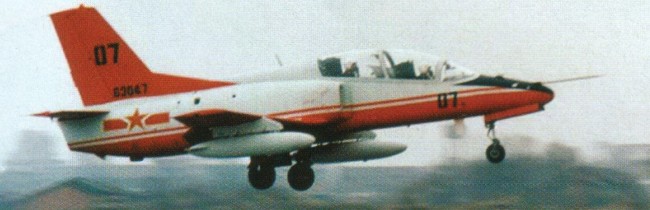
The JL-8 trainer was proposed as a two-seat intermediate jet trainer and light attack aircraft joint cooperation effort between the governments of Pakistan and the People’s Republic of China in 1986. The name was changed on the suggestion of Pakistan’s then President General Zia ul Haq to Karakorum-8 to represent the friendship between the two countries. Work on the design started in 1987 at Nanchang Aircraft Manufacturing Company (NAMC) at Nanchang, Jiangshi Province in South Central China. The Chinese chief designer of the aircraft was Mr. Shi Ping (石屏), heading a team of over 100 Chinese Engineers, while Air Cdr Muhammad Younas Tbt (M), SI(M) was the chief designer from the Pakistani side leading a team of over 20 Pakistani engineers.
Initially, the aircraft was to feature many United States parts, including Garrett TFE-731 engine and several cockpit displays along with communication and avionics systems, but due to political developments and an embargo from the US at the end of the 1980s following the Tiananmen Square protests of 1989, other vendors had to be used.
The JL-8 / K-8 has a multi-role capability for training and, with little modification, can also be used for airfield defense. The aircraft is supposed to be as cost-effective as possible, with a short turn-around time and low maintenance requirements. The JL-8 for the domestic Chinese market and its export variants, K-8E and K-8P, have different powerplants and avionics.
A low-wing monoplane design primarily constructed of aluminum alloys, the JL-8 / K-8 airframe structure is designed for an 8,000 flight hour service life.
The landing gear is of tricycle configuration, with hydraulically operated wheel brakes and nose-wheel steering. The flight control system operates a set of conventional flight control surfaces with a rigid push-rod transmission system, which itself is electrically or hydraulically operated. The aileron control system, of irreversible servo-control type, is composed of a hydraulic booster, an artificial-feel device, a feel trim actuator and a rigid push-rod transmission mechanism. The elevator and rudder control systems are of reversible push-rod type.
The JL-8 / K-8 cockpit arrangement is designed to be as close to that of a combat aircraft as possible. A transparent plastic canopy covering both cockpits, which are arranged in a tandem seating position, is supposed to give a good all-round field of view.
A Rockwell Collins Electronic Flight Instrument System (EFIS) is fitted, with multi-function displays (MFDs) in the front and rear cockpits showing information to the pilots. The emergency cockpit escape system is made up of two Martin-Baker MK-10L rocket-assisted ejection seats which are zero-zero capable, meaning they can be used safely at zero altitude and zero speed. Although JL-8 is designed to have limited capability to deliver air-to-ground weapons, the first rocket attack practice was only completed in May 2011.
Ultra high frequency (UHF) and very high frequency (VHF) radio communication systems along with a Tactical Air Navigation (TACAN) and automatic direction finder (ADF) and instrument landing system (ILS) were available.
A strap-on Environmental control system (ECS) from AlliedSignal provides air conditioning to the cockpit. It is capable of operating when the aircraft is on the ground, under ambient temperatures of -40 to +52 °C, as well as in the air.
The JL-8, for the Chinese domestic market, was originally powered by the Ukrainian Ivchenko-Progress AI-25TLK turbofan jet engine with 16.9 KN of thrust, but this has been replaced by the WS-11, the Chinese-manufactured copy of the AI-25TLK. Export variants (K-8P, K-8E) use the lower powered Honeywell TFE731-2A-2A modular turbofan, which has digital electronic engine control (DEEC) with 15.6 KN thrust, provided the US government approves sale of the engine to the customer.
A hydro-mechanical fuel control system delivers fuel to the engine. The aircraft’s fuel system consists of the fuel tanks and the fuel supply/transfer, vent/pressurization, fuel quantity measuring/indicating, fuel refueling and fuel drain subsystems. The total fuel is contained in two fuselage bladder-type rubber tanks and a wing integral tank of 1720 lb. The capacity of each drop tank is 250 litres. Two 80 gal fuel drop-tanks can be mounted on outboard under-wing hardpoints
The first prototype was built in 1989, with the first flight taking place on 21 November 1990 by Chief Test Pilot Col Yang Yao (杨耀). Flight testing continued from 1991 to 1993 by a Flight Test Team consisting of four Chinese and two Pakistani Pilots (Group Captain Waqar Ahmad and Squadron Leader Nadeem Sherwani).
After four prototypes were built, production of a small batch of 24 aircraft was launched in 1992. Chinese share out of these was 18, while Pakistan Air Force (PAF) received six K-8s in 1994. In 1995, PAF decided to order 75 more K-8s to gradually replace its fleet of Cessna T-37 Tweet basic trainers. In 2010, the number of K-8 aircraft in PAF were estimated to be around 40. The People’s Liberation Army Air Force (PLAAF) received its first six JL-8 trainers in 1995 following additional upgrades. The Chinese model uses WS-11, a Chinese-manufactured version of the Ukrainian Ivchenko AI-25 (DV-2) engine. The PLAAF is anticipated to continue adding the JL-8 trainer to its fleet to replace its obsolete trainers, such as the Chengdu JJ-5. In 2008, the number of JL-8s in PLAAF inventory were estimated to be over 120 aircraft.
Other nations have shown interest in the trainer and it also served in the air forces of Egypt, Sri Lanka and Zimbabwe. While the type primarily serves as a basic cum advanced trainer, it can also be used in the close air support or even air combat role when appropriately armed.
The export-variant K-8 Karakorum Basic Common Advanced Jet Trainer is co-produced by China National Aero-Technology Import & Export Corporation (CATIC) for export markets other than Pakistan, while later aircraft for Pakistan have been built by the Aircraft Manufacturing Factory (AMF), Pakistan Aeronautical Complex. The latest export variant is the K-8P version, which currently is operated by the PAF. The K-8P has an advanced avionics package of integrated head-up display (HUD), multi-function displays (MFDs) and comes equipped with MFD-integrated GPS and ILS/TACAN systems. It also features Armament racks for carrying a variety of training and operational bombs up to 250 KG, pod mounted 23 mm canon as well as PL-5 / 7 /AIM-9 P launchers. Studies for putting a Griffo Radar in the nose were under way. In September 2011, NAMC rolled out another 12 K-8P for undisclosed foreign client.
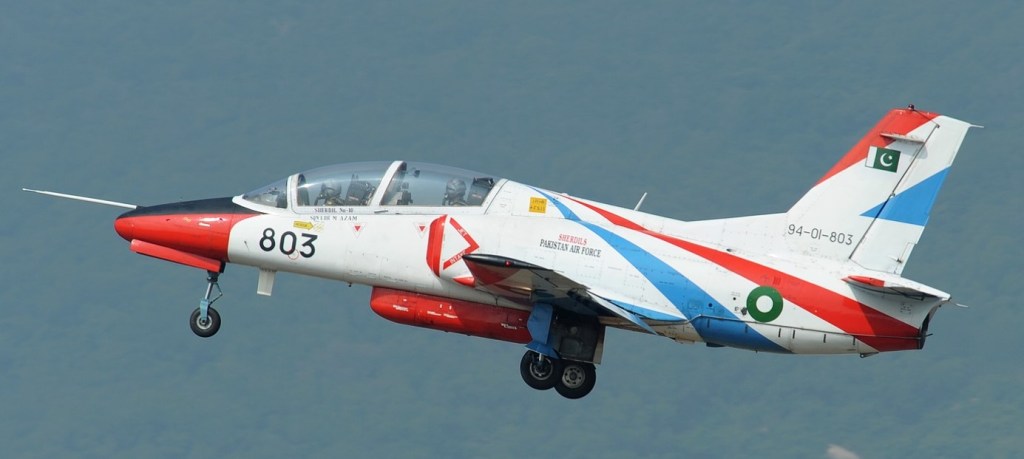
The K-8 took part in its first aerial display in 1993 at the Singapore Air Show and since then has participated at Air Shows at a number of places including Dubai, Paris, Farnborough, Bangkok, Zuhai etc. It was shown to the Pakistani public for the first time on 23 March 1994 at the Pakistan Day Parade. It became part of the Sherdils (Lion Hearts) aerobatics team of the Pakistan Air Force in 2009 and carried out its first public display on 6 April 2010. K-8 replaced the team’s previous T-37 Tweet aircraft.
K-8 of the Pakistan Air Force aerobatics team, Sherdils, Zhuhai Air Show 2010 in China
In 2008 Venezuela announced the purchase of 18 K-8 aircraft. The K-8 was being marketed by China to the air forces of the Philippines; and to Indonesia, as a replacement for Indonesia’s BAE Hawk jet trainers. In 2009, the Bolivian government approved a deal to purchase 6 K-8P aircraft for use in anti-drug operations. The total number of K-8 aircraft produced till 2010 in all variants were estimated to be over 500, with production rate of approximately 24 aircraft per year continuing.
Other operators include the Ghana Air Force (4), Myanmar Armed Force (12× K-8 delivered with additional 48 on order), Namibian Air Force (12), People’s Liberation Army Air Force (190× JL-8 delivered as of February 2011, out of 400 ordered), Sri Lanka Air Force (5× K-8 delivered with additional 2 on order, Sudanese Air Force (12), Venezuelan Air Force (17 Another 9 K-8V on order as of October 2013), Zambian Defence Force (15), Air Force of Zimbabwe (11), and Tanzanian Air Force (6).
The Pakistan Air Force operated 60 K-8 aircraft (12 K-8s and 48 K-8Ps), which served as intermediate jet trainers with the No. 1 Fighter Conversion Unit, Mianwali and as basic jet trainers with the Pakistan Air Force Academy, Risalpur. Another 32 K-8Ps were on order as of January 2012.
In late December 2012 and early January 2013, during the Kachin conflict, Burma Air Force K-8s have been used to strike Kachin rebel’s positions in the north of the country.
Incidents: At 9am on 5 September 2008, a K-8 Karakorum trainer of the Air Force of Zimbabwe crashed over the town of Gweru, killing both pilots. The aircraft was on a routine training sortie. On 21 July 2010, a K-8 Karakorum trainer of the Venezuela Air Force crashed just 4 months after its delivery. The pilots ejected and managed to survive. On 20 August 2011, two Zimbabwe Air Force K-8’s collided in mid-air while taking part in a fly past at the funeral of retired General Solomon Mujuru. Pieces were seen to fall from the aircraft, but they both appeared to land safely. On 23 October 2012, a K-8 Karakorum training plane lost directional control during take off from Julius Nyerere International Airport, Dar es Salaam. Both pilots ejected but one of them was killed on impact. The plane left the runway and struck a container. On 27 November 2012, a K-8 Karakorum belonging to Venezuela’s Bolivarian Air Force, suffered a malfunction and crashed near the El Libertador Air Base, in the Palo Negro parish of the city of Maracay, Aragua state. Both pilots ejected and suffered only minor injuries. The plane was scheduled to participate on the air show to celebrate Venezuelan Air Force Day, later that day. On 26 July 2013 at 12:50 A.M., a K-8 Karakorum belonging to Venezuela’s Bolivarian Air Force, crashed in the Gen. Rafael Urdaneta Air Base, near Maracaibo, Zulia State, while participating in night exercises. The pilot, First Liutenent Milenia Bolivar, ejected and was transported to a local hospital, where she is said to be in good condition.
Variants:
K-8 Original variant powered by the Garrett TFE731-2A turbofan engine.
K-8E K-8 variant developed for export to Egypt in 1999, featuring 33 modifications to the airframe and avionics. Built in Egypt from Chinese-supplied kits, production of 80 Egyptian-built Chinese kits was completed in 2005, with license production of an additional 40 K-8Es undertaken thereafter.
K-8P Pakistan-specific variant with new avionics, glass cockpit and Martin Baker Zero-Zero ejection seats.
K-8V An ‘integrated flight test simulation aircraft’ (IFTSA), equipped with an advanced flight control computer and analogue fly-by-wire (FBW) system which can mimic the aerodynamic characteristics and flight profile of other aircraft. Used primarily to test aircraft designs before prototypes are built and tested.
JL-8 PLAAF-specific variant powered by the Ivchenko AI-25 TLK turbofan and featuring Chinese avionics suite. First flew in December 1994, 6 aircraft delivered to PLAAF in June 1998.
L-11 Variant of JL-8 powered by the WS-11 turbofan (Ivchenko AI-25 TLK produced under license in China). Approximately 100 aircraft delivered to PLAAF.
JL-8W (K-8W) Variant of the JL-8 with improved cockpit and HUD. Delivered to Venezuela’s Bolivarian Military Aviation March 13, 2010, with no U.S.-controlled parts. Total order 18 aircraft (+ 40 announced).
JL-8VB (K-8VB) Variant similar to JL-8W; for export to Bolivian Air Force (6), with no U.S.-controlled parts. Total order 6 aircraft (+ 12 announced).
Specifications:
K-8 Powerplant: 1 × Garrett TFE731-2A-2A turbofan, 16.01 kN (3,600 lb) Wingspan: 9.63 m (31 ft 7 in) Length: 11.6 m (38 ft 0 in) Height: 4.21 m (13 ft 9 in) Empty weight: 2,687 kg (5,924 lb) Max. takeoff weight: 4,330 kg (9,546 lb) Wing loading: 254.40 kg m-2 Maximum speed: Mach 0.75 (800 km/h, 498 mph) Range: 2,250 km (1,398 mi) Service ceiling: 13,000 m (42,651 ft) Max. airframe load factor: +7.33 g / -3.0 g Crew: 2 (in tandem) Armament: 1× 23 mm cannon pod (mounted on centreline hardpoint) Hardpoints: 5, total capacity 1,000 kg (2,205 lb) external fuel and ordnance: 4× under-wing, capacity 250 kg each 1× under-fuselage (23 mm cannon pod mount)
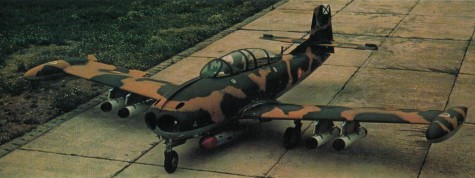
HA 200 Saeta development potential as a lightweight ground attack aircraft lead, via the two seat HA 200E Super Saeta with more powerful Marbore engines, to the purpose built, single seat HA 220 Super Saeta, with increased armour, self¬-sealing fuel tanks and an additional fuel tank in the rear cockpit, replacing the second seat. Powered by two 1,058 lb thrust Marbore VI engines, the rear cockpit is used to accommodate an additional fuel tank. Armament can comprise a variety of bombs, guns, and rockets on under-¬fuselage/wing stations. Two Browning M 3 machine guns. Prototype (XC.10C) flown for first time on April 25, 1970. EdeA designation C.10C, later A.10C. Twenty five were built. Military Users: Egypt, Spain.
HA 220 Super Saeta / C-10C Wing span: 35 ft 10 in (10.93 m) Maximum speed: 435 mph (700 km/h).



 All Aero