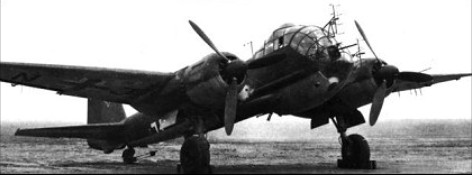
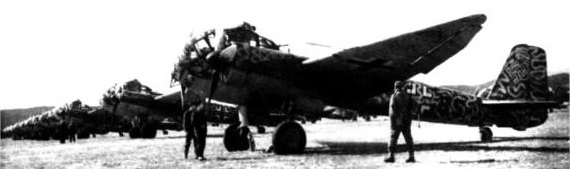
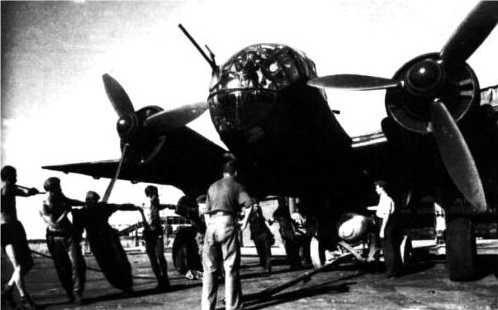
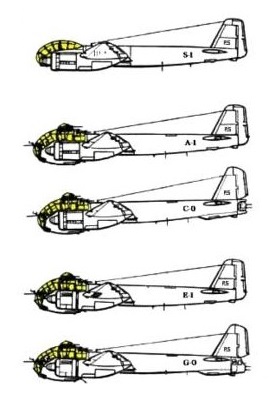
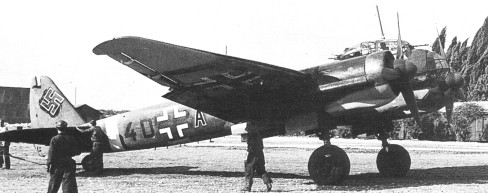
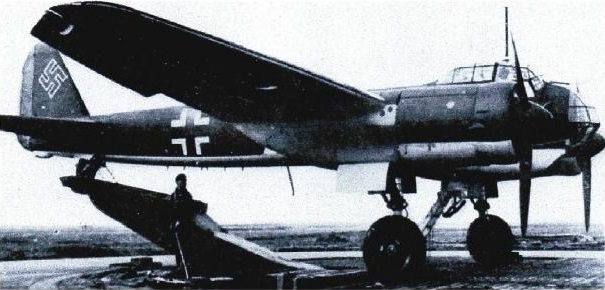
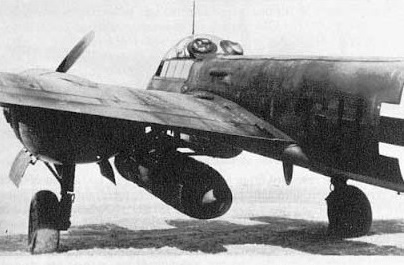
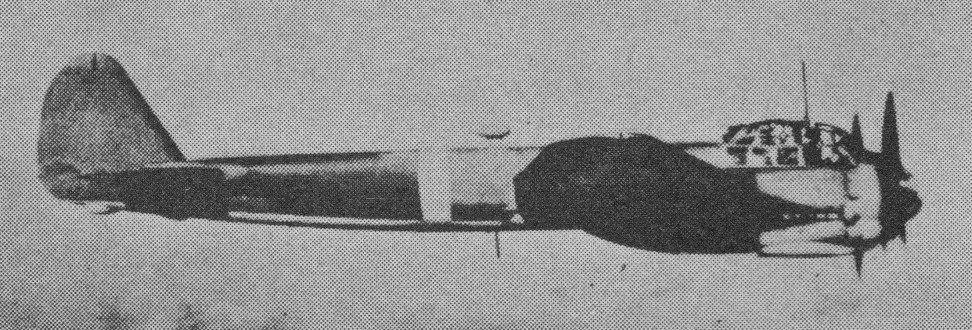
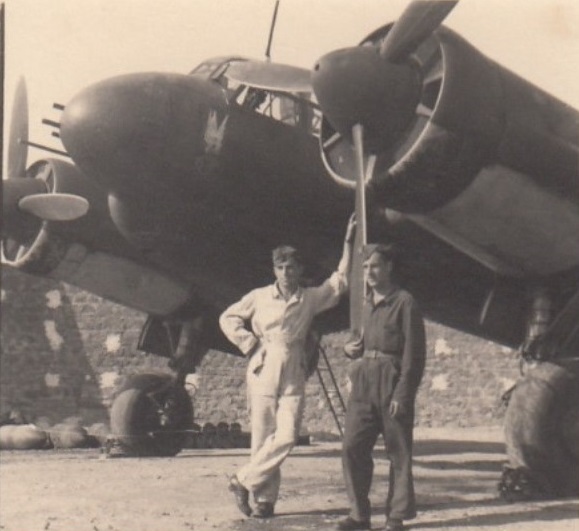
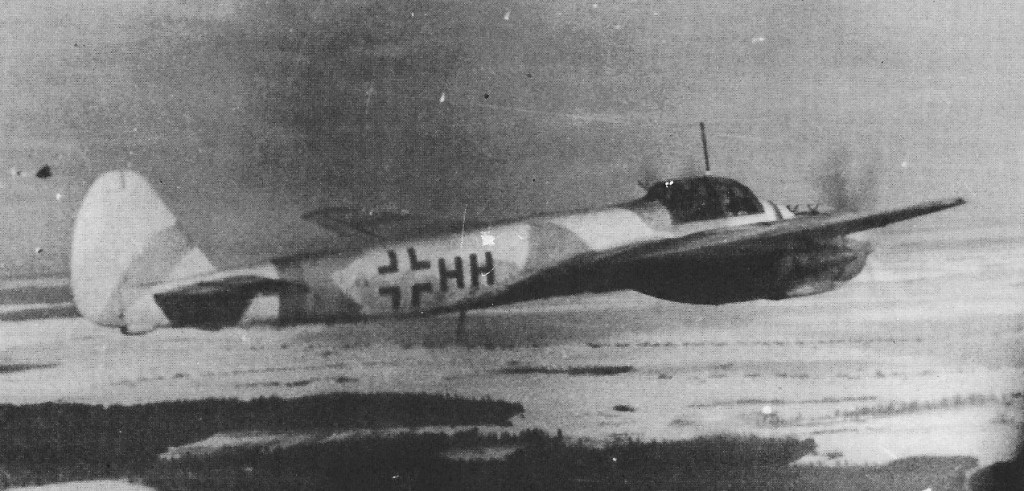
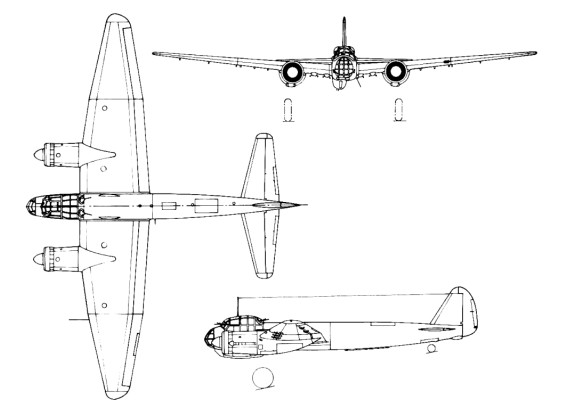
The Ju 188 was a development of the Ju 88. It had a redesigned nose, new wings of greater span with pointed tips, and heavier armament.
Ju.188D-2
The first major versions were the Ju 188E and Ju 188F of 1941, which entered service before the Ju 188A and were bombing and reconnaissance types respectively. Power was provided by two 1,267kW BMW 801D and G engines. Next came the Ju 188A, which had been held up by the slow delivery of the 1,323kW Jumo 213A engines. One version of the A was adapted to carry two torpedoes. The Ju 188D was a reconnaissance version of the A, fitted with the same engines and armament.
Projected versions of the Ju 188 included the C bomber (with a remotely controlled tail turret); G (development of the G); H reconnaissance aircraft (developed from the G); R night fighter; and the T photographic reconnaissance aircraft with a pressure cabin.
Ju.188A-2
The only other version to enter service was the Ju 188S, a three-seat high-altitude bomber powered by Jumo 213E engines and with a pressurised crew cabin. The priority for low-level attack aircraft caused an abrupt end to Ju 188S production, all remaining airframes being converted into unpressurised aircraft mounting a 50mm BK 5 cannon. It is believed that around one thousand and seventy six of the type were delivered.
Some of the captured aircraft at the end of the war were used by Frances’s Aeronavale.
Ju.188 A-1 Wingspan: 72 ft 2 in Length: 49 ft 0.5 in Height: 14 ft 6.5 in Wing area: 602.8 sq.ft Loaded weight: 33,730 lb Max speed: 325 mph at 20,500 ft Cruise speed: 232 mph Range: 1000-1550 mi
Ju.188 A-2 Wingspan: 72 ft 2 in Length: 49 ft 0.5 in Height: 14 ft 6.5 in Wing area: 602.8 sq.ft Loaded weight: 33,730 lb Cruise speed: 295 mph Landing speed: 109 mph Time to 19,666 ft: 17 min Service ceiling: 31,160 ft Range: 1500 mi
Ju.188 B Wingspan: 65 ft 10.5 in Length: 49 ft 0.5 in Height: 14 ft 6.5 in Wing area: 602.8 sq.ft Loaded weight: 31,970-31,989 lb
Ju.188 D Wingspan: 72 ft 2 in Length: 49 ft 0.5 in Height: 14 ft 6.5 in Wing area: 602.8 sq.ft Empty weight: 21,825 lb Loaded weight: 31,970-31,989 lb Max speed: 350 mph at 27,000 ft Cruise speed: 232 mph Service ceiling: 36,090 ft
Ju.188 D-1 Loaded weight: 31,510 lb
Ju.188 D-2 Wingspan: 72 ft 2 in Length: 49 ft 0.5 in Height: 14 ft 6.5 in Loaded weight: 31,510 lb Wing area: 602.8 sq.ft Max speed: 336 mph Cruise speed: 232 mph Service ceiling: 32,800 ft Range w/drop tanks: 2200 mi
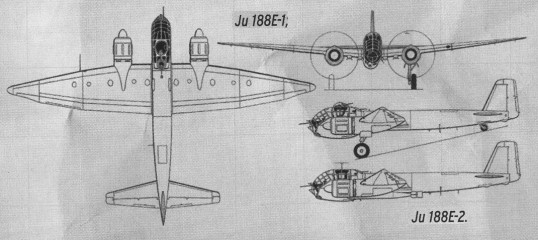
Ju.188 E Wingspan: 72 ft 2 in Length: 49 ft 0.5 in Height: 14 ft 6.5 in Wing area: 602.8 sq.ft Max speed: 314 mph at 19,685 ft Cruise speed: 232 mph Loaded weight: 31,970-31,989 lb
Ju 188 E-1 Engine: 2 x 1194kW/1700 hp BMW 801D-2 Wingspan: 22.00 m / 72 ft 2 in Length: 15.06 m / 49 ft 0.5 in Height: 4.44 m / 14 ft 7 in Wing area: 602 sq. ft / 55.92 sq.m Empty weight: 9859 kg / 21,737 lb Max take-off weight: 14570 kg / 32122 lb Max speed: 500 km/h / 311 mph at 20,000 ft / 6096m Cruise speed: 248 mph Landing speed: 99 mph Service ceiling: 9300 m / 30500 ft Time to 19,666 ft: 17 min 35 sec Range: 1947 km / 1210 miles Armament: 1 x 20mm MG151 cannon, 2 x 13mm + 1 x 7.92mm mg, 3000kg / 6614 lb bombs Crew: 4
Ju.188R Experimental night fighter. Three prototypes built. The first two were armed with four fixed forward firing 20m MG 151 cannon and eg radar. The third was armed with two fixed forward firing 30mm MK 103 cannon. Production was abandoned.
Ju.188 S An unarmed fast high altitude intruder / bomber tpe, fitted with a pressurised cabin for the crew of three. Began being delivered into service during the Summer of 1944. Engnes: 2 x 175 hp Junkers Jumo 213E-1 engins with nitrous oxide fuel injection. Wingspan: 72 ft 2 in Length: 49 ft 0.5 in Height: 14 ft 6.5 in Wing area: 602.8 sq.ft Loaded weight: 31,970-31,989 lb Max speed: 428 mph Cruise speed: 232 mph Service ceiling: 38,400 ft Bombload: 1763 lb internally
Ju.188S-1 An adapted grond attack version armed with a single ventrally mounted 50mm BK.5 cannon Pressurisation equipment and engine boost system removed.
Ju.188S-1/U Intended to be used as a close support type with additional armour protection for the crew of two. Armed with 50mm BK.5 cannon. Pressurisation equipment and engine boost system removed.
Ju.188 T Unarmed photographic reconnaissance type. Powered as the S series. Wingspan: 72 ft 2 in Length: 49 ft 0.5 in Height: 14 ft 6.5 in Wing area: 602.8 sq.ft Loaded weight: 31,970-31,989 lb Max speed: 435 mph Cruise speed: 232 mph Abandoned
The RLM required an armament of a mg 15 and 700-800 kg of bomb load, short wave radio, oxygen breathing plant, radio telephone system, special navigation equipment, UKW landing aid, de-icing equipment. A take-off distance of 700 m, and landing distance of 400 m was required. The time to 7000 m was to be 25 minutes, and a 1300 km range was required.
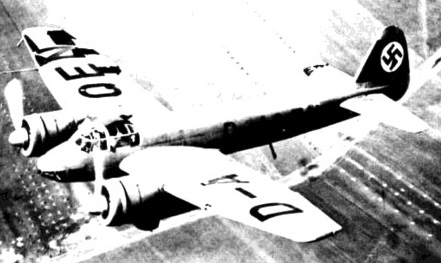
The Junkers Ju 88 was originated to meet the requirement. Designed by W.H. Evers and Al Gassner (an American), building of the first prototype, the Ju 88 Va D-AQEN, started in March 1936. Powered by two 746kW Daimler-Benz DB 600Aa engines with annular radiators, Karlheinz B. Kindermann flew first the Junkers Ju88 on 21 December 1936.
V-1 D-AQEN
After the V-1 prototype crashed on 10 April 1937, the second prototype, the V-2 W/no 4942 was completed and first flew on 10 April 1937. This machine, D-ASAZ, reached 460 km/h initially powered by two Daimler-Benz 600 engines, these were later changed to Junkers Jumo engines. The type was initially fitted with two auxiliary tail fins but these were later abandoned in favour of the single tail fin. The V-2 was later modified and fitted with a fairing in the shape of the cockpit for the Ju.288.
The V-3 prototype, w/no 4943 D-AREN first flew on 13 September 1937 powered by two 1000 hp Junkers Jumo 211A engines with direct fuel injection with two speed superchargers. The Junkers Jumo 211s were standardised for the series model, the Ju 88A-1 having Jumo 211B-1 engines each rated at 1200 hp for take-off. The Ju 88 V-3 achieved 504 km/h, and peaked at 520 km/h. It featured full military equipment and with the redesigned raised cockpit roof and a rearward firing 7.92mm machine gun.
Its four crew members were closely grouped in the fuselage nose forward of the front wing spar; two internal bomb bays were capable of accommodating a maximum of 28 bombs of 110 lb / 50 kg, and two external carriers were fitted beneath each wing, each capable of lifting a 1102 lb / 500 kg bomb, but normally carrying a 220 lb / 100 kg bomb, but normally carrying a 220 lb / 100 kg bomb when maximum internal load was being lifted. Initially, defensive armament comprised a single forward-firing 7.9mm MG 15 machine gun in the starboard side of the cockpit windscreen and two similar weapons firing aft, one from the rear of the cockpit and the other from the rear of the offset ventral cupola. This armament was hurriedly augmented, a second aft-firing MG 15 being added while forward maintenance units improvised mountings for a pair of lateral-firing MG 15s. As these weapons had each to be operated independently, no great weight of fire could be brought to bear.
The Ju 88 V-4 w/no 4944 D-ASYT first flew on 2 February 1938, with the redesigned nose and was also powered by Junkers Jumo engines. Accommodation was for a crew of four, it was fitted with dive brakes, solid nose and the gondola under the nose for the rearward firing 7.92mm MG 15 machine gun with the gunner in the prone position. The V-4 was substantially slower than the V-3.
A further unarmed prototype was the Ju 88 V-5 with the identification D-ATYU. It was equipped with two Jumo 211-engines. In March 1939 the fifth prototype set a 1,000km closed-circuit record of 517km/h and 500.786 km/h over 2000 km both carrying a 2000kg payload.
On 04 April 1938 Kindermann achieved a world record with Junkers Ju88 D-ALAT, when Kindermann climbed up to 9312 metres with 5000kg payload. Four days later Kindermann reached 7242 metres with 10000kg payload.
The first for the RLM requirements was the Ju 88 V-6, which first flew on 18 June 1938. It corresponded to the Ju to 88 A-1-Series. The bomb load was 1000 kg.
Ju-88A-1
Goering, in the autumn 1938, assigned an order for mass production on the Ju 88. The Junkers-Werke at Schönebrck began the manufacture of production tooling and jigs early in 1938, by which time contracts had been placed for 20 pre-series Ju 99A-0 and 50 series Ju 88A-1 bombers, these shortly being followed by a further contract for 100 more Ju 88A-1. Manufacture was highly dispersed and by the late spring of 1938 contracts had been placed for a total of 1060 Ju 88As and by 1 October 1938, 53% of the total German airframe industry workforce was committed to the programme. At that time the Ju 88 still was in the development stage, and at the end of 1939 only 69 were delivered.
The prototype of the destroyer variant was the Ju 88 V-7, which completed its first flight on 27 September 1938. Three further prototypes followed up to 3 February 1939.
A total of 10 prototypes was completed, and the first of the pre-production Ju 88A-0 bombers flew in early 1939. The first production Ju 88A-1s were delivered in August 1939 to the I Gruppe of Kampfgeschwader 25, this unit being re-designated as I Gruppe of Kampfgeschwader 30 on September 22. The bomber suffered teething troubles. The slatted dive brakes hinged beneath the front spar presented serious problems when extended.
The fuselage was already highly stressed and limitations had to be imposed on high-speed manoeuvres. The undercarriage was beset with problems, and the first 10 Ju 88A-1s delivered by Arado’s Brandenburg factory were all damaged during landings as a result of one or other oleo leg failing. Most of these shortcomings had been ironed out by the time the Ju 88A was committed to the Battle of Britain.
In 1939 a Ju 88 prototype broke records by carrying a two-ton load for 620 miles at 321 mph and for 1240 miles at 311 mph.
Ju 88 V28 W.Nr 0028 was a development of the Ju 88 A, but fitted with an entirely new and extensively glazed nose and powered by 1600 hp BMW 801 engines.
On Adler Tag, all three Gruppen of KG 30 were fully equipped with the Ju 88A, as were the three Gruppen of KG 51 and both Gruppen of Lehrgeschwader I. The I and II Gruppen of KG 54 had converted, with the III Gruppe still in process of conversion, and the III Gruppe of KG I had also converted to the Ju 88A. The Lufttlotte 2 included the Ju 88As of III/KG I under I Fliegerkorps, III/KG 4 under IX Fliegerdivision, the Gruppen of LG I under IV Fliegerkorps, and KG 51 and KG 54 under V Fliegerkorps.
On the 26th it undertook its first operational mission against British shipping in the Firth of Forth.
Ju 88A highlights during the Battle included the mass attack by 63 aircraft from KG 51 and KG 54 on Portsmouth on the day preceding Adler Tag, with 15 aircraft detached to bomb radar installations at Ventnor, and on 15 August, an unescorted attack by 50 Ju 88As of KG 30 on Driffield in which seven aircraft were lost to British fighters. On the same day, LG I despatched from Orléans-Bricy 12 aircraft from I Gruppe against Middle Wallop and 15 from II Gruppe against Worthy Down. The Ju 88As of I/LG I took Middle Wallop entirely by surprise, a number of Spitfires suffering damage on the ground, but only three aircraft of II/LG I found Worthy Down, and of the seven aircraft of this Gruppe’s 4 Staffel participating all but two were shot down.
Although the Ju 88A faired better than other Luftwaffe bombers, its high diving speed enabling it to evade even the Spitfire, combat attrition was by no means inconsiderable. Manoeuvrable for its size, The Ju 88A was able to withstand considerable battle damage and remain airborne. But it was deficient in both defensive armament and armour protection, and although some effort was expended during the Battle to rectify these deficiencies, The Junkers bomber was considered to be comparatively easy prey.
Junkers Ju88A4 with Junkers Jumo 004 turbojet
Early operational deployment showed that despite good performance and a worthwhile bombload, defensive armament was totally inadequate, leading to the Ju 88A-4 with increased span wings, structural strengthening to carry greater loads and gunpower increased substantially. This formed the basis for further diverse development of the type, ultimately in so many versions that a detailed listing of them is not possible: for example, the Ju 88A series extended over Ju 88A-1 to Ju 88A-17 sub-variants.
Combat sightings of an aircraft similar to the Ju.88 in the Pacific led to the assignment of the code name ‘Janice’ and the type was included in recognition manuals in April 1943. The JNAF did import one Ju.88A-5 which was wrecked on its first flight.
While the Ju 88A was in production an improved Ju 88B was planned, with a more extensively glazed nose and power provided by two 1193kW B.M.W. 801MA radials, but flight testing showed only marginal performance improvement and only 10 pre-production Ju 88B-0 aircraft were built.
Ju-88C-2 of I./NJG on Sicily
The Ju 88 was almost as fast as contemporary fighters, and such performance coupled with excellent manoeuvrability brought development of the Ju 88C series. The planned Ju 88C-1 with B.M.W. 801 MA engines was abandoned because the new Focke-Wulf Fw 190 fighter had priority for this powerplant. As a result the first production version was the Ju 88C-2, this being the Ju 88A-1 converted on the production line to have a solid nose mounting three 7.92mm MG 17 machine-guns and a 20mm MG FF cannon. Defensive armament comprised two additional 7.92mm MG 15 machine-guns. The Ju 88C-4 was a heavy fighter/reconnaissance model, the Ju 88C-5 an improved heavy fighter, the Ju 88C-6a an improved Ju 88C-5, the Ju 88C-6b and Ju 88C-6c night-fighters, the Ju 88C-7a and Ju 88-C7b intruders, and the Ju 88C-7c, a heavy fighter. Alphabetically out of sequence were the Ju 88R-1 and Ju 88R-2 night-fighters, which were developed and powered by B.M.W. 801 MA engines when the supply position of this powerplant eased.
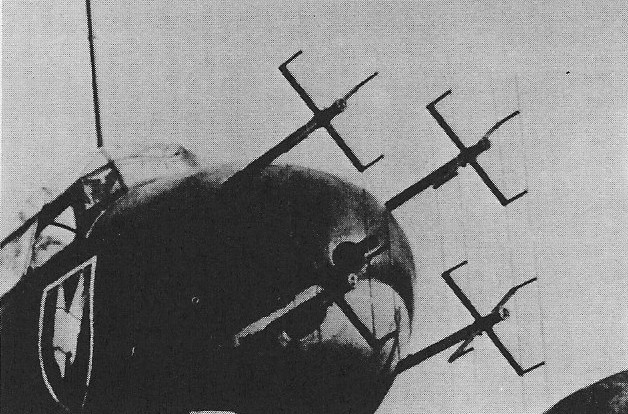
The Ju-88R-1 night fighter had radar aerials projecting from the nose.
In early spring of 1942, two Junkers 88 night fighters equipped with the Lichtenstien B.C. 409 Megacycle radar entered operational service with Nachtjagdgeschwader No.1 in Holland. The antennae mounted in the nose of the aircraft reduced the plane’s speed by as much as 25 mph, the first radar-directed victory being attained by Hauptmann Becker in the summer of 1942. Many night fighters being manned by a crew of three; pilot, radar operator, and radio operator – tail gunner.
Ju-88C-6 night fighter
The Ju 88D series was long-range reconnaissance aircraft based on the Ju 88A-4, in Ju 88D-1 to Ju 88D-5 variants that differed in engines, and detail. The Ju 88G series represented definitive night-fighter versions that from the early summer of 1944 replaced the earlier Ju 88C and Ju 88R aircraft. Equipped with airborne interception radar and bristling with weapons, the Ju 88Gs were extremely formidable night-fighters, taking a heavy toll of Allied night bombers. They were followed by small numbers of Ju 88H aircraft which had a lengthened fuselage to provide increased internal fuel capacity, providing extra long-range Ju 88H-1 reconnaissance and Ju 88H-2 fighter aircraft. The tank-busting Ju 88P was developed from the Ju 88A-4, the Ju 88P-1 with a 75-mm PaK 40 cannon and the ensuing Ju 88P-2 to Ju 88P-4 with different combinations of heavy anti-tank weapons.
FuG 202 Matratzen aerial array of the Lichtenstein BC radar of a Ju.88R-1
The increasing capability of Allied fighters meant that losses began to rise, leading to the higher-performance Ju 88S bomber and Ju 88T photo-reconnaissance aircraft that represented the final production versions. When production ended almost 15,000 had been built, this total emphasising the significant role that the Ju 88 had played in Luftwaffe operations.
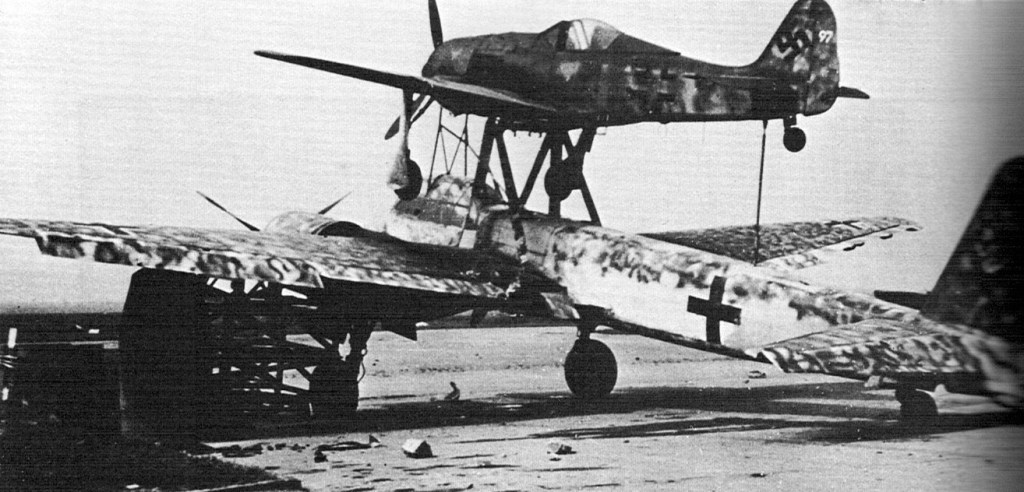
The designed developed into the Ju.388 and the Ju.188, with more powerful engines and improved performance. During World War II Junkers and DFS (Deutsches Forschungsinstitut fur Segelflug) developed the Mistel (Mistletoe), which comprised an unmanned bomber packed with explosive and a pick a back fighter whose pilot would fly the missile to its target. Tests began in 1942, using a DFS 230 glider as the lower component, with Klemm and Focke Wulf lightplanes as carriers. For full scale trials a Junkers Ju 88A 4 bomber was selected as the missile, fitted with an armour-piercing warhead containing 1725 kg (3803 lb) of impact fused high explosive. The mother ship (the Germans called it Vater or Father) was a Messerschmitt Bf I09F 4. In normal flight a three axis autopilot steered the combination on command from the fighter pilot whose control inputs were made on two thumb buttons (rudder and aileron were linked), but for coarse control inputs or large course corrections the Bf 109’s control column and rudder pedals could be used to operate the surfaces of both aircraft. The fighter separated from the bomber over the target by means of mechanical or explosive links.
S-2 Mistletoe
The Mistletoe composite aircraft were tested at Nordhausen and Peenemünde at the beginning of 1944. On the night of 24-25 June 1944, five S-1 Mistletoes were first used operationally. Approximately 250 Ju.88 were converted to Mistletoes.
A number of different Mistel composites were developed, using Junkers Ju 88s and various marks of Messerschmitt Bf 109 and Focke Wulf Fw 190, and others were planned which were to have used Messerschmitt Me 262, Arado Ar 234 and Heinkel He 162 jets as the upper components.
The first operational use of Mistel was to have been an attack on the Royal Navy anchorage at Scapa Flow from an airfield on the coast of Denmark, but the Allied invasion of Normandy on 6 June 1944 brought a hasty transference of 2/KG 101’s Misteln I’s (Ju 88A 4/Bf 109F 4) to St Dizier, whence five Mistel composites attacked invasion shipping on the night of 24 June (all Misteln were operated under cover of darkness be¬cause of their lack of defensive armament). Four successful hits were claimed, the fifth Ju 88 having to be jettisoned. Some 82 Misteln were ready for operation by March 1945, and were employed primarily in bridge attacks (the warhead was capable of penetrating up to 18 m/60 ft of concrete), their final sortie taking place on 16 April against Soviet bridgeheads.
Manufacturing numbers:
Bomber Hunter Reconnaissance Battle airplanes
1939 69
1940 1816 62 330
1941 2146 66 568
1942 2270 257 567
1943 2160 706 394
1944 661 2518 52 3
1945 355
Manufactured by Hunkers Flugzeug und Motorwerke AG, Dressau, Aschersleben, Bernberg. Halberstadt, Leopoldshall and the Leipziig factories. The Ju.88 manufacture was sub-contracted to Arado – c/nos 880001-88199, ATG – c/nos 886001-886999, Henschel – c/nos 883001-883999, Heinkel – c/nos 885001-885999, Norddeutsche Dornier Werke c/nos 88401-884999 & 887001-887999, and Siebel – c/nos 888001-888999.
SNCASE & AAB of France later manufactured the type, mainly out of captured/wrecked or sabotaged parts.
The total production of Ju.88’s was around 14,676 plus 104 prototypes – of which 3,900 were fighter or ground attack variants.
Some of the type were also sold to other countries, mainly ex-Luftwaffe aircraft – Bulgaria Finland – 24 during 1943 France – mainly captured aircraft Hungary – 23 D-1/D-5 during 1942 + 20 + 2 C types during 1943 + 12 during 1944 Italy – approx 70 during 1943 Japan – some during 1943 Romania – 20 aircraft + 77 A-4 during 1943 Russia – 2 K type during 1940, W/no 0885023 D-AXVL & W/no 0885025 D-AXVM Spain – around 20 A-0 type during 1940 RAF – approx 5 captured ircraft
Engines: 2 x 1,410 h.p. Junkers Jumo 211J. Length: 47.1 ft. (14.33 m.). Wing span: 65.8 ft. (20.1 m.). Weight empty: 19,510 lb. (8,850 kg.). Max. bomb load: 4, 190 lb. (1,900 kg.) Max Speed: 300 m.p.h. (480 km.p.h.). Range: 2,980 miles (4,795 km.). Crew: 4. Armament: Up to five machine guns.
Ju.88 V-1 Range: 1200 miles normal
Ju.88 V-2 Maximum speed: 289 mph Service ceiling: 19,680 ft Range: 1240 miles
Ju.88 V-5 Maximum speed: 321.25 mph
Ju.88 V-6 Maximum speed: 301 mph Service ceiling: 22,300 ft Range: 1520 miles
Ju.88 V-7 Maximum speed: 340 mph Service ceiling: 32,800 ft Range: 1660 miles
Ju 88 V25 Prototype B-3 (destroyer) only one machine built.
Ju 88 V27 D-AWLN, B-series prototype.
Junkers Ju 88 A series Development of the prototype V-6 as production aircraft. Corresponding to the prototypes, only the armament were strengthened and the prop replaced by a three-blade. The front bomb bay was omitted, but the machines received four bomb racks under the wings. The electrical undercarriage was replaced by a hydraulic system. Service ceiling: 22,700 ft
Ju 88 A-0 Pre-production model, similar to the A-1.
Ju88 A-1 First standard type, production starting from 1939. Powered by two Jumo B-1. The machine served as horizontal and dive bombers.. Maximum speed w/ext bombload: 276 mph Max speed SL: 279 mph Max speed 16,000 ft: 281 mph Cruise speed: 220 mph Landing speed: 87 mph Climb rate: 1370 fpm Climb to 16,400 ft: 25 min 35 sec Service ceiling: 26,700 ft Range: 935 miles Range: 1550 miles max Fuel capacity: 369-638 gal + 788 gal aux aft bomb bay tank Crew of 4 2500 kg bomb load, four mg 15
Ju 88 A-2 Modification of the Ju 88 A-1 with special equipment for catapult takeoff. Maximum speed: 266 mph Climb to 16,400 ft: 25 min 35 sec Service ceiling: 22,300 ft Range: 1550 miles max
Ju 88A-3 Training version of the A-1 with dual controls and more appropriate instruments. Maximum speed: 266 mph Climb to 16,400 ft: 25 min 35 sec Service ceiling: 22,300 ft Range: 1550 miles max
Ju88A-4 Mass production version as horizontal and dive bombers with 20,08 m increased span, strengthened armament, increased bomb load, more efficient engines and strengthened airframe. Type: Twin-engine middle horizontal and dive bomber. Wing: Cantilever low-wing aircraft. Two-spar complete metal wing. Dive brakes at height of the front spar outside of the engine cowls under the outerwings. Warm air wing de-icing. Structure made of metal, rudders material-covers. Trim tabs in all rudders. Inflatable rubber nose for the snow and ice removal of the horizontal stabilizer. Retractable undercarriage hydraulically operated. Hydraulically brakable main wheels. Tail landing gear retractable. Engine: Two Junkers Jumo 211 J liquid-cooled with 1410 HP take-off power. Liquid and oil cooling sections containing ring radiators. Dreiblatt VDM or Junkers adjustable metal propellers. Wingspan: 20.0 m / 65 ft 7 in Length: 14.40 m / 47 ft 3 in Height: 4.85 m / 15 ft 11 in Wing area: 54.50 sq.m / 586.63 sq ft Max take-off weight: 14000 kg / 30865 lb Empty weight: 9860 kg / 21738 lb Fuel capacity of 2900 litres in 5 tanks, between the two cross-beams. 2 x of 415 litres, 2 x of 425 litres, and 1 x of 1220 litres fuel tanks. A further tank with 680 litres contents could be built in the bomb bay. Crew: 4 Max. speed: 470 km/h / 292 mph Max speed 17,500 ft: 292 mph Max speed 19,680 ft: 280 mph Cruise speed: 240 mph Climb rate: 1312 fpm Climb to 16,400 ft: 25 min 35 sec Climb to 17,500 ft: 23 min 0 sec Service Ceiling: 8200 m / 26900 ft Range: 1112 miles normal Range w/max.fuel: 2730 km / 1696 miles Armament: 4 x mg 81, 1 x mg 131 Bomb load up to 3000 kg. Four bomb racks under the wing centre for 2 x 1000 kg or 4 x 500 kg or 2 x 1000 and 2 x 250/500 kg. In addition 10 x 50 kg in the bimb bay.
Ju.88A-4R Max speed 17,500 ft: 273 mph Climb to 16,400 ft: 25 min 35 sec Climb to 17,500 ft: 23 min 0 sec Service ceiling: 27,850 ft Range: 1550 miles max Range: 650 miles Range: 1110 miles full bombload
Ju 88A-5 Version with two Jumo 211 g-engines 1100-1300 hp and the increased bomb additional load of the A-4, otherwise as the A-1. Maximum speed: 280 mph Climb to 16,400 ft: 25 min 35 sec Service ceiling: 27,850 ft Range: 1398 miles
Ju 88A-6 Modification of the A-5 with balloon cutting device. The entire construction weighed 322 kg, which had to become balanced by 59 kg weight in the tail. In addition the cutter device reduced speed by 30 km/h.Only operated for a few months then converted to sea-reconnaissance aircraft, later joining 200 “Hohentwiel”. Engines: 2 x Junkers Jumo 211 G1, 1200 hp Range: 1200 mi Range ext.fuel: 1500 mi Top speed: 317 mph Service ceiling: 26,000-30,000 ft Armament: 4-7 mg Bombload: 2 ton
Ju.88A-6U Maximum speed: 260 mph Climb to 16,400 ft: 25 min 35 sec Service ceiling: 23,620 ft Range: 1860 miles
Ju 88A-7 Trainer aircraft, derived from the A-4, with two Jumo 211 H. Maximum speed: 289 mph Climb to 16,400 ft: 25 min 35 sec Service ceiling: 23,620 ft Range: 1550 miles max
Ju 88A-8 Similarly to the A-4, but with “Kuto nose” with balloon cut-off press appliance. Equipped with two Jumo 211 H.
Ju 88A-9 Tropical version of the Ju 88 A-1. Additional special equipment included water tanks, sun visors, rifles and sleeping bags.
Ju 88A-10 Tropical version of the Ju 88 A-5.
Ju 88 A-11 Tropical version of the Ju 88 A-4.
Ju 88A-12 Training aircraft with dual controls, changes from the A-4, with the widened cockpit. Maximum speed: 260 mph Climb to 16,400 ft: 25 min 35 sec Service ceiling: 23,620 ft
Ju 88A-13 Attack airplane derivative of the Ju 88 A-4, without dive brakes, but with increased armour. This version had, so-called “watering cans” with two containers under the wing centre, each container contained 4 x mg 81, fixed forward down aiming and four fixed rear down firing. Maximum speed: 260 mph Climb to 16,400 ft: 25 min 35 sec Service ceiling: 23,620 ft
Ju 88A-14 Naval bomber for ship target engagement with stronger armour and without dive brakes. The machine was equipped with two Jumo 211 j-engines and had an additional MG/FF. Maximum speed: 273 mph Climb to 16,400 ft: 25 min 35 sec Service ceiling: 23,620 ft Range: 1550 miles max
Ju 88A-15 Bomber with a wood bomb bay, an additional load of 3000 kg and two mg 15. Three man crew. Service ceiling: 23,620 ft Range: 1550 miles max
Ju 88A-16 Training aircraft. Derived from the A-14.
Ju 88A-17 Torpedo airplane with three man crew. Derived from A-14. Maximum speed: 295 mph Climb to 16,400 ft: 25 min 35 sec Service ceiling: 28,215 ft Range: 1860 miles
Ju 88 B-0 Ten airplanes as long-range reconnaissance aircraft. The cockpit resembled that of the Ju 188. Four man crew, 3 mg 81 Z armament. Maximum speed: 332 mph Cruise speed: 310 mph Landing speed: 109 mph Service ceiling: 30,840 ft Range: 1550 miles norm Range: 1770 miles max
Ju 88 B-3 Destroyer version with two BMWS 801-Motoren. Three mg 17 and a mg 151 were fixed. For reconnaissance missions type Rb 50/30 or 20/30 cameras could be carried.
Ju.88C Engines: Junkers Jumo Maximum speed: 311 mph Cruise speed: 278 mph Climb to 16,400 ft: 13 min 48 sec Service ceiling: 22,400 ft Range: 650 miles Range: 1540 miles aux tanks, no load
Ju.88C-6 Max speed 19,680 ft: 306 mph Landing speed: 90 mph Climb to 19,680 ft: 12 min 45 sec Service ceiling: 32,500 ft Range: 645 miles normal Range: 1243 miles max
Ju.88C-6c Engines: 2 x Junkers Jumo 211J-1 or J-2, 1340 hp Span: 65 ft 7.5 in Length: 47 ft 1 in Height: 16 ft 7.5 in Empty weight: 19,973 lb Combat weight: 27,225 lb Max speed: 303 mph at 18,685 ft Cruise: 279 mph Service ceiling: 32,480 ft Range: 1230 mi Armament: 3 x 20mm MG FF/M cannon / 4 x 7.9 mm mg / 2 x 20mm MG 151 Radar: FuG 202 Lichtenstein BC
Ju88 D0/D1 Recon aircraft with 2 x Jumo 211J-1 as A4 with radar equipment, 330 built since 1940
Ju.88D-1 Maximum speed: 295 mph Cruise speed: 264 mph Landing speed: 87 mph Service ceiling: 28,215 ft Range: 1830 miles
Ju.88G Max speed SL: 270 mph Max speed 29,855 ft: 389 mph w/MW-50 boost Endurance: 3 hr 45 min
Ju.88G-1 Max speed 27,900 ft: 342 Service ceiling: 32,500 ft Range: 1550 miles max
Ju.88G-6 Wing span: 65 ft 10.5 in Length: 47 ft 1.5 in Speed: 311 mph at 20,000 ft Ceiling: 32,500 ft Range: 1950 miles Armament: 3 x 20mm cannon, 3 x 7.9mm mg, 2 x 20mm Schräge Musik cannon Crew: 3
Ju.88G-7 Max speed 33,455 ft: 363 mph Climb rate: 1645 fpm Climb to 30,185 ft: 26 min 24 sec Range: 1420 miles
Ju.88G-7b Engines: 2 x Junkers Jumo 213E, 1725 hp Span: 65 ft 7.5 in Length: 47ft 8.5 in Height: 15 ft 11 in Empty weight: 28,900 lb Combat weight: 30,480 lb Max speed: 363 mph at 33,500 ft Cruise: 270 mph Service ceiling: 34,000 ft Range: 1400 mi Armament: 6 x 20mm MG 151 cannon / 1 x 13 mm mg Radar: FuG 240 Berlin or FuG 219 Neptun V
Ju.88G-7C Maximum speed: 402 mph
Ju.88H Range: 2980 miles norm Range: 3200 miles max Endurance: 12 hr
Ju.88H-1 Maximum speed: 260 mph Cruise speed: 230 mph Landing speed: 87 mph Service ceiling: 26,240 ft Range: 1240 miles
Ju.88K Max speed 15,600 ft: 317 mph Cruise speed: 264 mph Service ceiling: 29,800 ft Range: 1310 miles Endurance: 5 hr 30 min
Ju.88P-4 Maximum speed: 260 mph Cruise speed: 230 mph Landing speed: 87 mph Service ceiling: 26,240 ft Range: 1240 miles
Ju.88R-2 Maximum speed: 360 mph Cruise speed: 315 mph Landing speed: 99 mph Service ceiling: 30,175 ft Range: 1860 miles
Ju.88S-1 Maximum speed: 372 mph Max speed 26,250 ft: 379 mph w/GM-1 boost Max speed 27,900 ft: 382 mph Cruise speed: 289 mph Climb rate: 1804 fpm Service ceiling: 34,450 ft / 37,750 w/GM boost Range: 1240 miles Endurance: 5 hr 45 min
Ju.88S-2 Max speed 32,800 ft: 384 mph
Ju.88T-3 Max speed 3290 ft: 404 mph Max speed 27,900 ft: 410 mph w/GM-1 boost Range: 2000 miles
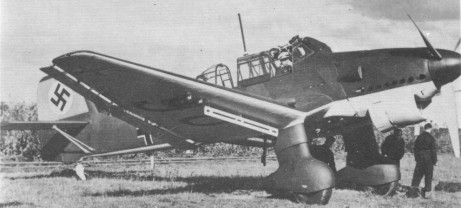
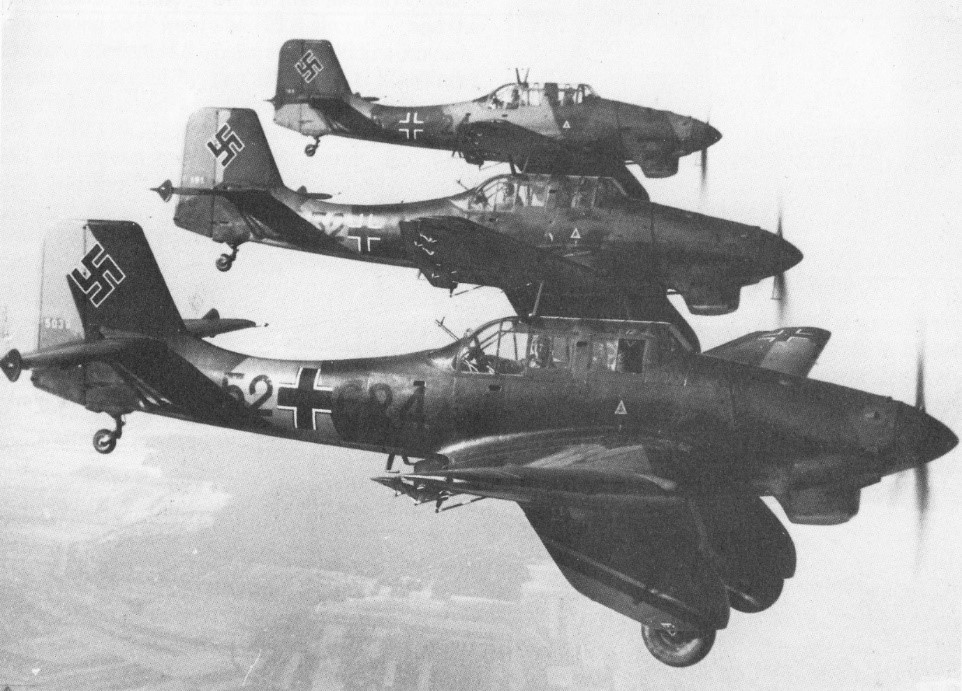
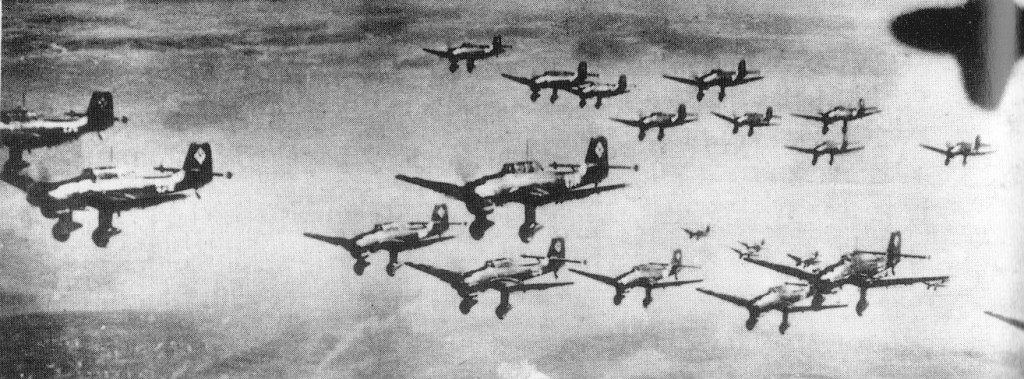
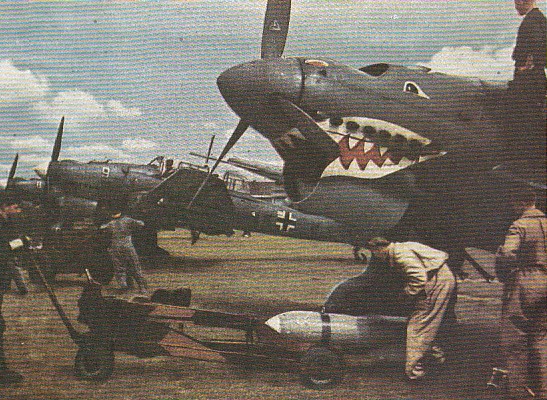
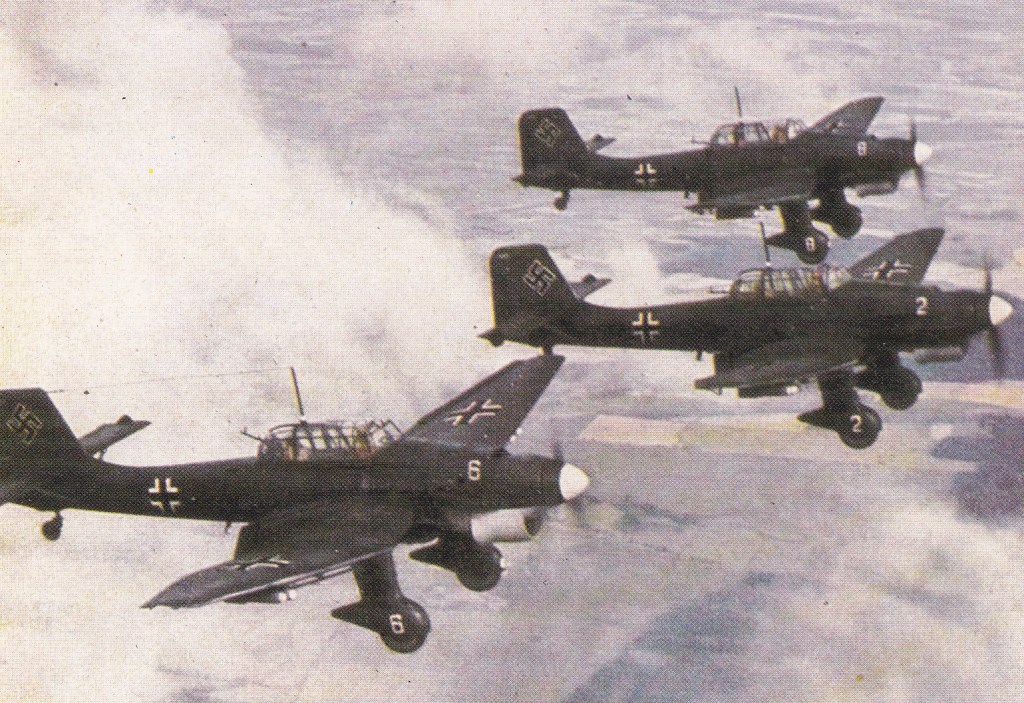
The reputation of the Junkers Ju 87 Stuka (Sturzkampfflugzeug, or dive-bomber) was made during the Polish campaign in close-support operations across Europe. The Luftwaffe believed it to be virtually invincible, but this was true only after air superiority had been gained, as demonstrated during the Battle of Britain when the Stukas were mauled so severely by the RAF that they were later withdrawn from operations over western Europe.
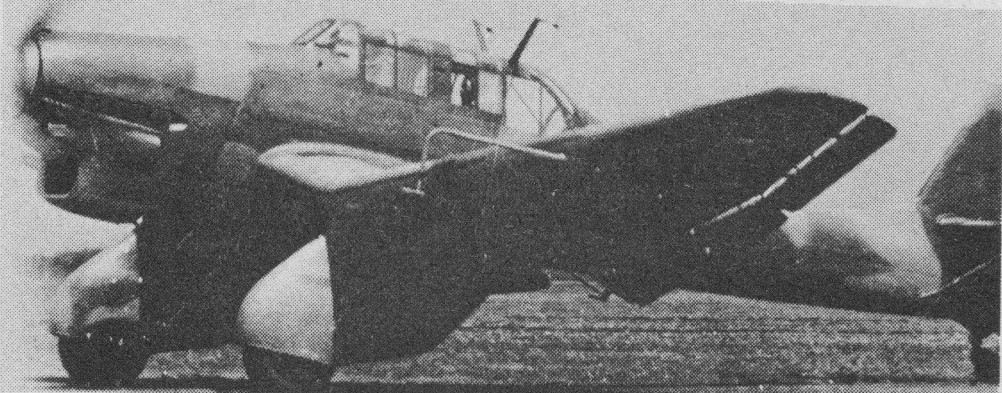
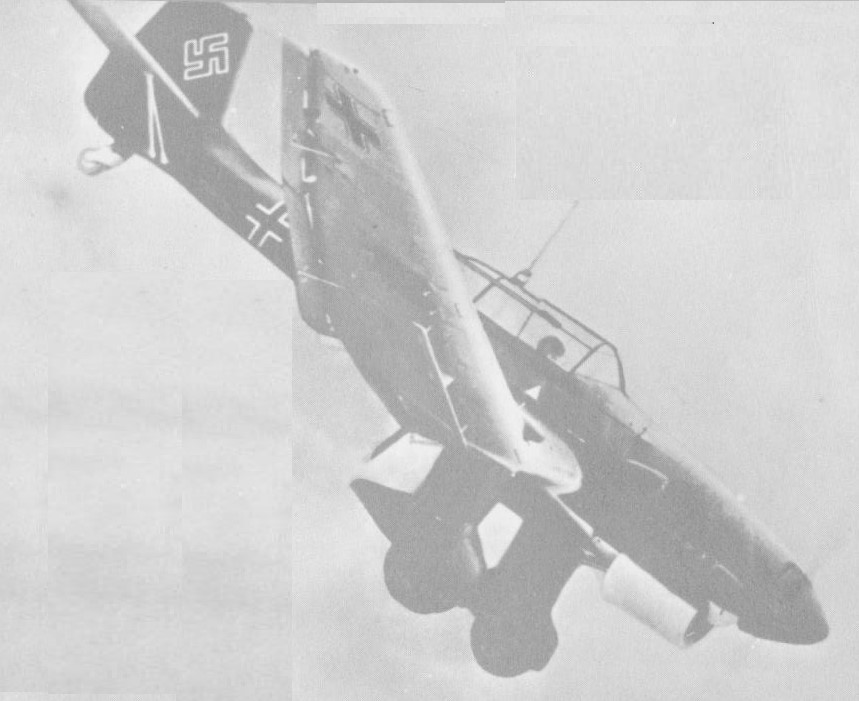
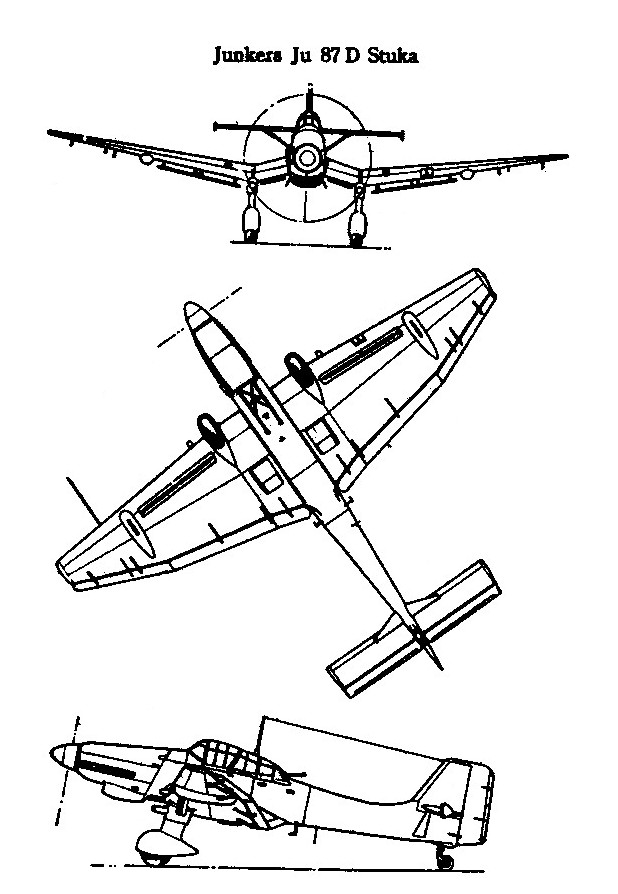
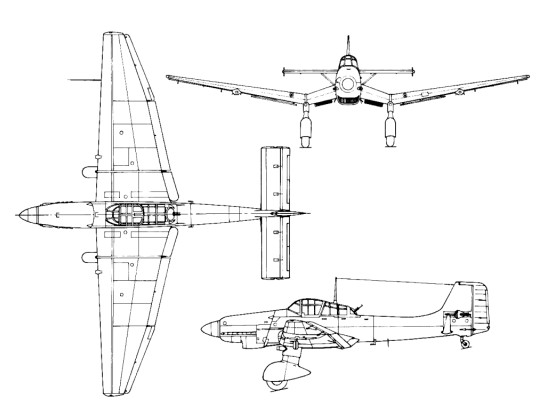
Designed by Hans Pohlmann, the fuselage has a metal structure with top hat section stringers and stressed skin covered. The gull wings were two metal spars with a flush riveted stressed skin and fitted with double wing ailerons and flaps.
Three prototypes were started in 1934, the first with twin vertical tail surfaces and powered by a Rolls-Royce Kestrel V engine rated at 640 hp at 14,000 ft / 4267 m. This Ju 87 V1 was flown at Dessau in the late spring of 1935. During dive tests in 1935 the tail unit of this aircraft collapsed and the aircraft was destroyed. The second prototype, Ju 87 V2, introduced a single fin and rudder and was powered by a 455kW Junkers Jumo 210A, with which the flight test programme was resumed in the late autumn on 1935.
The Ju 87 V2 was powered by the intended Junkers Jumo 210Aa engine, rated at 610 hp at 8530 ft / 2600 m. This aircraft was fitted with dive brakes prior to its delivery to the Rechlin test centre of official ecaluation in March 1936. Attached beneath the wings just aft of the leading edges and outboard of the main undercarriage, these took the form of slats turning through 90 degrees. Prior to commencing the dive, the pilot had to throttle back the engine in order to close the cooling gills, switch over to the sea-level supercharger and turn the propeller to coarse pitch, a series of lines of inclination marked on the starboard front side screen of the cockpit enabling the pilot to estimate the dive angle by aligning the lines with the horizon.
The official evaluation of this aircraft and a further improved third prototype led to a pre-production batch of 10 Ju 87A-0 aircraft with the 477kW Jumo 210Ca engine. The initial Ju 87A-1 production version began to replace Hs 123 biplanes in the spring of 1937.
Ju 87A-1 of Stukageschwader 163 Immelmann in late 1937
The V3 and V4 protypes offered various refinements, the latter introducing a single 7.9mm MG 17 machine gun in the starboard wing and a crutch on swing links which, attached immediately aft of the radiator bath, lowered and swung the bomb, either 551 lb / 250 kg or 1102 lb / 500 kg, forward on release to ensure clearance of the propeller arc.
The first pre-series Ju 87A-0 dive bombers came off the Dessau assembly line before the end of 1936, 10 of these being followed by the series Ju 87A-1 early in 1937.
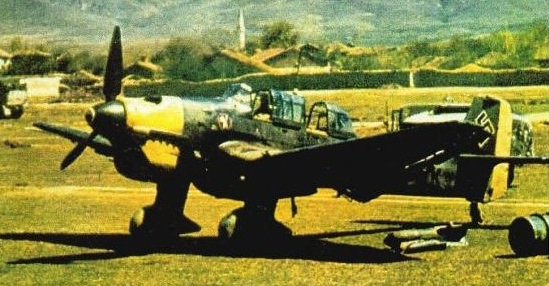
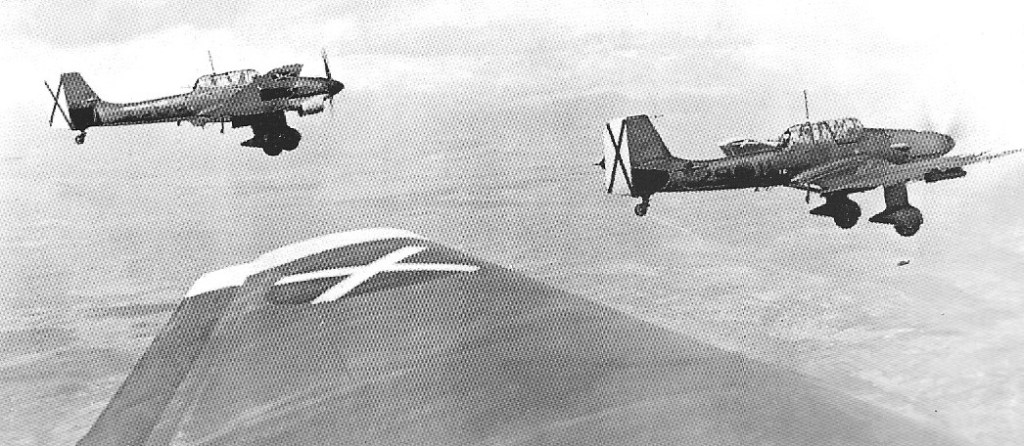
Late in 1937 three Ju 87A-1 dive-bombers of Stukageschwader 162 Immelmann were despatched to Spain for service under the Legion Condor. These aircraft were powered by the 477-kW (640-hp) Jumo 210Ca and were replaced in October 1938 by five examples of the Ju 87B-1, the first definitive variant of this dive-bomber series with a considerably more powerful engine, improved offensive armament, and revised structural and aerodynamic features including a recontoured fuselage, larger vertical surfaces, cantilever main landing gear units without the struts that braced the Ju 87A’s main units to the fuselage. These aircraft operated with Kampfgruppe 88 into early 1939, validating many of the dive-bomber’s tactical principles.
Before the Pacific War began Japan had imported an example of the Ju.87A for study by the Army. It was placed on display at Tokorozawa Air Base in late 1940. It was thought the Ju.87 would be used in quantity and the allied code name ‘Irene’ was assigned.
The Ju 87A-1 gave way to the A-2 with a Jumo 210Da engine of 680 hp for take-off in 1937, but by then a major re-design accommodated the Jumo 211A engine of 1000 hp for take-off.
Ju-87B-2
The more powerful engine was installed in the pre-series Ju 87B-0, the Jumo 211A giving way in the series model, the Ju 87B-1, to the Jumo 211Da with direct fuel injection and an emergency take-off rating of 1200 hp. The substantial boost in power enabled the Ju 87B-1 to lift a 1102 lb / 500 kg bomb with both crew members in situ whereas the Ju 87A had only been able to carry this weapon when flown as a single-seater. An alternative warload consisted of a 551 lb / 250 kg bomb on the fuselage crutch and four 110 lb / 50 kg bombs on underwing racks. Forward firing armament was increased to two 7.9mm MG 17s with 500rpg, and a single 7.9 mm MG 15 was attached to a flexible mounting in the rear cockpit with 900 rounds.
Five of the first Ju 87B-1s were despatched to Spain in October 1938 with the same success as the Ju87A before them. With the transfer of the assembly line from Dessau to the Weser Flugzeugbau at Berlin-Tempelhof, production increased dramatically, exceeding 60 aircraft monthly by mid-1939, in which year 557 were to be delivered.
Brunete front, Spain
At the beginning of World War II the Luftwaffe had 336 Ju 87B aircraft on strength, and others were supplied to Italy (which named them Picchiatello), Bulgaria, Hungary and Romania. Nine Ju 98B-1 equipped Stukagruppen were included in the Luftwaffe order of battle on 1 September 1939, these possessing 336 aircraft of which 288 were serviceable. Only 31 Ju 87Bs were lost during Polish operations.
The Ju 87B-2 had succeeded the B-1 on the Weser assembly line late in 1939, this incorporating several refinements, such as a broad-bladed propeller, hydraulically-operated radiator cooling gills and ejector exhausts.
Ju 87B-1 of II Gruppe of Stukageschwader 77
Manufactured in parallel was a longer-range Ju 87R, R for Reichweite or range, which, for extended-range missions such as anti-shipping, made provision for substantial addition fuel and oil.
The Polish campaign influenced boosted production and a total of 769 were built during 1940.
Breda also built a number of Junkers Ju 87Bs under license as the Breda 201 Picchiatelli before suspension of production soon after the Italian surrender.
Ju-87D
Ju 87s were deployed extensively on the Eastern Front, initially with great success, but by 1943 they were suffering such severe losses by daylight that they were switched to a night assault role.
Ju-87G with the BK-37s
Later in the war a specialist anti-armour version was produced which brought havoc to the tank armies on the Russian Front.
Ju.87B
When production ended in September 1944 more than 5,700 had been built, the majority after 1940 when their vulnerability without adequate fighter cover had been highlighted in the Battle of Britain. A redesigned and improved Ju 187 was projected in 1943, but following consideration of the design no examples were built.
Ju.87 V-1 cn 4921 – The first prototype flew for the first time on 17 Sept 1935 and was later possibly registered D-UBYR Powered by a 640 hp Rolls Royce Kestrel and fitted with a fixed pitch two blade wooden propeller. Also with the vertical end plate tailplane surface. The aircraft was later destroyed in a crash due to tail flutter. Length: 33 ft 1.25 in
Ju.87 V-2 cn 4922 – D-UHUH Powered by 610 hp Junkers Jumo 210A with a Hamilton Standard three blade variable pitch metal propeller. This time with the single vertical tail surfaces. Length: 34 ft 10.75 in
Ju.87 V-3 cn 4923 – D-UKYQ – similar to the V-2 Fitted with special dive brakes under the wings Length: 35 ft 3 in
Ju.87 V-4 cn 4924 – D-UBIP – with a larger vertical tail and flew for the first time on 20 Jun 1936 Armed with a 7.92mm MG 17 in the starboard wing The prototype for the A-0 production series
Ju.87 V-5 cn 4925 – B-0 series prototype, first flew 14 Aug 1936
Ju.87 V-6 cn 0870027 – Powered by 1000 hp Junkers Jumo 211A Also a B-0 series prototype, first flew 14 Jun 1937
Ju.87 V-7 cn 0870028 – Prototype for the B series which first flew on 23 Aug 1937 Powered by 1000 hp Junkers Jumo 211A
Ju.87 V-8 cn 4926 – First flew 11 Nov 1937
Ju.87 V-9 cn 4927 – D-IELZ – First flew 16 Feb 1938, later as WL-IELZ on 16 Oct 1939
Ju.87 V-10 cn 4928 – D-IHFH – First flew 17 Mar 1938 As a fixed wing test aircraft for the C series – TK+HD, as C-1
Ju.87 V-11 cn 4929 – TV+OV – First flew 12 May 1938 Folding wing test type for the C series, as C-0
Ju.87 V-15 cn 0870321 – D-IGDK crashed during 1942
Ju.87 V-16 cn 0870279 – GT+AX
Ju.87 V-19 cn 4930 – VN+EN used as a torpedo test aircraft for the E series types during 1941
Ju.87 V-21 cn 0870536 – D-INRF D series prototype, first flew during February 1941
Ju.87 V-22 cn 0870540 – SF+TY D series prototype, first flew on 1 March 1941
Ju.87 V-23 cn 0870542 – PB+UB D series prototype, first flew during April 1941
Ju.87 V-24 cn 0870544 – BK+EE D series prototype, first flew duringMay 1941
Ju.87 V-25 cn 0870538 – BK+EF D series tropical variant prototype
Ju.87 V-30 cn 2296 D-5 prototype, first flew 20 June 1943
Ju.87A 210 built
Ju.87A-0 10 pre-production types, first flown November 1936 Engine: Junkers Jumo 210C, 600 hp Prop: 10 ft 10 in two position adjustable
Ju 87A-1 Engine: Junkers Jumo 210Ca, 477-kW (640-hp).
Ju.87A-1 Production type Entered service with Sturkampfgeschwader Immelmann August 1937 Engine: Junkers Jumo 210Da, 635 hp Max speed SL with bombload: 174 mph Max speed 12,000ft: 199 mph Max speed 13,120ft with bombload: 180 mph Service ceiling: 22,960 ft Range: 620 miles Wingspan: 45 ft 3.25 in Length: 35 ft 5 1/6 in Height: 12 ft 9.5 in Wing area: 343.38 sq.ft Empty weight: 5104 lb Loaded weight: 7496 lb Armament: 1 x fixed 7.92mm MG 17, 1 x flexible 7.92mm MG 15, Later armament: 2 x fixed 7.92mm MG 17, 1 x flexible 7.92mm win barrel MG 81z Bombload: 1 x 550 lb bomb or 1100 lb (with one man crew) Later bombload: 3968 lb, or 2 x pods of six MG 17 or 2 x 2cm MGFF cannon each, or 2 x packs of 92 – 4.4 lb anti-personnel bombs. Sirens were also fitted to undercarriage fairings
Ju.87A-2 Engine: Junkers Jumo 210Da, 680 hp
Ju.87B Larger vertical tail 200 delivered to Italy – known as Picchiatello Evaluated by the Japanese Supplied to Bulgaria, Hungary, and Romania Last B type produce during October 1940 Engine: Junkers Jumo 211A-1, 899 hp Prop: controlable pitch 11 ft 5.75 in 3-blade Length: 35.6 ft. (10.85 m.). Wing span: 45.3 ft. (13.8 m.). Weight empty: 6,085 lb. (2,760 kg.). Armament: Two mg in wings, one in rear cockpit. Bomb load: 1100 lb (500 kg.) Max speed: 232 m.p.h. (373 km.p.h.). Range: 370 miles (600 km.). Crew: pilot & 1 gunner. One aircraft trialled with 1475 hp Daimler-Benz DB 605 engine
Ju.87B-0 Ten pre-production aircraft built 1938 Engine: Junkers Jumo 211A, 900 hp
Ju.87B-1 1938 – fitted with larger canopy, re-designed cockpit and undercarriage wheel spats Powerplant: 1 x Junkers Jumo 211Da, 895kW (1,200 hp). Span: 13.8m (45ft 3.3 in). Length: 11.1m (36ft 5in). Max TO weight: 4340 kg (9,560 lb). Max speed: 238 mph at 13,410 ft. Max speed SL with bombload: 211 mph Max speed 16,405ft: 217 mph Cruise speed: 175 mph Landing speed: 68 mph Climb rate to 13,500 ft: 12 min Service ceiling: 26,250 ft Height: 12 ft 9.5 in Wing area: 343.38 sq.ft Empty weight: 6052 lb Operational range: 490 miles. Armament: 2 x 7.92mm Rheinmetall MG 17 mg in wings, 1 x 7.92mm MG 15 mg in rear cockpit Bombload: 4 x 110 lb underwing racks & 1 x 551 lb or 1 x 1102 lb under fuselage
Ju.87B-1 / U-1 Standard variant
Ju.87B-1 / U-2 Alternative radio equipment
Ju.87B-1 / U-3 Additional armour
Ju.87B-1 / U-4 Similar to U-3 but ski undercarriage
Ju.87B-1 / Trop Tropicalised variant
Ju.87B-2 Fitted with automatic dive control Modified undercarriage legs and hydraulically operated radiator cooling flaps Later internal electrical equipment modified Engine: Junkers Jumo 211Da, 1100 hp (1200 hp with fuel injection) Prop: Junkers VS 5, 11 ft 1.75 in dia., 3-blade Wing span: 45 ft 3.5 in (13.8 m). Length: 36 ft 1 in (11.0 m). Height: 12 ft 9.5 in (3.9 m). Loaded weight: 9321 lb / 11,023 lb max Max level speed: 237 mph (380 kph). Service ceiling: 26247 ft / 8000 m Armament: 2 x 7.92mm Rheinmetall MG 17 mg in wings, 1 x 7.92mm MG 15 mg in rear cockpit Bombload: 2200 lb (2200 lb as a single seater) Crew: 2
Ju.87C 87B’s converted for carrier ‘Graf Zeppelin’. Strengthened, fitted with folding wings, arrester gear, jettisonable undercarriage, inflatable flotation bags under each wing and some carried a two seat rubber dingy.
Ju.87C-0 One only, fitted with 88mm recoilless gun Damaged while testing
Ju-87C-1 Armed with two wing mounted MG 17 machine guns and an aft firung MG 15 machine gun. Project abandoned and those being built converted to B-2s
Ju.87D Ground attack and dive bomber, two crew Introduced during late 1940 Engine coolant radiator now under wing. Oil coolant radiator replaces engine coolant radiator Redesigned engine cowling, cockpit canopy, undercarriage fairings and improved armour protection. Sirens fitted to undercarriage Engine: Junkers Jumo 211J-1, 1350 hp Propeller: VDM 3-blade controllable pitch Wingspan: 45 ft 3.5 in Length: 37 ft 8.75 in Take-off weght: 12,600 lb Max speed: 255 mph Armament: 2 x 7.92mm MG 81 mg Bombload: 1 x 1100 lb under fuselage or 1 x 550 lb under fuselage & 4 x 110 lb under wings Some fitted with twin 37mm (flak) cannon, revised canopy, simplified landing gear and larger vertical tail. Some 6000 built.
Ju-87D-1 Engine: 1 x Junkers Jumo 211J-1, 1410 hp / 1051kW Wingspan: 13.80 m / 45 ft 3 in Length: 11.50 m / 37 ft 9 in Height: 3.90 m / 12 ft 10 in Wing area: 31.90 sq.m / 343.37 sq ft Max take-off weight: 6600 kg / 14550 lb Empty weight: 3900 kg / 8598 lb Cruise speed: 195 mph Endurance max load: 2 hr Max endurance: 4 hr Range 1100 lb load: 370 miles Loaded weight: 12,600 lb normal / 14,550 lb max Max. speed: 410 km/h / 255 mph at 12,600 ft / 3480 m Service ceiling: 7300 m / 23,950 ft Climb to 16,405 ft / 5000m: 19 min 49 sec Range w/max.fuel: 1535 km / 954 miles Armament: 4 x 7.92mm MG 81 mg Bombload: 3968 lb / 1800 kg under fuselage Crew: 2
Ju.87D-1 / Trop Tropicalized with filters and desert survival equipment
Ju.87D-2 Strengthened, sirens removed and fitted with glider towing equipment
Ju.87D-3 Different armament and added armour protection Trialled with over-wing passenger pods (pods to be released and descend by parachute – never tested)
Ju.87D-4 Able to carry a torpedo Armament: 6 x MG 81 in under-wing WB81 weapon containers.
Ju.97D-5 Longer span, no dive brakes, jettisonable landing gear Max speed: 250 mph Service ceiling: 23,900 ft Wingspan: 49 ft 2.5 in Length: Height: Wing area: Empty weight: Loaded weight: 14,550 lb
Ju.87D-6 Simplified version similar to D-5 – not produced
Ju.87D-7 Night ground attack type Engine: Junkers Jumo 211P, 1500 hp Max speed 15,745ft: 248 mph Cruise speed: 187 mph Wingspan: 49 ft 2.5 in Length: 37 ft 8.75 in Height: 12 ft 9.5 in Wing area: 362.6 sq.ft Empty weight: 8690 lb Loaded weight: 13,010 lb Armament: 2 x 20mm MG 151 cannon in wings
Ju.87D-8 Daytime version of D-7
Ju.87E Proposed two seat, catapult launched dive bomber. Able to carry bombs or torpedo. Not built.
Ju 87F Experimental version with larger tyres, uprated engine Modified airframe, greater wingspan Engine: Junkers Jumo 213, 1750 hp
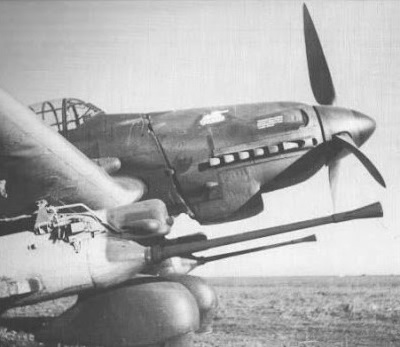
Ju 87G Anti-tank variant of D-3, with dive brakes deleted during late 1942 Armament: 2 x 37mm BK (Flak 18) under wing cannon & 1 x 7.92mm MG 81 mg aft cockpit
Ju 87G-1 Anti-tank, glider tug, & transport duties Entered service 1942 Engine: Junkers Jumo 221J-1, 1400 hp Max speed: 195 mph Cruise speed: 120 mph Wingspan: 49 ft 2.5 in Length: 37 ft 8.75 in Height: 12 ft 9.5 in Wing area: 362.6 sq.ft Empty weight: 10,584 lb Loaded weight: 14,550 lb
Ju 87G-2 Improved version
Ju 87H Ju 87D converted as two seat dual trainers Many had armament removed and bulged side blister pods in rear canopy
Ju 87R Ju 87Bs converted to long range anti-ship Entered service 1940 Engine: Junkers Jumo 211D
Ju 87R-1 Larger fuel tanks, 2 x 33 Gal drop tanks – outer wing position Bombload: 1 x 551 lb One trialled as cargo transport with container on main bomb crutch Range: 875 miles
Ju 87R-2 Increased range
Ju 87R-3 Experimental glider tug with minor equipment changes
Ju 87R-4 Last R type, produced during October 1941 Engine: Junkers Jumo 211J
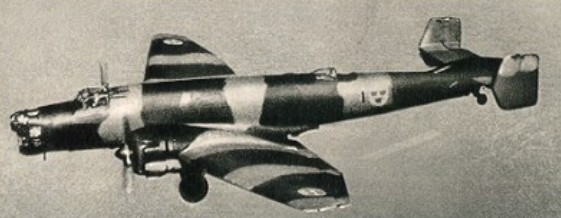
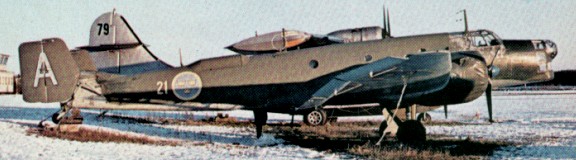
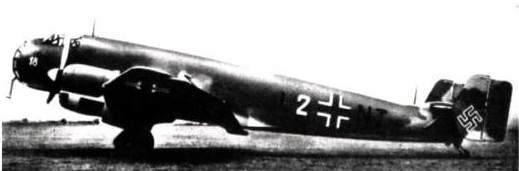
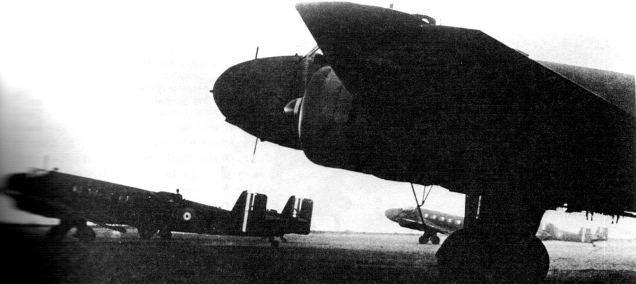
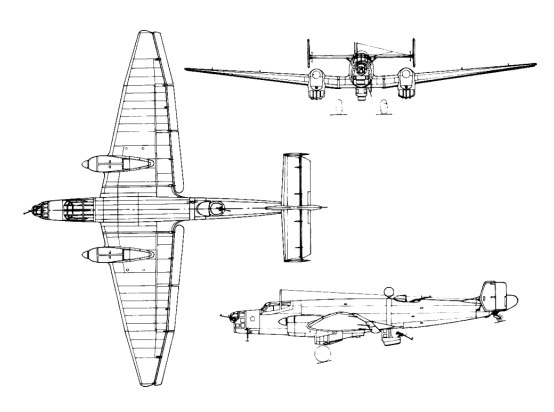
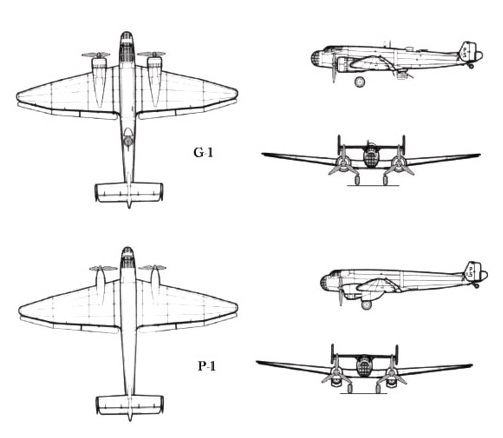
The Junkers Ju 86, developed as a 10-passenger airliner and four-seat bomber, was designed around the Junkers Jumo 205 diesel engine. The first of five prototypes was flown during 1934, its performance proving disappointing but, nevertheless, the type entered production as both airliner and bomber in late 1935. Initial deliveries of Ju 86A-1 pre-production bombers were made in February 1936 and the first Ju 86B pre-production transport for Swissair was delivered in April 1936.
Five Ju 86D-1 bombers with improved Jumo 205C engines served with the Legion Condor during the Spanish Civil War, but the powerplant did not stand up well to combat conditions and the aircraft proved markedly inferior to the Heinkel He 111. Military export orders included the Ju 86K-1 for South Africa and Sweden, where Saab subsequently licence-built the type as the SAAB B3; the Ju 86K-2 for Hungary, which built 66; and the Ju 86K-6 for Chile and Portugal. The Ju-86 was also powered by 800 HP. Pratt & Whitney radial engines. They were used by S.A.A.
Ju-86K-5
Luftwaffe dissatisfaction with the capability of the Ju 86D led to the far more reliable Ju 86E-1 with B.M.W. 132F radial engines and the Ju 86E-2 with B.M.W. 132Ns; improvements introduced during production brought re-designation of the last 40 Ju 86Es on the production line as Ju 86G-1 aircraft, with round glazed noses; production ended in 1938. However, in 1939 two Ju 86D airframes were used for conversion as the Jumo 207A-engined prototypes of a high-altitude version with a two-seat pressurised cabin. Successful trials led to two initial production versions, the Ju 86P-1 bomber and Ju 86P-2 reconnaissance aircraft. The latter had a ceiling of about 12800m, and in an effort to gain more altitude a high aspect ratio wing spanning 32.00m was introduced to produce the Ju 86R-1 reconnaissance aircraft and Ju 86R-2 bomber. Only a few reached service, but one demonstrated a ceiling of 14400m.
The Ju 86P high altitude reconnaissance variant modified from the Ju 86D by fitting a pressurised cabin for a crew of two. The cabin was a dry-air sandwich type, one wall construction of dural and one of Plexiglas. This could maintain internal pressure at 3000m. Crew entry was gained by a circular hatch which was controlled internally by a handle operating two geared arms in the belly framework of the cockpit. This variant was powered by two 950 hp Jumo 207 A-1 engines and fitted with new outer wing panels which enabled the type to attain altitudes in the region of 11,000m / 36,000 ft
Spitfires succeeded in shooting down at least two Ju 86 at extreme altitudes. In one example, a significantly lightened Spitfire Mk V shot down a Ju 86P at 41,994 feet (12,800 metres) near Cairo.
The Ju 86 R-1 was an improved version of the Ju 86 P with a wingspan of over 30m / 100ft which was powered by two 1000 hp Jumo 207 Diesel engines driving four blade propellers which gave it a service ceiling of around 14,500m / 47,500ft.
During the spring of 1942, conversion of a small number of Ju 86 Ps to R standard was begun at Junkers’ Dessau factory. The sub-type had new outer wing panels and Jumo 207 B-3 diesel engines with GM 1 power-boosting. Like many other Junkers designs of the period, the aircraft retained the distinctive trailling-ege slats in place of conventional elevators.
Development of the Ju 86R-3 with supercharged Jumo 208 engines and of the proposed Ju 186 four-engined high-altitude bomber based on the Ju 86 were abandoned. A six-engined Ju 286 high-altitude bomber did not progress beyond the initial planning stage.
Ju.86P-1
The South African Air Force sent 17 Junkers Ju 86 bombers and 10 Junkers Ju 52 and 53m transport aircraft to intervene in the fighting in Italian East Africa in 1940. The SAAF won its first victory when it bombed the Italian air base of Yavello (southern Ethiopia) on 19 June 1940. Three Ju 86s, operated by 11 and 12 Squadrons, and two Hawker Hurricanes under Capt. Truter, successfully shot down a Fiat CR.42.
Ju-86D-1 Engines: 2 x Junkers Jumo 205C-4, 447kW Max take-off weight: 8200 kg / 18078 lb Loaded weight norm: 17,760 lb Empty weight: 5150 kg / 11354 lb Wingspan: 22.50 m / 73 ft 10 in Length: 17.87 m / 57 ft 8 in Height: 5.06 m / 16 ft 7 in Wing area: 82.00 sq.m / 882.64 sq ft Max. speed: 325 km/h / 202 mph Cruise speed: 170 mph Ceiling: 5900 m / 19350 ft Range w/max.fuel: 1500 km / 932 miles Armament: 3 x 7.92mm machine-guns, 800kg of bombs Crew: 4
E Range: 746 miles
E-1 Loaded weight max: 18,080 lb Max speed SL: 202 mph Cruise speed: 174 mph Landing speed: 66 mph Rate of climb: 918 fpm Service ceiling: 22,310 ft
G-1 Wingspan: 73 ft 9.5 in Length: 56 ft 5 in Length: 16 ft 7.25 in Wing area: 882.6 sq.ft Empty weight: 12,040 lb Disposable load: 6416 lb Loaded weight: 18,127 lb Max speed SL: 205 mph Max speed 13,120ft: 236 mph Cruise speed: 210 mph Service ceiling: 25,255 ft Range: 870 miles
Ju.86H – A development of the D series as a high altitude bomber / reconnaissance type, which became the P series.
Ju.86K – Powered by two 905 hp Bristol Mercury XIX radials or Pratt & Whitney Hornet radials. Forty for Sweden built by Junkers and sixteen built by Saab (first one delivered on 18 Dec 1936 and the last on 3 Jan 1941. Armed with a 7.9mm manually operated mg in nose turret. Another mg in the open cockpit above the fuslage aft, plus another in a dust bin turret beneath the fuselage. Bomb load: 2205 lb.
Engines: Junkers Jumo 205, 700 hp Wingspan: 73 ft 8 in Length: 57 ft 4 in Height: 15 ft 7 in Top speed: 224 mph Range: 1500+ mi
Engines: BMW 132 DC, 880 hp Top speed: 238 mph Wingspan: 73 ft 8 in Length: 57 ft 4 in Height: 15 ft 7 in Top speed: 224 mph Range: 1500+ mi
K-1 – For Sweden (as the B 3) who built the type under licence. Powered by two 875 hp Pratt & Whitney Hornet radials. c/n 0856/131 – cn 0957/132, cn 0958/133
K-2 – For Hungary who produced 66, mostly powered by Gnome Rhone 14K Mistral-Major radials. Serials HA-JBA to HA-JCA & HA-XIA / B 301 to B 362 & G 211 to G 213
K-3 – For South Africa Airways
K-4 – 20 licence built in Sweden, designated B 3A Powered by two 820 hp Bristol Pegasus III radials
K-5 – 16 aircraft similar to the K-4, also Swedish built, designated B 3B Powered by two 920 hp Bristol Pegasus XII radials Serials 134 – 136 to 170
K-6 – For the Chilean Air Force (J-1 to J-12) and Portugal (cn 0960 to 0969 – 250 to 259)
K-9 – Powered by Gnome Rhone radials
K-13 – Bomber type built by Sweden with Polish and Swedish built Pegasus engines
K-16 – Built by SAAB for the Swedish Air Force (C 1 to C 16) and designated – B 3C powered by two 980 hp Bristol Pegasus XXIV or – B 3D powered by two 835 hp PZL engines
Ju.86P – high altitude pressurised bomber / reconnaissance type with a crew of 2
PV-1 – D-AUHB – prototype for the P serieswhich first flew during Jan/Feb 1940 Powered by two supercharged 900 hp Junkers-Jumo 207A diesel engines
PV-2 – Similar to the PV-1 and flew for the first time during Mar 1940
PV-3 – with a greater wingspan Wingspan: 83 ft 11 7/8 in
P Max speed 39,000ft: 242 mph
P-1 – As a reconnaissance / bomber type, powered by two 1000 hp Junkers Jumo 207 Later armed with one remotely controlled aft firing 7.92mm MG 17 and able to carry four SC 250 bombs internally Wingspan: 74 ft 0 in Length: 54 ft 0 in Height: 15 ft 5 in Wing area: 990 sq.ft Empty weight: 14,560 lb Disposable load: 6416 lb Loaded weight: 22,930 lb Max speed 19,685ft: 224 mph Cruise speed: 160 mph Service ceiling: 36,360 ft Range: 625 miles
P-2 – As an unarmed two seat high altitude photo reconnaissance type, fitted with a pressurised cabin carrying three cameras
P-3 – One only – cn 561-V-37 – as a high altitude bomber type which first flew Nov 1941 Powered by two 1475 hp Junkers Jumo diesel two stage supercharged engines. The two stage supercharger was powered by a supercharged 1475 hp Daimler-Benz DB 605T engine within the fuselage Service ceiling: 52,480 ft
Ju.86R – A higher altitude reconnaissance type, with greater wing span an increased fuel capacity. Prototype converted from a P type, flying February 1942
R Height: 15 ft 5 in Max speed: 261 mph
R-1 – Reconnaissance type Wingspan: 104 ft 11.75 in Length: 54 ft 0 in Wing area: 1045 sq.ft Empty weight: 14,950 lb Disposable load: 6416 lb Loaded weight: 25,420 lb Max speed 44,935ft: 155 mph Cruise speed: 205 mph Landing speed: 63 mph Rate of climb: 900 fpm Service ceiling: 47,240 ft Range: 980 miles
R-2 – Bomber / Reconnaissance type
R-3 – Proposed version to operate at even higher altitudes Powered by two 1500 hp Junkers Jumo 208 supercharged diesel engines The superchargers were powered by Daimler-Benz 605 engine inside the fuselage which was also supercharged.
Ju.86Z – Civil type Mainly saw service on the Russian front and were usually unarmed.
Z-1 – c/n 0951 HB-IXE for Swissair – initially powered by Junkers Jumo engines. c/n 0647 ZS-A for South Afrcan Airways. Engines: Jumo Range: 1555 miles
Z-2 HB-IXE – later re-engined with BMW 132 Dc radial engies and re-registered HB-IXA HB-IXI also owned by Swissair. Seventeen for the Manchurian Railways powered by BMW engines Engines: BMW Climb to 13,200ft: 16 min Range: 935-1242 miles
Z-3 – Five aircraft for South African Airways SAA, powered by 750 hp Rolls-Royce Kestrel engine ‘Louis Trichardt’ ZS-AGE
Z-7 – Seventeen civil type for South African Airways (cn 0065 ZS-ANI) and one bomber for South African Air Force, during 1937 Initially powered by 745 hp Rolls-Royce Kestrel engines, but these were later changed to Pratt & Whitney radials. The type was also supplied to Sweded – cn 0959 Svalan’ SE-BAE – powered by Bristol engines – later impressed into the Swedish Air Force as Tp 9 No 911 during 1940 Sweden also procuced a few manufactured under licence Two for Lloyd Aereo Boliviano of Bolivia (cn 0013 ‘Illimani’ CB-23) during 1937, later impressed into the Bolinian Air Force during 1941 They also served with – Australia, Austria, Chile (3 – Z-1s), China (5), Germany, Hungary, Japan, Manchukuo, Portugal, Romania, Spain (2), and Switzerland.
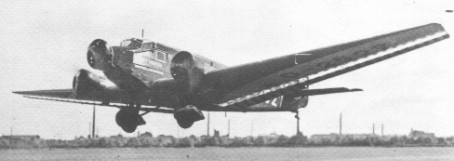
The original prototype (flown in May 1932) was a Ju 52 redesigned to be powered by three engines. Most early civil examples had the 447kW BMW Hornet engine, made under Pratt & Whitney licence; but the vast bulk of later sub-types had the derived engine known as the BMW 132, rated at 507-618kW.
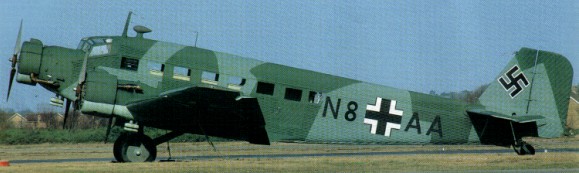
Like the original single-engined Ju 52, the tri-motor transport had a structure wholly of light alloy with corrugated skin and a very large cantilever wing-with patented ‘double wing’ flaps and ailerons giving great lift at low airspeeds. The fixed landing gear was almost unbreakable and on a few examples had spats; float-seaplane and ski versions were not uncommon.
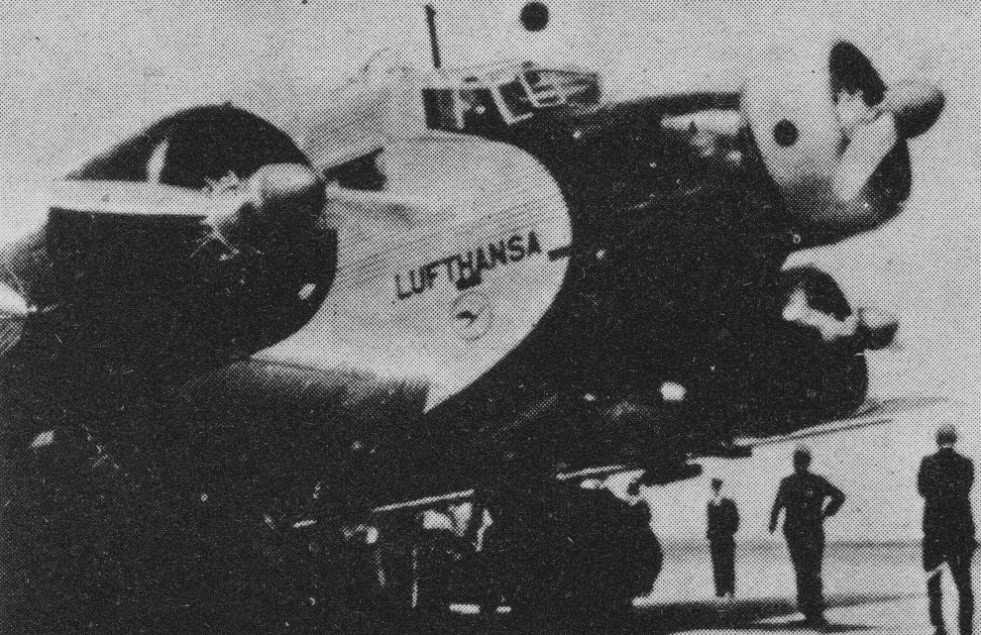
The Ju 52/3m was by far the leading European civil airliner of the 1930s, seating 15 to 17 in single seats each side of the central aisle. It carried more than 75% of Luft-Hansa’s Europe-wide traffic in the 1930s, the airline using at least 120. Exported civil models had Wasp, Hornet and Pegasus engines, and a small number in Germany had Jumo diesels.
Thirty airlines in 25 countries made it their standard medium range airliner and it equipped the new Luftwaffe’s transport squadrons. Yet the Luftwaffe also adopted the Ju 52 as an auxiliary bomber (Behelfskampfflugzeug) in Octo¬ber 1933, and because of problems in the development of the Do 11 bomber, the Ju52 equipped many of the Luftwaffe’s bombing units as well as its transport squadrons in the mid 1930s. Within a week of the Spanish Civil War’s start, 20 such aircraft were placed at the Nationalists’ disposal, being employed initially to ferry men and supplies from Morocco to mainland Spain. Nine aircraft were then diverted to form a bomber unit. From November 1936 the Legion Condor arrived in Spain, and its Kampfgruppe 88 bomber component had three Staffein each fielding 12 improved Ju 52/3m g4e aircraft. From February 1937 KG/88 received more modern bombers, and 55 Ju 52/3m g4e aircraft were passed to the Spanish, who used them as bombers up to the end of the war, when 23 remained on strength with 1- and 2-0-22.
In the Spanish civil war, Soviet planes went into action for the first time on 4 November 1936, repulsing Junkers 52 bombers attacking Madrid.
Based on reports that the Japanese Army used Ju.52 transports the allied code name ‘Trixie’ was assigned. Lufthansa Ju.52 3/M D-ANJH visited Japan in May 1939 to generate sales in Japan but the type was never selected for military service.
The Ju 52/3m first entered service with the Luftwaffe as the Ju 52/3m g3e bomber transport, a hybrid type providing the fledgling German bomber arm with a limited offensive capability and, more importantly, operating experience with modern multi-engined monoplanes. In 1935 the first 3mg3e bombers reached the Luftwaffe, with 1,500kg of bombs and MG 15 machine-guns in a dorsal cockpit and ventral ‘dustbin’. In 1936 about half the total production (450) of this model were serving as transports or bombers with the Condor Legion in Spain.
Total production of all models was about 4,845 on German account, 575 of which were completed before 1940. German plants then made a further 2,659, the rest comprising output by Amiot for the Luftwaffe. The latter was continued post-war by the AAC which delivered 400 by 1947 with the designation AAC.1. A further 170 were built by CASA in Spain as the C-352.
CASA C-352
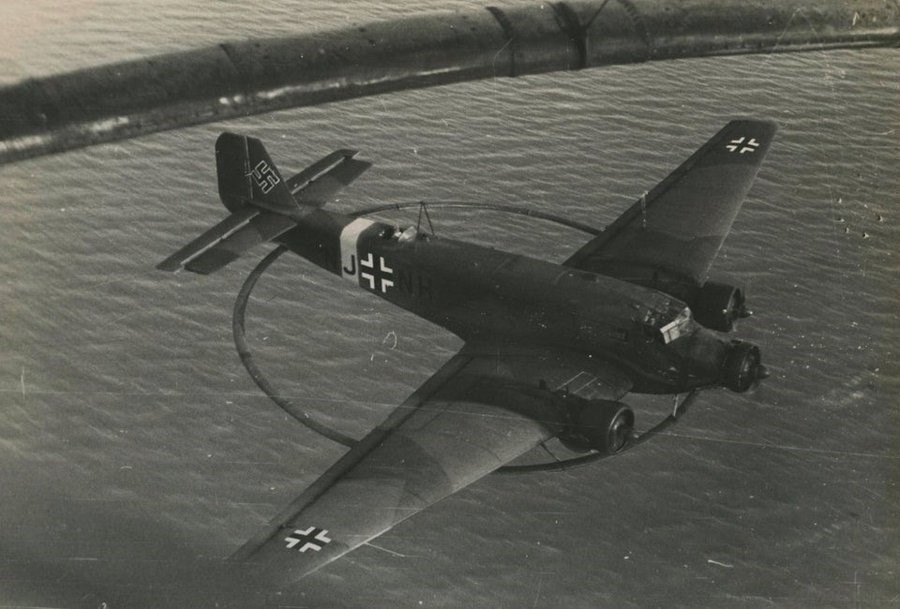
More than 3,500 served with the Luftwaffe, nearly all in the transport role with the popular names ‘Tante Ju’ (Auntie Ju) and ‘Iron Annie’. The most-produced wartime types were the 3mg5e, 7e, 8e and 14e, though differences were confined to such features as armament, loading arrangements, autopilot, glider couplings and crew armour. There were several non-transport versions, such as the g6eMS with a degaussing ring for exploding mines.
The Ju 52 ‘Minensuch’ variant had a 14m diameter current-carrying ferrous ring under the airframe, to create a magnetic field that triggered submerged naval mines.
After 1945 BEA used a fleet on internal services and the Spanish T.2B version was not withdrawn until 1975. One of the last, with the Swiss Air Force, was still active in 1979.
Ju 52/3 Engines 3 x 770 hp BMW 132H Length 62 ft. (18.9 m.) Wing span 95.9 ft (29.2 m) Weight empty 14,325 lb. (6,500 kg.) Armament up to 4 machine guns (Troop transport) Max cruise 160 m.p.h. (260 kph) Ceiling 19,000 ft. (5,800 m.) fully loaded Range 550 miles (885 km) Crew: 2. Pax cap: 17 troops
Junkers Ju 52/3M Tante Ju Engines: 3 x BMW 132 A/3, 819 hp Length: 62.008 ft / 18.9 m Height: 20.013 ft / 6.1 m Wingspan: 95.965 ft / 29.25 m Wing area: 1189.422 sq.ft / 110.5 sq.m Max take off weight: 23152.5 lb / 10500.0 kg Weight empty: 14531.0 lb / 6590.0 kg Max. weight carried: 8621.6 lb / 3910.0 kg Max. speed: 143 kt / 264 km/h Initial climb rate: 787.4 ft/min / 4.0 m/s Service ceiling: 16732 ft / 5100 m Wing loading: 19.48 lb/sq.ft / 95.0 kg/sq.m Range: 648 nm / 1200 km Endurance: 7 h Crew: 3 Payload: 17 Pax
Ju 52/3m g3e Engines: 3 x BMW 132A-3, 541 kW (725 hp). Span: 29.24m (95ft11.5in). Length: 18.9m (62ft). Height: 5.55 m / 18 ft 3 in Wing area: 110.50 sq.m / 1189.41 sq ft Max T/O weight: 10500 kg (23,146 lb). Empty weight: 5720 kg / 12611 lb Max speed: 165 mph at sea level. Ceiling: 5900 m / 19350 ft Range w/max.fuel: 1300 km / 808 miles Operational range: 620 miles. Crew: 3 Armament: up to 5×7.92-mm (0.312-in) mg plus 1500 kg (3,307 lb) bombs.
Ju 52 Engines: 3 x BMW 132D, 850 hp Wingspan: 95 ft 11 in Length: 62 ft 0 in Height: 14 ft 10 in Top speed: 165 mph Range: 850 mi at 138 mph
As early as 1909 Junkers had been projecting aircraft capable of carrying as many as 1000 people. Recognizing, that his flying wings were over-ambitious, he started work in 1928 on a machine which incorporated much of his flying wing technology, but had a conventional fuselage and empennage.
Ju G38 powered by two L55 engines inboard and two L8a engines outboard
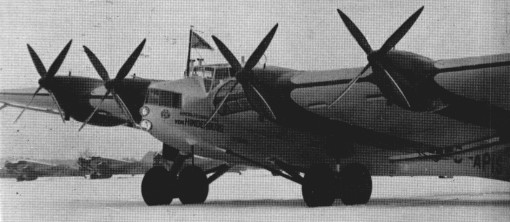
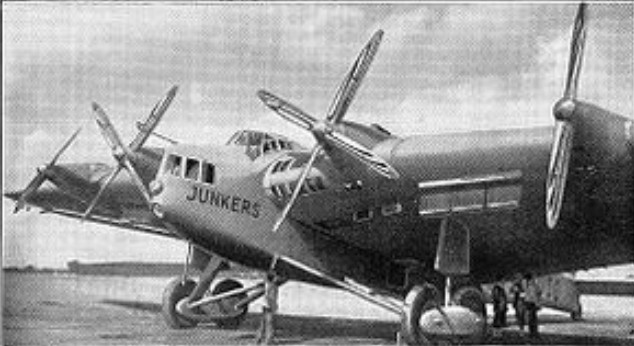
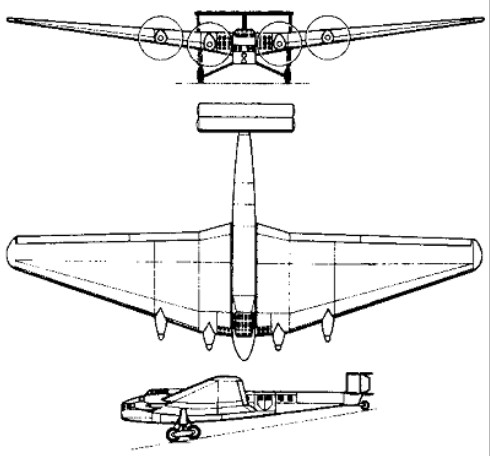
The Junkers G 38’s 44 m (144 ft) wing was 1.7 m (5 ft 7 in) thick at the root, enabling four passengers to be housed there, looking out through glazed leading edges, while the other 30 travellers sat in the fuselage. The thick wing also gave inflight access to the four engines, initially two each of 400 hp and 800 hp, but later changed to 800 hp Junkers L.88s, and finally to Jumo 204 diesel engines which left characteristic black trails. The first flew on November 6, 1929. Production models carried 34 passengers (plus seven crew).
Two G 38s, named Deutschland and Generalfeldmarschall von Hindenburg, went into service with Deutsche Lufthansa in 1930 and 1931 on the important routes from Berlin to Copenhagen, Venice and Rome, bringing with them new standards of passenger comfort with two deck accommodation, smoking rooms and washrooms. One crashed in 1936; the second example was destroyed in a bombing raid.
From the G 38, Junkers developed the K 51 military variant. It was this that the Mitsubishi works built under licence, and in conditions of strict secrecy, with the collaboration of Junkers engineers. Six Ki 20s were produced as the Army Type 92 Super Heavy Bomber between 1931 35, and the first one flew in 1931. The first two were assembled from materials imported from Germany, the third included only a proportion of imported components, but the remaining aircraft were of all Japanese manufacture. As a measure of its size, the Ki 20 had a wing area double that of the Boeing B 29 Superfortress first flown a decade later.
The Ki 20 was festooned with defensive armament and bombs. In the nose was an open bow gunner’s cockpit. There were two underwing gun turrets, with other guns located in the rear of the inboard engine nacelles, and two dorsal gun positions. The total armament, formidable for the period, consisted of eight 7.7 mm (0.303 in) machine-guns and one 20 mm (0.79 in) cannon. Bombs were carried under the fuselage on external racks. The standard bombload was 2000 kg (4400 lb) with a claimed maximum of 5000 kg (11020 lb). The bombardier, one of the crew of ten, sat in a glassed in nose position. The first four Ki 20s were powered by four Junkers 800 hp L88 gasoline engines, and the last two by 720 hp Junkers Jumo 4 diesels. The aircraft was also used as a testbed for the Kawasaki Ha 9 engine. The performance of the ungainly Ki 20 fell far short of the expectations that the army had for a long range strategic bomber capable of attacking targets as far away as the Philippines. In squadron service great difficulty was found in maintaining the engines. Although the aircraft were flown in both Japan and Manchuria, they never saw action. The Ki 20’s main use, it would seem, was for domestic propaganda. To this end, three joined the formation fly past during the January 1940 military review in Tokyo, while another was the subject of a public exhibition.
Junkers G 38 Engines: 4 x Jumo 204 diesel, 550kW Max take-off weight: 24000 kg / 52911 lb Empty weight: 14900 kg / 32849 lb Wingspan: 44.0 m / 144 ft 4 in Length: 23.2 m / 76 ft 1 in Height: 7.2 m / 23 ft 7 in Wing area: 305.0 sq.m / 3282.99 sq ft Max. speed: 225 km/h / 140 mph Cruise speed: 210 km/h / 130 mph Ceiling: 6400 m / 21000 ft Range w/max.fuel: 3500 km / 2175 miles Range w/max.payload: 1000 km / 621 miles Crew: 3-7 Passengers: 34
Ki 20 Engines: 4 x Jun¬kers 800 hp L88 gasoline Wing span: 44m (144ft 4in) Length: 23.2m(76ft 2in) Gross weight: 25,448 kg (56 103 lb) Speed: 200 km/h (124 mph). Armament: eight 7.7 mm (0.303 in) machine¬guns and one 20 mm (0.79 in) cannon Standard bombload: 2000 kg (4400 lb) Claimed maximum: 5000 kg (11020 lb) Crew: ten
Ki 20 Engines: 720 hp Junkers Jumo 4 diesels. Wing span: 44m (144ft 4in) Length: 23.2m(76ft 2in) Gross weight: 25,448 kg (56 103 lb) Speed: 200 km/h (124 mph). Armament: eight 7.7 mm (0.303 in) machine¬guns and one 20 mm (0.79 in) cannon Standard bombload: 2000 kg (4400 lb) Claimed maximum: 5000 kg (11020 lb) Crew: ten
A Junkers K 37 bomber had been purchased by private funds and donated to the Imperial Japanese army air force early in 1932 as Aikoku 1, and drawing considerably on the K 37, the first prototype Ki 2 was built in accordance with a 1932 army specification.
Negotiations by the new Soviet government for the produc¬tion of Junkers aircraft in Russia were started in 1919; they resulted in German production in Russia of the A20, H 21 and H 22 single engined military aircraft between 1923-25, and assembly of the F.13 transport from German manufactured parts.
In the Dessau design office headed by Dipi Ing Emst Zindel, work had begun during 1922 on three new military types intended for production at Fili the J20 two seat low wing reconnaissance floatplane and the J21 two seat reconnaissance and J22 single seat fighter parasol wing aircraft. On December 4, 1922 Jfa received an order from the Soviet government for a total of 100 aircraft 20 J20s, 50 J21s and 30 J22s. The first of these machines were being assembled during August 1923.



 All Aero