The Messerschmitt Me 163 Komet (comet) rocket interceptor stemmed from prolonged research by Dr Alex¬ander Lippisch over 15 years before the war. The heart of Projekt X was a rocket engine developed by Hellmuth Walter. Lippisch’s task was to design a tailless aircraft to go with it. Even he was not allowed to have blueprints of the power¬plant for the airframe he was designing. The result of this clandestine effort was a tailless rocket research craft designated the DFS 194 which began flight trials with a 400 kg (882 lb) thrust liquid fuel Walter rocket motor at the Baltic coast test site of Peenernfinde in August 1940. While test pilot Heini Dittmar flew this test bed, reaching 550 kph (341.8 mph) in level flight, Lippisch and his team pressed on with the next stage of Projekt X at the Messerschmitt Werke in Augsburg. The ultimate aim was to produce a rocket powered interceptor fighter.
In the mid 1930s the German Air Ministry were supporting the work of rocket engine designer Hellmuth Walter, issuing him a contract to develop a 400 kg / 882 lb thrust motor. In the mean time, Alexanderander Lippisch had been working at the German Institute for the Study of Sailplane Flight (DFS) and was given the order to produce a second prototype of his DFS 39 tail-less aircraft to test the potential of a rocket powered airframe. The work would see DFS build the wings and Heinkel build the fuselage.
Lippisch discovered the wing mounted rudders would likely cause unacceptable flutter, so he redesigned the airframe to include a large conventional central fin and rudder. Redesignated DFS 194 it was fitted with a small propeller engine and a landing skid. A takeoff dolly was mounted under the landing skid, it being jettisoned shortly after takeoff.
Dr Lippisch and his staff were transferred to Messerschmitt’s works at Augsburg in January 1939, with the partially completed DFS 194. The decision was also made to by-pass the prop driven version and move directly to rocket power.
The completed airframe was shipped to Peenemünde West in early 1940.
The Comet’s wooden, plywood-covered wings are of special swept-back design with a marked wash-out of incidence towards the tip. The fuselage is of metal construction. “Elevons” which serve both as elevators and ailerons are located outboard in the wings; there are no horizontal tail surfaces.
Three development prototypes of the DFS 194 were ordered by the RLM and the first two were completed by the spring of 1941, when unpowered gliding flights began from the factory airfield. The engineless Messerschmitt Me 163 attained a top speed of 850 kph (528 mph) in a dive test.
In early 1940 the DFS 194 was equipped with a rocket motor at Peenemünde. After test flights by Heini Dittmar had confirmed speeds of up to 550km/h on the power of a single 2.94kN Walter motor, there was sufficient interest to initiate development. In 1941 the first Me 163 prototype was being tested in gliding flight and shortly after was fitted with a 7.35kN Walter RII-203 rocket motor. On 2 October 1941 Heini Dittmar cast off from a Messerschmitt Bf 110 tow-plane at 4000 m (13,125 ft), fired the Me 163V-1’s rocket motor and accelerated rapidly reached 1004.5 kph (623.8mph); two months later the Me163B Komet was ordered into production.
Speeds of up to 915km/h were achieved (limited by the volume of liquid propellants carried) and to gain some idea of the speed potential, this aircraft was towed to a high altitude before being released. Flown under power, a speed of over 1,000km/h was attained before the engine had to be throttled back because the aircraft was becoming uncontrollable.
This success saw the development of the first production prototype, now designated Me 163. Flight testing began in the Spring of 1941. These were a series of unpowered flights before the Me 163 V1 was shipped to Peenemünde for installation of the improved Walter RII-203 engine.
On 2 October 1941, the Me 163 V1 piloted by Heini Dittmar set a new world speed record of 1004.5 kph / 623.8 mph. After this performance, the RLM instructed Lippisch to design an improved version around a more powerful motor under development. The resulted in the Me 163B. The first prototype, the Me 163 V3, was completed in April 1942, but it was not until early autumn that the first Walter 109-509A motors were ready for installation.
Plans proceeded during 1943 to equip the first operational units with the Me 163B-1a. Production Me 163Bs were po¬wered by Walter 109 509A2 rocket motors using T Stoff (hydrogen peroxide) and C Stoff (hydrazine hydrate, methyl alcohol and water) to give a thrust of 1700 kg (3,748 lb).
The new motor employed a ‘hot’ system in which the oxygen was ignited for additional thrust and better fuel efficiency. Flight testing of the first series of Me 163B-0 pre-production aircraft proceeded throughout 1942.
The fuselage of the Komet was made of metal but its wing was of wooden construction. The leading edge of the wing featured long slats in front of the elevons. Early Me 163B 0 aircraft were armed with a pair of 20 mm guns, but Me 163B 1 fighters carried two 30 mm weapons. The aircraft possessed no conventional landing gear, but took off from a trolley, which was jettisoned immediately after take off and at the end of the flight the Komet was landed on the skid. The small propeller on the nose served to drive a generator which supplied electrical power for the radio and instruments. Armour includes a nose cone constructed of 15-mm plate.
Laminated bullet-resisting glass gives the pilot added protection from frontal attack. Two triangular plates comprise the side cockpit armor. No provision is made for defense against attack from the rear except the plane’s high speed.
The production Me 163B’s 1500 kg (3307 1b) thrust Walter HWK 109-509 rocket motor was fuelled with a highly volatile mixture of C stoff (methyl alcohol, hydrazine hydrate and water) and T stoff (hydrogen peroxide with additional hydrocarbon stabilizers) which would explode at the least provocation. The Komet carried more than 2000 kg (4409 lb) of fuel and climbed to 12,000 m (39,370 ft) in 3 minutes 30 seconds. The Walter HWK 109-509A rocket motor made use of a steam generator that used calcium permanganate as a catalyst to produce steam when a small amount of T-Stoff was added via an electric starter motor, the resulting steam starting the turbine to begin pumping the two fuels to the rocket motor. The starter motor was switched off, and the rocket motor was throttled through its five positions until it reached maximum thrust.
Messerschmitt Me 163 B-1 Komet
After rocket¬ing high, the Komet pilots would use their remaining fuel to dive at high speed through the ranks of bombers firing on them with the Me 163B’s two 20mm MG 151/120 or 30 mm MK 108 cannon, or with the SG 500 Yagdfaust (hunter’s fist) 50 mm (1.97 in) weapon system, which fired shells vertically upwards from the top surface of the Komet’s wing when a bomber’s shadow triggered its photo electric cell firing circuit.
Series production began at dispersed facilities by Klemm, but was later transferred to Junkers, as a result of quality control problems. An operational training unit, Erprobungskommando 16 (EK 16) was formed during July 1943 at Peenemünde West, but moved to Bad Zwischenahn before the first group of pilot trainees arrived. The unit received its first group of 36 pilot trainees in the summer of 1943 and by May 1944 the first operational Me 163 wing, Jagdgeschwader 400 (JG 400) was created under the command of Hauptmann Wolfgang Späte. The unit was ordered to defend the synthetic oil refineries at Leuna from its base at Brandis, near Merseburg. The same day several Me 163s over Wesermude attacked a formation of B-17s of the 3rd Air Division and shot down one. P-38 escorts of 479th FG tried in vain to intercept the fighters.
Two additional units fighter groups, II and III/JG 400 were formed before the end of the war, but only saw limited combat against single aircraft.
On 28 July 1944 the Luftwaffe deployed for the first time the Me 163B fighter. Seven Comets were flown by JG400, which had been formed in Wittmundhafen out of the 16th Test Unit.. JG400 was assigned to protect the synthetic fuel plants. That day the US 359th Mustang Fighter Group saw five Me 163s over Merseburg. “They cooly carried out a number of attacks on our unit”.
The same day several Me 163s over Wesermüde attacked a formation of B-17s of the 3rd Air Division and shot down one. P-38 escorts of 479th FG tried in vain to intercept the fighters.
JG 400 made interceptions of Allied bombers on 7th and 28th of July 1944, without success, but on 16 August Fw Siegfried Schubert scored the types first success. He scored three victories before his death in that October. The only other major USAAF interceptions were on 24 August (4 B-17s shot down by 1 Gruppe), 11th September, and 2nd November.
Although the aircraft’s two 30mm MK 108 cannons were capable of downing a four engined bomber with only a few hits, the Komet’s high speed, and the cannons’ slow rate of fire and short range, made effective gunnery nearly impossible. As a result, the Me 163 pilots recorded a total of only nine confirmed kills. (Schubert 3 kills, Kelb, Schiebeler, Ryll, Strasnicky, Glogner, & Bott one each). After completing an attack, the pilot had to glide back to base as the fighter only carried enough fuel for eight minutes of powered flight.
In response to combat reports, alternative weapons were including the SG 500 recoilless ‘Jägerfaust’. Five were mounted in either wing and fired by photocell trigger as the aircraft passed below.
Further combat sorties were curtailed by order by the end of 1944 due to pilot losses as high as 30%. On 14 April 1945, the remaining aircraft at Brandis were destroyed and the remaining personnel ordered to join the army. The official order to disband 1./ and II./JG 400 was issued on 20 April 1945.
An improved variant with greater endurance and a tricycle undercarriage, the Me 163 C was also produced in small numbers, but was not flown operationally. A few examples of a two seat trainer, the Me 163 S were also completed. The slightly larger Me 163C development – with aerodynamic refinements, pressurised cockpit and blister-type canopy, and more powerful Walter 109-509C rocket motor and auxiliary cruising jet – was built only in prototype and pre-production form. It did not enter service, although it was almost ready for delivery to Luftwaffe squadrons at the time of the German surrender. With this version, endurance was increased from eight-ten minutes to twelve minutes of powered flight. It was faster by 40 mph, weighing 11,280 pounds.
The Me 163D was developed in to the Me 263. The aircraft was briefly known as the Junkers Ju 248 V1.
Produced in only small numbers, about 360 examples were completed.
Official top speed of the Comet, contrary to Messerschmitt’s statement, is 550 mph at 20,000 feet and above. Armament consists of two 30-mm cannon, one in each wing root, firing a total of 120 rounds. Normal flying weight of the 163 is 9,500 pounds; wing span is just over 30 feet, length, slightly under 20.
The fuels in the Komet were highly corrosive and would dissolve organic material (such as the pilot). To avoid this, the pilots would wear special asbestos fibre suits. A bumpy landing sometimes caused unburned fuels to mix and ignite.
Me 163B Komet Wing span: 30 ft 7 in (9.32 m) Length: 18 ft 8 in (5.69 m) Engines: 1 x Walter, 3300 lb Max TO wt: 9042 lb (4110 kg) Max level speed: 596 mph ( 960 kph)
Me 163B-la Powerplant; 1 Walter HWK 509A-1 (or A-2), 3,748lb (1700kg) thrust Fuel; C-stoff: 57% methyl alcohol, 30% hydrazine hydrate, 13% water – T-stoff: 80% hydrogen peroxide, 20% stabilisers Max. speed: 559mph sea level to 39,400ft (12,000m) Service Ceiling; 39,400ft (12,000m) Climb: 1.48 minutes to 6,600ft (2,000m) Climb: 2.02 minutes to 13,100ft (4,000m) Climb: 2.27 minutes to 19,700ft (6,000m) Climb: 3.45 minutes to 39,400ft (1 2,000m) Endurance; 7min 30sec Range; Approx 80 miles (130km) Empty weight: 4,1901b (1900kg) Max takeoff weight: 9,0521b (4310kg) Wing span: 30ft 7in (9.40m) Length: 19ft 2in (5.85m) Height: 9ft (2.75m) on takeoff dolly Wing area: 199.1 square feet (18.5sq.m) Armament Two 30mm Rheinmetall – Borsig MK 108 cannon / 60 rpg
The Bf 110 originated from a Reichsluftfahrtministerium requirement of 1934 for a long-range escort fighter or heavily armed Zerstorer (destroyer). With a cantilever low-wing monoplane configuration, this two-seat fighter had an oval-section fuselage, long glazed canopy, high-mounted tailplane with endplate fins and rudders, retractable landing gear, and power plant was two Daimler-Benz DB 600 in-line engines.
The first prototype, the Bf 110 V1 powered by two 910 hp Daimler-Benz DB 600A engines, was flown for the first time on 25 May 1936 at Augsburg-Haunstetten by Dr-Ing Hermann Wurster. During an early test phase a speed of 314mph / 505 kph was clocked in level flight at 10,830 ft / 3300 m at a loaded weight of 11,025 lb / 5000 kg. For a relatively large, twin-engined aircraft it proved very agile and, in mock combat with a pre-series single-seat Bf 109B flown by Ernst Udet, the newly appointed Inspector of Fighter Pilots repeatedly failed to keep his larger opponent in his gun sight for sufficient time to render a hit likely, and experienced some difficulty in staying with the twin-engined fighter in steep turns.
Bf 110 V-1 – the first prototype
In January 1937, as a result of evaluation of a second prototype, the Bf 110 V2, at the Rechlin Erprobungsstelle, instructions were given that Messerschmitt should commence preparations for a pre-production series of aircraft. The proposed series model, the Bf 110A, was to be powered by a pair of DB 600Aa carburettor-equipped engines of 986 hp for take-off. By the time that the pre-series Bf 110A airframes had attained an advanced stage of construction the DB 600 engine was considered basically unsuited for fighter installation and was already being already phased out of production in favour of the direct-fuel-injection DB 601. The Reichsluftahrt-ministerium confidently expected that the DB 601 would be available by the Spring of 1938, when deliveries of the Bf 110 to the schweren (heavy) Jagdgruppen were expected to commence. Accordingly, instructions were issued to curtail the Bf 110A series, adapting the four airframes that had reached an advanced stage in assembly to take Junkers Jumo 210Da engines of 680 hp for take-off.
As it became obvious predictions for DB 601A engine delivery could not be met, the decision was taken to build an interim model, the Bf 110B with direct-injection two-stage supercharged Jumo 210Ga engines. While it was considered that the Bf 110B would possess an inadequate performance for combat purposes, it was seen as an ideal tool for equipment and armament evaluation, and the development of operational techniques.
Me.110C
It was issued during late 1938 to I (Schweren Jagdruppe)/LG 1 of the Lehrdivision, or Instructional division, to formulate tactics and techniques. In January 1939 this Gruppe was to become I(Z)/LG 1 with the Zerstörer. With the DB 601A engine, the Messerschmitt Zerstörer became the Bf 110C, a pre-series of 10 being delivered to the Luftwaffe early in January 1939, and acceptances of the initial production Bf 110C-1 by I(Z)/LG 1 began before the end of that month. Production of the Bf 110C-1 increased rapidly and by the early summer of 1939 Focke-Wulf and Gothaer Waggonfabrik had tooled up to supplement the output of Messerschmitt’s Ausburg-Haunstetten factory, and the MIAG at Braunschweig was preparing to phase into the programme.
By 31 August 1939 a total of 159 Bf 110C fighters had been accepted, although the Quartermaster-General’s strength returns for that date indicated that only 68 of these, plus 27 Bf 110Bs, had actually been taken into the inventory. Three Zerstörergruppen were to be included in the Order of Battle against Poland. Output of the Bf 110C had risen to more than 30 per month, and another 156 were delivered during the first four months of hostilities when production rates rose. The average monthly production during 1940 was 102.6 aircraft.
Early operational experience had resulted in the successive introduction of the Bf 110C-2, differing solely in having FuG 10 HF radio in place of the original FuG 3aU R/T and the Bf 110C-3 which differed in having improved MG FF cannon. These now gave place to the Bf 110C-4 in which some attempt was to provide nominal armour protection for pilot and gunner, normal loaded weight rising 490 lb / 333 kg over that of the Bf 110C-1 to 13,779 lb / 6250 kg. Further escalation in weight resulted from a demand for adaptation of the aircraft for to Jagd-bomber (Jabo) mission, two ETC 250 racks being introduced beneath the fuselage centre section for a pair of 551 lb / 250 kg bombs.
The substantially increased overload weight necessitated more power for take-off and emergency use, and the Jabo Bf 110C-4/B was fitted with DB 601N engines which with increased compression and 96 octane fuel, had a maximum take-off output of 1200 hp with full boost for one minute.
Issued to the Erprobungsgruppe 210, the Bf 110C-4/B fighter-bombers of two staffeln of this unit were to operate throughout the ensuing Battle singly and in small groups.
The Bf 110C escorted the bomber units that devastated Poland at the beginning of World War II, and just before Christmas 1939, Bf 109 and 110 destroyed 12 of a force of 22 Wellingtons which were making a reconnaissance of Heligoland Bight.
A parallel development was the Bf 110C-5 which had a single Rb 50/30 reconnaissance camera in the cockpit floor, forward-firing armament being restricted to the quartet of machine guns. This sub-type was to reach the Aufklärungstaffeln, or reconnaissance squadrons, in time to participate in the Battle, initially in mixed units with the Do 17P and Do 17Z.
On 20 July 1940 a total of 278 Bf 110s were available to Luftflotten 2, 4 and 5, and of these 200 were serviceable.
Bf 110C and longer-range Bf 110D were launched against Britain in the summer of 1940, but even before the Battle of Britain had reached a peak, it was clear that the Bf 110 was no match for the RAF’s manoeuvrable single-seat fighters. Indeed it was so vulnerable that this ‘escort’ fighter was unable to operate in British airspace by daylight unless it was itself escorted.
The Bf 110D-0 was the pre-series of the Dackelbauch (Dachsund-belly) equipped version.
Bf 110D-0
The Bf 110D-1 was a so-called langstrecken, or long-distance, Zestörer with a 264 ImpG / 1200 lt auxiliaet fuel tank made of plywood and dubbed a Dackelbauch (Dachsund-belly). It was found to ‘hang up’ under extremely low temperatures after its fuel had been exhausted, the fumes remaining in the tank tending to explode.
The Dackelbauch (Dachsund-belly) suffered disastrously on 15 August when flown by I/ZG 76. One-third of 21 participating aircraft were lost.
Bf 110C
Despite its failure in this role, the Bf 110 was to prove a most valuable and successful night fighter until more advanced aircraft entered the scene in the latter stages of the war. Bf 110E with DB 601N engines and Bf 110F with DB 601E engines formed the nucleus of such operations. Considerable success was gained by these aircraft in conjunction with Wiirzburg radar, the pilots being directed by ground controllers into an interception position.
The three-seat night-fighter Bf 110F was followed into production by a series of Bf 110G with DB 605B engines, the early versions serving as fighter bombers. However the four-seat Bf 110G-4a, -4b, -4c, and -4d variants were provided with differing airborne radar installations for operation as night fighters. Final production version was the Bf 110H, generally similar to the Bf 110G but equipped with heavier armament. It is worth recording a significant factor in favour of the Bf 110, so often dismissed as a complete failure. During early 1944 almost 60% of the entire German night-fighter force was composed of variants of the Bf 110.
Otto Fries’s Me 110 at St Trond, Belgium, 1943
Bf 110G of III/ZG.26 Summer 1943 at Plantlȕnne with twin wing-mounted Doppelrohr BR 21 motar rocket launchers.
The spotting of modern twin-engined monoplanes in combat led to the belief that Japan was using imported German Me.110s. These were allocated the allied code name Doc, remaining in recognition manuals until the spring of 1943, and was then dropped.
A total of 6,050 of these aircraft was built before production ended in March 1945.
Bf 110C-1 Engines: 2 x DB 601A-1, 1050 hp Armament: 2 x 20mm MG FF cannon, 180 rds / 4 x 7.9mm MG 17 mg, 1000 rds / 1 x 7.9mm MG 15, 750 rds Max speed SL: 295 mph / 475 kph Max speed 19,685ft / 6000m: 335 mph / 540 kph High cruise SL: 262 mph / 422 kph High cruise 16,400ft / 5000m: 304 mph / 490 kph Economic cruise 13,780ft / 4200m: 217 mph / 350 kph Range at Econ cruise: 680 mi / 1095 kph Fuel, drop tanks: 121 Imp.Gal / 550 lt Max range, max fuel: 876 mi / 1410 km
Bf.110-E2 Engines: 2 x Daimler Benz DB601A
Bf.110-F2 Engines: 2 x Daimler Benz DB601F.
Bf 110F-4a Engines: 2 x Daimler-Benz DB601F, 1350 hp Wingspan: 53 ft 4.75 in Length: 39 ft 8.5 in Height: 11 ft 6 in Empty weight: 11,577 lb Combat weight: 14,884 lb External fuel: 66 Imp.Gal standard Max speed: 311 mph at 14,760 ft Cruise: 278 mph at SL Service ceiling: 35,760 ft Range: 745 mi Armament: 2 x 20mm MG FF cannon / 5 x 7.9mm MG 17 machine guns Radar: FuG Lichtenstein BC
Me 110 G Zerstörer Engines: 2 x Daimler Benz DB 605 B-1, 1455 hp Length: 42.815 ft / 13.05 m Height: 13.714 ft / 4.18 m Wingspan: 53.314 ft / 16.25 m Wing area: 413.338 sq.ft / 38.400 sq.m Max take off weight: 20705.0 lb / 9390.0 kg Weight empty: 11232.3 lb / 5094.0 kg Max. speed: 297 kts / 550 km/h Landing speed: 81 kts / 150 km/h Cruising speed: 275 kts / 510 km/h Service ceiling: 26247 ft / 8000 m Cruising altitude: 19619 ft / 5980 m Wing loading: 50.23 lb/sq.ft / 245.0 kg/sq.m Range: 486 nm / 900 km Max range: 1305 miles Crew: 3 Armament: 4x MG 151/20. 1x MG 81 Z
Bf 110G-2 Engines: 2 x DB-605, 1065kW Max take-off weight: 7100 kg / 15653 lb Empty weight: 5600 kg / 12346 lb Wingspan: 16.2 m / 53 ft 2 in Length: 12.3 m / 40 ft 4 in Height: 4.1 m / 13 ft 5 in Wing area: 38.5 sq.m / 414.41 sq ft Max. speed: 595 km/h / 370 mph Cruise speed: 450 km/h / 280 mph Ceiling: 10000 m / 32800 ft Range: 1200 km / 746 miles Armament: 4 machine-guns, 5 cannons Crew: 2
Bf 110G-4d/R3 Engines: 2 x Daimler-Benz DB605B-1, 1475 hp Wingspan: 53 ft 4.75 in Length: 41 ft 6/75 in Height: 13 ft 1.5 in Empty weight: 11,245 lb Combat weight: 20,727 lb Max speed: 342 mph at 22,967 ft Cruise: 317 mph at 19,685 ft Service ceiling: 26,248 ft Range: 1305 mi Armament: 2 x 30mm MK 108 cannon / 2 x 20mm MG 151 cannon / 2 x 7.9mm machine guns Radar: FuG 220b Lichtenstein SN-2 and FuG 227/1 Flensburg
Design of the Bf 109 was initiated by Bayerische Flugzeugwerke in late 1933, following issue by the Reichsluftfahrtministerium (RLM) of a specification for a monoplane fighter to replace the Arado Ar 68 and Heinkel He 51 in Luftwaffe service. The need was not then urgent, but the RLM believed that by competitive evaluation and with reasonable time available for development, they would have a worthwhile fighter when the moment came for it to enter operational service. Submissions were made by Arado, Bayerische Flugzeugwerke, Focke-Wulf and Heinkel: those of the second and last companies were selected for construction and evaluation, with each initially to build ten examples.
Heinkel’s He 112 was the first to fly (in the summer of 1935) but it was the Bf 109 that was to be built in very large numbers. Both of these prototypes made their first flight under the power of a 695 hp Rolls-Royce Kestrel in-line engine, as the Junkers Jumo 210 in-line engine – around which both had been designed- was not available in time. Using the Me 108 airframe as the basis for the design; the wings, undercarriage, rear fuselage and tail of the new Me 109 fighter were the same as in the Me108. The prototype, powered by a Roll-Royce Kestrel, first flew in May 1935, piloted by Haus Knoetzsch, from the factory airfield between Ausburg and Haunstettem.
The second and third prototypes were completed with the intended Jumo 210A rated at 680 hp for takeoff.
Follow-on prototypes utilized several other engines until settling on the Daimler-Benz inverted-V, liquid-cooled engine that powered subsequent airframes throughout its wartime production.
The new fighter’s first public demonstration took place at the 1936 Olympic Games held in Berlin, but the plane’s first real impact on the aviation world came during the international flying meet held in Zurich in the summer of 1937. Five Bf 109s took part and demonstrated outstanding climbing, diving, and maneuverability, along with astonishing speed.
Bf 109
The initial example of the first production model, the Bf 109B, left the Ausburg-Haunstetten assembly line in February 1937 enabling Geschwader JG 132 Richthofen conversion to begin almost immediately at Juterborg-Damm.
Bf.109B
In March twenty-four Bf 109Bs were shipped direct from the factory to the Tablada airfield, Seville, Spain, for use by the Condor Legion. 2 Staffel of Jagdgruppe 88 achieved operational status by late April 1937. Bf 109B-2 and variants of the Bf 109C were flown by the Condor Legion in the Spanish Civil War.
A single-seat fighter of all-metal construction, the Bf 109 was a cantilever low-wing monoplane, the wing having automatic leading-edge slots, large slotted trailing-edge flaps, and ailerons which drooped when the flaps were right down. The main landing-gear units were retractable but most versions had a non-retractable tailwheel. The tail unit was conventional, but the tailplane was braced by struts until a tailplane of cantilever structure was introduced with the Bf 109F.
First production version to enter service with the Luftwaffe was the Bf 109B-1 powered by a 635 hp / 473.2kW Jumo 210D engine, followed by the 109B-2 with a 477kW Jumo 210E and later with a 499kW Jumo 210G. Armament of the Bf.109B 1was three machine guns.
Series manufacture of the Bf 109B gave way to the successively improved Bf 109C and D, but these retained the Jumo engine. Design emphasis was now being placed on the Bf 109E with the new Daimler-Benz engine.
On 11 November 1937 Bf 109 V13, fitted with a specially-boosted Daimler-Benz DB 601 engine, raised the world airspeed record for landplanes to 379.38 mph / 610.53 kph.
The first series Bf 109E began the leave the assembly lines at the beginning of 1939, all production of the fighter by the parent company having been transferred to Regensburg. The Erla Maschinenwerk at Leipzig and the Gerhard Fieseler Wetke at Kassel had become the principle suppliers of the Bf 109 and the Wiener-Neustädter-Flugzeugwerke in Austria was preparing for large scale manufacture of the fighter. The DB 601A engine of the Bf 109E had received final clearance for service use late in 1938 and, in addition to being built by the Daimler-Benz plants at Genshagen and Marienfelde, this was being produced by the Henschel Flugmotorenbau at Altenbauna and the Niedersachsische subsidiary of the Büssing-Werke of Braunschweig.
The direct injection enabled the Messerschmitt to out-dive its opponents, reduced fuel consumption, and afforded better results from relatively low octane fuel. The DB 601A was rated at 1175 hp for take-off.
The Bf 109E retained the 40-mile (65 km) range FuG 7 R/T equipment of the earlier versions along with the Carl Zeiss C/12C reflector sight, and armament of the initial Bf 109E-1 comprised four 7.9mm Rheinmetall Borsig MG 17 machine guns. It had been decided to standardise on the more lethal if slower firing 20 mm MG FF cannon as a wing-mounted weapon as supply allowed.
The Bf 109E-3 followed the E-1, retaining the twin fuselage-mounted synchronised MG 17 machine guns with 1000 rounds per gun and mating them with two MG FF cannon, each with 60 rounds. No armour for the pilot or fuel tanks was provided, nor bullet-proof windscreen.
Bf 109E-3 – September 1940
Bf 109 production barely exceeded 400 in 1938 whereas 1092 of the E-model were built between 1 January and 1 September 1939. At the invasion of Poland 1056 Bf 109s were on strength, of which 946 were serviceable.
On Sunday 8 October 1939 at around 3.00pm two French fliers named Villey and Casenobe shot down one Messerschmitt 109 each near Landau, during an aerial combat between 5 Curtiss Hawks of the French ‘Red Devil’ Squadron (4 Sqn 2nd Fighter Group), and for Me 109s. These were the first French kills of the war.
Three Bf.109E were sold to Japan in 1942, coded ‘Mike’ by American Intelligence
Incorporated into the 109E were a cockpit of revised design and embodying heavier framing together with 8mm seat armour weighing 53 lb / 24 kg and a curved plate attached to the hinged canopy weighing 28.6 lb / 13 kg. The fire rate of the MG FF was being improved and was to be introduced by the E-4 which rapidly replace the E-3 during the summer and autumn of 1940.
Bf 109E
The 109D was followed into service by the Bf 109E with 820kW DB 601A engine. In addition to production for the Luftwaffe, some 300 examples of this type were exported. The Bf 109E was the principal version used in the Battle of Britain and was followed by the Bf 109F with an 894.2kW DB 601N or 969kW DB 601E engine. The Bf 109F had much cleaner aerodynamic lines, introducing the unbraced tailplane and retractable tailwheel.
Messerschmitt Bf-109E-4
The Spitfire, the Bf 109’s first major opponent, was slightly faster and definitely more maneuverable, but its performance at altitude was inferior. There was also little difference in pilot ski between the Luftwaffe and the Royal Air Force, although pilots in the RAF had the advantage of fighting over their own country, while the critical range of the Bf 1 09s limited German fighting time to about twenty minutes.
The Bf 109E 3 which formed the standard equipment of Luftwaffe squadrons in the Battle of Britain in 1940 had an 1100 hp Daimler Benz DB601A engine and was armed with one 20 mm cannon and four machine guns.
Bf109E4
The Bf.109E controls tended to heavy up as speed increased, demanding more physical effort than its British contemporaries. The absence of a trimmer necessitated continuous application of rudder at high speeds, and it suffered an incipient swing during takeoff and landing. A big advantage was its direct fuel injection.
Also licence built by Fiesler.
The Bf 109G or Gustav was first flown as a type in 1944, with the G-10 having an enlarged supercharger to enable it to be used as a high altitude fighter in defence of the Reich. With a service ceiling of 41,000 feet, the Gustav G-10 was also the fastest of the series with 426 mph at 24,000 feet. Armament was one 30mm cannon and two 13mm machine guns, all in the nose. Modified around the 1475 hp DB605 engine, the Gustav also introduced cockpit pressurisation, crucial from late 1942 onwards as the fighter Gruppen struggled to repel high altitude USAAF daylight bomber raids. The Bf109 was the most abundantly produced fighter manufactured by either side in the 1939-45 war. When German production stopped, the G series of the Bf 109 was produced in far greater numbers than any other model, 21,000 being completed by the end of 1944. This machine had two MG 131 machine guns, a single 30-mm MK 108 cannon firing through the spinner, and sometimes carried two underwing MG 151/20 weapons.
Postwar Spain continued licence manufacture of the Gustav as the Merlin engined Hispano 1112M Buchon.
A significant quantity of Bf 109G 1s and G2s were assembled by IAR at Brasov from main parts supplied by the Germans. These fighters received white serial numbers on their fin in the ‘White’ 200 series. The next sub version assembled at IAR was the Ga 4, a total of 15 being finished up to the factory being dispersed in the summer of 1944 due to Allied bombings. The first one was rolled out in April 1944. The Ga 6 was the next sub version to be manufactured at IAR-¬Brasov. The first one, ‘Black’ 316, was test flown only in early February 1945. Nevertheless, none of the IAR manufactured Bf 109Ga 6s saw action during World War Two.
The mainstay of the Luftwaffe’s fighter arm, over 30,000 were built of the Gustav variant alone between 1941 and 1945. It has been estimated that about 35,000 Bf/Me 109 were built between 1937 and 1945.
Last versions to see limited use were the increased-span Bf 109H and a refined version of the Bf 109G, designated Bf 109K. And right at the end of the war final German deliveries amounted to 19 examples of the Bf 109K-4 with more power and armament as well as a pressurised cockpit.
Production of the Bf 109 continued in Czechoslovakia and Spain during early post-war years, and some Czech-built S-99 were used in a training role until 1957.
Nazi Germany saw the Spanish Civil War as an ideal conflict in which to test its renascent forces and their new weapons, and therefore supported the ideologically allied Nationalists with small but high-quality forces. The air component was the Legion Condor, which began to arrive in November 1936 and included as its fighter element Jagdgruppe 88, initially comprising three Staffeln with He 518 biplanes. In January 1937 three Bf 109B prototypes were trialled in Spain, their success prompting the despatch from March 1937 of the first 24 of an eventual 45 Bf 109B-2s for service with 1. and 2.J/88 as well as the Nationalists’ 5-G-5. This immature fighter proved generally superior to all its opponents, and Bf 109s notched up J/88’s 100th ‘kill’ in January 1938, more than tripling this score by the time the Germans pulled out of the war in March 1939 after gaining invaluable tactical experience.
In the mid-war years, Germany bolstered the Italian air force with numbers of fairly advanced fighters. The initial deliveries comprised sufficient Bf 109F fighter-bombers (in F-4/B and F-4/R1 variants). Further reinforcement was necessary in 1944: the Italians thus received the upengined and upgunned Bf 109G model in the form of 28 G-6, 97 G-10 and four G-12 variants. As a bomber interceptor the Bf 109G 6 was armed with two MG 131 machine guns, a single MK 108 30 mm. cannon firing through the propeller shaft and two MG 151/20 under wing guns.
“Mistletoe” aircraft (officially codename “Beethoven”), also known as father-and-son or piggy-back aircraft, were composite aircraft, made up of two planes, one riding on the other’s back. There were two basic types of Mistletoe. Both used a pilotless Ju.88 bomber as the bottom plane; it carried a 3.5 ton explosive warhead and was guided to the target by a fighter pilot on top. The guide plane was either a Me.109 (as the S-1 Mistletoe), or a Fw-190 (as the S-2 Mistletoe), which would abandon the Ju.88 shortly before it exploded. The Mistletoe composite aircraft were tested at Nordhausen and Peenemünde at the beginning of 1944. On the night of 24-25 June 1944, five S-1 Mistletoes were first used operationally. Approximately 250 Ju.88 were converted to Mistletoes.
HA-1109
In 1943 Hispano received a contract to build the Messerschmitt Bf 109G under license for the Spanish Air Force. Designated Hispano HA-1109, it was powered initially by a Hispano-Suiza HS-12Z engine and later, in HA-1109/1110 Buchon variants, by the Rolls-Royce Merlin.
Although 233 single seat fighters were built, only two dual-control two seat trainers were built. The first was powered by the Hispano-Suiza 12Z and designated HA-1110-K1L.
CASA of Spain built the RR Merlin powered Messerchmitt 109 as the HA1112. The second two-seater was built with a Merlin 500 engine and designated HA-1112-M4L. The HA-1110-K1L was eventually converted to an HA-1112-M4L.
1954 Hispano Aviation HA-1112-M4L G-AWHC
A number of Buchóns were deployed to Spanish Sahara (1957-58) to battle Moroccan insurgents and their allies. The Buchóns were primarily tasked with giving close air support to army units on the ground. During the battle, the HA-1112 earned the distinction of being the last member of the Bf-109 family to participate in actual battle.
Buchóns stared in iconic movies such as: “Der Stern von Afrika” (The Star of Africa) A German film from 1957 focusing on the Luftwaffe ace, Hans-Joachim Marseille. “Battle of Britain” The legendary British film from 1968 features many Buchóns filling the Bf-109 role. “Memphis Belle” The 1990 American film about the Boeing B-17 bomber of the same name. “The Tuskegee Airmen” A 1995 American film about the famous fighter group of all African American pilots in WWII. “Dark Blue World” A Czech film from 2001 about Czechoslovakian pilots in the RAF during WWII.
HA1112
Avia S-199
In Czechoslovakia, Avia produced the Messerschmitt 109 as the Avia S-199 Mezek.
The AVIA C.210 single-seat fighter was built during the early post-war year by the former Avia factory for the Czech Air Force. Derived from the Daimler-Benz powered Me 109G-14 and comparable with the Me 109K-18, the C.210 was powered by a 1340 hp Junkers Jumo 211F engine. The Me 109G-14 was built in Czechoslovakia as the C.10 and, in two-seat trainer form, as the C.110. A number of C.210 were exported to Israel.
Bf.109B 1 Engine: 635 hp Jumo 210D. Armament: 3 x machine guns.
Bf 109B-2 Span: 9.87m (32tt4.5in) Length: 8.55m (28ft 0.7 in) Powerplant: l x Junkers Jumo 2l0Da, 537kW (720 hp) Armament: 3 x 7.92-mm (0.312-in) mg Max T/O weight: 2150 kg (4,740 lb) Max speed: 289 mph at 13,125ft Operational range: 430 miles.
Bf.109C Engine: Junkers Jumo 210
Bf.109D Engine: DB 600
Bf.109E Engine Daimler Benz DB 601A, 1,100 h.p. Wing span 32.3 ft. (9.84 m.) Length 28.5 ft. (8.68 m.) Normal take-off weight: 5875 lb / 2665 kg Weight empty 4,420 lb. (2,005 kg.) Fuel capacity: 88 ImpG / 400 lt Max speed SL: 290 mph / 466 kph Max speed 6560ft/2000m: 322 mph / 518 kph Max speed 14,560ft/4449m: 348 mph / 560 kph Ceiling 36,000 ft. (11,000 m) ROC: 3280 fpm / 1000 m at 5400 lb / 2450 kg Time to 9840 ft / 3000m: 3.6 min Endurance: 1.1 hr at max continuous pwr, 19685 ft / 6000 m Range cruise: 410 mi / 660 km at 233 mph / 375 kph at 22,965 ft / 7000 m Seats: pilot. Armament: 3 x 20 mm cannon and 2 x 7.9 mm mg
B.109E-0 Pre-production variant Engine: DB 601A, 1100 hp / 820 kW Armament: 4 x 7.92mm / 0.312 mg
Me 109 E-1 Production variant Engine: Daimler-Benz 601Aa, 1085 hp Length: 28.543 ft / 8.7 m Height: 11.253 ft / 3.43 m Wingspan: 32.48 ft / 9.9 m Wing area: 176.530 sqft / 16.400 sq.m Max take-off weight: 5699.9 lb / 2585.0 kg Weight empty: 4090.3 lb / 1855.0 kg Max weight carried: 1609.7 lb / 730.0 kg Max speed: 308 kts / 570 km/h Initial climb rate: 2755.91 ft/min / 14.00 m/s Service ceiling: 33136 ft / 10100 m Wing load: 32.39 lb/sq.ft / 158.00 kg/sq.m Range: 324 nm / 600 km Endurance: 2 h Crew: 1 Armament: 2x MG 17 7,9mm; 2x MG FF 20mm;1x MFG FF 20mm
Bf.109E-1B Fighter/Bomber
Bf 109E-3 Engine: Daimler-Benz DB 601Aa, 1175 hp / 876 kW Wingspan: 32 ft 4.5 in / 9.87 m Length: 28 ft 4.5 in / 8.64 m Height: 8 ft 2.25 in / 2.50 m Wing area: 174.05 sq.ft / 16.17 sq.m Empty wt: 4189 lb / 1900 kg MTOW: 5875 lb / 2665 kg Max speed: 348 mph / 560 kph at 14,560 ft / 4440 m Time to 3290 ft / 1000m: 1 min 6 sec Service ceiling: 34,450 ft / 10,500 m Range: 410 mi / 660 km Armament: 2 or 3 x 20mm cannon, 2 x 7.92 mm (.312 in) mg Seats: 1
Bf.109E-4 Armament: 2 x 7.92mm / 0.312 mg, 2 x 20 mm cannon
Bf.109E-4/B Fighter/Bomber
Bf.109E-5 Reconnaissance fighter Engine: DB 601Aa
Bf.109E-6 Reconnaissance fighter Engine: DB 601N, 1200 hp / 895 kW
Bf.109E-8 Engine: DB 601E, 1350 hp / 1007 kW
Bf.109E-9 Reconnaissance fighter
Me 109F-3 Engines: 1 x Daimler Benz, 1300 hp Wing span: 32 ft 6.5 in (9.92 m) Length: 20 ft 0.75 in (8.86 m) Height: 11 ft 2 in (3.4 m) Max TO wt: 6063 lb (2750 kg) Max level speed: 391 mph / 630 kph
Bf 109F-4/B
Bf 109F-4/R1
Bf 109G Engine: Daimler Benz DB 605A Max speed: 387 mph (623 km/h) at 23,000 ft (7,000 m).
BF 109 G-6 Wingspan 9.92 m (32 ft. 6.5 in.) Length 9.02 m (29 ft. 7 in.) Height 3.4 m (11 ft. 2 in.) Empty Weight 2,700 kg (5,953 lb) Speed: 387 mph at 22,970 ft Range: 450 miles Armament: two MG 131 mg, one MK 108 30 mm. cannon firing through the propeller shaft and two MG 151/20 under wing guns.
Bf 109G-6 Engine: 1 x Daimler Benz DB 605AM, 1342kW Max take-off weight: 3150 kg / 6945 lb Wingspan: 9.92 m / 32 ft 7 in Length: 9.02 m / 29 ft 7 in Height: 3.40 m / 11 ft 2 in Wing area: 16.05 sq.m / 172.76 sq ft Max. speed: 621 km/h / 386 mph Ceiling: 11750 m / 38550 ft Range: 720 km / 447 miles Armament: 2 x 13mm machine-guns, 3 x 20mm cannons Crew: 1
Bf 109G-10 Engine: Daimler-Benz DB605D.
Bf 109G-12
Bf 109K-4 Powerplant: l x Daimler-Benz DB605ASCM, 1491 kW (2,000 hp) Span: 9.97m (32ft 8.5in) Length: 8.85m (29ft 0.5 in) Armament: 1 x 30-mm and 2 x 15-mm cannon Max TO weight: 3600 kg (7,937 lb) Max speed: 452 mph at 19,685ft. Operational range: 366 miles.
Hispano HA-1112-M1L Buchon Engine: Rolls-Royce Merlin 500-45, 1400 hp Wingspan: 32 ft 6.5 in Wing area: 172.2 sq.ft Length: 29 ft 10.5 in Height: 8 ft 6 in Empty weight: 5855 lb MTOW: 7011 lb Max speed: 419 mph at 13,000 ft Max ROC: 5580 ft/min Range: 475 mi Armament: 2 x 20 mm cannon Bombload: 8 x 22 lb rockets
Avia C.210 Engine: 1340 hp Junkers Jumo 211F Max speed: 432 mph Range: 350 mi Normal loaded weight: 7800 lb Wingspan: 32 ft 6.5 in Length: 29 ft 6 in Height: 12 ft
Derived from the British Aerospace Hawk advanced trainer, the US Navy’s carrier-capable T-45A Goshawk prototype was scheduled to fly before the end of 1987, with service entry due in 1990. The Hawk was selected in 1981 as the aircraft element of the new VTX-TS training system, and a fixed-price contract covering the first three production lots and 15 simulators was signed in May 1986. Total cost of the T-45TS package, including 300 production aircraft, two prototypes, simulators, computerised instruction and integration system, and logistics support is estimated at $4,500 million. British Aerospace is the principal airframe subcontractor, building the wings, rear fuselage, canopy, and flight controls, although final assembly and some component manufacture will be undertaken by McDonnell Douglas in the USA.
Changes from the basic Hawk design include a twin-wheel nose gear for catapult launching, a strengthened maingear to allow high-sink-rate landings, an arrester hook, rear side-fuselage airbrakes, and a cockpit modified to USN requirements. The empty weight of the T-45A will be 4,261kg, and maximum take-off weight 5,787kg, with an internal fuel load of 1,363kg. Approach speed will be 222km/hr (121 kt), maximum level speed Mach 0.85, and average fuel consumption 620kg/hr on a typical training sortie. Weapons delivery capability for armament training were be incorporated.
The T-45 Goshawk, of which the Navy owns 193 aircraft, is a jet trainer fleet used by the Navy and Marine Corps to qualify new pilots. Originally produced by what is now Boeing and derived from an earlier British aircraft made by BAE Systems, its first iterations joined the US Navy’s fleet in the 1990s.
BAe / Boeing T 45 C Goshawk Engine: Rolls Royce/Turboméca F 405-RR401 (Adour Mk. 871), 25977 N / 2648 kp Length: 39.272 ft / 11.97 m Height: 13.419 ft / 4.09 m Wingspan: 30.807 ft / 9.39 m Wing area: 179.651 sq.ft / 16.69 sq.m Max take off weight: 14083.3 lb / 6387.0 kg Weight empty: 9399.9 lb / 4263.0 kg Max. speed: 543 kts / 1006 km/h Initial climb rate: 6982.28 ft/min / 35.47 m/s Service ceiling: 42503 ft / 12955 m Wing load: 78.52 lb/sq.ft / 383.0 kg/sq.m Range: 999 nm / 1850 km Crew: 2 Hardpoints: 3
The McDonnell Douglas F/A-18 Hornet is a twin-engine carrier-based attack fighter derived from the YF-17 Cobra attempt at a new USAF lightweight fighter, on which the USN was a minor partner (the F-17 lost out to the YF-16).
The Navy preferred the YF-17 over the winning F-16 Fighting Falcon, because of its twin-engine design. For the Navy version, Northrop teamed with McDonnell Douglas and when the two services ended up choosing different aircraft, McDonnell Douglas became the primary contractor for the Navy design (McDonnell Douglas merged with Boeing in 1997).
The Navy’s design concept originated from Vice Admiral Kent Lee. An experienced naval aviator in WWII, he and his supporters pushed for a cheap and lightweight strike fighter, to complement the F-14 Tomcat which had become operational and was just being introduced to the carrier air wings in 1973.
The F/A-18 has a digital fly-by-wire flight control system, the cockpit equipped with three multi function displays. The entire avionics suite is digital. The F-18 is powered by two 71 2kN General Electric F404 reheated turbofans, and equipment includes a Hughes APG-65 radar with air-to-air and air-to-surface modes giving intercept and attack capabilities, a Ferranti/Bendix headup display, Kaiser multifunction displays, and Litton INS. Other externally carried sensors include laser tracker and Flir pods. As a carrier-capable platform, the F/A-18 maintains folding wings. The Hornet is capable of air-to-air refuelling.
The first of 11 full-scale development (FSD) Hornets flew on November 18, 1978, and was followed by the first production aircraft in April 1980. F/A-18 Hornets (A and B variants) entered service in 1983, replacing the F-4 Phantom II and the A-7 Corsair II. F/A-18A/B were single and two seat aircraft. The F-18B two-seat trainer retains full operational capability with only a six per cent reduction in internal fuel capacity.
FY1986 and subsequent purchases are of the upgraded F-18C/D variants, which have AIM-120 Amraam and infrared Maverick compatibility, airborne self-protection jammers, Naces ejection seats, and improved computers. The first F-18C flight occurred in mid-1986. After a production run of 371 F/A-18As, manufacture shifted to the F/A-18C/D single and two seat variants in September 1987. Seventy-seven F-18A single-seaters and eight F-18B two-seaters delivered during 1986, including 24 for the USMC.
MDC handed over the 500th F-18 Hornet, an A model for the USMC, in May 1987.
Although the single seat variants, A and C, were first equipped with the AN/APG-65 radar, since 1994 all US Hornets feature the improved AN/APG-73 radar. The second seat of the B and D models is often manned by a weapon system operator or instructor.
F/A-18
Test¬ing of a reconnaissance version, the US Navy F-18(R) continued. The nose-mounted 20mm rotary cannon was replaced by a sensor pallet with panoramic camera and infrared linscan. The aircraft can be reconfigured overnight for strike missions.
Licence-assembly of Hornets continued in Australia in 1987, where GAF has deliv¬ered more than 20 to the Royal Australian Air Force.
The CF-18 is the designation used for the Canadian licensed built aircraft. The Canadian Armed Forces purchased 138 examples of the CF-18 including 24 CF-18B two-seaters.
The first prototype F/A-18E Super Hornet flew on November 29, 1995.
The F/A-18E/F “Super Hornet” arrived in 2002 and represented an aircraft that was 20 percent larger and more powerful than the base Hornets. The Super Hornet is produced by a consortium of contractors that includes Boeing and Northrop Grumman. The tandem-seat Super Hornet was designed to be ultra-capable in both strike and interceptor roles and squadrons are already operating on various USN carrier battle groups. The Super Hornet is built on the F414-GE-400 series of powerplants, which stands as a highly advanced modified version of the original F404 turbofans, bigger air intakes, and the airframe itself is longer. A 33% larger internal fuel capacity and larger ordnance carrying capacity improves the range significantly. As a whole, the Super Hornets, despite their advanced infrastructure, is compiled of less parts than the original Hornets making the Super Hornet that much easier to maintain. Additional hardpoints make the Super Hornet a viable replacement to the F-14 Tomcat and A-6 Intruders.
F/A-18E Super Hornet
The F/A-18E (single seat) and F/A-18F (two seat) Super Hornets provides increased range and improved combat mission endurance. The Super Hornet also makes use of an increased payload. F/A-18F Super Hornets with a WSO in the rear seat are replacing the F-14 Tomcat.
The US Navy took delivery of its first Super Hornet in 1999. Super Hornets are larger than the original models with many detail improvements. Their increased wing area allows them to carry more stores further on their extra hardpoints. They are most easily recognised by their rectangular engine air intakes.
The Royal Australian Air Force was to obtain 24 Boeing F/A-18F Super Hornets by 2010, until the full introduction into service of the F-35 Lightning Joint Strike Fighter. Twenty-four F/A-18F Super Hornets were to replace the F-111s at Nos 1 and 6 Squadrons at RAAF Base Amberley from 2010.
Boeing modified an F/A-18 Super Hornet as the EA-18 airborne electronic attack (concept) aircraft, carrying three ALQ-99 jamming pods.
The EF-18 designation is also used for Spanish F/A-18A/B Hornets (EF-18A and EF-18B) where the E stands for Espanga.
The RF-18 which is a dedicated reconnaissance version.
The Boeing EA-18G Growler electronic warfare variant, to replace the EA-6B Prowler, differs from the F/A-18F in several areas. It is wired in production differently with additional wiring and databuses from the wing stations and various fuselage antennae points. The nose gun is replaced with additional avionics for jamming missions, and carries two ALQ-218 tactical jamming receivers pods on the wingtips, and between one and five AN/ALQ-99 jammers on centreline and wing stations. There remains two wing and two should stations. It is also equipped with the APG-79 AESA radar.
The F/A-18 first saw combat action in 1986, when Hornets from the USS Coral Sea (CV-43) flew SEAD missions against Libyan air defenses during the attack on Benghazi.
Ten F/A-18’s were lost in the Gulf War, most to surface to air missiles although one was alleged to have been shot down by an Iraqi MiG-25PD in the first hours of the air campaign. F/A-18’s were credited with two kills, both of MiG-21’s, during that conflict.
Operators: US Navy, US Marine Corps, Australia, Canada, Finland, Kuwait, Malaysia, Spain, Switzerland.
F/A-18A Engine: 2 x General Electric F404-400 turbofan, 7258 kg / 16,000 lb Wingspan: 11.43m / 37 ft 6 in Length: 17.07 m / 56 ft 0 in Wing area: 37.2 sq.m Empty wt: 10,460 kg MTOW: 21,887 kg / 48,253 lb Fuel internal: 6140 lt Max speed: 1912 kph / 1188 mph / 1.8 Mach Initial ROC: 45,000 ft / min Ceiling: 15,240 m TO run: 425 m Ldg run: 850 m Range: 3706 km / 2303 sm Combat radius: 740+ km Armament: 1 x 20 mm / 570 rds Hard points: 7 + 2 wing tips Max external load: 17,000 lb / 7711 kg Air refuel: Yes
F/A-18A (from early 1992) Engine: 2 x General Electric F404-GE-402 turbofans, 78.73 kN (17,700 lb st) with afterburning. Length 17.07m (56 ft 0 in) Height 4.66m (15 ft 3 in) Wing span 11.43m (37ft 6 in) Take-off weight (clean) 10.455 kg (23,050 lb) Max Take-Off Weight 25.401 kg (56,000 lb) Max level speed at altitude Mach 1.8+ / 1.915+ km/h / 1,190+ mph) Combat ceiling about 15,240m (50,000 ft) Armament: one 20mm M61A1 Vulcan six-barrel cannon with 570 rounds Disposable stores: 7031 kg (15,500 lb) Hardpoints 9
F/A-18B Engines: 2 x General Electric F404-GE-400 turbofan, 16,000lb / 7,258kg thrust Length: 17.1 m Wingspan: 12.4 m Height: 4.7 m Empty Weight: 23,049lbs (10,455kg) Maximum Take-Off Weight: 55,997lbs (25,400kg) Maximum Speed: Mach 1.8 / 2200 kph Maximum Range: 2,073miles (3,336km) Combat radius: 740km Rate-of-Climb: 45,000ft/min (13,716m/min) Service Ceiling: 50,033ft (15,250m; 9.5miles) Armament: 1 x M61 20mm cannon Hardpoints: 9 (including wingtip mounts) Seats: 2
F/A-18C
F/A-18D Seats: 2
F/A-18E Engines: 2 x General Electric F414-GE-400, 10000kg / 72.5kN Max take-off weight: 29937 kg / 66000 lb Empty weight: 13387 kg / 29513 lb Wingspan: 11.43 m / 37 ft 6 in Length: 18.31 m / 60 ft 1 in Height: 4.88 m / 16 ft 0 in Wing area: 46.45 sq.m / 499.98 sq ft Max take-off weight: 20000 kg / 44093 lb Max. speed: 1.8M Ceiling: 15240 m / 50000 ft Range: 1500 km / 932 miles Crew: 1
F/A-18F Super Hornet Engines: 2 x General Electric F414-GE-400 turbofan, 9,800kg. 22,000lbs thrust with afterburner. Length: 60.07ft (18.31m) Width: 44.69ft (13.62m) Height: 16.01ft (4.88m) Wing area: 46.45 sq.m / 499.98 sq ft Empty Weight: 30,565lbs (13,864kg) Maximum Take-Off Weight: 47,003lbs (21,320kg) Maximum Speed: Mach 1.6 / 1,960 kph Ferrying range: 2,700km Combat radius 740km Service Ceiling: 49,213ft (15,000m; 9.3miles) Armament: 1 x M61 20mm cannon Hardpoints: 11 Ordnance: 17,750 lb Crew: 2
In September 1968, the USAF issued a request for proposals for a new FX fighter. The Air Force wanted a single air superiority fighter able to defeat the Mach 3 MiG 25 Foxbat, the MiG 21 Fishbed, and the MiG 23 Flogger. McDonnell was short listed and in late 1969 was selected to develop and produce the F-15 under the direction of Air Force Systems Command, full scale development being authorised in January 1970.
In February 1970, the Pratt & Whitney F100 turbofan was selected for development and a few months later the Hughes APG-63 radar was chosen for the F-15.
The initial contract called for 18 single-seat F-15As and two TF-15 trainers (re-designated F-15B in December 1977). The first F-15A was rolled out in June 1972, and made its maiden flight on 27 July 1972, to be joined by the first two-seater on 7 July 1973. Most of the major test hurdles had been successfully negotiated by late 1974, clearing the way for the Eagle to join TAC’s inventory.
The F-15 was the first USAF fighter to be developed under the DoD “Fly-Before-Buy” concept, but funding for long-lead items for the first wing of aircraft was released late in 1972, followed by full production funding in early 1973. The second wing was ordered late 1974. The first production aircraft was flown on 25 September 1974.
On 14 November 1974 President Gerald Ford formally accepted the first aircraft (actually a two-seat TF-15A designated F-15B) to be handed over to TAC at Luke AFB, Arizona. Initial operational capability was declared in July 1975, with delivery of the 24th aircraft, and the first wing was completely equipped by the end of 1976. From the outset the USAF planned a force of 729 production aircraft, of which 589 had been delivered by 1 May 1981.
The first two models to enter service were the F-15A single-seater and TF-15A (later F-15B) combat-capable tandem two-seater. Both variants had the APG-63 radar and 10855kg Pratt & Whitney F100-P-100 afterburning turbofans, with AIM-7 Sparrow air-to-air missiles along the bottom of its large inlet ducts and 20mm cannon mounted in the right inboard wing. The two-seat F-15B combat trainer which first flew on 7 July 1973 is about 360kg heavier than the F-15A fighter, but retains most of its combat capability. The Eagle is equipped with Hughes APG-63 pulse-Doppler radar with computerised data-processing and the F-15 pioneered the HOTAS (hands on throttle and stick) concept.
The 1st Tactical Fighter Wing at Langley AFB, Virginia, was the first USAF recipient of the F-15A, while the first operational aircraft in Europe were assigned to the 36th TFW at Bitburg AB, West Germany.
The production totalled 366 and 58 respectively for the US Air Force plus 19 and two respectively for the Israeli Air Force.
Israel, the first export country, ordered 40 F-15 under the ‘Peace Fox’ program. Delivery started in 1976 on an initial batch of 25 aircraft. At least one Syrian MiG-23 has been shot down in clashes with Israeli F-15s over Lebanon.
Japan’s programme to acquire the F-15 began in 1975. The first of the two single-seat F-15Js produced by the parent company was accepted on 29 July 1980, with the second following on 29 July, and after 39 test flights with ASDF pilots, were ferried to Japan landing at Kadena Air Base on 1 March 1981. Essentially similar to the USAF’s F-15C, the F-15J differs in having various avionics changes, the Tactical Electronic Warfare System – the TEWS pod being omitted from the tip of the port fin.
Continuing procurement of the F-15A variant enabled two more TAG wings and one more USAFE squadron to be equipped between 1977-9, production thereafter switching to the F-15C and the basically similar two-seat F-15D.
In June 1979 deliveries of the improved and more advanced F-15C single-seat (flown for the first time on 27 February 1979) and F-15D two-seat models began. Equipped with AGP-70 radar (with a programmable digital signal processor, synthetic-aperture ground mapping and track-while-scan air-to-air capability), an uprated powerplant, and provision for low-drag conformal packs carrying fuel and fitted with tangential attachments for weapons. The two variant were built for the USAF, Israel and Saudi Arabia and are still operated today. These variants were also built under licence in Japan by Mitsubishi and designated F-15J.
F-15D
In addition, it is also compatible with the company-developed FAST (Fuel And Sensor Tactical) packs, whereby conformal fuel tanks and/or sensor packages can be attached to the outside of each air inlet. Extra fuel tanks conform to the sides of the fuselage and hold an additional 10,000 lb / 4536 kg of fuel to supplement the 11,600 lb / 5260 kg of internal fuel, or a variety of sensors (such as reconnaissance cameras, infra-red equipment, radar warning receivers, laser designators and low-light-level television cameras to be carried. Thus, overall capability the Eagle has been significantly enhanced. Operational deployment of the F-15C and F-15D began in 1979. The 18th TFW at Yridena, Okinawa, was the first unit to receive this version, re-equipment of this Wing’s three squadrons being effected between September 1979 and April 1980. Subsequent deliveries were made to existing Eagle units, most of which were progressively re-equipped during the early 1980s.
The first single-seat air superiority F-15C incorporating MSIP enhancements was rolled out in June 1985.
Renowned as an extremely capable interceptor, the F-15D Eagle was modified in 1980 to perform in the all-weather interdictor role whilst still retaining the ability to operate as an air superiority aircraft. This private venture, first known as the Strike Eagle, first flown on 8 July 1980, was redesignated McDonnell Douglas F-15E Enhanced Eagle when the USAF expressed interest in the concept and conducted an evaluation between November 1982 and April 1983. Together with the delta-winged General Dynamics F-16E, the Enhanced Eagle was competing for selection in the USAF’s Derivative Fighter Program as a supplement and eventual replacement for the General Dynamics F-111.
The dual-role F-15E Strike Eagle is basically a converted F-15B/D trainer for the ground-attack role. It has a total of 18 external hardpoints.
On 11 December 1986 the F-15E made its first flight and the US Air Force announced that it was to order 392 examples though this requirement was later reduced to 200 and deliveries began in 1988, initially to the 405th TTW for training and then the 4th TFW for operations, replacing the F-4E. The rear cockpit of the prototype (a converted F-15B trainer) has been fitted with four multi-purpose cathode ray tubes (CRTs) for information display to the systems operator and three more CRTs are to be installed for the pilot in production versions. Beneath the nose-cone, high resolution radar provides long-range ground-mapping of remarkable clarity, whilst forward looking infra-red (FLIR) gives close range images of similar quality. In combination, these systems allow rapid target identification in all weathers and ensure accurate weapon delivery. Ordnance carriage has been improved by addition of bomb attachment points on the ‘conformal’ wing-root fuel and sensor packs, resulting in less drag and freeing wing pylons for additional fuel tanks. Called Tangential Carriage, the modification extends the Eagle’s endurance by 40 per cent in some cases. During proving trials, the F-15E demonstrated an ability to take off at a weight of 34020 kg (75,0001b), some 3175kg (7,0001b) above the previous maximum.
McDonnell Douglas F-15E Strike Eagle
The type has an advanced nav/attack system with APG-70 main radar as well as several radar and infra-red navigation and targeting options displayed to the rear seat, leaving the pilot free to concentrate on tactical flying using his head-up display. Equipment installed in the F-15E includes the LANTIRN night nay/attack pod system, FLIR sensors, threat-warning displays, digital map displays, APG-70 radar, a wide-angle HUD an improved mission computer and provision for AIM-120 AMRAAM missiles and the integral M61 Vulcan cannon.
F-15E Strike Eagle
21 Strike Eagles were exported to Israel designated F-15I. The Israeli Defence Force/Air Force aircraft have been involved in several dogfights with Syrian MiG-21s and MiG-23s and are officially confirmed as having shot down at least one MiG-25. On 7 June 1981, Israeli F-15s escorted F-16s making the strike against Iraq’s Osirak nuclear powerplant, covering a radius of 966km.
On the 1st of November 1968, Japan signed a letter of agreement with Mc Donnell Douglas and it was also announced that it would become one of the few countries worldwide that was going to license-produce this aircraft. Over the following years, the Nihon Koku Jietai (Japan Air Self-Defence Force) received a total of 154 F-4EJ and RF-4Es. The F-4EJs (the export version for Japan) were mostly similar to the F-4Es, although the Japanese aircraft had their in-flight refuelling and ground-attack capabilities removed to align with Japan’s defensive posture, the F-4EJs were delivered without the AN/AJB-7 bombing computer system.
The first two F-4EJs (JASDF serials 17-8301 and 17-8302) were built by McDonnell Douglas in St Louis and first flew on January 14, 1971. The next 11 F-4EJs (JASDF serials 27-8303/8307, 37-8307/8310, and 47-8311/8313) were built by McDonnell Douglas in kit form and were assembled in Japan by Mitsubishi Heavy Industries, Ltd. The first Japanese-assembled aircraft (27-8303) flew on May 12, 1972. Seven more F-15Js single-seat version based on F-15C were to be assembled by August 1982, leading to manufacture by Mitsubishi against contracts placed for a total of 45 F-15Js and 12 two-seat F-15DJs (including two aircraft assembled in the USA by McDonnell Douglas). Funding of 43 more F-15Js in the FY82 budget brought total procurements to 100. Subsequently, Mitsubishi built all the rest 127 F-4EJ during the following nine years. The last example was delivered to the JASDF on May 20, 1981.
Mitsibishi produced 213 McDonnell Douglas F- 15J/DJ fighters for the JASDF by 1998.
Japan also acquired 14 RF-4Es built by McDonnell Douglas to serve in the reconnaissance role. These RF-4Es were delivered between November 1974 and June 1975. They were virtually identical to the USAF RF-4C, with the only differences being the deletion of certain equipment such as the radar homing and the warning suite which had not been released for export to Japan.
The F-4EJs entered service with the JASDF in August 1972 with a total of six squadrons operating the aircraft: the 301st, 302nd, 303rd, 304th, 305th and 306th squadrons. The RF-4Es equipped the 501st that had previously operated one of the less-well-known Sabre models, the RF-86F.
Korea ordered the Boeing F-15K to replace its F-4 Phantom II fleet. The F-15K is more advanced than the original F-15E, it has better radar and improved systems and a helmet-mounted cueing system.
Saudi Arabia ordered the F-15 variant and took delivery of 72 downgraded F-15Es, redesignated F-15S.
The F-15 Eagle has a perfect combat record of 101 victories and zero defeats. F-15s downed four Mig-29 fighters during the Balkan conflict and 33 of the 35 fixed-wing aircraft Iraq lost in air combat during Operation Desert Storm.
Singapore ordered the F-15SG (previously known as F-15T), another customized advanced derivative of the F-15E Strike Eagle, to replace the A-4 Skyhawk in the ground-attack role.
The McDonnell Douglas F-15S/MTD, AF71290, is the prototype F-15B modified under a $US117.8 million programme for the US Air Force Wright Aeronautical Laboratories to investigate short take-off and landing using vectored thrust jet nozzles and canards mounted on the engine intakes. The aircraft’s first flight was made on 7 September 1988 and after the fitment of the thrust vectoring reversing nozzles on the jet pipes these were flown for the first time on 10 May 1989. The aircraft was involved in a 13 month, 100 flight test schedule at Edwards. The aircraft’s controllable canard foreplanes are adapted tailplanes from the F/A-18 Hornet and can operate independently of each other for pitch and roll manoeuvres having a 20 degree dihedral.
The US signed a US$29.4 billion deal to sell 84 new F-15 fighter jets to Saudi Arabia in December 2011. The sale includes the 84 advanced Boeing F-15SA fighters with Raytheon Co radar equipment and digital. electronic warfare systems. Also included are upgrades that wilI bring Saudi Arabia’s 70 older F-15s up to the new standard, as well as HARM, AGM-88 AntiRadiation Missfies; Laser JDAM and Enhanced Paveway munitions and related equipment and services. The first new F-15s’ were expected to be delivered to Saudi, Arabia in early 2015.
By 1990, since the development two-seat Strike Eagle was displayed in 1984, this all-weather interdictor/strike aircraft has entered service with the USAF’s 4th TFW and production of 200 was underway. Powered by 23,800 lb st (10 800 kgp) P& W F100-PW-220s, the F-15E The F-15E has a range of 2,400 nm (4,445 km).
The Boeing F-15EX Eagle II represents the ultimate evolution of the F-15, thoroughly modernised to remain relevant against emerging threats.
The F-15EX incorporates 21st-century technology, including an APG-82 AESA radar, advanced cockpit displays, digital fly-by-wire controls, and the Eagle Passive Active Warning Survivability System (EPAWSS), a sophisticated electronic warfare suite that drastically improves survivability against modern air defence systems.
Powered by twin Pratt & Whitney F100-PW-229 engines, each producing 29,000 pounds of thrust, the F-15EX reaches Mach 2.5 (approximately 3,100 km/h).
It can carry up to 22 air-to-air missiles or a mix of air-to-ground ordnance. The US Air Force planned to acquire 144 F-15EX aircraft at $87 million each to replace aging F-15C/D models.
F-15EX_Eagle_II
F-15 wing skin panel of aluminium-lithium alloy – lighter than conventional aluminium alloys
F-15A Engines: 2 x Pratt & Whitney F-100-PW-100, 29,000 lb. Wing span: 42 ft 9.75 in (13.05 m) Length: 63 ft 9.75 in (19.45m) Height: 18 ft 7.25 in (5.67m). Wing area: 56.5 sq.m / 608.16 sq ft Take-off weight: 18145-25000 kg / 40003 – 55116 lb Empty weight: 12245 kg / 26996 lb Max. speed: 2655 km/h / 1650 mph Ceiling: 20400 m / 66950 ft Range w/max.fuel: 8000 km / 4971 miles Range w/max.payload: 4500 km / 2796 miles Seats: 1 Internal fuel: 5278 kg (11,635 lb) Armament: 1 x 20mm Vulcan, 6800kg ordnance
F-I5B / TF-15A Engines: 2 x Pratt & Whitney, 29,000 lb. Wing span: 42 ft 9.75 in (13.05 m) Length: 63 ft 9.75 in (19.45m) Height: 18 ft 7.25 in (5.67m). Seats: 2 Weight: F-15A + approximately 363 kg (800 lb)
F-l5C Engine: 2 x P&W F100-220, 105.73 kN (23,770 lb st) Installed thrust (dry/reheat): 134 / 211 kN Span: 13.05 m (42ft 9.75in) Length: 19.43 m (63 ft 9in) Height: 5.63m (18ft 5.5in) Wing area: 56.48 sq.m (608 sq.ft) Wheel base: 5.42m (17ft 9.5in) Wheel tract: 2.75m (9ft .025in) Empty wt: 12,247 kg (27,000 lb) Take-off weight (clean): 20,244 kg (44,630 lb) MTOW: 30,845 kg (68,000 lb) Internal fuel: 6,103 kg (13,455 lb) Conformal fuel tank capacity: 4536 kg (10,000 lb) Max speed: 2.5+ Mach Time to height: 1 min / 12,200 m Service ceiling: 18,300 m TO run: 274 m Ldg run: 840 m Fuel internal (external): 6100 kg (9820 kg) Air refuel: Yes Combat radius: 1062 nm. Seats: 1 Hardpoints: 9 Armament: one 20mm M61A1 Vulcan six-barrel cannon with 940 rounds; 10,705 kg (23,600 lb) disposable stores
F-15D MTOW: 68,000 lb Fuel internal: 6100 kg Fuel external: 9820 kg Seats: 2
F-15E Powerplant: two 10855-kg (23,930-lb) thrust Pratt & Whitney F100-PW-100 afterburning turbofans. Span 13,05 m (42 ft 9¾ in) Length 19.43 m (63 ft 9 in) Height 5.63 m (18 ft 5½ in) Wing area 56.5 sq.m (608 sq ft). Maximum speed Mach 2.5 + at altitude Maximum speed 1481 km/h (920 mph) at sea level Ceiling 20000 m (65,610 ft) Endurance 5 hours 15 min Armament: one M61A1 Vulcan 20-mm gun (with 940 rounds) External load: 24,000 lb / 10,885 kg Hardpoints: 3 fuselage / 6 fuel pack Seats: 2
F-15E Eagle Engines: two 23,450-lb (10,637-kg) reheated thrust Pratt & Whitney F100-P-220 turbofans. Maximum speed 1,650+ mph (2,655+ km/h) or Mach 2.5+ at 36,000 ft (10,975 m) Climb to 39,370 ft (12,000 m): 1 minute 0 seconds Service ceiling 60,000 ft (18,290 m) Radius 1,150+ miles (1,851+ km) Empty weight 31,700 lb (14,379 kg) Maximum take-off 81,000 lb (36,742 kg) Wing span 42 ft 9.75 in (13.05 m) Length 63 ft 9 in (19.43 m) Height 18 ft 5.5 in (5.63 m) Wing area 608.0 sq ft (56.48 sq.m) Armament: one 20-mm multi-barrel cannon, up to 24,250 lb (11,000 kg) disposable stores.
F-15E Powerplant: two 129.45 kN (29,100 lb st) Pratt & Whitney F100-PW-229 turbofans Length 19.43m (63 ft 9 in) Height 5.63m (18 ft 6 in) Wing span (over tip launchers) 13.05m (42ft 10 in) Take-off weight (‘clean’) 14.515 kg (32,000 lb) Max Take-Off Weight 36.741 kg (81,000 lb) Wing loading: 133.25 lb/sq.ft / 650.0 kg/sq.m Max level speed at high altitude (‘clean’) 2,655+ km/h (1,650+ mph) Service ceiling: 60039 ft / 18300 m Max rate of climb at sea level 15,240+ m (50,000+ ft)/min Range int. fuel: 686 nm / 1270 km Max range 4,455 km (2,762 miles) Armament: one 20mm M61A1 Vulcan six-barrel cannon with 512 rounds; 11.000 kg (24,250 lb) ordnance Hardpoints: 18 Crew: 2
Three flight test models were built, and the aircraft became operational in 1994.
By October 2002 C-17s were being delivered at a rate of 15 per year, with a planned run of 180 aircraft. The C-17 Globemaster is a four-engine transport aircraft fitted with the reversible-thrust F117-PW-100 by Pratt & Whitney, with each of 40,000 pounds of thrust. This powerplant represents the military version of the commercial Pratt & Whitney PW2040 as found on the 757 airliner. The aircraft is designed for operations utilizing shortened runaways.
The C-17 Globemaster III is crewed by a pilot, copilot and a loadmaster. At rear of the aircraft, the C-17 features a large access ramp. The aft-loading ramp allows for transportation and delivery of varying types of cargo including over 100 fully-armed troops and paratroopers, 36 medical litters and nearly 171,000 pounds of cargo. The cargo hold is able to carry most all of the military’s air-portable weapon and vehicle systems. With in-flight refueling, the C-17 has a global reach.
Unit Cost: $237 million (2007)
The Boeing-produced C-17 Globemaster III represents one of the latest additions to the United States Air Force mobile airlift fleet. By 1998, over 140 Globemaster III’s were in active or reserve service with the USAF, Air National Guard and the Air Force Reserve.
The first Boeing C-17 Globemaster III for the RAAF, A41-206, first flew at Long Beach on 8 November 2006. The Royal Australian Air Force had four C-17 Globemaster heavy transport aircraft.
RAAF A41-206
The first, A41-206, arrived in Australia on 2 December 2006. The RAAF’s second C-17 was handed over at Long Beach on 11 May 2007 and flown to Australia a few days later.
The low wings are swept back at 45 degrees, swept-back tail surfaces and 23 degrees anhedral on the one-piece all-moving tailplane. The wings have a ‘dog-tooth’ leading edge and dihedral on the outer panels which fold upwards for stowage. The ailerons move only down and are supplemented by spoilers on the upper surface of each wing. Trailing-edge flaps and small leading-edge flaps are blown. The tricycle undercarriage has a single wheel on each main unit and twin wheels on the nose unit. The mains retract inward into the wings and the nose wheels retract rearwards. A fire-control radar is in the nose, with infra-red equipment in a small bulge underneath.
The first flight for the F4H-1 Phantom prototype came on 27 May 1958. This aircraft differed from the 1955 mock-up mainly in the flying surfaces and around the jet intakes.
To protect against suspected lateral instability, the outer panels of the wings were canted upwards and the anhedral already planned for the tailplanes was increased. The jet intakes were enlarged and the edges cut back from the top to bottom.
The sixth Phantom protype (BuNo 143391) was used for initial catapult launching testing.
sixth Phantom prototype (BuNo 143391) Feb 1960
By February 1960 a second missile had been added with an IR sensor, and an AAA-4 seeker was fitted under the radome of the F4H-1’s 24in antenna APQ-50 search radar.
In late 1959, after it had been relieved of primary test responsibilities by the four remaining RTD&E airframes, the first Phantom far assigned to Project ‘Top Flight’, for a manned aircraft altitude record. On 6 December 1959 it reached 98,557 ft, breaking the previous Russian record by more than 4000ft.
Operation Top Flight
Powered by two 7711kg afterburning thrust General Electric J79-GE-8 engines. The first Phantom attained a speed record of 2585km/h on 22 November 1961, and a low-altitude speed record of 1452km/h on 20 August 1962.
During the testing of early Phantoms, some problems had been encountered with the original design of the intake, and in an attempt to improve airflow at all speeds a number of different configurations were tried. Here the splitter plate has been enlarged and the rake in the leading edge eliminated.
Of the 47 F4H-1/F-4As, 27 were assigned to test duties, the remainder going to training squadrons.
Eleventh Phantom BuNo 145310 with another variation in splitter plate and intake leading-edge design, and extended cooling intake behind radome which replaced NACA-style flush inlet of earlier prototypes.
The first squadron to receive F4H-1s was the ‘Grim Reapers’ of VF-101. The eleventh prototype was re-assigned from RTD&E to Det A of VF-101 in 1961.
Aircraft 145310 in August 1951 was in Operation Sageburner, a high-speed, low altitude, cross-country test run from San Diego, California, to NAS Oceana, Virginia.
Operation Sageburner
Aircraft 145310 was again on test duties in June 1963, by now designated F-4A.
Aircraft 145310 June 1963
The F-4B differed from the -A with a larger radar, the 32in-diameter APQ-72 introduced on a few F-4As, became standard, along with the requisite larger radome; the back seat was raised; and the entire canopy redesign was altered to give better forward vision for both crewmen. F-4Bs were also fitted with uprated engines, J79-GE-8s, in place of the -A’s -2s.
F-4B BuNo 149449
F-4B BuNo 149449 was assigned Project ‘High Jump’ to break the world’s time-to-climb records. During April 1962 new records were set at all eight recognised height increments between 3000 and 30,000m, reaching 30,000m in 371.43 seconds.
Production of the F 4B amounted to 649 aircraft. A large number of the F 4Bs have since been updated to F 4N standard
The RF-4B reconnaissance derivative served only with the US Marine Corps. The RF-4B was the second photo reconnaissance version of the Phantom, being a standard F-4B fitted with the nose developed for the Air Force F-4C. The first was RF-4B BuNo 151975t.
RF-4B BuNo 151975t March 1965
Photo Phantoms exchanged the large APQ-72 for a smaller APQ-99 radar.
The USAF reached an agreement with the Navy to take 27 more F-4Bs off the assembly line, all to be re-designated F-4C. A series of changes to the basic F-4B were implemented to make the Phantom more suitable for land-based service. These included larger, low-pressure mainwheel tyres (necessitating the thickening of the wing root) and the fitting of full dual controls and cartridge starters. The Navy retractable refuelling probe was replaced by a receptacle behind the cockpit.
The fourth F-4C 63-7410 on 27 Jan 64
The F-4C (F-110A) Phantom was the initial version for the USAF. The USAF’s Phantom II program was first designated F-110A Spectre but this name was later dropped and the USAF’s Phantom II was designated F-4C. The USAF F-4C made its first flight on May 27, 1963, and production deliveries began in November 1963 and the F-4C became operational with the 12th and 15th Tactical Fighter Wings at MacDill AFB, Florida, in January 1964. The F 4C was powered by J79 GE 15 engines.
Although very similar to the US Navy’s F-4B, it included some slight differences to make the aircraft suitable for air force use. Some of the items are: 1. The probe-and-drogue method of in-flight refuelling favoured by the US Navy was discarded in favour of the standard USAF boom’ method. 2. Full flying controls and instrumentation were duplicated in the rear cockpit. 3. In order to allow use from un-sophisticated airfields an anti-skid braking system was fitted, which included the use of thicker main-wheels. 4. The USAF version could carry a greater variety of external wea¬ponry.
The aircraft has flown a lot of combat mission in South-East Asia during the Vietnam War and has claimed 277 air-to-air combat victories.
During the Vietnam War in 1967 production was 72 Phantom IIs a month. 583 F 4Cs were built. 40 were transferred to Spain.
The service-test YRF-4C (YRF-110A) led to the RF-4C (RF-110A), 499 of which were constructed for the photo-reconnaissance role. Consideration was given to the possibility of developing a reconnaissance configured variant of the McDonnell Douglas F-4 Phantom at an early stage in the type’s operational career, but it was not until the US Air Force selected, the basic fighter model to equip Tactical Air Command units that this proposal began to move ahead rapidly. Known by the designation RF-4C, the resulting aircraft flew in prototype form for the first time on 8 August 1963, the last of which was formally handed over to the USAF over 10 years later, on 16 January 1974.
Easily recognised by the modified nose section which contains cameras and other reconnaissance sensors, the RF-4C entered operational service at Shaw AFB, South Carolina, in September 1964, although nearly a year passed before the first unit could be considered as combat ready. When that milestone was reached, overseas deployment followed quickly, aircraft being dispatched to South East Asia for combat duty by the end of 1965, and the RF-4C remaining in use as the principal tactical reconnaissance tool for the remainder of the Vietnam War.
The second reconnaissance model to appear, designated RF-4B, was intended specifically for service with the US Marine Corps and this made its maiden flight on 12 March 1965 with deliveries to El Toro, California, following just two months later. A total of 46 RF-4Bs was supplied to this service, and were the subject of modification and life-extension programmes.
By the mid-1960s, the Phantom was just about the best-known fighter in the world. On 2 January 1967 in Operation ‘Bolo’, F-4Cs of the 8th TFW under Colonel Robin Olds shot down seven North Vietnamese MiGs. Increasingly, F-4Ds took over from the Republic F-105 the job of bringing ordnance to bear on Vietnamese ground targets.
F-4 Phantom IIs in Israeli service are claimed to have shot down 116 aircraft during a number of conflicts.
Some F 4Cs were converted into EF 4Cs under the ‘Wild Weasel’ programme to suppress enemy weapon radar systems.
The F-4D differed from the -4C externally only in having a slightly larger nose cross-section, in order to house the new APQ-109 radar with its improved air-to-ground capability. A new weapons release computer and 30kVA generator occupied the forward fuselage fuel cell, reducing fuel capacity and range.
The F-4D Phantom fighter-bomber introduced a capability to deliver precision-guided munitions (PGM), or ‘smart’ bombs. Some 825 were built, including 32 delivered new to Iran and 36 transferred to South Korea.
On 28 March 1974, the Royal Hellenic Air Force received the first of 38 F-4 Phantom IIs ordered.
Once in action in Vietnam in 1965, the Phantom seemed to need a gun to augment its missile armament in close-quarter battles with MiGs. The SUU-16/A 20mm external gun pod was an interim measure. The F-4E, first flown on 7 August 1965, introduced the 17,900 lb thrust (with afterburning) General Electric J79-GE-17 engines but its principal change was the internally-mounted M61A1 20mm cannon. The F-4E established a 2.5-to-1 kill advantage over North Vietnamese MiG-17, MiG-19 and MiG-21 fighters. Armament is one 20 mm M61A 1 multi barrel cannon and eight air to air missiles or up to 16,000 lb (7,250 kg) of ground attack weapons.
The F-4E became the definitive Phantom, and 1,397 rolled off the line. Examples were supplied to Australia (on loan), Greece, Iran, Israel, Turkey, South Korea and West Germany. The RF-4E was an export reconnaissance derivative, supplied to Greece, Iran, Israel, Japan and West Germany.
As well as producing reconnaissance Phantoms for the home market, McDonnell Douglas also developed the RF-4E variant, initially in response to a Luftwaffe requirement for 88 aircraft to undertake this mission. Flown for the first time on 15 September 1970, the RF-4E subsequently also joined the air arms of Greece, Iran, Israel, Japan and Turkey, just over 160 aircraft of this type being built before production ceased.
The RF 4E reconnaissance version and the F 4M RAF version carrys the service designation FGR.Mk 2.
The F-4F was a specialised air superiority version for the West German Luftwaffe, and 175 were delivered. The F-4G designation had been used initially for 12 aircraft taken from the US Navy F-4B production line. They had the two-way ASW-21 data-link system for automated carrier landings, and all later reverted to F-4B standard. In the 1970s, the F-4G appellation was used again for the US Air Force’s ‘Advanced Wild Weasel’ electronic warfare aircraft, 116 of which were converted from F-4E standard. Originally seen as a counter to enemy SAM missile sites and associated radars, the F-4G now carries out a wide portfolio of electronic missions. Aircraft are stationed as far afield as the 3rd TFW Clark Field, Philippines, and 52nd TFW, Spangdahlem AB, West Germany.
The F-4J was an improved production fighter for the US Navy with 8119kg afterburning thrust J79-GE-10 engines, enlarged wing and improved avionics.
On the 1st of November 1968, Japan signed a letter of agreement with Mc Donnell Douglas and it was also announced that it would become one of the few countries worldwide that was going to license-produce this aircraft. Over the following years, the Nihon Koku Jietai (Japan Air Self-Defence Force) received a total of 154 F-4EJ and RF-4Es. The F-4EJs (the export version for Japan) were mostly similar to the F-4Es, although the Japanese aircraft had their in-flight refuelling and ground-attack capabilities removed to align with Japan’s defensive posture, the F-4EJs were delivered without the AN/AJB-7 bombing computer system.
The first two F-4EJs (JASDF serials 17-8301 and 17-8302) were built by McDonnell Douglas in St Louis and first flew on January 14, 1971. The next 11 F-4EJs (JASDF serials 27-8303/8307, 37-8307/8310, and 47-8311/8313) were built by McDonnell Douglas in kit form and were assembled in Japan by Mitsubishi Heavy Industries, Ltd. The first Japanese-assembled aircraft (27-8303) flew on May 12, 1972. Subsequently, Mitsubishi built all the rest 127 F-4EJ during the following nine years. The last example was delivered to the JASDF on May 20, 1981. This was the last F-4 ever built in the world.
Japan also acquired 14 RF-4Es built by McDonnell Douglas to serve in the reconnaissance role. These RF-4Es were delivered between November 1974 and June 1975. They were virtually identical to the USAF RF-4C, with the only differences being the deletion of certain equipment such as the radar homing and the warning suite which had not been released for export to Japan.
The F-4EJs entered service with the JASDF in August 1972 with a total of six squadrons operating the aircraft: the 301st, 302nd, 303rd, 304th, 305th and 306th squadrons. The RF-4Es equipped the 501st that had previously operated one of the less-well-known Sabre models, the RF-86F.
Mitsubishi was the prime contractor in a modernization programme for up to 110 of the JASDF’s fleet of F-4EJ Phantoms. Known as the F-4EJKai, the prototype updated aircraft flew in July 1984. Improvements include installation of a Westinghouse AN/APG-66J pulse-Doppler radar, a Kaiser/VDO headup display, a Litton LN-39 inertial navigation system, and a J/APR-4Kai radar warning receiver. The F-4EJKai will have a look-down capability, armed with AIM-9L Sidewinders and AIM-7F Sparrows, and will also be able to carry two ASM-1 anti-shipping missiles. Funding for the first eight production F-4EJKai conversions was authorised in the FY1987 budget. Aircraft not covered by the upgrade programme will be converted later to RF-4EJ reconnaissance fighter stan¬dard.
Israel Aircraft Industries has flown a prototype conversion with one PW1120 turbofan and one standard J79 turbojet. This aircraft flew in July 1986, and has since been further modified and flown with two PW1120s. Flight testing continues.
An improved version of the EF 4C has been developed as the F 4G Advanced Wild Weasel, being basically a modified F 4E equipped with special electronics and carrying air to surface missiles to detect and attack early warning and weapon radar systems. The first of 116 entered service in 1978.
During its bombing attacks on North Vietnam, the USAF proved the effectiveness of the ‘Wild Weasel’ concept; that is the use of specially-equipped aircraft flying with, or slightly in advance of the main attack and tasked with destruction or suppression of hostile radars, particularly those associated with SAM and AA gun guidance, Republic F-105G Thunderchiefs performed well in this role in the early 1970s and 35 FAC Phantoms were similarly converted in 1968-9, but when the specification for an Advanced ‘Wild Weasel’ aircraft was drawn up in 1975 the F-4E variant of the Phantom was selected as the basis for modification. Already established as one of the world’s most effective interceptor and fighter-bomber aircraft, the Phantom took to the mission with ease, becoming the McDonnell Douglas F-4G ‘Wild Weasel’ in the process. First requirement of a ‘Wild Weasel’ is to locate and classify enemy radars. This is undertaken by a McDonnell Douglas AN/APR-38 radar homing and warning system (RHAWS), the principal external features of which are a receiver and computer pod beneath the nose (replacing the Vulcan rotary cannon) and 56 antennae in a small fintip pod, on the fin sides, upper fuselage and other locations. Three cathode-ray tube displays in the rear cockpit (backed by digital readouts, aural warning system and indicator lights) provide the electronic warfare officer with a detailed picture of the tactical situation and automatically allocate attack priorities to the 15 most pressing threats in order of the danger which they represent. Weapons delivery is also aided by computer, allowing the F-4G to attack its target ‘blind’ with bombs, anti-radiation missiles and the latest AGM-65D Maverick which has infra-red TV-type guidance. There were 116 conversions to F-4G, these aircraft entering service in 1978 and including 24 based at Spangdahlem, West Germany, with the 81st RFS/52nd TFW for operations on the NATO Central Front.
The F-4K was developed for the UK’s Royal Navy and the F-4M for the Royal Air Force, though both were operated by the RAF which, with expanded commitments following the 1982 Falklands war, has also inherited 15 ex-US Navy F-4Js.
Those supplied to the Royal Navy (F-4K) were powered by Rolls Royce Spey turbofan engines. Two versions of the Rolls Royce Spey-powered Phantom entered service with the Royal Air Force. The FG1 (the version also used by the Royal Navy) in the interceptor role and the FGR2 in the ground attack and tactical reconnaissance role in Germany. From 1977, all the Royal Air Force Phantoms were used exclusively as interceptor fighters over United Kingdom air-space.
Originally, adapting F-4B to smaller British carriers seemed to require only a change from GE J79 to RR Spey engines would be needed. By 1964, more modifications were required including drooped ailerons to slow landing speed, extended wing area and fuel capacity and others. These delayed closing the deal to reconfigure feasibility and costs.
Great Britain bought fifty two Phantom FG1s and 118 Phantom FGR2s.
With the deployment of Phantoms to the South Atlantic in 1982 an additional order for 15 Phantoms was placed. These were second hand United States Navy F-4Js fitted with General Electric F-79 engines. After an extensive refurbishment and the fitting of some British equipment they were designated F-4J(UK).
The collapse of the threat from the Eastern Europe led to an accelerated run down of the Phantom fleet and the last unit disbanded at the end of September 1992.
The German Luftwaffe was the biggest operator of the Phantom flying the F-4F ICE upgrade until the Eurofighter takes over its air defence role. Turkey and Greece were also still flying the F-4, their F-4E aircraft undergoing extensive upgrade work. Turkey was upgrading them to F-4E/2020 Terminator in cooperation with IAI. The Greek Air Force (HAF) upgrade program is known as Peace Icarus I&II and covered 40 aircraft. They also operated a number of RF-4 photo reconnaissance aircraft.
The Air National Guard was the last US operator of the F-4 until retirement in 1995/1996.
The EF-4B designation went to one airframe used for ECM training, and two modified, development airframes bore the NF-4B designation.
The F-4N is an upgraded ‘rebuild’ of the F-4B, and has in turn been converted to the QF-4N drone. The F-4S is an upgraded F-4J with wing manoeuvre slats and was the final Phantom variant to serve aboard an aircraft carrier, with VF-151 and -161 aboard the USS Midway.
Production ended in America after more than 5,050 had been delivered.
Operators: US Air Force, US Navy, US Marine Corps, Germany, United Kingdom, Turkey, Greece, Spain, Egypt, Iran, Israel, Australia, Japan, South Korea
By March 2000, 336 F4E and F4G airframes – most at Davis Monthan AFB, Arizona – had been identified for conversion to drones. The newer “G” and “E” models were chosen because their airframes typically have time remaining before USAF-regulated depot maintenance would be required for safe flight.
The fighters are flown to Mojave, Calif, where BAE Systems removes certain equipment and installs a drone autopilot, new computers, improved navigation systems and an onboard destruction package. Tails and wingtips are painted orange for easier visual acquisition during live-fire missions. Converting each F4 to a drone configuration costs approximately $2 million. Once QF-4s arrive it Tyndall AFB, they are classified in one of three roles: A manned flyer, flyable-storage drone, or a mission-ready drone. Some are sent to an 82nd ATRS detachment at Holloman AFB, N.M., to support Army and other aerial target requirements.
About 14 QF-4s are maintained as “manned” aircraft and flown regularly by USAF and Lockheed Martin pilots for mission rehearsals, proficiency and pilot upgrades.
Tyndall Air Force Base, Fla. (AFNS) — The 82nd Aerial Target Squadron received the last of the “new” QF-4 aerial targets on 19 November 2013.
The QF-4, Aircraft 68-0599, spent more than 20 years in the Air Force “Boneyard” at Davis-Monthan Air Force Base, Ariz., before being brought back to life for one last mission.
The supersonic, reusable QF-4 provides a realistic full-scale target for air-to-air weapons system evaluation, development and testing. Since the QF-4 replaced the QF-106 in 1998, more than 300 found a new purpose. The Phantoms began returning to work after the 309th Aerospace Maintenance and Regeneration Group reinstalled the parts to the aircrafts making them serviceable again. The next step involved contractors BAE Systems converting the F-4 to the QF-4, which would be flown remotely by highly-trained civil service pilots with an average of 4,000 flight hours.
The teamwork of contractors, civilian and military members contributed to more than 16,000 manned and 600 unmanned QF-4 missions. Ultimately, 250 of the Phantoms succeeded in their missions and been successively destroyed over the Gulf of Mexico and the ranges near Holloman Air Force Base, NM.
There are only about 60 QF-4s remaining in the program both at Tyndall AFB and Holloman AFB by the end of 2013. The limited availability of F-4s and the continuing advancement of fighter aircraft such as the F-22 Raptors are forcing a shift to the fourth generation QF-16, a converted F-16 Fighting Falcon that should be ready for use in 2014.
Production of the Phantom at St Louis eventually totalled 5057 complete machines, the last of which was flown away on Friday 26 October 1979. Eleven further F-4Ejs were provided a knock-down kits to Mitsubishi Industries in Japan, for a total of 5068 complete airframes. Japan brought the eventual total up to 5195 when the last F-4EJ was rolled out in May 1981.
F-4B (F4H-1) Engines: 2 x General Electric J79-GE-2A, 16,150 lb Wing span: 38 ft 5 in (11.7 m) Length: 58 ft 3 in (17.76 m) Height: 16 ft 3 in (4.96 m) Max TO wt: 54,600 lb (24,765 kg) Internal fuel capacity: 3665 gal External fuel capacity: 500 gal (under fuse) / 2×300 gal underwing. Max level speed: M2+.
F-4C (F-110A) Engine : 2 x General Electric J79-GE-8 (4950/7711kp), 75645 N Length : 62.828 ft / 19.15 m Height : 16.273 ft / 4.96 m Wingspan : 38.386 ft / 11.7 m Wing area : 530.019 sq.ft. / 49.24 sq.m Max take off weight : 54606.8 lb / 24765.0 kg Weight empty : 28003.5 lb / 12700.0 kg Max. speed : 1376 kt / 2548 km/h Cruising speed : 499 kt / 925 km/h Service ceiling : 70997 ft / 21640 m Cruising altitude : 40026 ft / 12200 m Wing load : 103.12 lb/sq.ft / 503.0 kg/sq.m Maximum range : 1998 nm / 3700 km Range : 1998 nm / 3700 km Range (max. weight) : 783 nm / 1450 km Crew : 2 Armament : 4x AIM 7E Sparrow III, 4x AIM 9 Sidewinder / 16,000 lb / 7250kg ext.
F-4D
F-4E Power Plant: Two General Electric J79-GE-17A axial-flow turbojets each with a normal continuous rating of 11,110 lb St (5044 kgp), a max continuous (30-mm) rating of 11,870 lb st (5 390 kgp) and an afterburner rating of 17,900 lb st (8 127 kgp) Fuel capacity, 1 225 US gal (46371) in seven bladder tanks in fuselage, 630 US gal (23851) in two integral wing tanks and up to 1,340 US gal (50721) in three drop tanks; max possible capacity, 3,333 US gal (12615 lt) Max speed, Mach= 2.17, 1,245 kts (2304km/h) at 36,000 ft (10 973 m) Max rate of climb (clean), 49,800 ft/mm (253 m/sec) Service ceiling (clean), 58,750 ft (17 907 m) Ferry range, 1,401 naut mls (2593 km) Range w/max.payload: 700 km / 435 miles Empty weight, 30,328 lb (13770 kg) Basic weight, 31,853 lb (14461 kg) Design weight (for 8.5g subsonic, 6.5g supersonic), 37,500 lb (17 025 kg) Design take-off weight (7.75g subsonic, 5.93g supersonic), 58,000 lb (26 332 kg) Max take-off weight, (5.17g subsonic, 3.95g supersonic), 61,795 lb (28 055 kg). Max. payload : 31476.4 lb / 14275.0 kg Span, 38 ft 4 in (11,68 m) Span folded, 27 ft 6 in (8,38 m) Length, 63 ft 0 in (19,20 m) Height, 16 ft 5 in (5,00 m) Undercarriage track, 17 ft 9 in (5,41 m) Wing area, 530 sq ft (49,24 sq.m) Aspect ratio, 2.82:1 Dihedral, zero on centre wing, 12 deg on outer panels Sweepback, 45 deg at quarter chord. Landing speed : 148 kt / 275 km/h Cruising speed : 504 kt / 934 km/h Initial climb rate: 29921.26 ft/min / 152.00 m/s Wing load : 114.6 lb/sq.ft / 559.0 kg/sq.m Crew : 2 Hardpoints: 9 Armament: One General Electric M61A1 multi-barrel 20-mm cannon under forward fuselage with 640 rounds. Provision for four AIM-7E-2 Sparrow missiles semi-recessed under fuselage. Centre line pylon up to 2,170-lb (986-kg) + up to 3,020-lb (1 371-kg) + four wing pylons / one AGM-45A Shrike or one Walleye ASM + inner pylons two AIM-4D Falcon or two AIM-9D or -9E Sidewinder AAMs.
F-4E(S)
F-4EJ Wing span: 38 ft 5 in (11.71 m) Max speed: M2.2.
F-4F Phantom II Engines: 2 x GE J79-GE-17A, 17,900 lb / 8119 kg thrust Span: 38 ft 7.5 in / 11.77 m Length: 63 ft 0 in / 19.20 m Height: 16 ft 5.5 in / 5.02 m Empty weight: 31,328 lb / 13,757 kg MTOW: 61,795 lb / 28,630 kg Wing area: 530 sq.ft / 49.24 sq.m Speed: 1433 mph / 2301 kph Ceiling: 58,750 ft / 17,905 m Range: 1424 mi / 2280 km Armament: 1 x 20mm Vulcan Bombload: 16,000 lb / 7257 kg ROC: 30,000 fpm / 9145 m/min Tactical radius: 700 mi / 1125 km Seats: 2
F-4G Wild Weasel’ Phantom Powerplant: two 8119-kg (17,900-1b) thrust General Electric J79-GE-17A afterburning turbojets. Maximum speed with external stores Mach 2 + Initial climb rate at maximum take-off weight 2003 m (6,570 ft per minute) Service ceiling 16580 m (54,400 ft) Combat radius 1145 km (712 miles). Empty weight 13757 kg (30,328 lb) Maximum take-off weight 28030 kg (61.795 lb) Span 11.77 m (38 ft 7½ in) Length 19,20 m (63 ft 0 in) Height 5.02 m (16 ft 5½ in) Wing area 49.2 sq.m (530 sq ft). Hardpoints: 7 Armament: up to 7258 kg (16, 000 lb)
F-4J
F-4J(UK)
F-4K (FG.Mk 1)
F-4M (FGR.Mk 2)
F-4N
F-4S
EF-4C
RF-4B
RF-4C Powerplant: two General Electric J79GE-15 turbojets, 7711-kg (17,000-lb) afterburning thrust. Maximum speed at low level 1464 km/h (910 mph) or Mach 1.19 Maximum speed at altitude 2414 kph (1,500 mph) or Mach 2.27 Ferry range 3700 km (2,300 miles) Empty weight 13290 kg (29,300 lb) Maximum take-off 26309 kg (58, 000 lb) Span 11, 71 m (38 ft 5 in) Length 19.20 m (63 ft 0 in) Height 5.02 m (16 ft 5 1/2 in) Wing area 49.24 sq.m (530 sq ft)
Though the 1950 penetration fighter competition among XF-88, XF-90 and YF-93A resulted in no production contract, the Strategic Air Command still wanted an escort fighter, its F-84F being seen as only an interim solution. McDonnell’s design team under Herman Barkey responded with the heaviest single-seat fighter ever built. Powered by two 5307kg Pratt & Whitney J57-P-13 turbojets, the F-101 would carry four 20mm cannon plus three Hughes GAR-ID or GAR-2A Falcon missiles or 127mm high-velocity aircraft rockets (HVAR) mounted on rotary bomb doors. A single-seater, with the two engines side-by-side, the wing has a 35 degree sweepback on the leading edge and distinctive ‘W’-shape trailing edge.
The F-101 has mid-set wings with 35 degree sweepback, and swept-back tail surfaces with a one piece all-moving tailplane mounted near the tip of the fin. Conventional ailerons, rudder and trailing edge flaps are fitted, with an airbrake on each side of the tail-boom. A tricycle undercarriage has single wheels on each main unit and twin wheels on the nose unit. The mains retract inward into the wings and the nose wheels retract forward. A fire-control radar is in the nose.
The first F-101A flew on 29 September 1954 at St Louis, and exceeded Mach 1 on its maiden flight. This was a production craft, there being no service-test machine. SAC dropped its requirement and the 77 F-101As built went to the Tactical Air Command. The first delivery was made 2 May 1957 to the 27th Tactical Fighter Wing. Seven of these airframes were later designated JF-101A while being used for temporary tests.
F-101A Voodoo
The first of two YRF-101A service-test reconnaissance Voodoos flew on 10 May 1956, followed by 35 RF-101A airframes delivered to TAC’s 363rd Tactical Reconnaissance Wing at Shaw AFB, South Carolina. The reconnaissance Voodoo had a lengthened nose with space for downward or oblique cameras and other sensors.
On 12 December 1957, Major Adrian E. Drew, USAF, established a World Air Speed Record of 1207.6 mph, in an F-101 Voodoo.
An RF-101A was shot down during the Cuban missile crisis of October 1962.
The F-101B Voodoo was developed by modifying the single seat F-101 fighter involved extending the fuselage forward to house a new weapons system and a second crewman to operate it. The bigger F-101B Voodoo was fitted with 5438kg Pratt & Whitney J-57-P-55 engines, with their characteristic large afterburners.
The first F-101B flew on 27 March 1957 at St Louis. For long-range intercept, it could carry two Douglas MB-1 Genie nuclear unguided rockets as well as three Falcons. Deliveries began on 18 March 1959 to the 60th Fighter Interceptor Squadron.
Eventually, the F-101B equipped 16 ADC squadrons, guarding against the Soviet bomber threat to North America. ANG units operated the F-101B between 1970 and 1982.
The JF-101B designation was applied to two machines used for temporary tests. One NF-101B was structurally modified for development work. Very late in their careers, with reconnaissance Voodoos still needed long after the interceptor variant was retired, 22 of the two-seat airframes were converted to RF-101B. The TF-101B was a version of the interceptor with full dual controls.
The F-101C single-seat tactical fighter differed from the F-101A primarily in having the capability to carry a US tactical nuclear weapon, and 47 were delivered to TAC.
The RF-101C, the first of which was flown 12 July 1957, was an improved development of the RF-101A; 166 went to TAC squadrons. The USAF began operating the RF-101C in South East Asia in 1964 and suffered its first combat loss on 21 November 1964 when an RF-101C of the 15th Tactical Reconnaissance Squadron was shot down over Laos.
Though not as much publicised as other combat types, the RF-101C remained in combat until 1970. No less than 31 airframes were lost in battle, plus another six to operational causes. In the mid-1960s, a few RF-101Cs served with the Nationalist Chinese air force, flying clandestine missions over the mainland.
Other Voodoo variants were the F-101F, the USAF designation for the CF-101F interceptor operated by Canadian forces; the RF-101G, a conversion of high-hour RF-101A airframes for reconnaissance duties with the Air National Guard; and the RF-101H, another reconnaissance conversion.
After the cancellation of the Avro Arrow in February 1959, Canada urgently needed a fast interceptor to meet the continued threat from manned Soviet bombers. By late 1959, the RCAF picked the Voodoo as the aircraft that best met Canada’s requirements. In June 1961, the RCAF agreed to purchase sixty six nearly new CF-101B Voodoos from existing USAF stocks. The deal transferred the aircraft to five front line squadrons and an OTU, to replace obsolete CF-100s.
In 1961 and 1962, 410 Cougar and 425 Alouette Squadrons of Bagotville, 409 Night Hawk Squadron of Comox, and 416 Lyns Squadron of Chatham were equipped with 66 Voodoos in total (55 CF-101B and 10 CF-101F), all built by McDonnell-Douglas.
At the beginning of the 1970’s, the aging CAF Voodoo fleet was exchanged for sixty six lower timed USAF Voodoos. These replacement aircraft were equipped with a superior missile control system. Even with the Voodoo fleet restored to its original size, serviceability began to be a problem. In 1977, the CAF launched a program to find a new fighter to replace the Voodoo and by April 1980, the search eventually narrowed down to the CF-18 Hornet.
Since the Summer of 1983 each of the four Voodoo Squadrons has been stood down. First 410 Squadron converted to the CF-18 OTU. 409 Squadron became the first operational CF-18 Sqn. 425 and 416 Squadrons received CF-18s in December 1984.
EF-101B 101067 “Electric” Voodoo
One aircraft remained in service. The CAF received Voodoo 191067 in the early 1980s and modified it to an EF-101B for ECM duties. The aircraft ws operated by 414 ‘Electronic Warfare’ Sqn and known as the “Electric” Voodoo. The EF-101B was retired by the end of 1986.
Most of the Voodoo fleet was phased-out by the end of 1984 and the last Voodoo flight anywhere was made in April 1987, when #101006 was delivered to CFB Chatham for display at CFB Cornwallis.
One F-101B appeared briefly on the US civil register, as N8234, used for thunderstorm research by Colorado State University.
Altogether 807 Voodoos were built for the USAF. The McDonnell Aircraft Co. manufactured 479 F-101B Voodoos in the United States, between 1957 and 1961.
F-101 Engines: 2 x P&W J-57-P-13, 52.0kN Max take-off weight: 18000-22250 kg / 39683 – 49053 lb Empty weight: 12700 kg / 27999 lb Wingspan: 12.1 m / 39 ft 8 in Length: 20.6 m / 67 ft 7 in Height: 5.5 m / 18 ft 1 in Wing area: 43.2 sq.m / 465.00 sq ft Max. speed: 1940 km/h / 1205 mph Cruise speed: 950 km/h / 590 mph Ceiling: 15800 m / 51850 ft Range w/max.fuel: 4800 km / 2983 miles Crew: 1 Armament: 4 x 20mm machine-guns, 15 missiles
F-101A Voodoo Long-range escort fighter Engines: 2x Pratt and Whitney J57 turbojets 10,000 lb. thrust with afterburners. Crew: 1 Wingspan: 39 ft. 8 in Length: 67 ft. 5 in Armament: 4×20 mm. cannon
F-101B Voodoo Engines: 2 x Pratt&Whitney J57-P-55, 53347 N / 16,900 lb Length: 67ft 5in / 20.54 m Height: 18.012 ft / 5.49 m Wingspan: 39ft 8in / 12.09 m Max take off weight: 46679.9 lb / 21170.0 kg Max. speed: 1060 kts / 1963 km/h / 1,134 mph at 35,000 feet Service ceiling: 52001 ft / 15850 m Max ROC: 14,000 fpm Range: 1350 nm / 2500 km Crew: 2 Armament: 3x Missile AIM-4E Super Falcon, 2x AIR-2A Genie
The prototype of the Demon naval fighter first flew on 7 August 1951 but proved to have poor stability, poor forward visibility and a low roll rate. These faults were corrected on the initial production model, but the poor reliability and performance of the J40 engine meant that most of the 58 built never flew.
The airframe had mid-set wings, swept-back at 45 degrees, swept-back tail surfaces and one-piece all-moving tailplane. The wings were fitted with leading edge slats and trailing edge slotted flaps. Airbrakes were in the upper surface of each wing root trailing edge and on the sides of the rear fuselage. The outer wings fold upward for storage. In-flight fuelling is fitted.
The tricycle undercarriage had a single wheel on each unit, the mains retracting inwards into the wings, and the nose wheel retracting rearward.
By June 1955 the F3H 2 had been produced with the Allison J71 engine, which still gave limited power. A modified afterburner system gave power in the range needed to make safe carrier landings.
They served with the US Navy in three versions – F3H-2N all-weather fighter, F3H-2M missile-armed day fighter, and F3H-2P for photo-reconnaissance.
The first naval fighter to be armed with guided missiles was the F3H-¬2M.
F3H-2 Demon Engine: 1 x Allison J71-A-2E turbo-jet, 62.23kN / 14,250 lb with afterburner Wingspan: 10.77 m / 35 ft 4 in Wing area: 48.22 sq.m / 519.04 sq ft Length: 17.96 m / 58 ft 11 in Height: 4.44 m / 14 ft 7 in Max take-off weight: 15377 kg / 33901 lb Empty weight: 10039 kg / 22132 lb Max speed: 730 mph at SL Max ROC: 12,800 fpm Service ceiling: 13000 m / 42650 ft Range w/max.fuel: 2205 km / 1370 miles Armament: 4 x 20mm cannons, 2722kg of weapons Crew: 1
F3H-1N Demon Carrier-based day and night fighter Engine: Westinghouse J40-WE-22 turbojet, 7,500 lb with afterburner Wingspan: 35 ft. 4 in Length: 59 ft Loaded weight: about 23,370 lb Max speed: over 750 m.p.h. Ceiling: 45,000 ft. Range: about 2,000 miles. Armament: 4×20 mm. cannon Crew: 1
F3H-2N Engine: Allison J71-A-2 turbojet, with afterburner, 9,700 lb. thrust


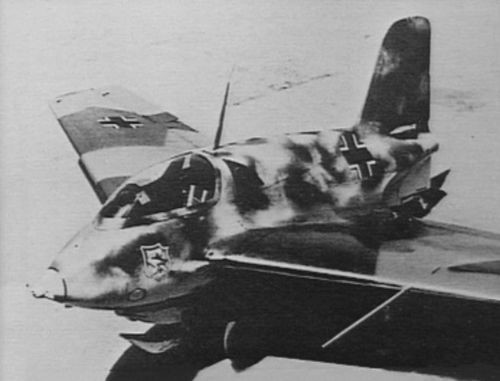


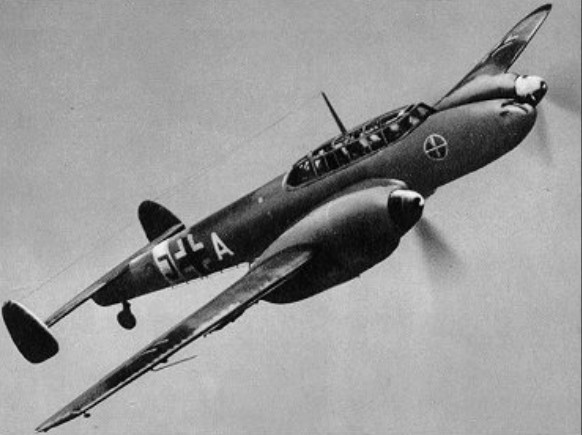
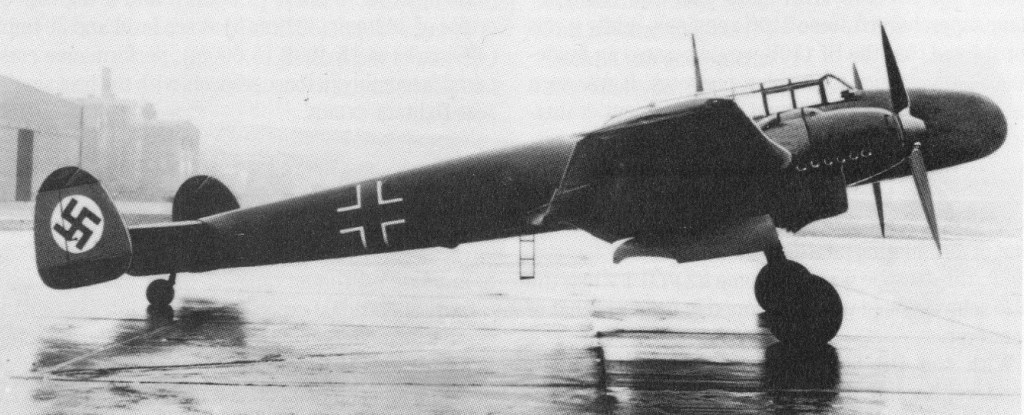
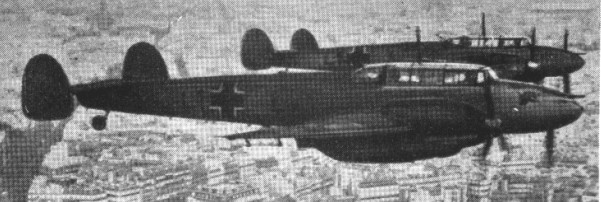
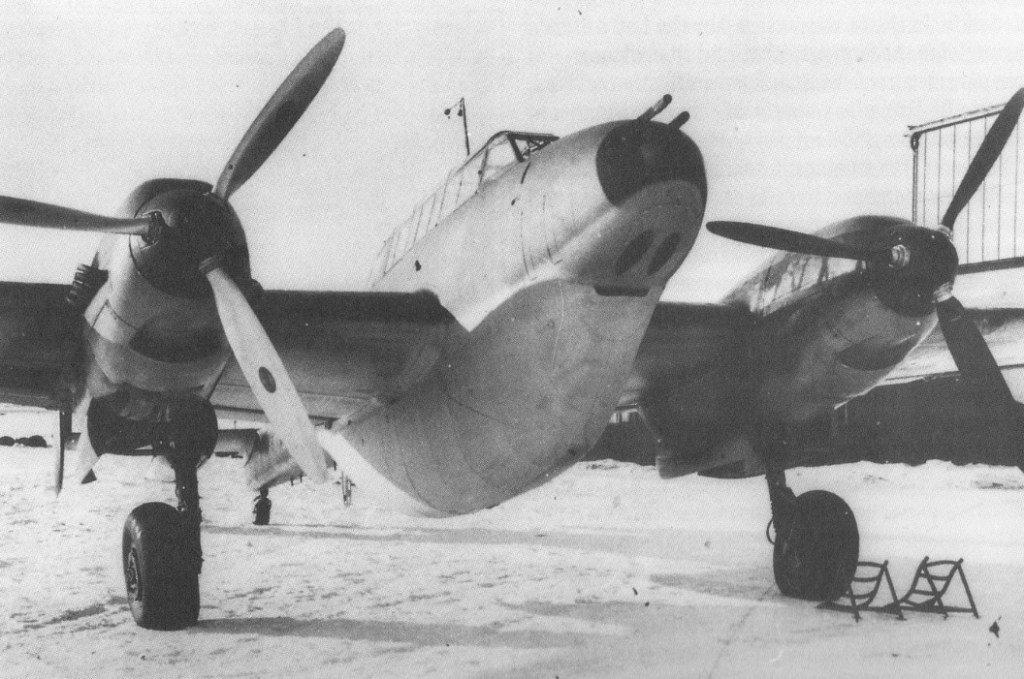
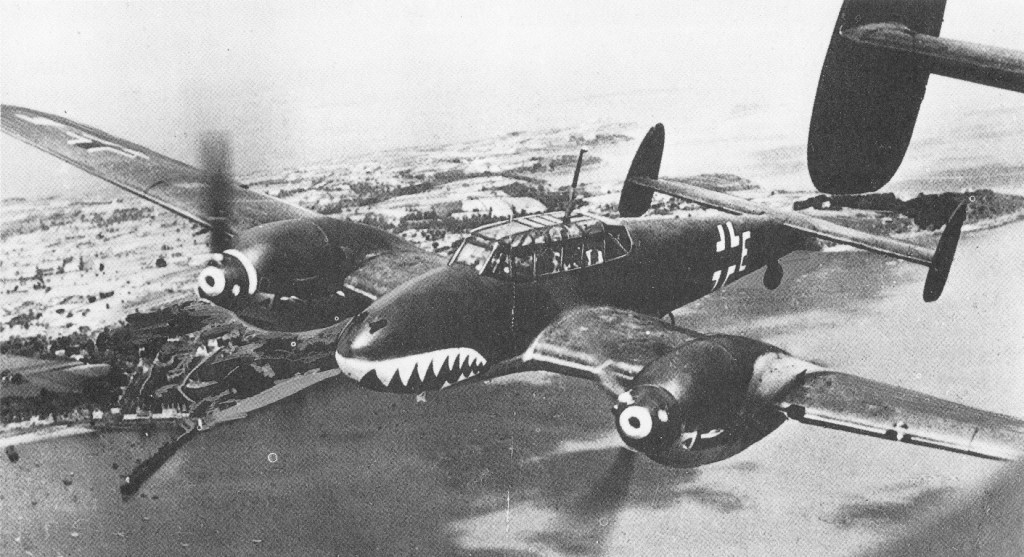
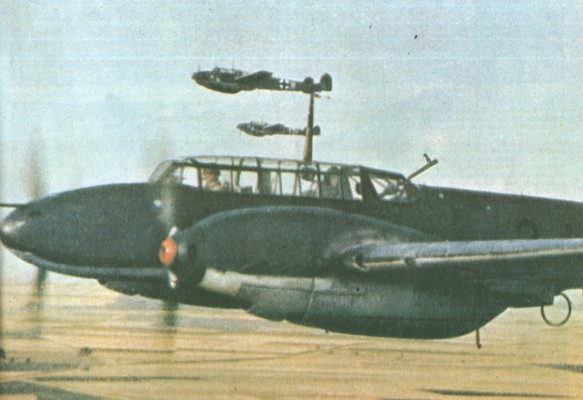
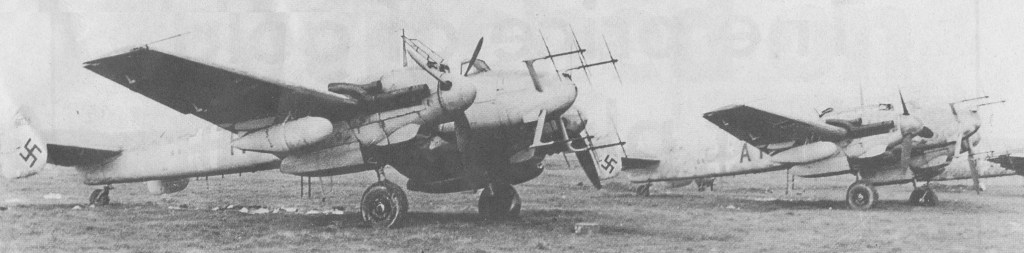
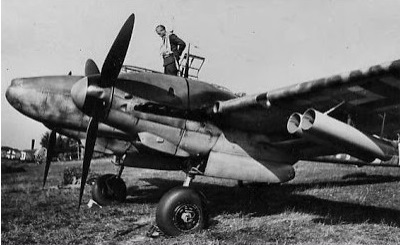
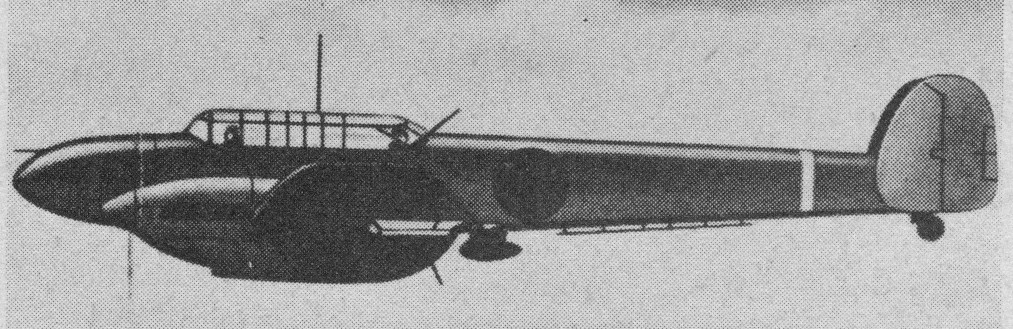
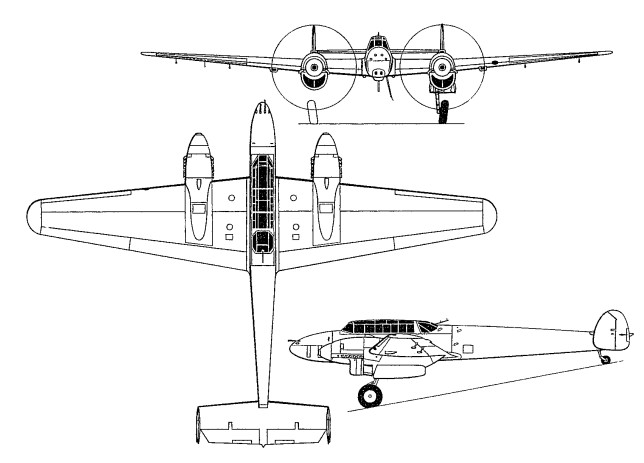
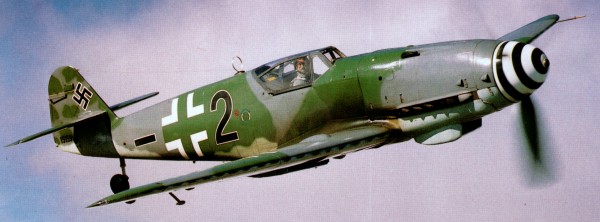
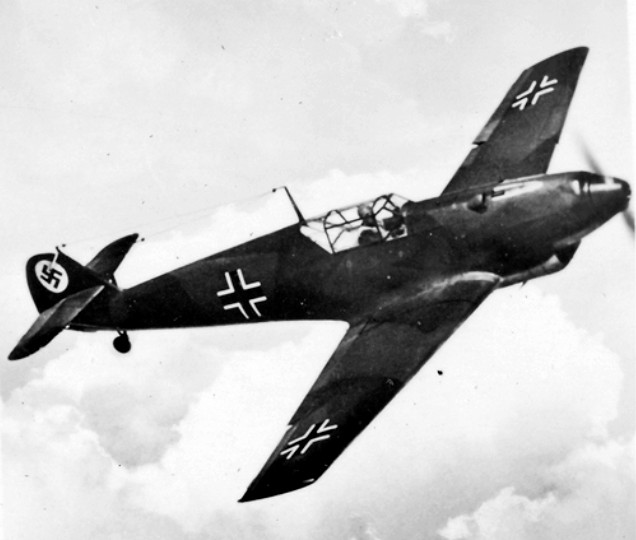

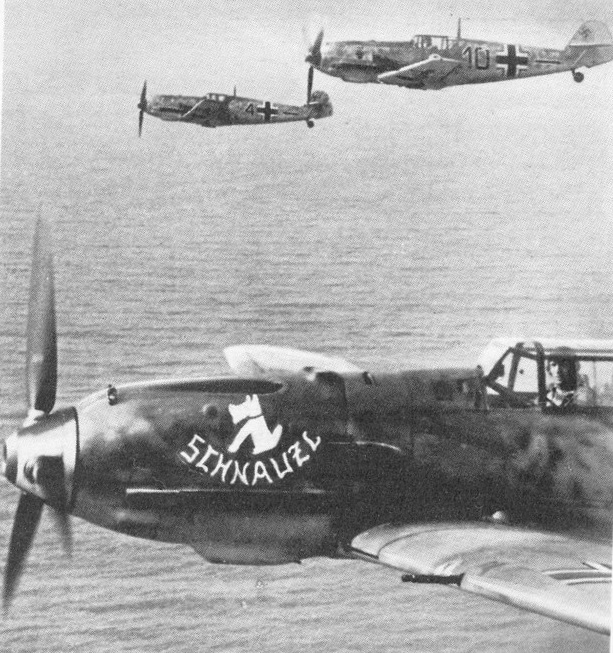
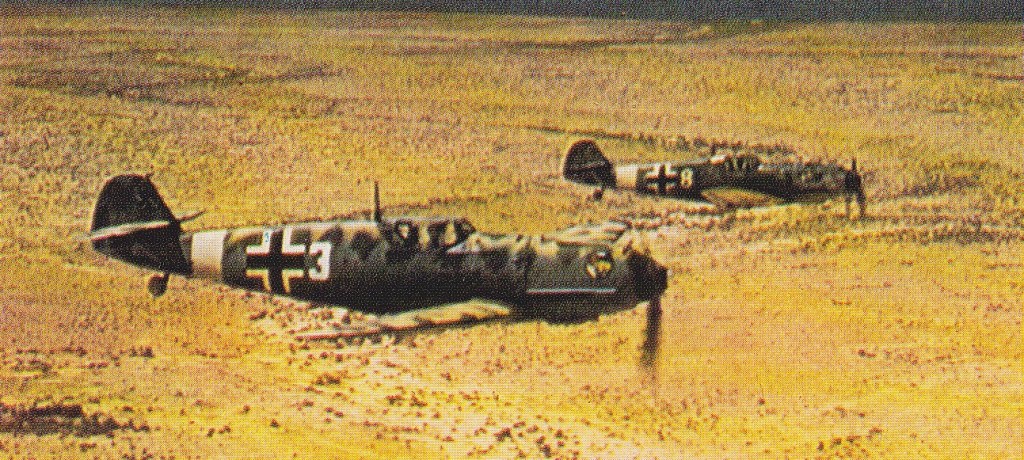
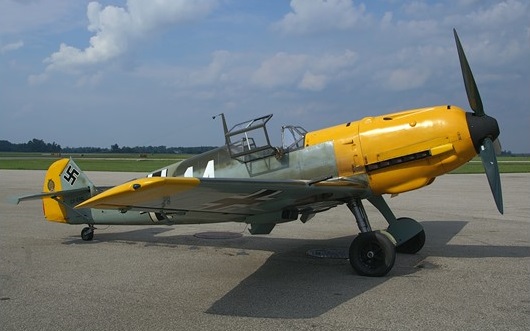
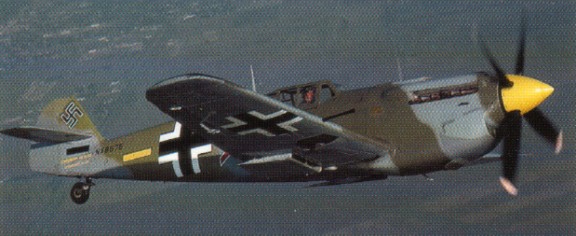
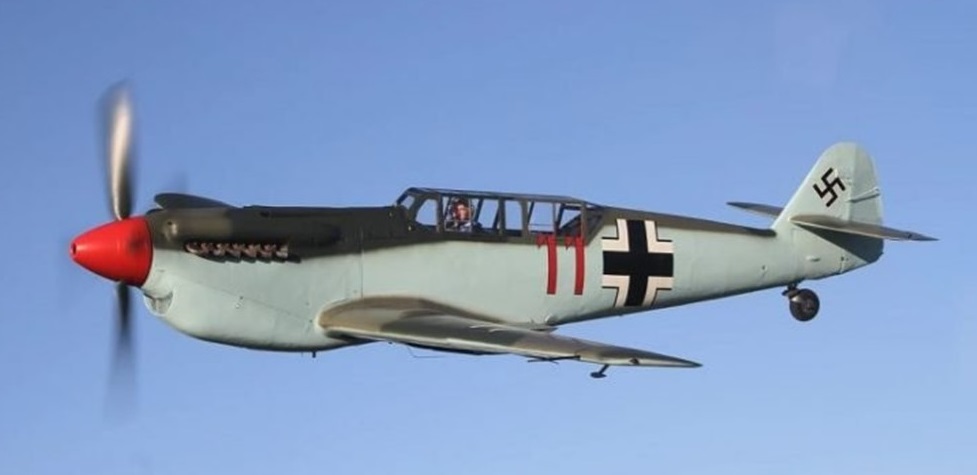
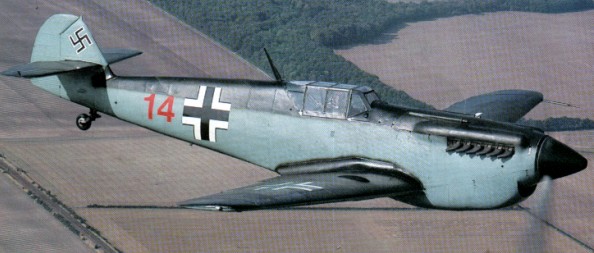
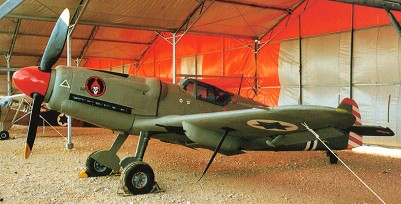
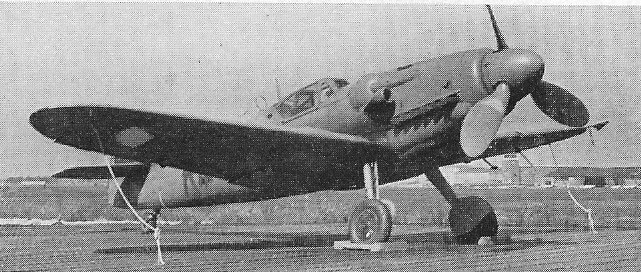
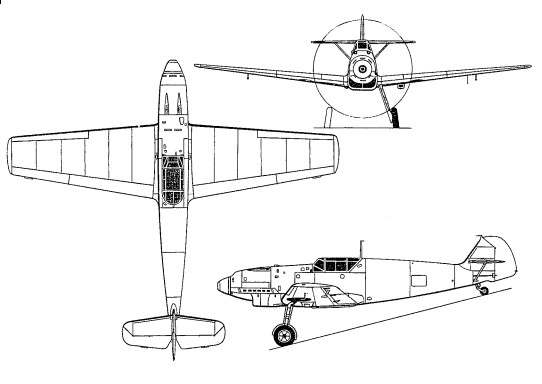

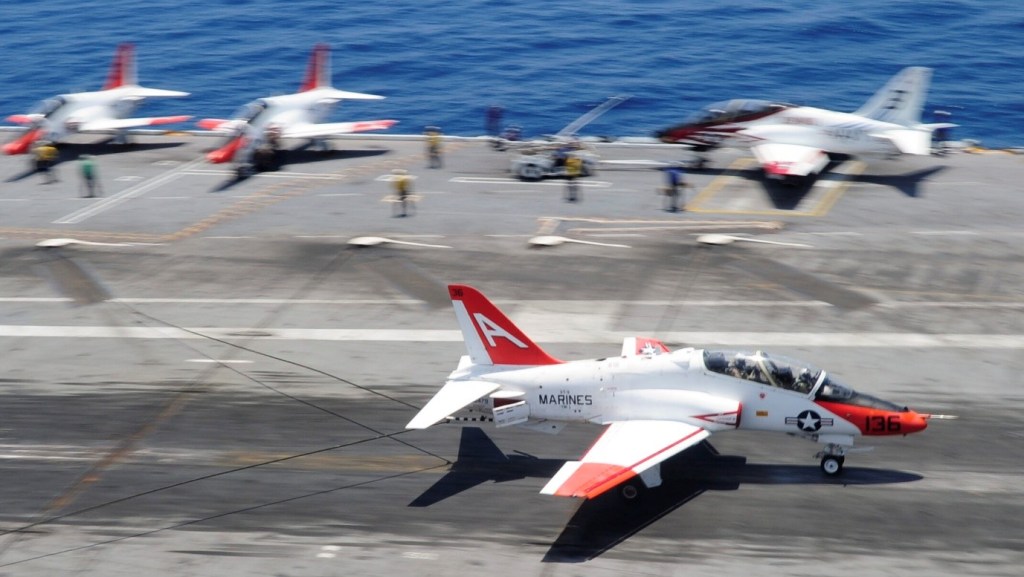
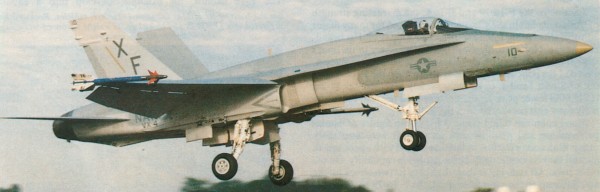

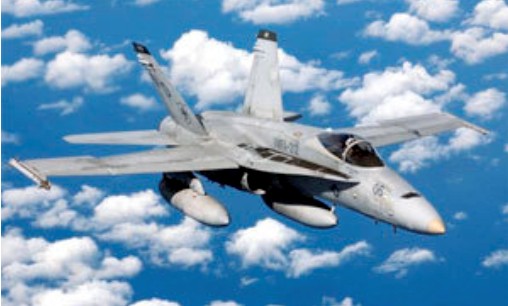
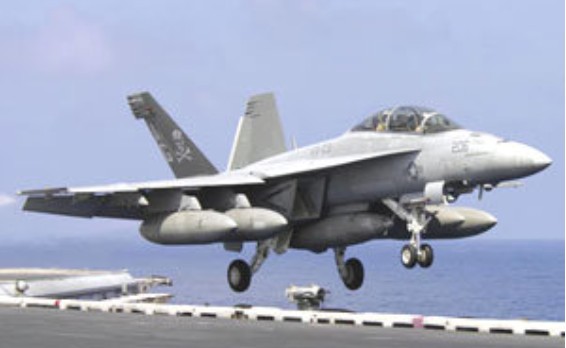

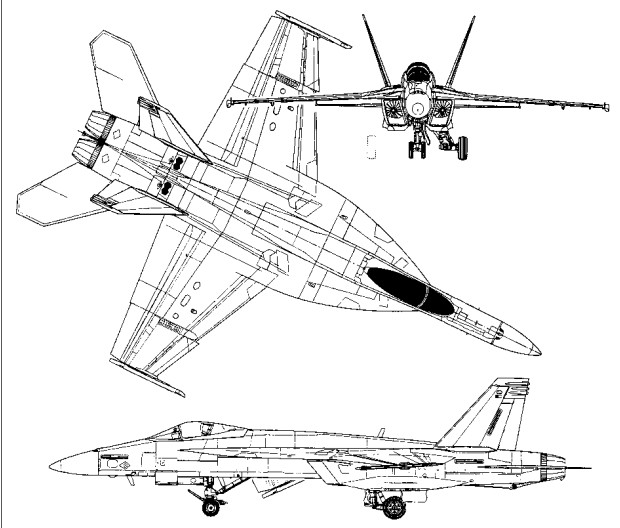
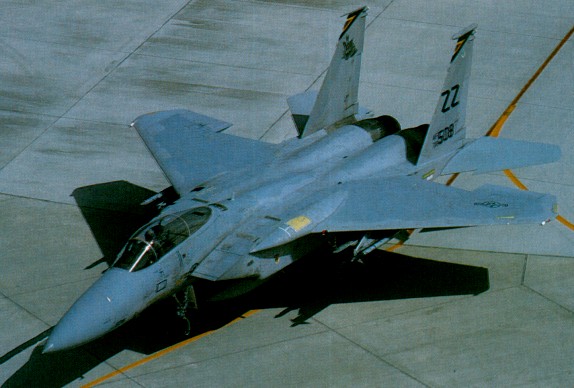
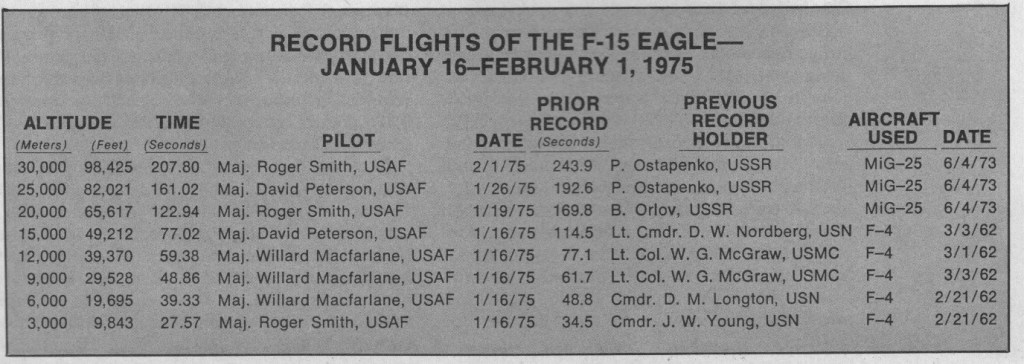
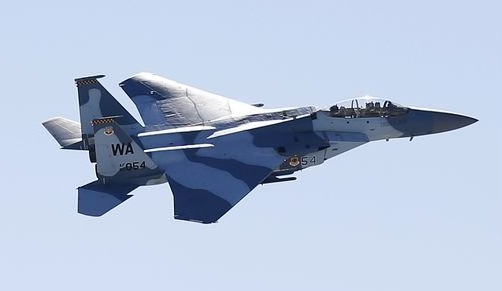
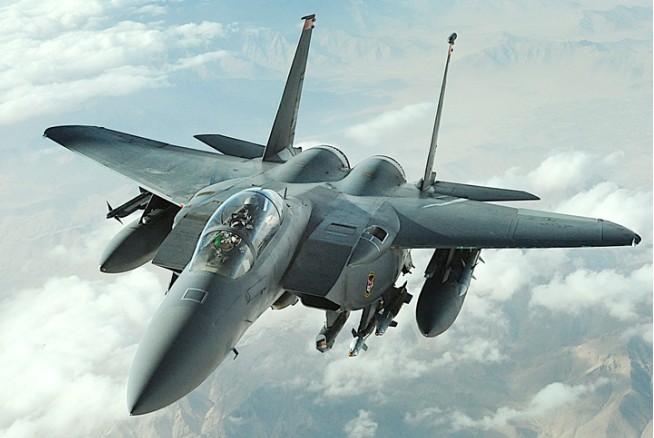
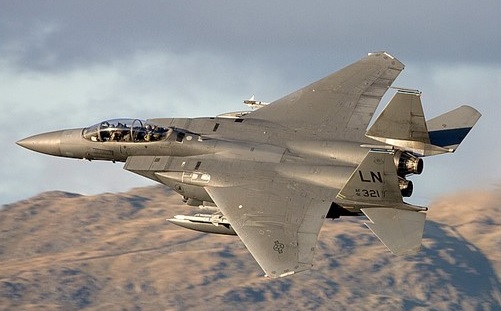
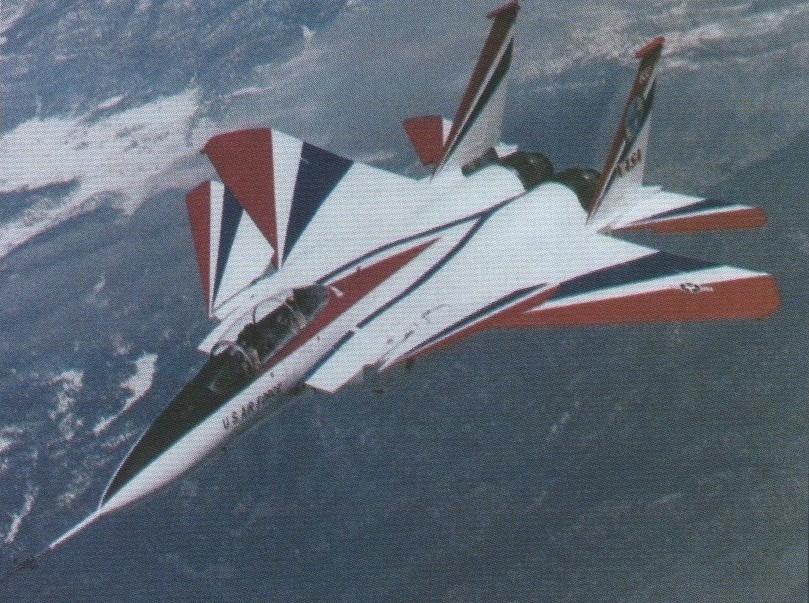
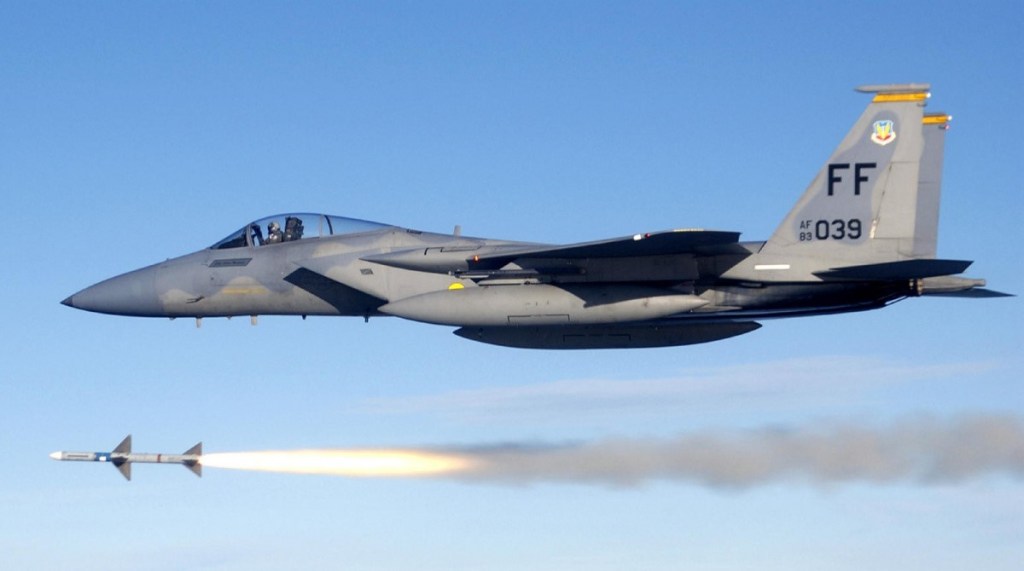
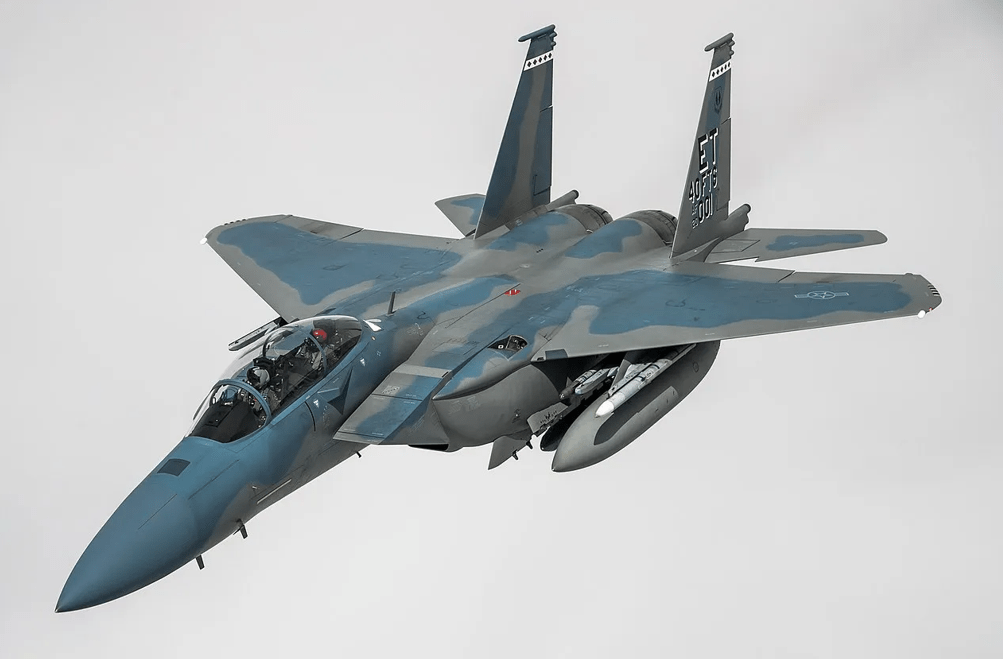
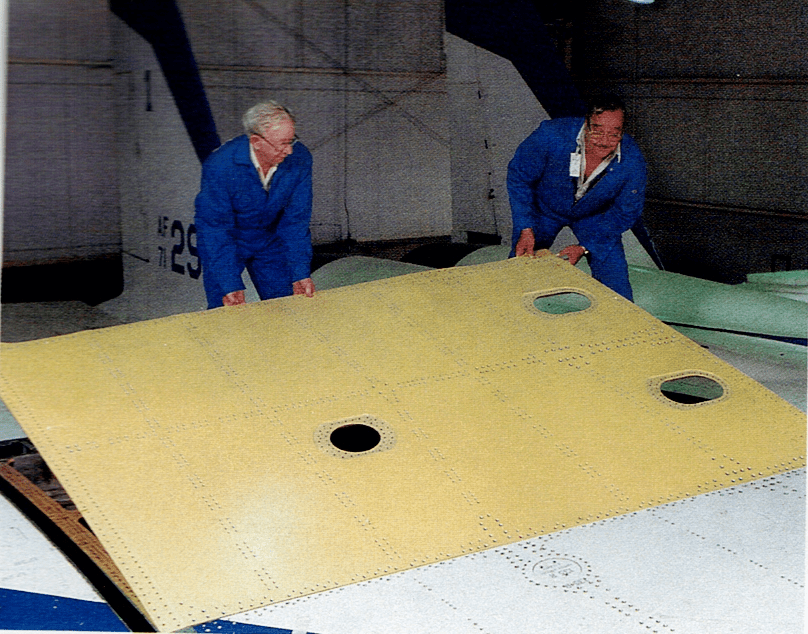
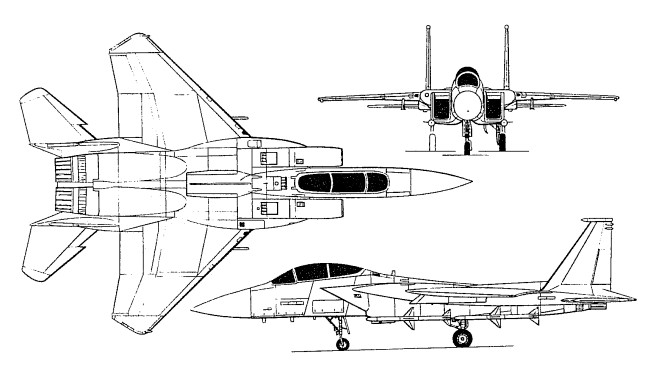
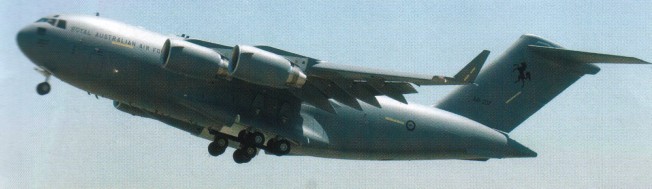

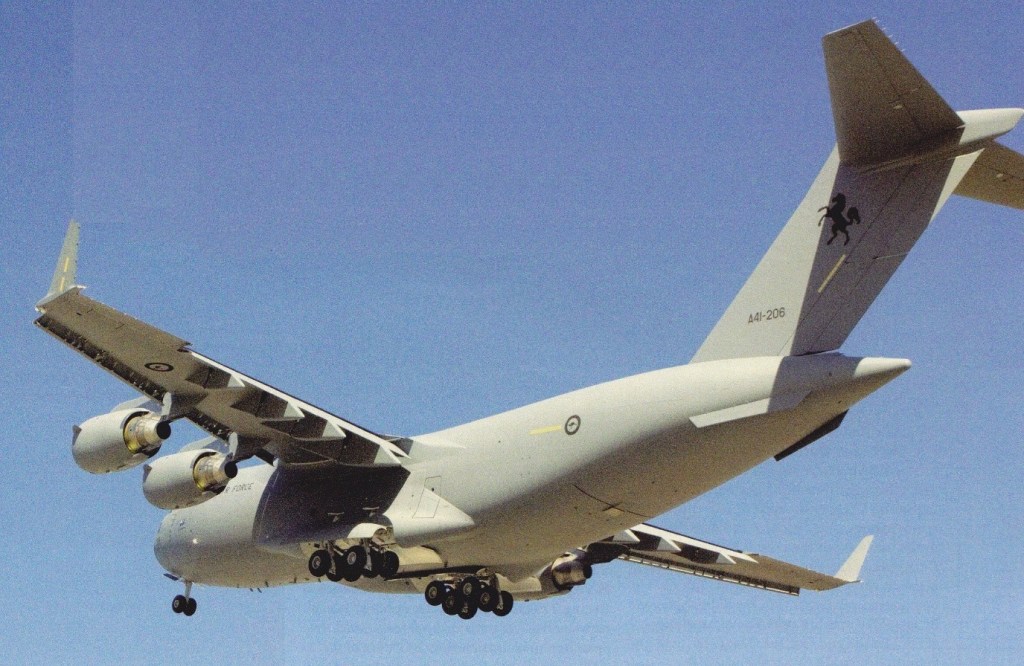


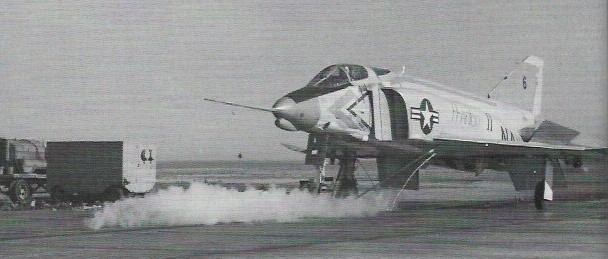
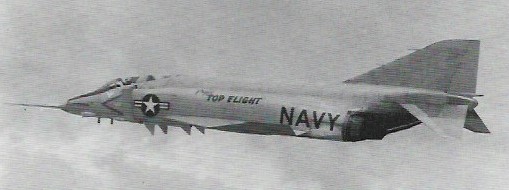

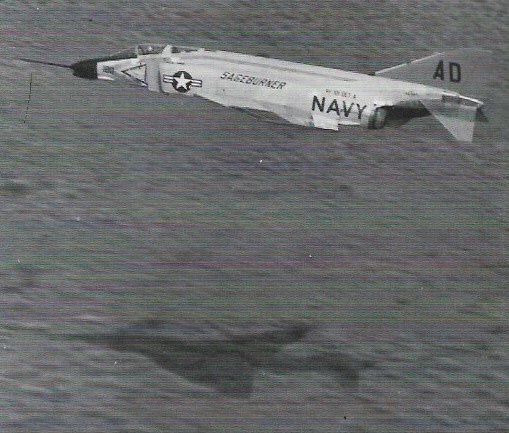


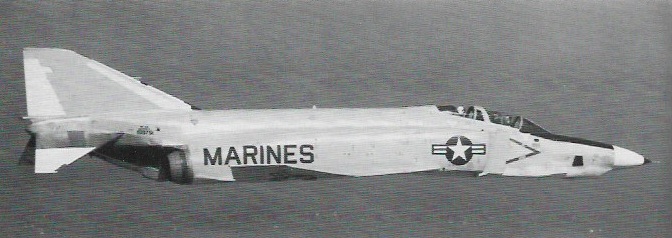

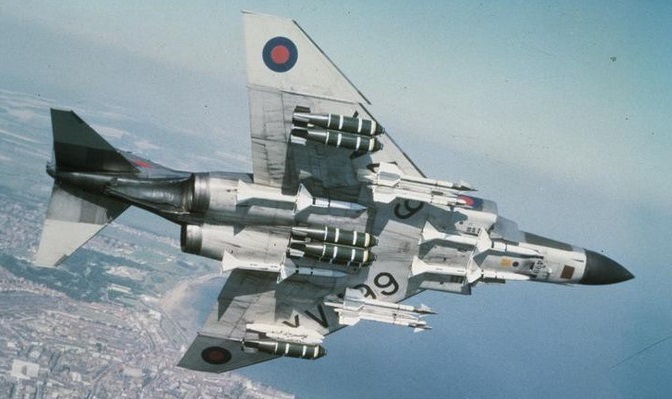
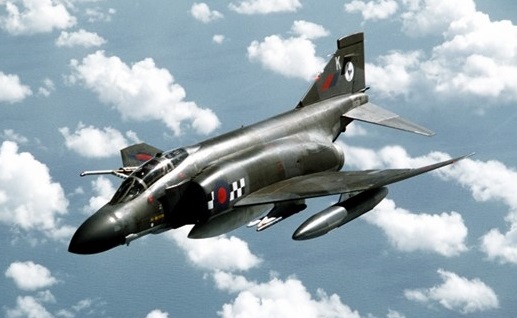
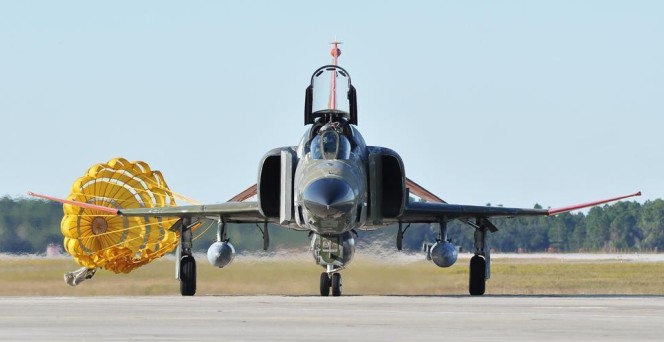


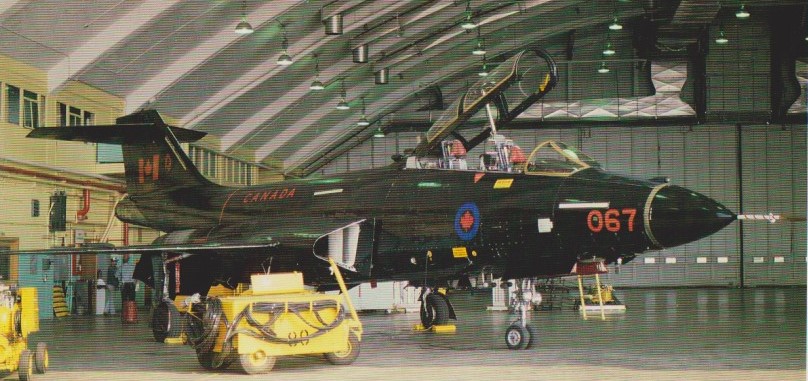

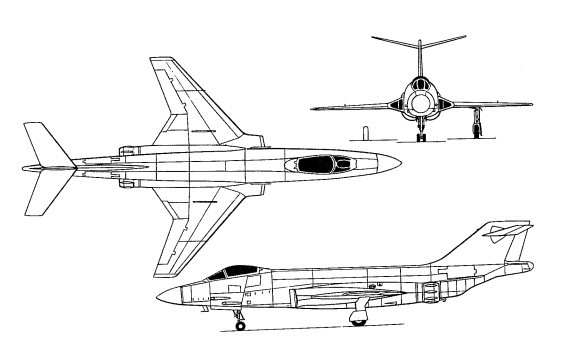
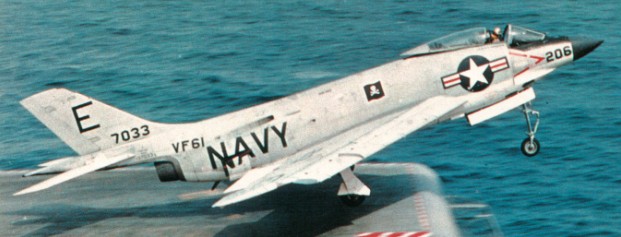
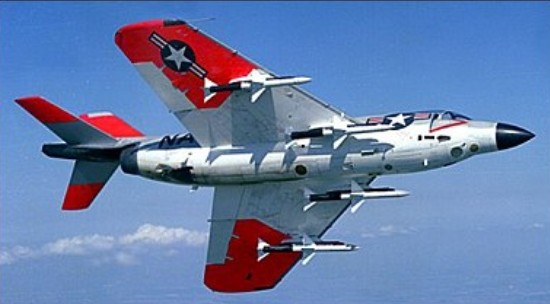


 All Aero