The Mi-28 is a tandem two-seat, twin-turbine anti-armour helicopter, NATO name Havoc. Design started in 1980 under Marat N Tishchenko, the first of two flying Mi-28 prototypes (012) flew on 10 November 1982.
Each prototype different with the first and second (022) having upward-pointing exhaust diffusers and fixed undernose fairing for electro-optic equipment. The first also had conventional three-blade tail rotor, the second replaced this with the definitive “Delta-H” configuration. The first two prototypes were powered with 1,434kW TV3-117BM engines and VR-28 gearbox.
The three prototypes had a conventional three-bladed tail rotor but was replaced by a ‘delta 3’ x-configured rotor comprising two independent two-bladed propellers mounted on the same shaft. The gunner, seated in a heavily-armoured front cockpit ahead of the pilot, controls a 30mm cannon normally used on ground vehicles. This is mounted under the nose, which contains a low light level TV and FLIR night control systems. Stub wings, each fitted with two hardpoints, can carry AT-6 ‘Spiral’ radio-guided ATMs, UV-20 pods, or fuel tanks. Infra-red suppressors and decoy dispensers are also fitted to the ‘Havoc’.
The third and fourth aircraft built were of Mi-28A (Type 280) basic version.
The first Mi-28A (032) introduced the definitive downward-pointing exhaust suppressors and flew in January 1988, with the second Mi-28A prototype (042) demonstrated at Moscow in 1992 representing the intended production configuration. It had the definitive moving E-O sensor turret undernose, downward-pointing exhaust diffusers and wingtip electronics/chaff dispenser pods. In emergencies an inflatable crew chute is deployed beneath the door sills. The fuel tanks of the ‘Havoc’ are self-sealing and fire retardant.
Mi-28NE
Flying controls are hydraulically powered mechanical type with the horizontal stabiliser linked to the collective, and controls for the pilot only.
The five-blade main rotor blades have very cambered high-lift section and sweptback tip leading edge. A full-span upswept tab is on the trailing-edge of each blade. Structure comprises numerically controlled, spirally wound glass fibre D-spar, blade pockets of Kevlar-like material with Nomex-like honeycomb core, and titanium erosion snip on the leading-edge. Each blade has single elastomeric root bearing, mechanical droop stop and hydraulic drag damper. A four-blade GFRP tail rotor with elastomeric bearings for flapping is fitted. A rotor brake lever is on the starboard side of the cockpit. A machined titanium main rotor head with elastomeric bearings, requires no lubrication. Power output shafts from the engines drive the main gearbox from each side, and a tail rotor gearbox, at the base of the tail pylon, is driven by an aluminium alloy shaft inside a composites duct on top of the tailboom. Sweptback mid-mounted wings have a light alloy primary box structure, leading- and trailing-edges of composites, and no wing movable surfaces. There is provision for countermeasures pods on each wingtip, housing chaff/flare dispensers and sensors. The light alloy semi-monocoque fuselage has titanium armour around the cockpits and vulnerable areas. A composites access door is aft of the wing on port side. The swept fin has a light alloy primary box structure, composites leading- and trailing-edges, and a cooling air intake at the base of the fin leading-edge, and exhaust at the top of the trailing-edge. There is a two-position composites horizontal stabiliser.
Landing gear is a non-retractable, tailwheel type, with a single wheel on each unit. Mainwheel tyres size 720×320, pressure 5.40 bar; castoring tailwheel with tyre size 480×200.
Power is from two Klimov TV3-117VMA turboshafts, each 1,636kW, in pod above each wingroot; three jetpipes inside downward-deflected composites nozzle fairing on each side of third prototype shown in Paris 1989; upward deflecting type also tested. Deflectors for dust and foreign objects forward of air intakes, which are de-iced by engine bleed air. The internal fuel capacity is 1,720 litres. Provision for four external fuel tanks on underwing pylons.
The navigator/gunner is in the front cockpit, the pilot behind, on an elevated seat, with a transverse armoured bulkhead between. The flat non-glint tinted transparencies are of armoured glass. A navigator/gunner’s door is on the port side, and pilot’s door on the starboard side.
The cockpits air conditioned and pressurised by engine bleed air. Duplicated hydraulic systems, pressure 152 bar are fitted, and a 208V AC electrical system is supplied by two generators on the accessory section of the main gearbox, ensuring continued supply during autorotation. A low-airspeed system is standard, giving speed and drift via main rotor blade-tip pitot tubes at -50 to +70km/h in forward flight. Main and tail rotor blades are electrically de-iced. An Ivchenko AI-9V APU in the rear of the main pylon structure supplies compressed air for engine starting and to drive a small turbine for preflight ground checks.
A radio for missile guidance is in the nose radome. Daylight optical weapons sight and laser range-finder are in a gyrostabilised and double-glazed nose turret above gun. A wiper on the outer glass protects the inner optically flat panel.
Two fixed IR sensors on the initial basic production Mi-28; IR suppressors, radar and laser warning receivers standard. Mi-28N has integrated Vitebsk DASS with Pastel RWR, Mak IR warning system, Platan jammer and UV-26 flare dispensers.
Armament is one 2A42 30mm turret-mounted gun (with 250 rounds in side-mounted boxes) in NPPU-28 mount at nose, able to rotate 110 degrees, elevate 13 degrees and depress 40 degrees. The maximum rate of fire is 900 rds/min air-to-air and air-to ground. The two pylons under each stub-wing, each have a capacity of 480kg. The main 2A42 gun is fired and guided weapons launched normally only from front cockpit. Unguided rockets are fired from both cockpits. (When fixed, the gun can also be fired from rear cockpit.)
A small-scale pre-series production was planned, but not initiated, by Rostvertol, Rostov-on-Don, which stated in mid-2001 that it was ready to begin series production.
The Mi-28 was scheduled to enter full service with the CIS forces in 1992, but lost out to the Kamov Ka-50.
The Mi-28N (Nochnoy: Night) added night/all-weather operating capability. Russian Army funding was announced in January 1994 and a demonstrator (014) was modified from the first Mi-28 prototype (012). The first hover was on 14 November 1995, and formal roll-out on 16 August 1996. The first flight was on 30 April 1997. The Mi-28N is equipped with a mast-mounted 360 degree scan millimetre wave Kinzhal V or Arbalet radar (pod soon enlarged in vertical plane), an FLIR ball beneath missile-guidance nose radome and above new shuttered turret for optical/laser sensors, including Zenit low-light-level TV. The cockpit has EFIS. New composites rotor with sweptback blade tips added later. The Mi-28N introduced uprated VR-29 transmission and IKBO integrated flight/weapon aiming system, with automatic terrain-following and automatic target search, detection, identification and (in formations of Mi-28Ns) allocation; Ramenskoye Breo-28N mission control system. The Mi-28N can carry the Igla (SA-16 ‘Gimlet’) AAM and new-generation ASMs.
Prototype Mi-28N ‘014’ first flight 30 April 1997, Panki, near Moscow.
Total of five trials Mi-28Ns were to be built by Rostvertol; TV3-117VMA engines initially, but 1,839kW Klimov VK-2500s to be installed later. A second helicopter was funded jointly by Rostvertol and Southwest Sberbank.
Mi-28NE
The Mi-28NEh (Nochnoy, Ehksport: Night, Export) version was offered to South Korea in 2000, and evaluated by Swedish Army in 2001 against Boeing AH-64 Apache and Eurocopter Tiger.
The Mi-28NEh is of conventional gunship configuration, with two crew in stepped cockpits. The original three-blade tail rotor was superseded by a low noise ‘scissors’ or “Delta-H” type comprising of two independent two-blade rotors set as narrow X (35 deg/145 deg) on the same shaft with self-lubricating bearings, the resulting flapping freedom relieves flight loads. Agility is enhanced by doubling hinge offset of the main rotor blades compared with the Mi-24. The crew compartments are protected by titanium and ceramic armour and armoured glass transparencies. The new composites main rotor can withstand a hit from a round of up to 30mm calibre. Multiple self-sealing fuel tanks in the centre-fuselage are enclosed in a composite second skin, outside the metal fuselage skin. Energy absorbing seats and landing gear protect the crew in crash landings at descent rate of 12m/s. The crew doors are rearward-hinged, to open quickly and remain open in emergency. Parachutes are mandatory for Russian Federation and Associated States (CIS) military helicopter aircrew, but no provision for rotor separation. A port-side door, aft of wing, provides access to an avionics compartment large enough to permit combat rescue of two or three persons, although it lacks windows, heating and ventilation.
A hand crank, inserted into the end of each stub-wing, enables stores of up to 500kg to be winched on to pylons without hoists or ground equipment. The main rotor shaft has 5 degrees of forward tilt, providing tail rotor clearance. The transmission is capable of running without oil for 20 to 30 minutes at the main rotor rpm of 242. With main rotor blades and wings removed, the helicopter is air-transportable in an An-22 or Il-76 freighter.
Mi-28N development cost US$150 million (2000) and unit cost approximately US$15 million to US$16 million (2002).
Mi-28 Engines: 2 x Klimov TV3-117VM turboshaft, 1620kW Main rotor diameter: 17.2m Length with rotors turning: 21.6m Height: 3.82m Max take-off weight: 11200kg Empty weight: 7000kg Fuel: 1337kg Max speed: 300km/h Cruising speed: 270km/h Rate of climb: 13.6m/s Service ceiling: 5800m Range with max fuel: 460km HIGE: 19,025 ft HOGE: 11,810 ft Crew: 2
Mi-28N Engines: 2 x Klimov TV3-117VMA turboshafts, 1,863kW Main rotor diameter: 17.20m Fuselage length with a cannon: 17.01m Height: 3.82m Max take-off weight: 11700kg Max speed: 320km/h Cruising speed: 270km/h Hovering ceiling: 3600m Range with 10500kg take-off weight: 500km Range with max fuel: 1000km Armament: 1 x 30mm cannon, 16 x “Shturm” or “Ataka” anti-tank missiles or 8 x “Igla-V” AA missiles Crew: 2
The development of the product design “240” (B-24) began immediately after the publication of the Decree of the Council of Ministers of the USSR and the Central Committee of the CPSU on May 6, 1968 at the Design Bureau of M. L. Mil, as first fire support helicopter in USSR, with accommodation for eight armed troops. Prototype machines (OP-1 and OP-2) were ready in a year. Significant part and assemblies were in common with the Mi-8 and Mi-14. Twelve prototypes were built with the first flown on 19 September 1969 (test pilot G.V. Alferov). The Mi-24 has the NATO reporting name ‘Hind’.
The prototype helicopter had a common front two-seat cockpit (the so-called “veranda”) with dual controls. Crew – pilot and operator. Later, a flight engineer was added to the crew. In the middle of the helicopter was a cargo compartment with a capacity of up to 8 personnel. On the right and left sides of the cargo compartment are double doors, with upper and lower wings. The opening windows were equipped with pivot mounts for firing during flight from personal weapons. Both cabs are sealed, supercharged by engines. Initially, the crew’s equipment included specialized flight helmets and body armor. Cabin reservation is represented by frontal bulletproof glass, armored crew seats, and local armored plates on the sides of the cabin and on the engine hoods.
Due to the unavailability of the Sturm weapons complex, it was decided on the first machines to equip the K4V complex of the Mi-4 helicopter – the Falanga-M missiles with a manual guidance system and the NUV-1 machine-gun mount with the A-12.7 machine gun, four beam holders under NUR or free-falling bombs.
Factory tests started on September 15, 1969 and almost immediately began the construction of an experimental series of ten helicopters. At the end of 1970, two machines were finished – to improve stability at speeds of more than 200 km / h, the helicopter was equipped with a wing with a negative V-12 degrees and an elongated cockpit. The first production helicopters Mi-24A (product “245”), designed in this form and equipped with the Falanga-M complex, entered the army for pilot operation.
First reported in the West in 1972, photographs became available in 1974 when two units of approximately squadron strength were based in East Germany. The Mi-24 uses the TV3 engines, transmission and rotor of the Mi-17 on a new fuselage, with stub wings carrying rockets and other offensive armament.
Two basic versions exist: the Hind A/B/C assault helicopter has a four-man crew under an extensive glasshouse canopy, while the anti-tank Hind D/E/F has a two-man crew under separate armoured glass canopies in a steel-plated forward fuselage. Both versions have stub wings to carry up to 1,500kg of stores, and eight combat equipped troops can be carried in the fuselage.
Mi-24A was produced by a factory in the city of Arsenyev. Almost 250 vehicles were built, which were put into service with the formed army aviation structures, in separate helicopter regiments of the combined arms armies and air assault brigades. On the basis of the Mi-24A, a trainer, the Mi-24U (ed. “244”) was created with full dual control.
Mi-24B (ed. ”241 ″) received a new USPU-24 machine gun mount with a YakB-12.7 machine gun (4500 h / min), the Falanga-P missile system. But the helicopter’s debugging was suspended and fundamental changes were made – the cockpit was converted into a tandem, the tail rotor and gearbox were mounted from the Mi-14 – the propeller became a pulling propeller, which sharply increased the efficiency of track control. The helicopter received the name “Mi-24V”, or product “242”. But due to the lack of knowledge of the Sturm complex, helicopters with a new cockpit had to be equipped with the Mi-24B type, and this “intermediate version” went into series under the designation Mi-24D (product “246”). Just in case, they decided not to use “G” … It took 8 years to finish the Mi-24V. In 1976, the helicopter was officially adopted and was produced in the mass series.
Thus, by 1973, the appearance of a helicopter had developed, which had become widely known throughout the world.
Mi-24 is made according to the classic single-rotor scheme with a five-blade three-joint bearing and three-blade tail rotors.
The undercarriage is three-leg, retractable, with a s steerable front wheel. In the bow of the fuselage there is a double crew cabin according to the tandem scheme: the operator-gunner is in a separate front cockpit, followed by a pilot, whose cockpit is raised by 0.3 m above the cockpit nose, the flight engineer can be located on the folding seat in the equipment compartment behind the cockpit. The crew is housed in pressurized cabins equipped with a heating and ventilation system. To prevent the entry of contaminated air and radioactive dust into them, a slight overpressure is maintained
Steel plates were used to armor the crew cabin, gearbox, engine oil tanks, gearbox and hydraulic tank. The pilot’s seat is armored, with a folding armored back and armored head, the nose is not armored, there is an armored partition between the cockpits, the windshields are armored, flat, equipped with wipers, the side convex glass is silicate, not armored.
The central section of the fuselage consists of a cargo compartment, which can accommodate up to eight paratroopers, and a rear cone-shaped part for equipment and niches for cleaning the main landing gear. The transmission and the duplicated control system are the same as on the Mi-8 helicopter.
The rotor shaft is tilted not only forward by 4.5 degrees, but also to the right by 2.5 degrees. This ensures stability during forward straight flight.
One of the main features of the helicopter is a wing with an area of 6.75 sq.m. with a negative transverse V – 12 degrees., Which provides from 22 to 28 percent of the lifting force, depending on speed and other factors.
Especially for the Mi-24 in the late 1970s, the GUV-1 helicopter gondolas (including the AGS-17 Flame automatic grenade launcher) and the GUV-8700 (one Yakb-12.7 four-barreled machine gun and two four-barrel GShG-7.62 machine guns) were created .The Mi-24 is also capable of carrying two cannon containers UPK-23-250 with a GSh-23L gun and an ammunition load of 250 shells.
At the end of the 1980s, some Mi-24Ps received 2 R-60 / R-60M air-to-air missiles to repel the attacks of enemy fighters and to combat enemy helicopters. APU with missiles mounted on internal holders. The Mi-24 is also capable of carrying two cannon containers UPK-23-250 with a GSh-23L gun and an ammunition load of 250 shells.
At the end of the 1980s, some Mi-24Ps received 2 R-60 / R-60M air-to-air missiles to repel the attacks of enemy fighters and to combat enemy helicopters. APU with missiles mounted on internal holders.
Identified by Nato is the anti-tank Hind E, armed with AT-6 Spiral missiles. A version of the Hind E without the 12.7mm Gatling-type gun in the nose, but with a twin-barrel cannon pod attached to the fuse-lage side, has been named Hind F by Nato. Hinds have also been reported carrying air-to¬-air missiles.
The Mi-24D has a gunship configuration, with stepped tandem seating for two crew and heavy weapon load on stub-wings, the fuselage is wide eniugh to carry eight troops. Dynamic components and power plant was originally as the Mi-8, but soon upgraded to Mi-17-type power plant and port-side tail rotor. Main rotor blade section NACA 230, thickness/chord ratio 11 to 12%; tail rotor blade section NACA 230M; stub-wing anhedral 12 degrees, incidence 19 degrees; wings contributing approximately 25% of lift in cruising flight; fin offset 3 degrees.
Five-blade constant-chord main rotor; forged and machined steel head, with conventional flapping, drag and pitch change articulation; each blade has aluminium alloy spar, skin and honeycomb core; spars nitrogen pressurised for crack detection; hydraulic lead/lag dampers; balance tab on each blade; aluminium alloy three-blade tail rotor; main rotor brake; all-metal semi-monocoque fuselage pod and boom; 5mm hardened steel integral side armour on front fuselage; all-metal shoulder wings with no movable surfaces; swept fin/tail rotor mounting; variable incidence horizontal stabiliser.
The landing gear is tricycle type; rearward-retracting steerable twin-wheel nose unit; single-wheel main units with oleo-pneumatic shock-absorbers and low-pressure tyres, size 720 x 320mm on mainwheels, 480 x 200mm on nosewheels. Main units retract rearward and inward into aft end of fuselage pod, turning through 90 degrees to stow almost vertically, discwise to longitudinal axis of fuselage, under prominent blister fairings. Tubular tripod skid assembly, with shock-strut, protects tail rotor in tail-down take-off or landing.
Power is from two Klimov TV3-117MT turboshafts, each with maximum rating of 1,434kW, side by side above cabin, with output shafts driving rearward to main rotor shaft through combining gearbox. There is 5mm hardened steel armour protection for engines. Main fuel tank in fuselage to rear of cabin, with bag tanks behind main gearbox. Internal fuel capacity 1,500kg; can be supplemented by 1,000kg auxiliary tank in cabin (Mi-24D); provision for carrying (instead of auxiliary tank) up to four external tanks, each 500 litres, on two inner pylons under each wing. Optional deflectors and separators for foreign objects and dust in air intakes; and infra-red suppression exhaust mixer boxes over exhaust ducts.
Pilot (at rear) and weapon operator on armoured seats in tandem cockpits under individual canopies; dual flying controls, with retractable pedals in front cockpit; if required, flight mechanic on jump-seat in cabin, with narrow passage between flight deck and cabin. Front canopy hinged to open sideways to starboard; footstep under starboard side of fuselage for access to pilot’s rearward-hinged door; rear seat raised to give pilot unobstructed forward view; anti-fragment shield between cockpits. Main cabin can accommodate eight persons on folding seats, or four stretchers; at front of cabin on each side is a door, divided horizontally into two sections, hinged to open upward and downward respectively, with integral step on lower portion. Optically flat bulletproof glass windscreen, with wiper, for each crew member.
Systems include cockpits and cabin heated and ventilated. Dual electrical system, with three generators, giving 36, 115 and 208V AC at 400Hz, and 27V DC. Retractable landing/taxying light under nose; navigation lights; anti-collision light above tailboom. Stability augmentation system. Electrothermal de-icing system for main and tail rotor blades. AI-9V APU mounted transversely inside fairing aft of rotor head. Blind-flying instrumentation, and ADF navigation system with DISS-1SD Doppler-fed mechanical map display. Air data sensor boom forward of top starboard corner of bulletproof windscreen at extreme nose.
Mission equipment includes undernose pods for electro-optics (starboard) and Raduga-F semi-automatic missile guidance (port). Many small antennae and blisters, including SRO-2 Khrom (NATO ‘Odd Rods’) IFF transponder.
Sirena-3M radar warning antennae on each side of front fuselage and on trailing-edge of tail rotor pylon. Infra-red jammer (L-166V-11E Jspanka microwave pulse lamp: ‘Hot Brick’) in ‘flower pot’ container above forward end of tailboom. ASO-2V flare dispensers under tailboom forward of tailskid assembly initially; later triple racks (total of 192 flares) on sides of centre-fuselage. Gun camera on port wingtip.
Armament is one remotely controlled YakB-12.7 four-barrel Gatling-type 12.7mm machine gun, with 1,470 rounds, in VSPU-24 undernose turret with field of fire 60 degrees to each side, 20 degrees up, 60 degrees down; gun slaved to KPS-53AV undernose sighting system with reflector sight in front cockpit; four 9M17P Skorpion (NATO AT-2 ‘Swatter’) anti-tank missiles on 2P32M twin rails under endplate pylons at wingtips; four underwing pylons for UB-32 rocket pods (each 32 S-5 type 57mm rockets), B-8V-20 pods each containing 20 80mm S-8 rockets, 130 mm S-13 and 250mm S-24 rockets, UPK-23-250 pods each containing a GSh-23L twin-barrel 23mm gun, GUV pods each containing either one four-barrel 12.7mm YakB-12.7 machine gun with 750 rounds and two four-barrel 7.62mm 9-A-622 machine guns with total 1,100 rounds or an AGS-17 Plamia 30mm grenade launcher, up to 1,500kg of conventional bombs, mine dispensers, night flares or other stores. R-60 (AA-8 ‘Aphid’), R-73 (AA-11 ‘Archer’) and Igla air-to-air missiles fitted experimentally. Helicopter can be landed to install reload weapons carried in cabin. PKV reflector gunsight for pilot. Provisions for firing AKMS guns from cabin windows.
Reconfiguration of the front fuselage changed the primary role to gunship. The new version was first observed in 1977. In the early Mi-24A the pilot sat behind the armament operator and had relatively poor forward vision but the later Mi-24D provided a raised rear seating position for the pilot and a bubble nose for the weapons position.
The Mi-24 was used operationally in Chad, Nicaragua, Ceylon, Angola, Afghanistan, Chechnya and Iran/Iraq war, when at least one Iranian F-4 Phantom II destroyed by AT-6 (NATO ‘Spiral’) anti-tank missile from Mi-24.
Low-rate production continued for export until 1994. Late models continued to be available from Rostvertol. By 1991 more than 2,300 had been built at Arsenyev and Rostov. An FAI record was set by the A-1O experimental variant of the ‘Hind’ on 2 September 1978 over a 15/25km course it achieved a speed of 368.4km/h.
The Mi-24 has been widely exported and a number are in service on most continents, with examples delivered to, or operating in, Afghanistan, Algeria, Angola, Bulgaria, Chad, Cuba, Czechoslovakia, Germany, Hungary, India, Iraq, Libya, Mozambique, Nicaragua, North Korea, Peru, Poland, Sri Lanka, Syria, Vietnam and Yemen.
Mi-35M
Some export variants of the Mi-24 are desig¬nated Mi-25 and Mi-35, indicating a different equipment standard. The Mi-35M having fixed undercarriage.
The Mil Experimental Design Bureau demonstrated a fundamentally modernized derivative, designated the Mi-24VM (Mi-35M), of the Mi-24 helicopter that has made a perfect showing under complicated combat conditions. The features of the modernization consist in modular updating of the Mi-24. Any module (unit) can be individually modernized in accordance with the customer’s request and financial potentialities.
The Mi-25 was an export version of Mi-24D tandem-cockpit variant and Mi-35 as second and improved export variant based on upgraded versions of Mi-24.
Installation of a new main rotor provided with blades made of glass fiber plastics, a hub furnished with elastolar bearings, and an X-shaped tail rotor developed for the Mi-28N helicopter, makes it possible to decrease the mass of the flying machine, increase its hovering ceiling and rate of climb, and improve its overall operating characteristics and invulnerability.
In modernizing the airframe, armament system and communications facilities, the Mil Design Bureau offers to install a shortened wing and nonretractable landing gear and retrofit the hydraulic system. The primary emphasis has been placed on an increase of weapon effectiveness. The Ataka air-to-ground guided missiles (ammunition establishment has been increased up to 16 missiles) have been introduced into the helicopter’s armament system. The missiles can also be used against air targets similar to the Igla-V guided missiles. The 12.7mm machine-gun mount has been replaced by a 23mm aircraft cannon. The most up-to-date BVK-24 computer and a laser range finder have been introduced into the heliborne equipment. A modernization program on this scale makes it possible to increase the accuracy against a single target 1.5 times, while increasing the kill zone 2 to 2.5 times when delivering cannon fire. The combat effectiveness of employing the guided missiles increases twofold on average.
The use of night-vision goggles with flight information displayed in the field of view, and equipping the helicopter with an optronic fire-control station comprising of thermal imaging and TV channels, control channel, and laser range finder, as well as display systems, enables the crew to detect and recognize targets at night and employ the heliborne weapons both by day and night.
Most of over 2,500 built between 1970 and 1989, though smallscale production up to 1996.
Mi-24 ‘Hind’ Early production version, reported in 1972 but not seen until 1973; introduced into Soviet service in 1973/74
Mi-24 ‘Hind-A’ Second production model, with tail rotor moved from the starboard to port side of the tailfin; used as armed assault helicopter, carrying eight troops and three crew members
Mi-24 ‘Hind-B’ Initial production model with tail rotor on starboard side, wings without anhedral, no wingtip stations and only four underwing hardpoints; test use only
Mi-24 ‘Hind-C’ Dedicated training helicopter similar to ‘Hind-A’, but without nose-gun installation and wingtip stations
Mi-24BMT Modified 1973 for minesweeping.
Mi-24D: (Type 24-6; ‘Hind-D’) Interim gunship version; design began 1971; entered production at Arsenyev and Rostov plants 1973; about 350 built 1973-77. Basically as late model ‘Hind-A’ with TV3-117 engines and port-side tail rotor, but entire front fuselage redesigned above floor forward of engine air intakes; heavily armoured separate cockpits for weapon operator and pilot in tandem; flight mechanic optional, in main cabin; transport capability retained; USUP-24 gun system, with rangefinding; undernose JakB-12.7 four-barrel 12.7mm machine gun in turret, slaved to adjacent KPS-53A electro-optical sighting pod, for air-to-air and air-to-surface use; Falanga P (Phalanx) anti-tank missile system; nosewheel leg extended to increase ground clearance of sensor pods; nosewheels semi-exposed when retracted.
Mi-24DU Dual-control training version has no gun turret.
Mi-24K (korrektirovchik: corrector) (‘Hind-G2’) As Mi-24R, but with large camera in cabin, f8/1,300mm lens on starboard side; six per helicopter regiment for reconnaissance and artillery fire correction; gun and B-8V-20 rocket pods retained. No target designator pod under nose; upward hingeing cover for IR sensor. About 150 built 1983-89.
Mi-24P (Type 24-3; ‘Hind-F’) Development started 1974; about 620 built 1981-90; first shown in service in 1982 photographs; P of designation refers to pushka = cannon; as Mi-24V, but nose gun turret replaced by GSh-30-2 twin-barrel 30mm gun (with 750 rounds) in semi-cylindrical pack on starboard side of nose; bottom of nose smoothly faired above and forward of sensors.
Mi-24PS Special version for Russian Ministry of Internal Affairs; prototype exhibited at Moscow Air Show ’95. Equipment includes undernose FLIR, searchlight on port side, loadspeaker pack on starboard side; hoist, climbdown ropes, stations for radio operator.
Mi-24R ‘Hind-G 1’ Fitted with wingtip ‘grapplers’ or ‘clutching hands’ apparently used in connection with NBC technology, the Mi-24R was first reported in 1986 after the Chernobyl disaster
Mi-24RKR (‘Hind-G1’) Identified at Chernobyl after April 1986 accident at nuclear power station; no undernose electro-optical or RF missile guidance pods; instead of wingtip weapon mounts, has ‘clutching hand’ mechanisms on lengthened pylons, to obtain six soil samples per sortie for NBC (nuclear/biological/chemical) warfare analysis; air samples sucked in via pipe on port side, aft of doors; datalink to pass findings to ground; lozenge-shaped housing with exhaust pipe of air filtering system under port side of cabin; bubble window on starboard side of main cabin; small rearward-firing marker flare pack on tailskid; crew of four wear NBC suits; six helicopters are deployed per regiment throughout RFAS ground forces. Designation (also appearing as Mi-24RCh) indicates Razvedchik: reconnaissance/chemical. About 150 built 1983-89.
Mi-24RR Derivative of Mi-24R for radiation reconnaissance.
Mi-24V (Types 20-1 and 24-2; ‘Hind-E’) As Mi-24D, but modified wingtip launchers and four underwing pylons; weapons include up to eight 9M114 (NATO AT-6 ‘Spiral’) radio-guided tube-launched anti-tank missiles in pairs in Shturm V (Attack) missile system; ASP-17V enlarged undernose automatic missile guidance pod on port side, with fixed searchlight to rear; R-60 (K-60; NATO AA-8 ‘Aphid’) air-to-air missiles optional on underwing pylons; pilot’s HUD replaces former reflector gunsight. Deliveries to former Soviet Air Force began 29 March 1976; about 1,000 built at Arsenyev and Rostov 1976-86.
Mi-24VM Proposed upgrade first shown in model form at Moscow Air Show ’95.
Mi-24VP Variant of Mi-24V with twin-barrel 23mm GSh-23 gun, with 450 rounds, in place of four-barrel 12.7mm gun in nose; photographed 1992; small production series built at Rostov.
Mi-24W ‘Hind-E’ Improved version of ‘Hind-D’ gunship first reported in early 1980s; equipped with 12 AT-6 ‘Spiral’ radio-guided ATMs mounted on stub wings together with AA-8 ‘Aphid’ air-to-air missiles for self-defence
Mi-24 Ecological Survey Version Modification by Polyot industrial research organisation, to assess oil pollution on water and seasonal changes of water level. First seen 1991 with large flat sensor ‘tongue’ projecting from nose in place of gun turret; large rectangular sensor pod on outer starboard underwing pylon; unidentified modification replaces rear cabin window on starboard side.
Mi-25 Export Mi-24D ‘Hind-D’, including those for Afghanistan, Cuba and India with inferior electronics.
Mi-35 Export Mi-24V ‘Hind-E’. Unarmed, dual-control trainer version also produced for India.
Mi-35M Upgraded Mi-24/35 designed to meet the latest air mobility requirements of the Russian Army.
Mi-35M1 Upgrade of production standard of Mi-24VP.
Mi-35P Export Mi-24P ‘Hind-F’.
ATE ‘Super Hind’ Upgrade configuration proposed by South Africa’s Advanced Technologies and Engineering. Derived from Denel/Kentron PZL W-3WB Huzar upgrade. Extended nose in front of cockpit with undernose Kentron IR/EO sight and 20mm chain gun, cheek fairing to port for ammunition feed, designator, improved displays, new night vision systems and provision for Denel/Kentron Ingwe or Mokopa ATMs. Prototype ZU-BOI rolled out at Grand Central Airport, Midrand, by 15 February 1999.
Tamam Mi-24 HMOSP Israeli upgrade configuration. US$20 million contract placed for upgrade of 25 (possibly Indian) Mi-24s based on existing Helicopter Multimission Optronic Stabilised Payload System, with TV, FLIR and automatic target tracker, integrated with helmet sight, digital moving map, integrated DASS and a new mission planning system. Cockpits can be reorganised to put pilot in front, weapon operator in rear.
Specifications:
Mi-24 Engine: 2 x Klimov TV3-117 Instant pwr: 1633 kW Main rotor diameter: 18.8m Height: 4.17m Empty weight: 7580kg Normal take-off weight: 10,500 kg MTOW: 11,500 kg Payload: 2400 kg Max external load: 2400 kg Internal fuel: 2100 kg Average fuel consumption: 780 l / h Max speed: 180 kts / 335km/h Max cruise: 100 kts Cruise speed: 217-270km/h HOGE: 4920 ft / 1500m Rate of climb: 12.5m/s Range: 1000km Service ceiling: 14,750 ft / 5000m Permissible roll angle: 50 degrees. Allowed pitch angle: 30 degrees. Crew: 2-3 Pax: 8
Hind-A Engines: 2 x 2200 hp / 1640 kW TV3-117 Gross weight: 22,000 lb / 9500 kg approx Max speed: 180 mph / 276 mph Armament: usually one 12.7 mm gun aimed from nose; two stub wings providing rails for four wire-guided anti-tank missiles and four other stores (bombs, missiles, rocket or gun pods). (Hind-B) two stub wings of different type with four weapon pylons.
Mi-24 Hind D Engine: 2 x Isotov TV3, 2,200-shp Installed pwr: 3280 kW Rotor dia: 17 m Fuselage length: 17.5 m Length rotors turning: 21.5 m Disc area: 226.98 sq.m Height: 6.5m No. Blades: 5 Empty wt: 8400 kg MTOW: 12,500 kg Payload: 1500 kg Max speed: 310 kph ROC: 750 m/min Service ceiling: 4500 m HOGE: 2200 m Range: 750 km Crew: 2 Pax: 8 Armament: one 12.7-mm (0.5-in) multi-barrel machine gun and up to 5,732 lb (2,600 kg) of disposable stores.
Mi-24P Primary Function: Armed assault/attack helicopter Engines: Two Klimov TV3-117 turboshafts, 1635 kW Main rotor: five blade Tail rotor: 3-blade Length: 57 ft 5 in (17.51 m) Rotor Diameter: 56 ft 9 in (17.30 m) Height: 13 ft 1 in (3.97 m) Empty: 18,078 lb (8200 kg) Maximum Takeoff: 26,455 lb (12,000 kg) Speed: 335 km/h Ceiling: 14,750 ft Range with aux. fuel: 1000 km Crew: Two Cabin: 8 troops or 14 stretchers
Mi-24VM Crew: 2-3 Rotor diameter: 17.20m Fuselage length with a gun: 18.57m Height: 4.39m Max take-off weight: 10800-11500kg Empty weight: 8090kg Max speed: 310km/h Cruising speed: 260km/h Service ceiling: 5700m Hovering ceiling: 3100m Range: 500km Fuel: 2050 lt Armament: 23mm cannon, 4 x “Ataka” anti-tank missiles, 2 x “Igla” anti-aircraft missiles, 40 x 80mm rockets
Mil Mi 24 W Engines: 2 x TW3-117WM, 2195 shp Length: 57.448 ft / 17.51 m Height: 17.946 ft / 5.47 m Rotor diameter: 56.759 ft / 17.3 m Max take off weight: 25357.5 lb / 11500.0 kg Max. speed: 181 kts / 335 km/h Service ceiling: 15092 ft / 4600 m Range: 607 nm / 1125 km Crew: 2 Armament: 1x MG 12,7mm JakB-12,7, 1200kg ext.
Mikhail Mil was a contemporary of Nikolai Kamov at the TsAGI (Central Aero and Hydrodynamic Institute) during the 1930s, was given charge of his own design bureau in 1947 and became responsible for the first Soviet helicopter to go into quantity production. The GM-1 / Mi-1.
Designed to meet a requirement for a three seat communications machine which was issued in late 1947 and originally designated GM-1 (Gelikopter Mil, or Mil helicopter), the Mi-1 first of three prototypes was completed and flown in September 1948 piloted by M.K. Baikalov (ex-Bratukhin).
1105 PZL-Swidnik SM-1 Sz 01105
The Mi-1 was a compact machine with a fully-enclosed metal-skinned fuselage. Fuselage light alloy, except for welded steel tube basis of mid-section housing engine with crankshaft horizontal and cooling fan, driving through angle box to transmission with centrifugal clutch and rotor brake. Four-seat cabin with left/right hinged doors. Fuel in welded aluminium tank 240 lit behind engine and, from about 40th production, provision for external supplementary tank of 160 lit on left side. Monocoque tail boom and pylon for tail rotor with three wooden blades. A 2.5m shaft runs from the gearbox to the tail rotor. Fixed nosewheel-type landing gear with brakes, plus long rear skid to protect tail rotor. Three-blade main rotor, blades based on A-15 and related autogyros, mixed steel/ply/fabric NACA-230 profile, fully articulated hub with friction dampers, normal speed 232 rpm. The powerplant was an Ivcheriko AI 26V radial engine driving a three bladed rotor and producing 575 hp at takeoff. Like Soviet equipment during World War II, the Mi-1 is designed to operate at very low temperatures and has anti-freeze sprays for not only the rotors but also the windscreen.
Both the first two GM-1 were lost, the second killing Baikalov after a weld failure in the tail-rotor bearing. Project taken over by Mark Gallai and V.V.Vinitskii, followed in summer 1949 by NII testing by G.A.Tinyakov and S.G.Brovtsyev. The Mi-1 reached a height of 6800m and speed of 190.5km/h. Yak-100 delayed so production was authorized as Mi-1 and delivery of the production models began in 1951. The Mi-1 made its public debut when eight took part at the Tushino Air Display in 1951, by which time it was already in production and service with the Soviet armed forces. The four seat Mi 1 was ordered into production in September 1949. NATO code name ‘Hare’.
Subsequent production of the Mi-1, both in the Soviet Union and in Poland, has been extensive. Polish production began with the standard Mi-1 late in 1955, this being built at the WSK works at Swidnik under the designation SM-1 with a licence-built version of the AI-26V engine.
Once military requirements had been met by a production run of several hundred, the Mi-1 was also widely adopted for a great variety of civil tasks, such as air ambulance duties, fish-spotting or whaling, ice patrol in polar regions, highway patrol and for carrying mail.
Mi-1
From about the 40th, the Mi-1M was produced with a 0.32m adjustable stabilizer (tailplane).
From 1957 new blades with extruded steel-tube spar. By this time the basic model was the Mi-1T, which carries only 2 passengers plus radio and fluid de-icing, the 1950 Mi-1MU which is a dual-control trainer and the 1956 Mi-1NKh (Narodnoye Khozyaistvo), a utility model for such duties as freight and mail carriage, ambulance and agricultural operations. In an agricultural role it can be fitted with spraying bars and two 250-litre tanks, carrying 400kg at the sides of the fuselage.
In 1961, the Mi-1 Moskvich passenger version was developed for Aeroflot, with an all-metal rotor of almost untapered plan, hydraulic controls, better cabin soundproofing and night flying or all-weather instrumentation. The name was dropped and the improvements were mostly standardized.
Mil produced an ambulance version, the patients carried on stretchers in streamlined pods on either side of the fuselage. Pipes connected the pods to the fuselage to allow the temperature to be controlled.
The final production run was the Mi-1T, a three-seater with different operational equipment.
In 1956, a prototype (identified in the West as Mi-3) was also evaluated. This had a four-blade rotor, wider cabin, and various other external modifications, such as two lateral stretcher panniers, but it did not enter production.
Several of the Mi-1’s supplied to foreign air forces were Polish-built, and subsequent versions included the SM-1W (pilot and 3 passengers), SM-1WS (2-stretcher ambulance), SM-1WZ (agricultural) and SM-1WSZ (dual-control trainer). Production of the Mi-1/SM-1 is thought to have been phased out around 1963 in favour of the later turbine-powered developments.
1005 PZL-Swidnik SM-2 S2-01005
The PZL Swidnik SM-2, Polish development of the basic design was flown late in 1959. This has a longer nose, enlarging the cabin to accommodate 4 passengers in addition to the pilot. In the ambulance role, the SM-2 can take a third stretcher inside the cabin in addition to the two carried on external panniers. Production of the SM-2 was initiated in 1961 to fulfil both military and civil orders.
PZL Swidnik SM-2
Other variants include the Mi-1MRK reconnaissance and fire adjusting helicopter of 1960, Mi-1MG (Mi-1G) helicopter with float-type gear, SM-1/300 experimental helicopter with additional wing of 1971, and Mi-1M experimental helicopter with additional servo-tab of 1959.
The first armed Mi-1MU helicopter had TRS-132 rocket pods in 1958, and 4 Falanga anti-tank guided missiles in 1961. In addition to those built for the Soviet armed forces, military Mi-1’s have also been supplied to the DOSAAF and the air forces of Albania, Afghanistan, Cuba, Czechoslovakia, Finland, Iraq, Poland, Syria, the United Arab Republic and the Yemen. A wide range of duties has included those of observation, liaison, rescue, ambulance and training.
Production of the Mi-1 ended in 1961 in the Soviet Union and in 1965 in Poland.
Developed from the Mi-1, the Mi-3 has a four blade main rotor and other modifications.
Mi-1 Engine: 1 x Rybinsk AI-26V piston, 432kW Main rotor diameter: 14.35m Length without rotors: 12.05m Height: 3.28m Max take-off weight: 2550kg Empty weight: 1900kg Max speed: 190km/h Cruising speed: 140km/h Service ceiling: 4000m Hovering ceiling: 2000m Range: 360km Payload: 500kg Crew: 1 Passengers: 2
Mil Mi 1 Engine: Ivchenko AL-25 V, 424 hp Length: 39.698 ft / 12.1 m Height: 10.827 ft / 3.3 m Rotor diameter: 46.916 ft / 14.3 m Max take off weight: 5622.8 lb / 2550.0 kg Weight empty: 3880.8 lb / 1760.0 kg Max. speed: 111 kts / 205 km/h Cruising speed: 76 kts / 140 km/h Initial climb rate: 1377.95 ft/min / 7.00 m/s Service ceiling: 18045 ft / 5500 m Range: 319 nm / 590 km Crew: 1+2
Mi-1NKh Utility freight / ambulance / mail / agricultural version Engine: Ivchenko Al-26V, 575 hp Main rotor diameter: 46 ft 11 in / 14.30 m Length overall: 43 ft 6 in / 13.26 m Fuselage length: 39 ft 4.75 in / 12.01 m Empty weight: 3964 lb / 1798 kg MTOW: 4960 lb / 2250 kg Mas speed SL: 102 kt / 118 mph / 190 kph Econ cruise: 76 kt / 87 mph / 140 kph Service ceiling: 9850 ft / 3000 m Range max fuel: 205 nm / 236 mi / 380 km Range 330 lb / 150 kg payload: 188 nm / 217 mi / 350 km Crew: 1 Passengers: 5 External hopper capacity: 770 lb / 400 kg
Mi-1T Seats: 3
Mi-1U Dual control
Mi-1 Moskvich Aeroflot version Hydraulic controls
SM-1W Crew: 1 Passengers: 3
SM-1WS Ambulance version
SM-1WZ Agricultural version
SM-1WSZ Dual control trainer
PZL Swidnik SM-2 Engine: 1 x Lit-3, 425kW Main rotor diameter: 14.3m Length: 17.0m Height: 3.1m Max take-off weight: 2550kg Empty weight: 1934kg Max speed: 170km/h Cruising speed: 130km/h Ceiling: 3700m Range with max fuel: 550km
The Mikoyan MiG-35 (Russian: Микоян МиГ-35; NATO reporting name: Fulcrum-F) is a Russian multirole fighter that is designed by Mikoyan, a division of the United Aircraft Corporation (UAC). Marketed as a 4++ generation jet fighter, it is a further development of the MiG-29M/M2 and MiG-29K/KUB fighters.
The MiG-35 is powered by two FADEC RD-33MK Morskaya Osa (Russian: Морская Оса, literally: “Sea Wasp” or Chironex fleckeri) turbofans. The RD-33MK a highly improved variant of the Klimov RD-33 turbofan and was intended to power the MiG-29K and MiG-29KUB. It has 7% more power compared to the baseline model due to the use of modern materials in the cooled blades, providing a higher thrust of 9,000 kgf. In response to earlier criticism, the new engines are smokeless and include systems that reduce infrared and optical visibility. The engines may be fitted with thrust vectoring nozzles, which would result in an increase in combat efficiency by 12% to 15%, according to manufacturer claims.
The RD-33OVT engine variant comes with thrust vectoring nozzles, and can direct thrust in two axis.
The MiG-35 has a glass cockpit equipped with night-vision goggles, an additional display for the optical locator system, and a 3-equal-size color LCD multi-function display. The second-seat version of the MiG-35, the MiG-35D, has 4 LCD displays in its rear cockpit. The MiG-35D uses a tandem cockpit while single-seat versions of the MiG-35 uses the rear cockpit to store extra fuel, while retaining a two-seat canopy.
The MiG-35 is to be equipped with the new Phazotron Zhuk-A/AE active electronically scanned array (AESA) radar, the first radar of this kind installed on a Russian fighter aircraft. The Phazotron Zhuk-A/AE AESA radar offers a wider range of operating frequencies, providing better resistance to electronic countermeasures (ECMs), extended detection range and more air and ground targets detected. The FGA-35 radar type, featured 688 mm antenna and 1016 T/R modules (originally planned 1064) with initial stage performance of a 200 km detection range for 3m2 RCS target. Later detection range was raised up to 250 km. It can track up to 30 targets at any time, engaging up to 6 air targets at once, or 4 ground targets at once.
For detection of targets in the infrared spectrum, the MiG-35 is equipped with the OLS-UEM (13SM-1) electro-optical targeting station with lookdown capability against ground, sea and air targets. Its forward-looking infrared (FLIR) sensor is capable to detect airborne threats up to 55 km and provides coverage in azimuth of +/- 90-degree and +60-degree to −15-degree in elevation. There is also the OLS-K/OLS-KE podded electro-optical targeting system mounted under the right engine nacelle. It is designed to search, detect and track ground and sea targets. The system consists of infrared sensor and TV camera and is capable to detect ground targets up to 20 km and sea targets up to 40 km.
To protect the aircraft against current and future surface-to-air (SAM) missiles, the MSP-418KE compact active jammer pod can be mounted on any of the aircraft nine hardpoints.
The first prototype was a modification of the aircraft that previously served as a MiG-29M2 model demonstrator.
The single-seat version is designated MiG-35S and the two-seat version MiG-35UB. The fighter has vastly improved avionics and weapon systems, notably new precision-guided targeting capability and the uniquely designed optical locator system, which relieves the aircraft from relying on ground-controlled interception systems and enables it to conduct independent multirole missions. There is also an option for AESA radar.
First flying on 7 February 2007, Russia unveiled the MiG-35 at the 2007 Aero India air show in Bangalore, amid Moscow’s keenness to sell these planes to India. The MiG-35 was ousted from the contest in April 2011.
In May 2013, it was reported that Russia intended to order 37 aircraft. However, in August 2013, the Russian Defense Ministry reported that the purchase worth 37 billion rubles ($1.1 billion) will be delayed until 2016 due to the spending cuts in the state arms program for 2014–2016. The state tests of the MiG-35 was to begin in 2017 with completion in mid-2018 after the serial production of the aircraft would started.
During 2016, first two pre-production aircraft were in active phase of construction at the Production Center No.1 in Lukhovitsy. Both aircraft were delivered at the end of the year.
In July 2017, during the MAKS 2017 International Aviation and Space Salon, the Russian Defence Ministry agreed it will buy 24 MiG-35s as a part of the new state armament program for 2018–2027, although 37 aircraft were previously planned. Six out of the 24 MiG-35s will replace the aging MiG-29s of the Russian aerobatic team Swifts.
On 22 August 2018, during the International Military-Technical Forum «ARMY-2018», the first contract for six MiG-35s was signed.
By April 2010, pictures and additional information surfaced of two new MiG-35 demonstrators, the single-seat MiG-35 “961” and the two-seat MiG-35D “967”. According to Russian media, they first flew in autumn of 2009, and subsequently took part in MMRCA trials in India in October 2009. Both have a very high commonality with the previous MiG-29K/KUB airframes, an immediate visible difference being the braking parachute installed in place of the hook, present on the naval aircraft. Subsequently, the MiG-35D “967” appears to have been equipped with a similar AESA radar as fitted to the older MiG-35 demonstrator “154”, identifiable by the dark grey short nose radome.
On 6 September 2016, according to the general designer of the United Aircraft Corporation Sergei Korotkov, first MiG-35s were to be delivered in November 2016 to the Russian Air Force for flight testing to confirm the technical characteristics of the aircraft. First of the two aircraft, single-seat MiG-35 “702” made its first flight on 24 November 2016, followed by double-seater MiG-35UB “712” in December 2016.
On 28 January 2017, MiG officially demonstrated one of the two pre-production aircraft, MiG-35UB “712”, to the Russian government, followed by subsequent demonstration for export customers on the next day. The newly presented MiG-35 showed to be a bit different with the one unveiled in 2007, the aircraft allegedly lacked the AESA radar as well as thrust vectoring control, supposedly to keep procurement cost low to attract foreign customer.
In February 2017, it was announced a contract was signed to build another two aircraft that would join the testing.
In February 2018, MiG Aircraft Corporation announced that it had completed factory trials of the MiG-35, the certificate of the trials completion having been signed in December 2017. In May 2018, head of the United Aircraft Corporation Yuri Slyusar reported, state trials of the MiG-35 had begun. In April 2019, another MiG-35UB “11”, first took off to join the testing. This is first of the two additional pre-production aircraft for which contract was signed in February 2017.
On 17 June 2019, Russian Aerospace Forces has received first two serial MiG-35S fighters, marking the introduction of the variant into service.
The MiG-35/MiG-35D incorporate advancements of the MiG-29K/KUB and MiG-29M/M2 fighters in combat efficiency enhancement, universality and operational characteristics improvement. The main features of the new design are the fifth-generation information-sighting systems, compatibility with Russian and foreign weapons applications and an integrated variety of defensive systems to increase combat survivability. The new overall design overtakes the design concepts of the baseline model and enables the new aircraft to conduct full-scale multirole missions as their western counterparts.
New avionics includes the Phazotron Zhuk-AE active electronically scanned array (AESA) radar, the RD-33MK engines and the newly designed optical locator system, OLS-35. The number of weapon stations has increased to 10, flight range has increased by 50%, and radar visibility has been reduced.
The final configuration of the MiG-35’s onboard equipment has been left open intentionally using the MIL-STD-1553 bus. Weight load 7 tons (twice the weight load of the MiG-29).
United Aircraft Corporation subsidiary Russian Aircraft Corporation (RAC) MiG developed an export-oriented variant of its Mikoyan-Gurevich MiG-35 multirole combat aircraft (MCA), which was unveiled at the MAKS 2019 aerospace show held in Zhukovskiy close to Moscow from 27 August to 1 September.
The MiG-35 export version is a 4++ generation MCA “made using some fifth-generation aircraft technologies”. The platform has been fitted with a nose-mounted radar with an active electronically scanned array (AESA), as well as an electro-optical search-and-track system installed under the fuselage for employment against land targets.
The upgraded MiG-35 has a maximum take-off weight of 24,500 kg and is powered by two 9,000 hp RD-33MK afterburning jet engines, producing a top speed of 2,100 km/h and a service ceiling of 16,000 m. “The platform also features a modular design, allowing integration of new electronic subsystems, including of foreign origin,”. Installation of a PAZ-MK refueling pod allows the platform to be employed as a tactical aerial tanker.
The MiG-35 export version has received a Russian-designed helmet-mounted target designation system and head-up display. Its armament suite comprises RVV-AE air-to-air, Kh-35UE anti-ship, and Kh-38MLE air-to-surface missiles, KAB-500 guided bombs, and various free-fall bombs.
According to the General Director of Mikoyan, Ilya Tarasenko, a carrier-based version of the MiG-35 was under development. The Radioelectronic Technologies Concern (KRET) has already adapted a new landing system to the BINS-SP-2 deck for the MiG-35.
MiG-35 Single-seat variant Engines: 2 × Klimov RD-33MK afterburning turbofan engines, 53 kN (12,000 lbf) thrust each dry, 88.3 kN (19,900 lbf) with afterburner Wingspan: 12 m (39 ft 4 in) Length: 17.3 m (56 ft 9 in) Height: 4.73 m (15 ft 6 in) Wing area: 38 m2 (410 sq ft) Empty weight: 11,000 kg (24,251 lb) Gross weight: 17,500 kg (38,581 lb) Max takeoff weight: 29,700 kg (65,477 lb) Maximum speed at altitude: 2,400 km/h (1,500 mph, 1,300 kn) Maximum speed at sea level: 1,450 km/h (900 mph; 780 kn) / M1.7 Maximum speed: Mach 2.2 Range: 2,400 km (1,500 mi, 1,300 nmi) Combat range: 1,000 km (620 mi, 540 nmi) Ferry range 3 external fuel tanks: 3,100 km (1,900 mi, 1,700 nmi) Ferry range with aerial refuelling: 6,000 km (3,700 mi; 3,200 nmi) Service ceiling: 19,000 m (62,000 ft) g limits: +10 Armament: 1 × 30 mm Gryazev-Shipunov GSh-30-1 autocannon with 150 rounds Hardpoints: 9 with up to 6,500 kg Crew: 1
The MiG-25 was designed to counter high-flying threats. The MiG-31 was the result of the demand to counter low-level threats, such as the B-1B and cruise missiles. Development began in 1967 and the S-155MP avionics complex was ordered for the Ye-155MP interceptor in 1968. The Ye-155MP ‘831’ was a converted Type 83 MiG-25MP, serving as the prototype of the design, and first flew on 16 September 1975. The second prototype (‘832’), with radar, first flew 22 April 1976.
Designed as a long-range, extended-endurance PVO interceptor to replace the Tu-128 and MiG-25 based on the MiG-25 many changes were necessary to improve range and flight performance at low altitude. The fuselage was strengthened to make it suitable for supersonic flight at low level. The ‘Foxhound’ is powered by two D-30F6 turbofans which improved range drastically over the MiG-25 engines. The D-30F6 needed larger air intakes and larger exhaust nozzles. The key to success of the MiG-31 as an interceptor is the Zaslon SBI-16 phased array radar. This fire control radar is capable of tracking 10 targets at ranges up to 120 kilometers (75 miles) and engage four targets at once. Tracking and engagement is the task of the WSO which is seated behind the pilot. It is armed with four long-range R-33 (AA-9 Amos) air-to-air missiles carried under the fuselage. Two preproduction aircraft (011 and 012) built by Sokol and flown 13 July and 30 June 1977, followed by six development aircraft (201 to 203 and 301 to 303).
Full production (of about 450) started 1979 and in 1982 the NATO reporting name ‘Foxhound’ was made public. The first of 11 regiments were operational by 1983, replacing MiG-23 and Su-15 in the air defence role.
By 1987 over 150 MiG-31s were deployed across the Soviet Union, especially in the west and far east.
The MiG-31B incorporated an improved Zaslon-A fire control radar, superior long-range missiles (R-33S), additional missiles (the R-40TD medium-range missiles and R-60 short-range missiles), modernised navigation computer and new data exchange modes. The MiG-31B was also equipped with in-flight refuelling system, whereas the MiG-31BS designation was used for MiG-31B upgrades lacking this ability.
The MiG-31D was a specialised variant for the Russian equivalent of the ASAT program, carrying a single anti-satellite missile. It can be recognized by the big vertical fins at the wing tips.
In 1992 the MiG-31E (export) was first presented on the Berlin Air Show ILA. Only one aircraft was built. The MiG-31FE was a proposed multipurpose variant of the MiG-31 with improved weapons systems and avionics. It is able to operate the majority of the Russian air-to-surface missiles. Laser and TV equipment for missile guidance would have been accommodated in an external pod. Intended for export, it did not receive any orders.
The MiG-31M is a highly improved version of the original MiG-31. It has new IRST and phased-array radar to engage six targets at the same time. It is capable of carrying the R-37, which is an improved version of the R-33 AAM. And it is also capable of carrying the R-77 (AA-12 Adder), instead of the R-40TD, which was used on the MiG-31B. The cockpit was redesigned and features three colour multi function displays. Other changes include larger fuel capacity, no gun, uprated engines, aerodynamic improvements, larger brake chute housing, redesigned nosewheel. Six prototypes were built but none were ordered.
The MiG-31BM is an upgraded MiG-31B which adds an air-to-surface capability. New onboard computer systems and a new fire control radar capable of tracking up to 24 targets simultaneously.
In 2003 a MiG-31 claimed a 100 km closed circuit speed world record of 840 kts, a time to climb to 66,550 ft world record of 8 min 23 sec and an absolute altitude world record of 72,175 ft.
Kazakhstan inherited around 30 MiG-31 Foxhounds after the break up of the Soviet Union. Some of these aircraft remained in operational service.
The Kinzhal hypersonic weapon, as carried by a MiG31K fighter.
Reportedly a contract with China was signed in 1992 for 24 MiG-31 interceptors. The plan included a newly set-up factory in Shenyang and were expected to enter service in 2000. At some point it was expected that at least 200 MiG-31s would be deployed by 2010. The contract was either cancelled or was never signed. Instead China opted for the Su-27/30 Flanker (J-11) as their long range interceptor.
MiG-31 Engines: 2 x D-30F6, 151.9kN Max take-off weight: 41000-46000 kg / 90390 – 101413 lb Empty weight: 29120 kg / 64199 lb Wingspan: 13.5 m / 44 ft 3 in Length: 22.7 m / 74 ft 6 in Height: 6.2 m / 20 ft 4 in Wing area: 61.6 sq.m / 663.06 sq ft Max. speed: 3000 km/h / 1864 mph Cruise speed: 2500 km/h / 1553 mph Ceiling: 20000 m / 65600 ft Range w/max.fuel: 3000 km / 1864 miles Range w/max.payload: 1200 km / 746 miles Armament: 1 x 23mm cannon, 8 missiles Crew: 2
Mikoyan Gurevich MiG 31 Fighter Interceptor and Reconnaissance, Russia, 1976 Engine : 2 Klimov R 31 F, 134691 N / 13730 kp Length : 68.898 ft / 21.0 m Height : 18.373 ft / 5.6 m Wingspan : 45.604 ft / 13.9 m Wing area : 602.784 sqft / 56.0 sq.m Max take off weight : 77175.0 lb / 35000.0 kg Weight empty : 46812.2 lb / 21230.0 kg Max. payload weight : 30362.9 lb / 13770.0 kg Max. speed : 1320 kts / 2445 km/h Service ceiling : 80052 ft / 24400 m Wing load : 128.13 lb/sq.ft / 625.0 kg/sq.m Range : 1026 nm / 1900 km Crew : 2 Hardpoints: 4 under fuselage, 4 under wing.
MiG-31B ‘Foxhound-A’ Powerplant: two 151.9 kN (34,170 lb st) Aviadvigatel D-30F6 afterburning turbofans Length 22.69m (74 ft 5¼ in) Height 6.15m (20 ft 2¼ in) Wing span 13.46m (44ft 2 in) Empty weight 21.825 kg (48,115 lb) Max Take-Off Weight 46.200 kg (101,850 lb) Max level speed at 17,500 m (57,400 ft) more than Mach 2.8 or 3.000 km/h (1,865 mph) Service ceiling 20,600m (67,600 ft) Armament: one 23mm GSh-6-23 six-barrel gun / 260 rounds; eight air-to-air missiles (4 R-33 and 4 R-60 AAMs, or 3 R-33 and 2 R-40TD AAMs)
Designed to a 1972 requirement intended to replace the MiG-21, MiG-23, Su-15 and Su-17 with the Soviet air force, the MiG-29, originally revealed in a US satellite photograph and designated ‘Ram-L’, made its first flight on 6 October 1977. After many design changes the first deliveries of ‘Fulcrum As’ were made to Soviet Frontal Aviation in 1983, the type was declared operational early in 1985, and more than 275 were operational by early 1987, according to US estimates.
The MiG-29 (NATO reporting name ‘Fulcrum’) is a single-seat air superiority fighter, developed by Mikoyan Design Bureau, Russia. Although it has little sophisticated avionics and no fly-by-wire flight control system, the MiG-29’s agility and maneuverability make it equal to the contemporary Western fighter aircraft, like the American F-16 Falcon and F-15 Eagle. The two RD-33 turbofan engines give the MiG-29 a high thrust-to-weight ratio, enabling vertical climb with acceleration. The MiG-29 was the first fighter to be equipped with dual-mode air intakes. When in the air the large intakes under the fuselage take in the air for the engines. On the ground, these intakes are closed and the much smaller intakes on top of the forward wing take in the air. This reduces the chance of objects to be sucked into the engines, enabling the MiG-29 to operate from unprepared airstrips.
The MiG-29 is equipped with the N-019 (NATO ‘Slot Back’) radar, enabling the MiG-29 to intercept air targets beyond visual range with R-27 missiles. The forward looking infra red search and track (IRST) sensor provides target aquisation for IR guided missiles, such as the R-60 and R-73 missiles. The helmet mounted target designation reticle, combined with its high turning agility and maneuvrability, enables the MiG-29 to engage targets with IR guided weapons at close range outside the MiG-29’s forward direction.
The first hard information became available when the aircraft was examined by Western authorities during an exchange visit to Finland by a MiG-29 unit in 1986. The supersonic and agile MiG-29 has a swept (45°) low-mounted wing above twin reheated turbofan engines buried in the fuselage but under the wing. The tail-plane has two vertical and two horizontal stabilisers. A conventional landing gear has twin steerable nosewheels and large single low-pressure mainwheels.
The aircraft is assessed by the Pentagon as having true look-down, shoot-down capability, with a pulse-Doppler radar and up to six AA-10 medium-range AAMs. A single six-barrel 30mm gun is mounted in the port strake, and an infrared sensor is located at the base of the wraparound forward section of the canopy. A 17-tonne-class aircraft with a 12m wing span, the MiG-29 is powered by two l20kN Tumansky R-33D turbofans. Estimated performance includes a Mach 2.2 maximum speed at altitude, and a combat radius of 1,150km.
Development of the MiG-29K commenced in the 1980s. It is the carrier-based version of the MiG-29 fighter, conceived as an aircraft capable of effective operation from the Soviet Union’s future aircraft carriers. However, progress on the MiG-29 K was halted following the collapse of the USSR and the financial difficulties faced by its manufacturer. Interest in the MiG-29K was revived after 2000, largely due to investment from India.
Indian MiG-29K
India continues to utilise the MiG-29K, but this does not come without challenges. A series of accidents involving these Russian-acquired fighters has drawn international attention. Additionally, Indian military officials have repeatedly criticised the MiG-29K for its insufficient combat capabilities, mainly due to underpowered engines (notably affecting performance during take-offs with heavy armament and substantial fuel loads) and landing gear that requires frequent maintenance.
The Warsaw Pact allies were not the first export customers for the Fulcrum. India received 44 in the first half of 1987, while Syria is reported to have taken delivery of its first aircraft. Both countries are receiving full Soviet-standard MiG-29s rather than cut-back export versions. In India the type is licence-built by Hindustan Aeronautics for the air force as the Baez (Eagle).
Mig-29UB
The MiG-29UB is a two-seat variant.
The later Fulcrum C has an enlarged avionics bay behind the cockpit and was operational with the Soviet Air Forces by 1990.
The upgraded MiG-29 Sniper demonstrator had its maiden flight in 2000, in the hands of Daimler-Chrysler Aerospaces (DASA) chief test pilot Wolfgang Schirdewann. One of the reasons for the Sniper upgrade is to present a MiG-29 that is able to respond to NATO/ICAB compatibility and interoperability requirements. Aerostar SA of Bacau, Romania, Daimler-Chrysler Aerospace (DASA) of Germany and Elbit Systems of Israel have developed the variant, which includes a new digital mission computer, communications system, navigation and identification system, displays, radar warning receiver, HOTAS (hands on throttle and stick) system and a new ABC (air data computer).
One upgraded version is the MiG-29MRCA which was offered to Austria to compete with the Eurofighter Typhoon and Saab Gripen.
More than 600 MiG-29s were in service with the former Soviet forces, and the type has been exported to Cuba, Czechoslovakia, East Germany (later serving with the Luftwaffe), Iran, Iraq, North Korea, Poland, Romania, and Yugoslavia.
Operators: Russia Algeria Angola Belarus Bangladesh Bulgaria Cuba Czech Republic Eritrea Germany Hungary India Iran Iraq Kazakhstan Malaysia Moldova Myanmar North Korea Peru Poland Romania Slovakia Sudan Syria Turkmenistan Ukraine USAF (stored) Uzbekistan Yemen Yugoslavia
Specifications: Engines: 2 x Klimov RD-33, 81.4kN Max take-off weight: 27215 kg / 59999 lb Empty weight: 15000 kg / 33070 lb Wingspan: 11.4 m / 37 ft 5 in Length: 17.3 m / 56 ft 9 in Height: 4.7 m / 15 ft 5 in Wing area: 38.0 sq.m / 409.03 sq ft Max. speed: 2445 km/h / 1519 mph Ceiling: 17000 m / 55750 ft Range w/max.fuel: 2900 km / 1802 miles Range w/max.payload: 630 km / 391 miles Armament: 1 x 30mm cannon, 3000kg of weapons Crew: 1
Mikoyan Gurevich OKB MiG 29 Fighter bomber, Russia, 1978 Engine : 2 x Klimov RD 33, 79853 N / 8140 kp Length : 55.774 ft / 17.0 m Height : 15.42 ft / 4.7 m Wingspan : 37.402 ft / 11.4 m Wing area : 378.893 sqft / 35.2 sq.m Max take off weight : 39690.0 lb / 18000.0 kg Weight empty : 18003.8 lb / 8165.0 kg Max. weight carried : 21686.2 lb / 9835.0 kg Fuel capacity : 1153 gal / 4365 lt Max. speed : 1318 kts / 2440 km/h Landing speed : 124 kts / 230 km/h Cruising speed : 540 kts / 1000 km/h Initial climb rate : 64960.63 ft/min / 330.00 m/s Service ceiling : 55774 ft / 17000 m Wing load : 104.76 lb/sq.ft / 511.0 kg/sq.m Range : 1134 nm / 2100 km Crew : 1 Armament : 1x MK 30mm, 8x ext. / 2000kg ext.
Mig-29 Fulcrum A Engines: 2 x Tumansky R-33D turbofans, 18,300 lb st (81,4 kN) Installed thrust (dry / reheat): 100 / 165 kN Span: 11.36m (37ft 3½ in) Length: 17.32m (56 ft 10 in) Height: 4.73m (15 ft 6½ in) Wing area: 35.5 sq.m Empty weight: 7800 kg Clean weight: 15,240 kg (33,600 lb) MTOW: 18,500 kg (40,785 lb) Max speed: 2.3 Mach / 2,445 km/h / 1,520 mph Service ceiling: 17,000m (55,775 ft) Combat radius: 1150 km Fuel internal: 4000 kg Air refuel: No Armament: one 30mm Gsh-30-1 cannon / 150 rounds; 3000 kg (6,614 lb) of disposable stores Hardpoints: 6 external Seats: 1.
Mig-29 Fulcrum B Engines: 2 x Tumansky R-33D turbofans, 18,300 lb st (81,4 kN) Seats: 2 Max speed: M 2.3 (1,320 kts/2,440 km/h) at altitude Armament: 1x 30-mm cannon
Designed to provide Frontal Aviation with a tactical fighter offering secondary ground-attack capability, and capable of meeting contemporary Western fighters on more than equal terms, the MiG-23 was designed around the primary aim of an aircraft that could operate effectively without being tied to massive concrete runways. The Mikoyan bureau is known to have adopted two approaches to this requirement: first was the Ye-23 (or Ye-230) prototype of tailed-delta configuration and incorporated high-lift devices to give STOL capability, powered by a single turbofan engine supplemented by a battery of Kolesov lift-jets amidships for VTOL operations; the alternative prototype was the Ye-231, which deleted the lift-jets and replaced the delta wing by a variable-geometry wing.
The prototypes were evaluated during 1966-67, with a decision to develop the swing-wing Ye-231 finalised probably during 1968, resulting in the pre-production MiG-23S ‘Flogger-A’ which, powered by a Tumansky R-27 turbojet with an afterburning thrust of 10200kg, first entered service for operational evaluation in 1970-71.
At about this time it must have been decided to optmise the MiG-23 as an air-combat fighter, and to develop a dedicated ground-attack parallel version, which was allocated the designation MiG-27. In consequence, aerodynamic changes were made to the MiG-23, the fuselage structure being lightened and more advanced avionics being introduced by the time the initial MiG-23M version entered service in 1973. More or less simultaneously the dedicated attack variant was developed and, while having much in common with the MiG-23, this was sufficiently different to warrant the allocation of the separate designation MiG-27.
The most significant differences are the MiG-27s fixed-geometry air inlets and afterburner nozzles, which indicate a simplicity of design permitted by the mission requirement of only transonic speed, compared with Mach 2.35 attainable by the MiG-23. The aircraft is capable of carrying large variety of bombs, unguided rockets, and missiles. The twin-barreled GSh-23 cannon was replaced with Gatling-type 23-mm one.
The maiden flight was performed in August 1970. First of the MiG-27 variants, the MiG-27 ‘Flogger-D’ features a nose sharply tapered from the windscreen and containing a laser ranger and marked-target seeker, and a six-barrel 23-mrn gun is positioned beneath the belly. Pilot vision is improved for attack missions by a raised seat and canopy, and low-pressure tyres are compatible with rough-field operation. Issued in quantity to the Soviet tactical air force, Frontal Aviation, the ‘Flogger-D’ has an export counterpart in the MiG-23BN ‘Flogger F’.
About 1978, the first MiG-27s became operational with the Soviet Air Force. Flogger D is distinguished by its armoured forward fuselage, which is steeply sloped in the absence of a radar.
In 1981, the MiG-27 ‘Flogger-J’ was first noted, this differing from the ‘Flogger D’ in further nose revision, with a lip on the top and a blister fairing beneath, and leading edge extensions. Podded guns on two wing pylons have barrels which can be depressed for attacking ground targets without recourse to a steep dive.
India has acquired a production licence for the ‘Flogger-J’ and began manufacture in 1985. Hindustan Aeronautics rolled out its first locally assembled MiG-27M, known as the Bahadur, for the Indian Air Force in December 1984. The first Indian Flogger J squadrons were declared operational during 1986.
Other Flogger variants identified by Nato are the MiG-23 Flogger K interceptor with dog¬tooth notches in the wing gloves, and the MiG¬-27 Flogger J with revised under-nose sensors and leading-edge root extensions. Flogger F and Flogger H export models combine the Mig-27’s forward fuselage with the Mig-23’s airframe, intakes, and nozzle, while Flogger E has the M1G-21’s Jay Bird radar in place of the High Lark.
Both the MiG-23 and MiG-27 are in large-scale use with the former Soviet air force, an estimated 3,000 reported being operational. They served with the Warsaw Pact air forces, and were exported to t’he air arms of Algeria, Angola, Bulgaria, Cuba, Czechoslovakia, East Germany, Egypt, Ethiopia, Hungary, India, Iraq, Libya, North Korea, Poland, South Yemen, Syria and Vietnam.
MiG-27 Flogger-D Type: single-seat variable-geometry strike aircraft Engine: one 11500-kg (25,353-1b) (dry / reheat: 78 / 113 kN) thrust Tumansky R-29B-300 afterburning turbojet Wingspan, full extension (16′ sweep) 14.25 m (46 ft 9 in), fully swept (72′) 8.17 m (26 ft 9½ in) Length 16.00 m (52 ft 6 in) Height 4.35 m (14 ft 4 in) Wing area, spread 27.26 sq.m (293.4 sq ft) Maximum take-off weight: 18000-20670 kg (39,863-45570 lb) Empty wt: 10.760 kg / 28.778 lb Maximum speed Mach 1.5 at altitude / 1123 mph / 1807 kph Maximum speed Mach 1.1 at sea level Service ceiling 16000 m (52.495 ft) Range: 480 mi / 780 km Combat radius lo-lo-lo mission 390 km (242 miles) with four 500-kg (1,102-1b) bombs and two AA-2s T/O run: 900 m Ldg run: 900 m Warload: 4500 kg Fuel internal: 5750 lt Air refuel: No. Armament: one fixed six-barrel 23-mm gun Hardpoints: five weapon pylons and two rear-fuselage racks External max weight: 4000 kg (8,820 lb) Crew: 1
The MiG-25 was designed in 1962 to intercept high altitude, high speed aircraft such as the F-108 Rapier program, the Mach 3 capable XB-70 Valkyrie and more important the A-12 which resulted in the SR-71 spy plane. Some say the posed threat of the XB-70 was the main (and only) reason for the MiG-25 design, but MiG OKB revealed that the mean reason was to counter the A-12/YF-12 program. When the XB-70 Valkyrie development stopped in 1963, the development of the MiG-25 continued.
The bureau was instructed to ignore virtually every aspect of flight performance but outright speed, rate of climb and service ceiling in an airframe that was to be developed quickly by the use of existing technologies. This removed the possibility of delays and helped to ensure that the interceptor would be available at the time of the B-70s proposed service debut in 1964. The bureau chose a nickel-steel alloy as the primary airframe material, with titanium alloy leading edges.
The MiG-25 was later allocated the NATO reporting name ‘Foxbat’, but when news came that the North American B-70 programme had been cancelled, emphasis of MiG-25 development was shifted to high-speed reconnaissance rather than interception.
A cantilever high-wing monoplane with swept leading edges, a slender fuselage blended into the engine air inlets. With twin outward-canted vertical tail surfaces and all-moving horizontal tail surfaces, the MiG-25 is constructed primarily of steel, with titanium used for the leading edges of wing and tail unit to maintain structural integrity despite the high temperatures resulting from kinetic heating.
It has two afterburning turbo fans each capable of delivering 110 kN (24,700 lb) of thrust. It is equipped with a simple but very powerful radar for long range missile guidance. The MiG-25 relies on ground control radars for guidance to the target.
On 6 March 1964 the first MiG-25 prototype, designated Ye-155-R-1, made its maiden flight. Although this first prototype was a dedicated reconnaissance aircraft, it was soon followed up by an interceptor prototype. The Ye-155-P-1 made its first flight on 9 September 1964.
As the Ye-266. It featured a large fuselage (comprising mainly the powerplant arrangement of two Tumanskii R-31 afterburning turbojets plus their variable-geometry inlets and fully variable nozzles), high-set wings of broad chord and a modest sweep of 400 declining to 380 outboard of the outer pylon, slab tailplane halves and outward-canted vertical tail surfaces.
The first mention in the West that this aircraft, identified by the MiG design bureau as the Ye-266, had flown came in April 1965 with a Soviet claim that the aircraft had established a new speed record in a 1000km closed circuit. An E-266 achieved a speed of 1,441.5 mph (2,320 km/h) over a 1000 km closed circuit course with a 4,409 lb (2,000 kg) payload in April 1965. In October 1967 an E-266 raised this record, shortly after establish¬ing a 310 mile (500 km) closed circuit speed record (without payload) of 1852.61 mph (2981.5 kph). In the same month the E 266 also set a payload-¬to-height record by lifting a 2,000 kg load to an altitude of 98,349 ft (29,977 m). Since that time, further records have been set by the developed Ye-266M, holding the absolute world altitude record of 37650m.
On 17 May 1975 an E-266N established a climb record to 35,000m / 114,629ft of 251.3 seconds, piloted by A. Fedotov. The aircraft also re-took the time to 25,000m / 82,021ft at 154.2 seconds (piloted by A. Fedotov), to 30,000m / 98,425ft at 189.7 seconds (piloted by P. Ostapenko).
The MiG-25 was first displayed in 1967.
The Ye-155-R-1 led to the first production type of the recce MiG-25, designated MiG-25R. In 1970 these aircraft were redesignated MiG-25RB when a bombing capability was added.
In the mean time the Ye-155-P-1 led to the MiG-25P which was armed with up to four AAMs carried under the wings. The MiG-25P entered service in 1970 with the Soviet Air Forces. The MiG-25P (Foxbat-A) was the first interceptor model, improved Sapfir-25 radar, fire control and engines resulted in the MiG-25PD and PDS or Foxbat-E.
The first reconnaissance derivative to appear was the MiG-25R ‘Foxbat-B’, which features a total of five vertical/ oblique cameras in the nose section ahead of the cockpit. SLAR (SideLooking Airborne Radar) apparatus is also installed in the forward fuselage, whilst this model and the later ‘Foxbat D’ both employ a different wing of shorter span than that of the interceptor.
Apart from airbases in the Soviet military Baltic area like Bryusterport, Kaliningrad, Pllau, Palanga, Baltiysk and Riga, the Soviet Union also used support bases in Poland for reconnaissance operations over the Baltic. One of these is Kolobrzeg on the Polish coast, where the MiG-25R Foxbat-B was stationed. The Foxbat was regularly timed at speeds of almost 1,850 mph / M2.8 at altitudes of more than 70,000 ft. The MiG-25Rs of Kolobrzeg can look deep into NATO areas with long-range cameras, and to do this they fly via the GDR along the borders of the Federal Republic and Denmark. Because the Foxbat is so fast, at maximum speed it covers almost 30 miles per minute, the aircraft flying reissuance missions sometimes inadvertently flies over West European territory. So it happened that a Foxbat-B in 1983, due to starting its turn too late, flew some miles over Danish territory. The Soviet MiG-25R which, apart photographic missions, can also be used for radar reconnaissance (Foxbat-D), is part of the 24th Soviet Air Army stationed in Poland.
The variants for the recce role are the MiG-25RB/RBV/BBT and the later MiG-25RBK/RBS/RBSh and RBF models which had improved radar, sensors and cameras.
The Foxbat-B is also thought to have entered service in 1970, and it is known that four Soviet air force aircraft of this type were deployed to Egypt in the spring of 1971, making a number of forays from Cairo West to conduct reconnaissance sorties over the Israeli occupied Sinai peninsula and down Israel’s coast. Israeli attempts to intercept these with McDonnell Douglas F4E Phantoms met with no success, and the MiG-25Rs remained in Egypt until the autumn of 1975,
The ‘Foxbat-B’ was followed in due course by the Foxbat-D, generally similar in appearance although it lacks the camera installation and also incorporates a larger SLAR, located slightly farther aft and much closer to the cockpit. 1984 estimates indicate that a combined total of about 160 examples of the ‘Foxbat-B’ and ‘Foxbat-D’ models were present with Soviet tactical air forces, others having been supplied to Algeria, India, Libya and Syria since 1979. India was one of the biggest operator of MiG-25s among the export countries but was planning to have phased out the aircraft by 2005.
The conversion of more than 300 Foxbat A interceptors to MiG-25M Foxbat E standard, with more modern radar/missile combination and more powerful R- 31 F engines for better performance at lower altitude in the “look¬down/shoot- down” role. The aircraft are distinguished by a small infrared sensor under the nose. The Foxbat B also has 137.3kN uprated Tumansky R-31 turbojets.
The MiG-25BM was developed from the MiG-25RB recce-bomber. The -25BM or Foxbat-F is basically a MiG-25RB with ECM equipment instead of the recconnaissance equipment. It is developed for the suppression of enemy air defences, especially SAM radar sites and is armed with the Kh-58 stand-off anti-radiation missiles. The MiG-25 Foxbat-F is a conversion of older aircraft with AS-11 “Kilter” missiles for the anti-radar role.
The Foxbat A high-altitude interceptor was followed by a MiG-25U Foxbat C two-seat trainer. Two seat trainer variants are the MiG-25PU for the interceptor types, MiG-25RU for the recce types, and the basic MiG-25U variant. All designated as Foxbat-C by NATO.
Over 1200 have been built, of which about 75% were interceptors. Limited production of the MiG-25 series continued in 1987.
MiG-25s have been used extensively by the VVS, and versions have been exported also to Iraq. Production terminated in 1984 in favour of the MiG-31.
Operators: Russia Algeria Azerbaijan Belarus Bulgaria India Iraq Libya Syria Ukraine
Specifications:
E 266 Engines: 2 x 24250 lb (11,000 kg) st after burning turbojet engines Wing span: approx 40 ft 0 in (12.20 m) Length: approx 69 ft 0 in (21.00 m) Speed (1967 closed circuit record): 1,814,81 mph (2,920.67 km/h) over a 621 mile (1,000 km) course Crew: 1
MiG-25 Engines: 2 x Tumanski R-31, 123.0kN Max take-off weight: 35000 kg / 77162 lb Empty weight: 20000 kg / 44093 lb Wingspan: 15.0 m / 49 ft 3 in Length: 25.0 m / 82 ft 0 in Height: 6.0 m / 19 ft 8 in Wing area: 56.8 sq.m / 611.39 sq ft Max. speed: 3000 km/h / 1864 mph Ceiling: 37000 m / 121400 ft Range w/max.fuel: 2575 km / 1600 miles Range w/max.payload: 1260 km / 783 miles Crew: 1
MiG-25 Engines: 2 x Tumanski R-31 turbojet, 24,250 lb / 11,000 kg Wingspan: 45 ft 9 in / 13.95 m Length: 78 ft 1.75 in / 23.82 m MTOW: 79,800 lb / 36,200 kg Max speed: 2113 mph / 3400 kph Range: 1490 sm / 2400 km
Mig-25 Foxbat A Engine: 2 x Tumansky R-31. Installed thrust (dry / reheat): 182 / 240 kN (27,116 lb / 12,300 kg). Wingspan 45 ft 9 in (13.95 m) Length 78 ft 1.75 in (23.82 m) Height 20 ft 0.25 in (6.10 m) Wing area 611.7 sq ft (56.83 sq.m) Empty weight: 44,092 lb (20,000 kg) Maximum take-off 37,425 lb (17,011 kg) Warload: 2000 kg Max speed: 2,115 mph (3,404 km/h) or Mach 3.2 at 36,090 ft (11,000 m) Time to height: 2.5 min / 11,000 m Initial climb rate: 41,010 ft (12,500 m) per minute Service ceiling 80,050ft(24,400m) TO run: 1400 m Ldg run: 2200 m Fuel internal: 17,400 lt Air refuel: No Range:1400 mi / 2260 km Combat radius: 702miles (1,130 km) Armament: 4 x AA-6 Acrid air-to-air missile Seats: 1
MiG-25R Type: single-seat all-weather tactical/strategic reconnaissance aircraft Powerplant: two Tumansky R-31 turbojets, 11 000-kg (24,250-1b) afterburning thrust Maximum speed 3400 km/h (2,115 mph) or Mach 3.2 Service ceiling 27000 m (88,580 ft) Normal operational radius 1095 km (690 miles) Ferry range 2575 km (1,600 miles) Empty weight: 19595 kg (43,200 lb) Maximum take-off weight: 33400 kg (73,635 lb) Wingspan 13.40 m (44 ft 0 in) Length 23.82 m (78 ft 1 ¾ in) Height 6.10 m (20 ft 1/4 in) Wing area 56, 00 sq.m (603 sq ft).
MiG-25 RB Engine: 2 x Soyuz / Moscow R 15 BD 300 , 107753 N / 10984 kp Length: 70.702 ft / 21.55 m Height: 19.685 ft / 6.0 m Wingspan: 43.898 ft / 13.38 m Max take off weight: 90846.0 lb / 41200.0 kg Weight empty: 49215.6 lb / 22320.0 kg Max. speed: 1620 kts / 3000 km/h Cruising speed: 1350 kts / 2500 km/h Service ceiling: 75459 ft / 23000 m Range: 1150 nm / 2130 km Fuel capacity: 4028 gal / 15245 lt Crew: 1 Armament: 5000kg bomb
MiG-25 BM Engine: 2 x Soyuz / Moscow R 15 BD 300 , 107753 N / 10984 kp Length: 70.702 ft / 21.55 m Height: 19.685 ft / 6.0 m Wingspan: 43.898 ft / 13.38 m Max take off weight: 90846.0 lb / 41200.0 kg Weight empty: 49215.6 lb / 22320.0 kg Max. speed: 1620 kts / 3000 km/h Cruising speed: 1350 kts / 2500 km/h Service ceiling: 75459 ft / 23000 m Range: 1150 nm / 2130 km Fuel capacity: 4028 gal / 15245 lt Crew: 1 Armament: 4x Kh58 (AS-11 Kilter) 200km anti radar msl.
MiG-25PD Powerplant: two 110 kN (24,700 lb st) Soyuz/Tumansky R-15BD-300 afterburning turbofans Length 23.82m (78 ft 1¾ in) Height 6.10m (20 ft ¼ in) Wing span (over tip 14.02m (45ft 11¾ in) Weights clean 20.000 kg (44,100 lb) Max Take-Off Weight 36.720 kg (80,950 lb) Max level speed at 13.000m (42,650 ft) more than Mach 2.83 or 3.000 km/h (1,865 mph) Max level speed at sea level 1.200 km/h (745 mph) Service ceiling 20,700m (67,900 ft) Armament: up to four long range Air-to-Air Missiles such as the R-23 and R-40, and up to four short range IR guided AAMs like the R-60 and R-73A.
Designed to provide Frontal Aviation with a tactical fighter offering secondary ground-attack capability, and capable of meeting contemporary Western fighters on more than equal terms, the MiG-23 was designed around the primary aim of an aircraft that could operate effectively without being tied to massive concrete runways. The Mikoyan bureau is known to have adopted two approaches to this requirement: first was the Ye-23 (or Ye-230) prototype of tailed-delta configuration and incorporated high-lift devices to give STOL capability, powered by a single turbofan engine supplemented by a battery of Kolesov lift-jets amidships for VTOL operations; the alternative prototype was the Ye-231, which deleted the lift-jets and replaced the delta wing by a variable-geometry wing.
First flying in June 1967, with a decision to develop the swing-wing Ye-231 finalised probably during 1968, resulting in the pre-production MiG-23S ‘Flogger-A’ which, powered by a Tumansky R-27 turbojet with an afterburning thrust of 10200kg, first entered service for operational evaluation in 1970-71.
At about this time it must have been decided to optmise the MiG-23 as an air-combat fighter, and to develop a dedicated ground-attack parallel version, which was allocated the designation MiG-27. In consequence, aerodynamic changes were made to the MiG-23, the fuselage structure being lightened and more advanced avionics being introduced by the time the initial MiG-23M version entered service in 1973. More or less simultaneously the dedicated attack variant was developed and, while having much in common with the MiG-23, this was sufficiently different to warrant the allocation of the separate designation MiG-27.
The series production Flogger B (MiG-23M) entered service in 1973, using an R-29 engine. The High Lark radar fitted to the Flogger B gave it a limited look-down capability, improved in 1978 by the addition of an under-nose infrared sensor. The export version of the Flogger B being the Flogger E.
The MiG-23MF, known to NATO as ‘Flogger-C’, differs from other versions by having a shorter dorsal fin, new sensors and a lighter radar.
Identified by Nato are the MiG-23 Flogger K interceptor with dog¬tooth notches in the wing gloves, and the MiG¬-27 Flogger J with revised under-nose sensors and leading-edge root extensions.
There is also a MiG-23U Flogger C two-seat operational trainer, with an R-27 engine and Jay Bird radar, and featuring a longer cockpit and deeper dorsal spine.
Issued in quantity to the Soviet tactical air force, Frontal Aviation, the MiG-27 ‘Flogger-D’ has an export counterpart in the MiG-23BN ‘Flogger F’, which retains the original 125070-kg (27,557-lb) R-29 afterburning turbojet (plus variable inlets and nozzle) and twin-barrel cannon.
The Flogger G was a modified version of the Flogger B interceptor with smaller dorsal fin. The similar MiG-23BN ‘Flogger-H’, another ‘high-speed’ variant, is distinguished by two avionics pods astride the lower fuselage, forward of the nosewheel doors.
Engine: 1 x R-29B, 120.2kN Wingspan: 8.2-14.3 m / 26 ft 11 in – 46 ft 11 in Length: 16.8 m / 55 ft 1 in Height: 5.5 m / 18 ft 1 in Wing area: 27.3 sq.m / 293.85 sq ft Max take-off weight: 18000 kg / 39683 lb Empty weight: 11000 kg / 24251 lb Max. speed: 2500 km/h / 1553 mph Ceiling: 18600 m / 61000 ft Range w/max.fuel: 3000 km / 1864 miles Range w/max.payload: 960 km / 597 miles Armament: 1 x 23mm cannon, 2000kg of weapons Crew: 1
Mig-23MF Flogger B Engine: 1 x Tumansky R-29, 25,353 lb / 11,500 kg thrust Span: 46 ft 9 in / 14.25 m spread Span: 26 ft 9.5 in / 8.17 m swept Length: 59 ft 6.5 in / 18.15 m Height: 14 ft 4 in / 4.35 m Wing area: 293.4 sq.ft / 27.26 sq.m Range: 1180 mi / 1900 km Ceiling: 60,040 ft / 18,300 m Speed: 1522 mph / 2450 km Bombload: 6614 lb / 3000 kg Armament: 1 x 23 mm GSh-23L cannon Seats: 1
Mig-23 Flogger G Engine: 1 x Tumansky R-29B. Installed thrust (dry / reheat): 78.5 / 122 kN Span: 14.3 m / 8.2 m Length: 18.5 m Wing area: 27 sq.m Empty wt: 8200 kg MTOW: 18,000 kg Warload: 2000+ kg Max speed: 2.4+ Mach Ceiling: 20,000 m TO run: 900 m Ldg run: 900 m Combat radius: 1300 km Fuel internal: 5750 lt Air refuel: No Armament: 6 x AAM, 1 x 23 mm Hard points: 5
Designed in the 18 months following the Korean War, the Mikoyan-Gurevich bureau concentrated on a small day interceptor of the highest possible performance. Prototypes were built with both swept and delta wings, both having powered slab tailplanes, and the delta was chosen for production. At least 30 preproduction aircraft had flown by the time service delivery started.
The definitive prototypes with R-11 engines were the Ye-2A with swept wings and the Ye-5 with delta wings, these flew in May and June 1956 respectively, and were soon involved in comparative trials that showed the tailed delta configuration to have slight performance and operational advantages. The Ye-5 therefore became the basis for the Ye-6 prototype that was used to eradicate the various propulsion and flight-control problems besetting the programme, and in 1958 production was authorized of the MiG-21 fighter. The initial production version (NATO Fishbed-A) was built in only limited numbers from 1958. Power was provided by a Tumansky R-11 turbo-jet engine rated at 50kN (with after-burning). The initial MiG-21 included Fowler flaps, fully powered controls, upward ejection seat fixed to the rear of the front-hinged canopy (which incorporated the whole front of the cockpit enclosure except the bullet-proof windshield) to act as a pilot blast-shield, and internal fuel capacity of only 410 gal. Armament was two 30 mm NR-30 in long fairings under the fuselage, the left gun usually being replaced by avionics.
The Soviet Union had developed the K-13 (NATO Atoll) infra-red homing air-to-air missile and two pylons for two K-13 were fitted to the more powerful MiG-21F of 1959. The F became known to NATO as Fishbed-C and was a short-range clear-weather fighter (one 30mm cannon only) powered by a 56.4kN / 12,676lb st (with afterburning) Tumansky R-11. This had radar ranging, 515 gal fuel, broader fin, upward-hinged pitot boom attached under the and two dorsal blade aerials. In most 21 Fs the port cannon is removed, to save weight and provide space for the electronic pack serving two K 13A air to air missiles (AAMs), simple copies of Sidewinder called Atoll by NATO, carried on underwing rails. As the 21F matured, the fin was increased in chord and the braking parachute moved to a cylindrical box at the base of the rudder, while various aerials betrayed the presence of such standardized electronics as the UHF/VHF in the fin cap, rear warning radar (Sirena 3) and SRO series SIF/IFF (called Odd Rods by NATO). Exports began in April 1963 with the F-12 for Finland and F 13 for India (which called it Type 74) and Iraq. Czech-built aircraft (still called 21F) did not have the rear-view windows in the front of the dorsal spine. The F was also the type supplied to China in 1959 and used as the pattern for the Chinese-built F-8. As the oldest active variant it was also the first exported or seen in the West.
MiG-21F
In 1964 it was reported the unit cost to India was $500,000. India lost two of its first six in a mid-air collision in December 1963 and a second batch of six was scheduled for June 1964 delivery.
The MiG-21 programme spawned its own series of developments through various prototypes, and there were also a number of experimental and record-breaking prototypes such as the Ye-33 version of the MiG-21U operational conversion trainer used for climb and altitude records for women pilots; the Ye-66 version of the MiG-21F used for a speed record; the Ye-66A with a U-2 rocket in a belly pack for an altitude record, the Ye-66B with twin rockets; the Ye-76 version of the MiG-21PF for a number of women’s records; the Ye-8 with a powered canard foreplane to validate such a feature for the proposed MiG-2lSht attack fighter; the MiG-21DPD with two direct-lift jets in an extra fuselage bay on the centre of gravity, and the A-144 with a scaled-down version of the wing proposed for the Tupolev Tu-144 supersonic airliner. Trials in the direct-lift approach started with the MiG-21DPD to validate the basic concept.
1961 Soviet Aviation Day fly-past
At Tushino in 1961 the prototype was displayed of what became the 21PF, with inlet diameter increased from 27 in to 36 in, completely changing the nose shape and providing room for a large movable centre-body housing the scanner of the R1L AI radar. Other changes included deletion of guns (allowing simpler forward airbrakes), bigger mainwheels (causing large fuselage bulges above the wing), pitot boom moved above the inlet, fatter dorsal spine (partly responsible for fuel capacity of 627 gal) and many electronic changes.
Fishbed E is the NATO name for the C or D version with extra broad fin, relocated brake chute and restored gun armament in the form of the GP 9 belly pack housing the GSh 23 twin barrel 23 mm (0.90 in) gun, with predictor sight and simple radar ranging. The MiG 21FL, from lokator (locator), has the R2L (Spin Scan B) radar. Extra broad fin and relocated chute are standard, as is the F2S¬300 engine, but not SPS or ATO rockets. India calls this the Type 77, and it was the first version made under licence by Hindu¬stan Aeronautics, some 100 being assembled from Soviet parts in 1966 70 and about another 96 with increasing Indian content in 1970 73. The 1964 MiG-21PF ‘Fishbed-D’ was the first of a new series with search/track radar to improve all-weather capability. It has an uprated engine with afterburner and rocket ¬assisted take-off.
The MiG-21F ‘Fishbed-C’ paved the way for the MiG-21PF ‘Fishbed-D’ of 1960 with the uprated R-11F engine and an enlarged inlet to allow the incorporation of R1L ‘Spin Scan-A’ radar in the centrebody, the MiG-21PFS ‘Fishbed-E’ with blown flaps and a ventral pod carrying a 23mm GSh-23L two-barrel cannon.
A further development, the MiG-2IPFM ‘Fishbed-F’ incorporating all the sequential improvements of earlier models, was soon superseded by the MiG-21PFMA ‘Fishbed¬ J’ which is a multi-role aircraft with four underwing pylons and a GSh 23-mm twin-barrel gun. It also carries four radar-homing ‘Atoll’ air-to-air missiles.
All PF had an uprated engine, late models had take-off rocket latches and final batches had completely, new blown flaps (SPS) which cut landing speed by 25 mph and reduced nose-up attitude for better pilot view. The FL was the export PF (L = lokator, denoting R2L radar) with even more powerful engine. Like the F models rebuilt in 1963-4, this can carry the GP-9 gunpack housing the GSh-23 23 mm twin-barrel gun, has a still further broadened vertical tail and drag-chute repositioned above the jetpipe. The PFS was the PFP with SPS blown flaps, while the PFM was a definitive improved version with another 19 in. added to the fin (final fillet eliminated), a conventional seat and side-hinged canopy, and large flush aerials in the fin. One-off versions were built to prove STOL with lift jets and to fly a scaled -analogue- of the wing of the Tu-144 SST.
From the MiG 21PFM stemmed a 1966 model, the PFMA, called Fishbed J. This was a supposed multi role version with four underwing pylons, provision for a belly tank or GP 9 gunpack, either ‘Jay Bird’ radar or infrared versions of K 13A and with three tank fitted pylons to offset the reduced internal fuel capacity of 2600 litres (572 Imp gal), despite the new deep dorsal spine giving an almost straight line from canopy to fin. Other changes included a zero/zero seat (ejector seat usable at zero height and zero speed), improved weapon aiming subsystem with alpha (angle of attack) sensor in a fairing on the left side of the nose, and pitot boom offset to the right. The -J featured an internal GSh-23L cannon.
The PFMA, made in huge numbers, and since 1973 has been built in India as Type 88, produced by Hindustan Aeronautics in 1973 78. The R-13 turbojet was introduced about 1970 in the multirole MiG-21M Fishbed J. After 1971 production switched to the re-engineered third-generation MiG-2lbis Fishbed L, with more internal fuel and updated avionics. The MiG 21MF is the all weather fighter/bomber variant of the MiG 21 family. It is derived from the MiG 21 F, but is much heavier, more powerful and equipped with a large avionics suite. The original reconnaissance model was the MiG-21R Fishbed H (based on the MiG21PFMA which introduced the large dorsal spine, a common feature of the ‘Fishbed’), produced in several sub-types with equipment ranging from basic internally-mounted optical cameras (occupying the area previously used to accommodate the integral twin-barrelled GSh-23 23-mm cannon armament) to an external pod system known to house forward and oblique cameras plus infra-red linescan apparatus. Powered by a single Tumansky R-11 turbojet, all variants of the MiG-21R can also operate with wingtip-mounted electronic countermeasures pods. More recently, the principal ‘Fishbed H’ reconnaissance derivative was the MiG-21RF which is essentially similar to the MiG-21MF in relying on the Tumansky R-13-300 engine offering greater power and featuring increased airflow despite being no larger. Sensor packages and equipment are probably the same as those incorporated in the earlier MiG-21R variant.
(23+99) Mikoyan-Gurevich MiG-21 US 01685134 – marked 215
Other versions include the MiG-21U, MiG-21UM, and MiG-21US NATO code name Mongol two-seat operational trainer and the ‘Fishbed-K’ which had modifications to the airframe of the basic ‘MF’ type. The Mongol A was a conversion of the Fishbed C, while the Mongol B had broad chord fin of the later single seat variants.
The first of the third-generation types was the MiG-21bis ‘Fishbed-L’ with a stronger yet lighter airframe and updated avionics.
The 1987 final MiG-21bis ‘Fishbed-N’ has the 73.6kN-thrust Tumansky R-25 turbojet and provision for more modern weapons. Indian licence manufacture was scheduled to end early in 1987. Also licence built in China as the Shenyang J-7 types (F-7 for export).
Code-named Mongol and called Type 66 in India, the U is the tandem trainer, the US has SPS flaps and UM the R-13 engine and four pylons. Many other versions have been used to set world records. About 10,000 MiG-21s have been built, and among users are Afghanistan, Algeria, Bangladesh, Bulgaria, China, Cuba, Czechoslovakia, Egypt, Finland, East Germany, Hungary, India, Indonesia, Iraq, North Korea, Poland, Romania, Syria, Vietnam and Yugoslavia.
In 1963 pilots assigned to test India’s MiG-21’s claimed to have reached mach 2. Previously rated at mach 1.7, this implied the USSR was supplying R37F engines estimated at 13,00 lb thrust with afterburner as used in the E-66 world speed record holder. The Indian government had asked USSR for other “modifications” and had received seven so far. Indian production was planned to begin by the end o 1965.
Over 15 variants were developed and more than 8000 aircraft were produced. Pakistan is still taking delivery of improved versions of the F-7, produced by China, to replace its Chinese F-6 aircraft (basically an improved version of the MiG-19). The MiG-21-93 is one of the upgrades for the Fishbed, especially Indian MiG-21s are or will be upgraded to this version. Also IAI introduced an upgrade package, called the MiG-21-2000, Elbit refurbished and updated Romanian MiG-21s to the MiG-21 Lancer standard.
Produced from 1959 to 1985, not including the Chengdu J-7 variant, 10,645 were produced in the USSR, 657 in India, and 194 in Czechoslovakia.
MiG-21F (Fishbed-C) Engine: Tumanski R37F (4500/6000kp) Length: 44.16 ft / 13.46 m Height: 14.764 ft / 4.5 m Wingspan: 23.458 ft / 7.15 m Wing area: 247.572 sqft / 23.0 sq.m Max take off weight: 17088.8 lb / 7750.0 kg Weight empty: 12017.3 lb / 5450.0 kg Max speed: 1145 kts / 2120 km/h Service ceiling: 57415 ft / 17500 m Wing load: 69.09 lb/sq.ft / 337.0 kg/sq.m Maximum range: 999 nm / 1850 km Range (max. weight): 648 nm / 1200 km Crew: 1 Armament: 1 MG 30mm, 2x Atoll A/AM
MiG-21FA Engine: 1 x Tumansky single-shaft turbojet with afterburner Wing span 23 ft 5½ in (7.15 m).
MiG-21FL Engine: 1 x Tumansky R-11-G2S-300 single-shaft turbojet with afterburner, 13,668 lb (6200 kg) Wing span 23 ft 5½ in (7.15 m)
MiG-21PF (Fishbed-D) Radar inlet centrebody Powerplant: one 60.00 kN (22,110 lb st) Tumanskii R-11 F2-300 turbojet with afterburning Fuselage length 12.285m (40 ft 3½ in) Height 4.806m (15 ft 9 in ) Wing span 7.154m (23ft 5½ in) Take-off weight (clean) 7,750 kg (17,085 lb) Max Take-Off Weight estimated 8,800 kg (19,400 lb) Max level speed at 13,000m (42,650 ft) Mach 2.05 or 2,175 km/h (1,353 mph) Max level speed at sea level Mach 1.2 or 1,300 km/h (809 mph) Service ceiling 19,000m (62,320 ft) Armament: 2 R-13R (AA-2 Atoll) IR air-to-air missiles or two rocket pods, with each up to 16 57mm unguided rockets, carried on two underwing pylons and one 490 liter (129 gal) drop tank carried on the centre line
MiG-21PFS (Fishbed-E) Engine: 1 x Tumansky R-11-G2S-300 single-shaft turbojet with afterburner, 13,668 lb (6200 kg) Wing span 23 ft 5½ in (7.15 m).
MiG-21PFM (Fishbed-F) Blown flaps Engine: 1 x Tumansky R-11-G2S-300 single-shaft turbojet with afterburner, 13,668 lb (6200 kg) Wing span 23 ft 5½ in (7.15 m).
MiG-21PFMA (Fishbed-J) Type: single-seat fighter Engine: 1 x Tumansky R-11-G2S-300 single-shaft turbojet with afterburner, 13,668 lb (6200 kg) Wing span 23 ft 5½ in (7.15 m).
MiG-21 Fishbed K Engine: 1 x Tumanski R-13-300, 14,550 lb / 6600 kg thrust Empty weight: 12,302 lb / 5580 kg Wingspan: 23 ft 5.5 in / 7.15 m Length: 51 ft 8.5 in / 15.76 m Height: 13 ft 5.5 in / 4.10 m Wing area: 247.6 sq.ft / 23.0 sq.m MTOW: 20,723 lb / 9400 kg Speed: 1385 mph / 2230 kph Ceiling: 50,000 ft / 15,250 m Range: 460 mi / 740 km Bombload: 3307 lb / 1500 kg Armament: 1 x 23mm GSh-23L cannon Seats: 1
MiG-21PFMA Engine: Tumanski R-11F2S-300, 13,668 lb. Wingspan: 23 ft 5.5 in / 7.15 m Length: 51 ft 8.5 in / 15.75m MTOW: 20,725 lb / 9400 kg Max speed: 1335 mph / 2150 kph Ferry range: 1118 sm / 1800 km Armament: 1 x 23 mm cannon (200 rds), up to 2000 kg external load.
MiG-21M Engine: 1 x Tumansky single-shaft turbojet with afterburner Wing span 23 ft 5½ in (7.15 m)
MiG-21MF Fishbed-J Engine: 1 x Tumansky R-13-300 single-shaft turbojet with afterburner, 14,550 lb (6600 kg) Wing span 23 ft 5½ in (7.15 m) Length (excluding probe): 48 ft ½ in (14.6 m) Height: 14 ft 9 in (4.5 m) Empty wt: 12,346 lb (5600 kg) MTOW: 21,605 lb (9800 kg) Maximum speed: 1,285 mph (2070 km/h, Mach 2.1) Initial ROC (clean): 36,090 ft (11,000 m)/min Service ceiling: 59,050 ft (18,000 m) Range (high, internal fuel): 683 miles (1100 km) Maximum range (high, three tanks) 1,118 miles (1800 km)
Mikoyan Gurevich OKB MiG 21 MF Engine: Tumanski R-11, 637650 N / 65000 kp Length: 45.932 ft / 14.0 m Height: 14.764 ft / 4.5 m Wingspan: 23.458 ft / 7.15 m Wing area: 247.572 sqft / 23.0 sq.m Max take off weight: 20727.0 lb / 9400.0 kg Max speed: 1204 kts / 2230 km/h Wing load: 83.85 lb/sq.ft / 409.0 kg/sq.m Range: 972 nm / 1800 km Crew: 1 Armament: 2x MG 23mm/100rds, 2-4 Atoll o. 1000kg / 4 St.
MiG-21SMT/SMB (Fishbed-K)
MiG-21bis-A (Fishbed-L) Engine: Tumansky R37F (4500/6000kp) Wing span: 23 ft 5.5in (7.15 m) Length: 45.932 ft / 14.0 m Height: 14.764 ft / 4.5 m Wing area: 247.572 sqft / 23.0 sq.m Max take off weight: 19514.3 lb / 8850.0 kg Weight empty: 12017.3 lb / 5450.0 kg Wing loading: 78.93 lb/sq.ft / 385.0 kg/sq.m Max speed: 1145 kts / 2120 km/h / M 2.11. Initial climb rate: 29527.56 ft/min / 150.00 m/s Service ceiling: 57415 ft / 17500 m Range: 999 nm / 1850 km Crew: 1 Armament: 2x ext. 500kg zB 2x Atoll A/A
MiG-21bis-B (Fishbed-N) Powerplant: one 69.61 kN (25,650 lb st) Tumanskii R-25-300 turbojet with afterburning Fuselage length 12.285m (40 ft 3½ in) Height 4.10m (13 ft 5½ in) Wing span 7.154m (23ft 5½ in) Take-off weight (clean) 8,725 kg (19,235 lb) Max Take-Off Weight 10,400 kg (22,925 lb) Max level speed at 13,000m (42,650 ft) Mach 2.05 or 2,175 km/h (1,353 mph) Max level speed at sea level Mach 1.4 or 1,450 km/h (902 mph) Service ceiling 17,800m (58,400 ft) Armament: one 23mm GSh-23L two-barrel cannon with 200 rounds; 1500 kg (3,307 lb) of disposable stores, Hardpoints: five (including centre line)
MiG-21bisF Fishbed N Single seat multi-role fighter Engine: Tumanskii R-25, 16,535 lb / 7500 kg Wingspan: 23 ft 5 in / 7.15m Height: 13 ft 5 in / 4.10 m Wing area: 247.58 sq.m / 23.00 sq.m Empty weight: 22,464 lb / 5200 kg Max TOW: 17,549 lb / 7960 kg Max speed: 1385 mph / 2229 kph / M2.1 at 36.090 ft / 11,000m Iniial rate of climb: 57,900 fpm / 17,675 m/min Service ceiling: 50,030 ft / 15,250m Eange: 721 miles / 1160 km Armament: 1 x 23mm twin barrel cannon Bombload: 4409 lb / 2000 kg
MiG-21R Type: single-seat reconnaissance Wing span 23 ft 5½ in (7.15 m).
MiG-21RF Type: single-seat tactical reconnaissance aircraft Powerplant: one Tumansky R- 3-300 turbojet, 6600-kg (14,550-1b) afterburning thrust Maximum speed at sea level 1300 km/h (810 mph) or Mach 1.06 Maximum speed at altitude 2230 km/h (1,385 mph) or Mach 2.1 Service ceiling 17500 m (57,400 ft) Range with maximum fuel 1670 km (1,038miles) Maximum take-off weight 9400 kg (20,723 lb) Wimgspan 7.15 m (23 ft 5 ½ in) Length 15.76 m (5 1 ft 8 ½ in) Height about 4.06 m (13 ft 4 in) Wing area 23.00 sq.m (247.6 sq ft).
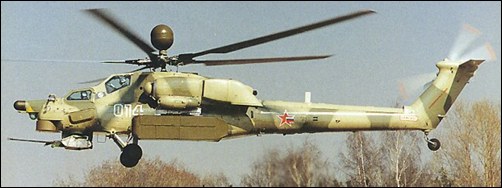
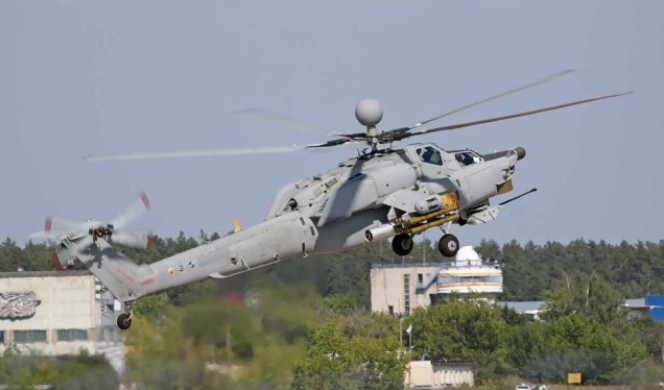

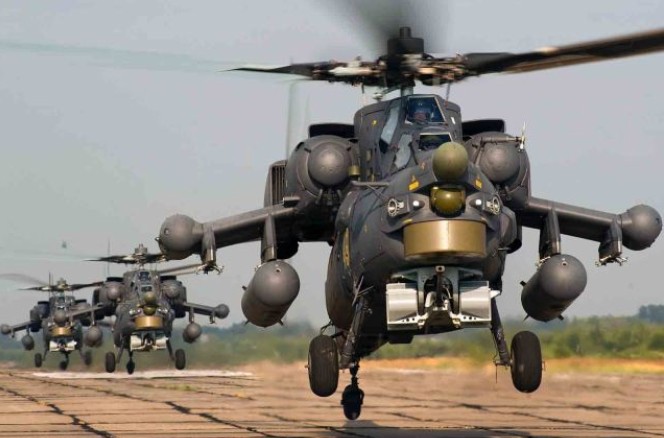
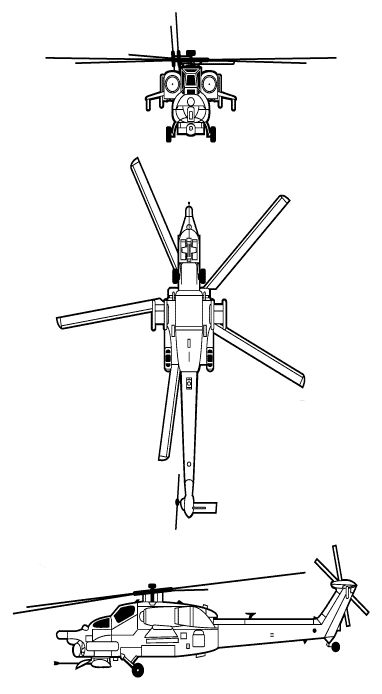
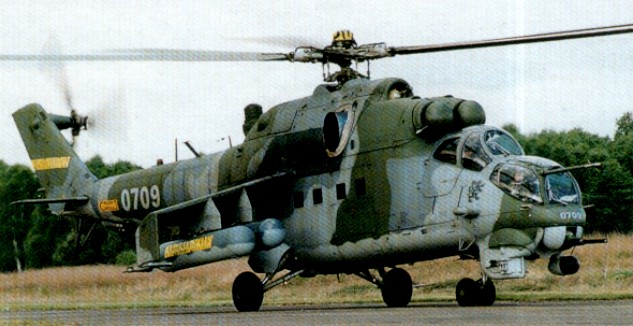
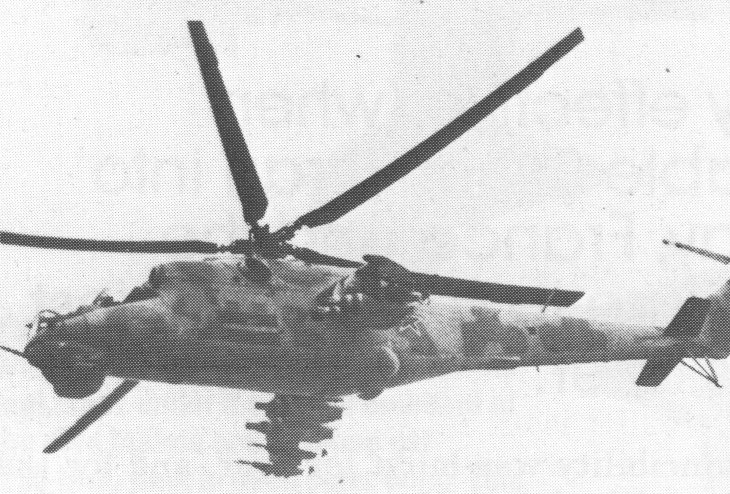
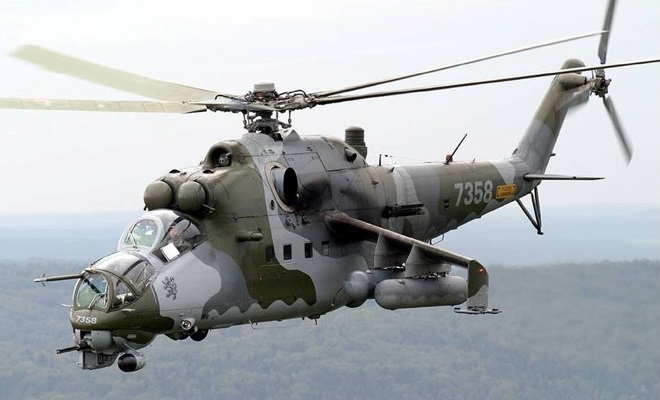
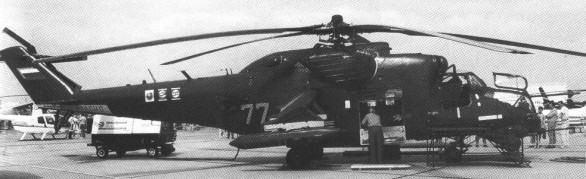

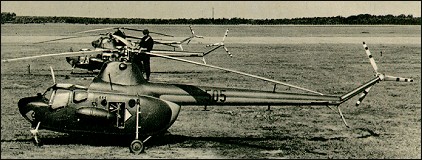
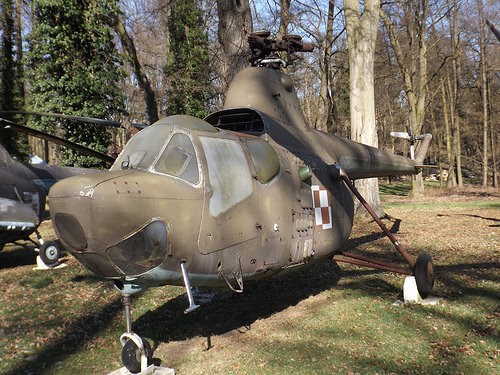

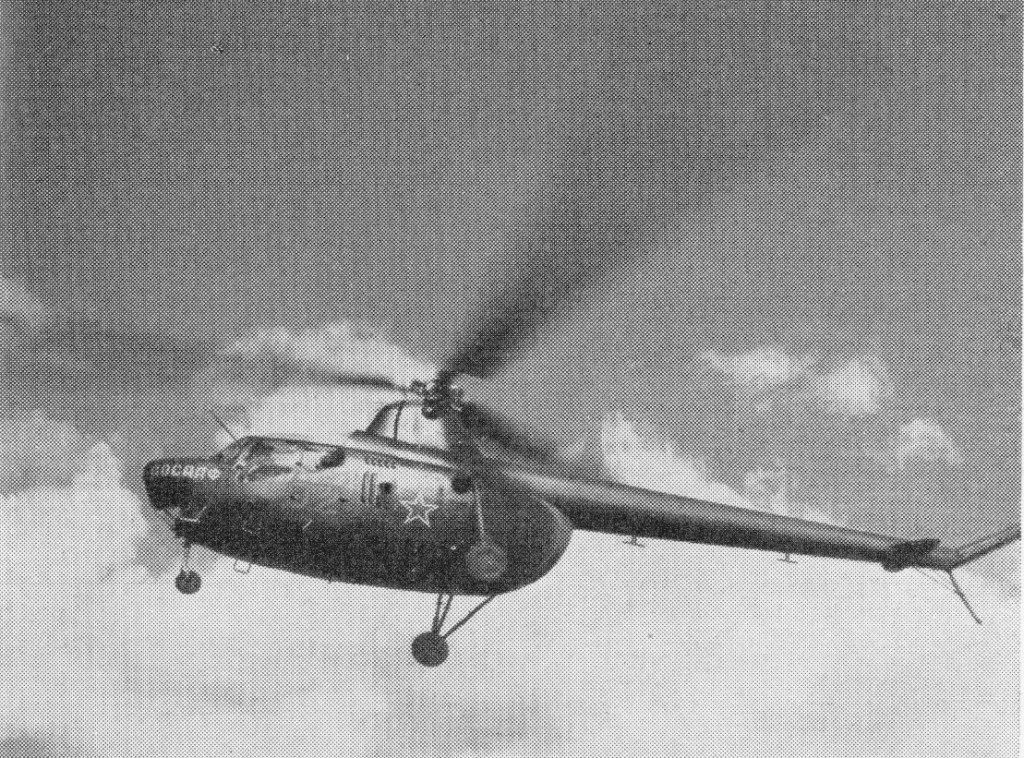
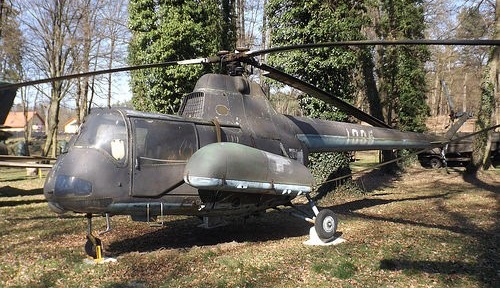
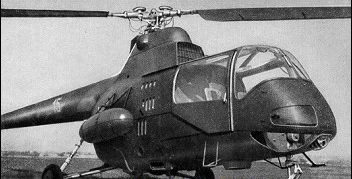
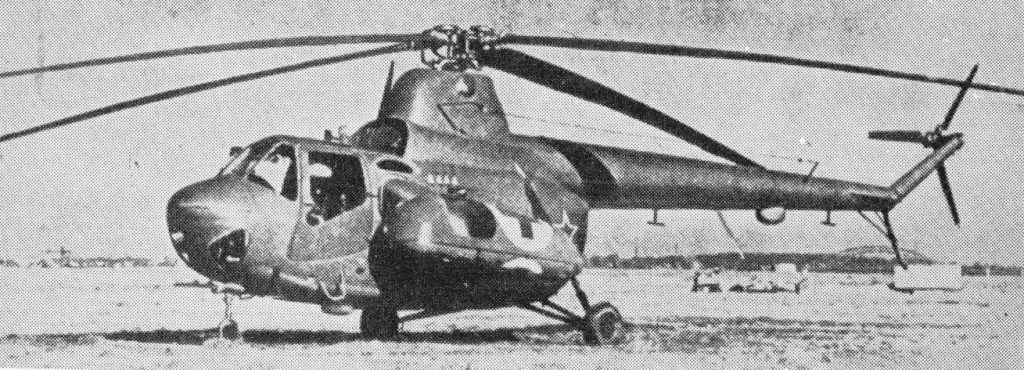


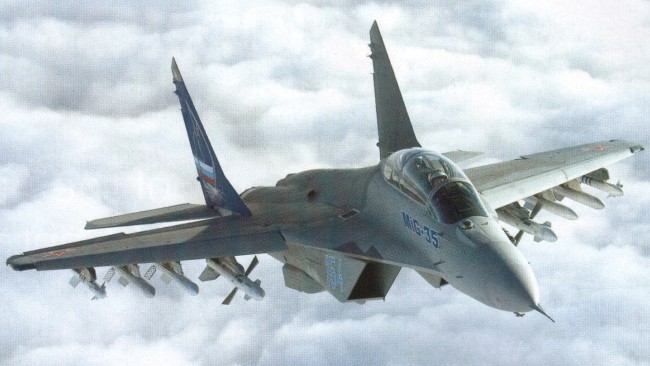
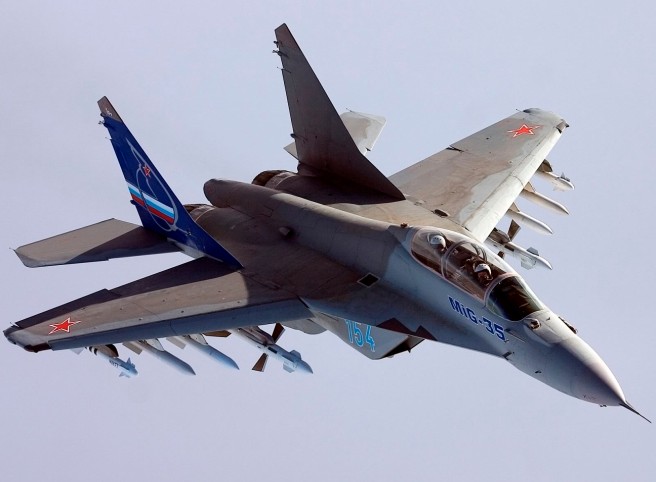

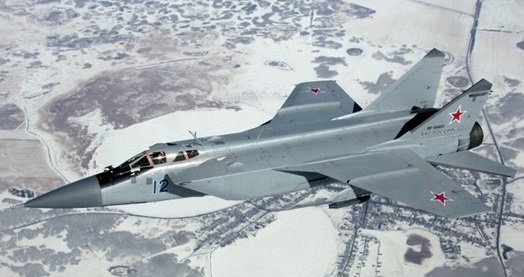
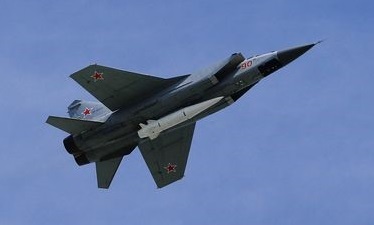

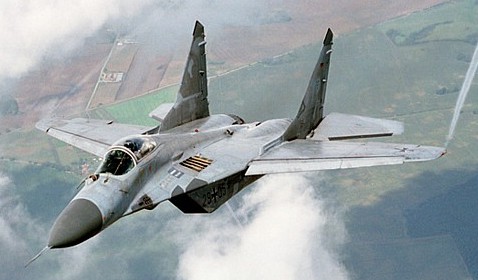

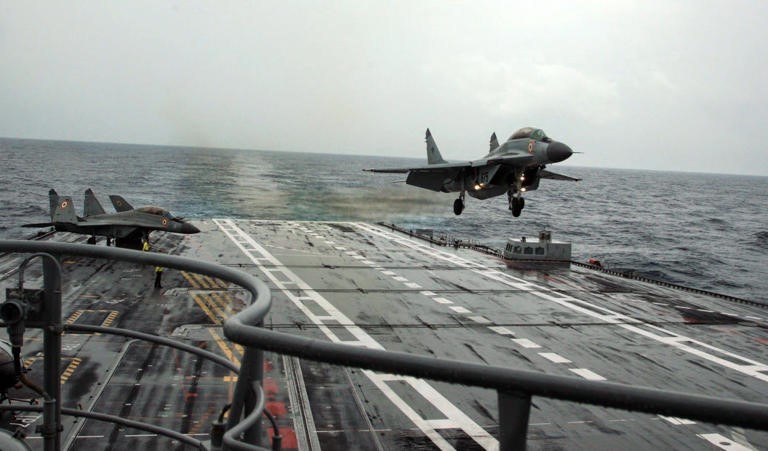
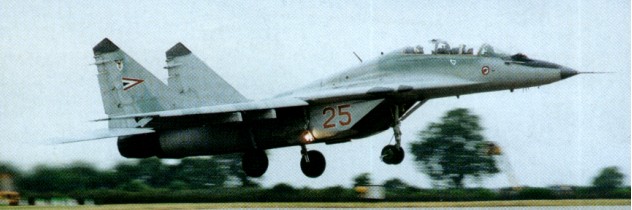
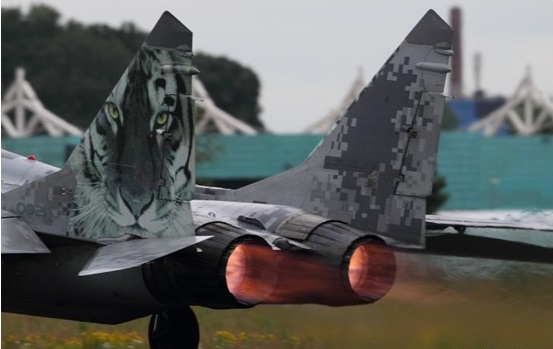
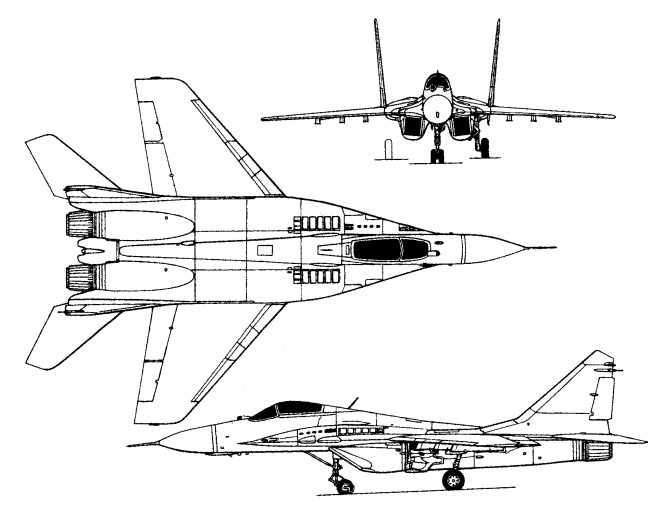
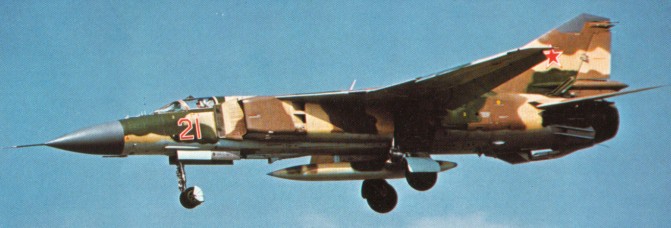

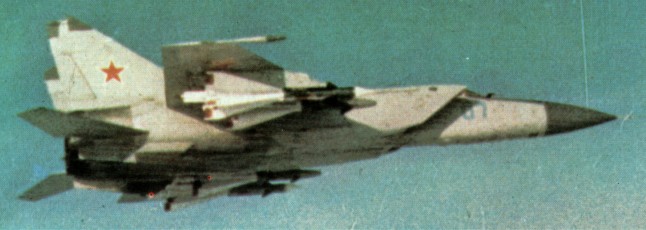


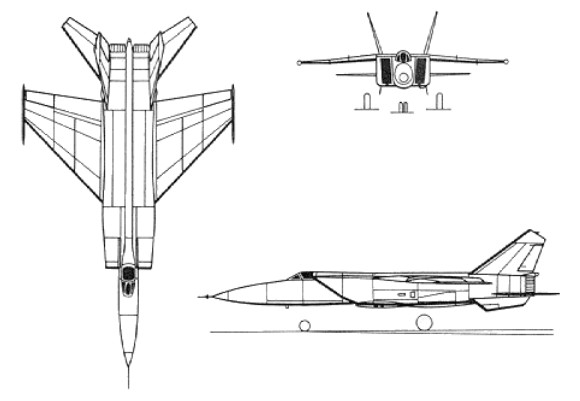


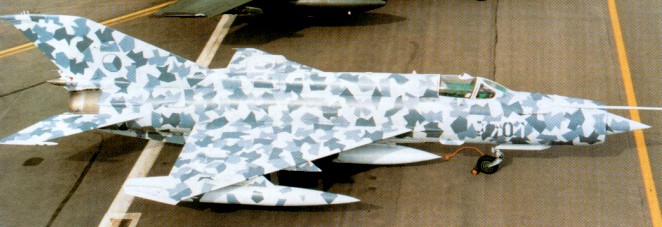
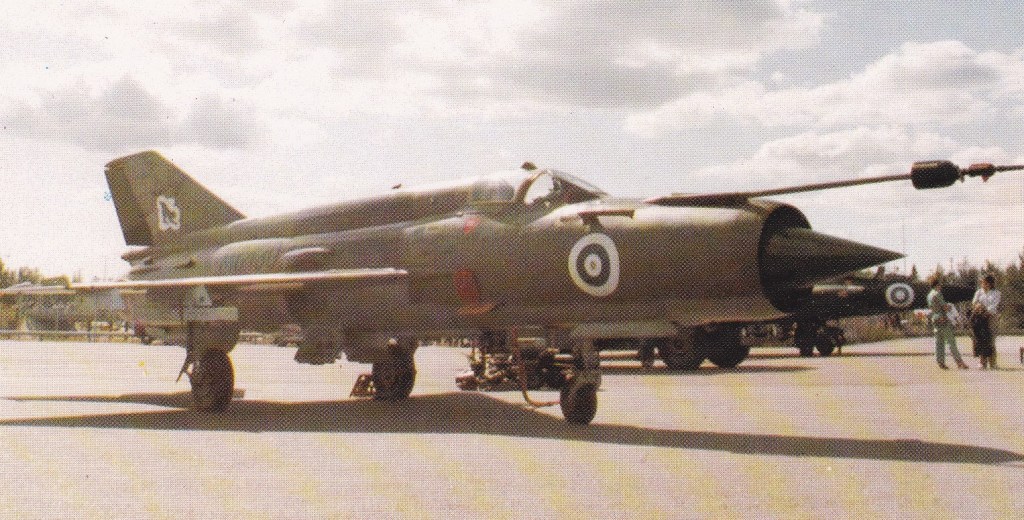
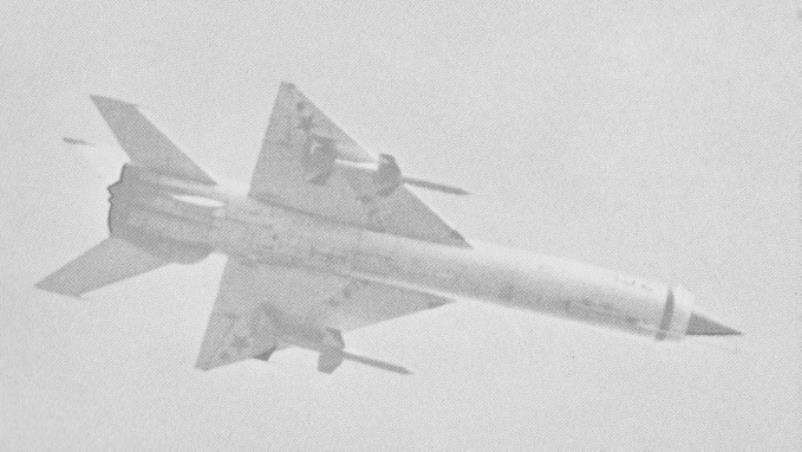

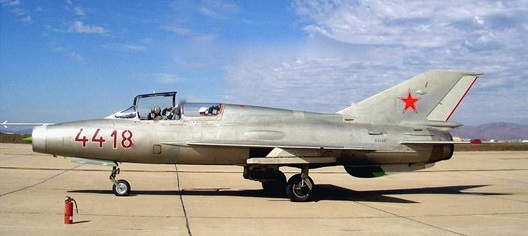
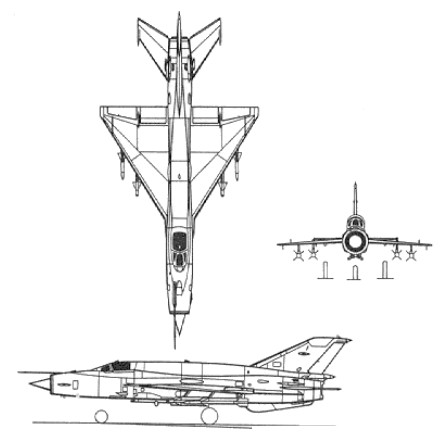
 All Aero